Tash Rabat
Tash Rabat, Kyrgyzstan
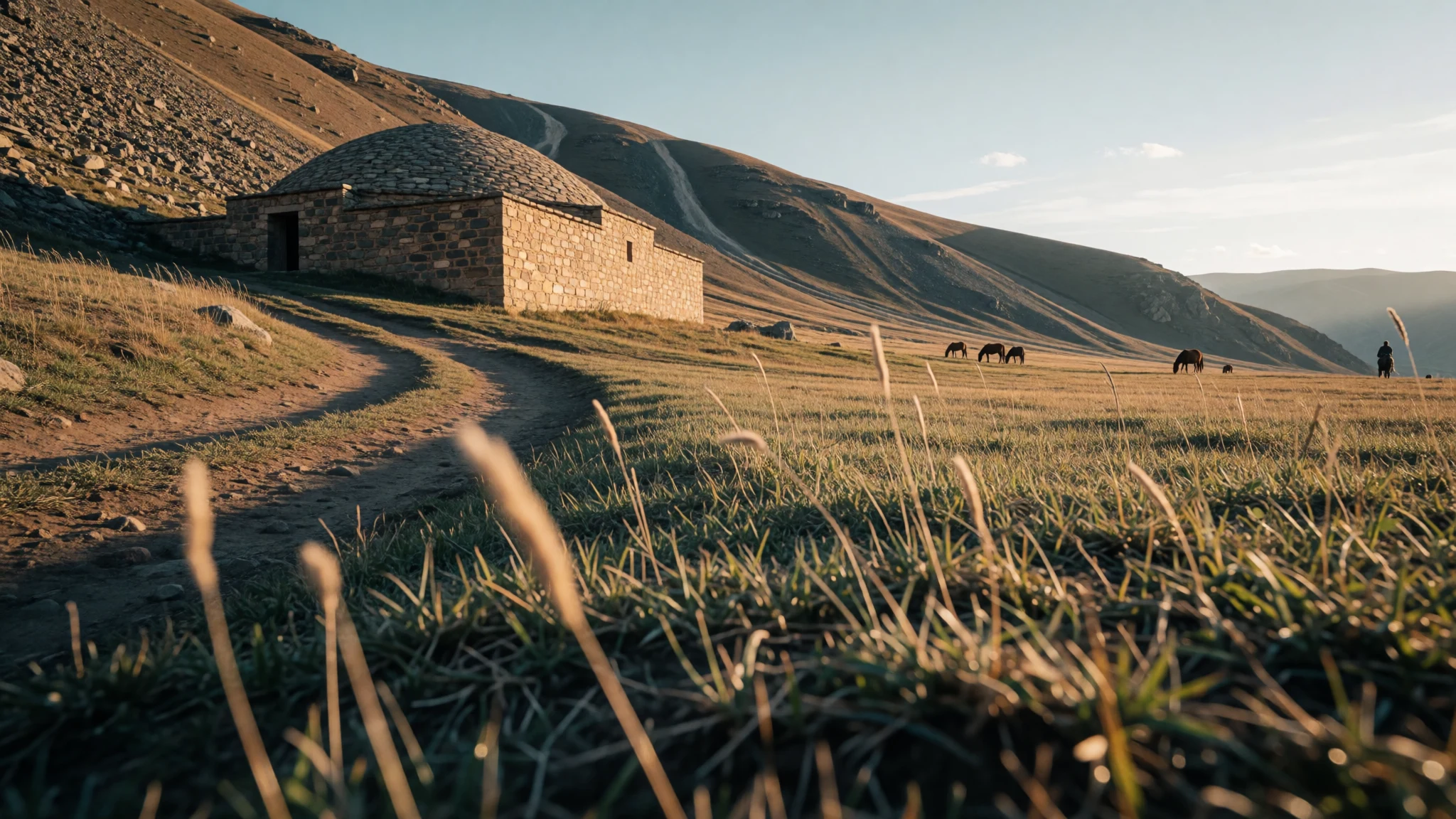
Tash Rabat offers a stone caravanserai alone in the mountains of Naryn Province, with pasture, wind and a long rough approach.
The place
Tash Rabat stands in a mountain valley of Naryn Province, Kyrgyzstan, a stone caravanserai under a large corrugated roof, enclosed by a fence and fronted by a large parking lot, with high slopes around it. The building is a low, heavy mass of masonry under a broad dome, pressed close to the hillside, with small openings rather than a showy gate. From across the pasture it can look like part of the slope; nearer, the coursed stone and the curve of the dome show a structure made for people to stop. Wind, wide sky and short grass carry the scene. In the warmer months herders use the valley, and horses and flocks move over ground that once carried pack animals between the inner valleys of Kyrgyzstan and the high routes to the east. There is no town at the monument. Ordinary shops and eateries sit back in Naryn, so a visit feels spare: stone, mountain, and whatever camp has been pitched for the night. Mornings are sharp, the light is hard and clear, and weather can still close the track when the season is otherwise kind. Tash Rabat is sought for this single building and for the quiet around it. The landscape still explains the inn. Anyone crossing here needed a roof, a wall and a place to water animals before the next long stretch of mountain road. Visitors today come by a rough valley track, stay long enough to walk the stone and the pasture, and leave with the sense of a road that has not been softened into a town.
Its story
Tash Rabat takes its name from plain words: tash, stone, and rabat, a fortified lodging where people on the road could sleep behind walls. Together they describe a stone inn on a mountain branch of the Silk Road, raised where travellers and pack animals needed shelter more than a bazaar. Buildings of this kind were practical. A central hall gave light and a place to gather, smaller rooms around it gave merchants, drivers and pilgrims somewhere to lie down, and the outer shell kept wind and unwelcome visitors at a distance. On routes that climbed from the Kyrgyz valleys toward the passes and the lands beyond, a night under a dome could decide whether a caravan moved at dawn. Trade of that sort thinned as ships, new borders and other roads took the long-distance traffic, and the inn was left with herders, snow and occasional students of old routes. Who first ordered the walls, and whether every phase of the building was simply a caravanserai, is still discussed; the valley itself does not settle the argument. What a visitor can read on the ground is simpler. The plan is shelter, the material is stone, and the site is a road over the mountains. Hospitality here was architectural: strangers shared a roof because the next safe ground was a long ride away. Pasture has reclaimed the approaches, and Tash Rabat is now a monument reached by a rough track, still asking travellers to pause, see to their animals or their vehicles, and only then go on.
What to see
- The stone exterior — the caravanserai, Naryn Province
Tash Rabat shows itself first as a stone exterior: heavy masonry, a low dome and thick walls in open mountain pasture. Openings are few. The form was made to hold heat and shut weather out, not to face a city square. Local stone keeps the mass visually quiet until the dome marks it against the bare slopes. Walking a circuit on the grass shows the whole plan.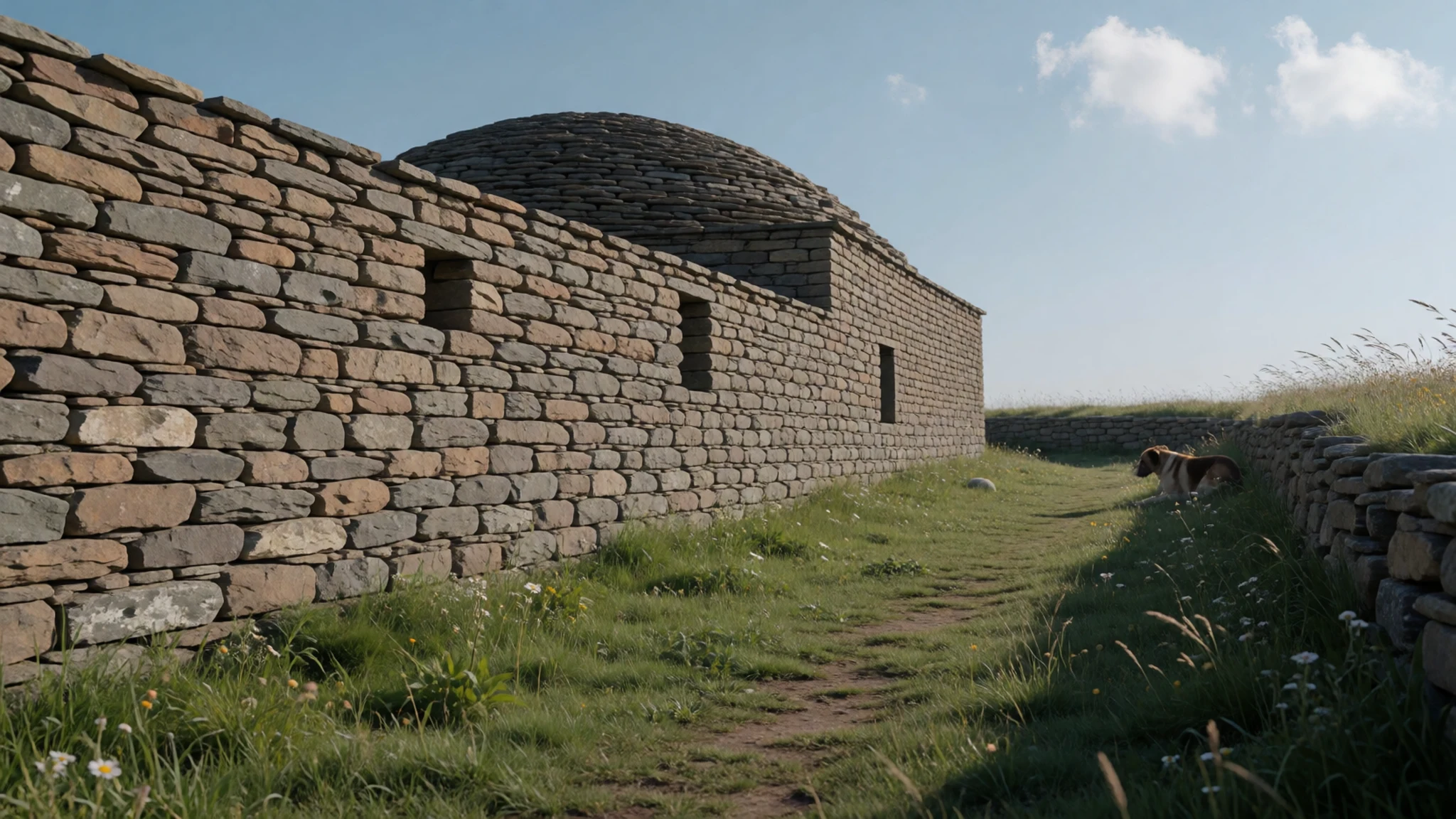
- The domed hall — inside the caravanserai
Tash Rabat gathers inward under its dome, in a central hall that served as the shared room of the caravanserai. Smaller chambers open off that core, cells where a traveller could sleep away from the animals and the draught. The interior is dim, plain and close: warmth and a wall rather than decoration. The interest is the plan, still readable as shelter organised around a single lit space.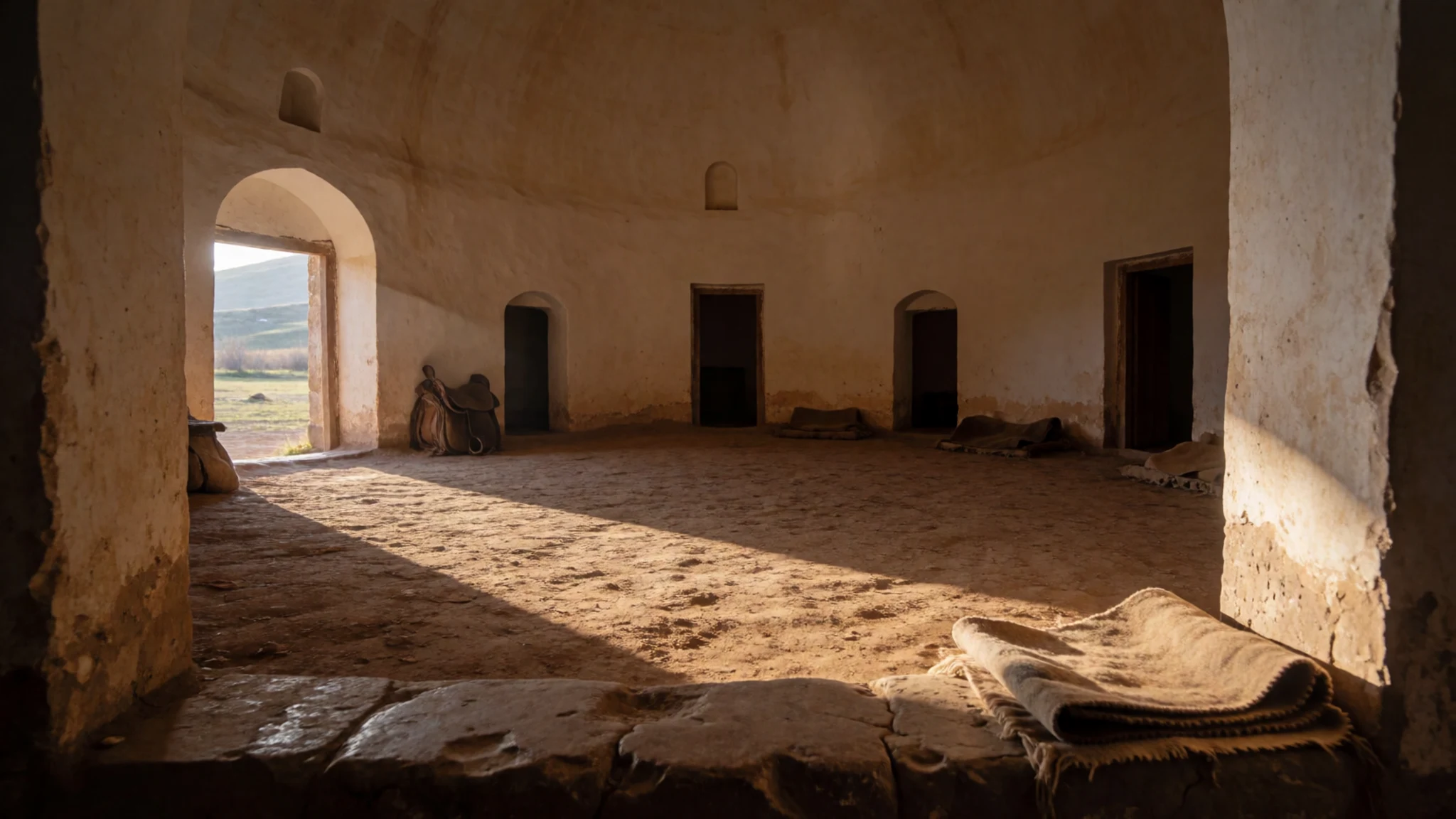
- The mountain valley — the pasture around the caravanserai
Tash Rabat sits against a hillside in a wide bowl of pasture. Bare slopes rise behind the dome and the grass stays short. In the warmer months the ground is grazing country, so horses and flocks belong in the view with the masonry. There is no village street; a large corrugated roof covers the building, a fence encloses it, and a large parking lot fronts the track and the camps pitched for travellers. Weather on these slopes can turn a clear hour raw.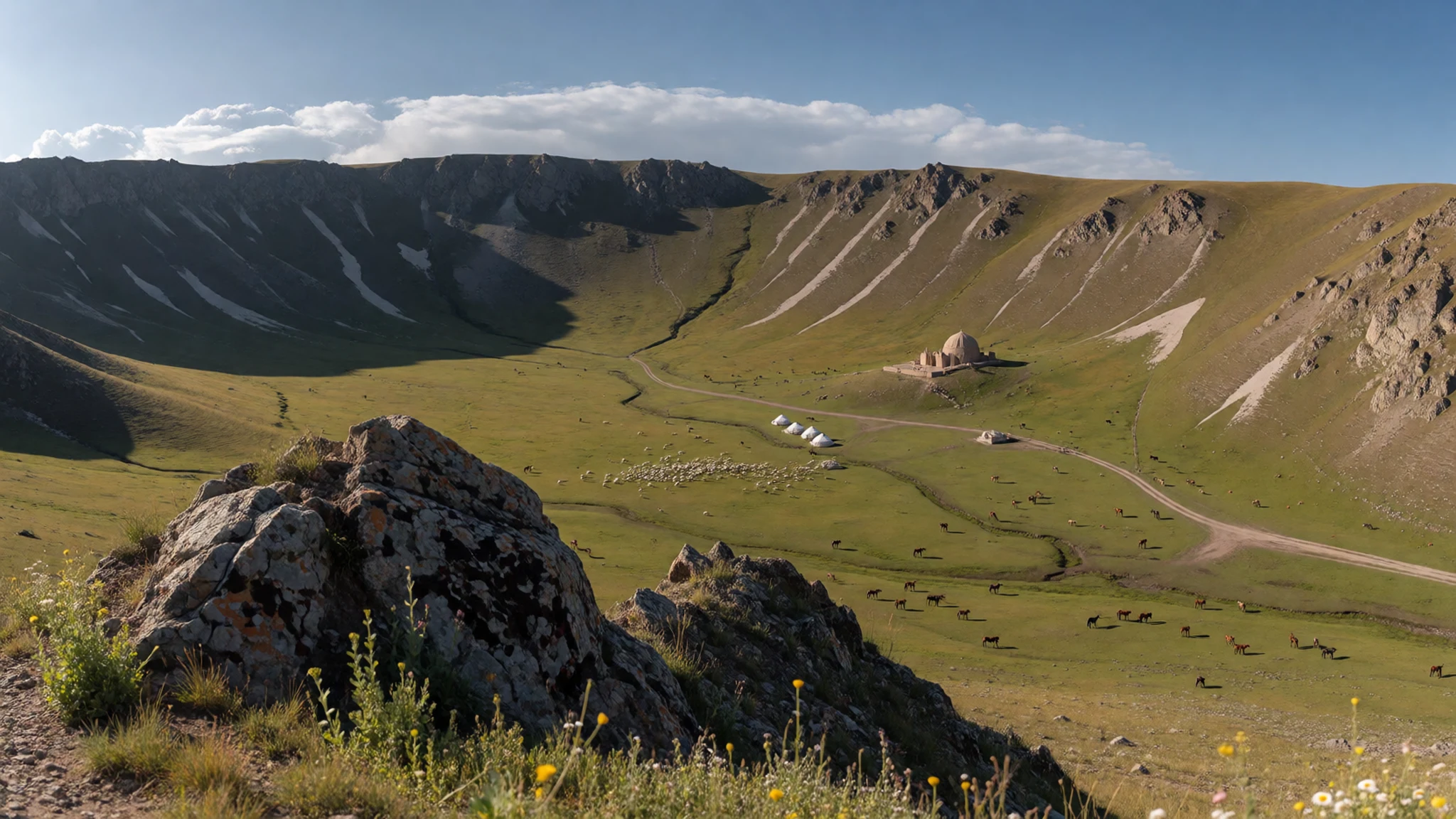
- The valley track — the approach track in Naryn Province
Tash Rabat is reached by a rough track that leaves the broader valley and climbs toward the caravanserai. The drive is part of the sight: open country and almost no services. Ordinary cars struggle when the surface is wet or cut up, so local drivers in higher vehicles are the usual way in. Snow can shut this last stretch outside the warmer months.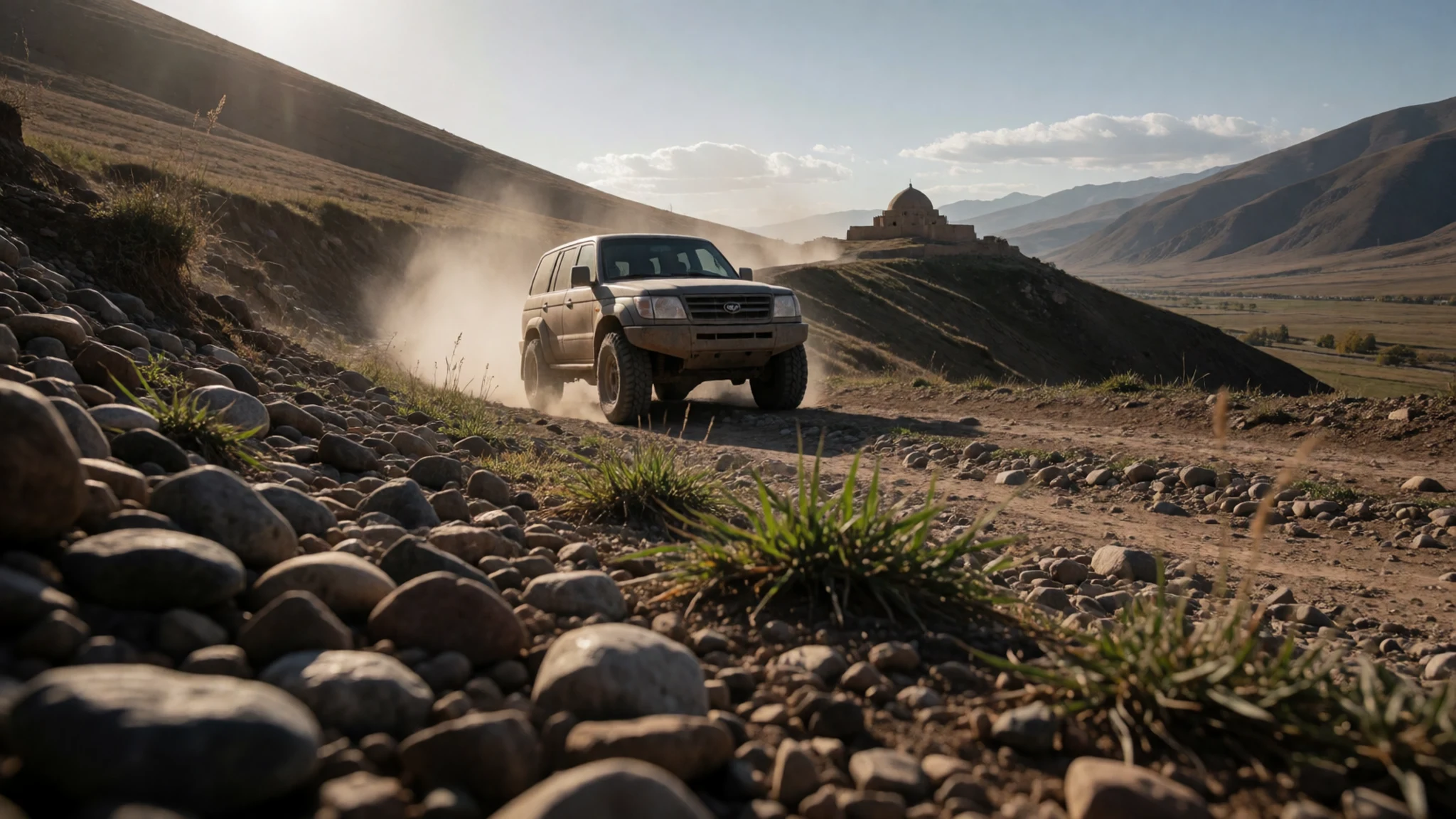
- Yurt camps — pasture beside the caravanserai
Tash Rabat has no guesthouse row, so travellers sleep in yurt camps set on the pasture near the caravanserai. A yurt is a round felt tent on a wooden frame, warm when the stove is lit and cold when it is not. Evenings are quiet, with tea, a simple meal and an early night because the valley offers little after dark. Hosts are often local herding families.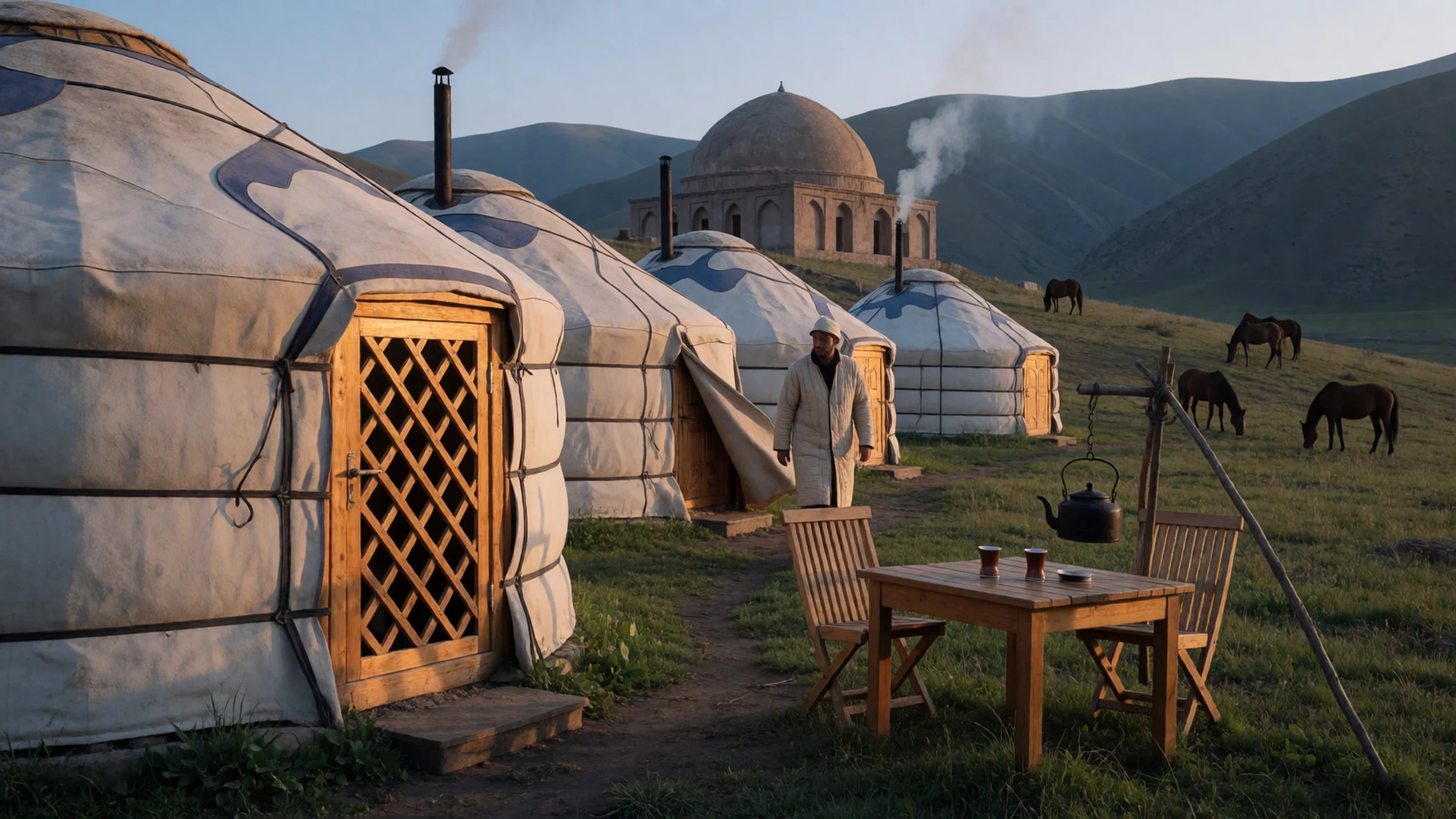
- Herders and the pasture — grazing land around Tash Rabat
Tash Rabat shares its valley with Kyrgyz herders, and their work is visible from the monument: horses, flocks, and people moving between pasture and camp. Felt, leather and the white kalpak turn up in daily use here, not as a show put on for arrivals. Children and riders may be about in the warmer months. The courteous visit treats the pasture as working ground.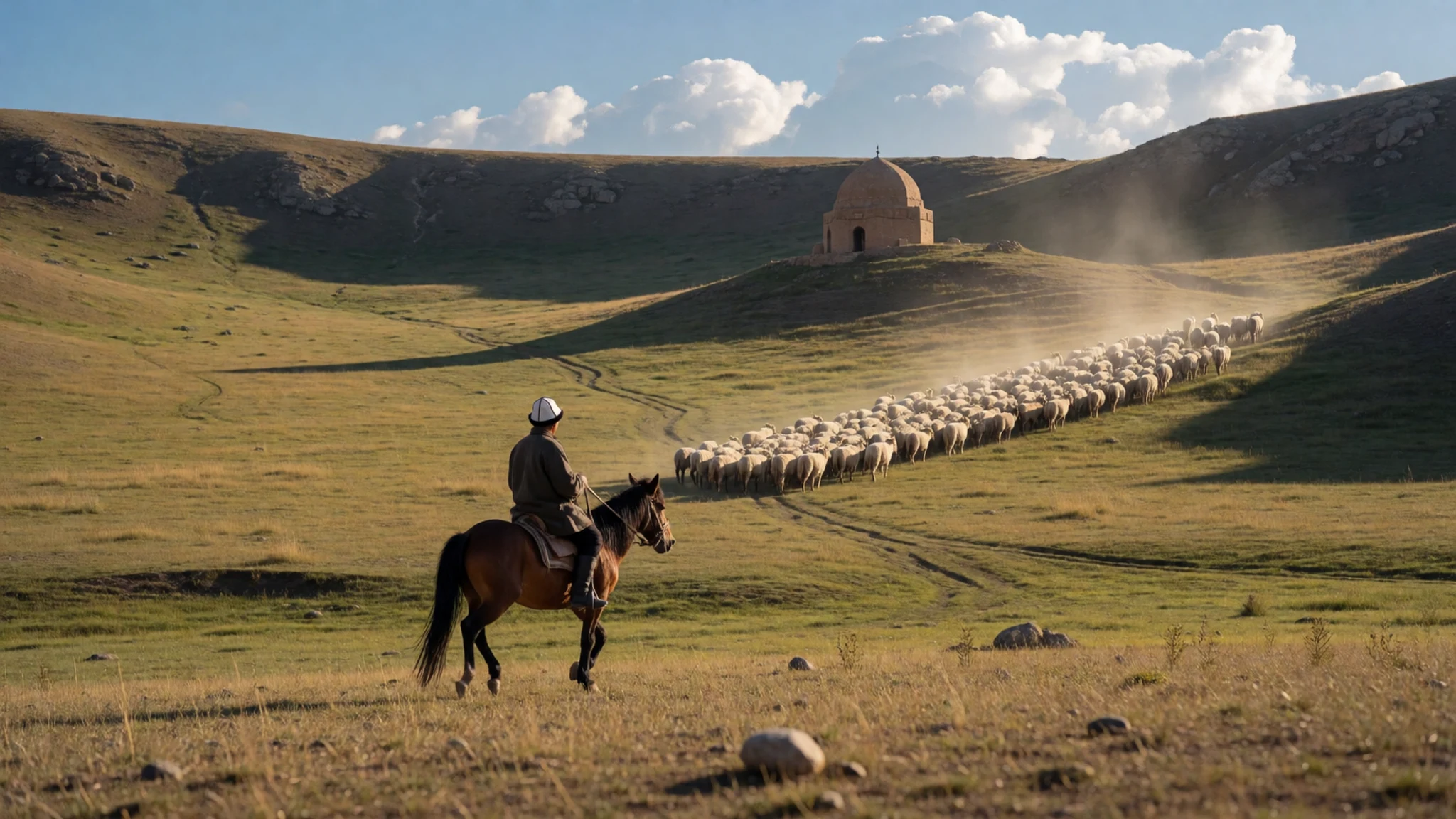
Culture
Tash Rabat lies in Kyrgyz country, and the habits around it are those of herders and hosts rather than of a city museum. Tea comes first in a home or a yurt: a bowl is poured, bread is set down, and the guest is expected to sit and talk before any business of the visit. Bread is handled with care and not tossed aside. Elders are greeted first, and a cup is given or received with both hands, or with the right hand supported by the left. Horses are working animals here, and walking through a tethered line or a flock without asking causes real trouble. The caravanserai is a monument on open pasture, so clambering on the stone or treating the grass as an empty park wears out the place and the welcome. Conversation is unhurried, and a guest who rushes straight to the monument, skipping the tea, misses how the valley actually receives people. At Tash Rabat, remove your shoes before stepping onto a yurt rug or into a host's house, and ask before you photograph people.
What to wear
Tash Rabat is Kyrgyz mountain country, and traditional dress there is built for wind, sun and a horse. Men wear the kalpak, a white felt hat with a black brim whose crown can be folded in different ways, often with a quilted chapan or a heavier coat over ordinary clothes. Women may wear a dress and a headscarf; the elaborate elechek turban of married women is now mostly ceremonial. The textiles that matter in the home are felt: the shyrdak, a stitched mosaic of coloured felt, and the ala-kiyiz, with a rolled pattern. Those are floor pieces and wedding gifts more than garments, but they are the region's real cloth tradition. Around the caravanserai today, herders mix that inheritance with practical modern clothes: jackets, trousers, boots and a kalpak when the sun is high or the wind is up. Visitors do well to copy the practical side. The valley is exposed, mornings are cold even in the warmer months, and the ground is uneven, so layers, a windproof coat, a hat, sunglasses and boots with grip are the useful kit. Modest clothing is the right choice in a yurt or a home: covered shoulders and knees, and shoes that come off easily at the door.
What to eat
- Beshbarmak — yurt camps in the valley and family tables in Naryn
Beshbarmak is boiled meat over wide noodles, with onion broth on the side. Around Tash Rabat, yurt camps and family tables in Naryn serve it when guests are being fed properly, not as a quick snack. Lamb or horse is usual, and the flavour is rich and plain.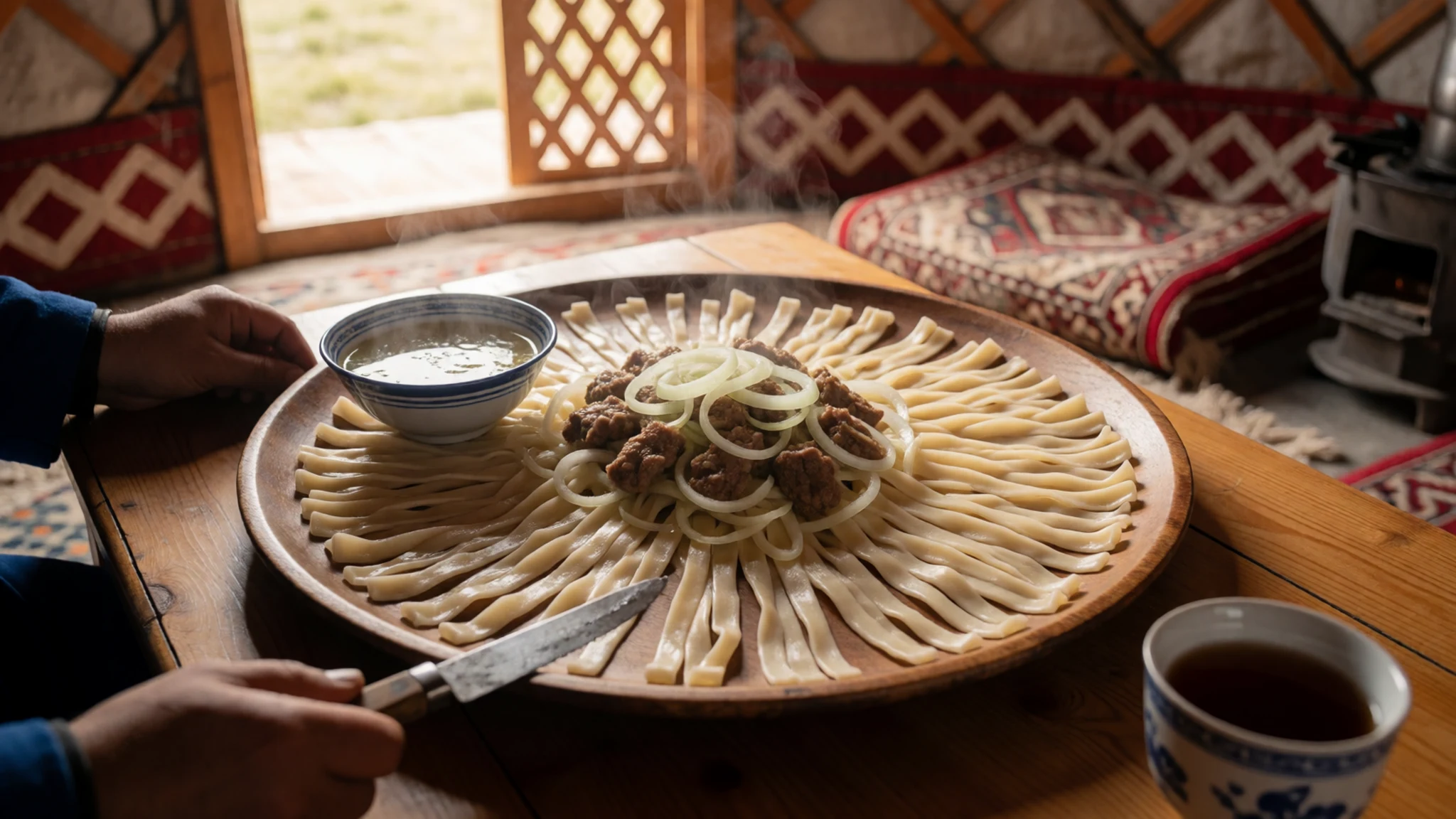
- Kuurdak — yurt kitchens in the Tash Rabat valley
Kuurdak is meat fried in its own fat with onion, a camp and home dish rather than a banquet. Near Tash Rabat a yurt kitchen turns it out for supper once the stove is going. The result is savoury, heavy and warming, which suits a cold evening in the valley.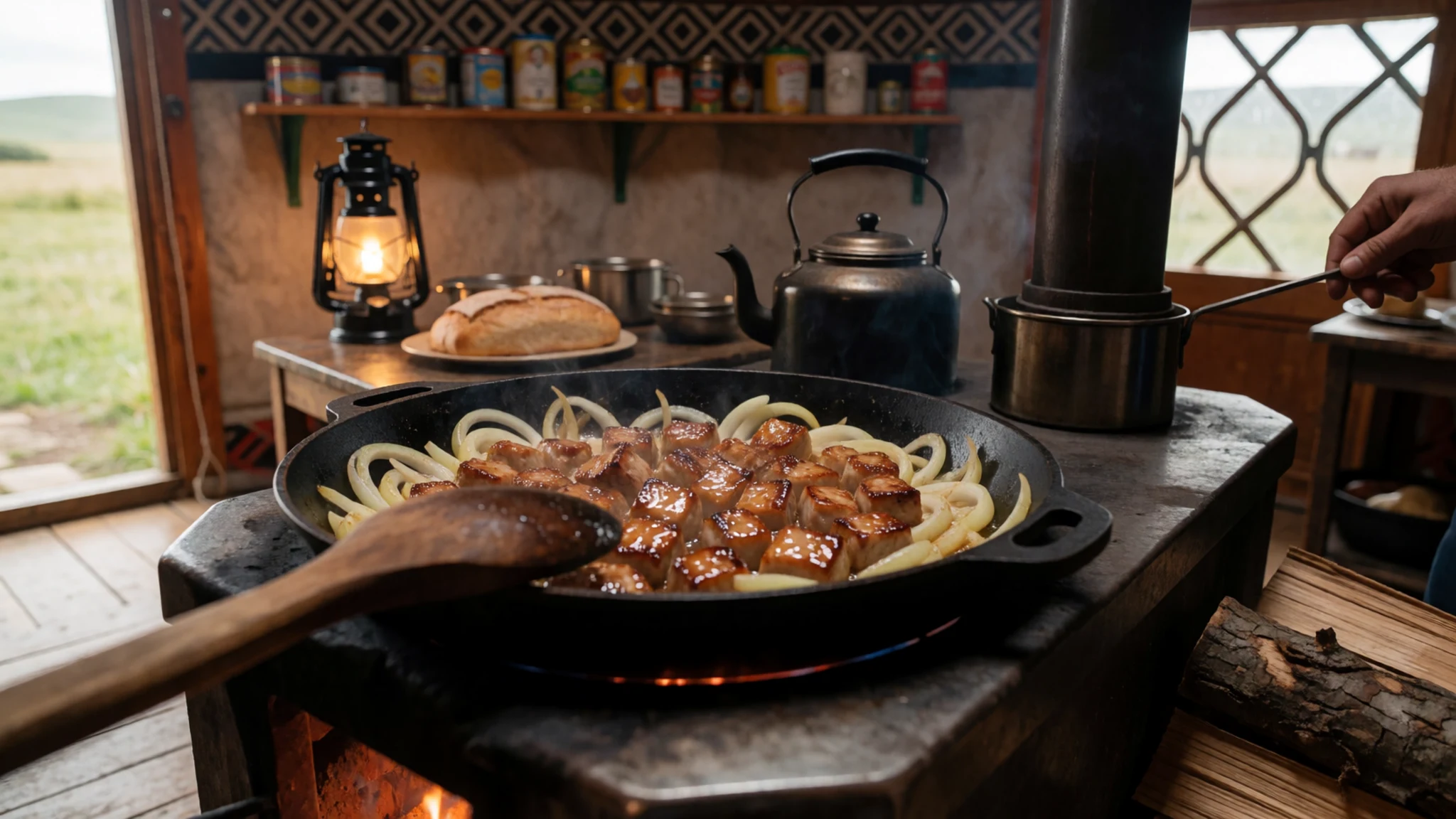
- Laghman — simple dining rooms in Naryn
Laghman is a noodle soup or a fried noodle plate with meat and vegetables, closer to a weekday meal than beshbarmak. Simple dining rooms in Naryn, the town on the way to Tash Rabat, serve it hot through the day. The broth is peppery and the noodles are substantial. - Kymyz — herder camps in the valley in the warmer months
Kymyz, also called kumis, is fermented mare's milk, mildly sour and slightly fizzy. Herder camps around Tash Rabat offer it in the warmer months, when a family has mares in milk, as hospitality rather than as a shop drink. The taste is tangy and yeasty. - Boorsok — tea tables in valley yurts and Naryn homes
Boorsok are small pieces of fried dough piled on the tea table in Kyrgyz homes and yurts. At Tash Rabat they arrive with tea in a valley camp or in a house back in Naryn. They are mild, filling and meant for sharing.
Plan it
Best time. Tash Rabat is reachable in the warmer months, June to September, when snow has usually left the track up to the caravanserai. For the rest of the year that last stretch is often impassable. Days are bright and nights are cold even in the open season, and wind can make the valley feel harsher than the sunshine suggests.
How long. 2-3
Getting there. Tash Rabat is reached via Bishkek's Manas International Airport, then a long overland journey to Naryn. The last leg is a rough track up the side valley, and it calls for a high-clearance vehicle with a local driver. Timings change with weather and the road, so check the airline and the driver before setting out.
Budget. mid
Tips
- Hire a high-clearance vehicle in Naryn; ordinary cars often have to turn back on the last track.
- Bring drinking water and some food from Naryn, because the valley has almost nowhere to resupply.
- Carry cash; card payment is not something to rely on once the larger towns are behind you.
- Leave Naryn in the morning so daylight remains if the valley track is slow.
- Take a warm layer; mornings at Tash Rabat stay cold even when the season is open.
Etiquette
- Remove shoes before stepping onto a yurt rug or into a host's house.
- Accept tea when it is offered; refusing the bowl can seem rude.
- Ask before photographing people, and do not walk through flocks or tethered horses.
Nearby
Sources
- Wikidata (CC0)
- Wikipedia (CC BY-SA 4.0)
- Wikivoyage (CC BY-SA 4.0)