Tanguar Haor
Tanguar Haor, Bangladesh
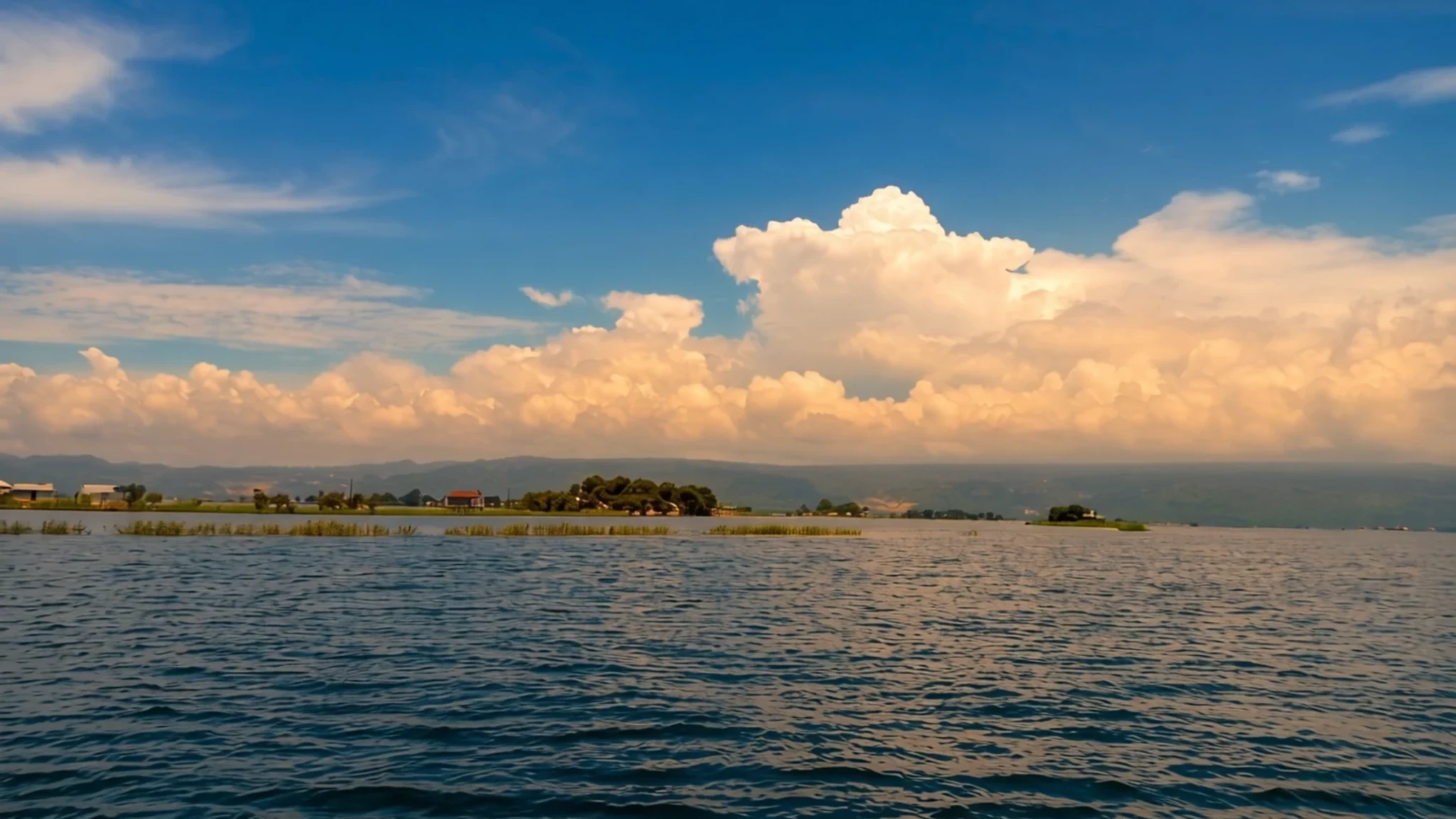
Tanguar Haor is a seasonal wetland in Sunamganj where boats, reed-side villages and winter birds share open water.
The place
Tanguar Haor spreads across the low country of Tahirpur and Dharmapasha in Sunamganj, in the Sylhet division of Bangladesh, close under hills that continue into India. For much of the year it is not one lake with a fixed shore. It is a basin of beels, the shallow wetland bowls of this region, joined by channels, reed beds and swamp trees, filling and emptying as the rains come and go. In the drier months the water retreats into the deeper bowls. Grazing ground and rice fields show on the higher mud, and villages sit on raised mounds with a clear line between land and water. When the monsoon arrives those lines vanish. Homesteads become islands, footpaths become channels, and a boat is the ordinary way from one household to the next.
People here live by that rise and fall. Families fish the beels, dry part of the catch, and plant rice on ground the water has given back. Hijol trees stand in the shallows, built for months of submersion. The light is broad and level, cut by narrow wooden boats and by the dark ridge of the Meghalaya hills along the northern sky. Winter brings cooler air and waterbirds that rest on the open beels. The rains bring cloud, heat and a continuous sheet of floodwater, with villages and fishing stakes still set in it for anyone who can read the channels.
The channels that carry visitors still carry fish, fodder and neighbours. Sound travels across the open water, and so does anything thrown into it. The haor is a home first, and a wetland whose fish and birds depend on the water staying clear and the catch staying within what the beels can spare.
Its story
Tanguar Haor has been a fishing country for as long as people have lived on its mounds. The settlements were placed where the flood would not take the house, and the year's food came from the beels: fish in the water months, rice and grazing when the basin drained. Boats were not a pastime. They were the road, the market trip and the way a child reached a neighbour.
Pressure on the fishery changed the story. More nets, a wider trade in dried fish, and a growing number of people living off the same bowls left the catch thinner than the old households remembered. Birds that had used the winter beels found less quiet water. In response, the haor was drawn into a conservation regime: parts of the fishery were rested, outside leaseholders were pushed back, and local fishers were meant to hold rights that a distant contractor should not override. The intention was to keep both the wetland and the villages that depend on it. The practice is argued over on the ghats, because a closed beel feeds no one that week.
Houseboat tourism is the newest layer. Visitors now share channels with fishing skiffs, and some villages see more cameras than they once did. The story of Tanguar Haor is no longer only a local argument about who may set a net. It is also a question of how many slow boats the open water can take before the birds lift and the villages feel watched. The mounds, the beels and the seasonal rice remain the plot.
What to see
- The open beels — Tahirpur and Dharmapasha, Sunamganj
Tanguar Haor is at its most legible out on the open beels, where the channels widen and the far bank turns into a thin green line. In the drier months the water sits in separate bowls, with mud, grass and rice between them. In the rains those bowls join and the boat runs over what was a field. Fishermen's stakes, reed patches and the odd hijol tree are the landmarks.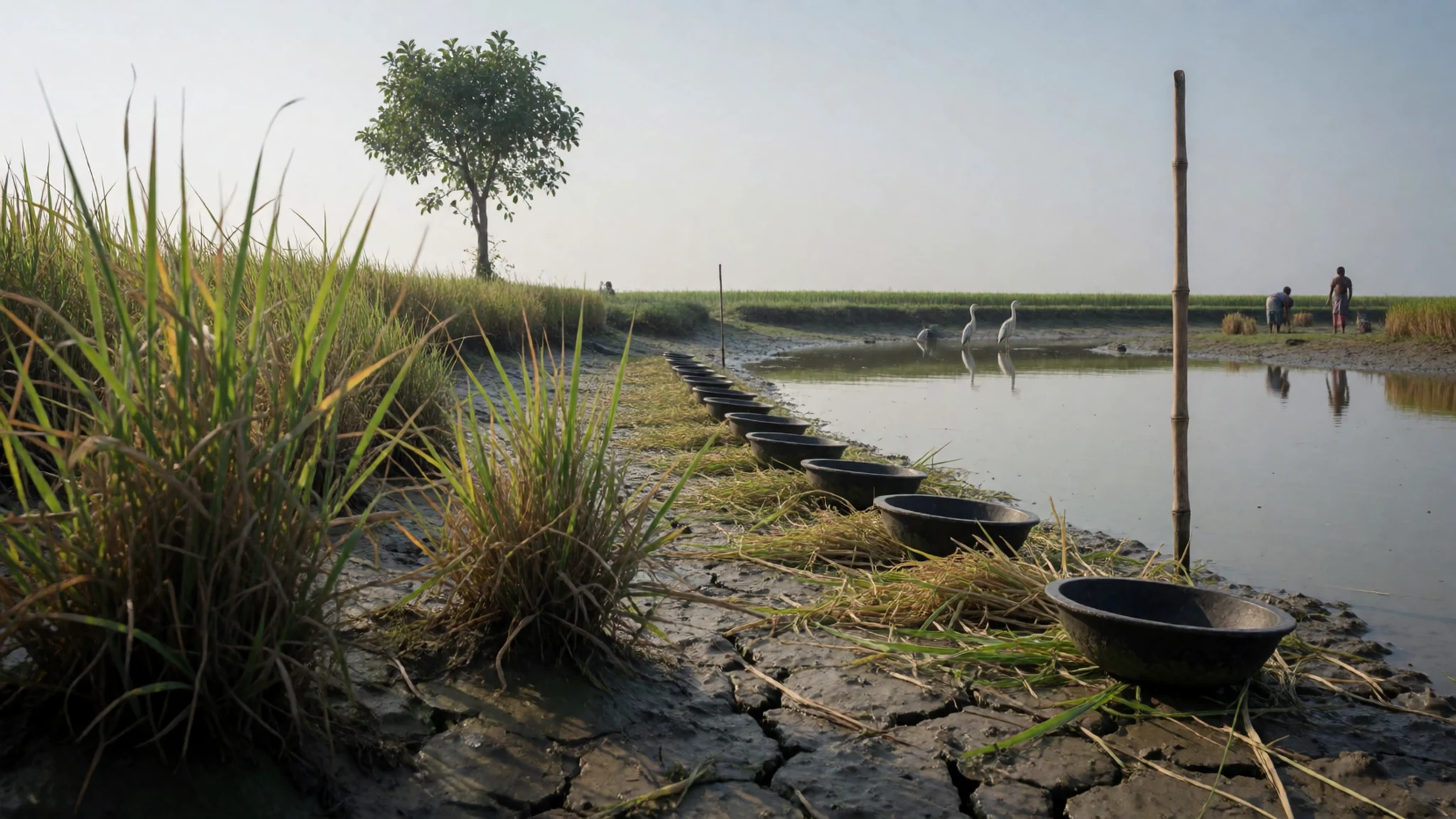
- Mound villages — village mounds, Tahirpur, Sunamganj
The villages of Tanguar Haor stand on earthen mounds that remain above the flood when the fields do not. From the water they show as clusters of tin and thatch, banana leaves and a short walkway to the boat. In the drier months there is packed earth underfoot; in the monsoon that same yard becomes a jetty. Rice drying and nets mending fill the yards.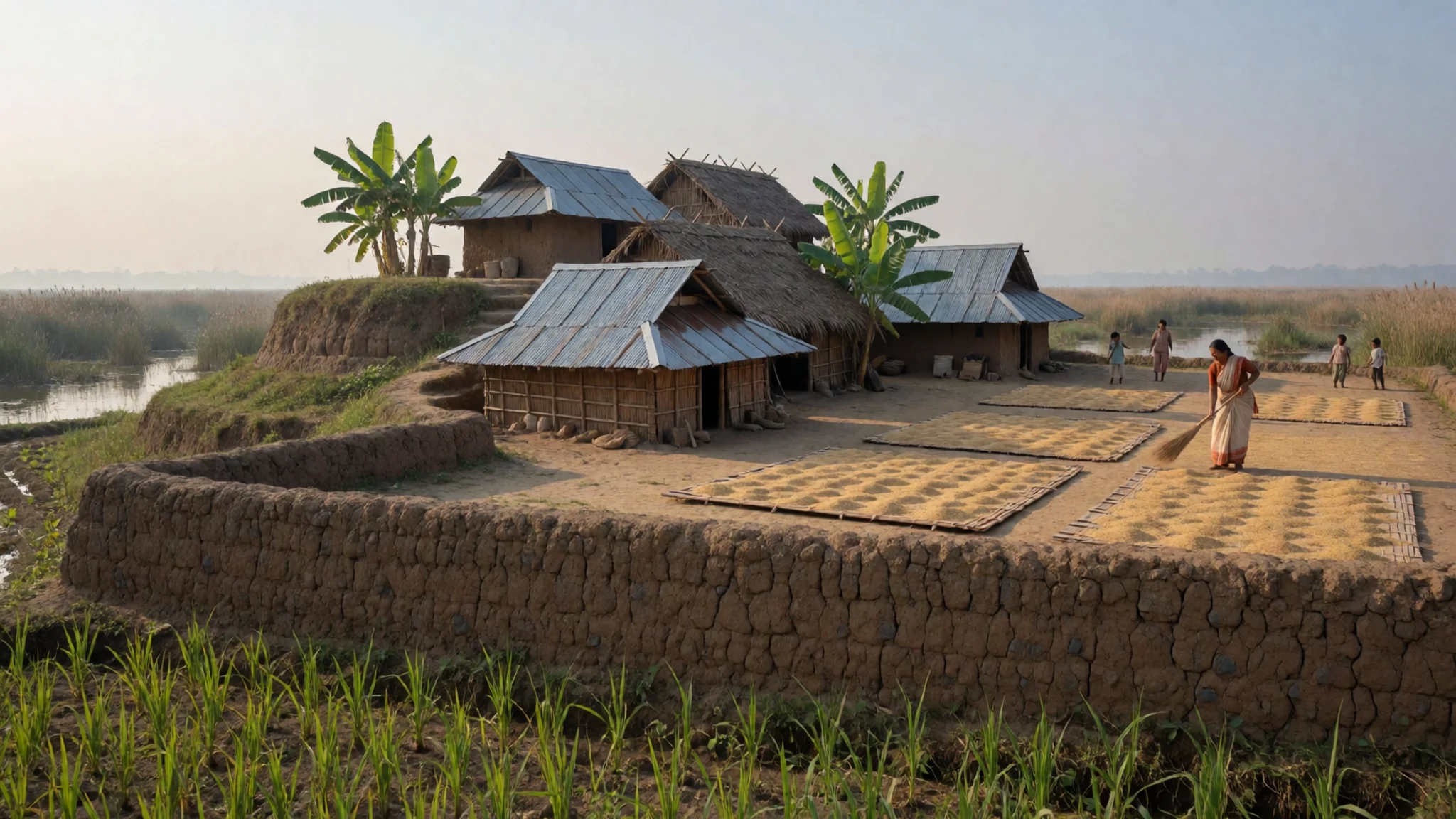
- Houseboats — on the haor, Sunamganj
Houseboats let a trip on Tanguar Haor stay with the water instead of returning to town overnight. A typical boat carries a shaded deck, a plain berth and a cook working from the day's fish. The pace is slow, matching a basin where banks, birds and villages appear gradually. After dark the haor is black, and a lantern or a small generator is all the light on board.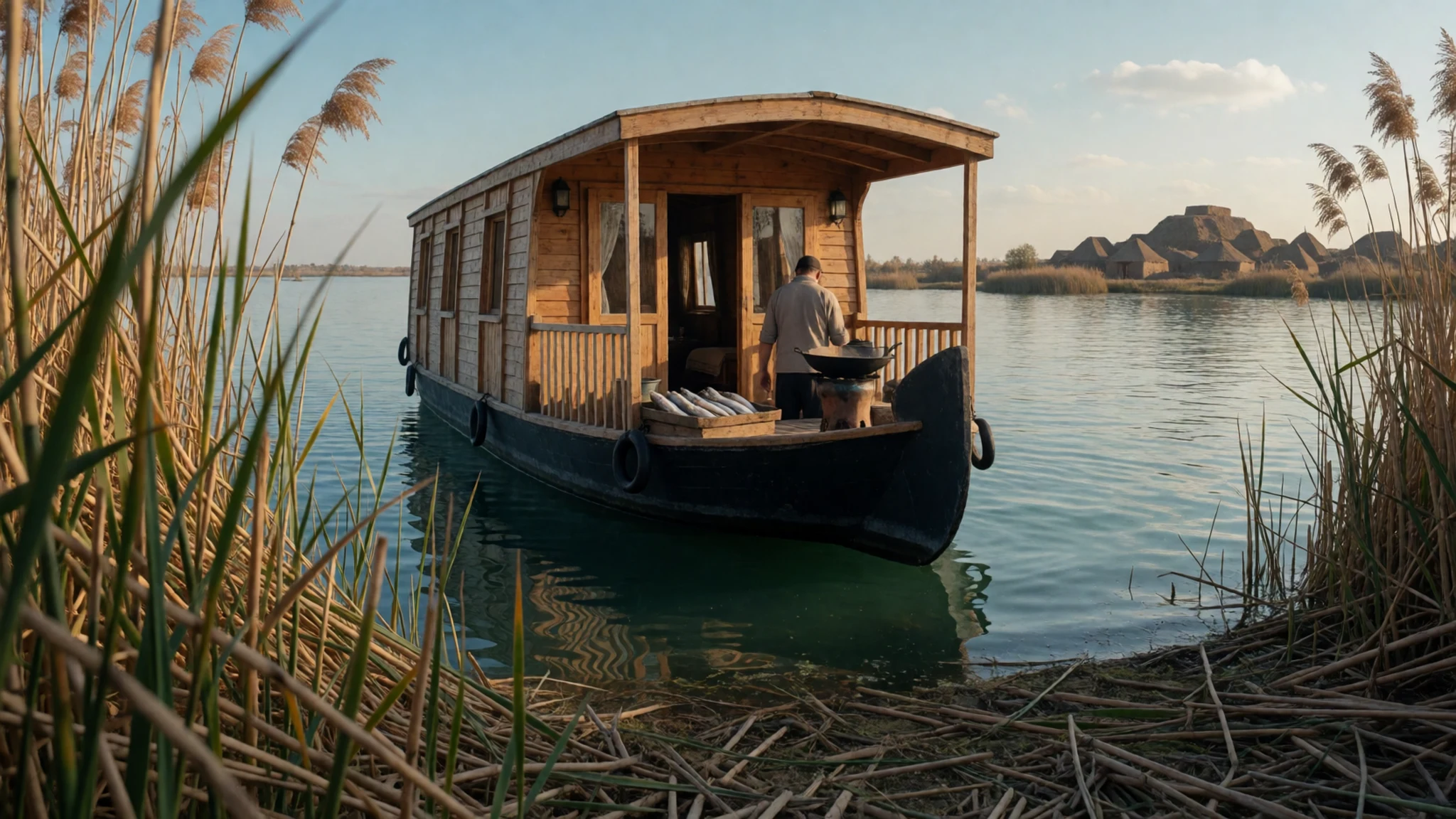
- The Meghalaya skyline — northern skyline, beyond the haor
On a clear day the northern edge of Tanguar Haor is a wall of forested hills in Meghalaya, across the border in India. The boat does not land there. The ridges are the backdrop: cloud sits on them through the rains and lifts in winter, when the tree line looks sharp. Between the boat and that skyline lie open water and the occasional village mound.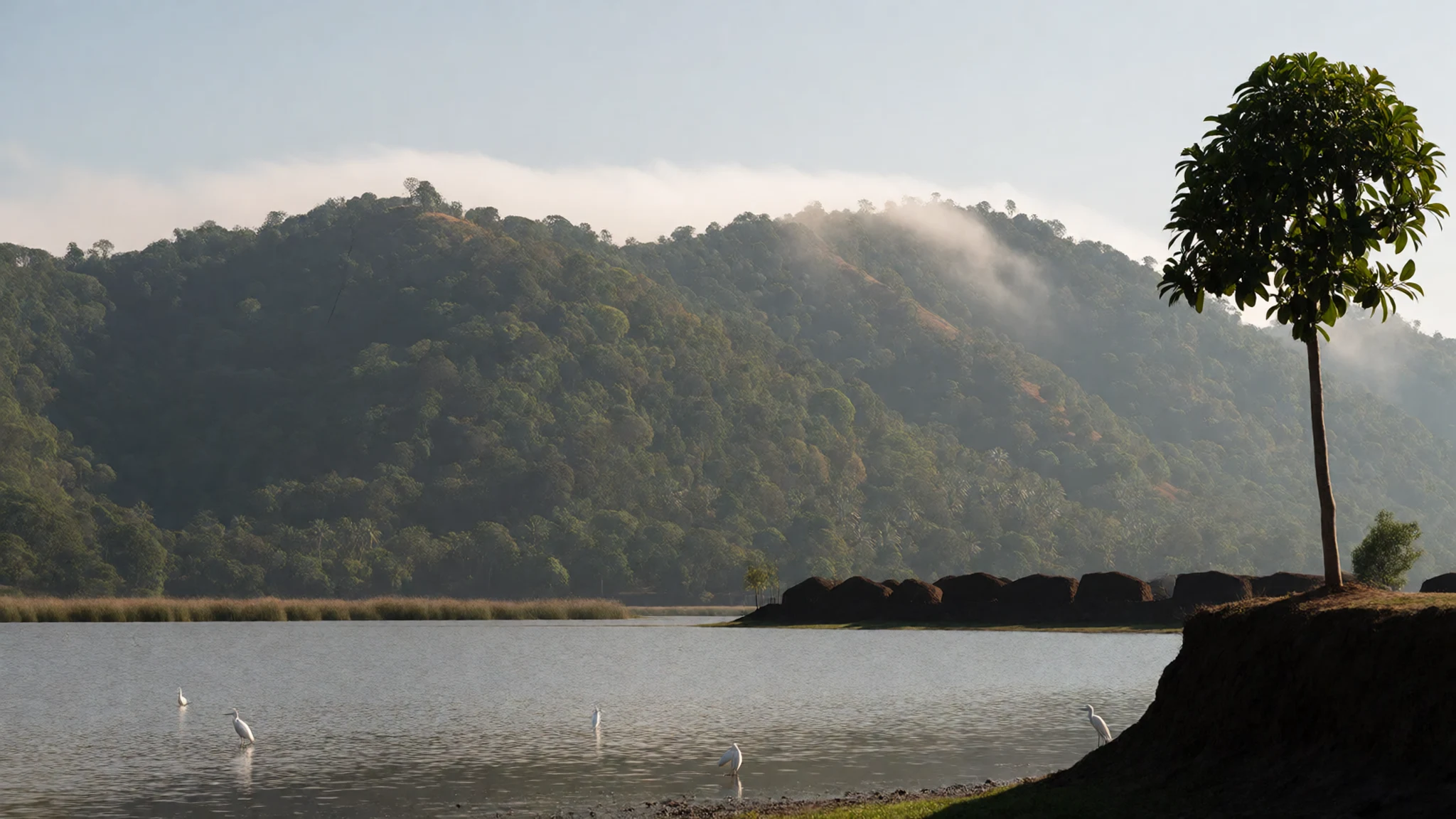
- Winter waterbirds — open beels, Sunamganj
Waterbirds are a winter reason to be on Tanguar Haor. As the weather cools, ducks, waders and other wetland birds use the open beels as a feeding ground, and the low boat makes a quiet hide if the engine stays off. Early light is when they are busiest and least disturbed. Later, heat haze and a busy channel push them up.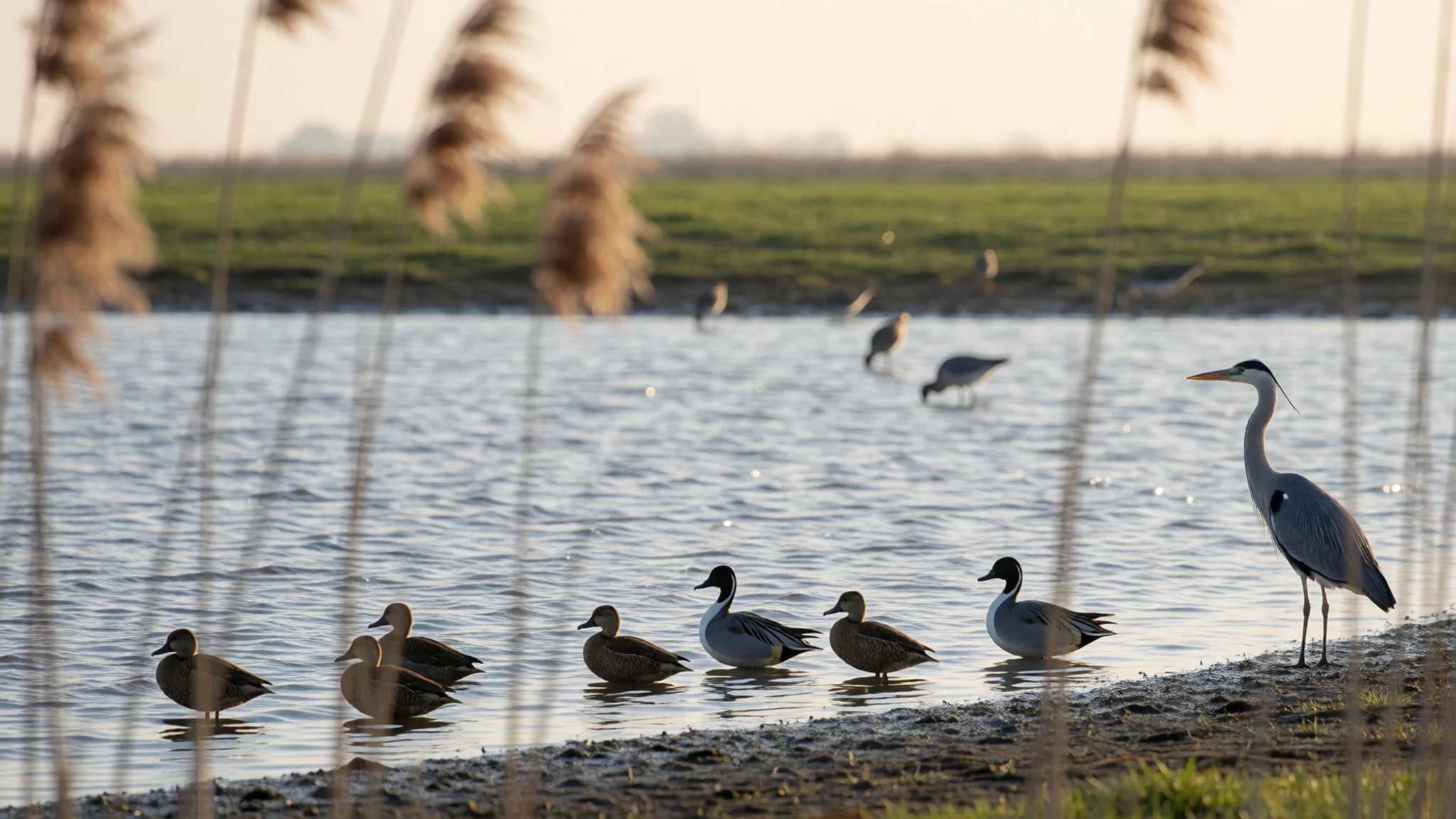
Culture
Tanguar Haor is a Sylheti world, closer in accent and habit to the rest of greater Sylhet than to Dhaka. Daily life bends around water level and prayer times. Tea is offered quickly to anyone who stops, often very sweet and often before any business is discussed. Fishers, boatmen and homestead women keep the basin working; the public face a visitor meets is usually the boatman, while much of the drying, cooking and mending happens on the mound, led by women who may not want a camera in the yard. Islam shapes the week for most households here, and a mosque, even a small one on a mound, is treated with quiet. Hindu neighbours are part of the wider Sunamganj picture, so assumptions about a single custom at every landing are unsafe.
Songs, wedding gatherings and the busy talk of a haat still belong to the villages, not to the tourist boat. People are generally welcoming and also tired of being treated as scenery. A greeting, a little Sylheti or Bangla, and patience when a channel is closed go further than a tipped note waved at a child. Ask before you photograph any person, and step onto a mound or into a home only when invited, shoes off where the household removes them.
What to wear
Tanguar Haor dresses like rural Sylhet: for water on ordinary days, and for show when the occasion demands it. At prayers, weddings and the haat, men put on a panjabi — a long tunic in cotton and silk mix — with a pyjama or a lungi. Women wear a saree, daily in cotton taant or a synthetic, and a silk or jamdani saree for weddings. The gamchha, a checked cotton cloth, is the everyday working textile: shoulder cloth, sun cover and pot-holder on a rocking boat.
What people wear now is plainer. On the boats and mound paths men are in a lungi or trousers, a shirt or T-shirt, plastic sandals or bare feet, gamchha in hand. Women wear a saree or salwar kameez, cloth hitched out of the mud, head covered with the anchal or a scarf when elders are near. In Sunamganj town, younger people add jeans, printed shirts and trainers; those town clothes thin out once the road ends. In the rains everyone chooses cloth that can be wrung out.
Visitors to Tanguar Haor should follow the same modesty and add weather sense. Covered shoulders and knees matter on the mounds and near any mosque. Sensible kit is light cotton, a long sleeve against sun and insects, a scarf, sandals that may get soaked and a dry pair in a bag. A light jumper helps on winter mornings. Stiff fashion shoes are a mistake; the banks are mud and the decks are wet.
What to eat
- Machher jhol — mound kitchens and houseboat decks
Machher jhol, a light freshwater fish curry, is the everyday meal around Tanguar Haor. Rui, catla or whatever smaller beel fish came in that morning goes into a gravy with onion, turmeric and green chilli, served with plain rice. It is served in mound kitchens and on houseboat decks.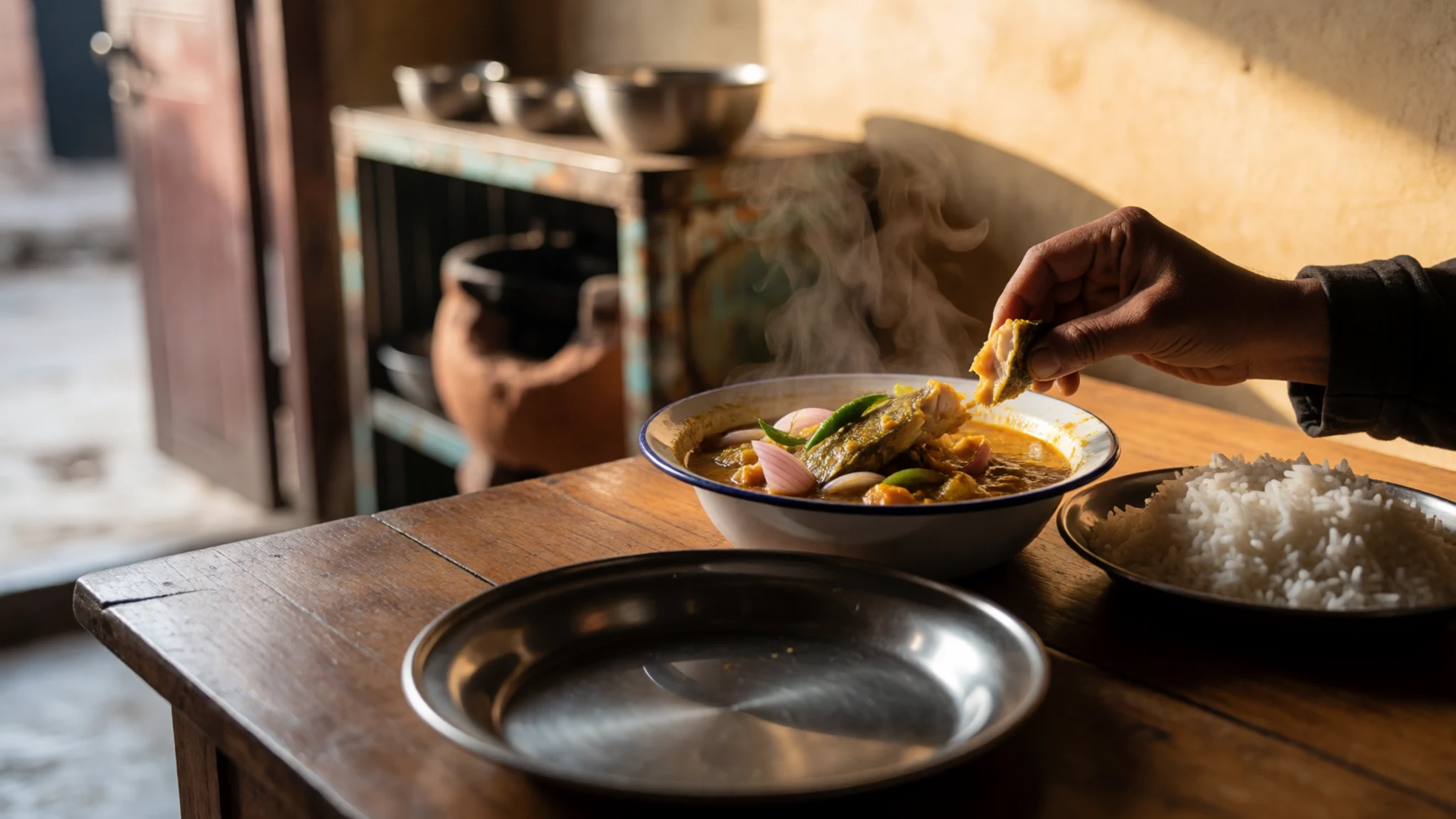
- Shutki bhorta — household kitchens and haats around Tahirpur
Shutki bhorta is mashed dried fish, a storecupboard staple of Tanguar Haor, where the catch is dried so it lasts beyond a good fishing day. The fish is cooked, then pounded with onion, chilli, mustard oil and coriander, and eaten in small amounts with a large plate of rice.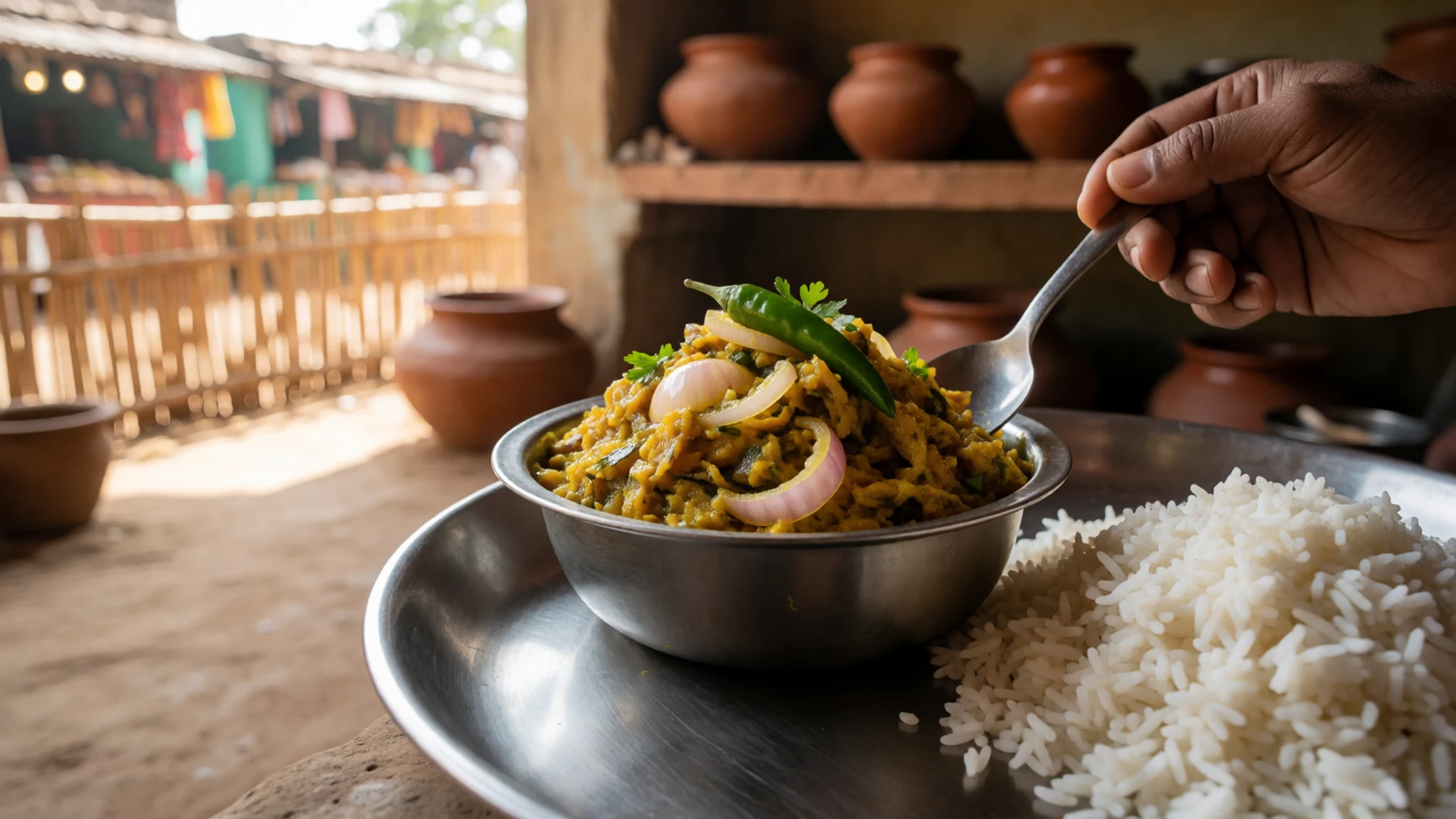
- Shatkora with fish — eateries in Tahirpur and Sunamganj town
Shatkora with fish is a Sylheti sour curry cooked in Sunamganj kitchens around Tanguar Haor when the citrus is in season. The fruit is sharply acidic, so a few pieces scent a whole gravy of freshwater fish. Rice is the usual plate beside it. Town eateries in Tahirpur serve it. - Pitha — Tahirpur haat stalls and homestead kitchens
Pitha, the rice cakes of a Bengali winter, appear around Tanguar Haor when the mornings turn cool and date palm juice is boiled for gur. Steamed or griddled, some are plain and some are stuffed with coconut or molasses. Tahirpur haat stalls sell them beside tea. - Bhat and dal — homestead kitchens and simple eateries at the Tahirpur launch points
Steamed rice and dal are the plate that sits under almost every other dish at Tanguar Haor. The rice is local boro when the season allows, boiled plain, with a thin lentil soup and a mash of seasonal greens or a fresh chilli on the side.
Plan it
Best time. November to February, when the air is cooler, rain is lighter and winter birds are on the beels. March and April turn hot and hazy. June through September is full flood: the basin reads as one sheet of water, but heavy rain and fewer dry landings make the days harder.
How long. 2-3
Getting there. Reach Sylhet via Osmani International Airport or travel overland from Dhaka to Sunamganj. From Sunamganj, continue by road to the Tahirpur side of Tanguar Haor. The last leg is by boat; there is no station at the water's edge. Check current official guidance for the launch point, which shifts with the water.
Budget. mid
Tips
- Book the boat through a licensed local operator and agree the route before leaving Sunamganj.
- Start early; haze, heat and afternoon cloud build later in the day.
- Carry cash, because cards are unreliable once you leave town.
- Bring drinking water. Shops thin out beyond the launch point.
- Ask which beels are open. Some channels are rested, and the rules change with the season.
Etiquette
- Ask before photographing people, and do not point a camera into a homestead.
- Step onto a mound or a boat only when invited, and remove shoes where the household does.
- Keep engines low and music off near birds and villages; sound carries over the water.
Nearby
Sources
- Wikidata (CC0)
- Wikipedia (CC BY-SA 4.0)
- Wikivoyage (CC BY-SA 4.0)