Tallulah Gorge
Tallulah Gorge, United States
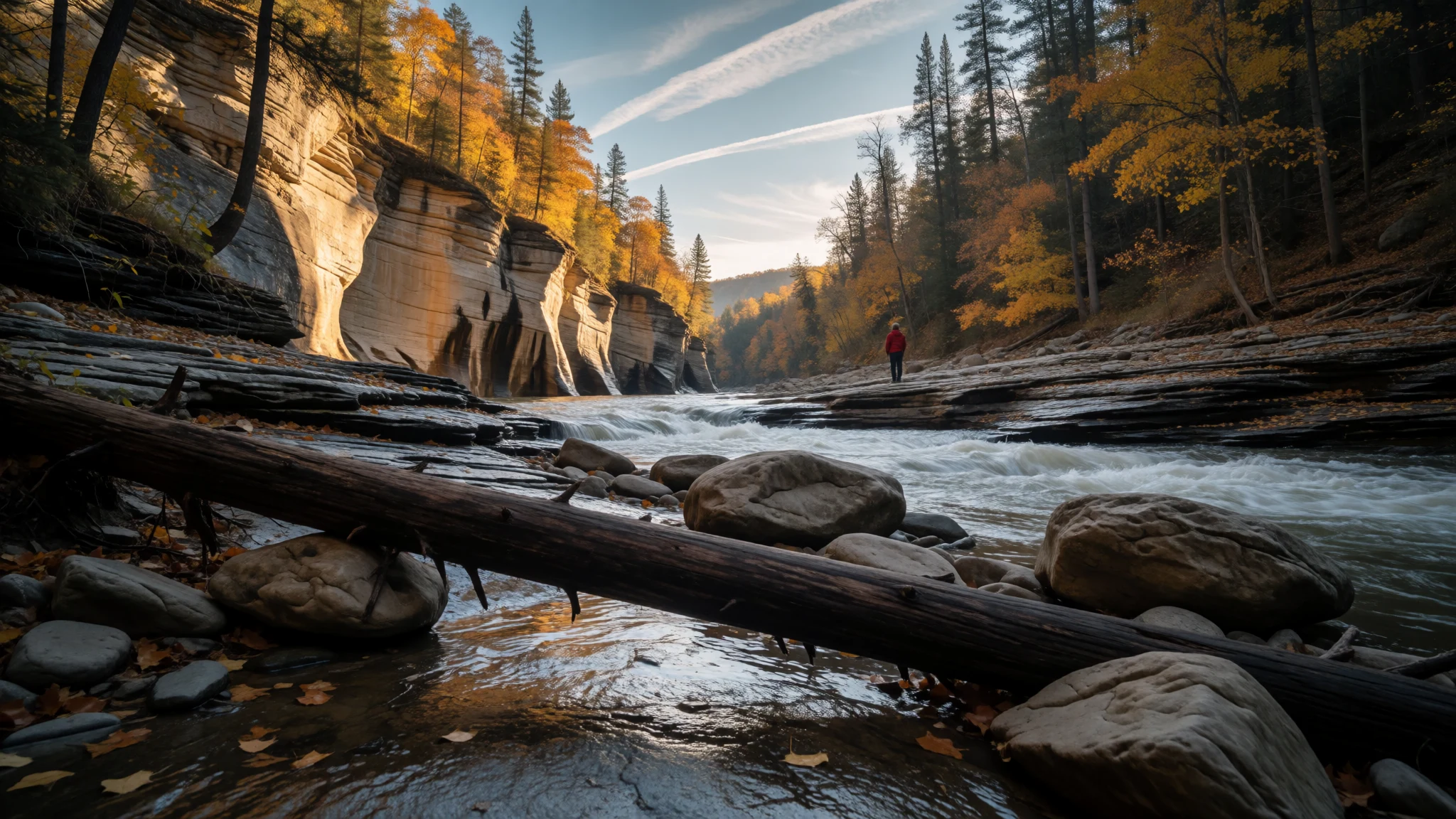
Tallulah Gorge is a deep Appalachian canyon in north Georgia where a tamed river, a daredevil's wire and rare wildflowers share one rim.
The place
Tallulah Gorge sits in the southern Appalachians of north-east Georgia, close to the small town of Tallulah Falls. The Tallulah River carved it by cutting down through a hard rock mass called Tallulah Dome, leaving a canyon about 3 km long and about 300 m deep. The rock is mostly quartzite with some schist, and it was folded twice over as the supercontinent Pangaea came together, a process spread across hundreds of millions of years. Much of the gorge and its waterfalls lies inside Tallulah Gorge State Park, and the gorge is counted among the Seven Natural Wonders of Georgia. Upstream, a dam finished in 1913 holds back Tallulah Falls Lake. Most of the river's flow is carried through a long tunnel around the falls to a power station downstream, so on an ordinary day the river in the gorge runs far thinner than it once did. A handful of days a year, the dam opens its gates. The river swells, drawing kayakers and rafters. Because the cliffs create sharp differences in light, shade and moisture, several ecosystems sit within a short distance of each other. Damp, shaded ledges suit plants that struggle on the sunny rim. The persistent trillium, an endangered wildflower, grows in this river basin and in only a few other places around the Georgia and South Carolina border. The result is a place that works as a geology lesson, a power-engineering exhibit and a woodland walk all at once.
Its story
Tallulah Gorge has drawn visitors since the early nineteenth century, long before it became a park. The arrival of the Tallulah Falls Railway in 1882 changed the scale of things: families from Atlanta could now ride up for the day, and the gorge became north Georgia's main tourist draw. Resort lodgings and bars grew up along the rim, and busy Sundays brought crowds into the thousands. Showmen followed the crowds. A tightrope walker known as Professor Bachman crossed the chasm in 1883 to advertise a local lodging house, and decades later Karl Wallenda made his own famous crossing, becoming the second person to do it. Then the river was put to work. Georgia Railway and Power built dams along it to generate electricity, partly to run Atlanta's streetcars. The town of Burton was bought and its residents moved before the valley was flooded to form Lake Burton. Opponents included Helen Dortch Longstreet, widow of a Confederate general, who campaigned in 1911 for the state to protect the gorge. The legislature could not raise the purchase money, but her effort is recorded as one of Georgia's earliest conservation campaigns. When the Tallulah dam was completed in 1913, the falls, whose roar had carried for miles, fell quiet, and the visitors drifted away. Later, a state park was created under Governor Zell Miller in cooperation with Georgia Power, and the gorge returned to public use.
What to see
- The rim overlooks — Tallulah Gorge State Park, rim
The overlooks along the gorge rim give the widest views into the canyon: sheer rock walls, the river far below and the chasm running away downstream. Go early for clearer light and fewer people, and expect the scene to change with the season, open and bare in winter, deep green in summer, fiery in autumn.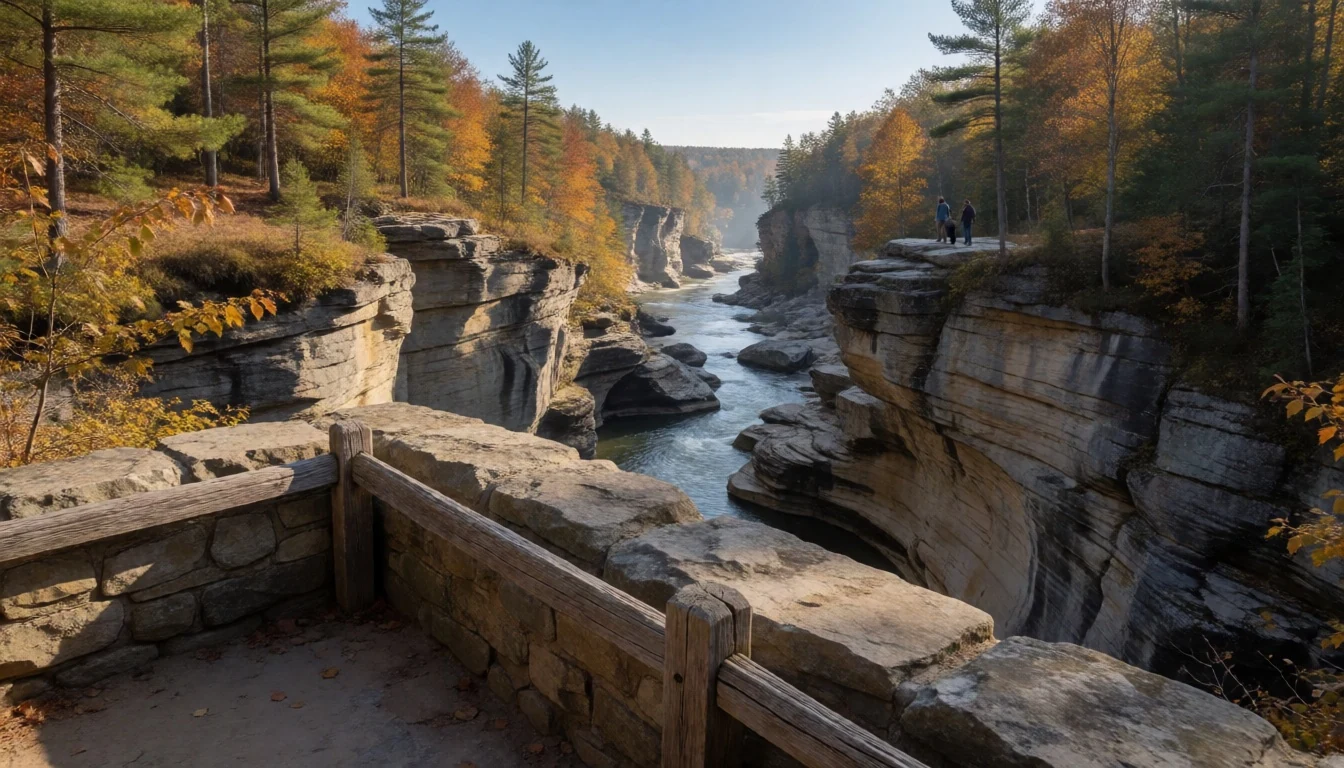
- Wallenda crossing site — Tallulah Gorge State Park, north rim
A marker stands beside the remains of the metal tower used when Karl Wallenda walked a tightrope across the gorge. It is a good place to pause, judge the width of the gap for yourself and imagine the nerve involved. The stunt drew onlookers, a reminder that the gorge was a spectacle long before it was a park.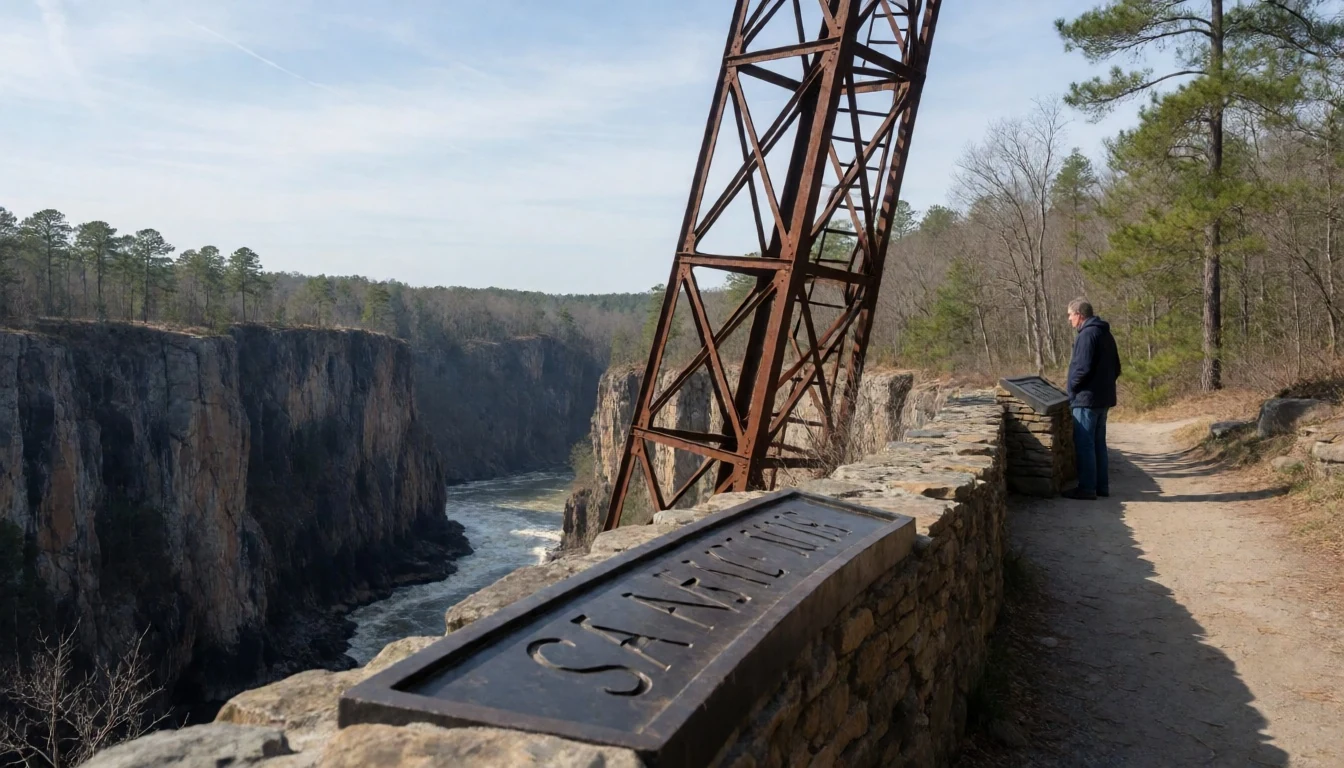
- Hawthorne Pool — Gorge floor, Tallulah River
Hawthorne Pool lies on the floor of the gorge, where the river slows into a clear pool among boulders. Reaching the bottom means a steep descent and a climb back, so it suits fit walkers in sturdy footwear. Access to the gorge floor can be controlled, so check the park's official site for current rules.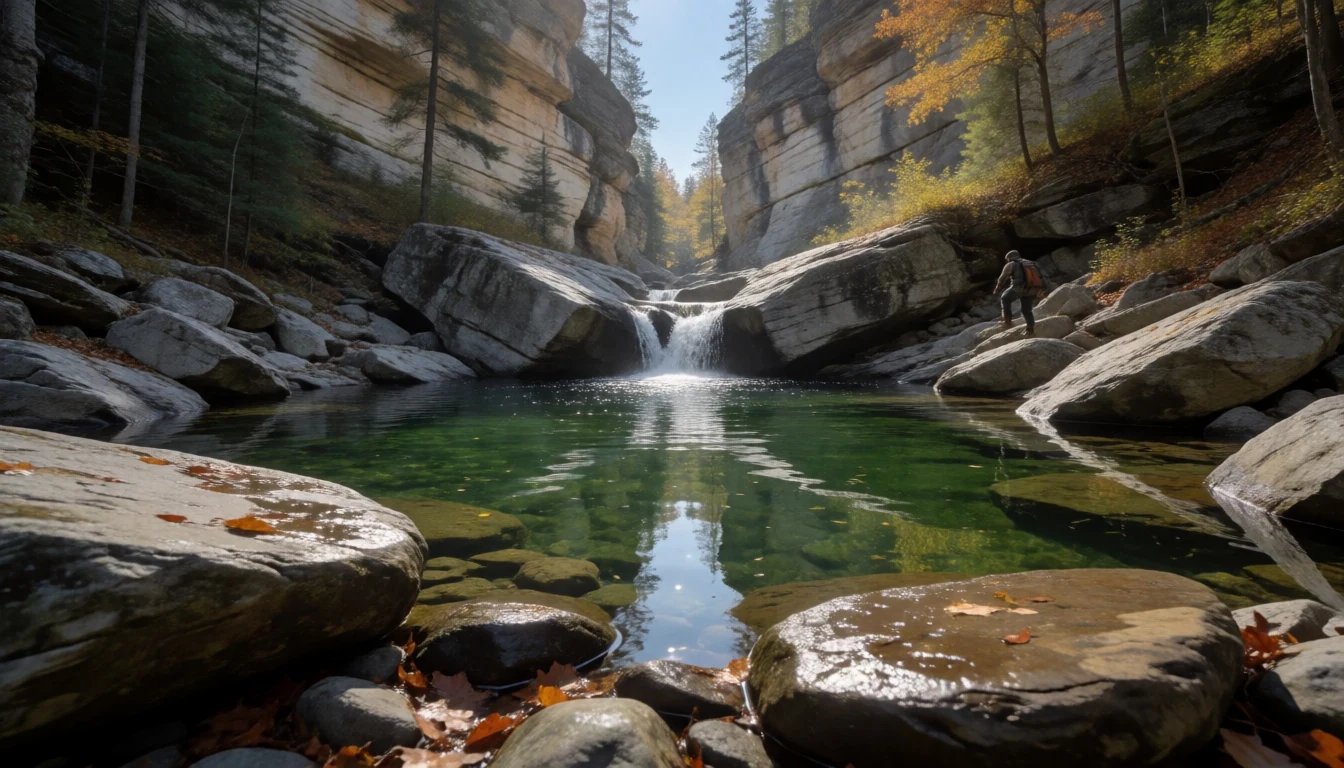
- The rim trails — Tallulah Gorge State Park
The rim trails link the overlooks through woodland, with easy stretches and a few steeper sections. Walking them shows the gorge from several angles and lets you watch the light move across the cliff faces. Wear shoes with good grip, as rock and roots can turn slick after rain.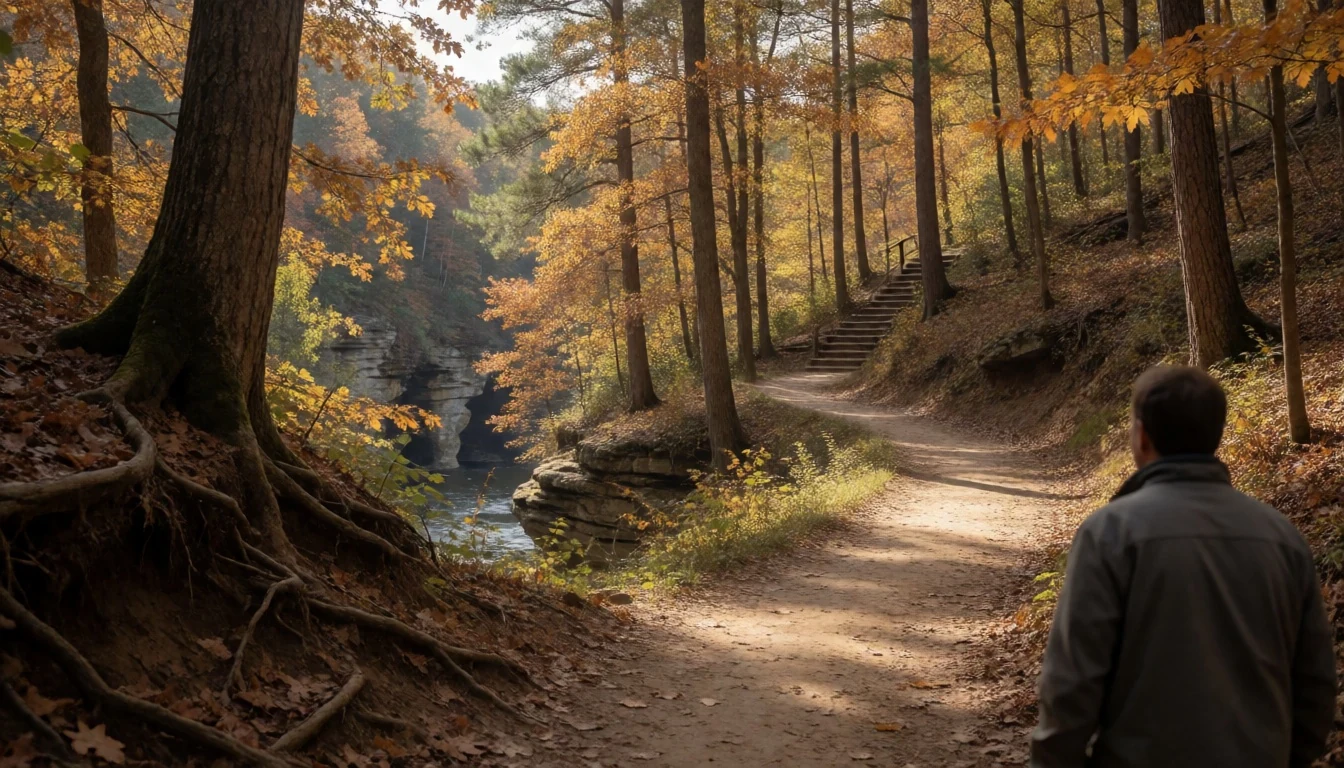
- Persistent trillium — Shaded slopes of the gorge
Persistent trillium is an endangered wildflower that grows in this river basin and in only a few other places around the Georgia and South Carolina border. It blooms in spring on shaded slopes. Visitors who come then should look without touching and keep to the path, since the plant is rare and easily damaged.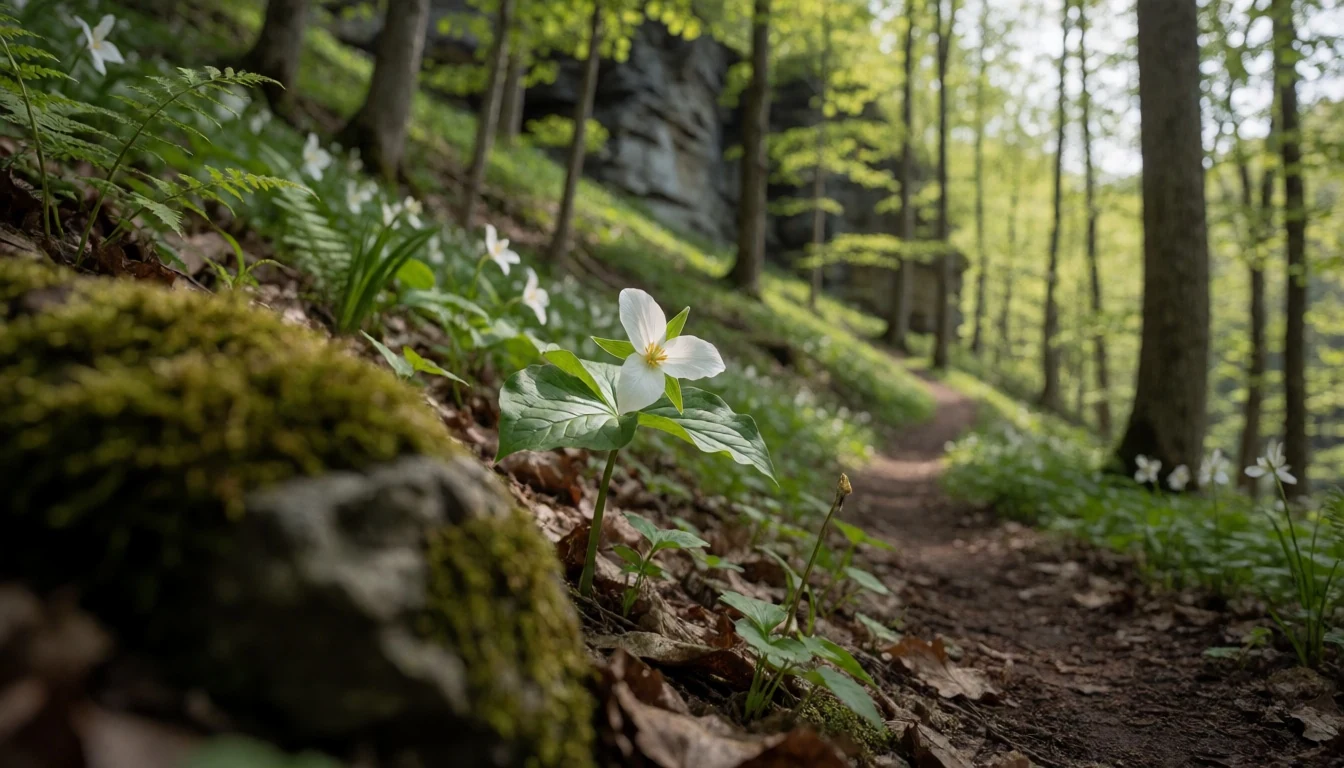
Culture
Tallulah Gorge has a culture built on spectacle, work and rescue. For well over a century it has been a day-out destination for Georgians, first by railway from Atlanta and now by car, and the habit of dressing up the outing with a stunt survives in the local memory of the wire walkers. The river's second life as a power source is just as much part of the story: the dam and its tunnel are visible reminders that the falls were traded for electricity, and that people argued bitterly about it at the time. Helen Dortch Longstreet's failed campaign to save the gorge is now treated as an early chapter in Georgia's conservation story, and the state park that exists today is its late answer. Local outdoor culture centres on walking, climbing and paddling, and the scheduled water releases bring a small community of whitewater enthusiasts who plan their year around them. Families treat the rim walk as a weekend ritual, and the small town nearby leans on that trade. Visitors will meet a relaxed, courteous Southern manner: strangers on the trail greet each other, and drivers and shopkeepers are generally patient. Stay on the marked trails and behind the barriers at every overlook, and never climb fences or rock edges for a photograph, because the drops are sheer and the rare plants are fragile.
What to wear
Tallulah Gorge has no single costume, but the wider Appalachian tradition is one of practical homespun: woven cotton and wool, hand-stitched quilts and sturdy work clothes made for farm and mill. Denim overalls and plaid shirts still carry that heritage, and the Sunday-best outfits of the railway-resort era were the formal side of the same culture. Today, people at the gorge dress for the outdoors. Expect hiking boots or trainers, shorts and light shirts in summer, fleeces and waterproof jackets in the cooler months, and sun hats, caps and team T-shirts at every age. Kayakers and rafters wear wetsuits or drysuits on release days. Visitors should plan for Georgia weather, which can be hot and humid in summer and chilly in winter. Wear shoes with real grip and ankle support rather than smooth-soled sandals, because the trails include steps, rock and wet roots, and the climb out of the gorge is hard on bad footwear. Layers work better than one heavy coat, and a light rain jacket earns its place in the bag in any season. Bring a hat, sun protection and insect repellent for warmer months. There is no religious dress code to think about, so comfort and safety are the only rules.
What to eat
- Fried chicken — Family diners in nearby towns
Fried chicken with a crisp, well-seasoned crust is the Southern default. It is served with sides such as slaw, beans or greens. Look for it at family diners and country eateries in the small towns around the gorge.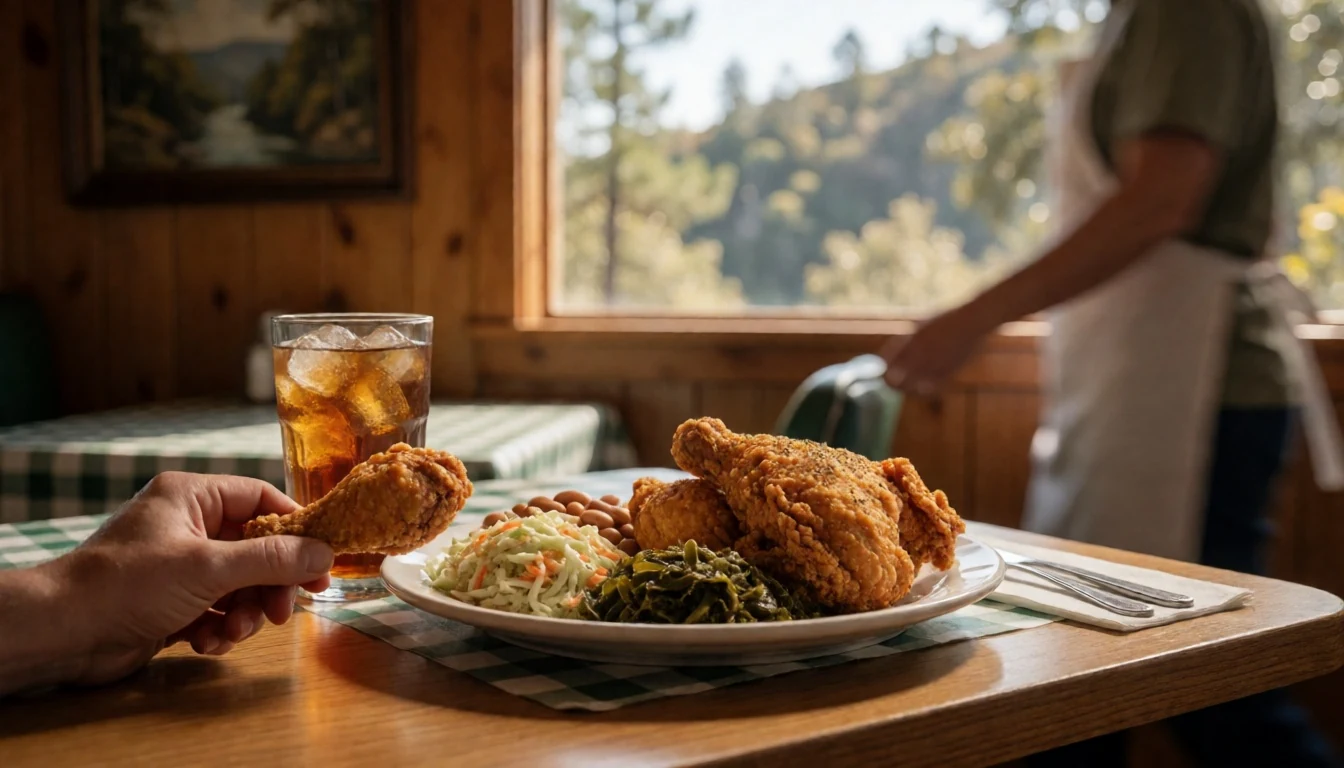
- Biscuits and gravy — Roadside breakfast counters and diners
A soft, buttery biscuit split and covered in peppery sausage gravy makes a heavy but satisfying breakfast before a long walk. It is a staple of roadside breakfast counters across north Georgia.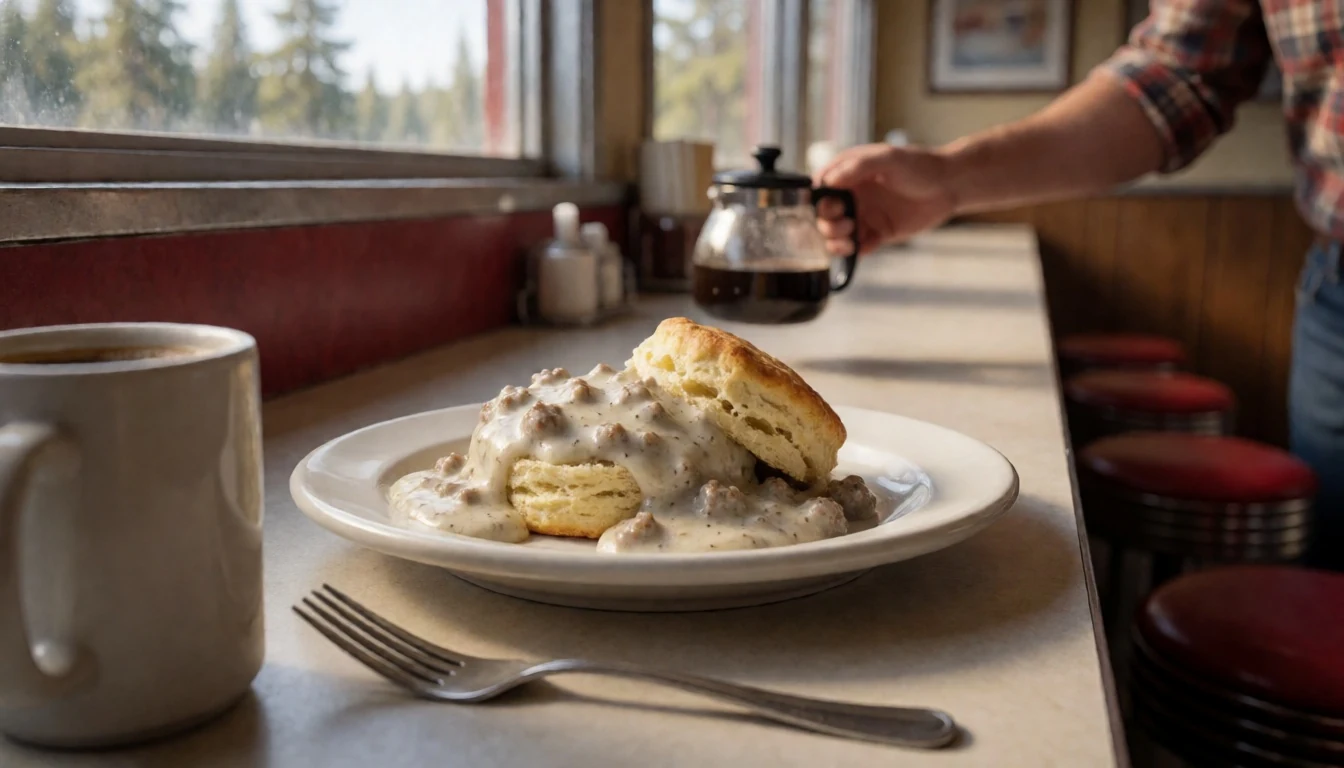
- Pulled pork barbecue — Barbecue eateries along the roads near the park
Pork smoked for hours, pulled by hand and served on a bun or a plate with a tangy sauce. Southern barbecue styles vary from place to place, so try the local sauce and the sides, usually slaw and baked beans. - Cornbread with collard greens — Country lunch counters
Collard greens are cooked slowly with smoked meat until tender and salty, and cornbread is used to mop up the cooking liquid. It is an honest, old-fashioned pairing found at meat-and-three style lunch places. - Georgia peaches — Roadside produce stands and farmers' markets in summer
Peaches are the state's best-known fruit, eaten fresh in summer or baked into cobblers and pies. Buy them in season and ask when they were picked; ripe fruit is messy, sweet and worth the napkins.
Plan it
Best time. April–May for spring wildflowers and fresh green woods, and October–November for autumn colour and comfortable walking. Summer is hot and humid in Georgia, and winter can be cold, though the bare trees open up the views.
How long. 1–2
Getting there. Fly to Hartsfield–Jackson Atlanta International Airport, then drive north-east into the Appalachian foothills to Tallulah Falls. The gorge is reached by road, so a hire car is the practical choice; check the state park's official site for directions and any parking arrangements.
Budget. mid
Tips
- Arrive early on weekends and in autumn, when the overlooks and car parks fill up
- Check the park's official site for trail conditions and any rules for reaching the gorge floor before you set out
- Look up the dam's water-release dates if you want to see the river in full flow or try paddling
- Carry water and snacks, as the climb back up from the gorge is tiring
- Phone signal can be patchy in the canyon, so download a map beforehand
Etiquette
- Keep to marked trails and stay behind barriers at the overlooks
- Look at the rare wildflowers without picking or trampling them
- Take your litter away with you
Nearby
Sources
- Wikidata Q7680183 (CC0)
- Wikipedia: Tallulah Gorge (rev 1370686366) (CC BY-SA 4.0)
- Wikivoyage: Tallulah Gorge (CC BY-SA 4.0)
- David Dugan, 15-18-001: Tallulah Gorge (CC BY 3.0)
- FloNight (Sydney Poore) and Russell Poore, Tower at site of Wallenda's crossing of Tallulah Gorge (CC BY-SA 1.0)
- Persistent Trillium Photo.jpg (Public domain)
- Tallulah gorge2.jpg (Public domain)
- Thomsonmg2000, Tallulah Gorge Hawthorne pool (CC0 1.0)
- Thomsonmg2000, Tallulah River at the bottom of the gorge (CC0 1.0)
- David Dugan, 15-18-004: Tallulah Gorge (CC BY 3.0)
- David Dugan, 15-18-007: trail at Tallulah Gorge (CC BY 3.0)


