Taghazout
Taghazout, Morocco
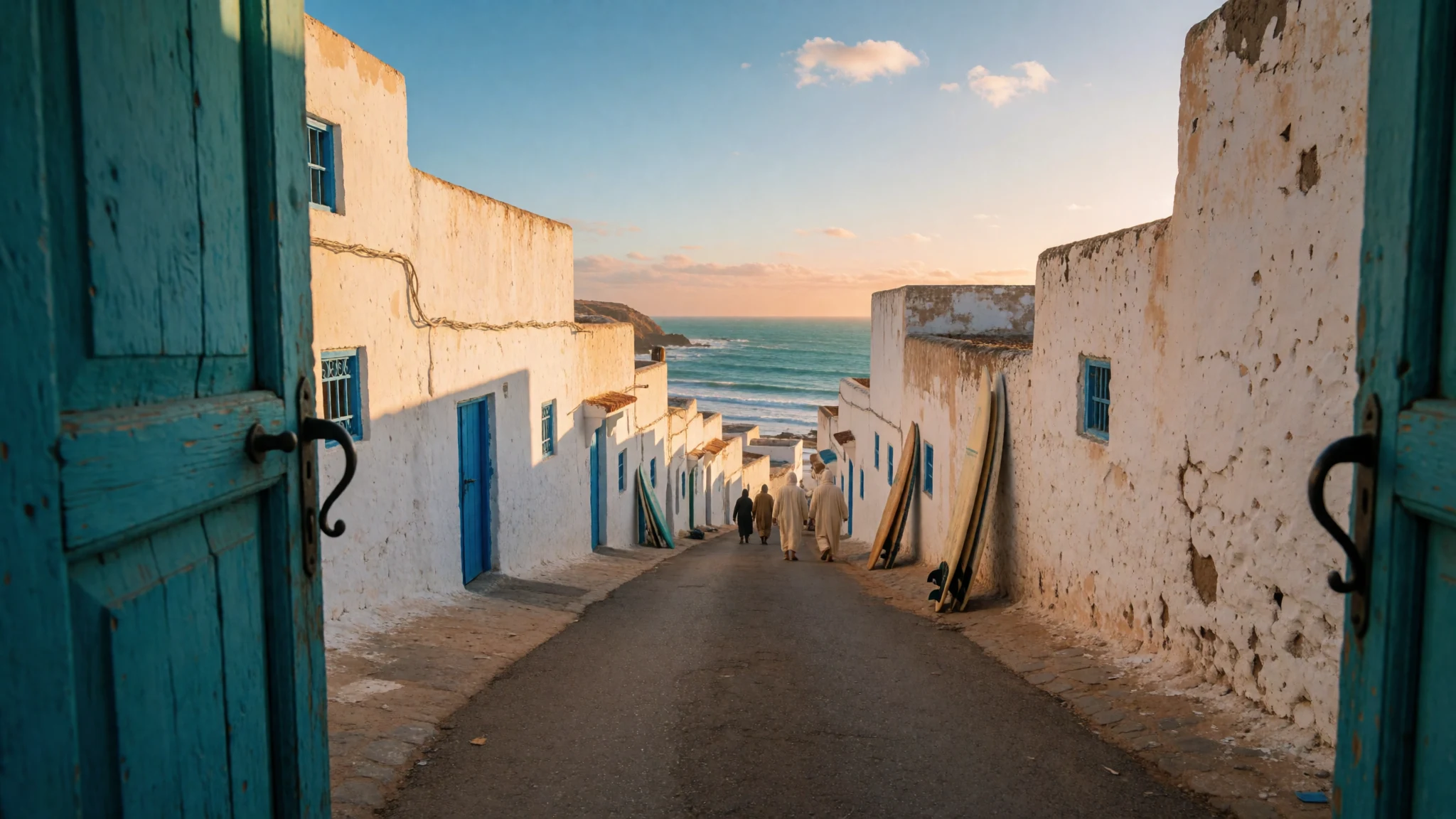
A relaxed Berber fishing village turned surf haven, blending rugged Atlantic waves with a laid-back coastal atmosphere.
The place
Taghazout is a small Berber fishing village situated on the southwestern coastline of Morocco. It sits about 19 km north of Agadir, tucked between the Atlantic Ocean and the western foothills of the High Atlas mountains. Once a quiet settlement where locals primarily focused on fishing and the production of argan oil, the village transformed in the 1960s and 1970s when surfers discovered its world-class breaks. Today, it is a vibrant hub of surf camps, guesthouses, and cafés, all clinging to a steep main street that descends toward the shoreline.
While the core of the village retains some of its rustic charm, the surrounding area is undergoing significant change. The neighbouring villages of Tamraght and Aourir are growing closer to the centre, and the southern edge of the village has been overtaken by the Taghazout Bay development. This modern expansion introduces a seafront promenade, golf courses, and international resorts, creating a sharp contrast with the traditional fishing boats that still land on the sand every evening. The atmosphere remains generally liberal for the region, though a balance is maintained between the tourist-centric surf culture and the traditional Berber roots of the local population. The climate is mild throughout the year, making it a steady draw for those seeking a slower pace of life away from the busier Moroccan cities.
Its story
The deep history of Taghazout is largely preserved through oral tradition rather than written records. Like many Berber settlements in southern Morocco, the village served for a long time as a seasonal outpost. The indigenous Berber tribes originally lived further inland in the foothills, using the coastal site primarily as a functional place to store fishing equipment and launch boats. Records of early conflict exist, specifically detailing clashes between united Berber tribes and Portuguese forces during the 16th century.
As Spanish influence grew in the 19th century, the village evolved from a temporary camp into a permanent community. The construction of mosques and factories provided the infrastructure needed to house the Berber people year-round. By the late 1960s, Taghazout experienced a social shift similar to that of Kuta in Bali. It became a magnet for young travellers and nomads exploring southern Morocco. For a period, hundreds of people lived in a makeshift colony of tents and camper vans on the beach, creating a bohemian enclave. This informal camping era eventually ended as the Moroccan government moved toward formalised tourism. The tents were replaced by equipped hotels and resorts, and in 1992, Taghazout became the centre of its own independent municipality. This shift from a rugged outpost to a managed tourist destination reflects the broader economic transition of the region toward sustainable tourism and urban development.
What to see
- Anchor Point — North of the village centre
The most famous surf break in the region, known for its long right-hand point break. It attracts experienced surfers from around the world, particularly during the big swells of winter. The rocky headland above the break provides a panoramic view of the entire bay and the crashing Atlantic waves. - Hash Point — Village centre coastline
A popular spot located directly in front of the village. It is less intimidating than Anchor Point but still offers quality waves. It is a prime spot for watching the local surf culture in action while remaining within easy walking distance of the village cafés. - Panorama Beach — South of the village centre
A scenic stretch of coast south of the main village. As the name suggests, the area is prized for its wide vistas of the ocean. It is a quieter alternative to the main village beach, ideal for those wanting to escape the crowds and enjoy the sea breeze. - Tamraght and Aourir — South of Taghazout
These neighbouring villages offer a slower pace and often more affordable accommodation. Aourir is particularly noted as 'Banana Village' due to the extensive plantations lining the road. Their sandy beach breaks are the primary training grounds for beginners learning to surf under local guidance. - The Fishing Beach — Below the main village street
The traditional heart of the village where the local fleet lands. Every late afternoon, fishermen bring their colourful wooden boats up onto the sand. It is the best place to witness the village's original identity as a fishing community amidst the modern surf shops.
Culture
Culture in Taghazout is a blend of traditional Berber heritage and a modern, international surf ethos. The local people are predominantly of Berber origin, and their influence is seen in the architecture, the language, and the local economy, which still relies heavily on fishing and argan oil production. Because of the influx of global travellers, the village has developed a cosmopolitan feel that is more relaxed than the conservative interiors of Morocco. This creates a unique social space where traditional Moroccan hospitality meets the laid-back nature of surf culture.
Despite this openness, the village remains a traditional community. While the beachfront is a zone of leisure, the village streets are spaces of local life. Respect for these boundaries is key to maintaining a good relationship with the residents. The local economy is currently in a state of tension as the village grapples with massive urbanisation projects like Taghazout Bay, which promise jobs but threaten the original village character. Please remember to dress modestly and cover your shoulders and knees when walking through the village streets.
What to wear
Traditional dress in Taghazout is rooted in Berber textiles, featuring heavy woollen cloaks and wraps designed for the cool Atlantic breezes and the mountain foothills. These garments often feature geometric patterns and are made from locally sourced wool. In the surrounding countryside, you will still see traditional Berber attire, though it is less common within the tourist centre of the village.
Nowadays, the local style is a mix of practical Moroccan wear and global surf fashion. It is common to see locals in tracksuits or casual Western clothing, while the surf community wears boardshorts, rash guards, and oversized t-shirts. Wetsuits are the unofficial uniform of the village from October to April, as the Atlantic waters remain chilly even in the sun.
Visitors should bring a mix of clothing. Swimwear is perfectly acceptable on the beach and at surf camps, but modest clothing is required for the village streets. Lightweight linens are best for the day, but a warm fleece or jacket is essential for the cool evenings. Sturdy sandals or reef booties are recommended for navigating the rocky shores and avoiding sea urchins.
What to eat
- Tagine — Village cafés and restaurants
The quintessential Moroccan slow-cooked stew, often featuring lamb or chicken with prunes, apricots, or vegetables, cooked in a conical clay pot. Found in almost every eatery along the main street. - Fresh Grilled Fish — Beachfront eateries
Caught daily by the local fleet, fresh sardines and mackerel are often grilled simply with lemon and salt. These are best enjoyed at the small establishments near the beach landing. - Mint Tea — Any village café
The national drink of Morocco, served hot, sweet, and poured from a height to create a foam. It is the social lubricant of the village, served in every café. - Argan Oil Pastries — Local cooperatives and markets
Local sweets and breads infused with the nutty flavour of argan oil, which is produced in the nearby groves. These are often sold by local cooperatives in the village. - Fresh Fruit Juices — Juice bars along the main street
Vibrant blends of orange, avocado, and pomegranate, often served in large glasses. These are the primary energy source for surfers between sessions.
Plan it
Best time. October to April for the biggest surf swells; summer is better for beginners as the waves are smaller and the weather is consistently warm.
How long. 3–5
Getting there. Fly into Agadir Al Massira Airport, then take a taxi or a local bus to the village. Alternatively, take a bus from Marrakech to Agadir, followed by a taxi or local transport for the final leg.
Budget. mid
Tips
- Carry cash for small cafés and local cooperatives as cards are not widely accepted
- Book surf camps in advance during the Christmas and New Year period as they fill up
- Wear reef booties when walking on the rocks to protect against sea urchins
- Check local surf reports before heading to the point breaks
- Carry a light jacket for the evenings, even in summer
Etiquette
- Cover your shoulders and knees when walking through the village
- Ask permission before photographing local residents or their homes
- Avoid loud noise or disruptive behaviour in the residential alleys
Nearby
Sources
- Wikidata Q621472 (CC0)
- Wikipedia (CC BY-SA 4.0)
- Wikivoyage (CC BY-SA 4.0)