Tabiteuea
Tabiteuea, Kiribati
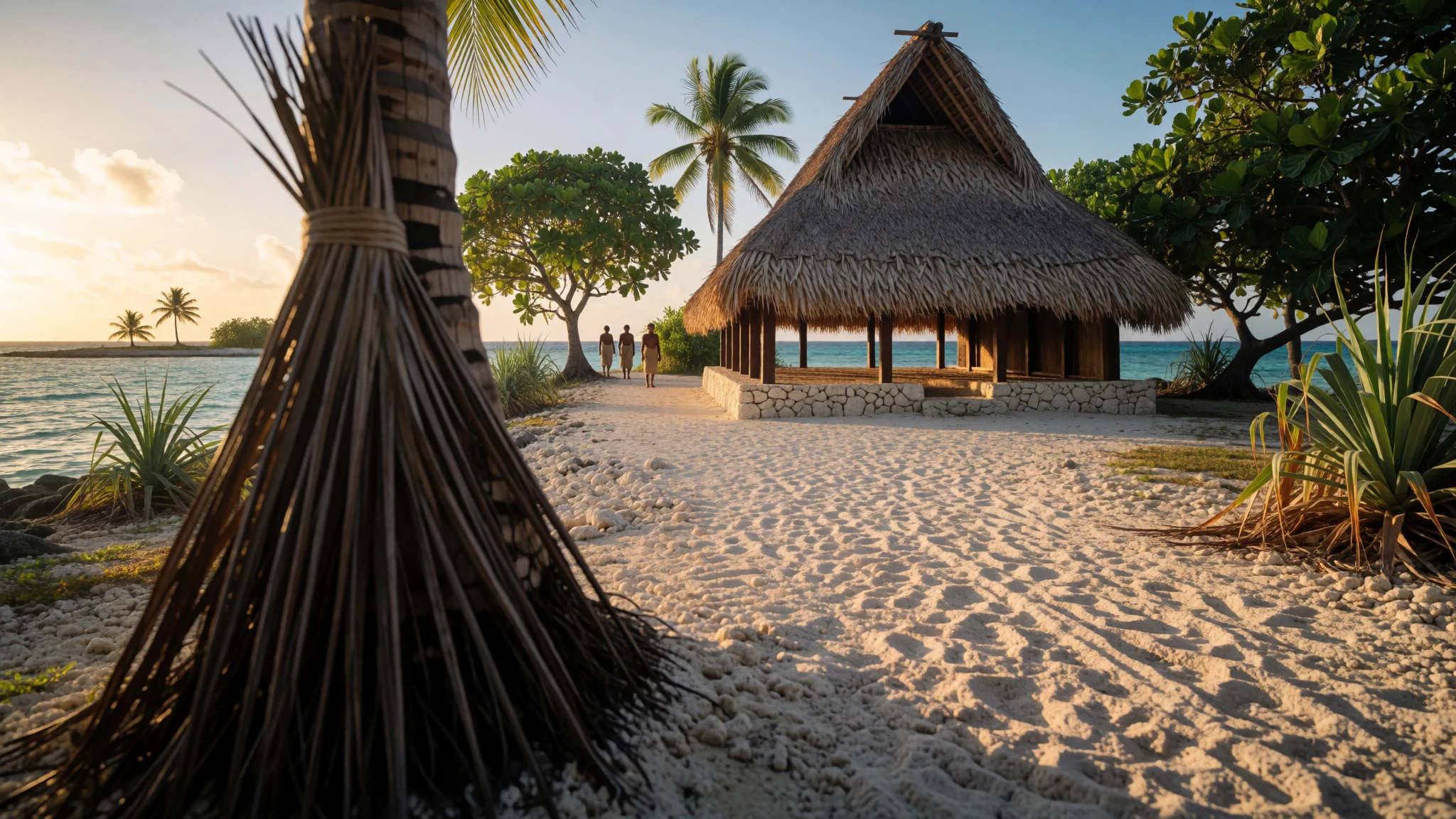
Tabiteuea is a quiet Pacific atoll of lagoon, reef and village meeting houses, where life still runs on tides and fishing.
The place
Tabiteuea is an atoll in the southern part of the Gilbert Islands, in Kiribati, sitting just below the Equator. It is a ring of reef and low land around a wide lagoon, and the highest ground is only about 3 m above the sea. The horizon is mostly water and sky, and the tallest structures are coconut palms and the big roofs of village meeting houses. About 5,500 people live here, mostly in villages along the eastern rim, where the land is thickest. Aanikai, the main island, lies in the north, and a string of smaller islets continues down the rim. For local government the atoll is split in two: North Tabiteuea, known in Gilbertese as Tabiteuea Meang, with its centre at Utiroa, and South Tabiteuea, or Tabiteuea Maiaki, centred on Buariki. The lagoon is far larger than the land, and people have long fished it with customary methods, as well as working the open ocean on the outer side. Daily life follows tides, weather and the catch. Visitors should know what this means in practice: Tabiteuea is not a resort island. Services are simple, travel here depends on connections through Tarawa, the heat is constant, and shade is precious. What it offers instead is quiet, a working Pacific community, and a landscape where the sea is never more than a short walk away.
Its story
Tabiteuea's name is usually explained as 'no chief allowed', and the atoll has a long reputation for egalitarian habits, with decisions made collectively rather than handed down by a ruler. The meeting house, the maneaba, is the physical form of that idea, and Tabiteuea is known for the scale of its maneaba. European contact came in the late eighteenth century, when a British brig under Charles Bishop entered the lagoon and was met by many canoes. Bishop gave the atoll and its main island names of his own, and for a long time outsiders called the atoll Drummond's Island. The nineteenth century brought darker episodes. During a United States naval expedition, a dispute that began when a sailor went missing, added to earlier friction with a visiting crew, escalated into fighting around Utiroa. Islanders were killed and wounded, and the village was burned. Local memory of these events survives in oral accounts, including a place name that preserves the memory of the dead. Later, during the American Civil War, a Confederate raider called in looking for American whaling ships and found that they had gone. These visits matter less for their detail than for what they show: a lagoon atoll that sailors treated as a stopping point, and a community that defended its own ground. Today the old name Drummond's Island lingers mostly in books and charts, while Tabiteuea is the name people use.
What to see
- Utiroa and the northern maneaba — North Tabiteuea
Utiroa is the centre of North Tabiteuea and the best place to understand the atoll's character. The large meeting house here, with its deep thatched or tin roof and open sides, is where the community gathers. Visit with an introduction from a local contact, and ask before entering or photographing.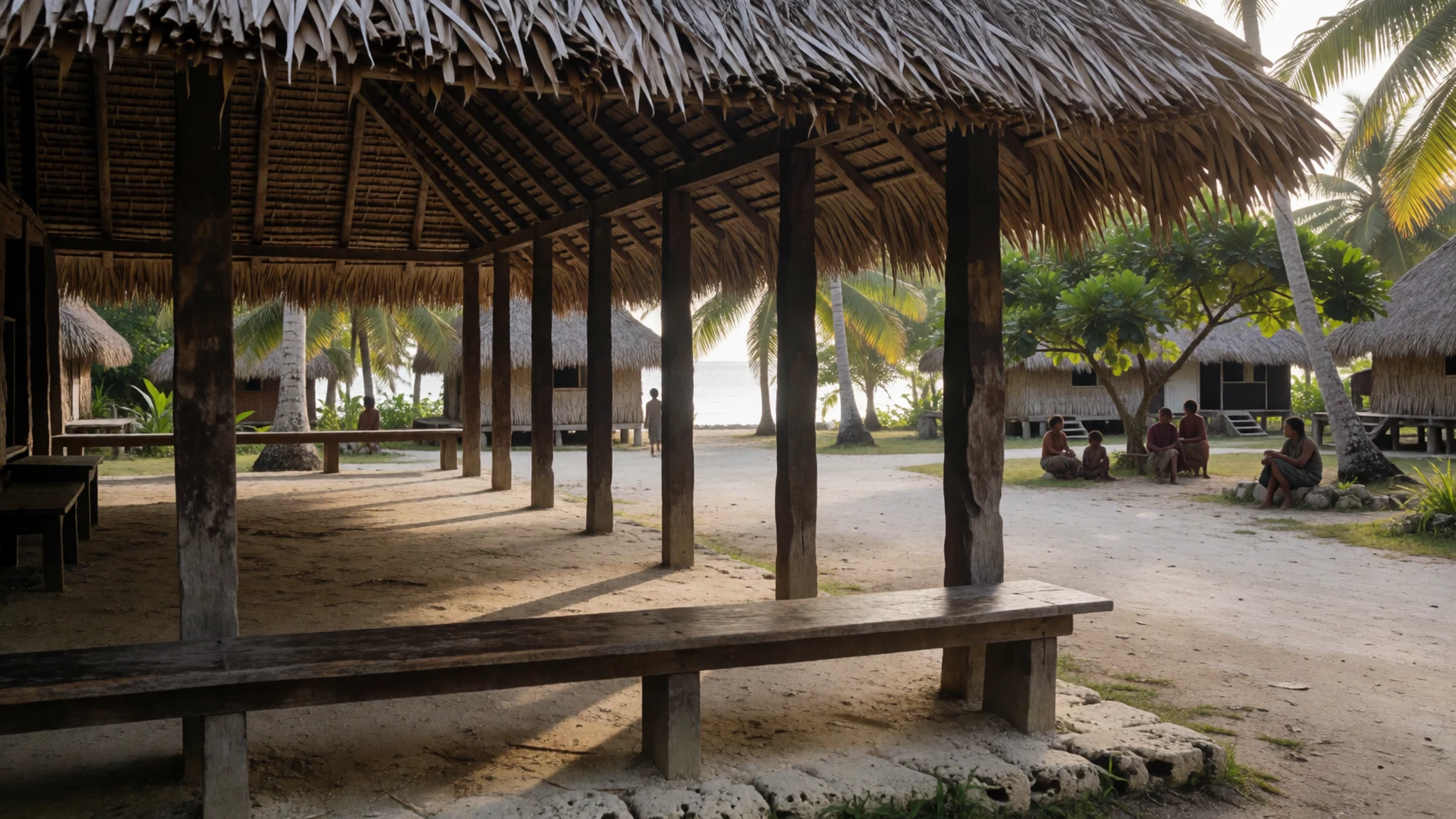
- Aanikai, the main island — Northern rim
Aanikai is the principal island in the north of the atoll, with villages, churches, coconut groves and shoreline on both lagoon and ocean sides. Walking at low tide shows how people use the reef flats, and the contrast between calm lagoon water and open-sea surf is easy to see.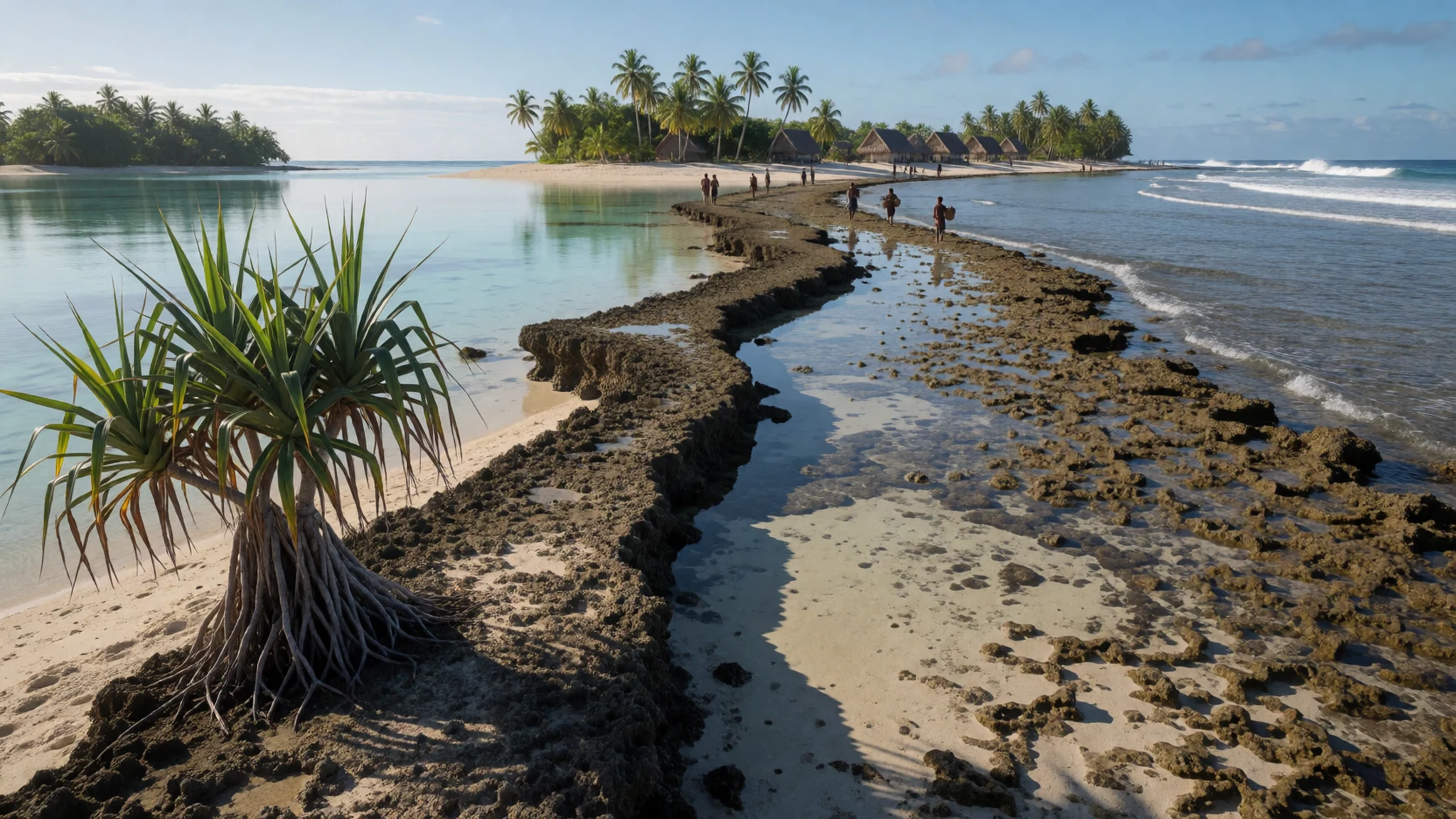
- The lagoon — Atoll interior
The lagoon is much larger than the land around it, and from the air it shows in shifting greens and blues. Local boats and canoes cross it for fishing and for visits between villages. A trip with a local guide is the safest way to see it, because shallows and coral heads are hard to read.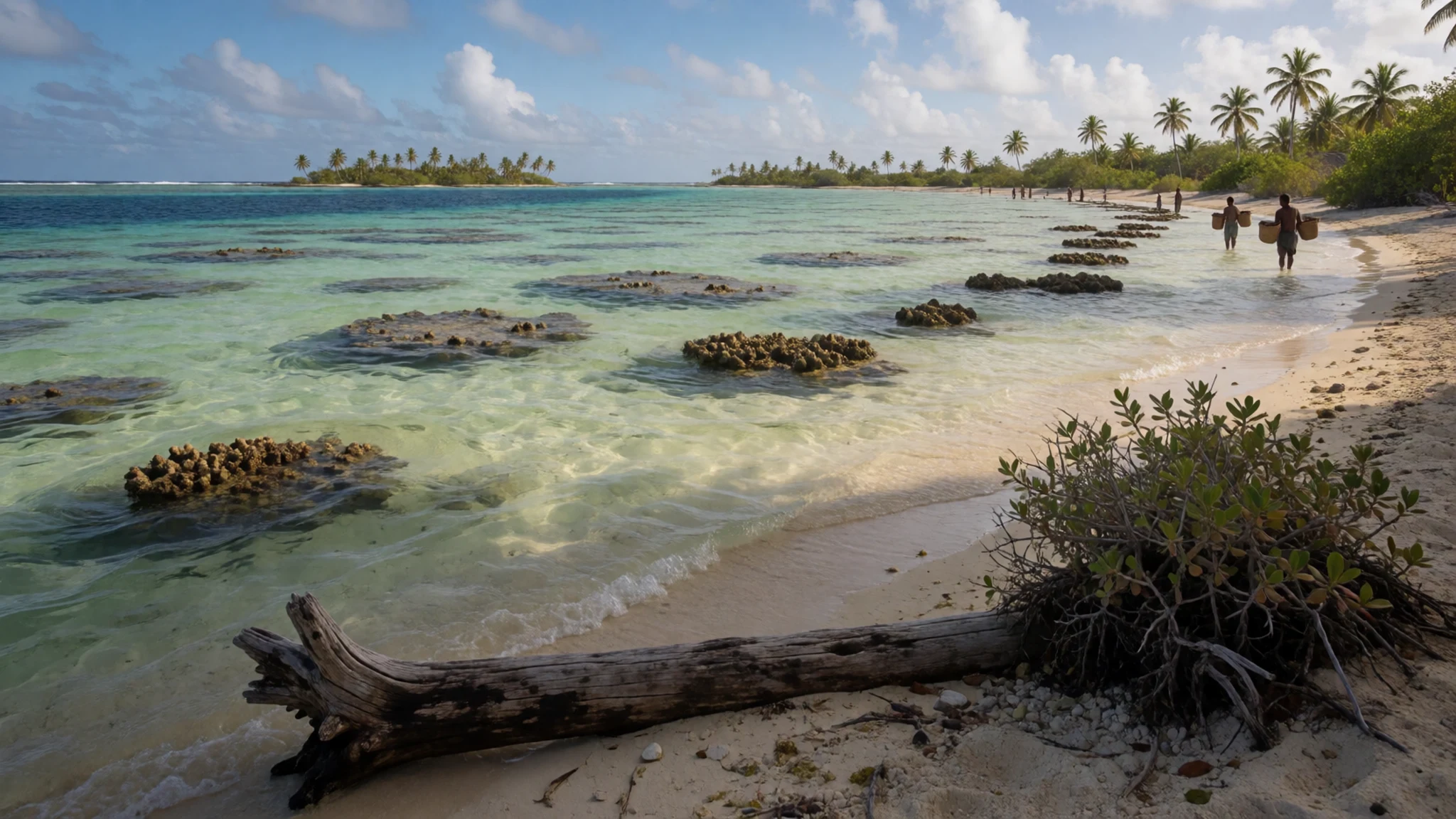
- Buariki and South Tabiteuea — South Tabiteuea
Buariki is the centre of South Tabiteuea, a smaller and quieter half of the atoll. It suits slow walking between villages, watching fish being landed, and noticing how houses, gardens and meeting houses are arranged. Expect few formal attractions and plenty of conversation if you arrive with patience.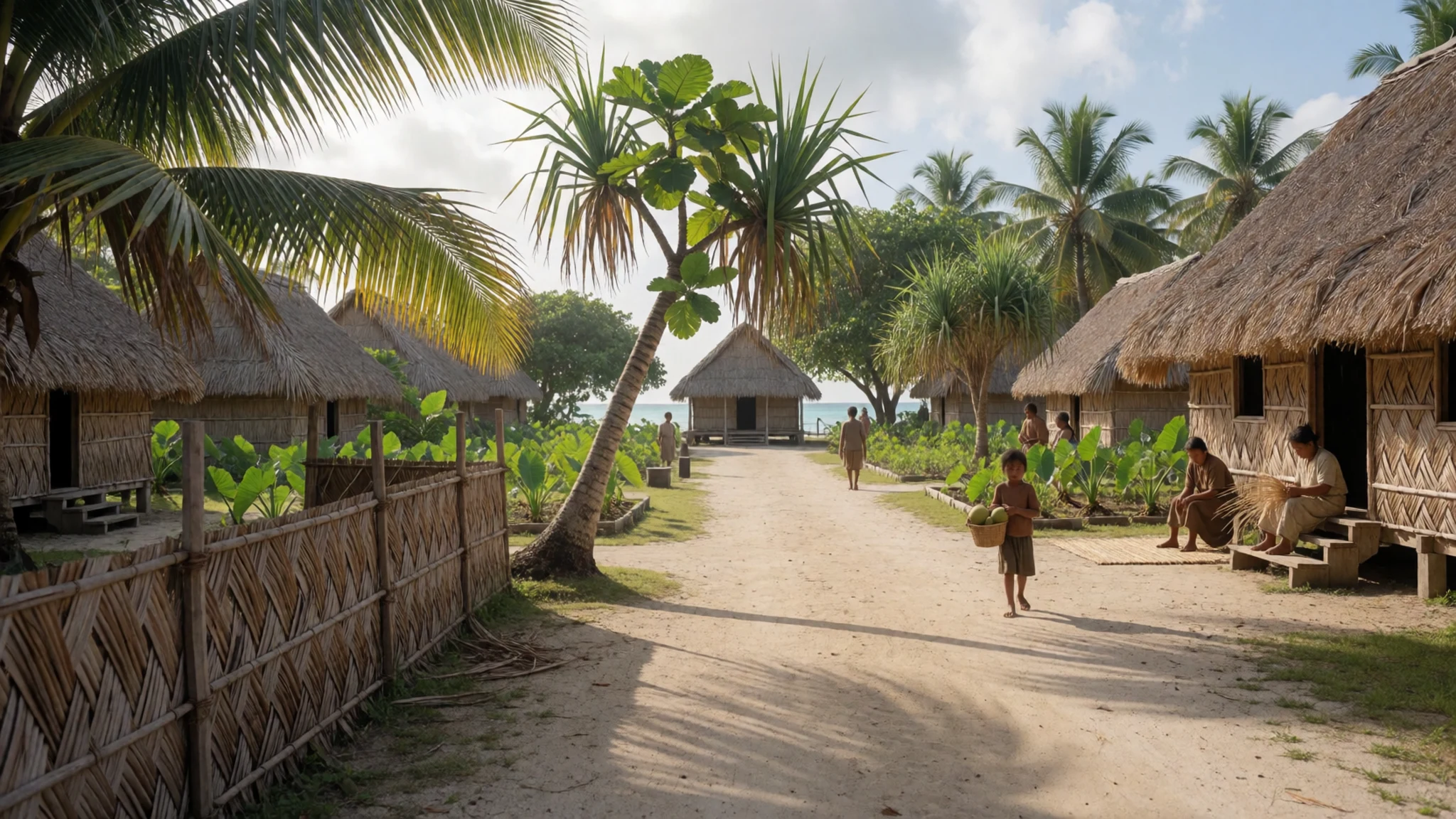
- The eastern rim islets — Eastern rim
Smaller islets follow the eastern rim between the northern and southern ends. They are narrow strips of palms, pandanus and sand with the ocean on one side and the lagoon on the other. They are best explored on foot or by boat with a local host, and with attention to the tide.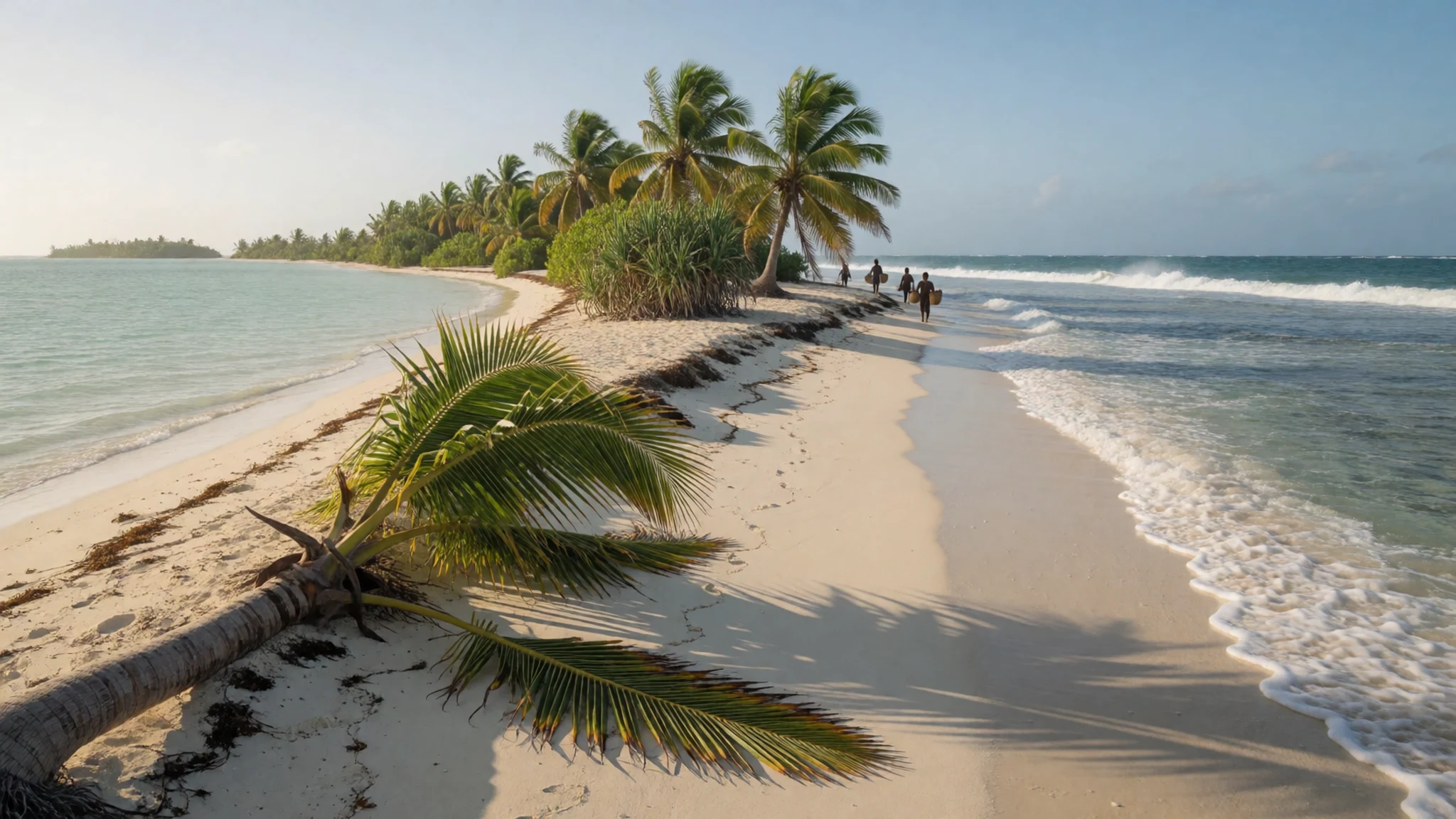
Culture
Tabiteuea's culture is built around the maneaba, the large open-sided meeting house where a community gathers to talk, settle disputes, welcome guests and hold feasts. Seating follows custom, with each family or clan holding a place under the roof, and the atoll's name, usually explained as 'no chief allowed', reflects a tradition in which authority is shared rather than concentrated. The language is Gilbertese, and most community life, from church services to fishing, happens in it. Christianity shapes the week, and Sunday is quiet. Fishing knowledge, canoe handling and the reading of tides and winds are passed between generations, with customary rules governing who may fish where in the lagoon. Singing and dancing are central at celebrations, with seated and standing dances accompanied by clapping and chanting. Hospitality is real but unhurried: a visitor is expected to be introduced, to sit, and to accept what is offered before any business is done. Memory of the nineteenth-century violence with foreign ships remains in local storytelling, so courtesy and a little reserve are normal until trust is built. Ask permission through the village before photographing people, fishing grounds or ceremonies, and when you enter a maneaba, stop at the edge, lower your head slightly and sit down rather than standing over others.
What to wear
Fashion on Tabiteuea begins with materials from the atoll itself. Traditional dress drew on pandanus leaf and coconut fibre, woven into mats and into skirts such as the te riri, worn for dances and ceremonies along with garlands and ornaments made from flowers, shell and leaf. Weaving is still valued, and mats are used for sitting, sleeping and gifts. In everyday life people now wear light cotton shirts, T-shirts, shorts, wraparound cloths and printed dresses, often barefoot or in flip-flops around the house and village. Church clothes are noticeably neater, usually clean, pressed and covering the knees, and the same care shows at community events. Visitors should dress for heat, sun and modesty together. Loose cotton or linen that covers shoulders and knees works well, with a wide-brimmed hat and strong sun protection. Swimwear belongs at the beach or in the water only, and women usually swim in shorts and a T-shirt rather than a bikini in front of villages. Bring reef shoes or sturdy sandals, because coral is sharp and the ground can be hot. A sarong is useful for sitting in a meeting house and for covering up quickly.
What to eat
- Fresh lagoon fish — Village homes and the shore where boats land
Fish from the lagoon is the centre of most meals, grilled over a fire, boiled, or eaten raw with lime or coconut. Quality depends on the catch that day, and the fish tends to be simple and very fresh.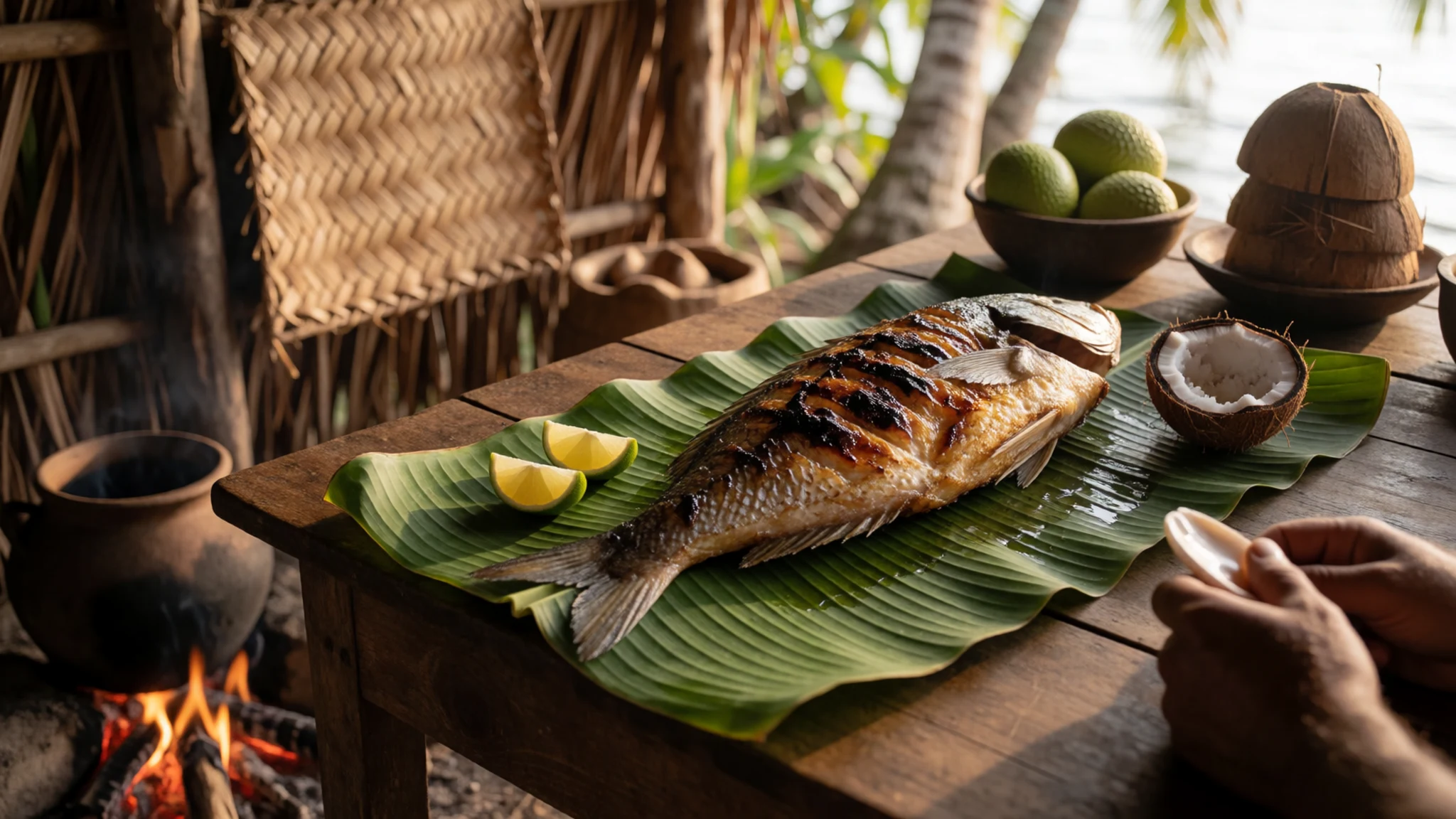
- Breadfruit — Family meals in villages, when in season
Breadfruit is a starchy staple that is roasted, boiled or fried, depending on the season and the household. It takes the place of rice or bread alongside fish and tastes mild and slightly nutty.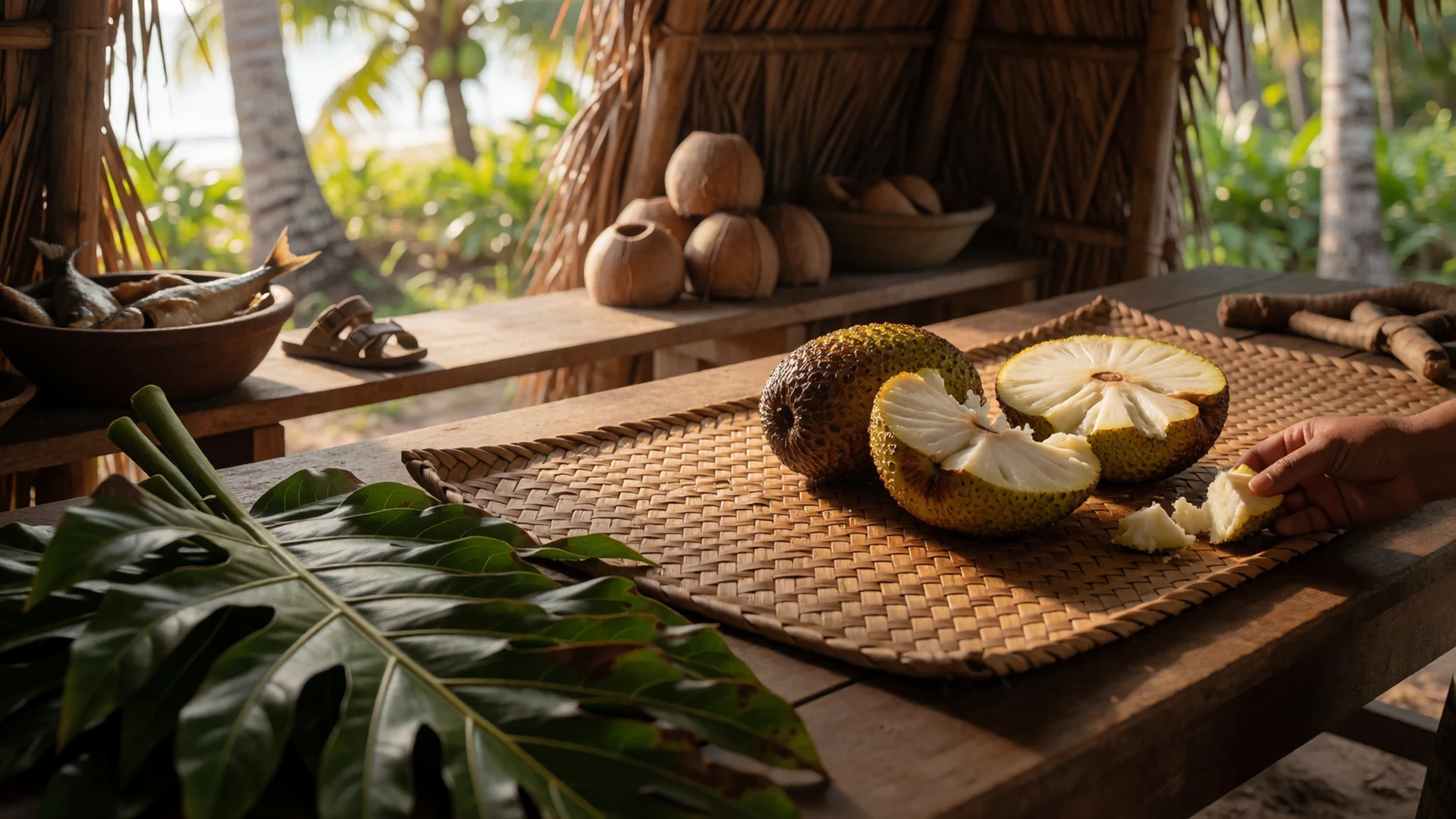
- Coconut and toddy syrup — Village households, at community gatherings
Coconut features at every stage, from drinking nuts to grated flesh in cooking. Sap from the flower stalk is collected and boiled down into a sweet toddy syrup, which is used in drinks and sweets. - Pandanus preserve — Village households; ask locally
Pandanus fruit is processed into a sweet, chewy, long-lasting preserve that was valuable on voyages and in lean periods. It has a dense, caramel-like flavour and is often offered as a gift or snack. - Feast dishes in the maneaba — Community events and celebrations at a maneaba
Community feasts bring together fish, shellfish, root crops, rice and coconut-based dishes, shared under the meeting house roof. A visitor invited to one will be fed generously, and it is polite to taste what is offered.
Plan it
Best time. May to October is generally the better window, with drier weather and more settled seas; the wetter months from about November to April bring heavier showers and rougher conditions. It is hot and humid all year, so plan around the sun rather than the temperature.
How long. 3–5
Getting there. Fly to Tarawa, then continue to Tabiteuea by a domestic flight or an inter-island ship, followed by a local vehicle or boat to your village. Schedules change often, so confirm with the airline or shipping agent in Tarawa before booking onward connections.
Budget. mid
Tips
- Arrange accommodation and a local host before arriving, as formal tourist services are limited
- Bring enough cash in small notes, as cards and cash machines cannot be relied on
- Carry drinking water and sun protection, and allow slack in the schedule for delayed transport
- Move around the lagoon only with a local guide, because tides and shallows change quickly
- Start walks early and rest in the shade through the middle of the day
Etiquette
- Ask your host before entering a maneaba, and sit rather than stand over others
- Ask before photographing people, ceremonies or fishing grounds
- Keep Sundays quiet and dress neatly for community events
Nearby
Sources
- Wikidata Q1059267 (CC0)
- Wikipedia: Tabiteuea (CC BY-SA 4.0)
- Wikivoyage: Gilbert Islands (CC BY-SA 4.0)
- NASA astronaut image of Tabiteuea Atoll (Public domain)
- Position of Gilbert Islands (Pitichinaccio) (CC BY 3.0)
- Micronesia regions map (Peter Fitzgerald) (CC BY 3.0)
- Map of Tabiteuea Atoll (ANU College of Asia & the Pacific) (CC BY-SA 4.0)
- Admiralty Chart No 767, Tabiteuea South Lagoon (UK Hydrographic Office) (Public domain)
- Satellite photo of Tabiteuea atoll (NASA Johnson Space Center) (Public domain)


