Stellenbosch
Stellenbosch, South Africa
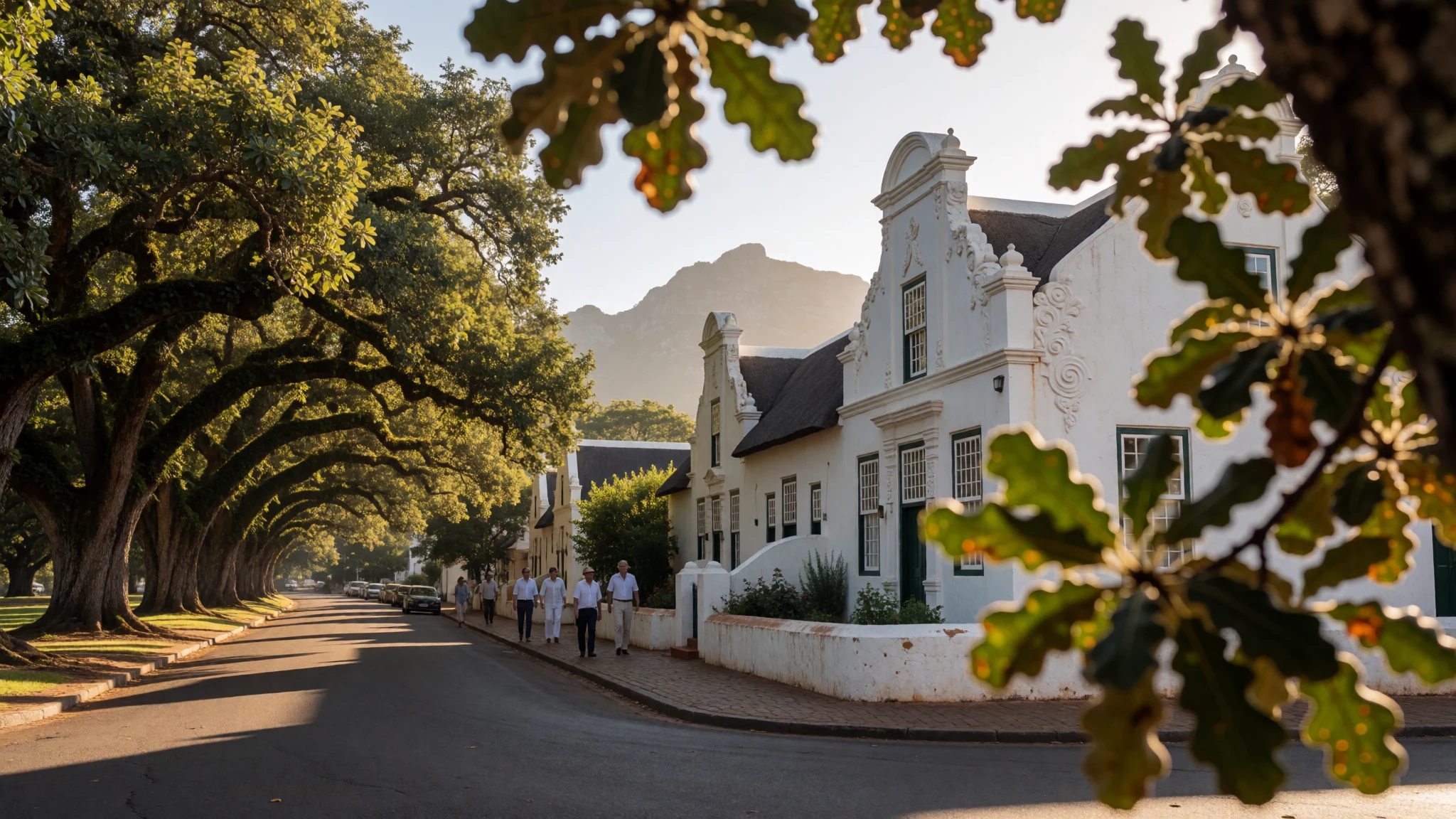
Visit Stellenbosch for its historic Cape Dutch architecture, world-class vineyards, and the vibrant energy of a historic university town.
The place
Stellenbosch is a sophisticated town in the Western Cape, positioned about 50 kilometres east of Cape Town. It sits along the banks of the Eerste River, framed by the imposing presence of the Stellenbosch Mountain. Known as the City of Oaks, the town is defined by the heavy canopy of oak trees planted by its founder to shade the roads and estates. This greenery blends with the white-washed walls and thatched roofs of Cape Dutch architecture, giving the centre a timeless, colonial feel.
The town is a curious mix of academic hustle and rural luxury. A huge portion of the town is occupied by Stellenbosch University, meaning the streets are often filled with students, while the outskirts are dominated by some of the most famous wine estates in the Southern Hemisphere. While the centre is walkable and charming, it can get crowded during university events or harvest season. The climate is Mediterranean, which is perfect for the grapes but can lead to scorching afternoons in the height of summer. Whether you are wandering through boutique art galleries or sipping a Chenin Blanc overlooking a valley, Stellenbosch feels like a refined escape from the wind and noise of the coast.
Its story
The story of Stellenbosch begins long before the arrival of Europeans. Archaeological finds of stone tools near the Adam Tas Bridge suggest that humans lived in this valley about 1 million years ago. For millennia, the ancestors of the San people inhabited the land, adapting to the hilly terrain and the flow of the Eerste River before the colonial era began.
In 1679, Simon van der Stel, then Governor of the Cape Colony, established the settlement and named it after himself, essentially meaning 'Stel's Forest'. The town grew rapidly, becoming a hub of administration and agriculture. Its early population was a complex social tapestry, comprising Dutch, French, and German settlers alongside enslaved people and indigenous Khoi and San residents. Some free-black individuals managed to acquire significant wealth, even owning their own farms and servants, illustrating a social hierarchy that was occasionally fluid despite the oppressive colonial structures. Over the centuries, the town evolved from a frontier outpost into an intellectual heartland of South Africa, anchored by its university. This history is etched into the layout of the town, from the early church sites to the preserved manor houses that tell the tale of the Western Cape's agricultural rise.
What to see
- Moederkerk — Town Centre
The largest church in town, this landmark is a focal point of the community. Its imposing architecture reflects the religious centrality of early settler life and provides a quiet space for reflection amidst the busy shopping streets of the town centre. - Burgerhuis Museum — Historic District
A beautifully preserved example of a Dutch house that offers a glimpse into domestic life from a previous era. The interior contains a rich collection of traditional furniture and old-fashioned kitchen equipment that shows how residents lived and worked. - Stellenbosch Museum — Town Centre
This museum comprises four adjacent houses, each representing a different stage of the town's architectural evolution. It is an excellent way to understand how Cape Dutch styles shifted over time to suit the local climate and available materials. - Rupert Museum — Southern Edge
A contemporary art space that houses a significant collection of international works. The museum provides a sharp, modern contrast to the colonial history of the town, focusing on high-calibre artistic expressions within a sleek, minimalist environment. - The Powder House — Historic District
A small but fascinating site that once served as the supply point for gunpowder, lead, and flint for the town's inhabitants. It serves as a concrete reminder of the frontier dangers and the military needs of the early settlement.
Culture
Culture in Stellenbosch is a blend of Afrikaner heritage, academic curiosity, and a modern, multicultural South African identity. The town is deeply influenced by the university, which brings a youthful, intellectual energy to the streets, often manifesting in lively cafe debates and a strong arts scene. There is a palpable pride in the region's viticulture, where wine is not just an export but a way of life, linked to the land and the seasons. You will find a strong emphasis on hospitality and a slower pace of life compared to the nearby metropolis. The town's history is complex, and you will notice a growing effort to acknowledge the diverse voices—including the Khoi and San—who shaped the valley. Social life often revolves around the outdoors, with hiking and vineyard tours being primary leisure activities. When visiting, please be mindful of the university's academic calendar and avoid blocking pedestrian walkways with luggage or vehicles.
What to wear
Traditional dress in the Western Cape was historically influenced by Dutch and French settlers, featuring heavy wools and linens suited for the cooler winters. While you won't see people in colonial dress today, the influence remains in the high-quality textiles and leather goods sold in local boutiques. Nowadays, the fashion in Stellenbosch is 'smart-casual'. Because it is a university town, you'll see plenty of students in sneakers and hoodies, but the wine estate culture brings a more polished look: linen shirts, summer dresses, and loafers are common for daytime tasting tours.
For visitors, the key is versatility. The weather can swing from hot sun to a chilly breeze in a single afternoon, especially near the mountains. Bring breathable cottons for the day and a warm jacket or fleece for the evenings. Comfortable walking shoes are essential for exploring the town's cobbled streets and the gravel paths of the vineyards. If you are visiting the churches or higher-end restaurants, a slightly more formal approach is appreciated, though modesty norms are generally relaxed.
What to eat
- Indigenous Seasonal Plates — Local eateries
Dishes using fresh, local, and indigenous South African ingredients that highlight the terroir of the Western Cape. These are best found at authentic eateries like Geuwels. - Modern Farmhouse Cuisine — Farmstalls
A contemporary twist on traditional South African comfort foods, often served alongside fresh berries. Look for these at The Farmer's Kitchen at Mooiberge Farmstall. - Wine Tasting Platters — Wine-tasting lounges
Curated selections of local cheeses, charcuterie, and fruits designed to pair with the region's famous wines. These are found in the tasting lounges of Wijnhuis. - International Bistro Fare — Town centre bistros
A mix of European and global dishes, ranging from pastas to grilled meats, reflecting the town's cosmopolitan visitor base. Try these at Basic Bistro. - Courtyard Lunches — Hidden courtyards
Light, fresh meals served in hidden garden settings, perfect for escaping the midday heat. These are a specialty of spots like Binnenhof.
Plan it
Best time. September to November for the spring blooms, or March to April for the autumn colours; avoid February if you dislike extreme heat over 40 °C.
How long. 2–3
Getting there. Fly into Cape Town International Airport, then take a rental car or shuttle approximately 50 km east via the N1.
Budget. mid
Tips
- Book vineyard tours and high-end restaurants in advance
- Carry a light jacket even in summer for the evening mountain breeze
- Use a ride-sharing app if you plan on wine tasting to avoid driving
- Explore the town centre on foot to see the Cape Dutch architecture
- Visit the nature reserves early in the morning to avoid the midday heat
Etiquette
- Tip service staff in restaurants and vineyards
- Be respectful of students' study spaces on campus
- Dress smartly when visiting exclusive wine estates
Nearby
Sources
- Wikidata Q5460 (CC0)
- Wikipedia (CC BY-SA 4.0)
- Wikivoyage (CC BY-SA 4.0)