Starved Rock
Starved Rock, United States
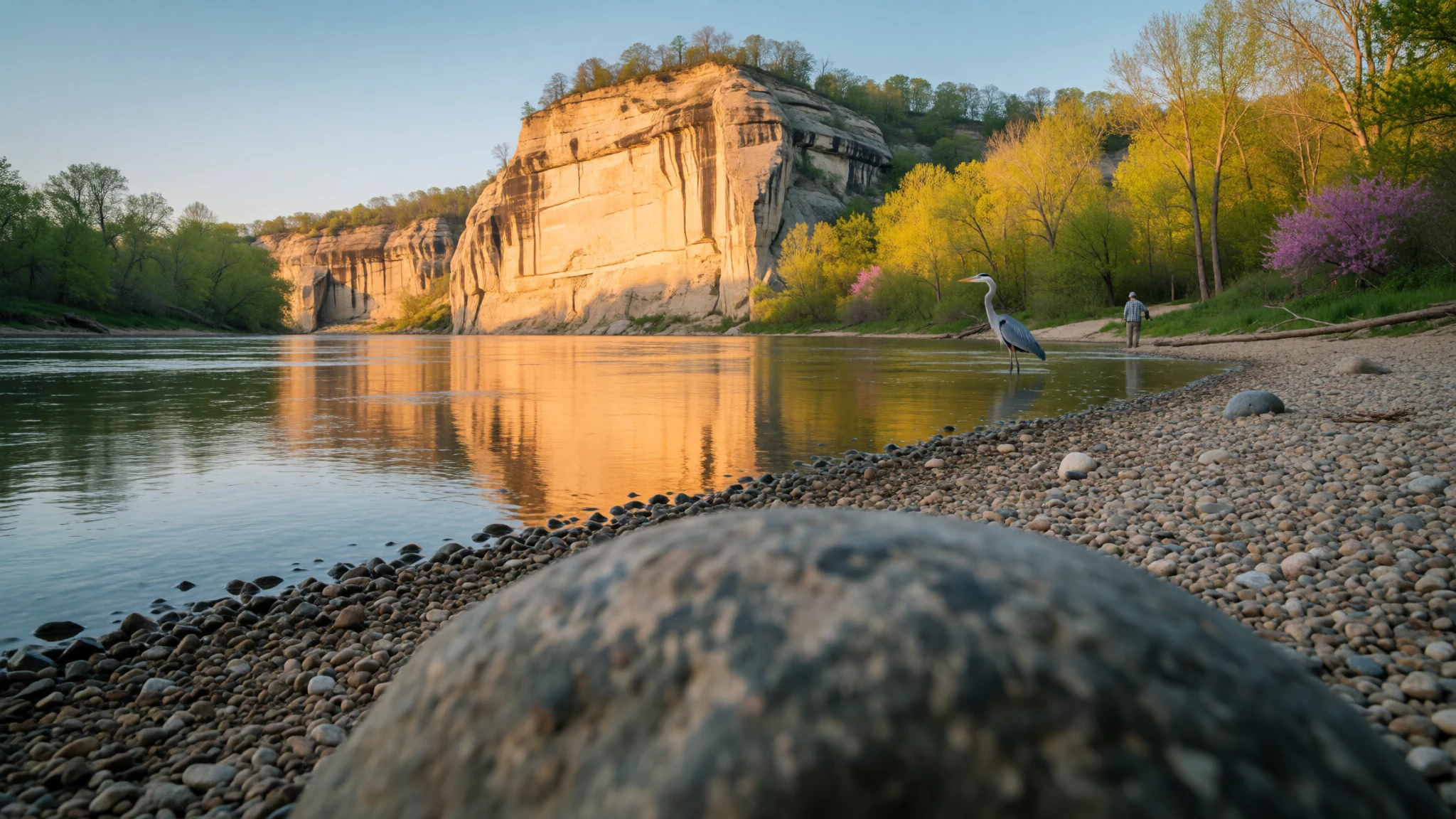
Starved Rock offers sandstone canyons, seasonal waterfalls and river-valley history in one easy day's walking, within reach of Chicago.
The place
Starved Rock is a state park in LaSalle County, Illinois, on the south bank of the Illinois River, just southeast of the village of Utica. It was founded as a park in 1911 and covers about 1,064 hectares, cut by sandstone canyons that open off the river valley. The rock that gives the park its name is a sandstone butte standing over the water. Around it are wooded bluffs, ravines, river-bottom paths and a good range of forest plants and wildlife, and the river has long drawn anglers. Most canyons are a short walk from a trailhead, which explains the crowds: more than two million people visit each year, the most of any Illinois state park. Fine weekends mean full car parks and busy stairways, while a weekday in autumn feels like another place. The waterfalls depend on rain and snowmelt. In spring a canyon can be loud with falling water, while in late summer the same spot may be a damp stain on the rock, and in hard frosts the falls freeze into pale columns. The landscape was shaped by the Kankakee Torrent, a huge meltwater flood at the end of the last ice age that stripped the soil and exposed the rock walls. Wooden stairs and stone steps link the main viewpoints, and the going is gentle for most walkers, though paths turn muddy and slippery after rain. Chicago is the nearest big city, which makes this a popular day out for city families.
Its story
The human story at Starved Rock runs back a very long way. Clovis points found in the park show that hunters of the Clovis culture were here by about 11,000 BC, following large Ice Age animals. Later Archaic peoples settled along the Illinois River and lived by foraging and hunting. In the Woodland period, Havana Hopewell communities built earthwork mounds, made pottery and grew some plants. Farming then took hold, and maize, beans and pumpkins supported the Mississippian culture, whose people settled the river valleys and were known for copper ornaments. Before European contact, the Kaskaskia lived at the Grand Village of the Illinois, on the far side of the river to the north. Louis Jolliet and Jacques Marquette were the first Europeans recorded exploring the region. By 1683 the French had built Fort St. Louis on the butte, which they called Le Rocher, the Rock. After the French left, a local legend took hold that a band of the Illinois Confederation, chased by the Ottawa and Potawatomi, took refuge on the butte, and the park's name is tied to that story. It is a legend rather than settled record, and visitors will hear it told in several ways. What is firmly documented is the long occupation of the valley, which archaeologists have studied on the butte's summit and in the small rock shelters in the park.
What to see
- Starved Rock summit — Main visitor area
The sandstone butte stands over the Illinois River and is reached by a staircase from the main visitor area. The overlooks at the top show the river, the wooded bluffs and the line of the valley. The French fort once stood here. It is the busiest viewpoint, so early starts help.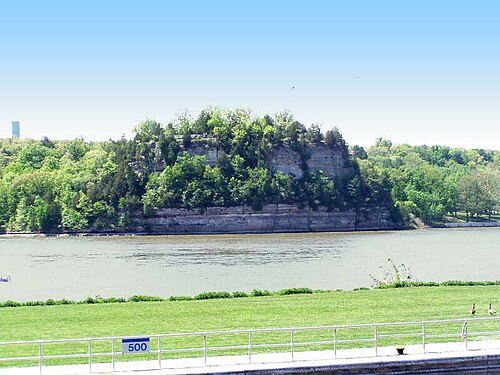
- French Canyon — Central canyons
A short, deep canyon with mossy sandstone walls that close in around a small waterfall at its head. The path in is easy, and the cool, shaded air is welcome on hot days. After rain or snowmelt the fall is at its best, and in dry spells it thins to a trickle.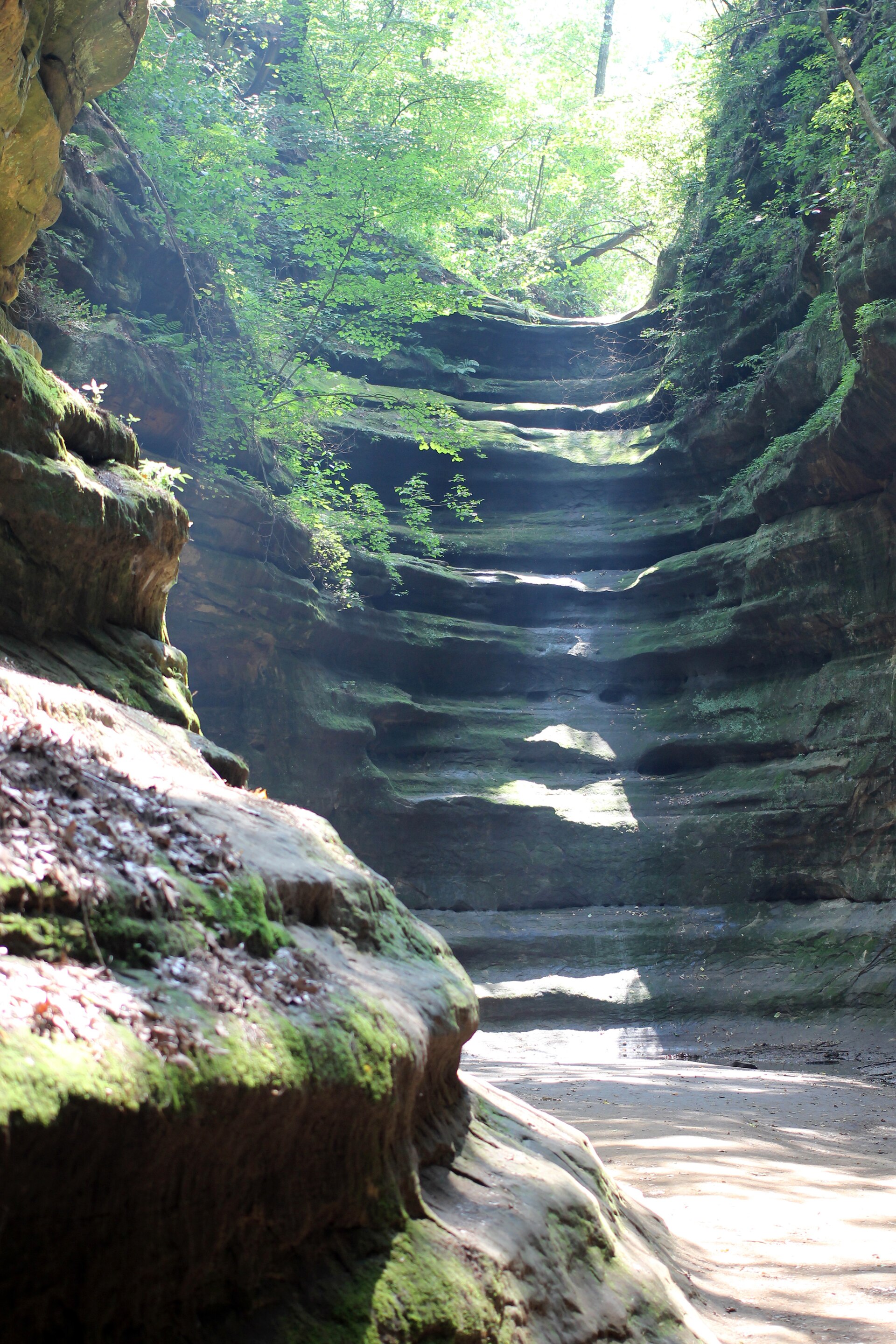
- Wildcat Canyon — Eastern canyons
A longer walk to a canyon that feels quieter than those near the visitor area. The trail passes through woodland before reaching the rock walls and a fall that depends on the season. It suits walkers who want to leave the busiest stretches behind, though boots are wise because the path can be wet. - Starved Rock Lodge — Beside the main visitor area
The lodge sits close to the butte and carries the park's older visitor history, with old postcards showing it beside the rock and French Canyon. It is a useful stop for a break, and an easy base for a weekend. Check the official site for rooms, meals and opening arrangements.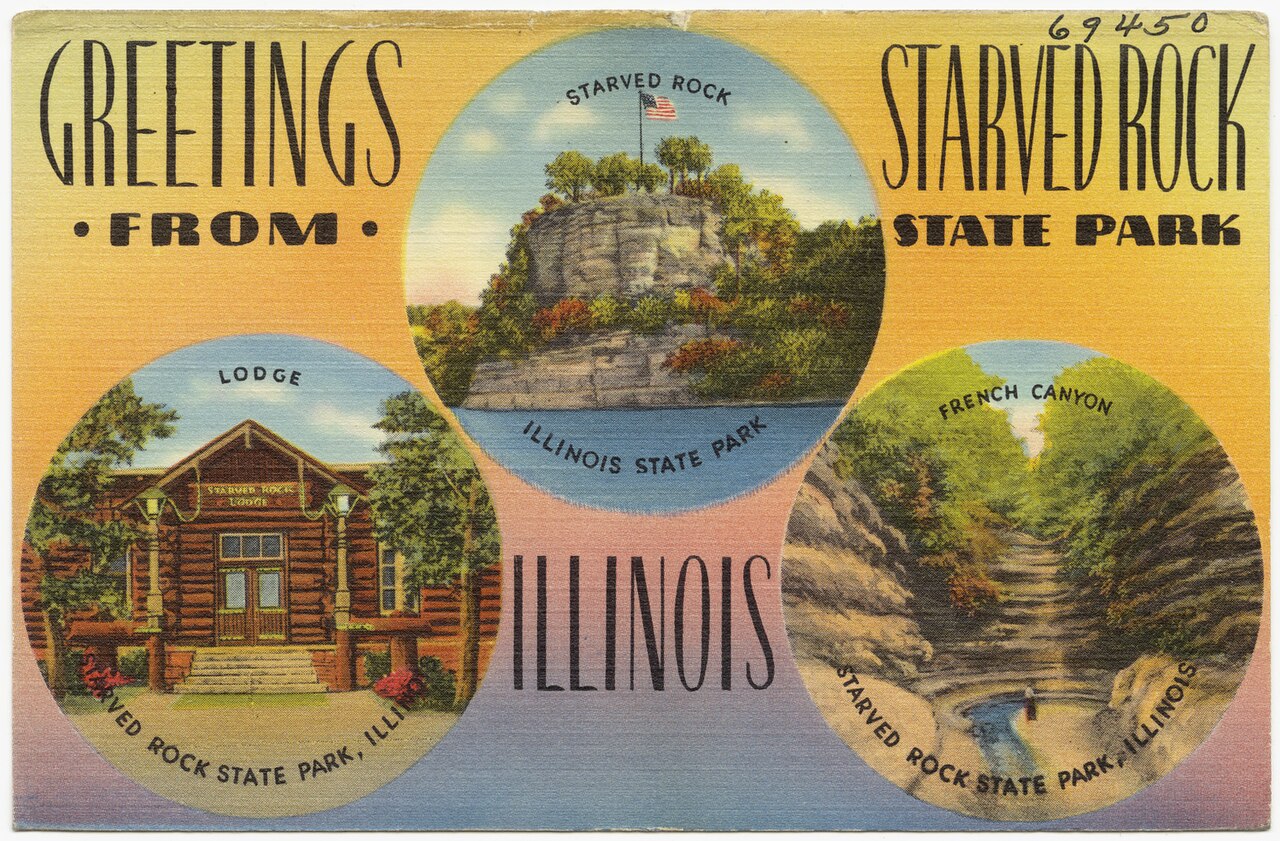
- Shaky Shelter Site — Deer Park Township, within the park
A small cave or overhang in the sandstone, used by people more than a thousand years ago. It is one of several rock shelters in the park, and there is little to see beyond the rock itself and the setting. It helps visitors picture how long people have used these bluffs.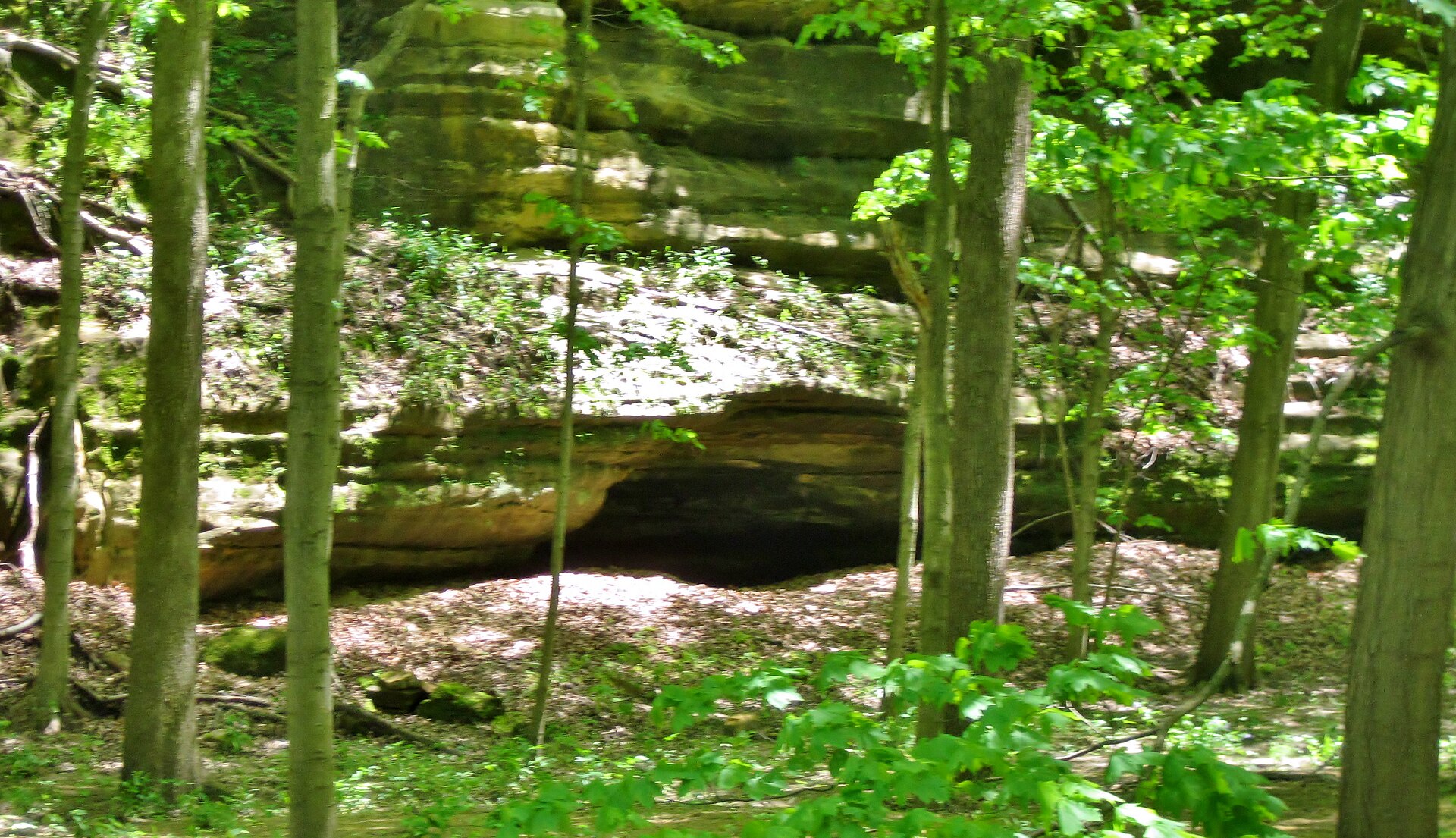
- Illinois River viewpoints — River edge and bluffs
The river bank and the overlooks above it give the clearest sense of the valley's scale, with the butte pale against the trees on the far side. Autumn colour and winter light are especially good here. Eagles and other birds can be seen on the water in colder months, so bring binoculars if you have them.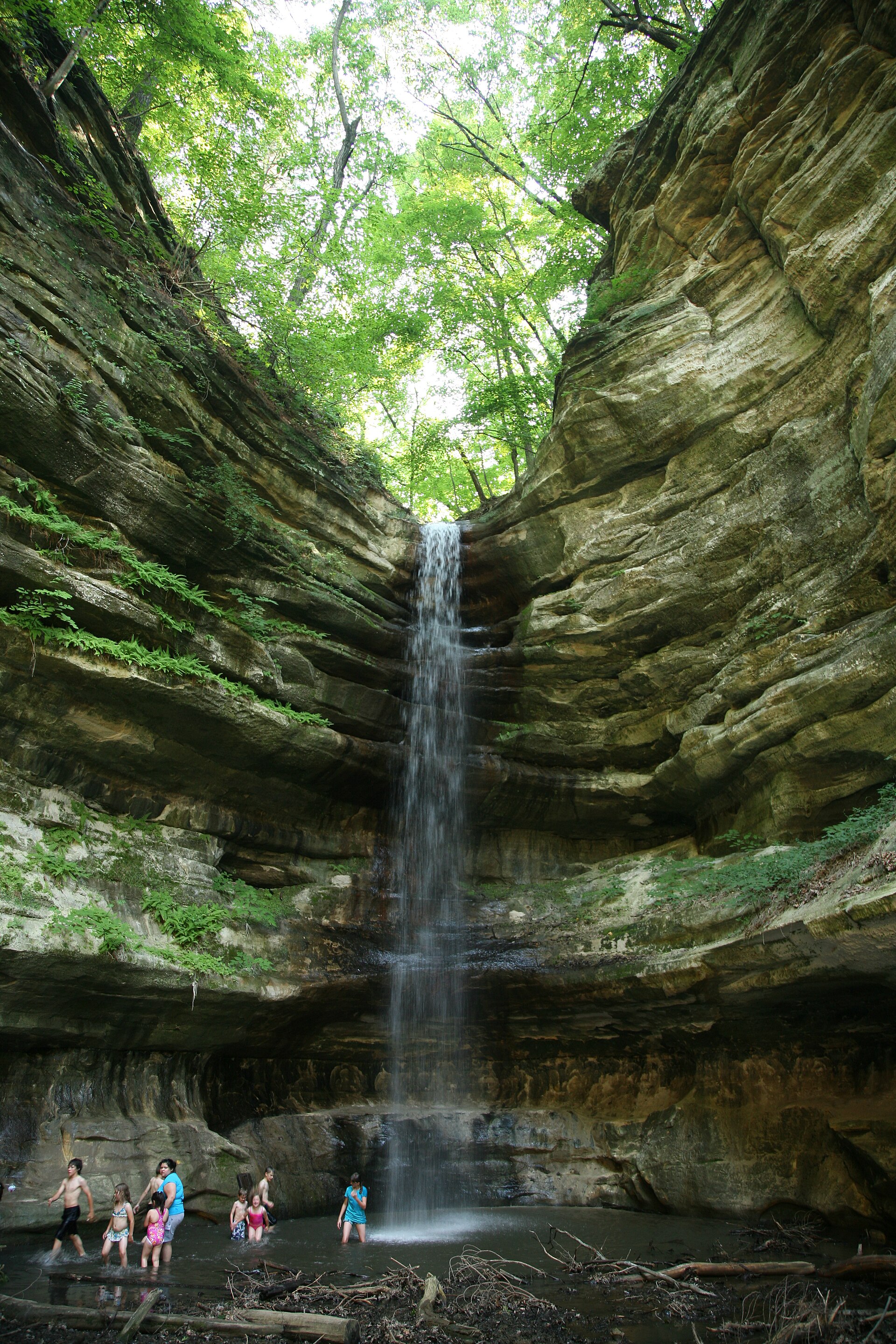
Culture
Starved Rock sits in country that was home to the Illinois Confederation long before the French arrived, and the park's story is bound up with that history. The Kaskaskia lived across the river at the Grand Village, and the butte's summit and rock shelters have been studied by archaeologists. Older interpretations of the place tend to lean on the siege legend, and it is worth treating it as a story told locally rather than a settled account. The park's lodge, stone stairways and trails are in large part the work of the Civilian Conservation Corps, the Depression-era public works programme, and its rustic style still shapes the visitor experience. Today the park is mostly a weekend habit for families, school groups, anglers and walkers from Chicago and the towns along the Illinois River. Autumn colour weekends and spring waterfall weekends draw the largest crowds, and the mood is friendly and relaxed, with plenty of picnicking and dog walking. People say hello on the trails, and conversation about local politics is best left alone, since Illinois politics can be a touchy subject with strangers. Fishing and boating are part of river life here, and some visitors come only for the water. Stay on the marked paths and boards, and leave stones, artefacts and plants exactly where they are, because the sandstone walls erode easily and the archaeological sites are protected.
What to wear
Starved Rock has no single traditional costume. The historic dress of the peoples of the Illinois valley relied on tanned hides, furs and plant fibres, and the Mississippian peoples are noted for copper ornaments. Contemporary Native communities in the region wear regalia at ceremonies and gatherings, but that is not something visitors will see on the trails. What people actually wear in the park is practical outdoor clothing: jeans or hiking trousers, fleeces, waterproof jackets, baseball caps and trainers or boots. On a fine weekend, families in shorts and sandals are common, even though sandals are a poor choice for the stairways. Autumn and spring weekends bring bright waterproofs. A visitor should dress for the weather, which swings widely. Summers are warm and humid, so light, quick-drying layers, a hat and insect repellent help. Winters are cold, with ice on the steps and trails, so warm layers, gloves and boots with a good grip matter, and ice cleats are useful in hard frost. Spring and autumn call for layers and a rain shell, since June is the wettest month. There are no modesty rules or religious dress codes in the park, so comfort and safety decide everything. Pick footwear with a firm sole, because wet sandstone and mud make light shoes slippery on the canyon paths.
What to eat
- Chicago-style hot dog — Casual hot dog counters in Chicago and the towns on the way
A steamed or grilled hot dog in a poppy-seed bun with a pile of toppings, a classic of the region. It is easy to find at casual counters in towns on the road from Chicago, and makes a good lunch before or after a walk. - Italian beef sandwich — Sandwich shops in Chicago and its suburbs
Thinly sliced seasoned beef piled into a roll and dipped in its own juices, often with peppers. It is a Chicago staple that travels well as a picnic lunch, and it suits a day of walking. - Deep-dish pizza — Pizzerias in Chicago and the larger towns along the route
A tall, buttery crust filled with cheese and sauce, baked slowly and eaten with a knife and fork. Chicago is known for it, and it is the sort of meal that suits an evening after the park. - Sweet corn — Roadside farm stands and farmers' markets in summer
In summer, farm stands in northern Illinois sell fresh sweet corn, usually boiled or grilled and eaten with butter. The produce in this part of the state is well regarded, and a roadside stop makes a cheap, simple lunch. - Pączki — Polish and neighbourhood bakeries in Chicago in late winter
A Polish filled doughnut traditionally eaten on Fat Tuesday, found in Chicago bakeries around that date. It is rich and sugary, and a good thing to carry on a cold winter walk if you visit then.
Plan it
Best time. April–May for spring waterfalls and wildflowers, and late September–October for autumn colour. Summers are warm and humid, June is the wettest month, and January is the coldest, with ice on the trails and frozen falls.
How long. 1–2
Getting there. Fly to Chicago, then drive to the park, which lies just southeast of Utica in LaSalle County. Amtrak runs into Chicago from many directions, but the last leg to the park is easiest by car; check the official site for current access and parking.
Budget. low
Tips
- Go early on weekends in spring and autumn, when the car parks and stairways fill up
- Check trail and waterfall conditions on the official site before you set out, since falls depend on rain and snowmelt
- Wear boots with a good grip, as wet sandstone and mud are slippery
- Carry water and a rain layer, and bring cash or a card for small stops on the way
Etiquette
- Stay on marked paths and boards to protect the soft sandstone
- Leave stones, plants and any artefacts where they are
- Keep noise down in the canyons and give other walkers room on narrow stairs
Nearby
Sources
- Wikidata Q3077988 (CC0)
- Wikipedia: Starved Rock State Park (rev 1378708703) (CC BY-SA 4.0)
- Wikivoyage: Illinois (rev 5390221) (CC BY-SA 4.0)
- Photo: Starved Rock, Illinois on Illinois River (Chris Light) (CC BY 3.0)
- Photo: Starved Rock State Park 9 (Daniel Schwen) (CC BY-SA 4.0)
- Photo: Starved Rock Hotel c. 1905 (Public domain)
- Photo: Greetings from Starved Rock State Park, Illinois (Boston Public Library) (Public domain)
- Photo: Archeological dig, Starved Rock, Illinois 1974 (North8000) (CC BY 3.0)
- Photo: Shaky Shelter Site (Teemu008) (CC BY-SA 2.0)
- Photo: French Canyon waterfall, Starved Rock SP (Public domain)
- Photo: French Canyon (Adam Shaw) (CC BY 3.0)


Wildlife
- Bald eagle (animal)
Think of the bald eagle as a huge hunter of the sky, a sea eagle that likes big open water and tall old trees for nesting. In Starved Rock, you will find eagles and other birds on the water in the colder months. Binoculars help, so bring a pair if you can, and enjoy the birds from a distance.
- Bald eagle (bird)
Think of the bald eagle as a huge hunter of the sky, a sea eagle that likes big open water and tall old trees for nesting. In Starved Rock, you will find eagles and other birds on the water in the colder months. Binoculars help, so bring a pair if you can, and enjoy the birds from a distance.