Srimangal
Srimangal, Bangladesh
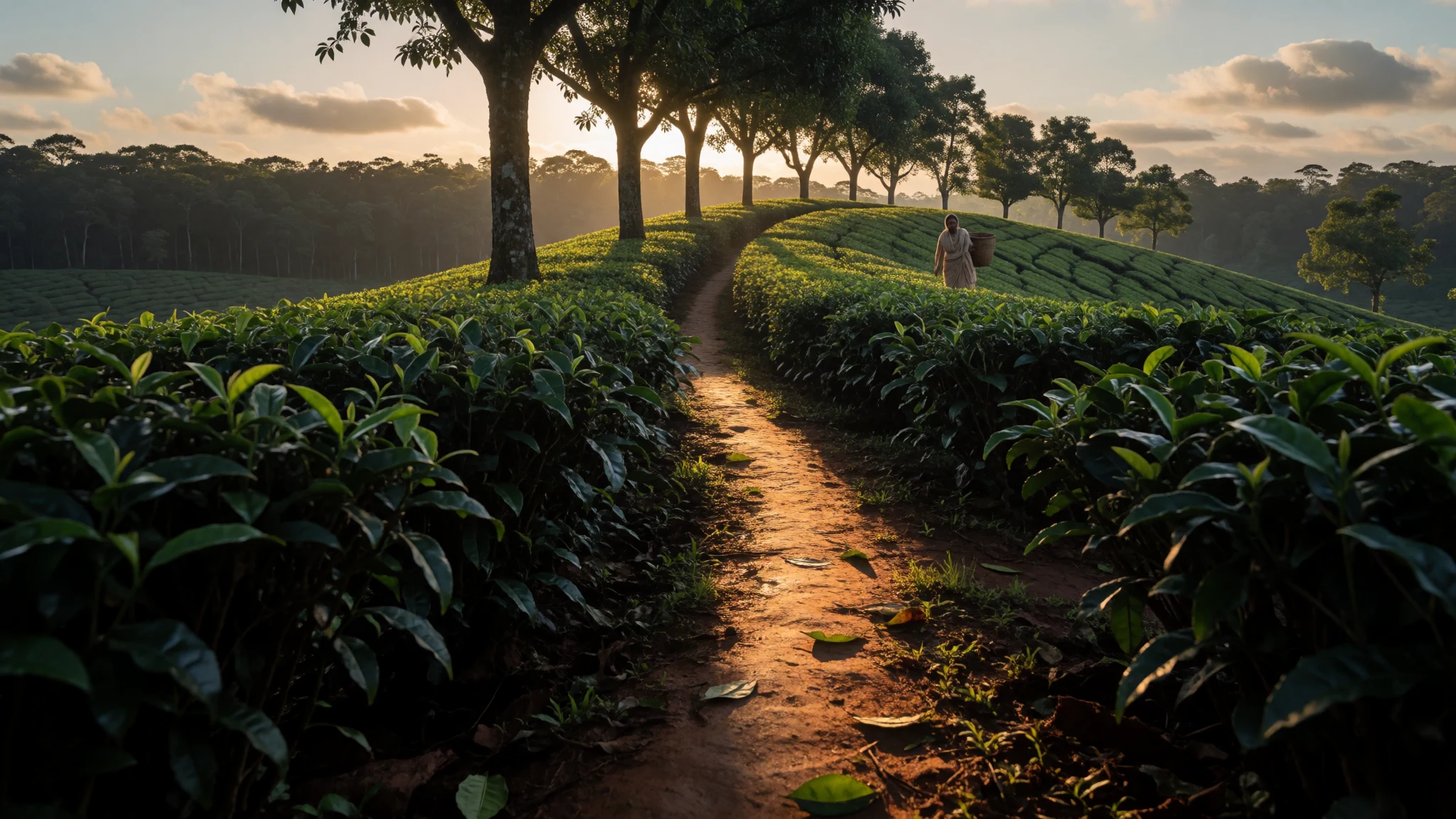
Srimangal is a rail town among Bangladesh's tea hills, where gardens, forest and rain shape a slow few days.
The place
Srimangal sits in the low hills of Moulvibazar, in Bangladesh's Sylhet division, a market town shaped by the railway and the tea gardens around it. The land rolls rather than climbs: ridges of tea, lines of shade trees, and pockets of forest on slopes the estates left standing. Mornings often start in mist, and the paths between the bushes stay damp well after sunrise. Rain organises the year. Through the wet months the sky stays heavy, red soil turns slick, and forest paths collect water and leeches. In the drier months the air is milder and walking is straightforward.
The town proper is small — a station, a main road, markets, tea stalls, and a scatter of guest houses. What visitors come for begins where the estates take over. The road towards Kamalganj feels like the same landscape continuing. A quiet hour inside a working garden is nearly silent apart from wind in the bushes; at the forest edge the birds are loud. During plucking, workers move through the rows with baskets and the lanes fill with small trucks.
Srimangal's interest is that working countryside pressed against the town: how tea is grown, how rain decides the day, and how several communities share the hills. Weekends in the drier months draw people from Dhaka, so lodges fill and the forest gate gets noisy. On a weekday the same roads feel local again.
Its story
Srimangal's story is tea arriving in hills that already had people on them. Khasi villages, Manipuri settlements and Bengali farmers used these slopes and wetlands long before the gardens were laid out in rows. Commercial planting spread under British administration: planters took high ground, cleared forest for bushes and shade trees, and recruited labour to pluck and process the leaf. Daily life was organised by the estate. The work was hard and the housing was basic.
The railway gave the settlement a new role. Once trains ran through towards Sylhet, Srimangal became a place to load leaf and supplies and to house clerks, traders and officials. A station town grew beside the tracks, with markets and, later, the guest houses that now take visitors. The estates remained after independence. Tea still patterns the map, while small trade, schooling and tourism sit alongside it.
That history is visible in who lives where. Families in the tea-garden labour lines are often descendants of workers brought for the estates, with their own quarters and festivals. Manipuri neighbourhoods keep dance, weaving and a distinct dress. Khasi villages in the hills keep their own language and a customary hold on land, closer to the forest than to a single crop. The bazaar is where those worlds meet, in Bengali and Sylheti. The paths through the bushes exist to move leaf, and the people on them are at work.
What to see
- Lawachara National Park — Kamalganj, a short ride from town
Lawachara National Park is the evergreen forest near Srimangal, a remnant of the hills before tea. Trails run under a closed canopy, and a quiet early morning can bring hoolock gibbons and capped langurs. Underfoot it is roots and mud, with leeches in the wet months. Weekend crowds gather at the gate; a weekday morning stays calmer.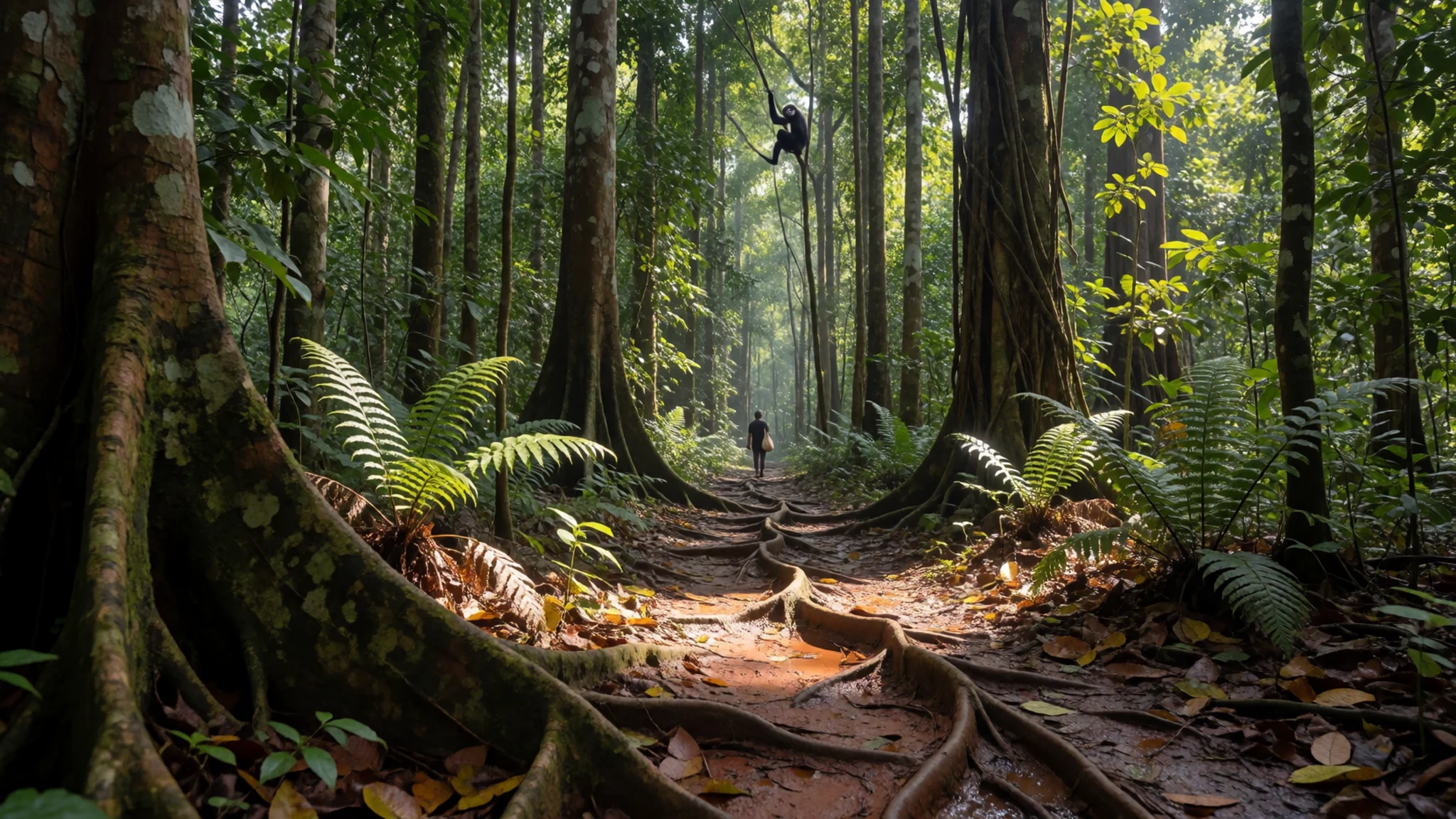
- Tea estates — the ridges around the town
The tea estates around Srimangal are a working crop. From the ridge roads a visitor sees tight rows of bushes, shade trees, and pluckers with baskets when the leaf is ready. An outer path or a factory shed may be open while leaf is processed, though each estate decides at its own gate.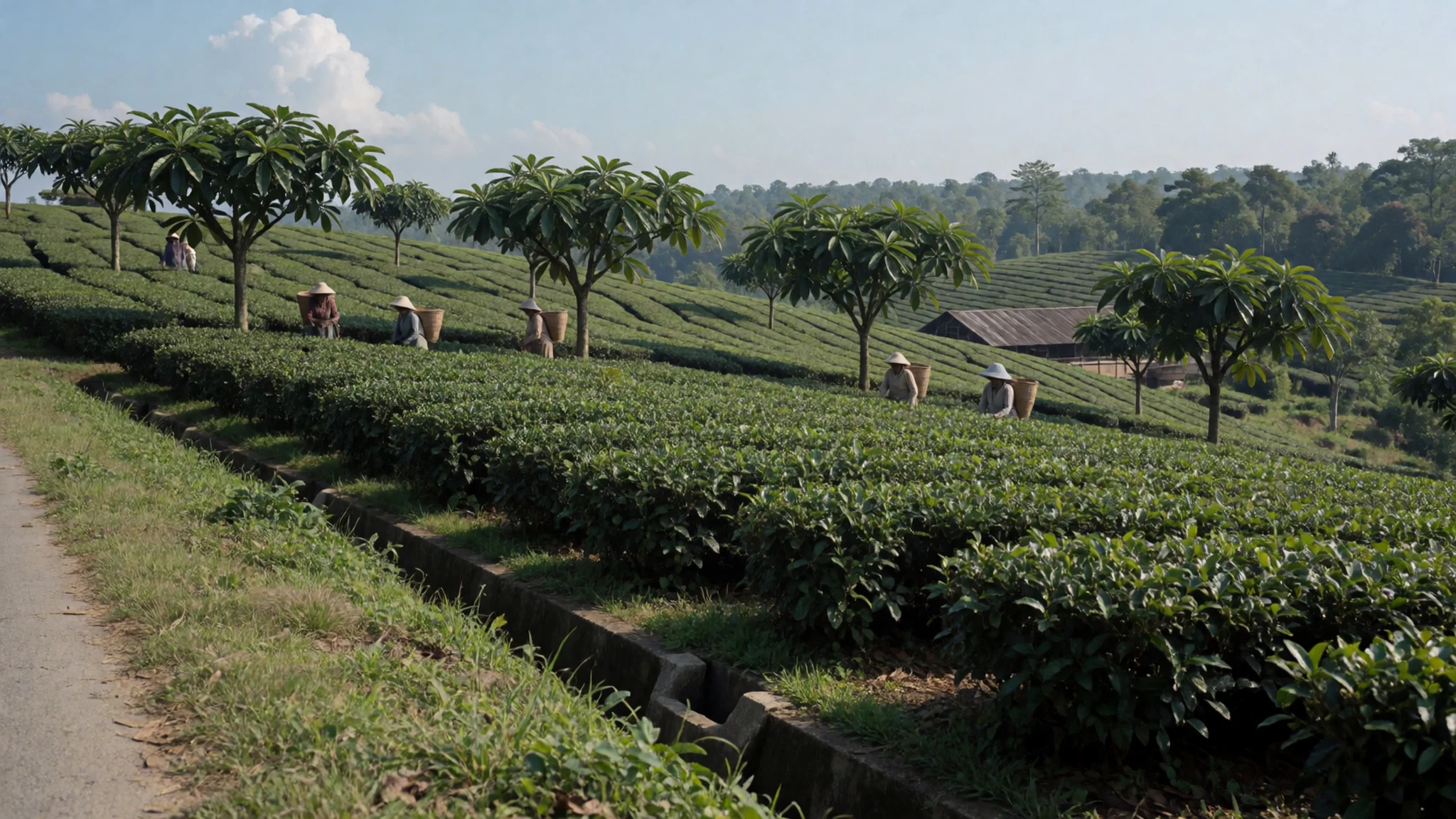
- Madhabpur Lake — the edge of town
Madhabpur Lake, on the edge of Srimangal, is a wide sheet of water broken by lotus and low wooded banks. The walk along the bank is level, which makes it a practical outing when the forest is muddy or the day is hot. Boatmen work from the shore in season, and the fare is settled in conversation.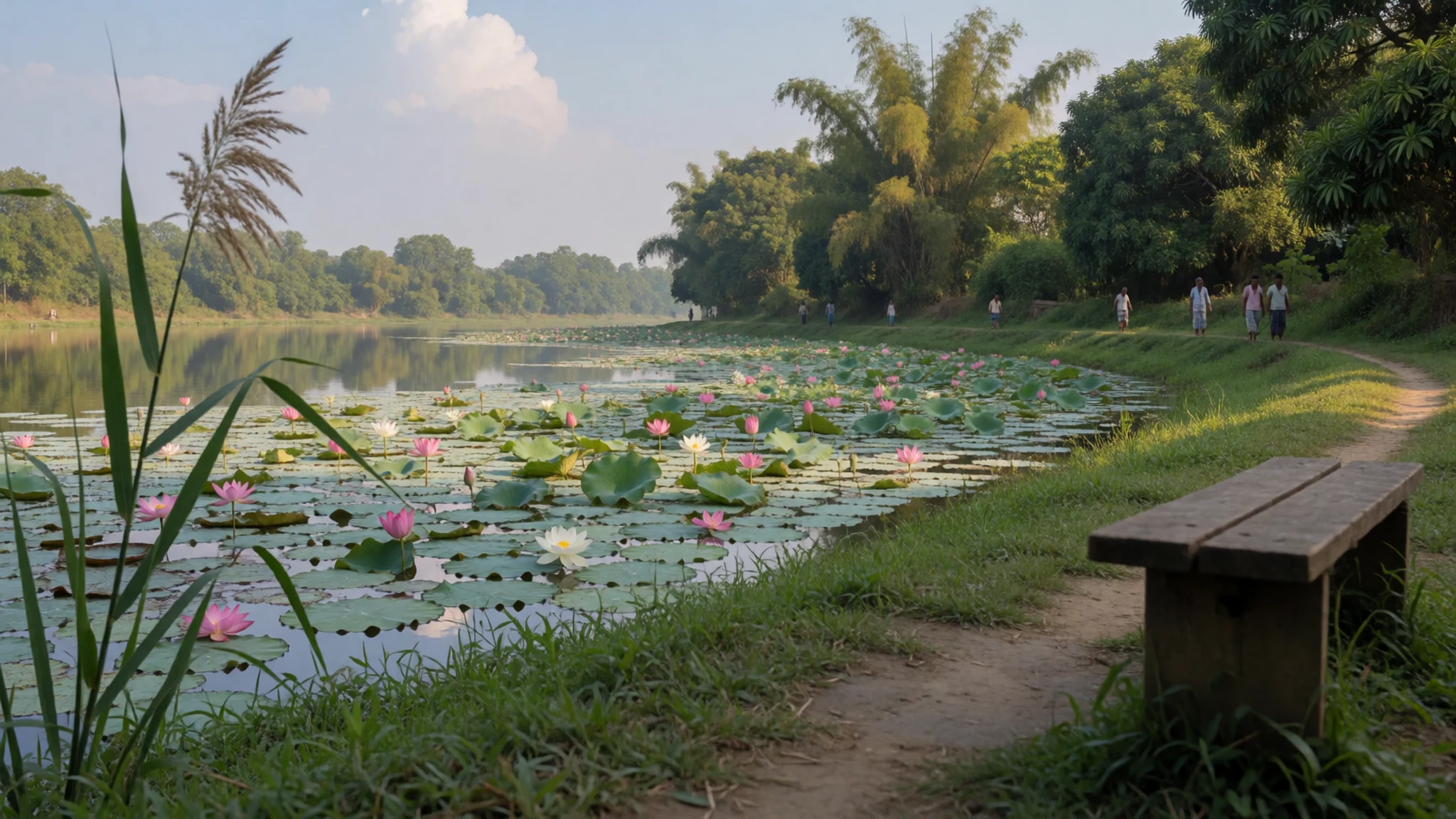
- Baikka Beel — the wetlands beside the tea country
Baikka Beel is the wetland beside Srimangal's tea country, a shallow marsh where waterbirds gather. A walkway and a watchpoint look across reed, lily and open water. Cooler months bring the birds; high summer is hot, glaring and quieter. It sits near enough to Madhabpur Lake to share a day, though each place rewards a slow hour.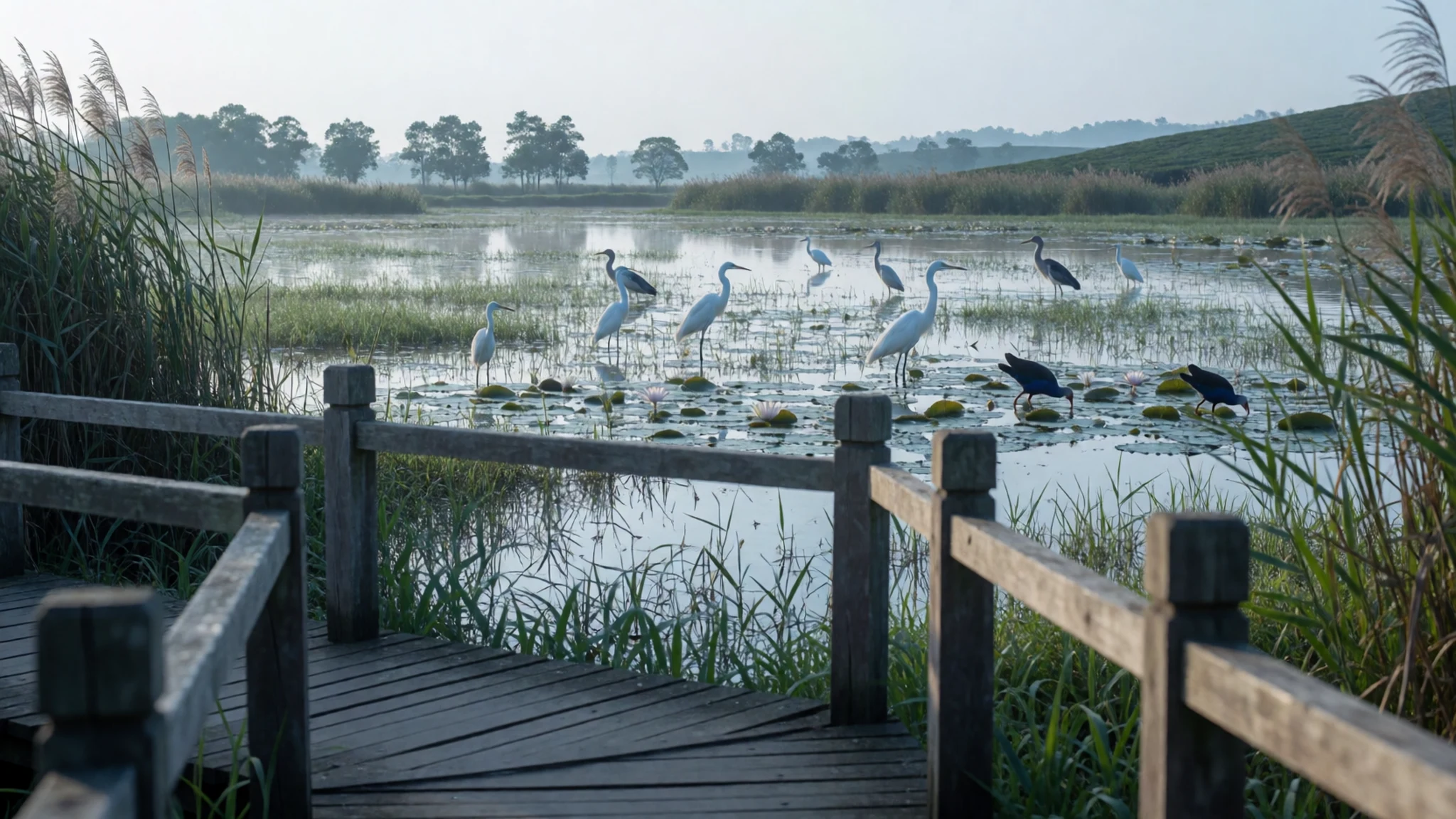
- Manipuri neighbourhood — the Manipuri neighbourhood in town
Srimangal's Manipuri neighbourhood keeps a culture that arrived from Manipur and stayed: a temple courtyard, weaving, and the potloi and innaphi brought out for dance and festival days. Ras performances follow a religious calendar, so an ordinary afternoon may show only a quiet lane. That lane is still a fair view of the place.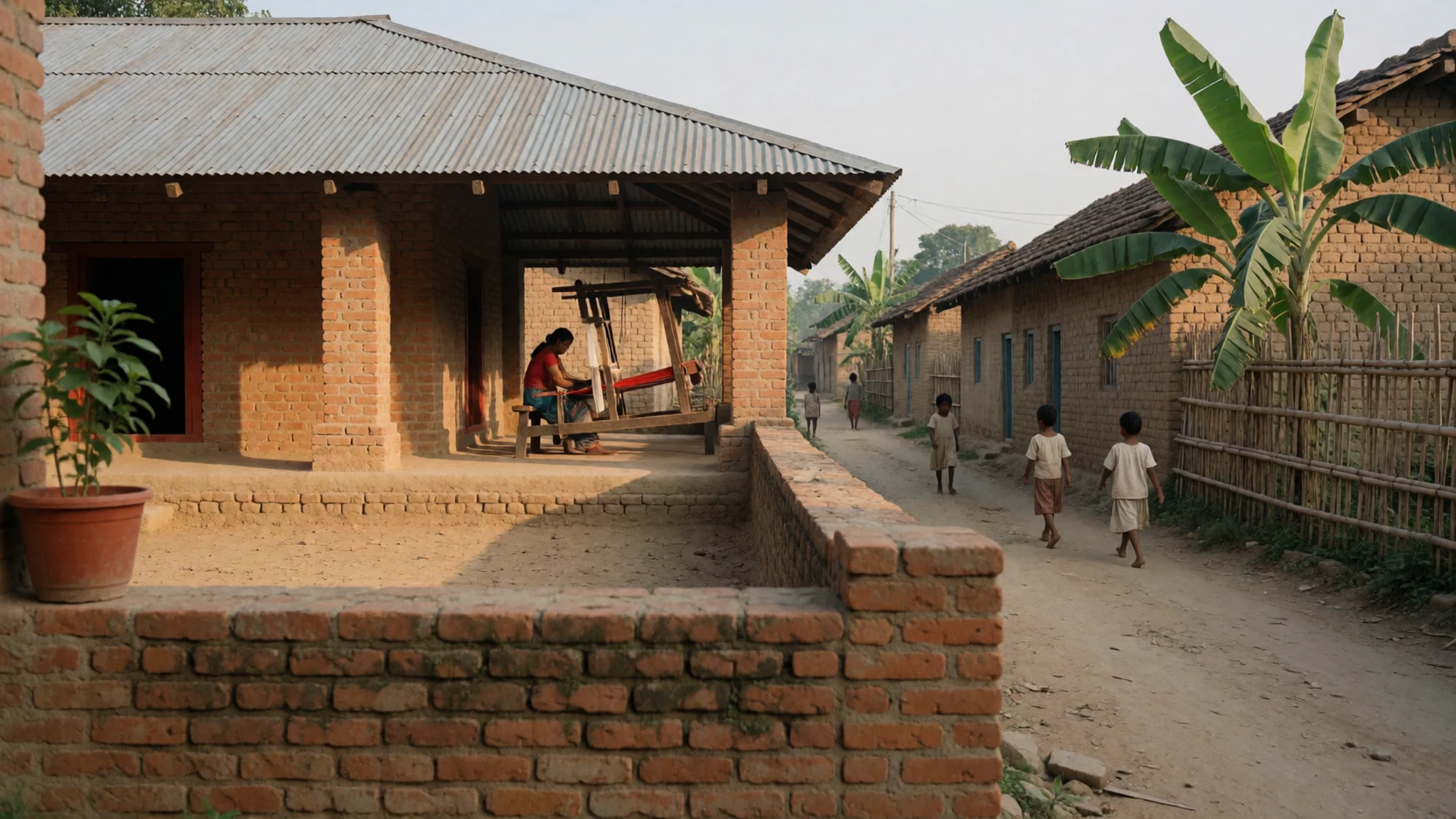
Culture
Srimangal's culture is several communities in the same tea landscape. The town is largely Bengali and Muslim: Sylheti in the kitchen and the market, Bengali on signs and in school, with Friday prayers filling the bigger mosques at midday. Manipuri Hindus keep their own dance, weaving and temple calendar. Khasi villages in the hills keep their language and a customary tie to the forest, some Christian, others following older practice. Tea-garden lines add another layer, with quarters, festivals and speech that do not match the bazaar exactly. Ras gatherings and estate festivals follow local calendars, not a visitor schedule. A visitor mostly meets ordinary life: a wedding procession, a Friday crowd, women walking to the gardens at dawn. Hospitality often includes tea, which here is both the crop and the welcome. Public religion is visible and easy for guests who stay modest. Photography goes wrong when visitors treat workers, worshippers and children as scenery. Dress modestly, ask before photographing people, and remove your shoes at a mosque or temple door.
What to wear
Srimangal's dress depends on community and work. In the Bengali town, women commonly wear a sari or a salwar kameez, and men a lungi with a shirt, or a panjabi for prayers and festivals. Cotton suits the humidity; silk comes out for weddings. Manipuri women keep the potloi, a stiff barrel-shaped skirt, with the innaphi shawl for dance and temple days, and a simpler wrapped phanek at other times. Khasi women in the hill villages wear the jainsem, cloth pinned at the shoulder. Daily clothes in town now match other Bangladeshi markets: jeans, shirts, salwar, a dupatta, school uniform at midday. Garden workers dress for the bushes — saris tucked up, head coverings, long sleeves, sandals that survive mud. A visitor does well in light cotton that covers shoulders and knees, in town and at the mosque or temple. Forest paths need closed shoes with a grip, and a light rain layer for much of the year. A scarf helps at religious doors. Clothes that can get muddy are the right ones.
What to eat
- Saat rong cha — tea stalls around the station and the main road
Saat rong cha is the coloured glass Srimangal serves to visitors: sweetened milk tea poured in bands that stay separate when the hand is steady. Stalls around the station and along the main road make it, with a plainer milk tea beside it for local custom.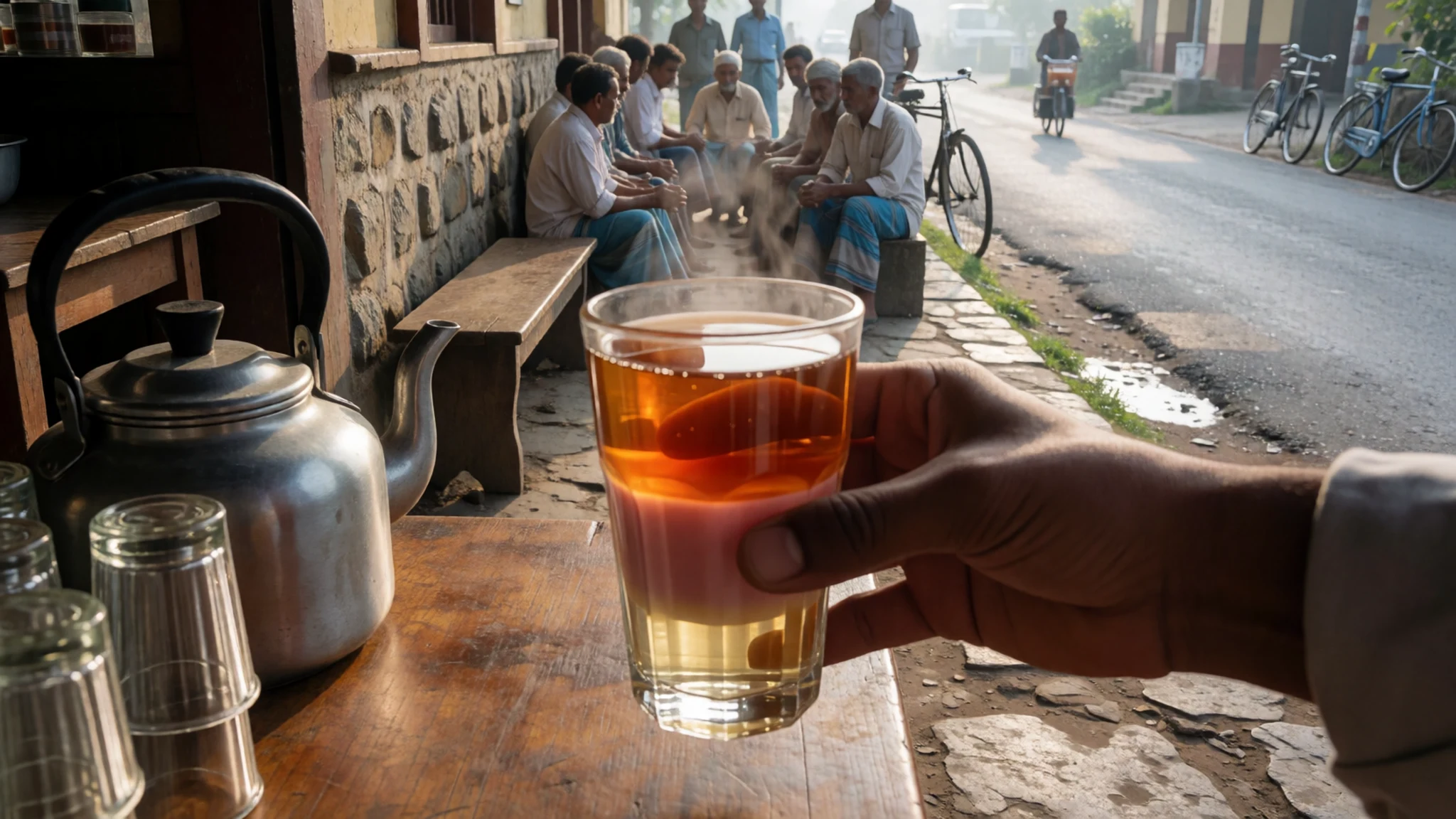
- Shatkora curry — eateries near the bazaar
Shatkora is the sharp citrus that marks a Sylheti curry, and in Srimangal it comes with beef or fish over rice in eateries near the bazaar. The rind is bitter and aromatic, quite unlike a sweet lemon, and it cuts the richness of the meat.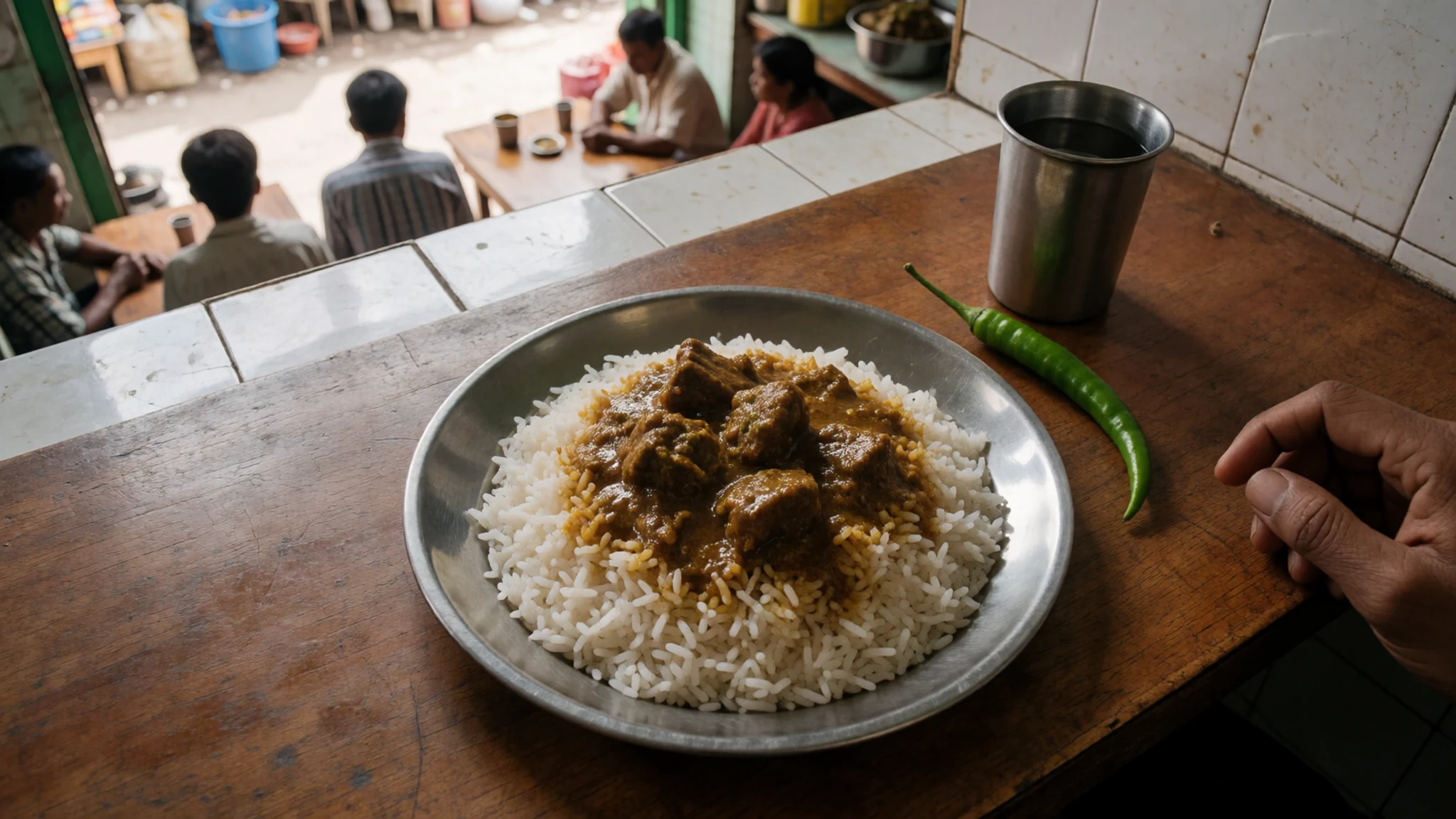
- Rice and bhorta — eateries around the market
A midday plate in Srimangal is rice, a small fish curry, and bhorta, a mash of potato, dried fish or greens loosened with mustard oil and chilli. Eateries around the market serve it as the ordinary lunch. - Pitha — the market and the station in the cooler months
Pitha, rice-flour cakes, show up in Srimangal when the weather cools: bhapa pitha steamed in leaves, chitoi pitha on a clay griddle, sometimes with a sweet filling. They are seasonal food, sold near the market and the station in the cooler months. - Paratha breakfast — small stalls off the main road
Breakfast in Srimangal is often a hot paratha with an egg, a vegetable fry or spiced chickpeas, eaten at a small table off the main road. The same stalls pour milk tea. It starts a garden worker's day as well as a visitor's.
Plan it
Best time. Srimangal is easier from November to February: cooler air, less rain, and forest paths that can be walked. March and April turn hot, with stiff pre-monsoon storms. From May into September the rain is heavy enough to shut trails and turn unmetalled roads to mud.
How long. 2–3
Getting there. Srimangal station is on the Dhaka–Sylhet railway, and the train arrives with the town immediately outside. Osmani International Airport in Sylhet is the airport for this region, followed by a road transfer. Buses also run from Dhaka and Sylhet and stop on the main road.
Budget. low
Tips
- Prefer a weekday in the drier months, when Dhaka weekends fill the lodges and the forest gate.
- Start forest walks early, before the heat and the day-trippers.
- Carry cash for stalls and boatmen, who rarely take cards.
- In the wet months expect leeches, mud and paths that may be shut.
- Check estate and park access on the day; gate rules are not fixed.
Etiquette
- Remove shoes at mosque and temple doors.
- Ask before photographing people, especially workers, worshippers and children.
- Cover shoulders and knees in town, in villages and at prayer.
- Speak quietly at Baikka Beel so the birds stay.
Nearby
Sources
- Wikidata (CC0)
- Wikipedia (CC BY-SA 4.0)
- Wikivoyage (CC BY-SA 4.0)
Wildlife
- Hoolock gibbon (animal)
The western hoolock gibbon is a small, tailless ape that swings through the treetops like an acrobat. In Srimangal, look for it along the forest trails beneath the thick canopy, in the quiet of early morning. The notes give no season. Keep a good distance, stay silent and let it carry on undisturbed. A local guide will help you find it and read the forest. Never offer it food, however close it seems. - Capped langur (animal)
The capped langur is a tree-dwelling monkey that looks as if it wears a little hat. In Srimangal, you may spot it along the forest trails under the closed canopy, especially in the calm of early morning. The notes give no season. Watch from a respectful distance, speak softly and move slowly, so it stays relaxed. A local guide improves your chances. Never feed it; wild food suits it best.