Split Rock Lighthouse
Split Rock Lighthouse, United States
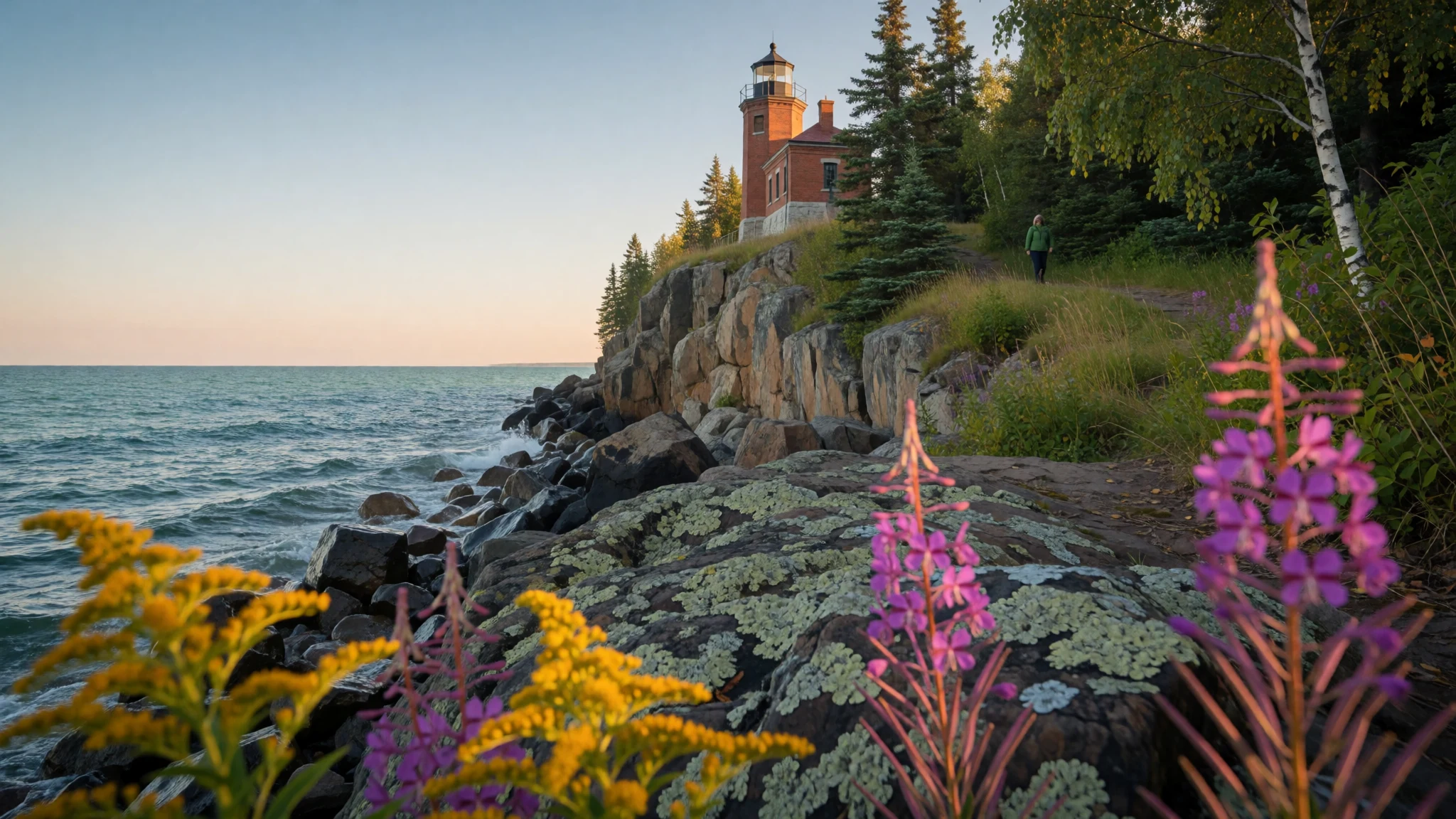
Split Rock Lighthouse is a brick tower on a Lake Superior cliff, built after a storm, with the lake still doing the talking.
The place
Split Rock Lighthouse stands on the Minnesota side of Lake Superior, a short drive south-west of the small town of Silver Bay, on the stretch of coast called the North Shore. The tower sits right at the lip of a sheer rock cliff, so the first view from the water or the shoreline is brick against sky above a great deal of cold, dark lake. Lake Superior behaves more like a sea than a lake. The far shore is out of sight, it generates its own weather, and the water stays cold well into summer. That shapes the whole visit: a bright, mild afternoon beside the water can turn raw and foggy in minutes, and a warm day inland often feels a good deal cooler on the cliff. The engineer Ralph Russell Tinkham designed the station, and the United States Lighthouse Service finished it in 1910. Today it is a preserved historic site within a state park, with a tower that can be climbed, restored buildings around it and paths along the cliff top. Fine summer weekends and the peak of autumn colour bring the biggest crowds, and car parks and the tower queue fill accordingly; weekdays, early mornings and late afternoons are calmer. Duluth, at the southern end of the North Shore, is the usual base for a trip, while Minneapolis and St Paul, the Twin Cities, are the big transport hub far to the south. Locals have a reputation for 'Minnesota nice', a cheerful, low-key friendliness, and visitors usually find staff and fellow walkers easy to talk to.
Its story
Split Rock Lighthouse exists because of a single savage storm. In 1905 the Mataafa Storm swept across Lake Superior and left 29 ships lost or damaged, and the shipping interests and the government concluded that this coast needed a proper light. One of the casualties, the Madeira, still lies just north of the headland. The site was awkward to build on. The tower rises from a cliff about 41 m high, shaped by waves from a hard igneous formation called a diabase sill, flecked with pale anorthosite. The octagonal tower is brick over a steel frame, with concrete trim, and its foundation is set straight into the rock. At the top is a large steel lantern holding a third-order Fresnel lens, made in Paris by Barbier, Bernard and Turenne. The tower had been planned for a larger second-order lens, but costs ran over and the money only stretched to the smaller one. The lens turns on a bath of liquid mercury, which lets it spin almost without friction, and a clockwork drive powered by falling weights does the turning; keepers had to crank the weights back up by hand. The first lamp burned vaporised kerosene. There were no roads to the headland then. Every brick, bag and barrel came in by ship and was hoisted up the cliff by crane. The lamp was first lit on 31 July 1910, and the lighthouse soon became a sight in itself, with sailors and excursion boats coming to look at it.
What to see
- The lighthouse and its lantern — Cliff top, Split Rock Lighthouse State Park
The octagonal brick tower is the reason most people come, rising from the cliff top with a big steel lantern on its head. It looks best from the shore path below, looking up, where the cliff and the tower line up. Check the official site for tower access and ticketing before travelling.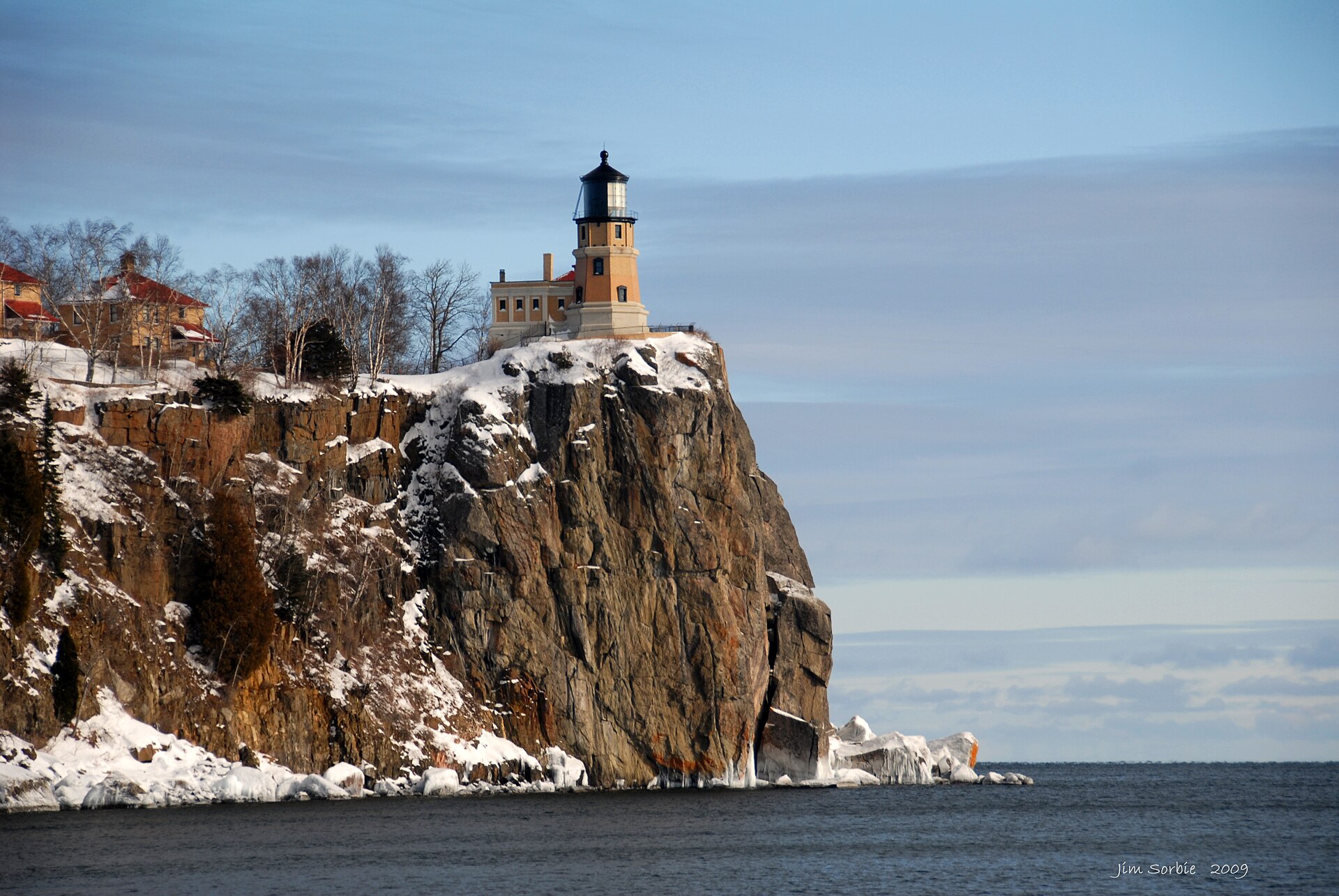
- Inside the tower — Lighthouse tower
The interior stairs wind up past the brickwork towards the lantern room, where the lens, its mercury bearing and the weight-driven clockwork explain how the light actually worked. It is a tight, steep climb, and on busy days there can be a wait on the stairs.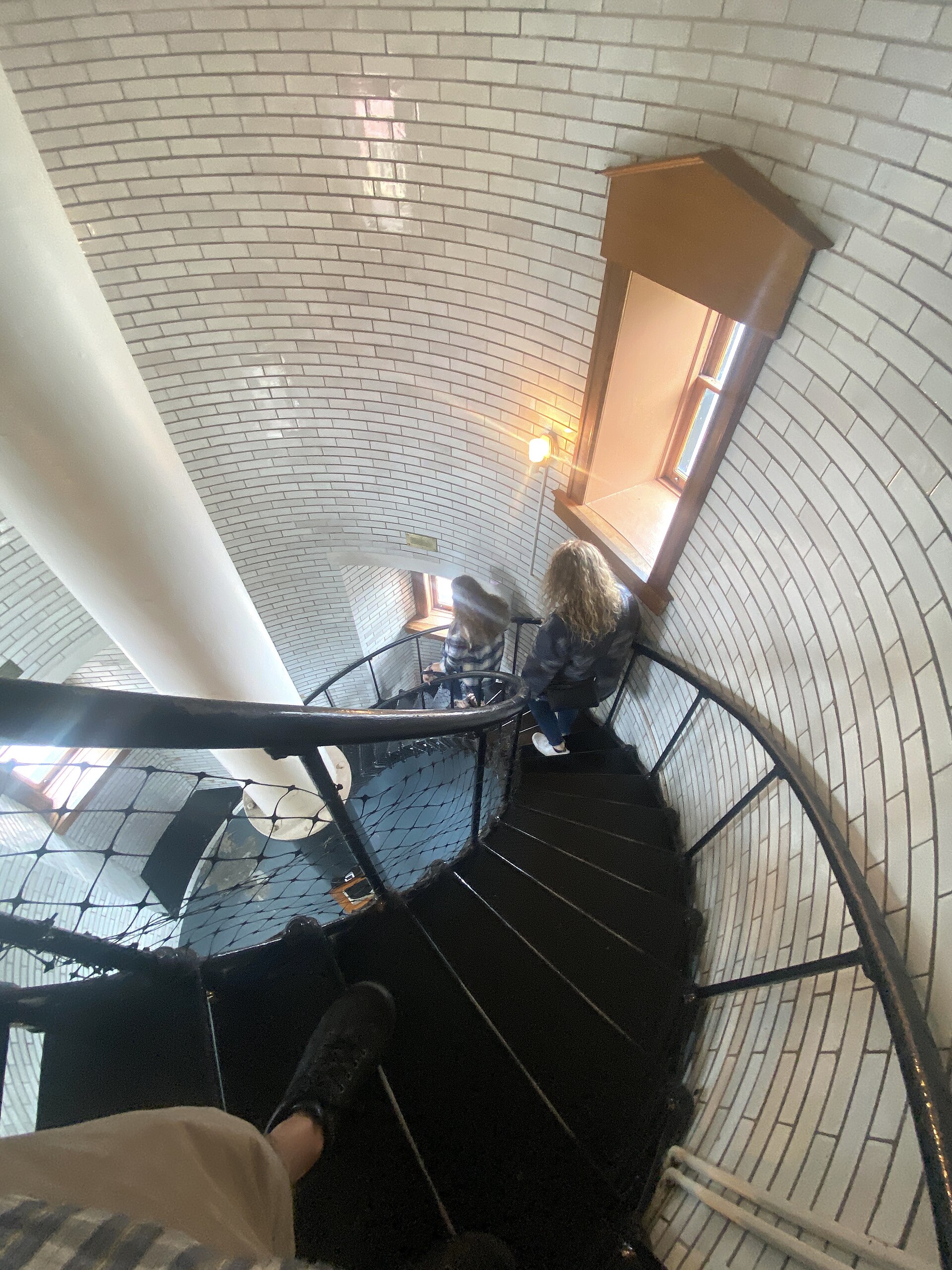
- Fog Signal Building — Beside the lighthouse
A separate building near the tower held the equipment that sounded a warning when fog hid the light from passing ships. It is a useful reminder that this coast is often grey and blank, and that the beam alone could not always be trusted to carry across the water.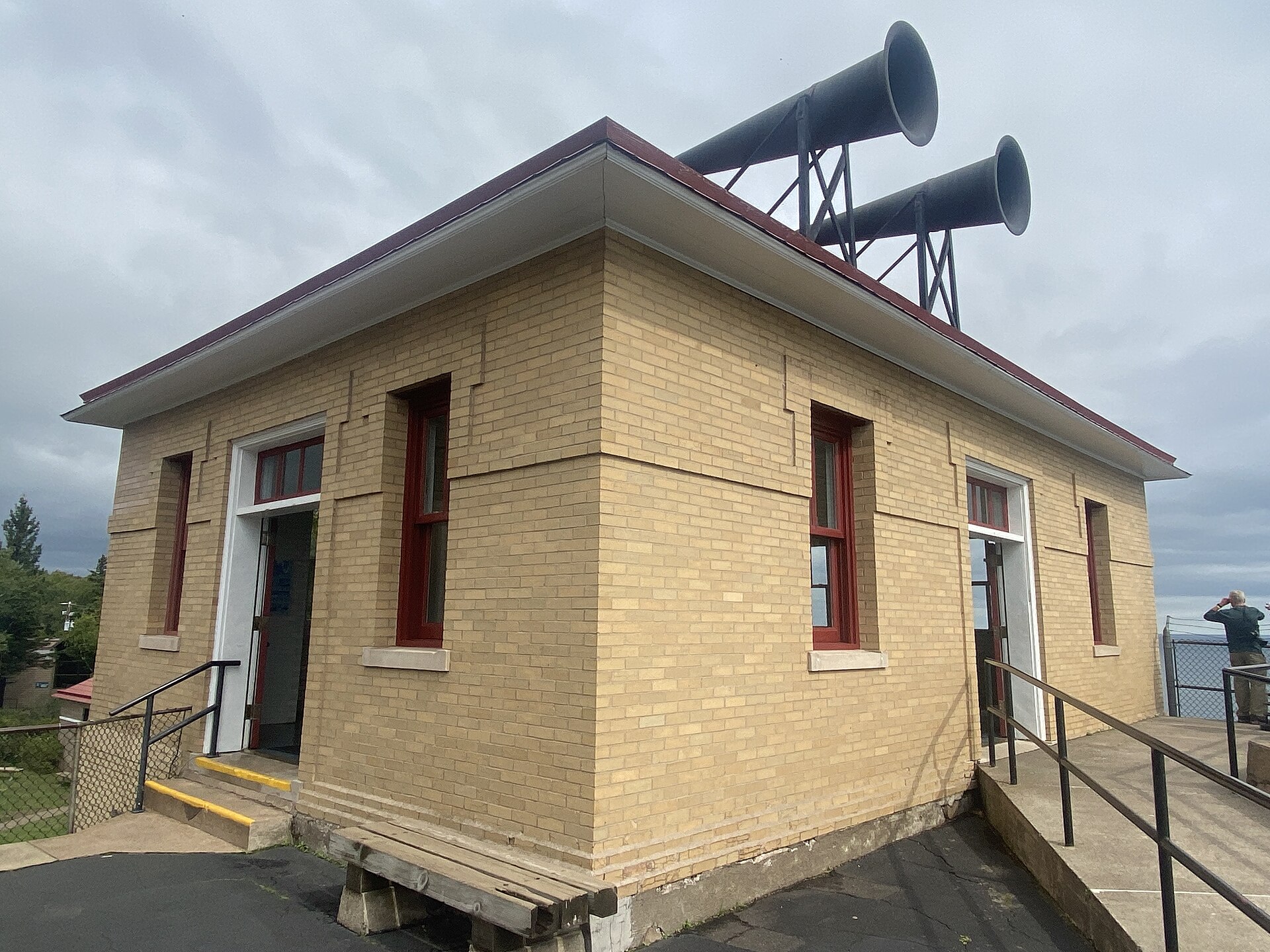
- Keepers' homes — Station grounds
A row of keepers' houses stands close to the tower, restored to show how families lived on a headland that once had no road and relied on ships for every supply. They give the site a human scale that the tower, for all its drama, does not.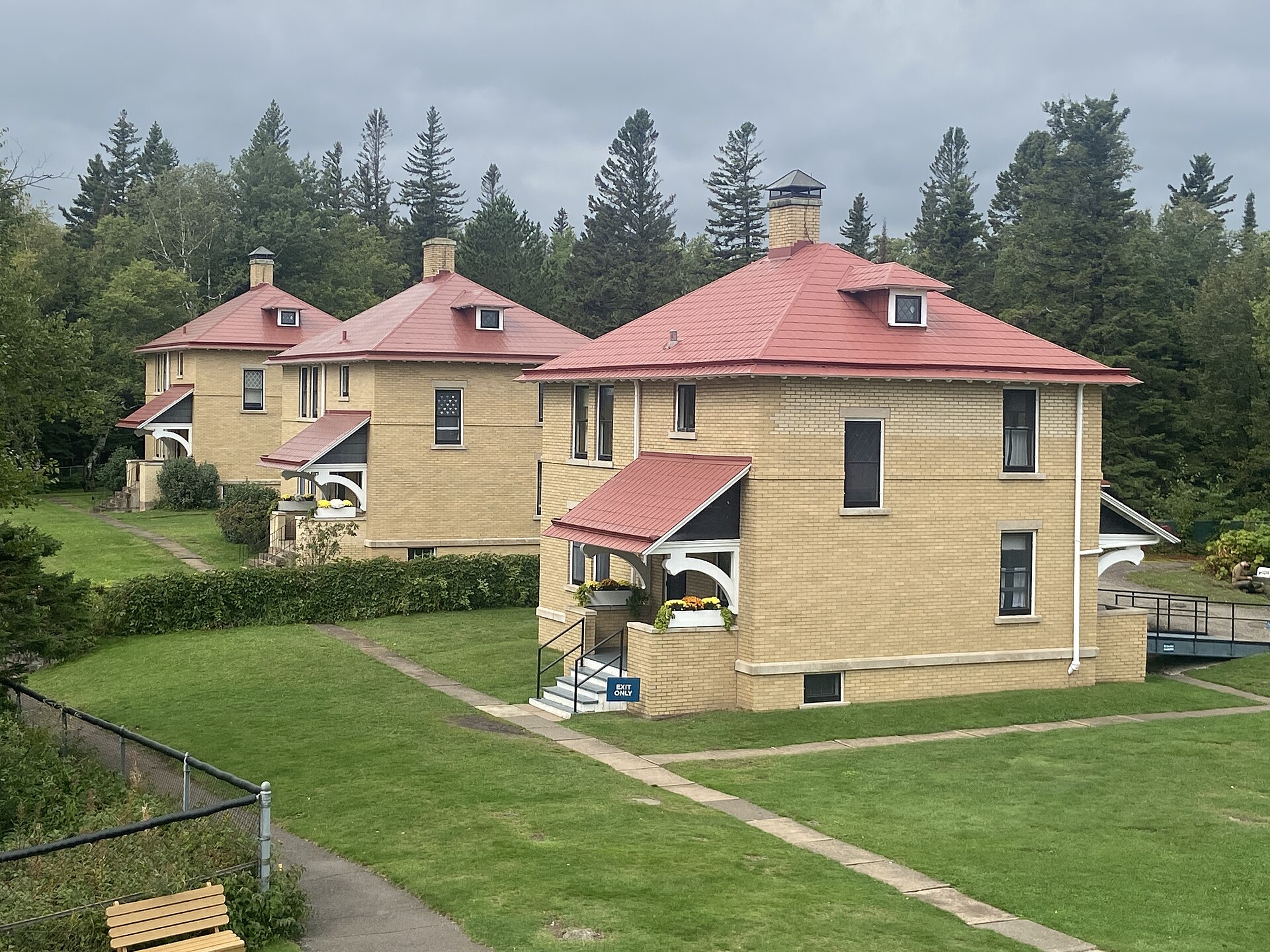
- Shoreline and cliff-top paths — Shore below the lighthouse
Trails along the cliff and down to the rocky shore give the classic view of the lighthouse above Lake Superior. Evening light warms the brick, and photographers gather on clear nights. Wet rock and steep edges need care, and the lake wind is colder than the car park suggests.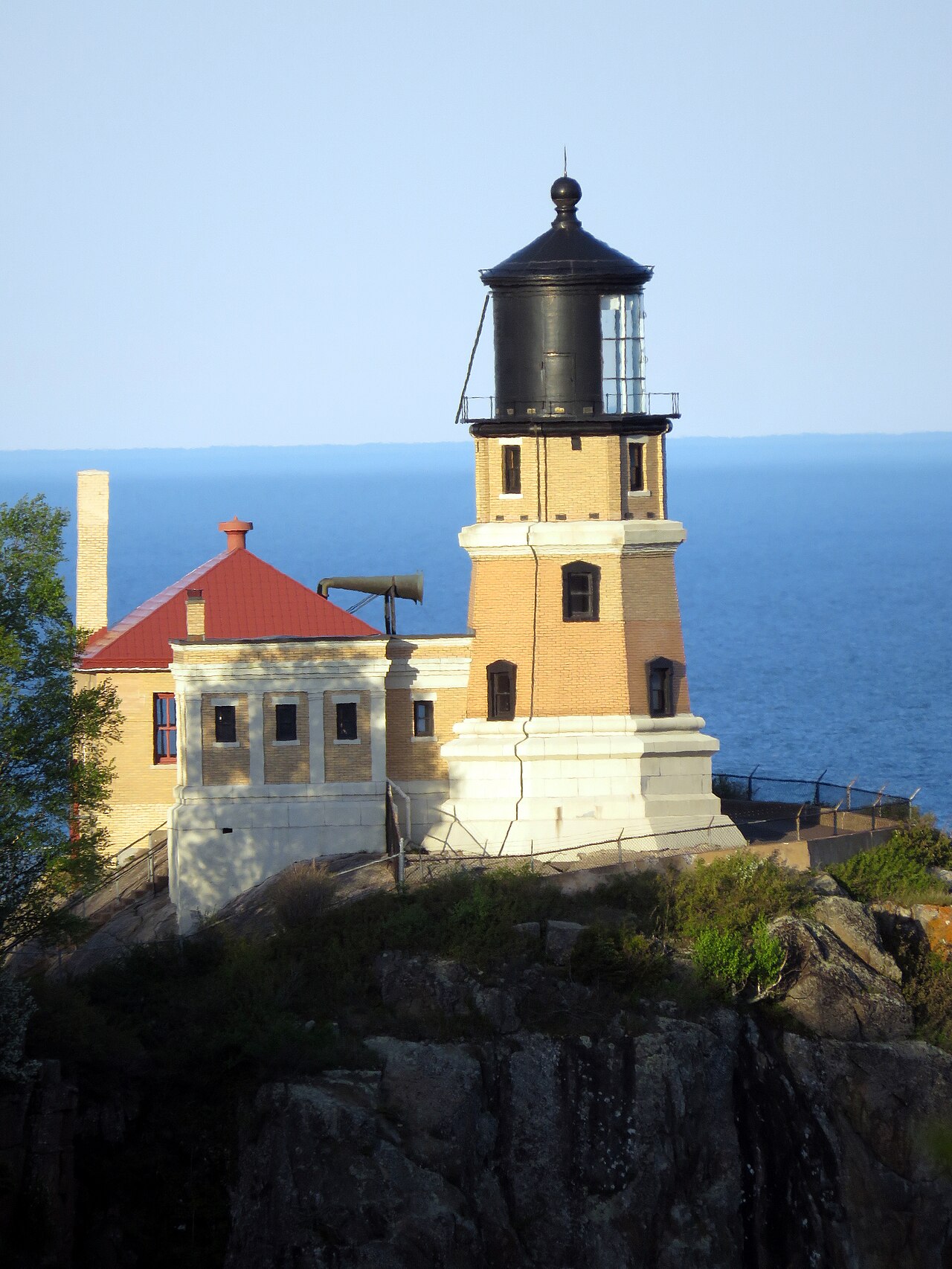
Culture
Split Rock Lighthouse sits in a part of Minnesota shaped by lake shipping, Scandinavian settlement and Ojibwe homeland. The lighthouse itself is a memorial of sorts to sailors: it exists because storms killed crews and wrecked ships, and the keepers' routines of winding weights, tending the lamp and watching the weather are much of what the site interprets. Around the North Shore, communities grew on fishing, logging and mining, and many families trace their roots to Norway, Sweden and Finland. That heritage shows up in church suppers, bakeries, festivals such as Svenskarnas Dag, the Swedish celebration held in Minneapolis, and the lutefisk dinners served before Christmas. The wider state is known for 'Minnesota nice', a cheerful, slightly reserved friendliness; people will chat in a queue or on a trail and tend to expect the same courtesy back. Its politics has a distinctive history too: Scandinavian farmers and workers built the Farmer-Labor Party, which is part of why Minnesota sits somewhat left of its Midwestern neighbours. The Anishinaabe (Ojibwe) peoples were here long before the light, and the lake remains central to their culture, so Lake Superior is usually spoken of with respect rather than as a mere backdrop. Keep to the marked paths and behind any barriers at the cliff edge, and give way to people coming down the narrow tower stairs.
What to wear
Split Rock Lighthouse is in Anishinaabe (Ojibwe) country, where traditional dress includes ribbon shirts and ribbon skirts, made from cotton with bands of bright appliqué, along with beadwork and the jingle dress, worn at powwows and ceremonies. Scandinavian settlers brought their own folk costume, with embroidered wool bodices and waistcoats, which appears at heritage festivals rather than in daily life. What people wear now is practical outdoor clothing: flannel shirts, fleece, jeans, waterproof jackets, caps and hiking boots, with little dressing up even in restaurants. For a visit, layers matter more than style. The wind off Lake Superior is cold even on a sunny summer day, so bring a windproof, showerproof shell, a warm mid-layer and a hat, plus sun protection for bright days. Shoes need grip: the tower stairs are steep and the cliff and shore paths can be wet or rocky. In winter the continental climate brings serious cold, so thermal layers, gloves and insulated boots are essential. There is no religious dress code at the site, and casual outdoor clothes are normal everywhere.
What to eat
- Walleye — Lakeside restaurants and supper clubs along the North Shore
A freshwater fish with fine, firm white flesh, popular across Minnesota and usually served fried or baked with potatoes. It is the standard fish dinner of the region and a safe first order for anyone unsure what to try. - Lake trout — Smokehouses and fish shops along the North Shore road
Lake Superior's firm, pinkish fish, a little like salmon in texture. It is often smoked, and eaten as a snack with crackers or in a sandwich, which suits a day outdoors by the water. - Lefse — Church bazaars, Scandinavian bakeries and heritage festival stalls
A potato flatbread, thin as a tortilla and brought by Norwegian immigrants. The usual way is to spread it with butter and sugar and roll it up like a tube. It is soft, mild and sweet. - Juicy Lucy — Neighbourhood bars and burger places in Minneapolis and St Paul
Minnesota's twist on the cheeseburger, with the cheese sealed inside the patty so it melts into a molten centre. Let it cool for a moment, as the filling is very hot when the burger first arrives. - Lutefisk — Church basement suppers across the state in winter
Dried cod softened in lye, a Norwegian immigrant dish that is, by general agreement, an acquired taste. It appears mostly around Christmas, and tasting it is as much about the community occasion as the fish.
Plan it
Best time. June to October. July and August are the mildest and most reliable by the lake, while September and early October bring autumn colour and calmer car parks. Winters are long and severe, because Minnesota has a continental climate with extreme temperatures, so check conditions and opening before a winter trip.
How long. 1
Getting there. Fly to Duluth (DLH) for the shortest last leg, or to Minneapolis–Saint Paul International (MSP), the big hub with many international flights. From either, drive north-east along the Lake Superior shore; the Amtrak stations listed for the state are far from the coast, so a car is the practical choice.
Budget. mid
Tips
- Check the official site for opening times, ticketing and whether the tower is open on your day
- Arrive early on summer weekends and during autumn colour, when the car park and tower queue fill
- Bring layers and a windproof jacket, as the cliff is much colder than inland
- Fill up on fuel and food in Duluth or Silver Bay before the final stretch
- Watch the forecast: continental weather can bring storms, and fog often hides the lake
Etiquette
- Keep to marked paths and stay behind barriers at the cliff edge
- Give way on the narrow tower stairs to people coming down
- Be friendly and patient in queues, in the local 'Minnesota nice' spirit
Nearby
Sources
- Wikidata Q3378404 (CC0)
- Wikipedia: Split Rock Lighthouse (rev 1373126578) (CC BY-SA 4.0)
- Wikivoyage: Minnesota (rev 5411264) (CC BY-SA 4.0)
- Photo: Split Rock Lighthouse, Split Rock MN — Jim Sorbie (CC BY 2.5)
- Photo: Split Rock Lighthouse, June 2012 — JMLAX101 (CC0 1.0)
- Photo: Split Rock Lighthouse - Minnesota — Doug Kerr (CC BY-SA 2.0)
- Photo: Split Rock Lighthouse, June 1949 — Kenneth Raymond Ware (CC0 1.0)
- Photo: Interior stairs at Split Rock Lighthouse — Myotus (CC BY-SA 4.0)
- Photo: Split Rock Lighthouse evening — Prosthetic Head (CC BY-SA 4.0)
- Photo: Lighthouse keepers' homes — Myotus (CC BY-SA 4.0)
- Photo: Fog Signal Building, Split Rock Lighthouse — Myotus (CC BY-SA 4.0)


