Sitakunda
Sitakunda, Bangladesh
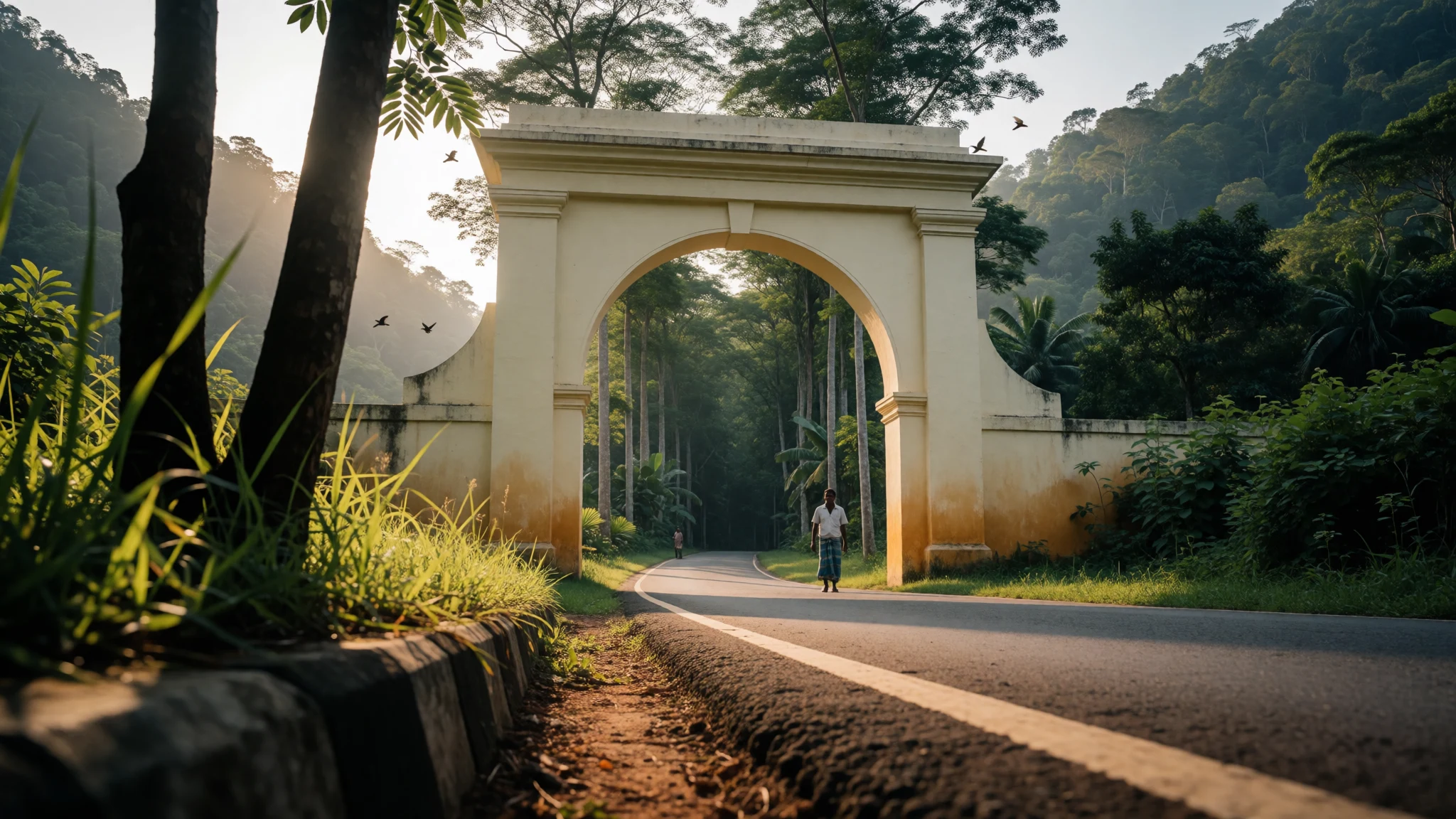
Sitakunda pairs a conserved patch of Chattogram hill forest with ponds, waterfall walks and a pilgrim hill, all within a single day trip.
The place
Sitakunda Botanical Garden and Eco Park lies in Sitakunda Upazila, part of Chittagong District in south-eastern Bangladesh. This is the stretch of country where the flat delta gives way to a line of low, forested hills beside the Bay of Bengal, and the park occupies a slice of those hills. The Dhaka–Chattogram highway and railway run close by, so the town is familiar to many Bangladeshis even if few outsiders plan a whole trip around it.
The park is laid out as a garden as much as a forest. There is a formal entrance portal, tarmac and brick paths, ponds with lilies, flowering shrubs such as hibiscus, and planted collections, while the steeper ground behind feels like ordinary hill woodland. Weekends and public holidays bring families, school groups and picnic parties, so the paths can be loud and crowded. Weekday mornings are quieter, cooler and better for birdsong.
Beyond the park, the district is known locally for Chandranath hill, a Hindu pilgrimage site, and for waterfalls in the surrounding hills, Suptadhara being the one most often named. Each is a separate outing with its own travel time, so combining all three in one day is ambitious.
Heat and humidity matter here. From April to October the air is heavy and the monsoon makes forest paths slick. The park is best taken as a gentle green break near a busy port city rather than a wilderness expedition, and visitors should expect a managed landscape with the usual wear of a popular public place.
Its story
Sitakunda Botanical Garden and Eco Park was set up in 2001 across 808 hectares, and it is recorded as the first eco-park in Bangladesh. The founding purpose was conservation of biodiversity: keeping a block of hill forest and the plants and animals that depend on it, while still letting the public walk in and learn from it. That mix is what the term eco-park signals, as opposed to a strict reserve closed to visitors or a purely ornamental garden.
The hills around Sitakunda belong to the forested ridges of the Chattogram region, which face steady pressure from farming, settlement, timber cutting and fuel-wood gathering. Protecting a large block close to a major port city and a busy highway was therefore a practical statement as much as an ecological one. Upkeep is an ongoing task. Visitors may find cleared patches, litter near picnic spots and young plantings beside older trees, and an honest account has to describe a managed landscape rather than untouched forest.
Older stories sit on the same hills. Local tradition ties the name Sitakunda to Sita of the Ramayana, with kunda meaning a pool or spring, and says she bathed here during her exile. Chandranath hill, dedicated to Shiva, draws pilgrims through a tradition that predates the park, and the festival around Shiva Chaturdashi fills the roads with worshippers and stallholders. The park and the pilgrim hill share a district but not a history: one is a recent institution of conservation, the other a long-established place of worship.
What to see
- The entrance portal and main garden walks — Botanical Garden and Eco-Park, Sitakunda
The gateway of Sitakunda Botanical Garden and Eco Park opens onto the main paths, which are easy walking and suit families and older visitors. Arriving early gives the best light under the trees and fewer crowds. Late afternoon is also pleasant, when the heat eases and the sky often colours over the hills.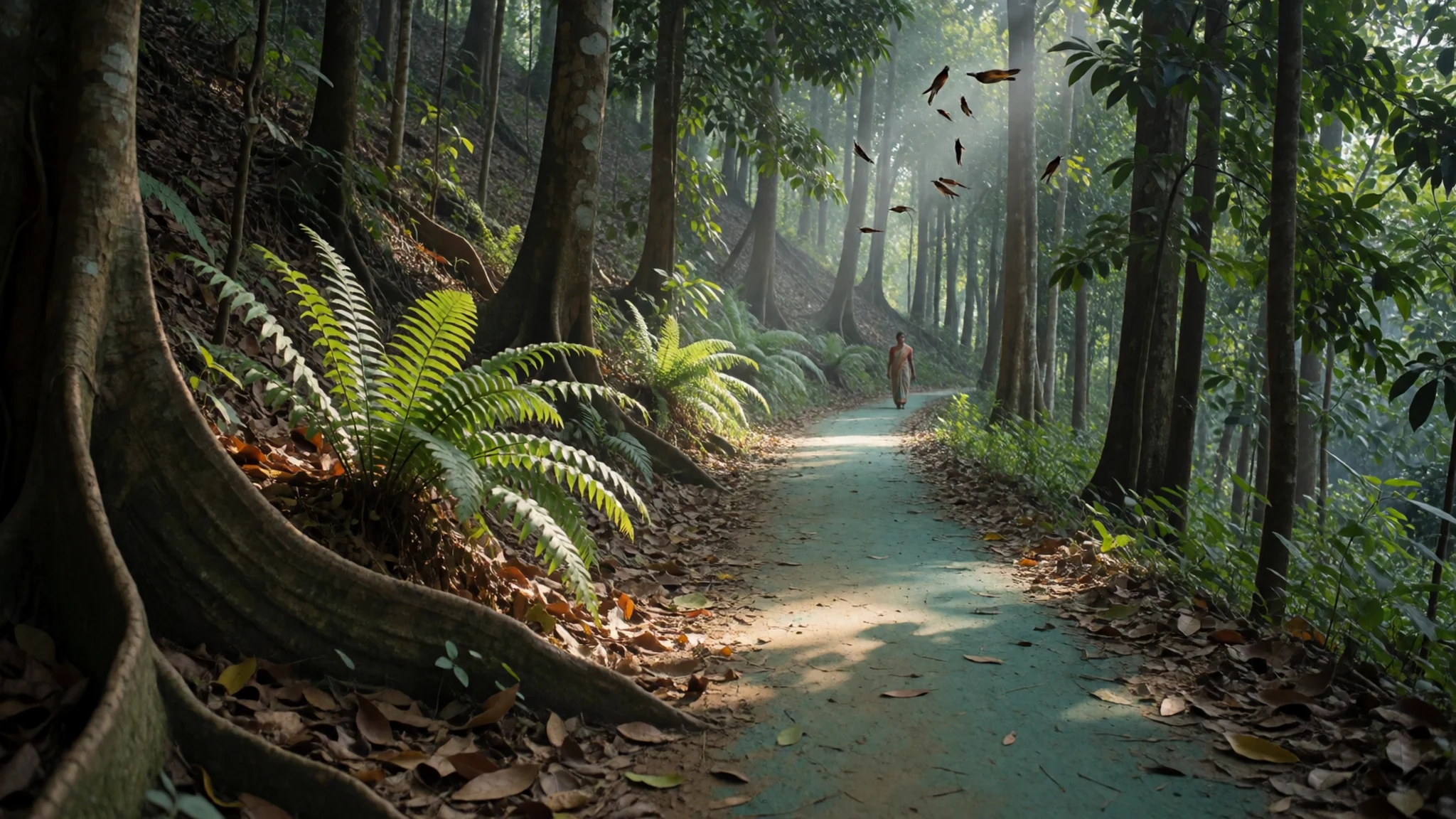
- The lily pond — Inside the park, Sitakunda
A still pond with lilies is one of the park's calmest corners, reflecting the surrounding trees and drawing dragonflies and small birds. Sitakunda's pond is a good place to sit and rest between walks. Water levels and flowering change with the season, so the show of blooms is not guaranteed.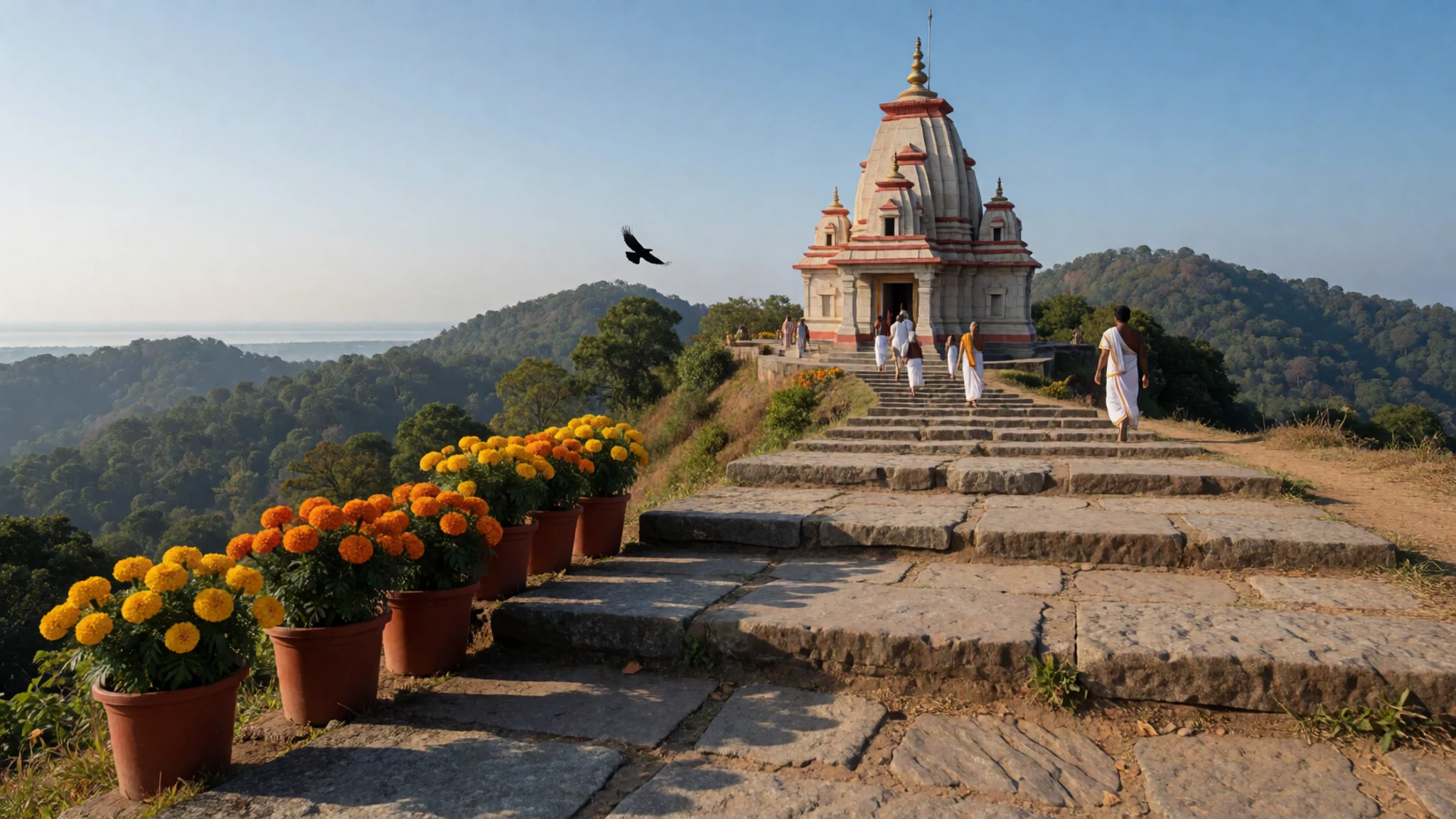
- Flowering shrubs and plant collections — Garden areas of the park, Sitakunda
Hibiscus and other ornamental shrubs line parts of the park's paths, giving colour even in the dry months. The planted areas contrast with the wilder hill woodland beyond them. Labels and upkeep vary, so treat this as a relaxed garden stroll rather than a formal botanical study.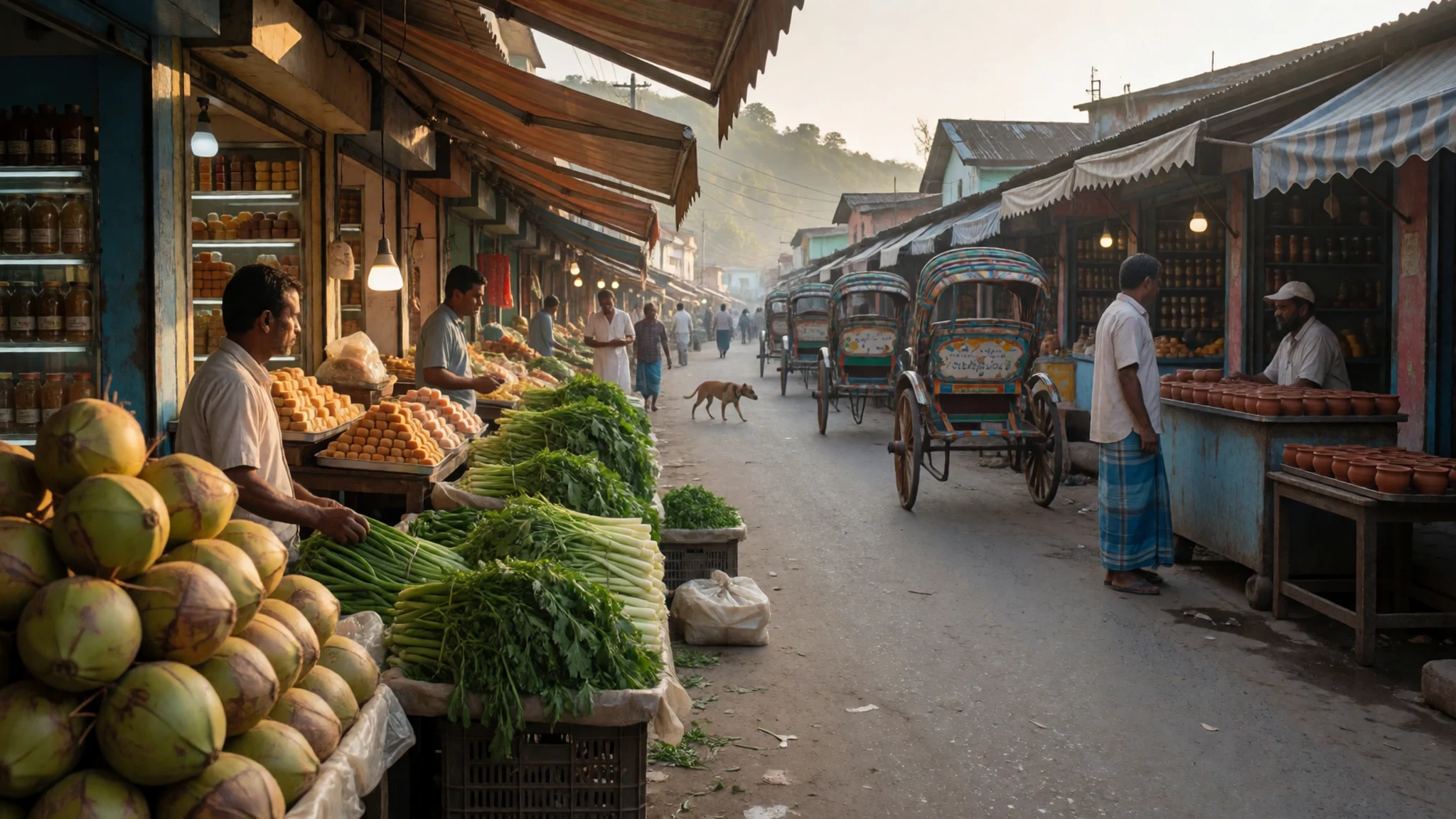
- Suptadhara Waterfall — Hills of Sitakunda Upazila
Suptadhara is a waterfall in the hills of the Sitakunda area, reached on foot over uneven ground. The flow is strongest during and after the monsoon, when rocks and steps are also at their most slippery. Dry-season visits give an easier walk but a thinner fall. Ask locally about conditions before setting out.
- Chandranath hill and its temple — Sitakunda town and hills
Chandranath hill is a Hindu pilgrimage site dedicated to Shiva, reached by a climb that rewards walkers with views over the surrounding country. It is busiest around the Shiva Chaturdashi festival, when the roads below are packed. Outside festival days it is calmer, and visitors are welcome to observe respectfully.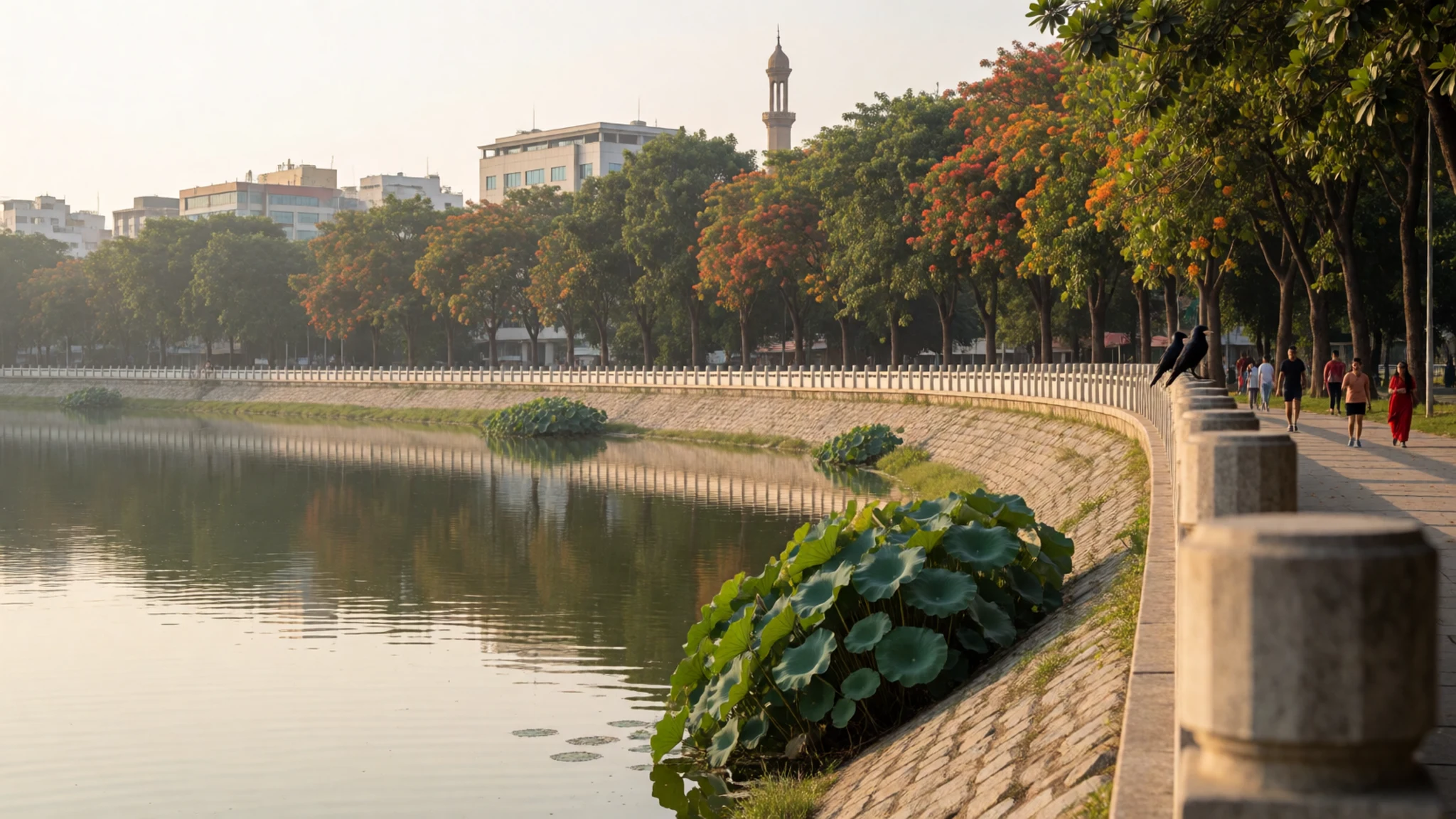
Culture
Sitakunda sits in a part of Bangladesh where Bengali Muslim and Hindu communities live side by side, and the day-to-day culture is one of tea stalls, bazaar bargaining and easy conversation. The spoken language around Chattogram has its own distinct dialect, which often surprises visitors who have learnt standard Bengali, but a few polite words are always appreciated.
Religious life gives the district much of its character. Chandranath hill is a working place of worship for Hindus, and the festival around Shiva Chaturdashi brings large crowds, offerings, music and fasting. The local tradition that links the name Sitakunda to Sita of the Ramayana adds a layer of storytelling that locals are glad to share. Mosques and village prayer calls are part of the soundscape, and daily rhythms, especially on Fridays, follow the prayer times.
The eco-park itself is a modern, secular addition. It is a popular outing for families and student groups, so weekends have a festive, picnic feel, with snacks, photographs and a lot of conversation. Visitors from abroad, and from other parts of India or the UK, may attract friendly curiosity, including requests for selfies. It is usually good-natured, and a smile and a polite refusal are fine if it becomes tiring.
At Chandranath and any other temple precinct, take off your shoes before the entrance steps, dress modestly, and ask before photographing worshippers or the inner shrine.
What to wear
Dress around Sitakunda follows the wider Bengali pattern, shaped by heat, humidity and modesty norms. Traditionally, women wear the saree, often in cotton for daily life and silk or fine muslin-style weaves such as jamdani for weddings and festivals. Men wear the lungi at home and in villages, and the panjabi, a long cotton tunic worn with loose pyjama trousers, for prayers, festivals and formal occasions. The hill peoples of the wider Chattogram region have their own woven cloths, made on backstrap looms in bright striped patterns, and these appear at community celebrations.
Day to day, most people now wear shalwar kameez, shirts and trousers, and many younger people wear jeans and T-shirts, especially in town. Sarees remain common for older women and for events. Pilgrims at Chandranath often wear simple, clean clothes, with some in white or saffron on festival days.
Visitors should plan for warmth and wet. Light cotton or linen that covers shoulders and knees is comfortable and respectful, and it also protects against sun and insects. A hat, sunglasses and a light rain jacket are useful from April to October. Shoes with good grip matter more than style, because forest paths and waterfall approaches are slippery. Carry sandals or slip-ons that are easy to remove at temples, and a scarf or shawl for covering the head or shoulders where needed.
What to eat
- Mezbani beef — Mezban-style eateries in Chattogram city
Mezbani gosht is Chattogram's celebrated feast curry, a peppery, dark beef dish traditionally cooked in large pots for community gatherings. It is eaten with rice and has a fiery kick. Look for it at specialist eateries in Chattogram city, as small roadside places may not serve it.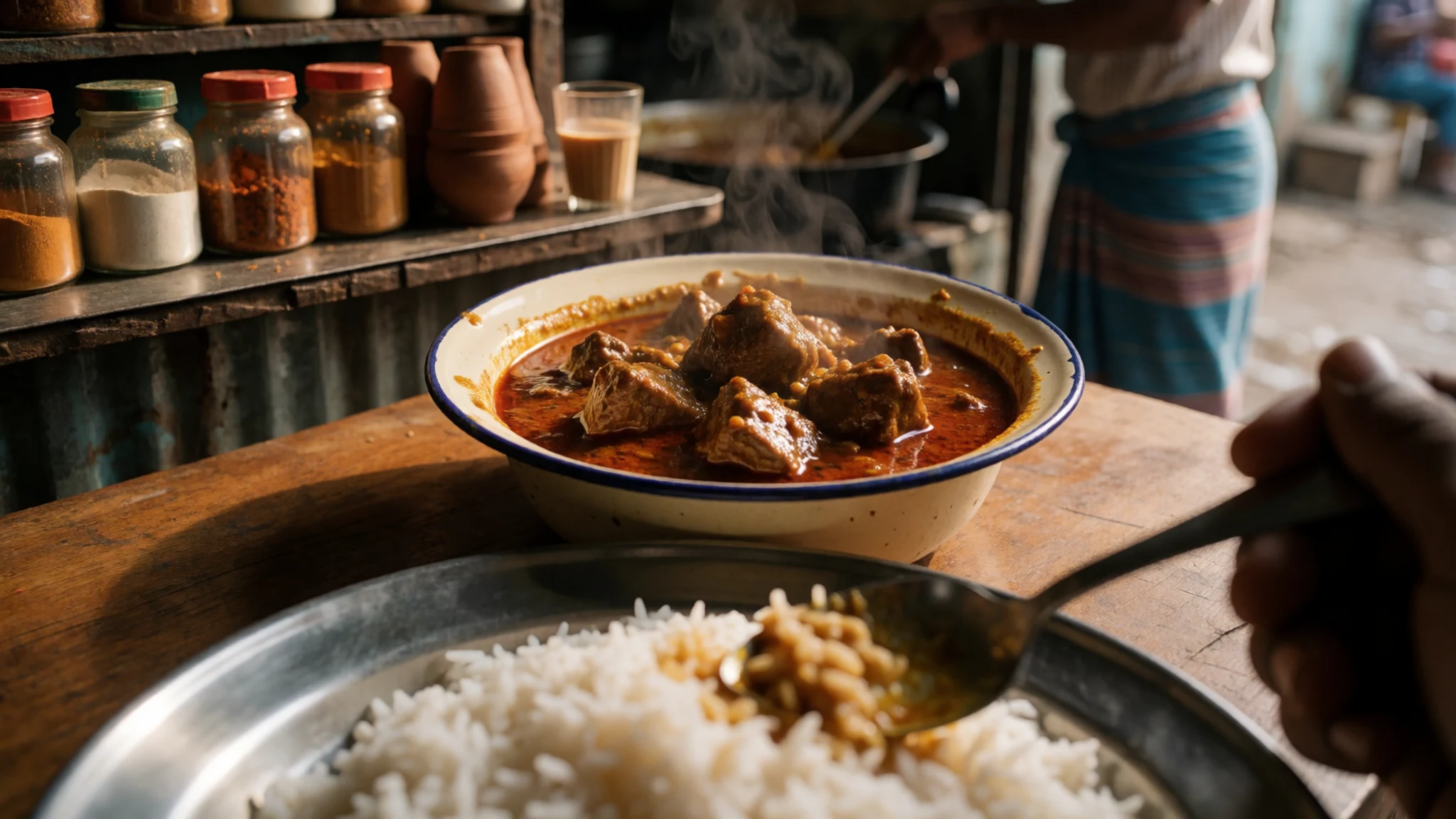
- Hilsa with rice — Rice-and-fish eateries along the Dhaka–Chattogram highway
Ilish, the hilsa, is the fish most Bengalis think of as a seasonal treat, cooked in mustard, steamed or fried. Its many fine bones need patience. It is most plentiful in the monsoon months, and eateries near the highway and in town often serve it with plain rice.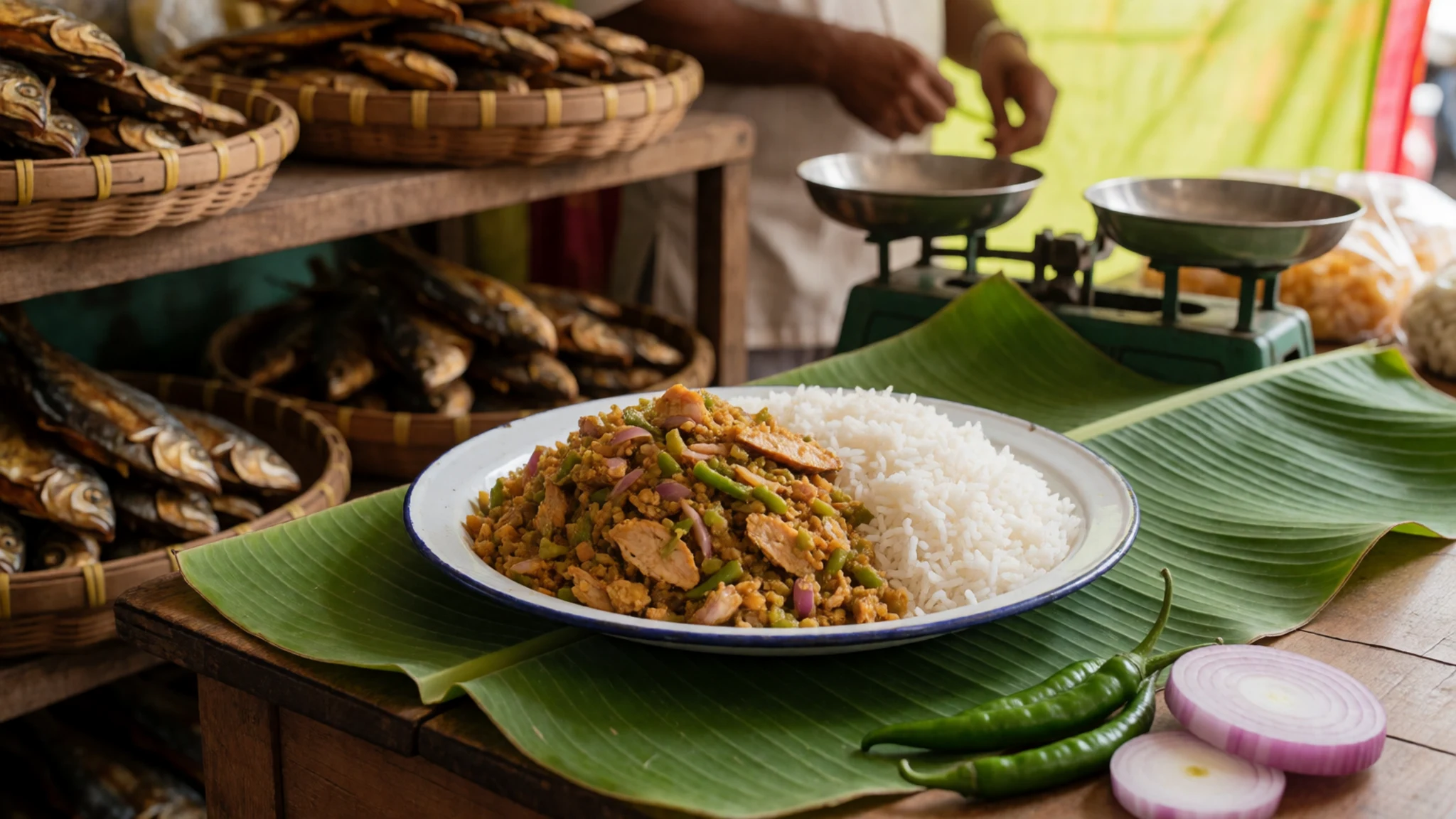
- Shutki bhuna — Home-style eateries and bazaar food stalls in Sitakunda
Shutki is dried fish, a flavour strongly associated with the Chattogram coast. Cooked bhuna style with onion, chilli and spices, it is pungent and rich, and best eaten with rice. The smell can be strong, so newcomers may prefer to try a small portion first. - Fuchka and chotpoti — Street stalls near the park gate and in the bazaar
Fuchka are crisp shells filled with spiced chickpeas or potato and tangy tamarind water, a favourite snack of the park's weekend crowds. Chotpoti is a similar spiced chickpea plate. Choose busy stalls with high turnover and be careful about the water used. - Roadside tea and seasonal fruit — Tea stalls and fruit stands along the roads around Sitakunda
Cha, sweet milky tea, is poured at stalls along every road, usually with biscuits, and is a good way to meet locals. Hill-grown fruit such as pineapple, jackfruit and green coconut water appears in season at roadside stands, a refreshing option on hot days.
Plan it
Best time. November to March is the most comfortable period, with cooler, drier weather that makes the forest paths easier. April and May are hot and humid, June to September is the monsoon with heavy rain and slippery trails (though waterfalls run fuller), and storms or cyclone warnings can affect the coast before and after the monsoon, so check forecasts.
How long. 1
Getting there. Fly to Shah Amanat International Airport at Chattogram, or take a train or bus from Dhaka to Chattogram. Sitakunda lies north-west of the city along the same highway and railway corridor, so the last leg is a local bus, train stop or CNG auto-rickshaw. Check current timetables with the operators; hiring a car for the day is simpler if combining the park, the waterfall and Chandranath.
Budget. low
Tips
- Go on a weekday morning for cooler air and smaller crowds; weekends and holidays are busy
- Carry cash in small notes, as stalls and small eateries rarely take cards
- Check entry fees and opening hours locally or on the day, as they can change
- Bring drinking water and insect repellent, and wear shoes with grip for wet paths
- Ask locally about the waterfall trail before setting out, especially after rain
Etiquette
- Remove shoes before entering any temple precinct and dress modestly
- Ask before photographing worshippers or people at prayer
- Take litter away with you; the park is for conservation
Nearby
Sources
- Wikidata Q16875434 (CC0)
- Wikipedia — Botanical Garden and Eco-Park, Sitakunda (rev 1362483574) (CC BY-SA 4.0)
- Wikivoyage (CC BY-SA 4.0)