Sisimiut
Sisimiut, Greenland
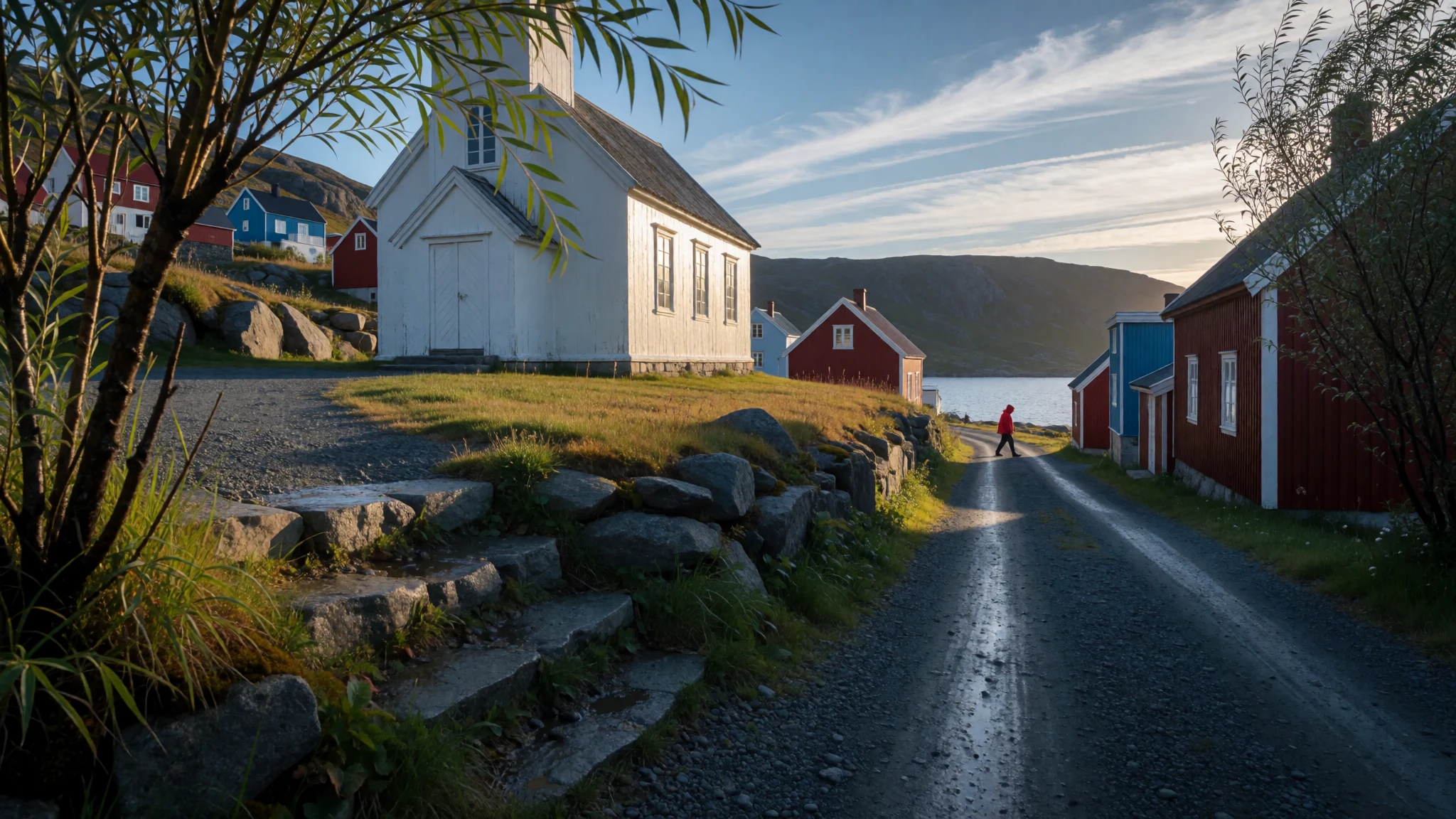
Sisimiut is a working Arctic harbour town of painted wooden houses, sled dogs, and hills that drop straight to the Davis Strait.
The place
Sisimiut stands on bare rock where the Davis Strait meets the west coast of Greenland, north of the Arctic Circle, in the stretch of coast the town serves as a regional centre. The settlement is a scatter of painted wooden houses and later concrete blocks, set between small lakes, a working harbour, and low mountains that hold snow late into the warm months. A simple 4x4 road now connects the town to Kangerlussuaq. People arrive by air, or by the coastal boat when the sea is open, and the airport and the quay are the edges of daily life.
In the light months the streets are dry, boats come and go, and the hills behind the houses turn to dwarf shrub and berry ground. Wind off the water is part of every walk. Around midsummer the sun barely sets, so evening and morning blur, and the coloured walls stay bright late into the night. In the dark months the same town tightens: ice in the bays, dogs staked on the outskirts, and a low sun that makes a short day. The northern lights then do the work that the painted houses do in summer.
Sisimiut is a fishing port and a service town, with schools, a hospital, and shops for the people who live there. The pleasure is that ordinary life, and the abrupt land around it: a short walk from the harbour the rock is empty, and the sounds are wind and water. Houses face the sea because the sea is the road. Wooden quarter and concrete blocks share the same wind, and both are the town.
Its story
Sisimiut takes its name from the fox holes in the ground, and the name fits a coast where people have hunted, fished, and camped through successive Arctic cultures. Long before a Danish map used the name Holsteinsborg, Inuit families used this shore: first the early Arctic cultures archaeologists call Saqqaq and Dorset, later the Thule ancestors of modern Greenlanders, who brought the dog sled, the kayak, and the umiaq. The land still holds their traces in the wider country between the town and the inland ice, and the museum in the old quarter keeps tools, boats, and clothing from that long occupation.
European ships came for whales. Trade and mission followed, and the settlement that grew into Sisimiut was planted as a colonial station on a site people already knew. The small Bethel church of 1775 still stands in the centre, white against the coloured houses, beside the buildings that now hold the museum. For generations the year turned on seal, fish, and the trading post. Danish was the language of church and shop; Kalaallisut remained the language of home.
Commercial fishing changed the work, and then the skyline. Greenland halibut and shrimp pulled people in from smaller settlements, and concrete apartment blocks rose beside the wooden houses. Sisimiut became a town with schools, a hospital, and Knud Rasmussen Folk High School, which draws students from along the coast, while sled dogs, hunting, and the sharing of meat stayed part of ordinary weeks. The old church and the new blocks are the same story seen from the harbour: a Greenlandic town that kept its name, its dogs, and its sea road, and took on the institutions of a modern regional centre.
What to see
- Bethel church — town centre, Kangerluarsunnguaq
The old Bethel church in Sisimiut stands in the wooden centre beside the museum, by the inlet called Kangerluarsunnguaq. It is a small white church among painted houses, a surviving mark of the colonial station on an ordinary street. The walk around it is short. It remains part of Lutheran life, so step aside when a service or a wedding has the door.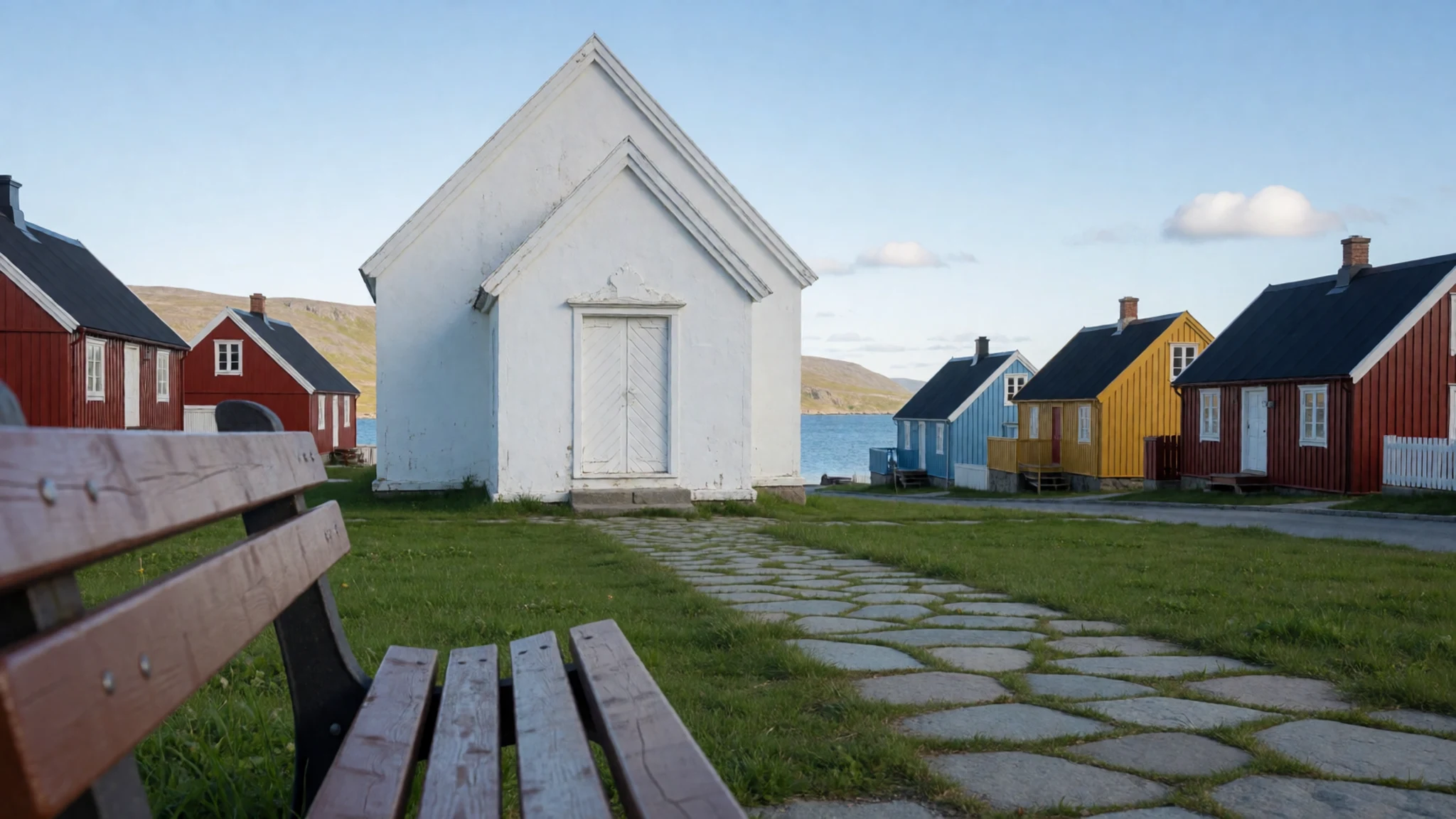
- Sisimiut Museum — town centre
Sisimiut Museum occupies old wooden buildings in the centre, beside the Bethel church. The rooms trace the coast's occupation from early Arctic hunting cultures through Thule and later Inuit life, with kayaks, clothing, and gear from the colonial trading years. Labels are in Kalaallisut and Danish. The low buildings face the same water as the church and belong to the visit as much as the cases.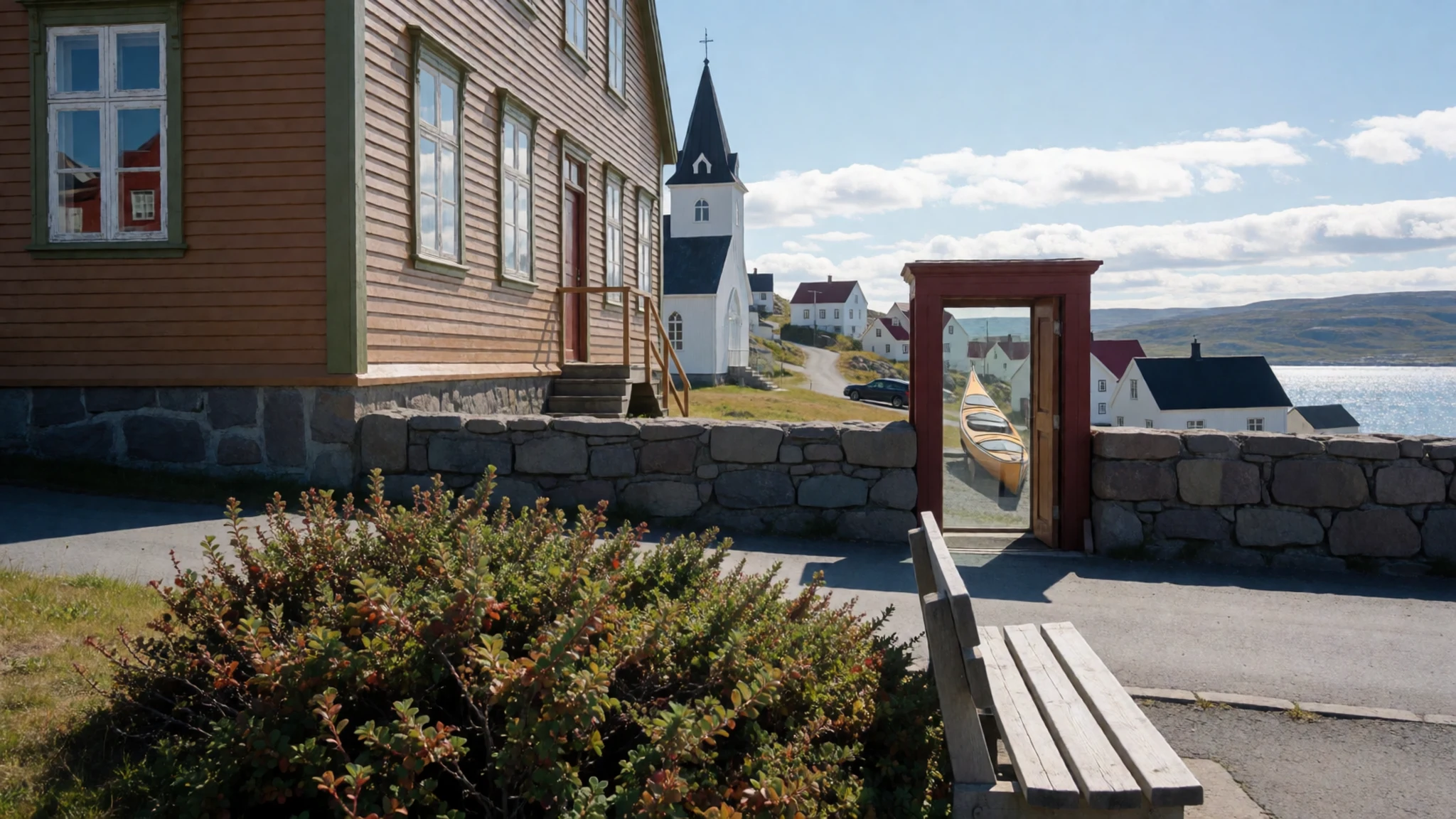
- The harbour — the port
Sisimiut's harbour is the working front of the town, a quay for fishing boats, supply ships, and the coastal ferry in open water. In the light months the quay fills with crates, fuel, and people meeting a boat. Painted houses climb the rock behind, which is why a walk here explains the town. It is a workplace: keep clear of winches, lines, and crews unloading.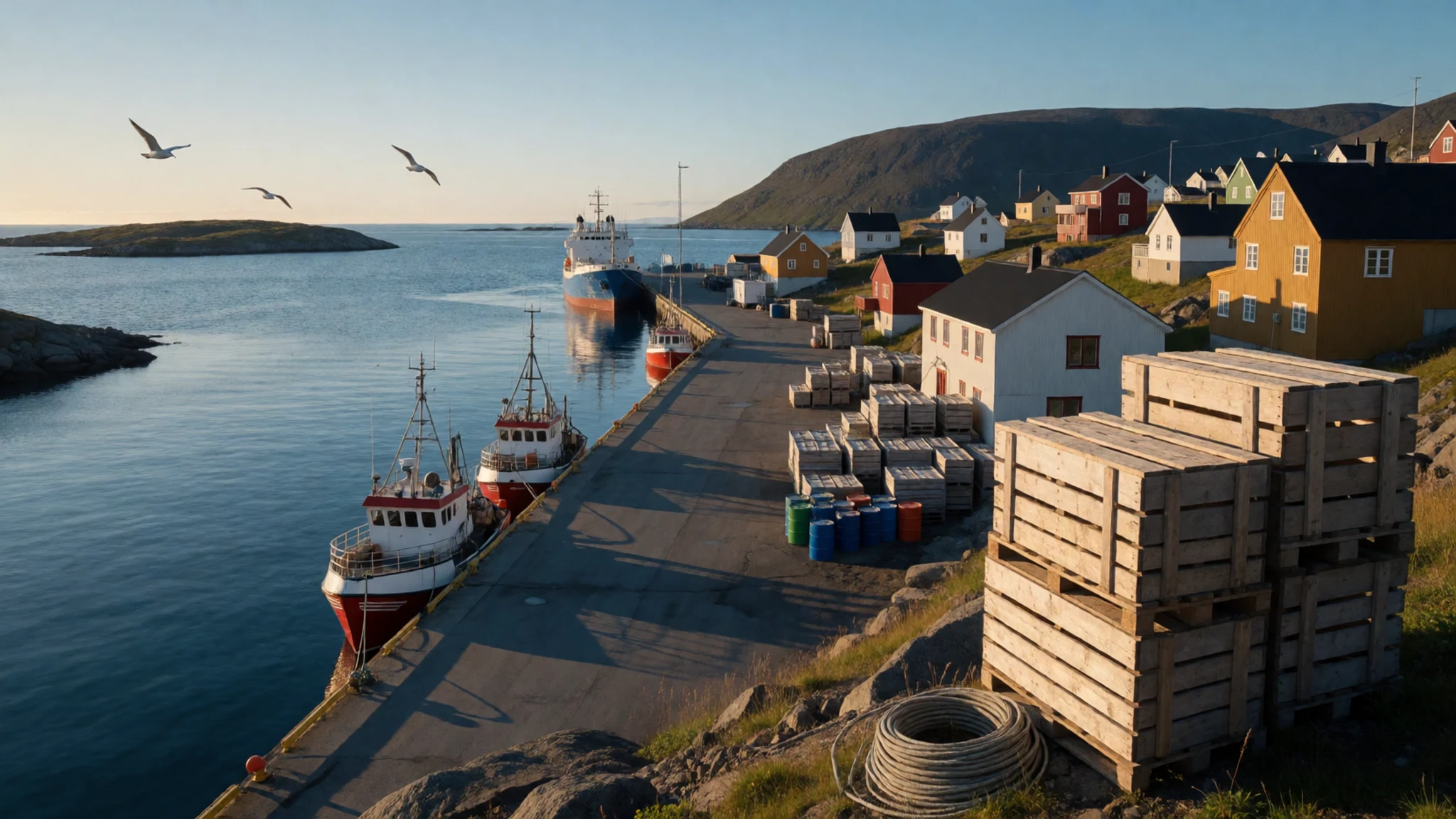
- The hills behind town — the ridges above the houses
The hills behind Sisimiut rise from the houses, and a climb opens a view over the harbour, the islands, and the Davis Strait. The marked walk toward Kangerlussuaq and the inland ice begins in these hills, and it is a journey of many days. A first outing stays on the near ridges. Rock is wet, weather turns with little warning, and shelter ends once the houses drop out of sight.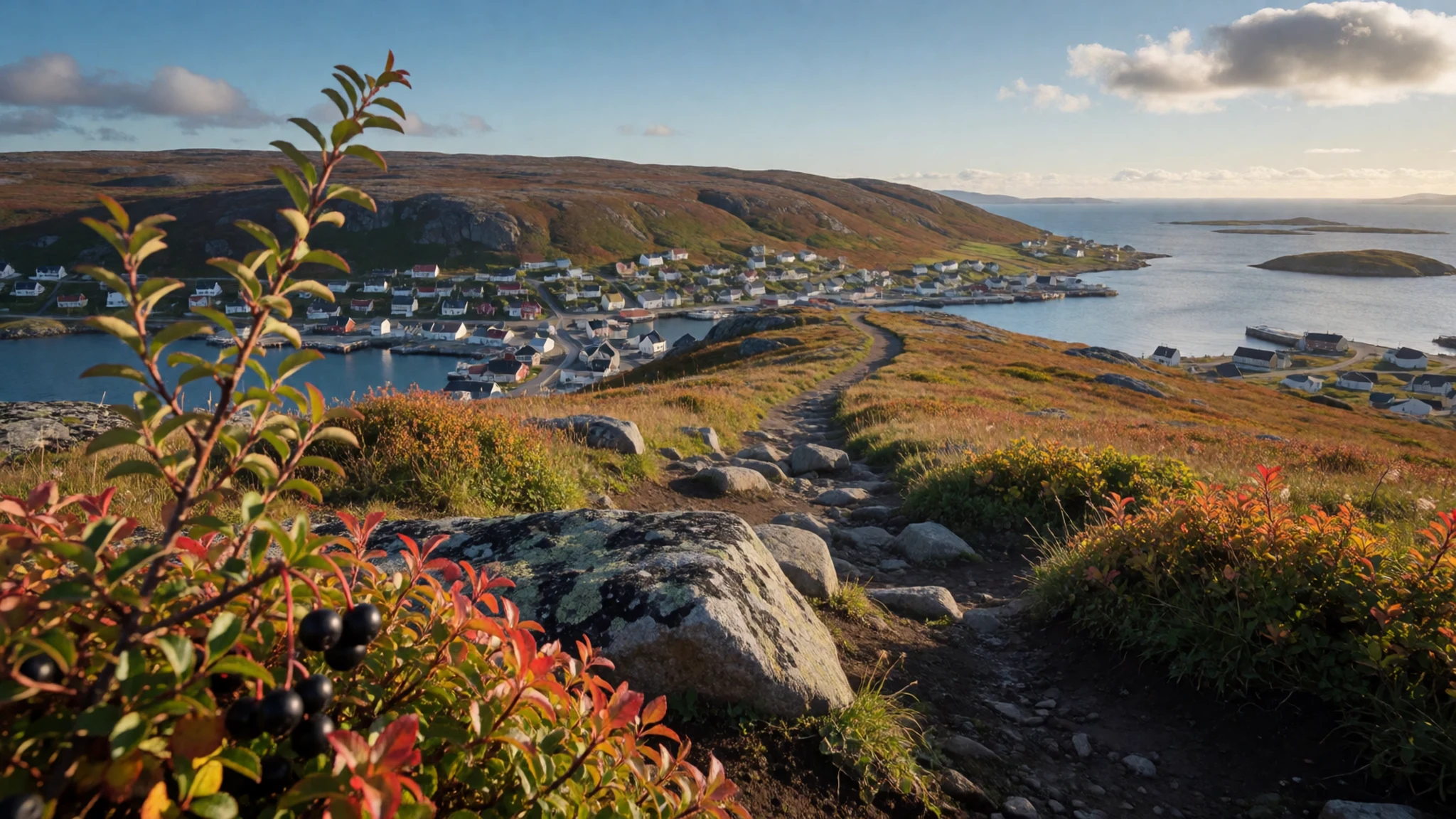
- Newer church and wooden streets — the town slopes
The newer church in Sisimiut stands among the wooden streets, and much of the town's Sunday life gathers there. Around it the lanes mix bright timber houses with sleds, drying racks, and ordinary yards. Walking them shows the scale of the place: distances are short, and the sea appears at the end of almost every slope. These are home streets, so a greeting matters more than a photograph.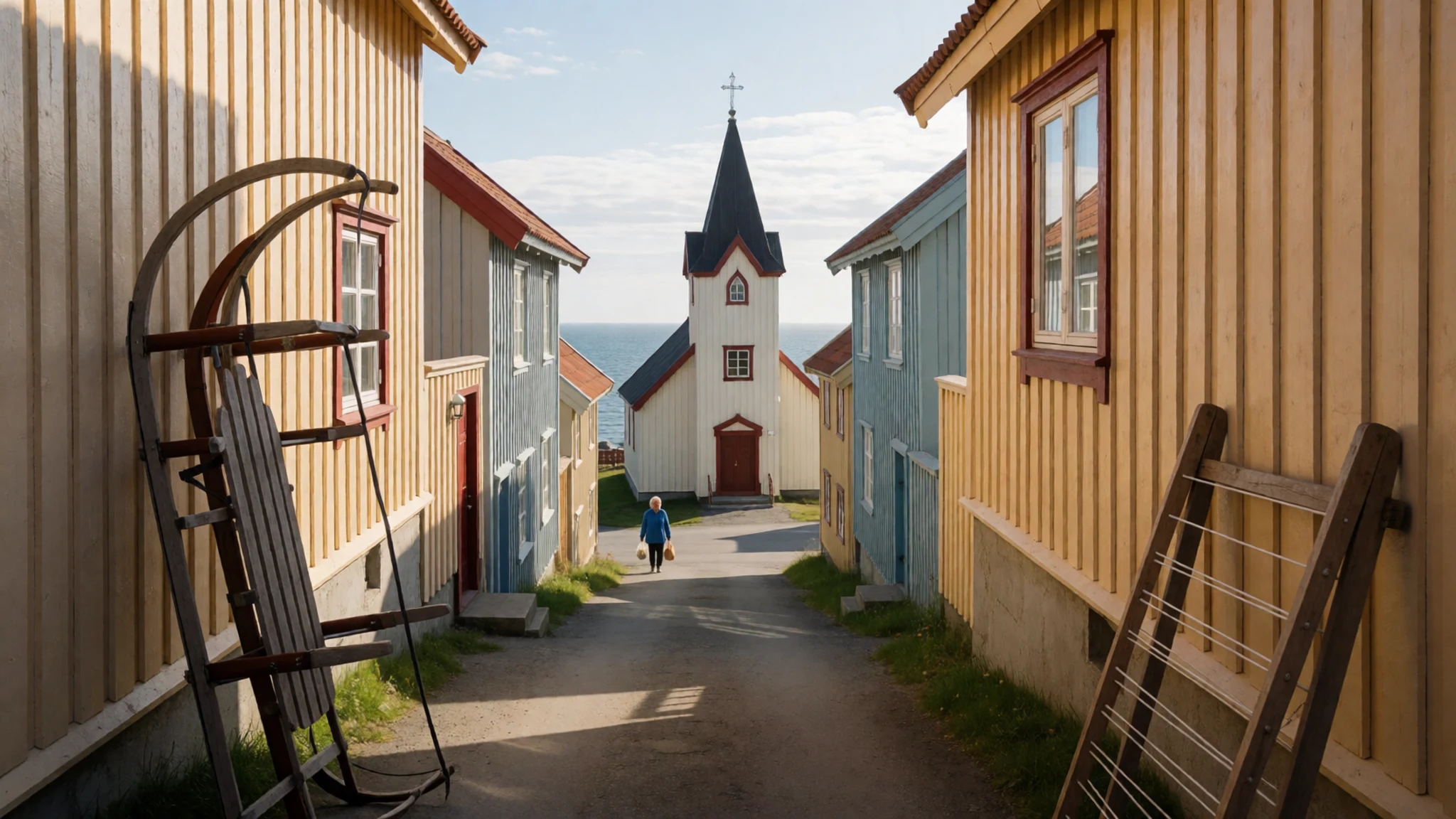
Culture
Culture in Sisimiut is Greenlandic first, with Danish threaded through church, school, and the shop counter. Kalaallisut is the language of the street and the home. Danish is widely understood, and English appears where people deal with visitors. The year still follows animals and seasons as well as the calendar: fishing, hunting, and the sharing of meat are social facts, not folklore put on for guests. When a family has something to mark — a birthday, a confirmation, a child starting school — the door opens for a kaffemik. Coffee, cake, and a crowded front room; guests arrive, eat a little, congratulate the host, and leave so the next people can enter. Staying the whole afternoon is not the custom.
The Lutheran church still holds the town's ceremonies. Sled dogs on the edge of Sisimiut are working teams, not pets, and dog life has its own rules of space and noise. Art in the shops runs to soapstone, tupilak figures, and sealskin work, often made by people the town knows by name. National dress comes out for confirmations, Christmas, and National Day: bead yokes, embroidered skins, and kamiks that take months to sew. Ask before you photograph people, a hunter's catch, or the dogs, and take your shoes off when you enter a home.
What to wear
Dress in Sisimiut splits between festival clothing and clothes that survive the weather. The Greenlandic national costume is for celebrations. Women wear a long bead yoke in bright geometric bands, an embroidered top, a fine shawl, decorated trousers or sealskin shorts according to the cut of the costume, and kamiks, sealskin boots, often embroidered. Men wear a white anorak, dark trousers, and kamiks. Beads and sewing are the honour of the outfit: families keep costumes for confirmations, weddings, Christmas, and National Day. Sealskin remains traditional, and in the shops it appears as boots, mittens, and small souvenirs more often than as daily wear for younger people.
On a weekday Sisimiut dresses as a cold coast. Light months mean a windproof shell, a fleece, jeans or walking trousers, rubber boots on the quay, and trainers in the lanes. Dark months bring heavy parkas, fur-trimmed hoods, insulated boots, and layers that come off inside a heated shop. Hunters and sled drivers add the clothes of their work. Until the wind rises, the centre can look like any Nordic town.
A visitor should follow the weekday pattern unless a host explains festival dress. Summer still calls for a windproof layer, a warm mid-layer, hat, gloves, and boots with grip on wet rock. Winter calls for serious cold-weather clothing and boots that stay warm when standing still. In church, neat clothes are enough. Sealskin bought in Sisimiut may be hard to carry through customs abroad, so ask before packing a skin souvenir.
What to eat
- Greenland halibut — restaurants and harbour stalls
Sisimiut lives on Greenland halibut, qaleralik, landed at the quay. Restaurants serve it fried or baked, and in season a harbour stall may sell the day's fish. The flesh is firm and rich. The plate follows the boats, so the catch matters more than a standing menu.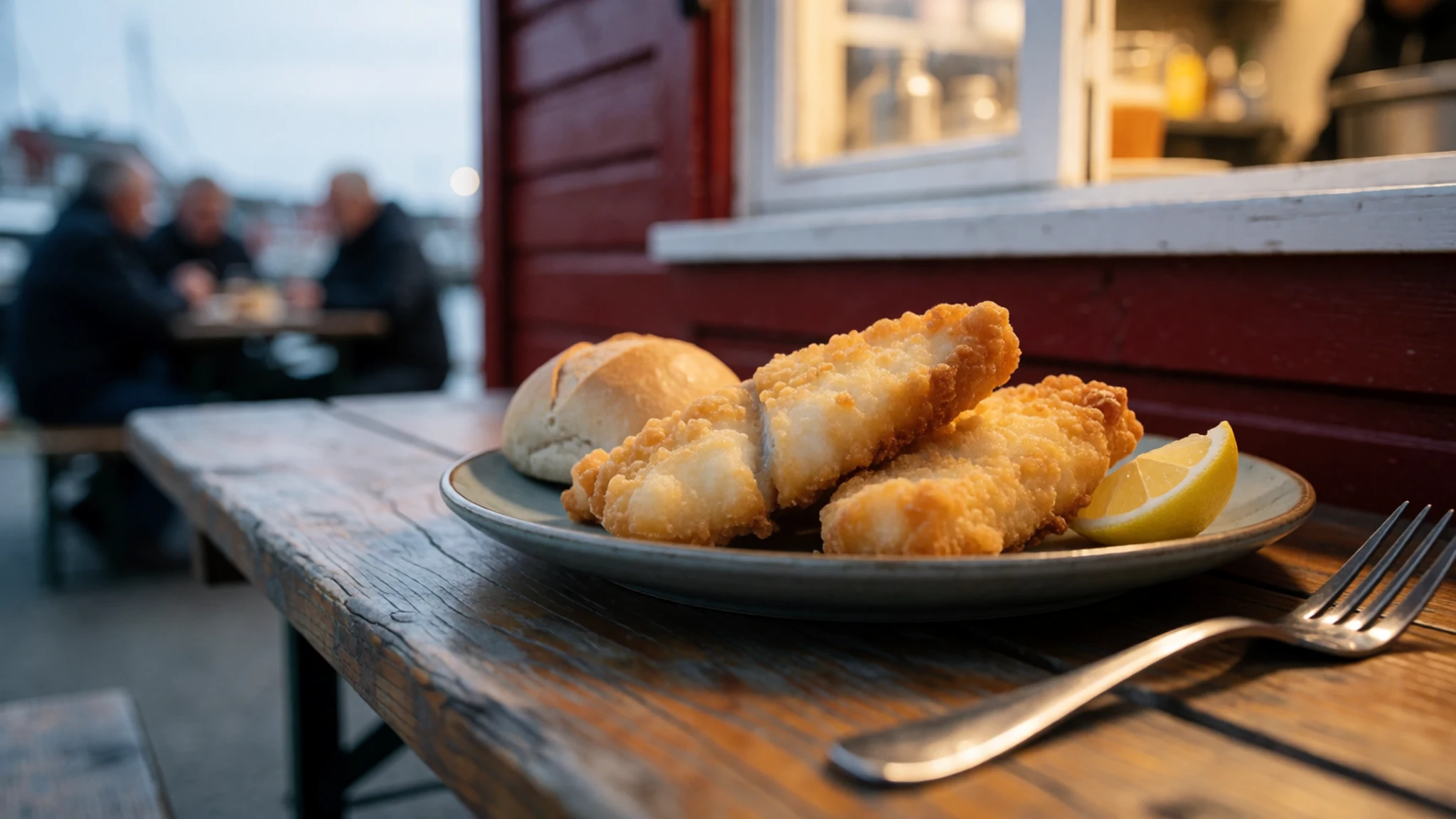
- Suaasat — homes and local eateries
Suaasat is Sisimiut's home soup: seal, whale, bird, or reindeer with rice or barley, potato, and onion. It is a full meal, served in homes and in local eateries when a pot is on. Visitors usually meet it through a host or as the Greenlandic plate on a menu.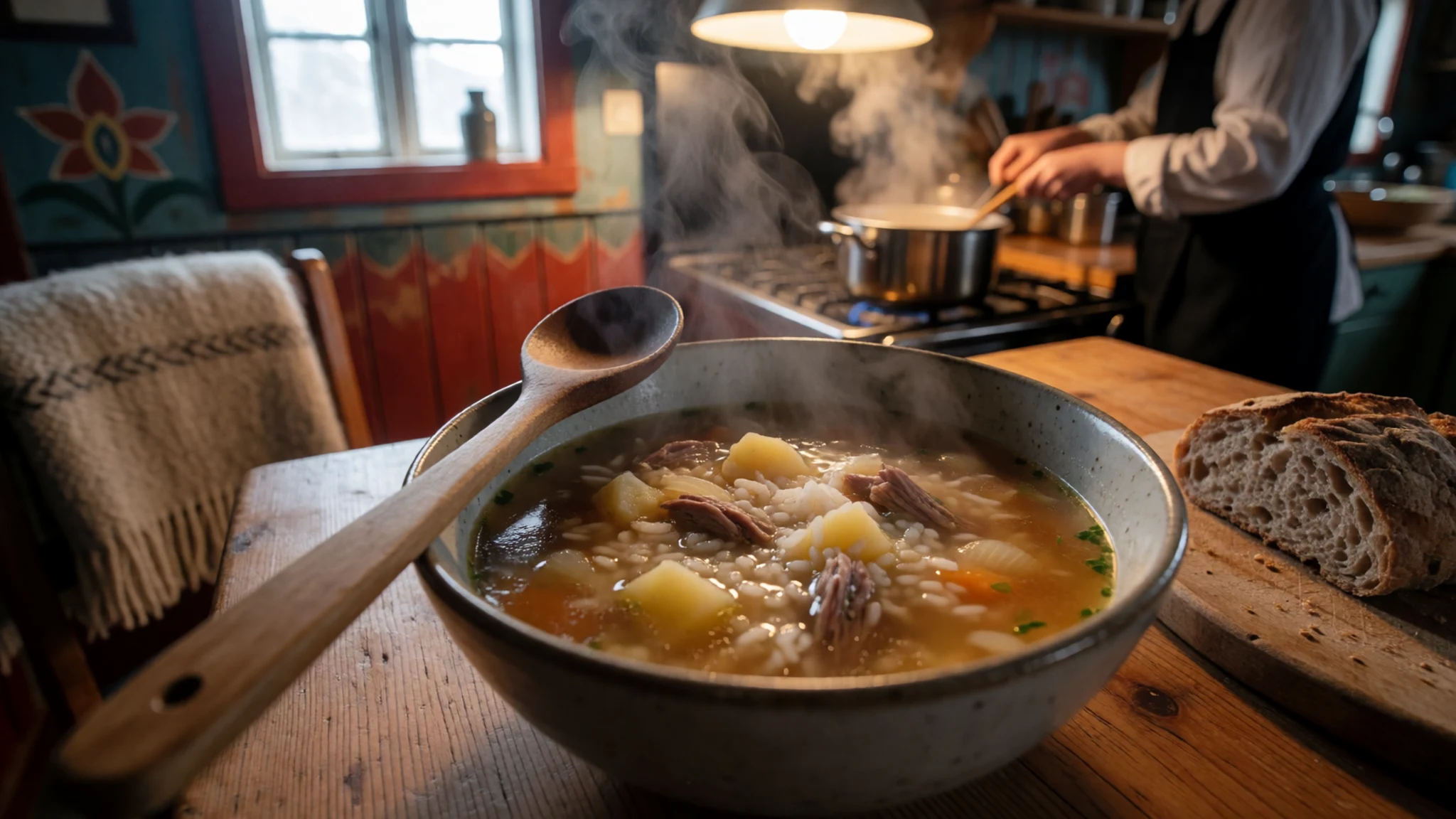
- Mattak — home gatherings after a hunt
Mattak is whale skin and blubber, eaten raw in small squares at gatherings in Sisimiut. Shared after a hunt, it appears in homes more often than on a restaurant menu. The bite is firm skin and rich fat, and a guest takes only what a host offers. - Dried capelin — drying racks by houses and the harbour
Wind-dried fish is everyday food in Sisimiut, especially capelin, ammassat, hung by houses and sheds. People eat it plain or with fat, and dogs are fed from the same custom. Racks near the harbour are a winter supply: look, and taste only if someone offers. - Crowberries — the hills, home tables, and a town cafe
Crowberries ripen on the hills behind Sisimiut in the light season. Families bake them into cakes that appear at home and at a kaffemik. A town cafe may have a berry cake when picking is under way. Take only a taste from open ground, and leave patches near houses alone.
Plan it
Best time. In Sisimiut, June to September brings open water, hiking, and long daylight. July and August are the hottest and wettest months of the year. February to April suits dog sledding, with snow still down and daylight returning. Midwinter is very dark and a hard window for a pleasure trip.
How long. 2–3
Getting there. A simple 4x4 road connects Sisimiut to Kangerlussuaq. Flights use Sisimiut Airport, usually via Nuuk or Kangerlussuaq. When the sea is open the coastal ferry docks at the harbour. The last leg is the aircraft or the boat, then a short ride into town.
Budget. high
Tips
- Book the flight and a room well ahead for July and August; seats and beds are limited.
- Treat the walk to Kangerlussuaq as its own expedition, and ask locally about conditions before leaving town.
- Carry a bank card for the main shops and some cash for smaller stalls.
- In summer, pack a windproof layer even on a clear morning; the Davis Strait wind does not wait for afternoon.
- Give tethered sled dogs a wide berth, and do not feed them.
Etiquette
- Remove your shoes when you enter a home.
- Ask before photographing people, dogs, or a hunter's catch.
- At a kaffemik, greet the host, eat a little, and leave room for the next guests.
Nearby
Sources
- Wikidata (CC0)
- Wikipedia: Sisimiut (CC BY-SA 4.0)
- Wikivoyage: Sisimiut (CC BY-SA 4.0)
Wildlife
- Arctic fox (animal)
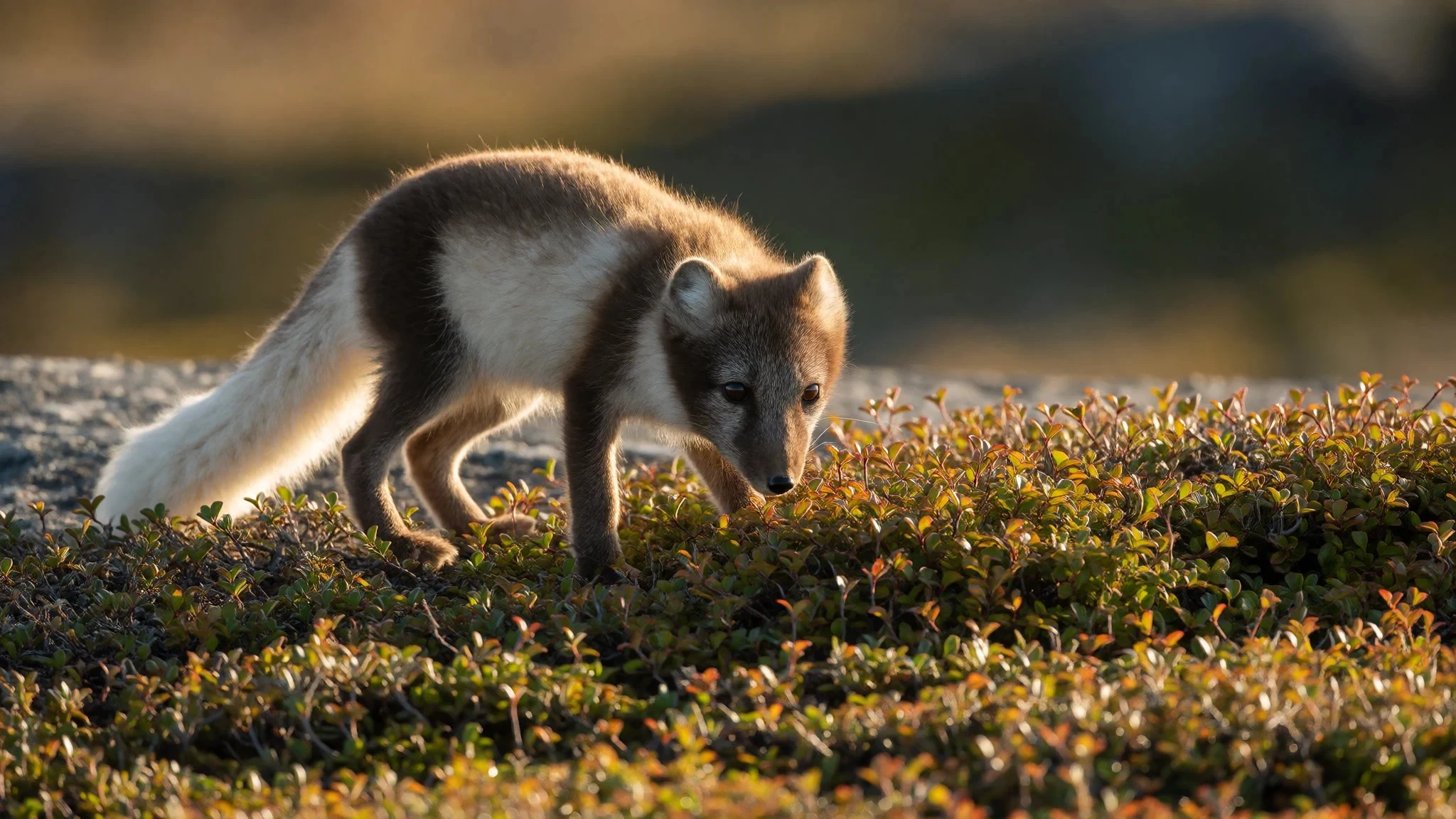
The Arctic fox is a small, round fox with a fluffy tail and a thick coat that keeps it warm and hides it against the snow. Sisimiut is named after the dens these foxes dig in the ground, so you are visiting fox country. Keep a good distance, stay quiet and still, and ask a local guide to help you look. Never feed it; a wild fox is best left wild.