Shenandoah National Park
Shenandoah National Park, United States
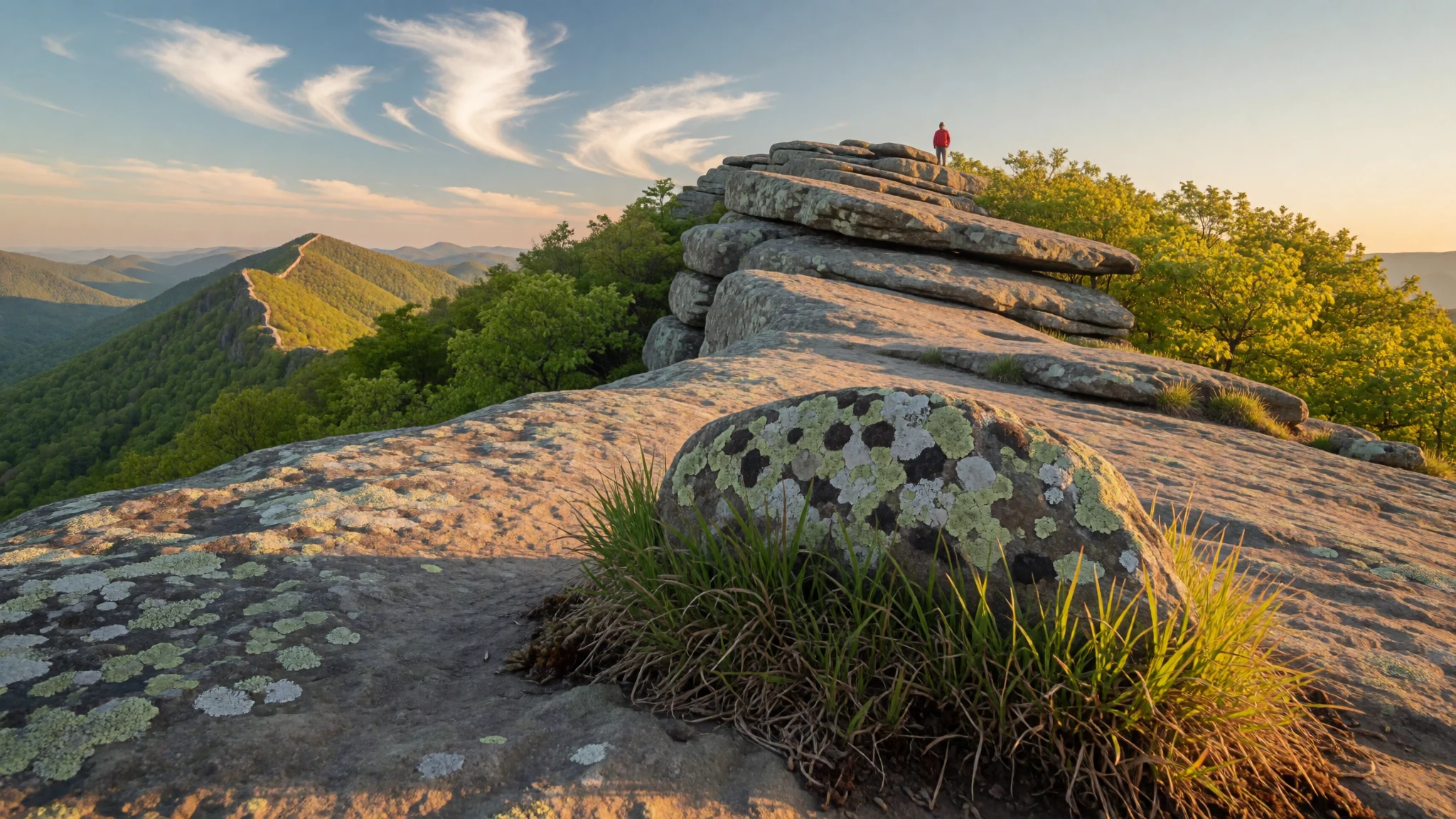
Shenandoah National Park offers a ridge-top road, rocky viewpoints and waterfalls within reach of the eastern United States, best in autumn.
The place
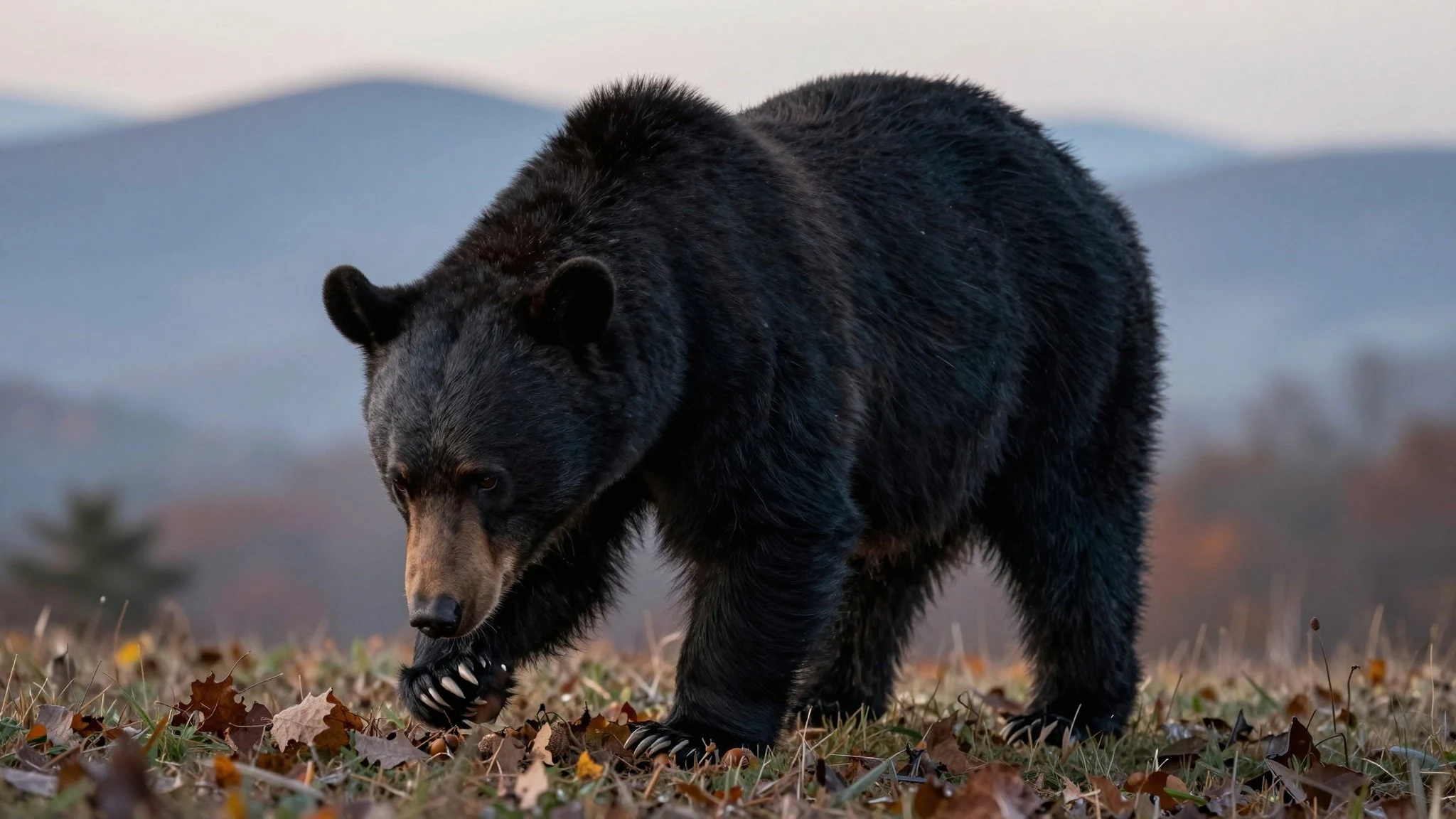
Shenandoah National Park is a long, narrow strip of the Blue Ridge Mountains in Virginia, run by the National Park Service and covering about 195,000 acres. Its shape follows the ridge itself: the Shenandoah River and its broad valley lie to the west, while the softer, rolling Piedmont country spreads out to the east. Skyline Drive, the park's one main road, runs along the crest for most of the way, so much of the landscape is seen from above, in layers of blue-grey ridges that fade into haze. The drive stretches from near the town of Front Royal in the north-east to near Waynesboro in the south-west, a distance of about 169 km (105 miles), and the park headquarters are at Luray. Almost 40% of the land is formally protected as wilderness, which means that away from the road and its car parks there are large stretches with no development at all. The highest point is Hawksbill Mountain, at 1,235 m (4,051 feet). Most visitors come for short walks to rocky viewpoints and waterfalls, for the autumn colour, and for slow driving with frequent stops. Services are thin: a handful of lodges, waysides and camp stores, and no bars. The weather changes with height, and the ridge is often cooler and mistier than the valleys below. Black bears live in the woods, and the park treats them as wild animals to be left alone.
Its story
Shenandoah National Park began as an argument about where America's parks ought to be. The early ones were all in the West. A Virginia congressman, Henry D. Flood, introduced a bill for an Appalachian park in 1901, and it failed even with President Theodore Roosevelt in support. After the National Park Service was created in 1916, Acadia became the first park in the east, built largely on gifts from wealthy private landowners. The service's first director, Stephen Mather, then began pressing for one in the southern states. In 1926 Congress authorised Shenandoah, with a catch: no federal money could be used to buy the land. The park was finally established in 1935. Behind the politics lies far longer time. The oldest rocks in these mountains formed over a billion years ago, when molten rock rose through the crust, cooled and cracked, and was later joined by metamorphic layers made from older sediments. Long erosion then carved the granite peaks and wooded hollows seen today. People arrived late by comparison: the first traces of human presence on this land date from roughly 8,000 to 9,000 years ago. Walkers still come across small family cemeteries near Skyline Drive, quiet reminders that the ridges were lived on before they became parkland.
What to see
- Skyline Drive — Whole length of the park
The park's main road follows the ridgeline from end to end, with pull-offs that face the Shenandoah Valley to the west and the Piedmont to the east. Driving it slowly, with frequent stops, is the usual way to see the park. Autumn weekends bring slow traffic, so early starts help.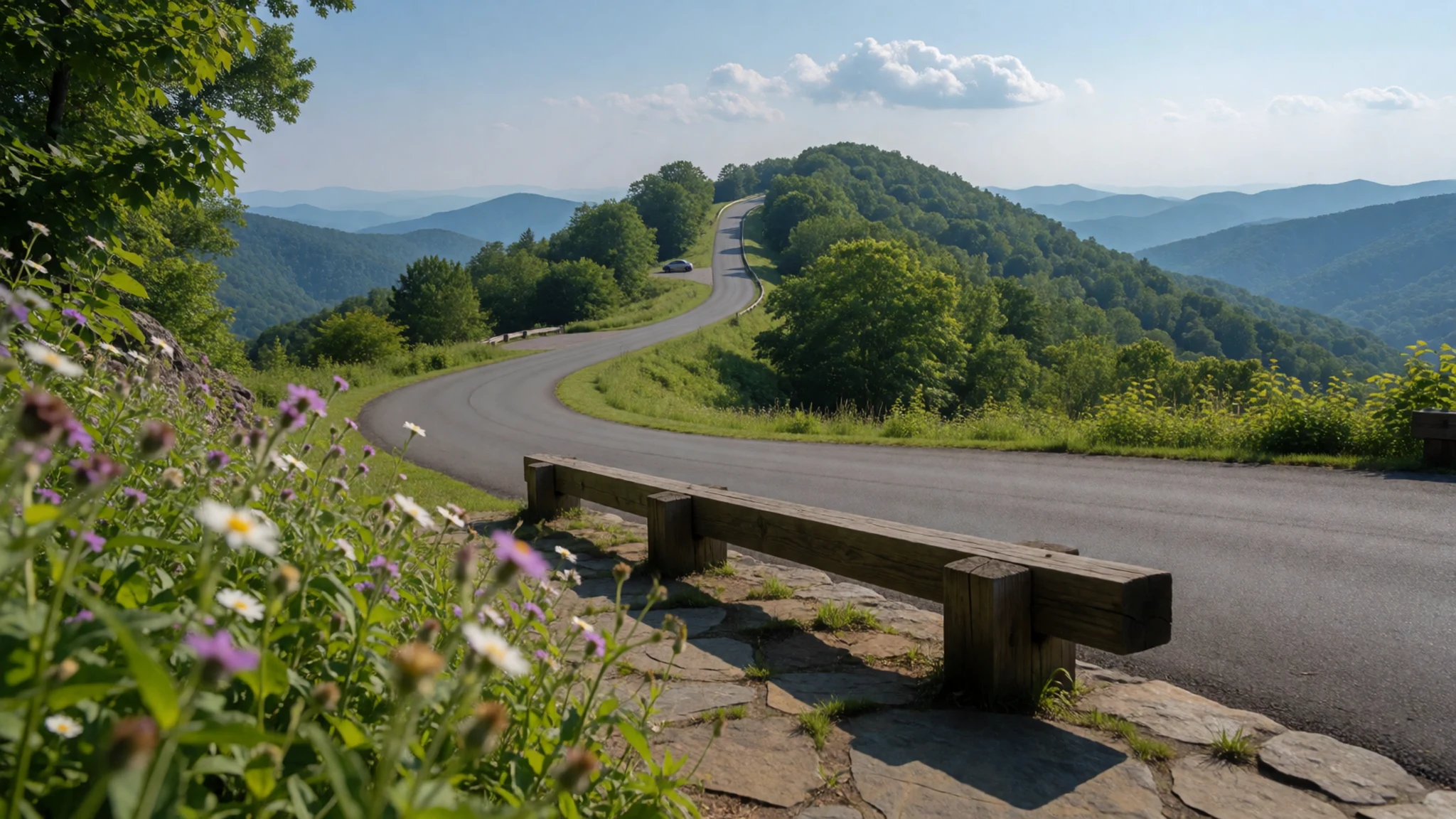
- Hawksbill Mountain — Central district
Hawksbill is the park's highest point, and its summit gives a wide view over ridge after ridge. The walk up is a popular one, so the top can be busy on clear weekends. Go early or on a weekday for quiet, and carry a layer for the wind.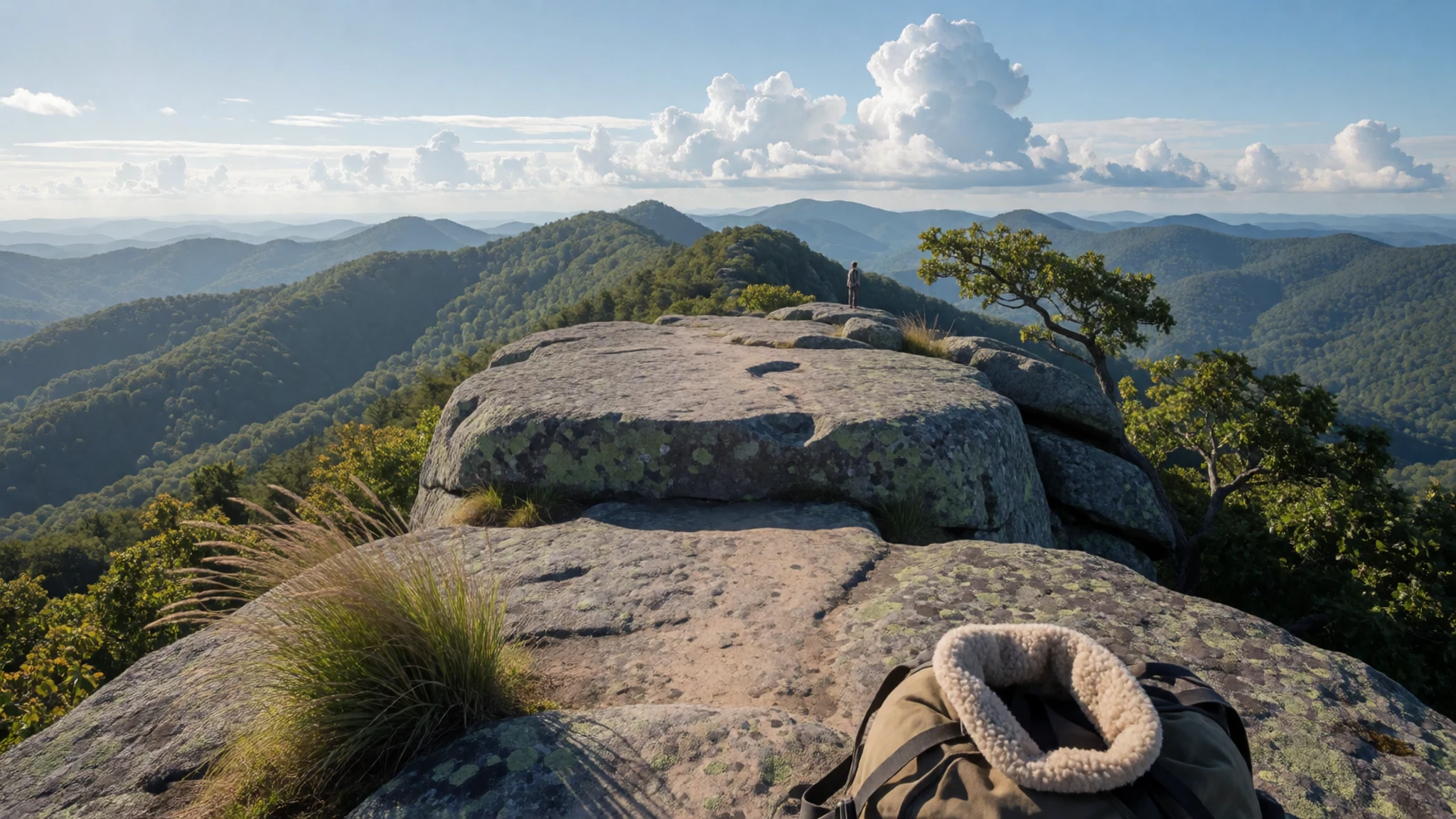
- Dark Hollow Falls — Near Big Meadows
This is the most popular waterfall walk in the park, dropping through a shaded hollow to a cascade. The way back is uphill and steeper than the descent suggests. Dogs are not allowed on this trail. After rain the water is fuller and the rocks slippery.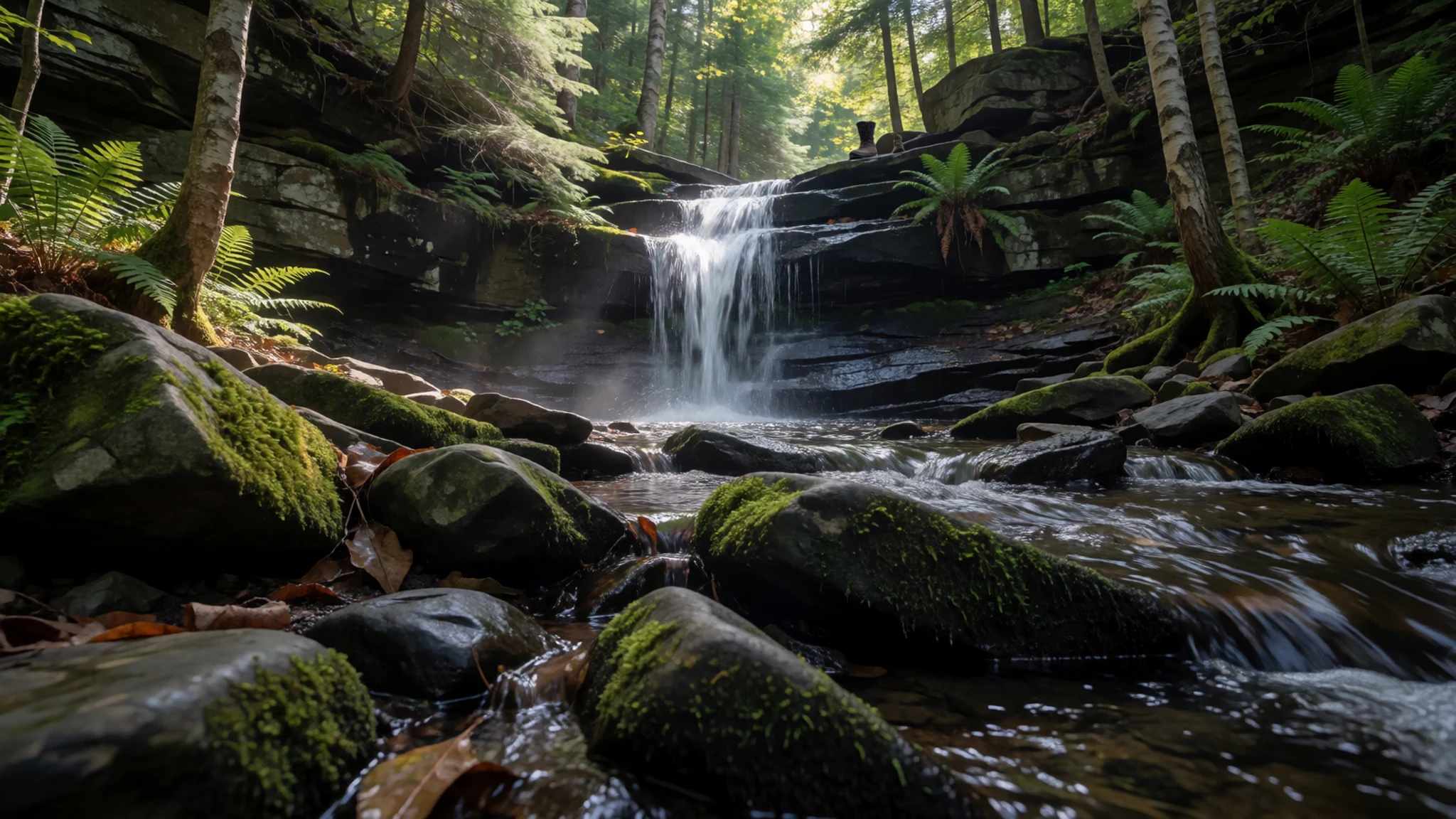
- Bearfence Trail — Central district
Bearfence is a short loop, but it is a real scramble: the route goes up and around boulders and needs hands as well as feet. The reward is an open rocky viewpoint. Good for confident walkers who like a bit of climbing, less so in wet weather.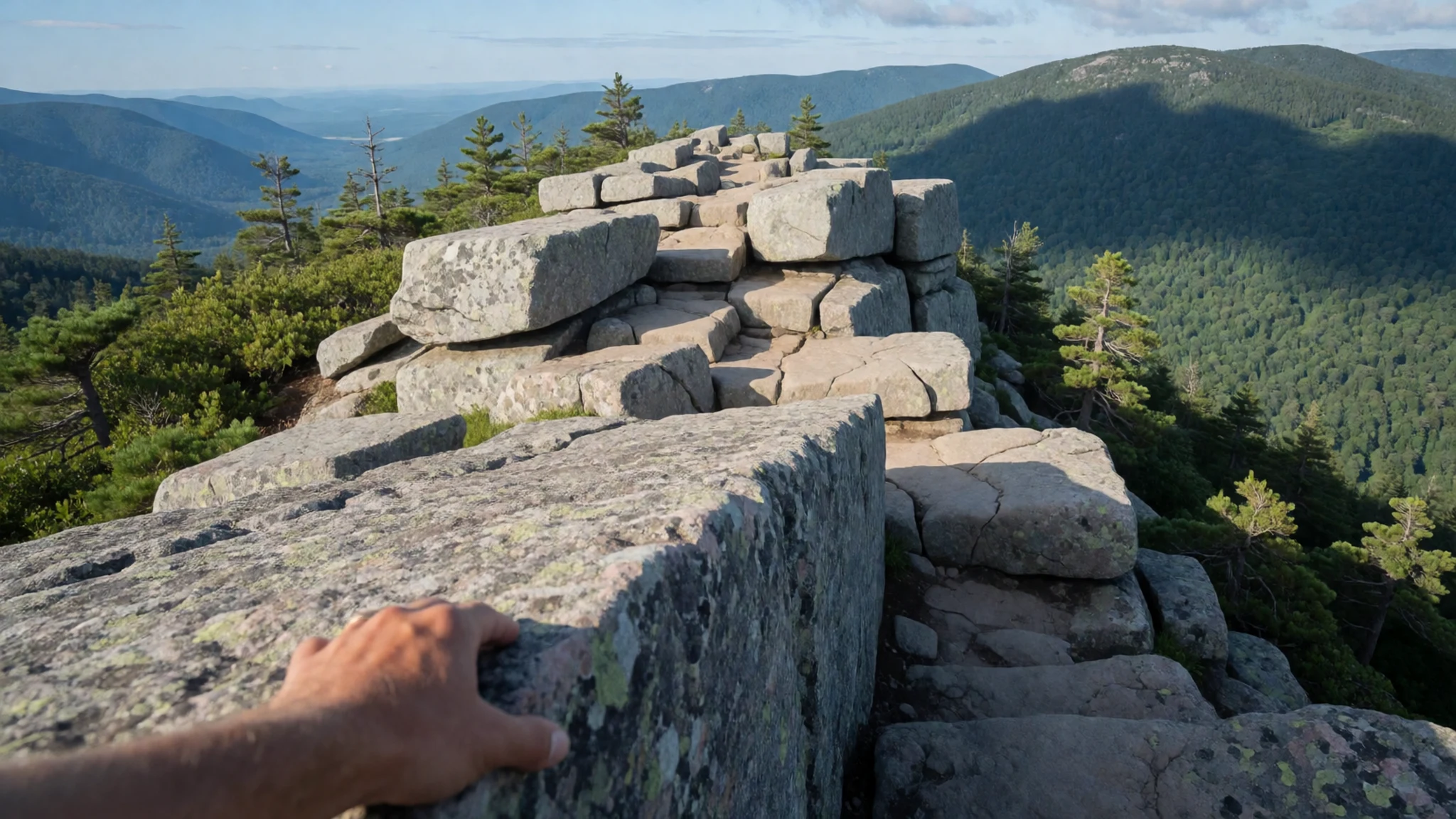
- Blackrock Summit — Southern district
An easy loop leads to a slope of broken rock and a wide view over the valley and distant mountains. It is a good place to look closely at the geology without a long walk. Families and anyone wanting a gentle outing will find it manageable.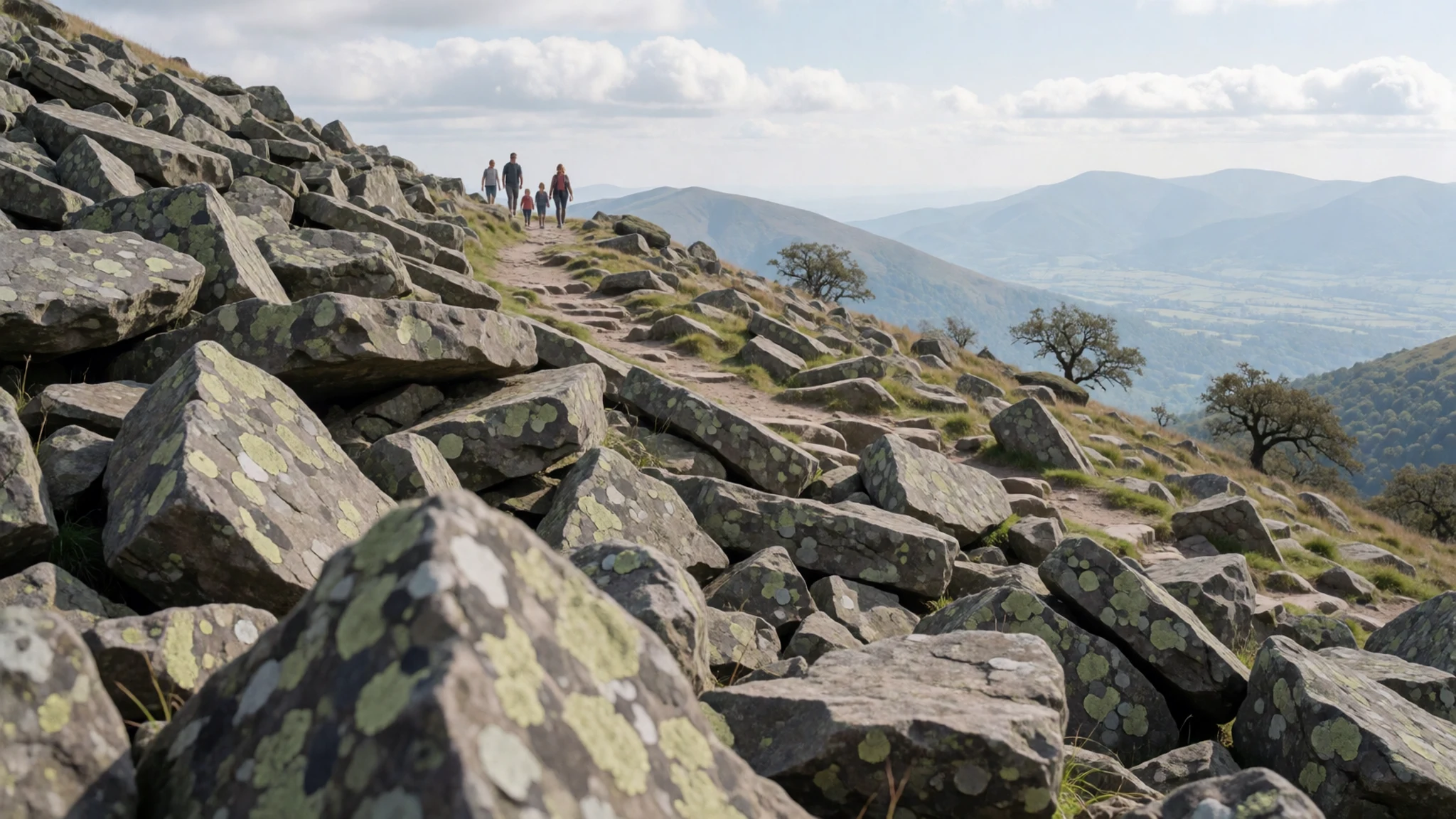
- Rapidan Camp — Eastern side of the park
President Herbert Hoover bought land here in 1929 for a summer weekend retreat, in the early calm of his time in office. The camp sits in woodland away from the main road. Access and tours change, so check the park's official website before planning around it.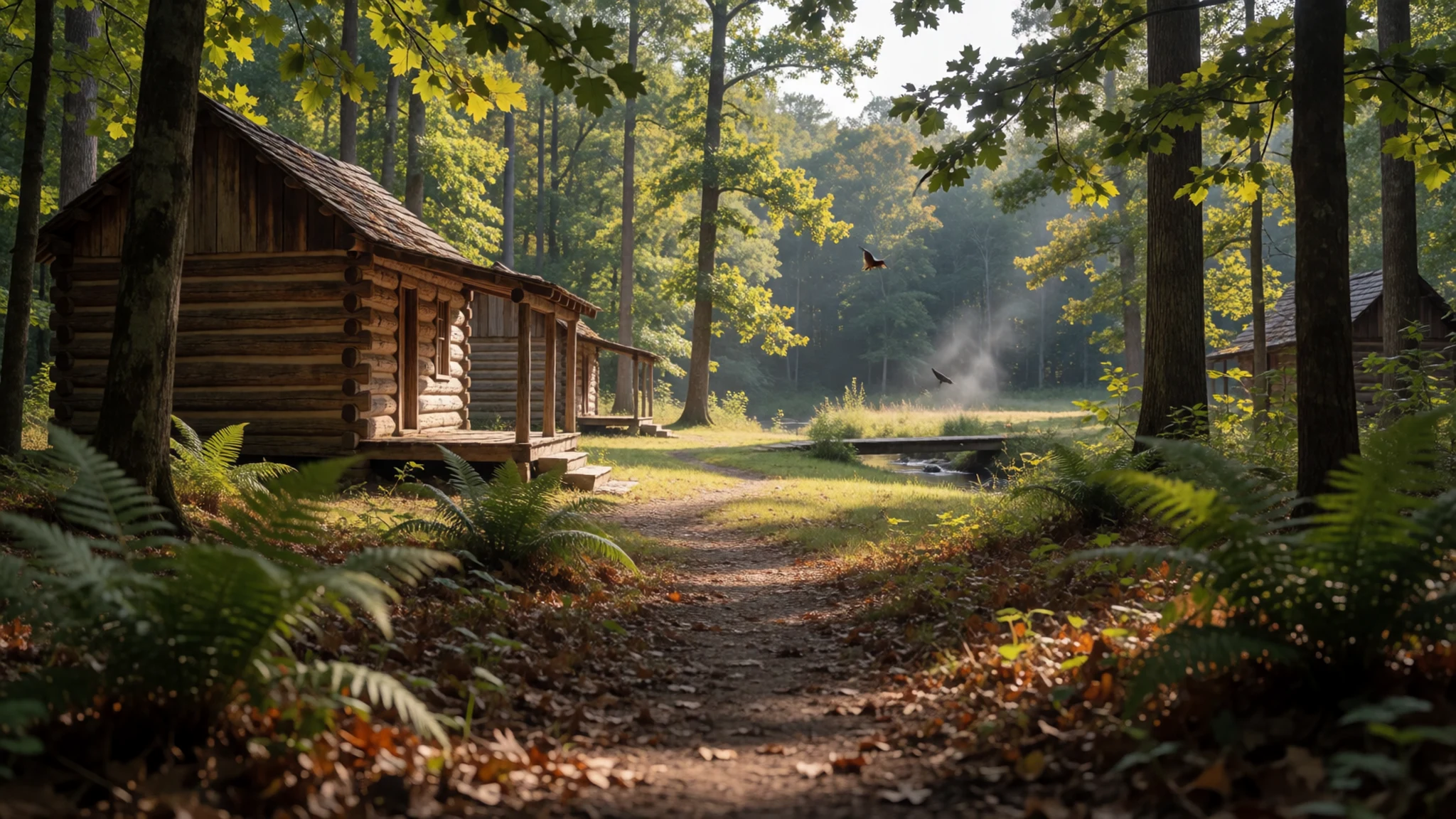
Culture
Shenandoah National Park is above all a weekend park, close enough to the big cities of the east coast that many visitors return again and again. The ritual is simple and unhurried: drive the ridge, stop at the overlooks, walk a short trail to a rocky view, and picnic at one of the picnic grounds. Autumn "leaf-peeping", the habit of travelling just to see the changing colour of the forest, is the busiest season, and the road fills accordingly. Beyond the road, the park's wilderness areas carry a stricter ethic of leaving nothing behind and taking nothing away. Hoover's old retreat and the small family cemeteries beside the road are reminders that the landscape has a human history too, and are treated with quiet respect. Rangers and signs set the tone: wild animals are protected, snakes are left alone, and fires are lit only in designated places with grates. Bears are the topic that comes up most. They are wild, and they lose their natural wariness of people if they are fed, so careless food handling can end badly for the animal. Conversations at overlooks tend to be easy and friendly, and visitors often swap tips on the best viewpoint of the day. Never feed bears or leave food out, and if one approaches, stay in your vehicle or make loud noise and clap until it moves away.
What to wear
Shenandoah National Park has no single costume of its own, and the older dress of the Appalachian hill farms behind the park was plain working clothing: homespun wool and cotton for everyday wear, with denim and leather for heavy work and boots for the mountain tracks. None of this is worn as ceremonial dress today. What people actually wear in the park now is outdoor clothing: synthetic or merino base layers, fleece jackets, lightweight waterproofs, baseball caps and sturdy walking shoes. Weekend drivers dress casually, and nobody looks twice at muddy trousers. For a visitor, the key point is layers. Summers are warm and humid, with no dry season, while the ridge is cooler than the valleys and can turn misty or cold quickly, especially in autumn. Pack a light waterproof, a warm layer and a hat or cap. Footwear matters more than fashion: closed shoes with grip suit the rocky trails, and boots help on scrambles like Bearfence and on wet waterfall paths. Long trousers and socks protect against scratches and insects in the undergrowth. Sun protection is worth bringing for exposed summits. There is no dress code at the lodges or waysides, so smart clothes are unnecessary.
What to eat
- Sandwiches and grilled food — Elkwallow Wayside, northern section
At Elkwallow, a small wayside in the northern part of the park, the offer is limited: sandwiches and simple grilled food. There is no indoor seating, but picnic tables outside make a pleasant stop on a long drive.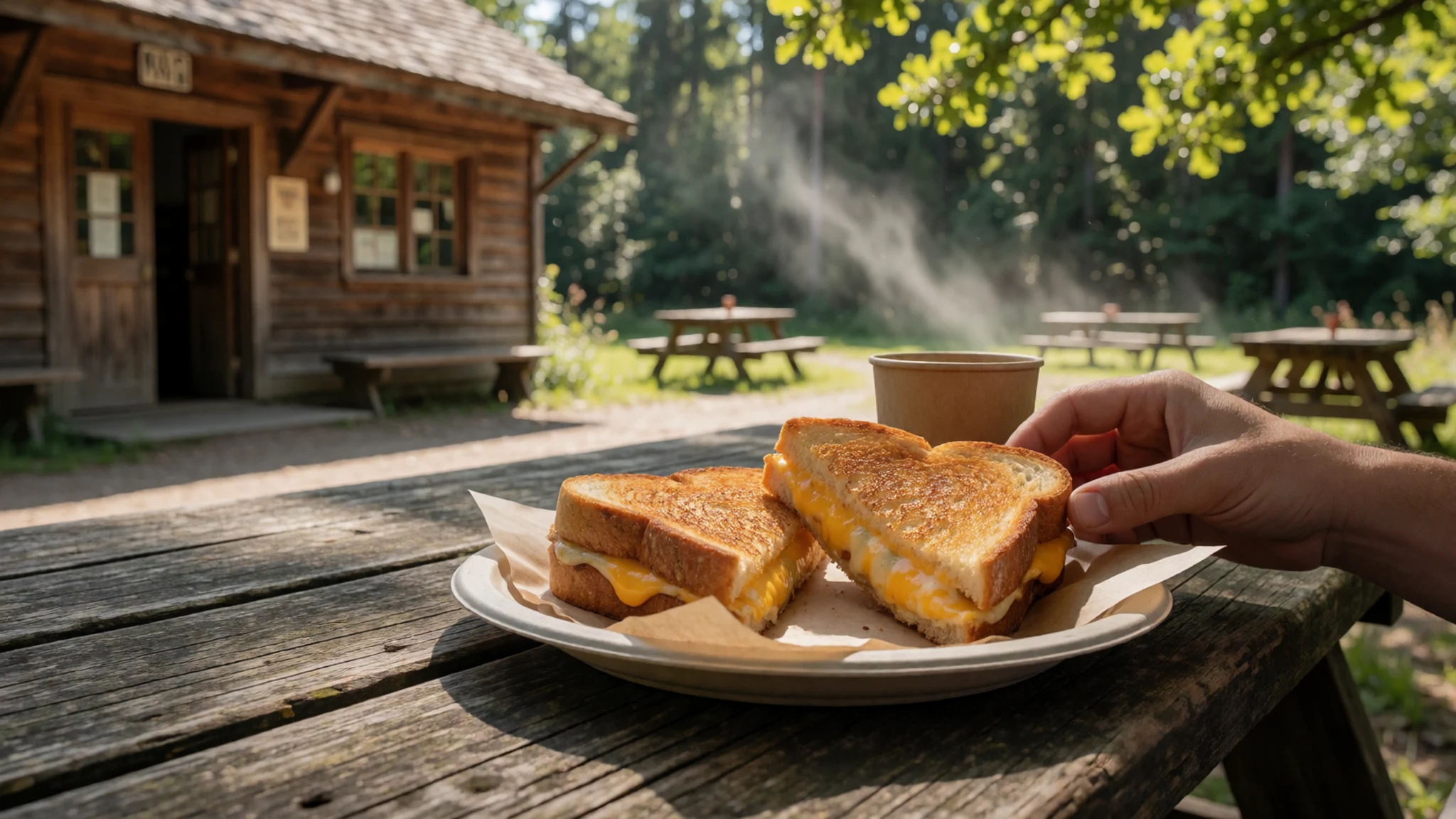
- Country food and cakes — Big Meadows Wayside, central section
Big Meadows Wayside serves eat-in and take-away meals in the style of country cooking, with cakes alongside. It suits a quick, relaxed lunch between walks around the central part of the park.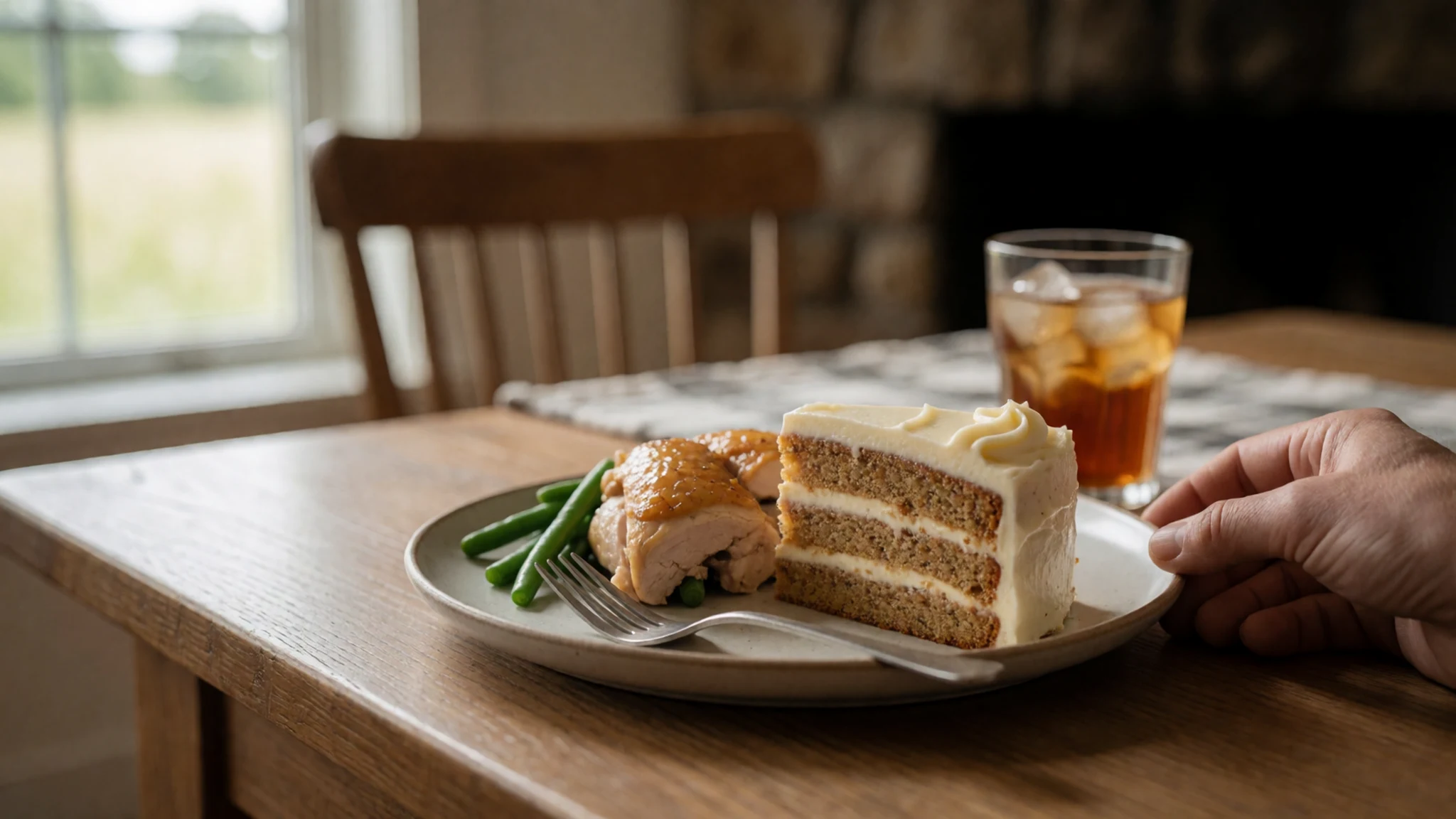
- Lodge dining-room supper — Big Meadows Lodge, central section
Big Meadows Lodge has a dining room with table service in a rustic setting. It is a sit-down option after a day on the trails, in a place with few such choices. - Dinner with a view — Skyland, central section
Skyland, a lodge complex on the ridge, offers meals in a dining room with views across the landscape. It makes a good end to a day of driving, so check the official site for opening arrangements. - Picnic from the camp store — Loft Mountain Wayside, southern section
There are camp stores at or near all campgrounds, and Loft Mountain Wayside sells groceries and hiking supplies from May to late October. Buy bread, fruit and snacks, then eat at one of the park's picnic grounds.
Plan it
Best time. May–June and September–October. The climate is humid continental, with warm summers and no dry season, so summer days can be humid; autumn brings cooler air and the colour on the ridges that draws the crowds.
How long. 2–3
Getting there. The nearest airports are Shenandoah Valley Regional Airport (SHD) and Charlottesville-Albemarle Airport (CHO). The last leg is by road: the park is entered by car from Front Royal in the north, across Thornton Gap in the north-central section, across the southern section, or from the south near Waynesboro. A car is the practical way to move along Skyline Drive.
Budget. mid
Tips
- Visit on a weekday or start early in October, when autumn weekends are slow and busy
- Fill the petrol tank and buy food before entering, because services in the park are few and there are no bars
- Check the official site (https://www.nps.gov/shen/index.htm) for fees, road closures, lodge opening and trail conditions
- Carry water and a warm layer, since the ridge is cooler and mistier than the valleys
- Keep food in your vehicle and stay inside the car if you see a bear while driving
Etiquette
- Do not feed bears or any wild animal, and leave snakes alone
- Light fires only in designated places with grates
- Keep to marked trails and keep dogs off trails where pets are not allowed
Nearby
Sources
- Wikidata Q1137401 (CC0)
- Wikipedia: Shenandoah National Park (rev 1373944556) (CC BY-SA 4.0)
- Wikivoyage: Shenandoah National Park (rev 5417949) (CC BY-SA 4.0)
- Photo: Skyline Drive in Shenandoah National Park, VA (G. Edward Johnson) (CC BY 3.0)
- Photo: Skyline Drive in the Fall (NPS, N. Lewis) (CC BY 2.5)
- Photo: Relief location map of the USA (Uwe Dedering) (CC BY 3.0)
- Photo: Shenandoah National Park - Front Royal, VA (Mporterf) (CC BY-SA 4.0)
- Photo: Shenandoah National Park Map (Public domain)
- Photo: Birthday Wishes for Shenandoah National Park (Robert Simmon, Landsat) (Public domain)
- Photo: Taylor family cemetery, Shenandoah National Park (Ser Amantio di Nicolao) (CC BY 3.0)
- Photo: Hawksbill Mountain view (AgnosticPreachersKid) (CC BY-SA 4.0)


Wildlife
- Black bear (animal)
The black bear is North America's smallest bear, a woodland wanderer that eats almost anything, with a menu that changes through the seasons. In Shenandoah it lives in the forest, though it may stray beyond the trees when hunting for food. The park treats it as a wild animal to be left alone, so watch from a respectful distance and stay quiet. Never feed it: bears can be drawn towards people by easy meals, and that does them no good.