Sermeq Kujalleq
Sermeq Kujalleq, Greenland
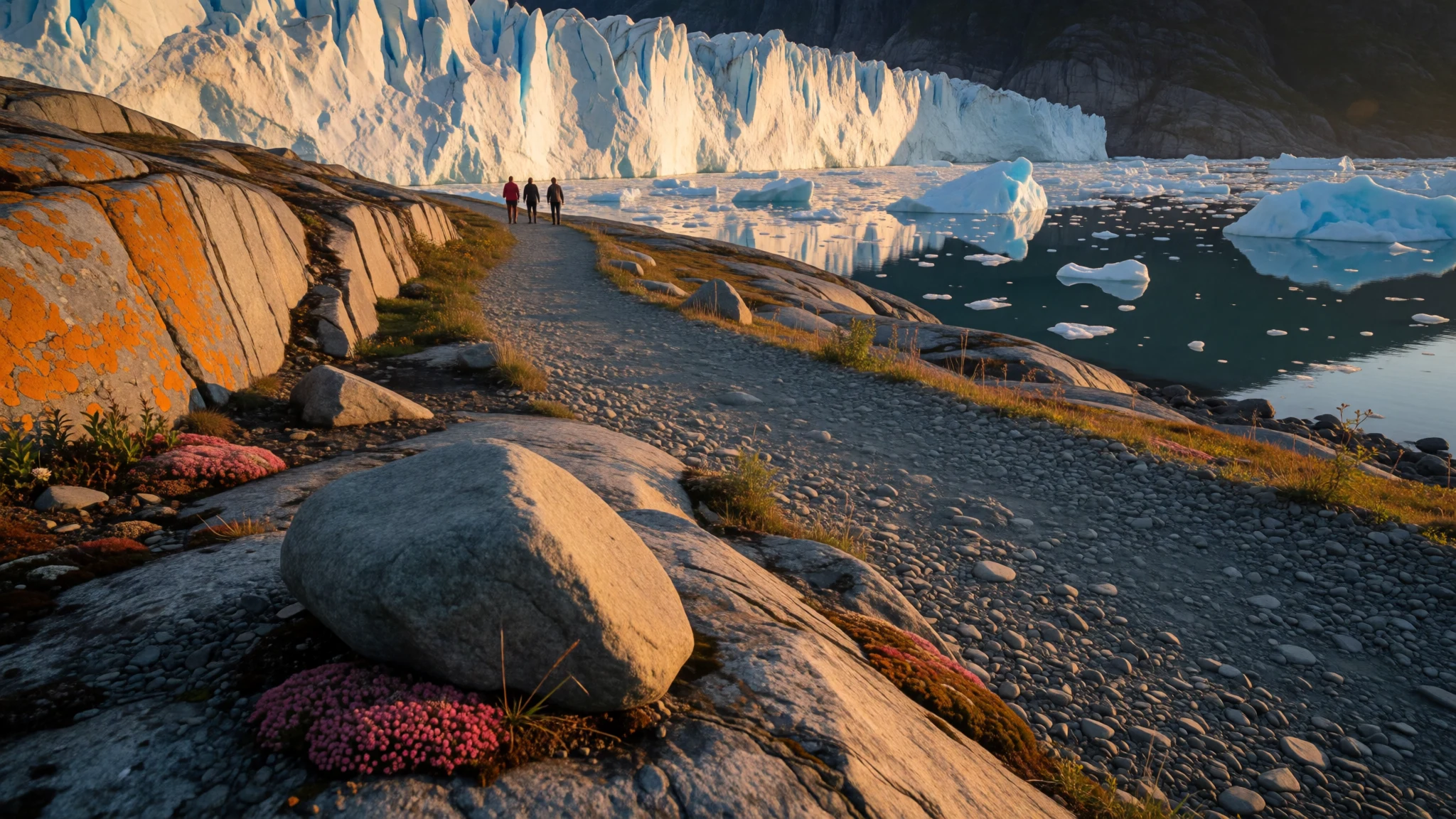
Sermeq Kujalleq is a vast, fast-moving glacier on Greenland's west coast, shedding huge icebergs into a fjord you can walk beside.
The place
Sermeq Kujalleq, called Jakobshavn Isbræ in Danish and Jakobshavn Glacier in English, is an outlet glacier on Greenland's west coast, close to the town of Ilulissat. It works like a frozen river, carrying ice from the interior of the ice sheet out towards the sea, and it ends in the Ilulissat Icefjord (Ilulissat Kangerlua) on Disko Bay.
The figures explain why it draws visitors and scientists alike. Roughly six and a half percent of the great Greenland ice sheet is drained by this glacier, which also produces about 10% of all Greenlandic icebergs. About 35 billion tonnes of ice break away and leave the fjord every year. Some bergs stand up to 1 km tall, too deep for the shallow parts of the fjord, so they run aground and stay put, sometimes for years, until the push of the glacier and the bergs behind them breaks them apart.
From Ilulissat, the scene is a fjord packed with ice of every size, from house-sized blocks to slabs the height of a cathedral. White, blue and grey shift with the light, and the ice creaks, cracks and sometimes booms as it moves. The calving face itself lies some distance inland, so seeing it takes a longer walk, a boat or a flight rather than a glance from the town.
The setting is Arctic. Summer has the midnight sun, with light through the night, and winter brings long darkness and hard cold.
Its story
Sermeq Kujalleq has been studied for over 250 years, and that long record is a large part of its importance. Observations of how this glacier flows, calves and retreats helped shape modern ideas about ice caps and, later, about climate change. Few places offer such a patient run of evidence in one spot.
The Danish name Jakobshavn dates from the colonial period, when the settlement on this coast was known by that name. Today the town goes by Ilulissat, and the glacier by its Greenlandic name, Sermeq Kujalleq. Using the Greenlandic names is a small courtesy that locals notice.
The glacier is also a sobering story. It ranks among the fastest-declining glaciers in the world, and the icebergs it released were responsible for about 4 percent of global sea-level rise during the twentieth century. Seeing the fjord clogged with ice makes the abstract figures concrete, and many visitors leave thinking about what the ice represents beyond the view.
That scientific value was a key reason the Ilulissat Icefjord was named a UNESCO World Heritage Site in 2004.
There is an older tale too. According to the Icelandic sagas, Erik the Red picked the name Greenland to tempt settlers across from Iceland. The country's reputation as green was salesmanship, and a day beside this glacier makes the joke obvious: the land here is rock, water and ice, and it is all the more memorable for it.
What to see
- The calving front — Head of the Ilulissat Icefjord, inland from Ilulissat
The glacier's face is where the ice finally breaks and drops into the fjord. Seen from the air or from a boat that keeps a safe distance, it is a jagged cliff of white and blue, constantly shedding fragments. Satellite and aircraft images show the scale well.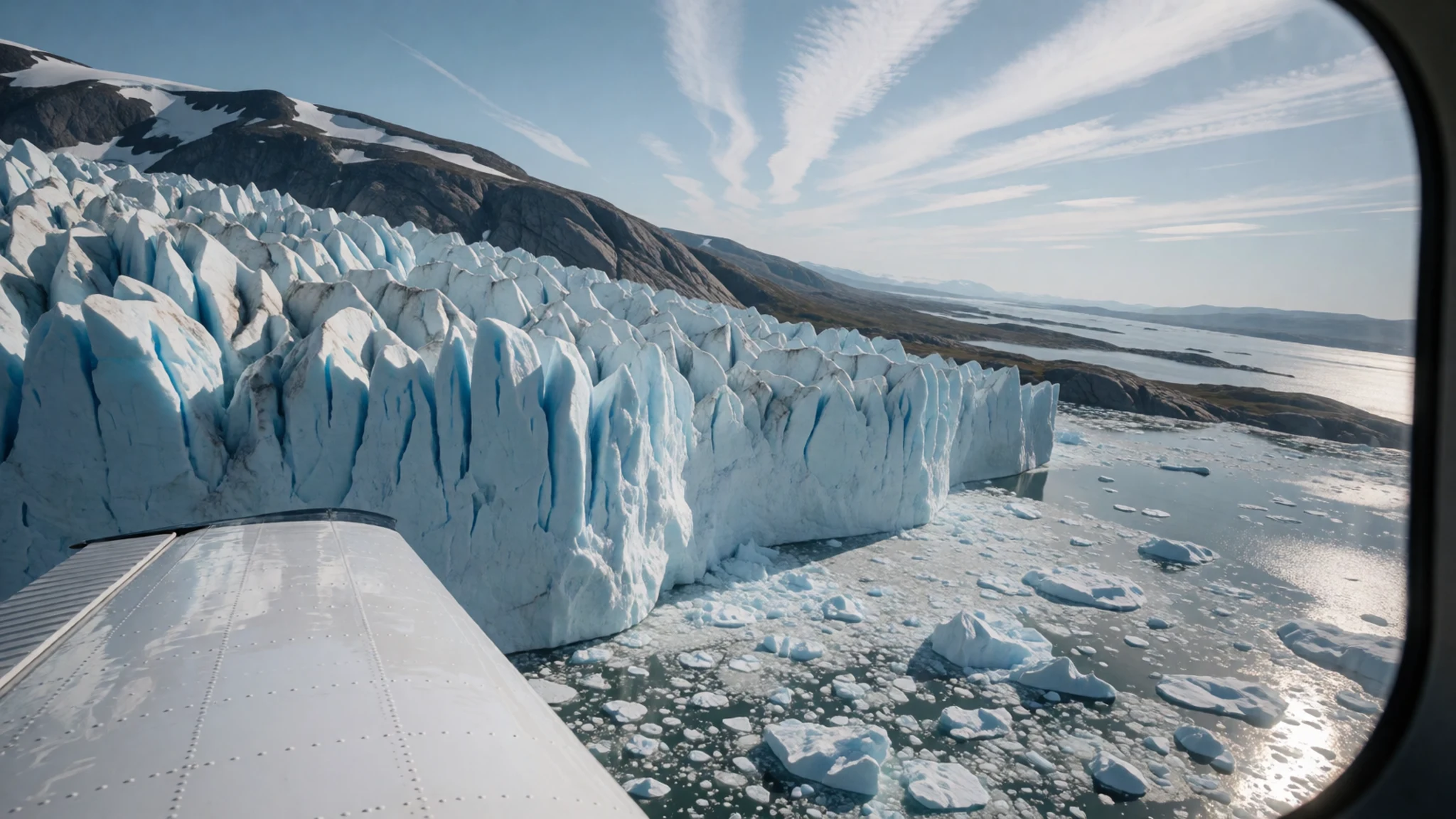
- Icebergs in the fjord — Ilulissat Icefjord, near the town of Ilulissat
The fjord is crowded with stranded and drifting icebergs, some sitting on the shallow bed for years. Light changes their colour through the day, from pale white to deep blue. A walk along the shore gives a quiet, free way to watch them and listen to the ice.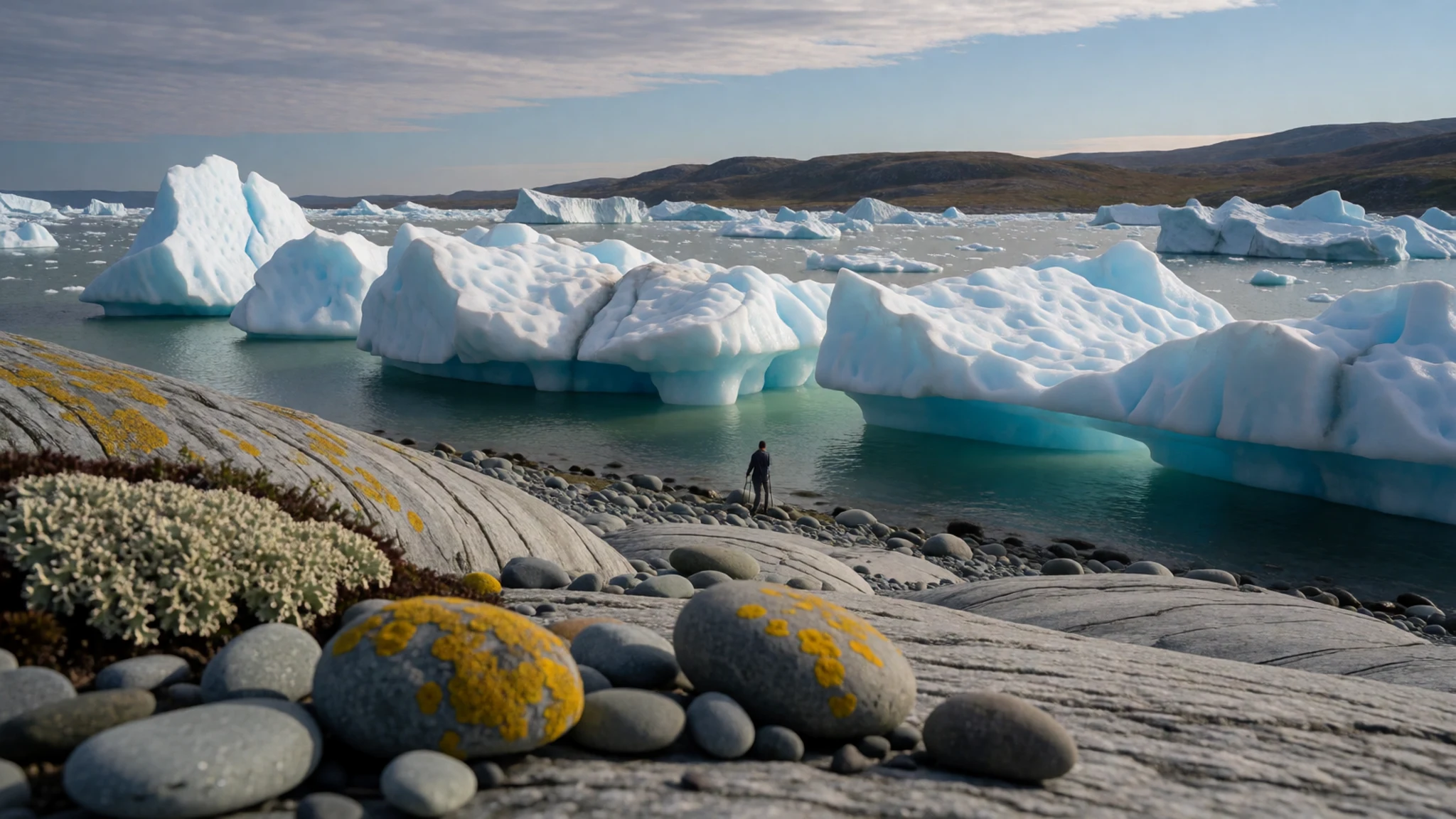
- A boat trip among the bergs — Ilulissat harbour and Disko Bay
Small boats leave Ilulissat in the open-water season and weave between icebergs on Disko Bay. Operators know where the ice is safe to approach and where it is not. Check current options and conditions locally, as ice and weather decide what runs.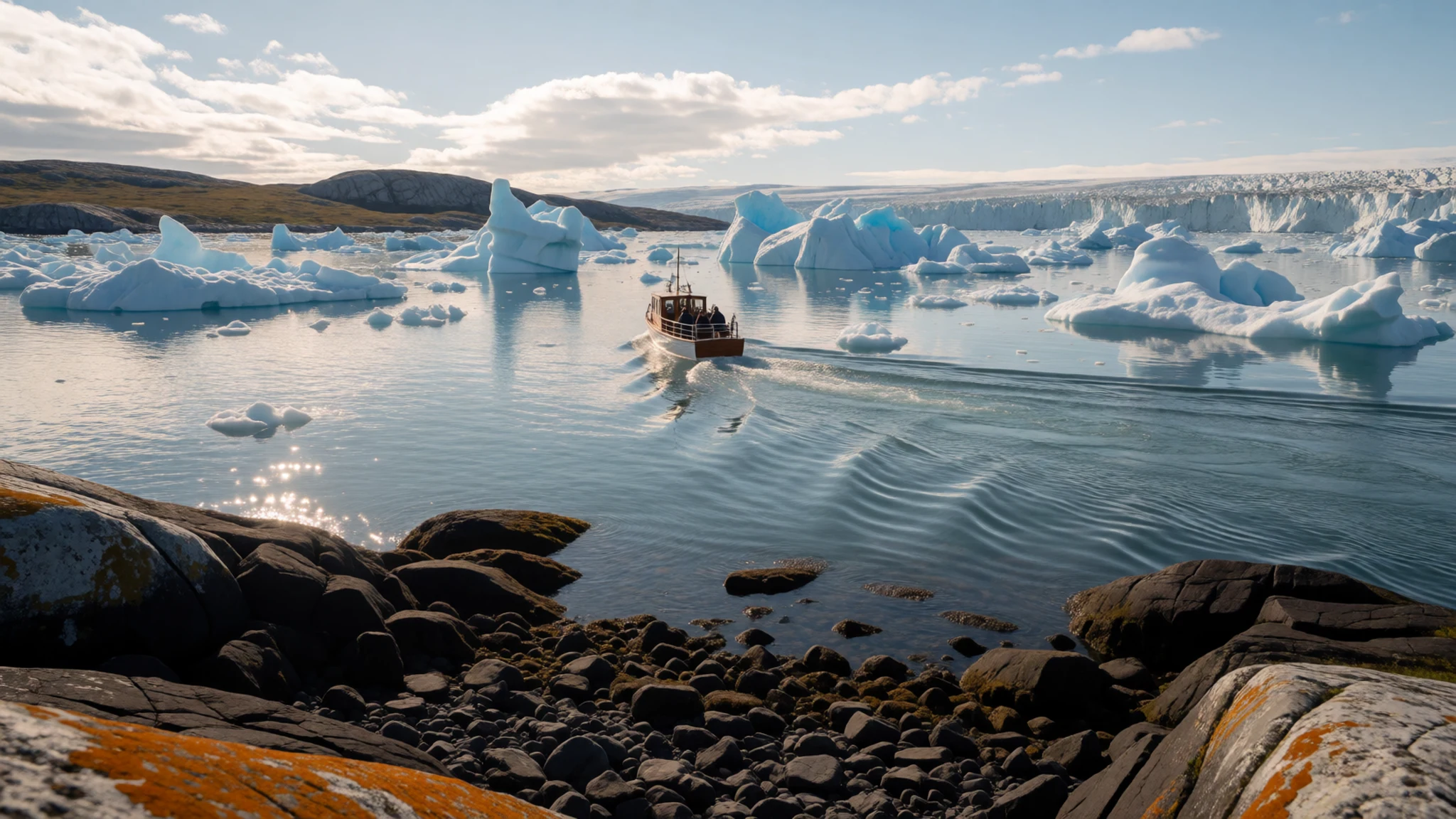
- Walking the fjord edge — Trails on the edge of Ilulissat
Greenland has no private land ownership, so walking near settlements is generally free, and paths near Ilulissat lead out to the icefjord's rim. The tundra, rock and views of ice make it an easy half-day. Stay on marked routes near the fjord, because the edge can be unstable.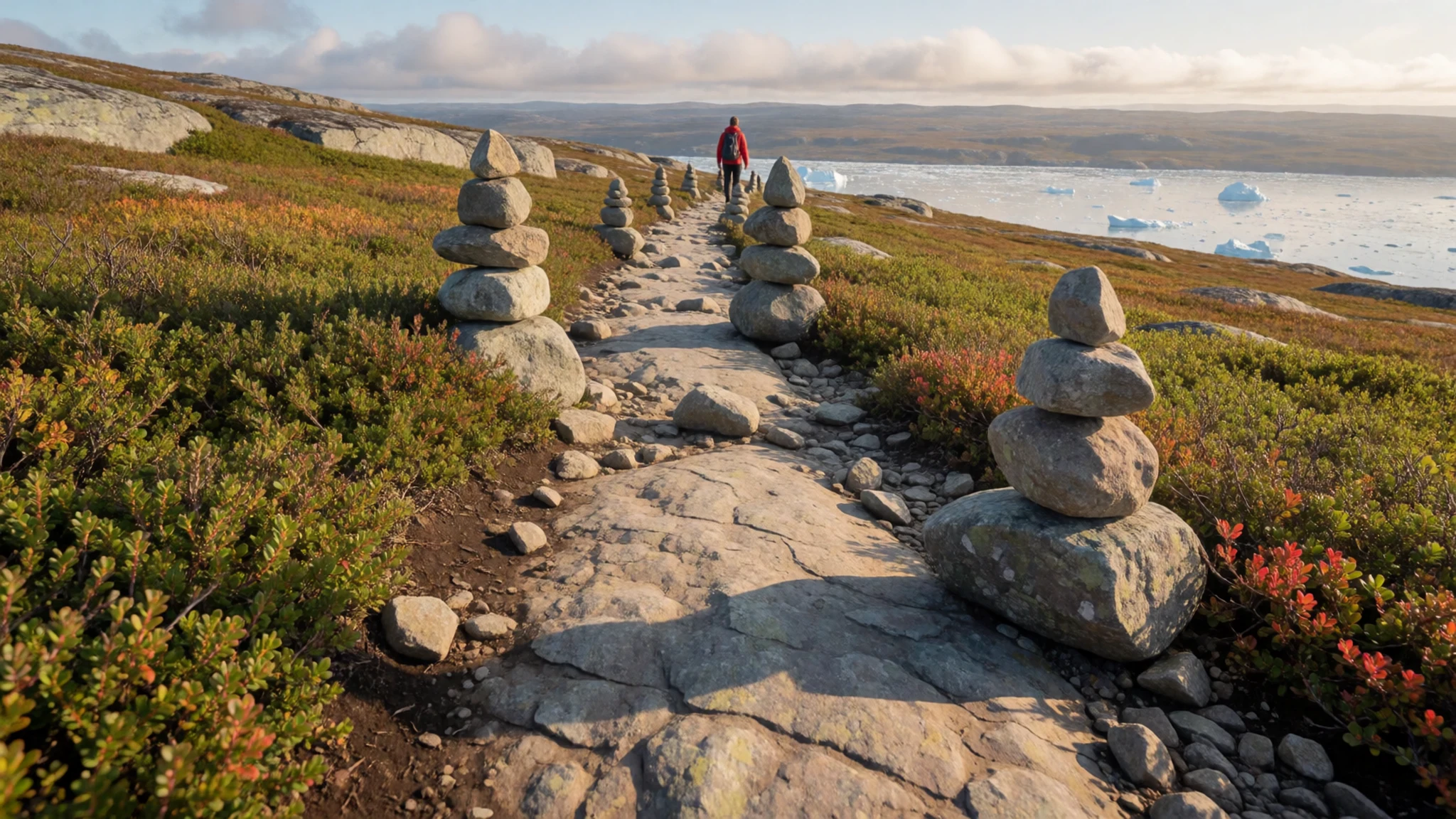
- Flying over the ice — Disko Bay and the glacier's lower reaches
An aerial view shows how the glacier flows from the ice sheet through its channel to Disko Bay. Flights, when offered, reveal the crevasses, meltwater and sheer extent that ground views cannot. Book through local operators and check weather, which often changes plans.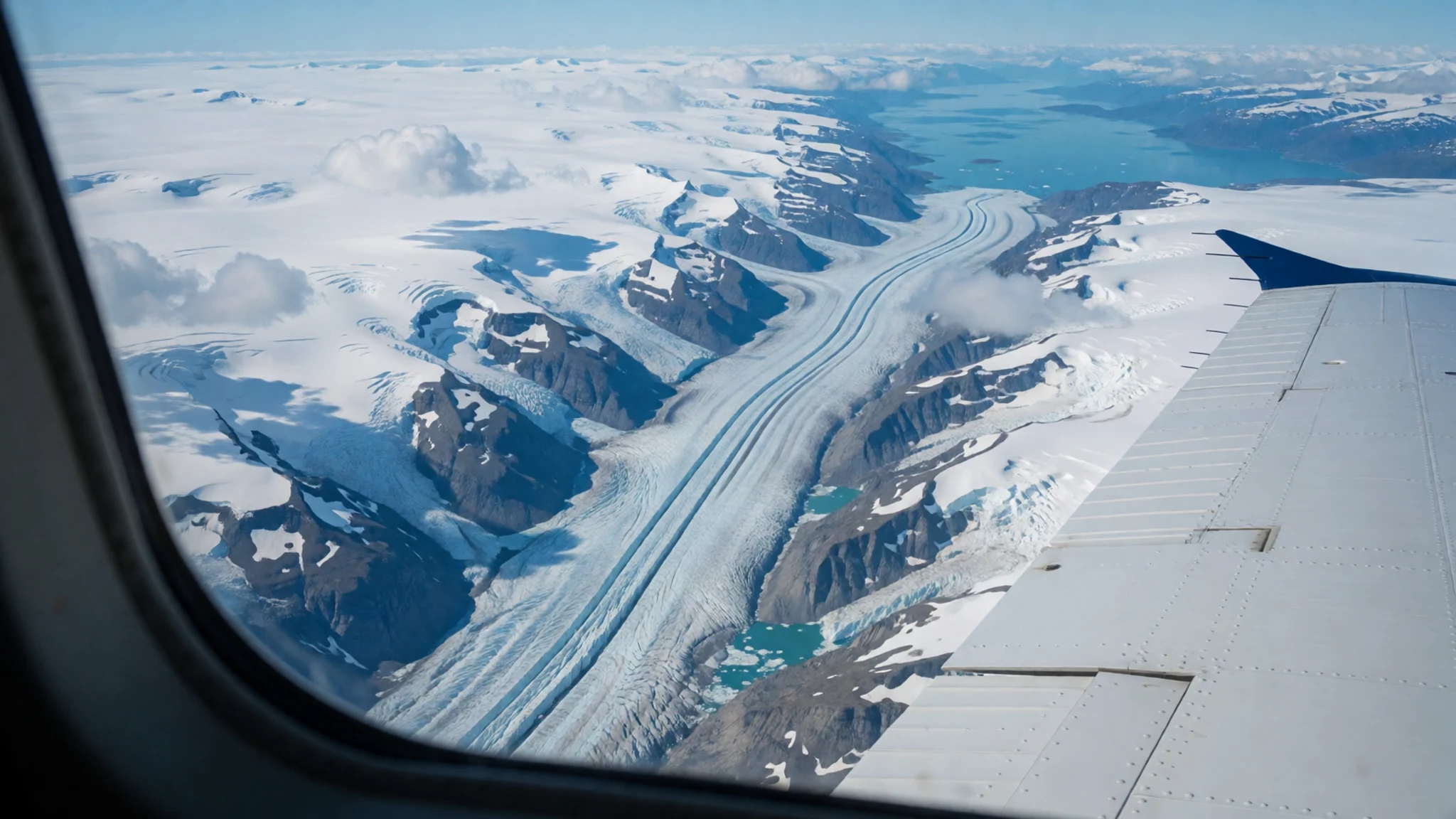
Culture
Sermeq Kujalleq sits in a country whose people call themselves Kalaallit, and the word Greenlander is also acceptable. Greenlandic is the everyday language of the community around Ilulissat, with Danish and English also used, and the town's life has long been tied to the sea, to fishing and to hunting. Seal, fish and other local catches remain part of normal life, not a show for visitors.
Greenland is part of the Kingdom of Denmark, but Greenlanders see themselves as a separate nation, and conversations go better when visitors keep that in mind. The old outsider term for Arctic peoples that begins with E is now considered a slur and should never be used.
The relationship with ice is practical as well as emotional. The glacier is a local landmark, a scientific subject and a tourist draw, and people in Ilulissat are used to visitors asking about change. Questions are usually welcomed when asked with curiosity rather than drama.
Daily manners are relaxed. Crime and hostility towards foreigners are almost unknown, and there are no rough districts in the towns. Basic courtesy and common sense are enough.
Call people Kalaallit or Greenlanders, never by the old outsider term, and say you are in Greenland or the Kingdom of Denmark rather than simply "in Denmark".
What to wear
Sermeq Kujalleq lies in a climate where clothing is about staying warm, and Greenlandic dress reflects that history. The traditional costume, known as kalaallisuut, uses sealskin for trousers and boots, with soft kamik boots for warmth. Women's versions are notable for a wide beaded collar in bright colours, worn with a decorated top. It is worn for festivals, church confirmations, weddings and national occasions rather than daily life, and each region has its own variations.
Around Ilulissat today, people dress for weather and work: down or insulated jackets, fleece, wool hats, boots and practical trousers. Bright outdoor colours are common, and good gear matters more than fashion. Smarter clothes appear at celebrations, and you may see national dress on special days.
Visitors should plan in layers. Pack a warm base layer, a fleece or wool mid-layer, and a windproof, waterproof shell. Add a hat, gloves and sturdy waterproof boots with good grip for wet rock and tundra. Sunglasses help against glare off the ice and water. In summer, insect repellent or a head net is useful, as mosquitoes can be a nuisance. Cold is the one real hazard for unprepared travellers, and it grows more serious the further north you go. No special dress code applies at the glacier itself.
What to eat
- Greenlandic coffee — Restaurants and cafés in Ilulissat
A local speciality that is closer to a cocktail than a morning cup: coffee laced with generous measures of liqueur and whisky. In some places it is made at the table as a small performance. It is strong, so take it slowly.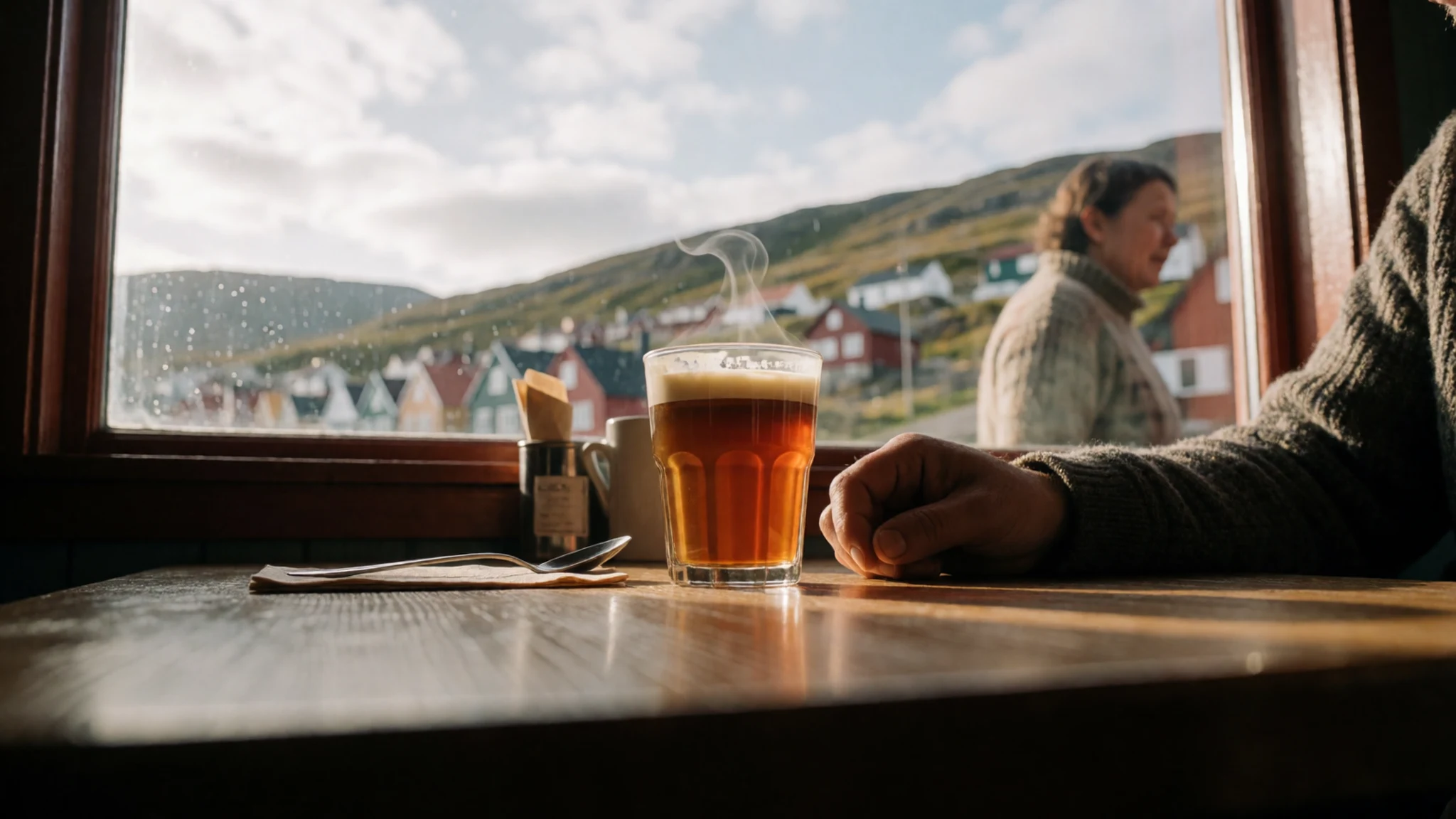
- Locally caught fish — Restaurants in town and the local market near the harbour
Fish from the surrounding waters is a staple, served grilled, fried or in stews. Many restaurants pair it with familiar side dishes, and portions are usually large. Ask what was landed that day, as the catch varies with season and ice.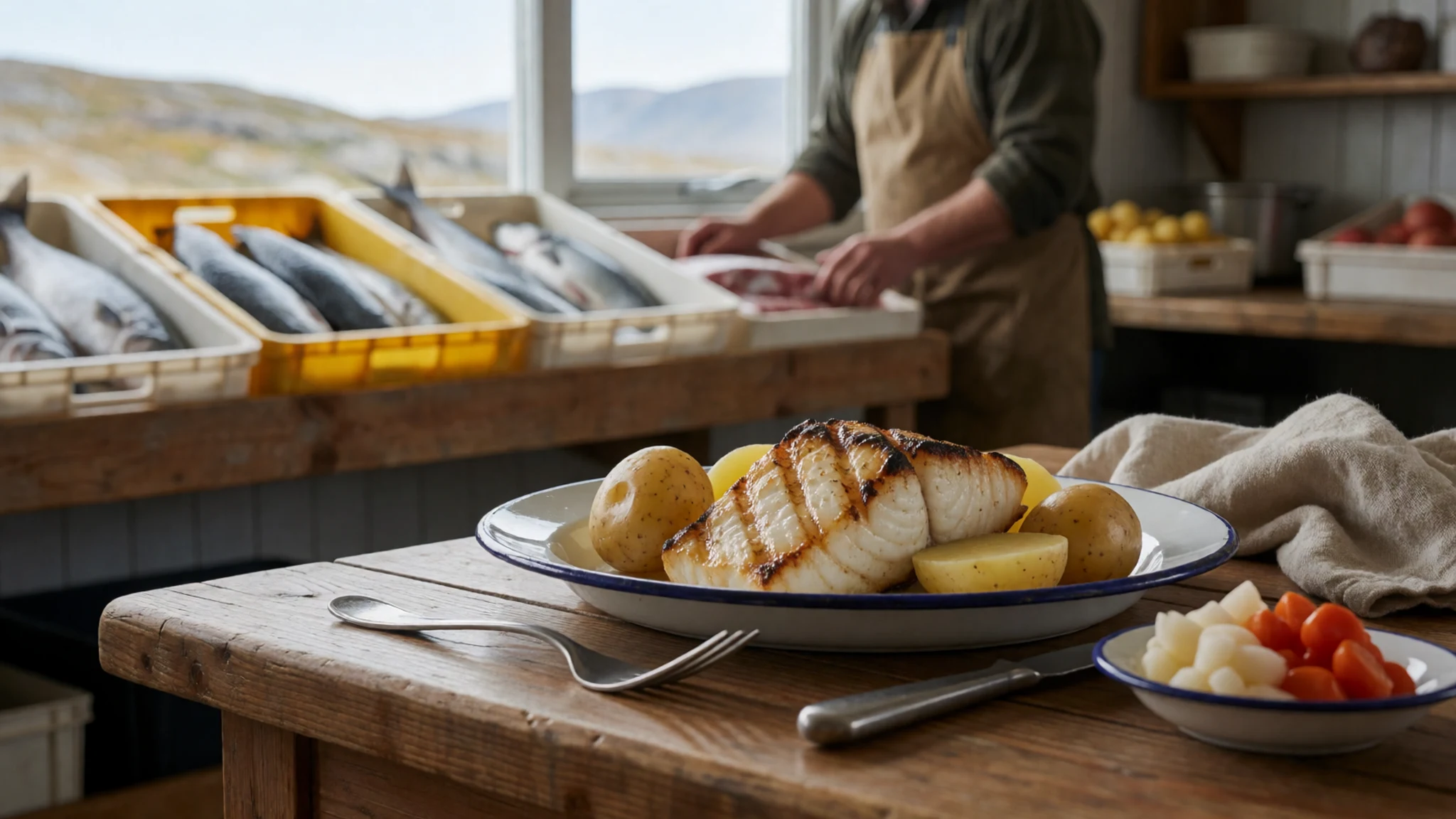
- Greenland prawns and shrimp — Local markets and harbour-side eateries
Cold-water shrimp are a common local seafood, sold at markets and served in restaurants, often simply boiled and eaten with bread or in a salad. They taste sweet and clean, and they are an easy first taste of Greenlandic produce. - Muskox and reindeer — Restaurants that feature Greenlandic produce
Muskox and reindeer are the main local land meats, served as steaks, in stews or alongside familiar sides. Many restaurants combine these traditional ingredients with European cooking. Meat dishes are filling, and vegetables on the plate are usually few because they are expensive to bring in. - Seal and whale meat — The local market, in each Greenlandic town
Seal and whale are traditional foods in Greenland, sold at local markets and sometimes on restaurant menus. They are part of everyday food culture, so ask politely and without judgement. Some visitors try a small portion, while others skip it.
Plan it
Best time. June to September for the midnight sun, longer days and open water for boats; winter brings long darkness and hard cold, and fewer services.
How long. 2–3
Getting there. Fly to Ilulissat on a domestic Greenlandic flight, usually connecting via Nuuk or another hub. Greenland is outside the Schengen Area, so check passport and visa rules. The last leg to the icefjord is a walk or short transfer from town, or a boat trip from the harbour.
Budget. high
Tips
- Pack layers and a windproof, waterproof shell, even in summer
- Book boat trips and flights early in the season and check weather on the day
- Bring a passport valid for at least three months beyond departure; most visitors can stay up to 90 days without a visa, but check your own case
- Expect high prices for accommodation and food, and carry a card
- Expedition permits are needed for travel on the glacier itself, so do not go onto the ice without arranging one
Etiquette
- Use the names Kalaallit or Greenlanders, and never the old outsider term
- Say Greenland or the Kingdom of Denmark, not simply Denmark
- Keep to marked routes at the fjord edge and stay clear of the ice front
Nearby
Sources
- Wikidata Q770424 (CC0)
- Wikipedia: Jakobshavn Glacier (rev 1380605107) (CC BY-SA 4.0)
- Wikivoyage: Greenland (rev 5381839) (CC BY-SA 4.0)
- Photo: Greenland Ilulissat-20.jpg (CC BY 3.0)
- Photo: The calving front of the Jakobshavn Glacier, NASA Goddard Space Flight Center (CC BY 2.5)
- Photo: Relief location map of Greenland, Uwe Dedering (CC BY 3.0)
- Photo: Aerial view of Jakobshavn Glacier at Disko Bay (024), Giles Laurent (CC BY-SA 4.0)
- Photo: Aerial view of Jakobshavn Glacier at Disko Bay (023), Giles Laurent (CC BY-SA 4.0)
- Photo: The calving front of the Jakobshaven Glacier, NASA ICE (CC BY 2.5)
- Photo: Jakobshavn glacier calving, European Space Agency (CC BY-SA 3.0 igo)
- Photo: Jakobshavn Isbræ historical image (Public domain)


