Savan Island
Savan Island, Saint Vincent and the Grenadines
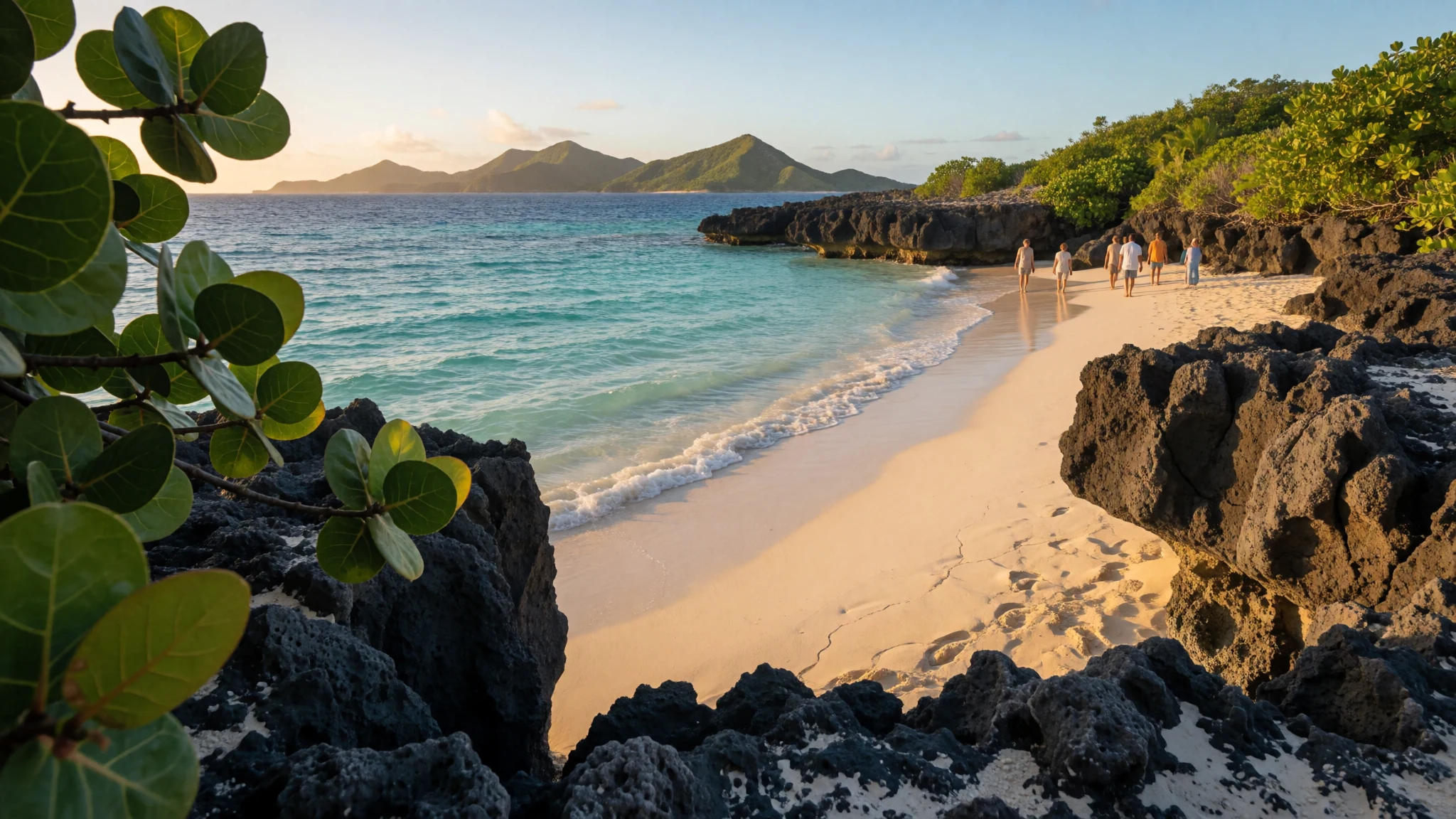
Savan Island is a small Grenadine island where the draw is the surrounding sea: reefs, anchorages and quiet water between Saint Vincent and Grenada.
The place
Savan Island belongs to the Grenadines, the long scatter of small islands that runs between Saint Vincent in the north and Grenada in the south. Politically it sits within Saint Vincent and the Grenadines, in Grenadines Parish. The brief for this reading has very little on Savan itself, so the honest picture is the regional one: a tiny dot of land in a big, bright stretch of the eastern Caribbean, best understood through the islands and waters around it.
The wider country is volcanic and mountainous, with its high point at the Soufrière volcano on Saint Vincent. The Grenadines are the gentler end of that landscape, a chain of low islands, sandy bays and reefs, and the sea does most of the work of making the place appealing. Many of the islands have docks and sheltered bays, which is why yachts are such a common way to arrive.
The climate is tropical, with little change in temperature through the year. The main division is wet and dry: rain is expected from May to November, and hurricanes threaten the islands from July to October. That overlap matters for anyone planning a boat trip, because weather decides whether a sailing day happens at all.
The economy of the country still leans on bananas and other farm produce, with tourism and services growing steadily but unevenly. Work is seasonal and unemployment is high, so visitor spending in the Grenadines carries real weight for local families. Most travellers here come either by air to the main airport on Saint Vincent and then by boat, or directly by yacht. Large cruise ships rarely call, which keeps the feel quieter than in much of the Caribbean.
Its story
The story of Savan Island is bound up with the story of Saint Vincent and the Grenadines as a whole. The English were first to claim Saint Vincent on paper, but the French became its first European settlers, founding a colony at Barrouallie on the leeward coast shortly before the end of the seventeenth century. Carib people resisted settlement fiercely, and Europeans only gained a firm footing well into the eighteenth century.
Africans arrived as well. Some were shipwrecked, and others escaped enslavement on nearby islands such as Saint Lucia and Grenada. They found refuge on Saint Vincent and intermarried with the Caribs, a mixing that shaped the island's people.
Control then passed back and forth between the powers. Britain received Saint Vincent under the Treaty of Paris, France took it back a little later, and Britain regained it under the Treaty of Versailles. Slavery was abolished in the nineteenth century, and plantation owners facing a labour shortage recruited workers from Portugal and then from India, adding two more strands to the national mix.
The path to self-rule was gradual. Associate statehood gave the islands full control of their internal affairs, and a later referendum led to full independence, making this the last of the Windward Islands to take that step.
Nature has been just as decisive as politics. The Soufrière volcano erupted catastrophically in the early twentieth century, killing many people and wrecking farmland. A later eruption caused no deaths, though thousands were evacuated, and a modern eruption passed with an early-warning system in place and no casualties. Hurricanes have repeatedly flattened banana and coconut plantations, and one in the late twentieth century did heavy damage to Saint Vincent's west coast.
What to see
- Savan Island and the Grenadines chain — Grenadines Parish
Savan Island is best seen from the water, as one small piece of the chain between Saint Vincent and Grenada. The relief map in the reference photos helps with orientation. Anyone wanting to land or anchor should arrange it through a local boat operator and check current access first.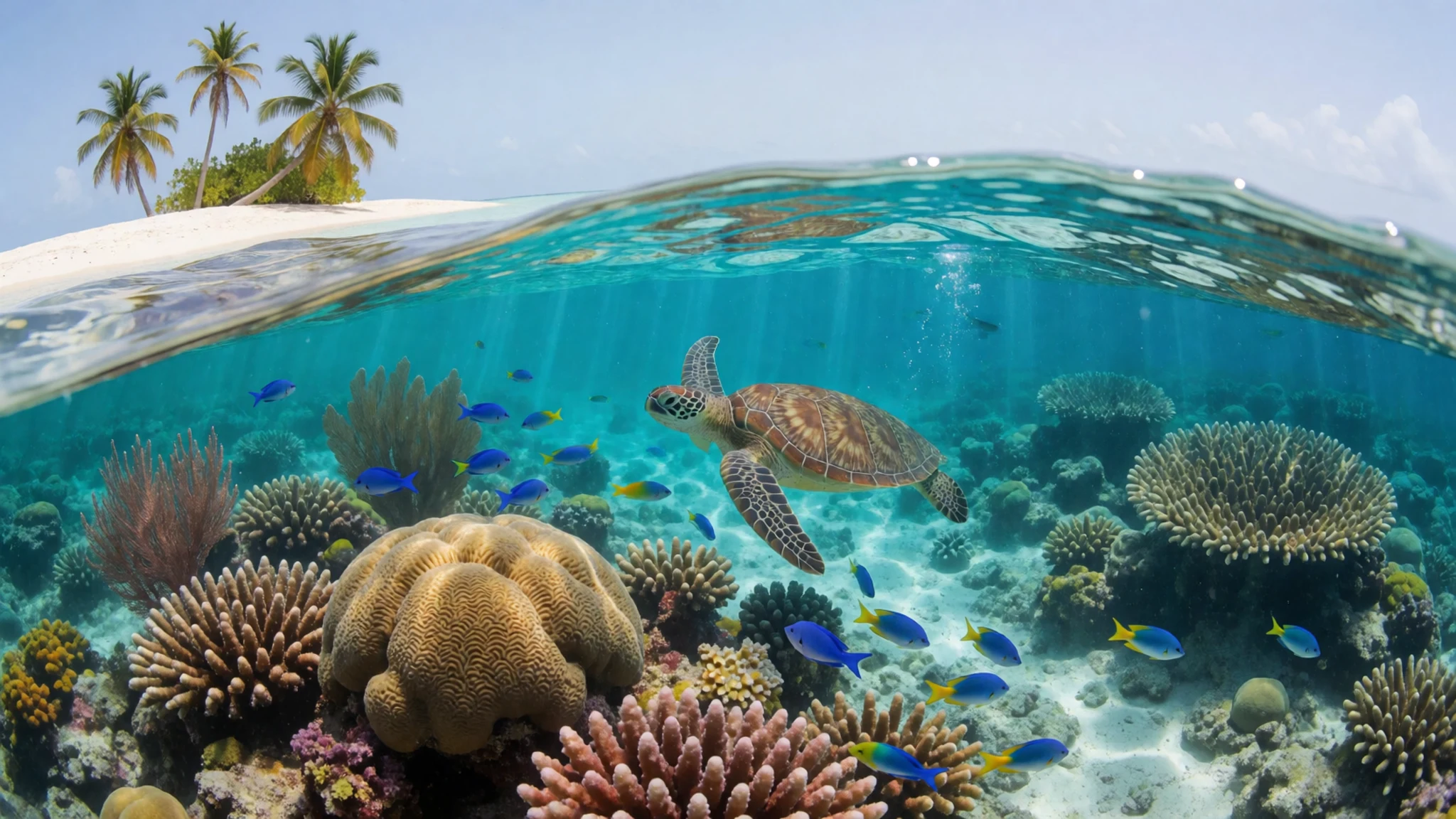
- Tobago Cays Marine Park — Southern Grenadines
The Tobago Cays are a protected cluster of reefs and tiny islands in the southern Grenadines, and the usual reason to come to this part of the Caribbean. Swimming and snorkelling are the main activities. Boats are needed to get there, and the water is calmest in the drier months.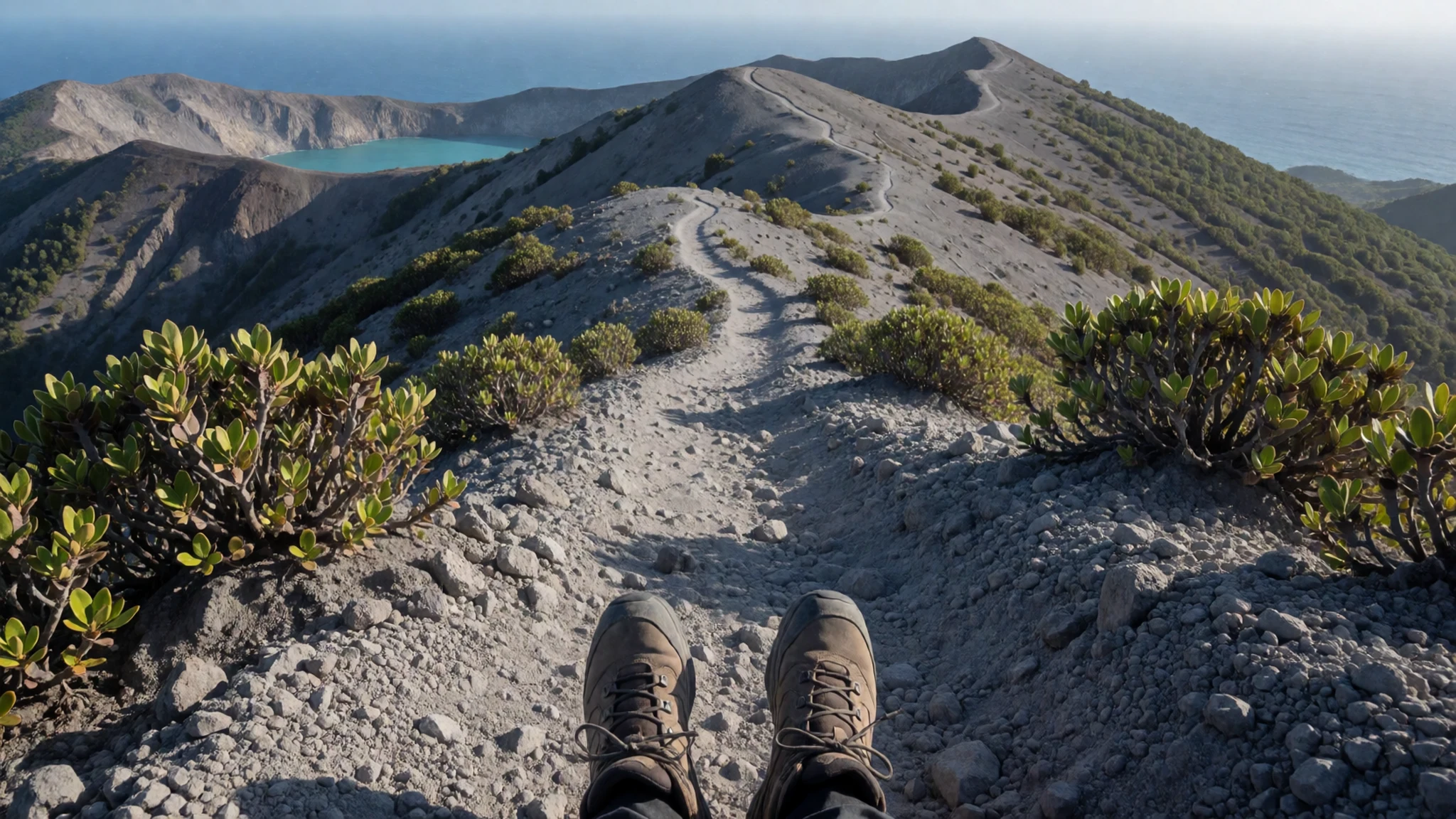
- Fort Charlotte — Kingstown, Saint Vincent
Fort Charlotte is a British-era fortress on a hill above Kingstown, the capital of Saint Vincent. It is mainly a viewpoint, giving a wide look over the town, the harbour and the sea beyond. Go early or late in the day to avoid the strongest sun on the exposed ramparts.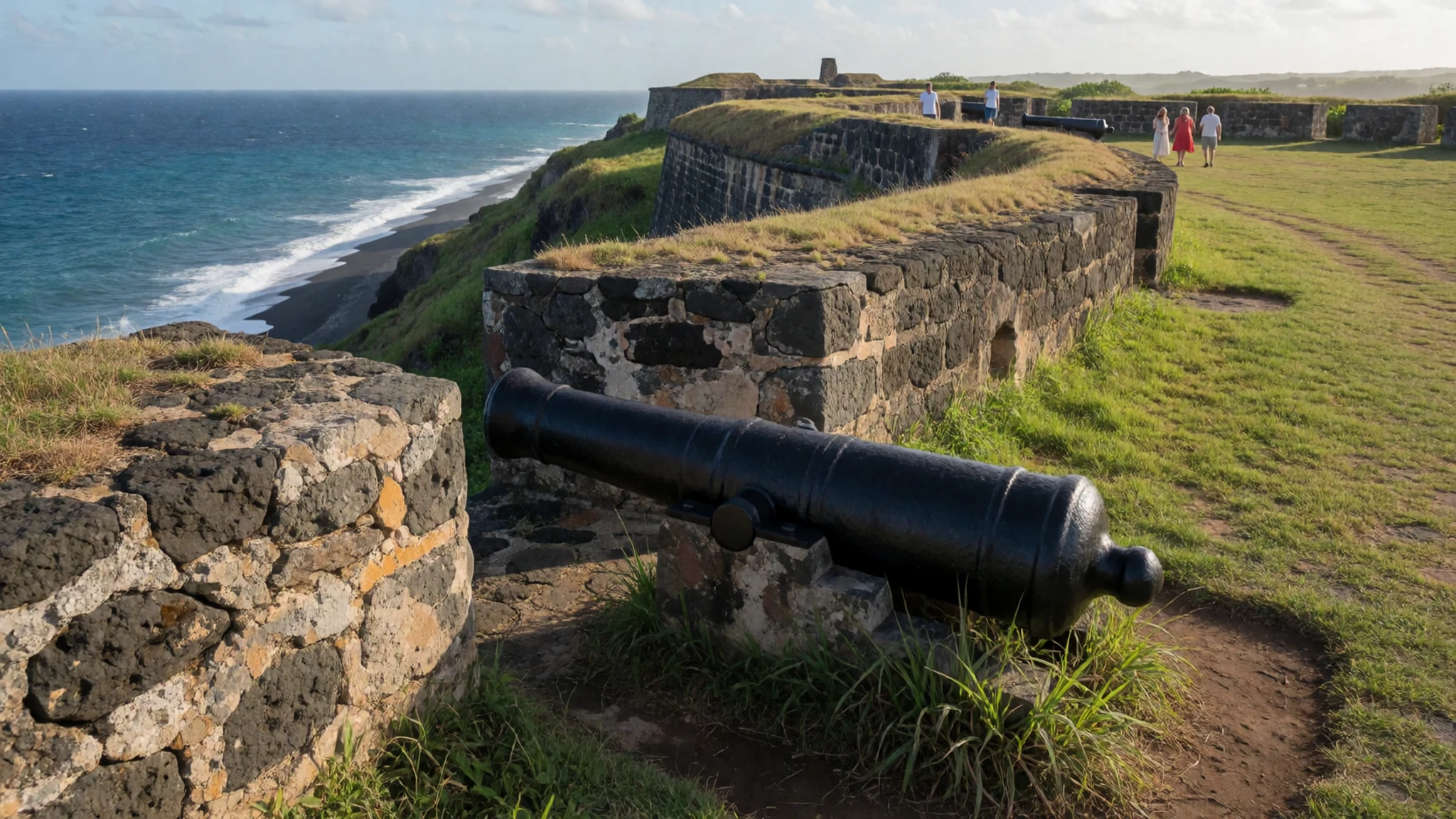
- Fort Duvernette — Off the south coast of Saint Vincent
Fort Duvernette stands on a small rocky islet just off Saint Vincent's south coast, reached by a short boat ride and then a climb up steps. The reward is a view back over the coast and the water. Wear shoes with grip, as the steps can be slippery after rain.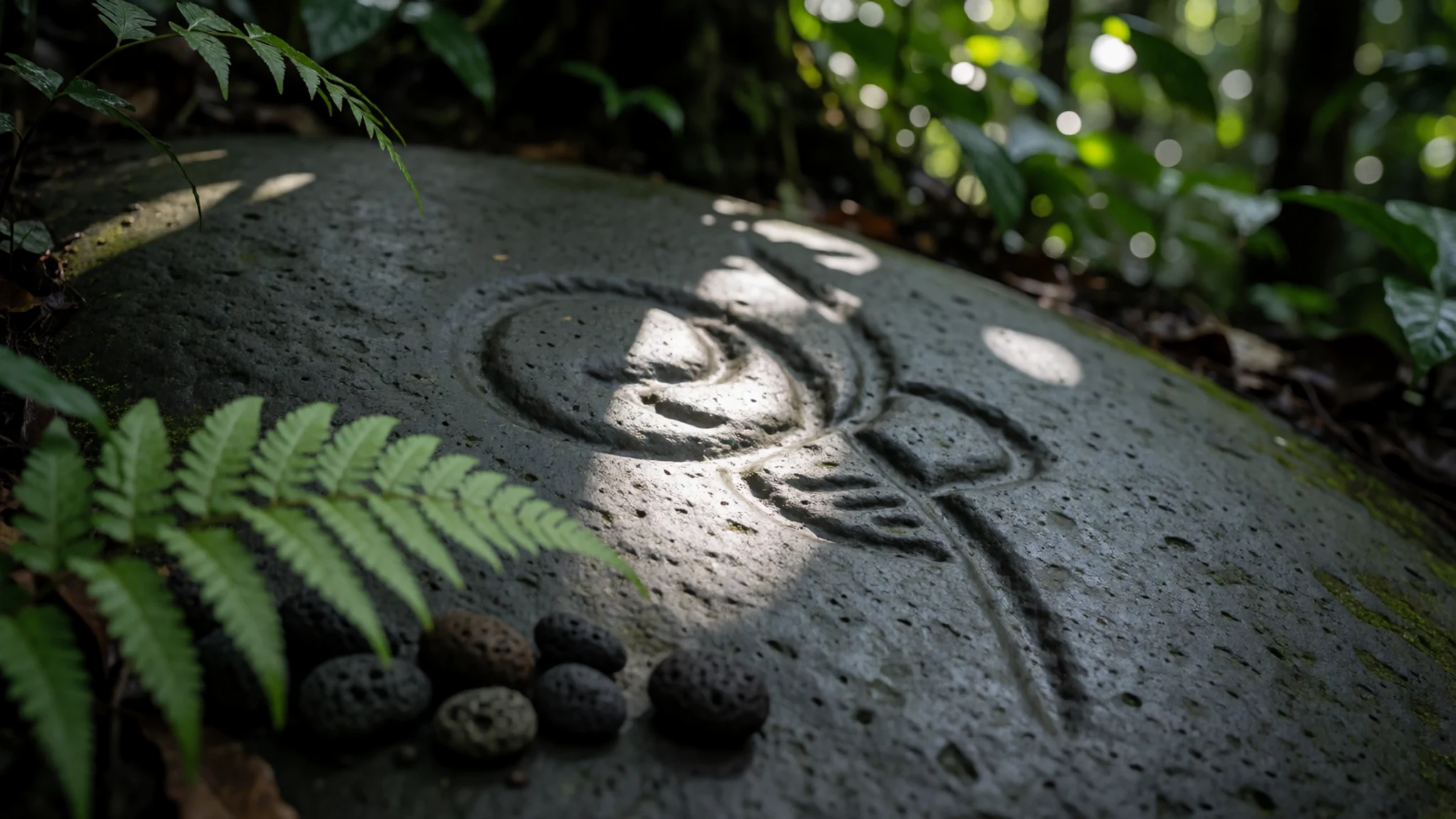
- La Soufrière volcano — Northern Saint Vincent
La Soufrière is the active volcano at the northern end of Saint Vincent and the highest point in the country. The climb is long and steep, and the brief itself calls it not an easy one. Start early, take plenty of water, and check current conditions and access before setting out.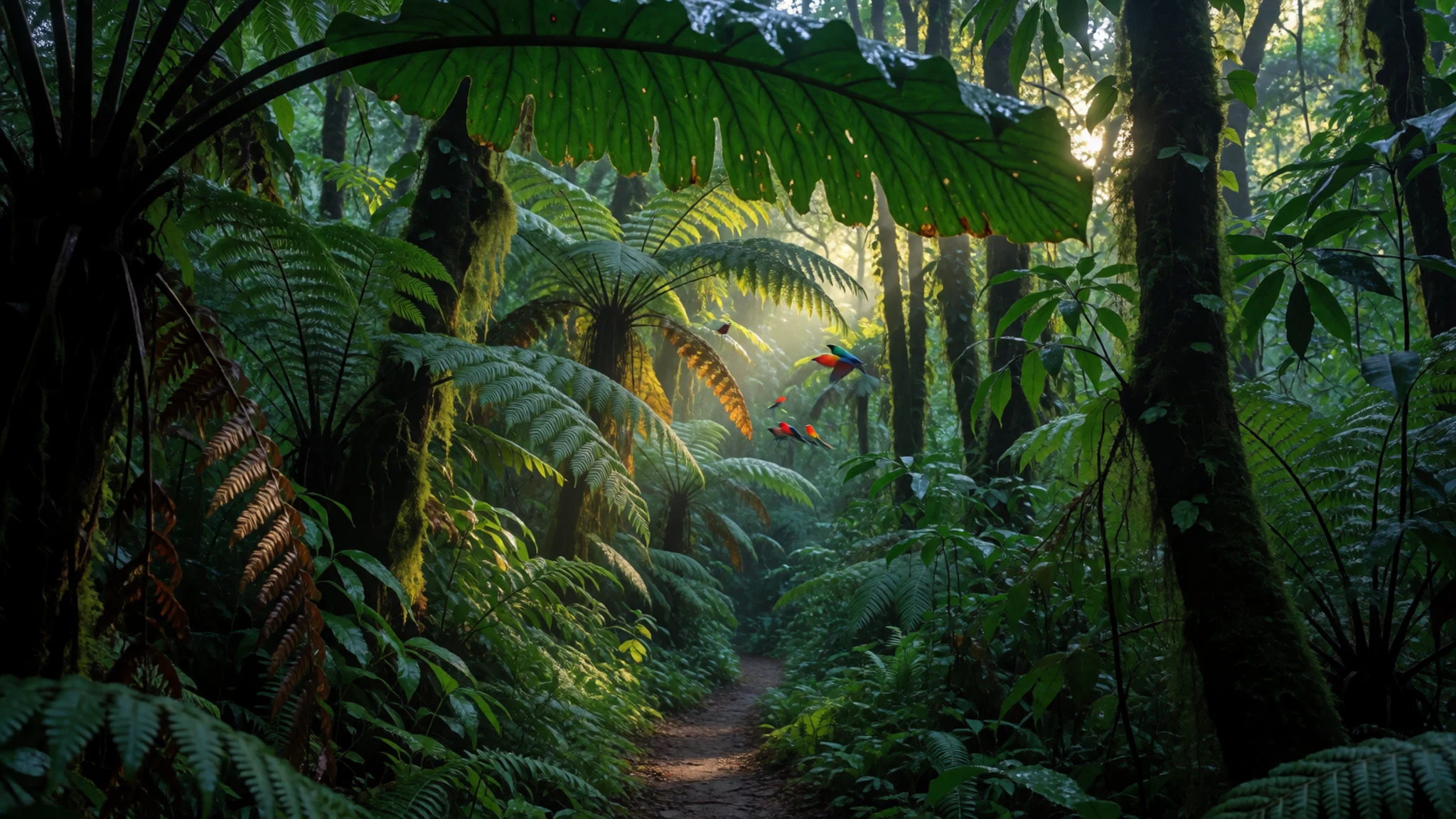
Culture
Savan Island sits within a country whose culture is a layered mix: Carib heritage, African roots, French and British colonial influence, and later arrivals from Portugal and India. The result is a society that is largely Caribbean in rhythm but distinctly Vincentian in detail, and most of that life is found on Saint Vincent rather than on the small outer islands.
The best-known cultural event is Carnival, locally called Vincy Mas, held in early July. It is built around music, costume and street parties, and it is loud, crowded and heavily booked. Visitors who want to be there should arrange accommodation well ahead, since space tightens and prices tend to rise.
Everyday social life is more modest. On Friday and Saturday evenings, roadside barbecues serve pork and chicken, and they double as a place to meet neighbours. Many tourists come to the Grenadines, stay at a resort and never speak with local people. Staying in a guest house or apartment near Kingstown is a more direct way to meet people and see daily routines.
The country's economy depends on farming and seasonal tourism, so work is uneven and family networks matter. Politeness goes a long way: greetings are expected, and a friendly word before a question usually changes the response. Boat crews, guides and market sellers are often making a living from a short season, and respect for their time is appreciated.
When you photograph people at markets, barbecues or Carnival, ask first and accept a refusal graciously.
What to wear
Savan Island has no documented local costume of its own in the sources for this reading, so the dress traditions here are those of Saint Vincent and the Grenadines and the wider eastern Caribbean. Brightly patterned cotton, including madras-style checks, is associated with the region and appears in headwraps, skirts and shirts at festivals and cultural occasions. I have not found a source naming a specific national garment, so none is claimed here.
The clearest display of dress is Carnival, or Vincy Mas, in early July. Costumes there are elaborate and colourful, built from feathers, sequins and light fabric, and made for dancing in the heat. Outside festivals, everyday clothing is practical and relaxed: cotton shirts, light dresses, shorts, sandals and caps, with smarter clothes for church and formal occasions.
A visitor should dress for heat and sun. The climate is tropical with little seasonal change, so light cotton or linen, a wide-brimmed hat and strong sun protection make sense year round. Pack a light waterproof layer for the rainy months, from May to November.
On the water, quick-drying clothes and shoes that can get wet are more useful than anything formal. For the volcano or fort climbs on Saint Vincent, wear closed shoes with real grip, since paths can be steep, muddy or slippery. In towns such as Kingstown and in villages, cover up over swimwear; beachwear is for the beach and the boat. A shirt or light wrap is also sensible for church visits.
What to eat
- Roasted breadfruit with fried jackfish — Local eateries and fish stalls near the harbour in Kingstown
This is the national dish of Saint Vincent and the Grenadines: starchy roasted breadfruit with crisp fried jackfish. It is filling, simple and best eaten fresh from the fire or the pan, so look for it at local eateries rather than tourist menus.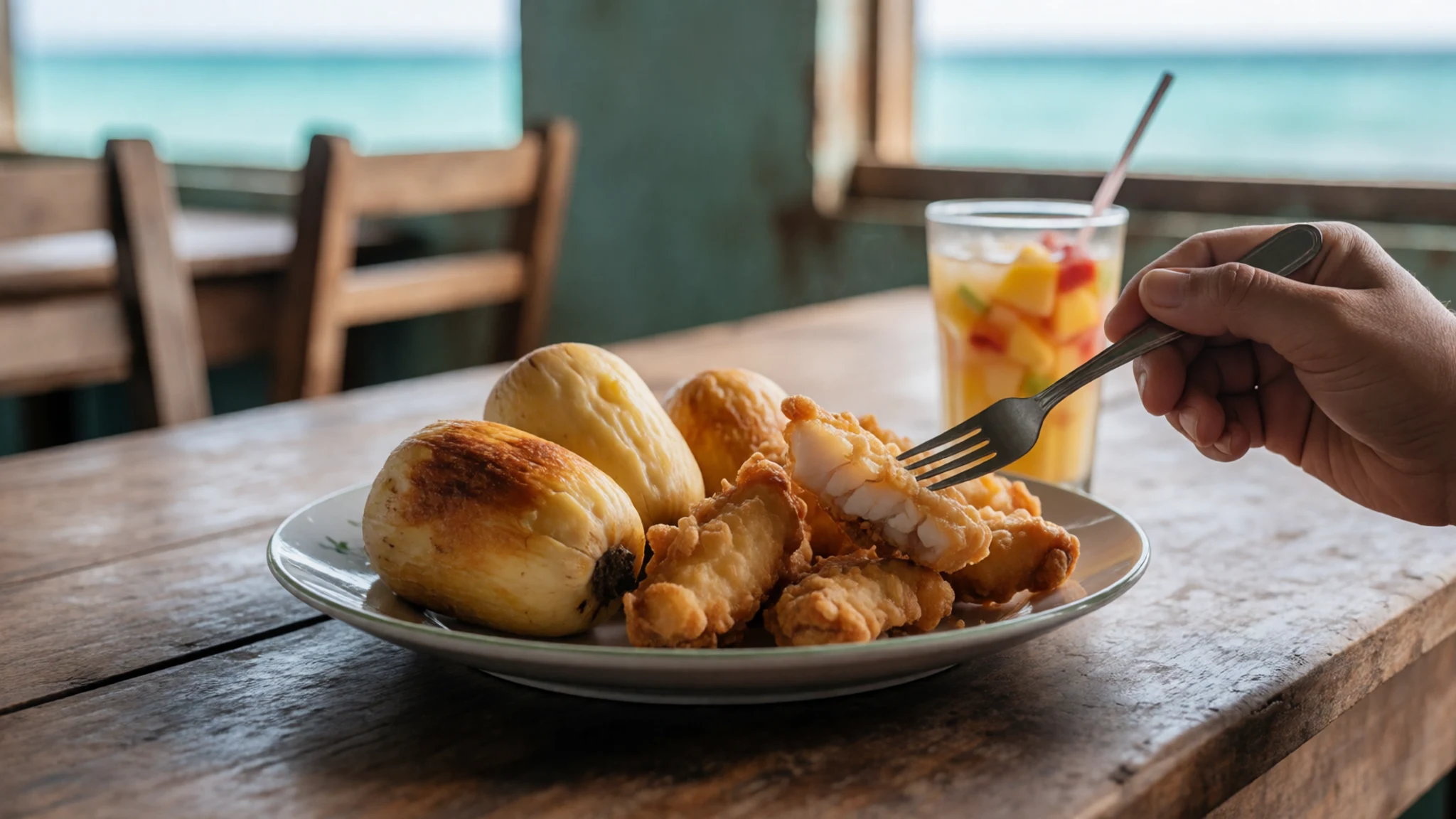
- Roadside barbecue pork or chicken — Roadside stands across Saint Vincent at weekends
On Friday and Saturday nights, grills are set up beside the road and sell smoky pork and chicken by the portion. It is casual and social, usually eaten standing or in the car park. Go earlier in the evening for the best choice.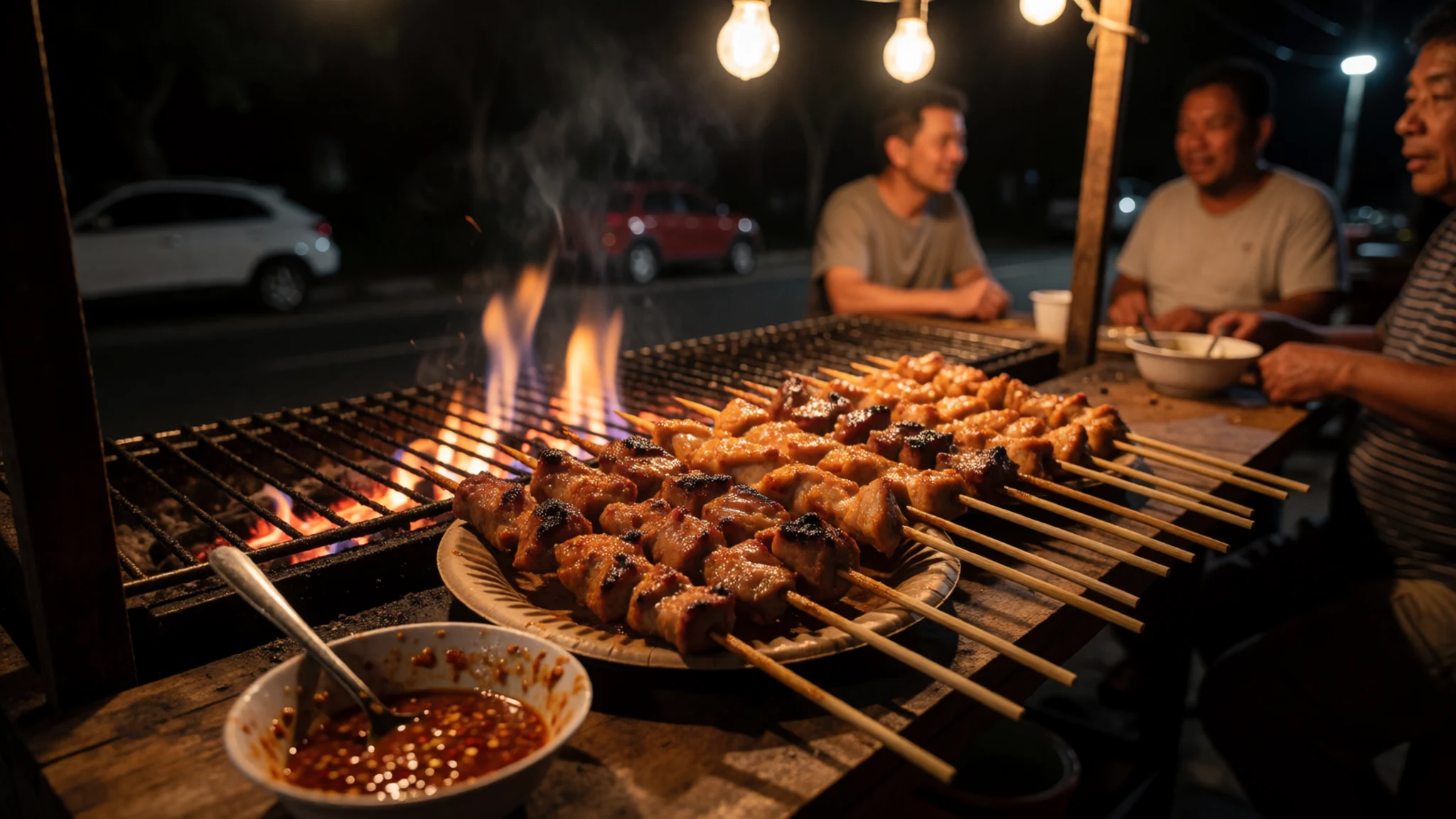
- Hairoun beer — Bars, rum shops and beach eateries throughout the islands
Hairoun is a locally produced beer, popular and easy to find. It suits the climate, served very cold alongside barbecue or fried fish. Drink it in the shade, and pace yourself against the afternoon sun. - Black Wine — Local bars and festival stalls, especially around Carnival
Black Wine is the drink the brief singles out for adventurous drinkers. It is a dark local beverage that tastes unlike the sodas and lagers around it. Ask what is in it and try a small amount before ordering more. - Bitter Lemon and fruit cocktail sodas — Corner shops, snack bars and beach eateries
These are popular soft drinks, sharp, sweet and fizzy, and a common alternative to beer in the heat. They are sold everywhere, from small shops to beach bars, and make a cheap, cold refreshment on a boat day.
Plan it
Best time. December to April, in the drier part of the year. Rain falls from May to November, and hurricanes threaten the islands from July to October, so boat days are most dependable earlier in the year.
How long. 2–3
Getting there. Fly to Argyle International Airport (SVD) on Saint Vincent, which has mostly short regional connections to islands such as Canouan, Saint Lucia, Barbados and Saint Kitts. For the Grenadines, the last leg is by boat, either an arranged transfer or a yacht charter. Few cruises call, so most visitors arrive by air or private yacht.
Budget. high
Tips
- Arrange boat transfers and any landing on Savan Island through a local operator before you travel
- Avoid the hurricane months of July to October if your plans depend on the sea
- Book early if you want to be on Saint Vincent for Vincy Mas in early July
- Start volcano and fort climbs early and carry plenty of water
- Check the official Discover St. Vincent tourism site for current access, hours and fees
Etiquette
- Ask before photographing people, especially at markets and Carnival
- Cover up over swimwear when you are in towns and villages
- Respect marine park rules and do not touch reefs or take shells
Nearby
Sources
- Wikidata Q7427811 (CC0)
- Wikipedia: Savan (island) (CC BY-SA 4.0)
- Wikivoyage: Saint Vincent and the Grenadines (CC BY-SA 4.0)
- Photo: Saint Vincent and the Grenadines relief location map (Carport) (CC BY 3.0)
- Photo: Relief Map of Caribbean (Nzeemin) (CC BY 3.0)


Wildlife
- Sea turtle (animal)
The green sea turtle is a big, gentle swimmer that grazes on seagrass, rather like a cow of the sea. Its shell is olive to dark, and its name comes from the greenish fat beneath it. Around Savan Island, you may meet one in the clear waters among colourful reef fish. A local guide can tell you the best time to look. Keep a respectful distance, stay calm and quiet, and never feed it.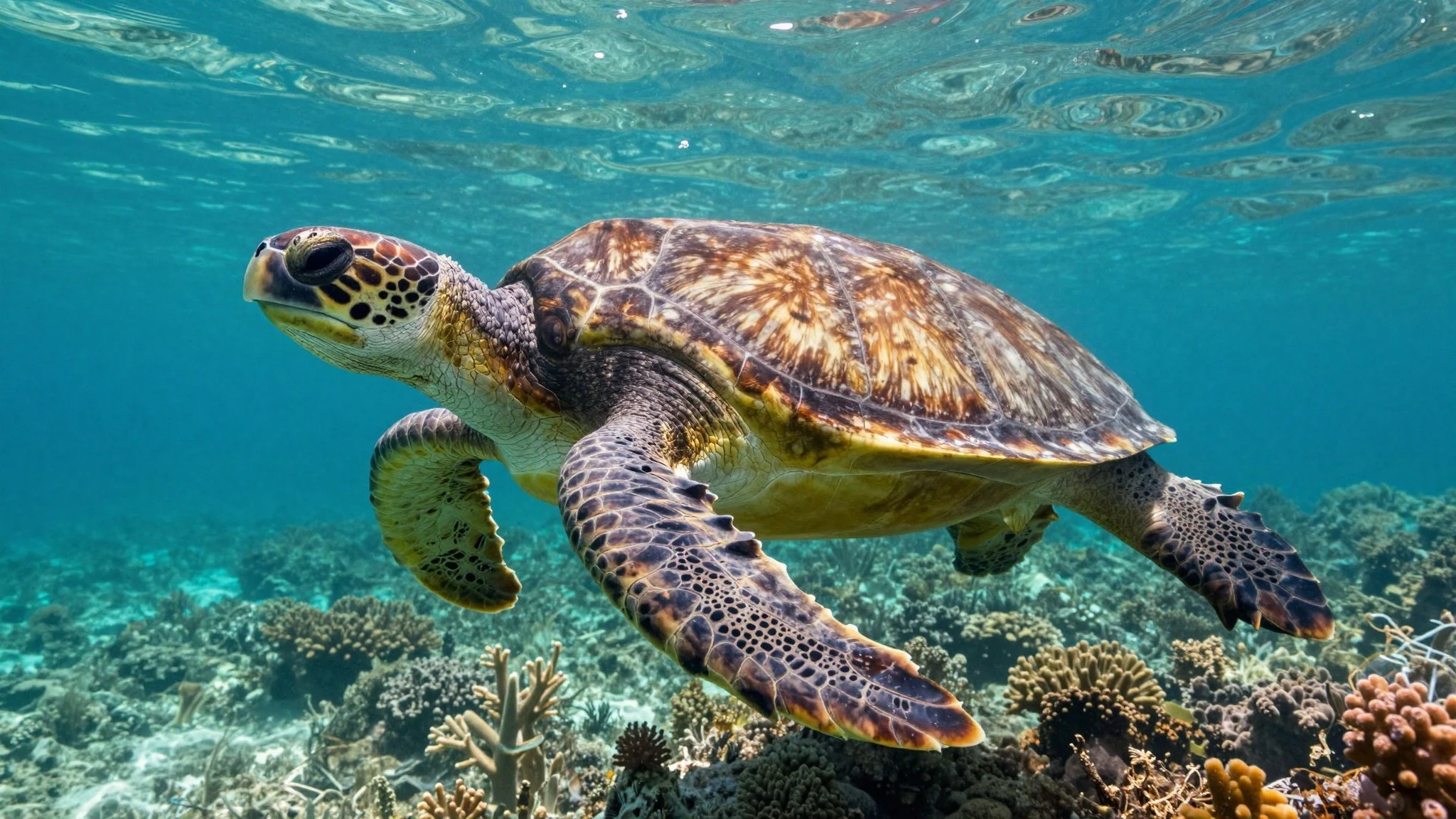
More in Saint Vincent and the Grenadines
- Baliceaux
- Barrouallie
- Battowia
- Bequia
- Canouan
- Chateaubelair
- Fort Duvernette
- La Soufrière
- Mayreau
- Mustique
- Owia
- Petit St. Vincent
Every place in Saint Vincent and the Grenadines · Every place, A to Z