Santa Barbara
Santa Barbara, United States
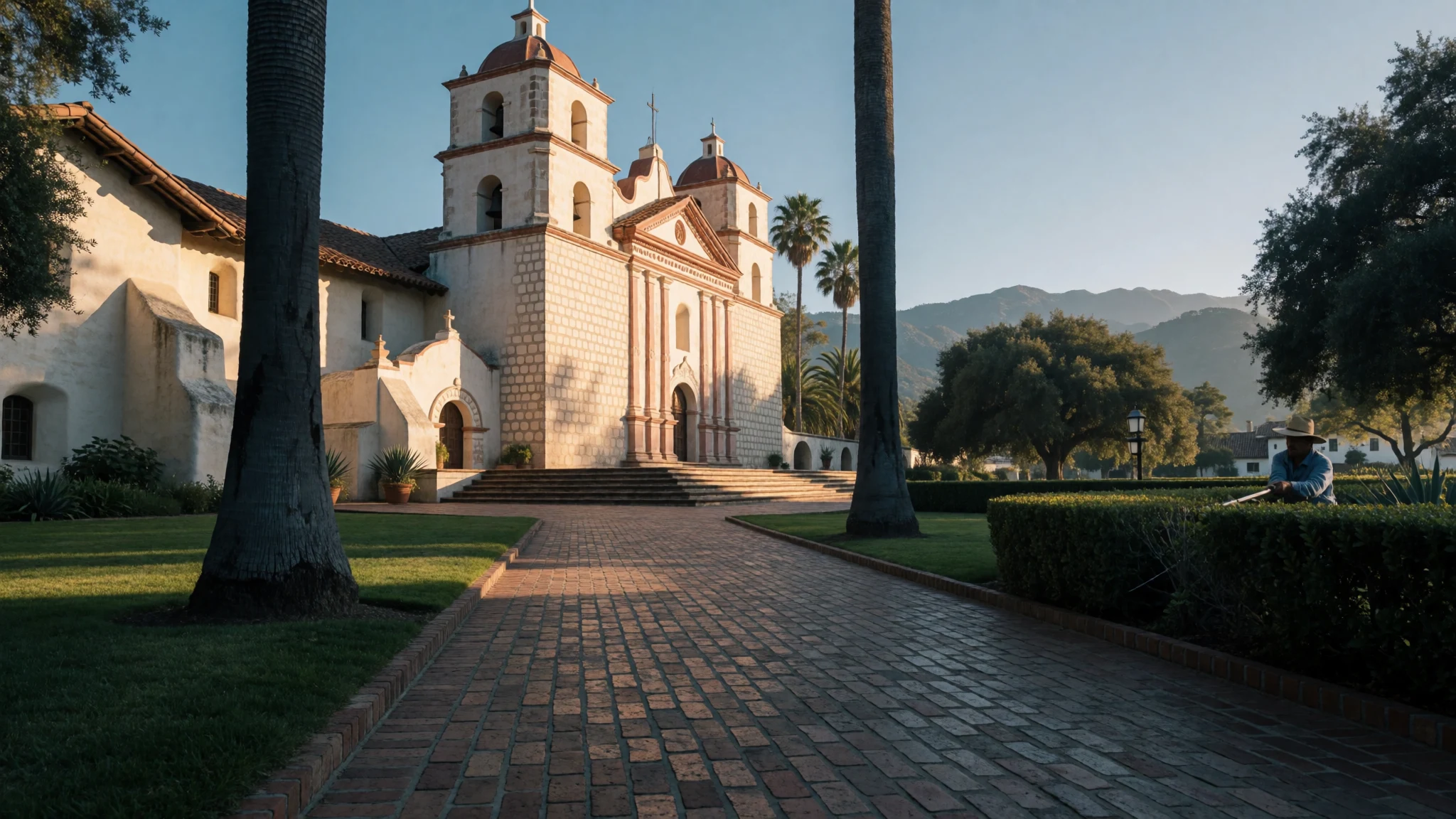
Santa Barbara is a small Pacific-coast city of red roofs, mission walls and mild weather, set between steep mountains and the sea.
The place
Santa Barbara sits on the southern California coast, squeezed onto a narrow shelf between the Pacific and the steep wall of the Santa Ynez Mountains. It is the county seat of Santa Barbara County and has about 88,700 residents, small enough to cross by bicycle yet busy enough to feel like a working town rather than a resort set. The shoreline faces south, which is unusual on this coast, so the beaches catch the afternoon sun while the mountains hold back weather from the north. The climate is Mediterranean in character, with dry, bright summers and mild winters, and sea breezes keep both seasons gentler than places farther inland. Promoters call the city the American Riviera, and the comparison is not wholly fanciful: palm-lined streets, red-tiled roofs, a harbour full of boats. The centre stands at an elevation of 49 m. State Street runs from the waterfront up through downtown, lined with shops, cafés and arcades, and the streets around it hold the courthouse, theatres and museums. Tourism matters, but it is not the only business. Education, health care, technology, finance and local government all employ large numbers of people, and government is the biggest single employer in the wider county. That mix gives the city a life beyond the holiday trade. Visitors should expect high prices for rooms, crowded summer weekends, and a pace that is relaxed but rarely cheap. Spanish place names, adobe walls and Mission-style arches turn up everywhere, partly from real history and partly from a long local taste for the look.
Its story
Santa Barbara's story begins long before the city. Evidence of people on this coast goes back at least 13,000 years, and the Chumash, who numbered at least 25,000 across the region before the Spanish arrived, lived in villages along the shore. Names such as Syukhtun, Amolomol and Mispu mark spots where those villages stood, now a beach, a creek mouth and a college campus. In 1542 the explorer Juan Rodríguez Cabrillo, sailing for the Spanish crown, anchored briefly in the channel that still carries the city's name. Lasting settlement came much later. The Spanish founded the Presidio, a military fortress, in 1782, and a Franciscan mission rose on the slope above it, so that soldiers and priests arrived together. Sovereignty then changed more than once. Spanish rule gave way to the Mexican Empire, then to the Mexican republic, and the United States took control of California at the end of the 1840s. The city grew from these early Spanish foundations before the American handover. Through these changes the Spanish and Mexican legacy never quite disappeared. It survives in adobe walls, in the mission still standing above downtown, and in the street names. The Chumash heritage persists as well, in local place names and in the continuing presence of Chumash communities in the region, which the standard tourist trail often passes over.
What to see
- Santa Barbara County Courthouse — Downtown
Santa Barbara's courthouse, finished in 1929, is a Spanish-Moorish building that still hears real cases. Inside are frescoes, murals and Tunisian tilework. The El Mirador bell tower gives views over the red roofs to the bay and mountains. Check the official city website for current public access.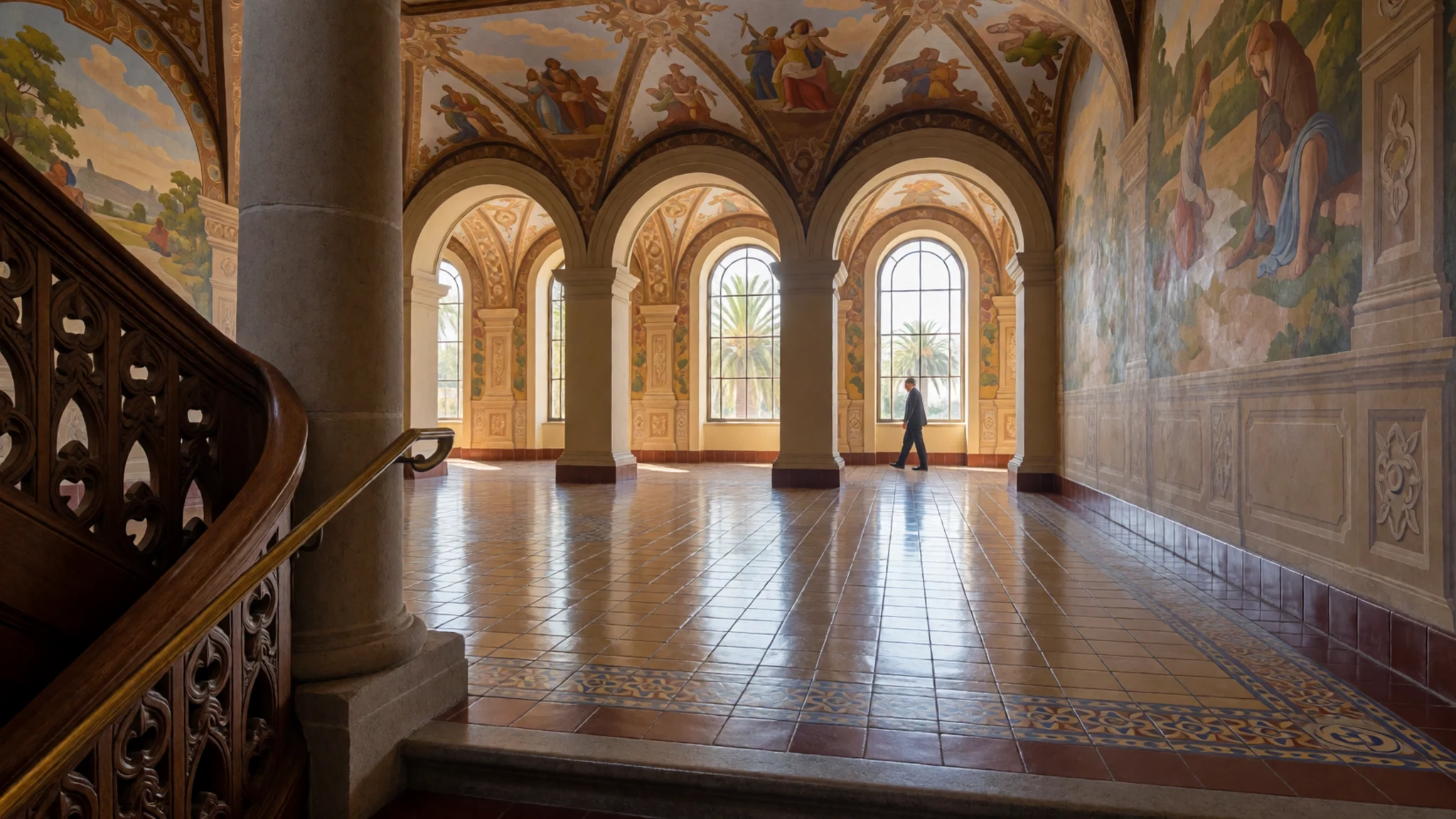
- Old Mission Santa Barbara — Upper east side, north of downtown
Known as the Queen of the Missions, the Old Mission is a fine example of Franciscan Spanish architecture in California. It stands on higher ground north of downtown, with a twin-towered church front and gardens. Go early for quiet and for the best light on the stonework.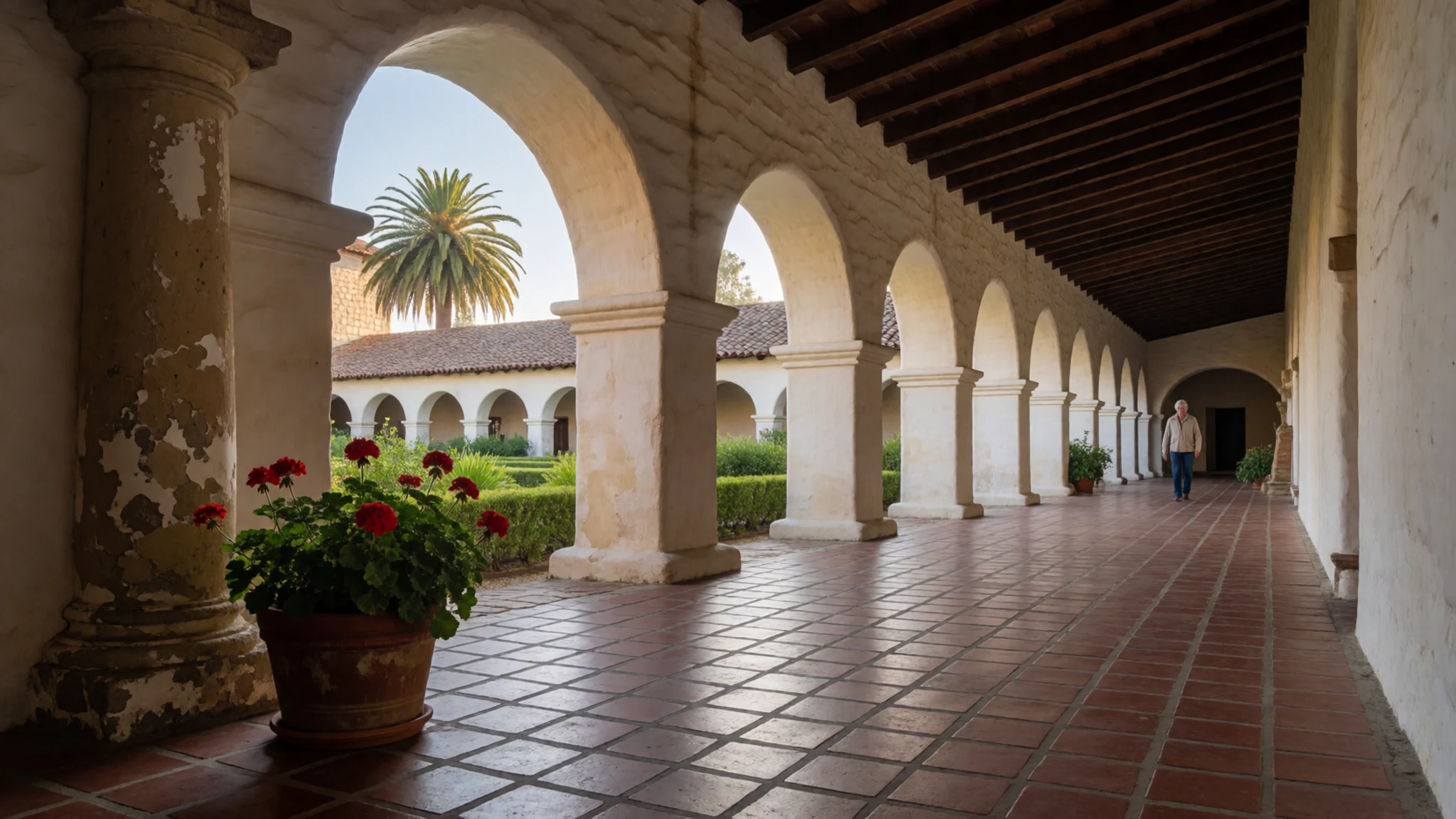
- Presidio of Santa Barbara — Downtown, east of State Street
The Presidio was the military fortress that began the Spanish settlement in 1782. Only parts of it remain, so it is a place for a short, thoughtful visit rather than a long one. It sits a few streets from the main shopping street, which makes it easy to fold into a walk.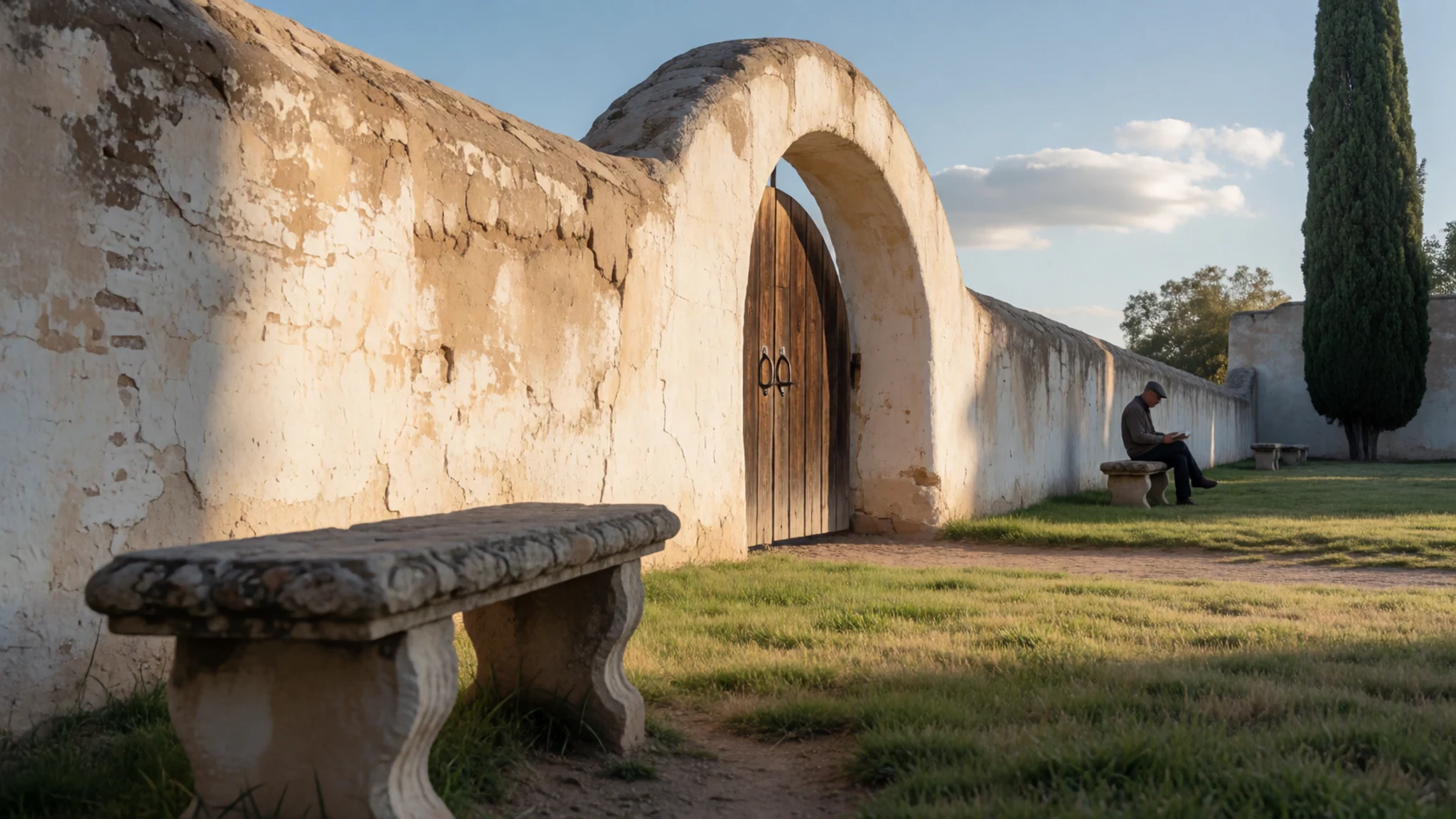
- Santa Barbara Museum of Natural History — Mission Canyon
This museum, tucked into a wooded canyon, covers the region's natural history across many exhibit halls. Highlights include a life-size blue whale skeleton and a rare skeleton of a small island mammoth. It suits families and wet winter days, and is a pleasant detour from the beach.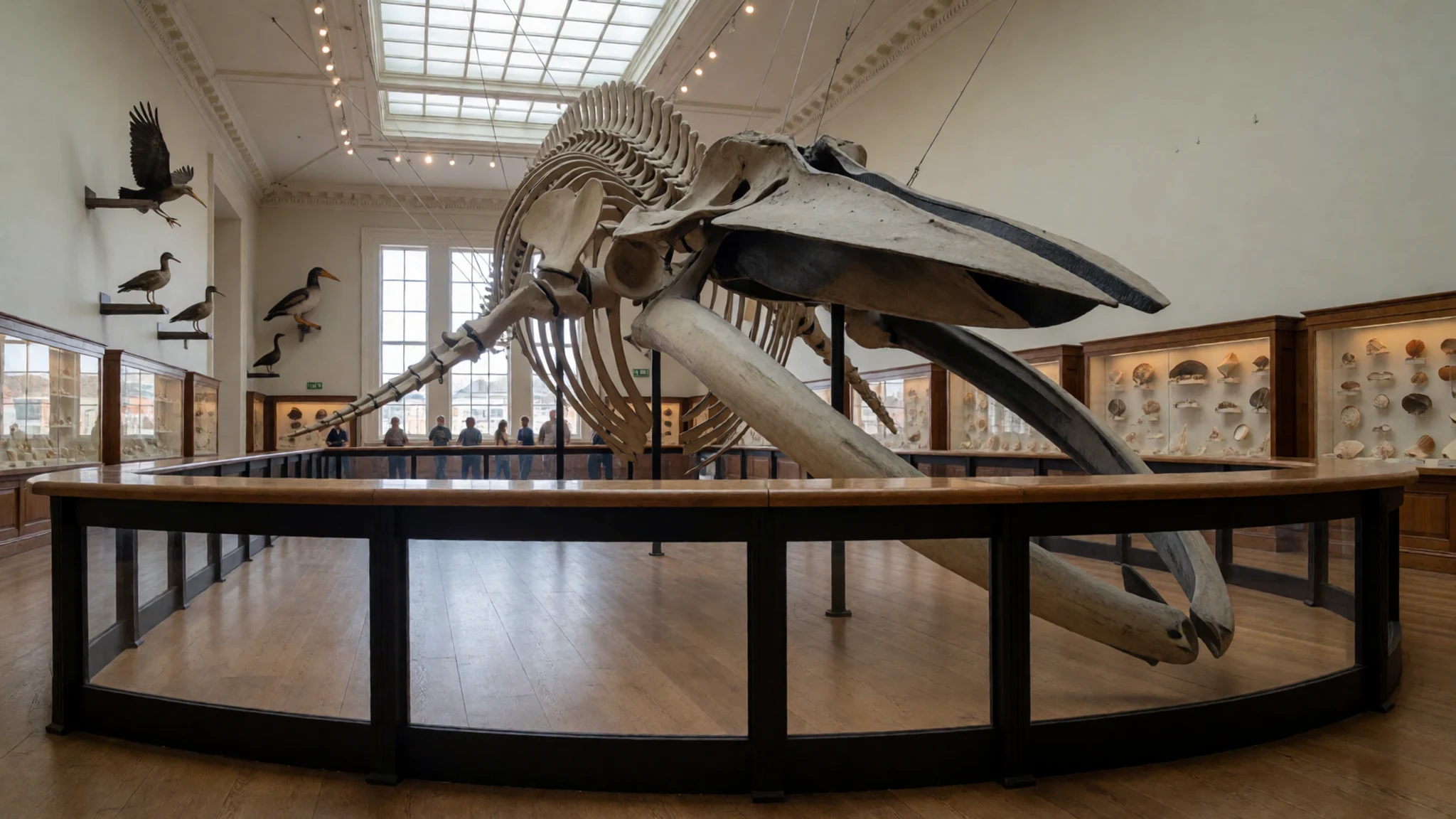
- Santa Barbara Museum of Art — Lower State Street
For a town of its size, the art museum has an unexpectedly strong collection, with Roman antiquities alongside classical European and modern works. It is on State Street, close to the shops and cafés, so it pairs easily with lunch. Check the museum's own site for current exhibitions and opening days.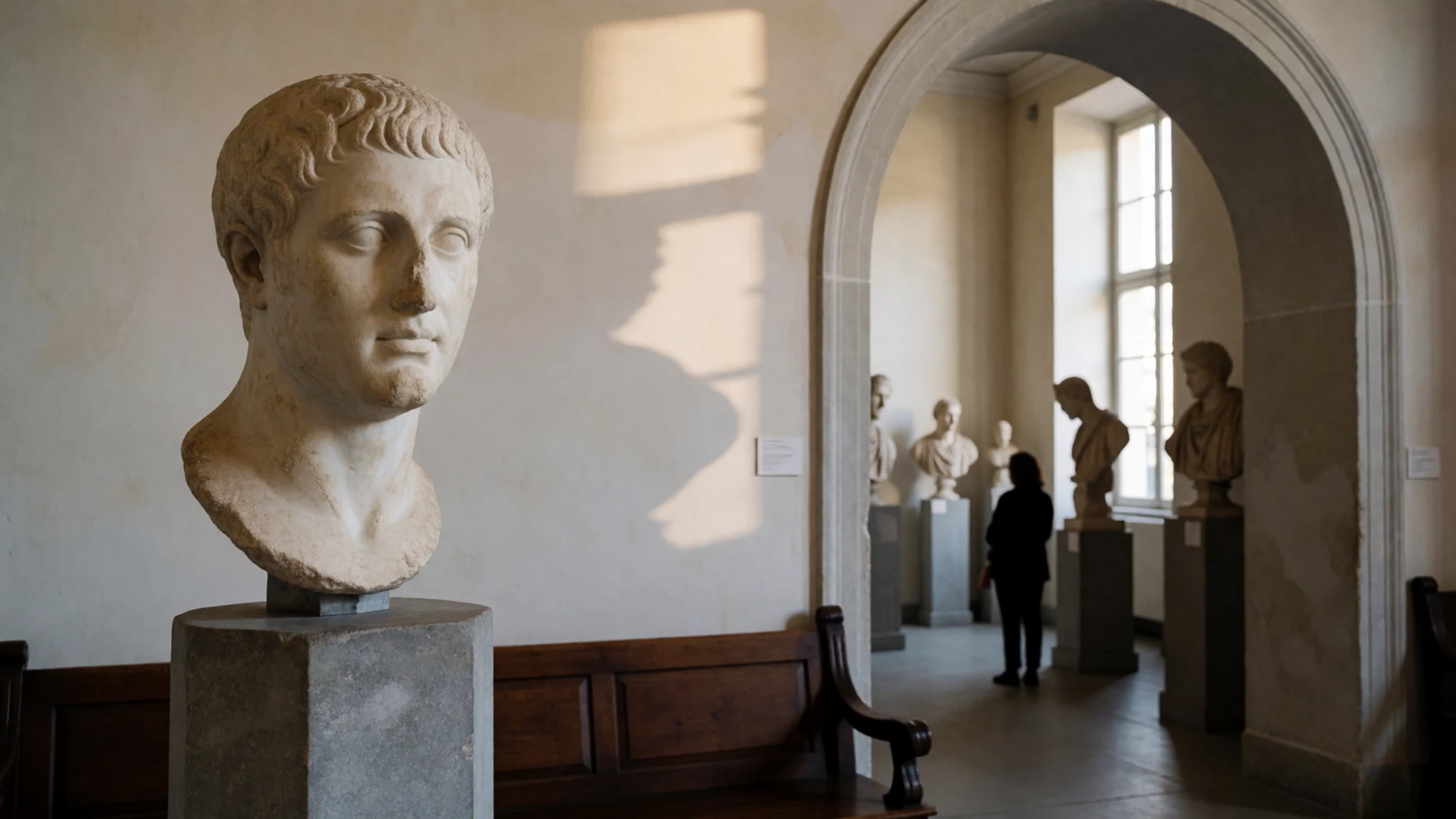
Culture
Santa Barbara's cultural life is built around performance, heritage and the outdoors. The Arlington Theatre, a large indoor venue, hosts the annual Santa Barbara International Film Festival, which draws industry visitors and crowds each winter. The Lobero Theatre is a historic house favoured for smaller concerts, the Granada Theatre is a downtown landmark that was remodelled and reopened as a performing-arts venue, and the Santa Barbara Bowl is an open-air amphitheatre set in a canyon at the foot of the hills. The city has a name as a haven for classical music, with a symphony orchestra, a professional opera company, chamber-music presenters such as CAMA and several youth orchestras. Beneath this sits an older layer. Chumash culture is the region's first, Spanish and Mexican ranch traditions came next, and the city celebrates that mixed Californian past with an annual fiesta of parades, music and dance. Locals are outdoors people: surfing, cycling, hiking in the mountains and weekend farmers' markets are part of ordinary life, and conversation tends to be friendly and informal. Water is a serious matter in a dry climate, and residents are used to hearing about conservation and fire risk. The Old Mission is still an active place of worship, so when you visit, keep your voice low, dress modestly and ask before photographing people at prayer or services.
What to wear
Santa Barbara's traditional dress belongs to two layers of history. The Chumash historically made clothing and ornament from skins, woven plant fibres and shell beads, and these materials are now worn mainly for ceremonies and cultural events. The Spanish and Mexican ranch era left the better-known look: embroidered jackets, wide-brimmed hats, full skirts and shawls, which reappear in costume at the city's annual fiesta each summer. Day to day, people dress for sun, sea and hills. Linen shirts, sundresses, jeans, trainers, sandals and lightweight jackets are common, with surf and outdoor brands everywhere, and smarter casual wear for dinners and theatre evenings. Few places enforce a dress code. Visitors should pack layers, because mornings and evenings can turn cool and foggy even when afternoons are bright, and a light waterproof is useful in winter. A sun hat, sunglasses and strong sunscreen matter all year. Comfortable walking shoes suit the pavements, the beach paths and the hills, while sturdier shoes are better for mountain trails. At the Old Mission and other religious sites, covered shoulders and knees are respectful, and swimwear should stay on the beach rather than in town.
What to eat
- Fish tacos and beach tacos — Casual taco counters near East Beach and the waterfront
Tacos are the local default for a quick, cheap meal. Look for casual taco counters near the waterfront and the east-side beaches, where fish, grilled meat and fresh salsas are served in small corn tortillas, often with plenty of lime.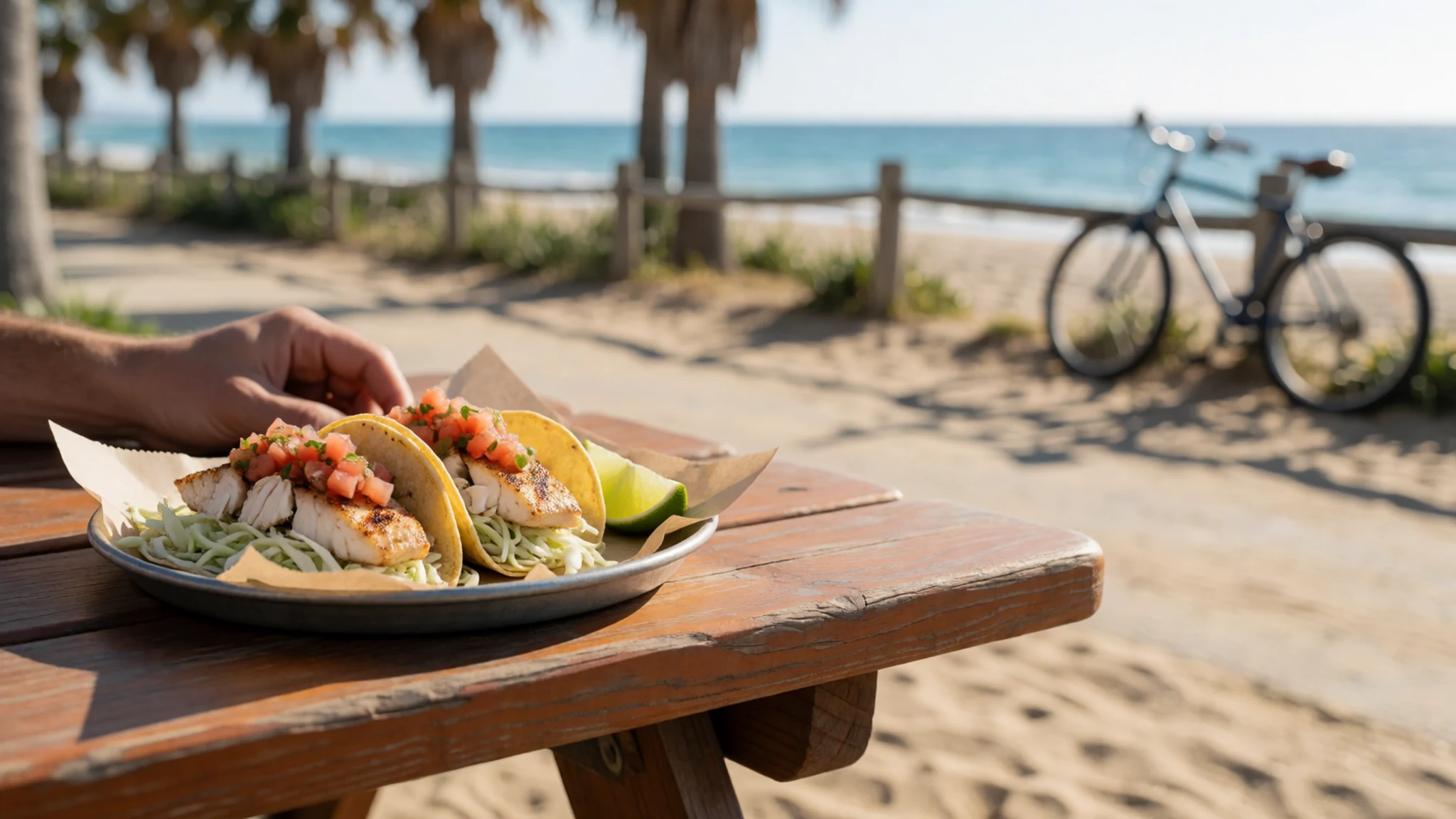
- Big breakfast plate — Diner-style breakfast places around the central streets
Breakfast is a serious meal here: eggs, sausages, potatoes and toast, often served in generous portions. Busy diner-style places in the central streets fill up at weekends, so go early or accept a short queue.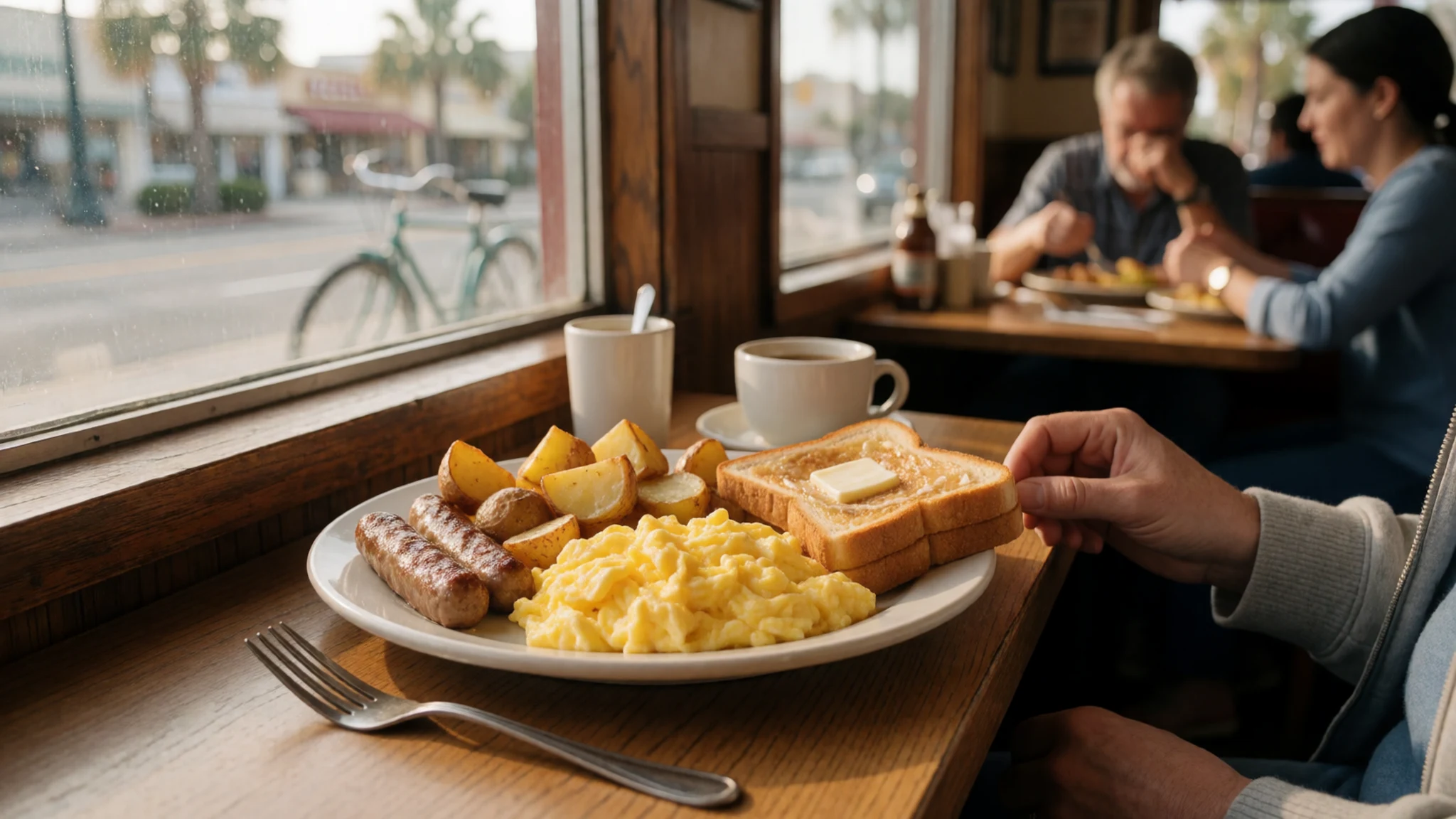
- Charbroiled burger — Burger counters across the city and its neighbouring towns
A charbroiled burger eaten at a sidewalk table is a fixture of local life, and one regional chain began in Santa Barbara. It is simple, quick and good value by local standards, and a sensible choice before a beach afternoon. - Mexican combination plate — Family-run Mexican restaurants downtown
Mexican food is part of the city's character, from enchiladas and burritos to rice, beans and fresh chips. Family-run restaurants in the downtown streets serve it in big portions, often with a margarita or horchata alongside. - Juice and healthy bowls — Sidewalk cafés and juice bars on the west side and downtown
Santa Barbara has a strong health-conscious streak, with fresh juices, grain bowls and salads sold from cafés with outdoor seating. These suit hot afternoons and anyone avoiding heavy fried food.
Plan it
Best time. April–May and October–November for comfortable weather with fewer crowds than midsummer. Summer is hot and dry, while winter is mild and brings the heaviest rains, especially in January.
How long. 2–3
Getting there. Fly to Santa Barbara Airport, which is a short drive from downtown, or to Los Angeles and continue up the coast by train or road in a couple of hours. The Amtrak Pacific Surfliner stops in the city, and downtown is easy to walk once you arrive.
Budget. high
Tips
- Book rooms well ahead for summer weekends and festival dates, as prices climb
- Walk or cycle downtown; parking is limited and often paid
- Carry a light layer, since evenings and foggy mornings are cool even in summer
- Check the official city website (https://santabarbaraca.gov/) for events, closures and fire or storm alerts
- Bring a refillable water bottle for hikes in the hills, where summers are dry
Etiquette
- Keep quiet and dress modestly in the Old Mission, which is still a place of worship
- Follow fire and trail rules in the mountains, especially in dry months
- Respect beach rules on dogs, alcohol and wildlife
Nearby
Sources
- Wikidata Q159288 (CC0)
- Wikipedia: Santa Barbara, California (rev 1384211519) (CC BY-SA 4.0)
- Wikivoyage: Santa Barbara (rev 5417314) (CC BY-SA 4.0)
- Mission Santa Barbara, brewbooks (CC BY-SA 2.0)
- Santa Barbara Downtown, Pierre André (CC BY-SA 1.0)
- Presidio of Santa Barbara, Antandrus (Public domain)
- Courthouse tower view, Photopippo (CC BY 3.0)
- Relief location map of the USA, Uwe Dedering (CC BY 3.0)
- José de la Guerra y Noriega (Public domain)
- Santa Barbara County Courthouse mural room, Dan Lindsay (CC BY 2.5)
- State Street in the 1880s, Publichall (CC BY 3.0)


