Sani Pass
Sani Pass, South Africa
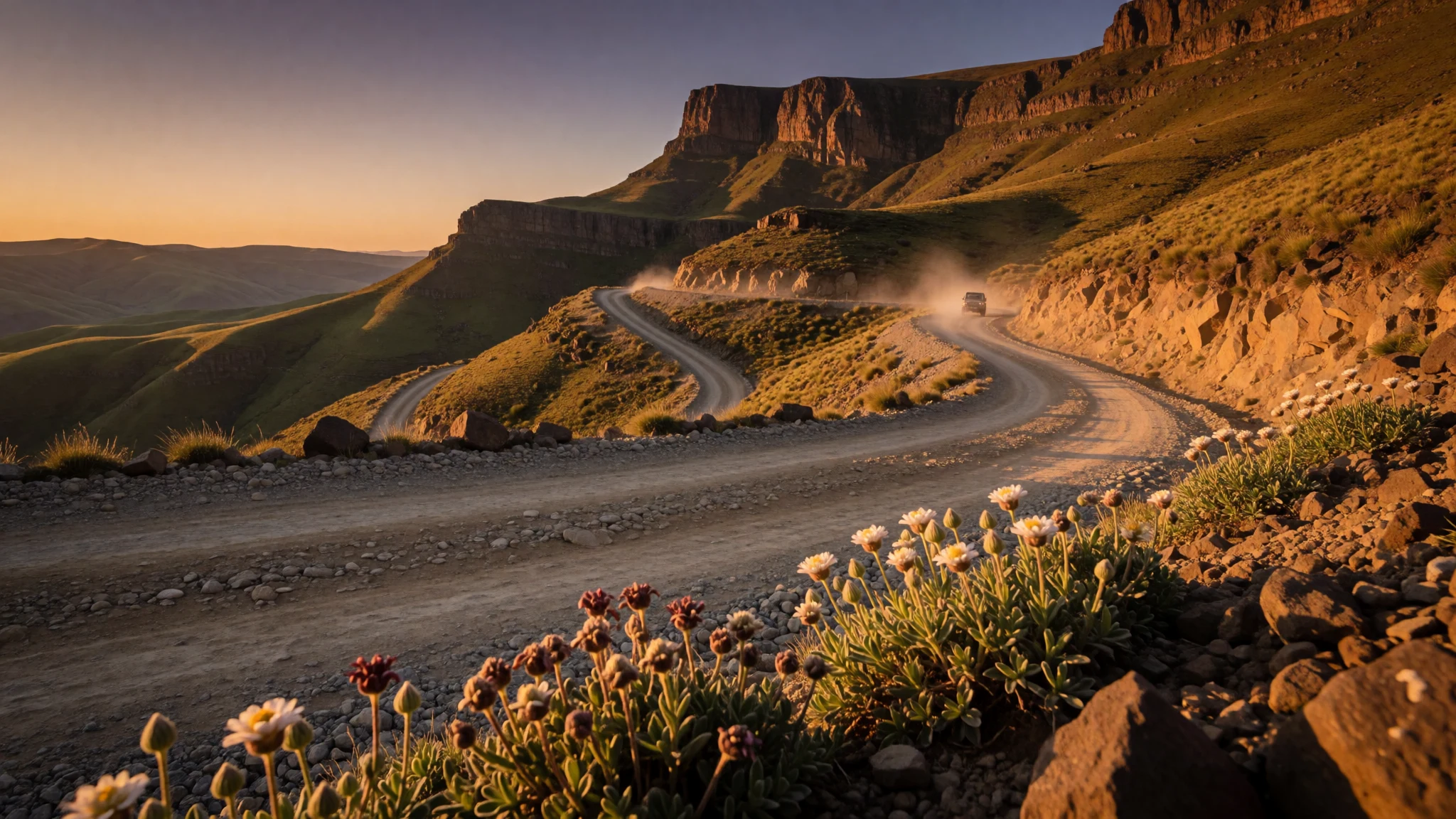
Sani Pass is a rough mountain road that climbs the Drakensberg escarpment from South Africa into Lesotho, reaching about 2,900 metres.
The place
Sani Pass is a mountain road in the west of KwaZulu-Natal that climbs the Drakensberg escarpment and crosses into Lesotho, topping out at about 2,900 metres. At the bottom are the small towns of Himeville and Underberg, with farmland and a scatter of lodges. At the top the land opens into a high, treeless plateau where the road carries on towards Mokhotlong. In between lies a run of tight hairpins cut into the cliff face, with a border post at each end of the climb. Only off-road vehicles can manage it, so the pass is as much an excursion as a route. Most visitors come for the day, riding up with a local operator or driving their own capable vehicle, having lunch in the mountains and descending by afternoon. Others stay overnight at the base or near the summit, which leaves time for walks and for the quiet of the evening. The air is thin and the weather changes quickly: sun, cloud, hail and cold can all arrive within a few hours, even in summer. The escarpment here marks the edge of the southern African interior, and the international border follows its crest. Passports are essential for the crossing, and birth certificates are needed for children. Sani Pass rewards an unhurried visit; rushing up and back leaves little time to walk, to watch the light change or simply to stand somewhere high and open.
Its story
Sani Pass was a footpath long before it was a road. The San people crossed the escarpment here, and later Bantu-speaking communities followed the same line through the cliffs. In 1922 the colonial government of Basutoland cut a narrow track, about 2 metres wide, to link the remote settlement of Mokhotlong with the outside world, though only pack animals could use it. Motor traffic came after the Second World War. From 1949 a Natal man, David Alexander, ran jeeps carrying goods and passengers between Himeville and Mokhotlong. A war-surplus Willys Jeep is credited as the first vehicle to reach the top, in 1953. Visitors began making adventure drives in 1956, and the track was improved in 1958, but it stayed rough and fit only for vehicles built for off-road work. When Alexander's venture wound up, the Mokhotlong Mountain Transport Company kept the service going. In 1966 the Roof of Africa Rally, backed by The Star newspaper and organised by a sports car club, sent competitors up the pass, which fixed its name among motoring enthusiasts. Today the route still depends on skilled driving and decent weather, and the long sequence of pack animals, jeeps and rally cars is part of what every vehicle on the hairpins is following.
What to see
- The hairpin climb — Sani Pass road, KwaZulu-Natal
The road itself is the main sight at Sani Pass. It zigzags up the face of the Drakensberg escarpment in tight bends, with a drop on one side and rock on the other. Going up with an experienced local driver lets passengers look rather than concentrate. Stops for photographs are normal, and the light is best in the morning, before cloud builds.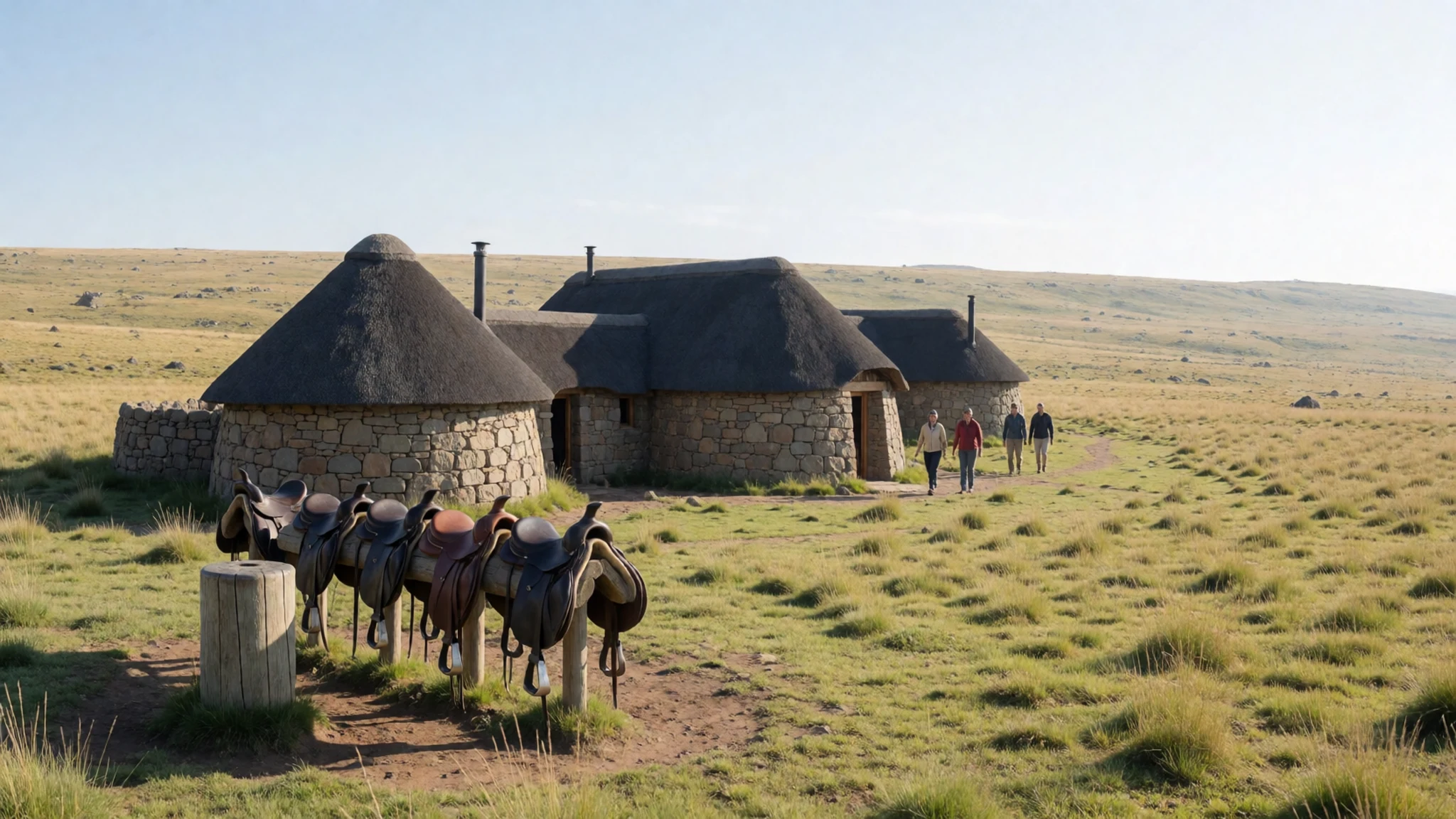
- South African border post — Base of the pass, near Himeville
The South African border post sits near the foot of the climb, where passports are checked before the road turns rough. It is a practical stop rather than a scenic one, but it marks the moment the trip becomes serious. Keep documents ready, including birth certificates for children, and expect waiting times to vary with the season.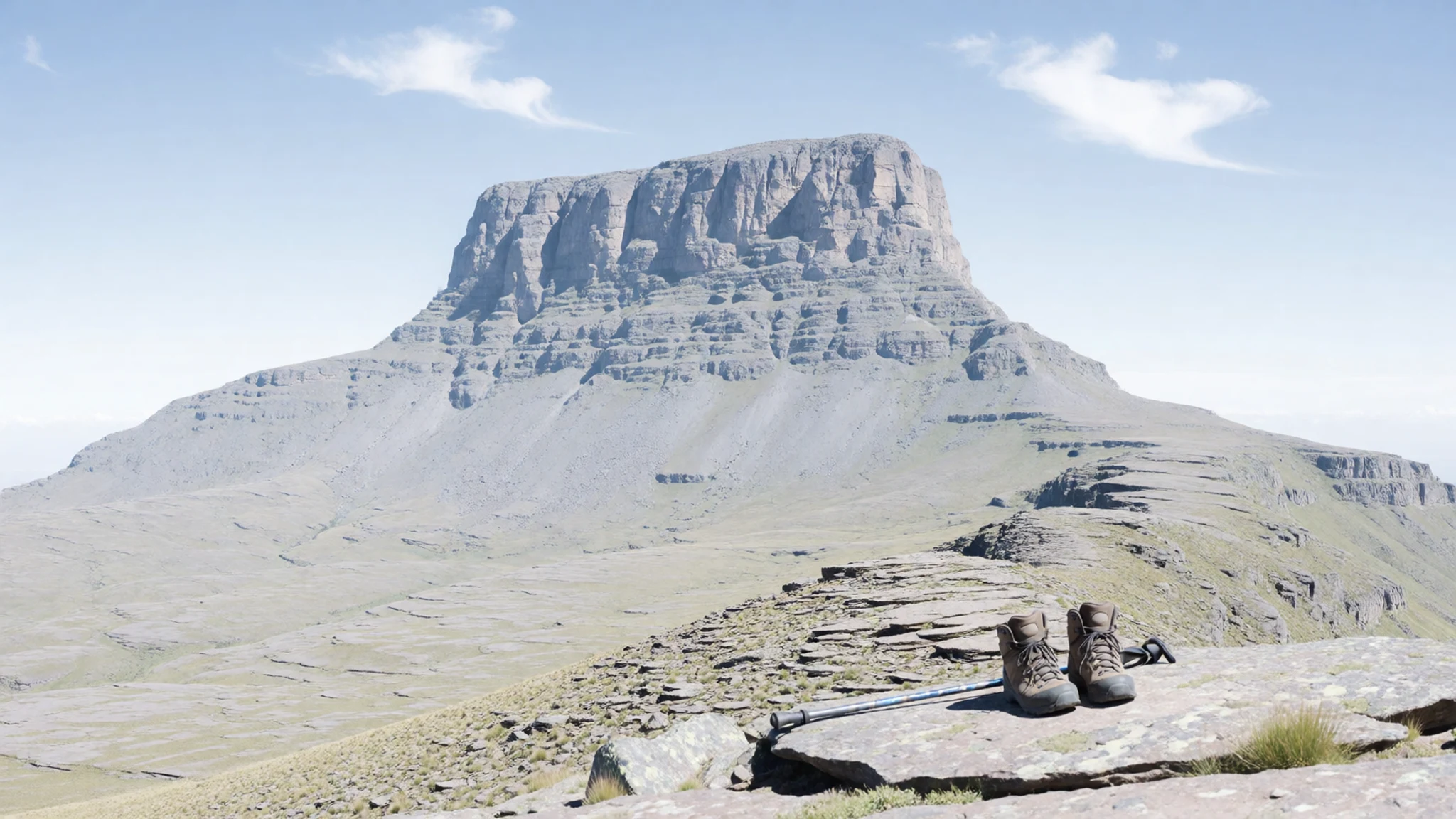
- Lesotho border post and summit — Summit of the pass, Lesotho
At the top, the Lesotho border post stands on the high plateau, about 2,900 metres above sea level. Formalities are brisk, and the landscape beyond is open, bare and windswept. The road carries on towards Mokhotlong, while most day visitors stop for lunch, a warm drink and a look around before turning back.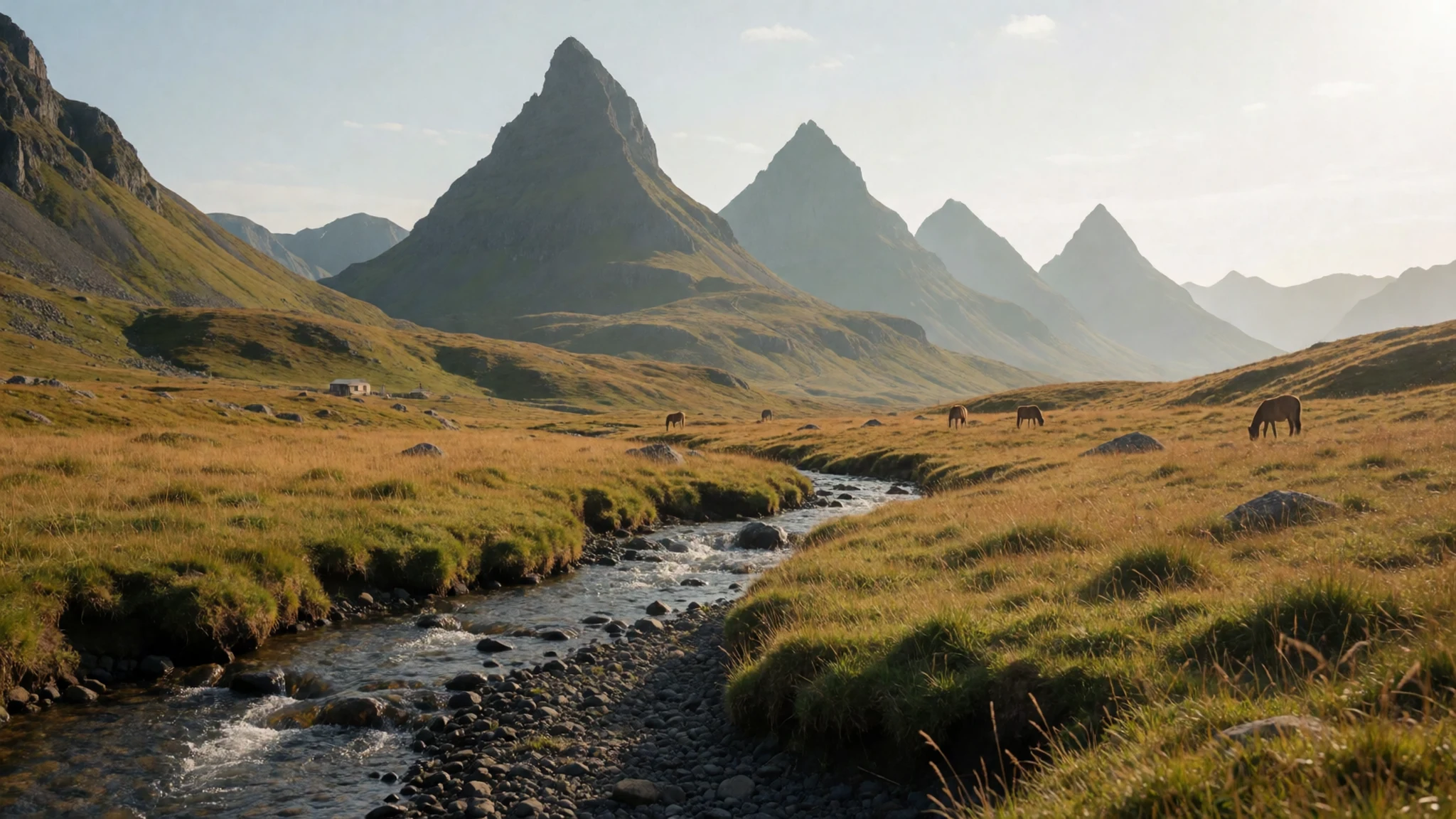
- The view back down — Summit viewpoint, Lesotho
The view back towards South Africa from the Lesotho side is the picture most people remember. The escarpment drops away to the farmland of KwaZulu-Natal, and on a clear day the hairpins can be traced far below. Haze and cloud sometimes hide it, so a morning start gives better odds of a clean sight line.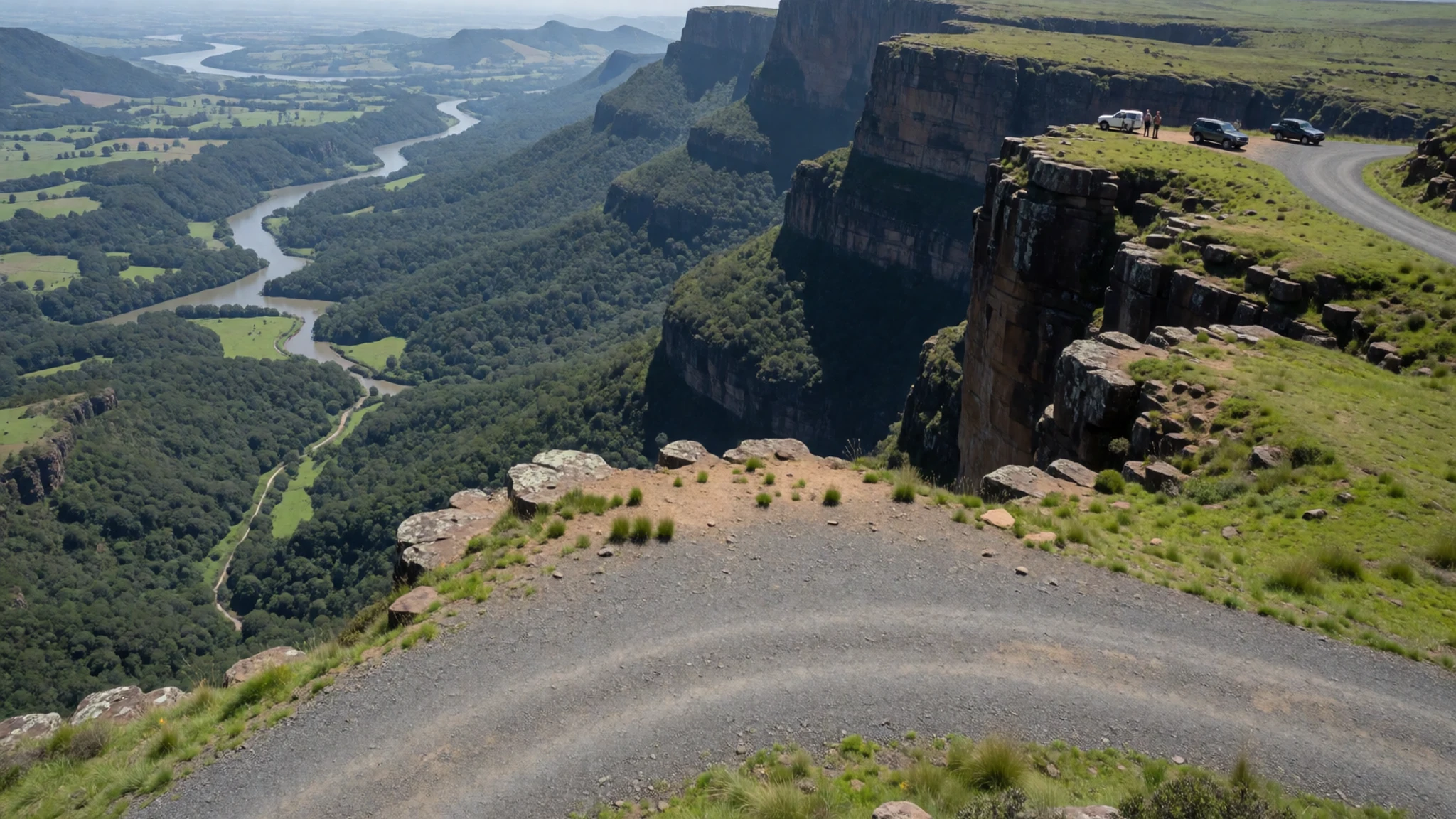
- Walks from Sani Mountain Lodge — Plateau above the pass, Lesotho
A walk to Thabana Ntlenyana, Lesotho's highest peak, is a long day: the ground is not difficult, but at 3482 metres the thin air slows everyone. Set off at first light and carry a map downloaded in advance, since signal is unreliable. Gentler options head south towards a pyramid-shaped peak, with more summits beyond for a longer outing.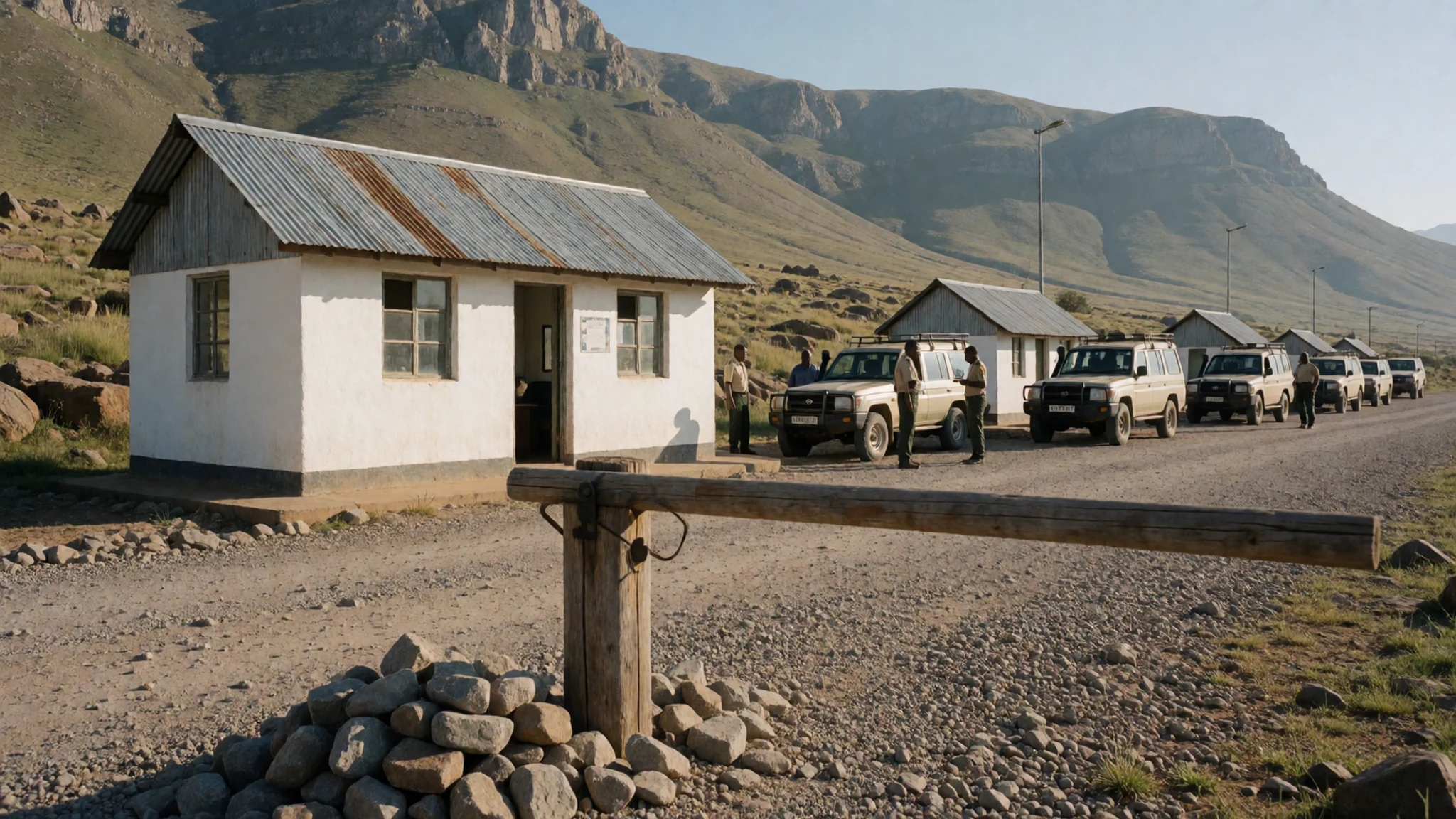
Culture
Sani Pass sits on the border between South Africa and Lesotho, and the cultures on either side are quite different. At the bottom, the KwaZulu-Natal midlands hold Zulu-speaking communities, farming families of European descent and a small tourism trade built around the mountains. At the top, the plateau belongs to the Basotho, whose language is Sesotho. Many people there live by herding sheep, goats and cattle, and herders often travel on horseback or by donkey across high summer pastures. Round huts with thatched roofs, known as rondavels, are common in both countries, and some lodges at the pass borrow the design for guest rooms. The route's older history matters too: San people left rock art across the wider Drakensberg, and the escarpment has served as a crossing point for centuries. Today the border is part of daily life as much as tourism, with traders, drivers and travellers all passing through the same posts. Visitors will notice that things move slowly at altitude, whether it is a lunch order or a passport stamp, and patience is part of the experience. Conversations tend to begin with greetings, and a few words of Sesotho or Zulu are warmly received. Ask before photographing herders or villagers, and do not hand out sweets or money to children at the roadside.
What to wear
Sani Pass crosses between two clothing traditions. In Lesotho, the Basotho blanket is the signature garment: a thick woven wool wrap, usually patterned in bold bands or motifs, worn over the shoulders through the cold months and for ceremonies. It is often paired with a conical straw hat called a mokorotlo. On the KwaZulu-Natal side, Zulu dress includes beadwork collars and bracelets and leather or cloth skirts, mostly seen at weddings, festivals and cultural events. Everyday dress is plainer. Herders on the plateau wear blankets over practical layers and rubber boots, while people in the lowland towns wear jeans, fleeces and work clothes. Visitors need clothes for weather, not occasions. Layers are the rule: a base layer, a fleece and a windproof, waterproof jacket, because the summit can be cold and wet when the valley is warm. Bring a warm hat and gloves outside summer, plus sunglasses and sunscreen, since the sun is strong at altitude. Sturdy shoes with good grip suit the gravel and any walking. Dress is relaxed and modest norms are light, though covered shoulders and knees show respect in villages. A brightly coloured Basotho blanket makes a sensible and welcome souvenir.
What to eat
- Pap and stew — Lodges and small eateries in Himeville and Underberg
Pap is a stiff maize porridge, the everyday staple across South Africa and Lesotho. It is served with a meat or vegetable stew and sometimes tomato relish. Look for it at lodge dining rooms and small local eateries in Himeville and Underberg.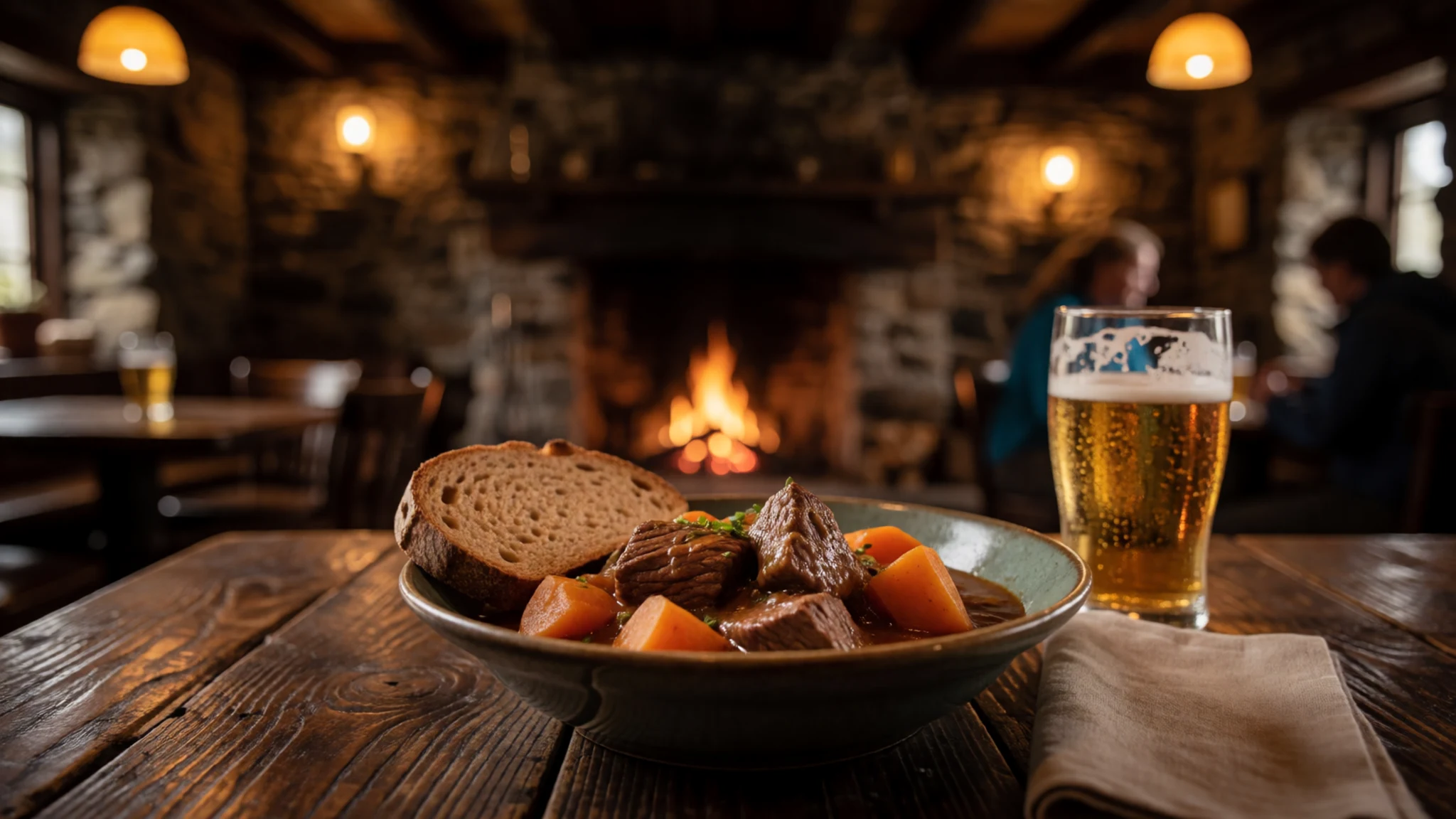
- Braai — Farm stays and lodges at the foot of the pass
A braai is a South African barbecue, usually of lamb, beef or boerewors sausage over wood coals. It is a social meal as much as a dish, and farm stays and lodges near the pass often hold one in the evening.
- Mountain lunch at a lodge — Mountain lodge on the plateau
Many day visitors eat at a lodge in the mountains, where lunch is hearty and built for cold air and a long climb. Menus vary, but expect soups, stews, bread and grilled meat. Breakfast and dinner usually need arranging ahead. - Vetkoek — Farm stalls and roadside takeaways near Underberg
Vetkoek is a deep-fried dough ball, split and filled with spiced mince, cheese or jam. It makes a cheap, filling stop on the road, and is easy to find at farm stalls and roadside takeaways in the midlands. - Mutton with moroho — Village eateries and lodges on the Lesotho plateau
In Lesotho, mutton is common, often stewed and served with moroho, a dish of cooked wild or garden greens, alongside papa, the local porridge. Try it in a village eatery or ask whether a lodge can serve a Basotho-style meal.
Plan it
Best time. April–May and September–October, when skies are usually clearer and the days milder. Winter, from June to August, can bring snow and ice that close the road, and summer afternoons often bring storms and mist.
How long. 2–3
Getting there. Fly to Durban and drive inland via Pietermaritzburg to Underberg and Himeville, the last towns before the pass. The final stretch is for off-road vehicles only, so most visitors book a local operator or lodge transfer from the base.
Budget. mid
Tips
- Take passports for everyone, and birth certificates for children, since the pass crosses an international border
- Ask your lodge to arrange the up-and-down transport, and check road and weather conditions that morning
- Start early: mornings usually give clearer views and leave time to return before afternoon cloud
- Pack layers, sun protection and plenty of water, as the air is thin and the weather changes quickly
- Carry some cash, because card machines and signal can be unreliable in the mountains
Etiquette
- Ask before photographing herders, villagers or border officials
- Greet people before asking for directions or help
- Stay on existing tracks and take your litter back down with you
Nearby
Sources
- Wikidata Q127968 (CC0)
- Wikipedia: Sani Pass (rev 1386322199) (CC BY-SA 4.0)
- Wikivoyage: Sani Pass (rev 5430850) (CC BY-SA 4.0)
- Photo: Sani Pass heading into Lesotho (Vaiz Ha) (CC BY 2.5)
- Photo: South African Border Control at Sani Pass (pony_coach) (CC BY 2.5)
- Photo: Lesotho Border Post at Sani Pass (Vaiz Ha) (CC BY 2.5)
- Photo: Sani Pass sign (Amada44) (Public domain)
- Photo: Sani Pass mountains (Mark peacock) (CC BY 3.0)
- Photo: View down into South Africa from top of Sani Pass (Michael Denne) (CC BY-SA 2.0)
- Photo: A vehicle on Sani Pass (Vaiz Ha) (CC BY 2.5)
- Photo: On the road in South Africa 17 (Edward Middleton) (CC BY-SA 4.0)


