San Juan del Sur
San Juan del Sur, Nicaragua
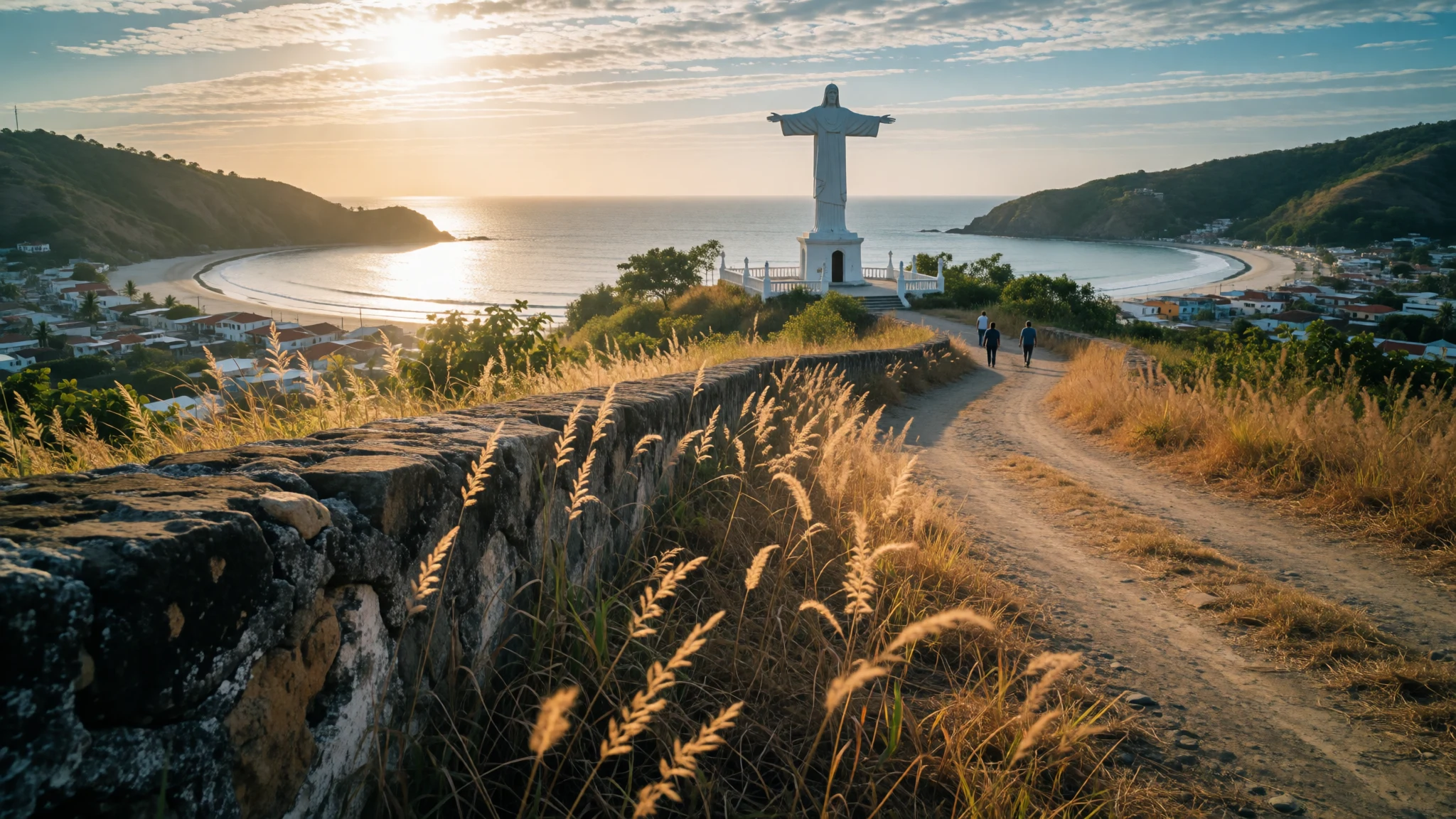
San Juan del Sur is a Pacific bay town in Nicaragua, with surf, sunsets and fresh seafood within a short walk of each other.
The place
San Juan del Sur is a Pacific-coast town in Rivas department, in the far southwest of Nicaragua, home to about 14,700 people and lying only 9 m above sea level. It wraps around a crescent-shaped bay, with green hills on both flanks and a single road running behind the sand. For many years fishing and shipping paid the bills. Tourism has since taken over, and the town now blends Nicaraguan families on holiday, surfers, and a settled community of foreigners from North America and Europe who run many of the cafés, hostels and surf shops. Daily life is compact. The waterfront has a row of open-air restaurants, the market has small eateries serving local breakfasts, a church stands above the centre, and a large statue of Christ looks over the bay from the northern headland. Cruise ships anchor off the town on some days, which briefly fills the beachfront. The climate is tropical savanna: warm throughout the year, so the real seasonal question is rain rather than temperature. The wetter months bring heat, strong sun and afternoon downpours, while the dry season is sunnier and dustier. The best-known surf beaches are not in town itself but along the coast on either side, reached by rough roads. Rivas, the nearest sizeable city, is mainly a place to change transport. San Juan del Sur works best as a base for beach days, surf lessons and easy evenings, rather than for ticking off monuments.
Its story
San Juan del Sur was founded in 1851, and its first boom came almost at once from a route that had nothing to do with beaches. In the 1850s, prospectors heading for the California gold fields found it quicker to cross Nicaragua than to sail round South America. Shipping lines run by Cornelius Vanderbilt carried them up a river, over Lake Nicaragua and along a short land stretch, and this bay was where they boarded steamers going north on the Pacific. The settlement became a noisy transit stop of warehouses, lodgings and bars. That traffic faded once other crossings took over, and the town settled into a long period as a working fishing and shipping port, with life centred on the harbour. The turn to tourism came gradually. Nicaraguan families already came for seaside holidays, surfers began to find the waves along the nearby coast, and foreign residents followed, opening cafés, guesthouses and surf camps. Television added to the profile, because several seasons of the American reality series Survivor were filmed in the area, and international surfing competitions have since been held on this coast. Cruise ships now make the town a port of call, bringing day visitors who flood the waterfront for a few hours and leave by evening. The statue of Christ on the northern headland is a landmark visible from much of the bay, in a town whose history is mostly told through its harbour.
What to see
- The bay and beachfront — Town centre waterfront
The crescent bay is the heart of San Juan del Sur. A walk along the sand and the road behind it passes fishing boats, cafés and the hills on both sides. It is busy at weekends and holidays, and early morning is calmer and softer for photographs. Water conditions vary, so ask locally about currents before swimming.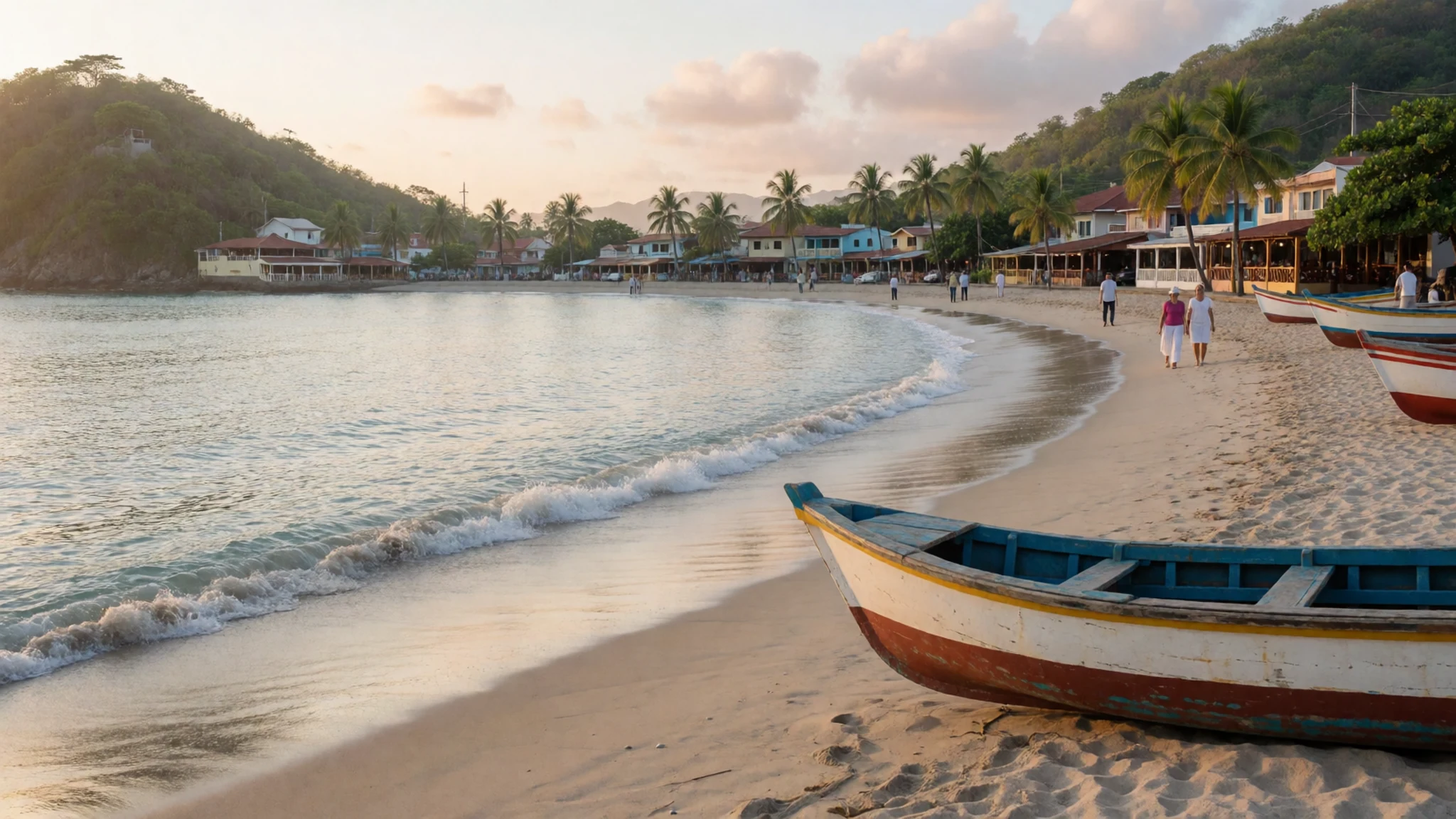
- Cristo de la Misericordia — Northern headland above the bay
The statue of the Christ of Mercy stands on a high point at the northern end of the bay, looking over the town, the harbour and the open Pacific. Going in the cooler morning hours is easier than in midday heat. Sunset draws a crowd, so allow time and ask locally how best to reach it.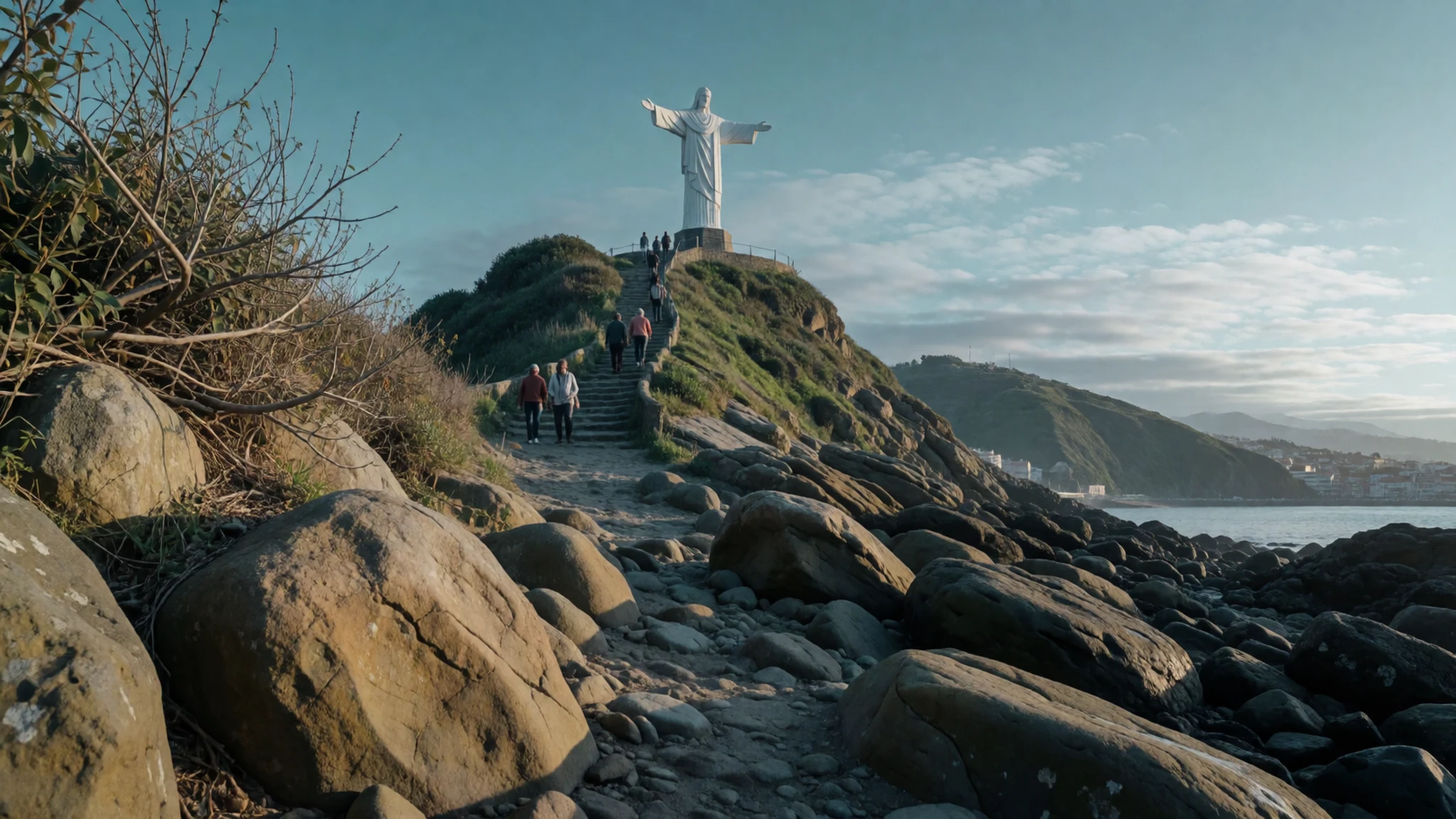
- Surf beaches along the coast — Pacific coast either side of town
Playa Madera, Playa el Coco and Popoyo each need a trip from town along rough roads. Madera is a remote beach, Popoyo has a following among surfers, and Playa el Coco suits a day out. Local surf shops arrange boards, lessons and transport. Swell and tides change what is rideable, so ask about conditions first.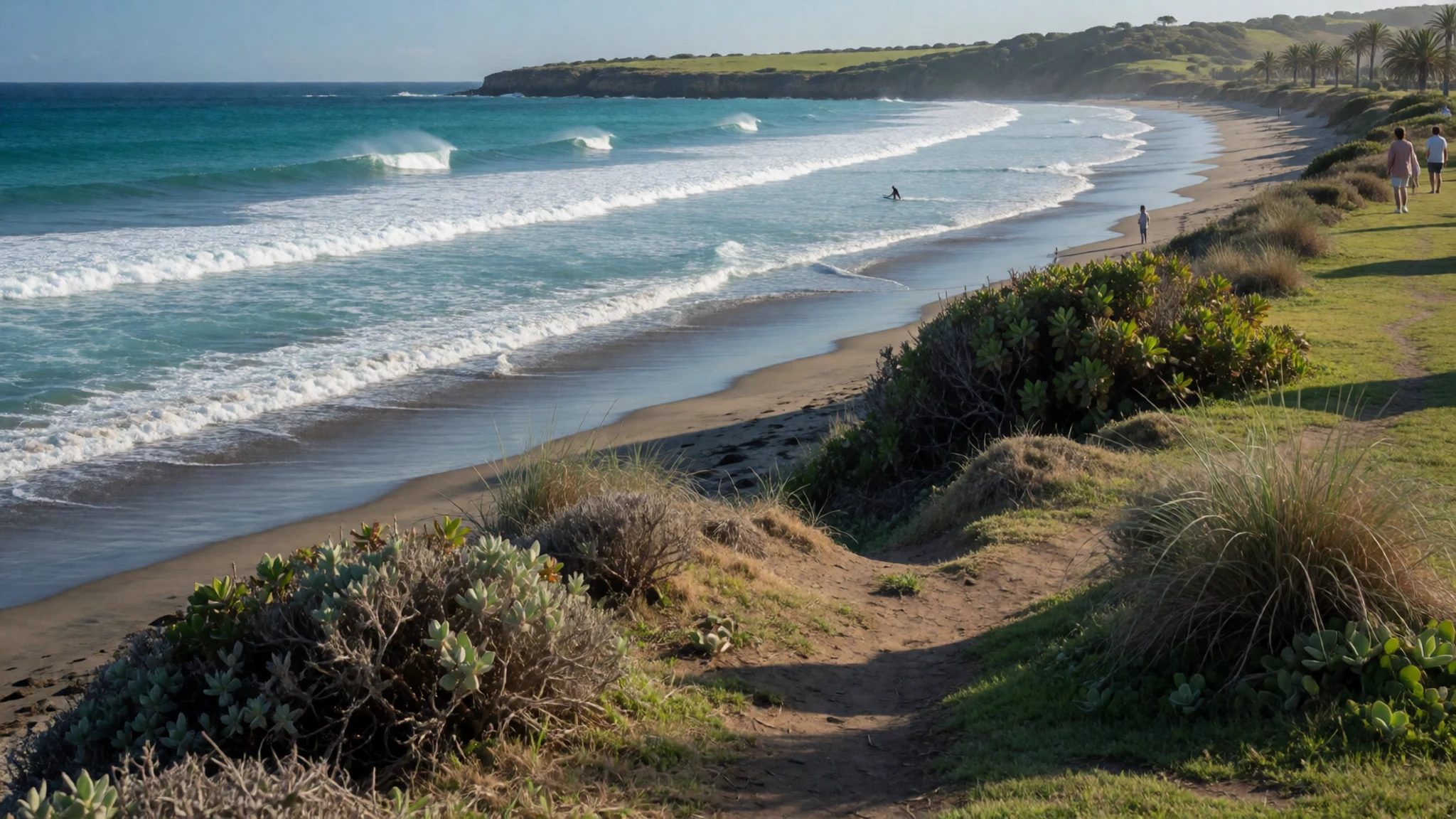
- The market and back streets — Town centre, behind the waterfront
The market and the streets behind the waterfront show the working side of San Juan del Sur: small eateries serving breakfast, stalls selling everyday goods, and the church above the centre. A wander here before the midday heat gives a better sense of local life than the beach strip does, and it is a good place to practise a little Spanish.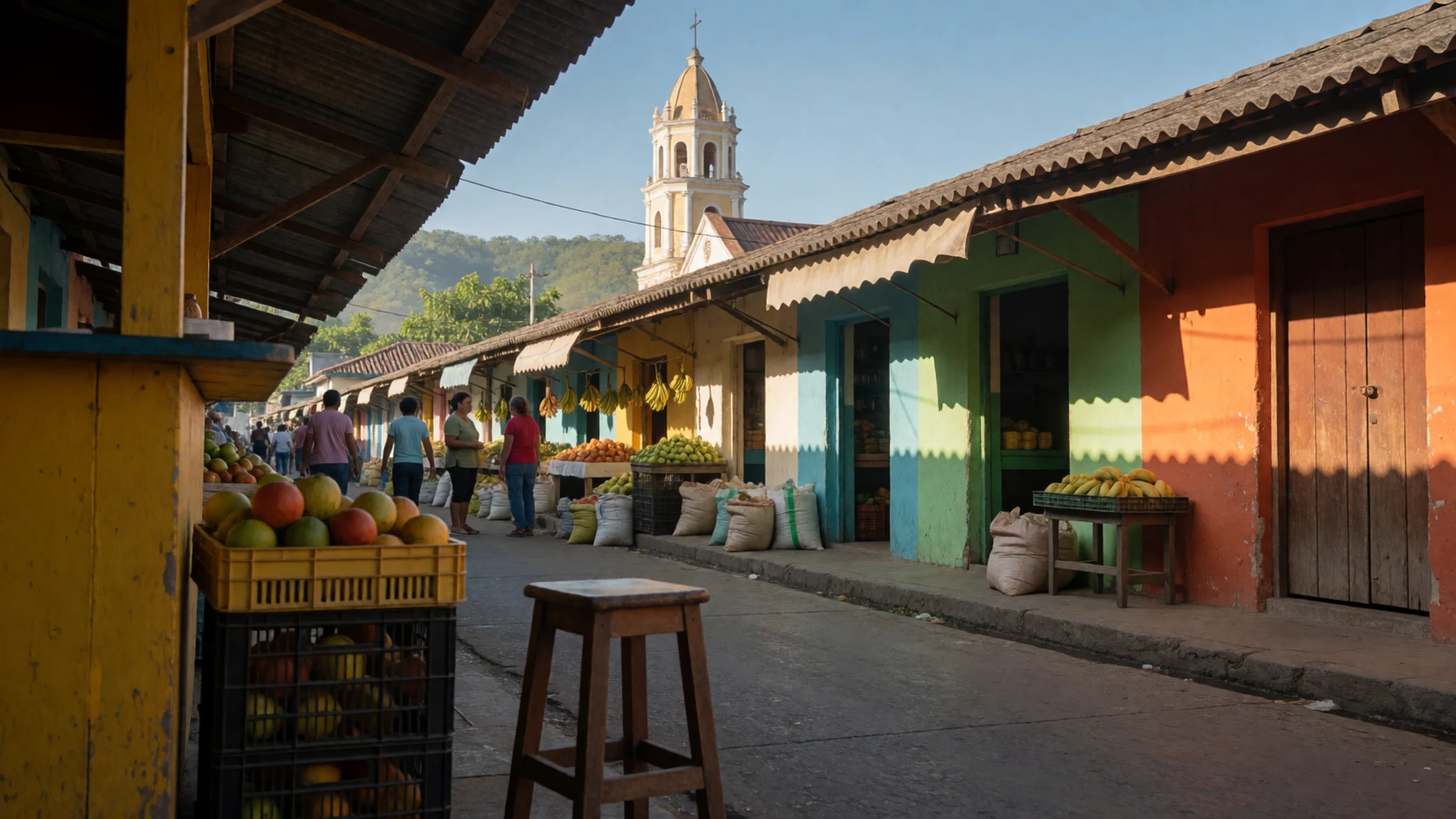
- Sunset over the bay — Beachfront
Sunset is the daily event, watched from the beachfront restaurants, from bars and from the sand itself. When a cruise ship is anchored offshore, its lights add to the scene, though the beach gets crowded on those days. Arrive early for a good table, and carry insect repellent for the hour after dusk.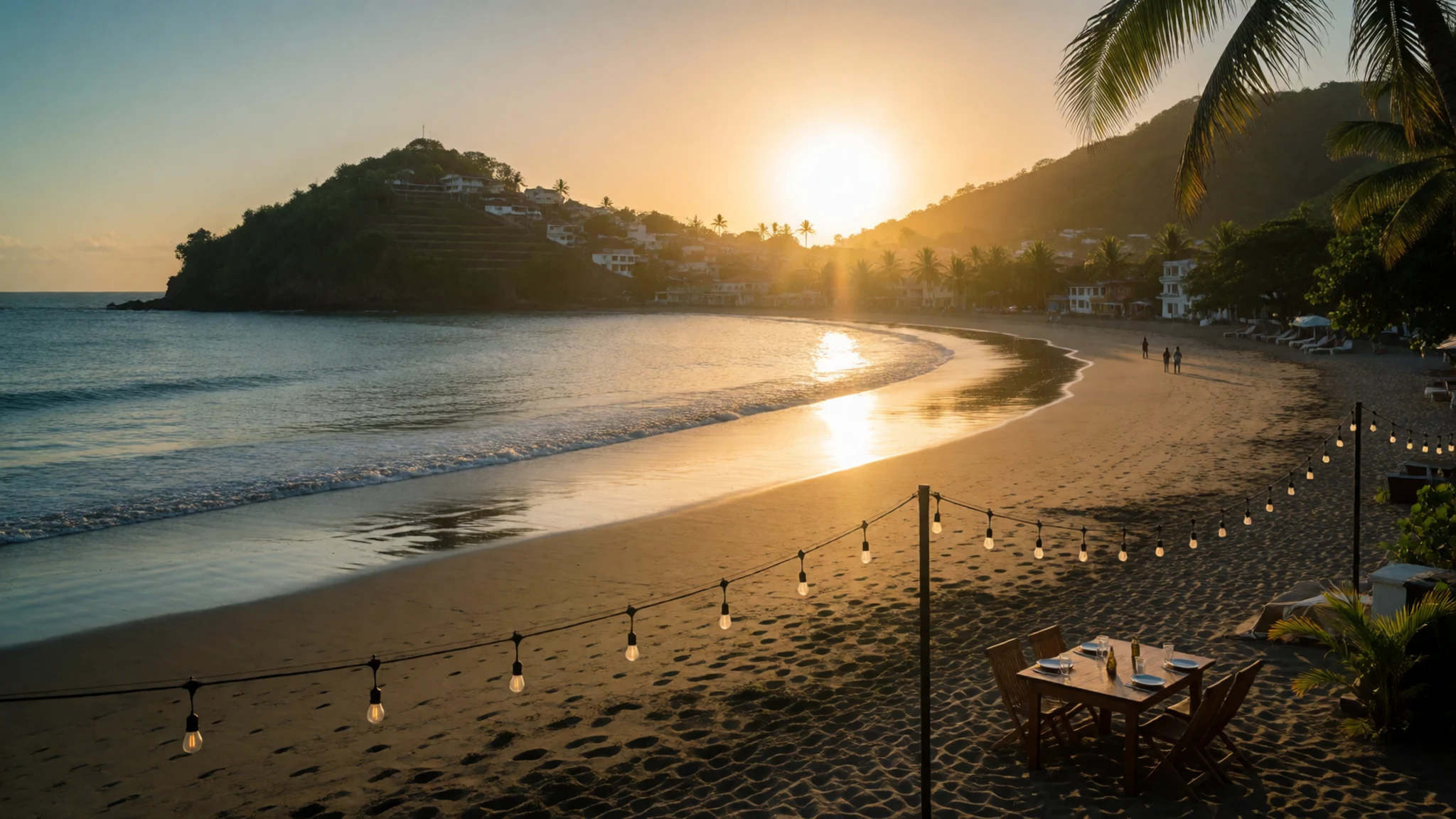
Culture
San Juan del Sur sits in a Catholic, Spanish-speaking country, and that shows in the town's rhythm: a church above the centre, a large statue of Christ on the headland, and a long family holiday around Semana Santa, Easter week, when Nicaraguans fill the beach and accommodation rates rise sharply. Weekends feel like a smaller version, with relatives sharing food and music along the sand. Baseball is widely followed in Nicaragua, and a game on a dusty pitch is easy to find. The town has also grown a second culture around surfing and travel. Yoga studios, surf camps and foreign-run cafés mean English is easily heard in the centre, though Spanish gets warmer responses and is the language of the market. Drinks carry local identity too: Flor de Caña is the rum to try, and Toña and Victoria are the beers, served very cold. Fishing remains part of the town's identity, with boats still working from the bay. Small courtesies matter in shops and eateries, where a greeting comes before any question. Keep swimwear for the beach, greet people with a friendly buenas before asking anything, and ask before photographing locals or their children.
What to wear
San Juan del Sur has no single local costume, so traditional dress here means Nicaraguan folk dress, seen at school parades, folk dances and national festivals rather than in daily life. Women's versions use full, layered skirts of brightly coloured cotton, often trimmed with ribbons or embroidered flowers, worn with a loose, off-the-shoulder blouse and flowers or ribbons in the hair. Men wear a white cotton shirt, dark trousers, a straw hat and sometimes a red neckerchief. Day to day, people dress for the heat: shorts, light shirts, sandals and caps, with surfers in board shorts and rash vests, and smarter, covered clothes for church, banks and official errands. Evenings call for little more than a clean shirt or sundress. Visitors should pack light, breathable cotton or linen, a wide-brimmed hat, sunglasses and high-factor sun protection. Swimwear belongs on the beach, so pull on a shirt or wrap for walking through town, the market or the church. Sandals suit the waterfront, but sturdy closed shoes help on muddy tracks, horse rides and rocky headlands. In the wetter months, a light rain jacket and a dry bag for phones and cards earn their place.
What to eat
- Grilled fresh fish and seafood — Open-air restaurants along the waterfront
Fresh seafood is the main reason to eat along the bay: whole fish, shrimp or lobster grilled and served with rice, salad or fried plantain. Ask what came in that day. The open-air places on the waterfront are most atmospheric at sunset, when tables fill quickly.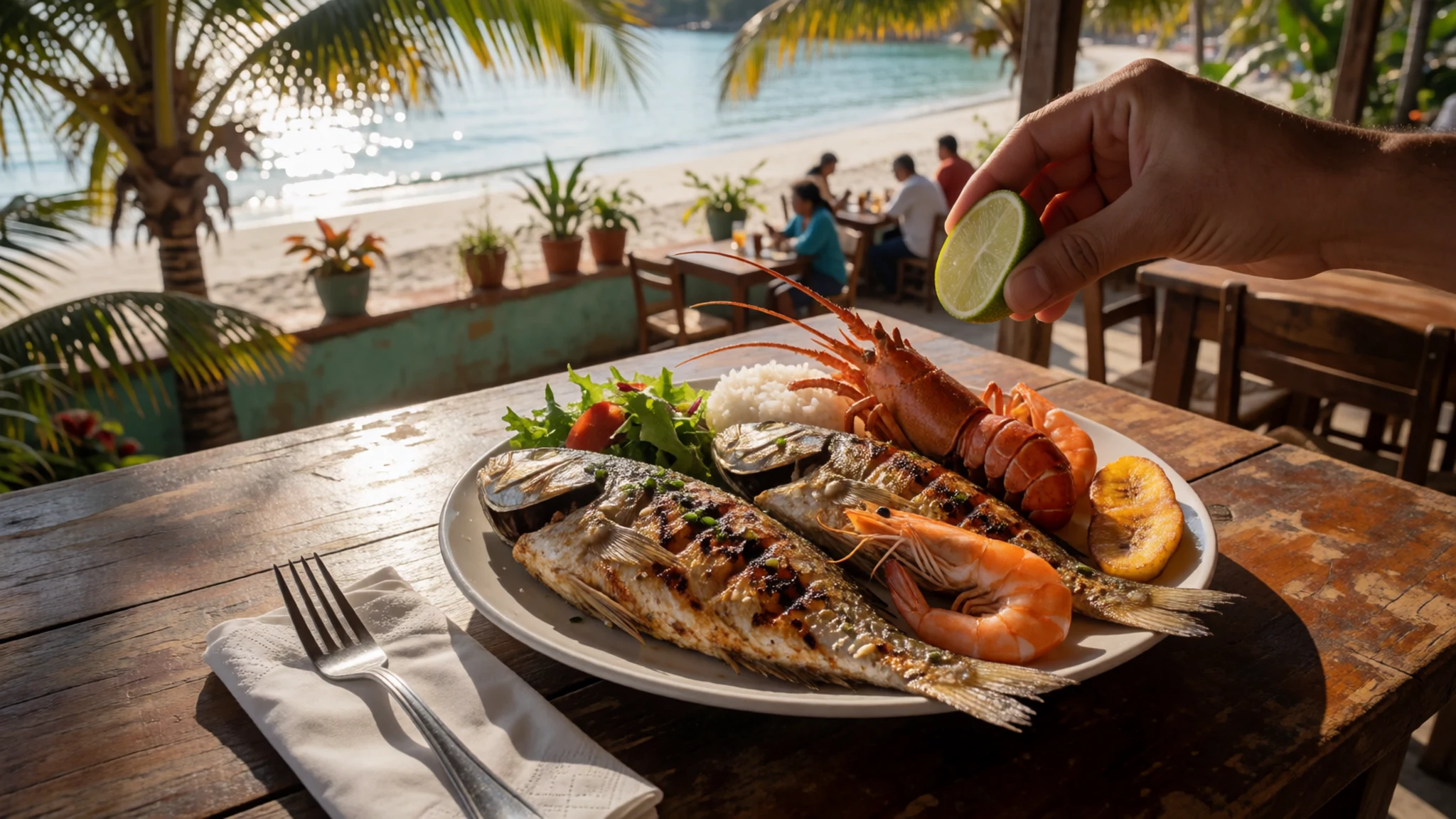
- Gallo pinto — Sodas around the town market
Rice and red beans fried together, often with onion and sweet pepper, served at breakfast with eggs, cheese or fried plantain. It is the standard Nicaraguan morning plate, and the small eateries called sodas near the market make it simply and well.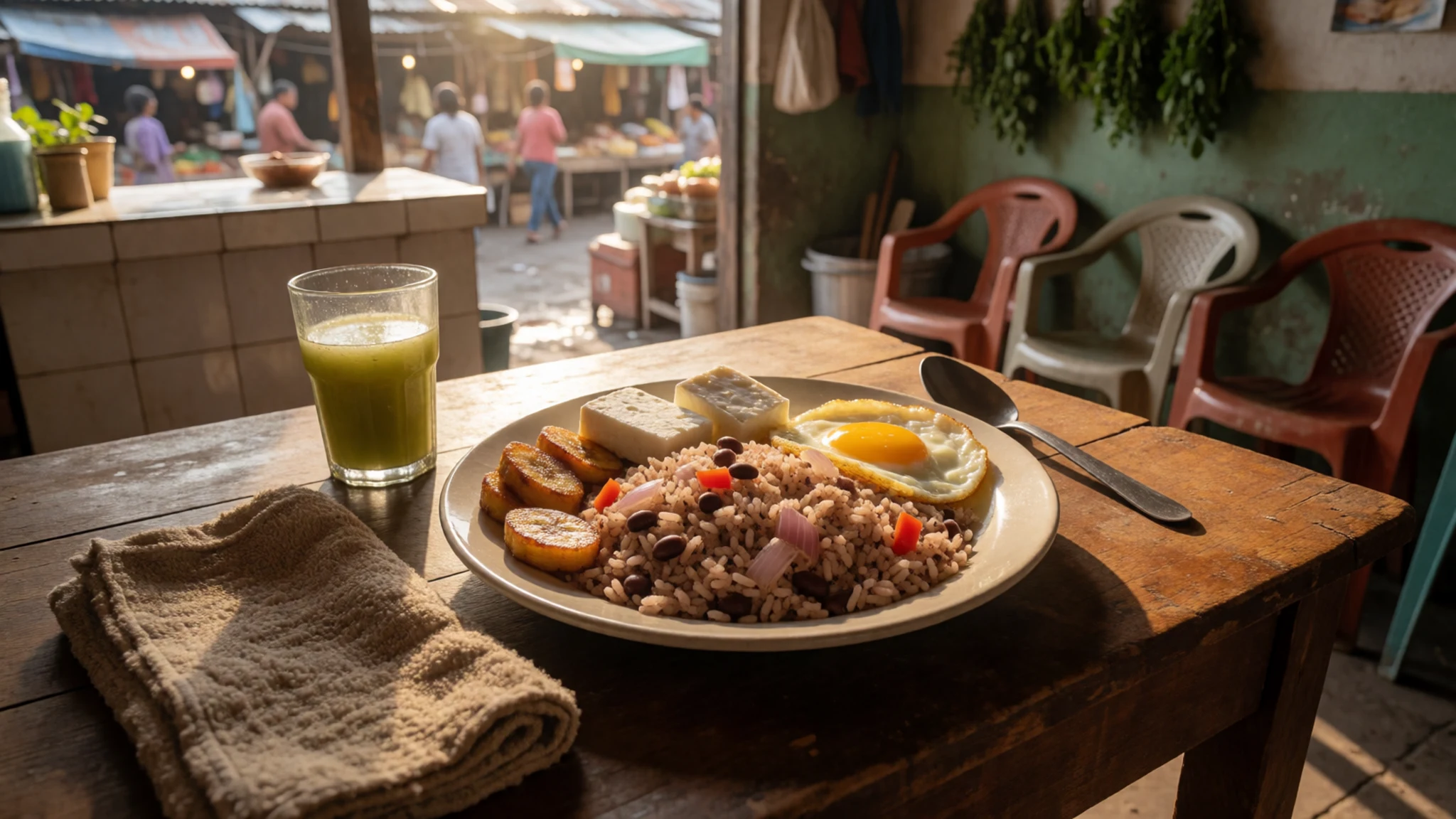
- Nacatamal — The market and local home kitchens, weekend mornings
A corn-dough parcel filled with pork and vegetables, steamed in banana leaf and traditionally eaten for weekend breakfast. It is heavy enough to count as lunch as well. Ask around the market on Saturday and Sunday mornings, when stalls and home kitchens sell them. - Ceviche — Beachfront restaurants
Raw fish or shrimp cured in lime juice with onion, chilli and coriander, served cold with crackers or plantain chips. Beachfront kitchens make it from the local catch. It suits the heat, and it is wise to choose a busy place where the fish clearly turns over fast. - Tres leches cake — Bakeries and cafés in the town centre
A sponge soaked in three kinds of milk and topped with cream, common across Nicaragua as a celebration dessert. It is dense, sweet and cold, which makes it a good end to a hot day. Look in bakeries and cafés in the town centre.
Plan it
Best time. November to April is the drier, sunnier part of the year in this tropical savanna climate, so December to March suits beach days. May to October is wetter, with afternoon rain, and fewer visitors. Easter week is the busiest time, and rates more than triple.
How long. 2–3
Getting there. Fly into Managua (MGA), about three hours' drive north, or Liberia (LIR) in Costa Rica, about two and a half hours' drive south via the Peñas Blancas border. By bus, change at Rivas for the frequent service to San Juan del Sur, about an hour, or take a shared colectivo taxi from the Rivas bus terminal.
Budget. low
Tips
- Book ahead for Easter week, when rooms fill and rates rise sharply; at other times rooms are usually easy to find on arrival, apart from perhaps Christmas and New Year
- Carry some córdobas in cash for buses, colectivo taxis, market eateries and small shops
- Plan beach and surf outings for the morning, as afternoons are hot and rain showers are common in the wetter months
- Drink bottled or filtered water and use strong sun protection, as the sun is fierce even on cloudy days
- Ask local surf shops about swell, tides and road conditions before heading to the beaches outside town
Etiquette
- Greet people with a friendly buenas before asking questions in shops, eateries and on the street
- Cover up with a shirt or wrap when leaving the beach for the town, market or church
- Ask before photographing local people, especially children and fishermen at work
Nearby
Sources
- Wikidata Q240247 (CC0)
- Wikipedia: San Juan del Sur (rev 1376766166) (CC BY-SA 4.0)
- Wikivoyage: San Juan del Sur (rev 5417144) (CC BY-SA 4.0)
- JorgeRodriguez, San Juan del Sur, Nicaragua. View from SANSA Flight (Liberia-Costa Esmeralda) (CC BY-SA 4.0)
- Biomedeng, Self-taken picture of the beach at San Juan del Sur, Nicaragua (Public domain)
- Jrozwado, San Juan, Puerto Rico - Old San Juan - Castillo San Felipe del Morro (CC BY-SA 4.0)
- Eacuna23, San Juan del Sur, Nicaragua (CC BY-SA 4.0)
- Fashiondetective, Bahía de San Juan del Sur, Nicaragua (CC BY 3.0)
- Osopolar, Sunset in San Juan del Sur, Nicaragua. Cruiseship. (CC BY 3.0)
- Unknown author, San Juan del Sur (1859) (Public domain)
- Adam Jones, Along the Beach - San Juan del Sur - Nicaragua (CC BY-SA 2.0)


