Masaya Volcano
Masaya Volcano, Nicaragua
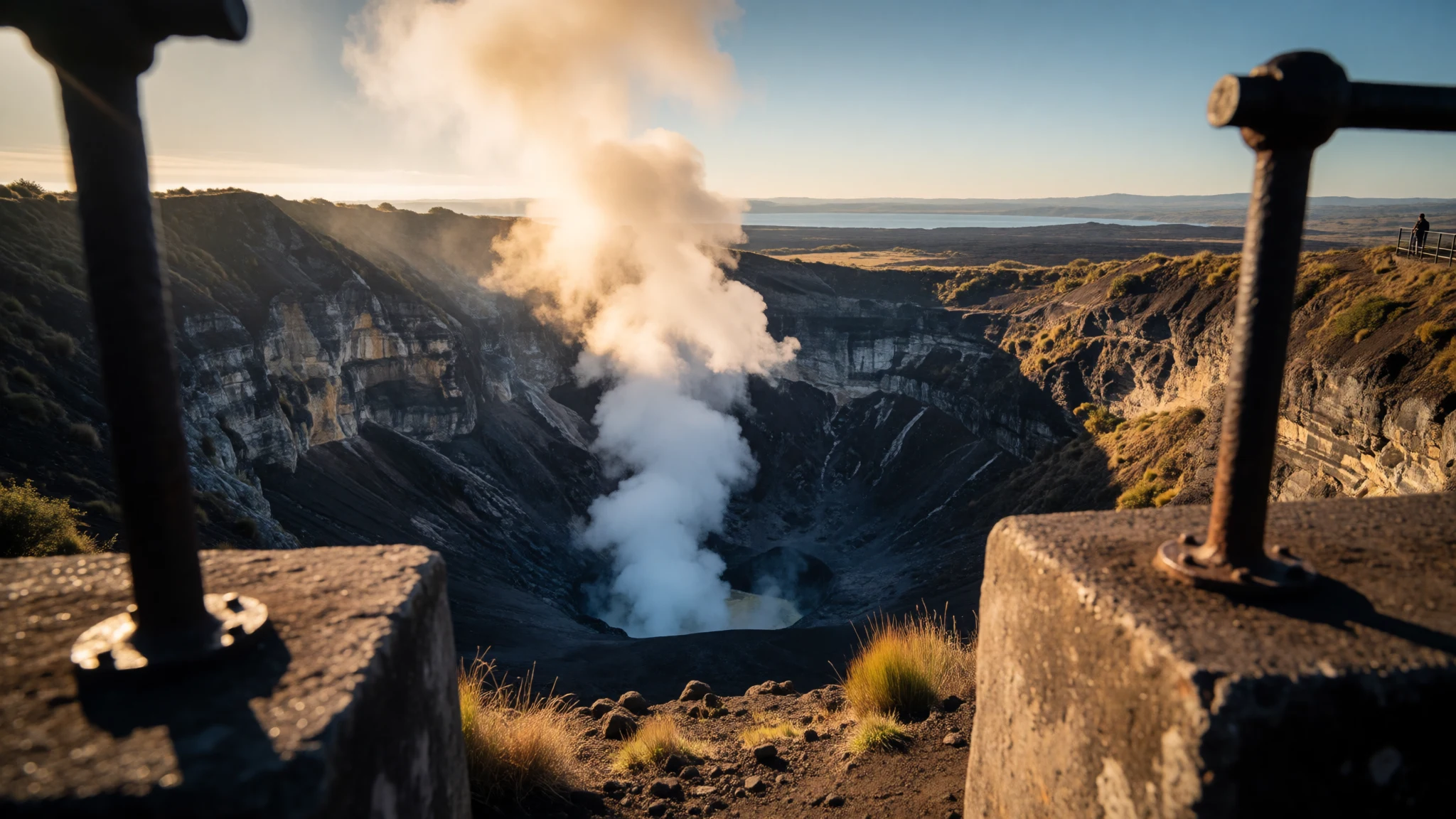
Masaya Volcano puts visitors at the rim of a gas-breathing crater a short drive from Managua, with no hiking required.
The place
Masaya Volcano sits in western Nicaragua, a short drive south of the capital, Managua, beside the town of Masaya that lends it its name. Its Spanish label is Volcán Masaya, and an older indigenous name, Popogatepe, still turns up in books. At 635 m it is a modest mountain. The interest lies in what happens at the top. It is really a cluster rather than a single cone: a broad old caldera holds a younger set of cones, and those cones are pitted with craters called Masaya, Nindiri, San Pedro and Santiago. Santiago is the one that matters to visitors, because it breathes out a steady plume of sulphurous gas and sometimes shows a dull red glow deep inside. The whole area is a national park, with a visitor centre, exhibits on geology and local culture, picnic tables beside a playground, and short walks to the viewpoints. A sealed road climbs right to the crater edge, so seeing an active volcano here is a matter of parking and stepping out. The gas is the catch. It smells sharp, stings the throat, and the wind decides whether a viewpoint is pleasant or a quick stop. There is no food on the mountain itself. A bar and restaurant stands opposite the park gate, and the town of Masaya offers far more. Most visitors give the park a morning or an evening, often combined with Granada or the craft markets in town.
Its story
Masaya Volcano is a story of repeated rebuilding. A huge eruption long ago emptied a broad basin, the caldera, and later eruptions raised a fresh set of cones and pits inside it. Rock exposed in the crater walls shows that these cones and pits have formed, collapsed and formed again more than once. The caldera floor is covered in rough, dark ʻaʻā lava with hardly any plants, which tells geologists that the surface was renewed in the recent past, geologically speaking. In the historical record there are two big lava outpourings. In the first, Nindiri crater, then holding an enormous lava lake, spilled over. The second came from a crack in the flank of the Masaya cone. Since then molten rock has shown itself mainly in Santiago crater. Quiet degassing is the normal mood here, but not the only one. In recent decades Santiago has produced several explosions. One, early this century, opened a fresh vent in the crater floor and threw heavy boulders as far as the visitor area, wrecking vehicles and injuring one person. A later eruption sent up ash and steam. Scientists watch the mountain closely, partly through the Deep Earth Carbon Degassing Project. They track the sulphur dioxide it releases to judge the volcano's behaviour and to assess acid rain and breathing problems for people living nearby.
What to see
- Santiago crater viewpoint — Masaya Volcano National Park
Santiago is the active pit that gives Masaya its reputation. From the walled viewpoint beside the car park, the crater drops away into a rocky funnel, with gas drifting out of the bottom and, on clear evenings, a dull red glow. Wind decides how long anyone can stay, so expect short stops and keep a scarf handy.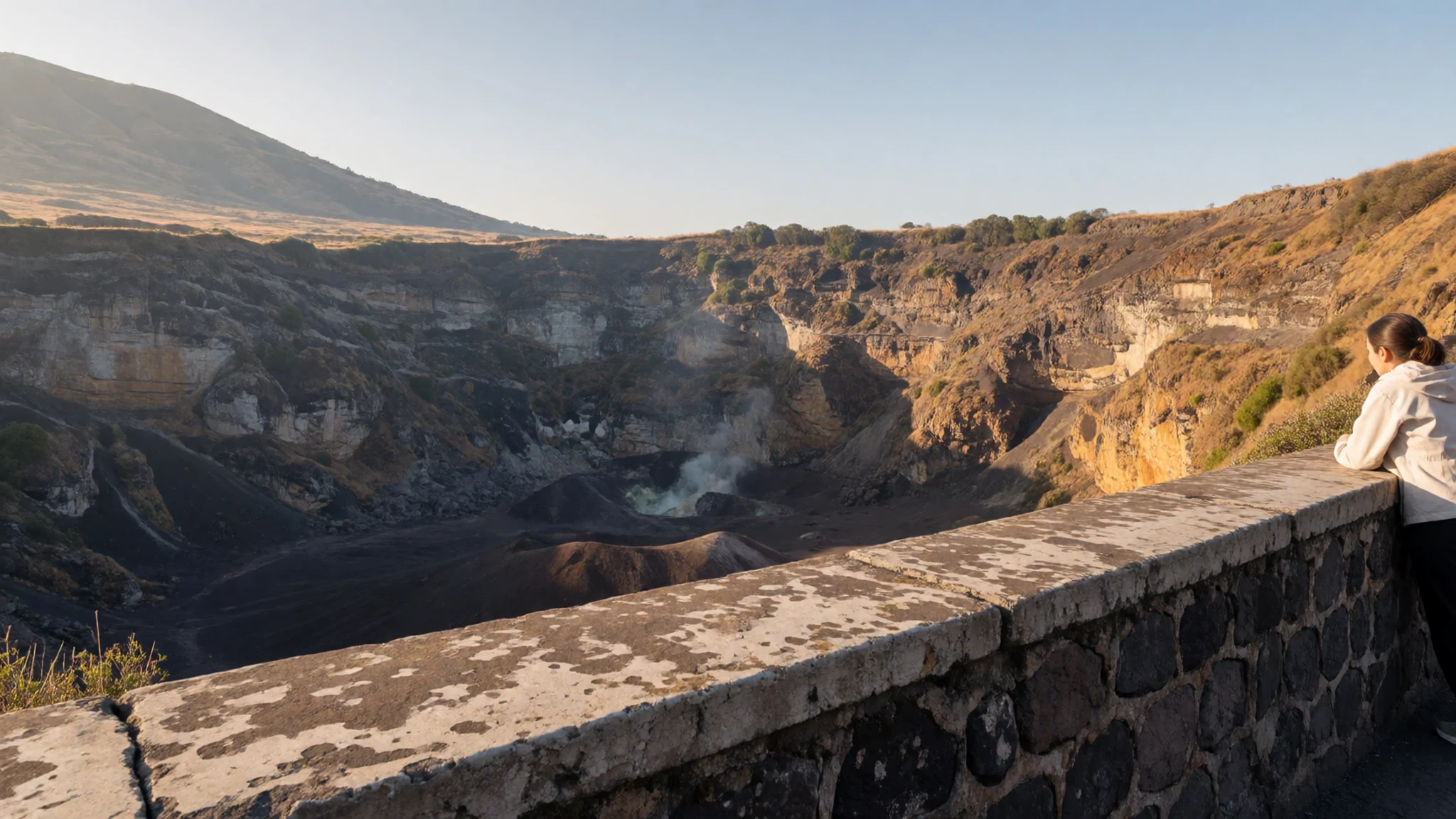
- Cruz de Bobadilla — Masaya Volcano National Park
Cruz de Bobadilla is a viewing platform topped by a cross, set above the caldera. From here the view takes in the line of craters, the dark, rough lava floor and a lake at the eastern end of the basin. Morning light flatters the scene far more than the glare of midday.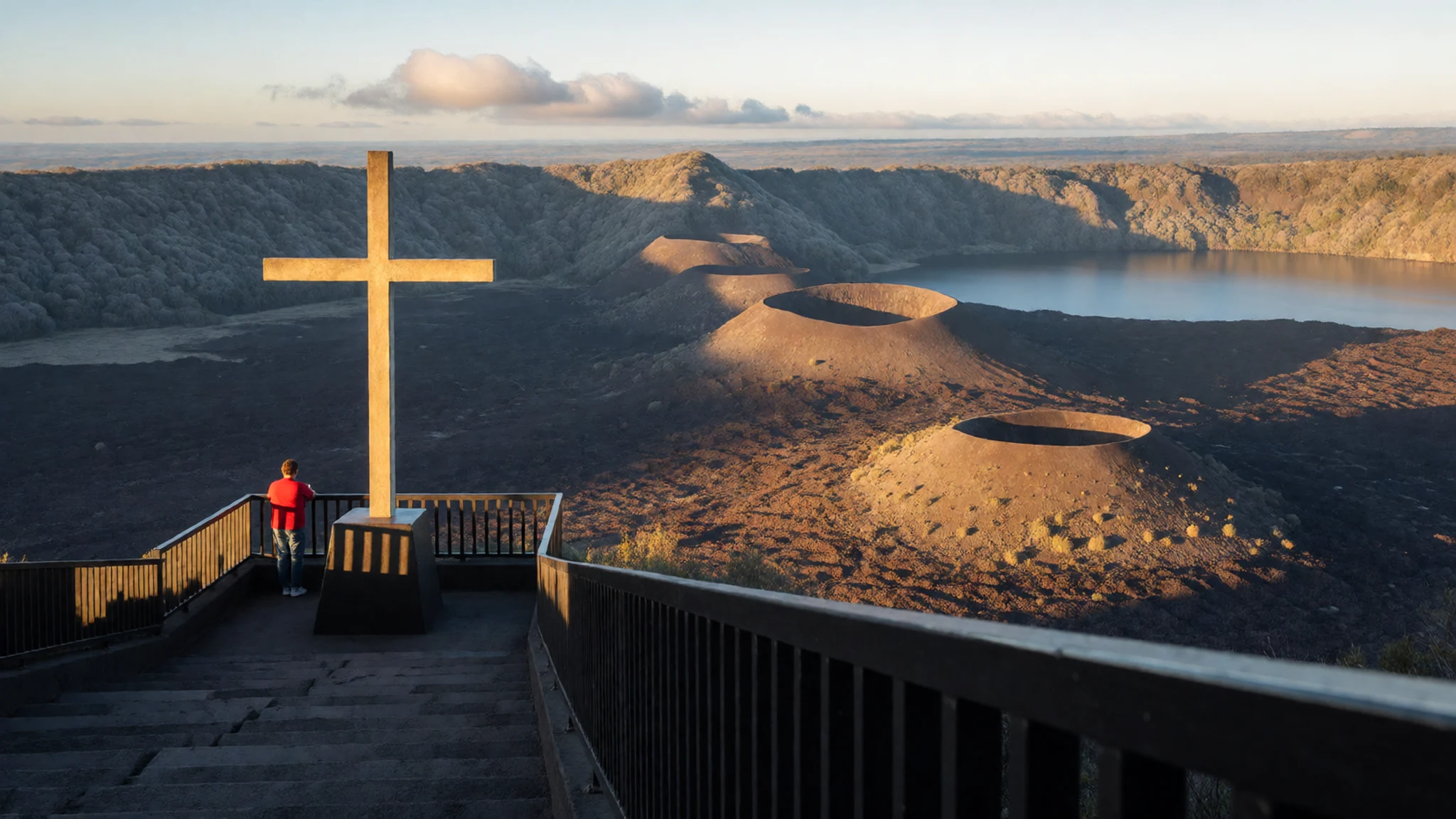
- Visitor centre — Masaya Volcano National Park
The visitor centre is a sensible first stop. Its exhibits explain how the calderas and craters nest inside one another and how people have lived beside the mountain. Picnic tables and a playground sit next to it, which suits families, and since no food is sold on the mountain, snacks and water are worth bringing.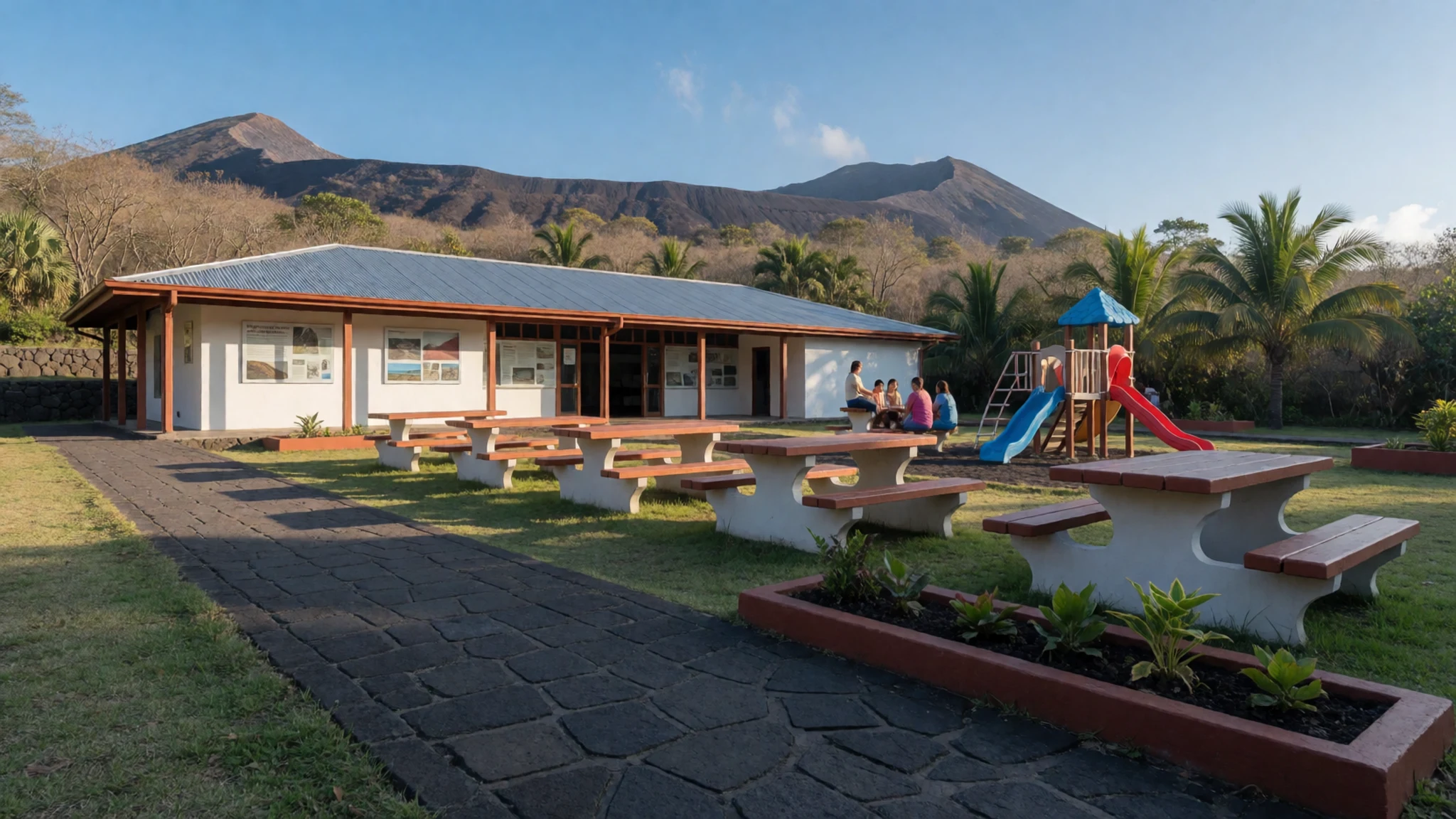
- Lava caves with a guide — Masaya Volcano National Park
Caves carved by old lava flows can be explored with park guides rather than alone. Bats roost inside, so expect dim light and a faint animal smell. Torches, closed shoes and a guide are the sensible kit, and the visitor centre can say which tours are running that day.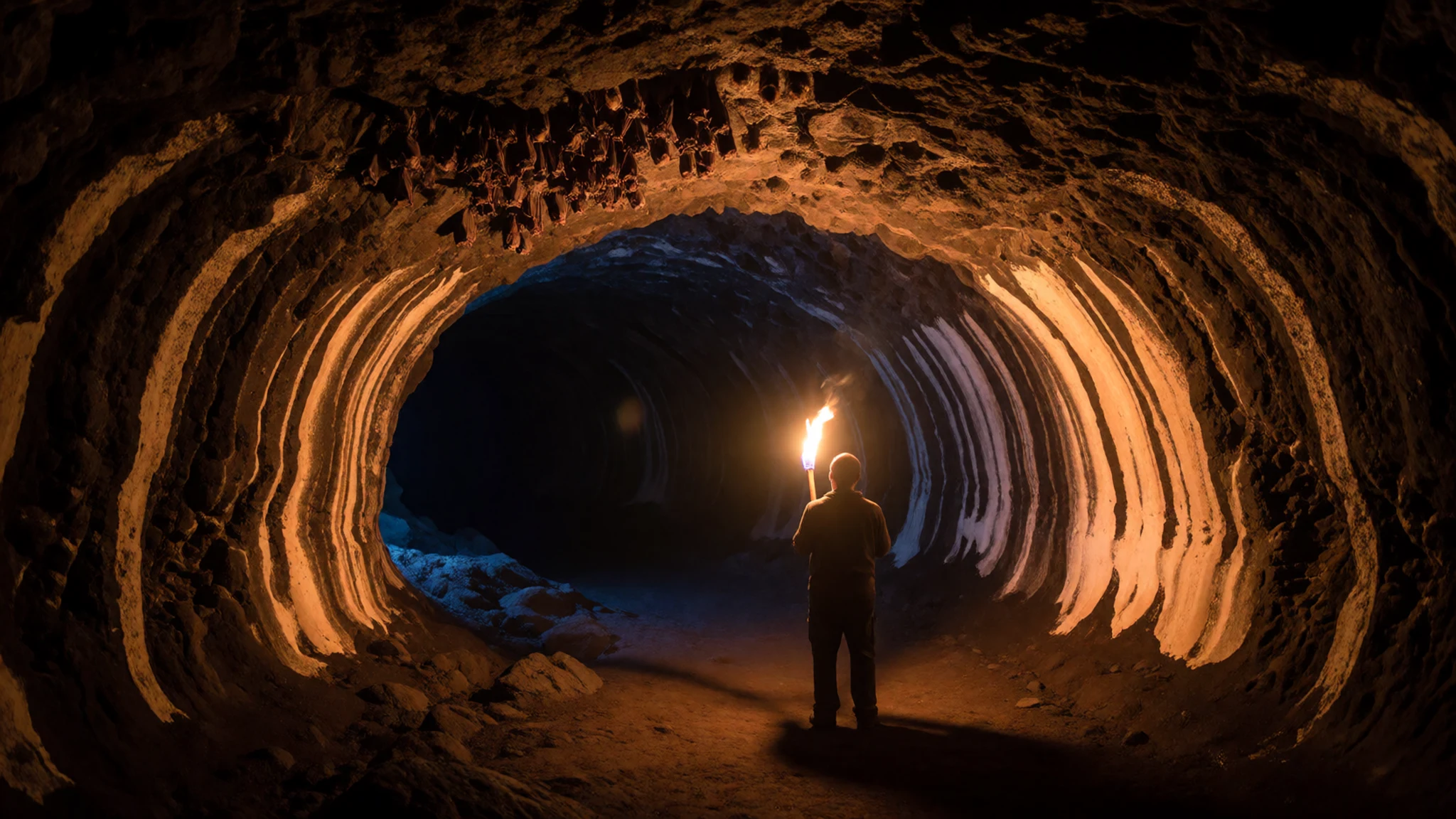
- The crater after dark — Masaya Volcano National Park
Watching the glow after dark is the other reason people come. Night visits run as a separate arrangement with set times that change, so check with the park before planning around them. Cloud or a strong wind can hide the glow completely, so it is best treated as a bonus rather than a promise.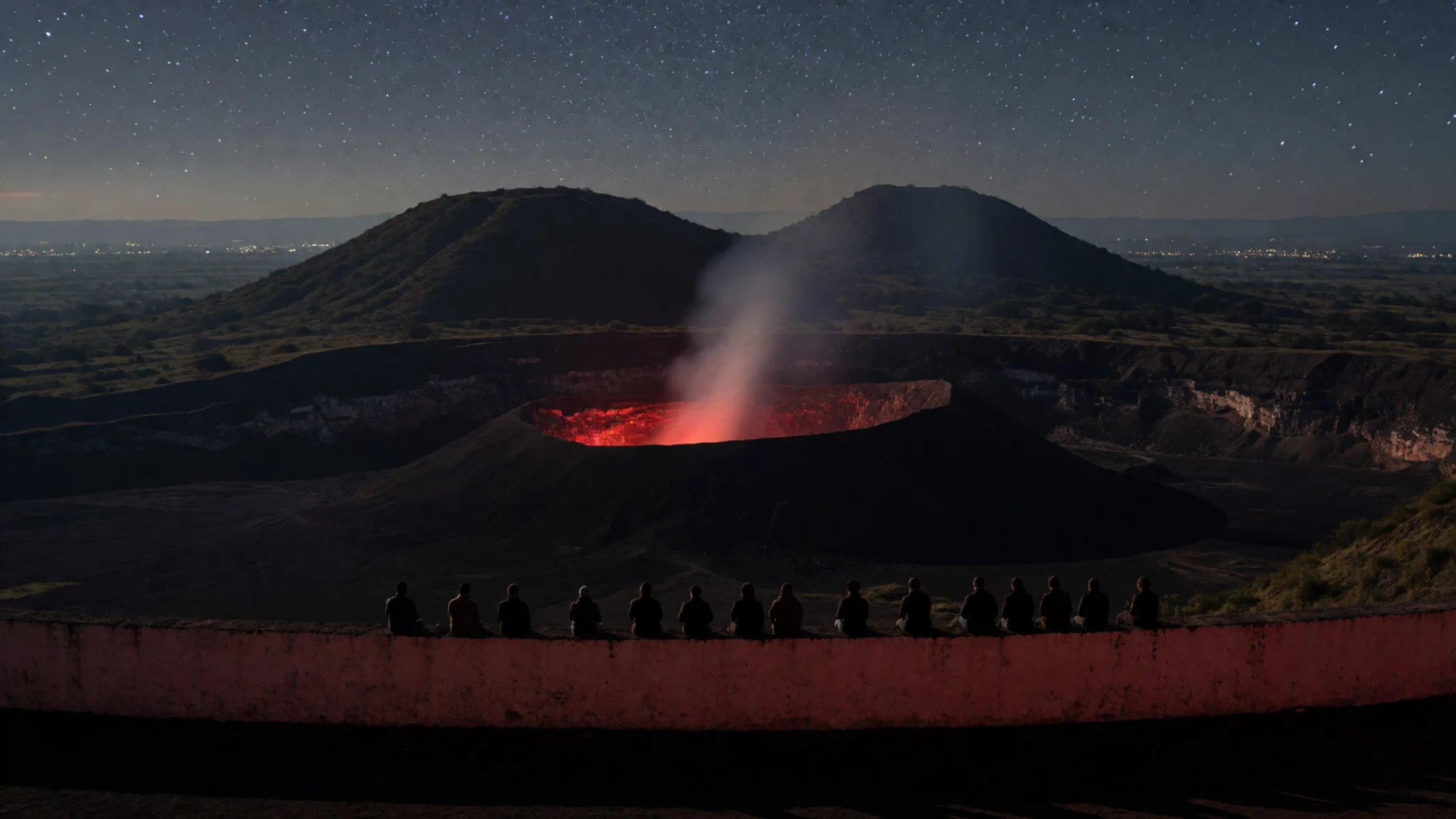
Culture
Masaya Volcano lies in a part of Nicaragua with deep indigenous roots. Its older name, Popogatepe, comes from Nawat, a language of the region's pre-Columbian peoples. The mountain has long been watched with respect and some fear, and its smoke and sulphur have shaped local stories. Today it is a national park run for science and for visitors, with local guides and rangers who take safety seriously. The nearby town of Masaya is known across Nicaragua for crafts and folk traditions. A visit to the volcano pairs naturally with a walk through its markets, where hammocks, pottery, woven goods and leatherwork are sold, and where bargaining is expected but done gently and with a smile. Nicaraguans are generally friendly and talkative, and a greeting in Spanish, such as buenos días or buenas tardes, goes a long way with rangers, drivers and stallholders. Tipping a guide after a cave tour is customary and appreciated. The volcano itself is treated as a working natural laboratory rather than a theme park. Scientists monitor it, the rangers have seen what rocks thrown from the vent can do, and the walls and signs at the viewpoints are there for good reasons. Stay behind the walls at every viewpoint, follow the rangers' instructions at once, and never scramble towards the crater edge for a photograph.
What to wear
Around Masaya, traditional dress is festival clothing rather than daily wear. Women's folk costume is a full, ruffled skirt in bright cotton, worn with an embroidered or lace-trimmed blouse and flowers in the hair, and it appears at dances and saints' day processions in the Masaya area. Men wear a plain white shirt, light trousers and a straw hat, sometimes with a coloured neckerchief. Day to day, people in Masaya and Managua dress for the heat: T-shirts, light dresses, jeans or shorts, caps and sandals, with football shirts everywhere. Smart-casual is normal for church or an office. For the volcano, comfort and protection matter more than style. Wear closed shoes with a good grip, since the paths are stony. Light, breathable long trousers and a loose shirt help against sun and sulphur dust, and a hat and sunscreen are wise because there is little shade at the rim. Carry a thin layer for windy evenings, and a scarf or buff to pull over the nose when the gas blows your way. Shoulders and knees need no special covering in the park, but modest dress is courteous if you step into a church in Masaya or Granada.
What to eat
- Gallo pinto — Small eateries in Masaya town
Rice and red beans fried together with onion and sweet pepper, served at breakfast with eggs, cheese or fried plantain. Any small eatery in Masaya town does it, and it is a dependable, filling start before a morning at the volcano.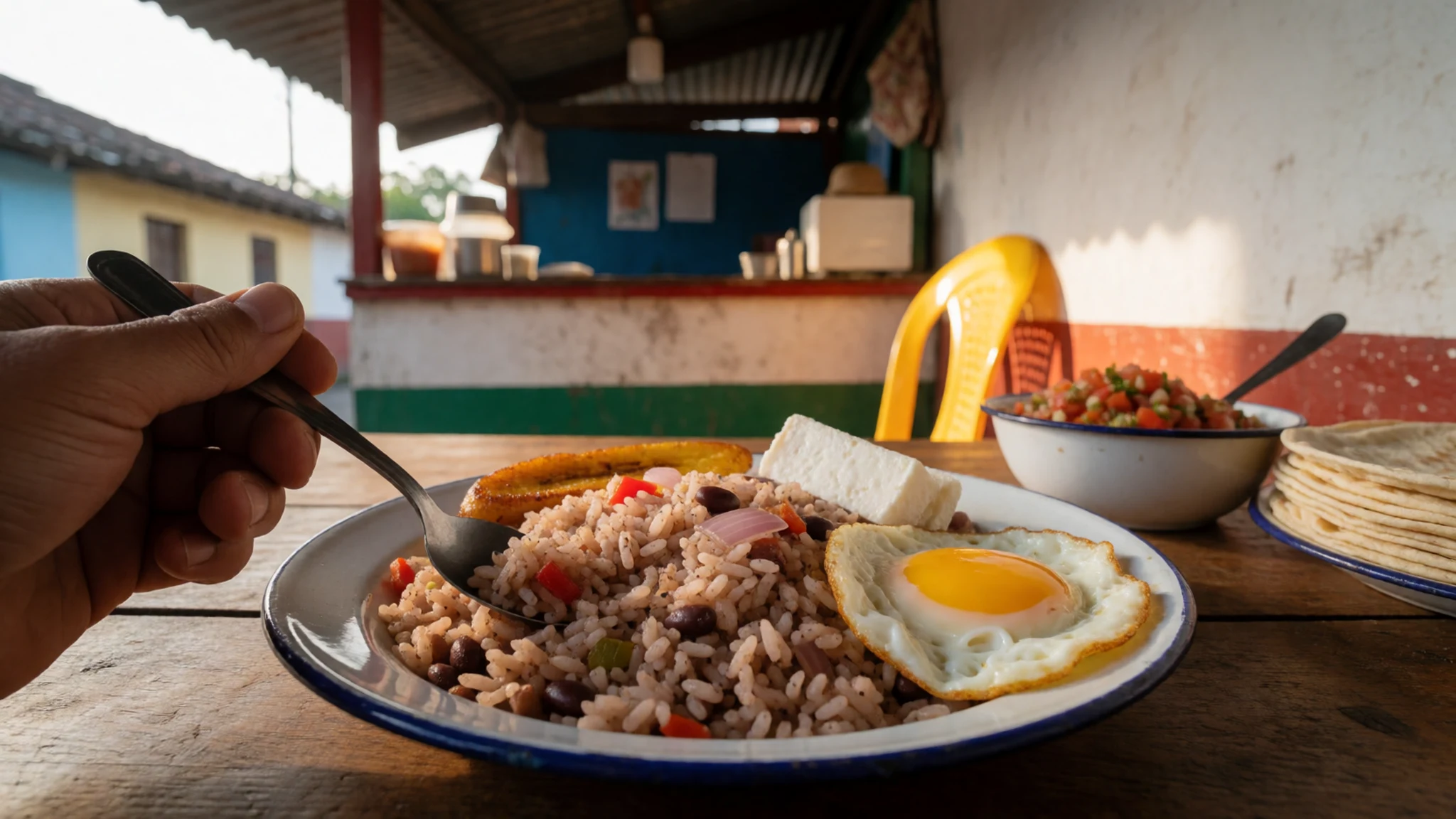
- Nacatamal — Market stalls and home kitchens in Masaya
A cornmeal parcel filled with pork, rice or potato and seasoning, steamed in a banana leaf. It is mostly a weekend breakfast. Look for home kitchens and market stalls in Masaya, and unwrap it carefully, because the leaf is not eaten.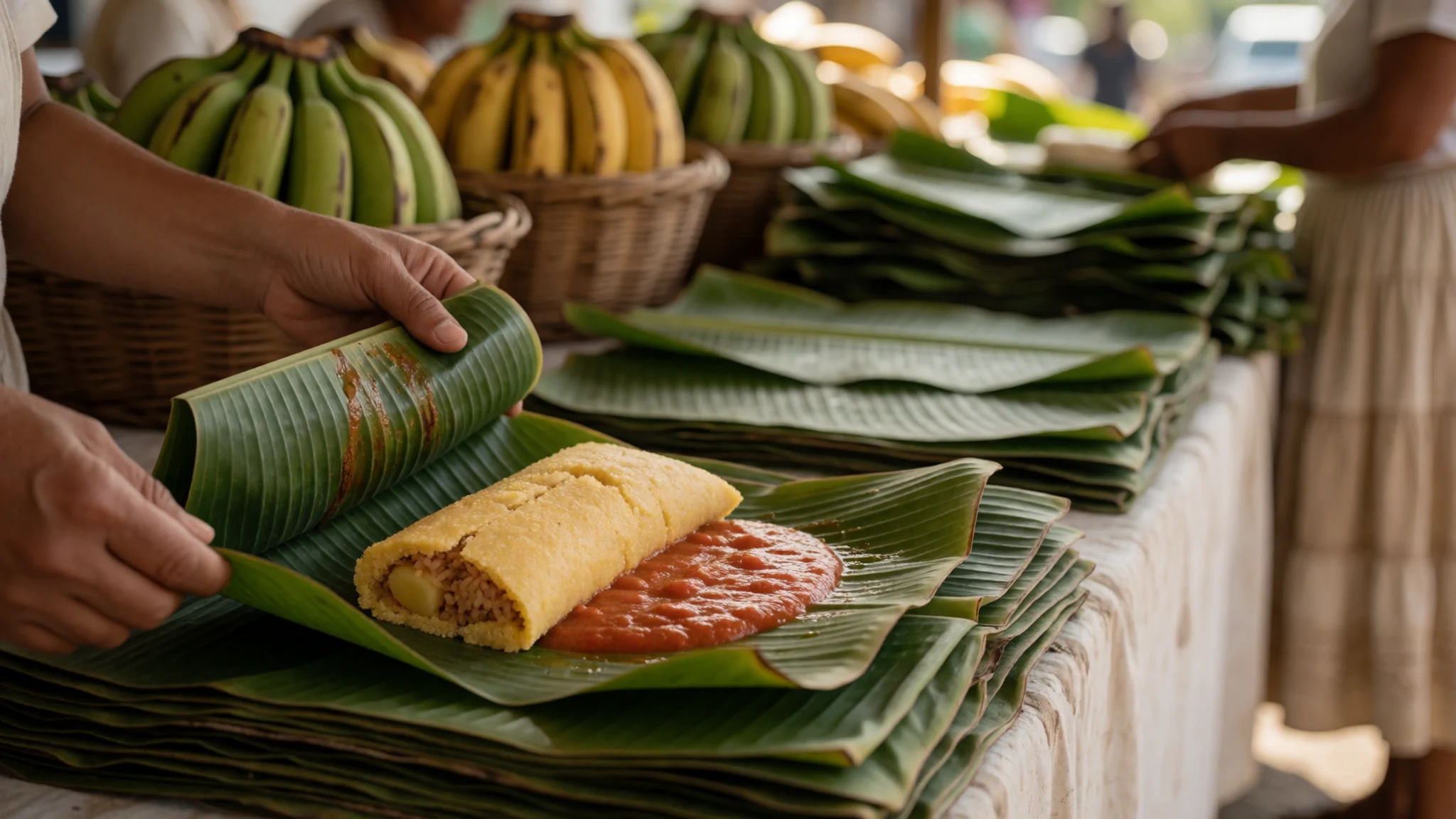
- Vigorón — Open-air kiosks in Granada
Boiled cassava topped with cabbage salad and crisp pork skin, served on a banana leaf. It is a Granada speciality, sold at open-air kiosks near the central park, and an easy pairing with a day trip from the volcano. - Quesillo — Roadside stalls on the highway
A soft white cheese and pickled onion with cream, rolled in a thin tortilla and handed over in a plastic bag. It is a cheap, quick snack found at roadside stalls and bus stops along Nicaragua's main roads. - Pinolillo — Market stalls in Masaya town
A cold drink of toasted ground maize and cocoa, lightly sweet and served over ice. It is a refreshing option on a hot afternoon, and market stalls and simple eateries in Masaya town usually have it.
Plan it
Best time. November to February, in the dry season, when mornings are cooler and skies tend to be clearer. March and April are hotter. The rainy months, roughly May to October, bring cloud and showers that can hide both the view and the glow.
How long. 1
Getting there. Fly into Managua's international airport, then take a taxi or an arranged car south for a short drive to the park gate on the Carretera a Masaya. Granada-bound buses from Managua stop at the gate, but the climb to the crater is long on foot, so a car or tour makes the day far easier.
Budget. low
Tips
- Go early or late to avoid midday heat, and check with the park for current opening times and night-visit arrangements
- Bring water and snacks: there is no food on the mountain, but a restaurant stands opposite the gate and Masaya town has plenty
- Carry some cash for entry, guides and market stalls, and ask what the park accepts
- Park facing outwards, as is common practice at active volcanoes, so you can leave quickly if conditions change
- Anyone with asthma or heart conditions should be cautious about the gas and keep stops at the viewpoints short
Etiquette
- Stay behind the walls and obey rangers' signs and instructions at every viewpoint
- Greet rangers and guides in Spanish, and tip a guide after a cave tour
- Take rubbish back out with you, including from the picnic area
Nearby
Sources
- Wikidata Q613424 (CC0)
- Wikipedia: Masaya Volcano (rev 1369113497) (CC BY-SA 4.0)
- Wikivoyage: Volcán Masaya (rev 4803430) (CC BY-SA 4.0)
- Photo: Cráter del Volcán Masaya. Nicaragua. 2002 (CC BY-SA 1.0)
- Photo: Masaya Volcano - crater (Leon petrosyan) (CC BY-SA 4.0)
- Photo: Pele's hair, Santiago Crater, Nindiri Volcano (Pi3.124) (CC BY-SA 4.0)
- Photo: Sign at the parking lot for the Plaza de Oviedo (Nolabob) (CC BY-SA 4.0)
- Photo: Crater of Masaya Volcano, Nicaragua (belemita@gmail.com) (CC BY 3.0)
- Photo: Cruz de Bobadilla (Mark Stevens) (CC BY-SA 1.0)
- Photo: Cràter Santiago a Masaya (Albert Olivé) (CC BY 3.0)
- Photo: Cráter Santiago desde la Plaza de Oviedo (Chicho96) (CC BY-SA 4.0)


