Mombacho
Mombacho, Nicaragua
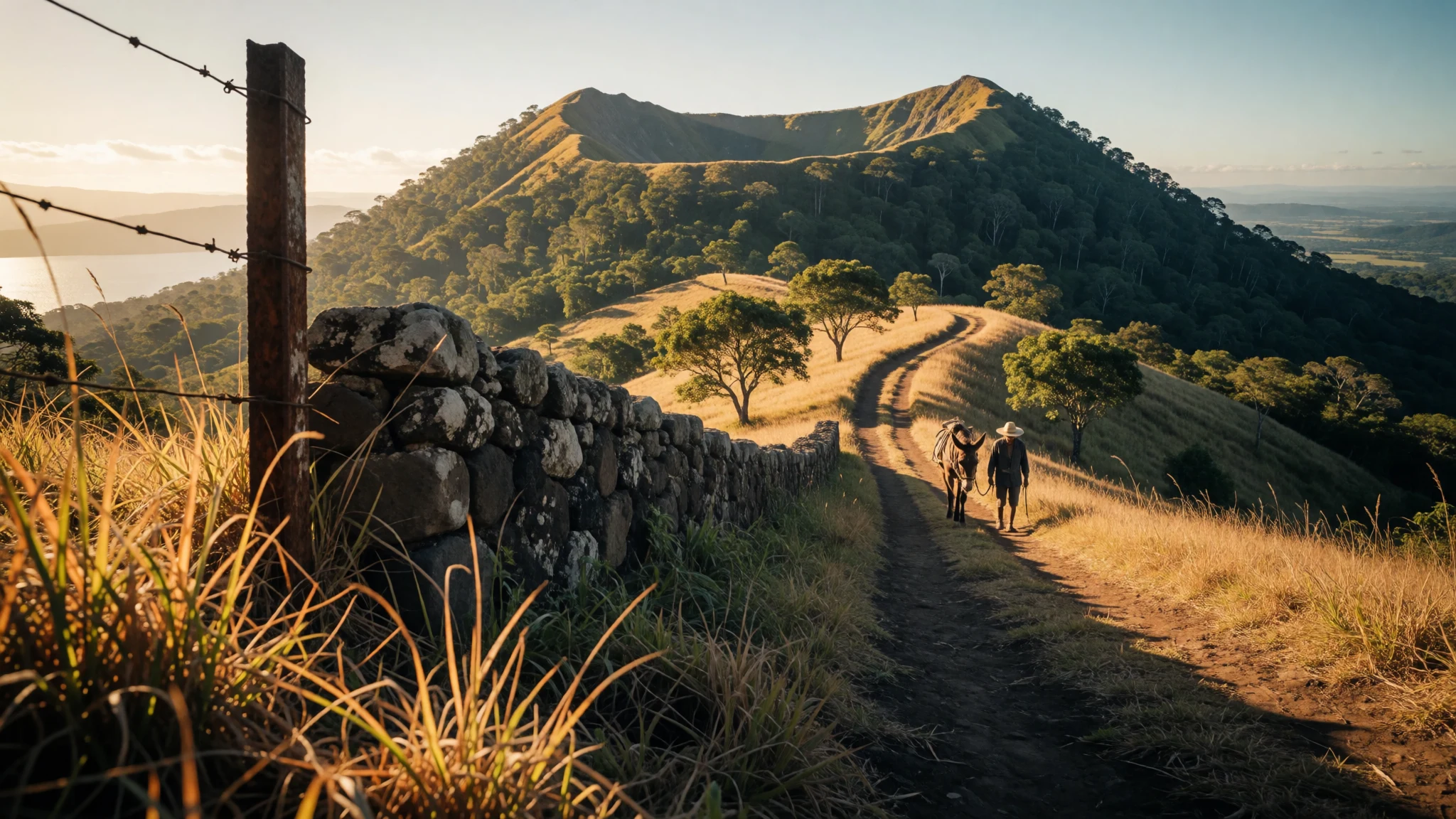
Mombacho is a cloud-wrapped volcano above Granada, where forest trails and lake views sit within easy reach of a colonial town.
The place
Mombacho is a stratovolcano rising to 1,344 metres beside Granada, in the western half of Nicaragua, a country that locals call the land of lakes and volcanoes. The cone stands close to the shore of Lake Cocibolca (Lake Nicaragua), so its upper slopes look out over water on one side and the low roofs of Granada on the other. Much of the mountain is a nature reserve, one of 78 protected areas in the country.
Altitude shapes everything here. The lowlands around the base are hot and farmed, while the summit zone is cool, damp and often swallowed by cloud. That cloud feeds a cloud forest and, higher still, a stunted dwarf forest, both holding plants and animals found only on this volcano. More than 700 plant species have been recorded around the mountain, orchids among them.
Two walking routes are open to visitors. One is a moderate circuit around the main crater, suited to most walkers in sensible shoes. The other, El Puma, is steep and demanding, climbs and drops with little level ground, and must be done with a guide. It is also the only way to reach some features, the dwarf forest included.
The administrative record is a little odd. Wikidata files Mombacho as a neighbourhood of the Managua municipality, with a population of 767, but the volcano and reserve that most travellers mean lie beside Granada. The weather follows the Pacific pattern: a dry season from November to April, then rain from May to October.
Its story
Mombacho's recorded history is short and quiet. Its last eruption came in 1570, and no earlier eruption is known, so the volcano has been dormant for centuries and is now treated as a mountain to walk rather than one to fear. Stratovolcanoes like this are built up layer by layer from lava and ash, which explains the steep cone and the fertile soils on its flanks.
The long calm has had an ecological payoff. Cloud lingers on the summit through much of the year, and the forest that grew beneath it became a kind of island. Species suited to cool, wet air at height have had little contact with the hot lowlands, and some now live nowhere else. That isolation is the reason the upper slopes are protected as a reserve instead of being cleared for farming like the ground below.
Tourism arrived on top of that. Views of Lake Cocibolca and of Granada, the colonial city at the volcano's foot, drew visitors, and the reserve's two trails were laid out so that people could see the forest without trampling it. The harder route, El Puma, remains guide-only, a rule that protects the plants as much as the walkers.
Nicaraguans often describe their country through its volcanoes: Concepción and Maderas on Ometepe, Masaya near the city of the same name, and Mombacho beside Granada. Of these, Mombacho is the one best known for cloud forest rather than fire, and that contrast is the heart of its story.
What to see
- The crater circuit trail — Mombacho Volcano Nature Reserve
The moderate trail around the main crater is the usual first walk on Mombacho. It threads through cloud forest, with moss, ferns and orchids close to the path and, on clear days, gaps in the trees that open onto the lake. Mist can arrive within minutes, so views come and go. Most reasonably fit walkers manage it at an unhurried pace.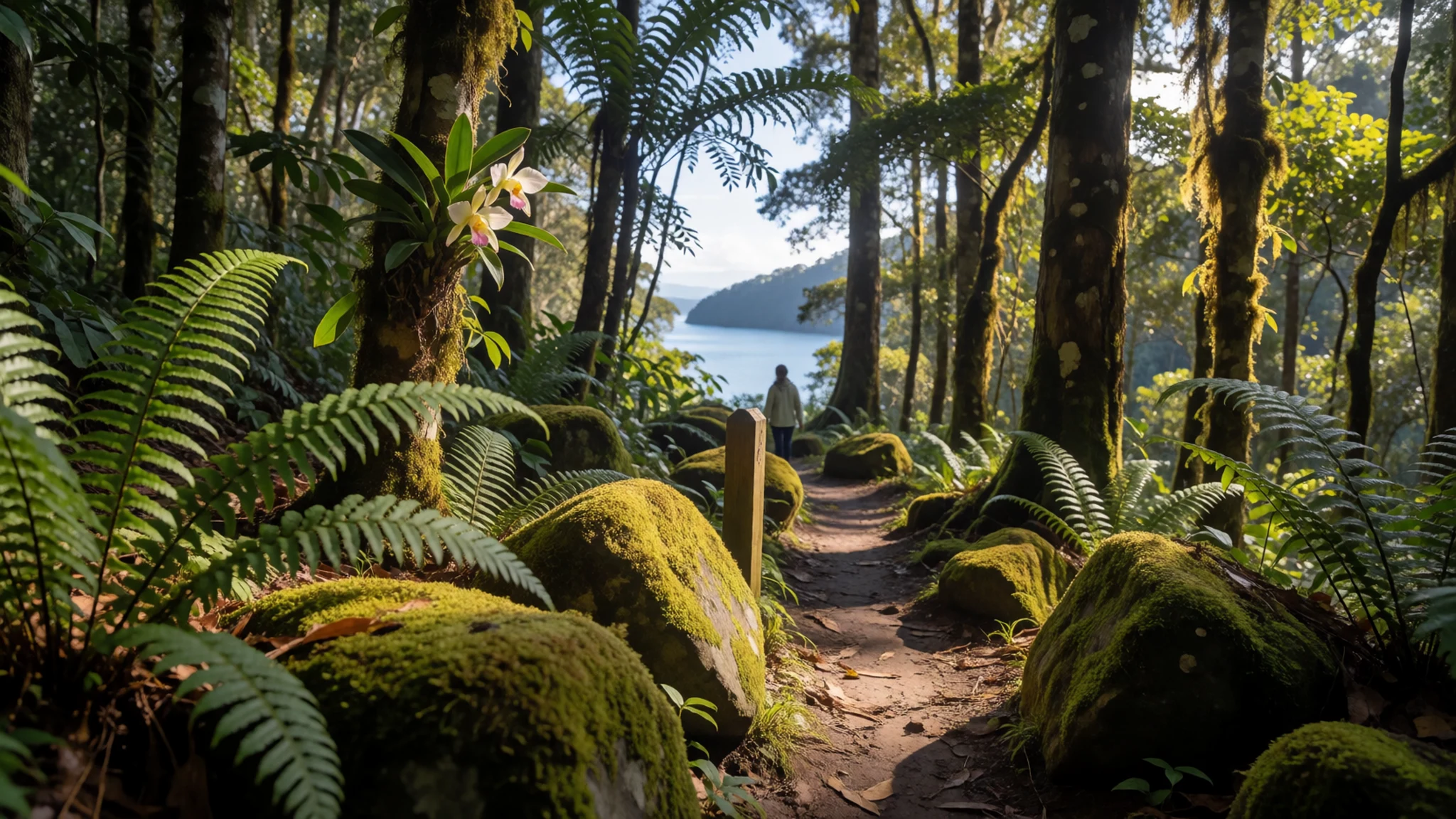
- El Puma trail — Mombacho Volcano Nature Reserve
El Puma is the demanding option: a guided walk that rises and falls steeply for most of its length, with little flat ground to rest on. It is the only way to reach some parts of the mountain, including the dwarf forest. Shoes with good grip matter, as does a willingness to go slowly. A guide is compulsory.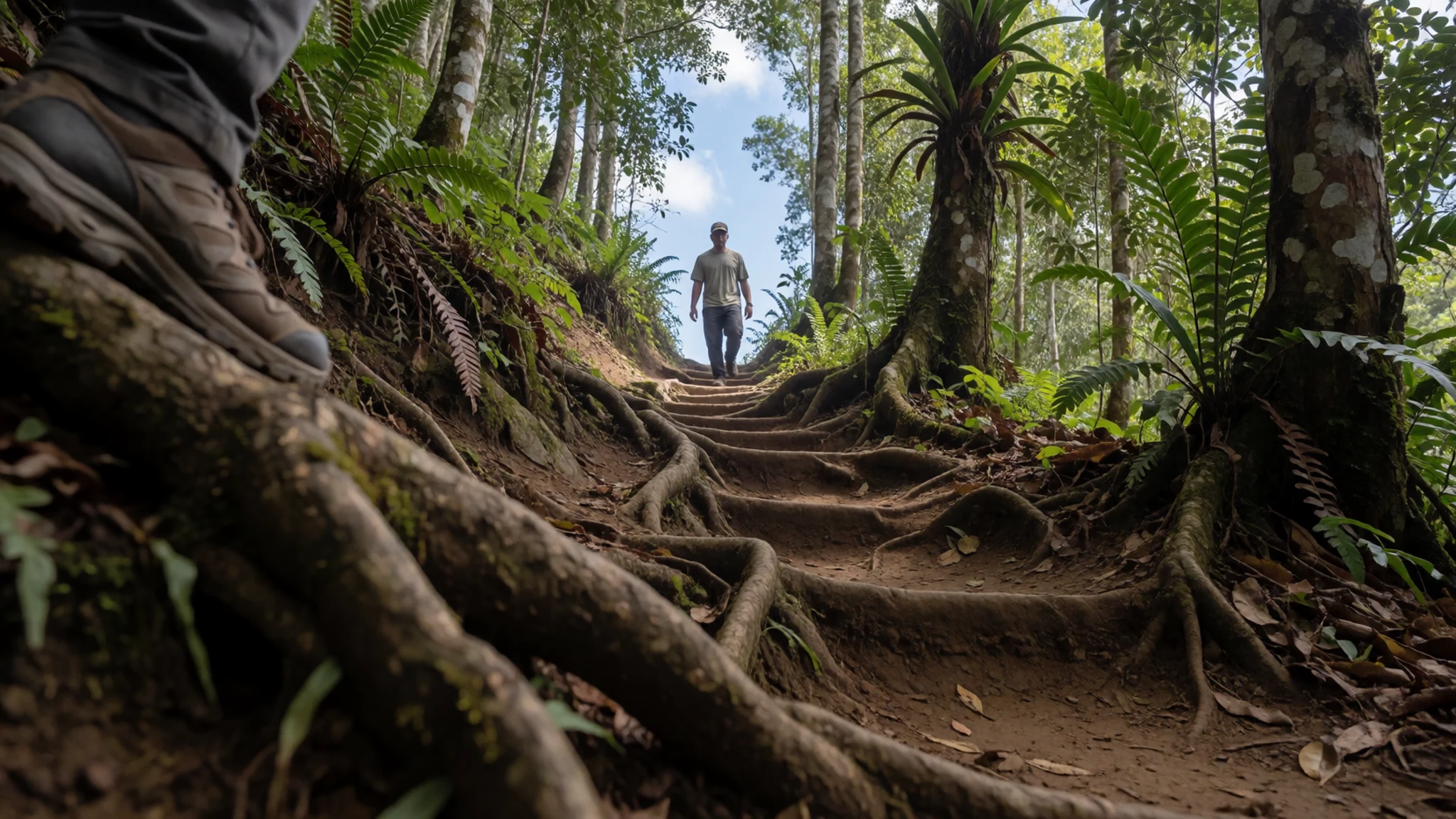
- Dwarf forest and cloud forest — Upper slopes of Mombacho
Near the summit the trees shrink into a dense, twisted dwarf forest, kept low by wind, cloud and thin soil. Below it the cloud forest is taller and draped in plants growing on branches. Together they hold species found only on this volcano. Bring patience rather than a long checklist; the details reward slow walking.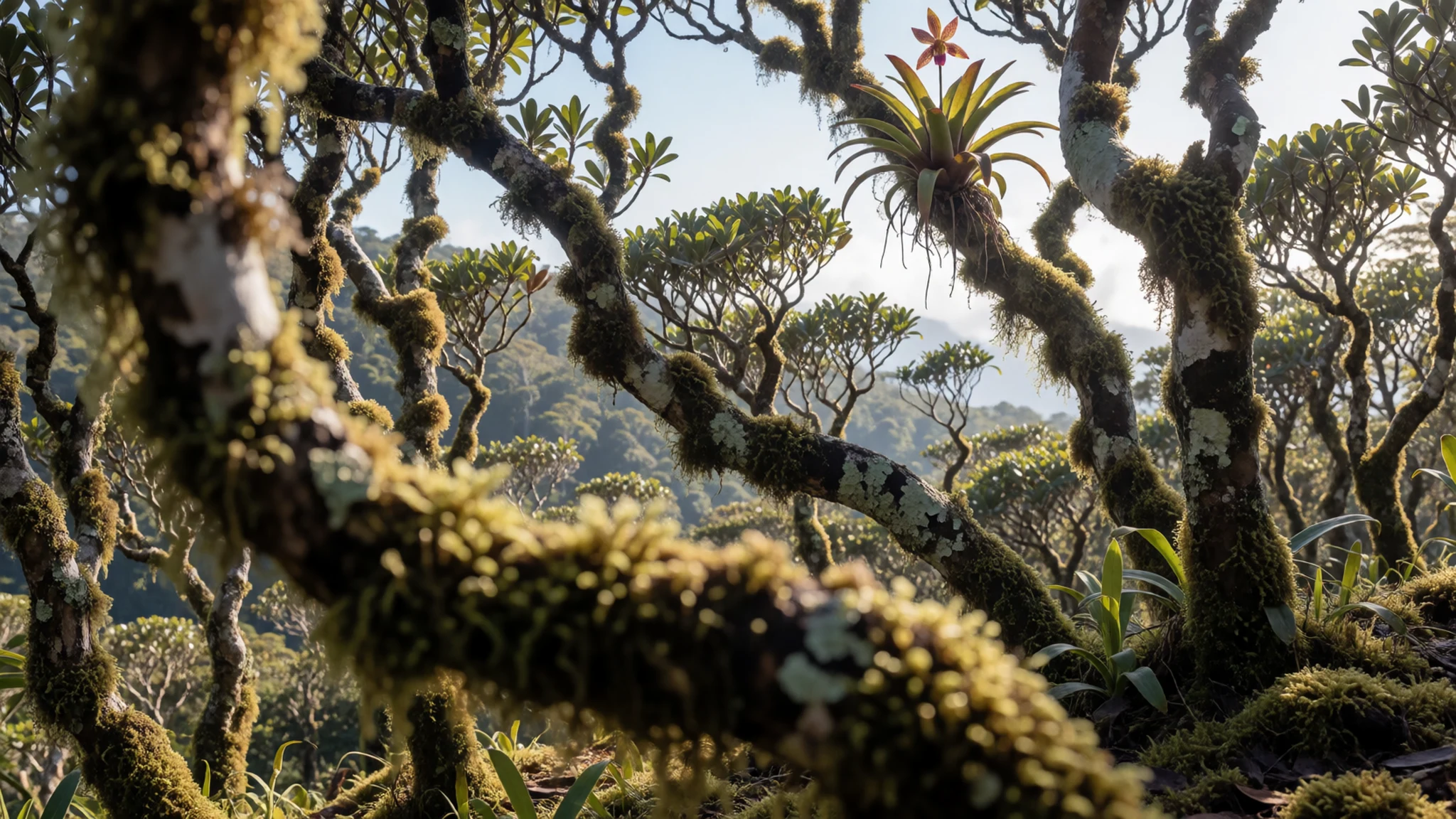
- Lookouts over Lake Cocibolca — Summit area of Mombacho
From the open lookouts the land falls away to Lake Cocibolca and the grid of Granada. Morning usually gives the clearest air, before cloud builds on the upper slopes. In the dry season the haze is lighter and the lake looks sharper. Take the view when it appears, because cloud can close in and not reopen.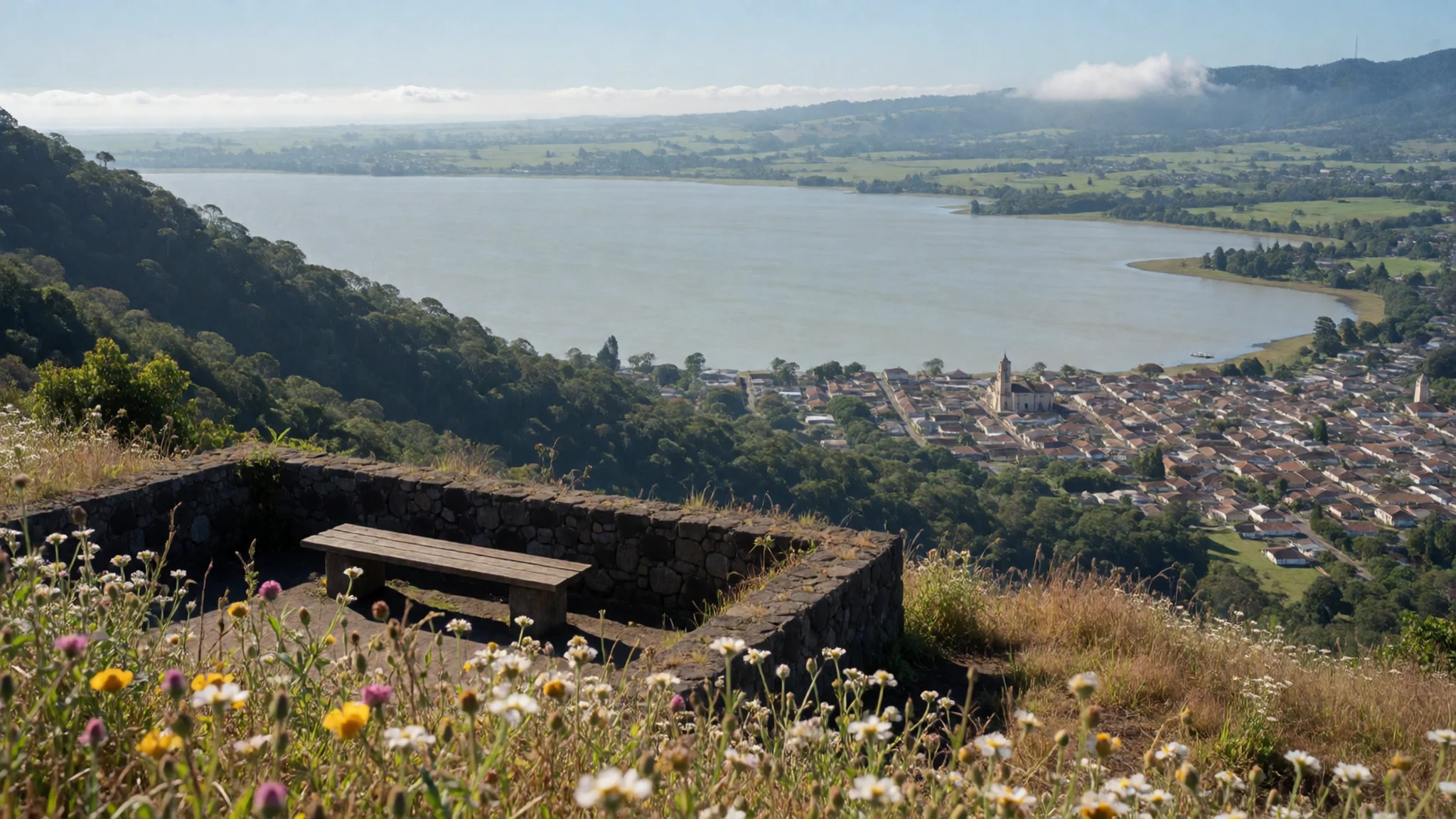
- Granada at the foot of the volcano — Granada
Granada, below the volcano, is the natural base. Its colonial streets, churches and lake shore are easy to cover on foot, and the town is the place to arrange a reserve visit, a guide or transport. Evenings are livelier than mornings, and Mombacho shows on the skyline whenever cloud allows.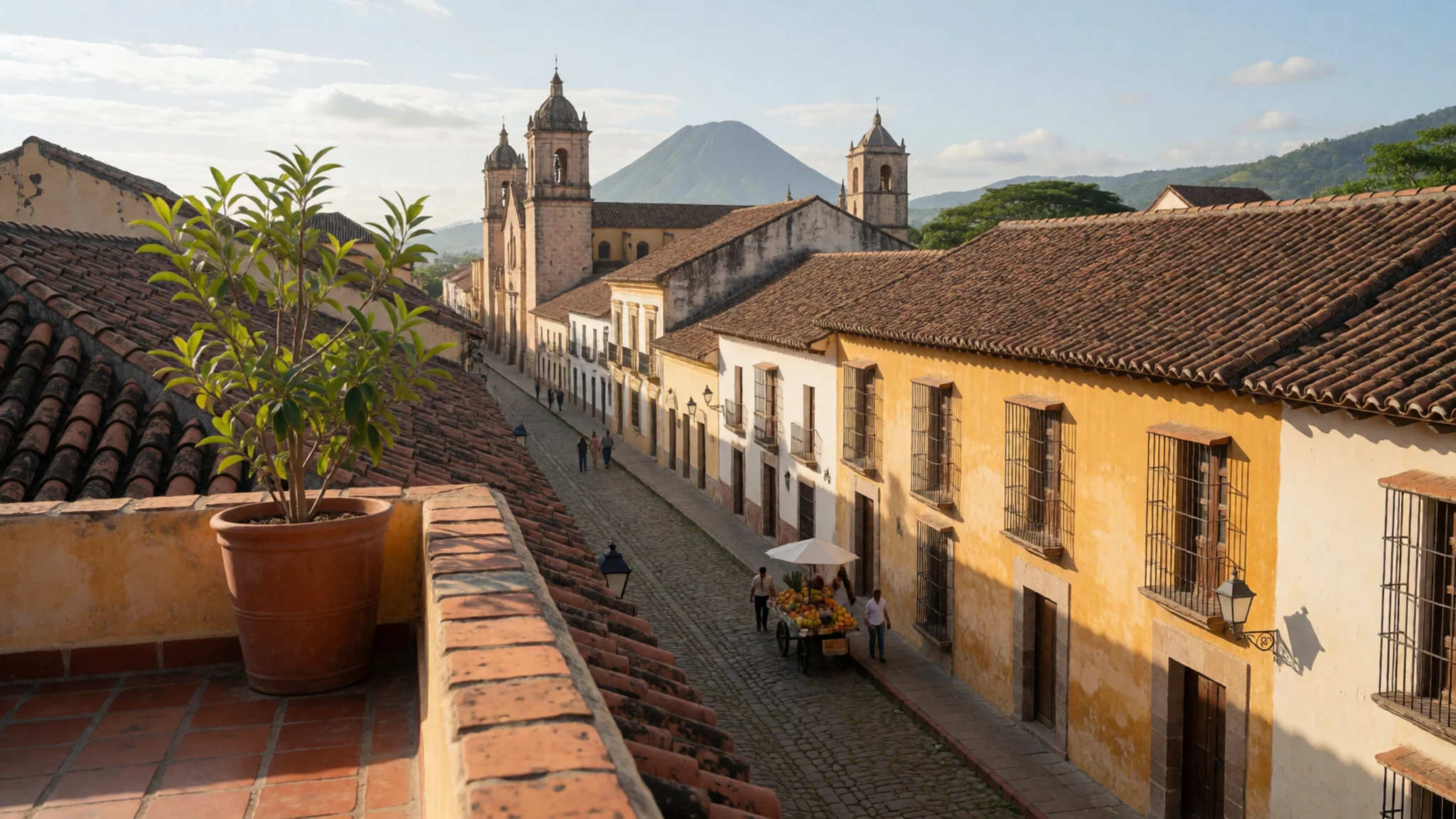
Culture
Mombacho sits in the Pacific half of Nicaragua, where everyday manners are warm but formal at the edges. Spanish here separates formal from informal address: usted for strangers, elders and anyone senior, and vos or tú among friends and peers, once someone has invited that closeness. Older people are often addressed as Don or Doña before their first name, as in Don Ramón or Doña María, roughly the equivalent of Mr or Mrs. It is a courteous way to speak to a guide, a landowner or a cook.
Appearance matters to many Nicaraguans. Neat, clean clothes signal respect, and a visitor who looks unkempt can puzzle people who assume travellers are well off. That does not call for smart clothes on a muddy trail, but tidy and cheerful goes a long way.
Local life also runs on saints' festivals, the fiestas patronales, which fill towns and villages with processions, the Gigantona dance and the Los Aguizotes parade. They are rarely advertised far ahead, so asking around in Granada is the best way to learn what is on.
Greet people with a buenos días before asking anything, use usted with strangers and elders, and keep to the marked trail and your guide inside the reserve.
What to wear
Around Mombacho and Granada, traditional dress is mostly seen at festivals and folk dances rather than in daily life. Women dancers typically wear wide, ruffled skirts in bright cotton with embroidered blouses, while men wear white shirts, dark trousers and a straw hat. These costumes turn up at fiestas patronales and cultural events, and the light cotton and straw suit the heat.
Everyday clothing is practical and tidy: jeans or light trousers, shirts or blouses, closed shoes or sandals, and clean, pressed outfits for church or a trip to town. Visitors often go about in shorts and vests, but locals tend to dress more neatly, and many Nicaraguans take real care over how they look.
A visitor to the volcano should plan for two climates in one day. The lowlands are hot, while the summit is cooler, damp and sometimes misty, especially early in the morning, so layers and a light waterproof are sensible. Wear shoes with real grip, since the trails can be slippery and steep, and carry a hat and sun protection for the open stretches. Rain in the wet season arrives fast and soaks quickly. In Granada's churches, covering shoulders and knees is polite, and tidy clothes in town suit local taste.
What to eat
- Gallo pinto — Any local eatery or breakfast stall in Granada
Rice and beans fried together, the everyday backbone of a Nicaraguan plate and the dish vegetarians can most reliably order. It comes at breakfast with eggs, cheese or fried plantain and is a staple of nearly every simple eatery.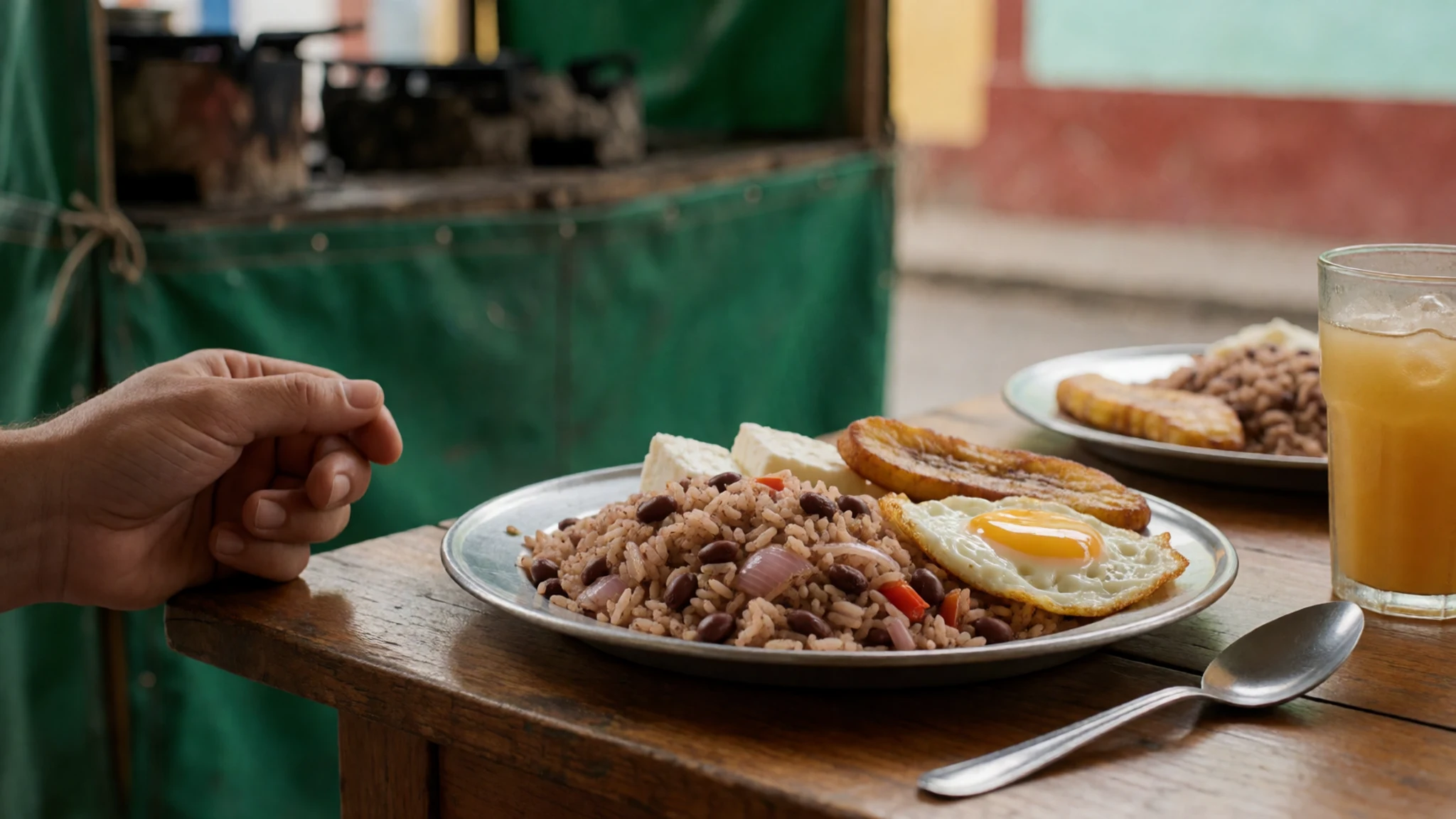
- Nacatamal — Sunday-morning stalls and home kitchens in Granada and nearby towns
A large tamal of corn dough with pork or beef and seasonings, wrapped and tied in banana leaf. Traditionally a Sunday dish, it makes a heavy, filling breakfast or lunch, usually eaten with bread and a hot drink.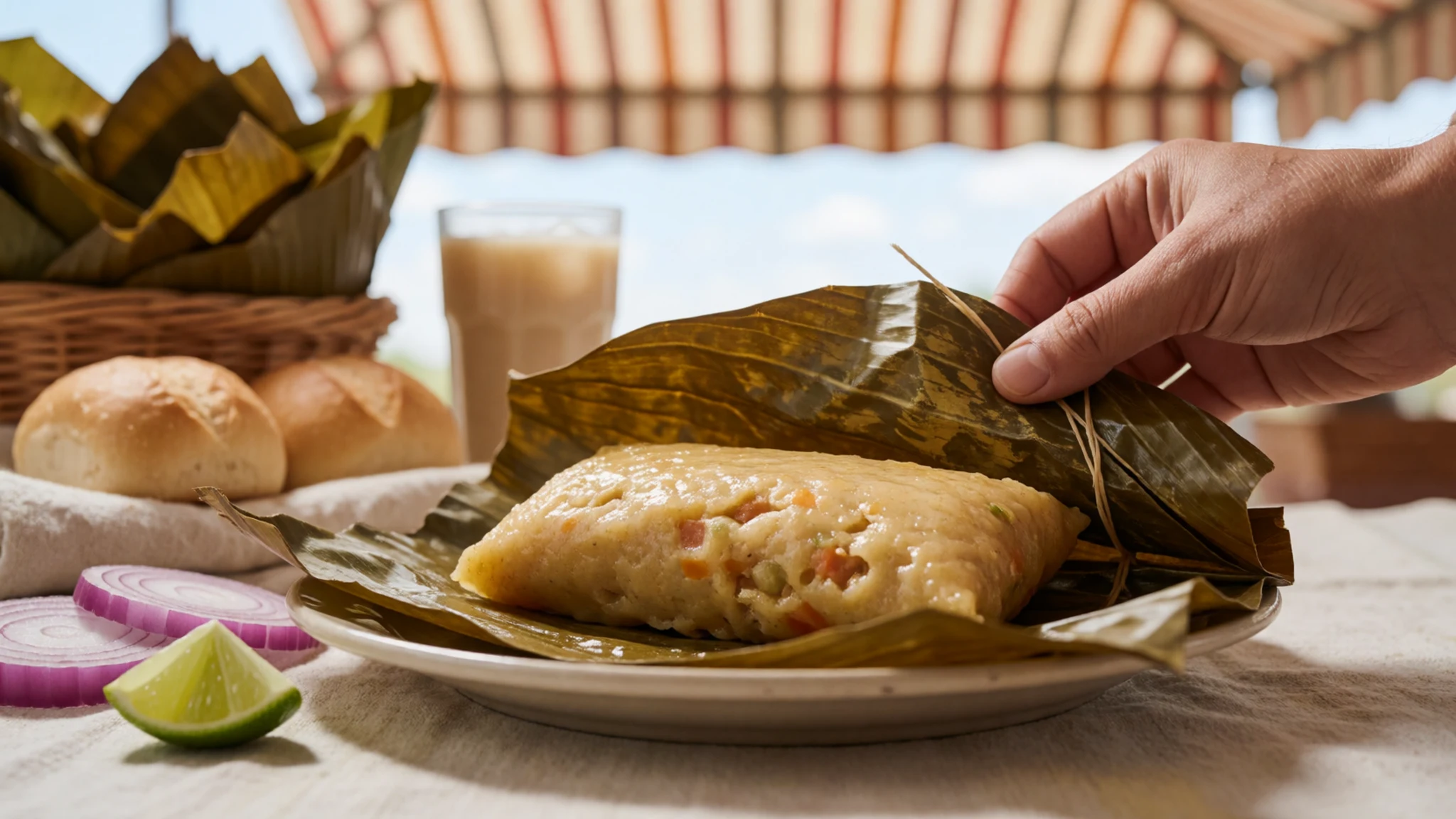
- Fritanga plate — Evening fritanga stalls in Granada
A buffet-style plate from a grill stall: grilled chicken or beef, rice, beans, cabbage salad and fried plantain. Quality varies, so choose a busy stall where food turns over quickly. Much of it is fried, so expect richness. - Vigorón — Street kiosks in central Granada
A Granada classic of boiled cassava topped with cabbage salad and crisp pork crackling, traditionally served on a banana leaf. It is simple, cheap and best eaten fresh from the stall, ideally after a morning of walking. - Guiso de papas or pipián — Home-style eateries in Granada
A buttery, creamy stew of potato, or of the squash-like pipián, useful where vegetarian choices are scarce. Ask for it in simple eateries and explain clearly what you do not eat, since chicken is often not counted as meat.
Plan it
Best time. December to April is the dry season (verano), with clearer views from the summit. May to October is the rainy season (invierno), when downpours can arrive suddenly and cloud sits low. Mornings are the best window in any month.
How long. 2–3
Getting there. Fly to Managua's international airport, then take a taxi or shuttle to Granada. From Granada, reach the reserve entrance by a local tour operator or taxi; check current access arrangements before you go.
Budget. low
Tips
- Go early: cloud tends to thicken later in the day, and morning views are usually the clearest.
- Check opening days, fees and tour arrangements with the reserve or a Granada operator, as they can change.
- Pack layers, a waterproof, water and snacks; the summit is cooler and wetter than Granada.
- Book a guide for El Puma, which cannot be walked alone.
- Carry some cash in small notes, and take a taxi rather than walking dim streets at night.
Etiquette
- Use usted and a polite greeting with strangers and elders.
- Stay on marked trails, and do not pick plants or disturb wildlife.
- Dress neatly in town and cover shoulders and knees in churches.
Nearby
Sources
- Wikidata Q137766040 (CC0)
- Wikipedia: Mombacho (rev 1371280285) (CC BY-SA 4.0)
- Wikivoyage: Nicaragua (rev 5370620) (CC BY-SA 4.0)