Laguna de Apoyo
Laguna de Apoyo, Nicaragua
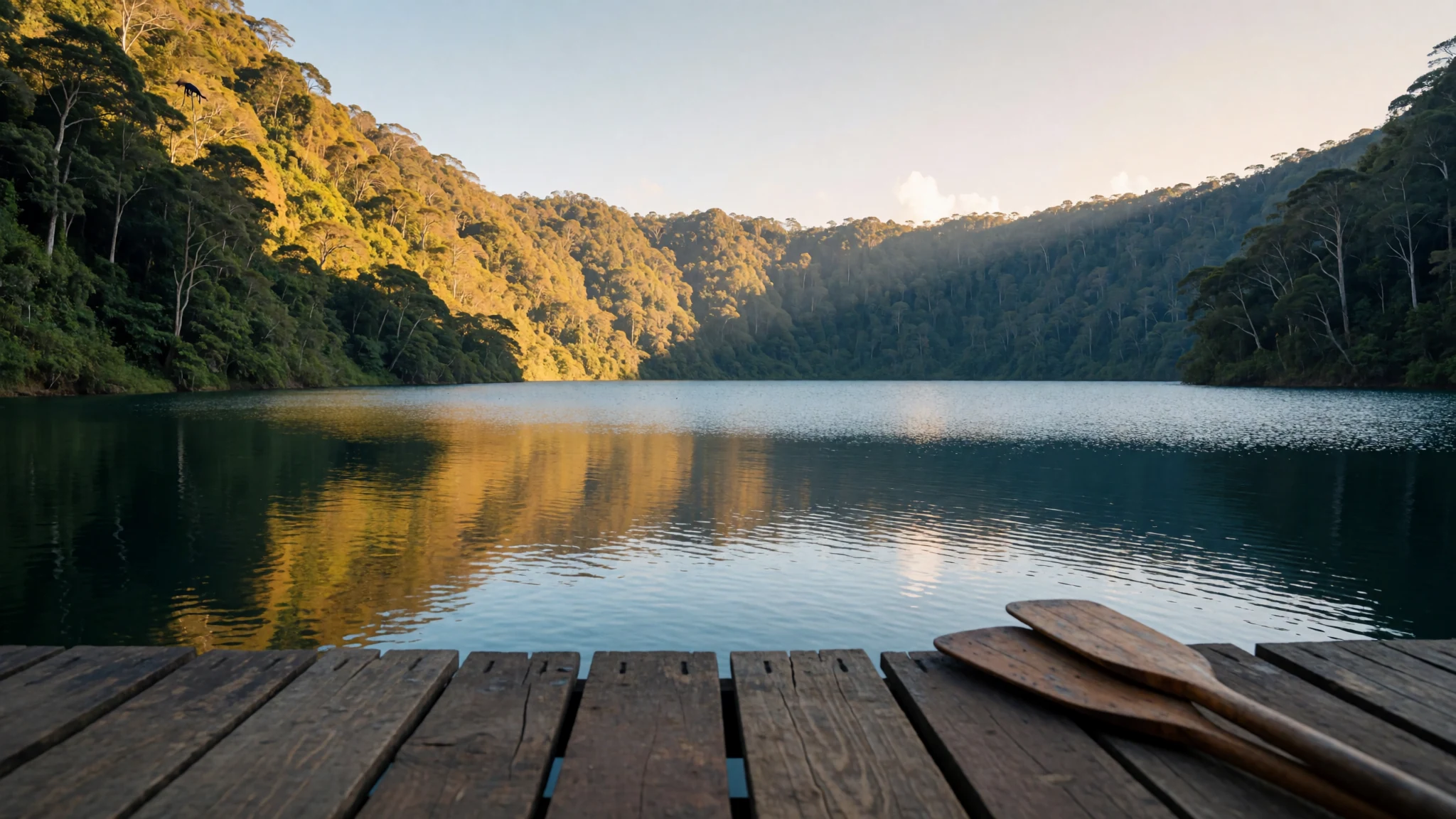
A round crater lake in western Nicaragua, ringed by forested hills, protected from building and motor boats, and best enjoyed on a quiet day in the dry season.
The place
Laguna de Apoyo sits in a bowl of hills between the towns of Masaya and Granada in western Nicaragua. It is a crater lake, filling the basin of an extinct volcano, and it has no river flowing out, so water leaves only through the ground. The lake is close to circular, about 6.6 km across, and it is deep, around 175 m at its middle. Its drainage basin is wide, so rain falling on the surrounding slopes and groundwater moving through the rock both shape how full the lake stays.
The lake is protected as a nature reserve, declared in 1991 and managed by the national environment ministry. It is one of 78 protected areas in Nicaragua, and it follows a management plan approved in 2010. That plan bans building houses inside the reserve and keeps motorised vehicles off the water. The result is a shoreline that feels calm in a way many lakeside settlements in the region do not, with the sounds of birds, insects and the wind on the water filling the gaps between boats.
The water level has also fallen. Nicaraguan hydrologists recorded a drop of about 10 m over roughly 30 years, a change that reflects the balance between water entering and leaving the lake underground. Anyone arriving expecting a fixed shoreline may notice wide bands of exposed ground near the edges, a visible reminder that even a large, old basin responds to changing conditions.
Its story
The lake's story begins with volcanic activity. Geological evidence suggests that the basin formed about 23,000 years ago, when the crater of a volcano became a lake and the surrounding land settled into the shape it holds today. Because the lake has no surface outlet, every litre of water it gains from rain and springs is balanced by evaporation and seepage through the ground. That quiet underground exchange is what decides the lake's level from year to year.
For most of recent history the lake was simply part of the landscape around Masaya and Granada. Its turn towards formal protection came in 1991, when it was declared a nature reserve. Since then, the reserve has been governed by rules meant to keep the basin as it is. The management plan of 2010 is the document that sets the terms: no new housing inside the reserve, and no motor vehicles on the lake.
Those rules were written with the lake's fragility in mind. Hydrologists have tracked a fall in the water level of about 10 m across roughly 30 years, a change tied to the balance between inflow and loss. The reserve's story is therefore one of trying to protect a body of water whose depth depends on conditions both above and below ground, and whose future depends on how carefully its surrounding basin is managed.
What to see
- The lake itself — Reserva Natural Laguna de Apoyo, between Masaya and Granada
The main attraction is the lake, a near-circular expanse of water about 6.6 km across and roughly 175 m deep at its centre. Swimming and paddling from the shore are the simplest ways to appreciate it, and the still water makes it feel quite different from the open coast. Expect the water level to look lower than older guidebooks suggest, since it has dropped in recent decades.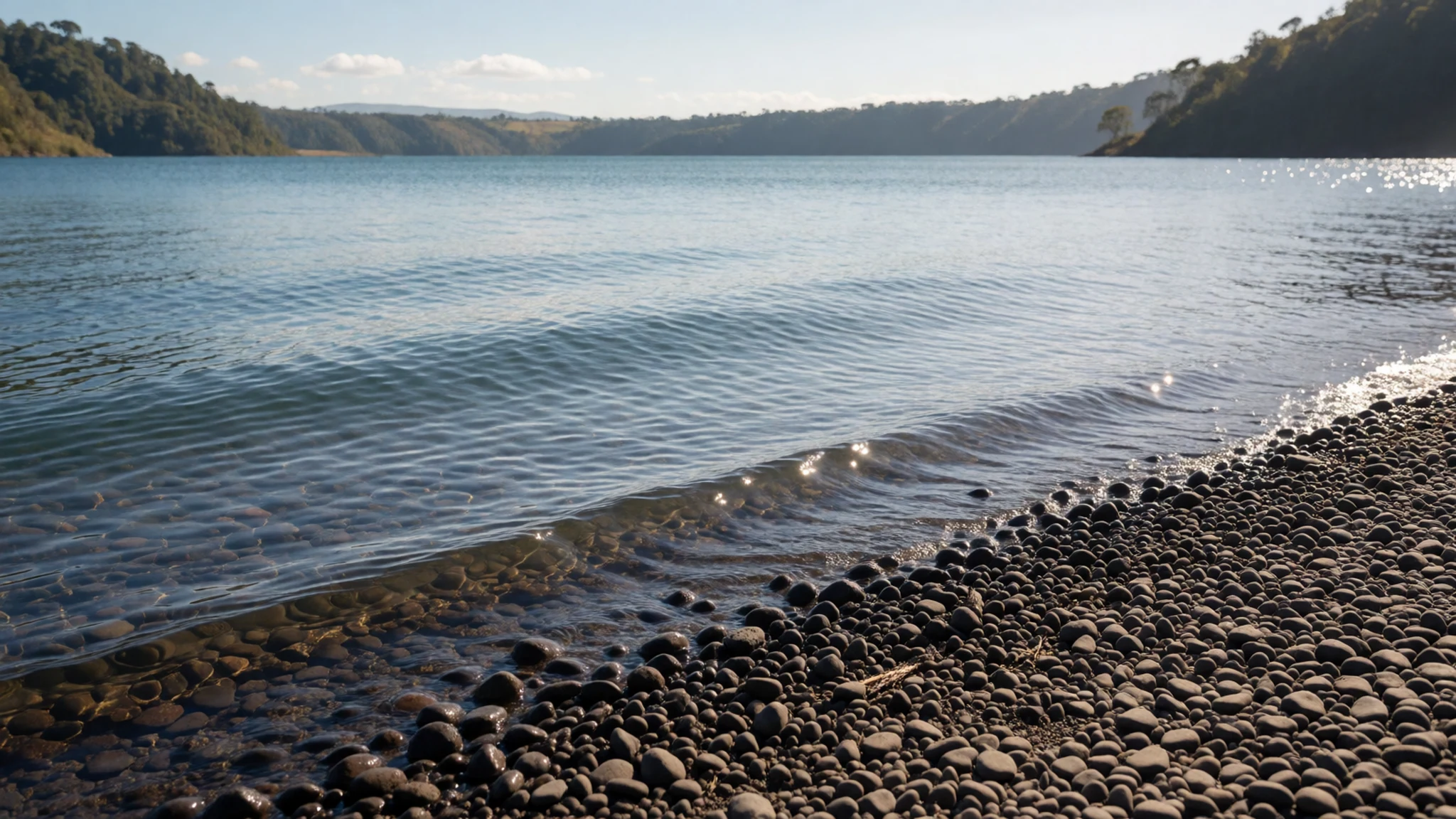
- Mantled howler monkeys — Forest slopes around the reserve
Mantled howler monkeys, also called pilgrim howlers, live in the forest around the lake and are often heard before they are seen. Their deep calls carry across the water, especially in the early morning. Keep a respectful distance, avoid feeding them, and watch for them in the trees along the trails above the shore.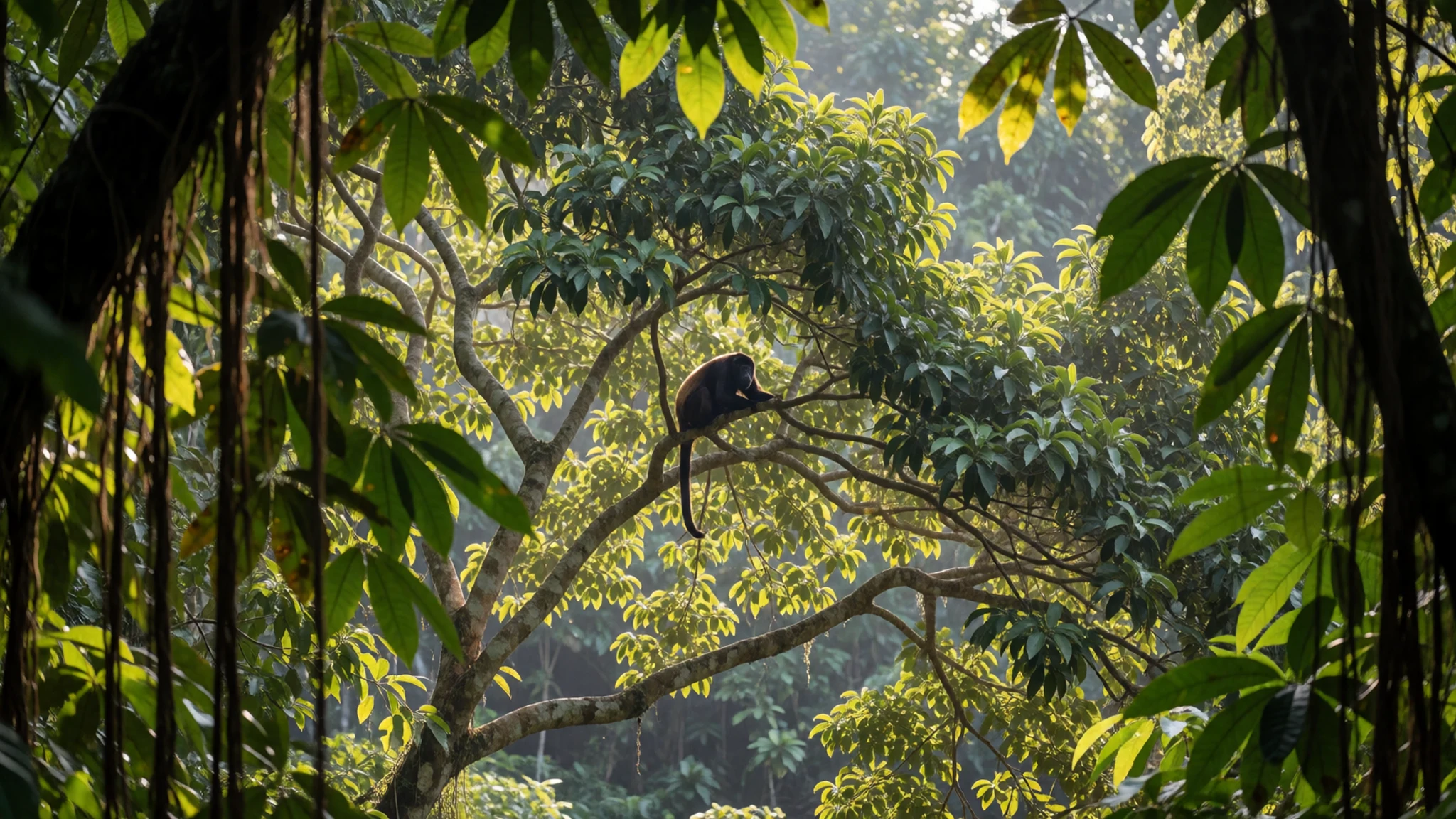
- Kayaking on the water — Shoreline of the lake, near the reserve entrance
Paddling is one of the most rewarding ways to see the lake, because the reserve bans motor vehicles on the water and the surface stays quiet. Kayaks and small paddle boats are typical here. Choose a calm morning, carry water, and take a hat, as there is little shade out on the lake.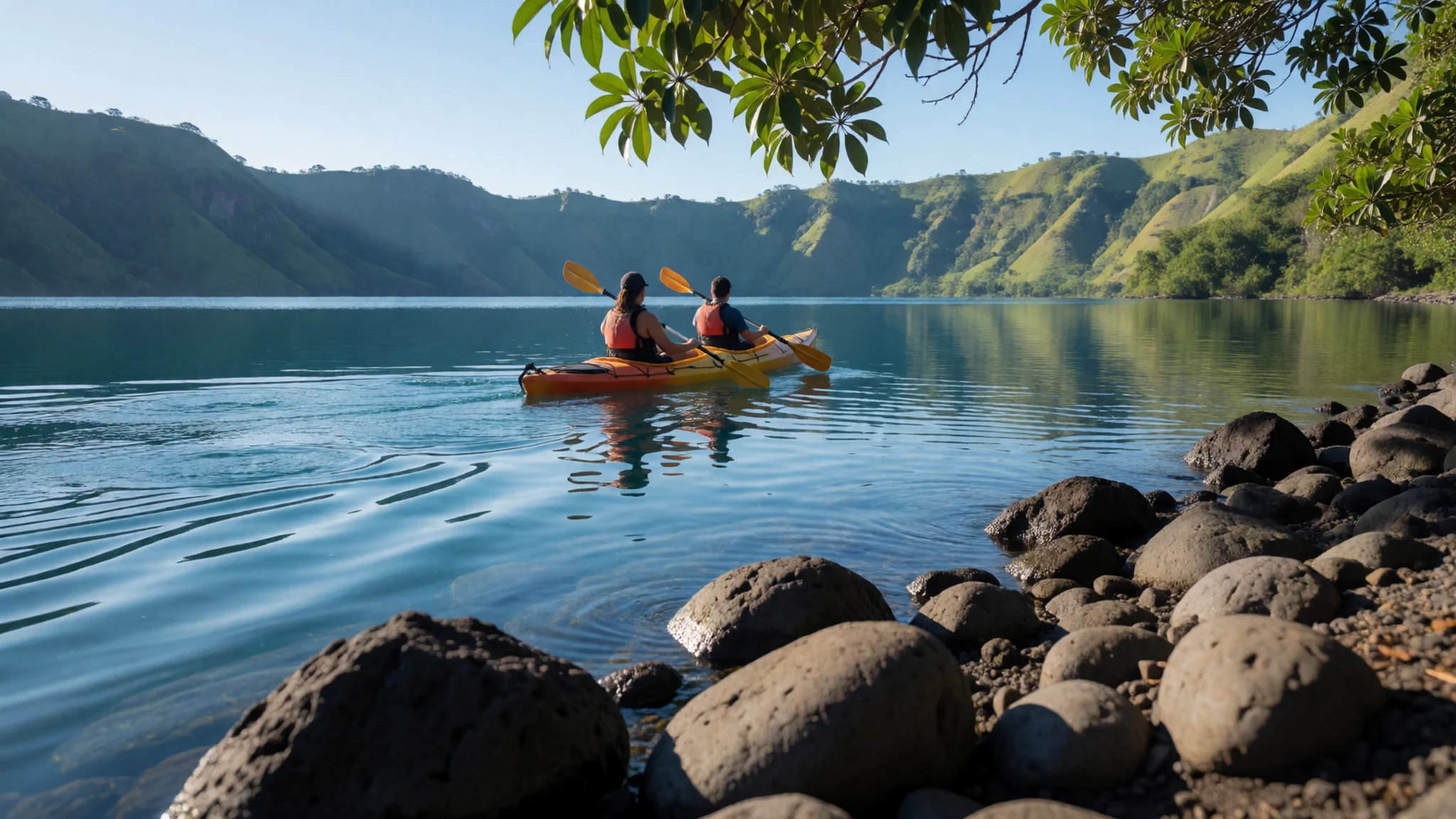
- Granada's colonial churches — Granada, on the shore of Lake Nicaragua
Granada, a short distance away, has a dense cluster of colonial-era churches and an old centre of painted façades and shaded plazas. It is the natural town to visit on the same trip, and walking its streets in the cooler hours is pleasant. Many churches are open for visits during the day, though hours vary, so check locally.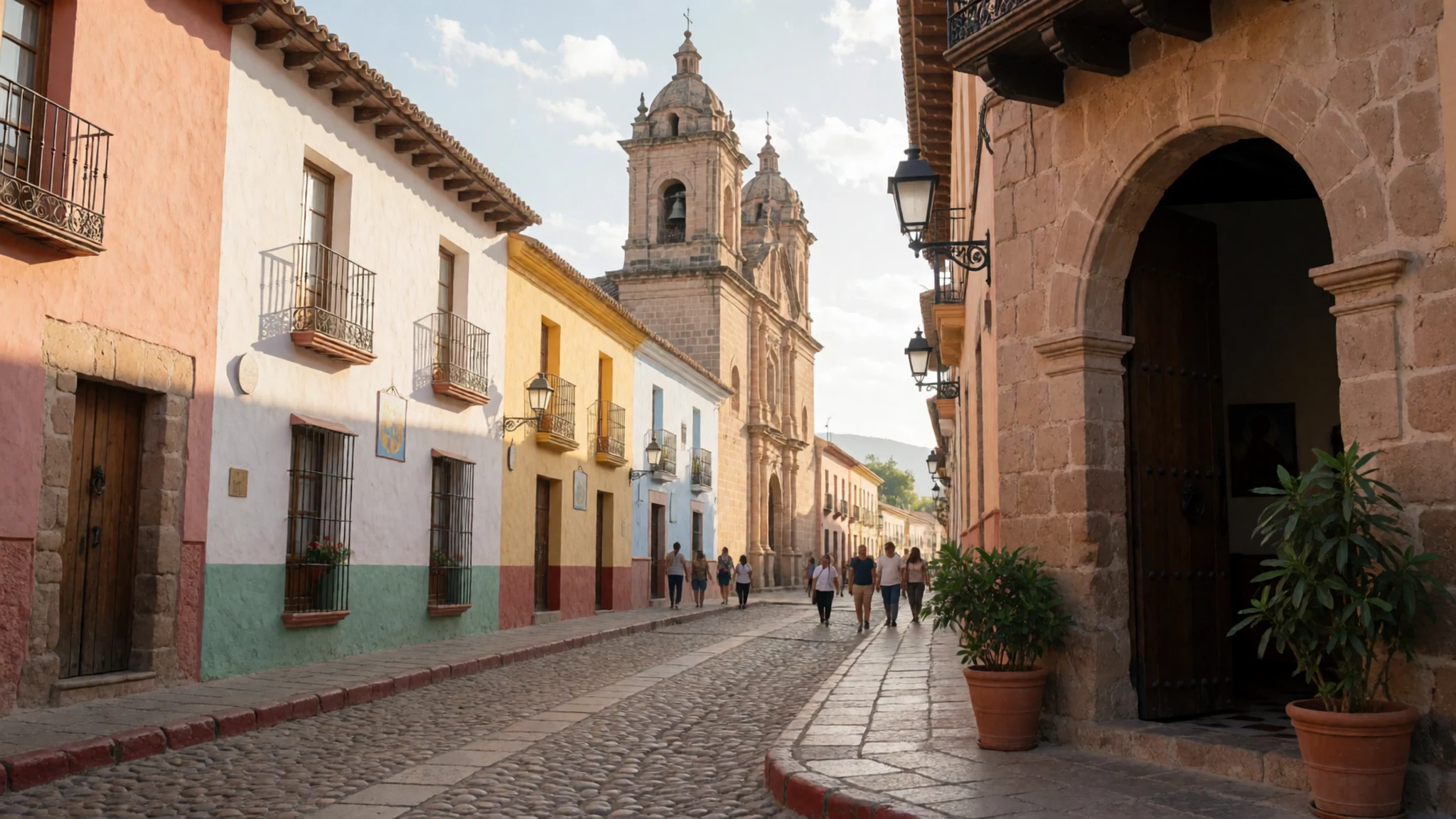
- Volcán Mombacho — Near Granada
Volcán Mombacho rises near Granada and is one of the country's well-known volcanoes, and its slopes are a common day trip from the lake. The forested summit area offers wide views over the surrounding land. Conditions and access can change, so check locally before setting out.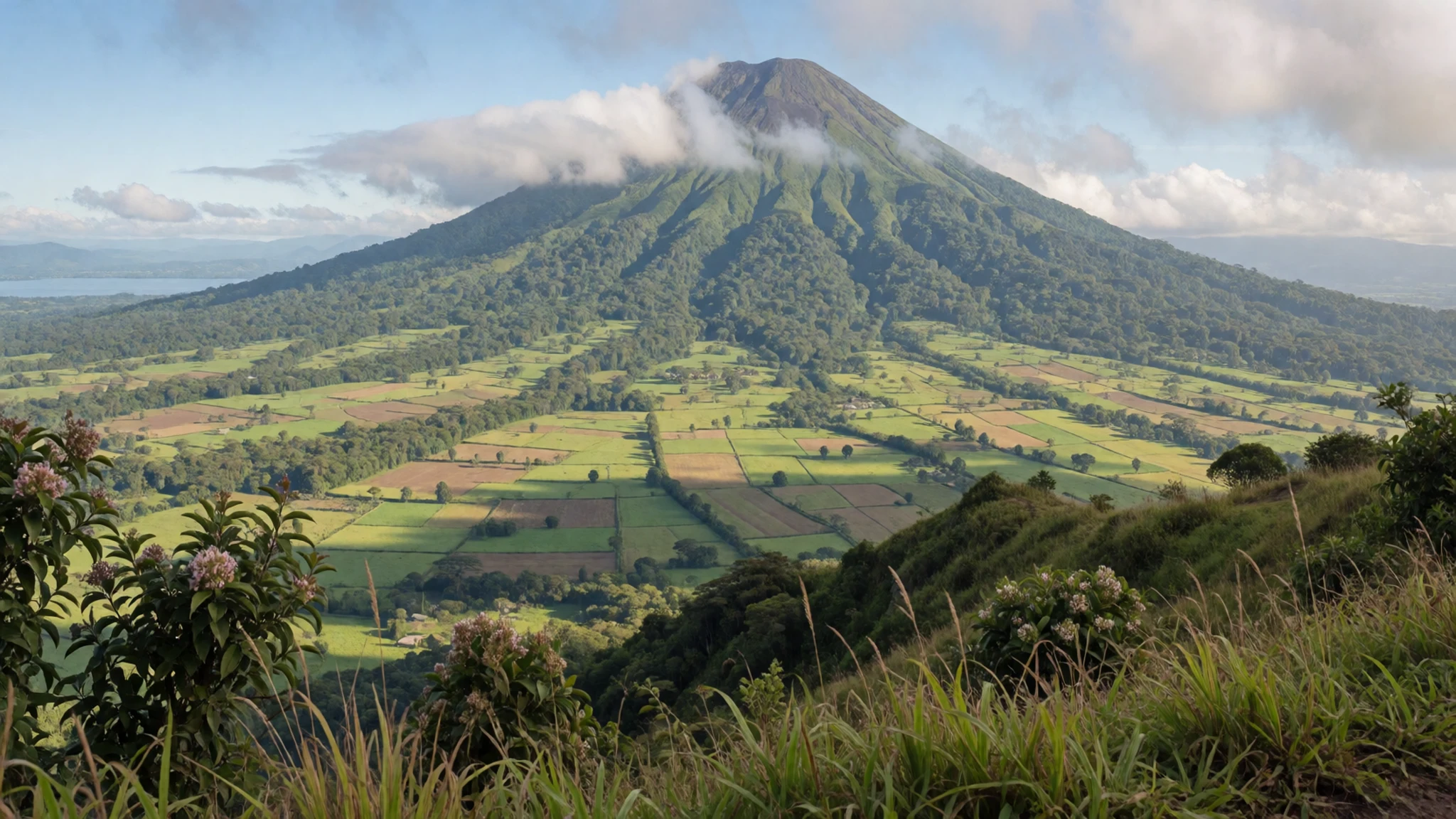
Culture
Nicaraguan Spanish distinguishes between formal and informal address. The formal form, usted for one person and ustedes for several, is the norm with strangers, older people and anyone in a position of authority, and it is the safest choice when you first meet someone at a lodge, shop or boat landing. The informal forms, tú or vos, are used between peers and friends, and you should wait until someone invites you to use them.
It is also common to address people politely with Don for men and Doña for women, followed by the given name, as in Don Ramón or Doña María. This works like Mr or Mrs in English and is a warm way to greet a shopkeeper, a cook or a guide you have just met.
Nicaraguans take appearance seriously, and visitors who arrive in shabby or unkempt clothes can be read as careless about the occasion. Neat, clean clothes are appreciated in towns and churches, even when the lake itself calls for swimwear. Whenever you wish to photograph someone on the shore, ask first and wait for a clear answer, because a quick smile and a question goes a long way.
What to wear
Traditional dress in Nicaragua is most visible at festivals and folk dances. The best-known garment is the pollera, a full, gathered skirt often made of cotton and decorated with embroidery or bright trim, usually worn with a blouse. It appears at fiestas and patron saint celebrations, when people dress in their finest for processions and dancing. Textile traditions vary by region, so the details of colour and cut differ from town to town.
Day to day, people around Granada and Masaya wear practical, modern clothes: jeans, cotton shirts and dresses, and trainers or sandals. Many people dress up for church, for market days and for Sunday, when families gather for big meals. Men often wear long trousers and collared shirts in towns, and women tend to choose modest but comfortable outfits for the same occasions.
For a visit to the lake, pack lightweight, quick-drying clothes, a swimsuit, a hat and a light long-sleeved layer against the sun. Sturdy sandals or walking shoes work well on the stony paths above the shore. When you enter a church in Granada or elsewhere, cover your shoulders and knees, and leave beachwear for the water.
What to eat
- Gallo pinto — Morning breakfast stalls and family kitchens in Masaya and Granada
Gallo pinto, rice and beans fried together, is the everyday base of Nicaraguan breakfasts and a sensible vegetarian choice. It usually arrives with cheese, fried plantain and a cabbage salad. Ask for it at a small family eatery or breakfast stall in the nearest town.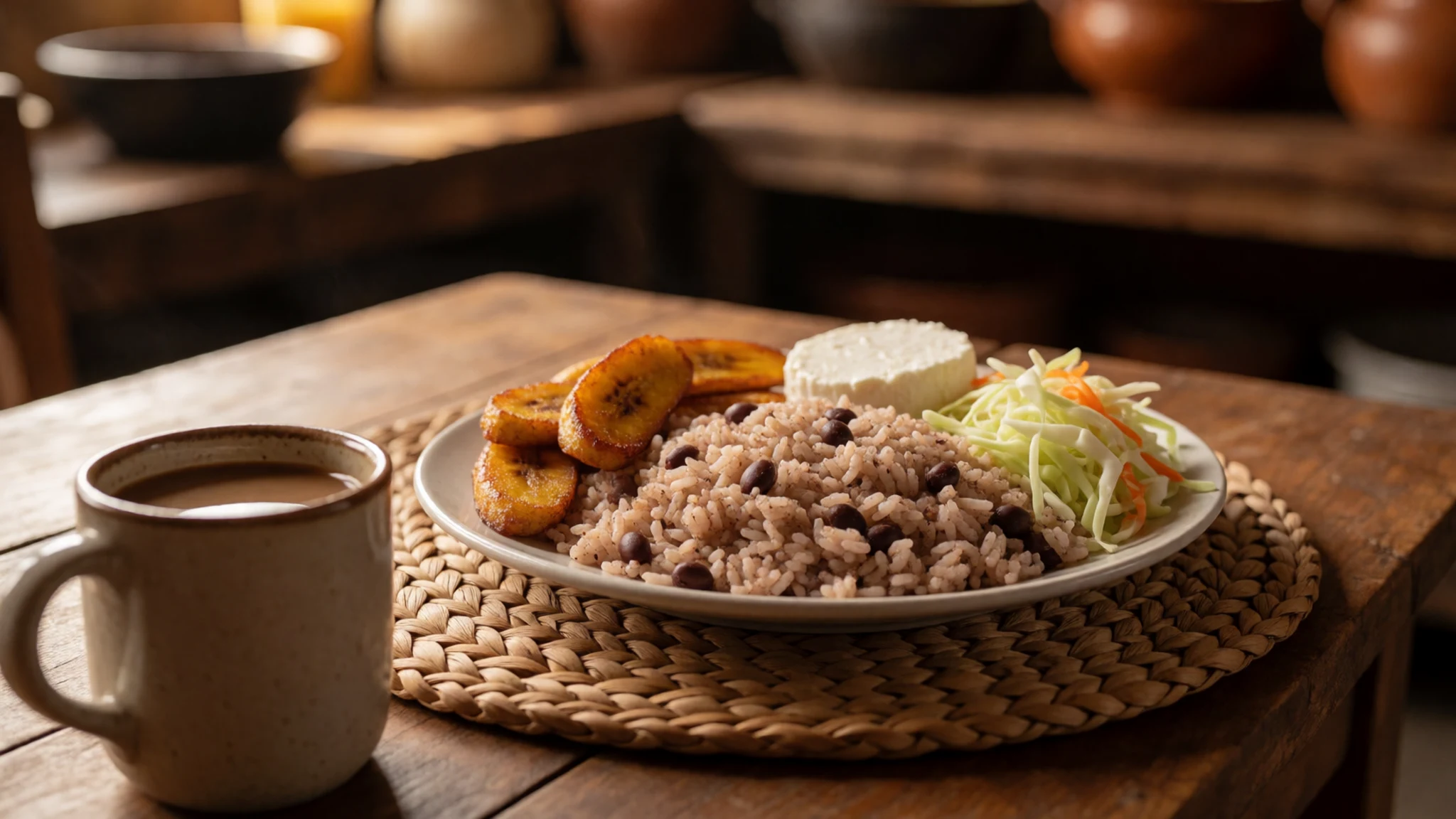
- Nacatamales — Sunday markets in Granada and Masaya
Nacatamales are large tamales filled with pork or beef and seasonings, wrapped in banana leaf and tied with a strip of the same leaf. They are a traditional Sunday food, so plan a visit to a Sunday market to find them at their best.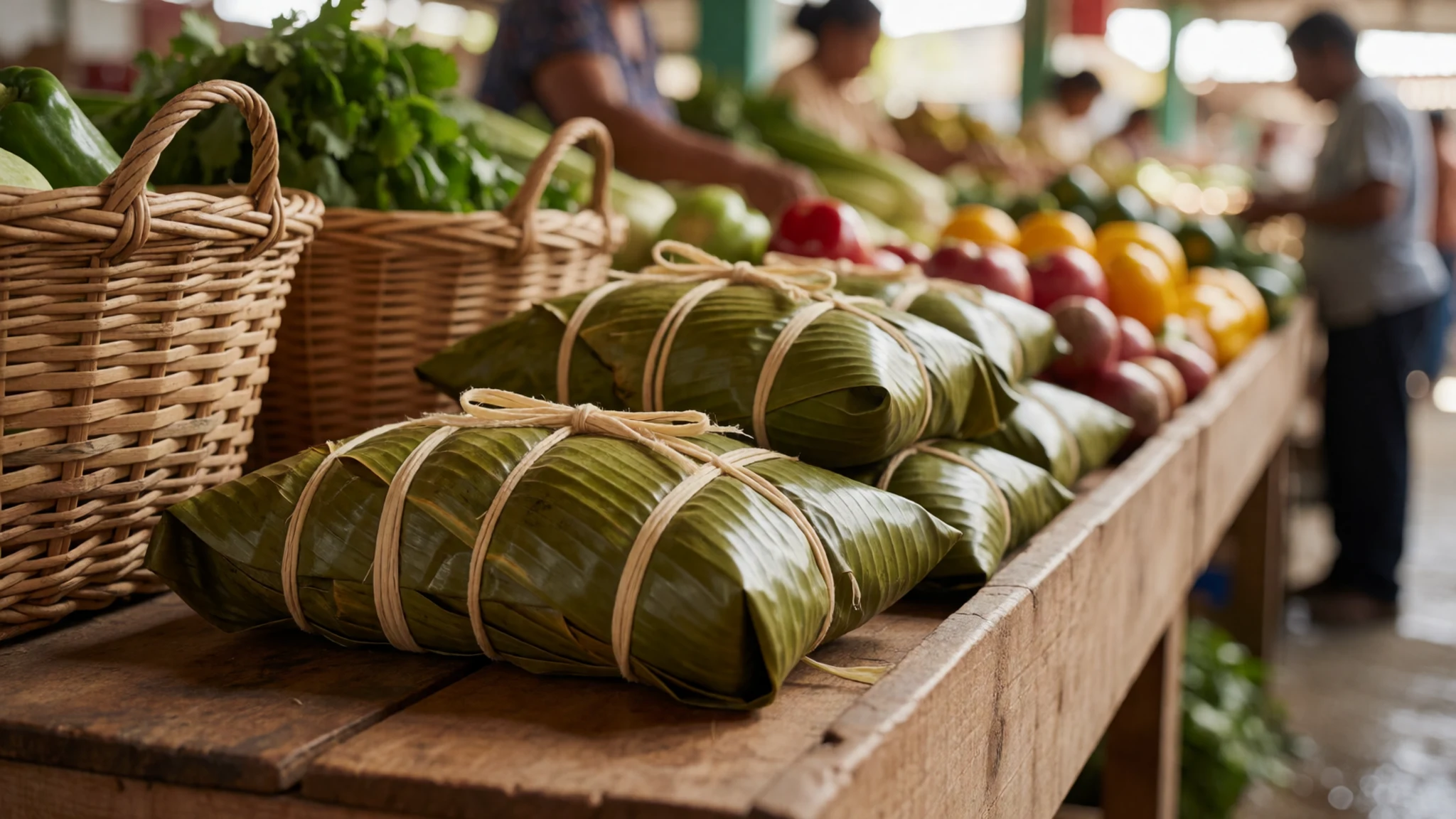
- Fritanga — Roadside stalls and busy corners of towns near the lake
Fritanga is the buffet-style street food of fried meats, plantains and fritters served from stalls and simple eateries. Quality varies a lot, and much of the food is fried in oil or lard, so choose a stall that is busy with local customers and serving food fresh. - Grilled chicken and beef — Grill houses and open-air eateries on the road between Masaya and Granada
Grilled chicken and beef are common across the country and are usually served with rice, beans and salad. Beef is often good quality but can be cooked tough, so ask how it is prepared. Chicken is the safer choice if you prefer a lighter meal. - Guiso de papas or pipián — Family kitchens and home-style eateries in the towns
Guiso de papas, a potato stew, and pipián, a creamy stew of squash or zucchini, are buttery vegetable dishes that suit visitors who do not eat meat. Saying you do not eat meat may bring chicken instead, since many people do not count chicken as meat, so ask for it clearly.
Plan it
Best time. November to April is the dry season, locally called verano, on the Pacific side, and it is the easiest time to swim, paddle and walk the shore. The rainy season, invierno, brings more cloud and heavier downpours, which can make the trails muddy. The lake itself is at its most pleasant when the sky is clear.
How long. 2–3
Getting there. Fly into Managua, then travel by road to the lake, which lies between Masaya and Granada, so the last leg is a taxi or local transport from either town. Check the official transport options and road conditions before you travel.
Budget. low
Tips
- Visit in the dry season from November to April for the clearest conditions
- Plan paddling and walking for the cooler morning hours
- Carry water, sun protection and a hat, since shade on the lake is limited
- Check local advice on access to Volcán Masaya and Volcán Mombacho before you go
- Check the official government website for current entry and visa rules
Etiquette
- Keep to marked paths and respect the reserve's rules on construction and motor vehicles
- Ask before photographing people, especially in towns and at markets
- Do not feed the howler monkeys
Nearby
Sources
- Wikidata Q620604 (CC0)
- Wikipedia: Laguna de Apoyo (rev 1339752361) (CC BY-SA 4.0)
- Wikivoyage: Nicaragua (rev 5370620) (CC BY-SA 4.0)
- Photo: Vista panorámica de la Laguna de Apoyo, Zuluniga (CC0 1.0)
- Photo: Mantled Howler Monkey, BluesyPete (01) (CC BY 3.0)
- Photo: Mantled Howler Monkey, BluesyPete (02) (CC BY 3.0)
- Photo: Mantled Howler Monkey, BluesyPete (03) (CC BY 3.0)
- Photo: Mantled Howler Monkey, BluesyPete (04) (CC BY 3.0)
- Photo: Couple on Kayak, Adam Jones (CC BY-SA 2.0)
- Photo: View of Nicaragua, ISS Expedition 6 (17222) (Public domain)
- Photo: View of Nicaragua, ISS Expedition 6 (17223) (Public domain)


