Sajek Valley
Sajek Valley, Bangladesh
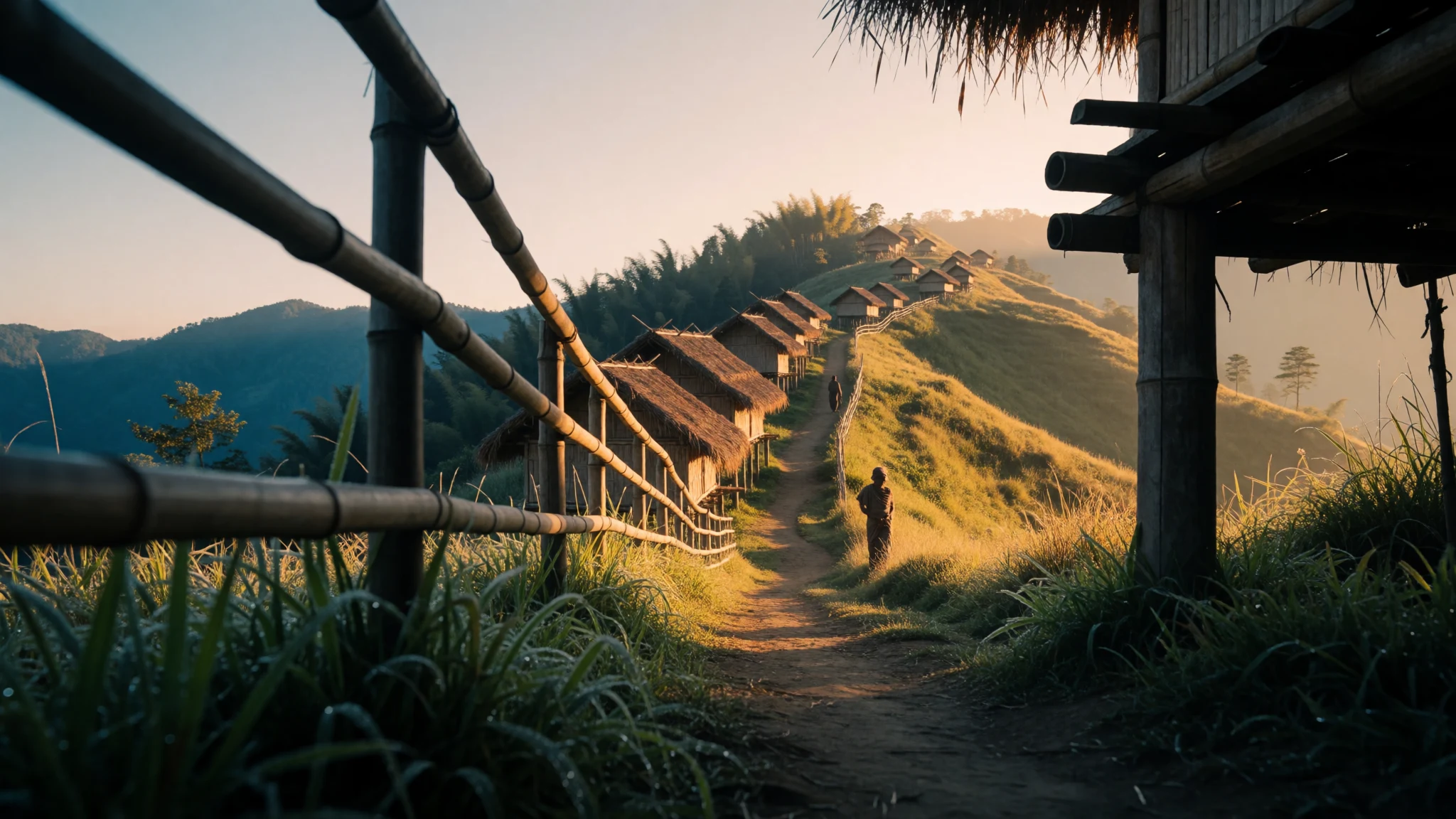
Sajek Valley offers cloud-filled dawns over forested ridges and a close look at the Indigenous hill communities of south-eastern Bangladesh.
The place
Sajek Valley sits in the Chittagong Hill Tracts of south-eastern Bangladesh, in Rangamati district, close to the border with India's Mizoram state. It is a string of hilltop settlements rather than a single valley: ridges of bamboo, teak and fruit orchards fold away in every direction, and villages perch along the crests where the road runs. Mornings are the draw. Cloud often pools in the low ground below the ridgeline so the hills look like islands, and the light turns the haze gold and then white within an hour or two. By midday the cloud lifts, the heat builds and the views flatten.
The area is home to several Indigenous communities, including the Lushai, Pangkhua, Tripura, Chakma and Bawm peoples, each with its own language and way of settling the land. Much of what visitors see, such as bamboo stilt houses, small churches and terraced plots of hill rice, comes from their way of life. Sajek is also changing fast. Cottages and resorts have multiplied along the main ridge, and weekends and national holidays bring crowds from Dhaka and Chattogram that strain narrow roads, water supply and quiet.
Weekdays outside holiday periods are calmer. The road in is steep, and the final stretch is usually done by local jeep because ordinary cars struggle. Mobile signal can be patchy, cash matters, and the rules on permissions and security checks have changed over time, so current conditions are worth confirming before setting out.
Its story
Sajek Valley belongs to the Chittagong Hill Tracts, a region whose history is tied to questions of land, identity and autonomy. In the colonial period the hills were administered separately from the plains, under special rules meant to protect the customs of the hill peoples. After the partition of British India the region became part of Pakistan, and later of Bangladesh, and those special arrangements were gradually worn down.
Two changes shaped the decades that followed. The building of the Kaptai dam flooded large areas of farmland and settled valleys, displacing many Chakma families and others. Later, the movement of Bengali settlers into the hills sharpened disputes over who held the land. An armed conflict between hill-people's groups and the state ran for many years, and a peace accord at the end of the twentieth century ended the fighting without settling every land and governance question.
Sajek's tourism grew out of that landscape. A road was cut through the ridges, security posts were established, and photographs of cloud-filled hollows spread through social media. Visitors began to arrive in numbers, and accommodation followed. The result is a place where a holiday economy now sits beside villages whose residents still debate land rights, access and the pace of development. Local people are both hosts and stakeholders here, and the way Sajek grows is an open and sometimes contested conversation.
What to see
- Konglak Para — Baghaichhari upazila, Rangamati district
Konglak Para is a Pangkhua hamlet strung along a ridge, with wide views across layered hills. It is the usual place to watch cloud settle and clear at sunrise. Come on a weekday if possible, since weekends fill the path with day-trippers and the quiet that makes it worthwhile disappears.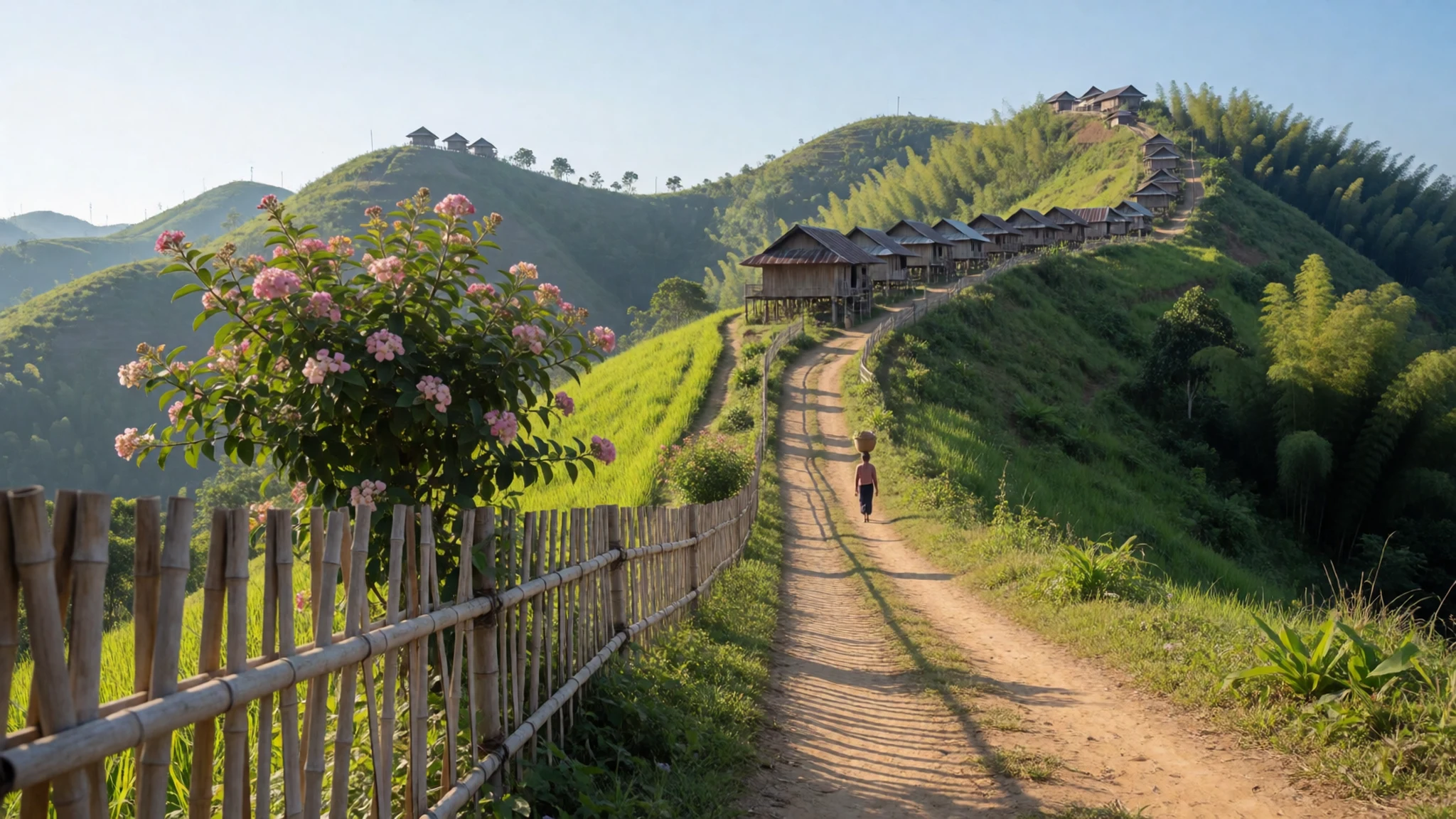
- Ruilui Para — Sajek ridge, Rangamati district
Ruilui Para is a Lushai village on the ridge, with stilt houses, a church and open views over the hills. It is a gentler stop than the main viewpoints. Walk slowly, greet people first, and buy tea or a small snack from a household stall rather than just taking photographs.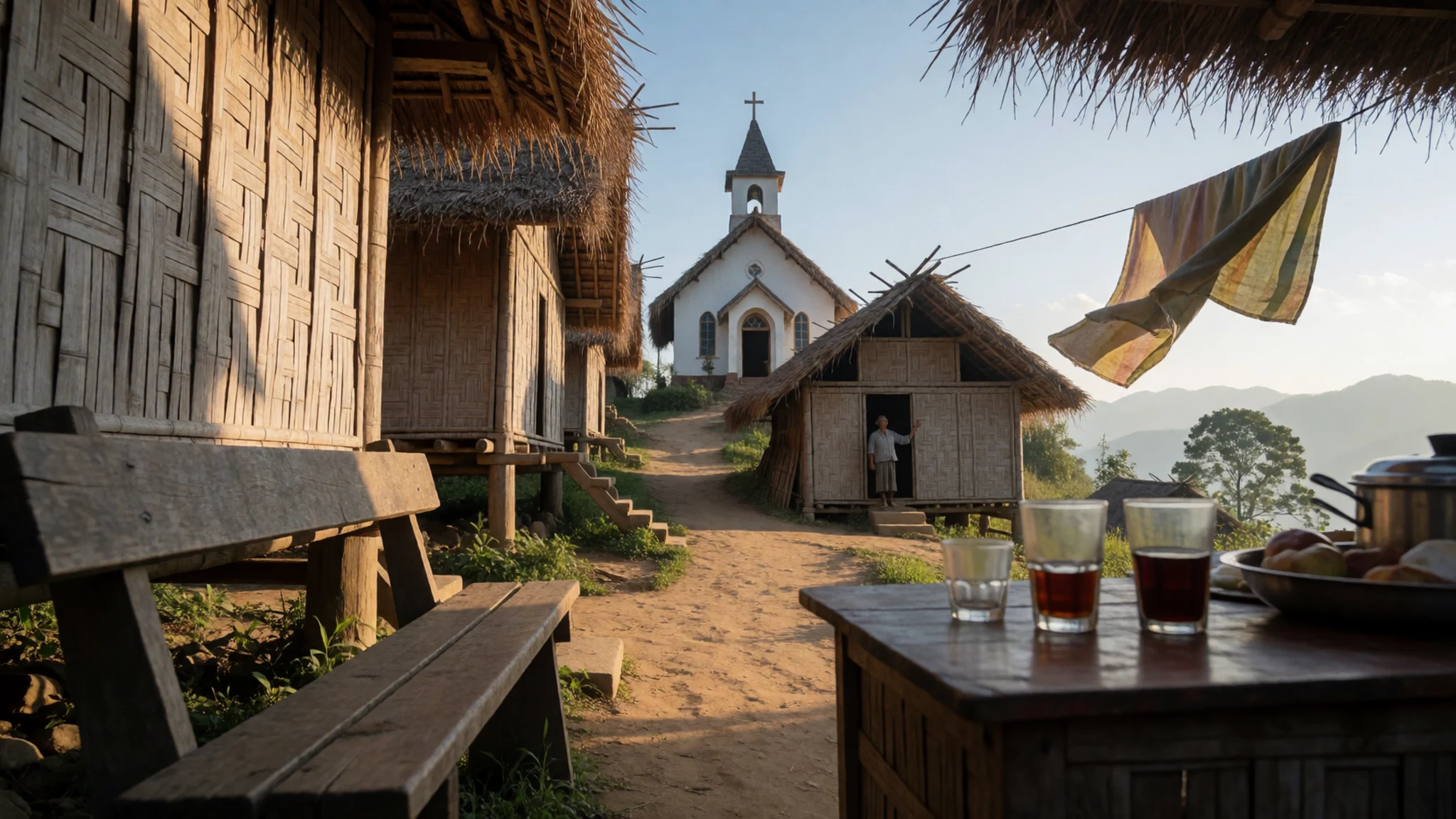
- Helipad viewpoint — Sajek ridge, Rangamati district
The helipad ground on the ridge is a flat, open clearing used as a lookout. It gives a wide arc of hills and a clear sunset sky. It tends to be the busiest spot on holiday evenings, so aim for early morning when mist drifts below and the crowds are elsewhere.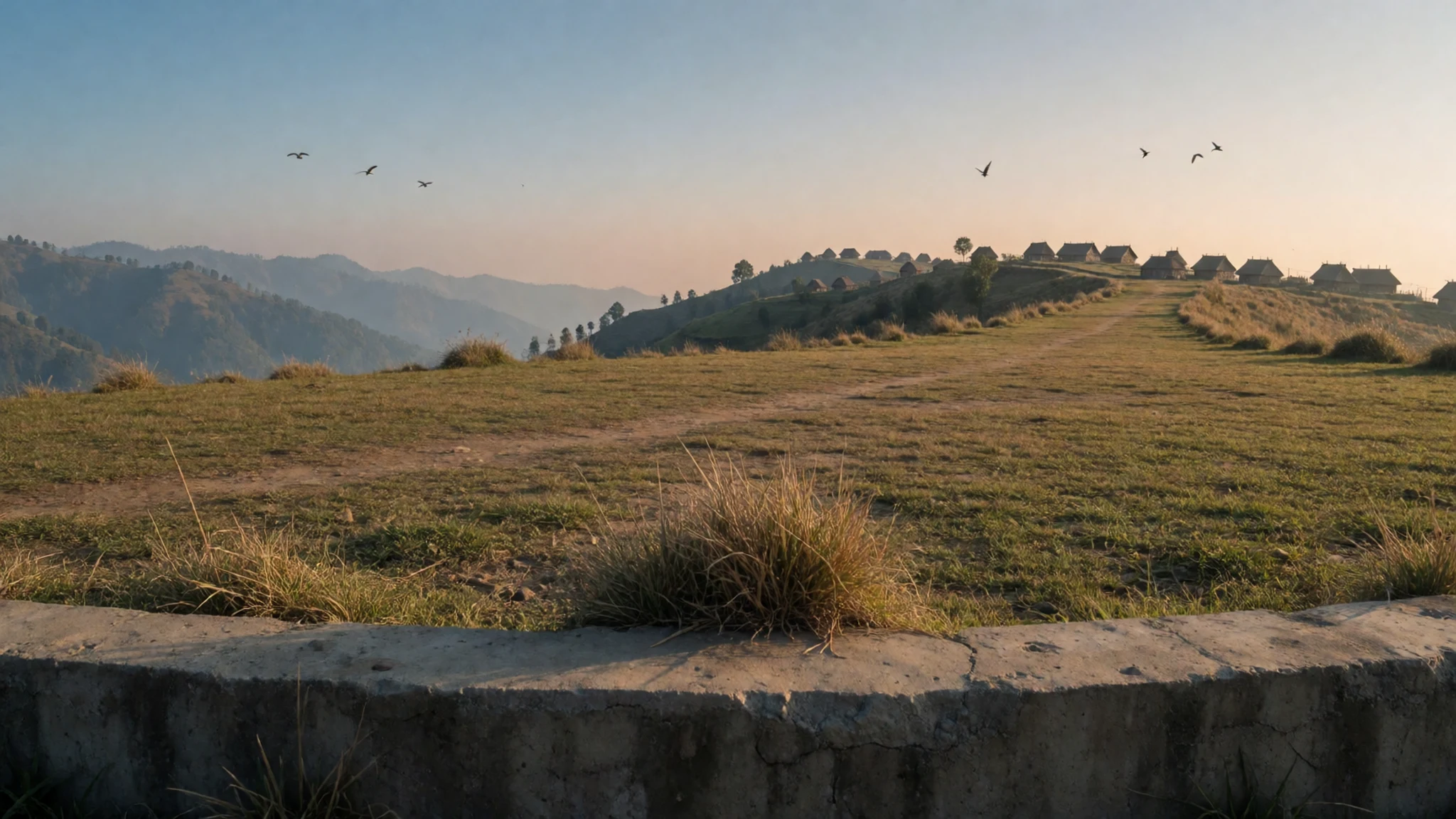
- Village walks and weaving — Hamlets along the main ridge
Short walks between hamlets show terraced plots, bamboo-and-thatch houses and household looms where women weave patterned cloth. Arrange a local guide through your lodging if you want to visit homes. Ask before photographing anyone, and treat the invitation to see a loom as hospitality, not a performance.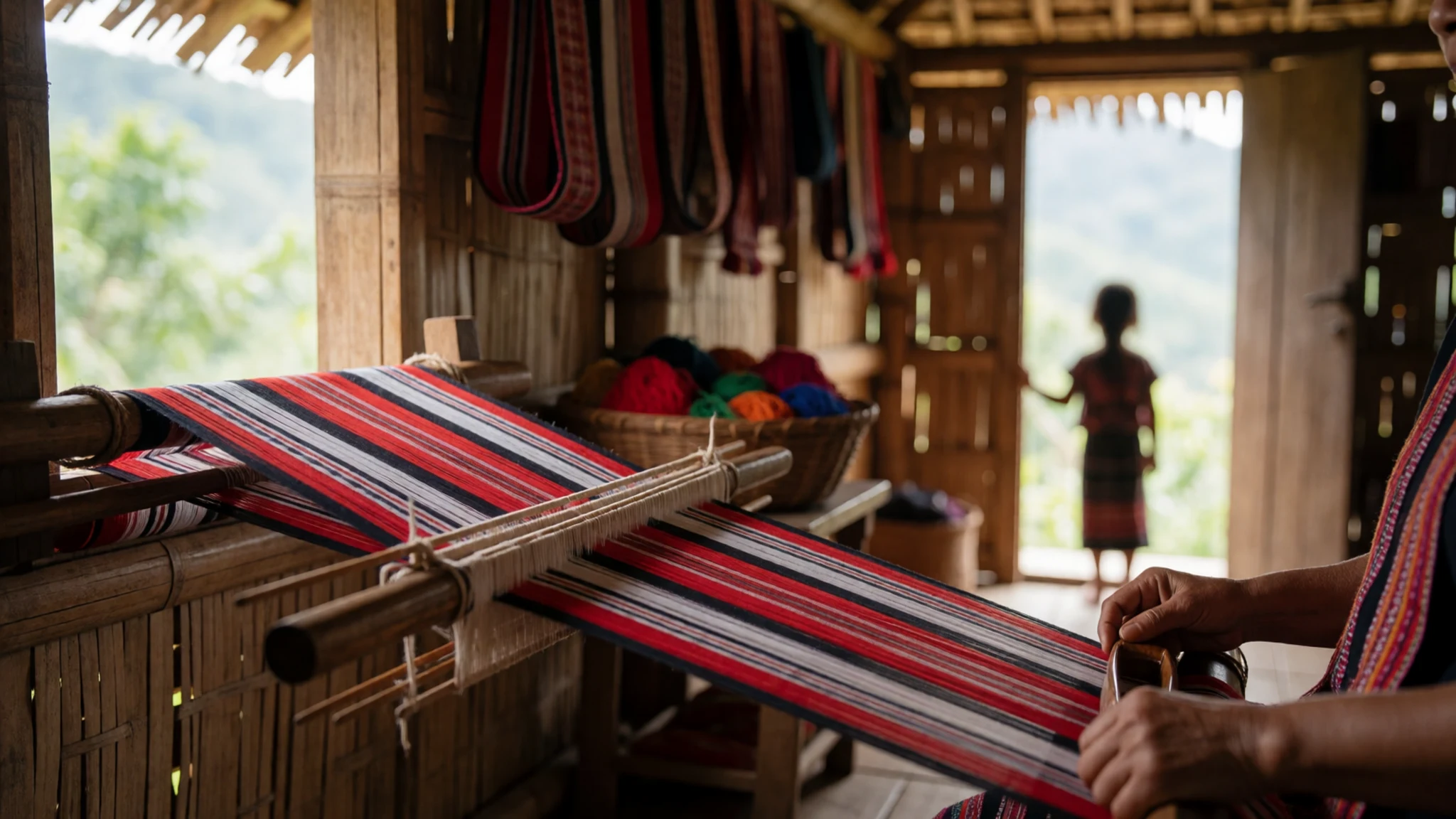
- The hill road from Dighinala — Dighinala to Sajek, Khagrachhari and Rangamati districts
The road up to Sajek is part of the experience: it climbs through forest, bamboo groves and small settlements, with sharp bends and sudden views. Local jeeps, often with passengers riding on the roof or steps, handle the final stretch. Travel in daylight, and check the current rules on departures and checkpoints.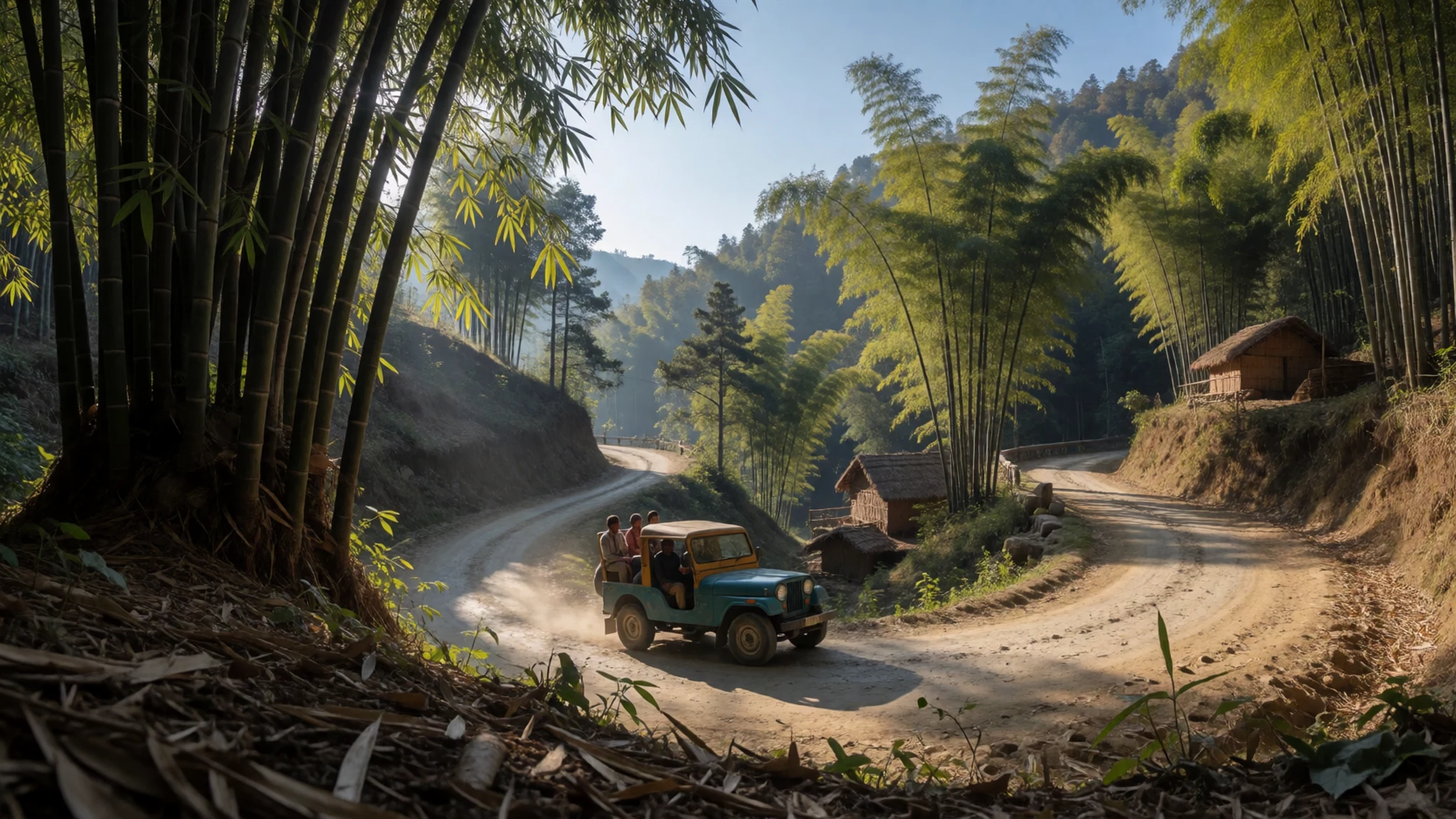
Culture
Sajek Valley is a meeting place of several cultures, and almost none of them are Bengali plains culture. The Chakma and Marma are mostly Buddhist, the Tripura follow a mix of Hindu and local traditions with a growing Christian community, and the Lushai, Pangkhua and Bawm are largely Christian. Sunday is a church day in many ridge villages, and the sound of hymns carries across the hills in the morning.
Family life is organised around the household and the village, with a headman or council playing an important role. Farming has traditionally included shifting cultivation, known locally as jhum, in which small plots on the slopes are cleared, planted with rice, vegetables and cotton, then left to recover. Bamboo is used for houses, baskets, water pipes, cooking vessels and even musical instruments.
The main spring festival, Boisabi, falls in mid-April and brings together the new-year celebrations of several communities: Boisu among the Tripura, Sangrai among the Marma and Biju among the Chakma. It involves flowers, water-throwing, music and shared meals, and it is the time when villages are most open to visitors who come with respect. Outside festivals, life is quiet, agricultural and weather-dependent, and accommodation is often run by families who live nearby.
Ask permission before photographing people, homes, children or religious buildings, and stay on paths rather than walking through cultivated plots or into private yards.
What to wear
Sajek Valley's traditional dress varies by community. Chakma women wear the pinon, a wrapped skirt, together with a woven waist cloth and a chest wrap called khadi, usually in cotton with bold geometric bands woven on a backstrap loom. Marma women wear the thami, a wrap skirt with striped or patterned borders, with a short blouse called an ingyi. Tripura women wear the risa and rignai, a chest cloth and a wrapped lower garment. Much of this is cotton, sometimes mixed with synthetic yarn, and many families still weave at home. Traditional dress comes out for festivals, weddings and church or temple occasions, and the patterns identify the community.
Day to day, people wear what suits farm work and the weather: shirts, trousers, lungis, salwar kameez, jeans and T-shirts, with sandals, rubber boots or bare feet on muddy paths. Younger people favour the same casual clothes as in the cities, and the older generation more often wear woven cloth.
Visitors should dress for a hill climate. Mornings and evenings in winter are cool, so bring a fleece or shawl. The monsoon needs a light waterproof jacket. Daytime is warm, so choose breathable fabrics. Cover shoulders and knees in villages and near churches or temples, as a matter of courtesy. Shoes with grip matter more than style, because paths are steep, red clay turns slippery after rain, and the road up can be dusty.
What to eat
- Bamboo chicken — Village-run eateries and guesthouse kitchens along the ridge road
Bamboo chicken is chicken cooked inside a green bamboo segment with herbs, chillies and a little oil, then roasted over a fire. The bamboo gives a mild sweet smoke. It is the dish most visitors are served, and it is cooked to order, so expect a wait.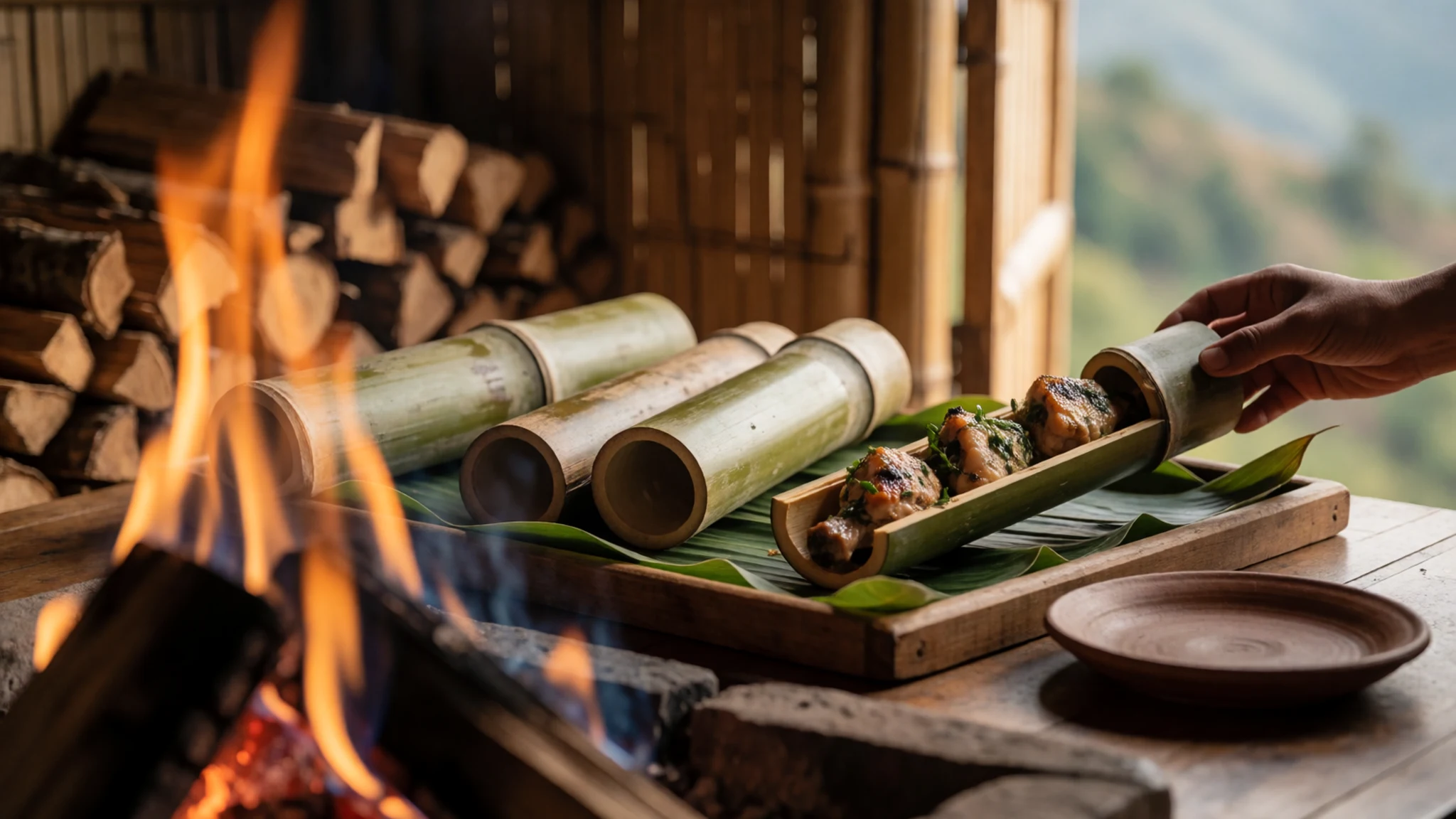
- Pajon — Family meals offered by village homestays, or small local eateries
Pajon is a Chakma dish of mixed vegetables and herbs boiled or stewed together, often with dried or fresh fish. It is not fiery, and the flavour comes from the freshness of the greens and bamboo shoot. A good way to taste what is actually grown nearby.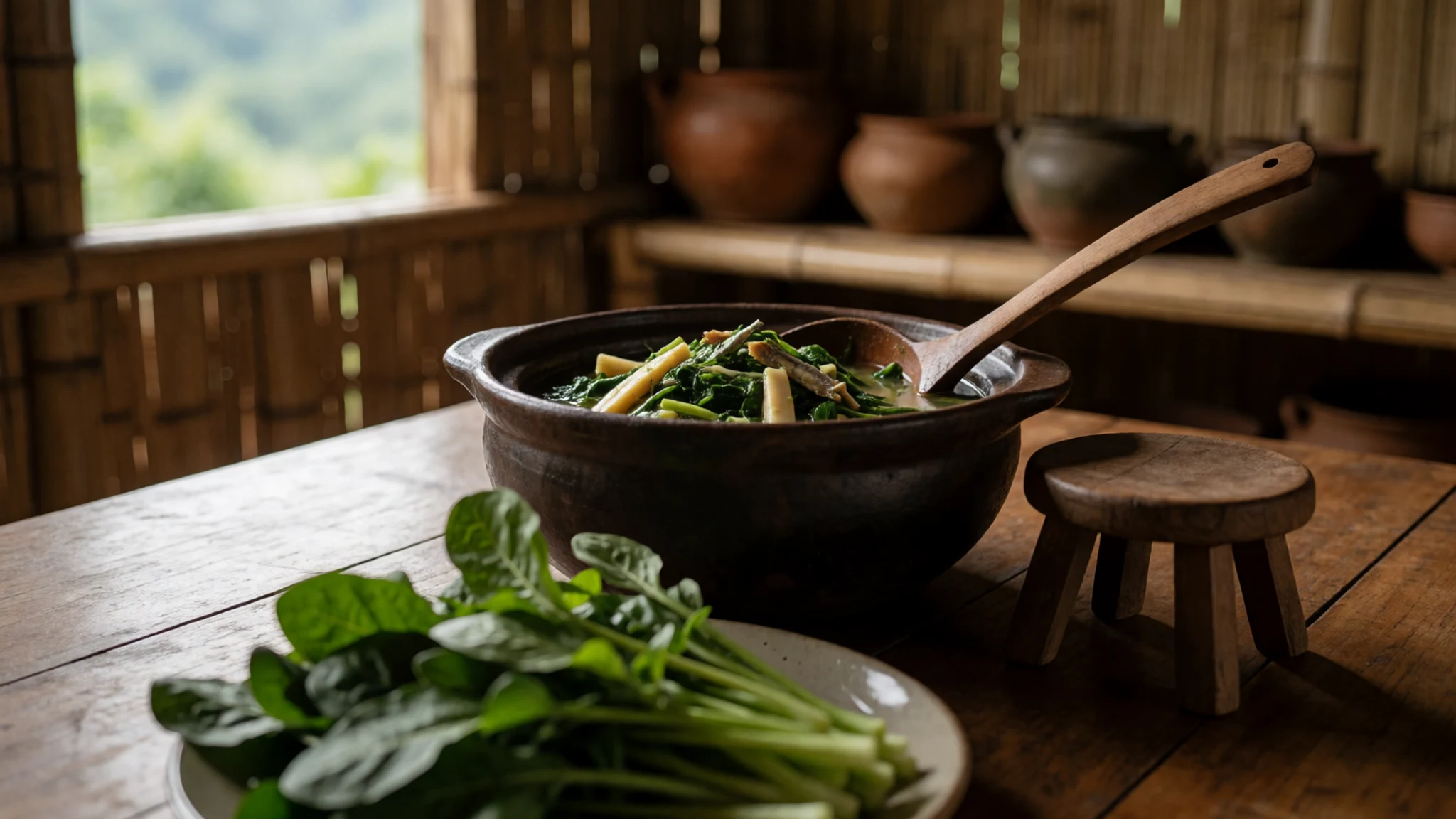
- Bamboo shoot curry — Home kitchens and small eateries in hill villages
Bamboo shoot curry uses young shoots, cooked with chilli, garlic and sometimes pork or fish. The taste is sharp and slightly sour, and some people find it strong at first. It appears in many hill kitchens, with the preparation differing from one community to the next. - Sticky rice in bamboo — Roadside stalls and village stalls, especially on busier weekends
Sticky rice steamed in bamboo tubes comes out fragrant and slightly smoky, and peels out in a firm cylinder. It is eaten as a snack or alongside curries, and in some villages it is part of festival food. - Hill fruit and tea — Roadside stalls and ridge-top tea stalls
The hills grow pineapple, oranges, bananas and jackfruit in season, and small stalls sell them cut and ready to eat. Local tea or plain milk tea is easy to find, and a cup at a ridge-top stall is a good way to spend a cool morning.
Plan it
Best time. November to February is the best window: skies are mostly clear, days are comfortable and nights are cool, with cloud-filled mornings still common. March and April get hotter. June to September is the monsoon, with heavy rain, slippery roads and landslide risk, though the hills are at their greenest.
How long. 2–3
Getting there. Fly to Dhaka or Chattogram, then take a bus to Khagrachhari or Dighinala. From there, local jeeps handle the last stretch up to Sajek. Rules on timings, escorts and checkpoints have changed, so confirm current arrangements with your lodging before setting out.
Budget. mid
Tips
- Book lodging well ahead for weekends and public holidays, and consider a weekday visit for far fewer crowds
- Start the day before dawn at a ridge viewpoint, since the cloud usually clears by mid-morning
- Carry enough cash, as card payment and mobile signal are unreliable on the ridge
- Bring drinking water and a torch, since supplies and power can be limited
- Wear shoes with grip and avoid travelling the hill road after dark or in heavy rain
Etiquette
- Ask before photographing people, homes and places of worship
- Dress modestly in villages and keep noise down in the evenings, particularly near churches and homes
- Take your rubbish with you and buy food and crafts from local households
Nearby
Sources
- Wikidata (CC0)
- Wikipedia — Sajek Valley (CC BY-SA 4.0)
- Wikivoyage — Sajek Valley (CC BY-SA 4.0)