Saimaluu Tash
Saimaluu Tash, Kyrgyzstan
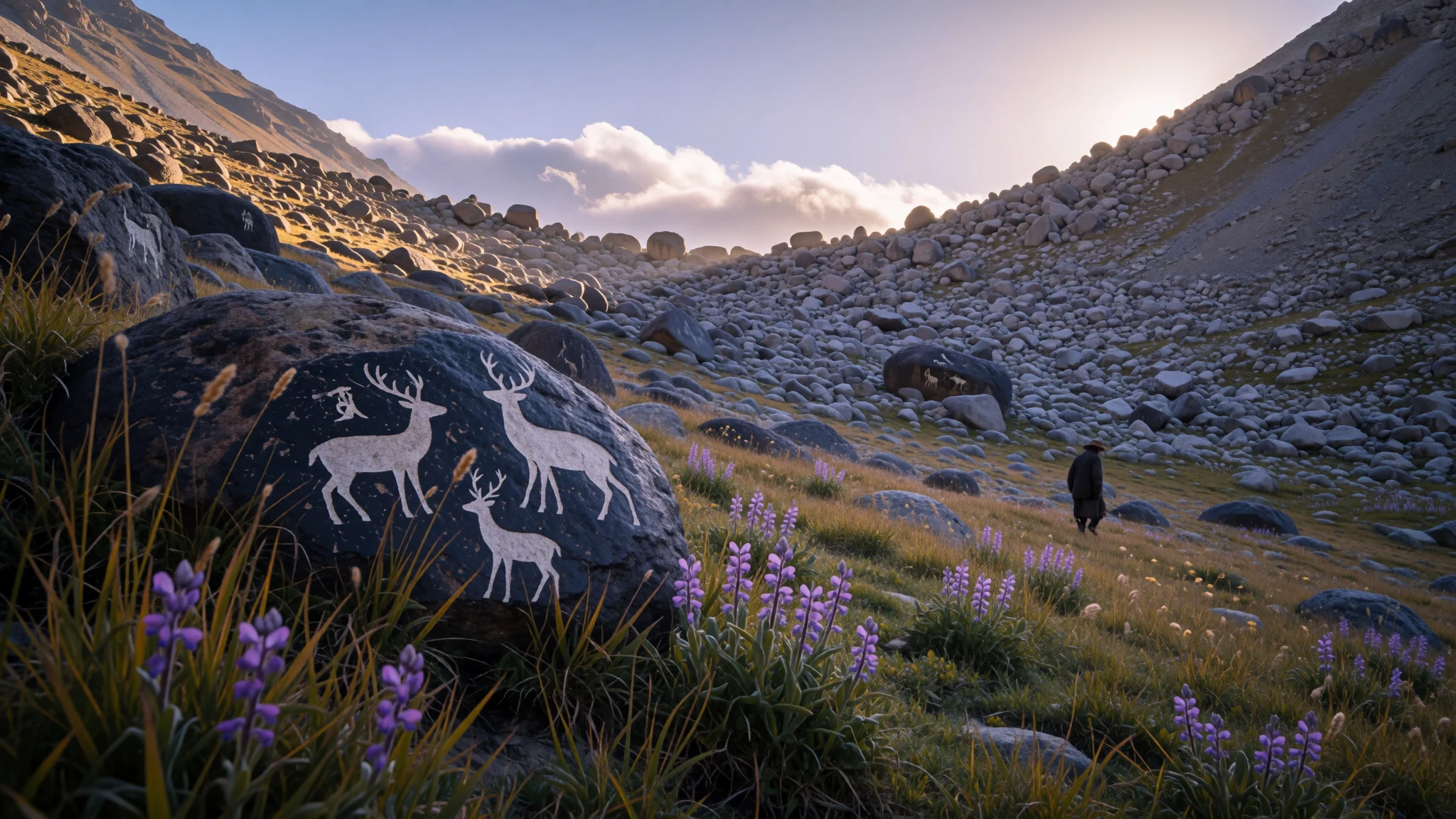
Saimaluu Tash puts thousands of Bronze Age carvings on dark mountain boulders, high in Kyrgyzstan, reachable only on a summer climb.
The place
Saimaluu Tash sits at about 3,200 metres in the Fergana Range, in Jalal-Abad Region of Kyrgyzstan, to the south of the small town of Kazarman. The name is usually translated from Kyrgyz as 'patterned stones' or 'embroidered stones', and it fits: the slopes of two high valleys, divided by a low ridge, are strewn with dark boulders whose faces are covered in pecked pictures. The rock carries a glossy black or grey crust called desert varnish. The artists knocked through it to expose paler stone beneath, so the figures show as light marks on a dark ground. Animals, people and abstract signs repeat across the slopes, and the total is counted in tens of thousands of images. The setting is open alpine grass, scree and sky, with nothing built, and the area is now protected as a state nature park. Getting there is the real hurdle. A rough track out of Kazarman suits only four-wheel-drive vehicles, and the rest of the way is a strenuous climb on foot or on horseback that takes about half a day. It is realistically possible only around July, because snow blocks the route for the rest of the year. That isolation helps explain why the carvings survive in the open air where they were made. It also means a visit here is a mountain expedition first and a heritage stop second.
Its story
Saimaluu Tash holds carvings made across a very long span, from the early third millennium BC through the Bronze Age and, in much smaller numbers, into the Iron Age and the Middle Ages. Exact dates are argued over, and researchers feel on firm ground only from the first millennium BC, when the Saka-Scythian animal style arrives. Earlier phases are separated mainly by style. One of them, the bitriangular style, draws animals and people with a pinched, wasp-like waist, and it may mark out one particular community in the Fergana valley. For the late Neolithic and the Bronze Age the carvers worked in a range of manners, which suggests that people came back to the same slopes again and again over many centuries. The place was never just a gallery. It was sacred to the peoples of the Tien Shan and ancient Fergana, and Kyrgyz people today still regard it as a source of spiritual strength and healing, rooted in older beliefs about mountains, nature, totems and the sun. Outsiders took note in 1902, when Russian surveyors were working in the area on plans for a military route. One of them, Nikolai Khludov, had been told by a shepherd about painted stones near the camp, and he went up with a team to inspect them. The pattern is a familiar one: local people knew the stones long before any map recorded them.
What to see
- The two high valleys — Fergana Range, Jalal-Abad Region
The carvings spread across two high valleys at about 3,200 metres, divided by a low ridge. Boulders lie scattered over the slopes in loose groups, and a slow walk between them turns up a new scene every few steps. It rewards unhurried looking, so leave time at the top rather than racing back down.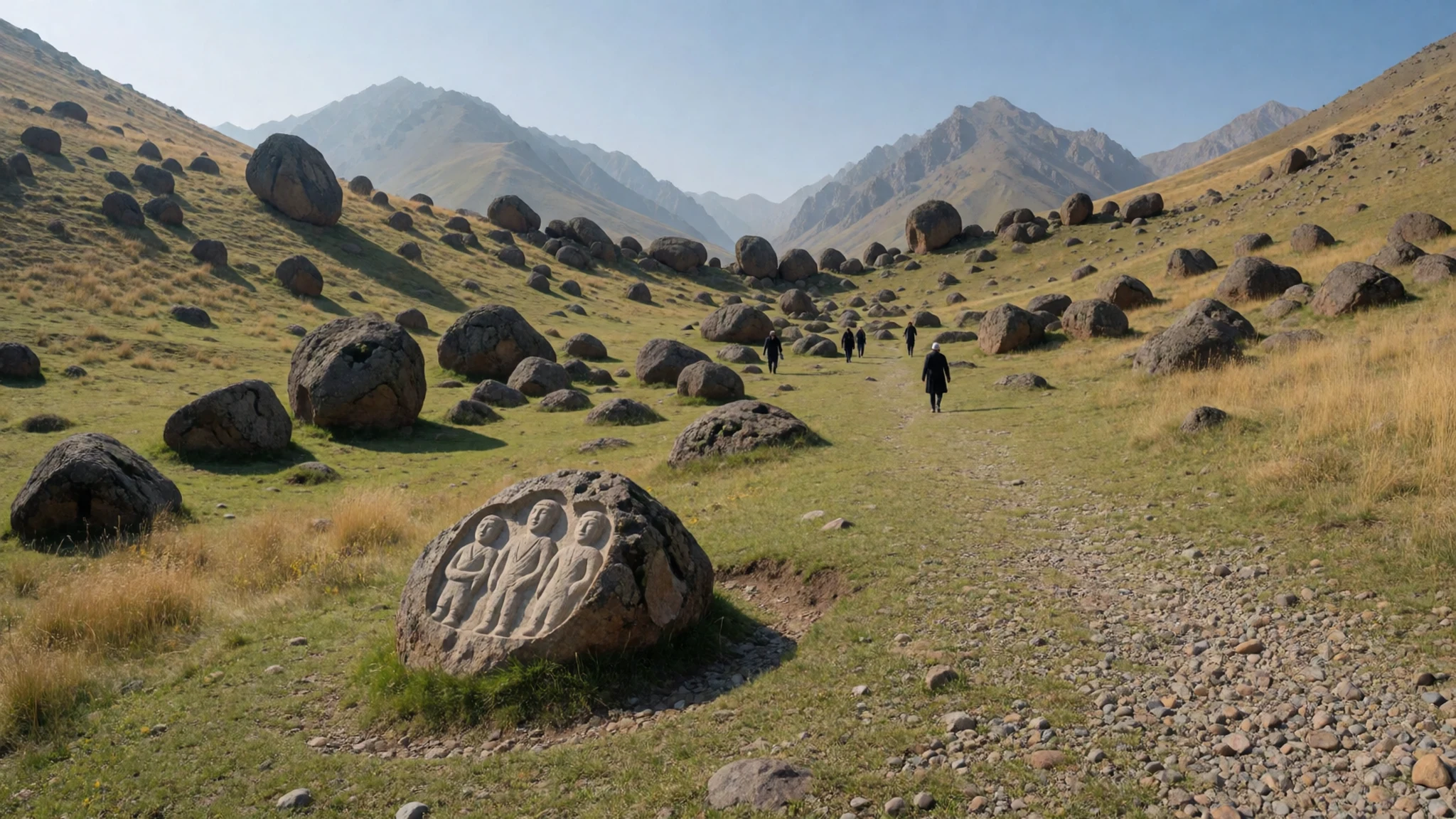
- Bitriangular figures — Upper slopes of the site
Look for animals and people drawn with a narrow, wasp-like waist, a manner called bitriangular because the body reads as two triangles meeting at a point. Specialists link it to the Bronze Age and perhaps to a particular community of the Fergana valley. The figures are small, so a guide pointing them out helps.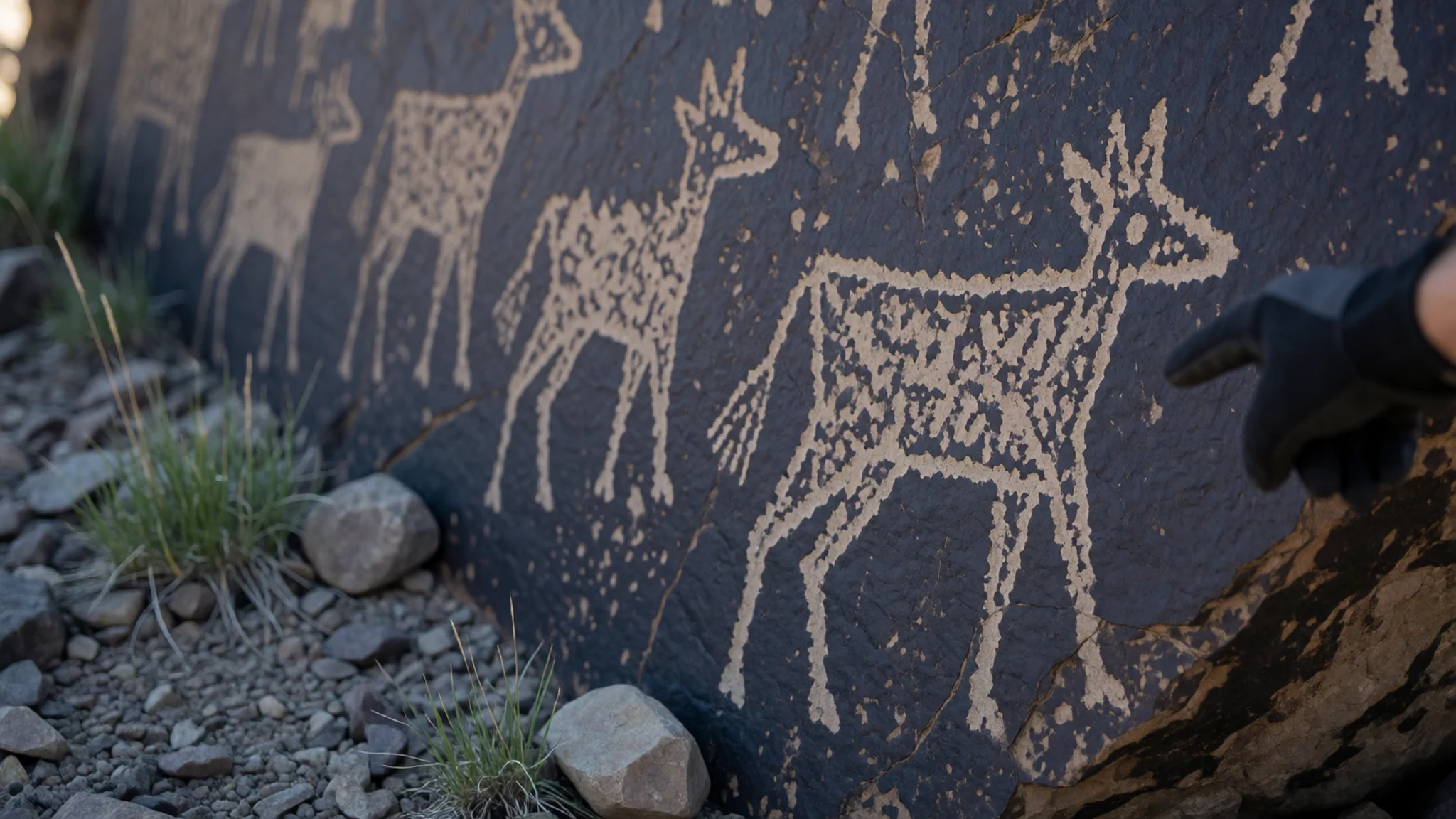
- Desert varnish close-ups — Across both valleys
The dark, shiny skin on the boulders is desert varnish, a natural crust that forms slowly on exposed rock. The engravers pecked through it to reach lighter stone beneath. Outlines read best when light falls at a low angle, so early morning and late afternoon bring out the detail most clearly.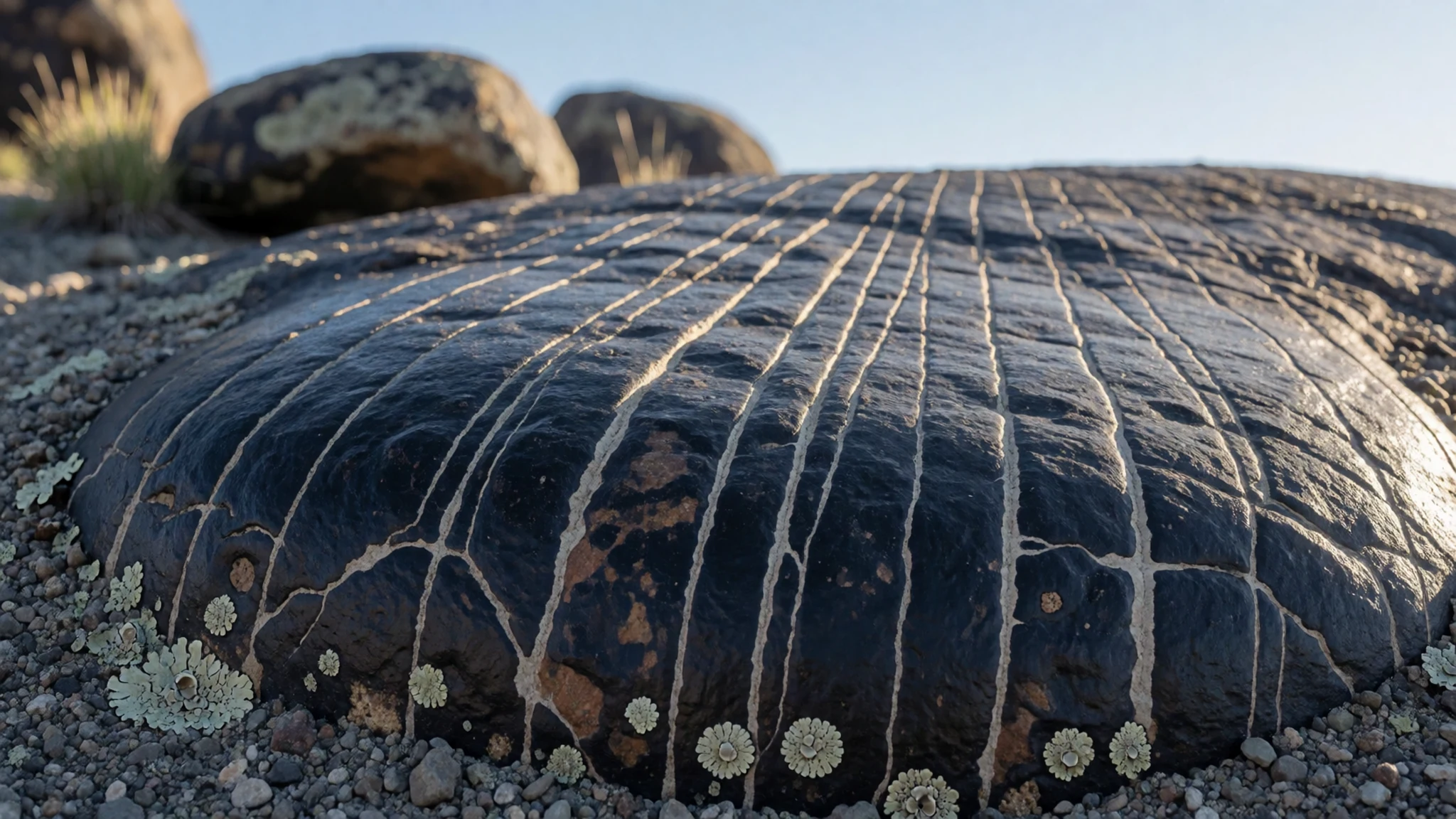
- Scenes of animals, people and signs — Lower valley slopes
Animals, human figures and symbols repeat across many boulders, and some groupings read like staged scenes rather than single drawings. Researchers have suggested that parts of the site were a sacred display of offerings by the ancient people of the lower valley, which helps explain the effort spent on carving so far from any settlement.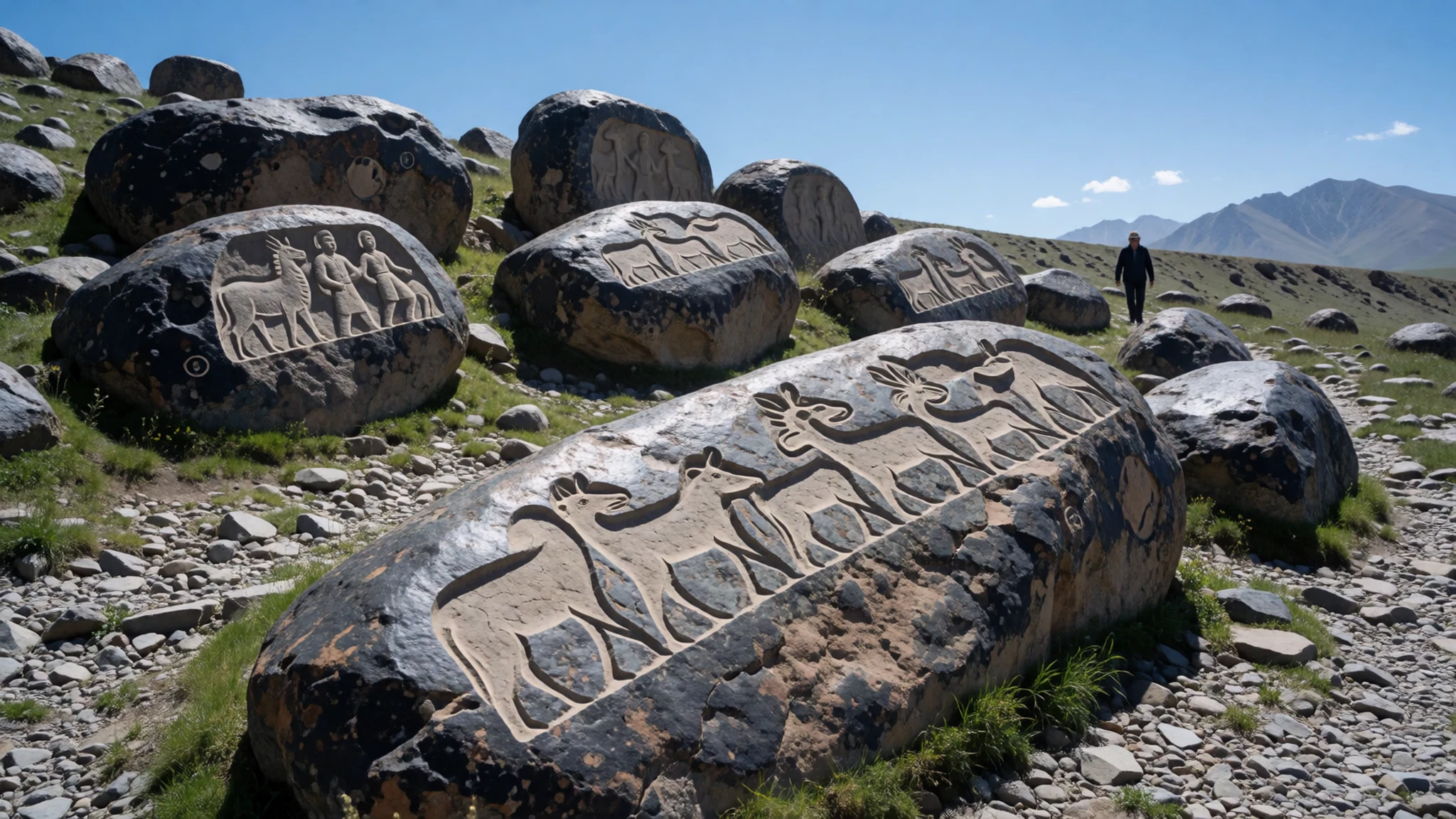
- Later Saka-Scythian animal carvings — Scattered among the older galleries
A smaller number of carvings come from the Iron Age, when the Saka-Scythian animal style spread across the Eurasian steppe, with stylised beasts in vigorous poses. They are far fewer than the Bronze Age pictures, so spotting one is a small reward for patient eyes and a good reason to keep a guide close.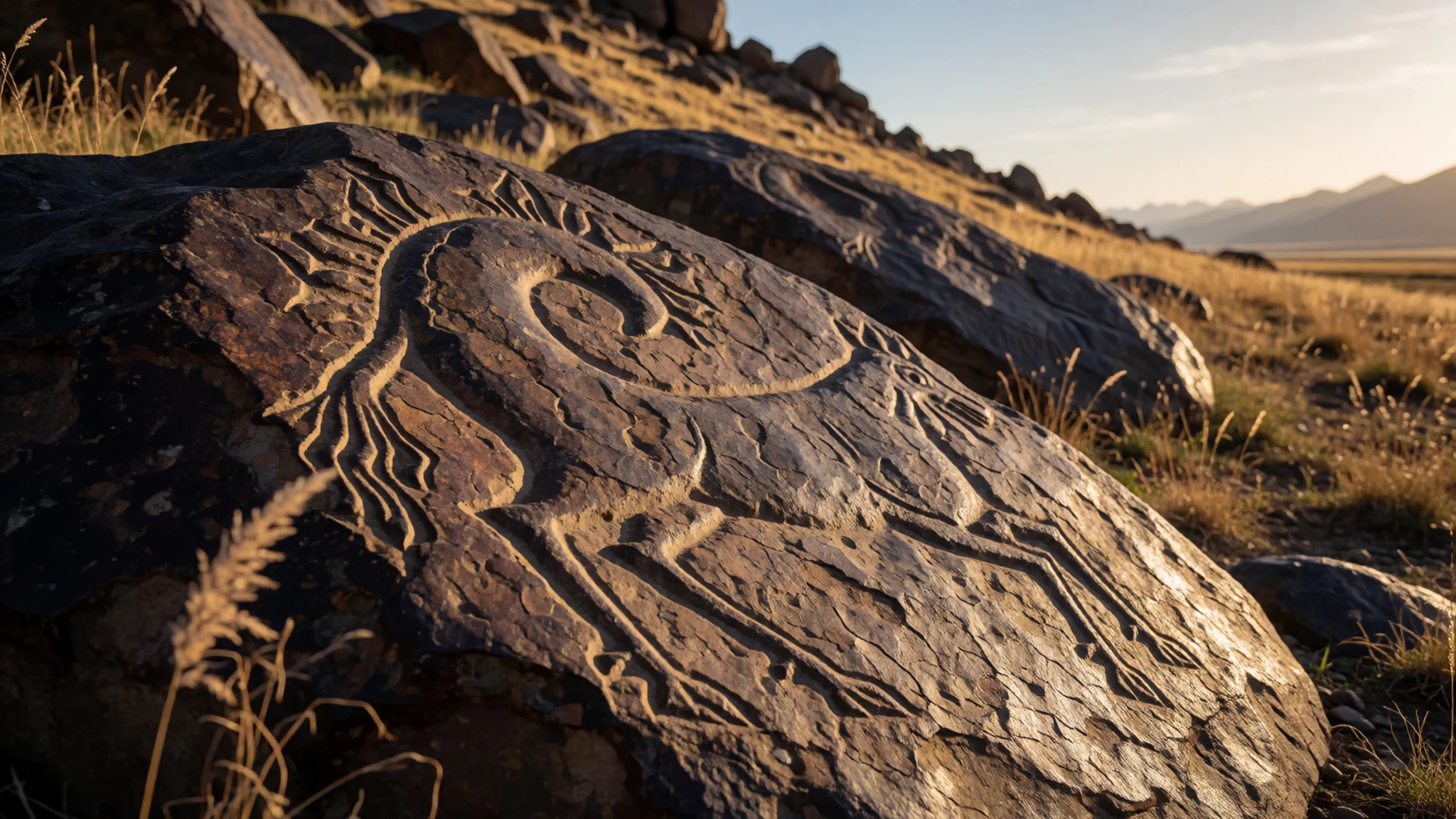
- Recent scratches beside ancient pecking — Accessible boulders near the paths
Look closely and a few boulders carry recent scratches next to the Bronze Age pecking. The contrast is a quiet reminder of why the site is a protected nature park and why visitors are asked to keep hands, chalk and tools well away from the stones, however tempting a clearer outline may seem.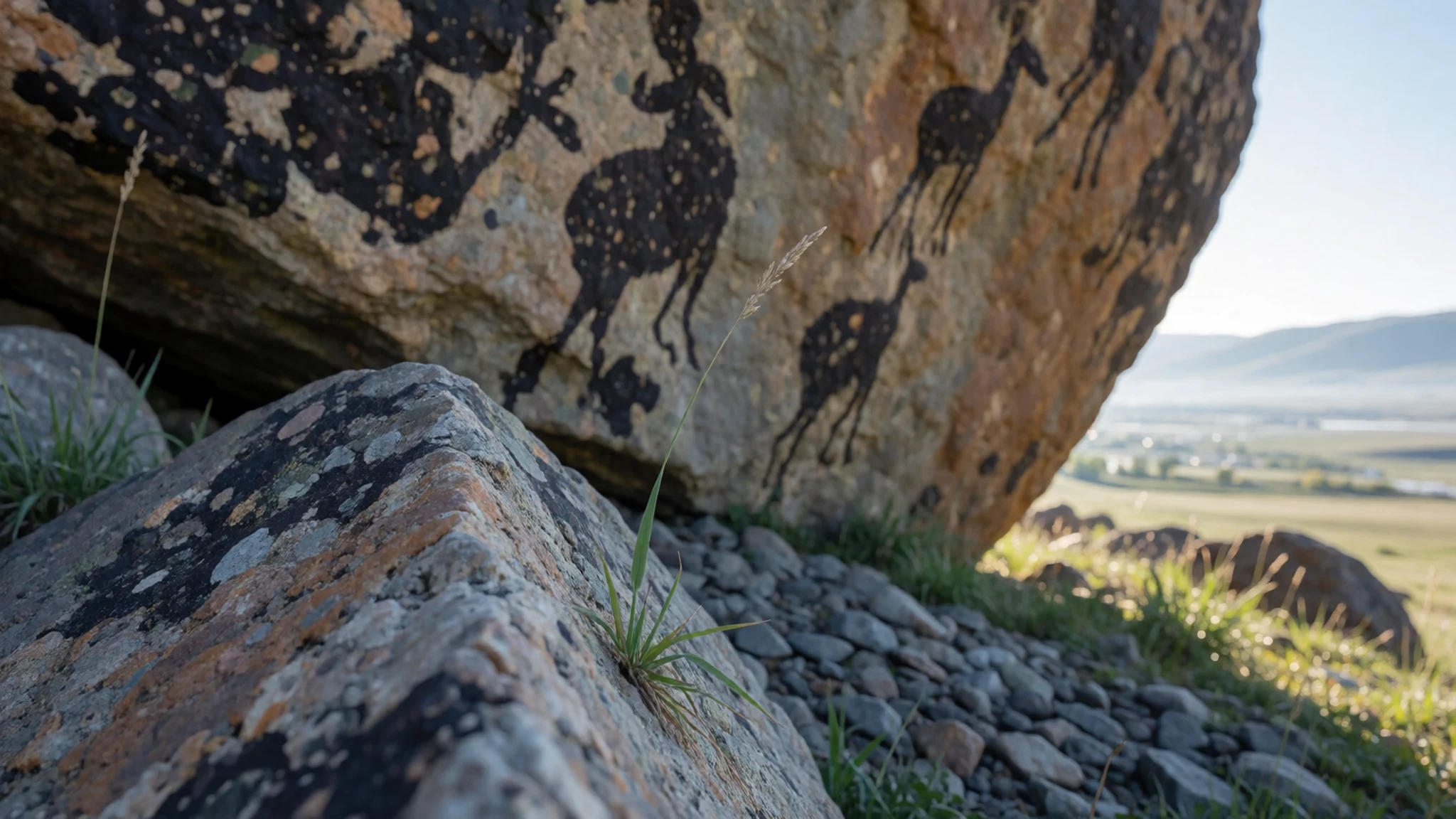
Culture
Saimaluu Tash is a living sacred place for many Kyrgyz people, not only an archaeological site, and that shapes how it is approached. Reverence for mountains, nature and the sun runs through older Kyrgyz belief, and the stones are linked with healing and spiritual strength. Kyrgyzstan is nominally Muslim, but daily life is relaxed and strongly westernised, and there is no formal dress code. Customs do vary by region: Bishkek is liberal, while the south, where this park lies, is more conservative, especially for women's dress and behaviour in towns and villages. Hospitality grows out of a pastoral, nomadic history. Guests are fed generously, meals are shared, and seating and serving follow a sense of seniority, with the guest of honour treated with particular care. Drinking is one of the great social traditions, and evenings in towns can become rowdy, so a little caution after dark is sensible. Transport and guides are best arranged locally, and listening to them about what is appropriate at the stones is part of the visit. Walk around the boulders rather than over them, never touch, chalk or trace the carvings, and ask your guide before photographing local people or any offerings left at the stones.
What to wear
Saimaluu Tash lies in a part of Kyrgyzstan where herding clothes and modern mountain wear overlap. Traditional dress grows out of felt, a product of the nomadic past. Men wear the tall white felt hat called the ak kalpak and the chapan, a long padded coat tied at the waist, mostly on festive days and at ceremonies. Women's festive dress includes velvet and embroidered garments and, for married women, the elechek headdress, now seen chiefly at weddings and cultural events. Felt carpets known as shyrdak carry the same bold patterns and are made in many households. Day to day, people wear ordinary Western clothes: jeans, jumpers, padded jackets and, in the countryside, rubber boots, with an older man often in a felt hat. Visitors should dress for the mountain rather than for a temple. Bring layers, a windproof and waterproof jacket, a warm hat, sunglasses and strong sun protection, because the air at about 3,200 metres is thin and bright. Sturdy, well broken-in boots with ankle support are needed for the steep climb and loose stones. In the south of the country, women in particular should choose covered shoulders and knees in villages and towns to avoid unwanted attention.
What to eat
- Besh barmak — Family feasts and guesthouse meals; eateries in Kazarman, Osh and Bishkek
The best-known Kyrgyz dish takes its name from 'five fingers', since it is eaten by hand. Boiled sheep or horse meat is served over noodles with onion, after a first course of broth. Pieces are offered by rank, and the head goes to the guest of honour.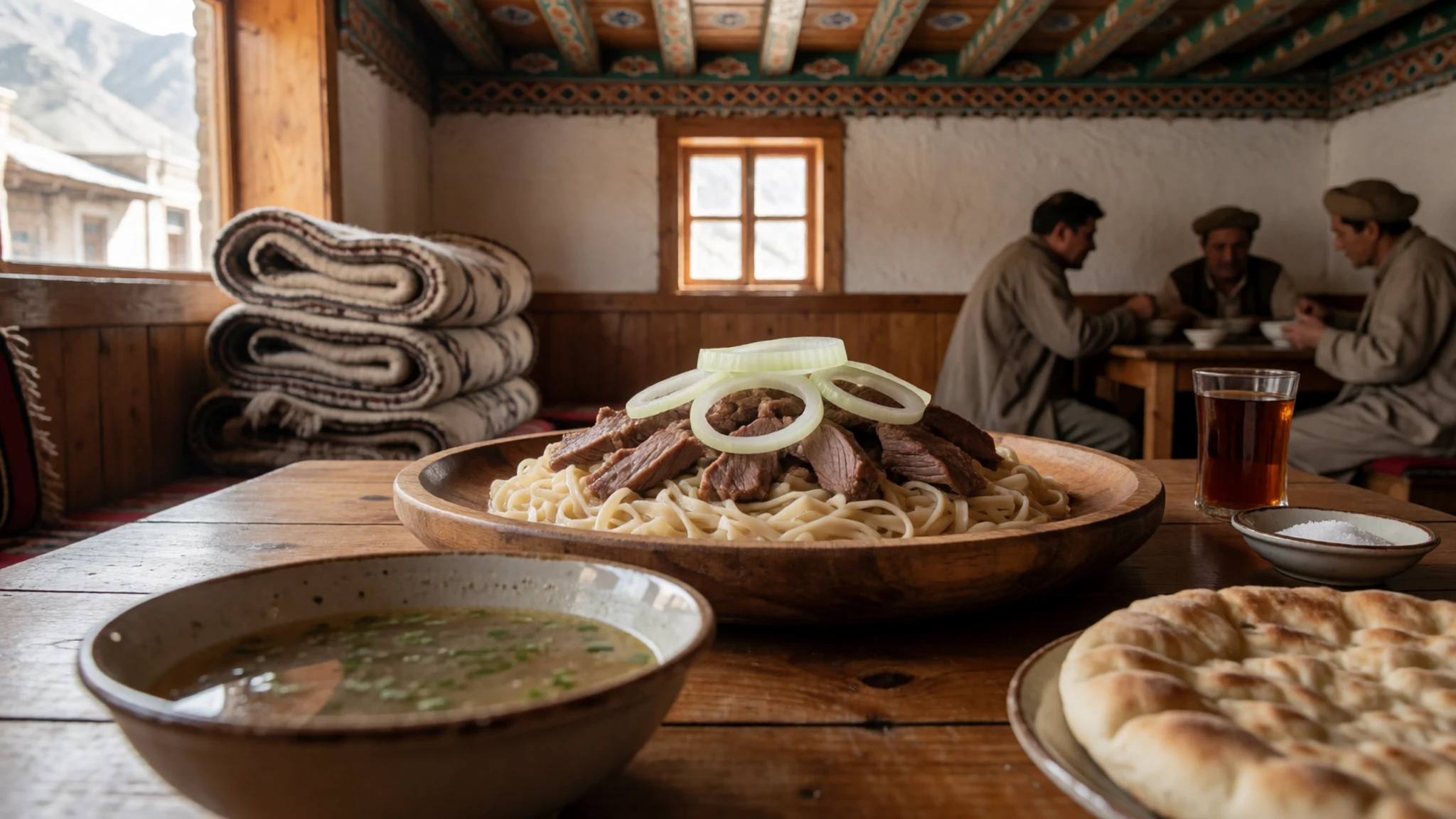
- Lagman — Ordinary town eateries and bazaar food courts
Hand-pulled noodles served in a savoury sauce of meat and vegetables, either as a soup or with the sauce spooned on top. It is filling, quick to serve and a dependable choice before or after a long day in the mountains.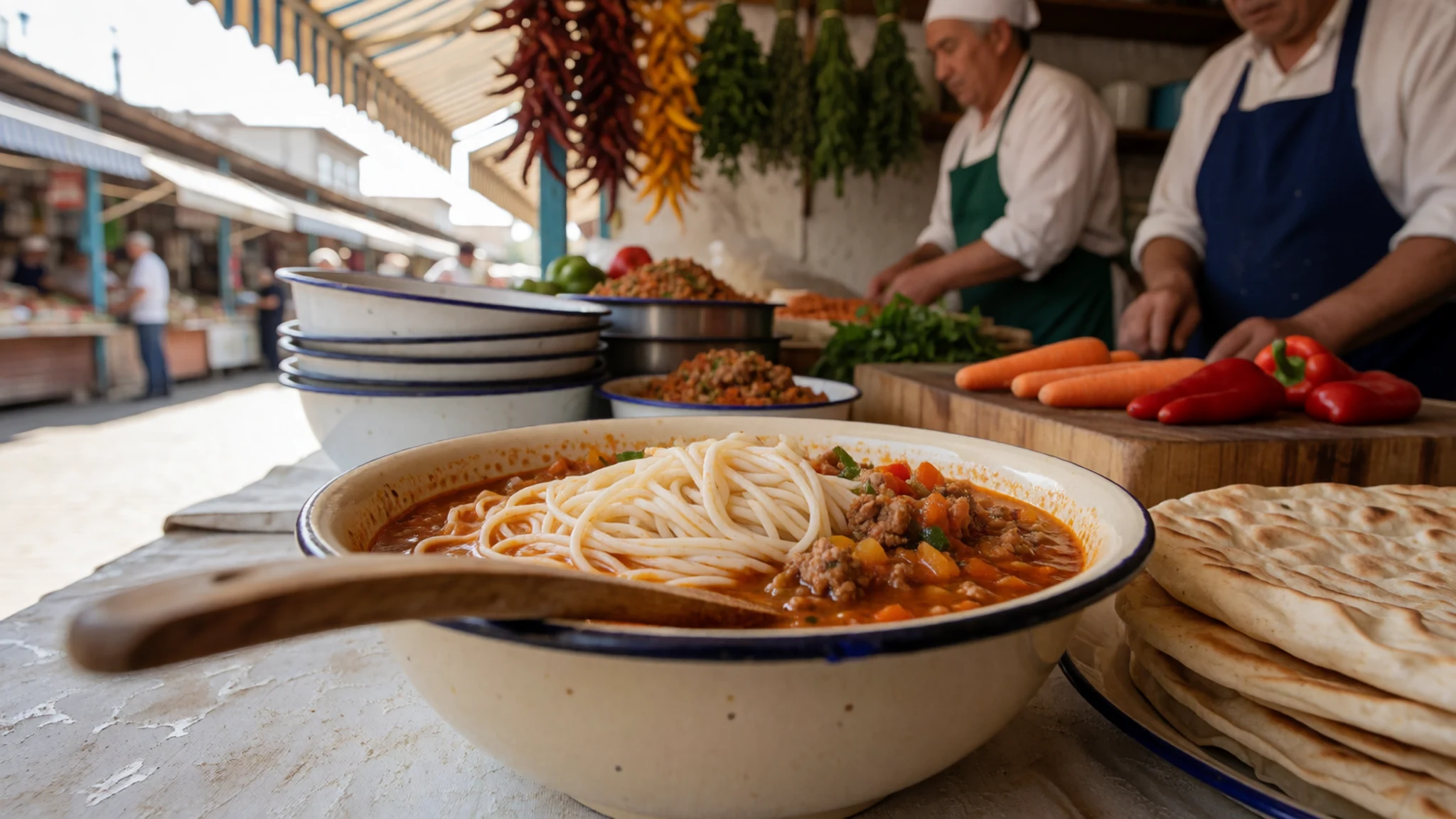
- Manty — Bazaar stalls and roadside eateries
Steamed dumplings filled with chopped meat and onion, usually served in a small stack and eaten with the fingers. They are heavy and warming, which suits cold mornings and evenings at altitude, and are often shared as a family dish. - Plov — Eateries in Osh and other southern towns; family celebrations
Rice cooked in a large pot with carrot, onion and meat, often for gatherings and celebrations. The grains take on the flavour of the fat and juices, and the dish is typically served in a communal heap on a wide plate. - Kymyz — Yurt stays and roadside stalls in the summer pastures
Fermented mare's milk, slightly sour and faintly fizzy, drunk mainly in summer when herds are on the high pastures. It is an acquired taste, and a small bowl offered by a host is a gesture of welcome. - Fresh bread, fruit and nuts — Food bazaars and small stands in any town
Kyrgyz cooking is heavily meat-based, but vegetarians can ask for meat-free meals and stock up on fresh bread, fruit, vegetables and nuts. Produce tends to be small and flavourful rather than large, and should be washed before eating.
Plan it
Best time. July. Snow keeps the route closed or impractical for the rest of the year, and the climb on foot or horseback is realistic only around this month. Expect cold nights and fast-changing mountain weather even in summer.
How long. 2–3
Getting there. Fly to Manas International Airport in Bishkek (BSZ) or Osh Airport (OSS), both linked to hubs such as Istanbul and Moscow. Then travel by road to Kazarman, take a four-wheel-drive vehicle along the rough track, and finish with about half a day on foot or horseback. Check the Kyrgyz eVisa rules and permitted entry points before booking.
Budget. mid
Tips
- Plan the trip around July and confirm local conditions before leaving Kazarman, since snow can block the route
- Arrange a four-wheel-drive vehicle, guide or horses locally, and agree the plan the day before
- Start early so the climb is finished before afternoon weather turns
- Carry water, food, warm layers and sun protection, as little is available on the way
- Carry cash in small notes for villages, where cards are unlikely to be accepted
Etiquette
- Keep to the paths and never touch, chalk or trace the carvings
- Ask before photographing local people, herders or offerings
- Dress modestly in southern towns and villages
Nearby
Sources
- Wikidata Q2621561 (CC0)
- Wikipedia: Saymaluu-Tash (CC BY-SA 4.0)
- Wikivoyage: Kyrgyzstan (CC BY-SA 4.0)
- Relief map of Kyrgyzstan (NordNordWest, Виктор_В) (CC BY 3.0)
- West Asia non political with water system (DEMIS Mapserver, पाटलिपुत्र) (CC BY 3.0)
- Saymaluu-Tash State Nature Park (Lisypavel) (CC BY-SA 4.0)
- Petroglyph at the Saimaluu-Tash site 01 (Lymantria) (CC BY-SA 4.0)
- Petroglyph at the Saimaluu-Tash site 02 (Lymantria) (CC BY-SA 4.0)
- Petroglyph at the Saimaluu-Tash site 03 (Lymantria) (CC BY-SA 4.0)
- Petroglyph at the Saimaluu-Tash site 04 (Lymantria) (CC BY-SA 4.0)
- Petroglyph at the Saimaluu-Tash site 05 (Lymantria) (CC BY-SA 4.0)


