Russell Glacier
Russell Glacier, Greenland
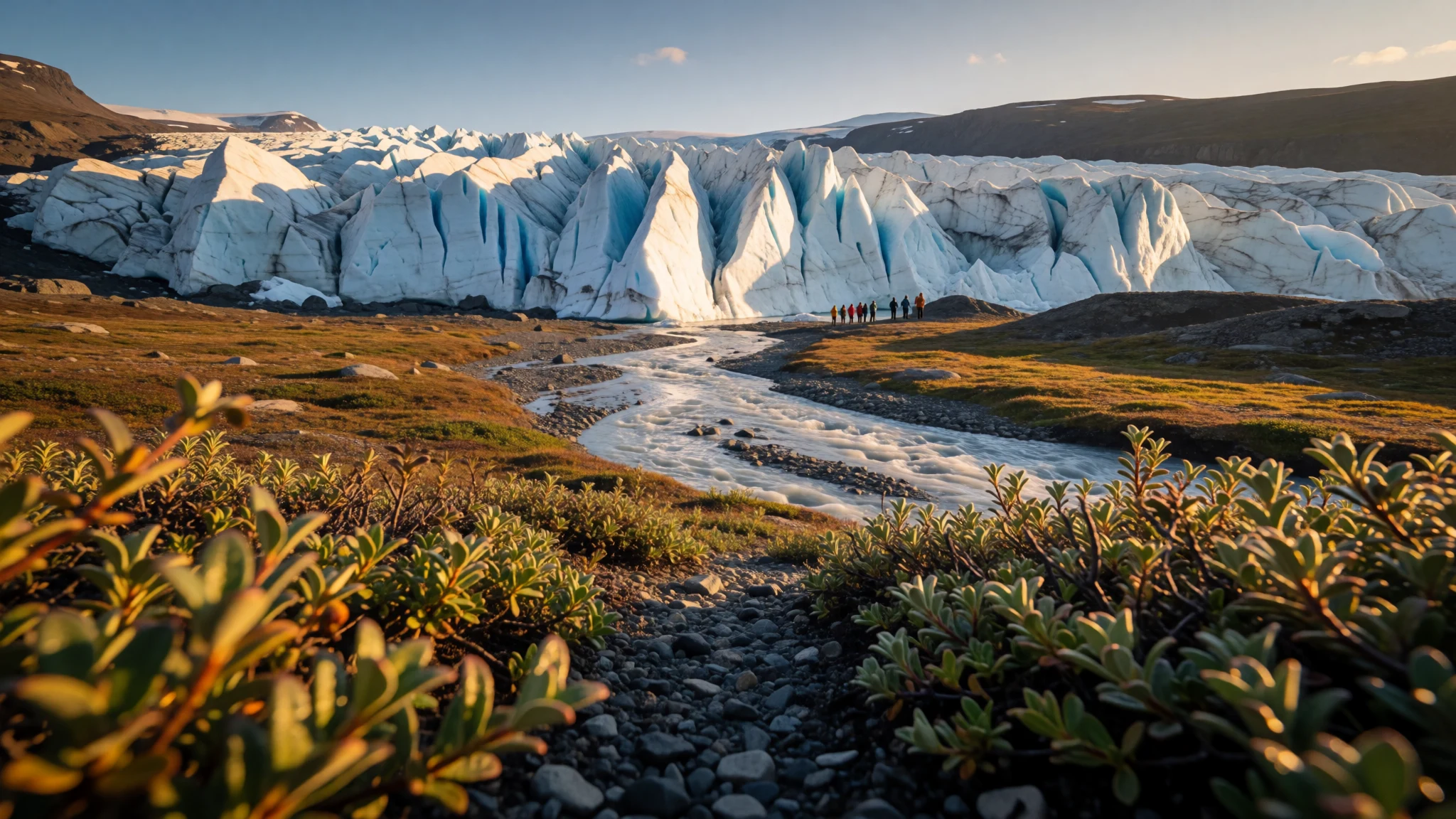
Russell Glacier lets you stand at the edge of the Greenland ice sheet on a day trip from Kangerlussuaq, with tundra, meltwater and silence.
The place
Russell Glacier is a tongue of ice pushing out of the Greenland ice sheet, called Sermersuaq in Greenlandic, and it ends on dry land in Qeqqata municipality in central-western Greenland. Its front lies about 25 km east of Kangerlussuaq, which is why this is one of the few places where the ice sheet can be reached without an expedition. Unlike many glaciers that are retreating, this one is recorded as advancing, by about 25 m a year. Its face is a wall of grey-blue ice streaked with dust, with meltwater pouring from its base. That water gathers into the Akuliarusiarsuup Kuua river, which runs west-southwest towards Kangerlussuaq. The valley it has built is a sandur, a broad flat plain of silt and gravel, shallow enough in places to form quicksand patches several kilometres long, so the ground beside the river deserves respect. To the north rises the tundra highland of Isunngua, and to the south lies the bare, flattened ridge of Akuliarusiarsuk. A large lake, Aajuitsup Tasia, lies west of the ice. Its water stays separate from the meltwater lake right beside the glacier because there is almost no difference in height between them. A sibling glacier, about 7 km to the south-east, feeds the Qinnguata Kuussua river. The two rivers meet on the eastern edge of Kangerlussuaq, where the joined stream was once called Watson River. The landscape is open, dry and wind-scoured: tundra, dust, ice and very little else, with the small settlement of Kangerlussuaq as the natural base.
Its story
Russell Glacier carries several layers of naming. The Danish name, Russells Gletscher, sits beside the Greenlandic Sermersuaq for the ice sheet it flows from, and the river below was once known as Watson River before its two branches took their Greenlandic names. Greenland itself has a name with a sales pitch behind it. According to the Icelandic sagas, Erik the Red chose the word to tempt settlers over from Iceland, even though ice covers most of the island. The people who live here call themselves Kalaallit, and they regard Greenland as a nation within the Kingdom of Denmark. Kangerlussuaq, at the head of its long fjord, grew up around an airfield that is still the main air gateway to this part of the west coast. The route out to the ice follows the river valley eastwards, and that easy access has turned the glacier into a regular stop for visitors, scientists and school groups who want to see an ice sheet without weeks of planning. Its behaviour adds interest. Where many Arctic glaciers are pulling back, Russell is described as active and moving forward, a reminder that each outlet of the ice sheet answers to its own valley, snowfall and meltwater. Geologists read the sandur and the ridges around it as a record of ice pushing, melting and dumping silt. For a traveller the story is less about a single date than about a landscape that is still being built, season by season.
What to see
- The glacier front — East of Kangerlussuaq
The ice face is the reason for the trip: a cliff of grey-blue ice with dust bands, creaking and sometimes calving small pieces. Stay well back from the edge, because falling ice and fast meltwater are real hazards. Light changes the colour of the ice through the day, so it repays an unhurried stop.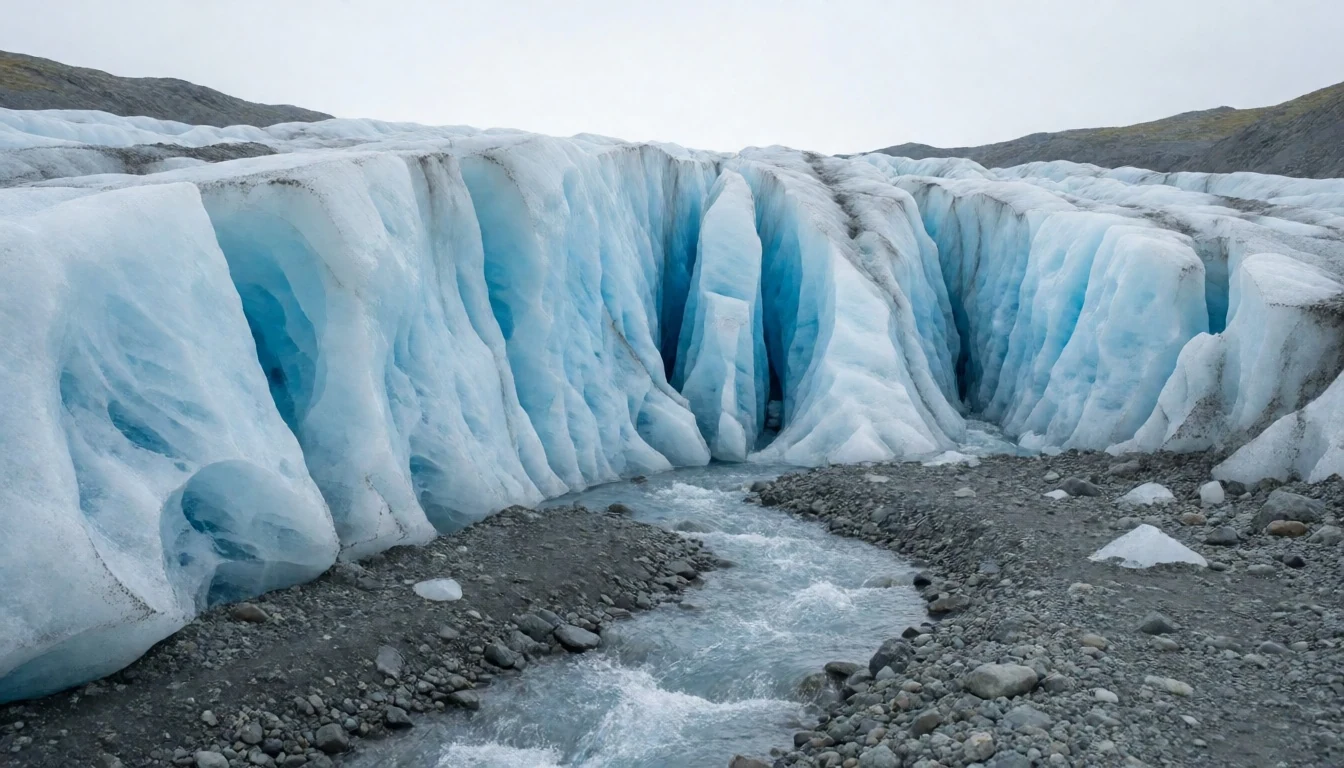
- Meltwater cave at the ice base — Base of the glacier
Where streams leave the base of the glacier, the ice is hollowed into dark blue caverns that can be photographed from a safe distance. The roof can collapse without warning and the outflow is cold and powerful, so treat these openings as something to look at, never to enter.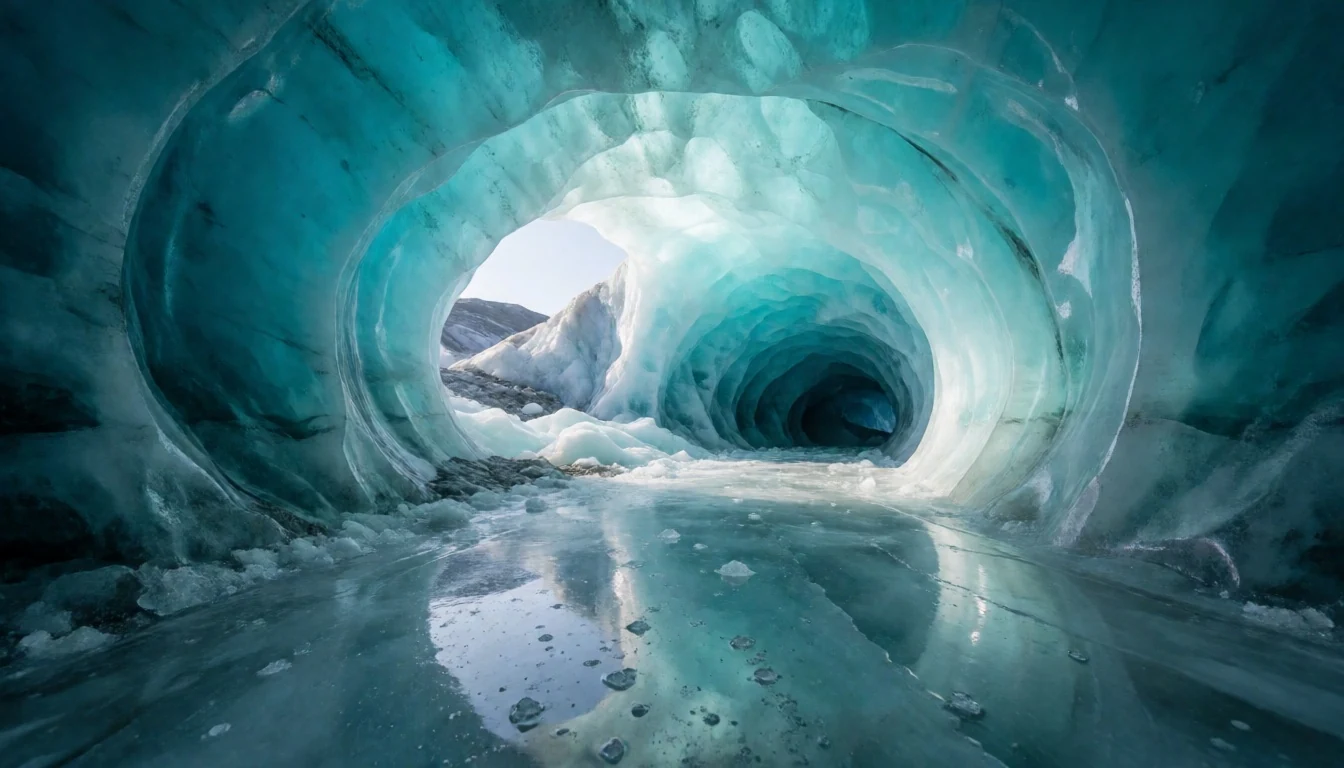
- Aajuitsup Tasia lake — West of the glacier
This long lake lies west of the ice, with the glacier as a pale line at its far end. On a still day the water doubles the view, which makes it a good place for photographs and a quiet sit-down. Its water is kept apart from the glacier's meltwater lake by the barest difference in height.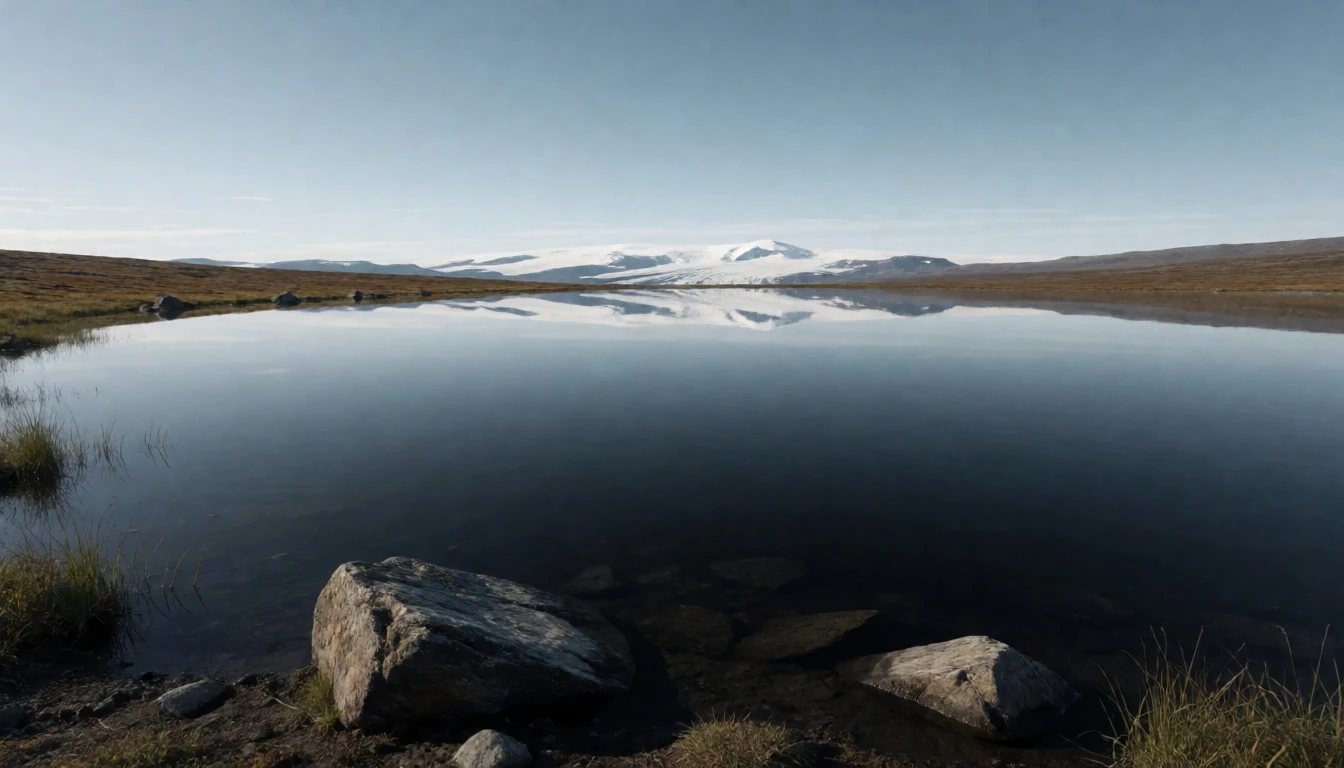
- The sandur valley and river — Valley between the glacier and Kangerlussuaq
The Akuliarusiarsuup Kuua river braids across a wide plain of grey silt on its way to Kangerlussuaq. The flat, pale ground is shallow enough in places to form quicksand, so keep to the track and the firmer edges. The view back towards the ice gives a sense of how far the glacier's debris spreads.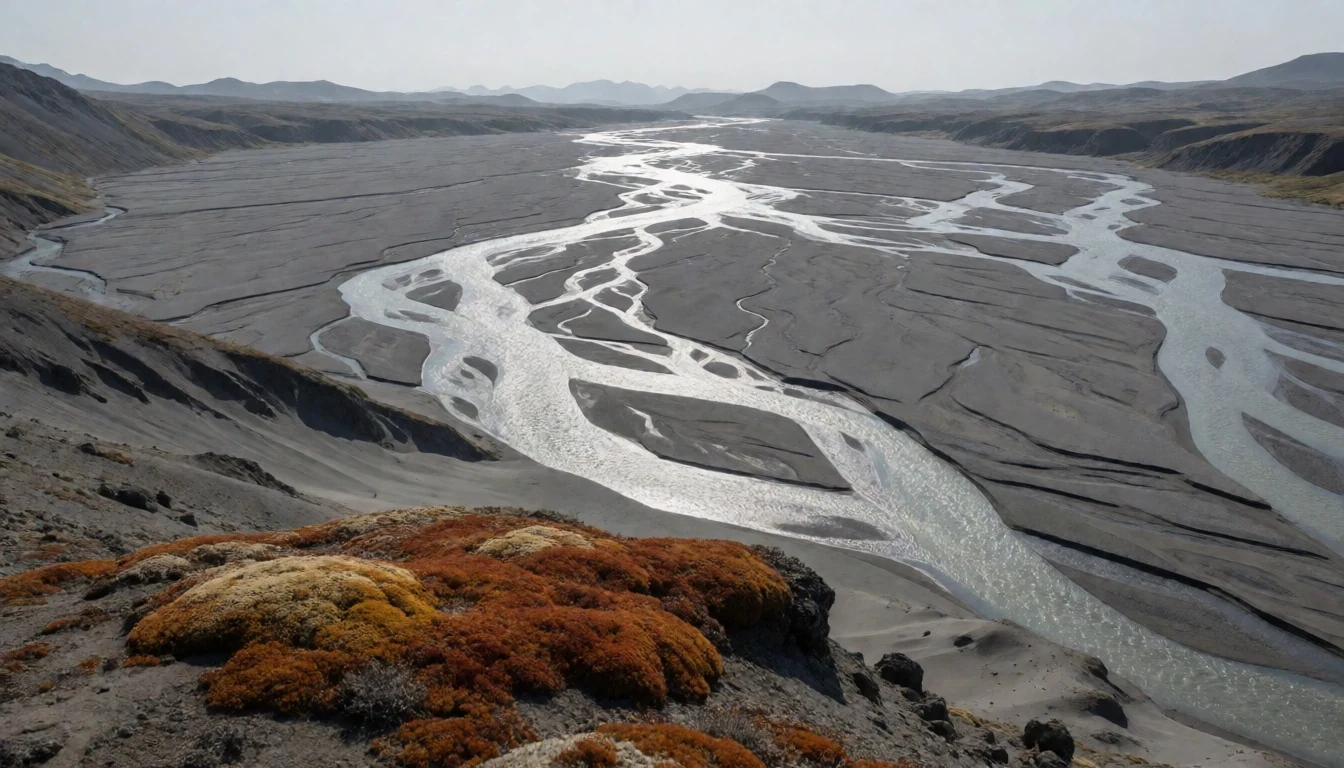
- Start of the Arctic Circle Trail — Kangerlussuaq
The long-distance trail from Kangerlussuaq to Sisimiut covers 167 km, is well marked, and is walked by a small number of hikers each year. Few visitors to Russell Glacier do more than the first stretch, but even a short section shows the tundra, lakes and wide valleys beyond the road.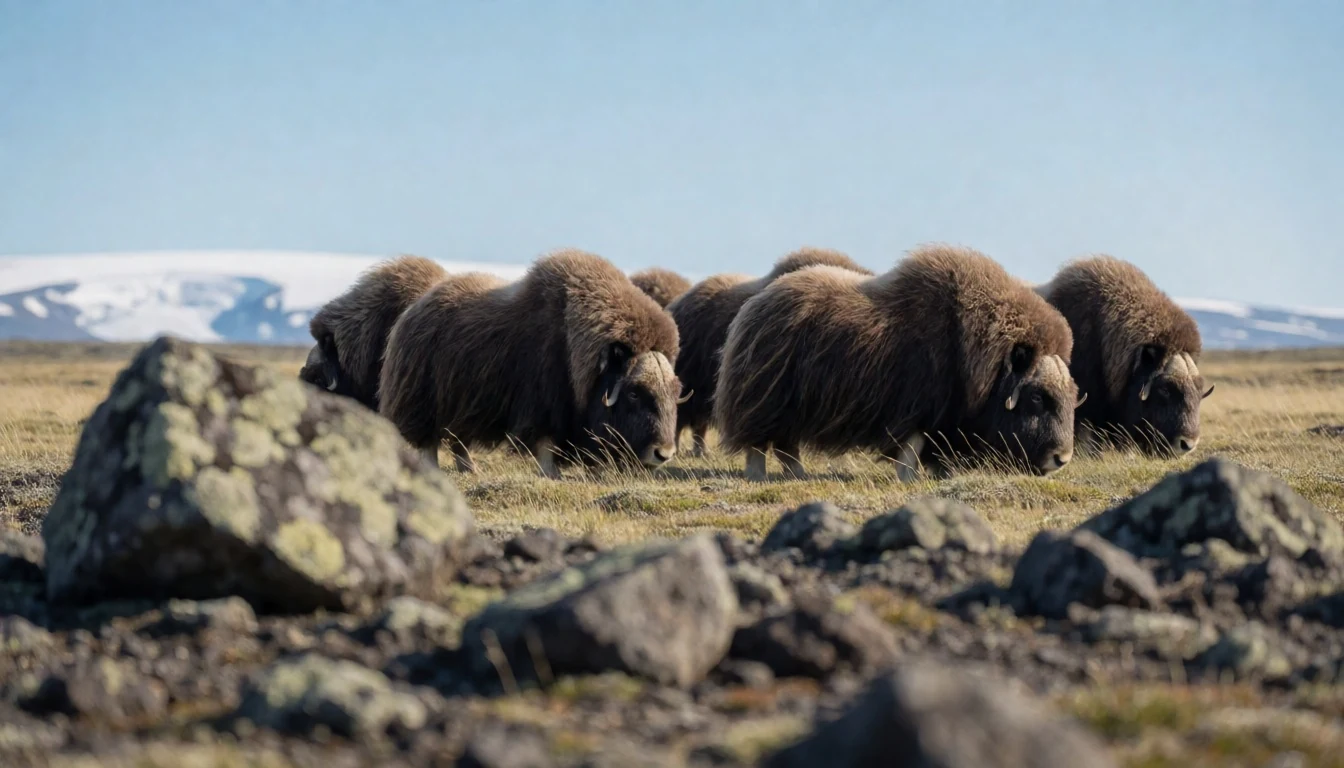
Culture
Russell Glacier sits in Greenland, and the first cultural point for a visitor is about names. People who live here call themselves Kalaallit, though "Greenlander" is also accepted. The older outsider word "Eskimo" is now considered a slur and is best avoided completely. Greenland belongs to the Kingdom of Denmark, but Greenlanders see themselves as a separate nation, so telling someone you are "in Denmark" will earn a polite correction. If sovereignty comes up, "Kingdom of Denmark" is the safe phrase. Greenlandic, or Kalaallisut, is the everyday language of most people, with Danish and English common in tourism. Around Kangerlussuaq, life turns on the airport, visitors and the outdoors, and the pace is unhurried. There is no private land ownership anywhere in Greenland, so the open tundra feels shared, and locals treat it with a practical, respectful familiarity that visitors should copy: carry out all rubbish and leave stones, bones and plants where they lie. Hunting and fishing remain part of livelihoods and of the food culture, including seal and whale, so visitors from places where these are controversial will learn more by listening than by lecturing. Crime and hostility towards foreigners are virtually unknown, and people tend to be warm once greeted, if a little reserved at first. Etiquette: ask before photographing local people, and keep to marked tracks and firm ground rather than walking onto the ice or into the silt.
What to wear
Russell Glacier is in Greenland, where traditional dress is the national costume known as kalaallisut, worn at weddings, confirmations, national holidays and other family occasions. Its best-known features are sealskin trousers or skirts, a wide collar of glass beads that falls over the shoulders in bright patterned rings, and tall boots called kamiit, made of sealskin and sewn by hand. Colours and patterns vary by region and by the occasion. Day to day, most people in towns such as Kangerlussuaq wear what suits the weather: windproof jackets, fleeces, jeans or outdoor trousers, wool hats and sturdy boots, in the practical style common across the Nordic region. Smarter clothes appear at celebrations and in the evenings. A visitor to the glacier should dress for wind and changeable weather rather than for the calendar. Layers work best: a warm base layer, a fleece or light down jacket, and a windproof, waterproof shell. Strong walking boots with good grip are needed for loose gravel, wet tundra and the edges of the sandur, and trainers are a poor choice. A hat and gloves are useful even in summer near the ice. In the warm months, sunglasses, sun cream and a head net against mosquitoes are worth packing. There are no dress codes for sights here, but modest, practical clothing suits a small community. Cold is the main danger for the unprepared, so bring more than seems necessary.
What to eat
- Muskox — Restaurants and eateries in Kangerlussuaq and other towns
Muskox is a local meat served roasted, stewed or in burgers, with a rich flavour somewhere between beef and game. Restaurants in Kangerlussuaq and larger Greenlandic towns often feature it alongside more familiar European dishes.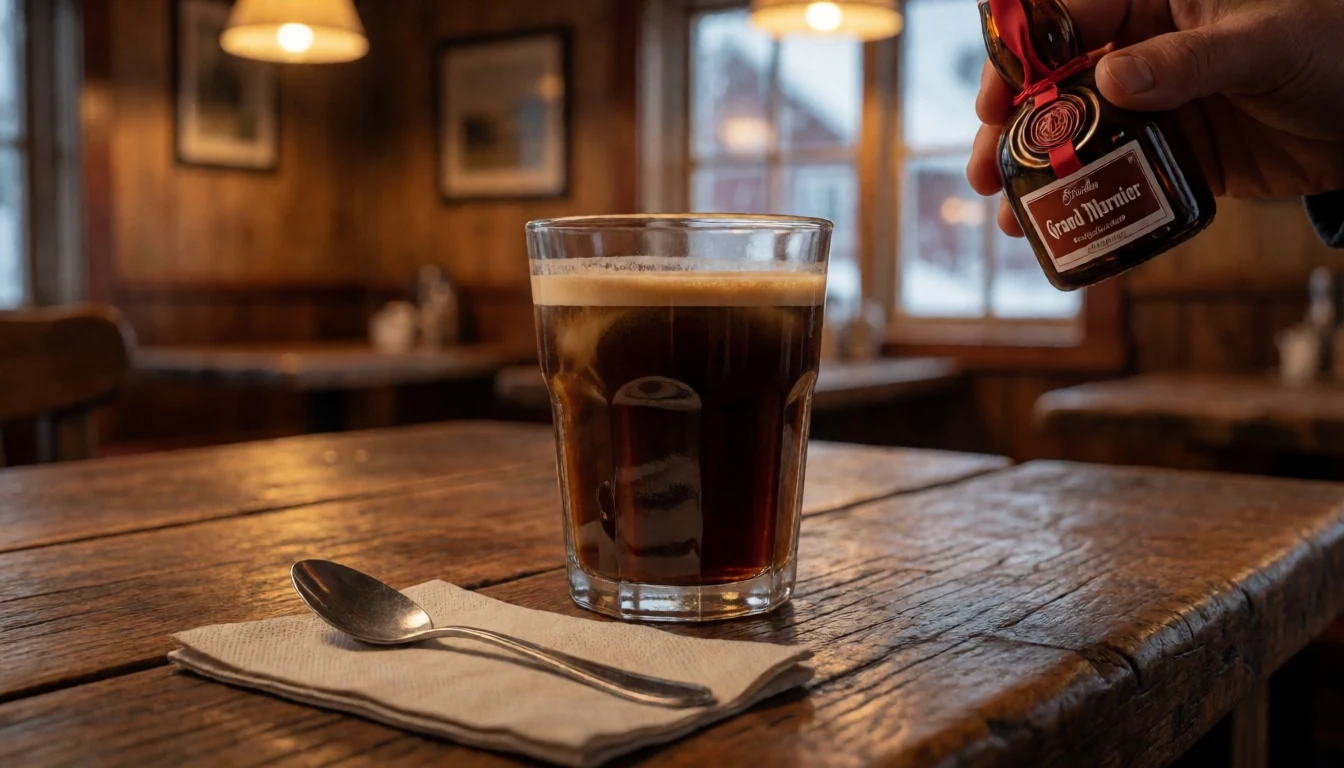
- Reindeer (caribou) — Local restaurants and town markets
Reindeer is a lean meat usually served as steaks or in stews, often with potatoes and a berry sauce. It is hunted locally and appears on many menus, sometimes in unexpected places such as Chinese or Thai restaurants.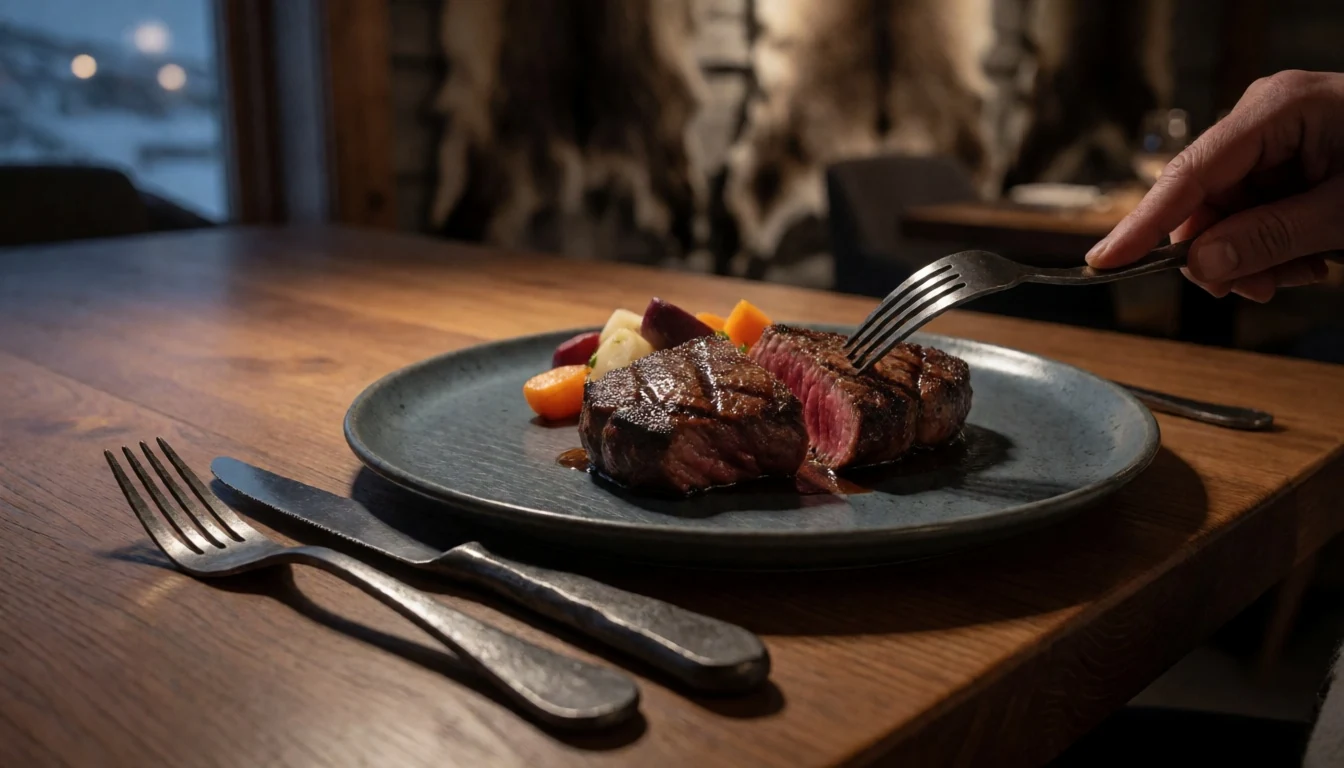
- Greenland shrimp — Town markets and supermarkets
Small cold-water shrimp, caught locally and sold peeled, are eaten with bread, mayonnaise or in salads. They are a simple, sweet snack that shows how central the sea is to the table. - Fresh local fish — Local markets and restaurants
Locally caught fish is served grilled, pan-fried or dried, depending on the season and the cook. It is one of the easiest ways for a visitor to taste the region without anything too unusual on the plate. - Greenlandic coffee — Restaurants and bars, often served as an after-dinner show
Greenlandic coffee is a theatrical drink, strong coffee laced generously with kahlua, whisky and Grand Marnier. In some places its preparation is a small performance. It hits harder than it looks, so take it slowly, especially before a walk.
Plan it
Best time. June to September, when the tundra is open, the days are long and the sun barely dips below the horizon around the solstice. Winter is cold and dark, and the cold is the main real danger for anyone unprepared.
How long. 1–2
Getting there. Fly to Kangerlussuaq, the main air gateway to this part of western Greenland, usually via Copenhagen or other connections. The last leg is a drive east from the village to the glacier front, about 25 km, by organised tour or arranged transport.
Budget. high
Tips
- Book tours and accommodation well ahead in summer, as Greenland is expensive and choices are limited
- Check entry rules early: Greenland is outside the EU and Schengen area, and a Danish visa does not automatically cover it
- Bring layers, windproofs and strong boots, plus sun protection and a head net for mosquitoes
- Pack food and water for the day, as there is little to buy near the ice
- Allow spare days, because flights and tours are weather-dependent
Etiquette
- Stay well back from the ice face and meltwater caves, and keep off the quicksand-prone silt
- Walking on the glacier itself needs the right permission, so check official rules or go with a licensed guide
- Take all rubbish out and leave the landscape as you found it
Nearby
Sources
- Wikidata Q7381523 (CC0)
- Wikipedia: Russell Glacier (Greenland), rev 1362424398 (CC BY-SA 4.0)
- Wikivoyage: Greenland, rev 5381839 (CC BY-SA 4.0)
- Photo: Russells Gletscher, Algkalv (Public domain)
- Photo: Relief location map of Greenland, Uwe Dedering (CC BY 3.0)
- Photo: Glacier base cave, Algkalv (Public domain)
- Photo: Russel Glacier, Niels Elgaard Larsen (CC BY 3.0)
- Photo: Aajuitsup Tasia (10), Chmee2 (CC BY 3.0)
- Photo: Aajuitsup Tasia (11), Chmee2 (CC BY 3.0)
- Photo: Aajuitsup Tasia (6), Chmee2 (CC BY 3.0)
- Photo: Aajuitsup Tasia (7), Chmee2 (CC BY 3.0)


Wildlife
- Musk ox (animal)
The muskox is a shaggy Arctic hoofed animal, rather like a walking woolly blanket, and its Inuktitut name, umingmak, means “the bearded one”. Around Russell Glacier, scan the thinly vegetated ground, where it may be seen grazing. Males give off a strong musky smell in the rutting season, which draws the females. To watch well, stay at a generous distance, keep your voice low, go with a guide, and never offer it food.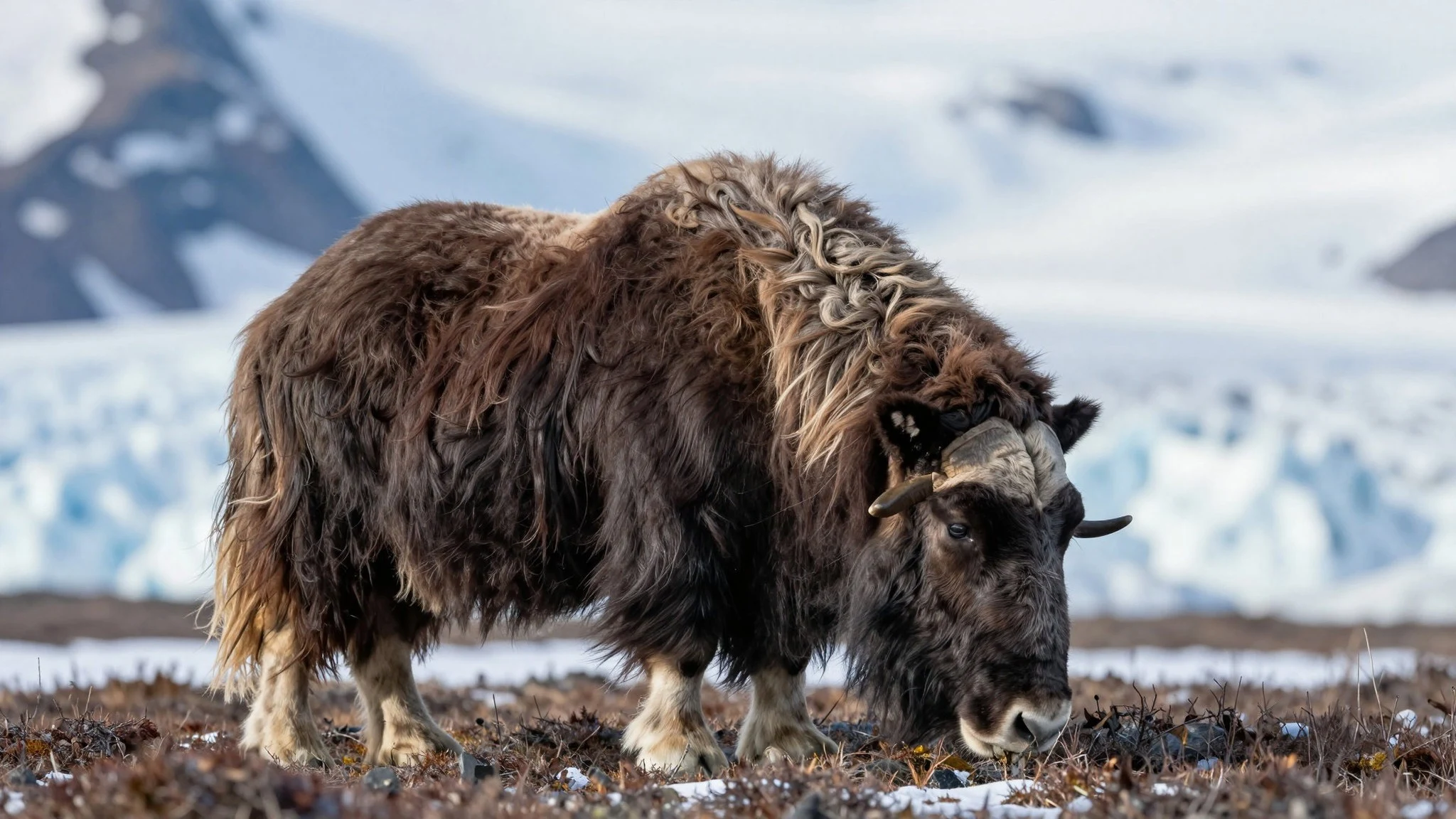
- Reindeer (animal)
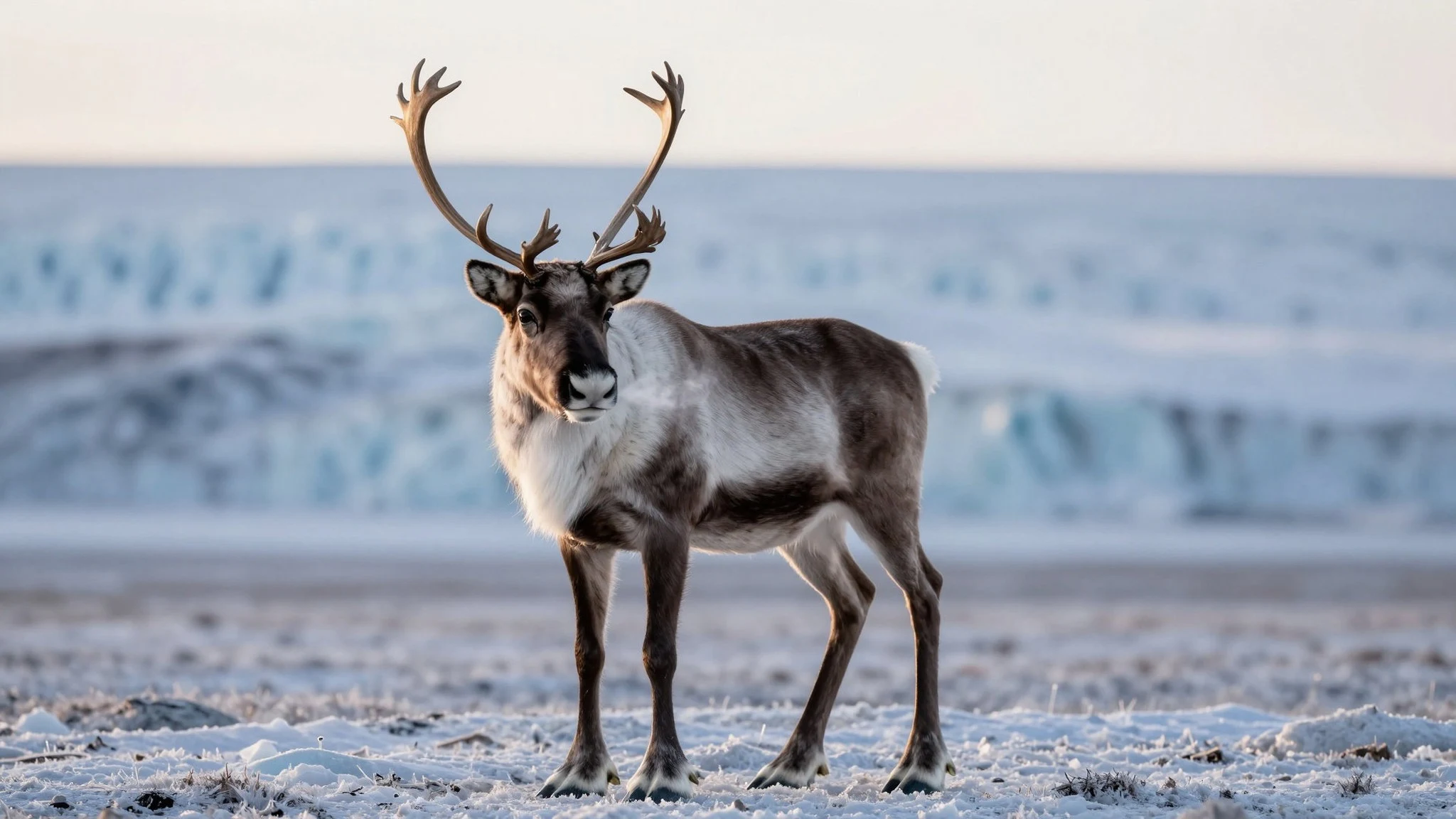
A reindeer is a deer of the cold northern lands, also known as a caribou, and it is the same animal wherever you meet it. Around Russell Glacier, you may spot it grazing on the sparse plants of the open ground. Ask your guide about the best time to look. Watch from a respectful distance, move and speak quietly so it stays calm, and never feed it.