Ruby Falls
Ruby Falls, United States
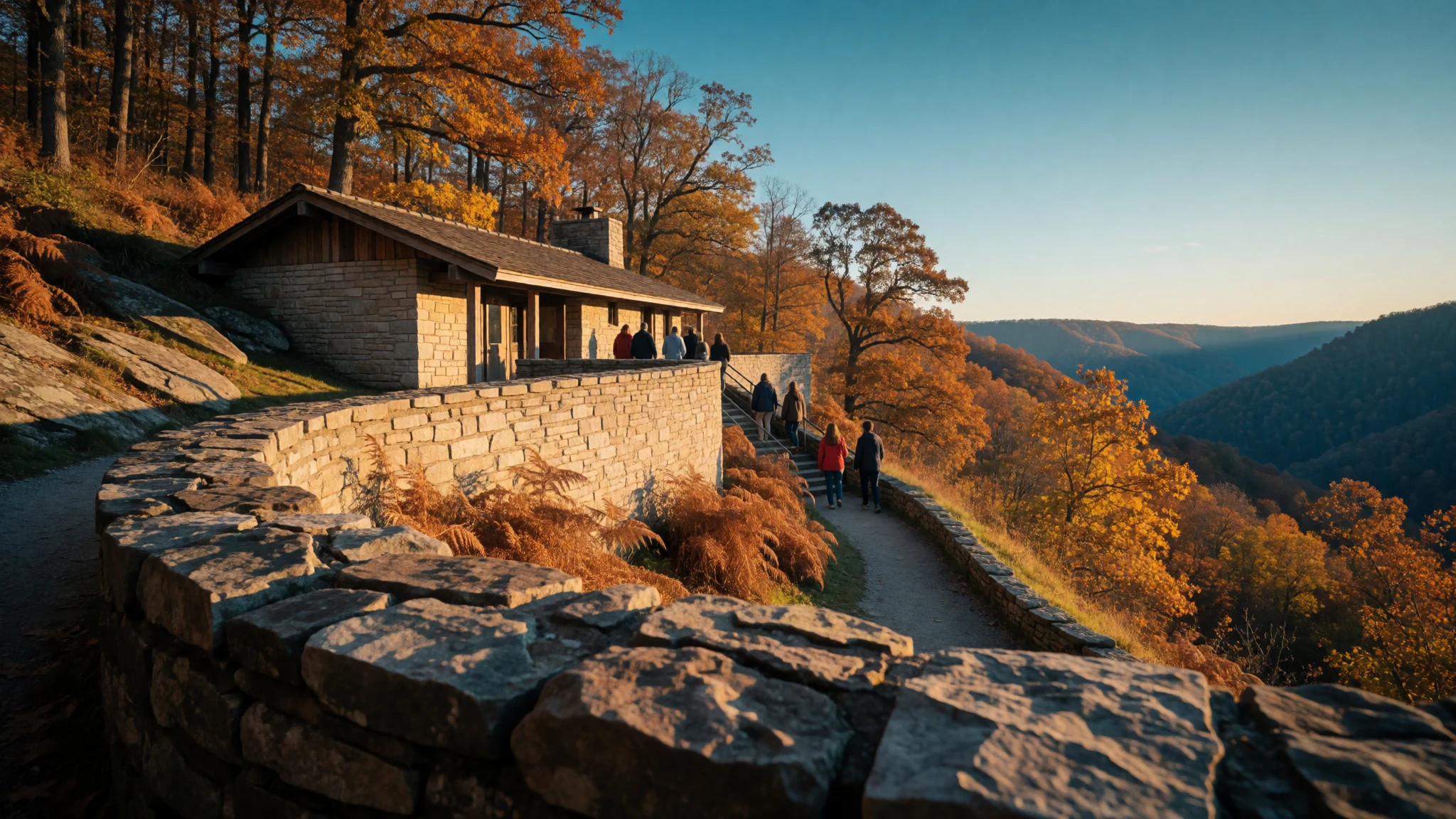
Ruby Falls is a waterfall hidden inside a Tennessee mountain, reached by lift and a lit cave walk, with a discovery story to match.
The place
Ruby Falls is a waterfall inside Lookout Mountain, on the edge of Chattanooga in south-eastern Tennessee, and it drops about 26 m in a cave where the only light is whatever the designers choose to switch on. Visitors descend by lift, then follow paved, lit paths through limestone passages; the falls can be seen only on a guided tour, so the pace is set by the group rather than the individual. The mountain is a long ridge above the Tennessee River valley, close to the Georgia state line, which is why the area works as a short excursion from the city. The geology is straightforward once it is laid out. Hundreds of millions of years ago a shallow sea covered this part of eastern Tennessee, and its sediments settled and hardened into limestone. Much later the land was pushed upwards, raising Lookout Mountain and the ridges around it. Slightly acidic groundwater then seeped through cracks in the rock and dissolved it grain by grain, widening hairline fractures into passages. That slow chemical weathering left several caves inside the mountain. Two of them matter here: Lookout Mountain Cave, which always had a mouth open to the surface, and Ruby Falls Cave, which had none and stayed sealed until the twentieth century. Developers eventually connected the two into one attraction called Lookout Mountain Caverns. It is a commercial site, with a car park, a visitor centre, electric lighting and groups moving in sequence, so it feels closer to a well-run museum than to an expedition. That suits families, older travellers and anyone who wants the drama of a cave without crawling or climbing. The mountain above adds viewpoints and some older roadside attractions, enough to fill a relaxed half-day.
Its story
Ruby Falls carries the name of Ruby Lambert, whose husband found the waterfall in 1928. The story starts earlier, in 1905, when builders cut a railway tunnel through Lookout Mountain and closed the natural mouth of the neighbouring Lookout Mountain Cave. By the 1920s Leo Lambert, a chemist and keen caver, believed that cave could earn money as a visitor attraction again. His idea was to avoid the blocked entrance altogether: start higher on the slope, sink a shaft through the limestone and carry visitors down by lift. His company bought land on the mountainside and began drilling in 1928. Partway down, the crew broke into a gap so low and narrow that anyone going through had to wriggle. Lambert did, and beyond it he found an underground waterfall that nobody had recorded. On a later visit he brought his wife and told her the falls would bear her name. The sealed cave had never had a natural way in, so it held none of the traces of earlier people that turn up in many caves across the south-east of the United States. Meanwhile the tunnellers kept going towards their original target, the older cave, and reached it after a further stretch of digging deep beneath the summit. Joining the two created the Lookout Mountain Caverns experience. The tale has the neat shape of a legend, but it rests on a plain business plan that went slightly off course and turned out better than intended.
What to see
- Ruby Falls Visitor Centre — Lookout Mountain, Chattanooga
The visitor centre at Ruby Falls stands on the slope of Lookout Mountain and is where tours begin and the lift down to the cave is boarded. Arrive with time to spare, since groups leave in sequence and the building handles tickets, waiting and the shop. Check the official Ruby Falls site for current booking arrangements before travelling.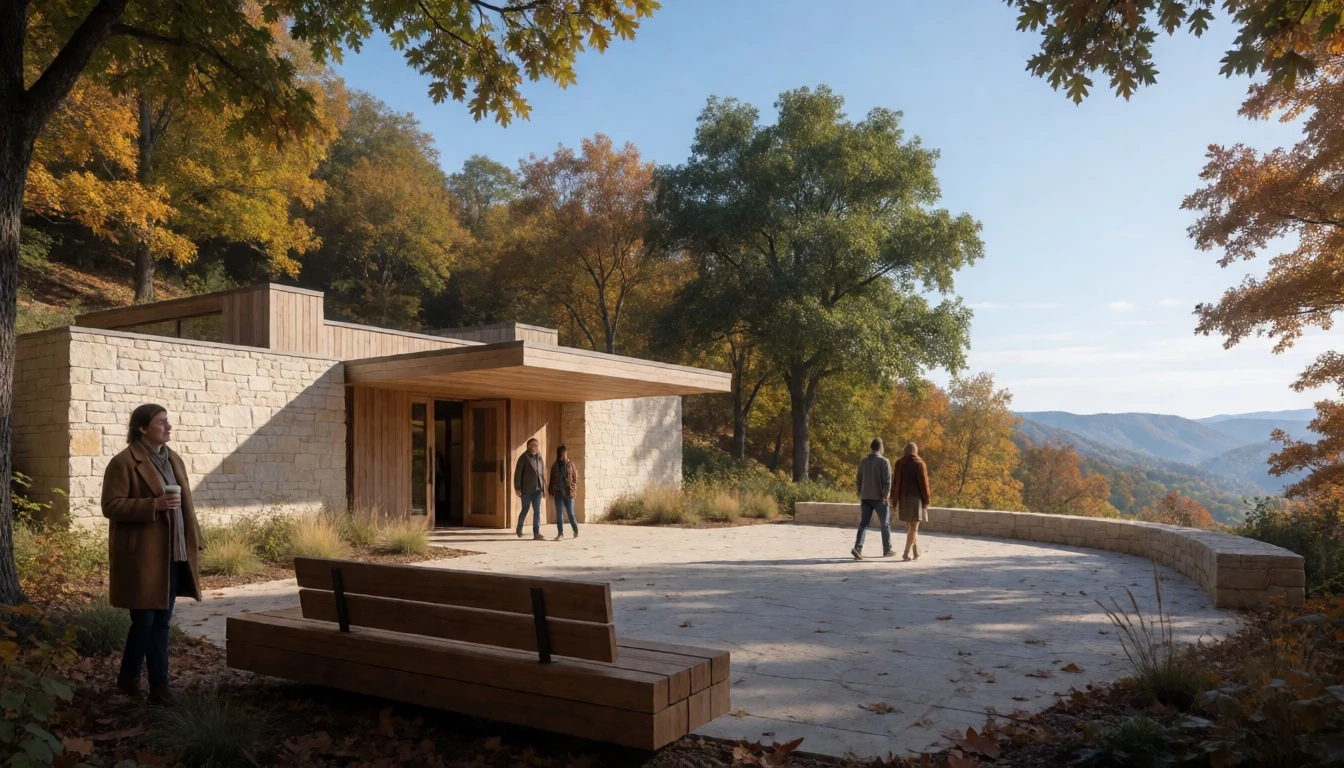
- The entrance passage — Inside Ruby Falls Cave
The passage into Ruby Falls Cave shows how the cave was found: tight in places, with a low roof that makes guides remind groups to mind their heads. Today it is paved and lit, but the walls still press close, and the route gives a sense of the cramped gap the original explorers squeezed through.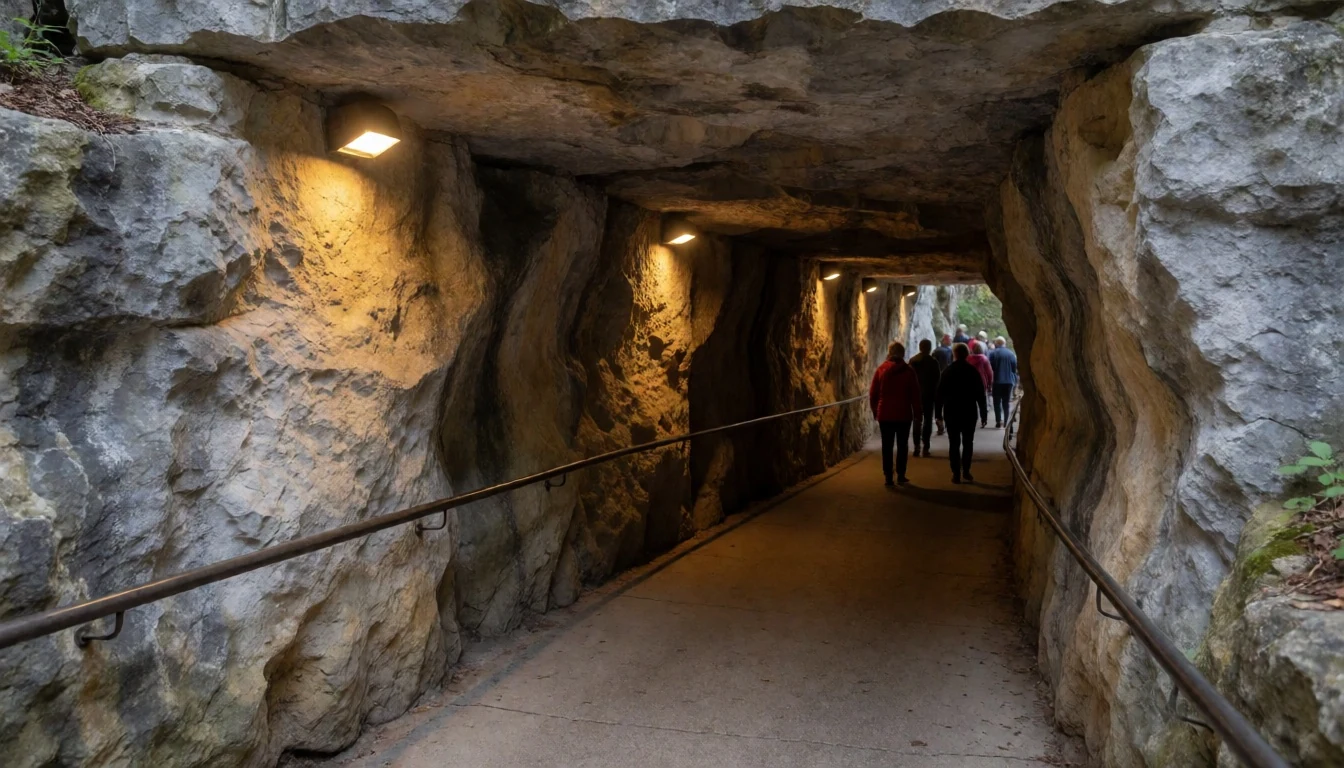
- The waterfall chamber — Inside Ruby Falls Cave
The waterfall chamber is the destination of every tour. Water drops about 26 m into a pool in a lit hollow, with the sound filling the space, and guides hold the group long enough for photographs. The floor is damp near the falls, so footing deserves some attention.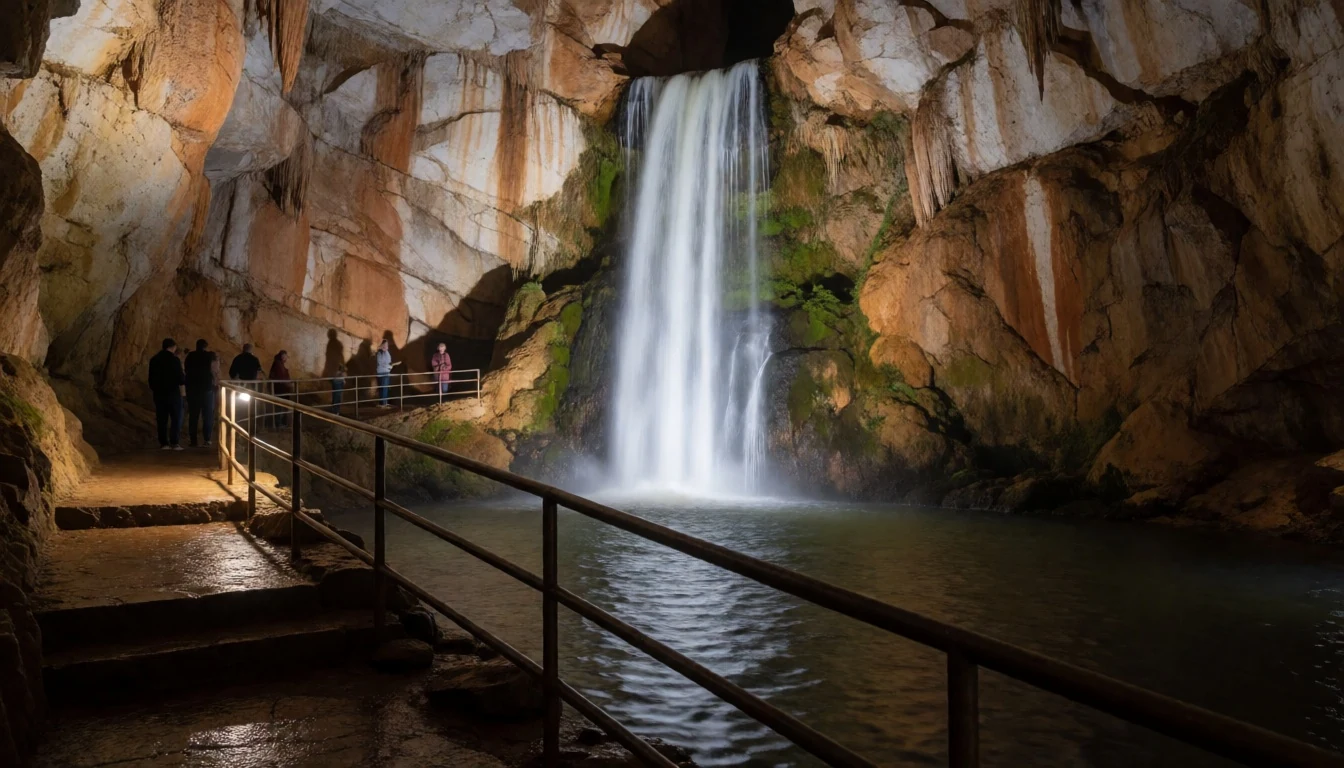
- Cave formations — Inside Ruby Falls Cave
Ruby Falls Cave also holds the usual cave sculpture: stalagmites rising from the floor and delicate rock draperies shaped by long dripping water. One formation is nicknamed for its resemblance to tobacco leaves. Guides point these out on the way to and from the falls, and the lighting is arranged so the textures show well in photographs.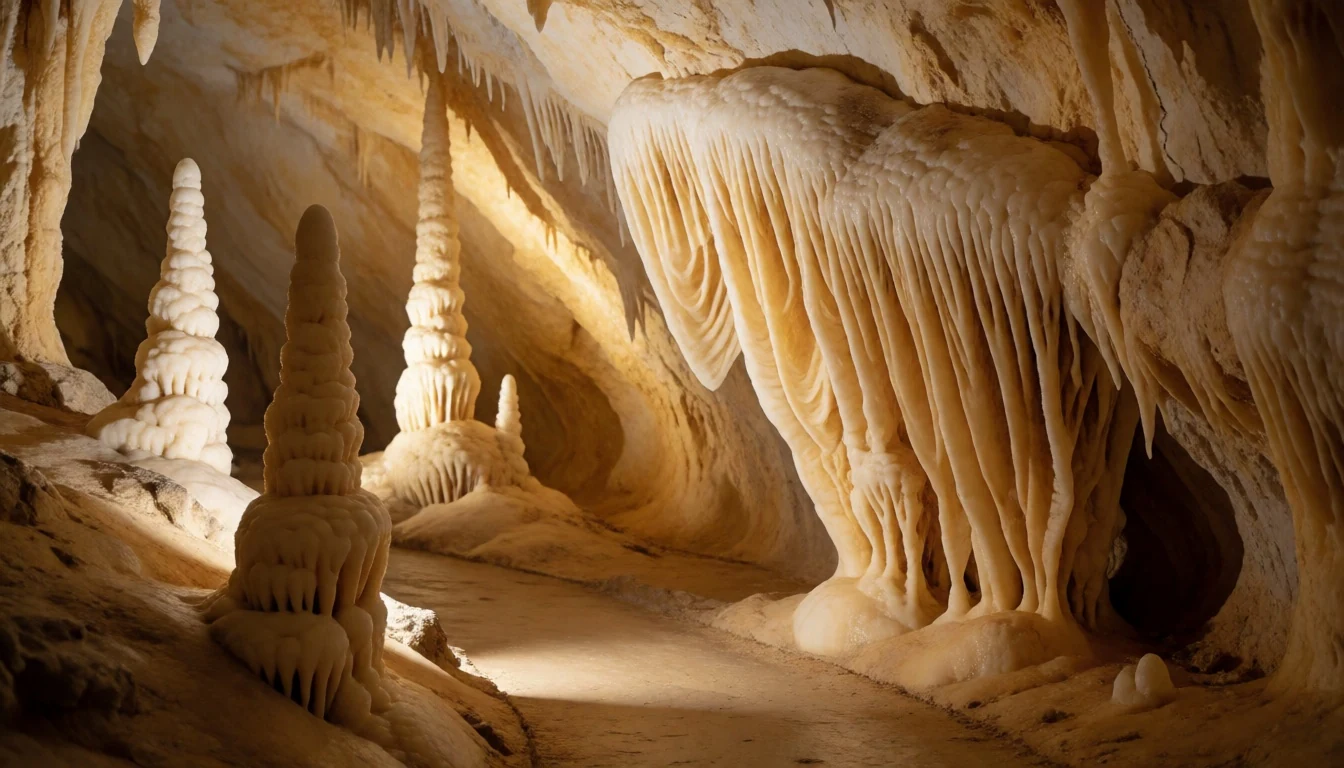
- Lookout Mountain Castle — Lookout Mountain, Chattanooga
The mountain above offers various scenic overlooks and viewpoints, which make short photographic stops for anyone already driving up to the caves. These spots are best treated as quick looks rather than full outings; check locally about access before planning around them.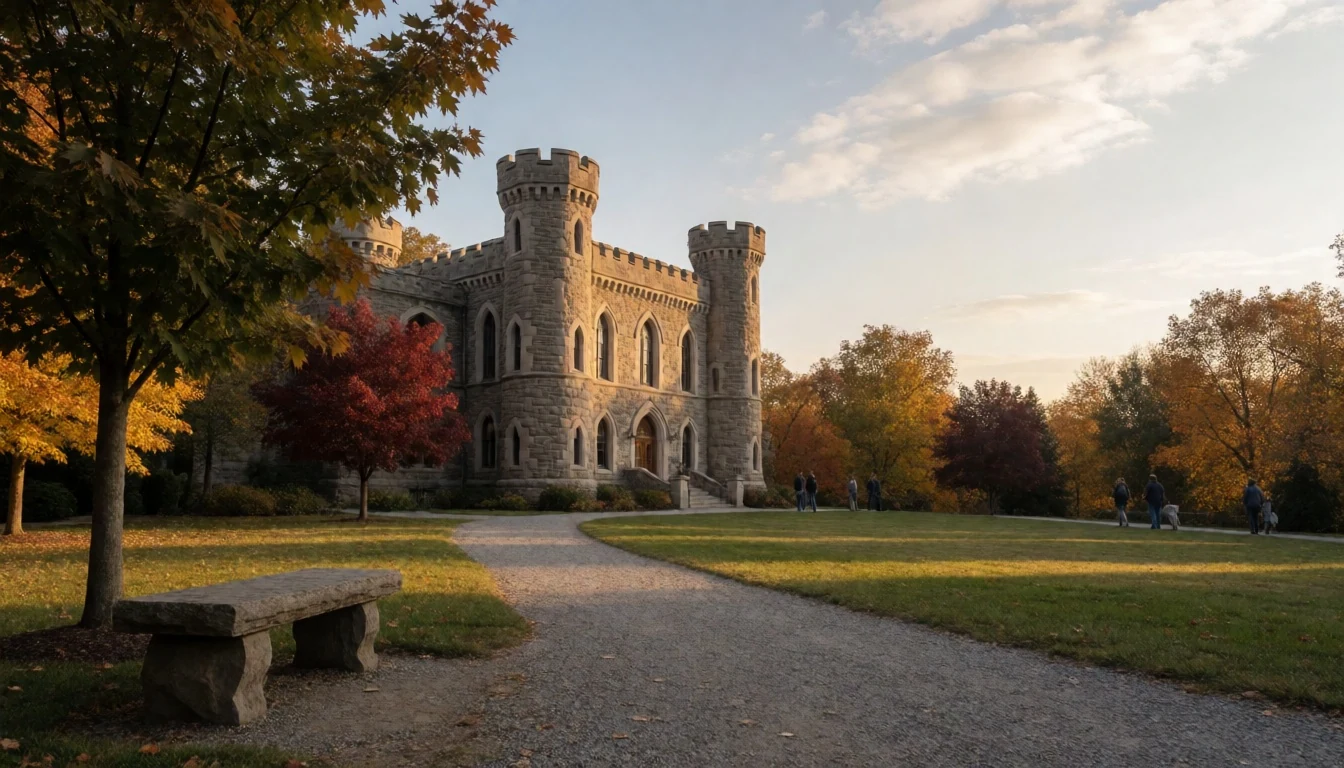
- Rock City — Lookout Mountain, near Chattanooga
Rock City, also on Lookout Mountain near Chattanooga, is known across the south-eastern United States for its painted 'See Rock City' signs, especially the ones on birdhouses. It pairs naturally with a cave visit on the same mountain, and the signs themselves are a small piece of roadside folk history.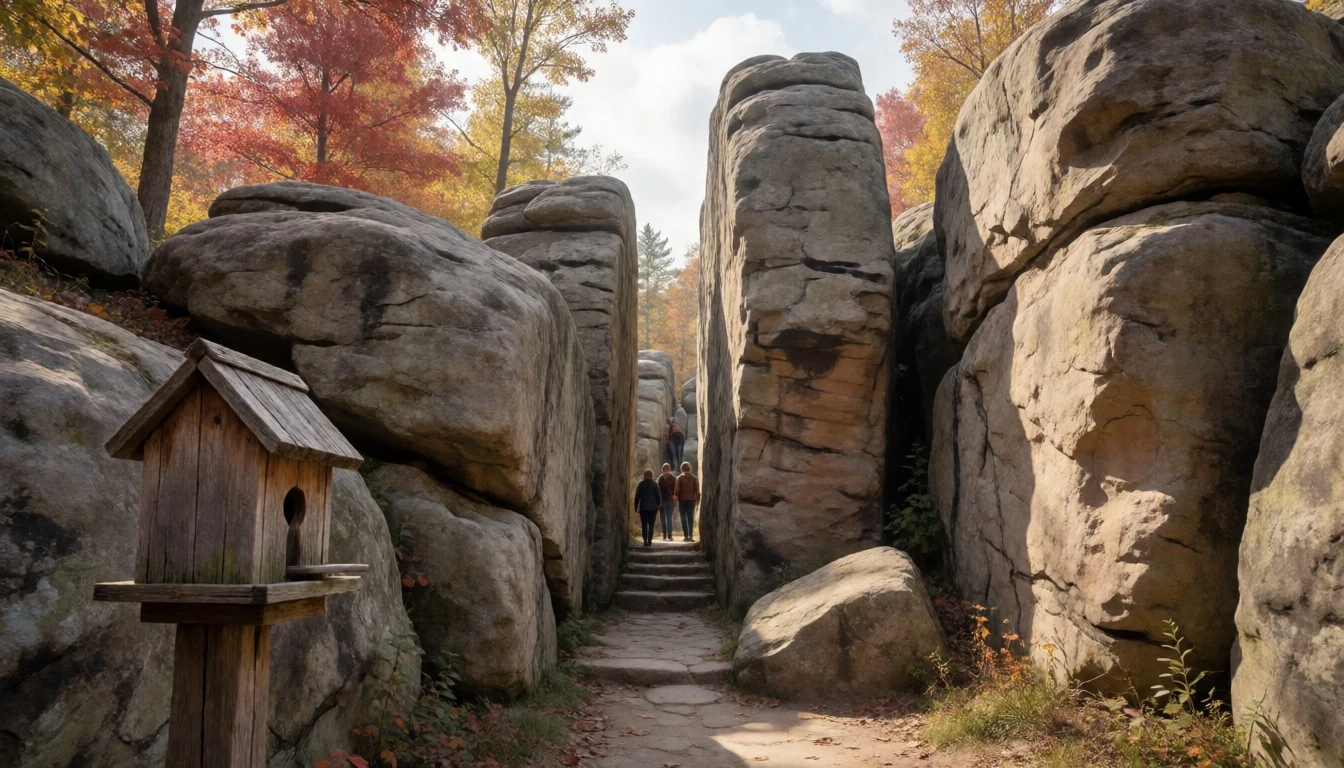
Culture
Ruby Falls sits in Tennessee, a state in the American South where the social tone is conservative and formal courtesy still counts. Visitors from India and the UK will find the manners familiar in outline: strangers greet each other, staff address customers as 'sir' or 'ma'am', and queues are respected. Small talk is part of any transaction, whether at a petrol station or a ticket desk, and a short friendly answer goes a long way. Religion is visible in daily life, with churches common across the region and many people open about their faith; politics and religion are usually safer left out of casual conversation with strangers. The area around Chattanooga also takes pride in its Appalachian and Civil War history, and in outdoor pursuits such as hiking, climbing and river sports, which shape what locals do at weekends. At the cave itself the culture is that of a family attraction: school groups, children, guides who tell the discovery story with well-rehearsed humour, and a gift shop at the end of the route. Southern hospitality is real but rests on small courtesies, so thanking the guide and holding doors is noticed. Stay with your guide's group, keep your hands off the cave formations because skin oils damage them, and do not hold up the path while taking photographs.
What to wear
Ruby Falls lies in Appalachian country, where there is no single national costume and traditional clothing means the working wear of earlier generations: homespun cotton and wool, simple dresses and aprons, sturdy boots, and quilts pieced from scraps of cloth. Denim, now the everyday fabric, began as workwear. Church clothes were once called 'Sunday best', and a neat collared shirt or dress still appears at services. Today people around Chattanooga mostly dress for comfort and the outdoors: jeans or shorts, T-shirts, trainers, caps, fleece jackets, and team colours on match days. Outdoor-brand jackets and hiking sandals are common because the region is built around trails and rivers. Visitors should dress for the cave rather than the weather outside: closed shoes with a good grip, because paths are paved but can be damp, and a light layer, as caves feel cool even in summer. Outside, summer is hot and humid, so lightweight cotton and a hat help in the car park and at mountain viewpoints. In spring, a light rain jacket is worth carrying. No special modesty rules apply at the cave; for a church service nearby, tidy casual clothes are enough.
What to eat
- Nashville hot chicken — Casual chicken shacks and counter-service restaurants in Chattanooga and Nashville
Fried chicken coated in a fiery cayenne paste and served on white bread with pickles, a Nashville speciality now found well beyond the city. Ask for a milder level first, as the heat builds slowly and lingers.
- Memphis-style barbecue and rib tips — Smokehouses and barbecue joints across Tennessee, especially in Memphis
Pork ribs and rib tips slow-smoked over wood and finished with a dry spice rub or a tangy sauce, the signature of Memphis barbecue. Expect coleslaw, baked beans and white bread alongside, served on paper-lined trays.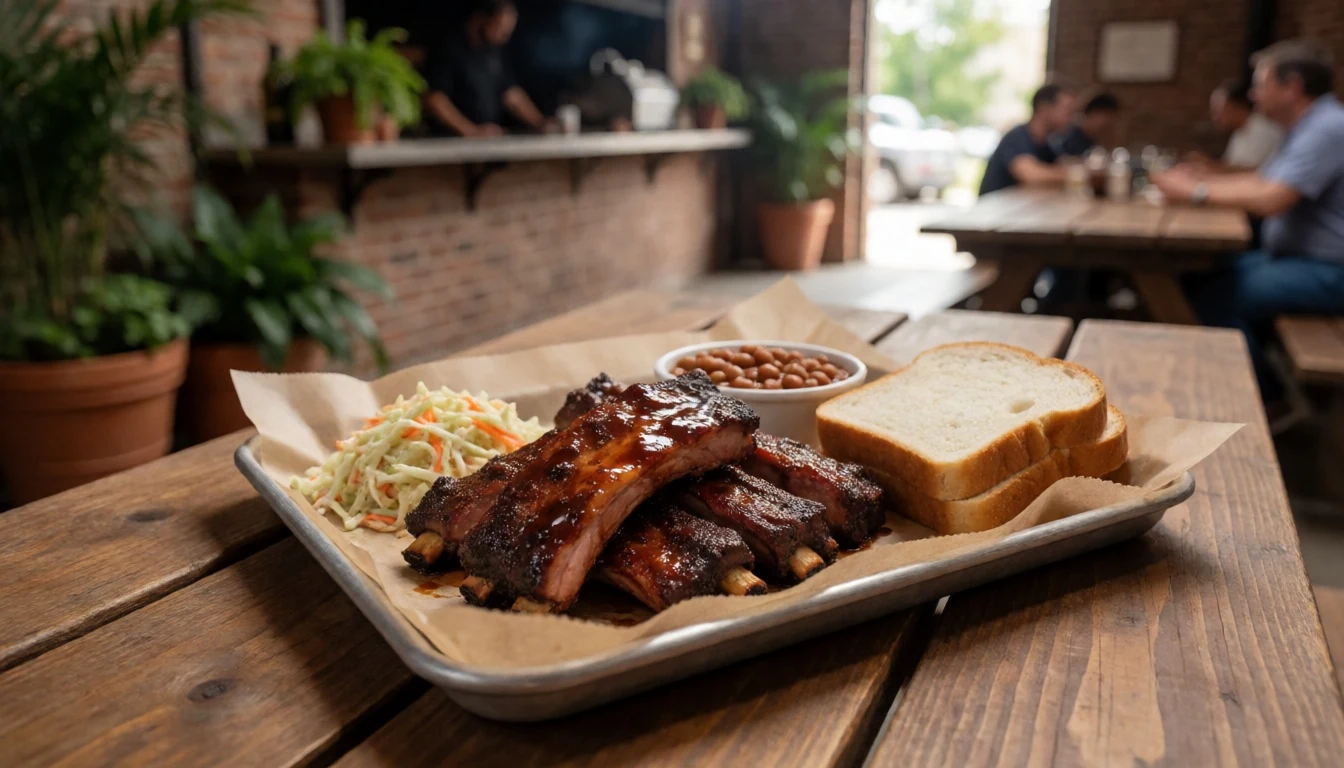
- Tennessee whiskey — Distillery tasting rooms and licensed bars across Tennessee
A smooth, charcoal-filtered whiskey that must be made in the state; filtering through maple charcoal before ageing sets it apart from other bourbon-style spirits. Tasting is usually offered on distillery tours; drivers should skip the samples. - Biscuits and gravy — Southern breakfast diners and family-run cafés
Soft, flaky buttermilk biscuits smothered in a peppery sausage gravy, a standard Southern breakfast. It is filling, so one plate carries a visitor well into a day of sightseeing. Vegetarians should ask what is in the gravy. - Meat-and-three — Lunchtime canteens and family-run restaurants, often in older town-centre buildings
A Southern lunch plate of one meat, often fried chicken or meatloaf, with three sides such as macaroni cheese, collard greens or fried okra. Plain and filling; vegetable-only plates are possible, though sides may be cooked with pork.
Plan it
Best time. April–May and October–November, when the air outside is most comfortable for walking on the mountain; December is the wettest month, and summer is the hottest, though the cave itself stays cool.
How long. 1
Getting there. Chattanooga has its own small airport; Nashville International Airport has far more connections, followed by a drive east on Interstate 24, which ends in Chattanooga. Interstate 75 links Knoxville with the city. The last leg is a short drive up Lookout Mountain from central Chattanooga.
Budget. mid
Tips
- Book the guided tour ahead through the official Ruby Falls website, especially for weekends and school holidays
- Go early in the day for a calmer start and smaller crowds
- Wear closed shoes with a good grip and carry a light layer for the cool cave
- Allow time for parking and the visitor centre queue before your tour slot
- Check the official site for current prices, opening times and accessibility
Etiquette
- Stay with your guide and the group throughout the tour
- Do not touch cave formations or the waterfall pool
- Keep photography quick so the path stays clear for others
Nearby
Sources
- Wikidata Q7376312 (CC0)
- Wikipedia: Ruby Falls (rev 1377516629) (CC BY-SA 4.0)
- Wikivoyage: Tennessee (rev 5153492) (CC BY-SA 4.0)
- Photo: Ruby Falls Visitor Center, Oydman (CC BY 3.0)
- Photo: Lookout Mountain Castle, Andrew Jameson (CC BY 3.0)
- Photo: Guests taking photos of Ruby Falls, RubyFallsInfo (CC BY-SA 4.0)
- Photo: Lookout Mountain gate, Yinan Chen (Public Domain)
- Photo: Cavern of Ruby Falls, Yinan Chen (Public Domain)
- Photo: Cavern stalagmite, Yinan Chen (Public Domain)
- Photo: Tobacco leaves formation, Yinan Chen (Public Domain)
- Photo: Into the cave, Yinan Chen (Public Domain)


