Rio Frio Cave
Rio Frio Cave, Belize
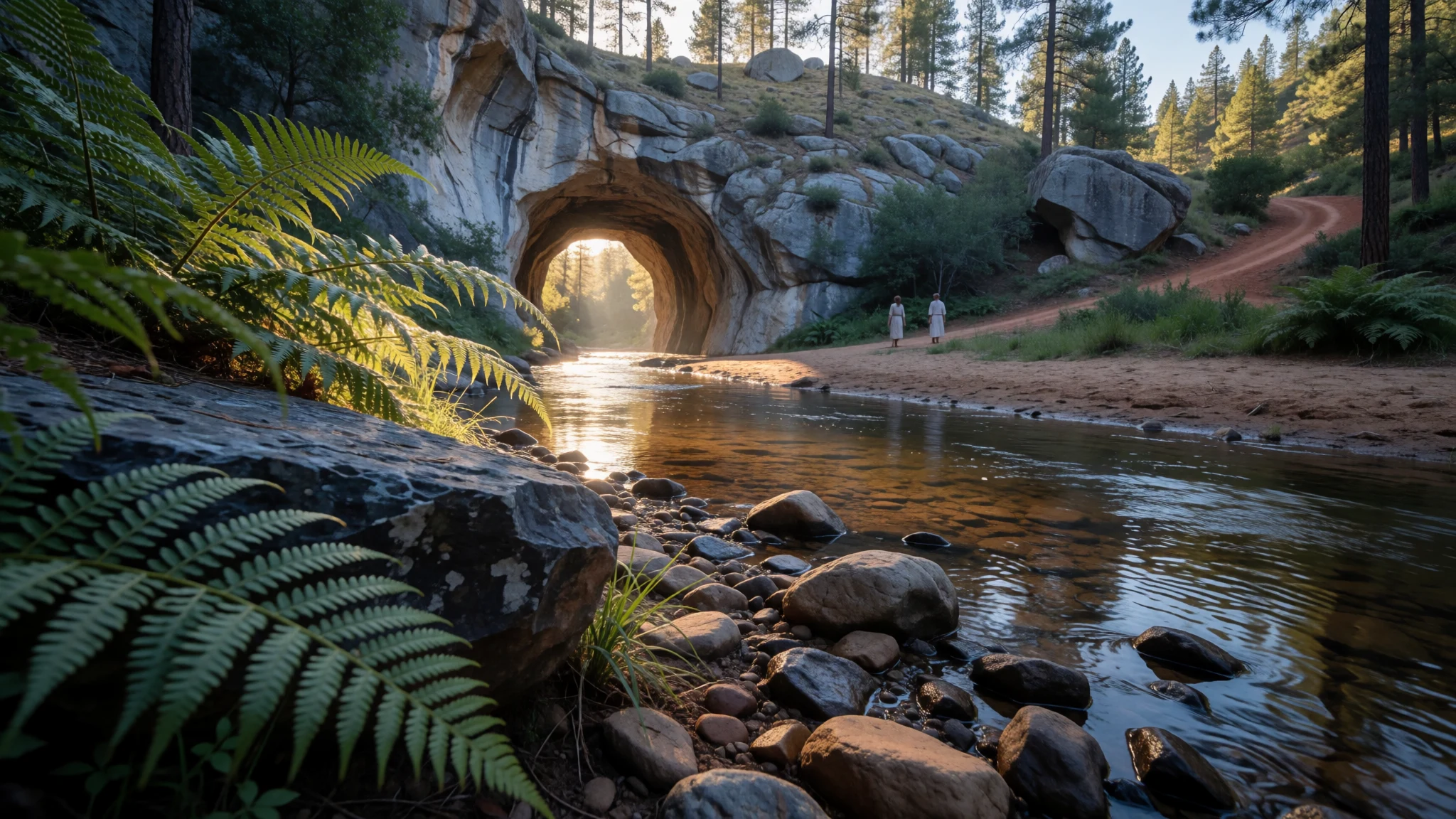
Rio Frio Cave is a river tunnel through a limestone hill on Belize's cool pine plateau, an easy, rewarding stop on a Cayo loop.
The place
Rio Frio Cave sits in the Mountain Pine Ridge Forest Reserve, in Belize's Cayo District, at about 470 m above sea level. The plateau looks little like the coast most people picture for Belize. Pines, granite outcrops and red-brown tracks replace the usual broadleaf jungle, and nights can turn properly cool. Here the Rio Frio runs straight through a limestone hill, and the cave is the tunnel it has carved. Daylight reaches a long way in, so the main chamber feels like a tall stone hall rather than a dark crawl, and the river inside is shallow enough to walk beside in the dry season. It is a short stop rather than an expedition. Many travellers fit it into a loop with Rio On Pools and other upland viewpoints, going with a guide or their own vehicle from San Ignacio. The road up is unpaved, dusty in the dry months and slippery after rain, so a high-clearance vehicle is sensible. Crowds are rarely a problem because the reserve is large and traffic is thin, though tour groups tend to arrive around midday. In the rainy season, from June to November, rising water can make crossings awkward and sometimes close the cave to visitors, so conditions are worth checking locally. San Ignacio is the usual base, with plenty of guesthouses, eateries and tour operators.
Its story
Rio Frio Cave is mostly the work of water and time, with people arriving late in its story. The Maya Mountains are built partly of granite and partly of limestone, and where a stream meets limestone it slowly dissolves the rock, turning cracks into passages. The Rio Frio found such a route through its hill and kept widening it, which is why a working river still runs through the chamber instead of a dry hall. The district around it has a long human record. Cayo was densely populated in the Classic Period, and the Maya treated caves as sacred places, thresholds to the underworld and settings for rituals about water, rain and ancestors. Caves nearby, such as Actun Tunichil Muknal and Barton Creek Cave, still hold ceremonial remains and ledges. Rio Frio itself is better known for its scale than for any famous excavation, so claims about specific rituals here deserve caution. Later, the pine uplands were protected as a forest reserve, and that status is why the cave sits among open pine and granite rather than farm fields. Cayo's population today is a mix of Maya, Mestizo, Creole, Garifuna, Lebanese and Mennonite communities, and the cave is now mainly a day-trip stop, reached by a gravel road, a short walk and a guide who knows the river's mood.
What to see
- Rio Frio Cave main chamber — Mountain Pine Ridge Forest Reserve, Cayo
The cave is an open tunnel through the hill, with the river running across its floor. Light spills in at both ends, so ferns, pale walls and sandy banks are easy to see without a torch. Go slowly, because rocks are wet and the water level changes with the season. The view back from the far end is the best photograph.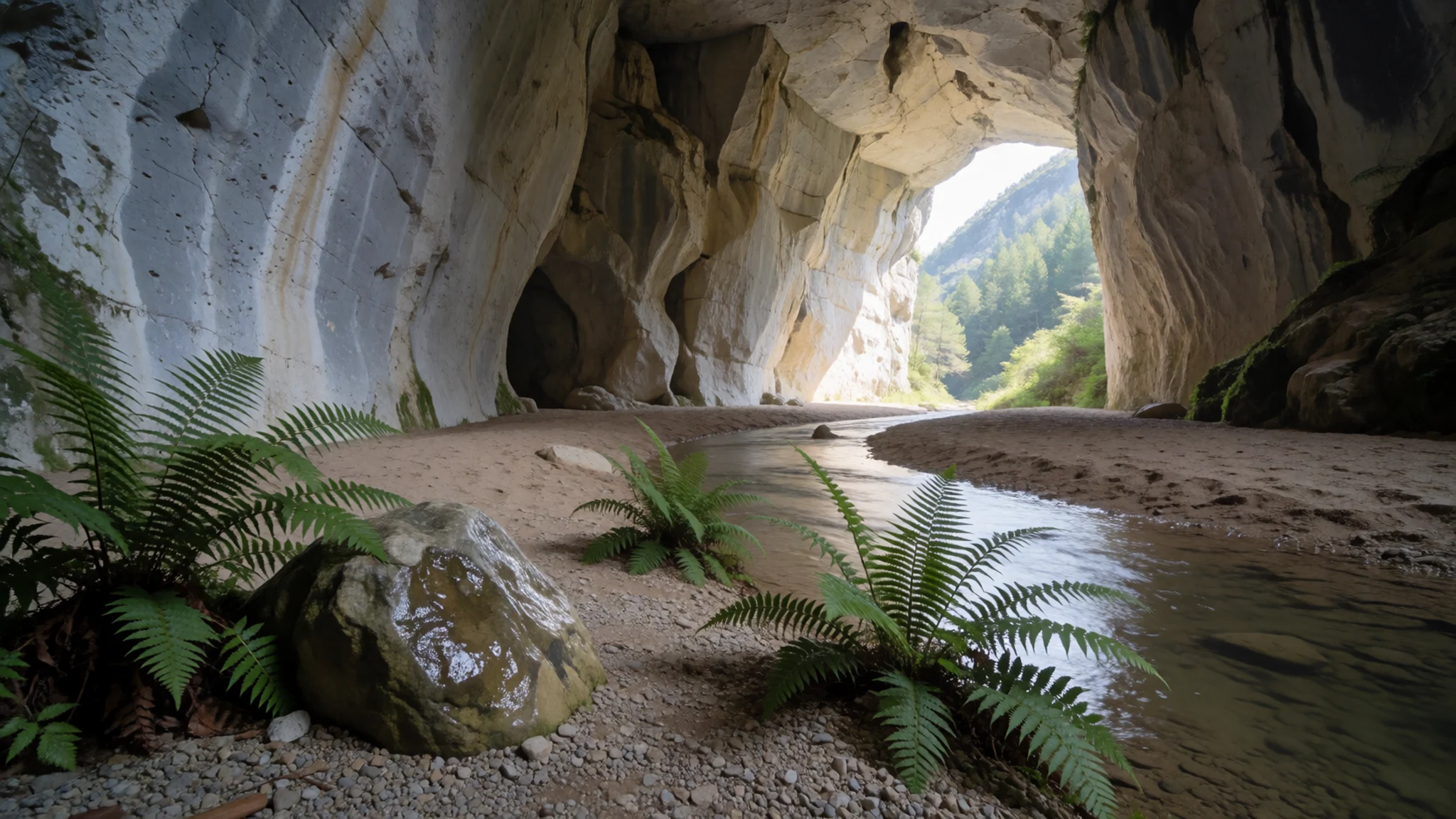
- Rio On Pools — Mountain Pine Ridge Forest Reserve, Cayo
A run of smooth granite slabs, small cascades and shallow pools on the same plateau, often combined with the cave on one loop. The water is cooler than the lowland air and the rock is slick, so sandals with grip matter. Weekends can bring local families, and midweek is usually quieter.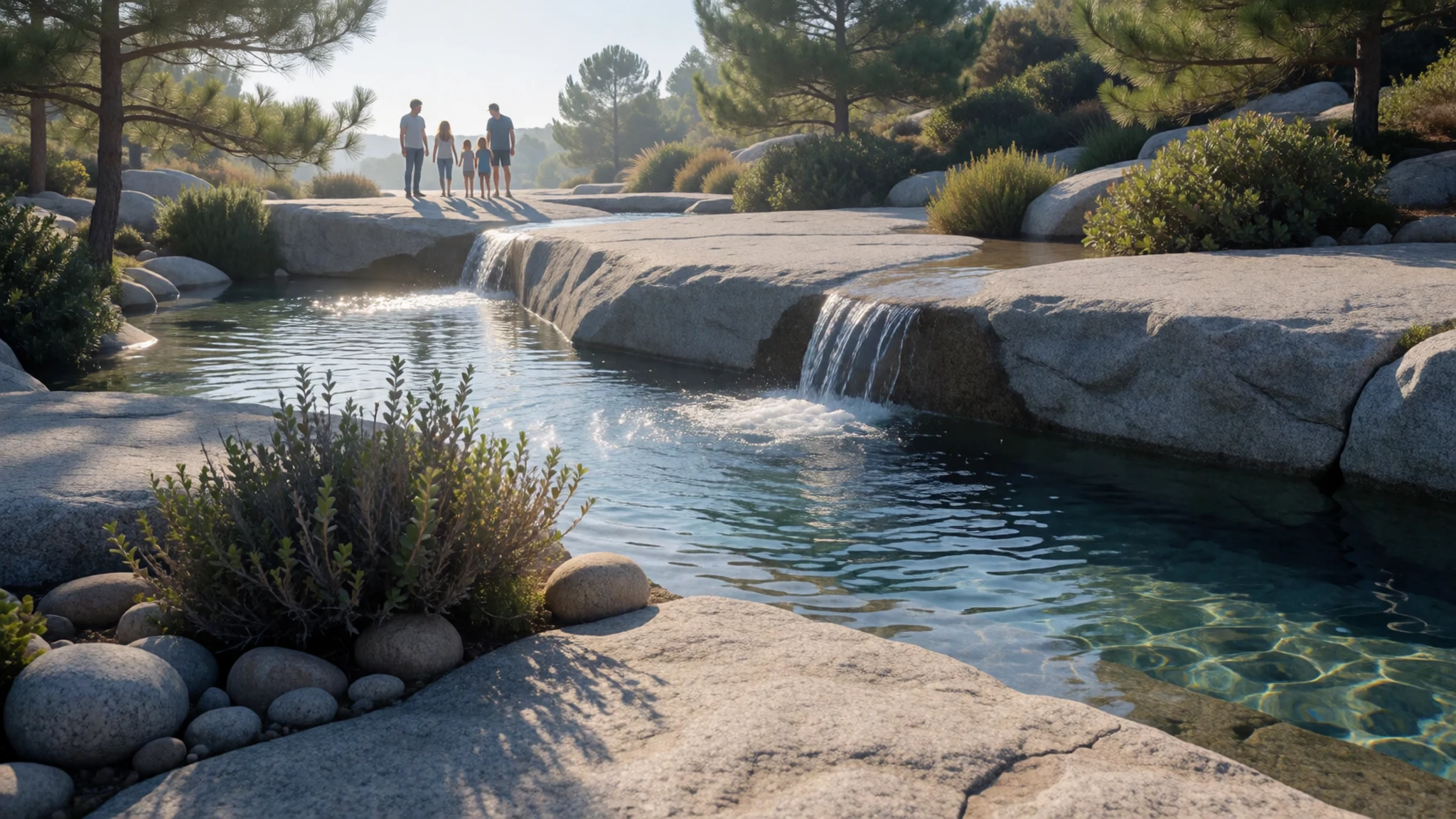
- Mountain Pine Ridge Forest Reserve — Southern Cayo, above San Ignacio
An upland of pines, granite hills, limestone caverns and waterfalls, quite unlike the lowland forest below. The air is clearer and cooler, birdsong carries, and the red tracks make for scenic if bumpy driving. Treat the whole reserve as the sight, with the cave as one stop within it.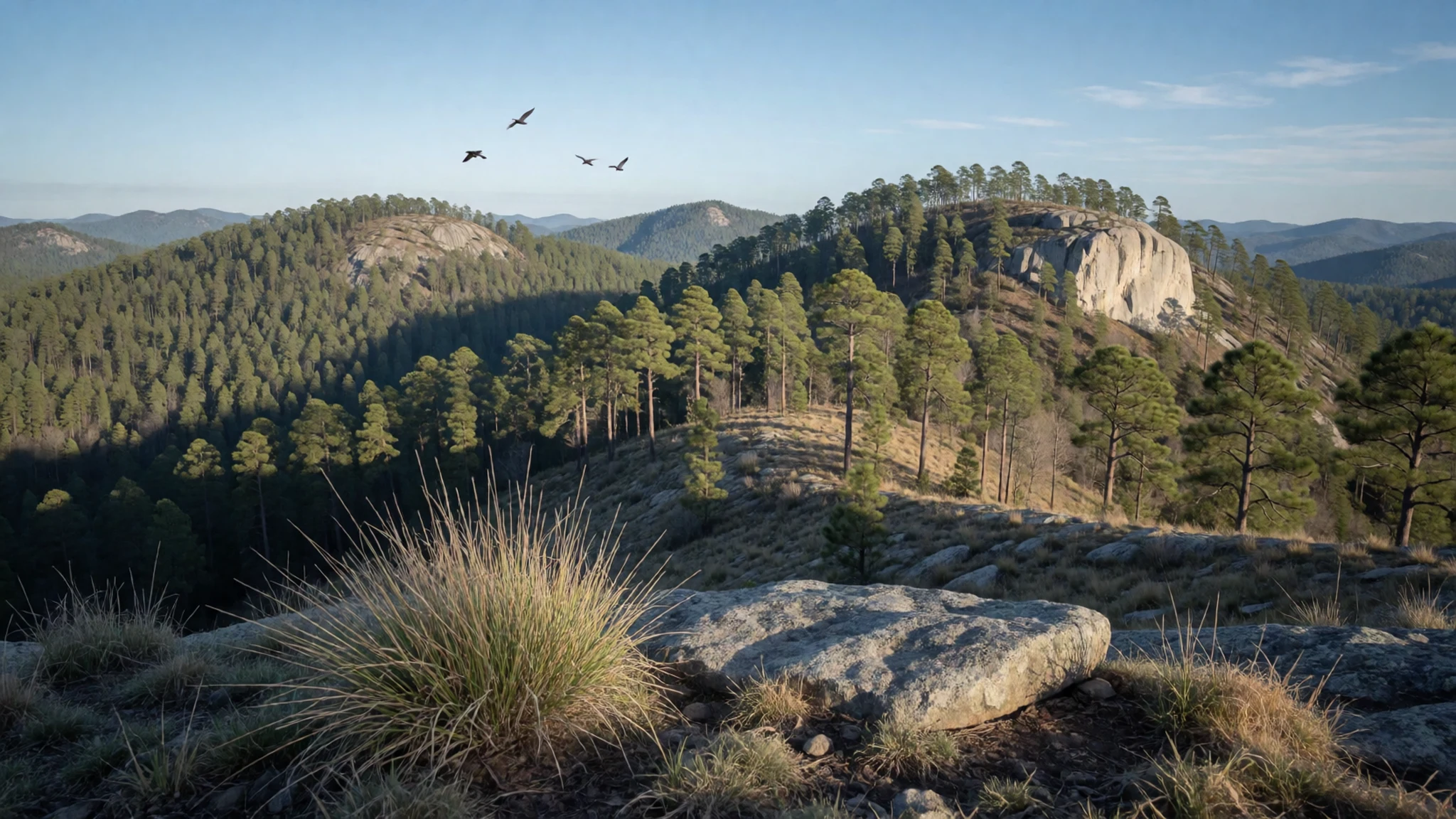
- Barton Creek Cave — Near Spanish Lookout, Cayo
A river cave explored by paddling a canoe with a guide, under tall stalactites and past ledges that the Maya used for ceremony. Torches pick out the formations as the passage narrows and widens. It suits anyone who wants a gentler, drier cave experience than the swimming and climbing caves nearby.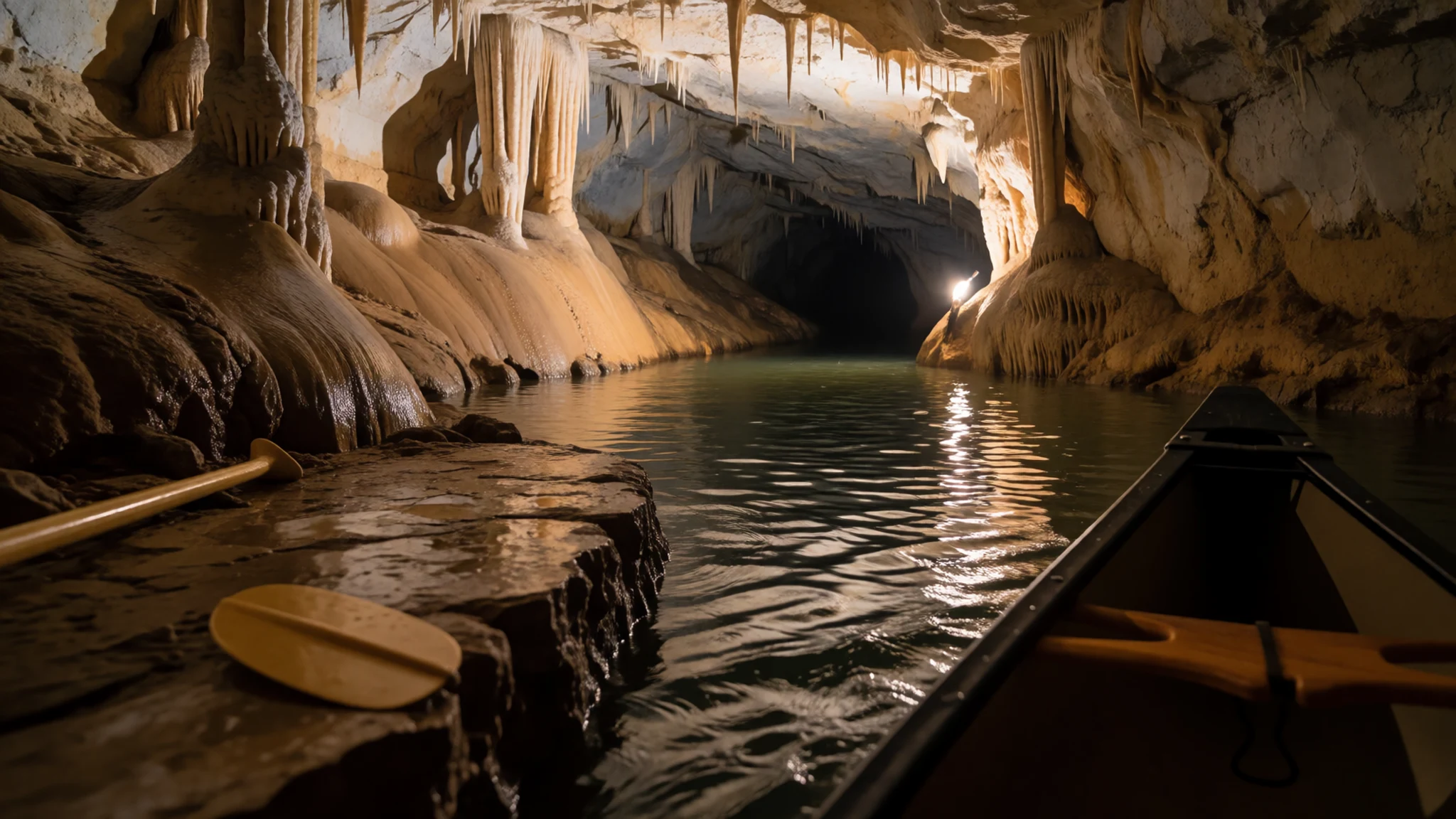
- Caracol — Chiquibul forest, western Cayo
The remains of a major Maya city deep in the forest, dominated by Caana, the 'Sky Palace' pyramid. Climbing it gives a view across an unbroken canopy. The drive is long and rough, so most visitors go with a guide as a full-day trip from San Ignacio.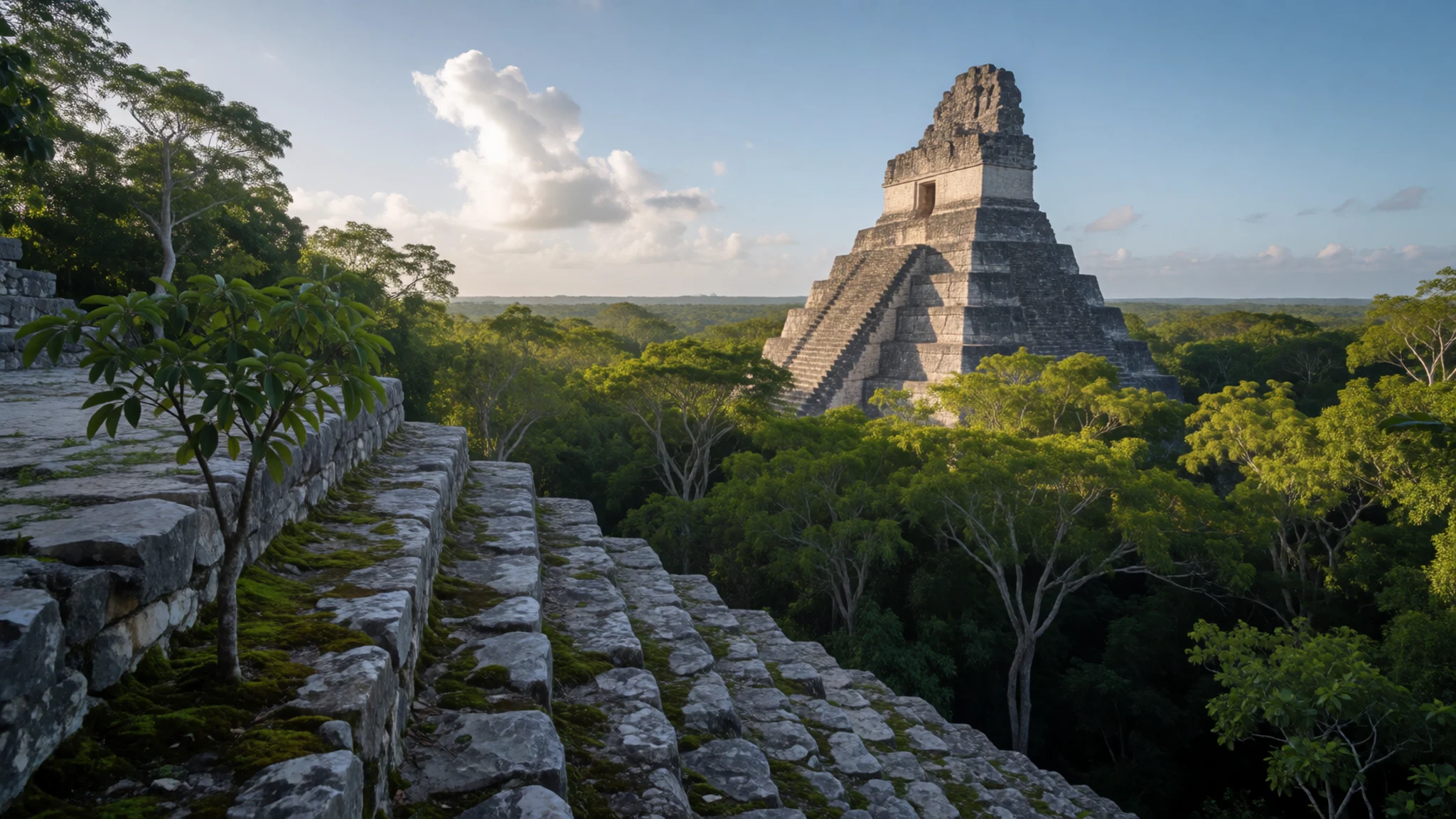
- Cahal Pech — Hilltop above San Ignacio, Cayo
A compact royal palace complex on a hill above San Ignacio, with shaded courtyards and steep stone stairways. It is reached on foot or by a short taxi ride, which makes it a good first Maya site before heading for the larger and more remote ruins.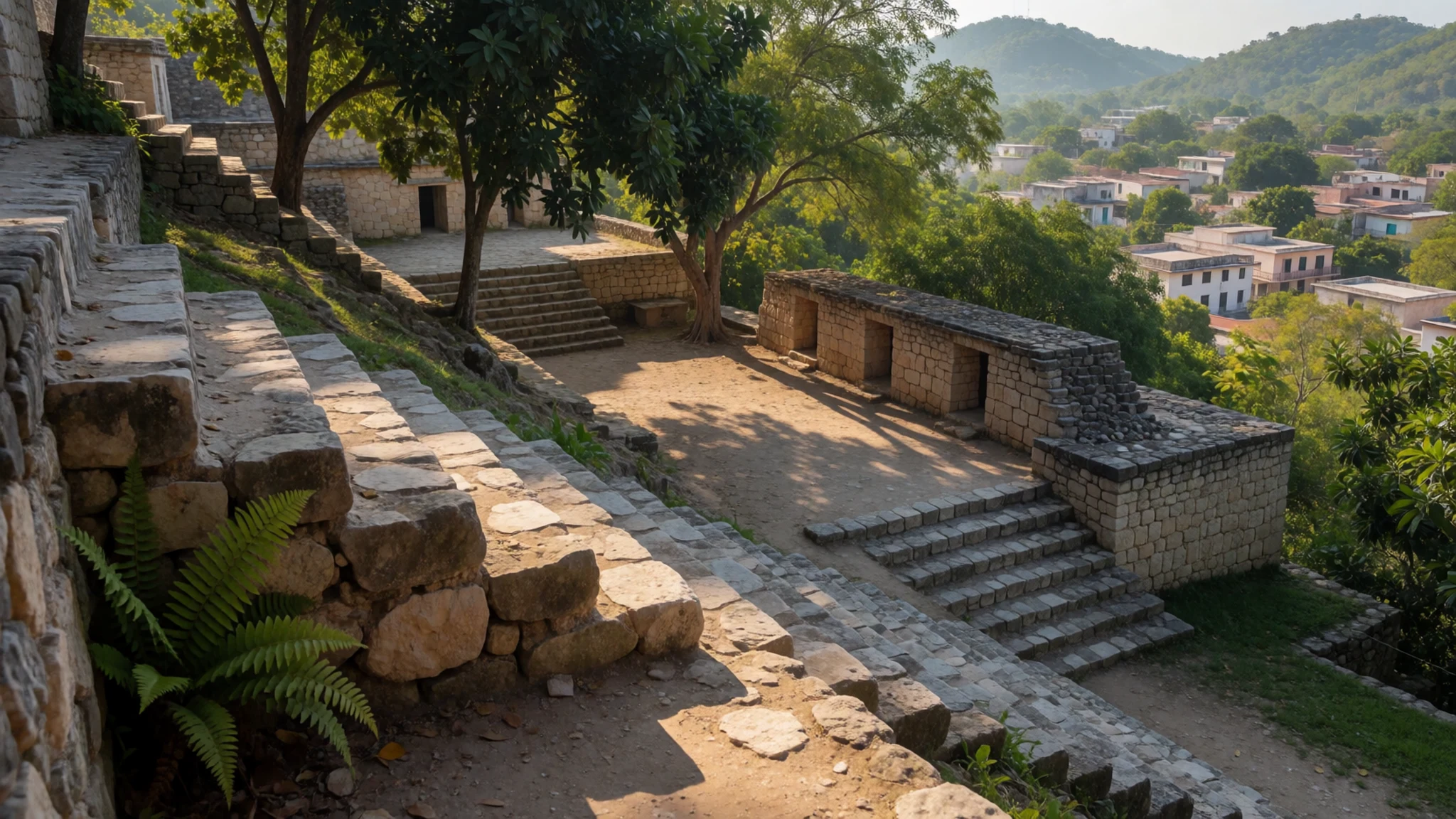
Culture
Rio Frio Cave belongs to a landscape where caves still carry meaning. For the ancient Maya of Cayo, underground spaces were sacred, linked to water, rain, ancestors and the underworld. Many caves in the district hold offerings and human remains, and they are treated as heritage sites as much as adventure spots. Some Maya families today still see caves as spiritual places. Cayo is also one of the most mixed parts of Belize. Maya and Mestizo villages sit near Creole towns, Garifuna and Lebanese families run businesses in San Ignacio, and Mennonite farming communities such as Spanish Lookout supply much of the district's dairy and produce. Languages shift between English, Kriol, Spanish, Maya languages and Plautdietsch within a short drive. Social life is relaxed and friendly. People greet strangers, shops close for the midday heat, and Saturday is market day in San Ignacio, when villagers from the surrounding area come in to sell vegetables, tortillas and crafts. Guides in Cayo are often local people with family ties to the land, and many are happy to talk about the caves, the river and the plants of the pine forest. Hiring one supports that knowledge and keeps visits safer. Stay on the marked paths, take all rubbish away with you, and never touch, move or take anything from a cave, since caves here can hold fragile Maya remains.
What to wear
Around Rio Frio Cave, dress ranges from traditional to purely practical. Traditional Maya dress in Belize, seen mostly in southern villages and at festivals, includes embroidered cotton blouses and wrapped skirts in bright colours. Mestizo communities also wear embroidered blouses and full skirts for dances and celebrations, while Garifuna women wear colourful head wraps and long dresses on festival days. Mennonite communities in the district dress plainly, with women in long, dark or small-print cotton dresses and headscarves, and men in dark trousers, braces and straw hats. Everyday wear across Cayo is much like anywhere warm: T-shirts, shorts, football shirts, jeans, flip-flops and, on farms, rubber boots. Dress is casual, but swimwear is for the river and not the town. Visitors to the cave should wear quick-dry clothes that can get wet, with swimwear underneath if a dip is planned. Closed shoes or sandals with firm straps and a grippy sole matter more than anything else, because the riverbed and rocks are slippery. Bring a light layer for the cool pine plateau, especially in the early morning and evening, plus a rain jacket from June to November. Long sleeves and a hat help against insects and sun. In towns and villages, covering shoulders and knees is a courteous choice, particularly for those visiting churches or Mennonite areas.
What to eat
- Fry jacks — Breakfast counters and small eateries in San Ignacio and Santa Elena
Puffed, deep-fried dough crescents served warm, usually with scrambled eggs, refried beans and cheese. They are a standard Belizean breakfast and a good filling start before a day on the pine plateau.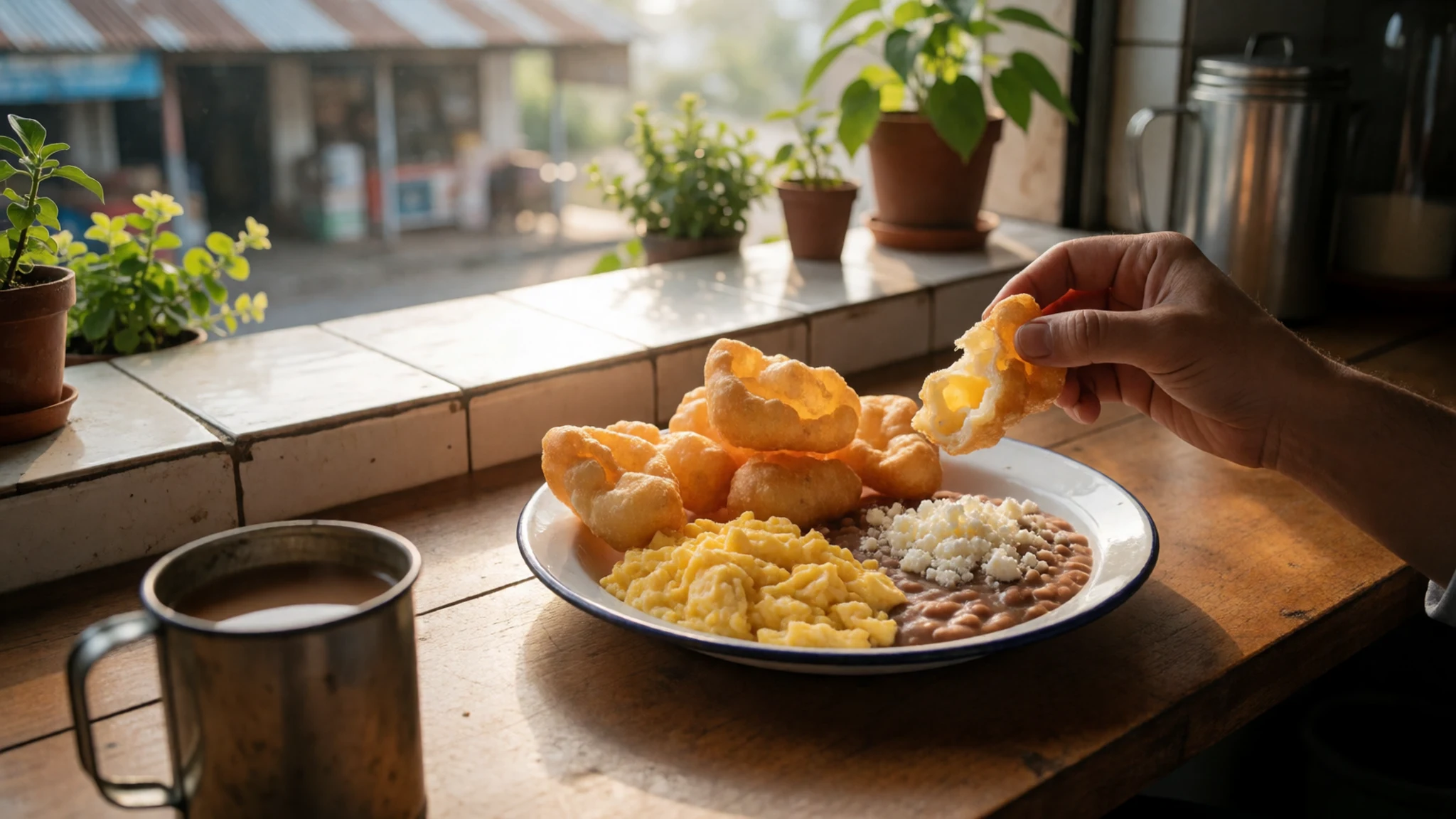
- Chaya with eggs and tortillas — Maya and Mestizo family eateries and the Saturday market in San Ignacio
Chaya is a leafy tree spinach, often scrambled with eggs and eaten with freshly pressed corn tortillas. It is homely, green and filling, and one of the more local ways to eat breakfast in Cayo.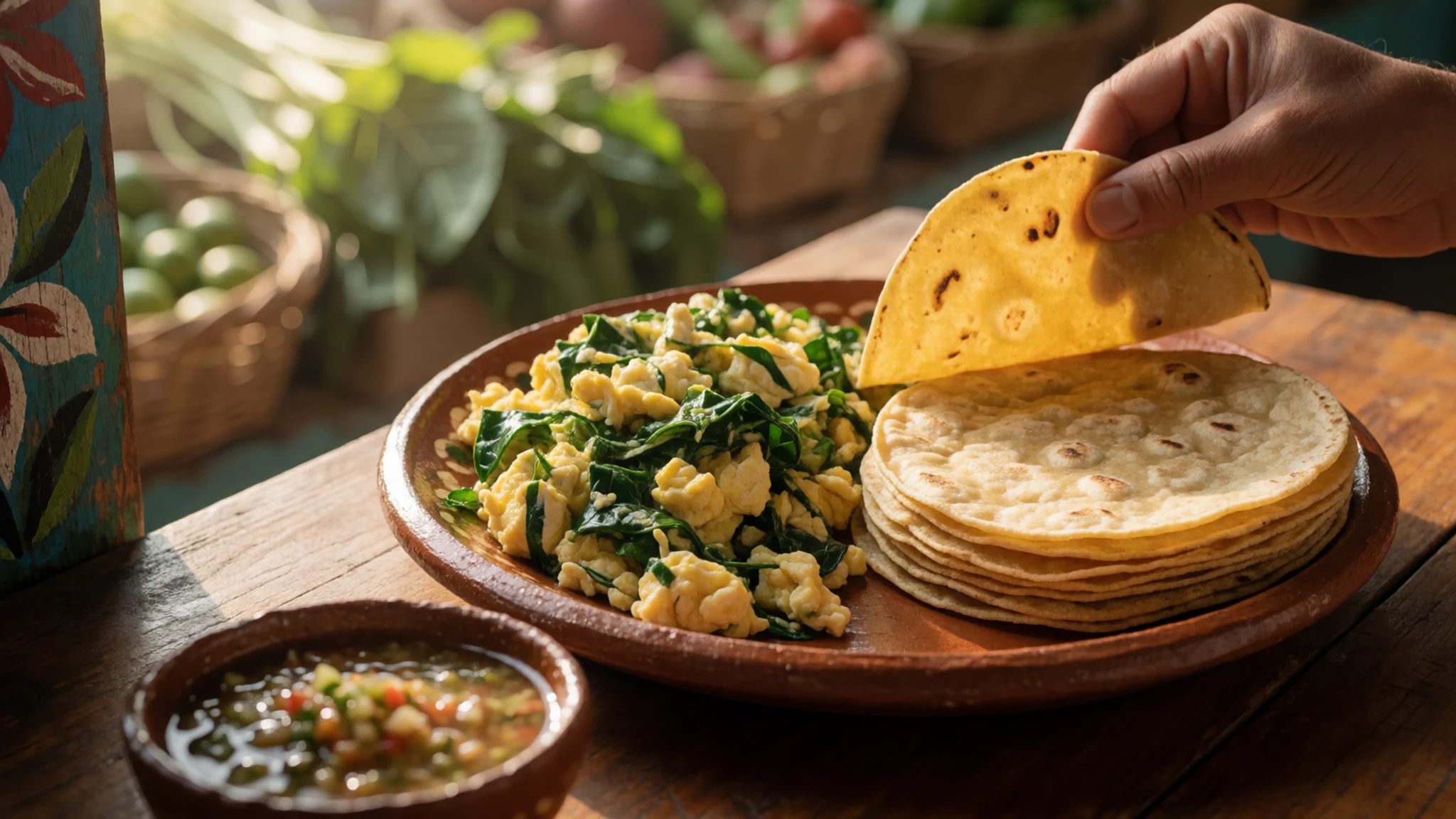
- Garnaches — Street stands and hole-in-the-wall diners in San Ignacio
Small crisp fried corn tortillas topped with refried beans, grated cheese and pickled onion or cabbage. They are cheap, salty and tangy, and easy to eat standing up as a snack between a market and a tour. - Salbutes — Street stands and casual diners, especially in the evening
Puffy, fried corn tortillas piled with shredded chicken, cabbage and tomato sauce. The base stays soft in the middle and crisp at the edge. Ask for the hot sauce on the side if unsure about the heat. - Panades — Market stalls and roadside diners in the Cayo towns
Corn-dough pockets filled with seasoned fish, beans or chicken, fried until crisp and served with a spicy cabbage relish. They travel well, so they make good picnic food for a day out at the cave. - Tamales and ducunu — Saturday market and family-run kitchens in San Ignacio
Steamed parcels of corn dough wrapped in banana or plantain leaf. Ducunu is a sweeter version made with fresh corn and coconut milk. Both are eaten warm and make a filling, inexpensive lunch.
Plan it
Best time. February to May is the dry season, with the easiest roads and the clearest, lowest water at the cave; the lowlands get hot, but the pine plateau stays cooler. June to November is the rainy season, when rivers can rise and cave visits or crossings may be cancelled.
How long. 2–3
Getting there. Fly to Belize City's international airport, then travel west on the George Price Highway through Belmopan to San Ignacio in Cayo. From San Ignacio, the last leg is an unpaved road up into Mountain Pine Ridge, best done with a local guide or a high-clearance vehicle.
Budget. mid
Tips
- Base yourself in San Ignacio and book a guide or tour a day ahead, or check at your guesthouse
- Check road and river conditions locally before going up, especially from June to November
- Carry cash for small shops, markets and guide tips, as cards are not accepted everywhere
- Bring water, sun protection, insect repellent and shoes that grip wet rock
- Go in the morning to avoid the midday tour groups and the afternoon showers
Etiquette
- Take all rubbish away and leave plants, stones and any cave objects exactly where they are
- Greet people politely in villages and ask before photographing individuals, especially in Mennonite communities
- Respect guides' instructions in caves and keep to marked routes
Nearby
Sources
- Wikidata Q21867338 (CC0)
- Wikivoyage: Cayo (rev 5387244) (CC BY-SA 4.0)
- Wikipedia (CC BY-SA 4.0)