Caye Caulker
Caye Caulker, Belize
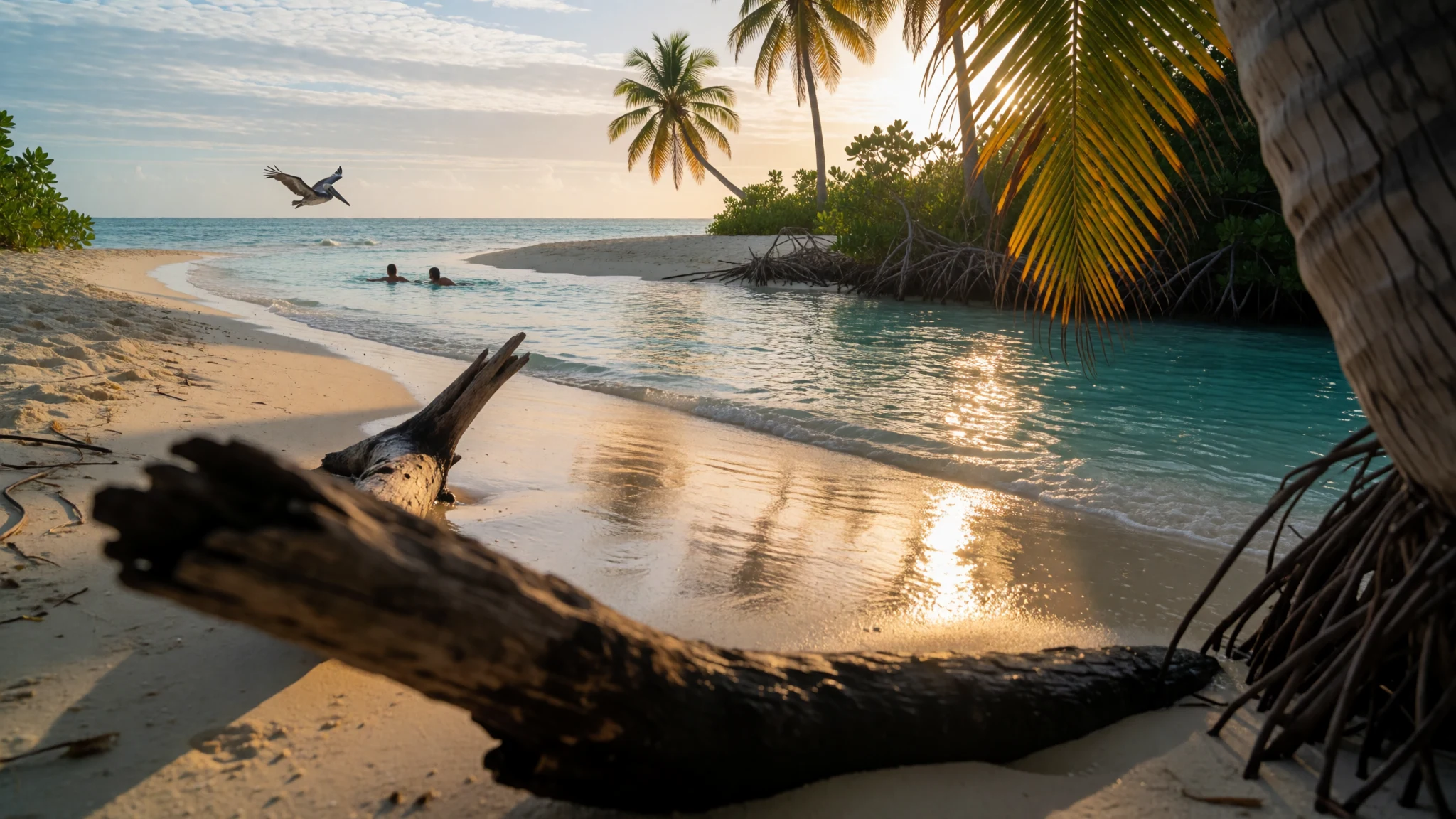
Caye Caulker is a flat, sandy coral island where cars are rare, the reef sits close offshore and the pace stays deliberately slow.
The place
Caye Caulker is a low, narrow coral island in the Caribbean Sea, off the coast of Belize and north-north-east of Belize City. It is a sandbar resting on a limestone shelf, which explains why almost nothing on it rises above head height and why the sea always feels close. Along the village side a shallow lagoon runs out to the Belize Barrier Reef, which breaks the swell, so the water by the shore stays calm enough for children to paddle in. The reef side also catches steady wind, and windsurfers use it. Below the limestone lies an underwater cave, a reminder of how much of the island's geology is hidden.
The village, Caye Caulker Village, holds nearly everyone. Wikidata gives a population of 2729, small enough that shopkeepers, boat captains and guesthouse owners all know one another. The lanes are sand, and people get about on bicycles and golf buggies rather than in cars. A narrow channel called the Split cuts the island in two and doubles as the daily meeting place for swimming, drinking and watching the light fade. North of it the island is quieter, with mangrove forest and very few buildings.
Backpackers made the island's reputation, and it now takes families and couples as well, who stay in guesthouses and small lodges and eat at beach bars and takeaway counters. Honest warnings: the Split gets busy around sunset in the dry months, the heat is constant and the sun is fierce, and the island has little shade away from the village. Mornings are the time for effort, afternoons for the water.
Its story
Caye Caulker has probably been used by people for a very long time, but its present community took shape when refugees from the Yucatán crossed the sea during the Caste War. Many were mestizo families of mixed Maya and Spanish descent, escaping violence on the mainland. The village stands where it does for practical reasons: the bay behind it shelters boats, the reef in front blunts heavy waves, and the coral sand near the village holds an anchor far better than the soft mud found elsewhere along the shore.
Later, in Queen Victoria's reign, the land around the village was granted to Luciano Reyes, and plots were sold on to a handful of families. Their descendants still live on the island, and the same surnames turn up on boats, shops and the village council.
The event that dominates local memory is Hurricane Hattie. Its surge swept across the narrowest part of the village, and the wooden schoolhouse, where people had gathered for safety, was broken apart by the waves. Many of the dead were children. Rebuilding was organised by the village council with a government emergency committee, work teams put up dozens of houses within weeks, and British forces flew in food and medical supplies by helicopter.
The storm also left the island's best-known feature. It opened a shallow cut between the two halves of the island, and villagers, led by the council chairman Ramon Reyes, deepened it by hand so that canoes could pass. Visitors often hear that Hattie carved the Split on its own, but the people who did the digging say otherwise.
What to see
- The Split — Middle of the island, at the north end of the village
The Split is the channel that separates the island's two halves, and the natural place to start. Current runs through it, so swimmers drift gently, and the water is deep enough in places for jumping from the jetty. Go in the morning for space; late afternoon brings the crowd, music and a bar-side atmosphere.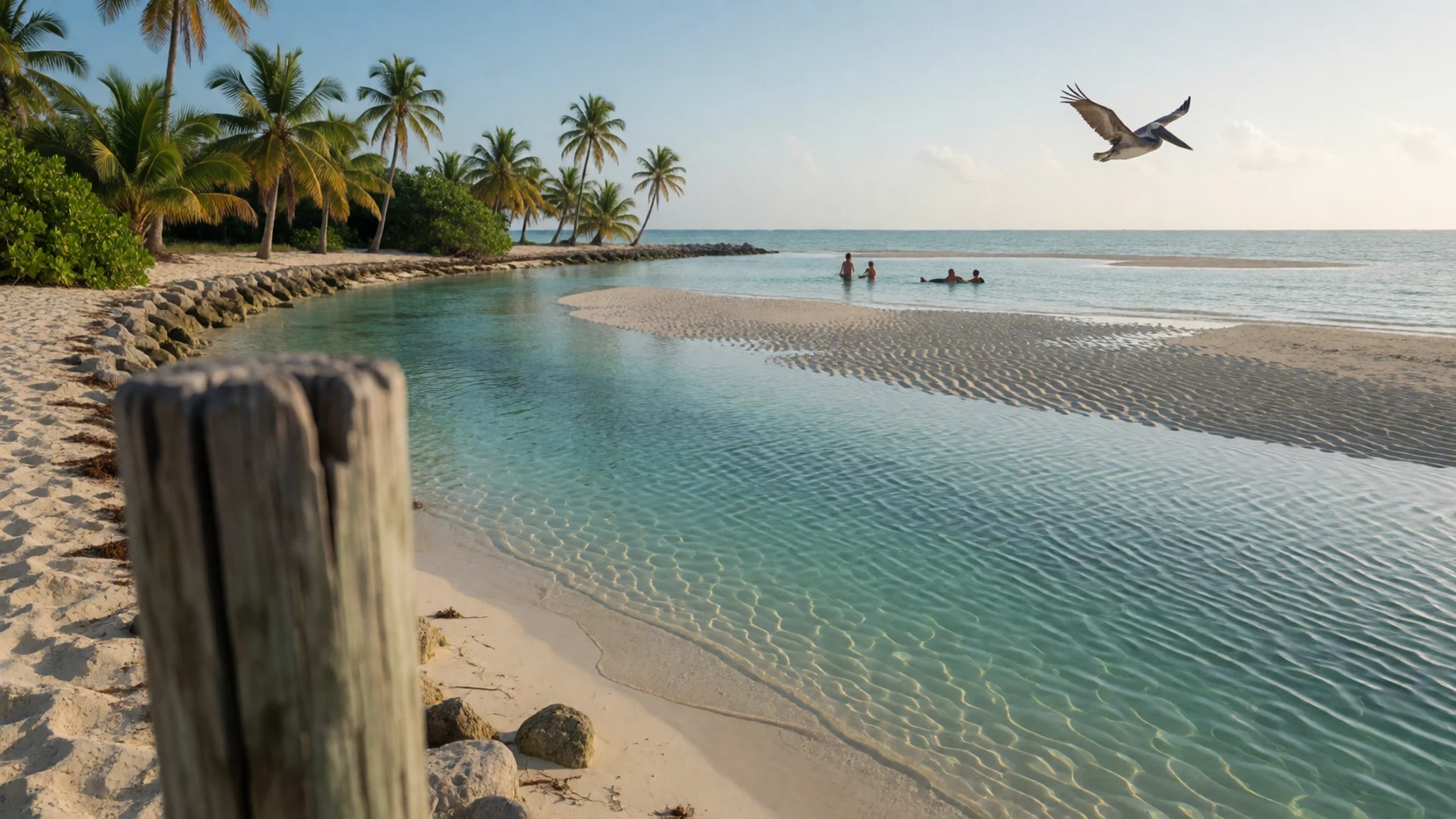
- Caye Caulker Marine Reserve — Reef offshore, east of the village
Locals call this protected stretch of barrier reef simply the local reef. It lies close enough for a short boat ride, and snorkelling guides take small groups over coral, rays and nurse sharks. Choose an operator that explains reef etiquette, keeps groups small and does not feed the animals.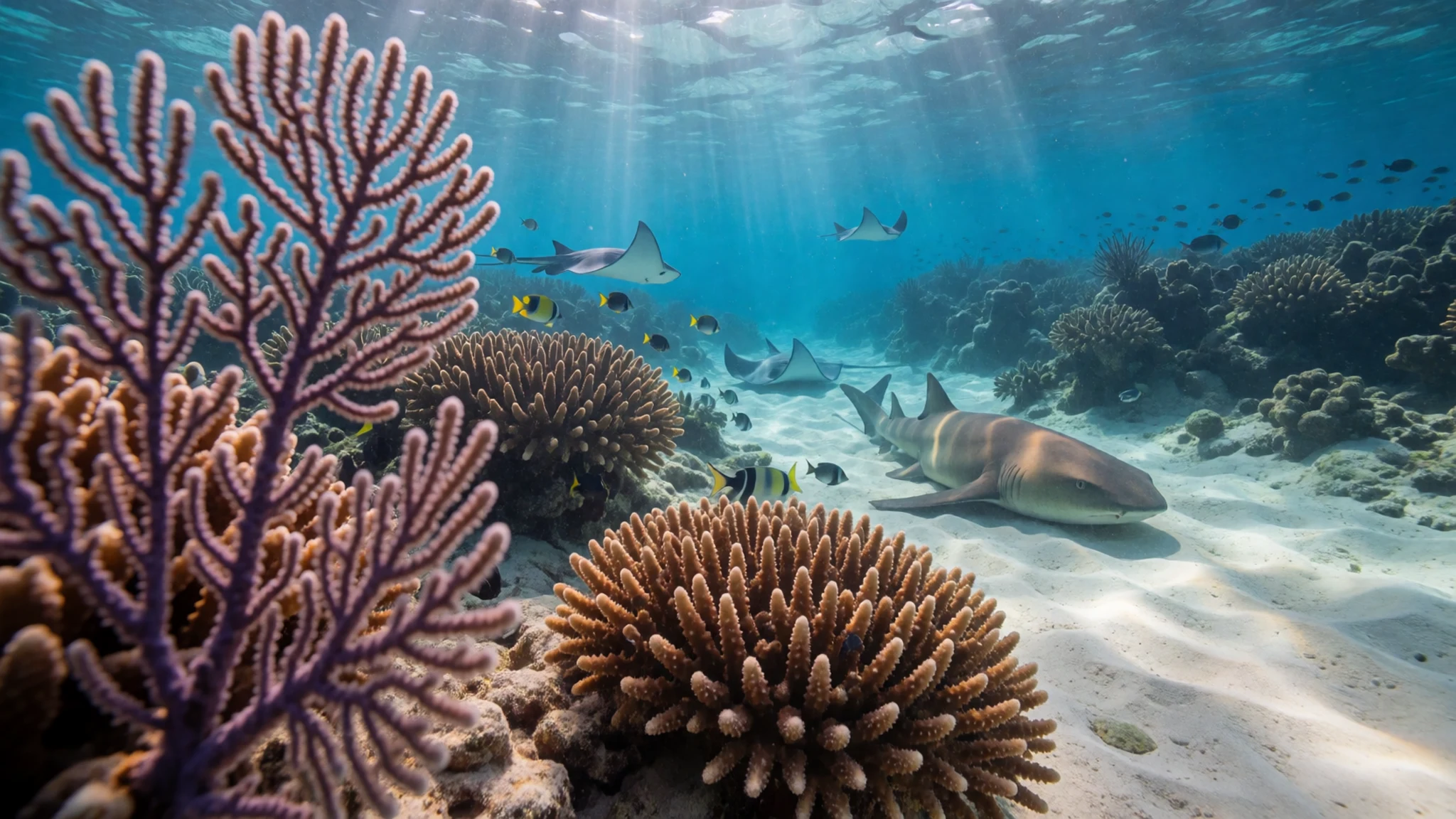
- Hol Chan Marine Reserve — Reef to the north, reached by boat from the village
Hol Chan has been protected for longer than the local reef, so fish tend to be bigger and the coral more established. It is a longer boat trip, and more people visit, though it rarely feels crowded. Day trips usually combine it with other snorkelling stops; check what is included before booking.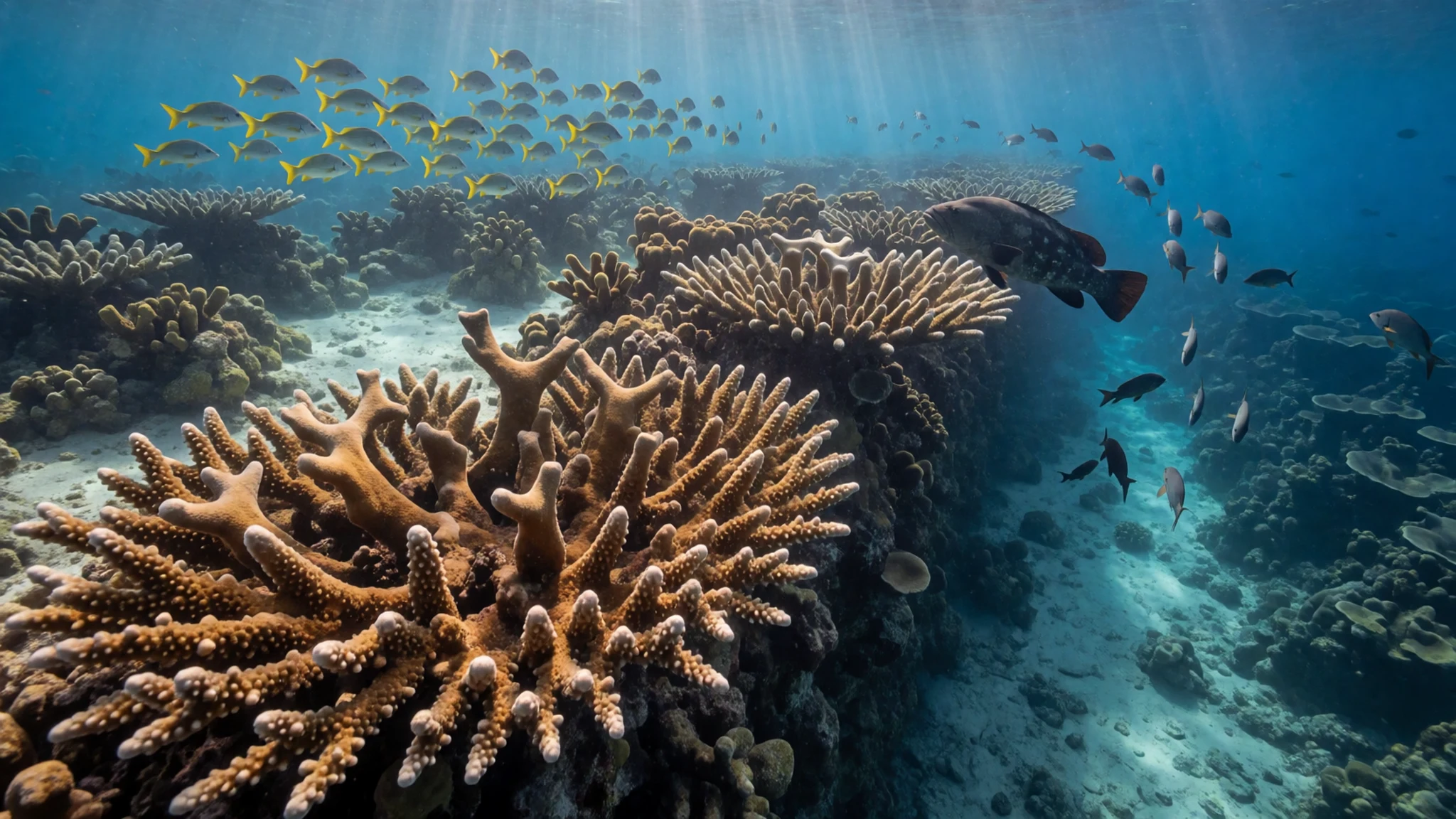
- Forest Reserve and the northern mangroves — North of the Split
The northern end of the island is protected mangrove forest, best seen by kayak or on foot early in the day. Paddle on the sheltered western side to avoid the wind. The local Audubon group sometimes leads morning bird walks; ask in the village rather than assuming they run.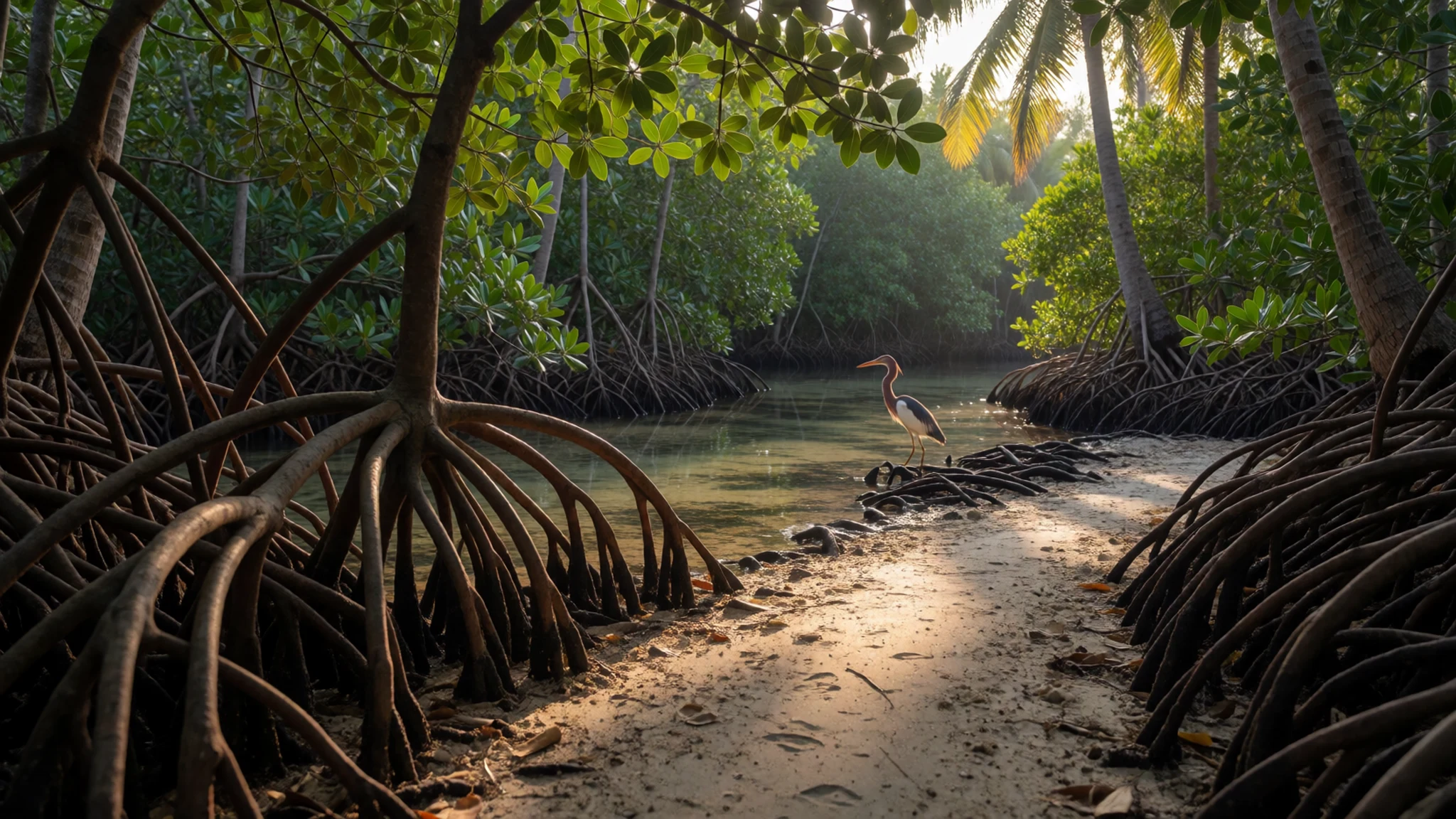
- The Blue Hole — Offshore, reached by long boat or air excursion
The Blue Hole is a vast circular sinkhole in the reef, famous with divers for its sheer drop, sharks and coral. It is a serious full-day excursion, usually by boat or plane, and it demands real diving experience. Snorkellers should pick gentler reef sites instead.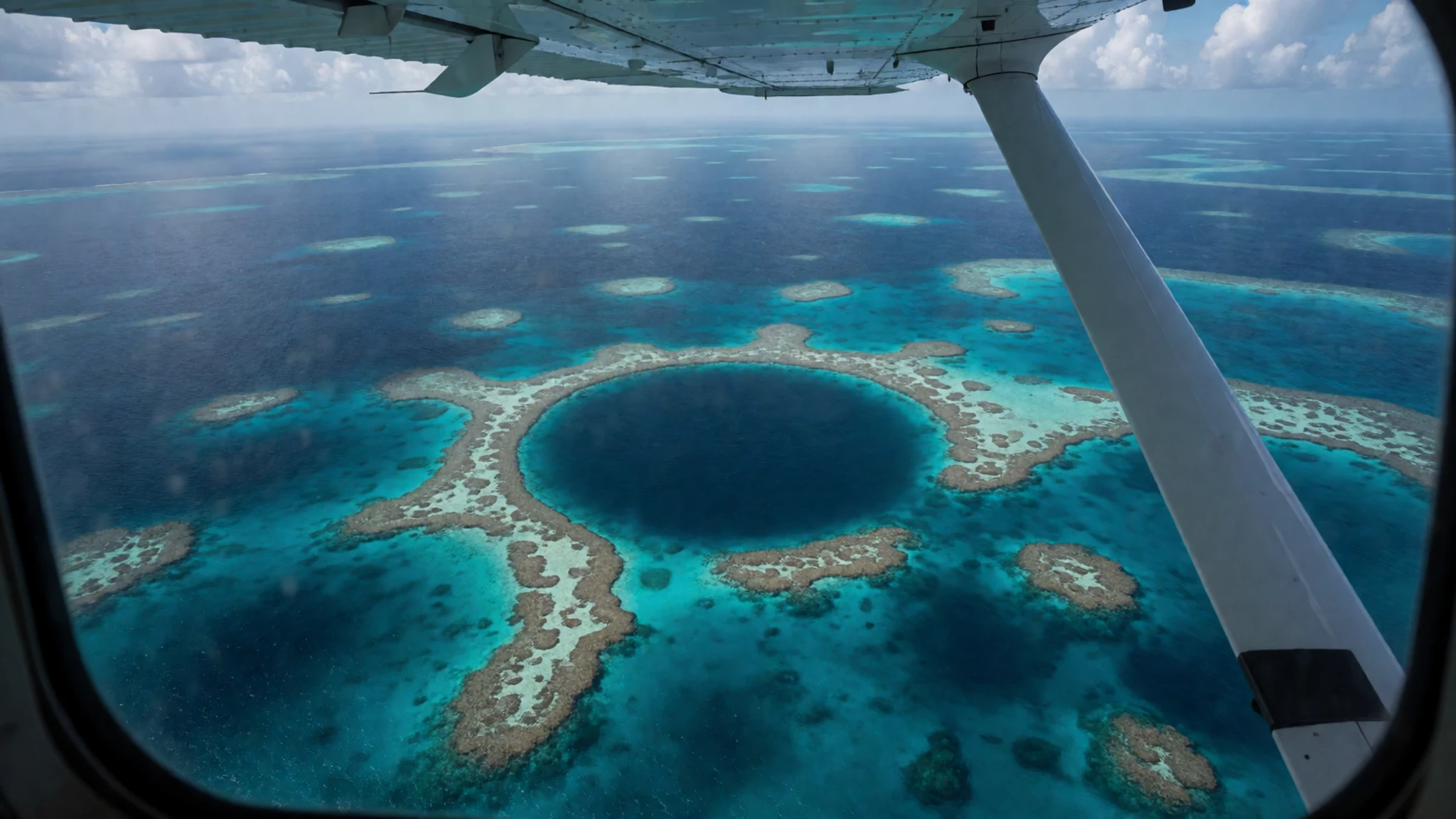
Culture
Caye Caulker has a cultural mix typical of Belize's coast. Many families descend from mestizo refugees who arrived from the Yucatán, and Spanish, Kriol and English are all heard in the lanes. English is the language of signs and menus, Kriol the language of banter, and Spanish runs through family life. Fishing, particularly for lobster and conch, shaped the island long before visitors arrived, and a few families still work the reef and lagoon while others have moved into guiding, running guesthouses or cooking.
Island life runs on its own tempo. Shops open when the owner arrives, boats leave when they are full, and nobody is hurried. Handwritten signs urging people to go slow are not decoration but a request that travellers often learn the hard way. Evenings centre on the Split, on benches along Front Street, and on the beach bars, where reggae, soca and Latin pop compete. Hurricane Hattie remains a living memory for older residents, and the village council still plays a visible role in how the island is run.
Visitors who spend time here quickly notice how much of the community depends on the reef staying healthy, which is why guides tend to be firm about rules in the water. Respect for the sea is the closest thing the island has to a shared creed.
When you are in the water, never touch, stand on or feed the coral, rays or sharks, and use reef-safe sunscreen.
What to wear
Caye Caulker has no single island costume. The older strand of dress comes from the Yucatán families who settled here, where women wore white cotton blouses and dresses with coloured embroidery at the neckline and hem. Today such pieces mostly appear at festivals, school events and national celebrations, alongside Kriol and Maya styles that belong to the wider country. They are worth noticing, though not something a visitor will see every day.
Everyday island dress is practical and easy. Residents wear shorts, cotton or linen shirts, vests and flip-flops, with wide-brimmed hats and long sleeves for people working on boats in the sun. Swimwear is common on the sand lanes in the daytime, though people usually put a shirt on when going into a shop or a restaurant. In the evening, a clean T-shirt and sandals is as smart as it gets.
For a visitor, the climate dictates everything: light, quick-drying fabrics, a hat, sunglasses and a long-sleeved rash vest for snorkelling, which protects the skin and reduces the amount of sunscreen reaching the reef. Bring reef-safe sunscreen, water shoes for the Split and the shoreline, and a light rain jacket for squalls. Cover shoulders and avoid wearing only swimwear in the village, out of courtesy. Bare feet are common on the sand, but sandals help when the ground is hot or littered with shell and coral fragments.
What to eat
- Fry jacks — Breakfast counters along Front Street
Fry jacks are puffy pockets of fried dough, split open and filled with eggs, beans, cheese or ham. They are a standard island breakfast, hot and filling. Look for the small breakfast counters along Front Street early in the morning, when they are freshest.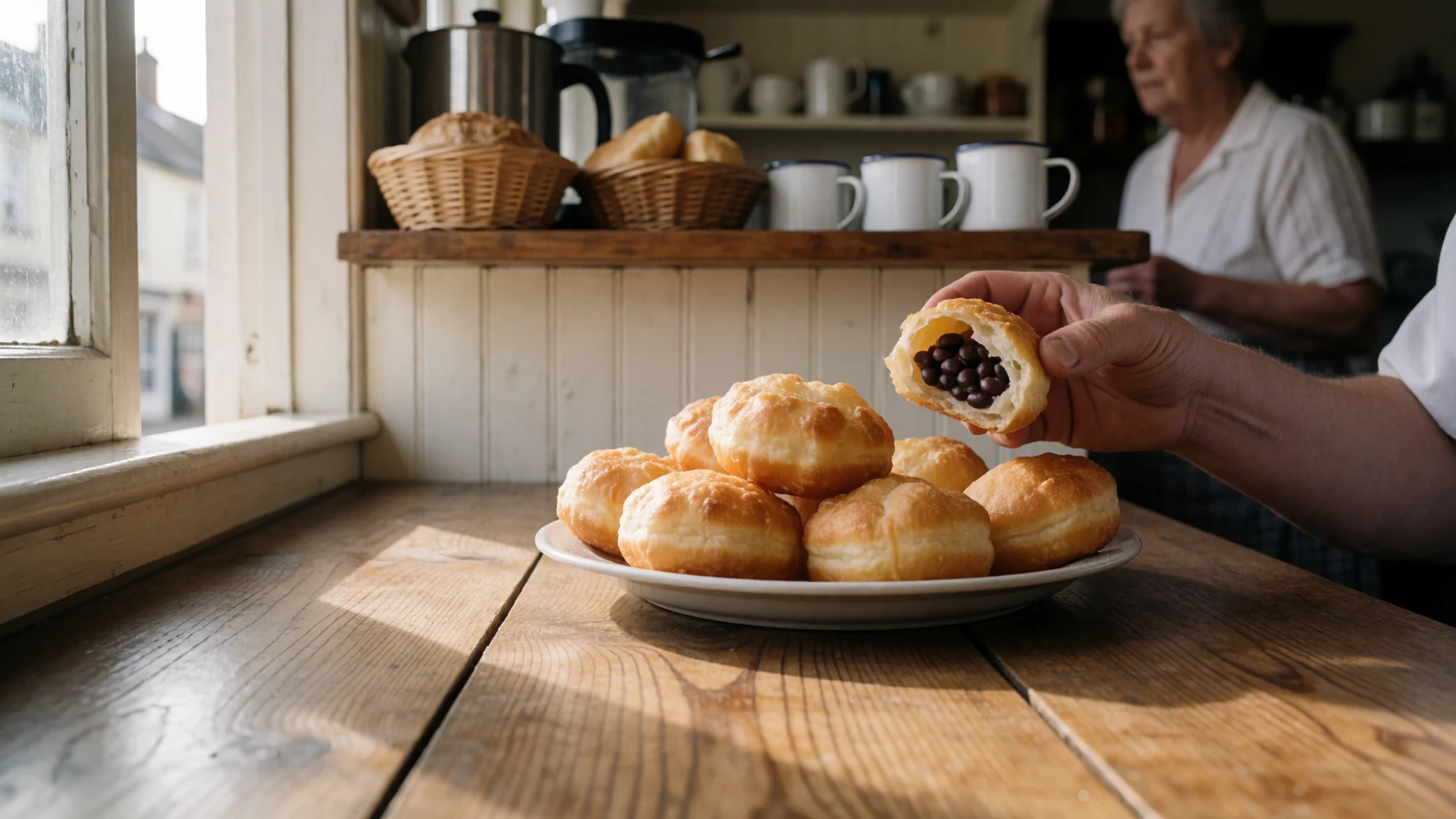
- Ham and cheese turnover — The village bakery on Front Street
A flaky baked turnover with ham and cheese is a quick breakfast that carries well on a boat. The village bakery also sells sweet rolls and fresh bread, but turnovers sell out, so go early rather than assuming one will be left.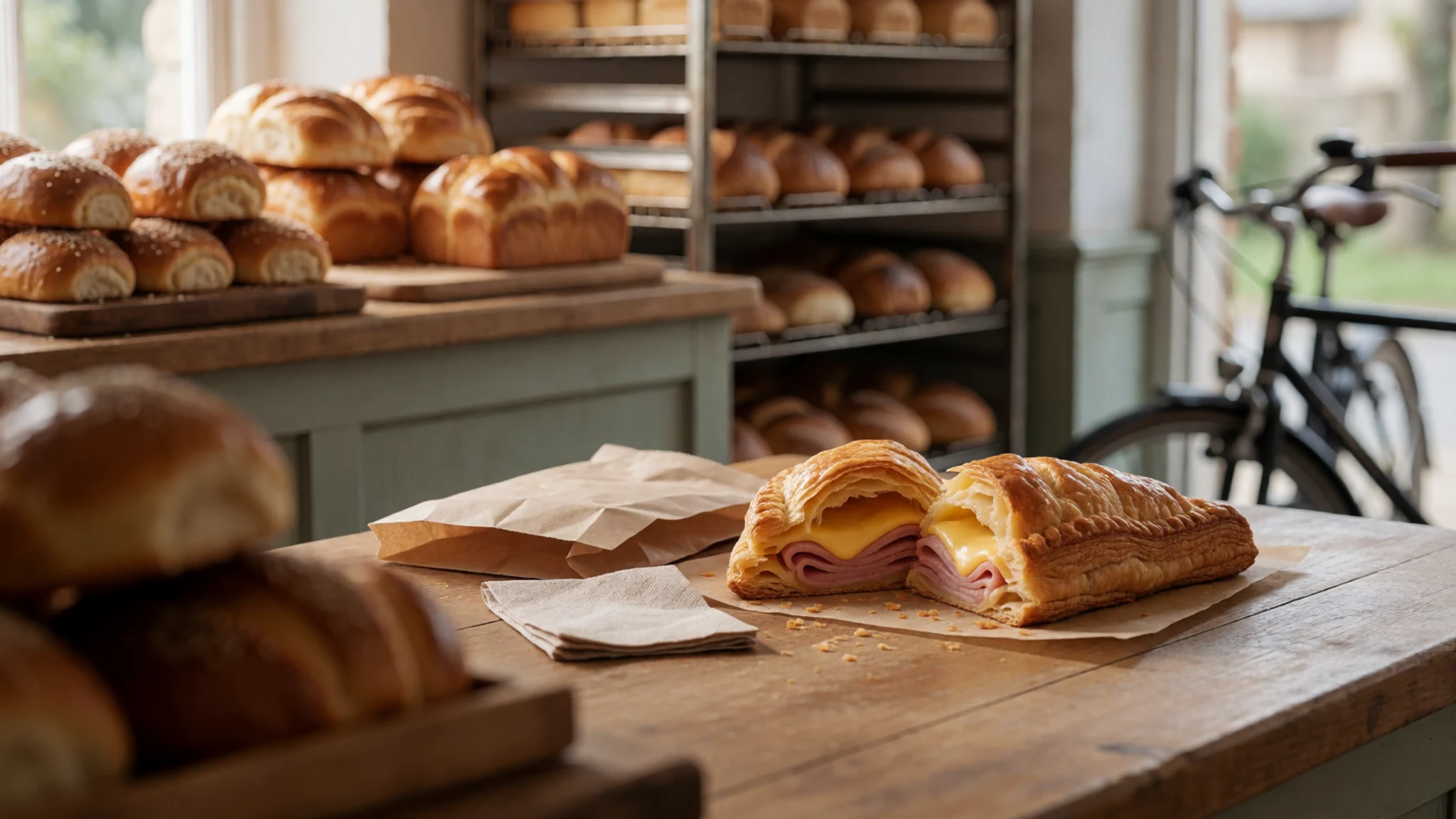
- Stewed chicken with rice and beans — Family-run takeaway counters in the village
This is the everyday Belizean plate: chicken stewed in a dark, lightly spiced gravy, with rice cooked with red beans and often coleslaw or fried plantain. Takeaway counters serve it cheaply, and many also offer Chinese-style dishes. - Cow foot soup — Takeaway counters, often midday
Cow foot soup is a rich, gelatinous broth with tender meat, root vegetables and sometimes plantain. It is a local comfort food rather than something made for visitors, and tastes better for being slow-cooked. Ask at takeaway counters whether it is on that day. - Grilled fish and shrimp — Beach bars and grills along the shoreline
Fresh fish and shrimp, grilled or fried and served with rice, salad or fried plantain, are the island's most reliable dinner. Sit at a beach bar near the water, and ask what was caught that day. Lobster is only offered in season. - Fruit juices and home-made bread — Small cafés on Front Street
Small cafés on Front Street squeeze fruit juices to order and bake their own bread and yoghurt. Order a juice with eggs or toast for a lighter start to the day, before the heat builds and the first snorkelling boats leave.
Plan it
Best time. February to April is usually drier with calmer seas, which suits snorkelling and boat trips. June to October is wetter and more humid, and falls in the Atlantic hurricane season, so keep dates flexible and check forecasts. Heat is a constant, and the dry months are the busiest.
How long. 2–3
Getting there. Fly into Belize's international airport near Belize City, then take a water taxi from the city terminal to Caye Caulker; the crossing is under an hour and many boats continue to San Pedro. A small plane from Belize City to the island's airstrip is the faster option. From Mexico, boats run from Chetumal via San Pedro, and small flights serve Corozal. Check operator websites for current timetables and fares.
Budget. mid
Tips
- Book the water taxi back before your flight day, and allow spare time for rough seas.
- Take cash for small counters and shops, as card machines can be unreliable.
- Book snorkelling and diving trips a day ahead in the dry months, and ask how many guests each guide handles.
- Go to the Split in the morning for space; sunset is when it fills up.
- Carry a refillable water bottle, and look for places that offer refills.
Etiquette
- Do not touch, stand on or feed coral, rays or sharks.
- Wear a shirt away from the beach, and keep noise down late at night in the guesthouse lanes.
- Greet people before asking a question or a favour.
Nearby
Sources
- Wikidata Q1051967 (CC0)
- Wikipedia: Caye Caulker (rev 1379215355) (CC BY-SA 4.0)
- Wikivoyage: Caye Caulker (rev 5425712) (CC BY-SA 4.0)
- Photo: Caye Caulker main street (P199) (CC BY 3.0)
- Photo: beautiful island in Belize, Caye Caulker (Dronepicr) (CC BY 3.0)
- Photo: The Split, Caye Caulker, Belize (Steven Zwerink) (CC BY-SA 2.0)
- Photo: Beach at a bay in Caye Caulker (Jambon23) (Public domain)
- Photo: Swimming at the Split (dronepicr) (CC BY 2.5)
- Photo: beautiful Caye Caulker Belize (dronepicr) (CC BY 2.5)
- Photo: beautiful Caye Caulker Belize (dronepicr) (CC BY 2.5)
- Photo: Swimming at the Split (dronepicr) (CC BY 2.5)


Wildlife
- Nurse shark (animal)
A nurse shark is a kind of fish, and a shark too. Off Caye Caulker you will not need to go far: a short boat ride takes you to the coral, where snorkelling guides lead small groups over the reef, alongside rays and nurse sharks. Ask your guide when the sharks are most often seen. Going with a guide is the best way to watch. These sharks are listed as vulnerable worldwide, and fishing threatens them in places around the Caribbean and Central America, so watch with care.