Belmopan
Belmopan, Belize
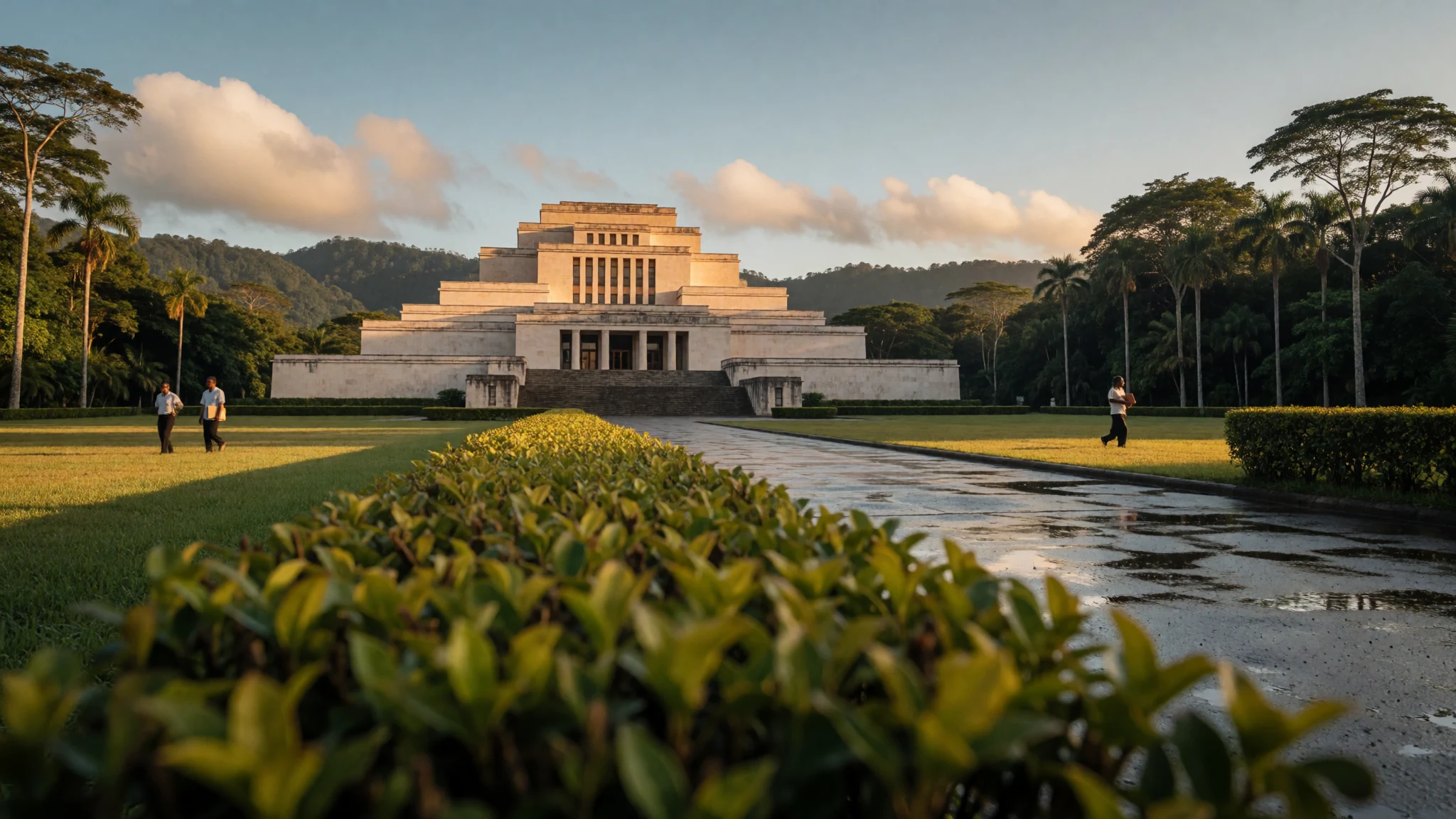
Belmopan is a calm, purpose-built capital, worth a night or two as a practical base for the caves, rivers and jungle of inland Belize.
The place
Belmopan is the capital of Belize, a planned town of about 21,000 people standing 76 metres above sea level in Cayo District. It sits inland, just east of the Belize River, with the foothills of the Mountain Pine Ridge on the western skyline. The Hummingbird Highway passes by, and the George Price Highway, once called the Western Highway, links the town with Belize City and the border country to the west. Nothing here feels like an old Caribbean port. The streets are wide, the government offices are low and grouped together on one campus, and daily life revolves around the bus terminal, the market and the plaza. Civil servants make up a large share of the workforce, so weekdays are busy and weekends can feel very quiet. The city council calls Belmopan the Garden City, and the lawns and trees do soften the concrete. The climate is tropical, with a long wet season from May to January and a short dry spell in the months that remain. Few travellers treat Belmopan as a destination in itself. It works as a base, with caves, rivers, jungle trails and a zoo within a short drive, and with banks, shops and restaurants that are easier to find here than in the villages around. A day or two covers the town; the countryside deserves longer.
Its story
Belmopan exists because of a storm. In 1961 Hurricane Hattie wrecked a large part of Belize City, then the capital of the colony of British Honduras. The old port was low, coastal and exposed, and rebuilding the seat of government on the same ground looked unwise. Planners wanted higher, firmer land away from storm surges, with room for an industrial zone and no need to pay for reclaiming swamp. A committee soon settled on an inland site beside the Belize River. Premier George Price took the idea to London in search of money. Britain hesitated over funding something so large, but liked the sense of putting a capital on safe high ground, and a visiting minister was shown the plan, including a monument unveiled beside the Western Highway. The government finally moved in 1970, the date the town counts as its founding. A development corporation answered to ministers and ran the new capital at first. Residents later voted by referendum to elect their own council, and Belmopan took up formal city status soon after the turn of the century. The story still shows in the layout: a designed capital with a ring of offices and a Maya-temple-inspired assembly building, while Belize City remains the older and busier port.
What to see
- National Assembly Building — Government campus, central Belmopan
The seat of Belize's legislature is designed to echo a Pre-Columbian Maya temple, with stepped, blocky lines that stand out against the flat government campus. Visitors mostly admire it from outside and from the surrounding lawns. Check access and any tours with the official city website before turning up.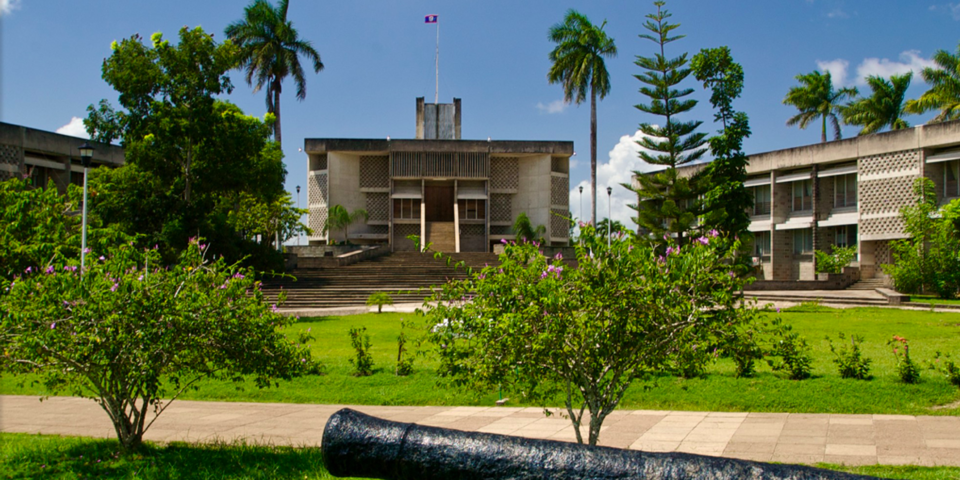
- Independence Plaza — Central Belmopan
Independence Plaza is the town's open civic square, a useful place to get a feel for how Belmopan was planned: broad paving, low buildings and plenty of sky. It is quiet outside office hours, so late afternoon is pleasant for a slow walk, when the heat eases.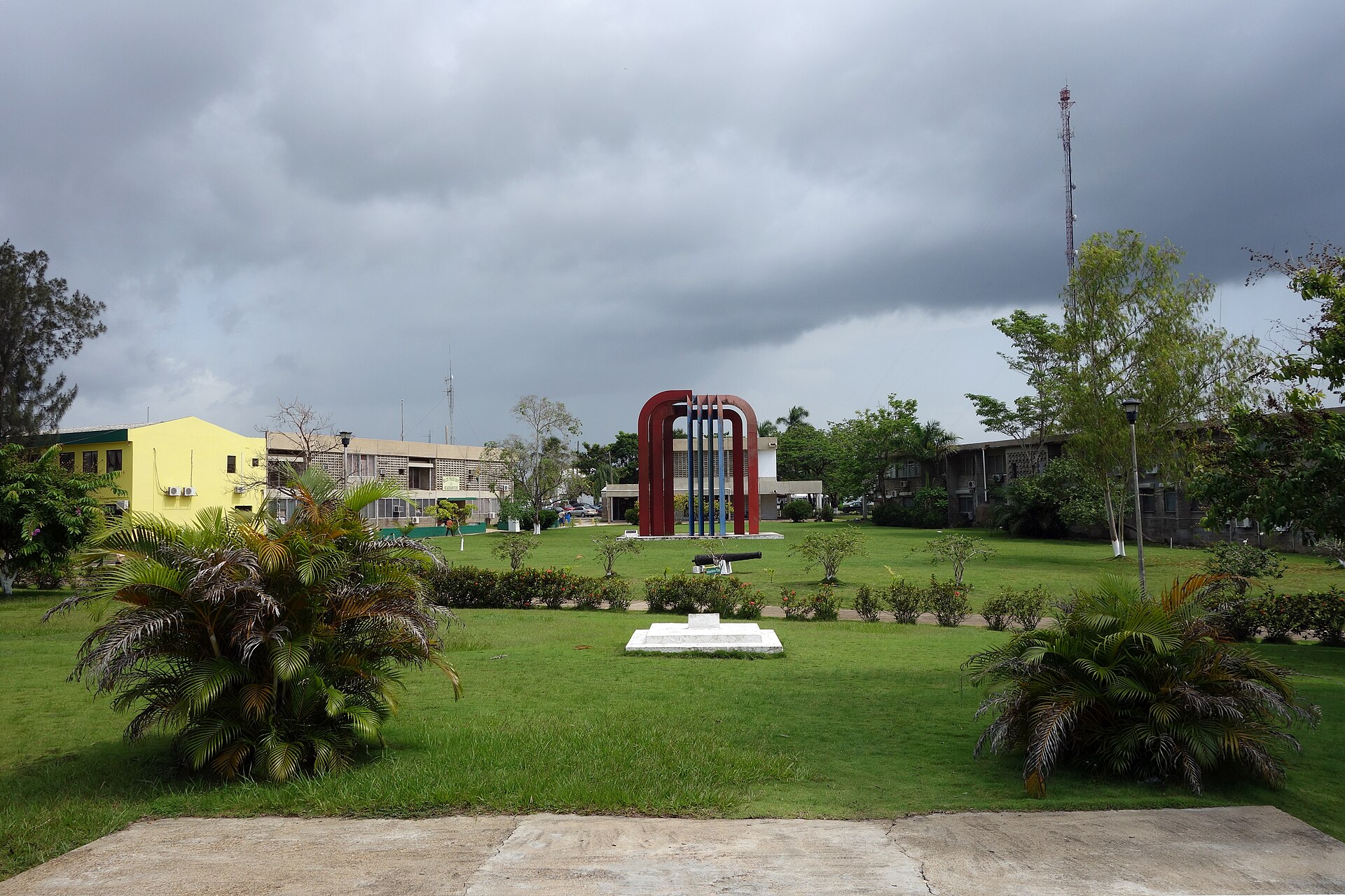
- Belmopan market — Central Belmopan
The market is where the working town shows itself: produce stalls, small eateries, farmers from nearby villages and shoppers after everyday goods. Go in the morning when it is busiest and cooler. It is a good place to buy fruit and to see the town's mix of communities.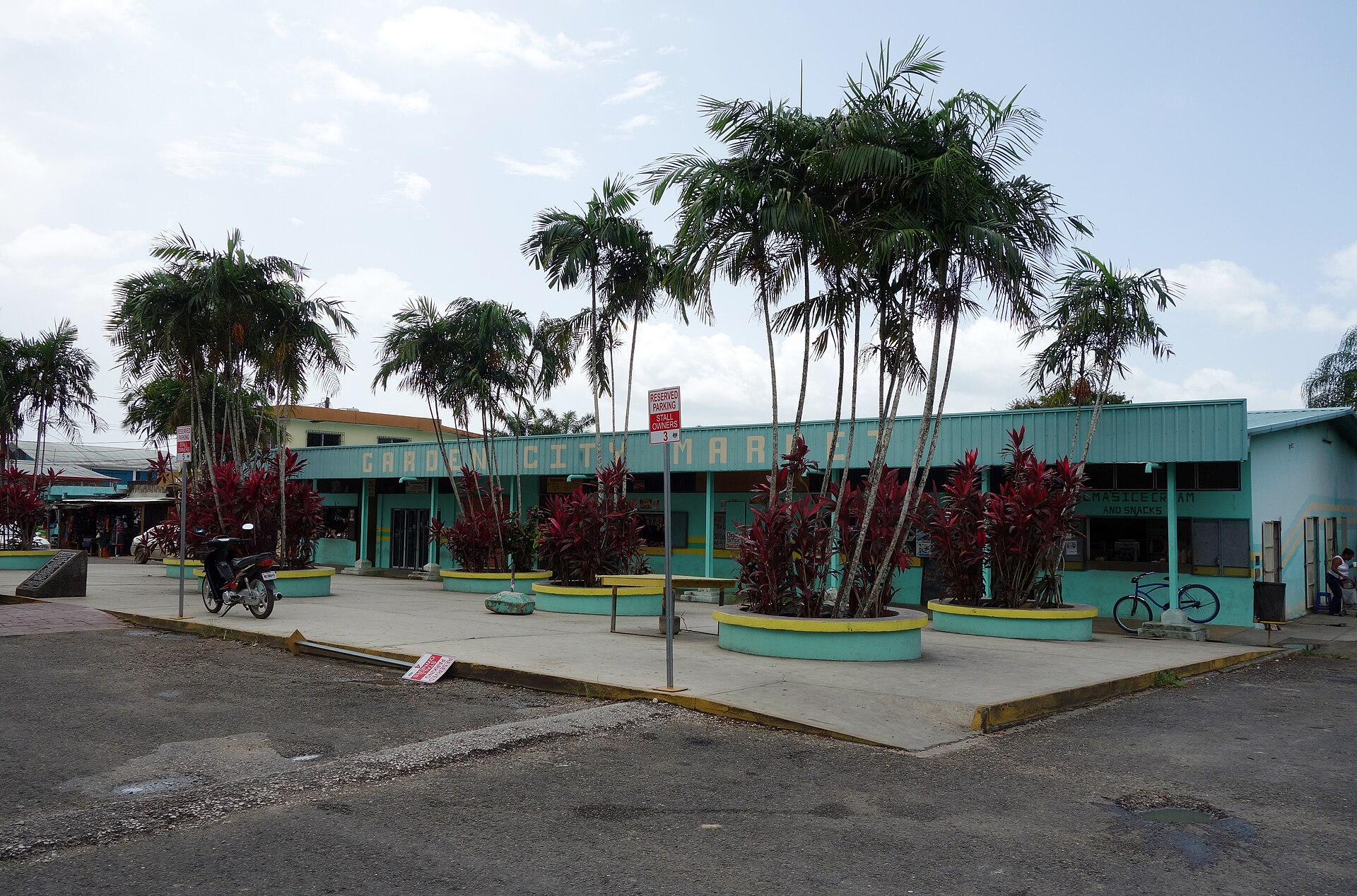
- St. Herman's Cave — South of Belmopan, near the Hummingbird Highway
This remote cave was used by the ancient Maya for ceremony, and pottery fragments can still be seen inside. Go with a guide, and carry a torch, sturdy shoes and a change of clothes. The tracks and cave floor are wet and slippery, so take things slowly. - St. Herman's Blue Hole National Park — South of Belmopan
A forest park with a natural blue pool at its heart, good for a cool swim after a hot drive and for spotting birds along the paths. Fees and opening times change, so check with the park or a local operator. Wear shoes that can get wet. - Belize Zoo — Towards Belize City
The zoo keeps only animals native to Belize, in settings that stay close to the surrounding natural habitat. It gives a quick introduction to the wildlife you may not see in the forest itself. It lies north-east of Belmopan, so combine it with a trip towards Belize City.
Culture
Belmopan is a young town, so its culture is less about ancient ritual and more about civic life, schooling and the mix of communities that moved here for government work. Belize as a whole blends Creole, Maya, Garifuna, Mestizo and other roots, and Belmopan's market, churches and schools reflect that. Events tend to be modest and community-led: the Belmopan Choral Society gives presentations, schools hold an arts festival, and National Day activities fill the civic calendar. The city council works with groups such as the Lions Club, the Scouts and Rotary, and gatherings are often held at the George Price Centre. Sport matters too. The University of Belize's Black Jaguars play out of town, and nearby villages run a softball tournament early in the year. A museum has been planned, but check locally before relying on it. English is the official language and is spoken widely, alongside Spanish and Belizean Kriol, so conversation is easy. People are generally friendly and unhurried; a greeting before asking for anything is normal and appreciated. The town's Chinese-run restaurants and shops are also part of the picture, a reminder of how recent migration has shaped everyday life. Greet people with a polite good morning or good afternoon before asking questions or starting a transaction, and ask before photographing anyone.
What to wear
Belmopan has no single traditional costume, because Belize is a mix of cultures. Maya communities in the south and west are known for embroidered blouses and woven cloth, Garifuna women sometimes wear bright headwraps and long skirts on festival days, and Mestizo and Creole celebrations bring out colourful dresses and crisp shirts. These outfits appear at national events and community festivals rather than in daily life. Everyday dress in Belmopan is practical and neat. Government workers wear smart shirts, trousers, skirts or dresses in cotton, and weekend wear is casual: shorts, T-shirts, caps and sandals. Heat and humidity shape every choice. Visitors should pack light, breathable cotton or quick-dry clothing, a hat, sunglasses and sun protection. Bring a light rain jacket, since showers come often in the long wet season. Closed shoes with good grip are important for cave tours and jungle paths, and sandals or old trainers that can get wet suit river and swimming stops. Insect repellent and a long-sleeved top help in the evening. Beachwear belongs on the coast and cays, not in town. For government offices, churches and formal meetings, cover shoulders and knees. Bring a spare set of dry clothes for any cave visit, because the walk back can be damp.
What to eat
- Rice and beans with stewed chicken — Local lunch eateries and Chinese-run restaurants around the centre
The everyday Belizean plate: rice cooked with red beans and coconut milk, served with stewed chicken, potato salad or coleslaw, and fried plantain. Filling and mild, it is easy to find in lunchtime eateries, including the town's Chinese-run restaurants. - Fry jacks — Breakfast cafés and small eateries near the market
Puffy fried dough, usually eaten at breakfast with beans, eggs, cheese or jam. They are light inside and crisp outside, and are a good fuel before a day of caving or hiking. Order them with strong coffee. - Tamales — Market stalls and home cooks selling at the roadside
Maize dough filled with seasoned meat and steamed in a wrapping of leaves, traditionally a weekend or festive food. Ask what is available that day, as supplies often sell out by midday. Unwrap carefully, and watch for bones. - Chinese-Belizean fried rice and noodles — Family-run Chinese restaurants around the town centre
Chinese-owned restaurants are a feature of Belmopan, serving fried rice, noodles and stir-fries beside Belizean favourites. Portions are generous, which suits groups sharing after a long day of touring. - Fresh tropical fruit and juices — Belmopan market and roadside fruit stalls
Seasonal fruit such as watermelon, pineapple and papaya is sold fresh, and juices are blended to order. Choose stalls where the fruit is cut in front of you, and use bottled water for any dilution or ice questions.
Plan it
Best time. February to April is the short dry season, with easier cave and trail conditions. The wet season runs from May to January, with frequent rain, muddy tracks and high humidity, though the countryside is greener.
How long. 1–2 for the town, 3–4 if using it as a base for caves and wildlife
Getting there. Fly into Belize City's international airport, then take a bus or taxi along the George Price Highway to Belmopan. Long-distance buses use the Belmopan Bus Terminal near the southwest corner of the government campus. Coming from the south, the Hummingbird Highway is the other main road.
Budget. mid
Tips
- Book cave and zip-line tours through local operators a day or two ahead, especially from February to April
- Carry some cash, as small eateries and market stalls may not take cards
- Drink bottled water only
- Start tours early to avoid the midday heat and to catch caves before the groups arrive
- Pack insect repellent and a rain jacket in any season
Etiquette
- Greet people politely before asking for help or starting a purchase
- Ask before photographing people, especially in the market
- Follow your guide's instructions in caves and do not touch or remove pottery or other ancient objects
Nearby
Sources
- Wikidata Q3043 (CC0)
- Wikipedia: Belmopan (rev 1380351540) (CC BY-SA 4.0)
- Wikivoyage: Belmopan (rev 5394821) (CC BY-SA 4.0)
- Parliament of Belize, Belmopan — Haakon S. Krohn (CC BY 3.0)
- National Assembly Building — CadabraPuppet (CC BY-SA 4.0)
- Green House, Belmopan — R Barraez D´Lucca (CC BY 2.5)
- Independence Plaza in Belmopan — Haakon S. Krohn (CC BY 3.0)
- Holy Redeemer Cathedral, Belize City — Ruben Wong (CC BY 3.0)
- Belmopan market — Haakon S. Krohn (CC BY 3.0)
- Monument in Belmopan — Pgbk87 (CC BY 3.0)
- Yim Saam Hotel and Restaurant — Mangrove Mike (CC BY 2.5)


