ATM Cave
ATM Cave, Belize
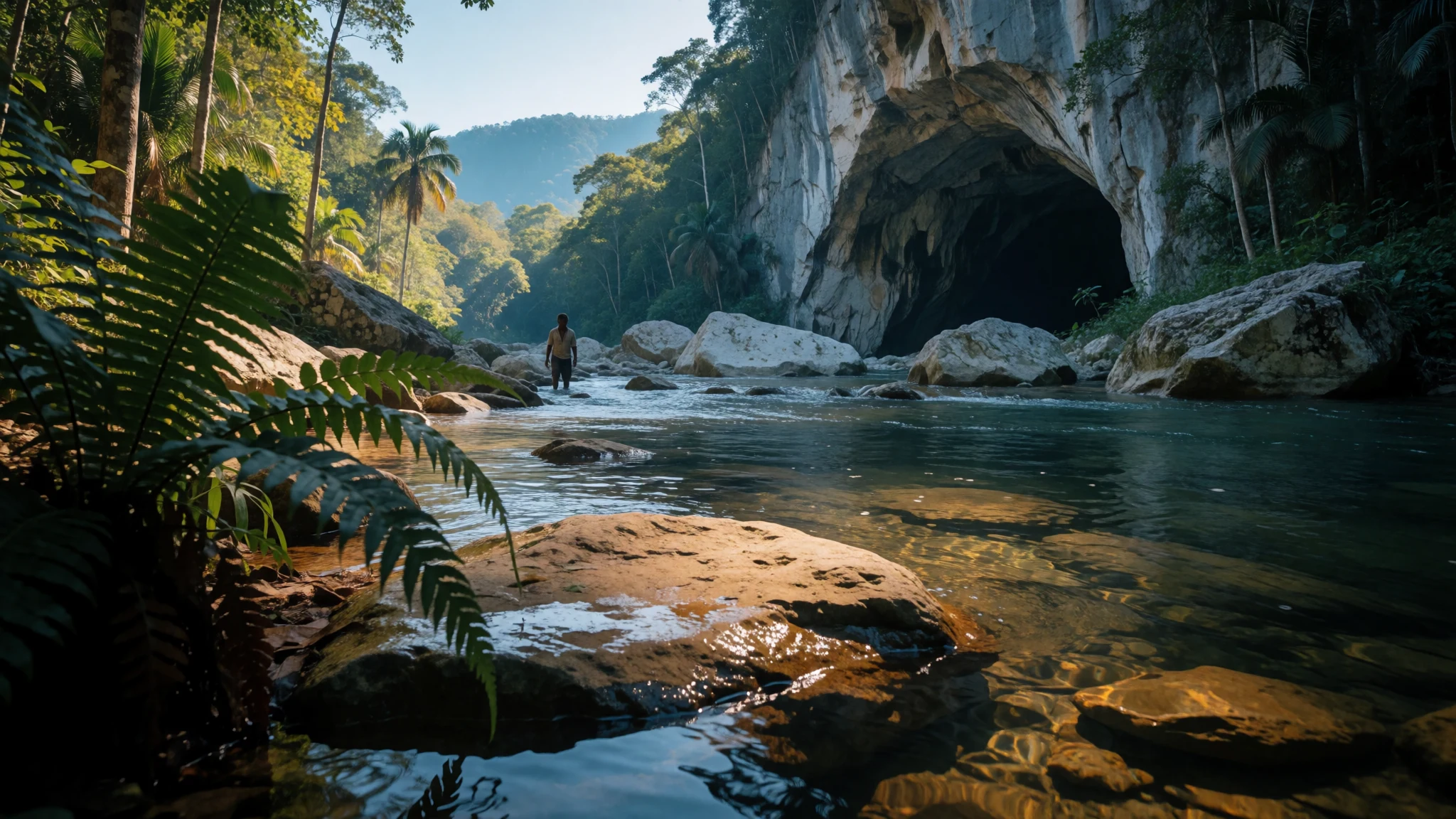
ATM Cave is a river-cut limestone cavern in western Belize where Maya offerings and human remains still lie on the cave floor.
The place
ATM Cave, known in full as Actun Tunichil Muknal, sits in the limestone country of western Belize, in the Cayo district, where forested hills drain towards the Belize River. The approach is not a roadside viewpoint. Visitors reach the entrance on a guided walk through broadleaf forest, then wade and swim a river passage before the rock closes overhead. Inside, the passage opens into chambers where the floor rises above the water and the air goes still. Pottery, stone offerings and human bone were left here by Maya people who treated the cave as a place of ritual rather than a dwelling. The upper dry section is the part travellers remember: artefacts rest where they were found, including vessels, a skull, and a calcified skeleton that guides call the Crystal Maiden. Light is limited to what the group carries, and the rock is wet, polished and uneven. There is no viewing platform and no independent wandering; the site is visited only with a licensed guide, in part because earlier traffic damaged objects that cannot be replaced. The surrounding bush is hot, humid and full of insects, and the return is the same wet walk in reverse. What the cave offers is proximity. Travellers are not looking at a reconstruction behind glass, but at objects still sitting in the dark where ritual left them. Crowds are managed by the permit system, yet a popular morning still means several groups moving through the same narrow stone, so the quiet is shared rather than private.
Its story
ATM Cave entered the written record of travellers and archaeologists long after Maya families had stopped leaving offerings in its dark. For the ancient Maya, caves were not empty holes in the hill. They were thresholds to the underworld, places of water, ancestry and rain, and Actun Tunichil Muknal was used that way: people carried pottery and other gifts deep inside and, at times, left their dead. The objects were not buried in a tomb that was then sealed and forgotten in a single ceremony. They accumulated, which is why a visitor today can still see jars, a small relief figure on a water jar, and human remains in the same dry upper gallery. Modern attention changed the risk. Once the cave became a guided outing from San Ignacio, feet, hands and camera straps began to threaten pieces that had survived in the damp. Damage by visitors, including harm to human bone, is part of the reason the upper chamber is now walked in socks and why cameras, phones and other photographic gear stay in the vehicle for the whole cave. The name Crystal Maiden belongs to the modern tour, not to a Maya inscription. It is the nickname for a skeleton whose bones have taken on a sparkling crust from minerals in the drip-water. Guides tell that story because the figure is the emotional end of the route, but the wider truth is quieter: this was a ritual landscape, and the pots and bones are evidence of repeated visits, not a single legend. The cave's protection now depends on that guided choreography of small groups, no touching and no souvenirs, if the floor is to stay a record rather than a ruin.
What to see
- The Crystal Maiden — upper gallery
The Crystal Maiden is the calcified skeleton lying at the far end of the dry gallery in ATM Cave, where minerals from drip-water have coated the bone. The nickname is a modern guide's label, not a Maya name, and nothing on the remains identifies the person. Visitors stop on the marked path for a long look. Cameras, phones and other photographic gear stay in the vehicle.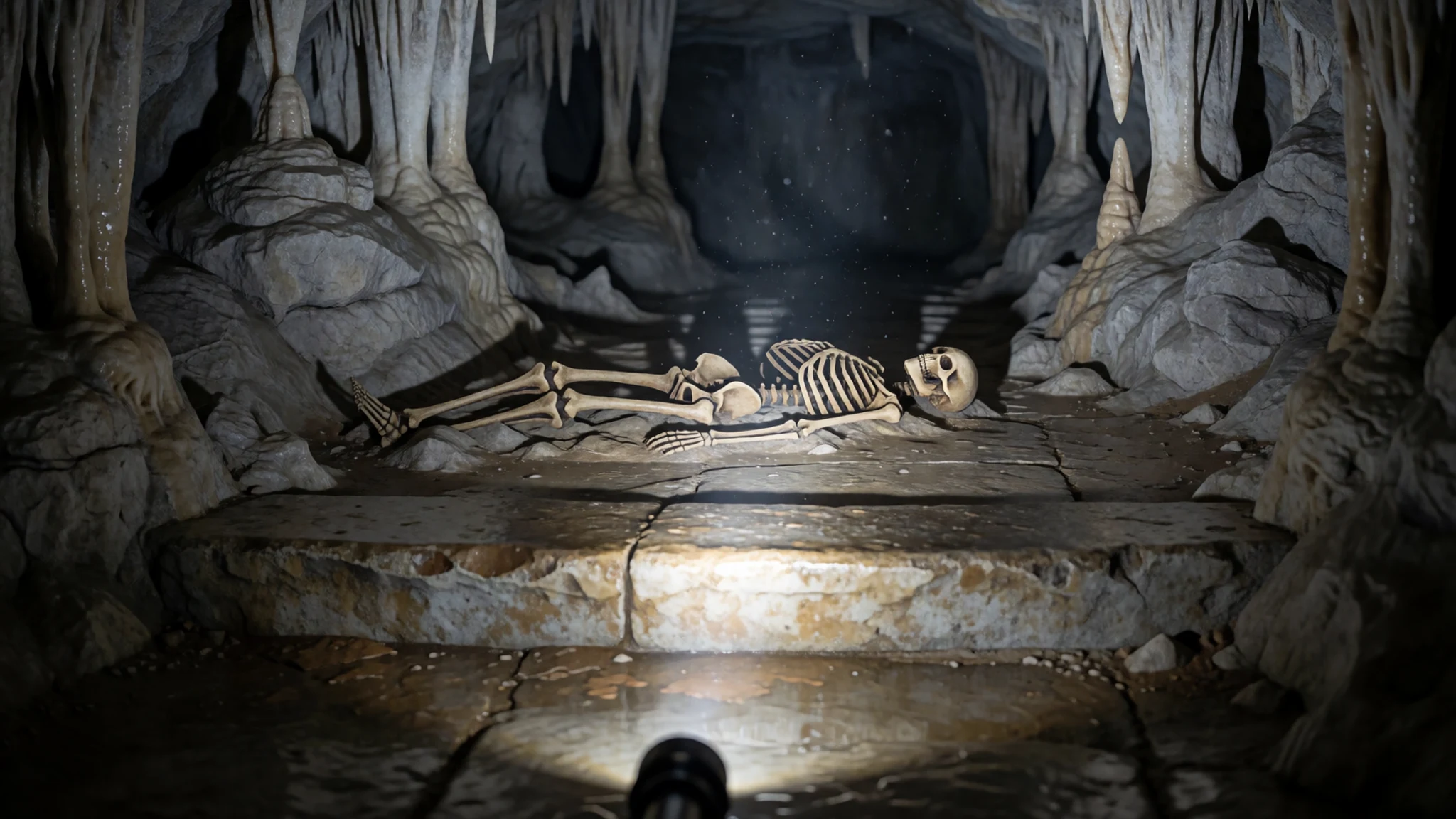
- The Monkey Pot — upper gallery
The Monkey Pot is a ceramic vessel inside ATM Cave, left among the offerings instead of being lifted out to a museum. It stands in the dry upper gallery with jars and bowls once used to carry food, drink or incense. The name comes from the vessel's shape. Visitors view it from the sock-footed trail with packs held close and hands off the clay.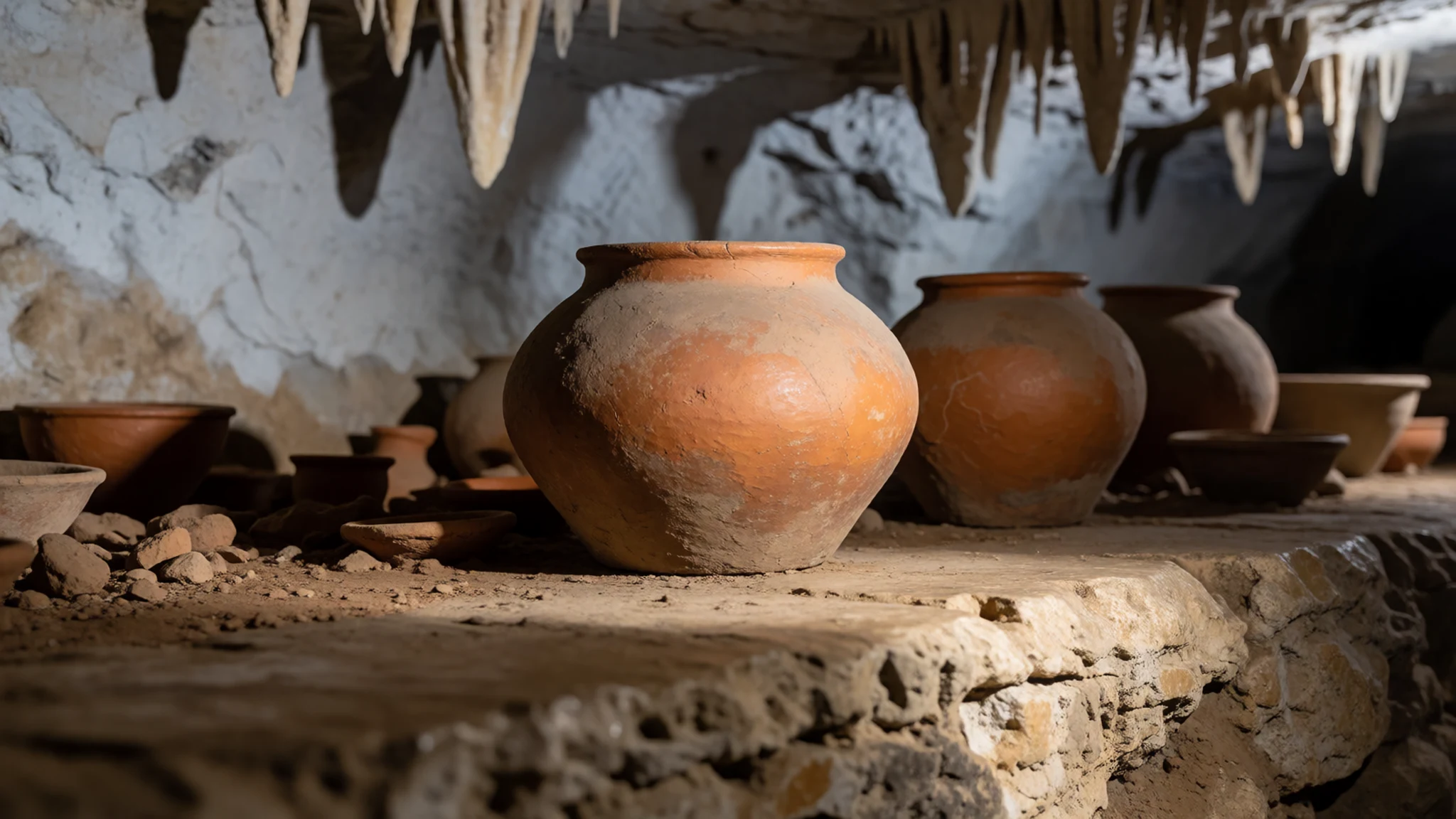
- The duende jar — upper gallery
A small relief figure, sometimes called a duende, decorates a Classic Period Maya water jar in ATM Cave. The face is modelled on the shoulder of an olla that once carried water into the dark. It is easy to miss if the guide's lamp moves on. The jar is evidence of ordinary craft put to ritual use: a domestic shape walked deep into the cave and left there.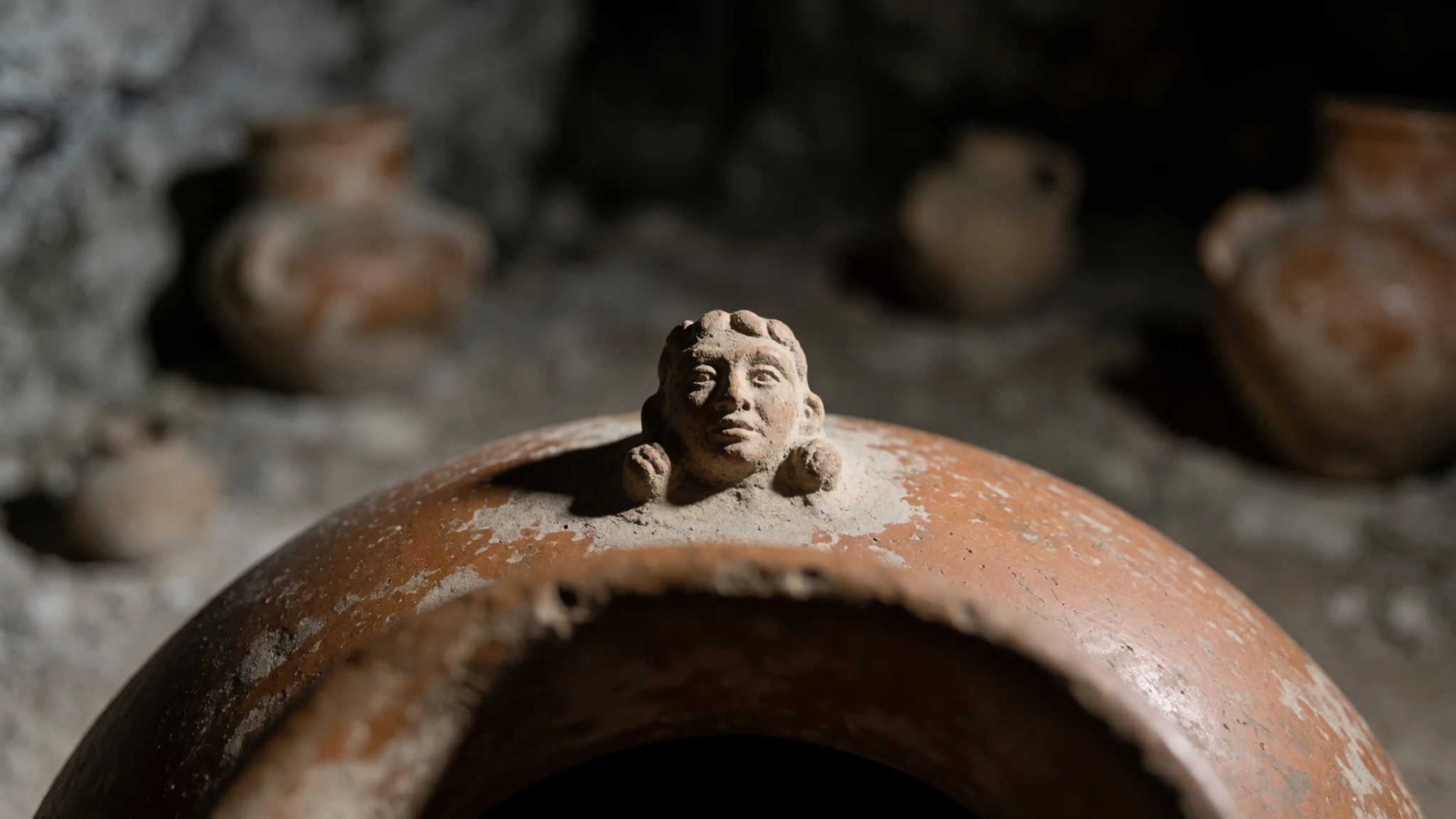
- The skull — upper gallery
A human skull lies among the offerings on the floor of ATM Cave, separate in the visitor's memory from the full skeleton further on. It is one of the remains that make the chamber feel like a cemetery left open to the air. Guides set the pace and the distance. The bone is fragile, and earlier visitors have already shown how quickly a misstep becomes permanent damage.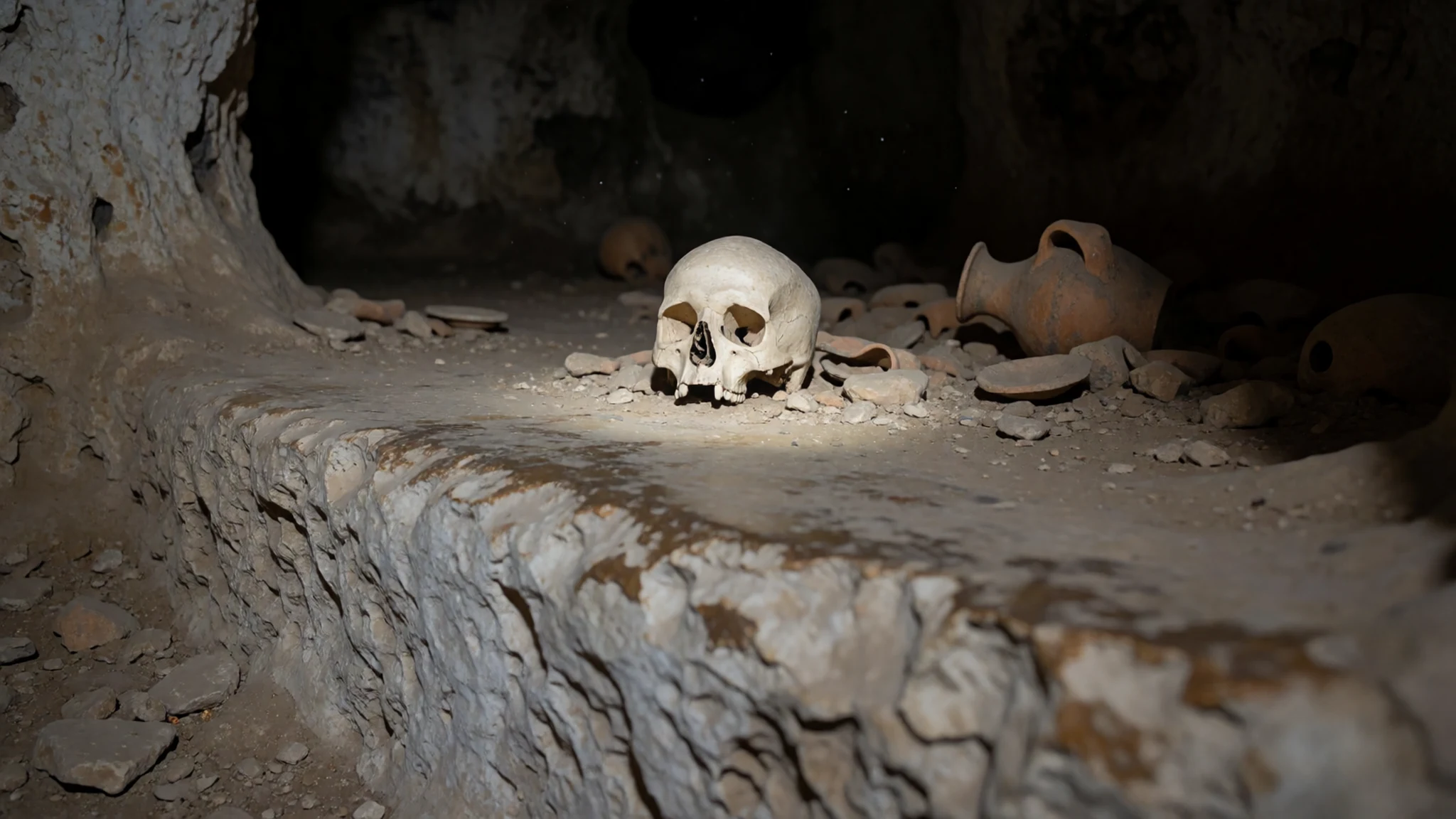
- The river entrance — cave mouth
The way into ATM Cave begins in the forest of western Belize and ends in the water. After the trail, visitors wade and then swim a river that flows out of the limestone, holding the guide's line where the current and the footing ask for it. Helmets and headlamps come on before the daylight shrinks to a bright mouth behind the group.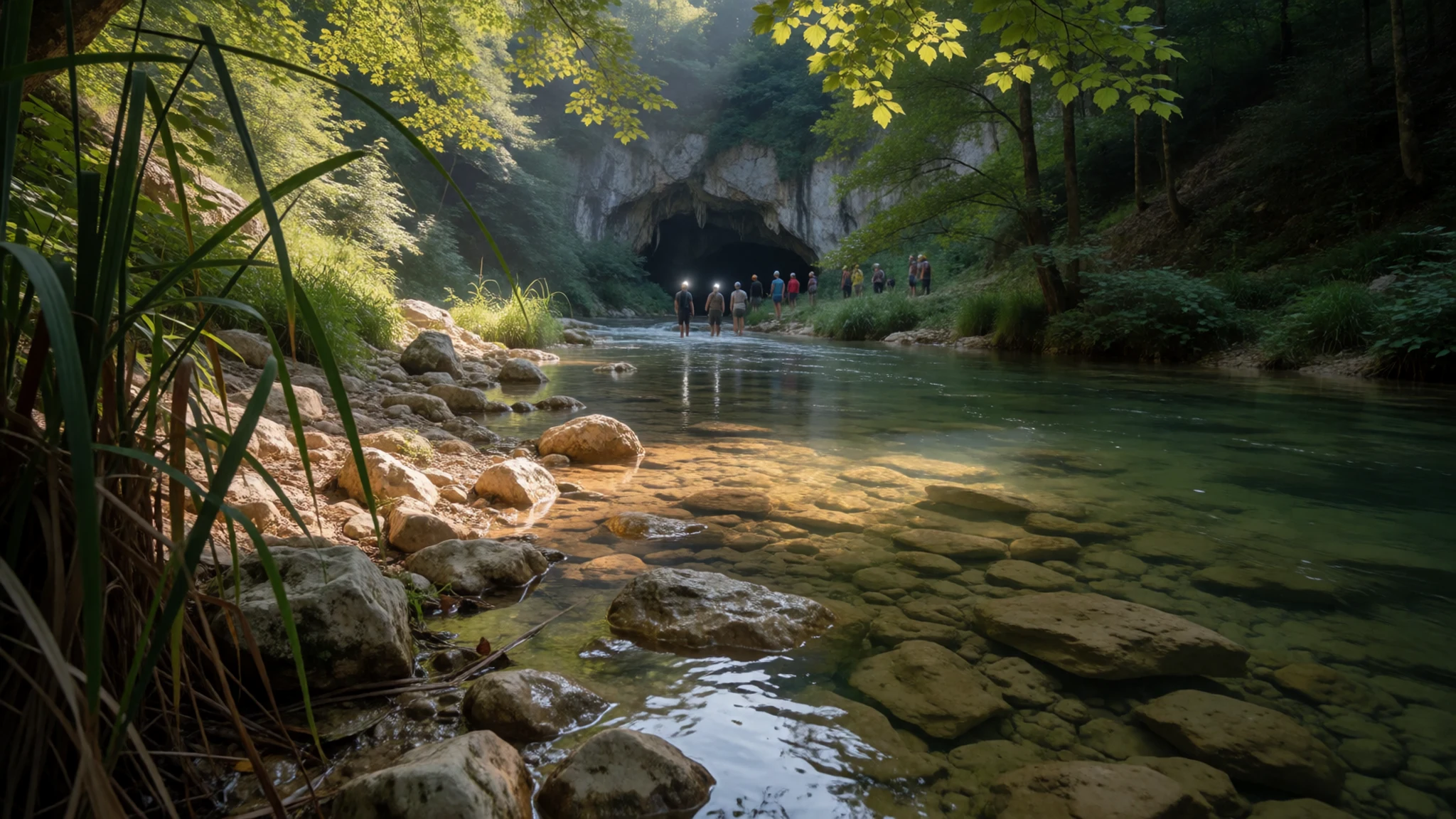
Culture
Culture of ATM Cave is Maya cave ritual still visible in place, and the modern habit of visiting it as a guided pilgrimage of a different kind. In Classic Period communities of the southern lowlands, caves and cenotes were mouths of the underworld, linked to rain, maize and the dead. People brought vessels, burned offerings and sometimes left bodies, and Actun Tunichil Muknal keeps that pattern on its floor rather than in a gallery label. Today's guides, many of them from San Ignacio and the nearby villages, are the interpreters: they set the order of stops, the jokes, and the line no one may cross. The visit has its own folk customs now — the sock-footed shuffle, the whispered names for pots, the pause at the calcified skeleton — layered on top of beliefs that are much older. Spanish-speaking Mestizo culture and the Maya languages of the Cayo villages both sit in the background of the trip, in the lunch afterwards, the saint's-day chatter, and the casual Spanish on the ride. Treat every object in ATM Cave as a grave good still in use as evidence: do not touch or move the remains and pottery, and do not photograph anywhere in the cave.
What to wear
ATM Cave asks for clothes that can survive a river, a muddy trail and a stone floor walked in socks, which is a long way from ceremonial Maya dress. In the Classic Period the people who used these caves wore cotton garments woven on the backstrap loom: wrapped skirts, loincloths and, for women, the huipil, a square-cut tunic whose brocade marked community and status. Those textiles still appear at feasts and in Mopan, Q'eqchi' and Yucatec Maya villages of Belize, in brighter commercial thread as well as older geometric patterns, though a weekday in San Ignacio looks like the rest of the Caribbean lowlands — T-shirts, football shirts, jeans, flip-flops and work boots. For the cave itself, the practical kit is a swimsuit or quick-drying shorts and a rash vest under clothes that can be soaked, plus trainers or canyoning shoes that will stay on in the current. A dry change waits in the transport. Leave cotton that stays wet, skirts that tangle in the swim, and any jewellery that can catch on rock. On the upper gallery the footwear comes off and thick socks go on, so the bag needs a pair that can grip wet limestone and survive being ruined.
What to eat
- Rice and beans — cookshops in San Ignacio
Rice and beans is the plate that refuels people after ATM Cave: beans in a savoury stew beside white rice, or the coconut version more typical of the coast. Stewed chicken or fried plantain usually shares the plate. Look for it at lunch counters and cookshops in San Ignacio.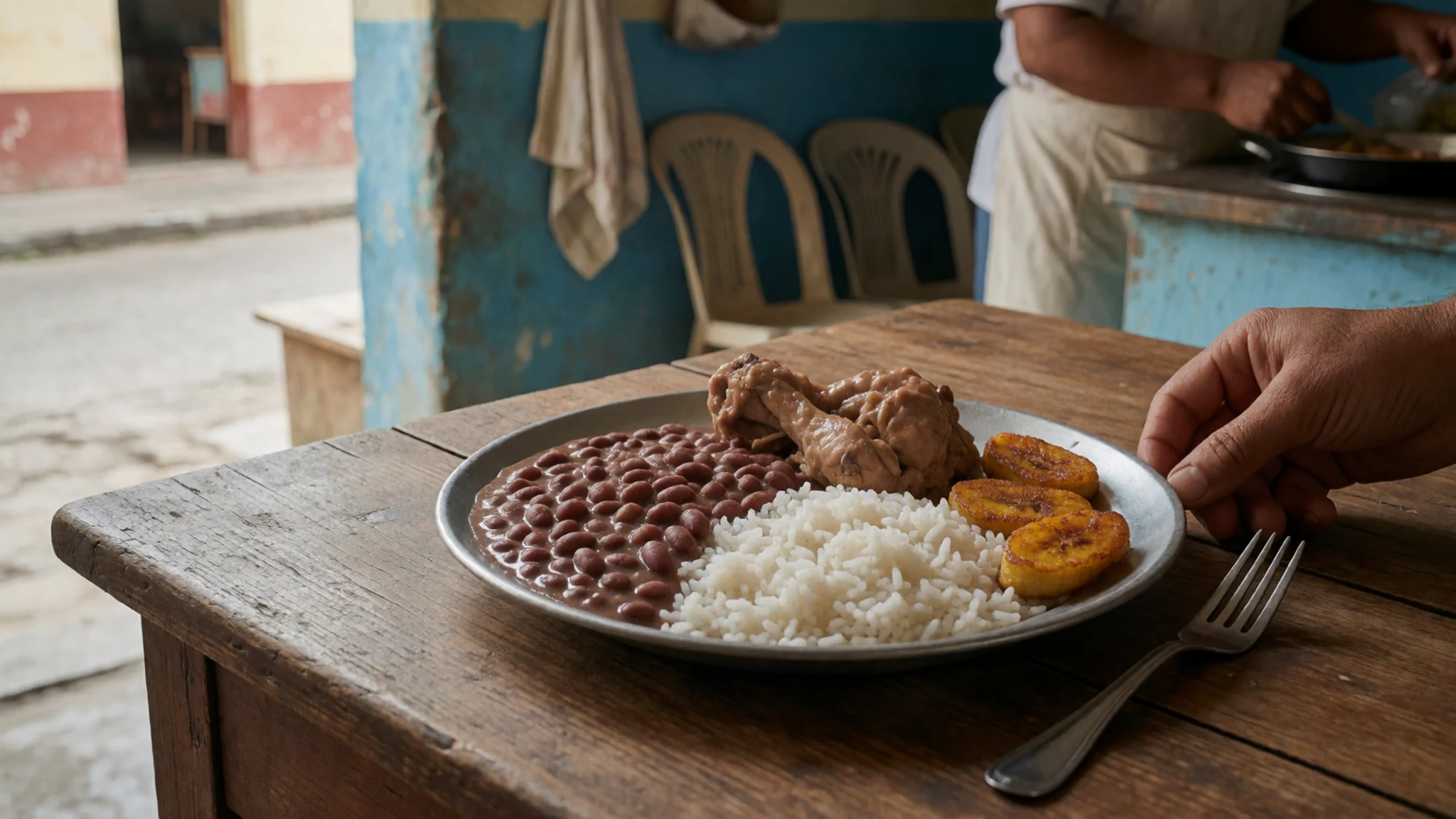
- Fry jacks — early cookshops and bakeries in San Ignacio
Fry jacks are puffed discs of fried dough eaten before dawn departures for ATM Cave, split and filled with beans, cheese or eggs. They are the Belizean answer to a breakfast bread, salty and filling, sold from early cookshops and bakery windows in San Ignacio and along the road west.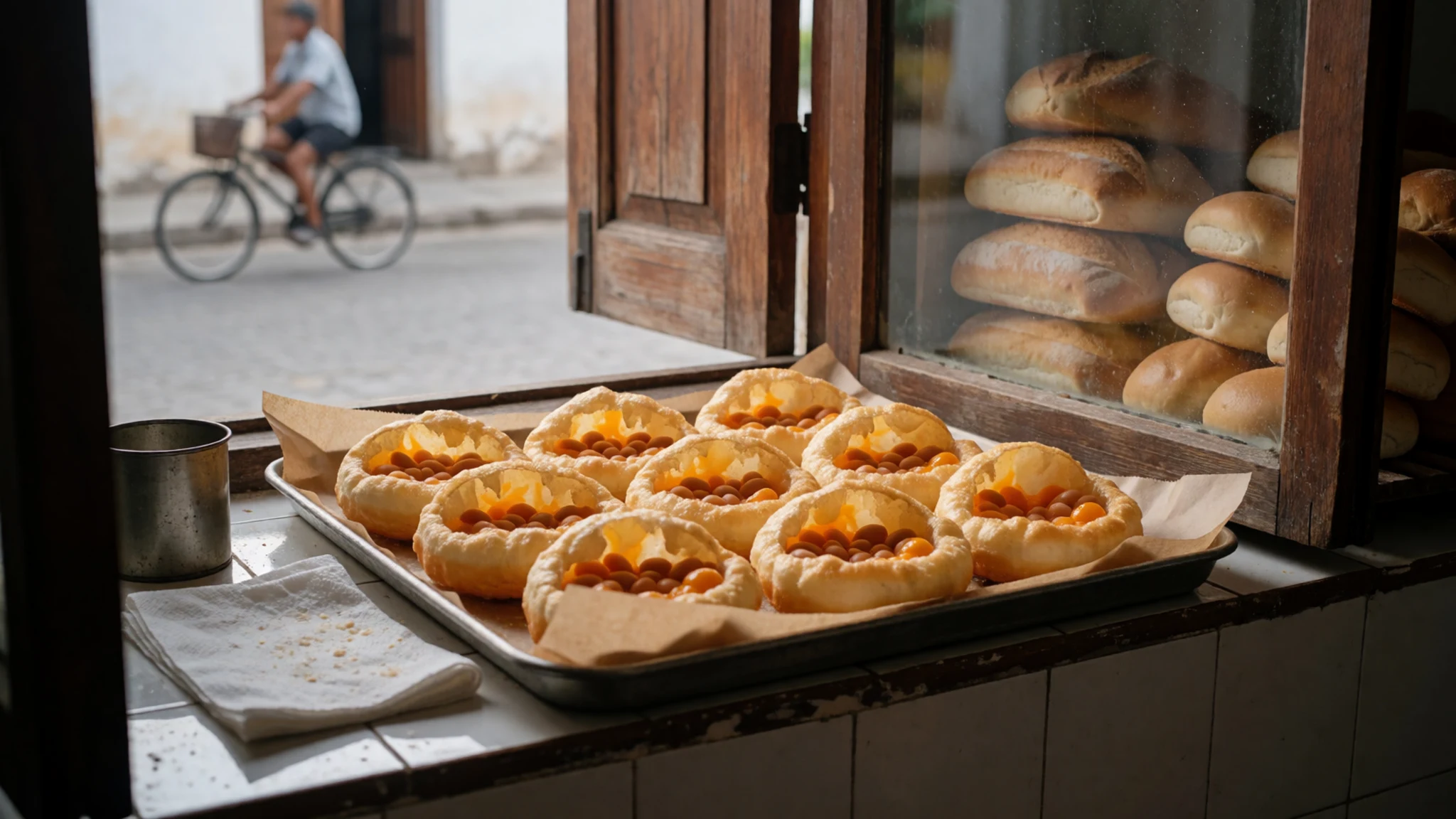
- Panades — street stalls and snack bars in San Ignacio
Panades are small corn tortillas folded around seasoned fish or beans, fried crisp, and a common snack after ATM Cave. They belong to the Mestizo table of western Belize. Street stalls and evening snack bars in San Ignacio fry them to order and serve them with a sharp onion sauce. - Chimole — midday eateries in San Ignacio
Chimole, nicknamed black dinner, is a dark soup of blackened recado, meat and tortillas eaten around ATM Cave. It shows up in Cayo homes and in San Ignacio eateries that cook Maya- and Mestizo-style midday meals. The colour is the point: almost black, smoky, and finished with extra tortillas. - Corn tamales — market stalls in San Ignacio
Corn tamales in the Cayo style are masa steamed in a leaf, plain or filled, and they travel well as a breakfast before ATM Cave. Vendors and market stalls in San Ignacio sell them early, warm in a bag, to people who will not sit down for long.
Plan it
Best time. January to April are the drier months in western Belize, when the river walk into ATM Cave is usually calmer. From June through November heavier rain can raise the water and close the route, so confirm with the guide before leaving San Ignacio.
How long. one or two
Getting there. Philip S. W. Goldson International Airport beside Belize City, then the road west through Belmopan to San Ignacio. A guide covers the last leg: a drive to the trailhead, a forest walk and a river wade into ATM Cave.
Budget. high
Tips
- Reserve a licensed guide before you travel in the dry months; the permit list fills.
- Pack a full change of clothes and a towel, because the river soaks the outfit you hike in.
- Wear shoes that can swim, and bring thick grip socks for the shoeless upper gallery.
- Leave cameras, phones and other photographic gear in the vehicle before you enter the cave.
- Carry drinking water for the forest trail; do not drink the cave river.
- Tell the operator in advance if dark water, swimming or tight stone is a problem for you.
- Take cash for cookshops and small purchases in San Ignacio; card machines are patchy.
Etiquette
- Do not touch pottery, bone, or the flowstone around them.
- Do not photograph anything in the cave; cameras and phones stay in the vehicle.
- Walk only where the guide walks; a step off the line has already broken irreplaceable bone.
- Keep voices low among the remains; ATM Cave still holds the dead.
- Take shoes off for the dry gallery and stay in socks the whole time you are up there.
Nearby
Sources
- Wikidata (CC0)
- Wikipedia — Actun Tunichil Muknal (CC BY-SA 4.0)
- Wikivoyage — Belize (CC BY-SA 4.0)