Lamanai
Lamanai, Belize
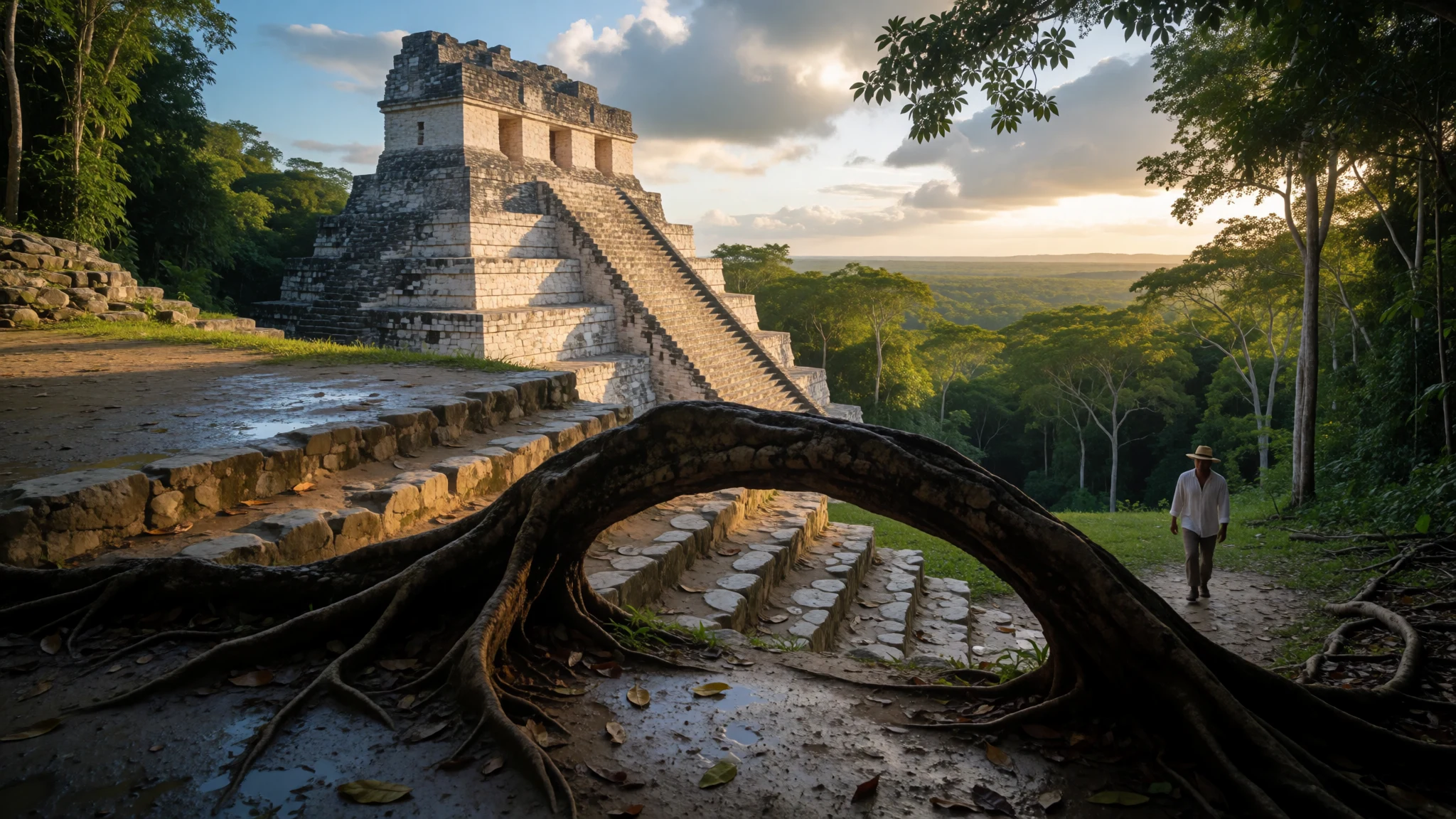
Lamanai is a Maya city beside a jungle lagoon in Belize, reached by river boat and lived in for three thousand years.
The place
Lamanai is a Maya city in the north of Belize, in Orange Walk District, standing only 28 m above sea level on low, forested ground beside the New River Lagoon. The name comes from Yucatec Maya and means something like 'submerged crocodile'. It is not a modern invention: Spanish missionaries wrote it down, and Maya inscriptions carried an earlier form of it long before them. What sets the site apart is time. People lived here across three millennia, from the Early Preclassic period through Spanish and British colonial rule and on into the twentieth century. Many cities in the southern Maya lowlands emptied around the tenth century, but Lamanai carried on. Today the ruins are a patchwork. Some temples have been cleared and stand clean-edged above the trees, while many green hills nearby are temples still waiting under soil and roots. Howler monkeys announce themselves long before they are seen, and local stories speak of jaguars close by, an idea echoed in the carvings. Crocodiles appear in the stonework too, which fits both the name and the lagoon. The site is also a protected area, so the forest around the stones is part of the experience, not just a backdrop. Most people arrive by boat from Orange Walk Town, which makes the journey nearly as memorable as the ruins. It is a day trip, shaded and humid, and it rewards a slow pace and a guide who knows which mounds are which.
Its story
Lamanai's story begins early: people were living here by the sixteenth century BC, and in the last centuries before the Common Era the settlement had grown into a prominent centre. Its long afterlife is what historians keep returning to. In the seventh century a carved stela was raised here in the Yucatec language of the Maya, a sign of a living local tradition rather than a borrowed one. While cities to the south faded, Lamanai stayed occupied into the seventeenth century. Then the Spanish arrived. During the conquest of Yucatán, friars built two Catholic churches at Lamanai, setting a new faith beside the old temples. A Maya revolt drove the Spanish out, and the mission did not hold. Later the site fell within British Honduras, and the ruins still include the remains of a sugar mill the British put up in 1860, a very different kind of monument among the trees. When that colony became independent, Lamanai passed to Belize. Few places let a visitor trace Maya, Spanish and British layers in a single walk through forest. The ruins are not frozen in one golden age; they record people settling, resisting, trading and rebuilding over a very long span. That continuity is the honest reason to come, more than any single temple. Archaeology here is far from finished, since many mounds remain unexcavated, so the story is still being written.
What to see
- High Temple — Main ceremonial area
The High Temple at Lamanai rises about 33 m and is the climb most visitors come for. The steps are narrow, tall and steep, with a rope to hold, and the ascent is at your own risk. From the top the canopy spreads flat to the horizon, with the lagoon beyond. Go early, before the heat and the groups.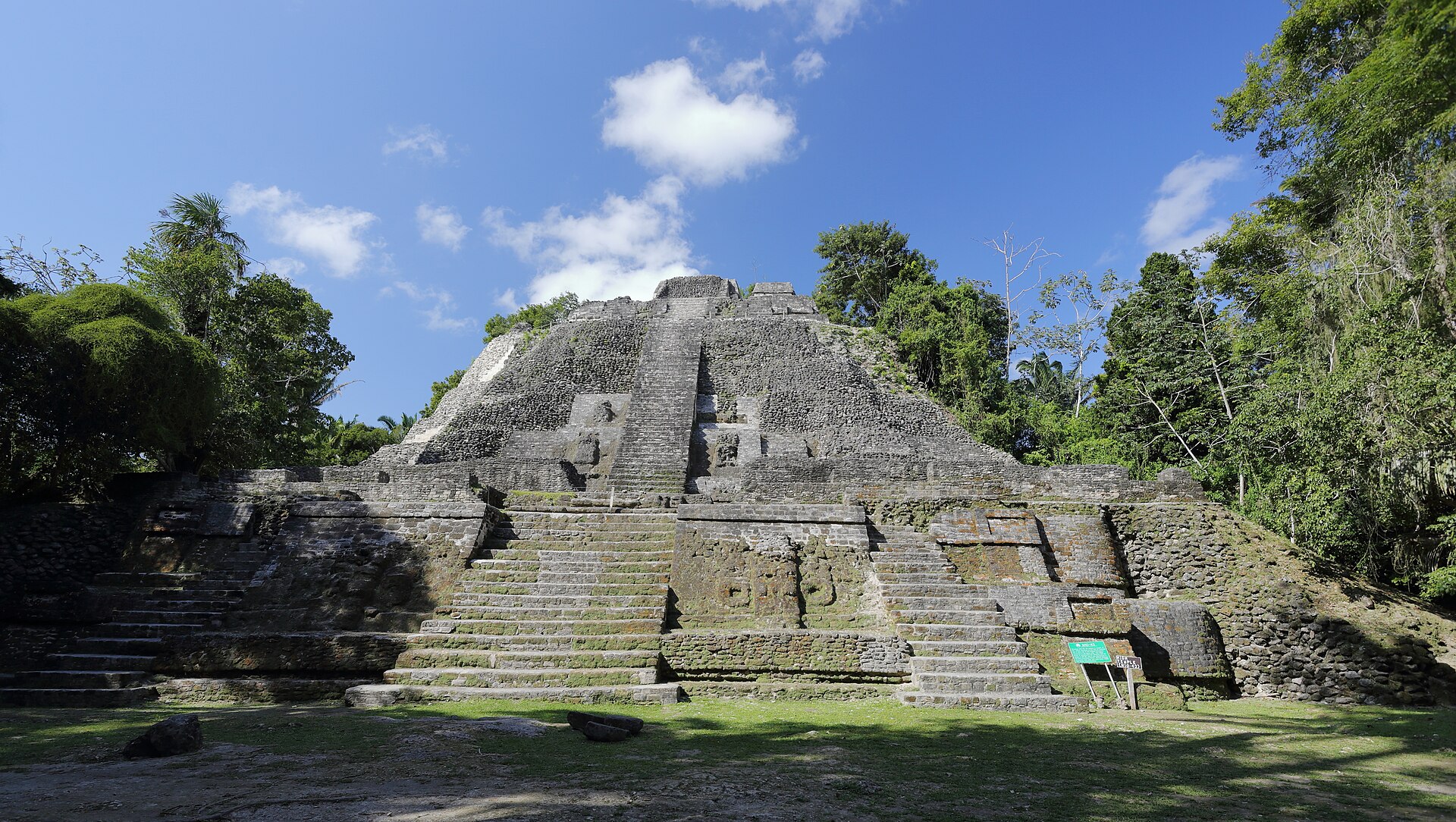
- Jaguar Temple — Central plazas
The Jaguar Temple takes its name from the big cat carved into its stonework, a reminder that jaguars shape local stories as much as the architecture. Step back to take in the stepped profile, then move close for the detail. Crocodile motifs on other buildings echo the site's name. A guide helps untangle which carving is which.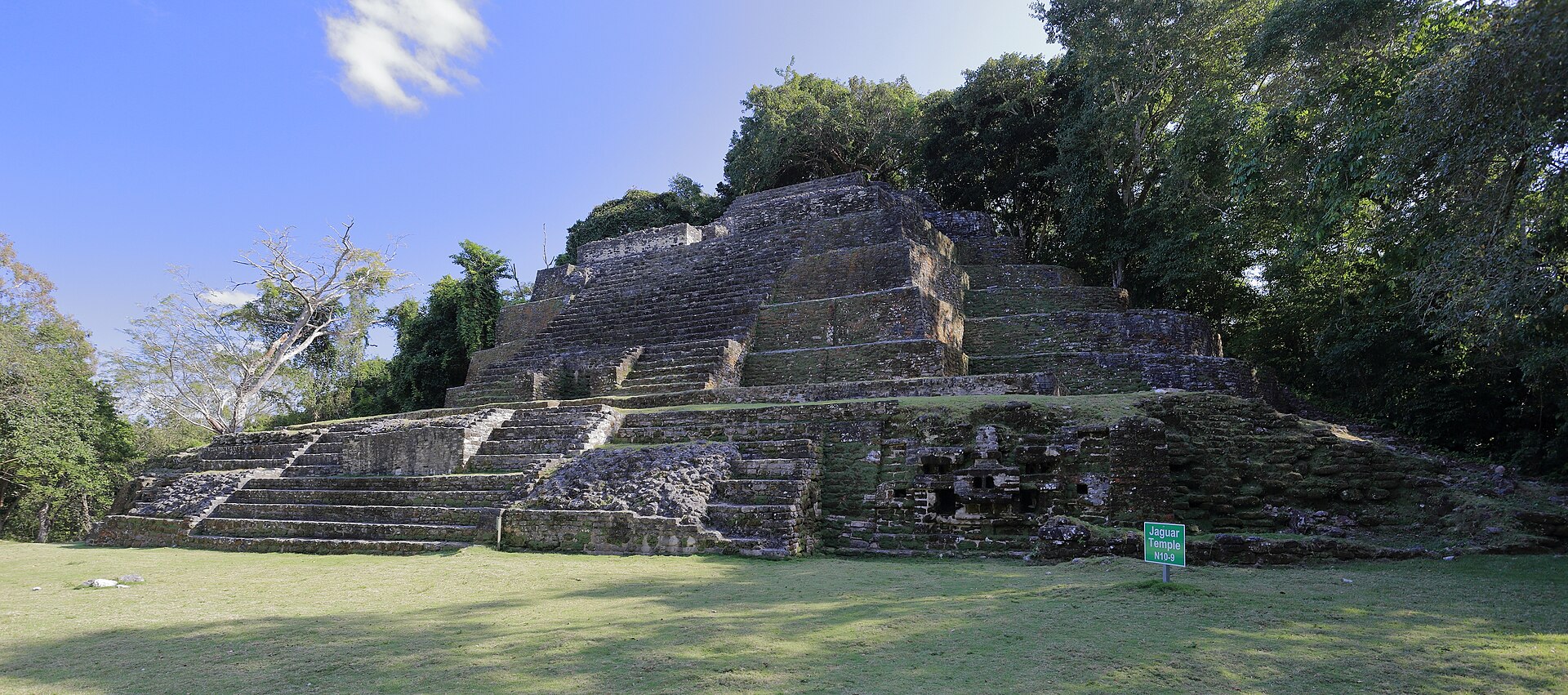
- Unexcavated mounds — Forest paths around the cleared core
Between the cleared temples, many of the green hills beside the paths are buried buildings, still covered by soil, roots and leaf litter. Walking past them gives a better sense of the city's real scale than the tidy plazas do. They are also quiet places for spotting birds and listening for howler monkeys overhead.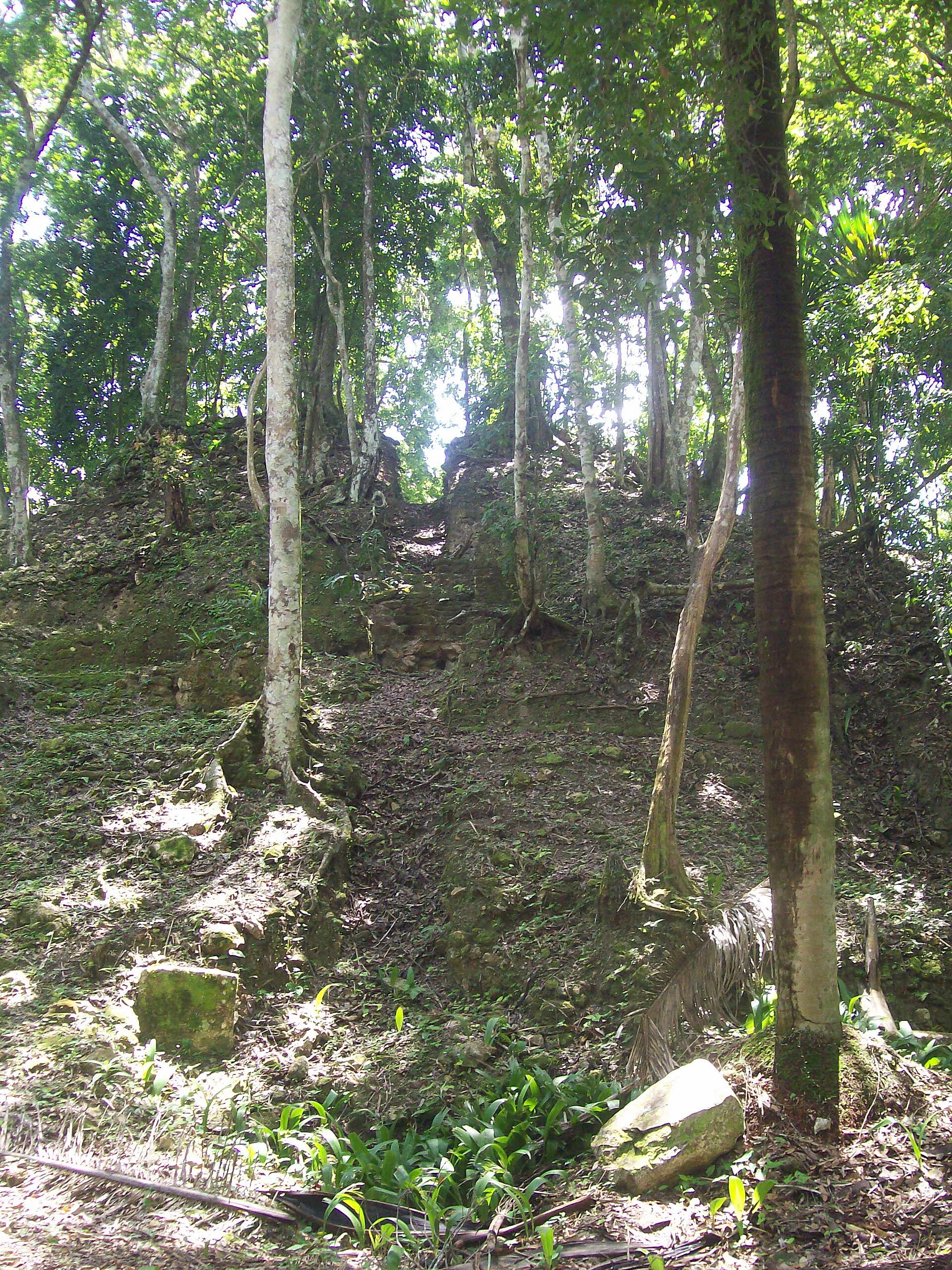
- British sugar mill — Edge of the site, near the lagoon
The remains of a sugar mill, built by the British in 1860, sit among the trees at Lamanai, a colonial-era footnote beside the Maya stone. It shows how the site was reused long after its temples were quiet. It is worth ten minutes, and it makes the layered history easy to see.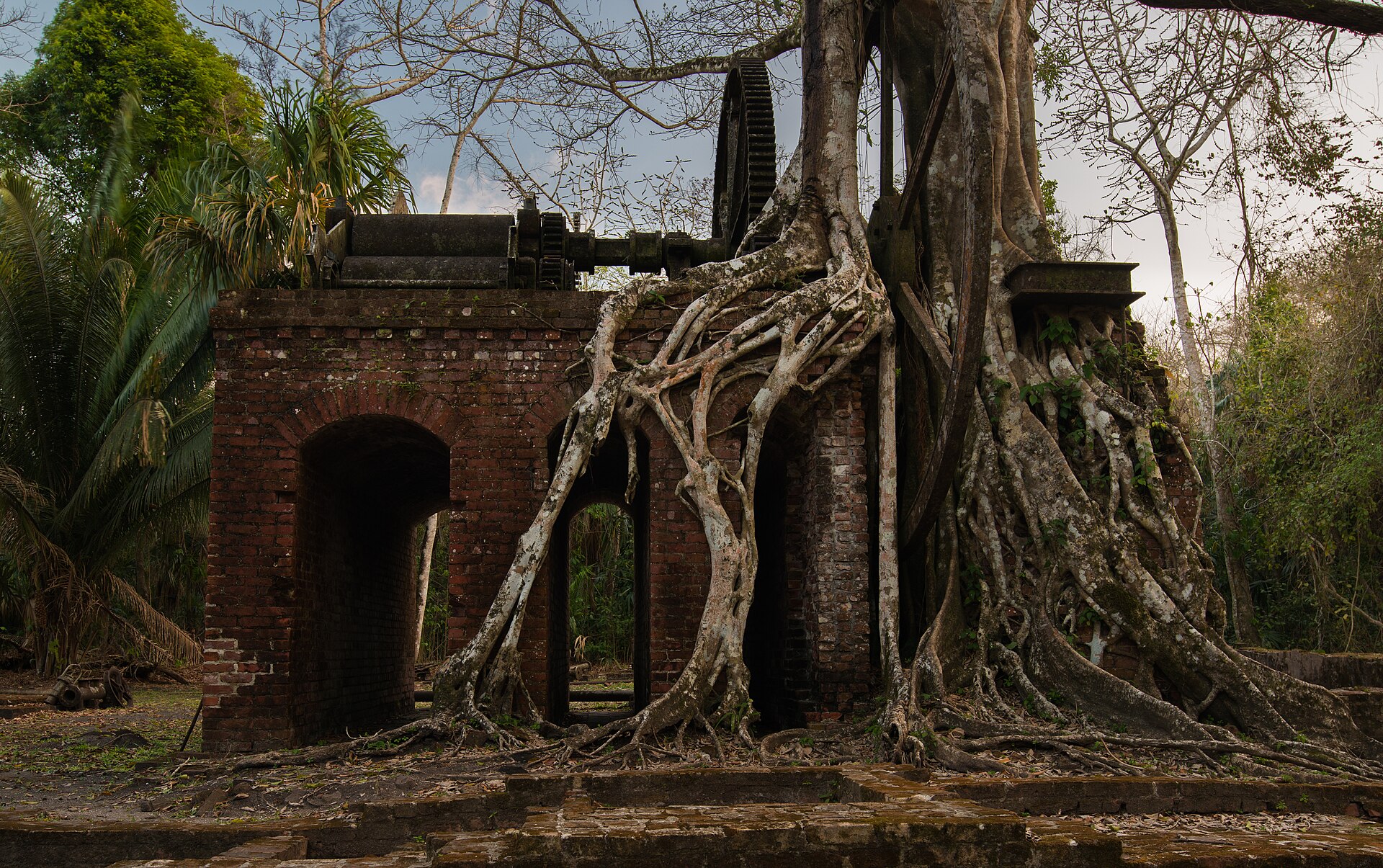
- New River and lagoon — Approach by water from Orange Walk Town
The boat journey up the New River is part of Lamanai, not just transport. Banks of dense jungle give way to open water, with exotic birds, Morelet's crocodiles and howler monkeys along the way. Maya fishers work from small canoes, and Mennonite farming villages slip past. Keep a camera ready and a hat on.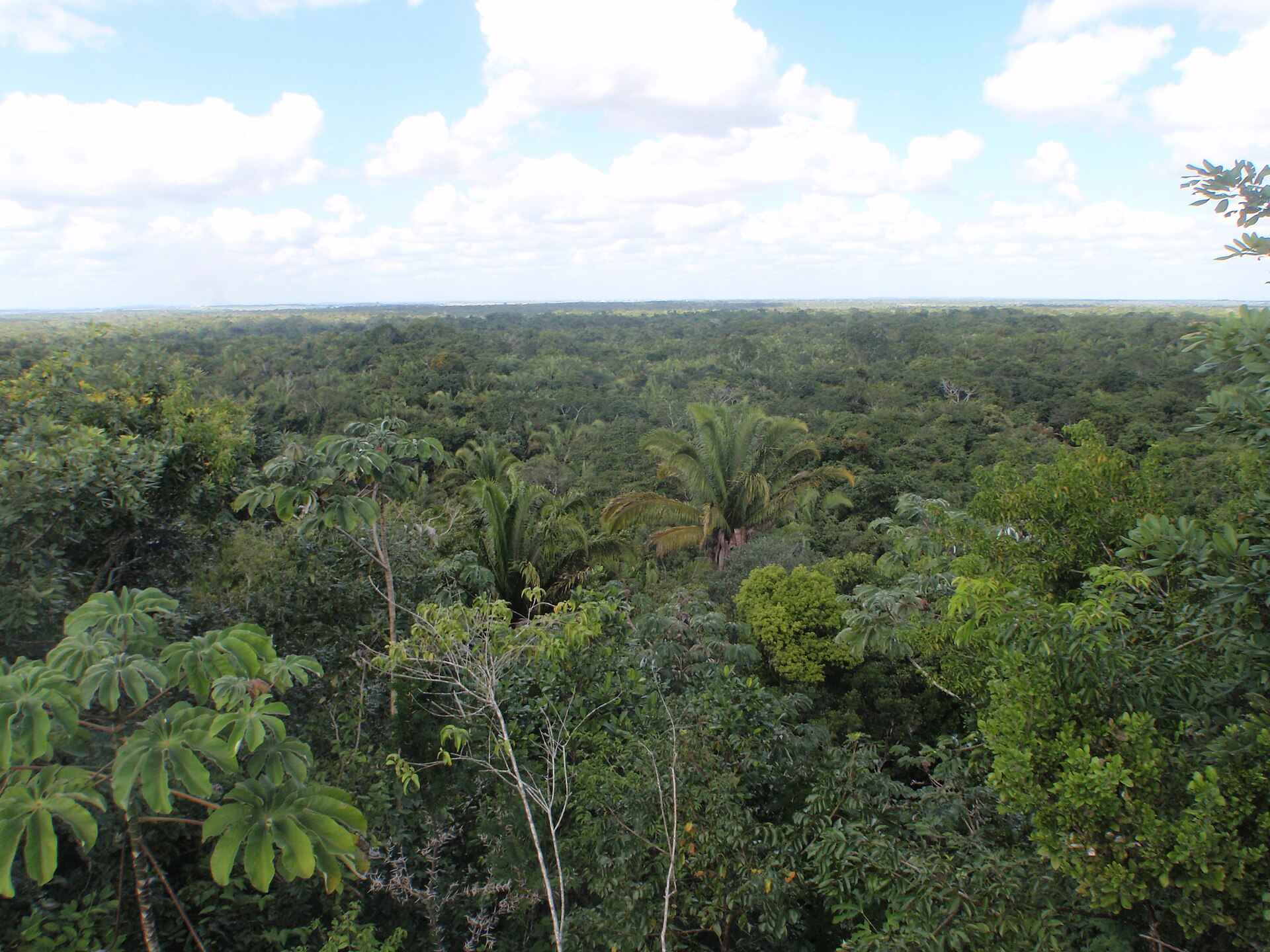
Culture
Lamanai carries a living sense of its own past, starting with the name, which Maya speakers still read as 'submerged crocodile'. Crocodiles and jaguars were not decoration only; they were part of how people here understood water, forest and power, and both animals still live in the surroundings. Guides, many from nearby communities, tell the site through that continuity rather than as a lost civilisation. The Maya are not a vanished people: Maya families live and fish along the New River today, and Yucatec Maya words still shape local place names. The route also passes Mennonite villages, whose farming communities keep their own language and way of dressing, so a trip here crosses several cultures in a single day. Belize as a whole is a mix of Maya, Mestizo, Creole, Garifuna and others, and English is the official language, which makes conversation easy. Spanish friars and British colonists both left marks at Lamanai, and the site's custodians treat all those layers as history worth keeping. Respect for that history is simple in practice: listen to the guide, ask before photographing local people, and treat the stones as the remains of a place that mattered. Visitors should stay on the marked paths and never climb unexcavated mounds or chip at carved stone, because the monuments are fragile and the forest is protected.
What to wear
Lamanai sits among communities whose clothing says as much about the region as the ruins do. Traditional Maya dress here centres on the huipil, a loose cotton tunic or dress embroidered around the neck and hem, worn today mostly at festivals, weddings and other special days. Men's older dress was a plain cotton shirt and trousers with a straw hat. The Mennonite families along the river keep a different tradition: women in long, plain dresses and headscarves, men in dark trousers, work shirts and straw hats, all in simple cotton and denim. Everyday clothing for most people in northern Belize is practical and tropical: T-shirts, light shirts, shorts, cotton dresses, sandals and caps against the sun. Visitors should dress for heat, humidity and uneven stone. Pack light, breathable long sleeves and quick-drying trousers, which also help against insects and sun on the boat. Closed shoes with good grip matter more than style, since temple steps are steep and can be slick after rain. Bring a wide-brimmed hat, sunglasses and a light rain layer. Swimwear belongs at the lodge or on a boat stop, not on the ruins. In Mennonite villages and local towns, covered shoulders and knee-length shorts or skirts are the polite choice.
What to eat
- Stew chicken with rice and beans — Everyday eateries in Orange Walk Town and roadside kitchens
Belize's everyday plate: chicken simmered in a dark, savoury, lightly spiced sauce, served with coconut-scented rice and red beans, often with fried plantain and slaw. Filling and cheap to find, it suits the hours before or after a hot morning on the ruins. - Fry jacks — Breakfast tables at lodges and small local cafés
Puffed, golden fried dough, served warm and split open. They come with beans, eggs, cheese or jam, and make a sturdy start before an early boat to Lamanai. Expect them crisp at the edges and a little greasy, in the best way. - Tamales — Market stalls and home-cooks' stands, especially at weekends
Maize dough steamed in leaves around a filling of chicken or pork in a mild, savoury sauce. Tamales are portable and easy to eat at the water's edge, and they connect directly to the long Maya maize tradition across the region. - Escabeche — Local eateries in Orange Walk District
A tangy, onion-heavy soup of chicken in a clear broth sharpened with vinegar and spice, usually served with tortillas. It shows the Yucatec and Mestizo side of northern Belizean cooking, and it is a comforting dish after a humid day. - Fresh tortillas with hot pepper sauce — Mennonite villages and market stalls along the route
Hot corn tortillas, sometimes alongside fresh cheese or baked goods from nearby Mennonite farms, are a simple snack. Local hot pepper sauce is usually on the table; go carefully, as it can be fiery. Baked goods and snacks often appear for sale around the site entrance.
Plan it
Best time. February to May is generally the drier part of the year, with firmer paths and better visibility, though it can be hot and humid by the afternoon. The rainy months bring mud, heavier insects and some slippery steps, so check the forecast before you commit.
How long. 1
Getting there. Fly into Belize City, then travel north by road to Orange Walk Town, where lodges and operators arrange the boat trip up the New River to Lamanai. The last leg is a scenic boat ride through jungle. Cruise passengers should prearrange an excursion, since port times are limited.
Budget. mid
Tips
- Book the boat trip through an operator or lodge in Orange Walk Town, and prearrange it if you are arriving by cruise ship
- Start early to beat the heat and the biggest groups, and keep a slow pace on the steps
- Carry water, insect repellent, sun protection and a light rain layer
- Bring some cash for small purchases from local sellers and stalls
- Choose a small group or private guide to get the most from the site and the wildlife
Etiquette
- Stay on marked paths and do not climb unexcavated mounds or carved stonework
- Ask before photographing local people, including children selling snacks
- Keep a respectful distance from wildlife and never feed it
Nearby
Sources
- Wikidata Q968562 (CC0)
- Wikipedia: Lamanai (rev 1365075602) (CC BY-SA 4.0)
- Wikivoyage: Lamanai (rev 4839283) (CC BY-SA 4.0)
- Photo: Temple of the Jaguar, Lamanai (Urbanarcheology) (CC BY 3.0)
- Photo: Lamanai High Temple (Martin Falbisoner) (CC BY-SA 4.0)
- Photo: Lamanai Jaguar Temple (Martin Falbisoner) (CC BY-SA 4.0)
- Photo: Unexcavated mound, Lamanai (Ekem) (CC BY 3.0)
- Photo: Sugar mill at Lamanai (Will Brown) (CC BY 2.5)
- Photo: DSC4323 (Will Brown) (CC BY 2.5)
- Photo: Jungle Canopy in Belize (Heath Alseike) (CC BY 2.5)
- Photo: Near the base of a pyramid at Lamanai (joiseyshowaa) (CC BY-SA 2.0)


