Río Camuy Caves
Río Camuy Caves, United States
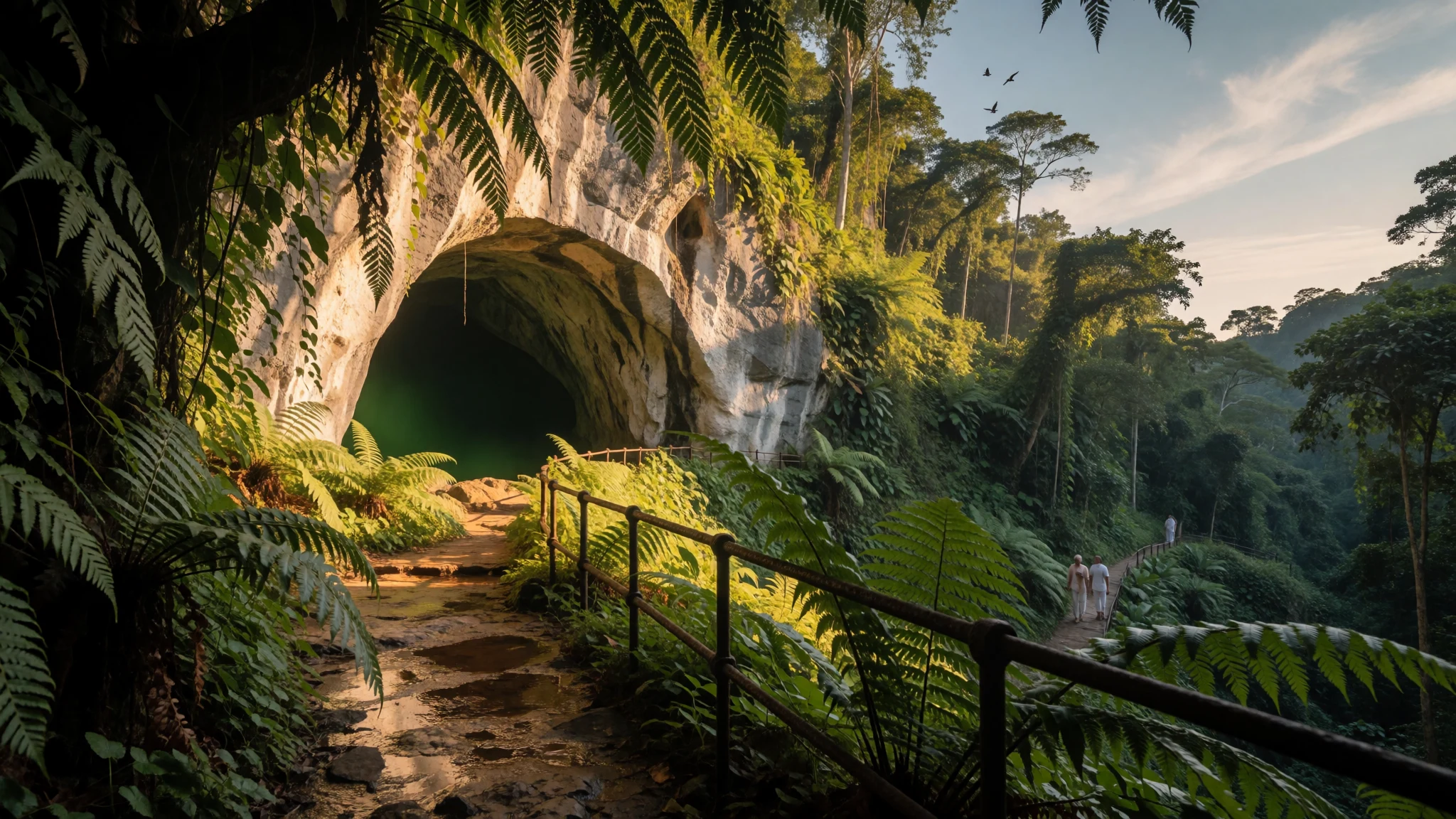
Río Camuy Caves open a window onto a vast limestone underworld of sinkholes, stalactites and a hidden river beneath Puerto Rico's green northern hills.
The place
Río Camuy Caves lie in the limestone hills of north-western Puerto Rico, a territory of the United States. The national park that protects them spreads across the municipalities of Camuy, Hatillo and Lares, although the main entrance is in the Quebrada area of Camuy. Beneath the farmland, the Río Camuy has spent an immense span of time dissolving rock, leaving a network of galleries, sinkholes and flowing underground channels. Surveyors have so far mapped 220 caves with 17 entrances, and cave specialists suspect that is only a fraction of the whole, with many more still unmapped. Visitors see just one small corner. The park was established in 1987 and offers guided visits to a few caves and sinkholes, reached through humid tropical forest. Above ground the country is hilly, green and quiet, a long way from the beach image that dominates most pictures of Puerto Rico. Inside, the air is cooler than outside, water drips constantly and the ground is often wet underfoot. The park is run by the island's national parks authority, and its website, http://www.parquesnacionalespr.com/, is the place to check opening days, ticketing and which caves are currently open, because access has changed more than once after storm damage. Expect school groups and family crowds at weekends. A visit here is more about scale, atmosphere and sound than about a long hike.
Its story
Río Camuy Caves entered the wider world's notice in 1958, when outside explorers 'discovered' the system. The quotation marks matter, because archaeological evidence suggests that the Taíno, the first inhabitants of Puerto Rico, explored these caves centuries earlier, and local people knew the surrounding land long before any formal survey. The best-known account of the modern exploration is Discovery at the Río Camuy, a book by Russell and Jeanne Gurnee published in 1973. It helped turn a remote stretch of karst country, riddled with holes and streams, into a place that ordinary travellers could imagine visiting. The national park followed in 1987, built around the handful of caves and sinkholes that could be opened safely to the public. Most of the system remains wild passage, entered only by trained cavers, and mapping continues. The count of known caves and entrances has grown with each survey, and specialists expect further discoveries. Recent years have been shaped by weather. A destructive hurricane struck Puerto Rico and left the park closed for extensive repairs. It reopened, then shut again after a second storm, before welcoming visitors back. That history is worth keeping in mind when planning, since the park's status can change, and the official website is the only reliable guide to what is open on a given day.
What to see
- Cueva Clara — Main park area, Quebrada, Camuy
Cueva Clara, the 'Bright Cave', is among the caves reached on the guided visit. Daylight pours through its wide entrance, so the first chamber is lit by green, filtered light rather than torches. Stalactites hang overhead, and the contrast between the bright mouth and the dark interior makes it a rewarding place for photographs.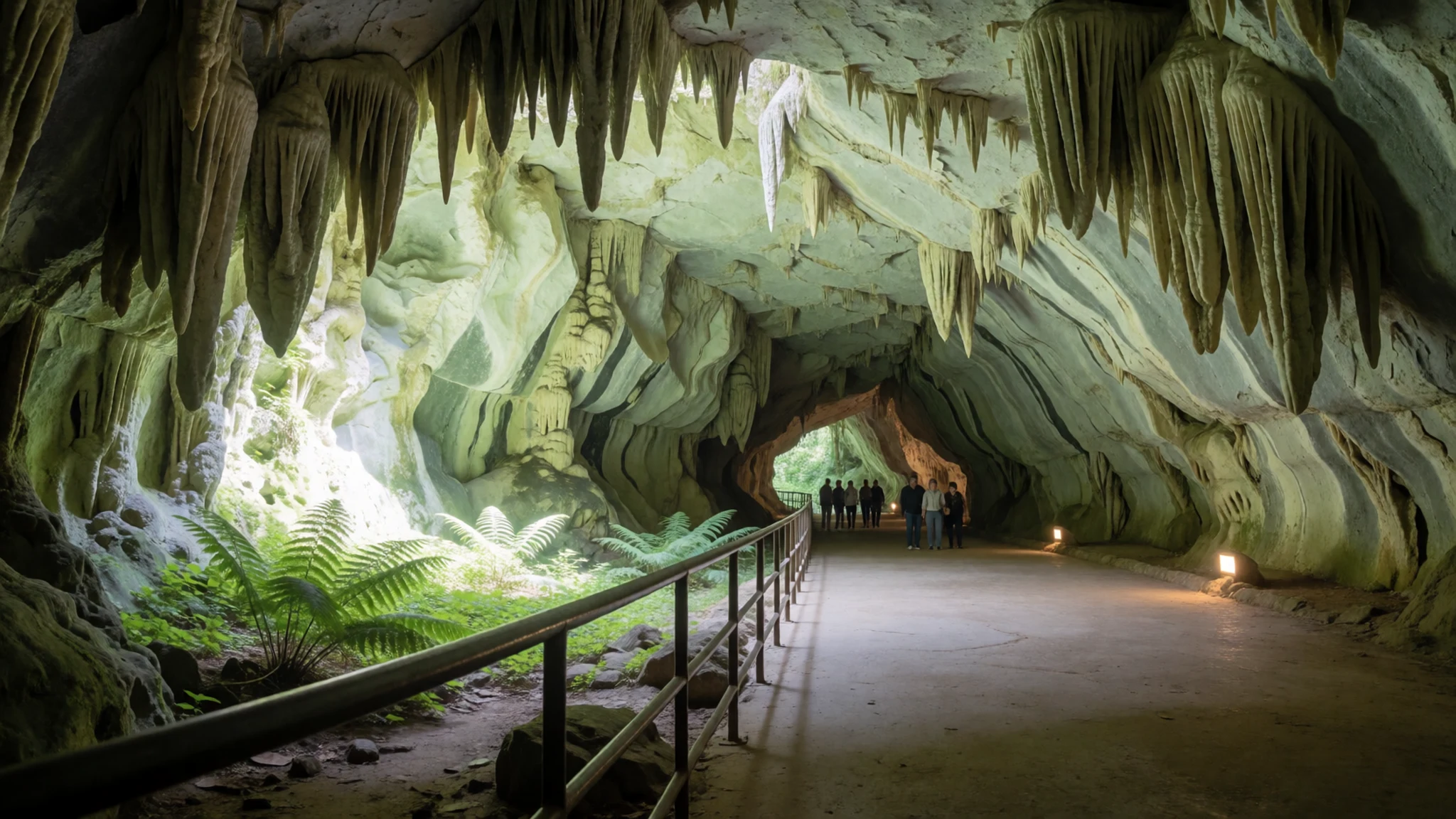
- The underground river — Inside the cave system, Camuy
The Río Camuy itself runs through the system, and in places its channel can be seen from viewpoints inside the caves. Rather than a clear, gentle stream, expect dark water moving through rock, with its sound echoing off the walls. It is the force that carved the whole network, and it shows that the caves are still being shaped.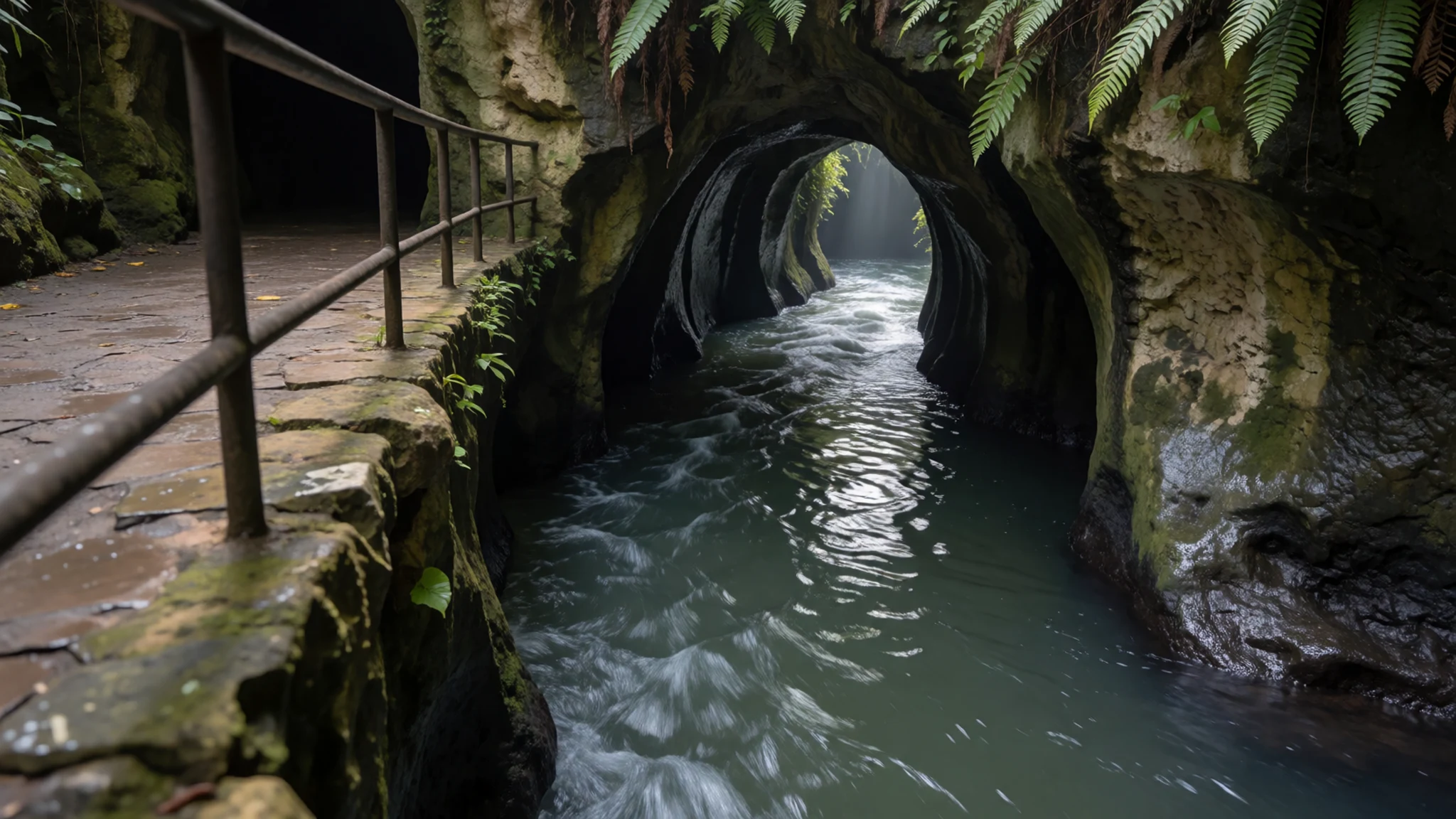
- Stalactite chambers — Guided cave route, Camuy
Slow-dripping water has built stalactites and other limestone formations in the chambers open to visitors. The formations are wet, pale and often glistening under the lights. Guides explain how they form drop by drop, and the pace of a tour gives time to look closely at textures that photographs rarely capture well.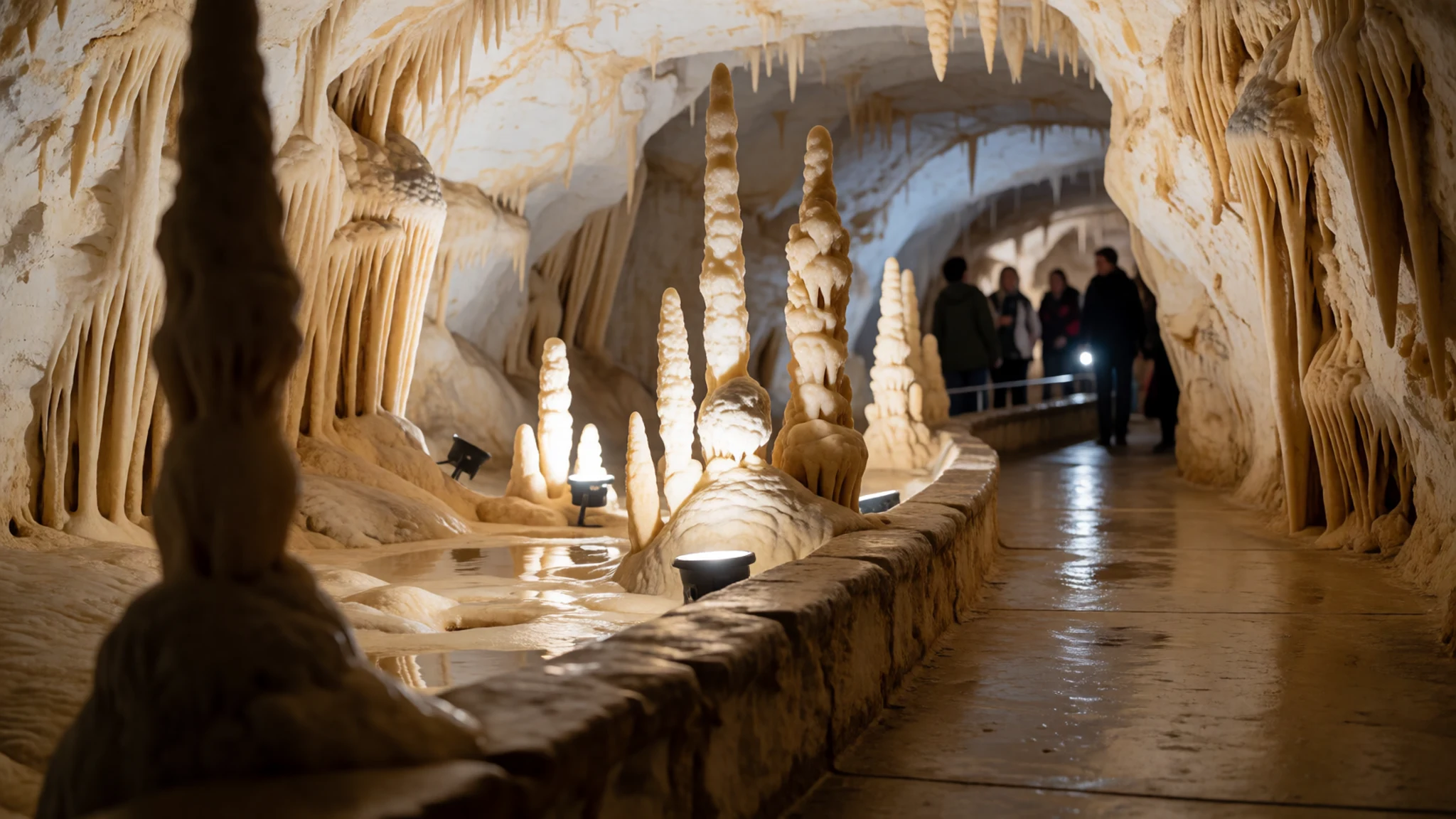
- The sinkholes — Park grounds, between Camuy and Lares
Sinkholes are collapsed cave roofs, and the park's open ones are deep green bowls where trees and ferns cling to the walls above shadowed floors. They show how the landscape sits over hollow ground. Viewpoints at the rim give the best sense of depth, and they are particularly atmospheric after rain.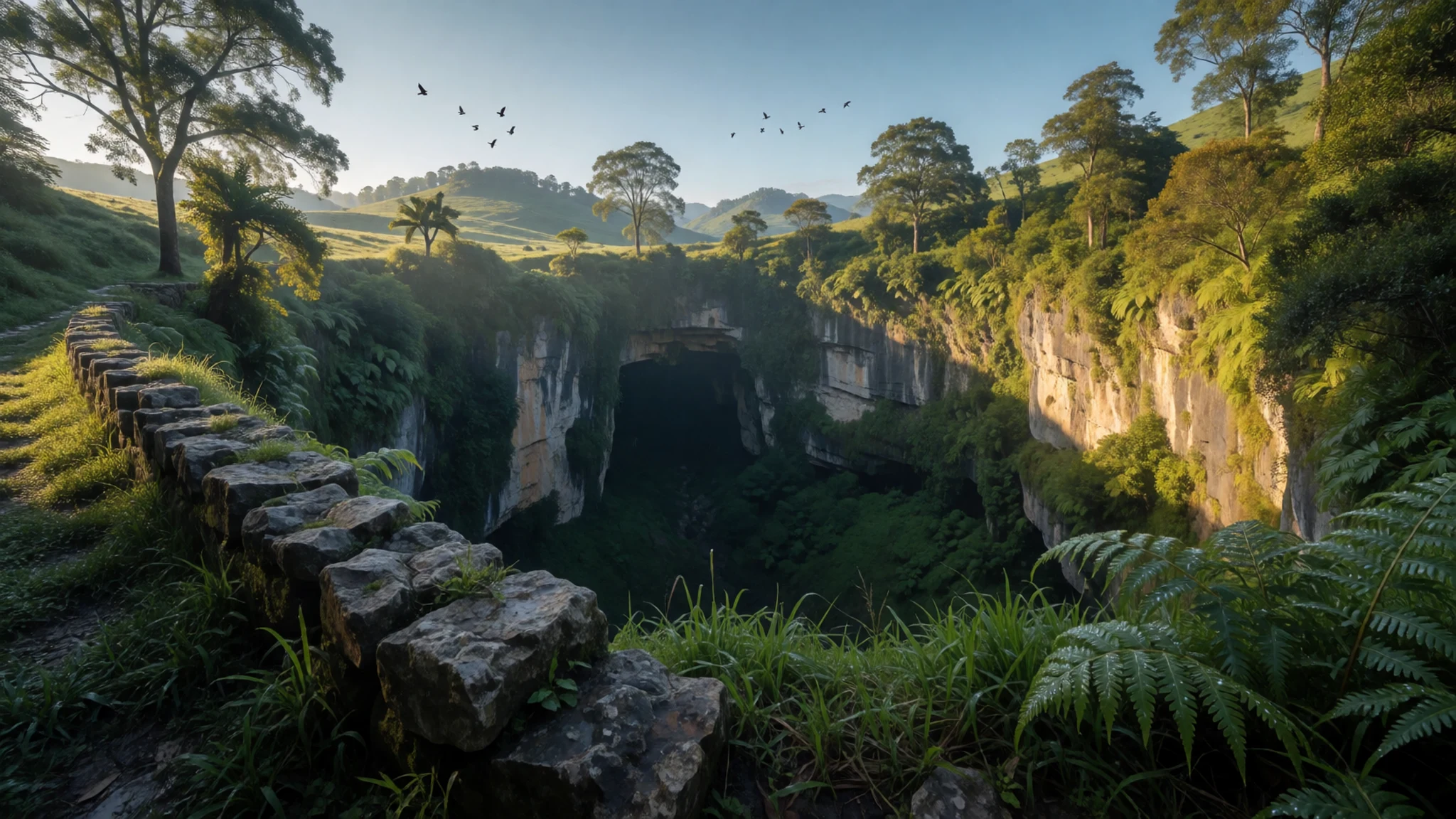
- The forest approach — Quebrada, Camuy
The route into the caves passes through humid tropical forest of tall trees, tangled vines and constant bird and insect noise. It is worth slowing down here instead of heading straight underground. The shade is welcome, and the surrounding greenery explains why this northern karst belt looks so different from the island's coastal plains.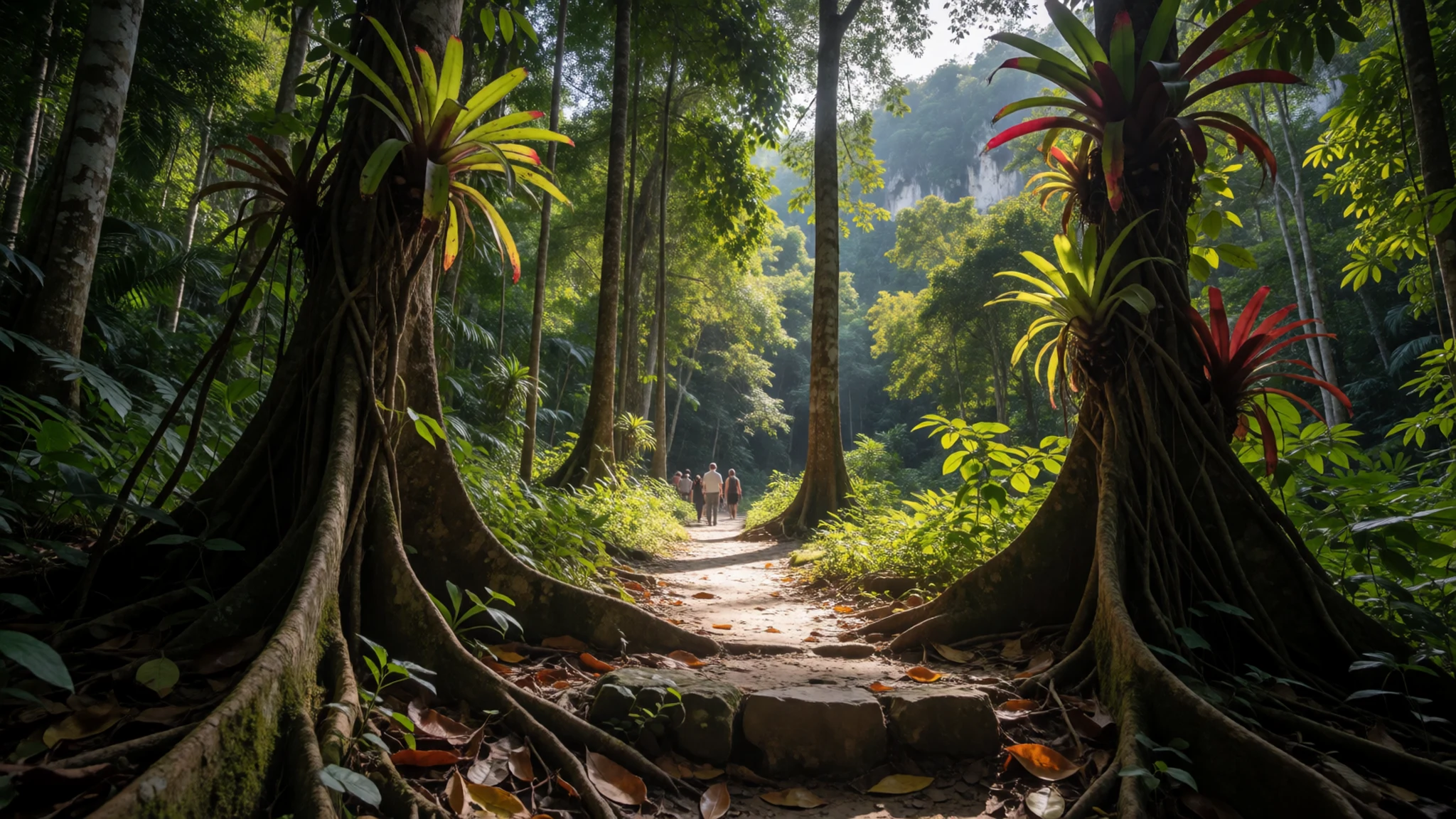
Culture
Río Camuy Caves sit in a part of Puerto Rico where daily life is social, warm and unhurried. Puerto Rican culture blends Spanish, African and American influences, and the Taíno, the island's first people, remain part of its shared memory, including their link to these caves. In towns around Camuy and Lares, neighbours chat outdoors in the evening, plazas are the centre of community life, and a polite greeting goes a long way. People generally stand closer together when talking than visitors from the UK or India may expect, and a friendly kiss on one cheek is a common greeting between a woman and anyone she knows. Politics, particularly the island's relationship with the United States, is a passionate subject and is best left for locals to raise. Service in restaurants can be slow, and the pace is part of the experience rather than a fault. The caves themselves are treated as protected natural heritage, managed by the island's parks authority, and guides are proud of their knowledge of the geology and history. Listening to their explanations, and following the routes they set, is the respectful way to enjoy the place. At the caves, keep to the marked paths and never touch the stalactites or other formations, because oils from skin can stop them growing.
What to wear
Río Camuy Caves are in a place with no single national costume worn day to day, though Puerto Rico has traditional dress that appears at festivals and folk performances. Men may wear a white guayabera shirt with a straw hat called a pava, long associated with the rural jíbaro farmers of the interior, while women's festival dress often features full, ruffled skirts in bright cotton. These are seen mainly at cultural events and dance shows rather than in the caves' neighbourhood. Everyday clothing in the northern towns is casual and tropical: light cotton or synthetic T-shirts, shorts, sundresses, jeans for evenings and plenty of sports shoes. Dress is relaxed, and no special modesty rules apply at the park. For a visit, wear clothes that dry fast and that you do not mind getting damp, as humidity is high and drips are constant inside. Closed shoes with a good grip are essential, because cave paths and steps can be slick and uneven; flip-flops and smooth-soled sandals are a poor choice. Bring a light rain jacket or poncho, as showers can arrive suddenly in the hills. A hat and sun protection help on the outdoor stretches, and a thin layer is useful because it feels cooler underground than outside.
What to eat
- Arroz con habichuelas — Family-run eateries in Camuy and Hatillo
Rice with stewed beans is the everyday base of Puerto Rican meals, usually served with pork or chicken. It is rarely spicy, and the flavour comes from a savoury sofrito sauce. Look for it in family-run eateries and town-square restaurants around Camuy and Hatillo.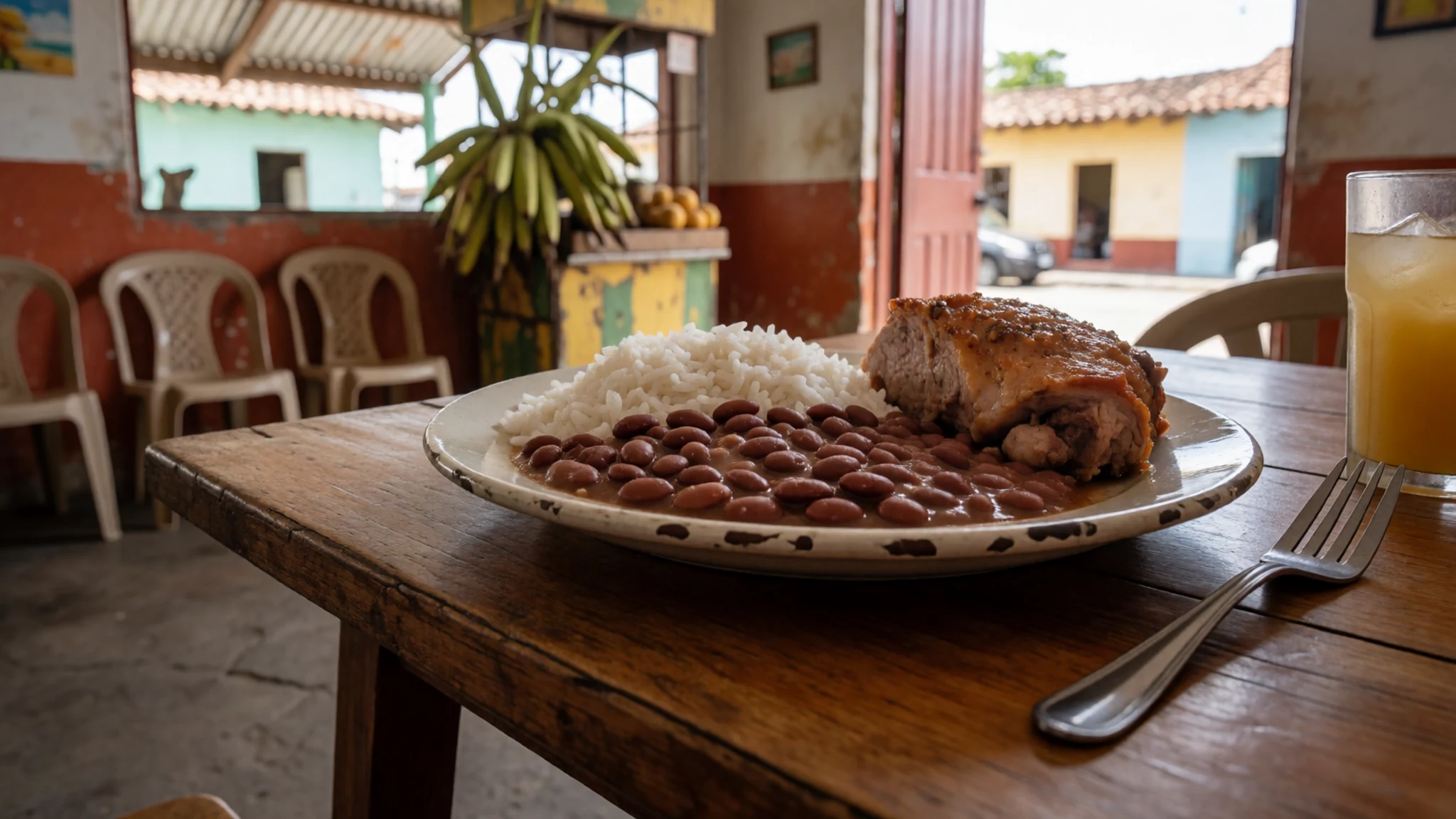
- Lechón asado — Roadside stalls and town-square restaurants on the northern roads
Roast pork is central to comida criolla, cooked slowly until the skin turns crisp and the meat tender. It is a celebration dish found at roadside stalls and festive occasions. Ask locally for where it is cooked on the day, since good places change often.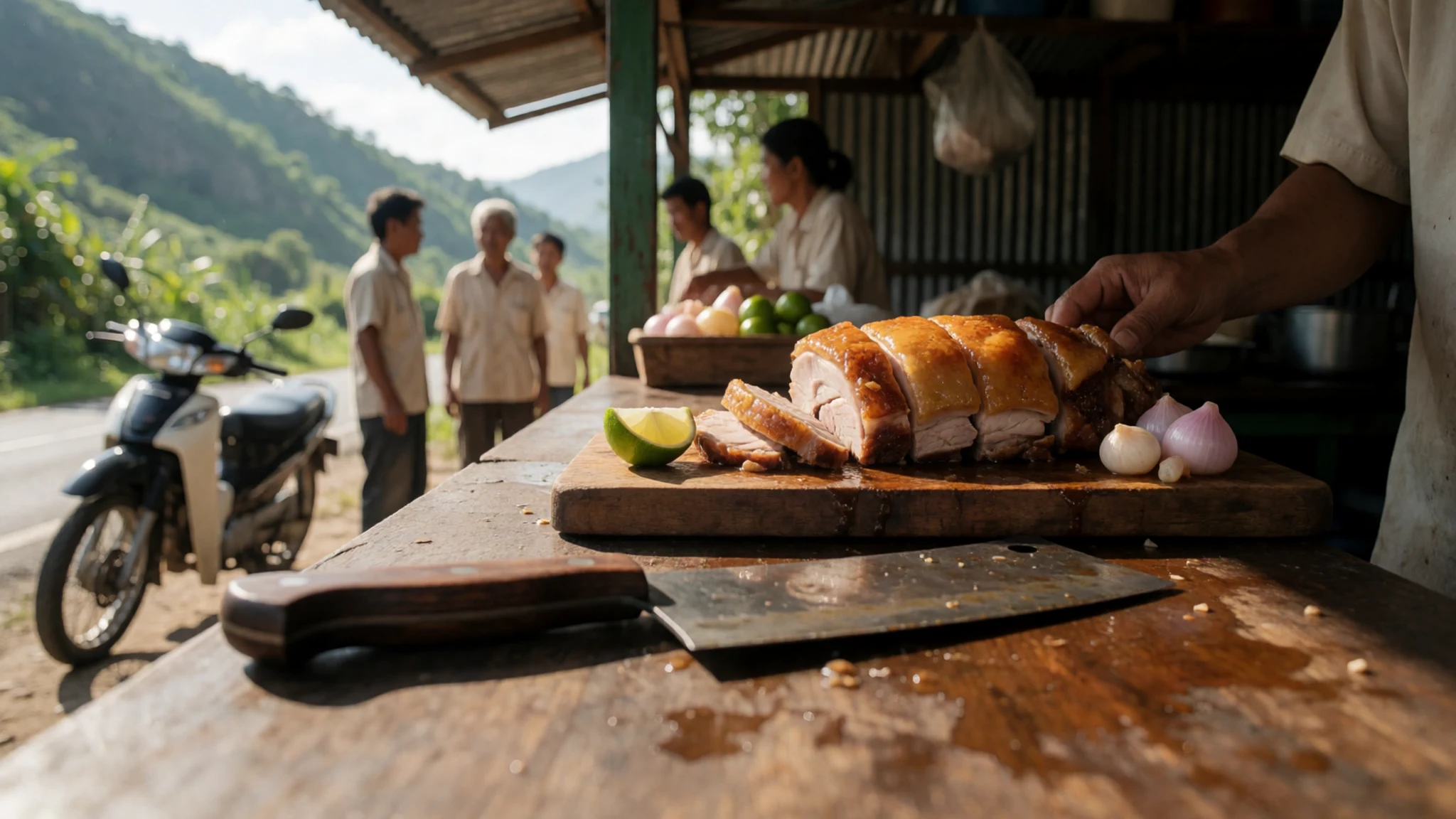
- Tostones — Casual restaurants and kiosks near the park
Green plantains are sliced, fried, flattened and fried again to make crisp, salty discs, often served beside meat or fish or with a garlic dip. Plantains are a staple starch on the island. Most casual restaurants in the area offer them as a side. - Mofongo — Sit-down restaurants along the north-western coast
Mofongo is mashed fried plantain, often mixed with garlic and pork crackling and shaped into a mound, sometimes stuffed with seafood or chicken. It is filling and best shared. Look for it in sit-down restaurants along the north coast, where it is a regular menu item. - Yuca and other tubers — Traditional restaurants around town squares in Lares and Camuy
Cassava, called yuca, is boiled and served with onions and oil, a reminder that plantains share the plate with other tropical roots. It makes a gentler, starchier side dish. Traditional town-square restaurants usually include it among the sides.
Plan it
Best time. Winter and early spring, roughly January to April, is generally the more comfortable stretch for a visit, with less rain in the hills than later in the year. The island is tropical, so expect humidity and sudden showers in any month, and remember that storm damage has closed the park for long periods, so check before travelling.
How long. 1
Getting there. The nearest airports are on the island, and most visitors fly into San Juan, then drive west to Camuy, which is a domestic trip for travellers from the US mainland, with no passport control. A hire car is the easiest way to reach the Quebrada entrance, as public transport to the park is limited.
Budget. mid
Tips
- Check the official website, http://www.parquesnacionalespr.com/, for opening days, ticketing, booking requirements and which caves are open before setting out
- Arrive early, as school groups and weekend families make mid-morning and weekends the busiest times
- Bring water, a rain layer and shoes with a good grip, as the paths are wet and humid
- Carry some cash as well as a card, since small food stalls near rural parks may not take cards
Etiquette
- Stay on marked paths and follow the guides' instructions inside the caves
- Never touch the stalactites or other formations
- Keep voices low in the chambers so the guides can be heard
Nearby
Sources
- Wikidata Q2882515 (CC0)
- Wikipedia: Parque Nacional de las Cavernas del Río Camuy (rev 1382757510) (CC BY-SA 4.0)
- Wikivoyage: Puerto Rico (rev 5415166) (CC BY-SA 4.0)
- Photo: Cueva Clara entrance, Per Aspera (CC0 1.0)
- Photo: Underground river, Oscar Rohena (CC BY 2.5)
- Photo: Camuy, 00627, Norma Arbelo Irizarry (CC BY 3.0)
- Photo: Stalactites, Todd Van Hoosear (CC BY-SA 2.0)
- Photo: Inside the park, viviandnguyen_ (CC BY-SA 2.0)
- Photo: Camuy River postcard, Attilio Moscioni, Frederic Gleach (CC BY-SA 2.0)
- Photo: Cavernas de Camuy, The Eloquent Peasant (CC0 1.0)
- Photo: Cuevas de Camuy, Albarosa Ortiz (CC BY-SA 4.0)


