Redfish Lake
Redfish Lake, United States
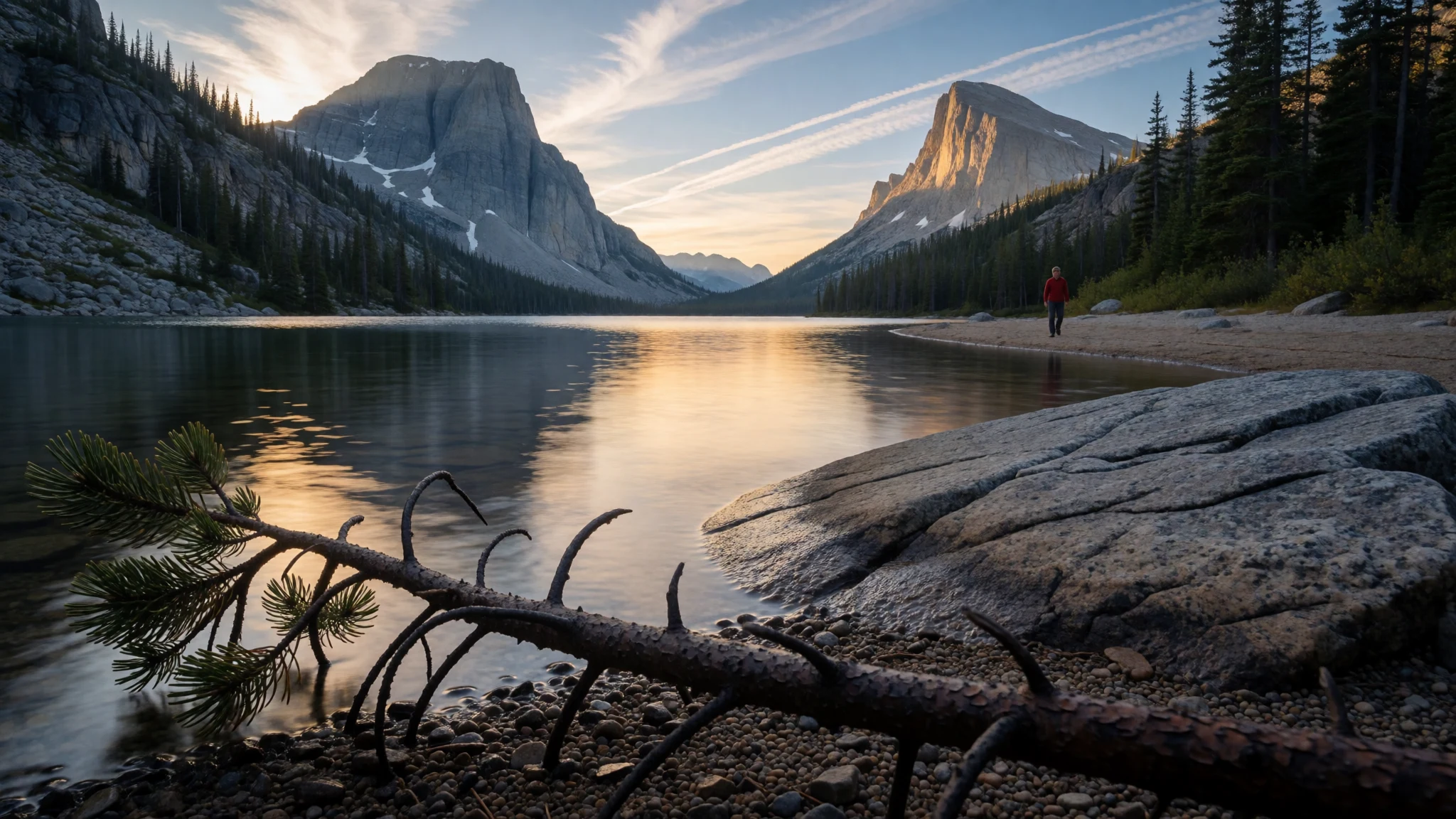
Redfish Lake is a long glacial lake in Idaho, where still morning water mirrors the jagged Sawtooth peaks and the shoreline stays mostly wild.
The place
Redfish Lake lies in Custer County, central Idaho, a short drive south of the small town of Stanley. It is a glacial lake, scooped out by ice and now held in a bowl of granite peaks, and it is the biggest body of water inside the Sawtooth National Recreation Area. The surface sits at about 1,996 m above sea level, so mornings stay cool even in high summer. The lake stretches roughly 7.2 km from end to end but only about 1.2 km across, which gives it the long, narrow look of a fjord, and its deepest point reaches 118 m. At the southern end the skyline is drawn by Mount Heyburn at 3,118 m and Grand Mogul at 2,967 m. On a windless morning their reflections are the picture most people carry home. The US Forest Service looks after the shoreline with a light hand: there are campgrounds, trails and access for boats and swimmers, but the surroundings have been left largely natural. On the north shore, Redfish Lake Lodge runs a marina and a summer ferry that carries walkers and sightseers across to the quieter far side. The water is cold. It peaks at around 17 °C in late July and early August, so swimming is brisk rather than relaxing. In winter the lake freezes over completely and the whole basin goes quiet.
Its story
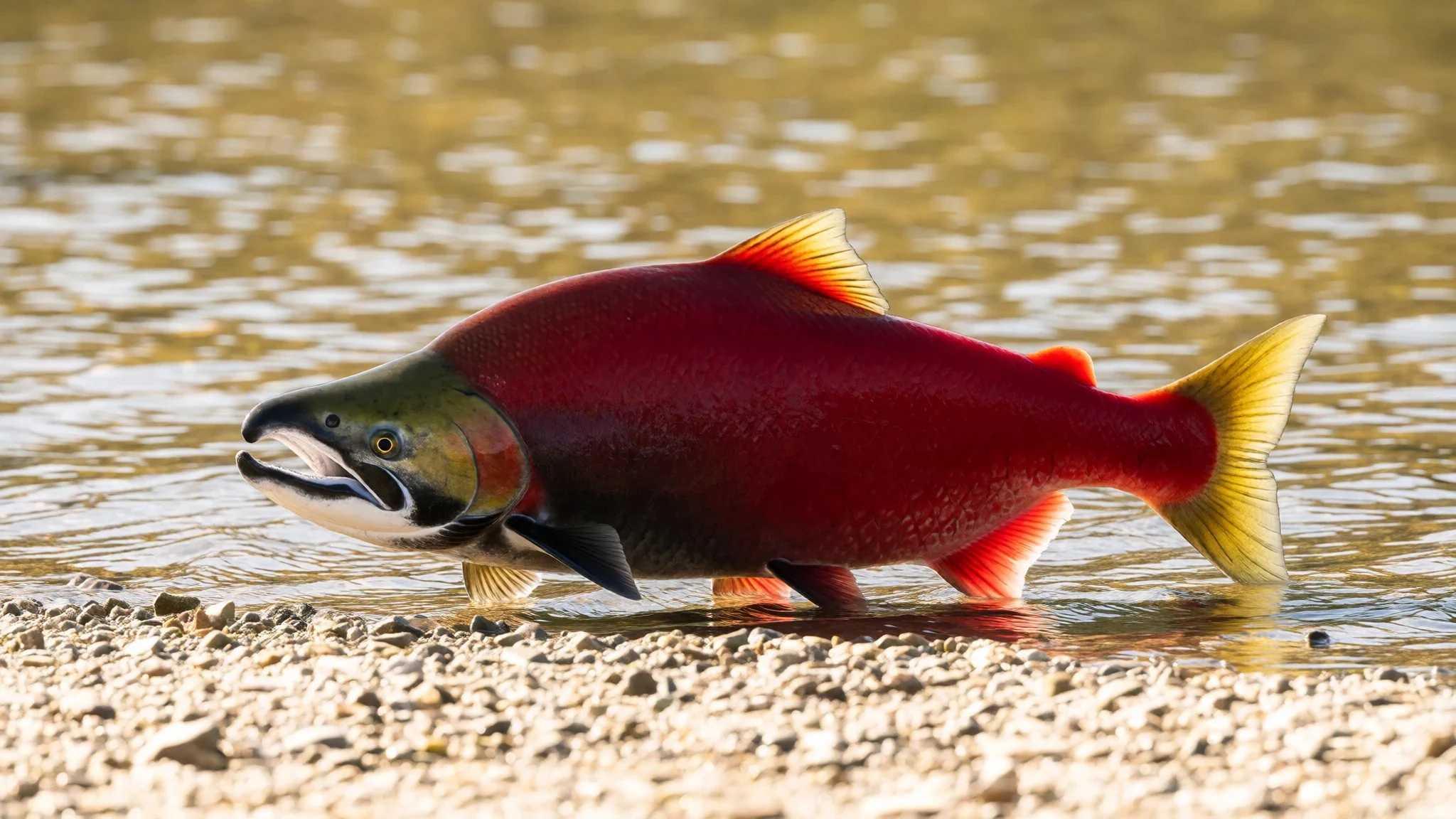
Redfish Lake owes its name to sockeye salmon, which once made the long journey inland from the Pacific to spawn in its waters and turned a vivid red as they did. The same name is carried by Little Redfish Lake close by, and an old archive photograph labels the main lake Big Redfish, a reminder that the name has shifted over time. The basin itself is far older than any name. Glaciers carved the valley, left the water behind and sharpened the granite ridges of the Sawtooth Range that now frame the southern shore. Native peoples, including Shoshone and Bannock families, knew this country as a place to fish and gather seasonally. Settlers, ranchers and miners followed, and the town of Stanley grew as the gateway to the high valley. The salmon story has a harder second half: dams and other pressures on the rivers between the Pacific and Idaho cut the runs sharply, and conservation work to protect the remaining fish continues today. The lake's modern story is one of restraint. The Forest Service has added facilities for hiking, camping and water sports, but has kept the shoreline largely natural, which is why the place still reads as wilderness with a marina at one end rather than a resort with a view.
What to see
- Redfish Lake at sunrise — North shore of Redfish Lake
The long, narrow lake is calmest in the early morning, when the water often holds a mirror image of the peaks above the southern shore. Sit on the shore near the lodge or walk a short stretch of trail with a flask of tea. By mid-morning boats and swimmers have broken the surface.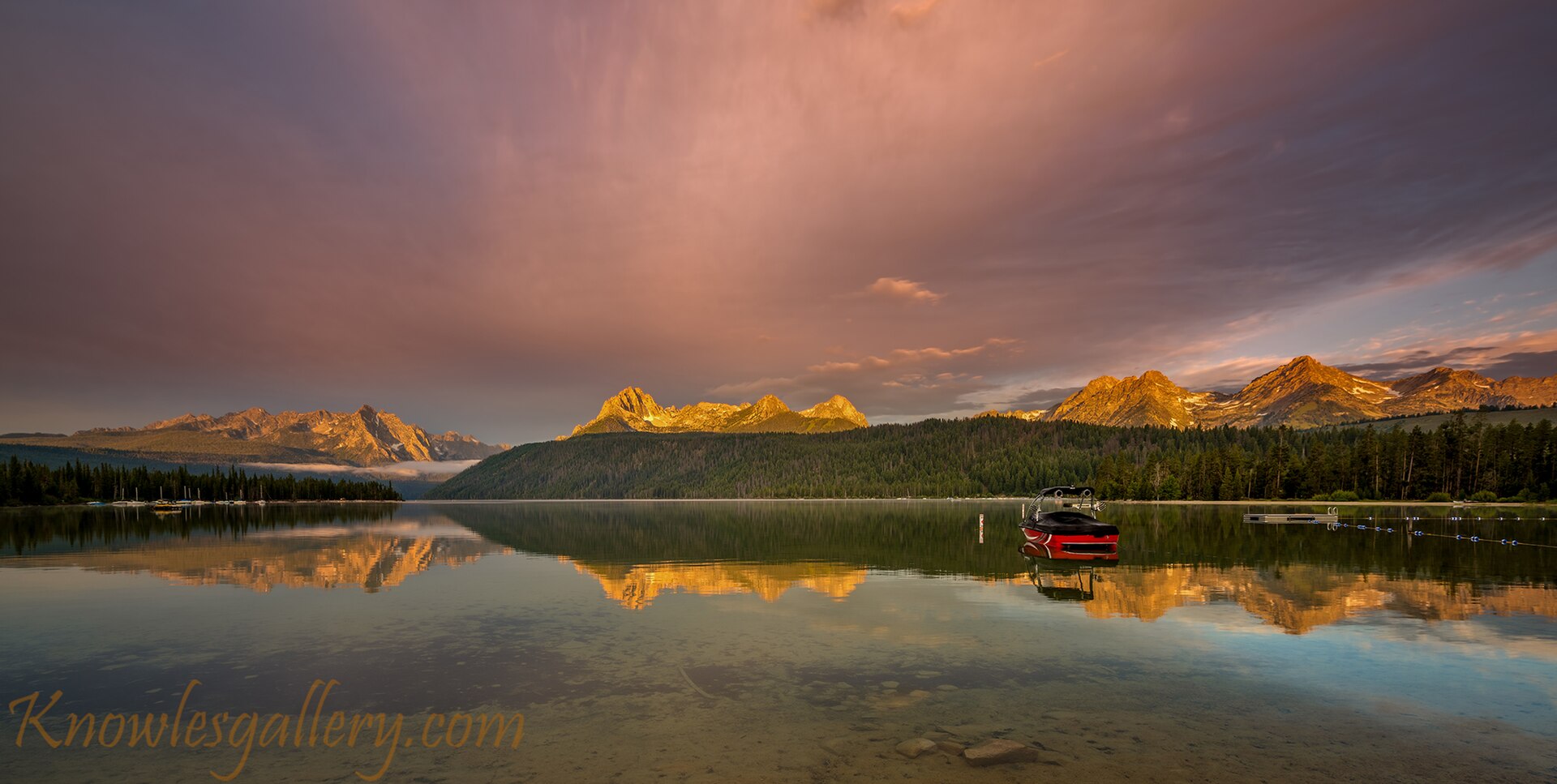
- Redfish Lake Lodge and the ferry — North shore marina
On the north shore, the lodge and its marina form the social centre of the lake in summer. A seasonal ferry crosses to the far side, handy for walkers who want trailheads without paddling or hiking the whole shore. Check the official lodge or Forest Service pages for running dates, as service depends on the season.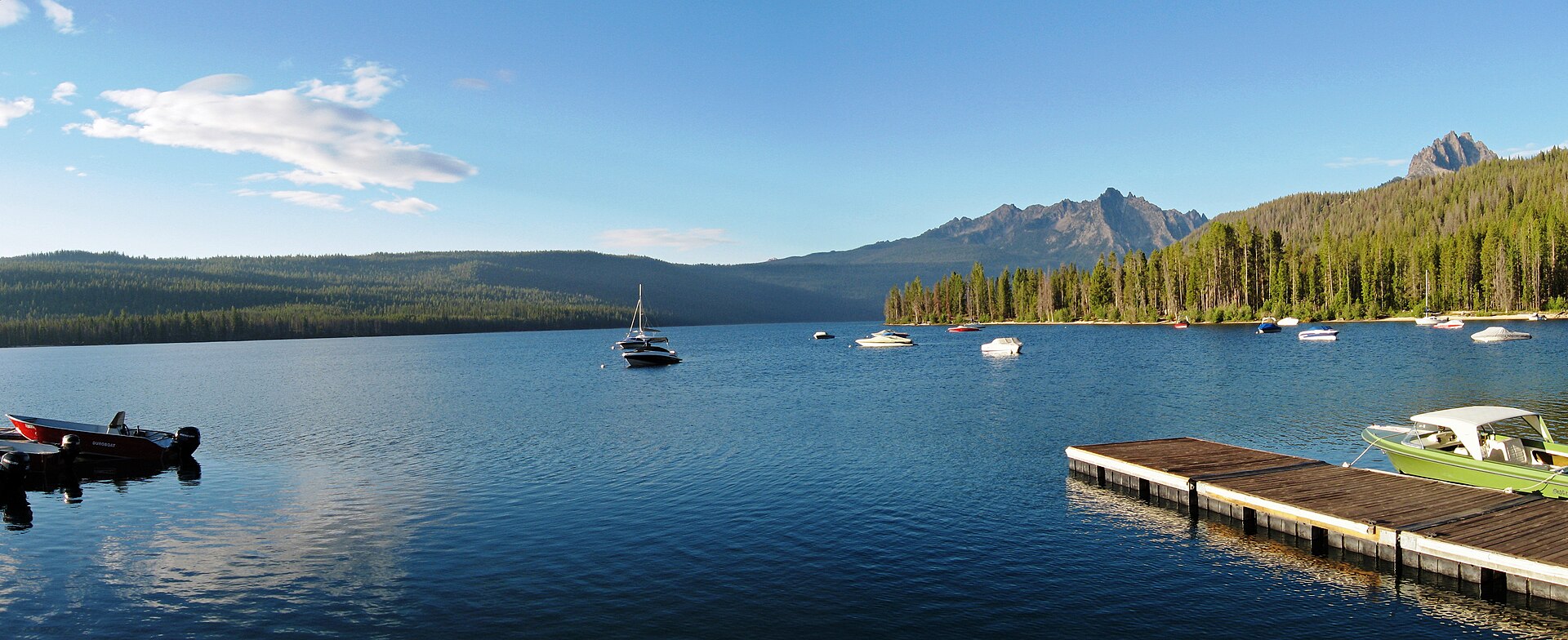
- Mount Heyburn and Grand Mogul — South end of Redfish Lake
Mount Heyburn, at 3,118 m, and Grand Mogul, at 2,967 m, frame the southern end of the lake. Their granite faces catch the first light, and a boat or ferry trip towards the south shore brings them closer. Hikers can follow trails beyond for longer views into the Sawtooth Range.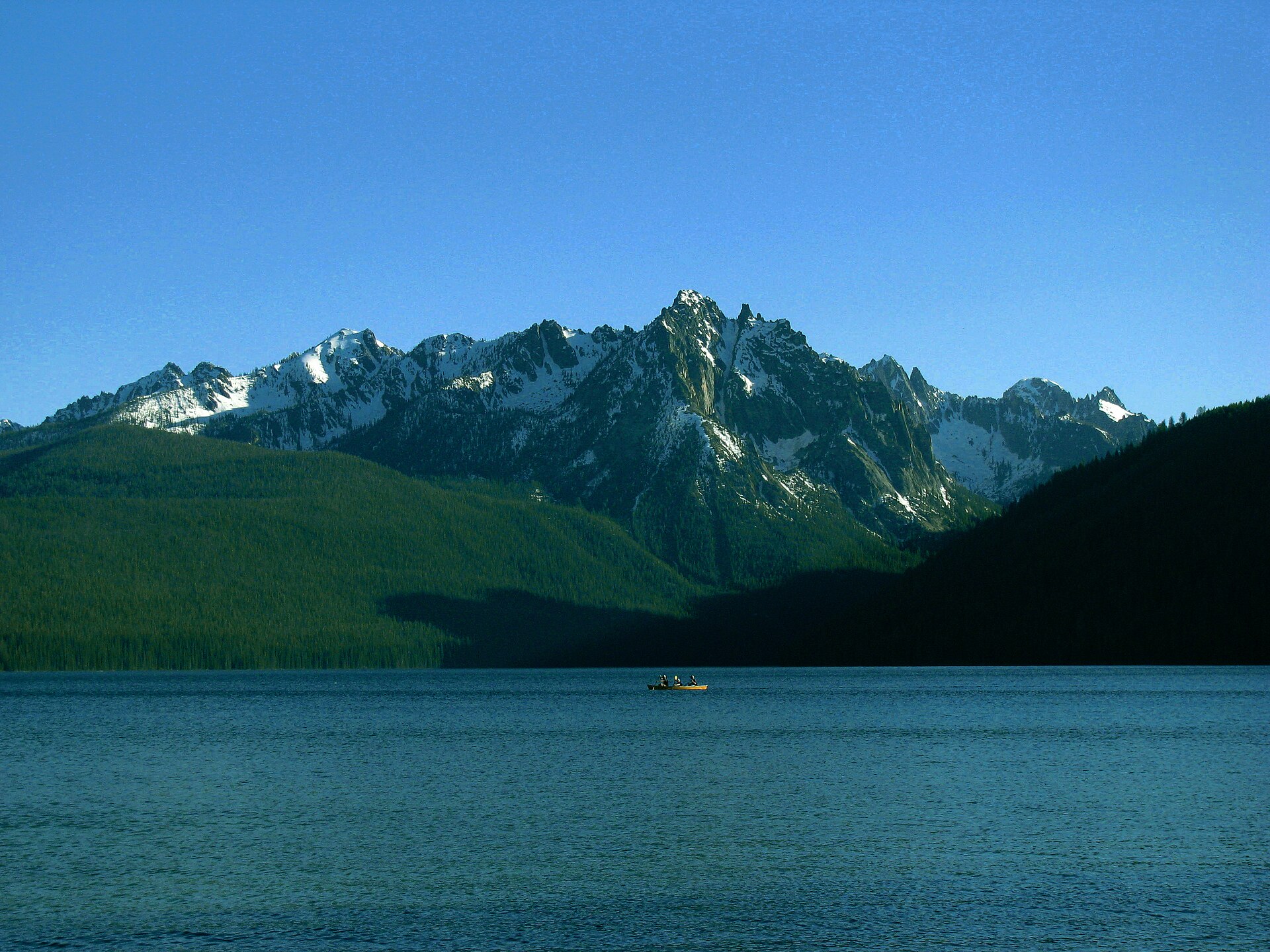
- Little Redfish Lake — North-west of Redfish Lake
Little Redfish Lake lies close by and has a quieter feel, with the same Sawtooth skyline as a backdrop. Photographers like it at dawn, when light spills over the ridge. It makes a sensible short detour for anyone who finds the main lake busy on a summer weekend.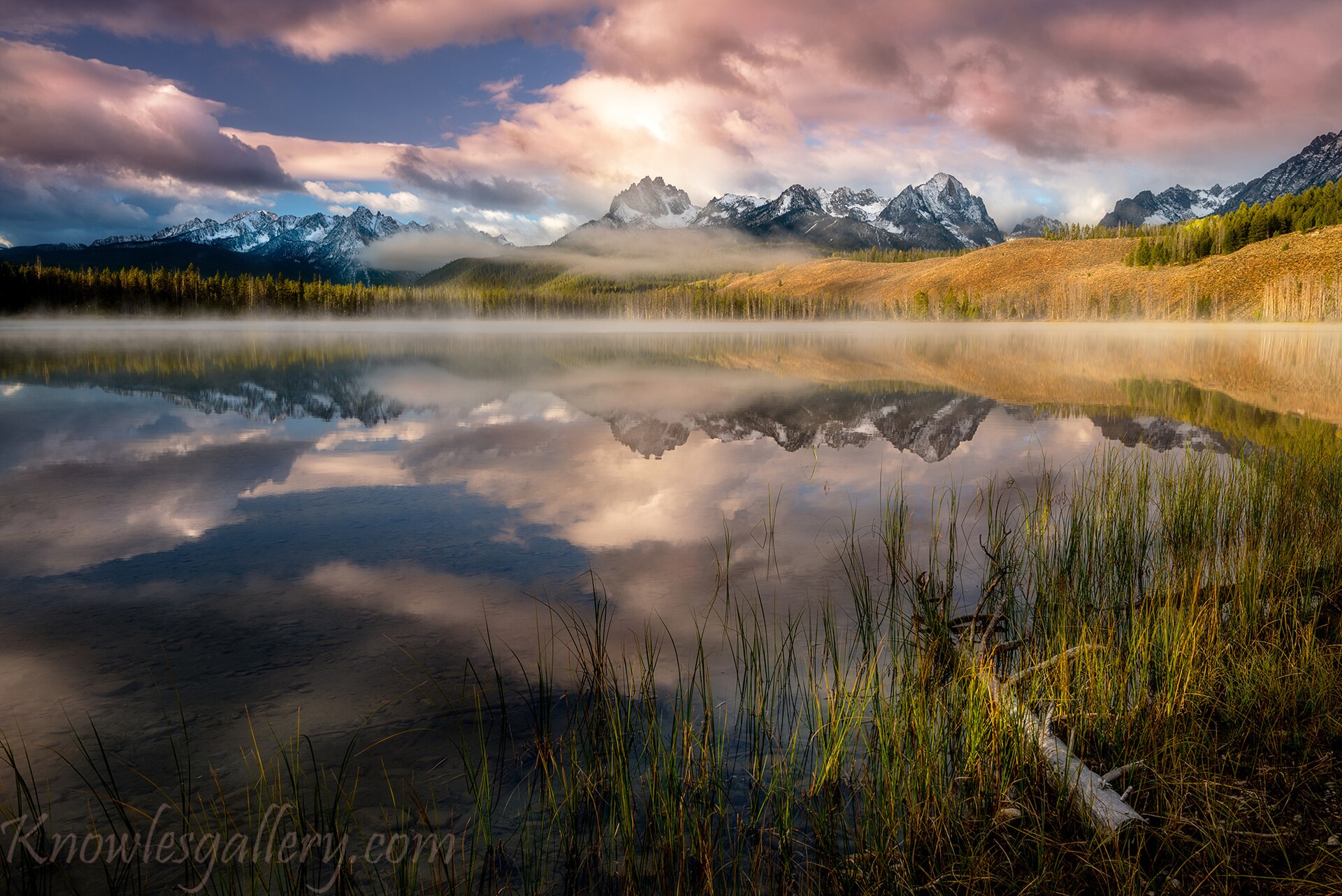
- Stanley — Just north of the lake
The small town of Stanley sits just north of the lake and works as the practical base for the area, with a handful of cafes, shops, lodgings and outfitters set against the same mountain skyline. Stock up on food and petrol here before heading south, and ask locals about trail conditions.
Culture
Redfish Lake sits in rural Idaho, where manners are relaxed and a little more familiar than in many American places. Strangers on quiet roads often lift a hand to passing drivers, and the polite response is to wave back. Conversation turns easily to fishing, weather and trail conditions, and locals are usually generous with advice for newcomers. Idahoans are proud of their potato-growing heritage, though a stream of spud jokes wears thin quickly, so asking about the trout or the mountains goes down better. Religion is best left alone with people you do not know well: friction between Mormons and non-Mormons has a long history in the state, and some people still find it sensitive. At the lake itself, culture means outdoor habits. The Forest Service manages the shoreline for hiking, camping and water sports while keeping the landscape largely natural, and regulars expect visitors to share trails and beaches quietly, take rubbish away and respect other campers' space after dark. The wider valley was home to Native peoples long before roads arrived, and that history is part of the ground. Wave back to locals on the road, keep voices low around campsites and the shoreline, and carry every scrap of rubbish out with you.
What to wear
Redfish Lake has no single costume, but the region's Native peoples, among them Shoshone and Bannock communities, have long worn tanned hide garments decorated with beadwork, and ceremonial regalia is still made and worn at powwows and gatherings elsewhere in Idaho. Settler-era work clothes such as wool shirts, denim and leather boots became the everyday look of ranch and mining country. Today people around the lake dress for the outdoors: fleece, quick-dry shirts, jeans or hiking trousers, baseball caps and sturdy boots or trail shoes. Flannel shirts are still common in Stanley's cafes. Nobody expects smart clothing, and there are no dress codes at beaches or trailheads. Visitors should plan for altitude, about 1,996 m, where mornings and evenings are cold even in summer and the sun is strong by midday. Pack layers, a windproof jacket, a sun hat, sunglasses and sunscreen. Swimwear suits the beach, but the water tops out near 17 °C, so a quick-dry towel helps. Hiking boots or grippy trail shoes matter more than style on granite and loose gravel, and shoes that cope with a wet dock are useful if the ferry is part of the plan.
What to eat
- Idaho rainbow trout — Lodge dining rooms and cafes in Stanley
Rainbow trout is the state's best-known fish dish, usually pan-fried or grilled and served with lemon and potatoes. It suits a day spent on the water. Look for it on menus in lodge dining rooms, in Stanley's cafes and at small restaurants across the state. - Famous potatoes — Any diner or cafe in Stanley or on the road from Boise
Idaho potatoes arrive baked, mashed, fried or as hash browns at breakfast. A large baked potato with butter and toppings is a plain, filling meal after a long hike. Ordering one is easy, since almost every diner and cafe in the state offers some version. - Fry sauce — Burger counters and casual cafes, more often in southern Idaho
Fry sauce is ketchup mixed with mayonnaise, served as a dip for French fries. It is more common in southern Idaho than in the mountains, but burger counters and cafes may keep it on hand. Think of it as a mild, pink cousin of tartare sauce. - Idaho ice cream potato — Dessert menus in downtown Boise
Created in Boise in the 1940s, this joke dessert is vanilla ice cream dusted with cocoa to pass as a baked potato, then dressed with cream, coconut and chocolate crumbs in place of the usual toppings. Best sought on dessert menus in Boise, not at the lake. - Huckleberry pie — Cafes and bakeries in mountain towns such as Stanley
Wild huckleberries, a tart mountain berry, turn up in summer pies, pancakes and jam. Cafes in small mountain towns like Stanley often stock them in season, though availability varies, so ask. The flavour is sharp and slightly floral, a welcome break from trail snacks.
Plan it
Best time. July to September. The lake is at its warmest in late July and early August, at about 17 °C at best, and summer services such as the ferry run then. June and September are quieter but cooler at this altitude, and in winter the lake freezes over.
How long. 2–3
Getting there. Fly to Boise Airport (BOI), the main airport in southern Idaho, then drive north to Stanley and on to the lake; Friedman Memorial Airport (SUN) near Sun Valley is a seasonal alternative. There are no direct international flights into Idaho, so overseas visitors connect through another US airport. The last leg is by road, and a hired car is the practical choice.
Budget. mid
Tips
- Book campsites and lodge rooms well ahead for July and August, and check the official Forest Service and lodge pages for current details
- Start early for calm water, clearer views and easier parking
- Carry layers and a sun hat, as the lake sits at about 1,996 m
- Buy food and petrol in Stanley, and carry both a card and some cash for small shops
- Check ferry running dates before planning a far-shore hike
Etiquette
- Wave back when locals wave on rural roads
- Take all rubbish away with you and keep campsites tidy
- Share trails and beaches quietly, especially early and late in the day
Nearby
Sources
- Wikidata Q7305853 (CC0)
- Wikipedia: Redfish Lake (rev 1367843709) (CC BY-SA 4.0)
- Wikivoyage: Idaho (rev 5436032) (CC BY-SA 4.0)
- Photo: Redfish Lake and the Grand Mogul, Karthikc123 (CC BY 3.0)
- Photo: Redfish Lake from a drone, HalcyonToast (CC BY-SA 4.0)
- Photo: Physical location map of Western United States, Alexrk2 (CC BY 3.0)
- Photo: Boats in Redfish Lake, Fredlyfish4 (CC BY-SA 4.0)
- Photo: Big Red Fish Lake, WaterArchives.org (CC BY-SA 2.0)
- Photo: Boat Beneath the Mountains, J. Crane (Public domain)
- Photo: Boat on Redfish Lake as the morning light hits the high mountain tops, Charles Knowles (CC BY 2.5)
- Photo: Dramatic sunrise over Little Redfish Lake, Charles Knowles (CC BY 2.5)


Wildlife
- Sockeye salmon (animal)
The sockeye is a salmon that spends much of its life in the sea, swims a long way inland to breed, and turns bright red as it does. Redfish Lake is named after it, because these fish once made that journey into its waters. Ask a local guide whether, where and when you might spot one. If you are lucky, watch quietly from a respectful distance, let the fish go about their business, and never feed them.