Rabaul
Rabaul, Papua New Guinea
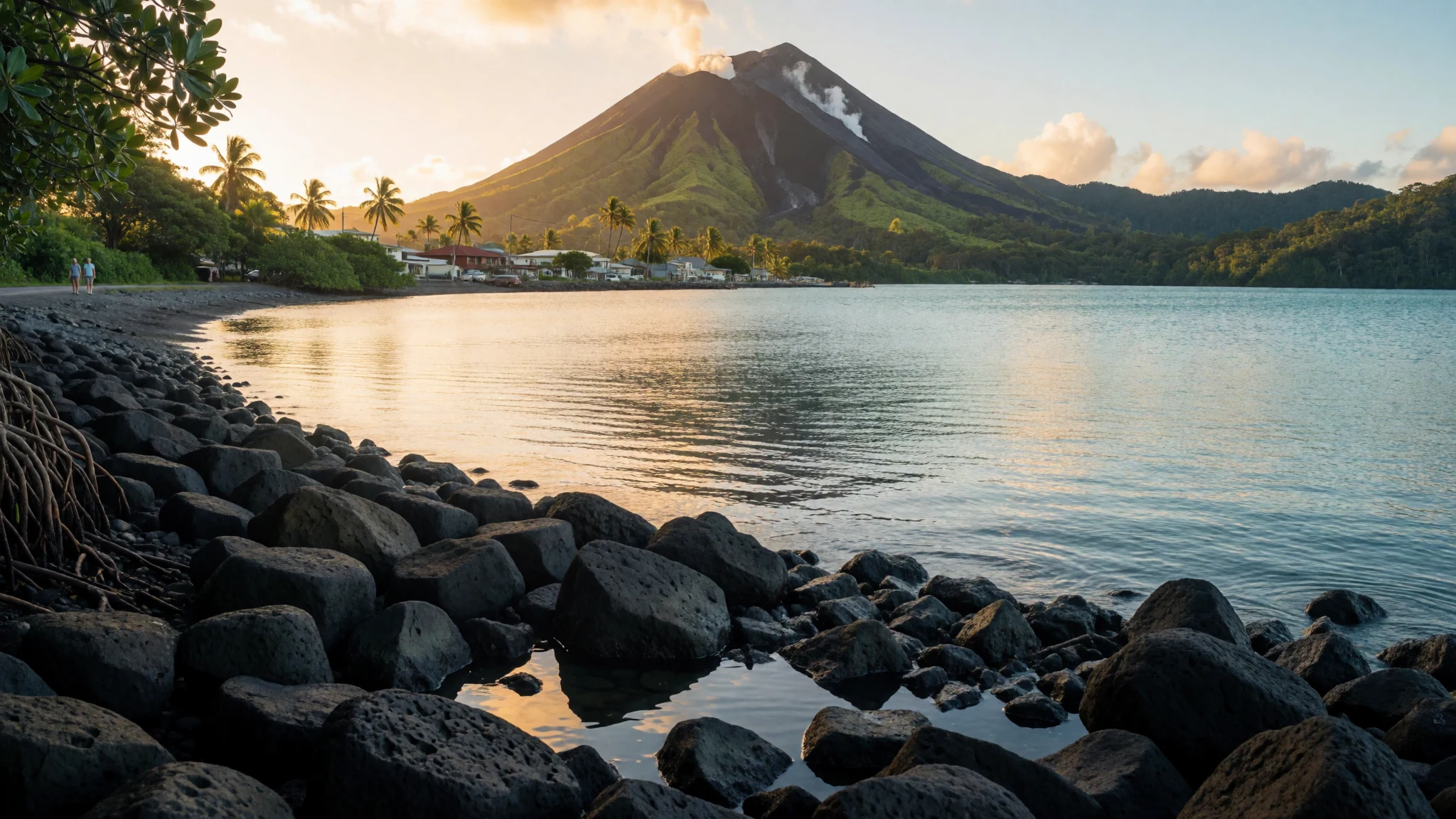
Rabaul is a Pacific harbour town beside active volcanoes, where wartime tunnels, ash-damaged streets and steaming ground tell a story of repeated rebuilding.
The place
Rabaul is a township in East New Britain province, Papua New Guinea, on the island of New Britain, about 600 km east of the main island of New Guinea. It stands about 4 m above sea level on the rim of a flooded caldera, and its deep harbour is really a drowned volcanic crater. The population today is about 7,000, a fraction of what a provincial capital would once have held. In 1994 vents beside the harbour erupted and ash fell across the town; the weight of it brought down around 80% of the buildings, and the airport was lost as well. The provincial government moved to Kokopo, about 20 km away, and Rabaul has been quieter ever since. What remains feels partly like a working port and partly like a town paused mid-sentence: a market, a few shops and guesthouses, broad streets laid out in the German era, and ruined buildings left where the ash found them. Tavurvur, the cone across the bay, still steams and now and then erupts, so the skyline never feels entirely settled. The climate is hot, humid and wet in every month. Rabaul suits people who care about volcanoes, wartime history, diving and the unhurried pace of a place that has rebuilt itself more than once. It is not polished tourism: facilities are basic, services can be patchy, and getting around takes patience.
Its story
Rabaul has always lived with its volcanoes. An eruption in 1878 raised a new cone in the harbour, before any town stood there, and the date is still the one used for the settlement's beginnings. Germany governed the region from 1884, and in 1905 Rabaul was chosen as the capital of German New Guinea. Offices, the district court, a hospital, customs and postal services were moved here in 1910 from Herbertshöhe, today's Kokopo, under Governor Albert Hahl. The name means mangrove in Kuanua, the local language, because part of the new town was built on reclaimed mangrove swamp. Early in the First World War, Australian volunteer forces took the town from the German garrison, and in 1920 Australia received the territory as a League of Nations mandate, with Rabaul as its capital. Another eruption destroyed much of the town in 1937. Japan captured Rabaul in 1942 and turned it into its main military and naval base in the South Pacific, digging a huge network of tunnels into the hills around the harbour. After the war the town was rebuilt once more, only to be overwhelmed by the 1994 eruption. This time the volcano observatory's warnings meant that few people died, though the capital moved to Kokopo and the old centre never recovered its former role. Layers of colonial, wartime and volcanic history lie almost on the surface here.
What to see
- Mount Tavurvur and the hot springs — Southeast shore of Blanche Bay
Mount Tavurvur is the cone that did much of the damage in 1994, and the road ends at its base. Visitors pay at a car park, look over the ash-covered slopes and walk to nearby hot springs. The water is dangerously hot, so keep to the edges. Follow local guidance on volcanic activity.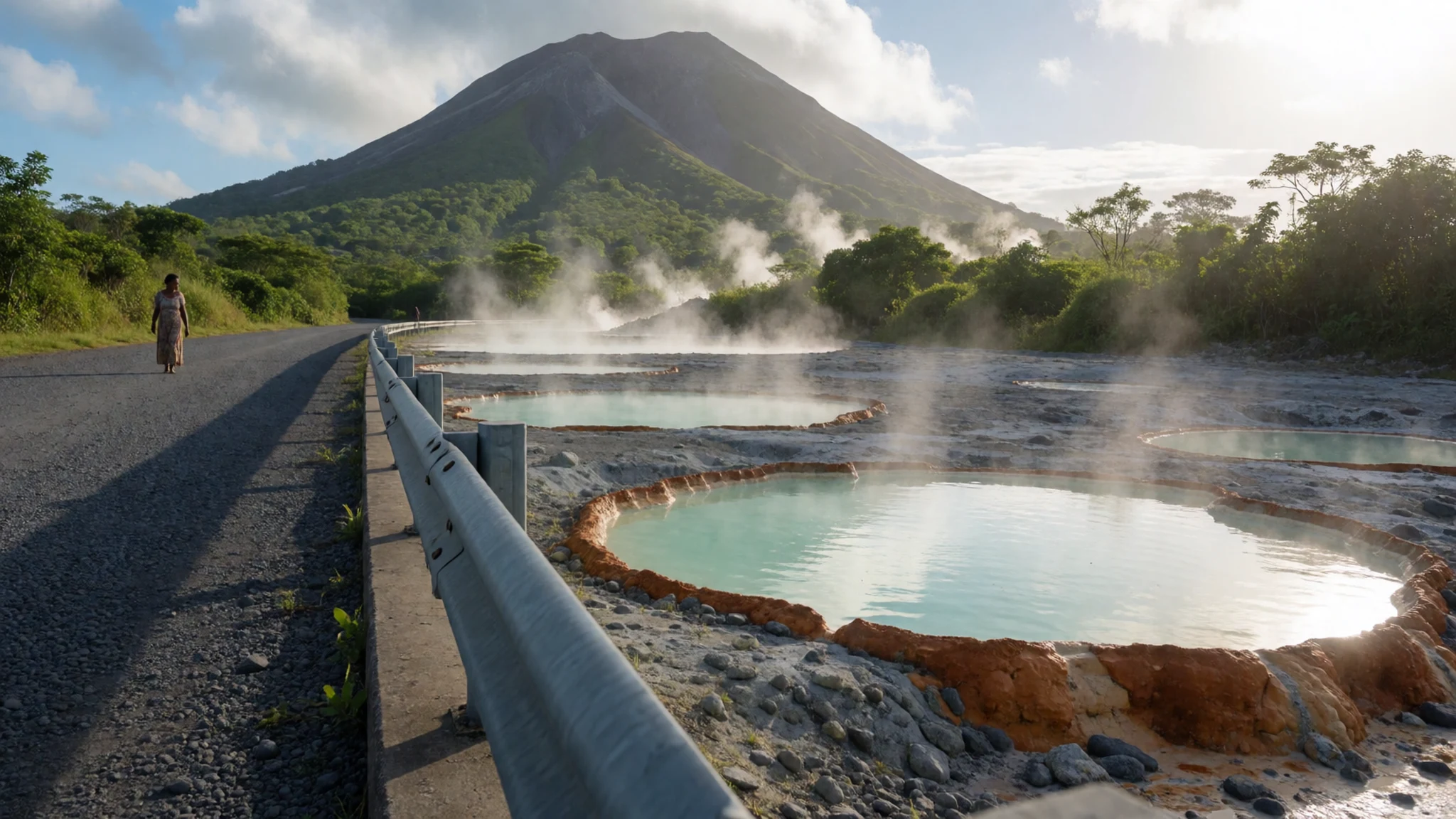
- Volcano Observatory — Hill above the harbour
The observatory sits on a ridge above the harbour and gives the clearest overview of the town: the rebuilt streets on one side, the ash-flattened old centre on the other, and the cones across the water. Its monitoring work is the reason few people died in 1994. Ask locally about access.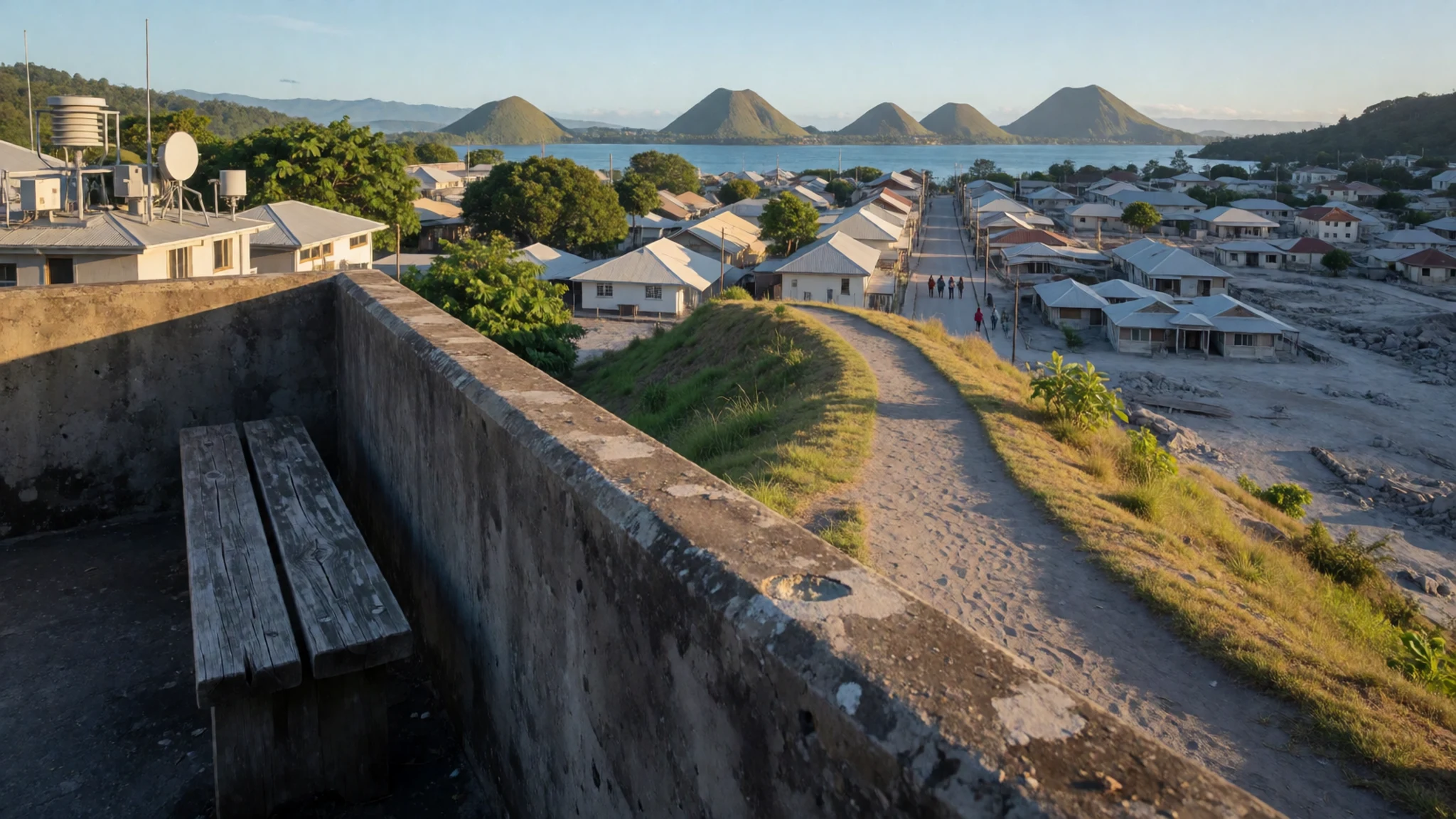
- Japanese Barge Tunnel — Hills along Simpson Harbour
Japanese forces tunnelled into the hills around Simpson Harbour on a huge scale, building shelters, hospitals, stores and hideaways for supply barges. This tunnel is one of the more accessible examples. The air is humid and the floor can be wet, so wear sturdy shoes and carry a torch.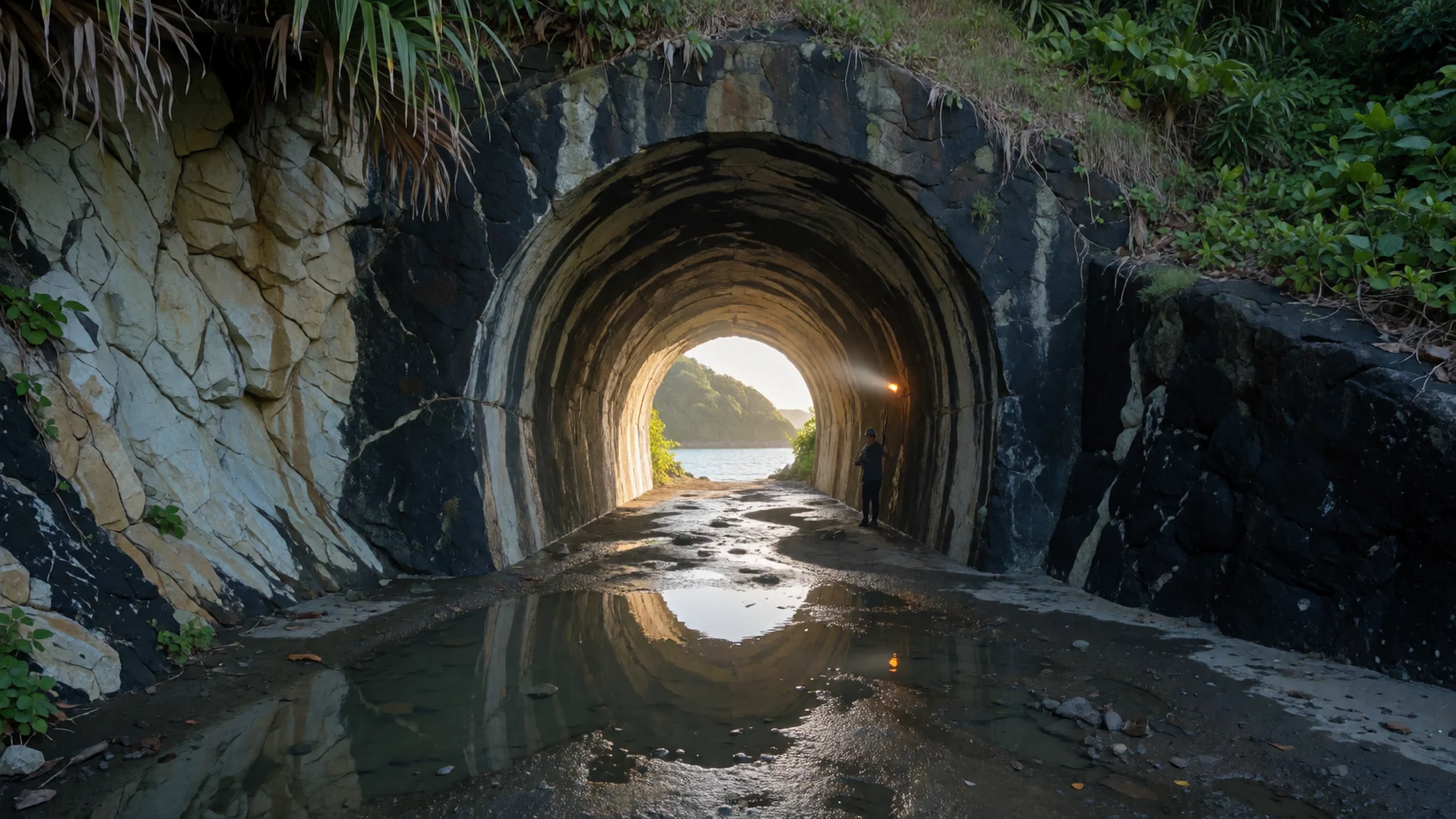
- General Yamamoto's Bunker — Near the old town centre
This bunker is linked to Admiral Yamamoto's command of Japanese operations in the South Pacific. He left Rabaul on an inspection flight towards the Solomon Islands and was shot down by American aircraft. It is a short, modest stop that works best with a local guide explaining the context.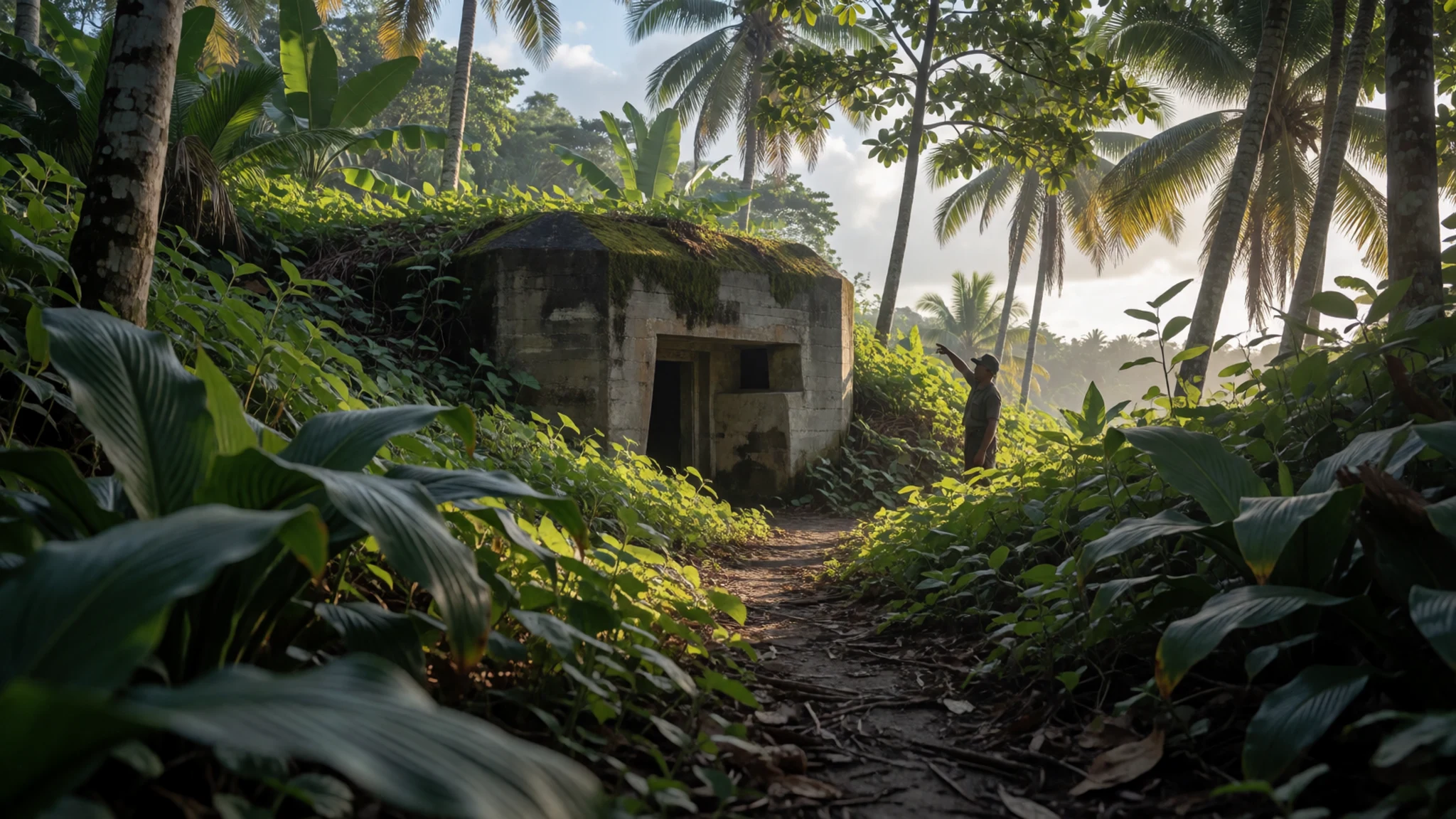
- New Guinea Club Museum — Old town
The New Guinea Club, completed in 1937, now serves as a museum of Rabaul's history. It is packed with old photographs of the colonial town, the war years and the eruptions. Expect little ventilation and a lot of heat, so go early in the day and drink water first.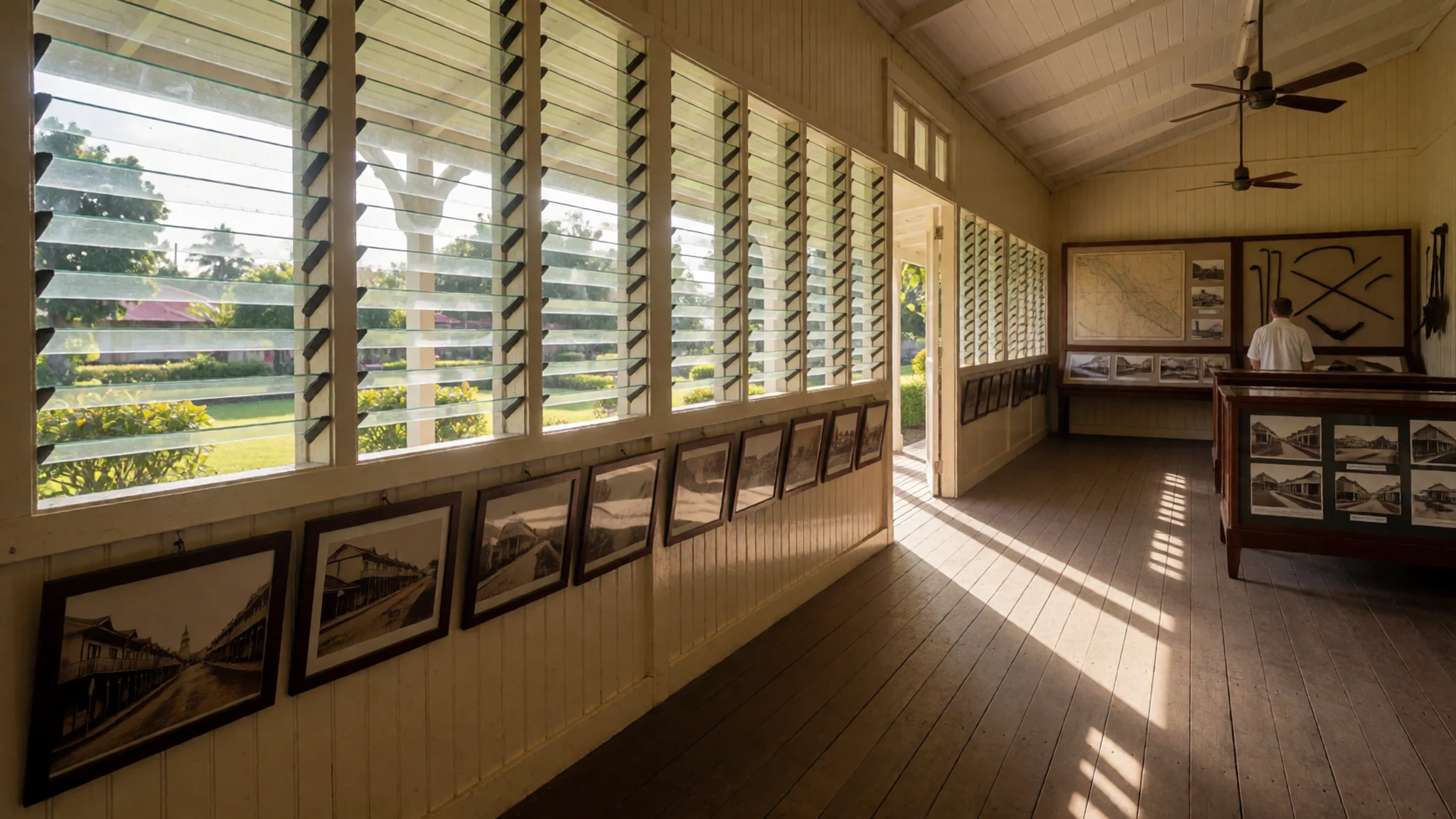
- Bitapaka War Cemetery — South of Rabaul, towards Kokopo
The cemetery is maintained by the Australian War Graves Commission and holds servicemen from several countries who died in the Second World War. Nearby, a Japanese memorial stands at a former seaplane base. Both are quiet, carefully kept places, best visited calmly and with time to read the inscriptions.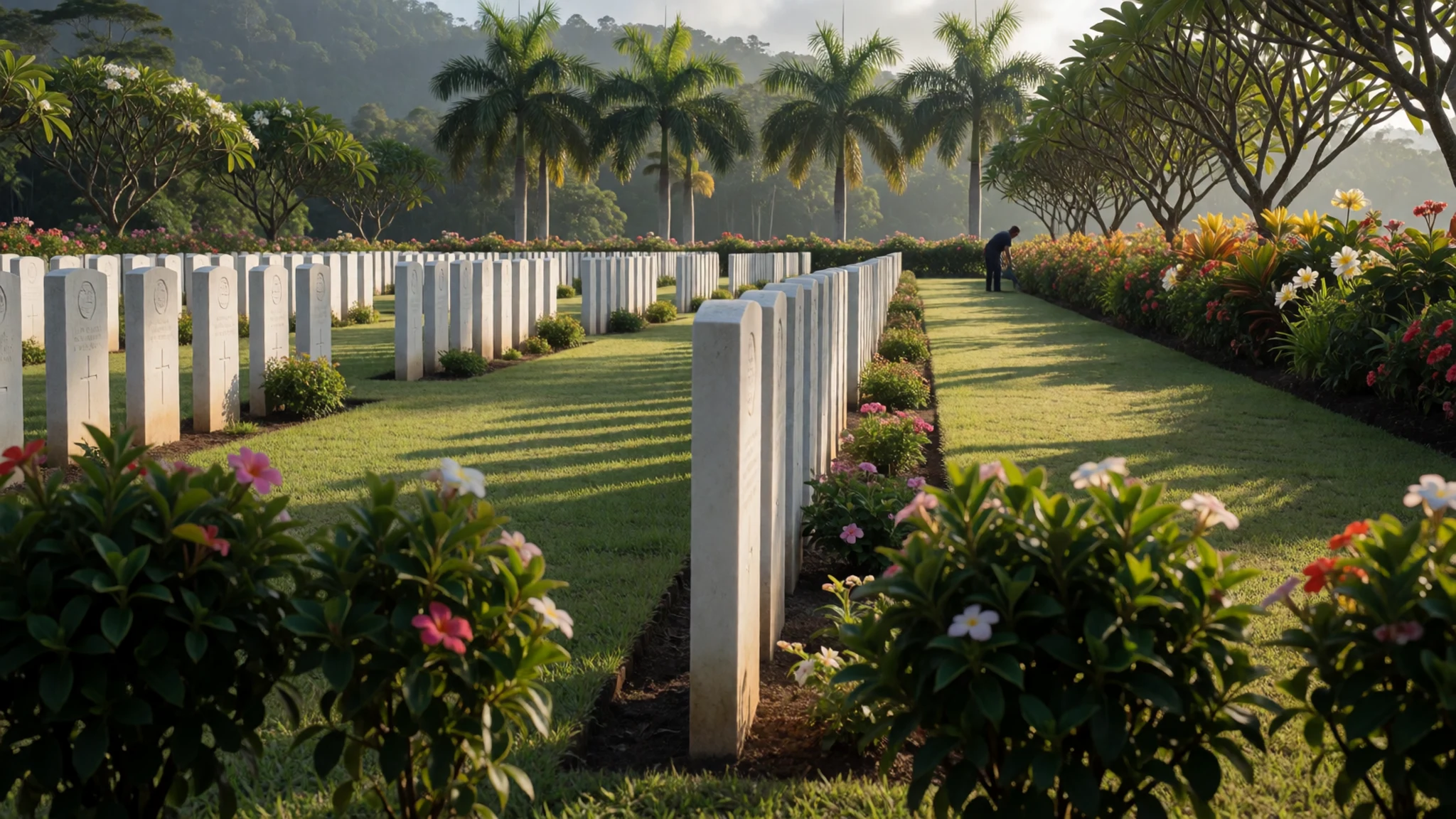
Culture
Rabaul sits in the homeland of the Tolai people, whose language, Kuanua, gave the town its name. Tok Pisin and English are widely used, so conversation is easy, and greetings and a few minutes of friendly talk matter more than getting to the point quickly. Tolai tradition includes shell money, known as tabu, and ceremonies in which masked figures appear, though these belong to the community and are not staged for tourists. The town's layers of history are very present in daily life. German-era streets, Australian administration, the Japanese occupation and its tunnels, and the eruptions of 1937 and 1994 are all part of what residents remember, and many families have personal stories of evacuation and return. Land is usually owned by clans rather than the state, which matters for visitors: paths to volcanoes, beaches and wartime sites often cross customary land, and a small fee or a request for permission is normal. Church is central to community life, and Sundays are quiet. Markets are social places as well as shops, and the volcano is treated with a mix of familiarity and respect rather than drama. Visitors who show curiosity, listen to local explanations of what happened and accept that some sites are memorials as well as attractions are generally well received. Always ask permission before photographing people, and ask the landowner or your guide before entering a war site or climbing near the volcano.
What to wear
In Rabaul, traditional Tolai dress is tied to ceremony and is worn mostly at festivals and customary gatherings rather than daily. It draws on natural materials: woven fibres, leaves, feathers, shells and strings of tabu shell money, with body decoration and masks in some ceremonies. Cloth is not the focus of the old forms, so look for them in dance and ritual rather than in shops. Everyday clothing is relaxed and practical for heat. Many women wear a lavalava or a loose dress, often in bright printed cotton, and the meri blouse, a loose, colourful top introduced in the colonial period, is common in many parts of Papua New Guinea. Men usually wear shirts, shorts or trousers, with neat clothes for church. Rubber sandals and flip-flops are widespread. Visitors should dress for a tropical rainforest climate, with an average temperature around 26.9 °C and frequent rain: light cotton or quick-drying fabrics, a hat, sunscreen and a thin rain jacket. Modest dress is sensible in town and essential in villages and churches, so cover shoulders and knees and avoid swimwear away from the beach. Sturdy closed shoes with grip are best for the tunnels, the ash slopes and wet paths, and sandals suit the shore. Insect repellent and long sleeves in the evening are worth packing.
What to eat
- Fresh grilled or fried fish — Resort restaurants overlooking the sea and the town fish market
Fish from the harbour and surrounding coast is the dependable choice in Rabaul, usually grilled or fried and served with rice or root vegetables. Ask what came in that day, and expect the simplest preparations to be the best.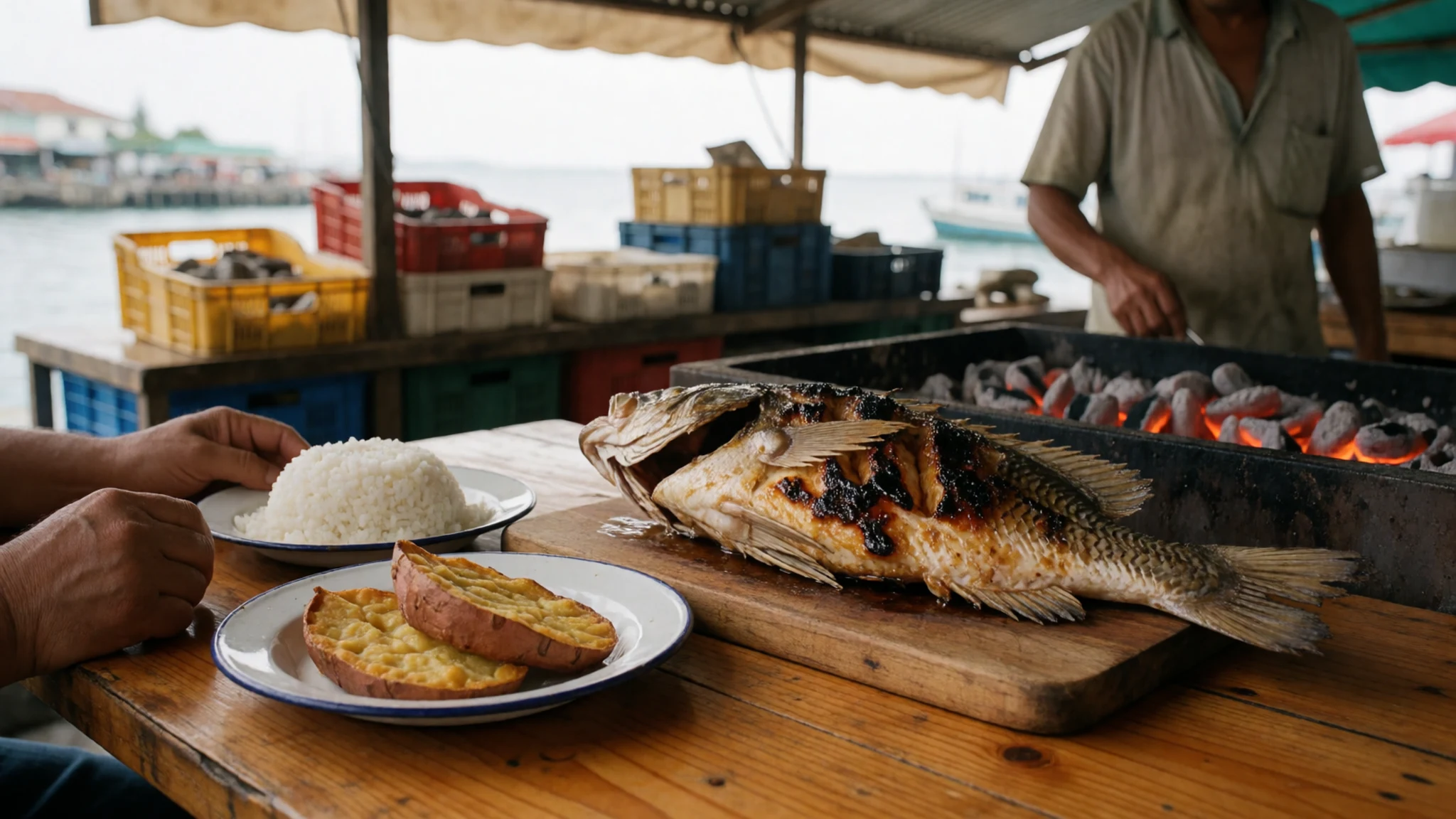
- Kai bar plates — Kai bars along the main streets
Kai bars serve cheap, filling meals in a no-frills setting: rice, tinned or fresh fish, sausages, cooked greens and fried snacks, served in generous portions. Quality varies, so choose the places where locals are queuing.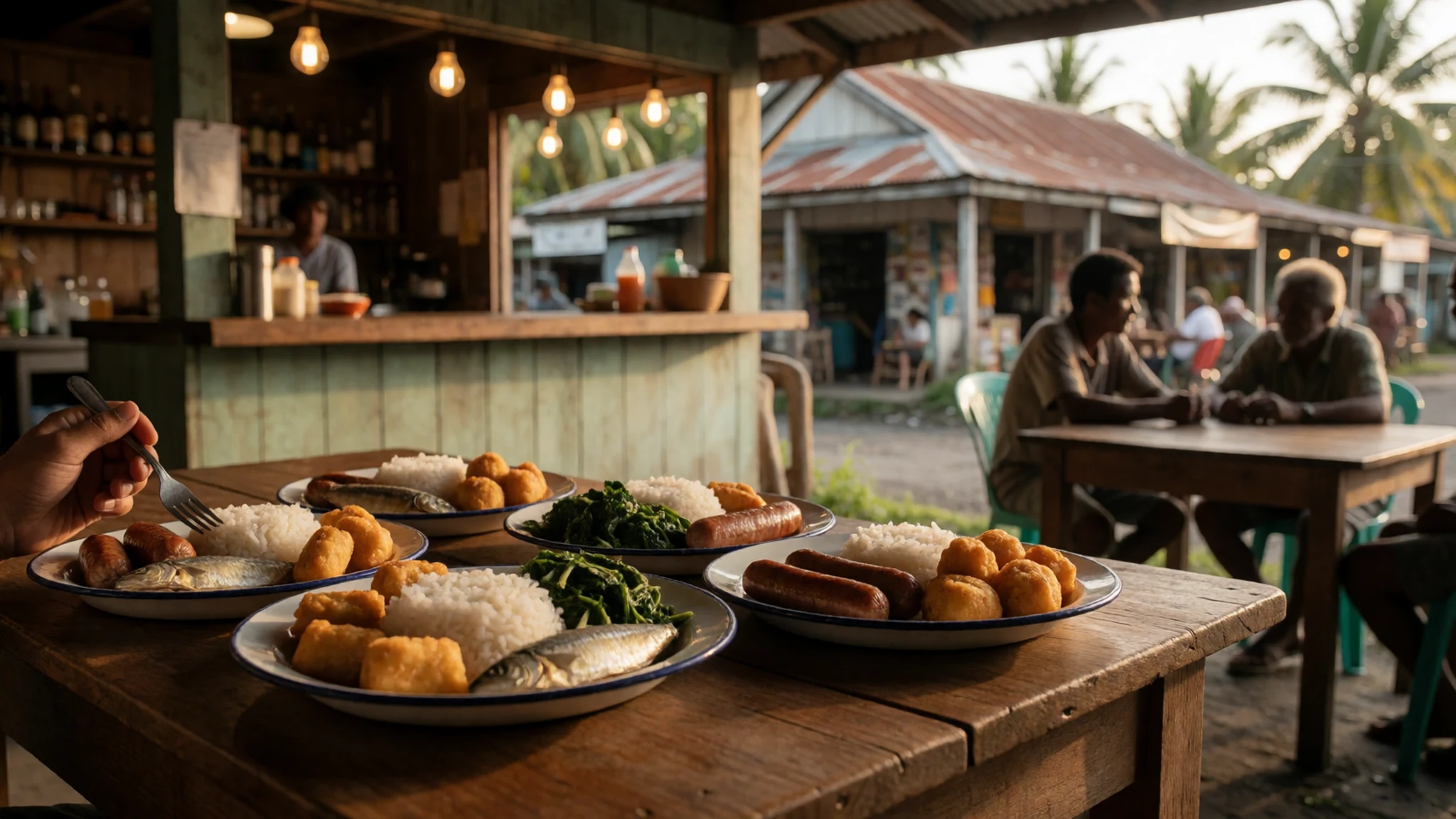
- Chicken and chips — Chicken shops in Rabaul and Kokopo
Chicken shops are everywhere in PNG towns, selling fried or roasted chicken with chips or rice. It is a convenient lunch when there are few other options and sits happily alongside a cold drink in the heat. - Tropical fruit — Rabaul market and supermarkets in town
Local fruit changes with the season and typically includes bananas, pineapple, papaya and coconuts. It is cheap, fresh and easy to carry. Wash or peel everything, and take a knife for coconuts if you want to drink from them. - Chinese-style dishes — Dining rooms in older town hotels and some local eateries
Rabaul's colonial and trading past left a Chinese influence on local dining, with noodles, stir-fries and rice dishes on some menus. Treat it as a curiosity of the town's history, not a reason to travel, and set expectations modestly.
Plan it
Best time. August to November is usually somewhat less wet, but Rabaul has a tropical rainforest climate with heavy rain in every month and an average of about 2414 mm a year. Expect heat and humidity whenever you go, and check volcano conditions before travelling.
How long. 2–3
Getting there. Air Niugini flies daily from Port Moresby, with other links from Lae, Kavieng, Hoskins, Buka and elsewhere. Flights land at Tokua airport (code RAB), southeast of Rabaul, which has been closed at times by ashfall. From Tokua, arrange a transfer with your accommodation, take a taxi, or use public minibuses to Kokopo and connect onward to Rabaul. Some coastal ships also run from Lae, and a few carry passengers.
Budget. mid
Tips
- Arrange your airport transfer in advance and confirm the price before you set off
- Carry cash and water, as card payment is not dependable and the airport has few facilities
- Check in early for departures, and bring water, snacks and patience for the wait
- Start sightseeing early to avoid the heat, and keep afternoons for the museum or tunnels
- Ask your hosts about volcano activity and local security before heading out each day
Etiquette
- Ask permission before photographing people or entering customary land
- Treat war cemeteries and memorials with quiet respect
- Keep well back from the hot springs and follow guides' advice near Tavurvur
Nearby
Sources
- Wikidata Q218768 (CC0)
- Wikipedia: Rabaul (rev 1383352144) (CC BY-SA 4.0)
- Wikivoyage: Rabaul (rev 5431708) (CC BY-SA 4.0)
- Rabaul from the Volcanology Observatory, Stefan Krasowski (CC BY 2.5)
- 1890s photo of Parkinson family, Rabaul (Public domain)
- Rabaul volcanos 2011, Masalai (CC BY 3.0)
- Lieutenant General Harukichi Hyakutake in front of HQ Rabaul (Public domain)
- Aftermath of volcano eruption, Rabaul, PNG, 1994, AusAID (CC BY 2.5)
- Old map of Rabaul from 1943, British Naval Intelligence (Public domain)
- Admiralty Chart No 3553, Gazelle Peninsula and St George's Channel (Public domain)
- Admiralty Chart No 524, Blanche Bay and approaches to Rabaul (Public domain)


