Mount Bosavi
Mount Bosavi, Papua New Guinea
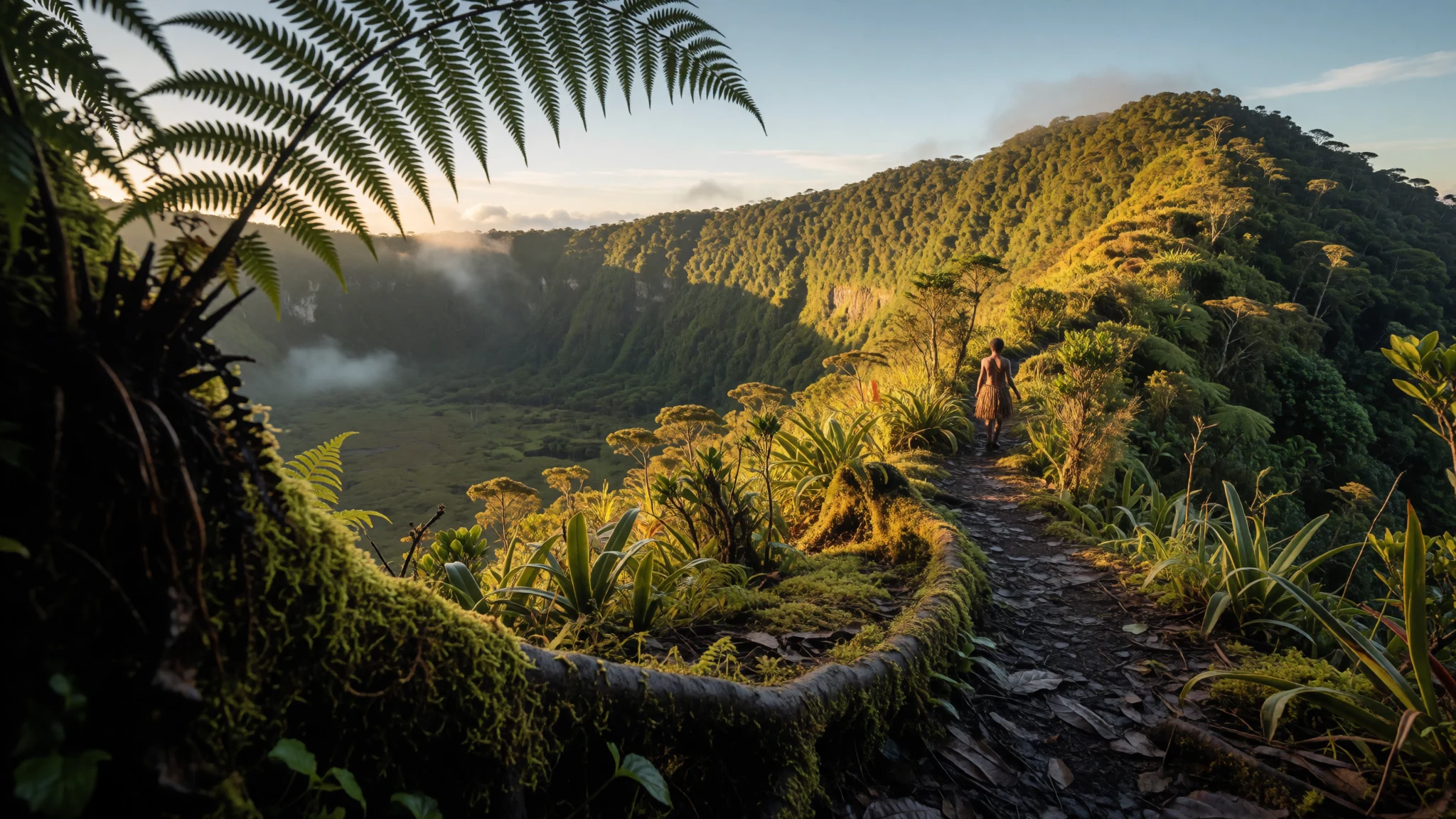
Mount Bosavi is a collapsed volcano whose forested crater shelters wildlife found nowhere else, reached only through a long journey into Papua New Guinea's interior.
The place
Mount Bosavi is the collapsed cone of an extinct volcano in the Southern Highlands province of Papua New Guinea, rising to 2,507 m on the Great Papuan Plateau. Instead of a sharp peak, the mountain carries a vast bowl at its top, about 4 km across and 1 km deep, and that bowl is covered in forest that shelters species found nowhere else. The surrounding plateau belongs to the Kikori River basin, a landscape of dense forest, rivers and scattered communities. Part of the mountain lies inside the Sulamesi Wildlife Management Area, set up in 2006. Nothing here resembles a managed national park of the kind familiar in India or the UK: there are no ticket kiosks, no signed trails and no cafés on the rim. Visits are arranged through local communities, lodges and operators, and most of the effort goes into getting there rather than into sightseeing. The people living just north of the mountain call themselves Bosavi kalu, meaning people of Bosavi. They divide into four groups, the Kaluli, Ologo, Walulu and Wisesi, who share one way of life but are marked out by differences in speech. For them the mountain is home ground, not a backdrop. A trip should therefore be planned as a visit to somebody's land, with the pace, weather and permissions that implies. The place suits patient walkers and wildlife watchers. It does not suit tight schedules, thin budgets or anyone who needs reliable healthcare close by.
Its story
Mount Bosavi sits in a country whose human story is very old and whose modern borders are quite young. Archaeologists have found evidence of people in what is now Papua New Guinea from about 35,000 years ago, at a site in New Ireland province, and later digs on that island turned up tools and food remains around 20,000 years old. The Bosavi kalu on the mountain's northern side belong to that long line of forest and Highland communities, each with its own language and land. Outside rule arrived late and in pieces. In 1884 the eastern half of the island of New Guinea was divided between Germany and Britain, while the Dutch held the west. The British share, Papua, was run by Australia and became an Australian territory after Australian federation in 1901. In 1914 Australian forces took over German New Guinea, which was later administered as a trust territory for the League of Nations and then the United Nations. Gold drew much of the outside interest, and the remains of large dredges can still be seen around Bulolo and Wau. The Pacific War brought fierce fighting to the island, on the Kokoda Track and at sea in the Battle of the Coral Sea. Bosavi lies far from those battlefields. The creation of the Sulamesi Wildlife Management Area in 2006 marks a newer chapter, in which the forest around the crater is valued for its wildlife as much as for anything that might be dug out of the ground.
What to see
- The crater rim — Summit ridge of Mount Bosavi
The rim is the reason for the whole trip: a forested ridge looking into a bowl about 4 km wide and 1 km deep. The approach is a long, wet walk with local guides, so the view is earned. Cloud often fills the bowl, so allow spare days rather than a fixed schedule.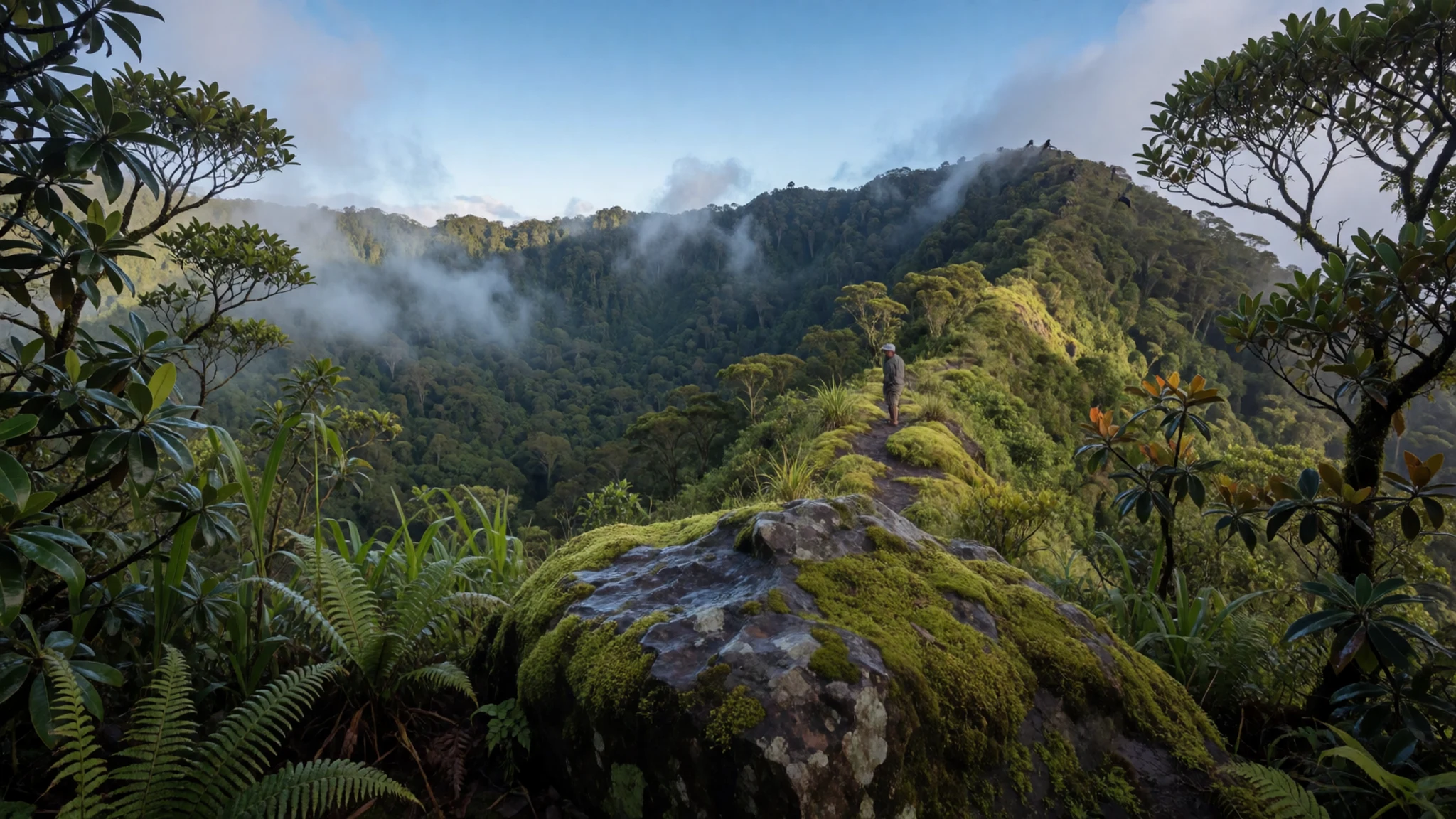
- The mountain from a distance — Great Papuan Plateau
Seen from the plateau, Bosavi is a broad, low-sloped mass, nothing like a classic peak. Its shape hints at the collapsed volcano behind it. The best moments tend to come early, when mist lifts off the forest and the outline appears briefly before the day's cloud builds.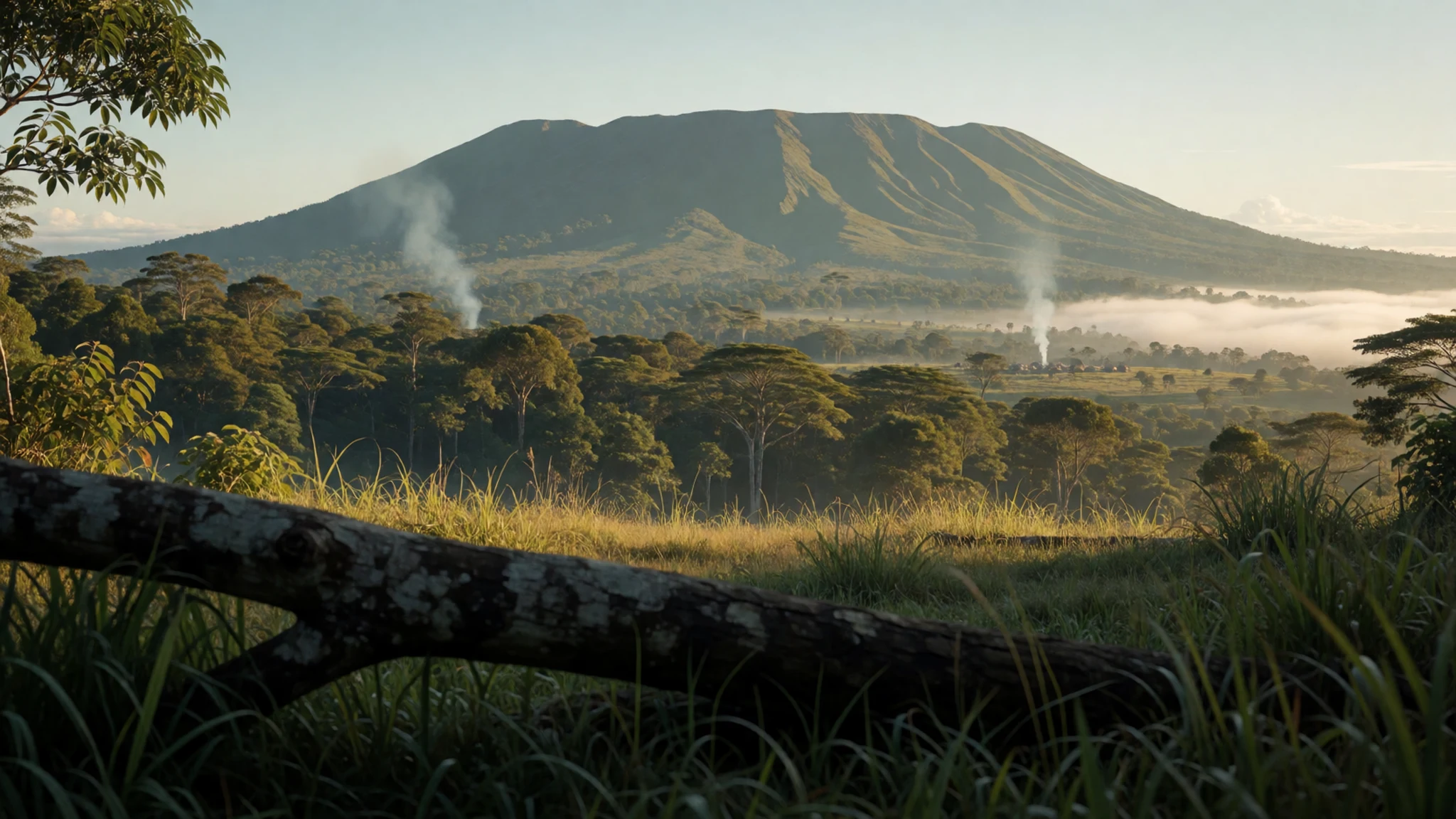
- Forest walking on the plateau — Great Papuan Plateau, Southern Highlands
Most of the time here is spent on foot beneath the canopy, with local guides who know which tracks are usable after rain. Expect mud, stream crossings and dense greenery. Birdsong and frog calls are constant, and sightings reward quiet, slow walking rather than distance covered.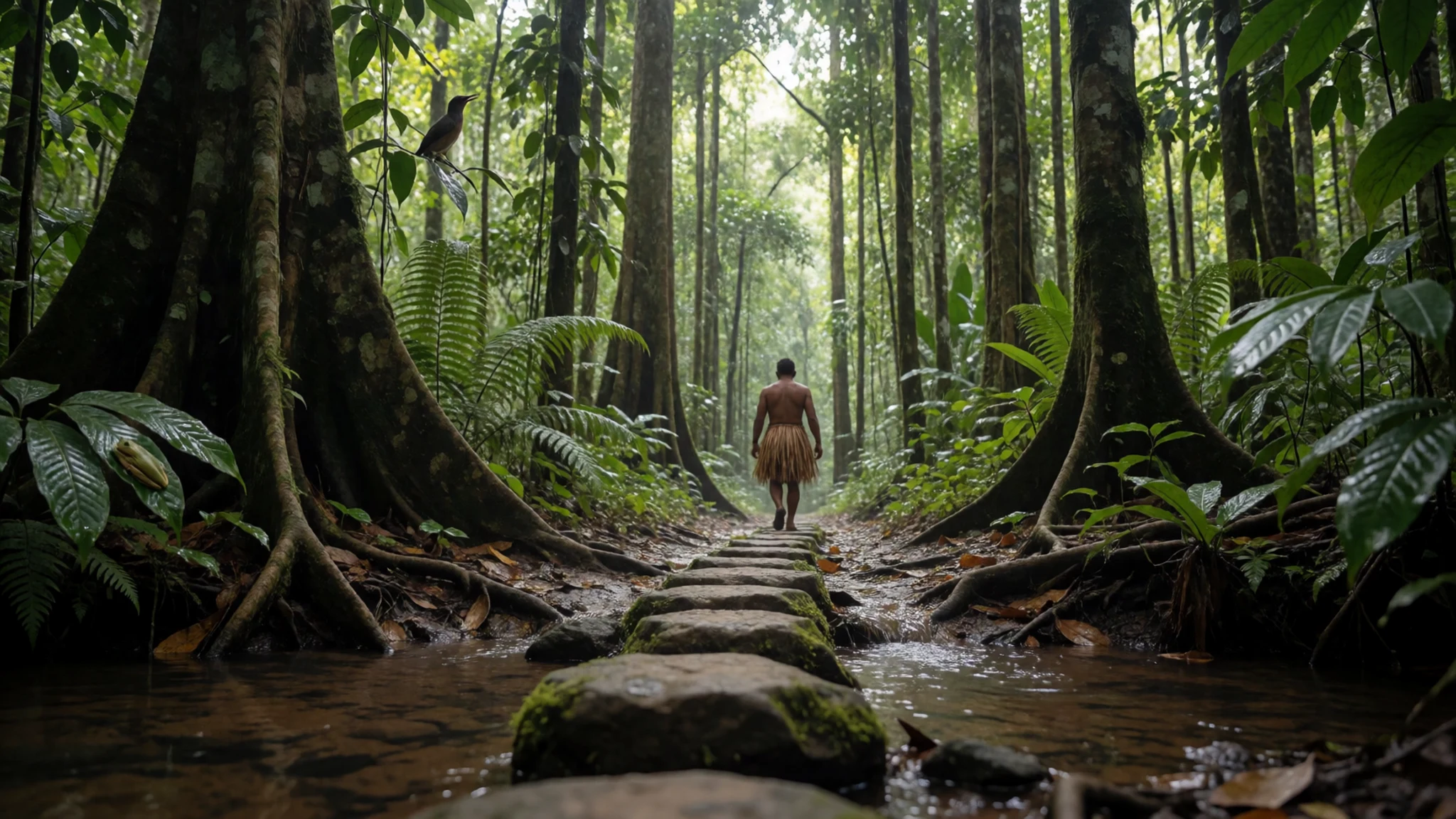
- Villages of the Bosavi kalu — North of the mountain
The communities just north of the mountain are home to the Kaluli, Ologo, Walulu and Wisesi. Staying in a village or with a host family, arranged in advance, is the respectful way to visit. It also gives guides and hosts a direct share in the visit, and leaves time for conversation.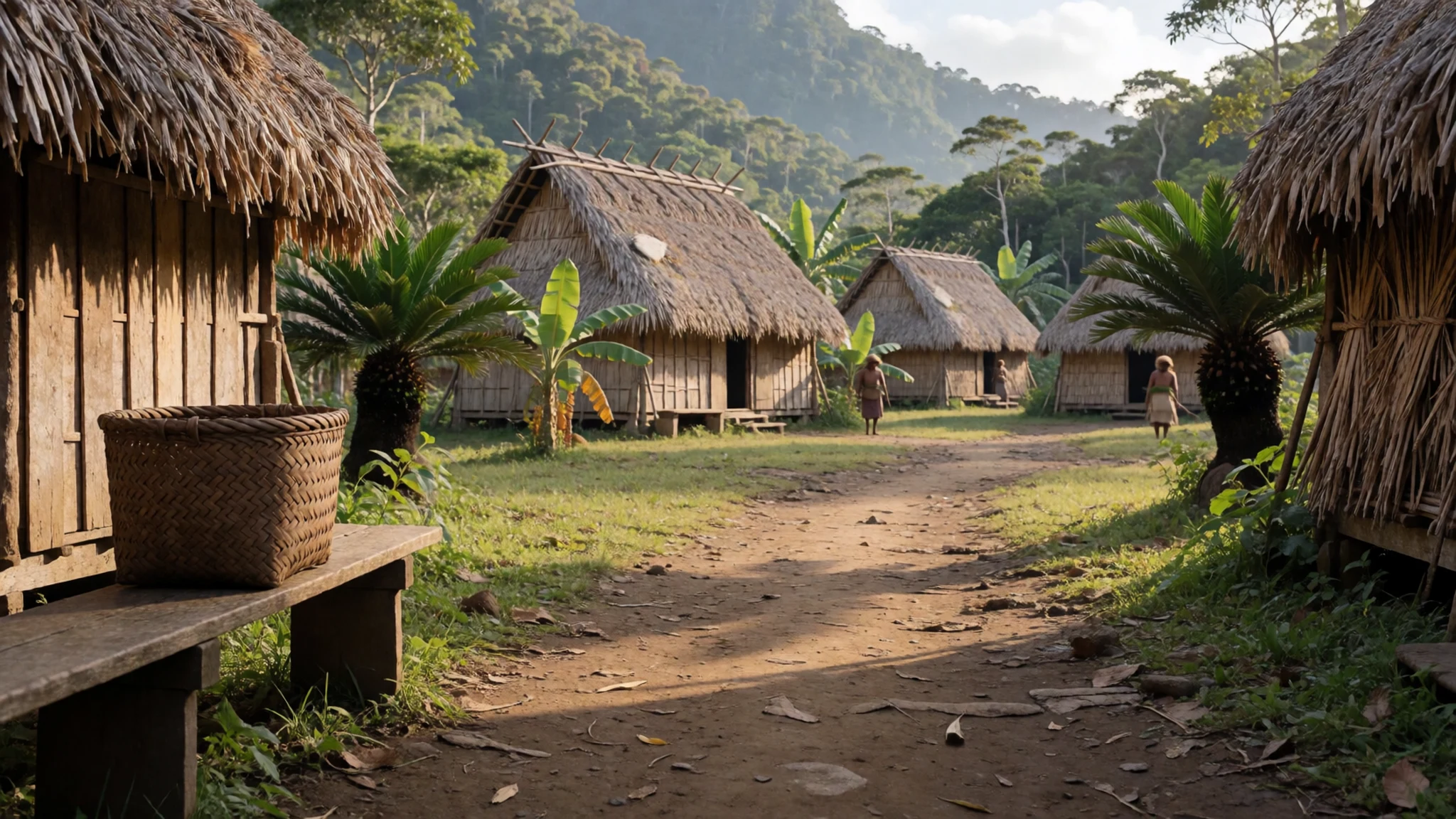
- Sulamesi Wildlife Management Area — Part of the Mount Bosavi slopes
This protected area, established in 2006, covers part of the mountain. It is managed with local landowners, not as a fenced reserve, so access depends on community agreement. The forest here is the real attraction: its endemic species are the reason researchers and wildlife enthusiasts make the long journey.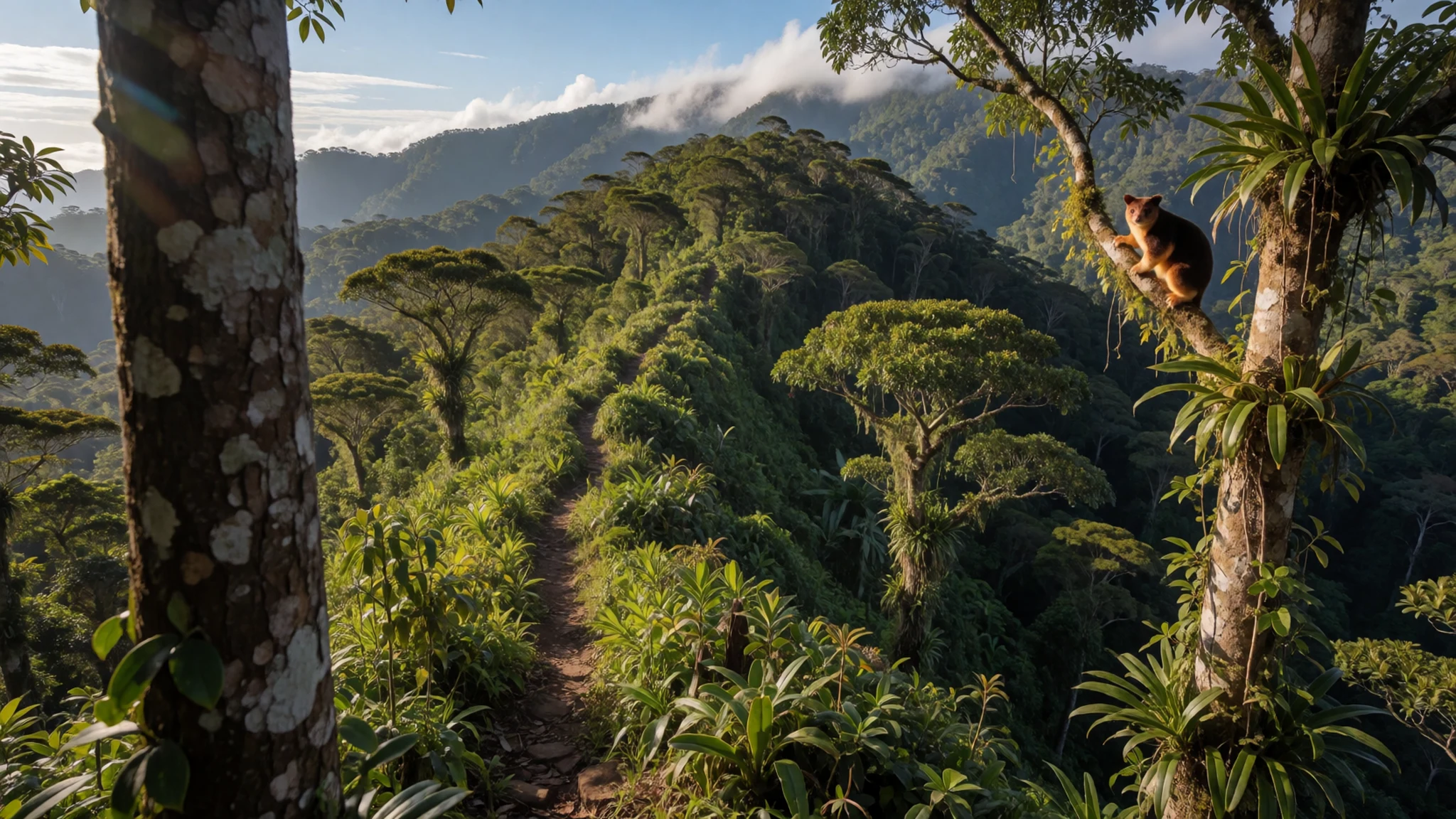
Culture
Mount Bosavi belongs to the Bosavi kalu, and any visit runs on their terms. The Kaluli, Ologo, Walulu and Wisesi share a way of life but speak differently, so a visitor meeting people in one village should not assume the next will speak the same way. Land is held by communities, and walking across it, camping or guiding normally involves agreement with the owners well before arrival. Across Papua New Guinea a friendly handshake is an important greeting, and avoiding steady eye contact is a sign of respect, not coldness or shyness. Staff or hosts who greet a guest by name, shake hands and look at the floor are being courteous. Lodge life mixes local and Westernised habits, but village life moves at its own pace, and meetings, meals and departures rarely follow a clock. Alcohol deserves care: binge drinking is a serious social problem in the country, so it is kinder not to push drinks on hosts or guides. Visitors are real guests in a place where outsiders are rare, and a patient, curious attitude counts for far more than any itinerary. Ask before photographing anyone, including children, and agree with your hosts first what may be photographed and whether any compensation is expected for their time.
What to wear
Mount Bosavi's communities have long used materials from the forest for dress and ornament, in the way common across the Highlands and lowland forests of Papua New Guinea: woven fibre, bark, feathers, shells and body paint. These are worn mainly for ceremonies, dances and gatherings, and each piece carries meaning for the wearer's family and community, so they are not costume to be borrowed. The bilum, a looped string bag that is made across the country, is the everyday textile most visitors will notice. It is carried for produce, tools and babies, and worn over the shoulder or from the head. In daily life, people in and around villages mostly wear practical Western clothing: T-shirts, shorts, skirts, cotton dresses and sandals or bare feet, with wellington boots in wet weather. Traditional dress appears when an occasion calls for it. Visitors should dress for heat, humidity and rain, and for modesty in villages. Lightweight long trousers and shirts that dry fast, with sleeves that cover the shoulders, work well and also protect against insects and scratches. Bring waterproof layers, a hat and spare dry socks. Sturdy boots with good grip are essential for muddy forest tracks, and sandals are useful in camp. Swimwear belongs to the lodge or river bank, not the village. A bright, smart outfit for meeting village elders is a polite gesture.
What to eat
- Mumu — Village feasts and lodge evenings, cooked in an earth oven
Mumu is the classic way of cooking: meat and vegetables, including sweet potato, are layered in an underground oven and left to steam. It is usually saved for gatherings and welcomes, so ask your host in advance. The flavour is smoky and gentle, with little spice.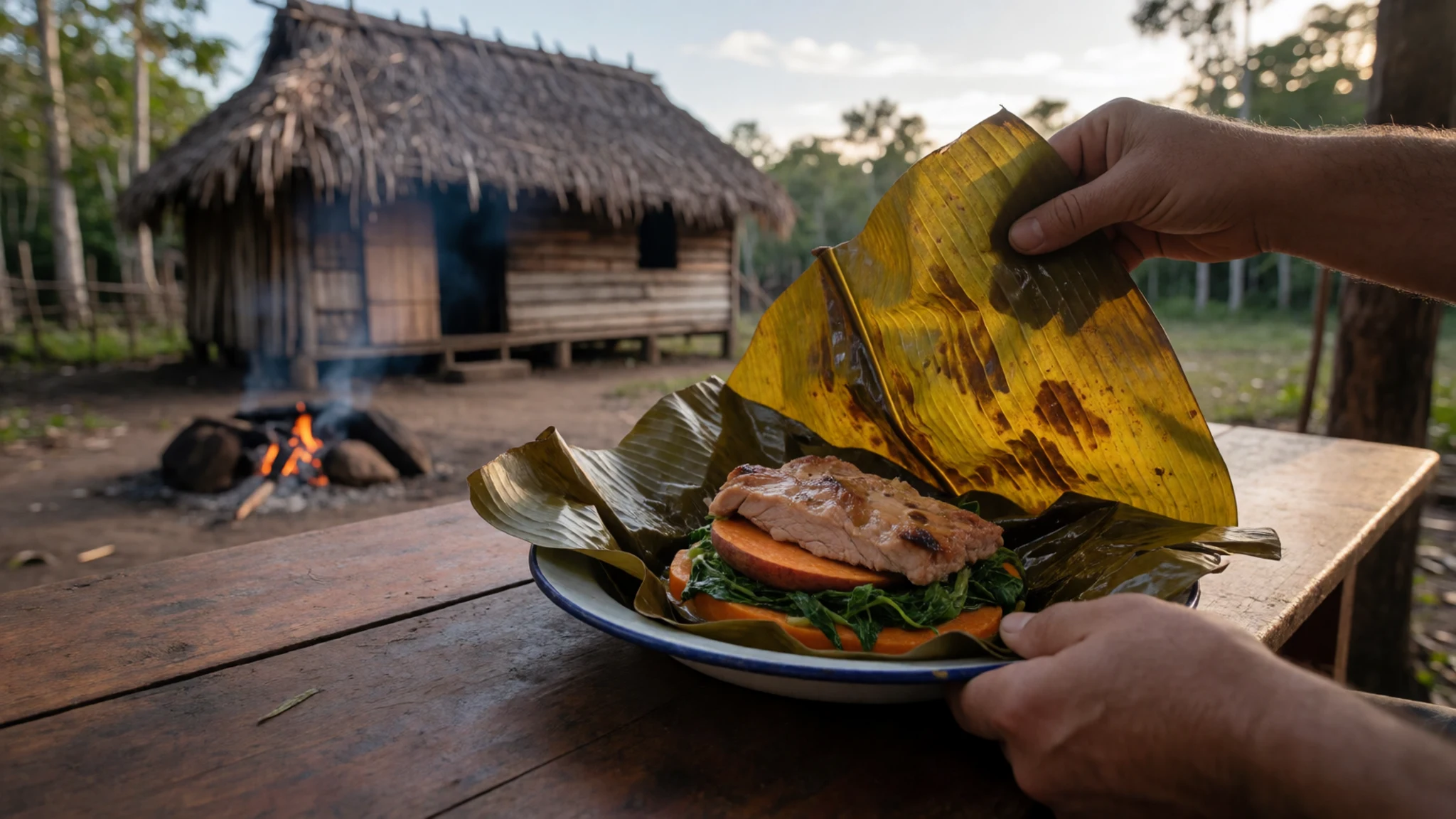
- Kaukau — Village gardens, roadside stalls and local markets
Kaukau is sweet potato, a staple across the Highlands, eaten baked in the embers, boiled or steamed in a mumu. It is filling, sweet and simple, and often forms the main starch of a village meal alongside greens.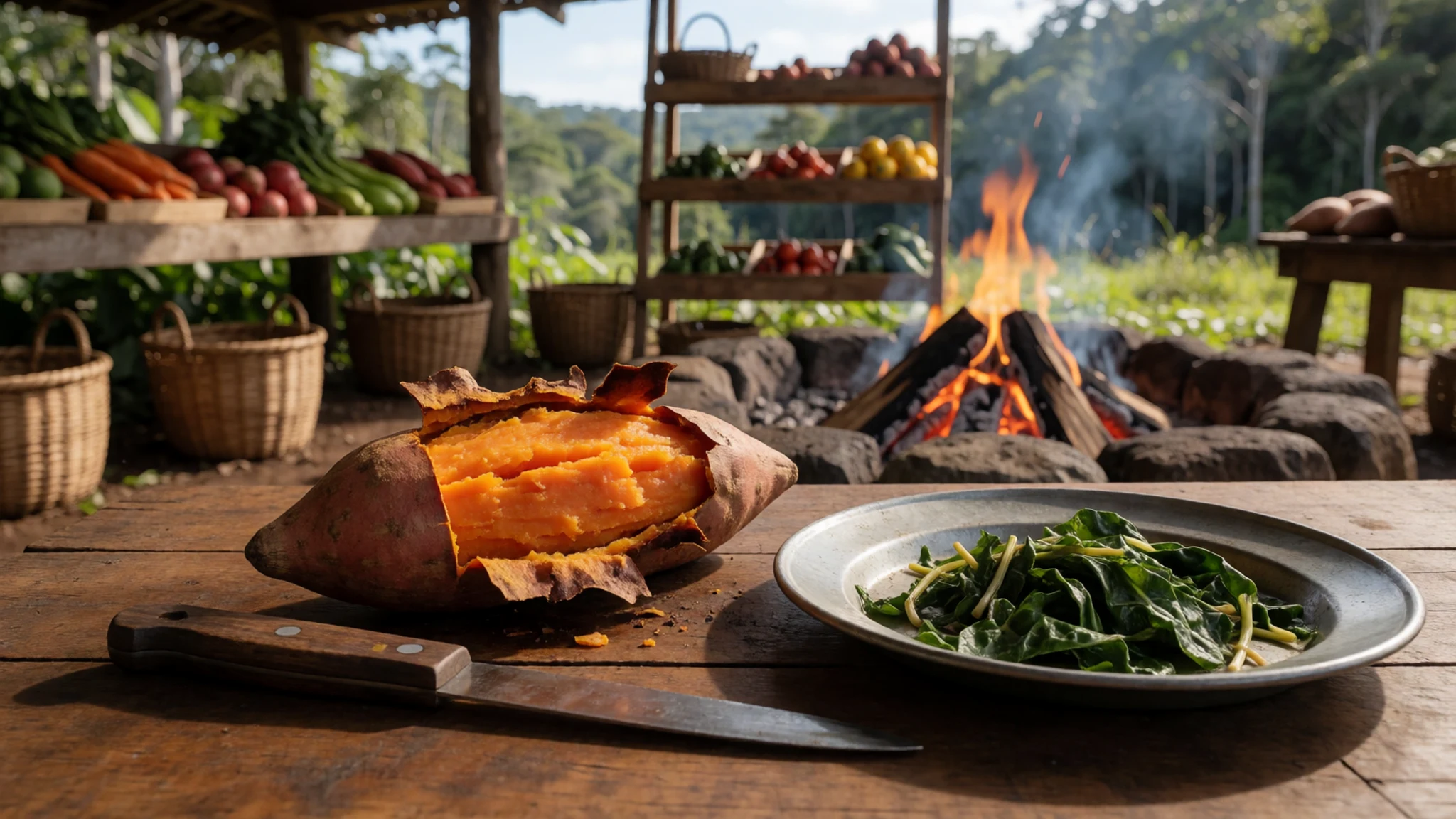
- Sago — Villages in the lowland forest around the plateau
Sago, the starch pounded from the trunk of the sago palm, is a traditional staple in forest communities. It is typically cooked into a thick, chewy paste or a baked cake and eaten with greens or meat. The texture is unusual, but it is worth trying. - Rice with greens and a tinned or smoked protein — Lodge dining rooms and village guesthouses
Almost every meal includes rice or another starch, and lodges often mix local dishes with a Westernised menu. Expect rice, cooked greens and fish or chicken, mild rather than spicy. Visitors who need chilli should bring their own. - Roast chicken from Big Rooster — Port Moresby and larger towns, before or after the trip
Big Rooster is a locally operated chicken chain found in larger towns, handy for a quick, familiar meal on the way in or out. In remote areas, plan your own snacks and drink only bottled or properly treated water.
Plan it
Best time. June to September is generally the drier part of the year, which makes forest tracks easier, but this is rainforest and rain can arrive in any month. Build spare days into the schedule, since weather often delays flights, boats and walks.
How long. 5–7
Getting there. Fly to Port Moresby (Jacksons International), then take a domestic connection towards the Southern Highlands, such as via Mount Hagen. The last leg is arranged by your lodge or operator, usually by light aircraft or boat, followed by a walk through forest. Visa on arrival is available for UK and Indian passports at Port Moresby and Mount Hagen airports; confirm length and conditions with PNG immigration before travelling.
Budget. high
Tips
- Book through a local lodge or operator well ahead, as access depends on community agreement and small-aircraft seats
- Check current UK or Indian government travel advice before booking, as parts of the Highlands have been flagged for civil unrest, crime and limited healthcare
- Carry bottled or treated water, since local water quality varies from place to place and day to day
- Bring cash in small notes, because cards and cash machines are scarce outside larger towns
- Pack for rain and mud: waterproofs, dry bags, spare socks and insect protection, and build in spare days for delays
Etiquette
- Shake hands in greeting and do not insist on eye contact
- Ask permission before photographing people, and agree rules on photography with hosts first
- Arrange access to village land in advance through your guides, never on your own
Nearby
Sources
- Wikidata Q1297541 (CC0)
- Wikipedia: Mount Bosavi (rev 1369552496) (CC BY-SA 4.0)
- Wikivoyage: Papua New Guinea (rev 5392303) (CC BY-SA 4.0)
- Photo: Mount Bosavi, panvorax (CC BY 2.5)
- Photo: Mount Bosavi 12 Oct 2008, panvorax (CC BY 2.5)
- Photo: Mount Bosavi, rim of crater, panvorax (CC BY 2.5)


