Lake Kutubu
Lake Kutubu, Papua New Guinea
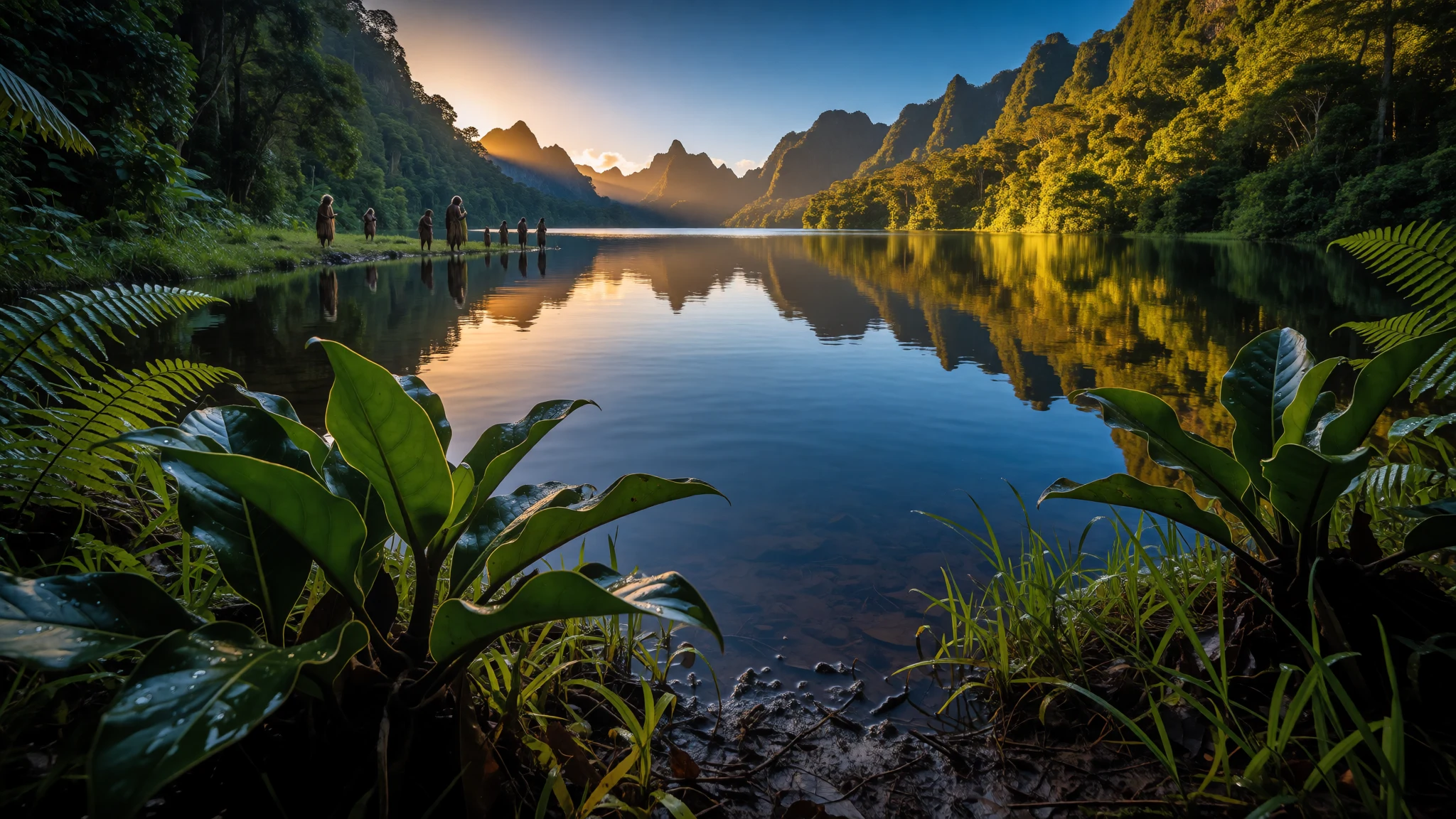
Lake Kutubu is a clear, mist-wrapped mountain lake in Papua New Guinea's Highlands, where Foe and Fasu villages live by canoe and forest.
The place
Lake Kutubu sits in a basin among the rugged interior mountains of Papua New Guinea's Southern Highlands Province, at 800 m above sea level. Mendi, the provincial capital, lies to the north-east, and the lake drains south-west into the Kikori River. Few lakes in the country fill a hollow in the mountains like this one, and only Lake Murray is larger within the national borders. The water is clear, fed mostly by streams that rise from underground, and the surface is dotted with a handful of small islands, Wasemi in the north being the biggest. Forest closes in on every shore. Mornings are often soft with mist and low cloud, which usually thins by midday, and afternoon rain is common. Two peoples share the catchment: the Foe on the southern side and the Fasu on the northern side, living in villages along the shore and on nearby streams. Life revolves around dugout canoes, gardens, fishing and the forest. The lake and its surroundings are protected as a wildlife management area and recognised as a wetland of international importance under the Ramsar Convention, and the wider river basin and plateau are on a tentative list for World Heritage status. Reaching it is the real commitment. This is not a place of coach parties or strings of resorts; visitors stay in lodges or village guesthouses, travel by small plane, road and boat, and fit around local arrangements. It rewards patience, a flexible schedule and a taste for quiet.
Its story
Lake Kutubu's recent history is tied to two things: the people who have always lived around it, and oil. The Foe and Fasu have long drawn food, building material and transport from the lake and forest, and the villages along the shore are homes rather than attractions. Papua New Guinea as a whole holds tens of thousands of years of human settlement, and the interior was reached by outsiders later than the coast, so contact with the colonial administrations that divided the eastern half of New Guinea came comparatively late to places like this. Then, in 1992, a commercial oilfield named after the lake started production, the first of its kind in the country. Money, jobs and compensation arrived, and so did newcomers. Growing numbers of people brought pollution, forest clearing and heavier fishing, pressures that landowners, conservation groups and the operator have had to work on together. A catchment management plan was drafted with WWF involvement, meant to serve as a template for other river basins in the country. The Ramsar listing and the wildlife management area give some formal protection, but day-to-day care depends on clan landowners and the rules they set. For a visitor the story shows in small ways: a pipeline clearing through forest, a clan boundary pointed out from a canoe, a fishing restriction explained by the boatman. Further development in the pipeline will test how well that balance holds.
What to see
- The lake at first light — Lake shore
Lake Kutubu is at its best early, when cloud sits low on the water and the forested hills show only as dark shapes. Go out in a dugout canoe with a local guide before the wind rises. Light changes quickly, so keep a camera and a rain cover handy.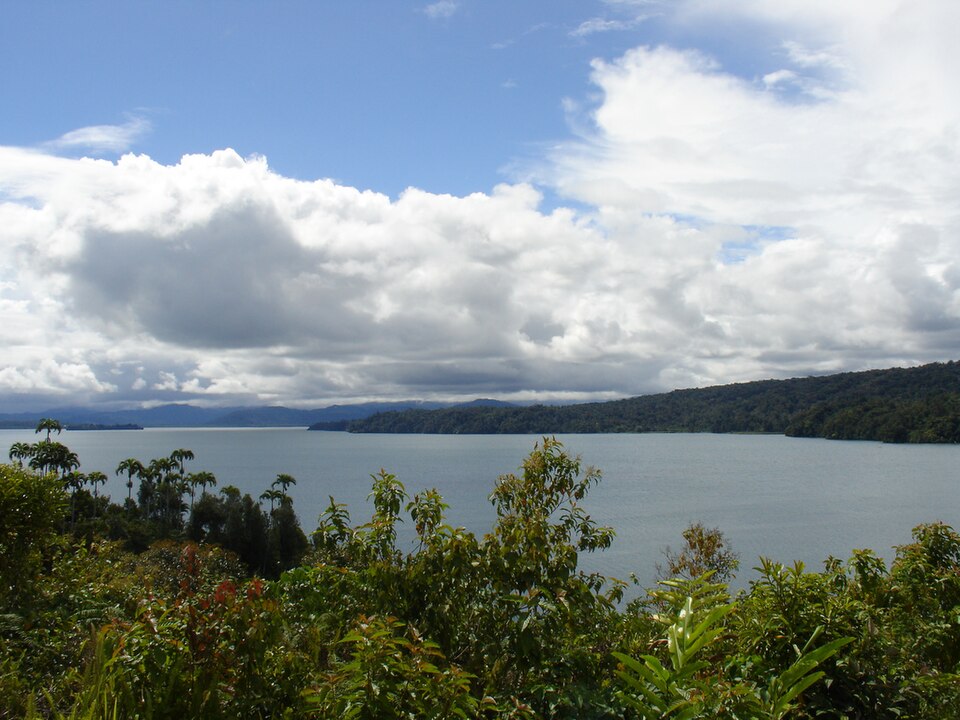
- Wasemi Island — Northern Lake Kutubu
Wasemi is the largest of the lake's islands, in the northern part, and a boat trip around it shows how forest meets water here. Landing and fishing are matters for the clan who hold the land, so arrange the visit through your lodge or village host, not independently. - Foe villages on the southern shore — Southern shore
The southern side of the catchment is Foe country. A guided village visit can include canoe-building, garden walks and talk of daily life. Agree beforehand what the visit involves and what is paid, ask before taking photographs, and treat the time as a conversation, not a performance. - Fasu communities to the north — Northern shore
The Fasu live on the northern side of the lake and the streams that feed it. Spending time here shows how closely fishing, forest foods and gardens are woven together. Walks follow village paths that are often muddy, so sturdy footwear and a local guide matter more than a fixed itinerary. - Forest walks and birdlife — Wildlife Management Area
The forest around Lake Kutubu is part of a protected wildlife management area, and guided walks are the way to see it. Expect steep, slippery paths, humid air and plenty of birdsong. Wildlife is hard to promise, so go for the atmosphere and the guide's knowledge of plants and uses. - Mendi and its market — Mendi
Mendi, the provincial capital and the usual gateway to the Southern Highlands, has a busy town market where vegetables, sweet potatoes and string bags are sold. It is useful for a sense of Highlands life and for stocking up. Keep valuables out of sight and move with a local contact.
Culture
Lake Kutubu's communities belong to the Foe and Fasu peoples, and daily life follows clan land, gardens, church and the lake itself. Like much of Melanesia, greetings matter: a handshake is the usual opening, and a lowered gaze is often a mark of respect, not shyness or coldness, so it should not be read as rudeness. Land and water are owned by clans, and fishing spots, forest paths and shoreline all have rights attached, which is why arrangements are made through the village or lodge rather than by wandering off. Visits go best when time is given to talk, sit and let things unfold; schedules here bend around weather, funerals, church days and community meetings. Dugout canoes are everyday tools, not props, and the same goes for gardens and pigs. Much of the Highlands is Christian, with churches central to village life, and Sunday is generally quiet. Ceremonial dress, body decoration and masks across Papua New Guinea carry meaning for particular groups and are worn for occasions, not for visitors' cameras. Fees for guides, canoes and access are normally agreed beforehand through the lodge. Local people have long experience of oil developers, researchers and visitors, and they are direct about what they expect. Ask before photographing anyone, and accept a no without argument.
What to wear
Lake Kutubu's traditional dress follows the wider Highlands pattern, with differences between clans. Items include aprons and skirts of plaited or tied plant fibre and bark, string bags called bilums looped from plant-fibre thread, and decoration of shell, feathers, seeds and paint for festivals and ceremonies. Face and body paint, headdresses and neck ornaments are worn for dances and gatherings, not as daily wear, and their meanings belong to those who wear them. Today, people around the lake mostly wear what suits warm, wet country: T-shirts, shirts, shorts or knee-length skirts, meri blouses (loose, colourful dresses that spread through the missions) and rubber or plastic sandals. Church clothes are neater, often brightly coloured. Bilums are still carried daily, now often made with bright acrylic or wool yarn. A visitor should pack light, quick-drying layers in modest cuts: long trousers or knee-length skirts, shirts with sleeves against sun and insects, and a light waterproof jacket. Evenings at 800 m feel cool. Sturdy sandals for boats and wet jetties plus walking shoes with good grip for muddy forest paths work best. Swimwear is for private moments only, and women especially should cover shoulders and knees in villages and near churches.
What to eat
- Mumu — Village feasts; arranged through lodges
Mumu is the underground oven of Papua New Guinea: hot stones, leaves, and layers of meat and vegetables left to steam slowly. It is a feast dish, so it usually needs advance notice. Ask your lodge or village host whether one can be prepared. - Kaukau (sweet potato) — Village guesthouses; Mendi market
Kaukau, the sweet potato, is the Highlands staple, baked in embers, boiled or cooked in the mumu. It is filling, lightly sweet and the base of many meals. Gardens line the paths around the lake, and the tubers appear on most plates. - Lake fish — Lodges and village guesthouses by the shore
Fish are central to life by the lake and are usually grilled over a fire or steamed in leaves, with little seasoning. Ask your hosts what is caught locally and whether any fishing rules apply, since overfishing is a worry here. - Greens and vegetables in leaf parcels — Village meals; Highlands town markets
Local greens, beans and other garden produce are often steamed or boiled, sometimes cooked with coconut cream where available. Food in Papua New Guinea is generally not spicy, so the taste is simple and earthy, and it goes well with rice or starch. - Rice with tinned fish or chicken — Lodges and guesthouses
Rice is part of almost every meal in the country, often served with tinned fish, chicken or stewed vegetables. Lodges tend to blend local dishes with a more familiar menu. It is plain, reliable food, and a good fallback after a day of travel.
Plan it
Best time. The drier months, roughly June to September, are easier for flights, boats and walking, though the Highlands can see rain in any season and the lake is often misty in the mornings. Pack for showers whenever you go.
How long. 4–6
Getting there. Fly into Port Moresby, then take a domestic flight into the Southern Highlands, usually towards Mendi or Mount Hagen, with a final road or boat transfer to the lake arranged by your lodge. Services and road conditions change, so confirm every leg with your lodge before booking.
Budget. high
Tips
- Book a lodge or village guesthouse well ahead, since transport and guiding are arranged through them
- Check your government's current travel advice and the visa rules for your passport before booking, as security in parts of the Highlands can change
- Carry enough cash from a major town, as cards and cash machines are scarce near the lake
- Drink bottled or properly treated water only, and bring insect repellent and a basic medical kit
- Leave generous buffers around flights, since weather and delays can disrupt the schedule
Etiquette
- Ask before photographing people, and accept a refusal
- Agree fees for guides, canoes and access beforehand, through your lodge
- Dress modestly in villages and keep to paths and waterways your hosts approve
Nearby
Sources
- Wikidata Q1800976 (CC0)
- Wikipedia: Lake Kutubu (rev 1366228413) (CC BY-SA 4.0)
- Wikivoyage: Papua New Guinea (rev 5392303) (CC BY-SA 4.0)
- Clouds over Lake Kutubu, Iain Taylor1, via Wikimedia Commons (CC BY 2.5)
