Quy Nhon
Quy Nhon, Vietnam
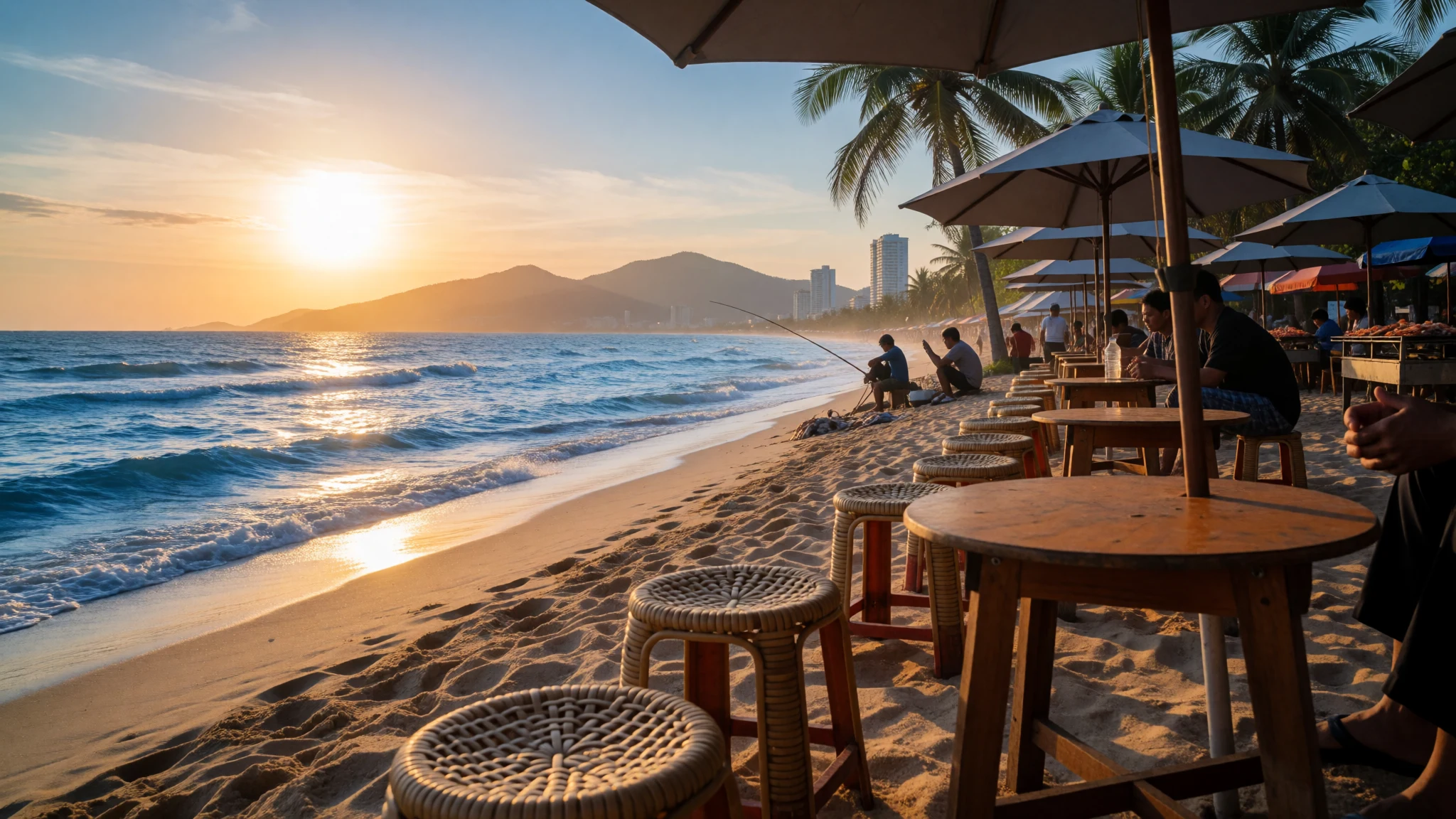
Quy Nhon is a calm Vietnamese beach city with fresh seafood, working fishing boats and old Cham brick towers, and very few foreign visitors.
The place
Quy Nhon is a port city on Vietnam's south-central coast, with a population of about 311,000 and a centre that sits only 7 m above sea level. It is the former capital of Bình Định province. After recent administrative reorganisation its central ward became the seat of Gia Lai province, so older maps and newer signs do not always agree. The city faces the East Sea across a curving bay, with layers of hills closing in on both sides and fading into haze. A long promenade follows the beach, and behind it lie streets of shophouses, pagodas, markets and a busy harbour. Hanoi is far to the north and Ho Chi Minh City far to the south, with Da Nang the nearest big city up the coast, which helps explain why Quy Nhon feels like a destination in its own right rather than a stop on a route. Most visitors are Vietnamese families on beach holidays, so menus, lodging and service are pitched at them rather than at foreign tourists. That makes the city calmer and cheaper than better-known resort towns on the same coast, though English is patchy and a translation app earns its place. Fishing still sets the rhythm. Boats go out, catches come in each morning, and open-air eateries along the front grill whatever arrived a few hours earlier. Quy Nhon suits slow beach days, seafood, temple visits and day trips to the old Cham towers.
Its story
The story of Quy Nhon begins well before the modern city. This stretch of coast belonged to the Cham, a Hindu-influenced kingdom whose capital, Vijaya, lay close by. Brick sanctuary towers raised from the eleventh century onwards still stand in and around the city, and they are the clearest surviving evidence of that world: red masonry, tapering tiers and carved details softened by centuries of coastal weather. After Cham power faded, the area passed into Vietnamese hands and the bay became a working harbour for trade and fishing. Buddhism took root in the town, and its temples tell their own history. Long Khánh was first built in the early eighteenth century, though nothing of the original structure remains, while Minh Tịnh was founded in 1917 outside the town and moved in the 1960s to make room for expansion. Both show how often religious buildings here have been rebuilt, relocated and enlarged. The city as an administrative unit is dated to 1986 in its records, and its status has kept shifting since. It was long a provincial capital and has recently been folded into a larger province. For a traveller this layered past is easy to read on foot. Cham towers sit among suburban streets, active pagodas stand a short walk from markets, and the seafront looks thoroughly modern. Little of the past is fenced off as a museum piece; it carries on beside daily life.
What to see
- Doi Cham Towers — Northern edge of the city centre
Two brick towers of about 20 m stand inside the urban area, begun in the eleventh century by the Cham after they made Vijaya their capital. They are the easiest Cham site to reach from the centre, so a short taxi or motorbike ride is enough. Go early, before the heat builds, and look closely at the brickwork.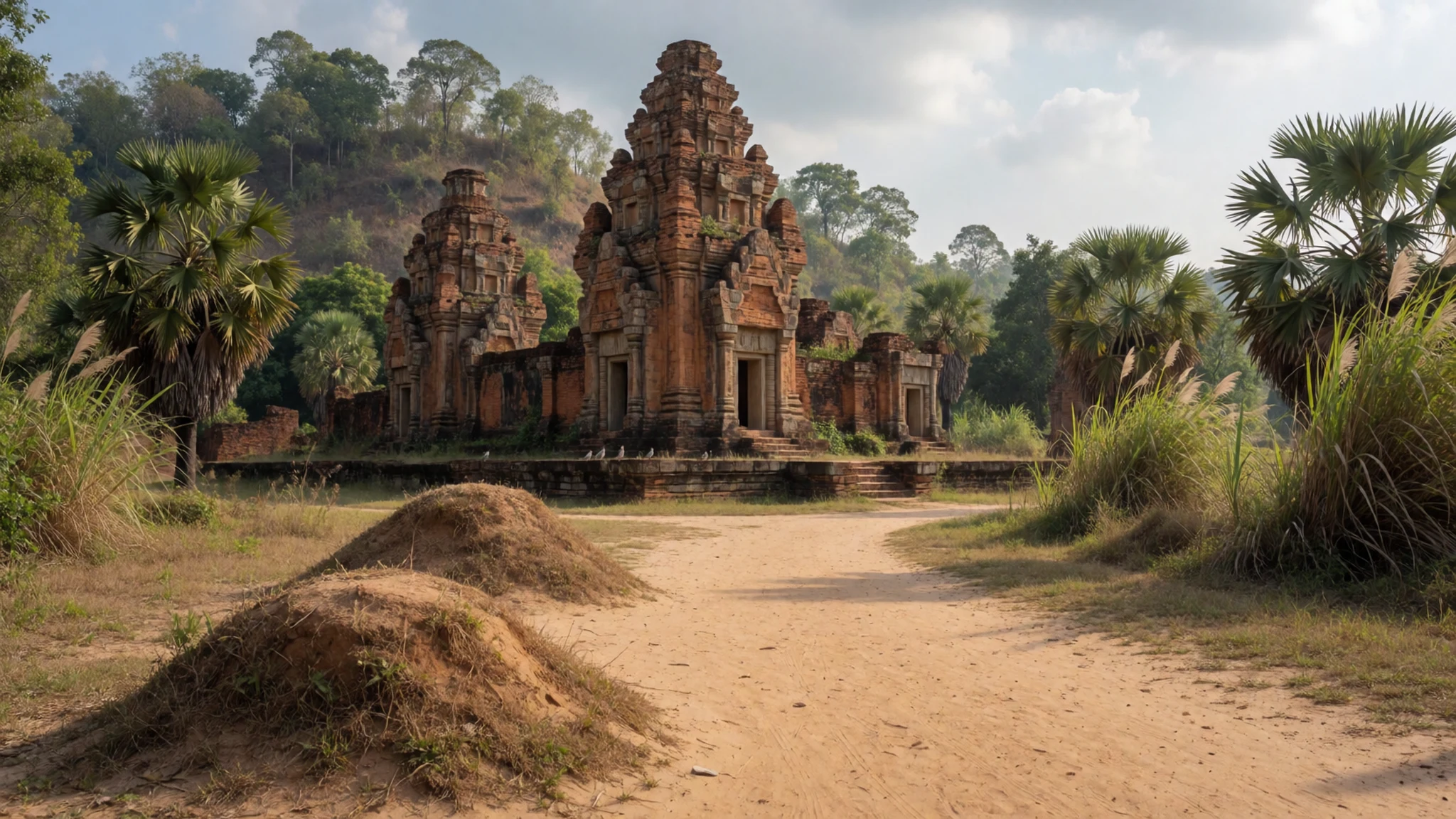
- Banh It Cham Towers — Countryside north of Quy Nhon
Banh It is a larger group of Cham sanctuaries on a rise in the countryside outside the city, and one of the better-restored Cham sites in the region. The brick towers rise in a cluster with views over the surrounding land. Arrange a driver or a half-day trip, and bring water and a hat, as shade is limited.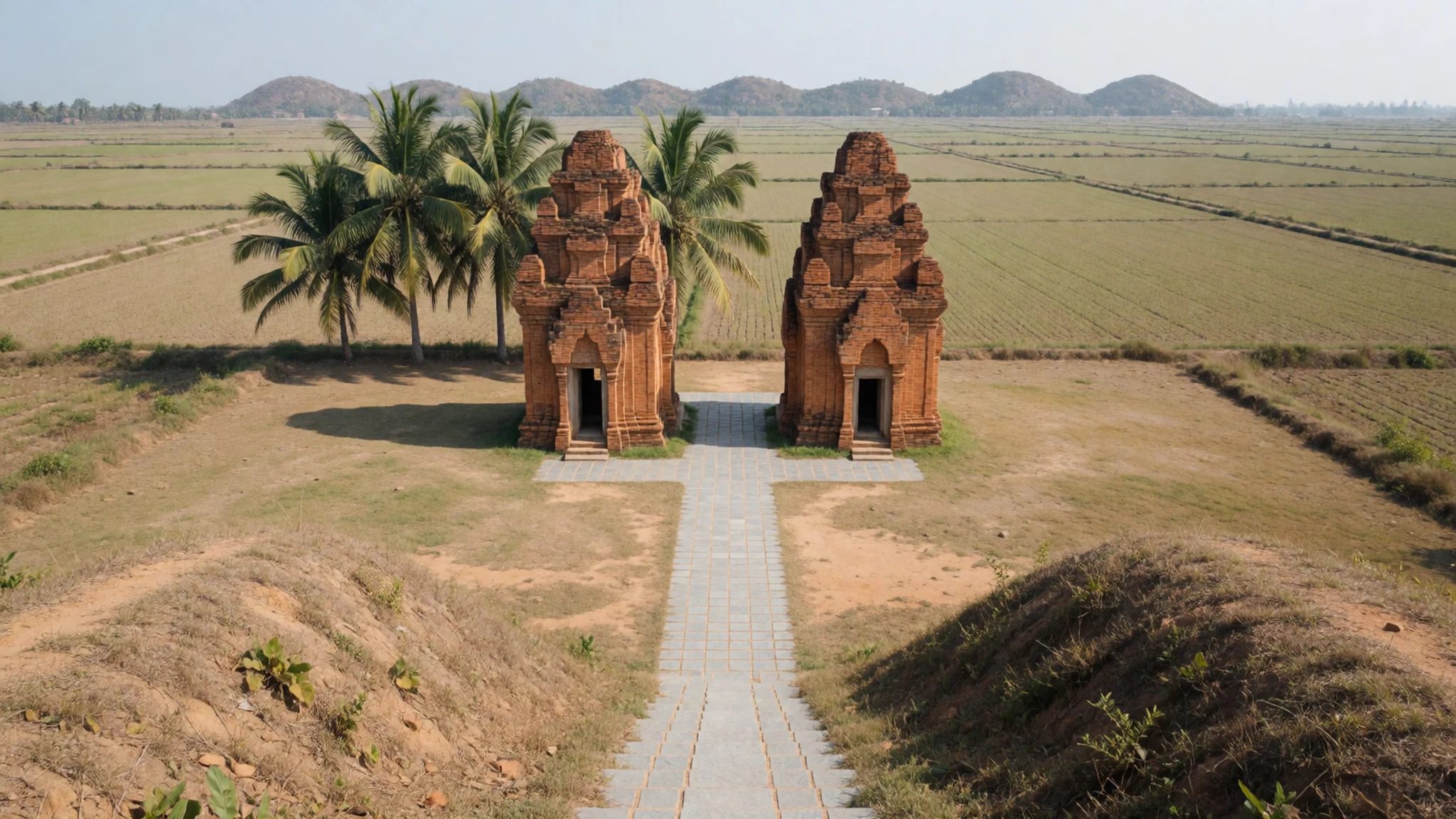
- Duong Long Cham Towers — Inland, about 50 km from the city
Duong Long is a trio of Cham towers built in the late twelfth century, around 50 km from the city. The central tower reaches 24 m, and Wikivoyage describes the group as the tallest Cham structures still standing in Vietnam. Carved decoration survives on the brick. It makes a long day trip, usually by hired car or motorbike.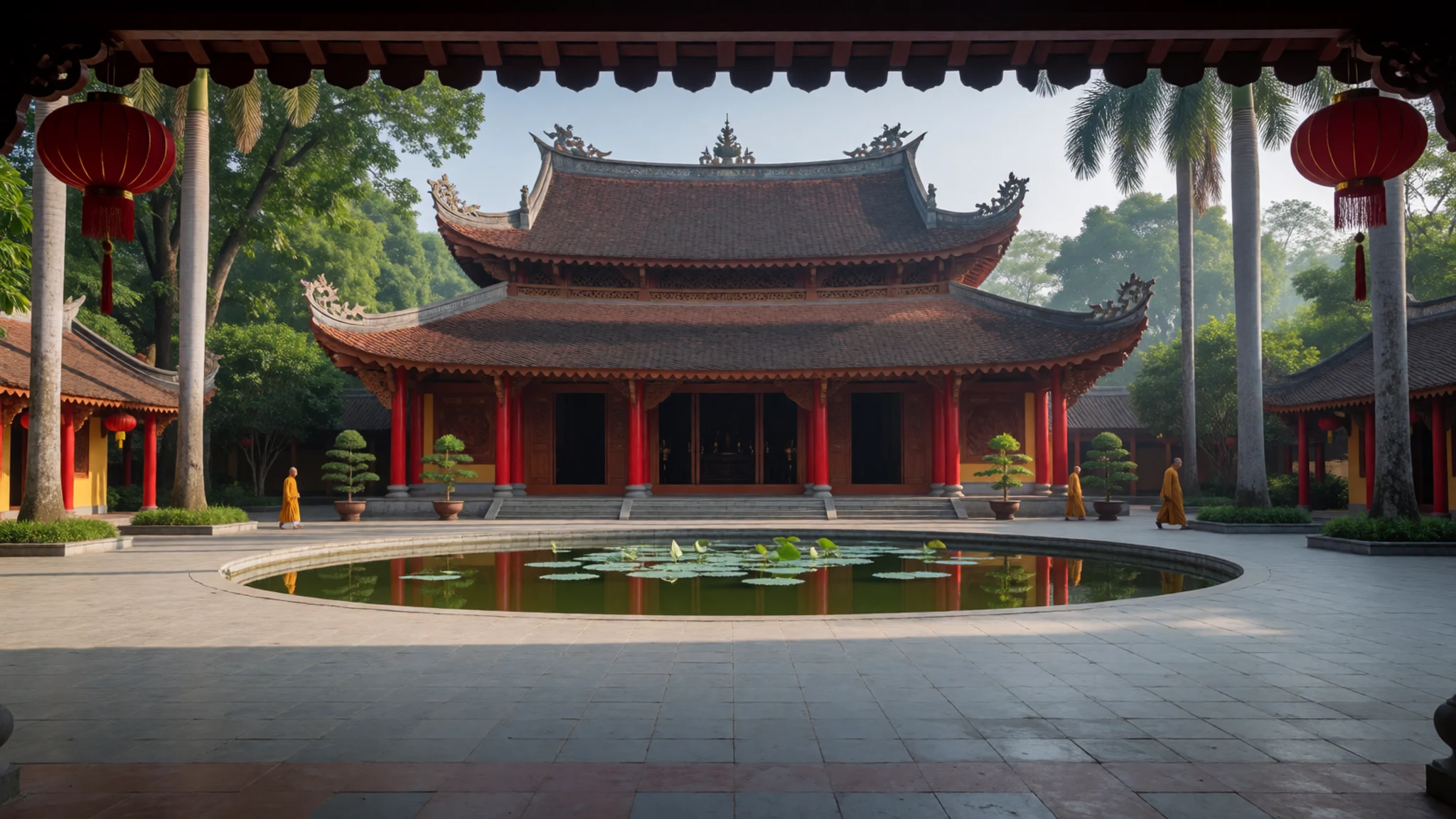
- Chùa Long Khánh — Central Quy Nhon
Long Khánh is a large and important Buddhist temple in the city, first built in the early eighteenth century, though the present buildings are newer. It lies a short distance from the seafront, and local worshippers come and go through the day. Step in quietly, dress modestly and treat it as a working place of worship rather than a photo stop.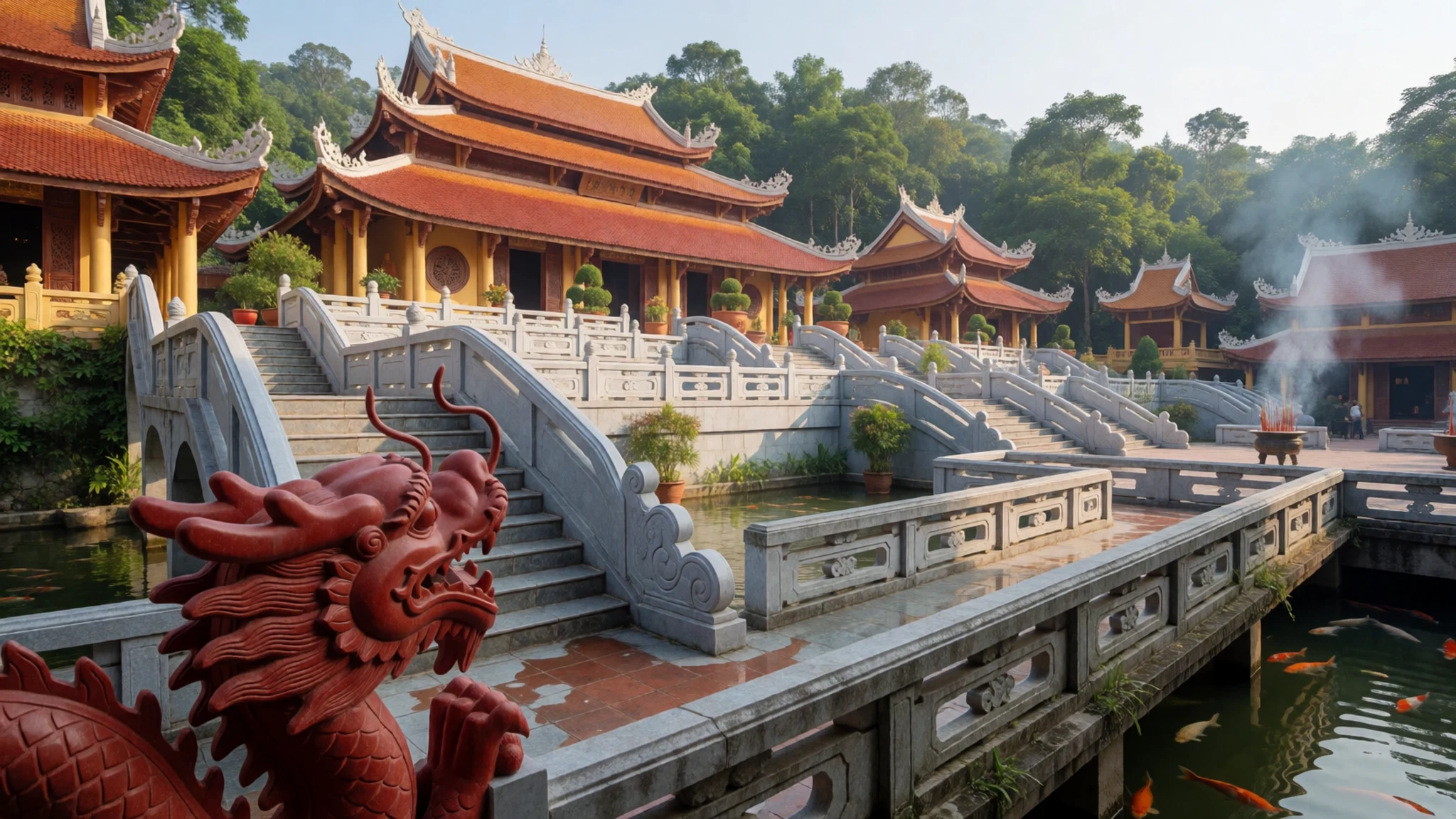
- Chùa Minh Tịnh — Central Quy Nhon
Minh Tịnh is a big, active Mahayana Buddhist pagoda complex in the city centre, about a ten-minute walk west of the Coopmart shop. Founded in 1917 and moved in the 1960s, it has the calm of a lived-in temple. Visit in the morning or late afternoon, when the courtyards are cooler and quieter.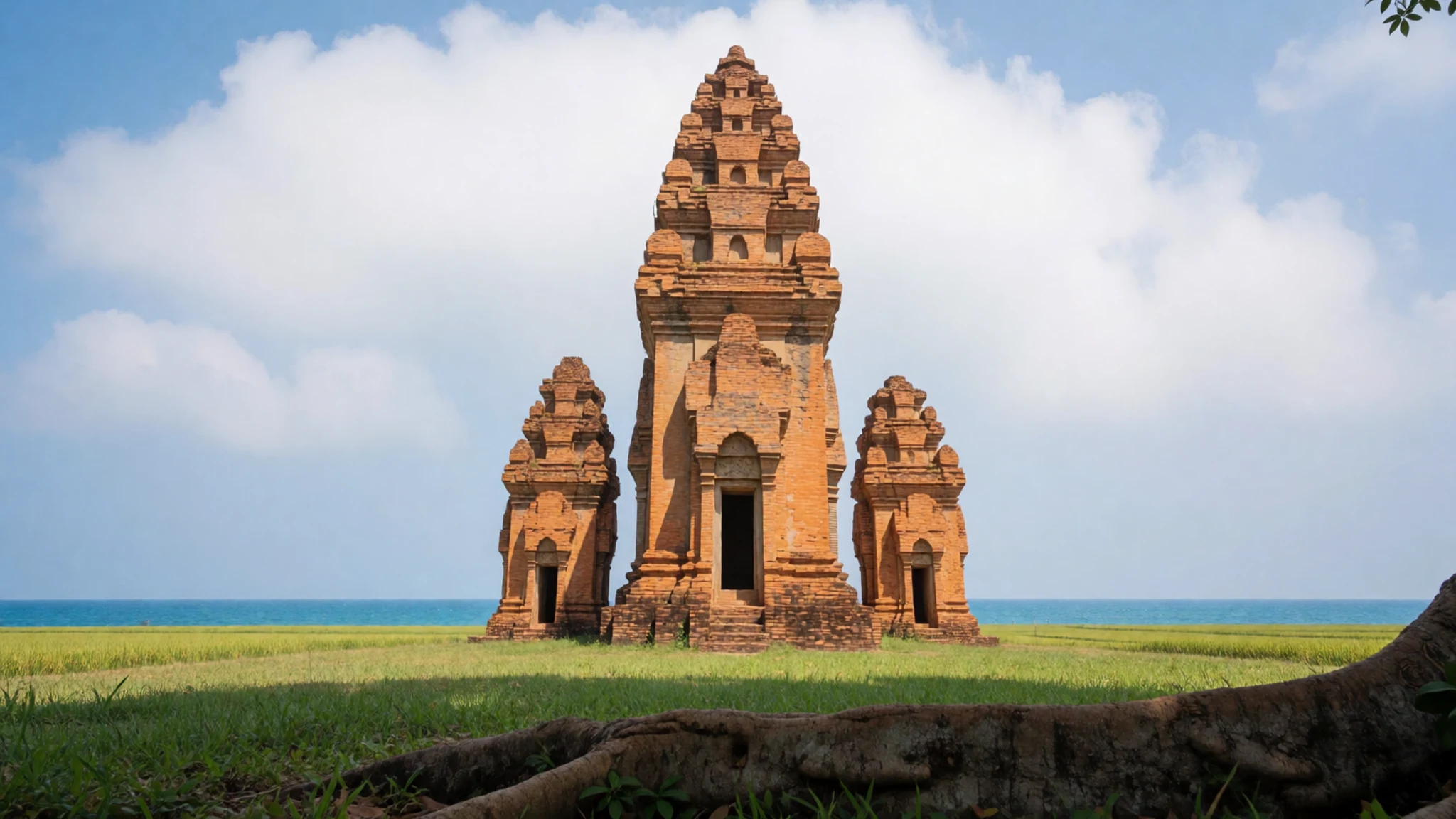
- Seafront promenade and beach — Beachfront, central Quy Nhon
The promenade runs along the city's beach, about 5 km by Wikivoyage's measure, with hills framing each end. Residents walk, swim and exercise here at dawn and dusk, when the heat eases and the light is soft. Midday is hot and shadeless. Stalls and open-air eateries line the inland side.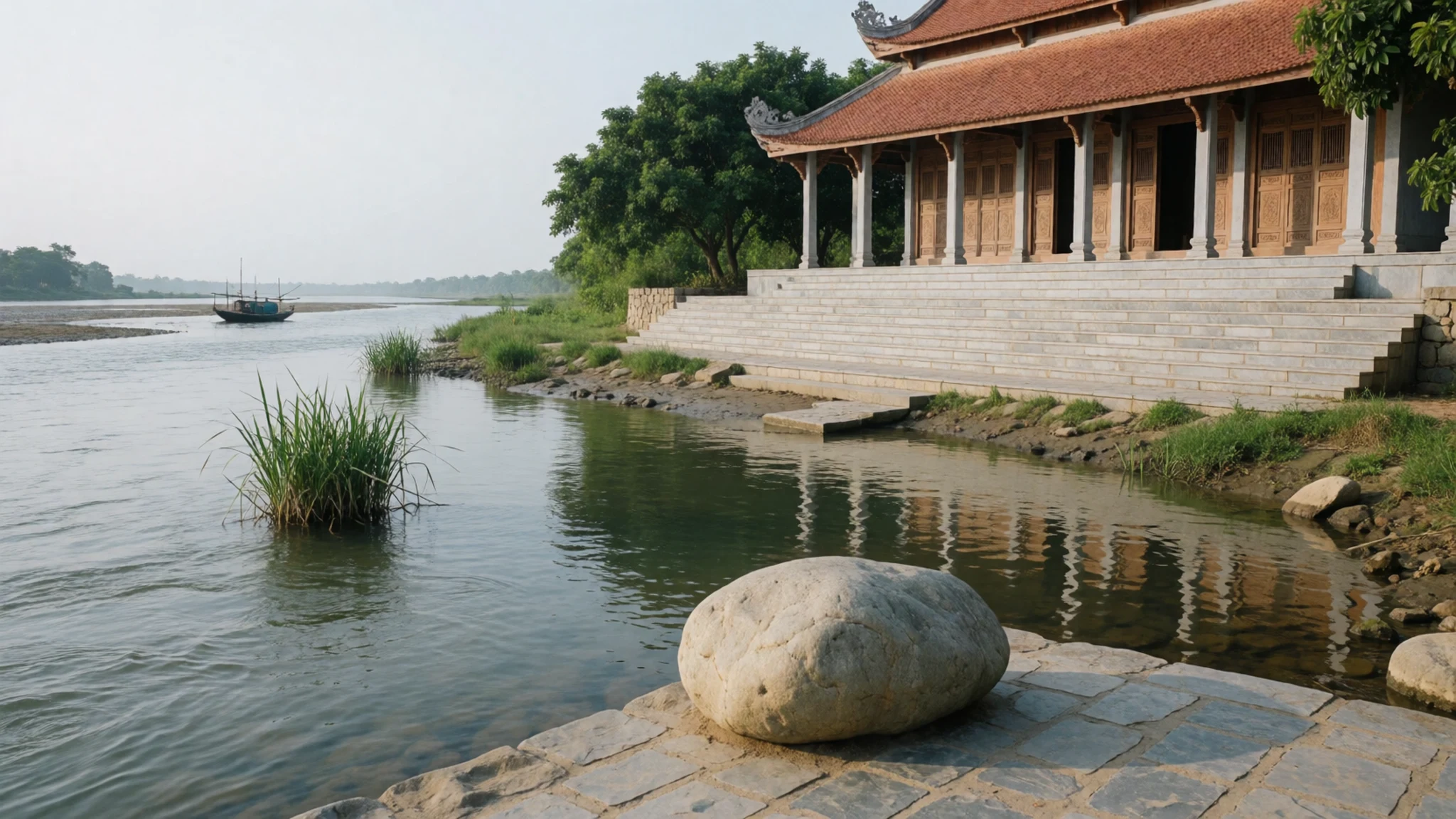
Culture
Culture in Quy Nhon blends Vietnamese Buddhist practice, the remains of Cham civilisation and the habits of a fishing port. Temples such as Long Khánh and Minh Tịnh are in daily use. Worshippers come to light incense, make offerings and sit quietly, and chanting is often audible from the street. The Cham towers are no longer active in the same way, but they are a reminder that Hindu-influenced builders shaped this coast long before Vietnamese settlement. The sea shapes everything else. Fishermen land their catch each morning, families gather on the promenade in the evenings, and meals are social, noisy and stretched over hours. Because most visitors are Vietnamese, there is little staged culture of the kind found in famous tourist towns; what is on show is simply how the city lives. The waterfront has inspired poets for centuries, and that affection survives in the number of residents who walk the front at dusk just to watch the light change. Hospitality is warm even when languages do not match, with gestures, smiles and a good deal of pointing at menus filling the gaps. Tea is often offered and usually accepted, and rushing people is considered poor manners. Remove your shoes before stepping into a temple hall, cover your shoulders and knees, and keep your voice low while worshippers are praying.
What to wear
Fashion in Quy Nhon starts with the áo dài, the long, split-sided silk tunic worn over trousers, which appears at weddings, Tet and school ceremonies across Vietnam. For rural and everyday wear, the looser cotton áo bà ba and the conical palm-leaf nón lá hat are traditional, and fishing families still favour wide hats against sun and spray. Cham communities in central Vietnam keep their own weaving tradition of cotton and silk cloth with geometric patterns, worn at festivals and ceremonies, though much of that craft is practised further south than the city. Day to day, residents dress for the heat: light T-shirts, shorts or loose trousers, sandals, and for motorbike riders long sleeves, gloves, face masks and helmets as protection from the sun. Sportswear is common on the promenade early in the morning, and swimwear stays on the beach. Visitors should pack light cotton or linen that dries quickly, a wide hat, sunglasses and high-factor sun cream. Sandals suit the seafront, but closed shoes with grip are better for the uneven brick and stone at the Cham towers. For temples, carry a scarf or shirt to cover shoulders and knees, and wear footwear that slips off easily. In the wetter months, a thin rain jacket is more useful than an umbrella on a windy coast.
What to eat
- Bún chả cá — Noodle shops in the town centre
Fish cake noodle soup is a low-cost local staple, with springy fish cakes in a light, savoury broth over rice noodles. It is eaten at breakfast and lunch and suits the heat better than it sounds. Look for busy, plain noodle shops in the town centre.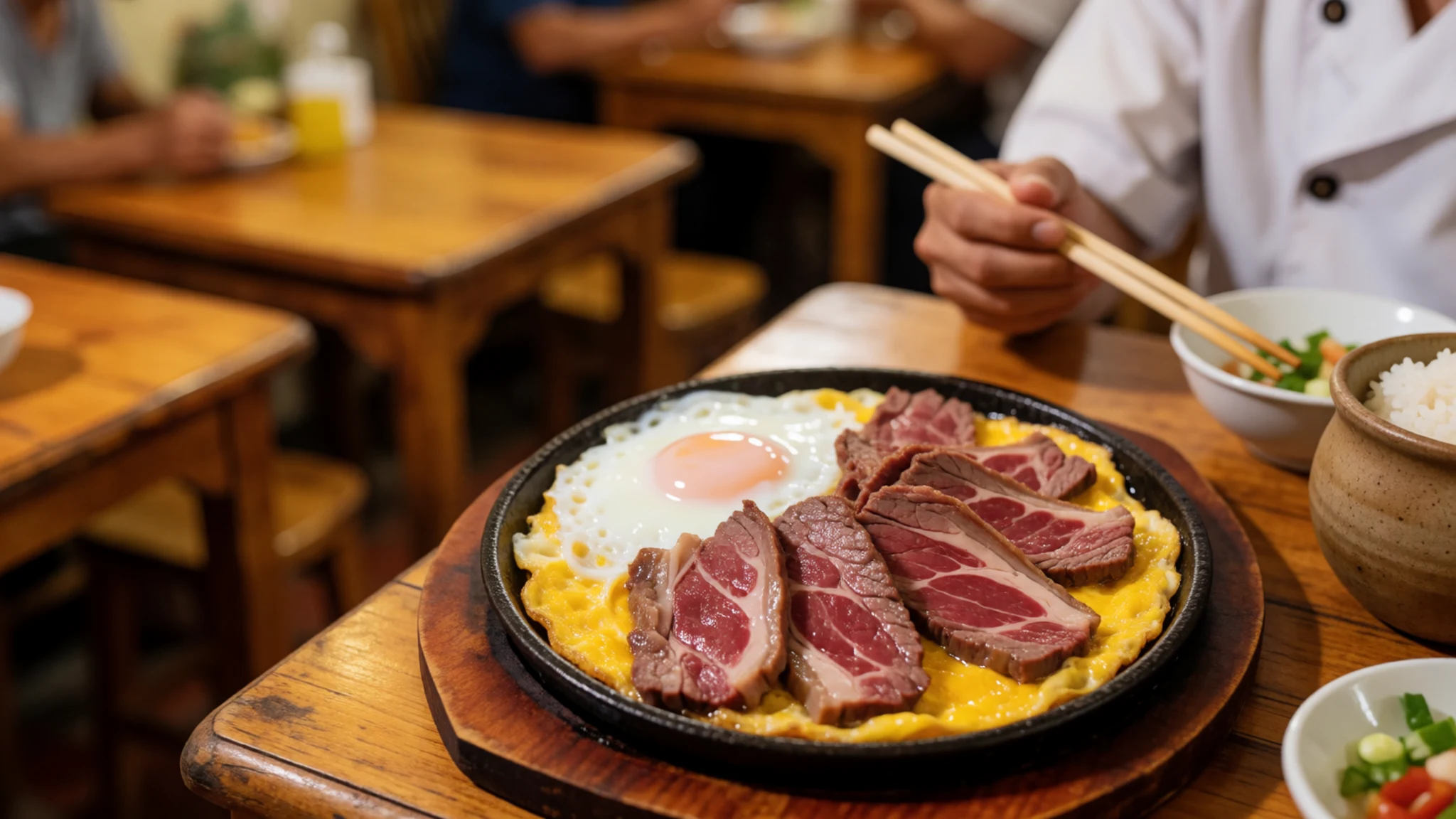
- Bò né — Casual restaurants in the town centre
Steak and eggs arrive sizzling on a small hot plate, usually with bread, pâté and fresh herbs on the side. It is a hearty breakfast or light dinner, popular with students and office workers. Look for two-storey, no-fuss restaurants in the centre.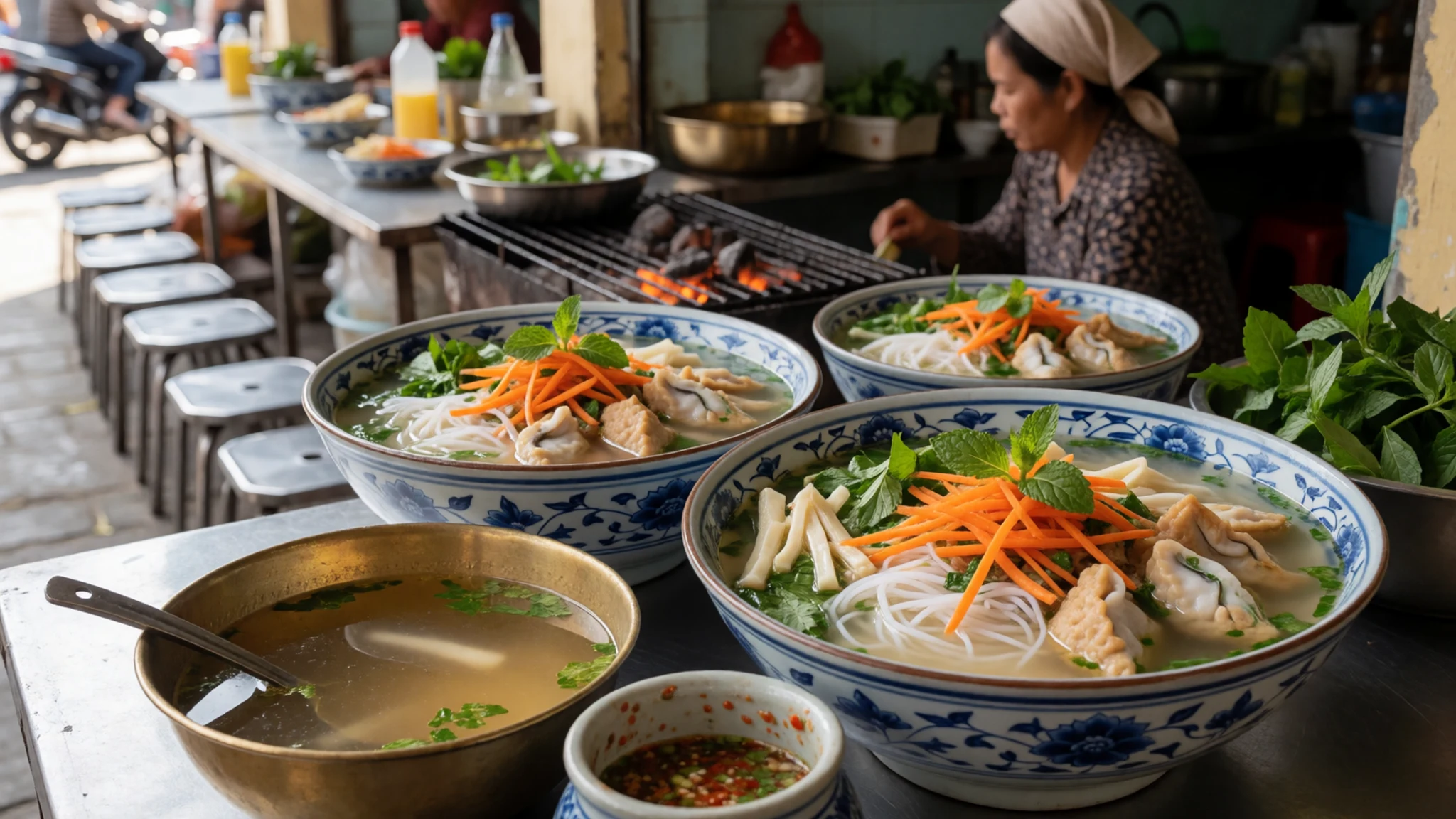
- Bê thui — Small specialist restaurants in the town
Spit-roasted young veal is a central Vietnamese speciality, sliced thin and eaten with herbs, rice paper and a dipping sauce. Its home is nearby Quảng Nam, but small restaurants in Quy Nhon serve it too. It is best shared among a group. - Grilled and steamed seafood — Open-air eateries along the beachfront
With boats landing catches every morning, the seafood is the city's main draw: fish, squid, prawns and crab grilled, steamed or stewed. The open-air eateries facing the beach serve it at low plastic tables under trees. Choose from the display and ask how it is cooked.
- Ốc, shellfish — Small shellfish restaurants near the beach
Snails and other shellfish are cooked in many ways, usually with lemongrass, chilli and salt. They are eaten slowly as a social snack in the evening, with cold drinks. Small shellfish restaurants a couple of blocks back from the beach are the usual choice. - Dê, goat dishes — Large open-sided restaurants in the centre
Goat is a local favourite, served as grilled meat, hot pot or offal dishes, often with herbs and rice paper. Large, open-sided restaurants in the city centre specialise in it, and every part of the animal can be on the menu. Adventurous eaters will enjoy it.
Plan it
Best time. March to June is the usual choice for sunny beach weather; the coast tends to get heavier rain and storms in the later months of the year, so check the forecast before booking.
How long. 2–3
Getting there. Phù Cát airport has flights from Hanoi and Ho Chi Minh City on Vietnam Airlines, VietJet Air and Bamboo Airways. A small shuttle bus meets flights and takes about 45 minutes to the city centre, and taxis or Grab are available at the other end.
Budget. low
Tips
- The airport has no ATM or SIM card counter, so bring some cash and sort out data before landing
- The airport shuttle is small and fills fast, so head outside straight after collecting your bag
- Visit the Cham towers early, before the heat and any tour groups arrive
- Carry water, a hat and sun protection on the promenade and at the towers
- Download a translation app, as English is limited in eateries and shops
Etiquette
- Remove shoes and cover shoulders and knees before entering a temple hall
- Ask before photographing worshippers or fishermen at work
- Keep swimwear to the beach and dress more fully in town
Nearby
Sources
- Wikidata Q36081 (CC0)
- Wikipedia: Quy Nhơn (city) (CC BY-SA 4.0)
- Wikivoyage: Quy Nhon (CC BY-SA 4.0)
- Skyline of Quy Nhon — Vũ Tuấn Quy Nhơn (CC BY 2.5)
- Phối cảnh mặt tiền nhà phố 4 tầng — DoanTamQNU (CC0 1.0)
- Banh It Cham Towers near Quy Nhon — Thrar (WT-shared) (CC BY 3.0)
- Quy Nhon Vietnam Fishing Boats — VeeWin (CC BY-SA 4.0)
- Quy Nhon's sea from Trinh Cong Son's statute — Tandaivietnam (CC BY 4.0)
- Trên đỉnh Gành Ráng nhìn về thành phố Quy Nhơn — Bùi Thụy Đào Nguyên (CC BY 3.0)
- Biển Quy Nhơn — Liv Doan (CC BY-SA 4.0)
- Busy — Pulencio (CC BY 2.5)


