Portland, Oregon
Portland, Oregon, United States
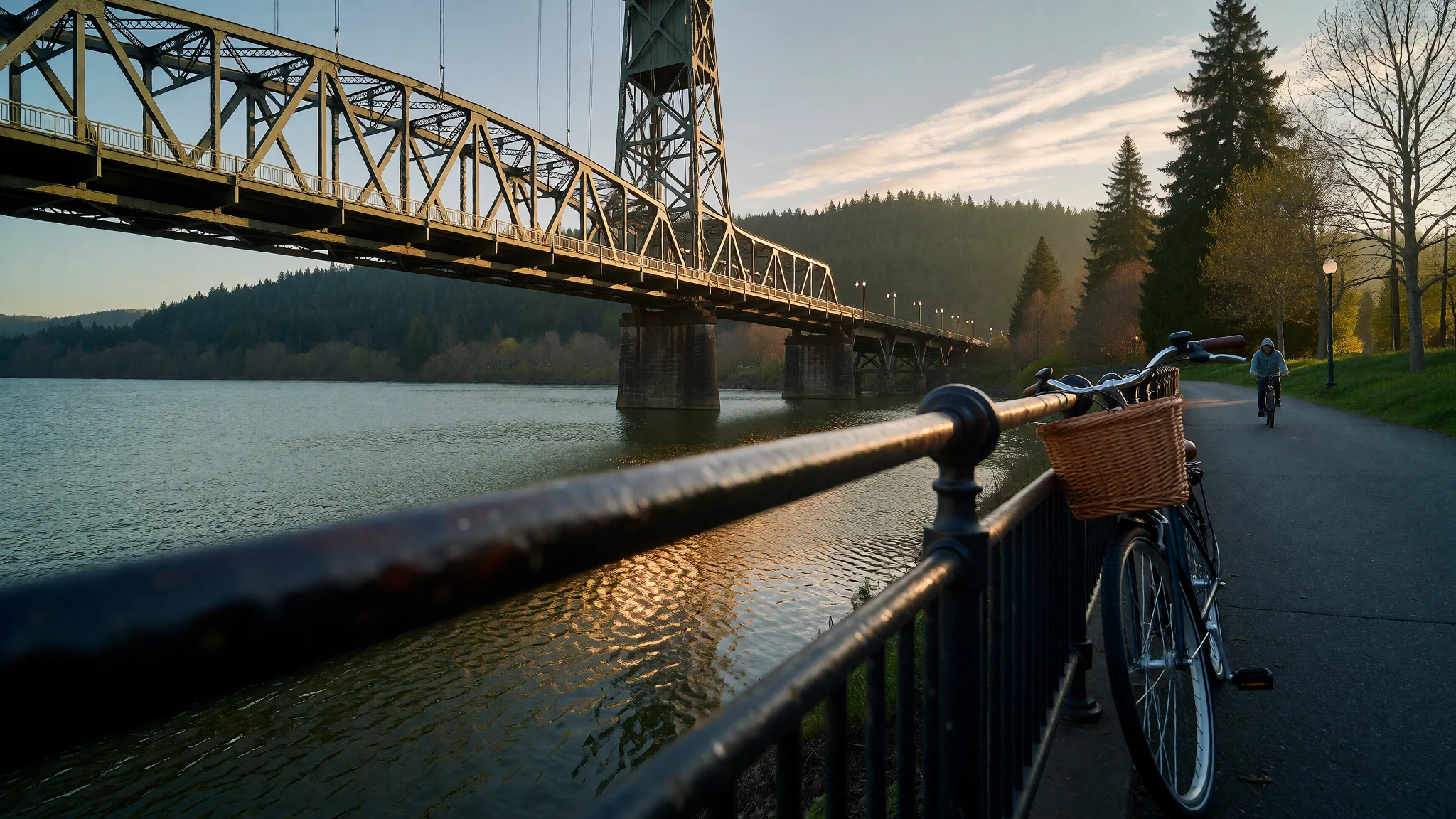
Portland is a walkable river city of bridges, bookshops and food carts, with forested hills and volcanoes on the horizon.
The place
Portland sits in the Pacific Northwest, on the Willamette River just before it joins the Columbia. It is the largest city in Oregon and the seat of Multnomah County, home to 652,503 people, and it stands about 152 m above sea level. The setting does much of the work: rivers on two sides, forested hills to the west, and on clear days snow-capped volcanoes on the horizon. Bridges are the city's signature. The Willamette is crossed by a whole family of them, from a Gothic-towered suspension span in the north to a modern cable-stayed crossing that carries trains, buses, bicycles and pedestrians but no private cars. The centre is flat, compact and easy to walk, laid out in short blocks that suit strolling between cafés, bookshops and small galleries. Beyond the core, each neighbourhood has its own character, many built around a single main street of independent shops. The weather sets the rhythm of life. Winters are grey and drizzly rather than bitterly cold, summers are dry, bright and pleasantly warm, and locals treat the first dry weekend of the season as a small festival. Cycling, public transport and a habit of eating locally are part of daily life, which makes Portland an easy city to visit without a car. It is also honest about its rough edges: housing costs and street homelessness are visible in parts of the centre, so visitors should expect a working city rather than a polished postcard.
Its story
Portland's ground was shaped long before any city arrived. During the last ice age, glacial dams far away in what is now Montana failed repeatedly, and the floods that followed roared down the Columbia and backed up into the Willamette Valley, leaving deep water over the site and a legacy of fertile silt. Later the area belonged to Chinookan peoples, including the Multnomah and the Clackamas, whose villages made this one of the busier districts of the Pacific coast. Meriwether Lewis and William Clark recorded the Chinook here in 1805. Settlers followed the Oregon Trail in large numbers during the 1840s, many stopping first at Oregon City. A new town grew on the river's west bank, roughly between that settlement and the Hudson's Bay Company post at Fort Vancouver. Early residents called it Stumptown, or the Clearing, after the felled trees that made room for it. The name Portland was settled by a coin toss, and the winning side chose a namesake in Maine, itself named after the Isle of Portland in England. In the nineteenth century the town became a river port and timber centre with a rowdy waterfront reputation. The twentieth brought wartime shipbuilding, the painful internment of Japanese Americans, organised crime and, later, a lively counterculture. That layered past explains today's mix of working docks, old brick districts and an experimental, independent streak.
What to see
- Pioneer Courthouse Square — Downtown
Pioneer Courthouse Square is the open brick plaza at the heart of downtown, often called the city's living room. Light rail and buses pass its edges, and the square fills with lunch crowds, buskers and seasonal events. It is the easiest place to get your bearings on a first morning.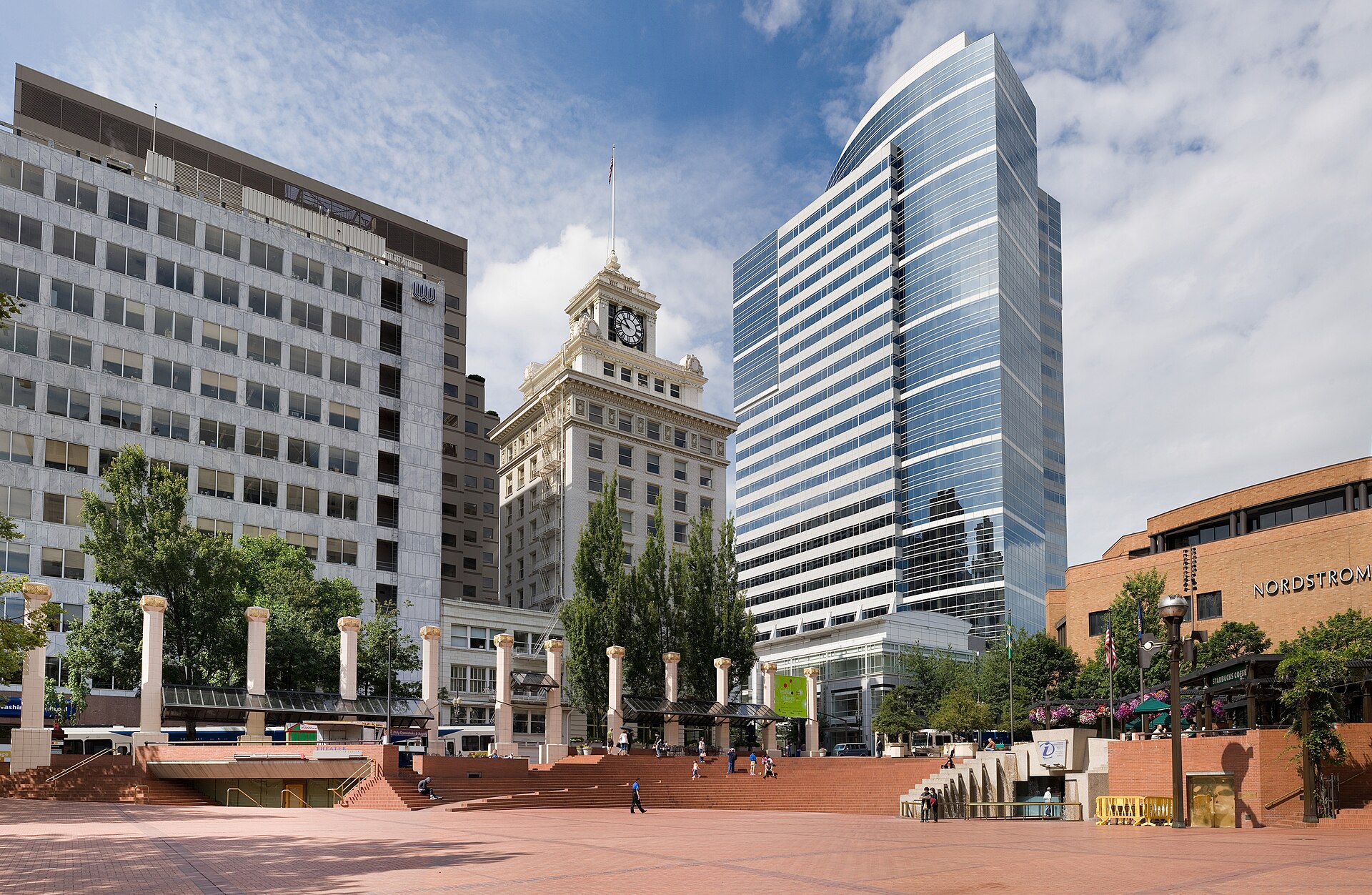
- St Johns Bridge — St Johns, north Portland
St Johns Bridge is a green suspension bridge with Gothic stone-like towers, crossing the Willamette in the north of the city. The best views are from the riverside park beneath it, where the arches look almost like a cathedral nave. Walking across is possible but noisy and breezy.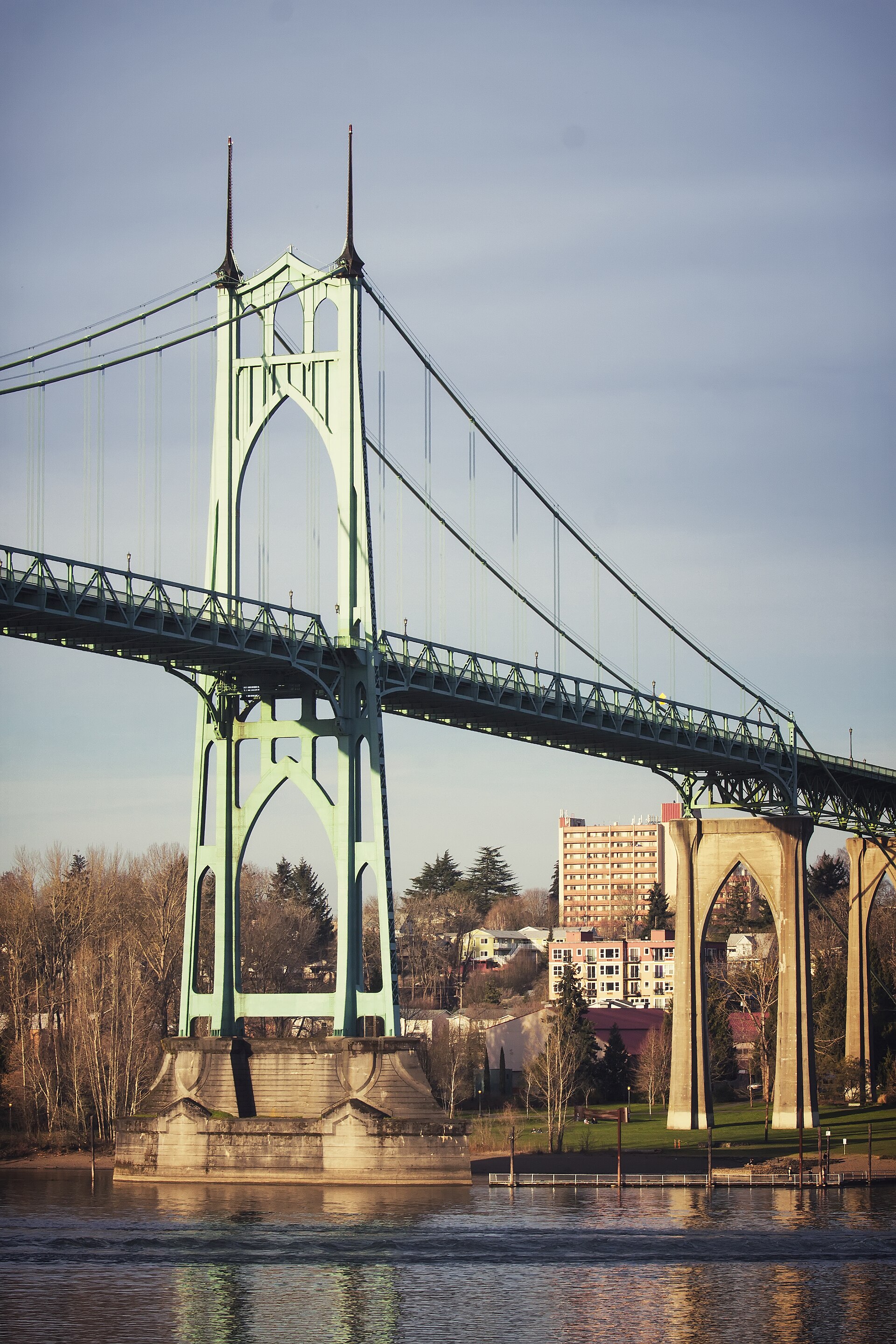
- Tilikum Crossing — South Waterfront and the inner east side
Tilikum Crossing is a modern cable-stayed bridge for light rail, streetcars, buses, cyclists and walkers only. Its white towers glow at dusk, and the riverside paths on either bank make a pleasant evening loop. It shows how seriously Portland takes life without a private car.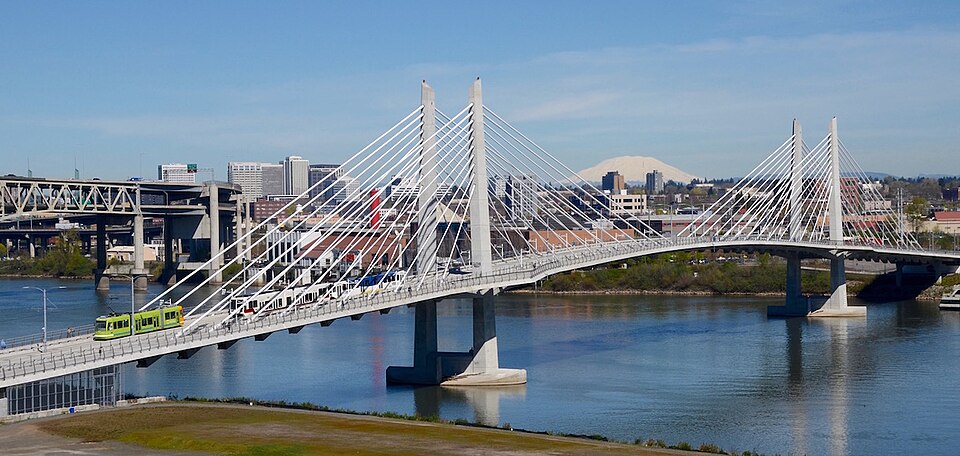
- Union Station — Old Town and the Pearl District edge
Union Station is the old brick railway terminal on the northern edge of downtown, topped by a tall clock tower and a neon sign. Inside are high ceilings and wooden benches, and trains still run from here. Photographs taken on a snowy day show how rarely the city sees such a scene.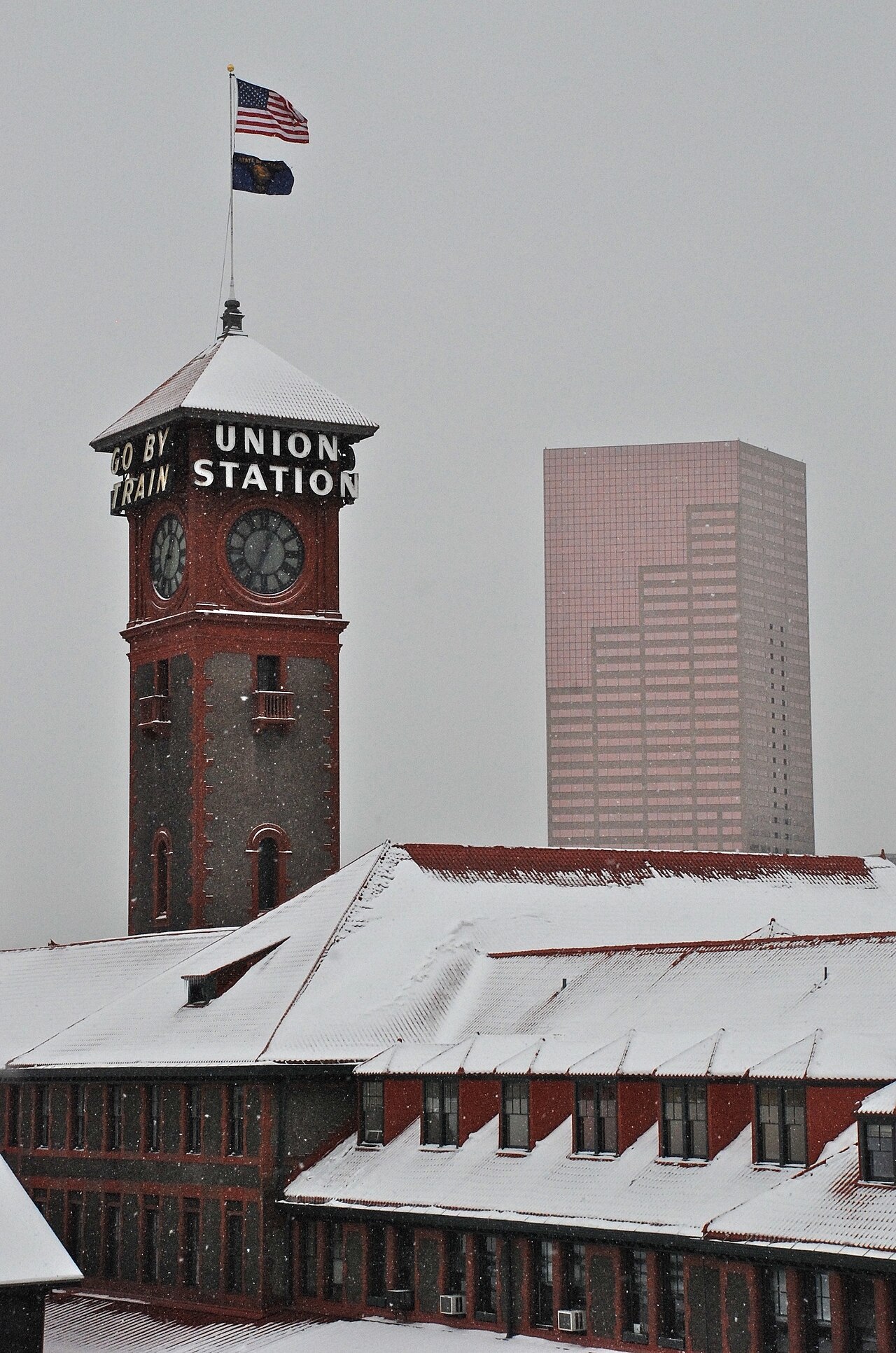
- Rose Festival and the waterfront — Waterfront Park, downtown
The Rose Festival takes over the city at the start of June with parades, a waterfront carnival and visiting naval ships. Crowds are large and accommodation fills early. Outside festival week, the same riverside park is a calm place for walking, cycling and watching the bridges lift for boats.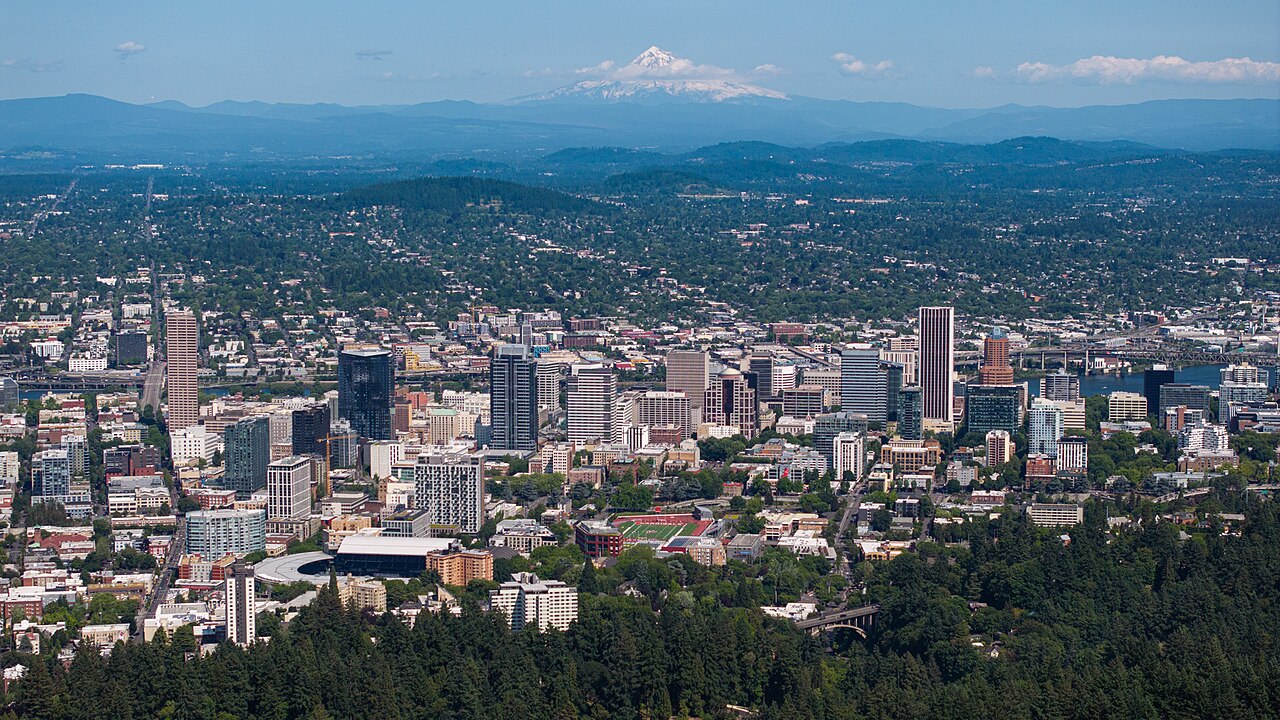
Culture
Portland takes pride in being independent, a little eccentric and fond of making things by hand. Locals support small bookshops, record stores, roasters, breweries and craft markets, and many people still speak of the city as slightly off the mainstream. The performing arts are well rooted, with an opera, a symphony orchestra, a baroque orchestra, a youth philharmonic, a ballet company and several theatres, including companies for children and for comedy. The music scene has drawn praise from the British press, and the city's garage-rock bands are linked forever with the song Louie Louie. Sport matters too. The Timbers, the Thorns and the Trail Blazers have loyal followings, and the Timbers Army supporters sing through whole matches from the stand behind one goal. Outdoor life is part of the culture: people cycle in the rain, hike at weekends in the Columbia River Gorge and think nothing of wearing a waterproof to dinner. The city also has a long tradition of political protest and public debate, and it embraces unusual events such as the annual naked bike ride held in early June. Visitors may find the atmosphere relaxed and friendly, though conversations about housing, homelessness and politics can be frank. Tipping is expected in restaurants and bars, so add a tip to your bill, and look for cyclists in the bike lane before you step off the kerb.
What to wear
Portland has no single national costume, but the peoples of this region, including the Chinookan communities, traditionally made clothing and hats from woven cedar bark and spruce root, along with tanned hides. Tribal artists still weave these materials today, and they can be seen in museums and at cultural events. Everyday dress in the city is practical and relaxed. Expect waterproof shells, fleece, wool jumpers, jeans, flannel shirts, beanies and sturdy walking shoes, with bright raincoats common in the wet months. Oregon wool blankets and outdoor brands are popular, and vintage and second-hand clothing is a point of local pride. Few people dress up, even for the opera or a good restaurant, and a clean jacket and neat trousers or skirt are plenty. Visitors should dress in layers, because mornings can be cool even in summer and the weather may turn quickly. In the rainy season, bring a proper waterproof jacket and shoes with good grip for wet pavements and hillside trails; many locals skip umbrellas because the rain is often light and wind can ruin them. In summer, add a sun hat, sunglasses and sunscreen, as the dry heat can build on exposed bridges and riverside paths. There are no strict dress rules for religious or cultural sites, but modest, respectful clothing is welcome in churches, mosques and other places of worship.
What to eat
- Tacos and fresh tortillas — Taquerias across the inner east side and downtown
Mexican food is a local favourite, from relaxed taquerias to sit-down restaurants. Tortillas are often made in-house and sold by the pack. Try tacos, burritos and margaritas, and look for places that stress seasonal, locally sourced ingredients. - Lebanese plates — Family-owned Lebanese restaurants, several with more than one branch
Family-run Lebanese eateries serve dishes made from scratch, such as hummus, grilled meats, salads and warm bread. They tend to be good value, and vegetarians are well served by the many mezze options. - Pizza by the slice — Pizza counters on the east side and downtown
Portland takes pizza seriously, with thin-crust pies, thick-crust pies and rock-and-metal-themed pizzerias that serve slices late into the night. Toppings often include local cheeses and vegetables, and vegan options are common. - Food-cart pods — Food-cart pods in downtown car parks and east-side lots
Clusters of small food trucks and carts offer cheap, varied lunches, from Thai noodles to Georgian dumplings. They are the fastest way to taste several cuisines in one visit, and many have covered seating for rainy days. - Deli sandwiches and local produce — Local natural-food supermarkets and weekend farmers' markets
Natural-food supermarkets and farmers' markets sell sandwiches, salads and fresh produce, often with bread and fillings chosen at the counter. Summer berries and Oregon cheese make an easy picnic for a riverside bench.
Plan it
Best time. June to September is the best window: the weather is dry, bright and warm, with the Rose Festival in early June. Winters are grey, mild and wet, so spring and autumn can be pleasant but unpredictable.
How long. 2–3
Getting there. Fly to Portland International Airport (PDX), which has nonstop flights from many US hubs and some from Canada, London Heathrow and Amsterdam; the MAX light-rail line connects the airport to the city centre. Trains serve Union Station downtown.
Budget. mid
Tips
- Book accommodation early if visiting during Rose Festival week in early June
- Use light rail, streetcars and buses instead of hiring a car for the city centre
- Carry a light waterproof from autumn to spring, and a layer for cool summer mornings
- Cards are widely accepted, but keep a little cash for food carts and markets
- Check the official city site, portland.gov, for events, road closures and transport updates
Etiquette
- Tip service staff in restaurants and bars
- Give cyclists and scooter riders space, and look before crossing bike lanes
- Treat street-sleeping neighbours with courtesy and avoid photographing people without asking
Nearby
Sources
- Wikidata Q6106 (CC0)
- Wikipedia: Portland, Oregon (rev 1386627456) (CC BY-SA 4.0)
- Wikivoyage: Portland (Oregon) (rev 5424945) (CC BY-SA 4.0)
- Photo: Portland, Oregon Collage (Kalinparsonsgaming) (CC BY-SA 4.0)
- Photo: Portland Oregon Aerial, June 2025 (Spicypepper999) (CC0 1.0)
- Photo: St. John's Bridge (Steven Pavlov) (CC BY-SA 4.0)
- Photo: Portland Convention Center towers at dusk (Oregon Convention Center, Nancy Erz) (CC BY 2.5)
- Photo: Union Station in snow, February 2014 (Steve Morgan) (CC BY 3.0)
- Photo: Pioneer Courthouse Square (Cacophony) (CC BY-SA 1.0)
- Photo: Tilikum Crossing with streetcar and MAX train (Steve Morgan) (CC BY-SA 4.0)
- Photo: Relief location map of the USA (Uwe Dedering) (CC BY 3.0)


