Pongara
Pongara, Gabon
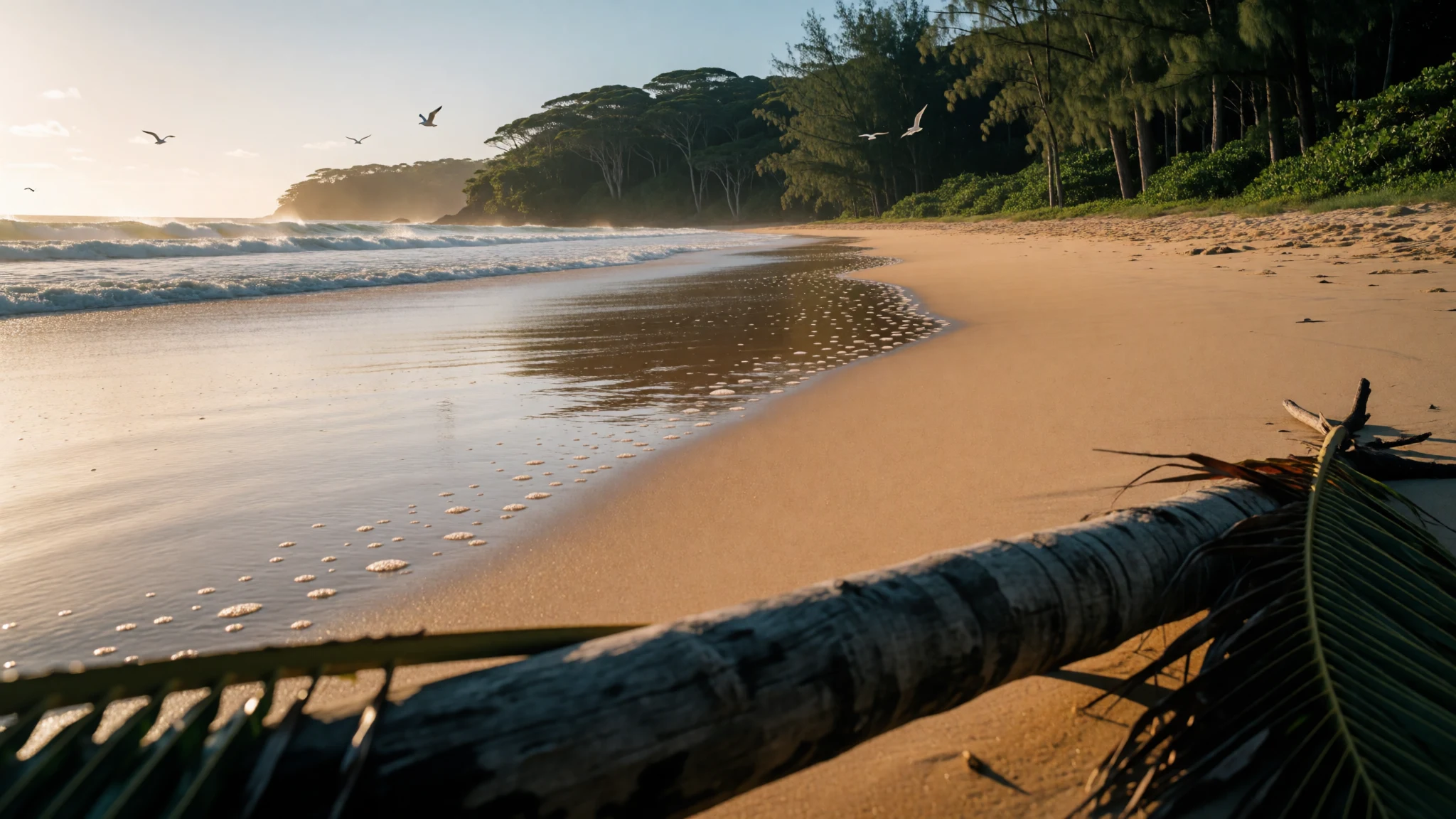
Pongara offers mangroves, forest and an Atlantic beach just across the estuary from Libreville, with forest elephants and nesting sea turtles.
The place
Pongara National Park sits on the southern shore of the Gabon Estuary, directly across the water from Libreville, where the estuary opens into the Atlantic. It was created in 2002, and its landscape is a sequence of wet habitats rather than one single scene: mangrove forest at the tide line, swamp forest and riverine forest behind it, seasonally flooded woodland further in, and patches of grassy savanna. Along the ocean side runs a long strip of sandy beach, which is the part most visitors come for. Several rivers, including the Remboué, the Igombiné and the Gomgoué, cross the park and empty into the estuary, so getting around is often a matter of boats and tides as much as footpaths. Wildlife is the real draw. Forest elephants live here, and the beaches matter for nesting sea turtles, though sightings depend on season, luck and a good guide. This is not a safari park with a network of roads and lodges. Facilities are modest, and most visits are organised as a day trip or a short stay from the capital. The climate is hot and humid all year, with a long wet season. Crowds are rarely the problem; mud, tide tables and boat arrangements are. The park's official page on the Gabon national parks site is the place to check current access.
Its story
Pongara National Park owes its protected status to a decision taken in 2002, when the area was set aside as a national park of Gabon. The timing says something about the place. Libreville stands just across the estuary, and a shoreline within sight of a capital city is usually among the first to be cleared, fished out or built over. Here the mangroves, swamp forest and long beach were kept as a working stretch of wild coast instead. Mangroves matter well beyond the park boundary. Their roots hold the muddy shore together, shelter young fish and give the estuary's fishing communities something to depend on. The beaches are also nesting ground for sea turtles, and forest elephants are sometimes seen near the shore, a reminder that the forest and the ocean meet here without much of a gap. Protection is not only a line on a map. Rangers from Gabon's national parks agency patrol the forest, and the park has hosted ranger training with partner organisations, which shows how much of the work is practical and slow. Pressures remain, including poaching, development near the capital and the plain difficulty of monitoring tidal forest. For a visitor, the story is less about monuments than about a coastline that stayed largely intact beside a city, and about the people paid to keep it that way.
What to see
- The Atlantic beach — Ocean side of the park
The long sandy strip on the Atlantic side is the park's signature stretch, backed by forest rather than buildings. It suits walking at low tide, watching birds along the waterline and, in the right season, learning about nesting sea turtles from rangers. Waves can be rough and currents strong, so treat swimming with caution.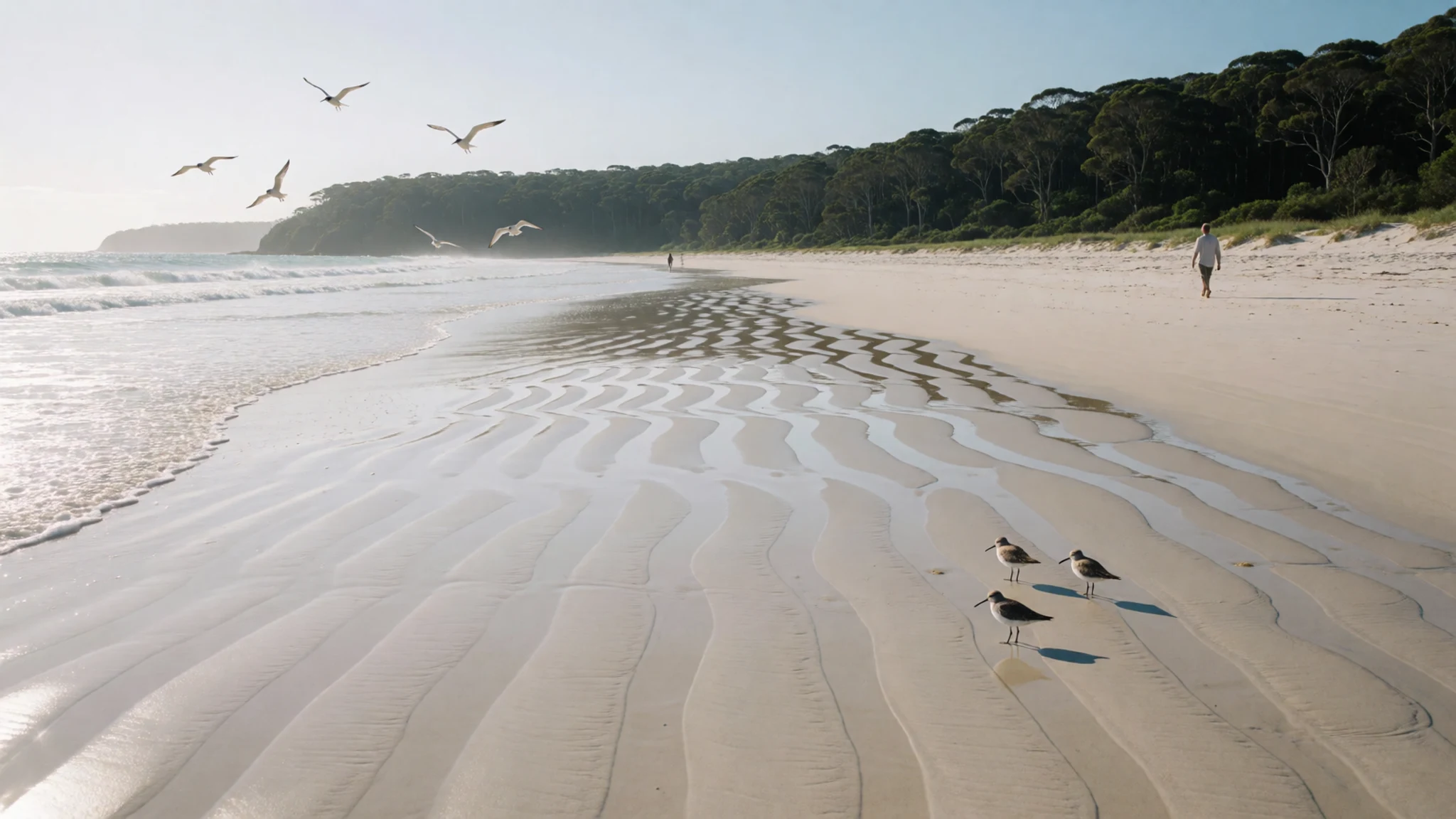
- Mangrove channels by boat — Estuary side of the park
Much of Pongara is best seen from the water. Small boats slip between mangrove roots on the estuary side, where tide and light change the scene every hour. Herons, mudskippers and, with luck, monkeys in the canopy reward patience. Timing depends on the tide, so arrange the trip with a local operator.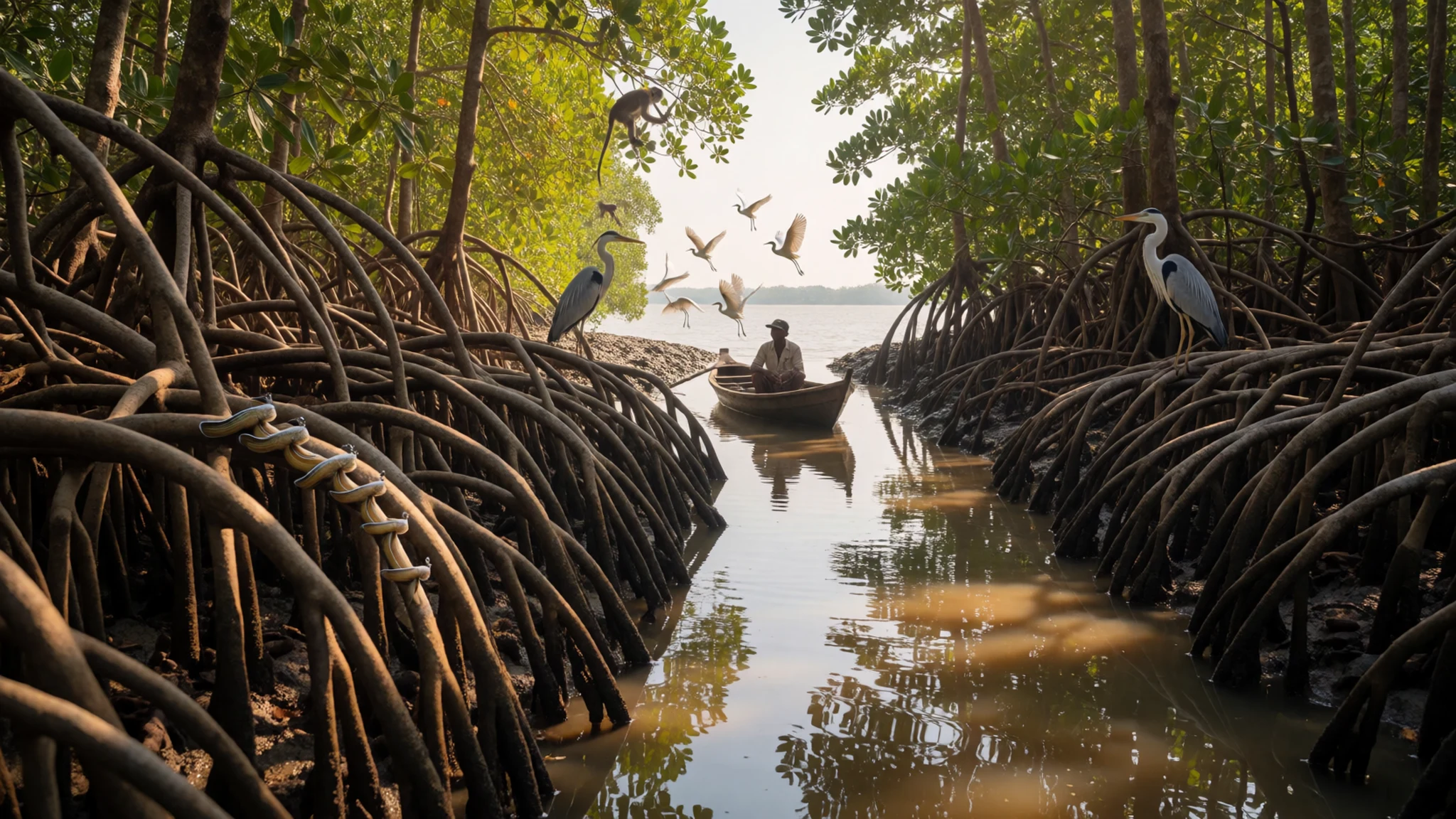
- Forest elephant country — Forest behind the shore
The forest behind the shore is home to forest elephants, a smaller and darker relative of the savanna animal, usually shy and hard to see. Sightings are never guaranteed. Guides read dung, trampled paths and feeding signs, which can be as absorbing as the animal itself. Keep a respectful distance and follow the guide's lead.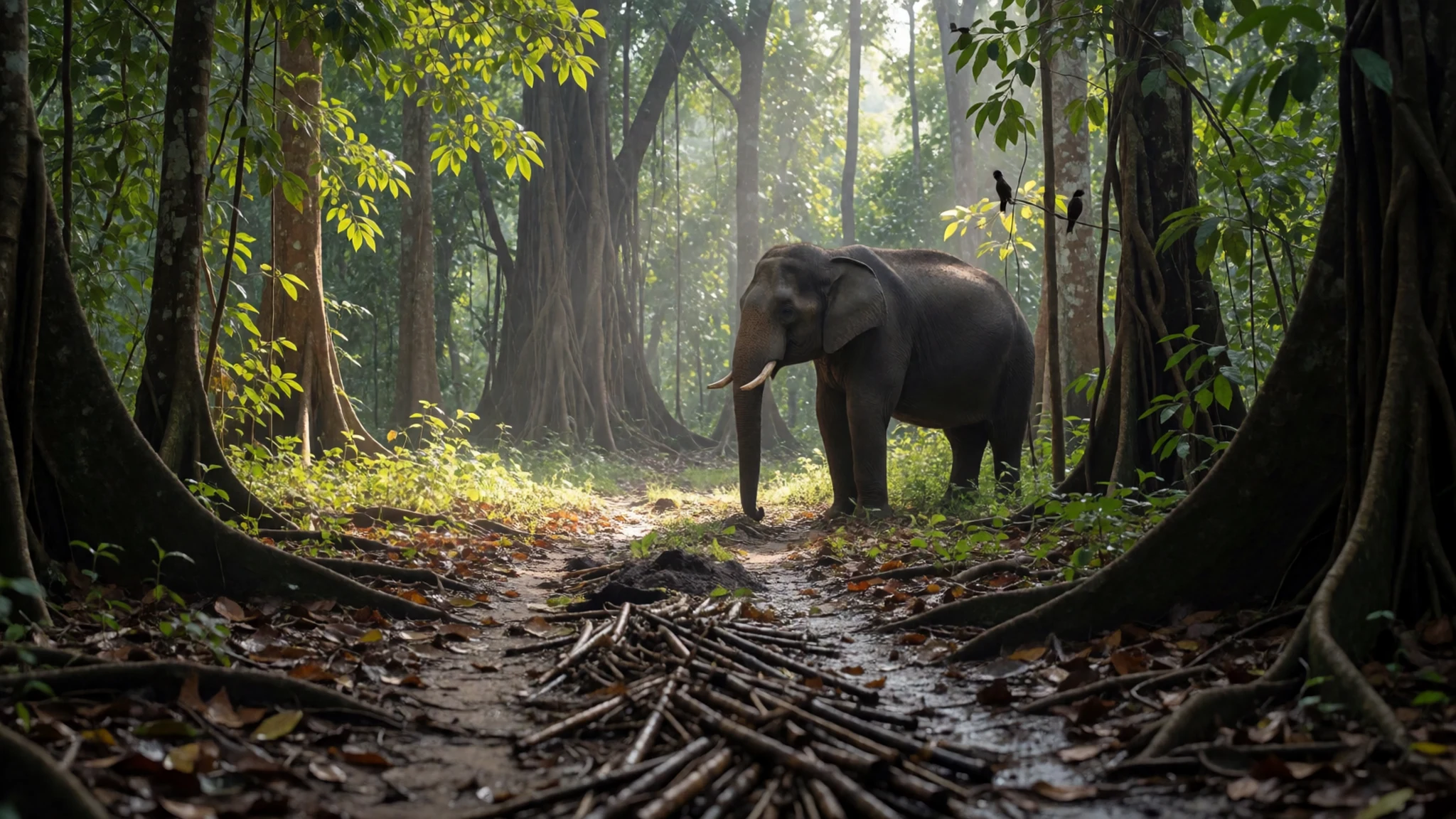
- River mouths of the Remboué, Igombiné and Gomgoué — Rivers meeting the estuary
Three rivers, the Remboué, the Igombiné and the Gomgoué, cross the park to reach the estuary, and their mouths mix fresh and salt water. This is riverine forest, with tall trees leaning over brown channels and sandbanks where birds gather. Trips depend on water levels and tides, so ask the park or an operator what is passable.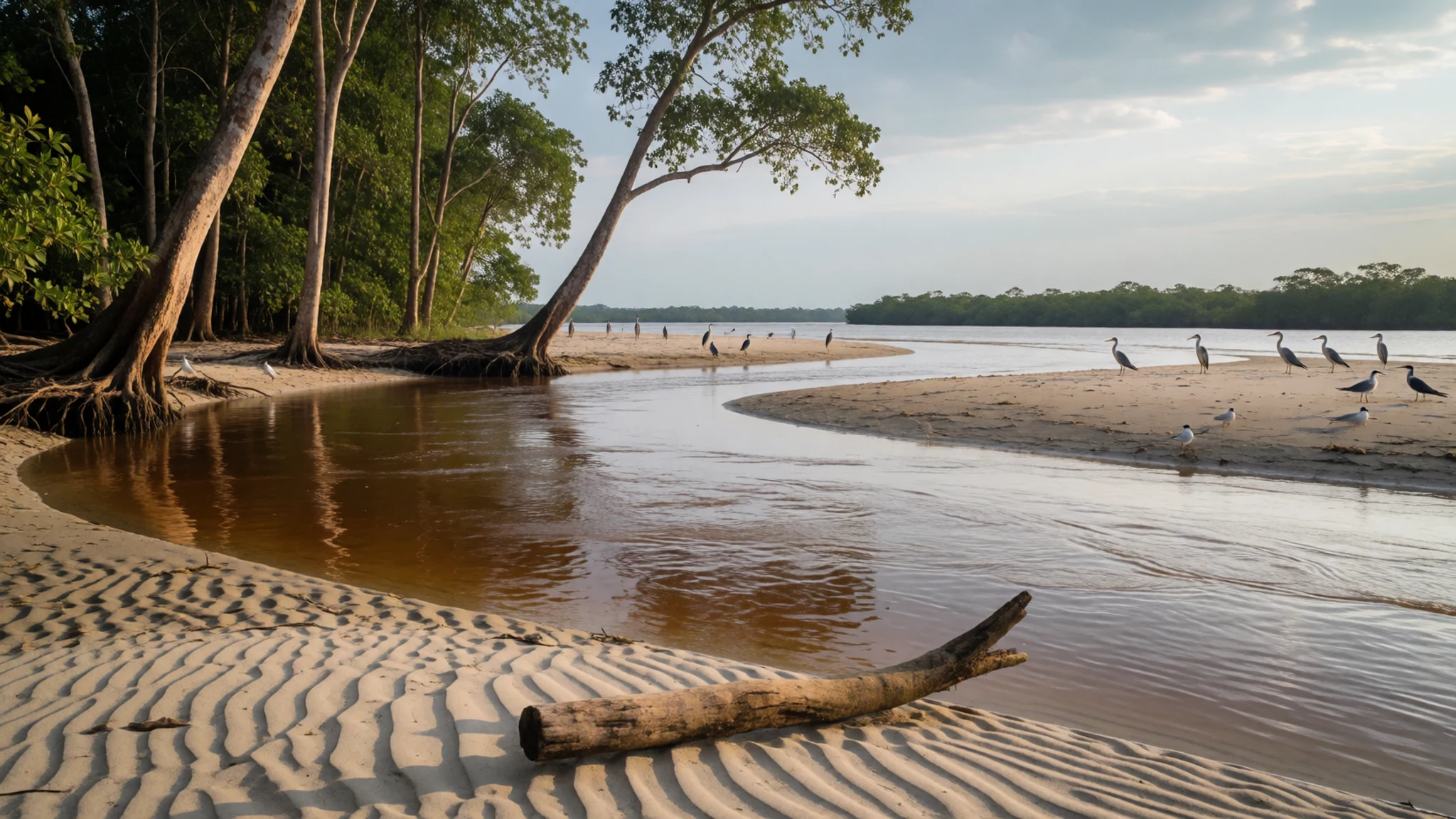
- Savanna and forest trails — Inland park
Inland, the park changes character in small steps: seasonally flooded woodland, drier forest and patches of grassy savanna. Walking here is hot and humid, but it shows how many habitats fit into a short distance. Go early, carry water, and walk with a ranger or licensed guide, since paths can be faint.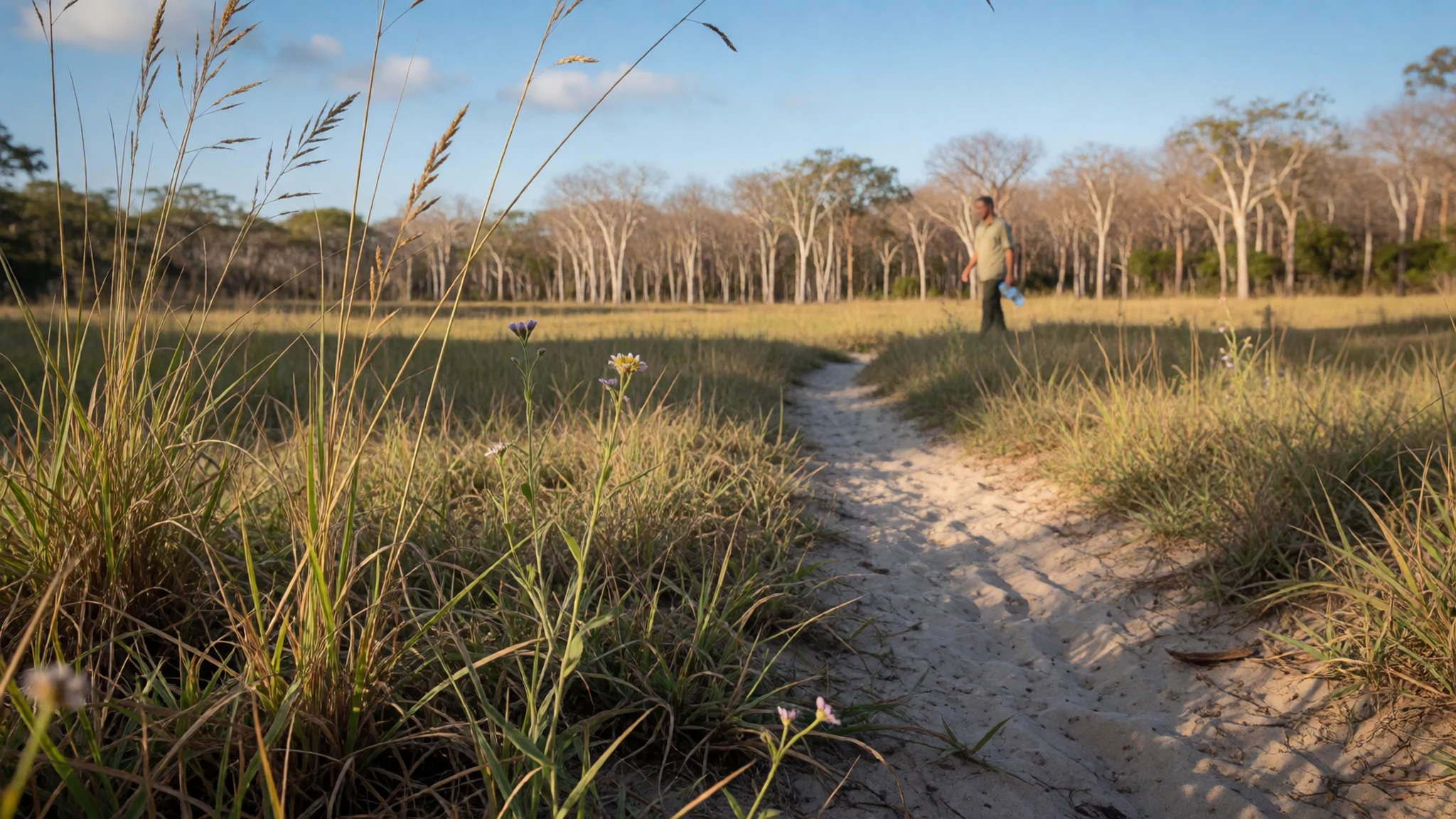
Culture
Pongara National Park lies in a country where French is the official language and where forest life shapes everyday culture, from food to ceremony. Libreville, the capital across the estuary, is the base for most visitors, and communities along the estuary have long relied on fishing, farming and the forest. Greetings matter. A polite bonjour before any question goes a long way, whether at a boat landing, in a market or at a roadside stall. Conservation is a live subject here. Rules on hunting, fishing and entering protected areas exist for reasons local people understand well, and some families have mixed feelings about restrictions on land they once used freely. Listening is better than lecturing. Religion in Gabon blends Christianity with older traditions and initiation societies that remain present in parts of the country, and some forest places carry meanings that outsiders are not always told about. Guides are often the best route to understanding what is open to visitors and what is not. Respect for rangers' instructions is part of local manners as much as park law. Ask permission before photographing people, boats or villages, and leave shells, feathers and turtle eggs exactly where you find them.
What to wear
Pongara National Park is a forest-and-shore setting, but clothing in the surrounding country tells its own story. Traditional dress across Gabon's many communities draws on raffia fibre, bark cloth, beads and, for ceremonies, feathers and animal-skin accents, and raffia weaving is a long-standing craft in Central Africa. These pieces are worn mostly at initiations, dances and other formal gatherings, not day to day. Today the everyday look in Libreville is largely modern: shirts, jeans and office wear, with tailored outfits in printed cotton, often called wax prints or pagne, for church, weddings and celebrations. Visitors should dress for heat, water and insects. Lightweight long sleeves and trousers in quick-drying fabric protect against sun, mosquitoes and scratches. Closed shoes with good grip suit mud and roots, while sandals or water shoes help at boat landings and on the beach. Pack a hat, a rain layer and a dry bag for phones and cameras. Muted greens and browns are better than white on forest walks. In Libreville, covering shoulders and knees is sensible at churches and mosques, and swimwear belongs on the beach rather than in town.
What to eat
- Poulet nyembwe — Gabonese eateries and family-run places in Libreville
Chicken stewed in a thick, rich sauce made from palm nuts, slightly sour and deeply savoury. It is a dish widely served at celebrations and family meals, and it is best with rice or cassava to soak up the sauce.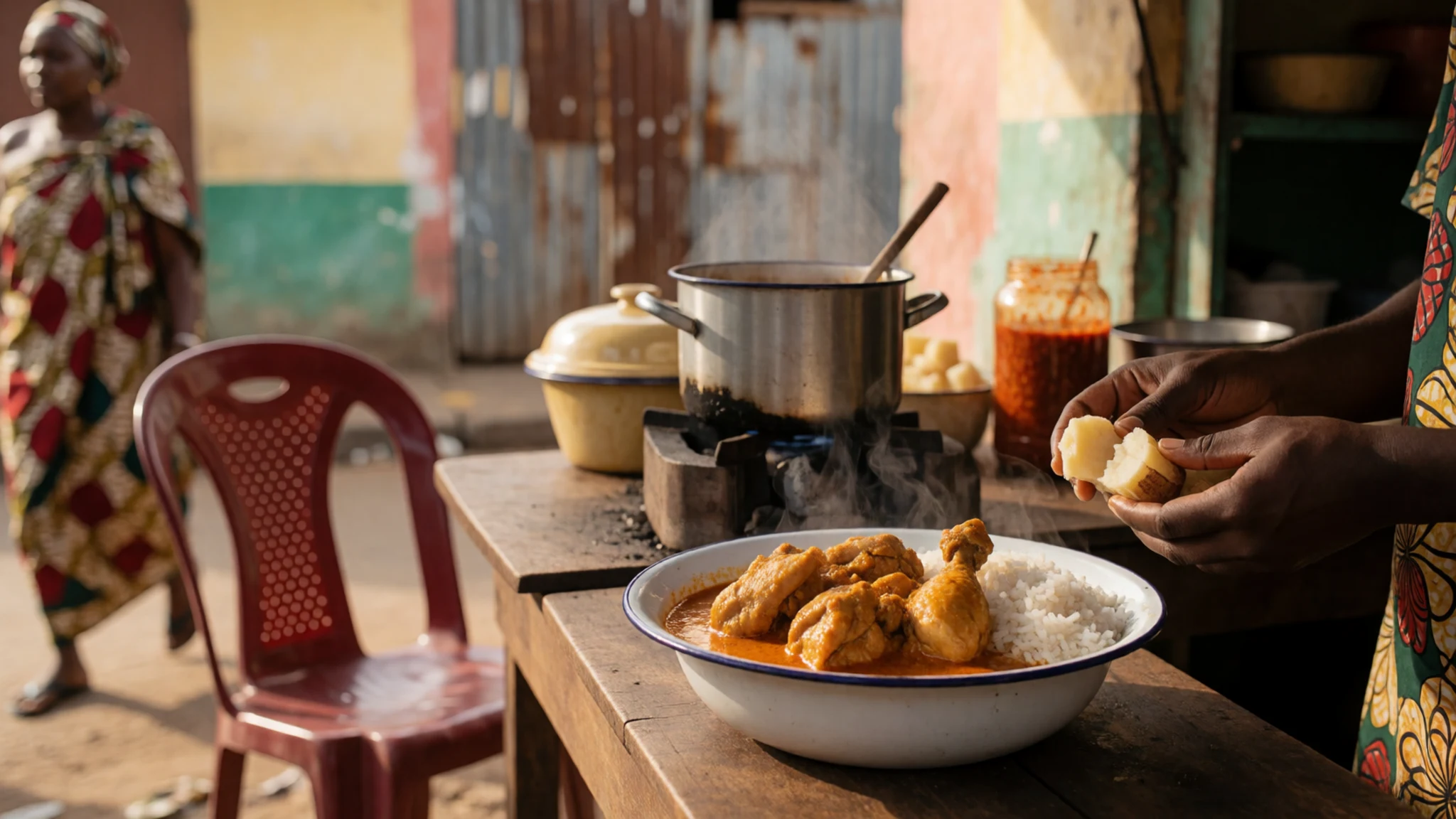
- Poisson braisé — Roadside grills and beachside stalls around Libreville
Whole fish grilled over charcoal, usually served with a spicy sauce, onions and a side of cassava or plantain. The estuary and sea supply much of the catch around the capital, so freshness is the point of the dish.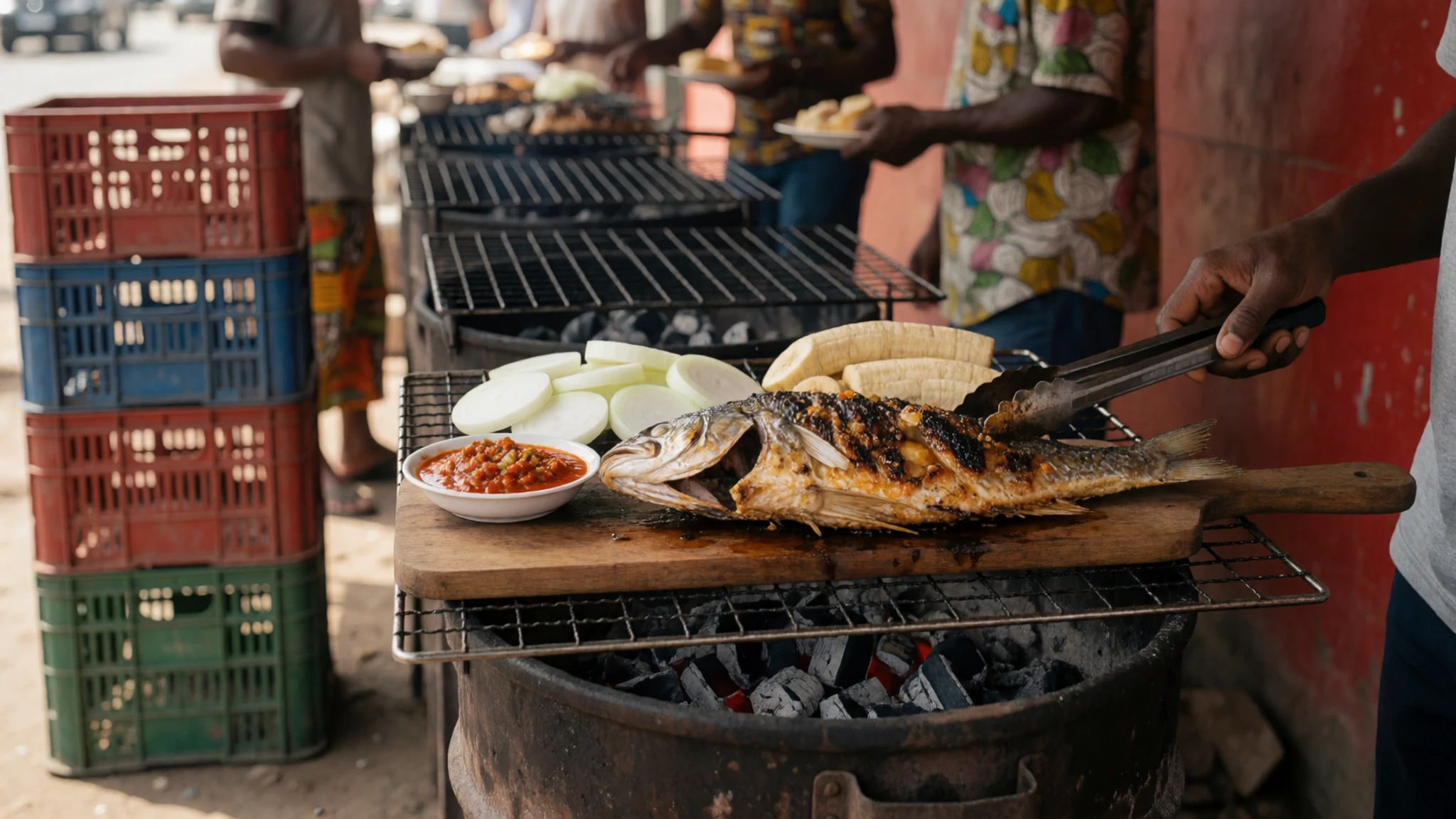
- Bâton de manioc — Morning markets in Libreville
Cassava paste steamed in leaves and sold in long, firm sticks. The texture is dense and slightly sour, a mild partner for grilled fish, sauces and stews. Buy it fresh from a market stall and eat it the same day. - Saka-saka — Home-style eateries and market food stalls
Pounded cassava leaves cooked down with oil and often with fish or meat, giving a deep green, savoury dish with a slightly bitter edge. It is usually eaten with rice or cassava and is common across Central Africa. - Safou — Roadside stalls and markets in the dry months
Safou, sometimes called the African plum, is a small purple fruit with soft, buttery flesh, eaten after a short soak in warm water or roasted. Its season is limited, so availability varies; look for it in heaps at roadside stalls.
Plan it
Best time. June to August is the main dry season, with less rain and easier boat and forest conditions, though it stays warm and humid. Wet months bring mud and storms but a greener forest; ask the park about turtle-nesting season before booking.
How long. 1–2
Getting there. Fly to Libreville's Léon-Mba International Airport, then arrange a road transfer to the estuary shore and a boat crossing to the park. Crossings depend on tides and operators, so confirm details in advance through the official site.
Budget. mid
Tips
- Book your boat and guide ahead through a local operator or the official parks site: http://www.parcsgabon.org/decouvrez-les-parcs/les-13-parcs-nationaux/parc-national-de-pongara
- Start early, before the heat builds and while wildlife is more active
- Carry cash in small notes; card payments are unreliable outside Libreville
- Bring plenty of drinking water, sun protection and insect repellent
- Check tide times before planning beach walks or river trips
Etiquette
- Stay with your guide on trails and keep a safe distance from elephants
- Take all litter back with you and do not remove shells, eggs or plants
- Ask before photographing people or villages
Nearby
Sources
- Wikidata Q7227798 (CC0)
- Wikipedia — Pongara National Park (rev 1362895340) (CC BY-SA 4.0)
- Wikivoyage — Pongara National Park (CC BY-SA 4.0)
- Photo: Lance Cpl. Justin Forrester teaches immediate action drills to a park ranger (Staff Sgt. Ryan Nikzad) (Public domain)
- Photo: Relief location map of Gabon (Uwe Dedering) (CC BY 3.0)
- Photo: Forest Elephant, Pongara National Park (Nick Helme) (CC BY-SA 4.0)
- Photo: Forest Elephant, Pongara National Park (Nick Helme) (CC BY-SA 4.0)
- Photo: Forest elephants in the swamp Mbeli Bai (Thomas Breuer) (CC BY 2.5)
- Photo: Parc National de Pongara (Allmania23) (CC BY-SA 4.0)


Wildlife
- Forest elephant (animal)
The African forest elephant is the smallest of the world's three elephants, a gentle giant of damp tropical forest with straight tusks pointing downwards. In Pongara it roams the forest and coastal country on the far side of the estuary from Libreville. Ask your guide where and when your chances are best. Keep a respectful distance, stay quiet so you do not alarm it, and let your guide lead the way. Never feed it.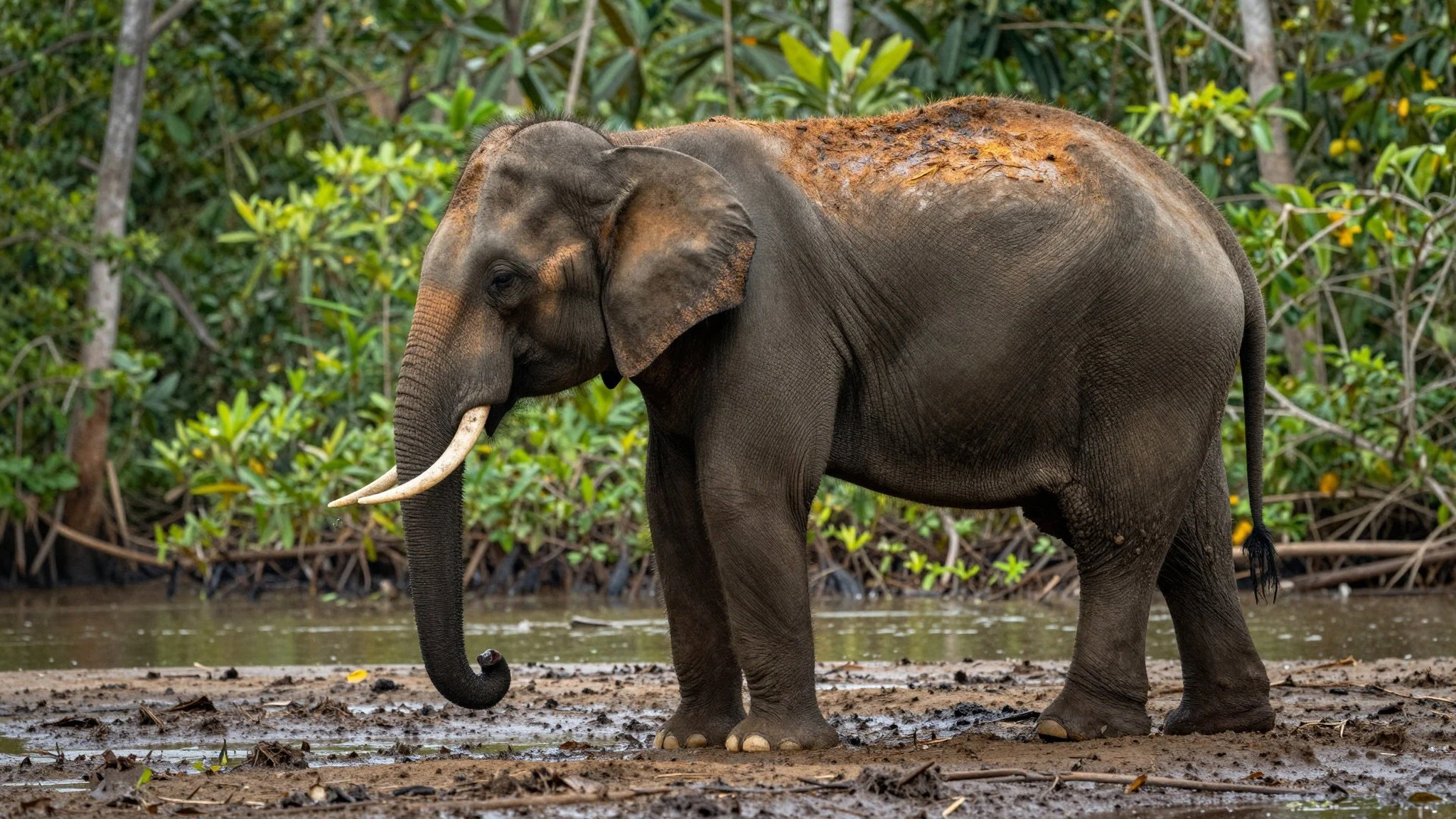
- Nesting sea turtle (animal)
The leatherback is the biggest turtle alive, and instead of a hard shell it wears a coat of oily, leathery skin. In Pongara it comes to nest on the Atlantic beach, across the estuary from Libreville. Ask your guide about the best time to visit. Keep your distance, stay quiet, and let the guide lead you so the turtle is not disturbed. Never feed or touch it. Leatherbacks are vulnerable, so every calm visitor helps.