Minkébé
Minkébé, Gabon
Minkébé National Park protects a vast, remote stretch of Gabonese rainforest where elephants, gorillas and logging pressure meet, and visiting takes real planning.
The place
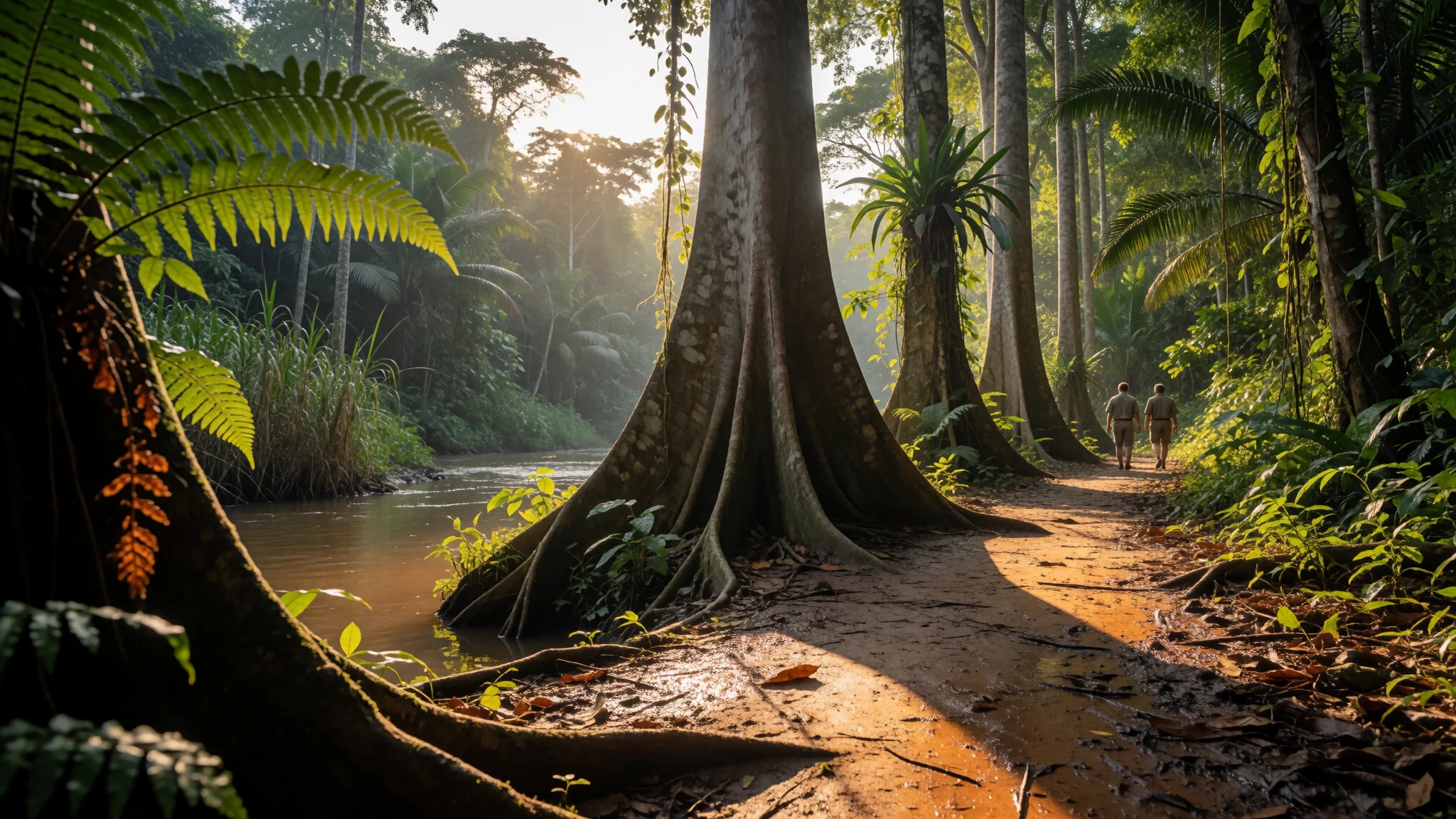
Minkébé National Park occupies the extreme north-east of Gabon, a block of lowland equatorial rainforest that runs towards the borders with Cameroon and the Republic of the Congo. It is not a park in the usual visiting sense. Services for casual visitors are minimal, there is no network of marked trails, and the forest itself is the attraction. Published figures for its area disagree, from about 7,570 km² to 30,000 km², which says something about how little of it has been mapped on the ground. The dates differ as well: Wikidata gives 1994 as the founding year, while the Wikipedia account describes conservation interest from 1989, a provisional reserve in 2000 and formal recognition by the Gabonese government in August 2002.
The park falls under Gabon's national parks agency, and its official page (http://www.parcsgabon.org/decouvrez-les-parcs/les-13-parcs-nationaux/parc-national-de-minkebe) is the place to check current access rules before making any plans. Most people who reach this area are researchers, conservation staff or guided expedition groups, not casual travellers. Getting there means long journeys on rough forest roads, and away from the coast Gabon's roads are poor enough that a four-wheel-drive vehicle is recommended on overland routes.
What the forest offers is dense canopy, swamp clearings, heat, humidity, insects, and a silence broken by birds and primates. It rewards patience and a good guide rather than a checklist. A first trip to Gabon's forests may be easier and better served elsewhere in the country, and Minkébé suits those treating it as an expedition.
Its story
Minkébé National Park owes its protection to a push by conservationists rather than to any long tradition of reserve-keeping. The World Wide Fund for Nature flagged the forest as deserving safeguarding in 1989, and from 1997 it ran a management programme on the ground, with command centres at Oyem and Makokou and a central camp where the Nouna river meets the forest. Gabon gave the area provisional status in 2000 and formal status in August 2002.
The park was never meant to stand alone. It forms one corner of a cross-border effort called TRIDOM, short for Dja–Odzala–Minkébé, in which Cameroon, the Republic of the Congo and Gabon agreed to coordinate conservation and sustainable development where their borders meet. The TRIDOM zone spans about 140,000 km², roughly 7.5% of the Congo Basin's forest, and sits within the Northwest Congolian lowland forest ecoregion, which conservation groups regard as exceptionally rich in species.
The pressures are real, if uneven. Logging of Gabonese redwood has grown where new roads have been cut, and two logging concessions lie in the area, which the park's backers see as a possible future threat. Small-scale gold mining happens too, and hunters take animals for ivory, crocodile skin or meat destined for Gabonese cities, although the level is described as fairly low. The story of Minkébé is therefore still being written, and it depends on whether roads, concessions and patrols stay in balance.
What to see
- The forest interior — Minkébé National Park, north-east Gabon
The main sight at Minkébé is the rainforest itself: tall canopy, slow brown rivers and swampy openings where animals gather. Visits are expedition-style, with a guide, permission from the parks agency and a tolerance for heat and mud. Expect to see more trees than animals, and be glad of every sound.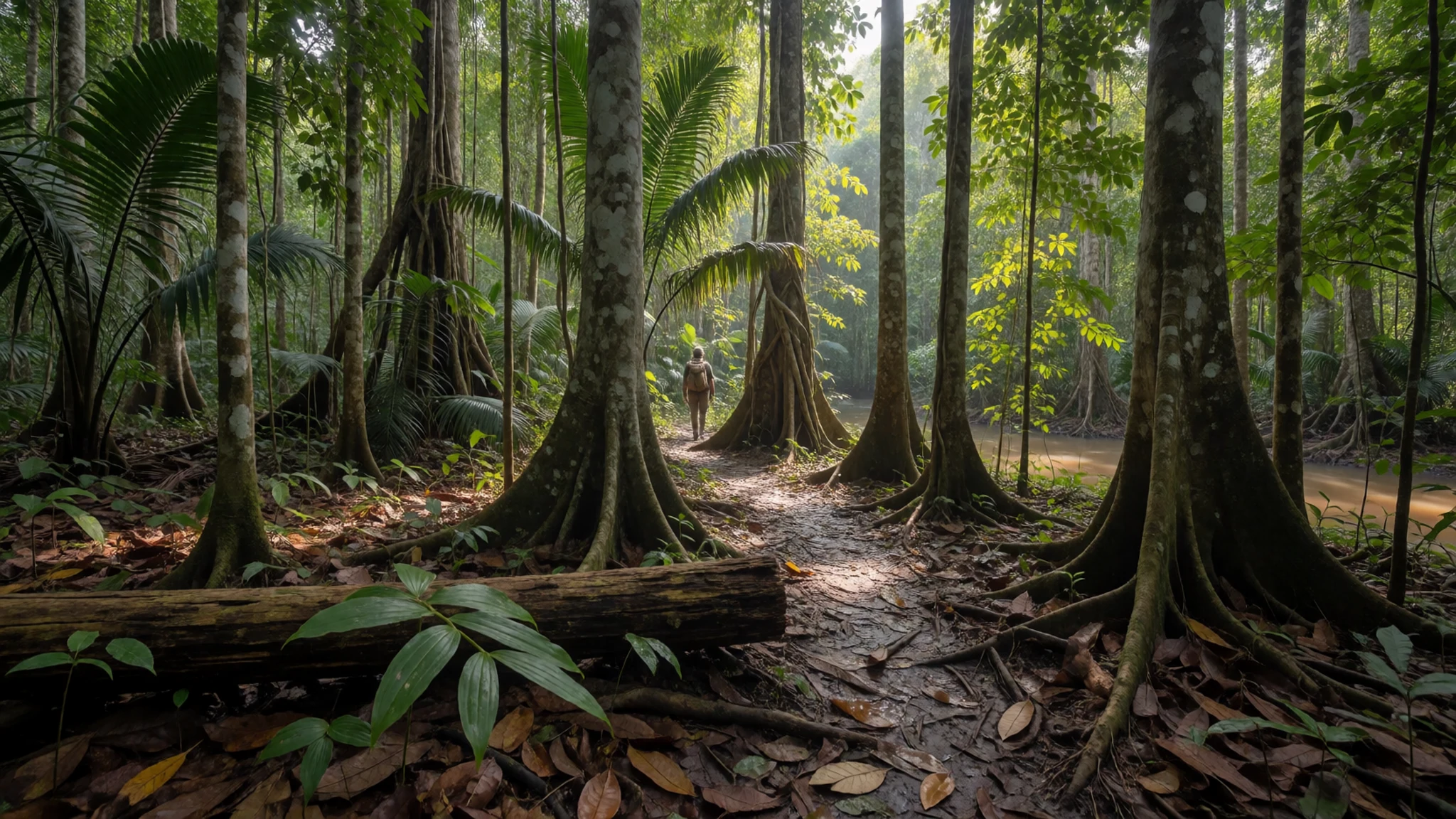
- Forest elephants in the clearings — Swampy forest openings (bais) across the Congo Basin
Forest elephants are the animals most associated with this part of Central Africa, and they use swampy clearings to feed and drink. The photo shows a clearing in Nouabalé-Ndoki National Park in the Congo, not Minkébé itself, but it gives a fair idea of the habitat and the patience required.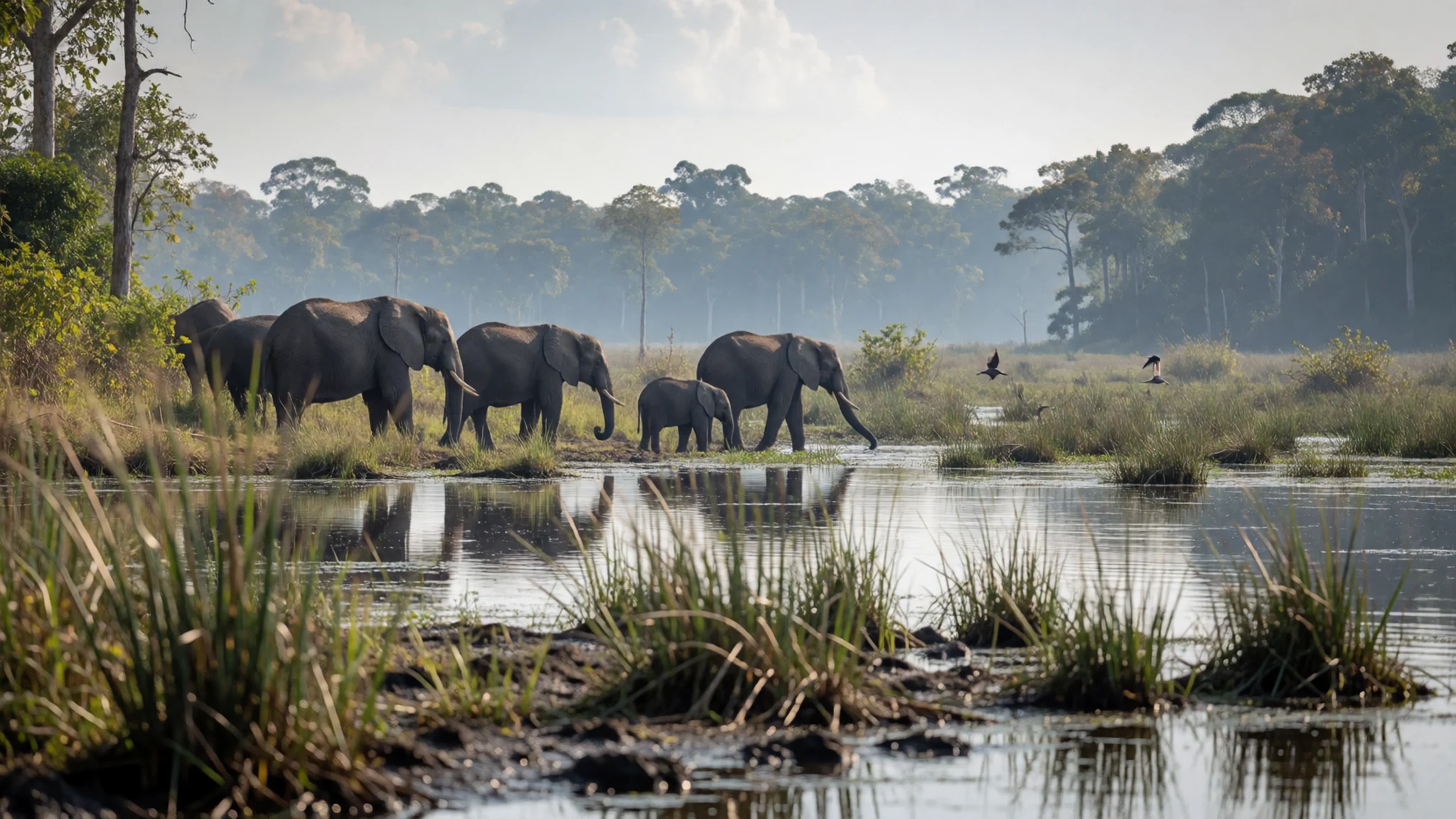
- The Ogooué river — Interior Gabon
The Ogooué is Gabon's longest river, flowing about 1,200 km through tropical forest and passing a variety of habitats. It is also home to the critically endangered slender-snouted crocodile. A river trip is an easier way to feel the Gabonese interior than a push to the far north-east.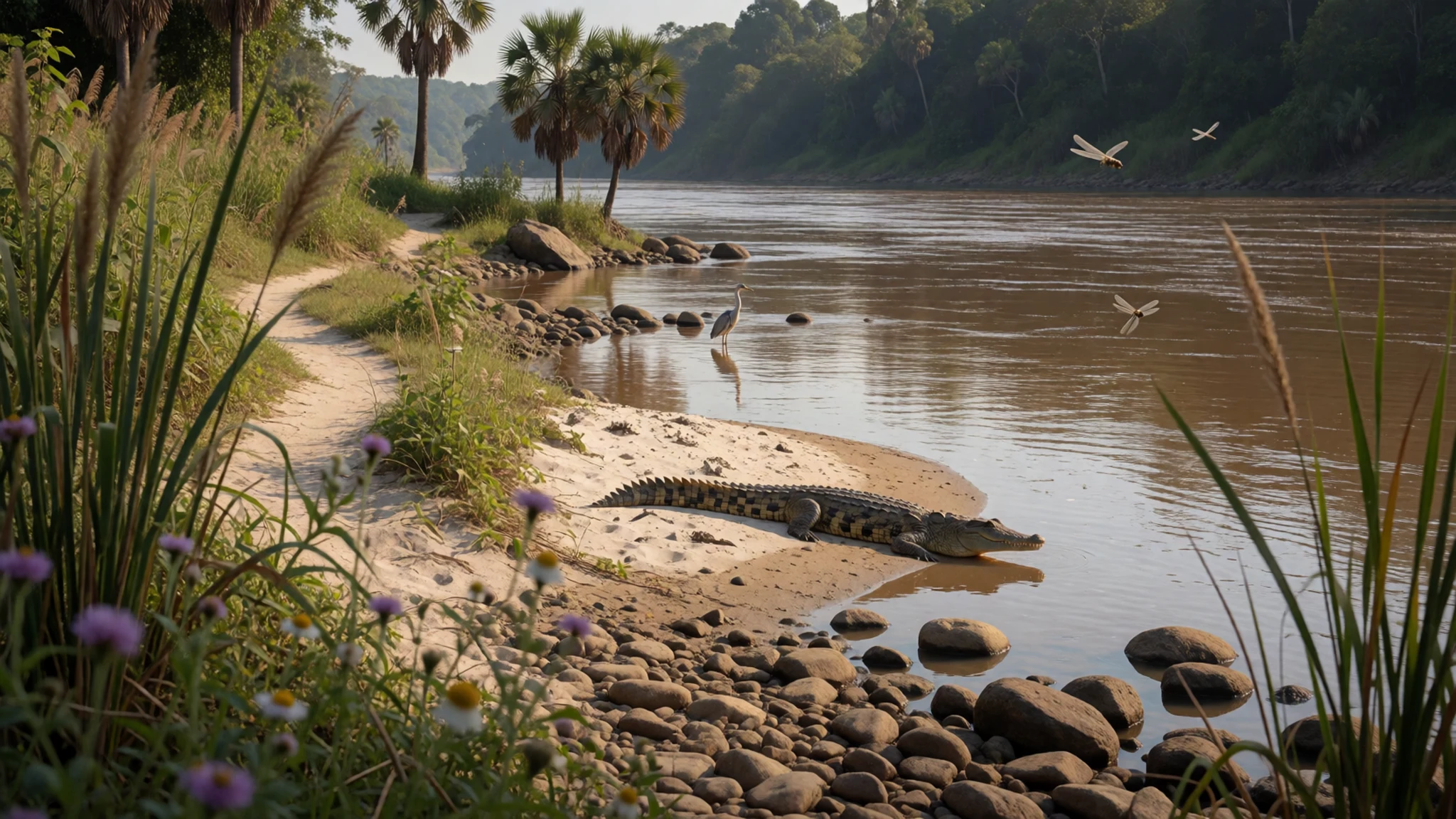
- Libreville's museums and churches — Libreville, the capital
Most journeys begin in Libreville, where a day is well spent before heading inland. The National Museum of Gabon and the National Museum of Arts and Traditions hold sculpture and other art, and the city has several notable churches, including the Cathédrale Sainte Marie.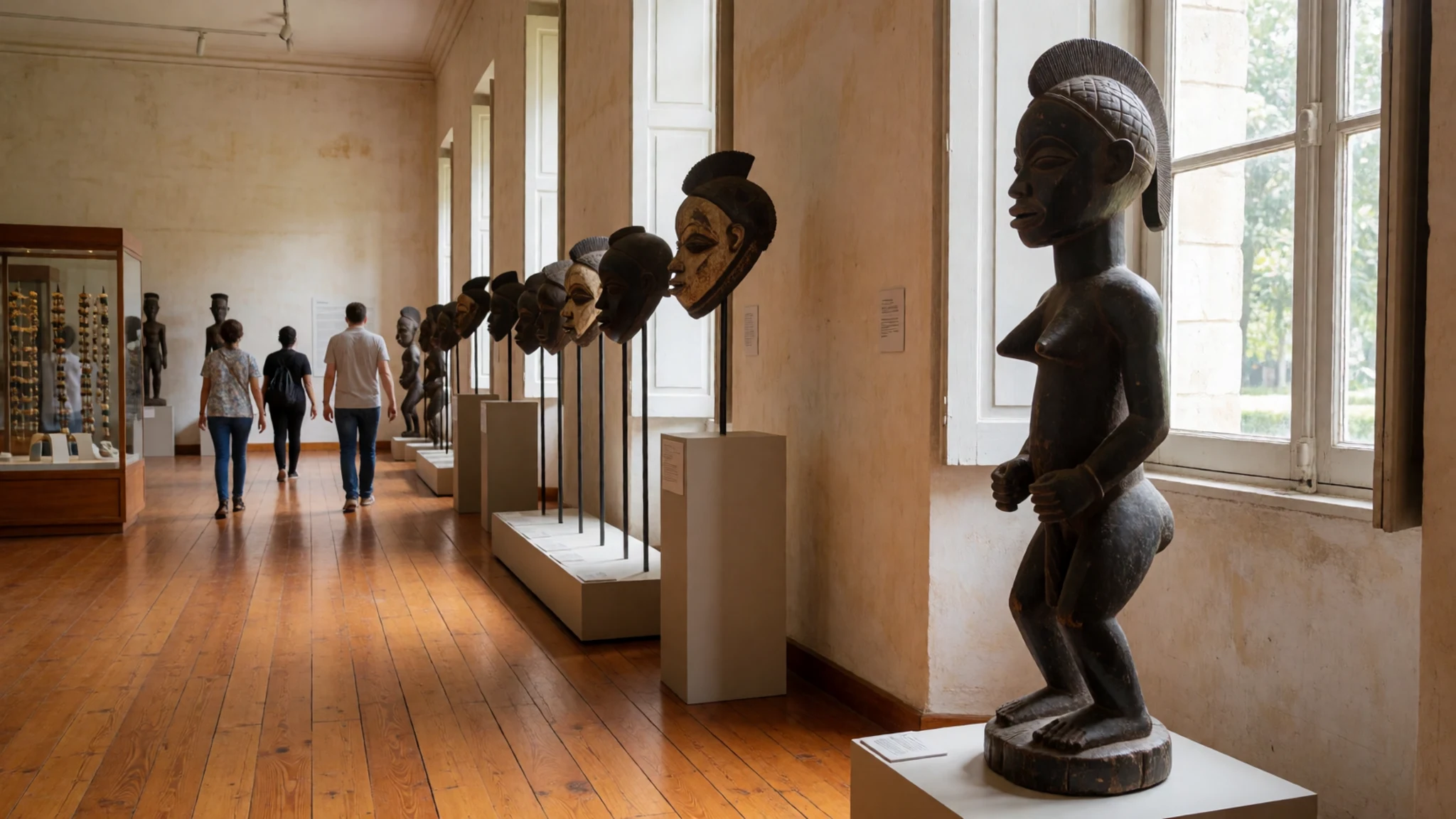
- Coastal safari camps near Nyonie — Coast south of the equator, by boat from Libreville
Travellers wanting a gentler taste of Gabonese wildlife can look at the small camps on the coast near Nyonie, reached by boat from Libreville and then a jungle track. Sightings reported there include elephants, buffalo, monkeys, parrots and hornbills. Book through an operator and confirm current details first.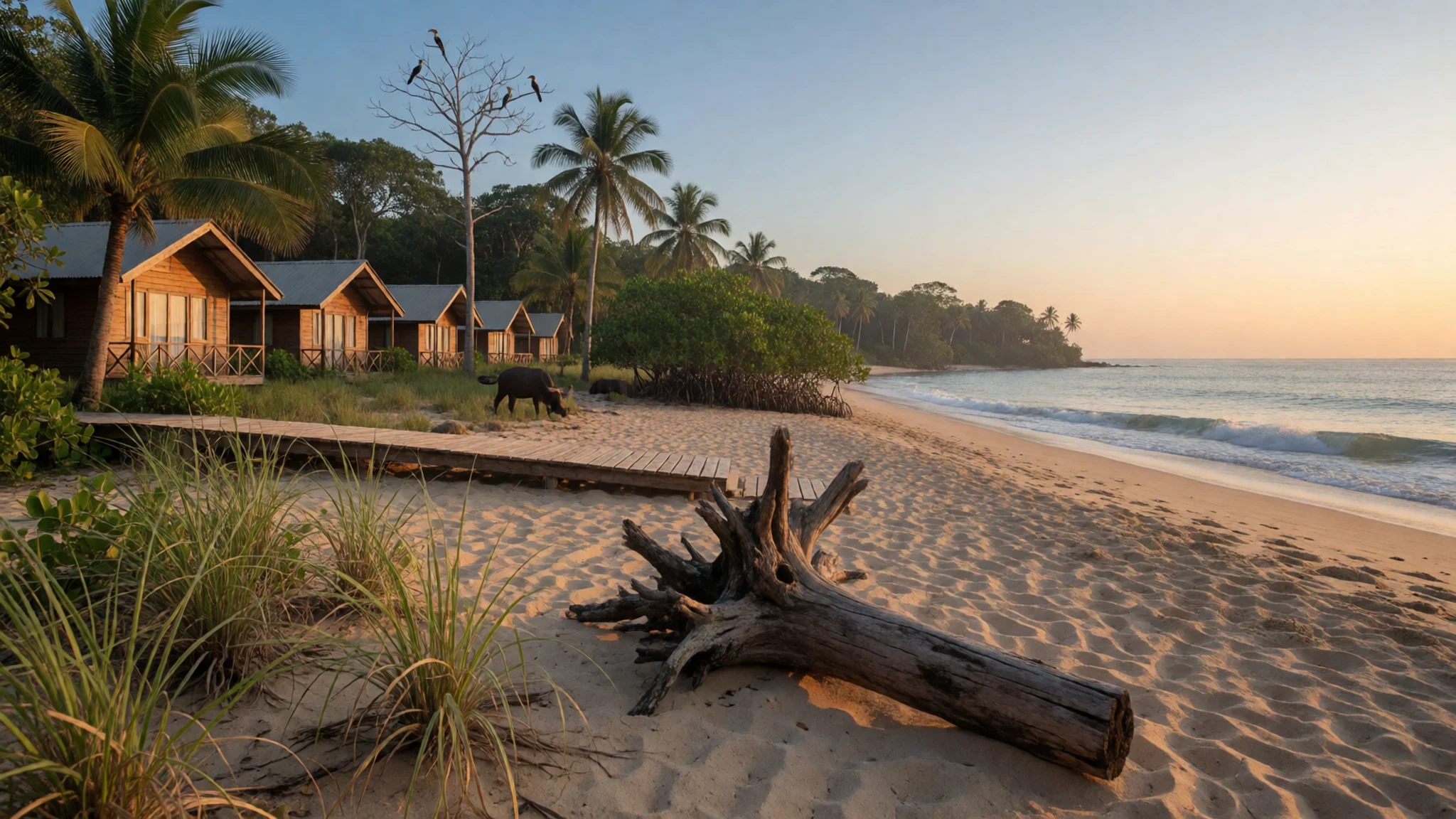
Culture
Minkébé lies in a part of Gabon with very few permanent residents, so the culture a visitor meets is largely that of Gabon as a whole, met through Libreville and the long road north. The country is home to many Bantu-speaking communities, alongside forest hunter-gatherer groups, and French serves as the common language of administration and school. Village life revolves around family, shared meals and respect for elders, and visitors are generally received with courtesy and patience.
Forest knowledge matters here. People who live near the park know the animals, the seasonal fruits and the rivers in ways no guidebook can match, so a local guide is both a practical necessity and a courtesy. Many communities also keep ceremonial traditions of masks, music and dance, tied to initiation and ancestors. These are living practices rather than performances, and they may not be open to outsiders.
Conservation is a sensitive subject. Hunting, logging and mining bring income to a region with few other jobs, so conversations about them go better with curiosity than with lecturing. Officials may check documents and ask the purpose of a trip, and a calm, polite manner helps. Greetings count for a great deal: a handshake and a spoken hello come before any question.
Ask permission before photographing anyone, and greet people properly before reaching for the camera.
What to wear
Traditional dress in Gabon's forest communities draws on raffia fibre, bark cloth, beads and feathers, and it appears mainly at initiations, funerals, dances and other ceremonies, often with carved or painted masks. Everyday weaving and plaiting with raffia continues in many villages. Cotton wax-print cloth, called pagne, has long been part of Gabonese dress and is wrapped as skirts or sewn into tailored outfits for celebrations.
Day to day, most people in Libreville and in towns wear ordinary modern clothes: shirts, trousers, dresses, T-shirts and trainers, with tailored wax-print outfits for church, weddings and other occasions. In forest villages clothing is simple, practical and often well worn, suited to heat, rain and mud.
Visitors heading towards Minkébé should dress for a hot, wet forest. Lightweight long-sleeved shirts and long trousers in quick-drying fabric protect against insects, thorns and sun. Sturdy waterproof boots with good grip matter more than anything else you pack, and a hat and light rain jacket are sensible. In villages, cover shoulders and knees as a matter of courtesy. Military-style camouflage can draw unwelcome attention at checkpoints, so choose neutral colours such as khaki, green or grey instead. Bring spare socks, since nothing dries properly in the humidity.
What to eat
- Poulet nyembwe — Family-run eateries and home kitchens in Libreville
Chicken slowly cooked in a thick sauce of palm-nut pulp, often called the signature dish of Gabon. It is rich, savoury and usually eaten with rice, cassava or plantain. Ask at local eateries whether it is on that day, as it takes time to prepare.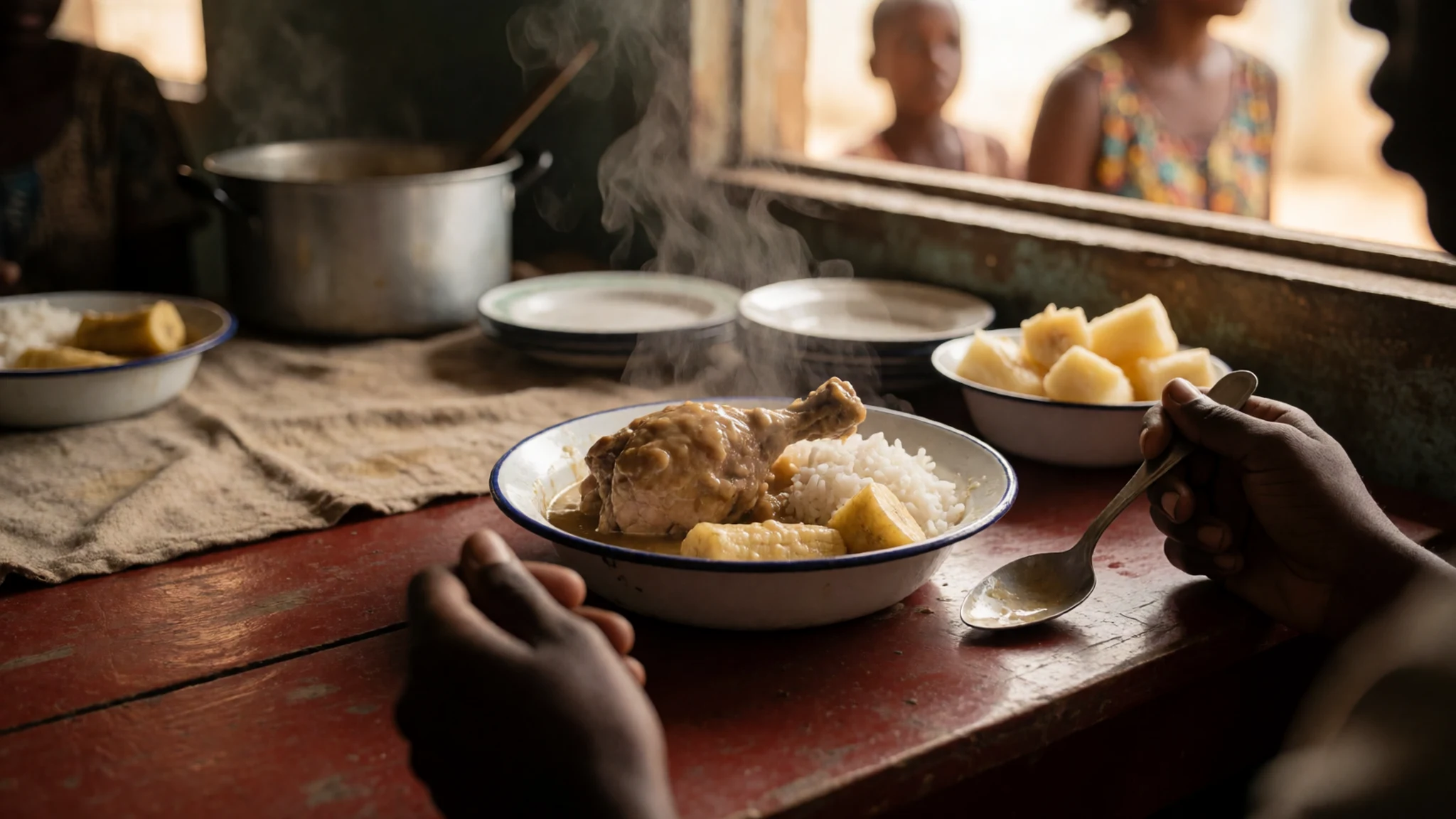
- Bâtons de manioc — Markets and roadside stalls
Cassava paste wrapped in leaves and steamed into firm sticks, sold in bundles and eaten with sauces, grilled fish or stews. Mildly sour and filling, they travel well, which makes them a practical snack on long forest journeys.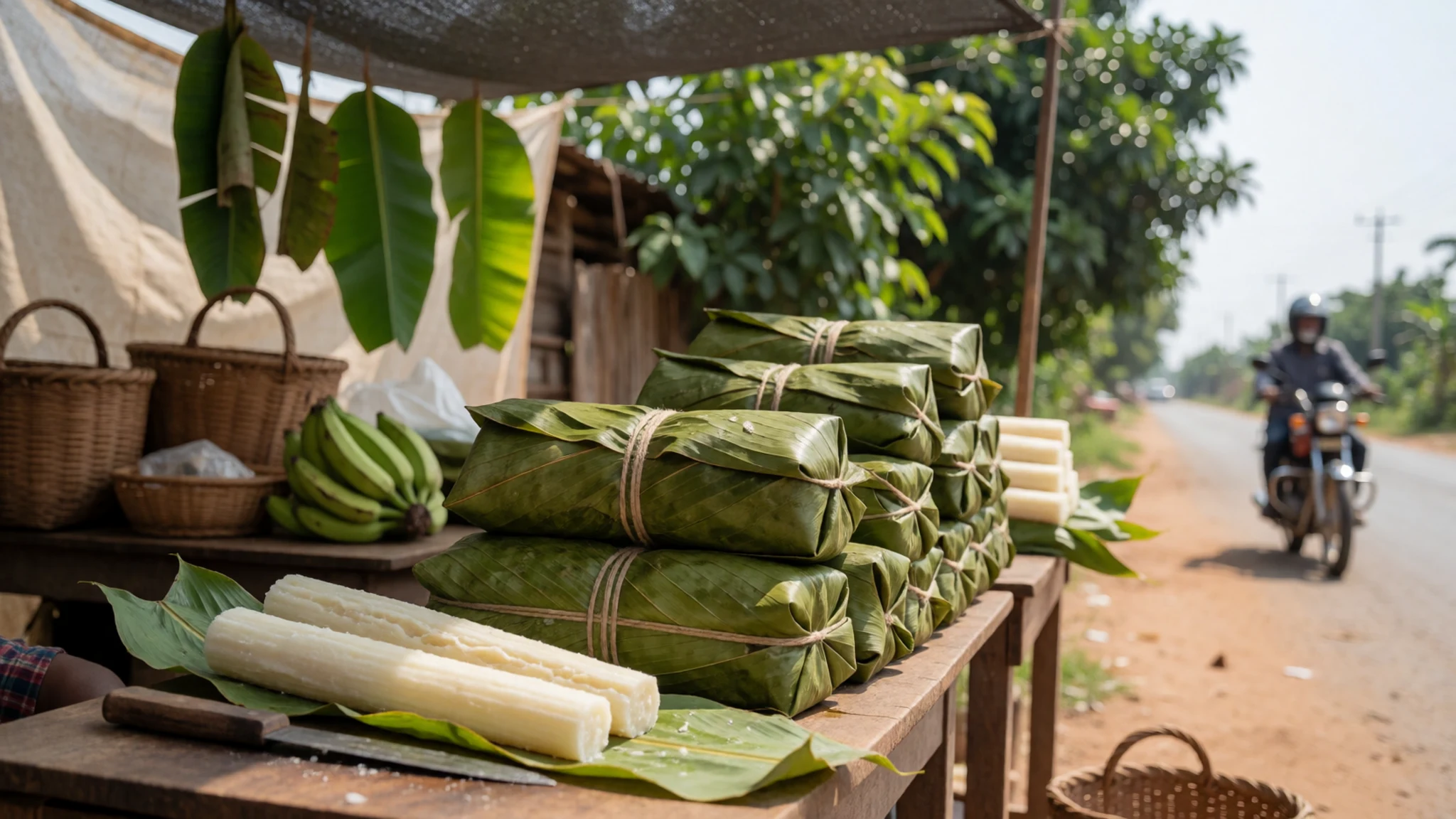
- Poisson braisé — Roadside grills and coastal eateries
Whole fish grilled over charcoal with pepper and onions, usually served with fried plantain or cassava. It is a staple of casual eating in Libreville and along the coast. Choose busy grills where the fish is cooked to order. - Fresh fruit juices — Shops, market stalls and small cafés
Gabon has good bottled and freshly pressed juices, with grapefruit, pineapple and lemon among the common flavours. They are sweet, cold and welcome in the heat. Sealed bottles are the safer choice for visitors still adjusting to local water. - Regab beer — Bars and eateries across Libreville
Regab is the local lager, sold in large bottles that suit sharing at a table. It is the usual accompaniment to grilled fish and chicken. Prices vary a lot by venue, so ask before ordering. Avoid bushmeat dishes, since hunting is a genuine threat to the forest's wildlife.
Plan it
Best time. June to August is the main dry season in Gabon's equatorial climate and is usually the easier time for forest travel, with fewer downpours and firmer tracks. Heat and humidity stay high all year, and rain can fall in any month, so expect mud whenever you go.
How long. 7–10
Getting there. Fly into Léon Mba International Airport in Libreville, which has direct flights from Paris (Air France) and Istanbul (Turkish Airlines) and links to other African cities. From there, onward travel to the north-east is by long road journeys or arrangements through an operator, and the final stretch uses rough forest tracks where a high-clearance four-wheel-drive vehicle is recommended.
Budget. high
Tips
- Contact Gabon's national parks agency through the official page (http://www.parcsgabon.org/decouvrez-les-parcs/les-13-parcs-nationaux/parc-national-de-minkebe) well before booking, since access needs permission and a guide.
- Check visa rules early: most nationalities, including British and Indian citizens, need an e-Visa, valid only for arrival at Libreville airport. Confirm the current fee and processing time on the official site.
- Read your government's current travel advice, as Gabon has been politically unsettled since the coup. Avoid any gathering that could turn violent, and expect document checks.
- Carry cash in small notes for anywhere outside Libreville, and keep valuables out of sight in cities, where pickpocketing is common.
- Take purified water, insect protection and a medical kit, and ask a travel clinic about malaria prevention well ahead of departure.
Etiquette
- Greet people before asking questions or taking photographs, and ask permission before photographing anyone.
- Do not buy bushmeat, ivory or crocodile skin, since hunting for these threatens the park's wildlife.
- Stay calm and polite at checkpoints and carry copies of your passport and permits.
Nearby
Sources
- Wikidata Q1961377 (CC0)
- Wikipedia: Minkébé National Park (rev 1362856747) (CC BY-SA 4.0)
- Wikivoyage: Gabon (rev 5423171) (CC BY-SA 4.0)
- Relief location map of Gabon — Uwe Dedering (CC BY 3.0)
- Forest elephants, Mbeli Bai — Thomas Breuer (CC BY 2.5)
- Silverback gorilla, Leipzig Zoo — Thomas Lersch (CC BY-SA 2.5)


Wildlife
- Forest elephant (animal)
The African forest elephant is the smallest of the world's three elephant species, with straight tusks pointing downwards, a little giant made for life among trees. In Minkébé it is the animal most linked with the park, and it visits swampy clearings to feed and drink. No particular season or hour is promised, so ask your guide. Keep a respectful distance, stay quiet, go only with a guide, and never offer it food.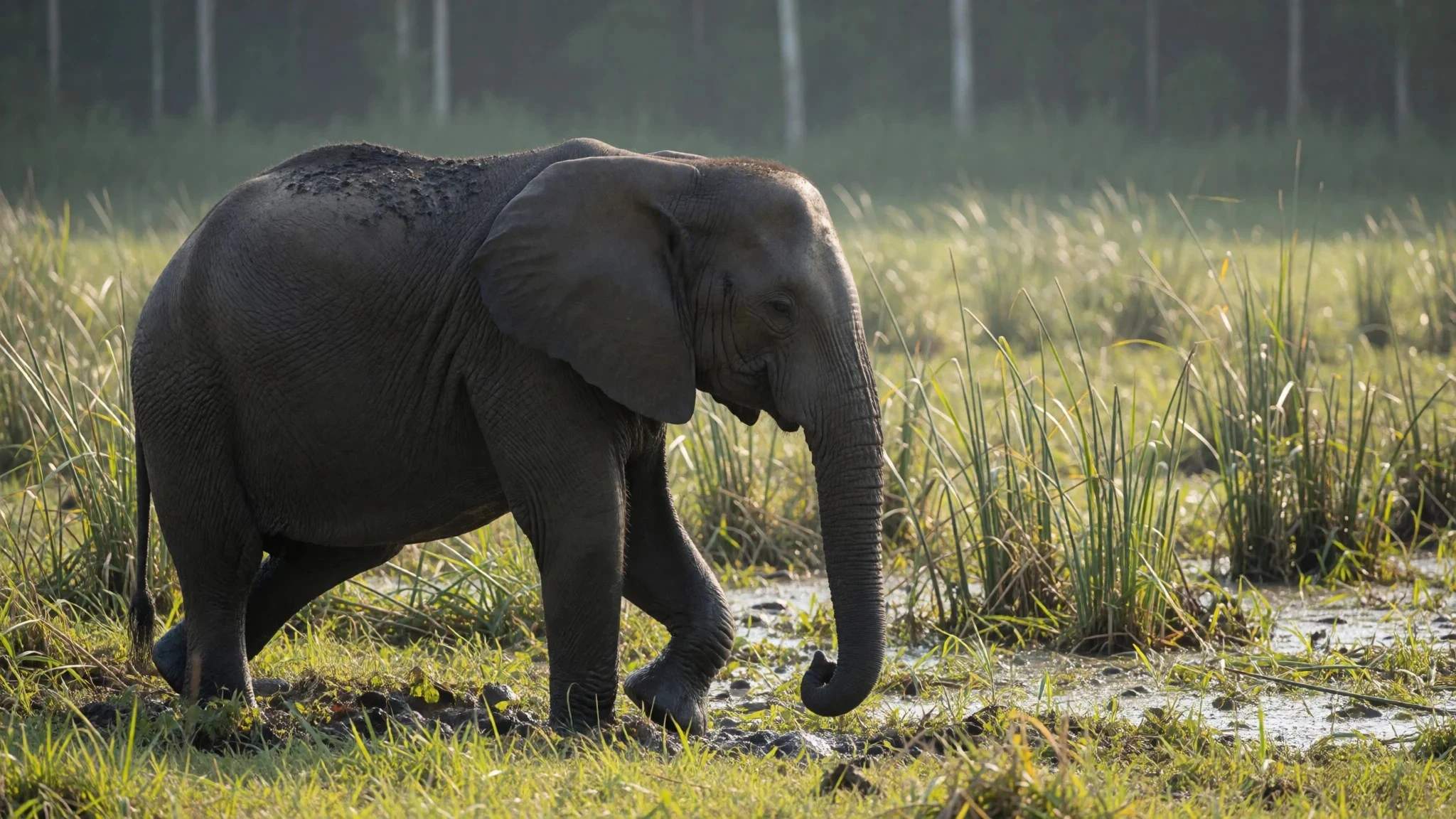
- Gorilla (animal)
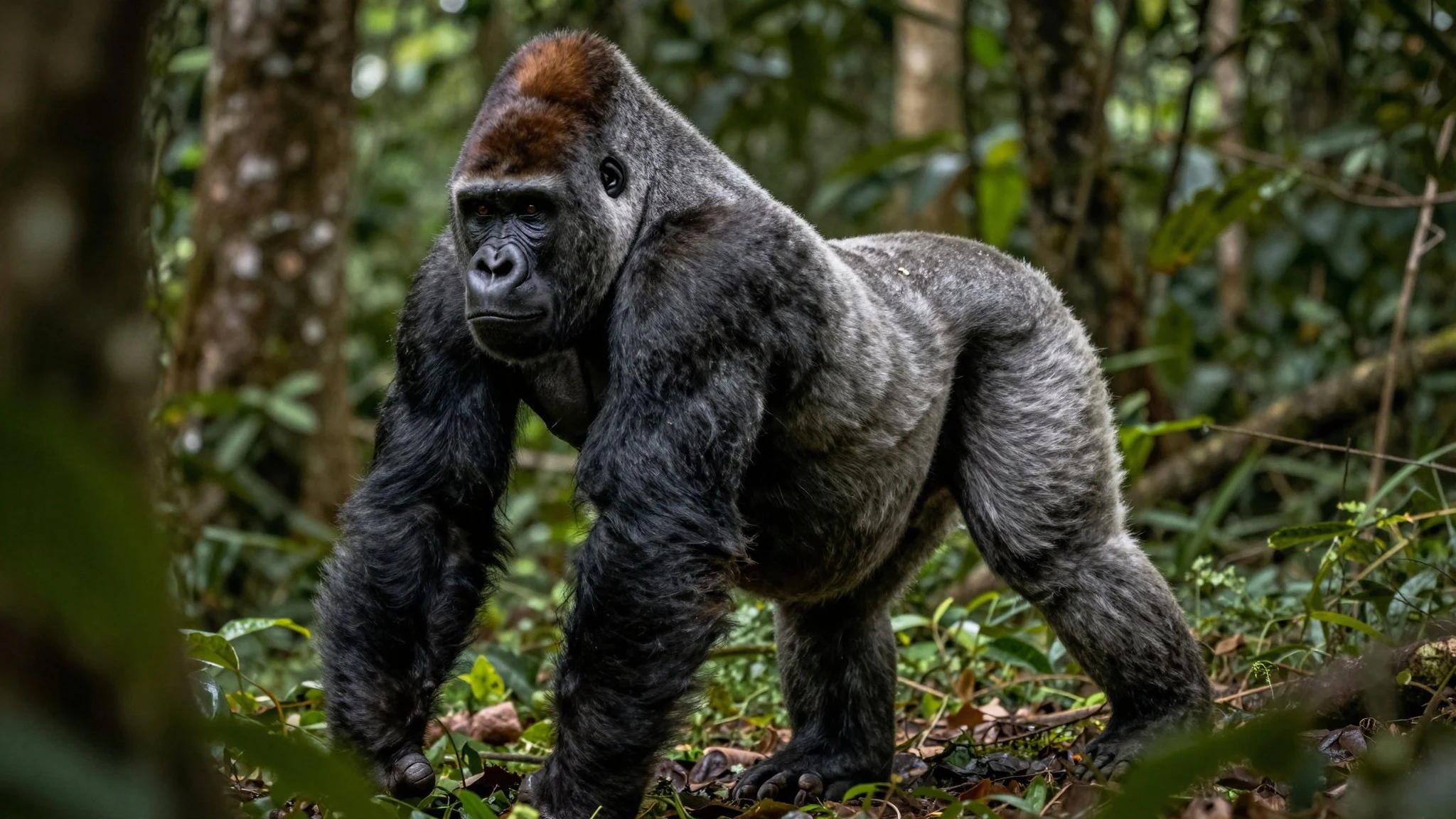
The western gorilla is a big, sturdy ape whose hair is paler than that of its eastern cousin, so think of it as the forest's pale-coated giant. It lives in Minkébé's vast, remote rainforest, though no particular season or hour is promised for a sighting, so ask your guide. Getting there takes real planning. Once there, keep well back, stay quiet, go only with a guide, and never offer it food.