Crystal Mountains
Crystal Mountains, Gabon
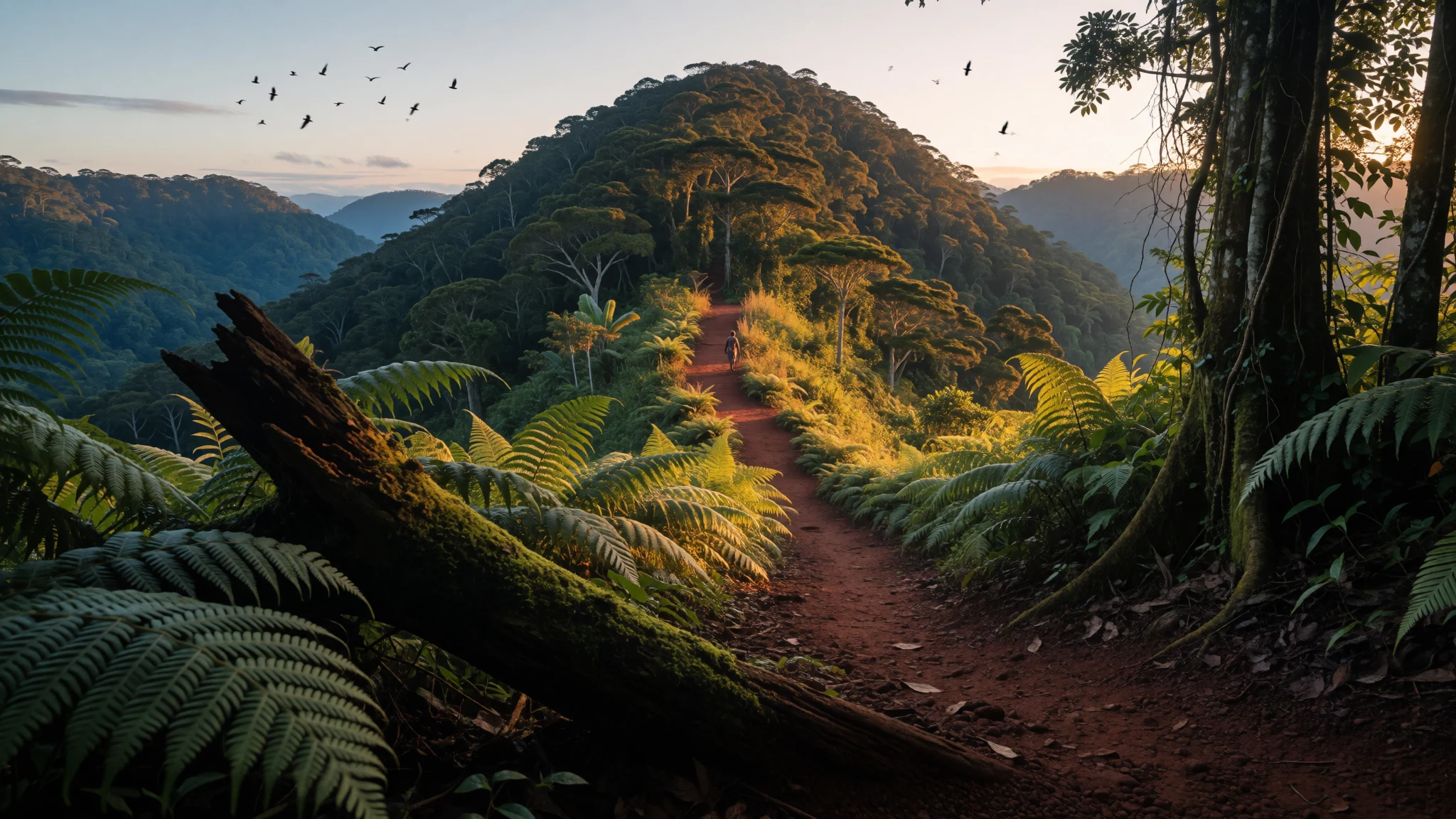
Crystal Mountains National Park is Gabon's quiet rainforest hill country, for slow forest walks, butterflies, rare plants and the chance of hearing elephants and monkeys.
The place
Crystal Mountains National Park, called Parc National des Monts de Cristal in French, lies in north-west Gabon on the western edge of the Woleu-Ntem Plateau. It sits between the border with Equatorial Guinea and the Ogooué River. Officially it is a twin park: Mbe National Park and Mt Sene National Park were created together, and the pair is one of the 13 national parks in Gabon. On the map the two halves appear as separate sectors, which the staged photograph for this reading shows clearly. The reason for the protection is plant life. The area has an exceptionally rich flora, and it is regarded as part of a former rainforest refuge, a place where forest hung on through the Pleistocene and could later spread again. Wildlife follows the forest. Elephants and monkeys live here, and butterflies number in the hundreds, including some rare species that specialists travel to look for. This is not a park of open plains and easy sightings. It is hill country under tall, wet forest, where animals are heard more often than seen, and where a patient pace, a local guide and sturdy footwear matter more than a long lens. Most visitors come for walking, birds, butterflies, plants and the quiet. Facilities and access change, so the park authority's current information should be checked before any trip is fixed. Rain can fall in any month, and forest paths turn slick quickly.
Its story
The story of Crystal Mountains National Park is mostly a story of plants and of time. During the Pleistocene, the long run of cold and dry spells that shaped much of the planet, many tropical forests shrank. In a few places, forest held on in pockets where conditions stayed damp enough. Scientists call these places refugia, and the Crystal Mountains are counted among them. When the climate turned wetter again, trees and other plants spread outwards from such pockets, which is one reason refuge areas tend to hold so many species today. That botanical value is what drove the park's creation. On 4 September 2002, Gabon established Mbe National Park and Mt Sene National Park together, and they became a single twin park under the name Crystal Mountains. The founding case rested on the exceptionally high plant diversity rather than on any one famous animal, which is unusual for an African park and explains why the place feels more like a living botanical collection than a safari ground. Elephants and monkeys are still part of the picture, and so are butterflies, many of which are rare. The park is a young protected area, only a little over two decades old, and its reputation is still being built. Part of its appeal now is that it has not yet become a crowded name on the itinerary.
What to see
- The twin sectors on the map — Whole park
Before setting out, study how the park is laid out. The Mbe and Mt Sene sectors are separate blocks, and the staged map shows how they sit on the Woleu-Ntem Plateau edge. Knowing which sector a trail belongs to saves confusion when booking guides and transport.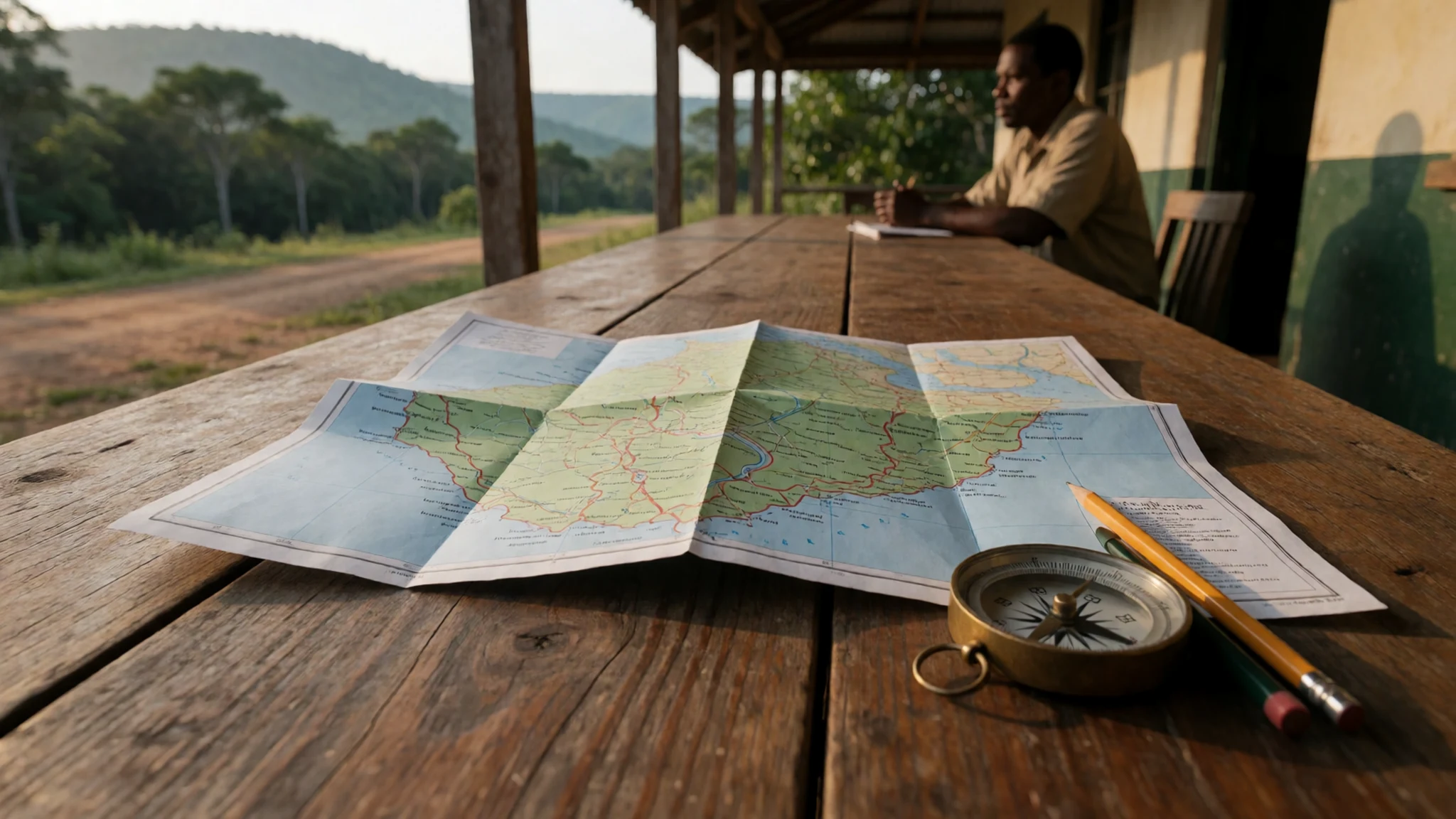
- Mbe sector forest — Mbe National Park sector
Mbe is one half of the twin park and a good place to understand why the area was protected. Walks here pass through wet forest where plant variety is the point. Go slowly, look at the understorey and the trunks, and let a guide name what is growing.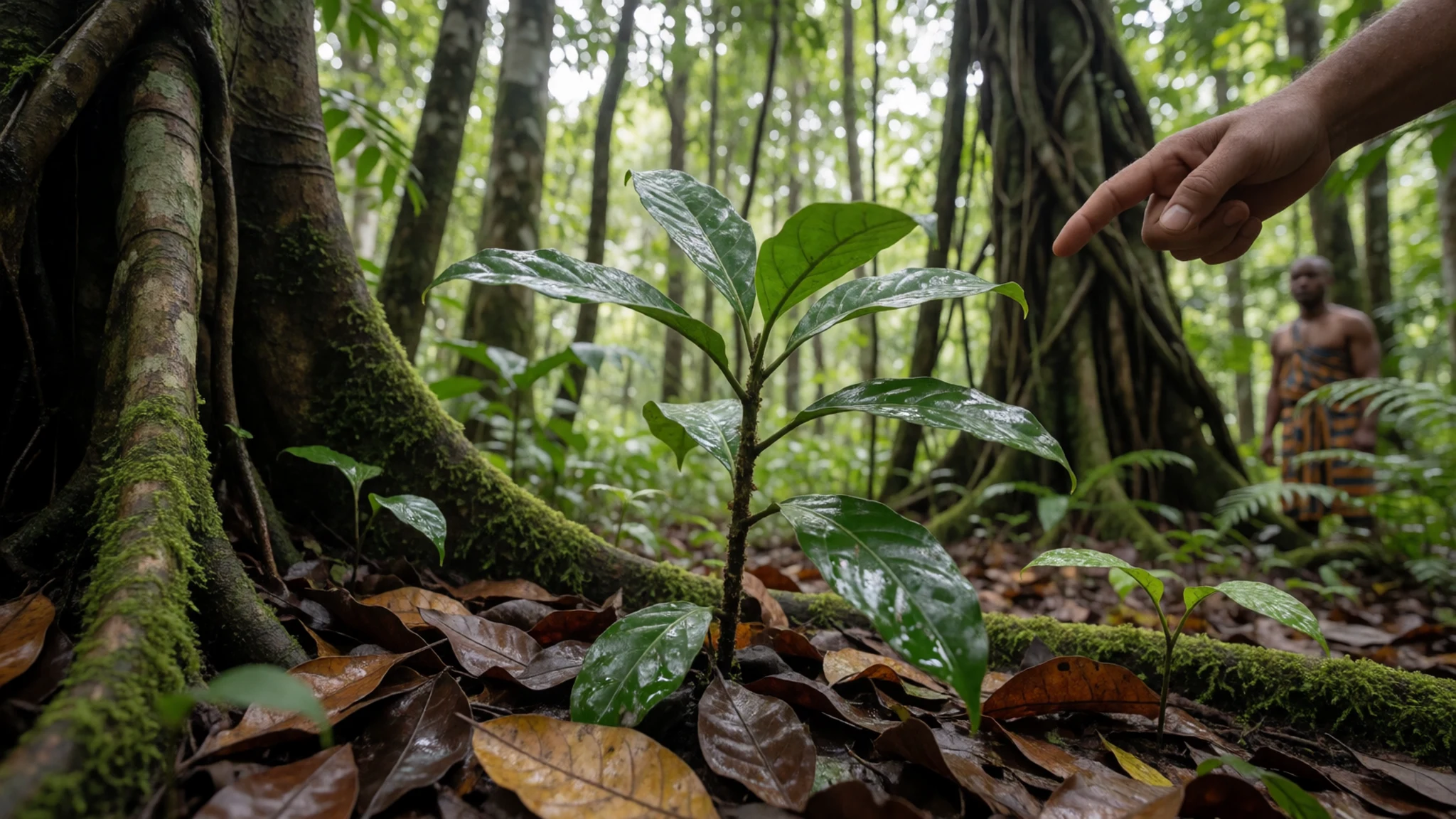
- Mt Sene sector — Mt Sene National Park sector
Mt Sene is the other half of the pair, and it shares the same forest character. Hill walking is the main activity, with changing views of canopy and cloud. Expect steep, muddy sections in wet weather, and ask about the current state of paths before choosing a route.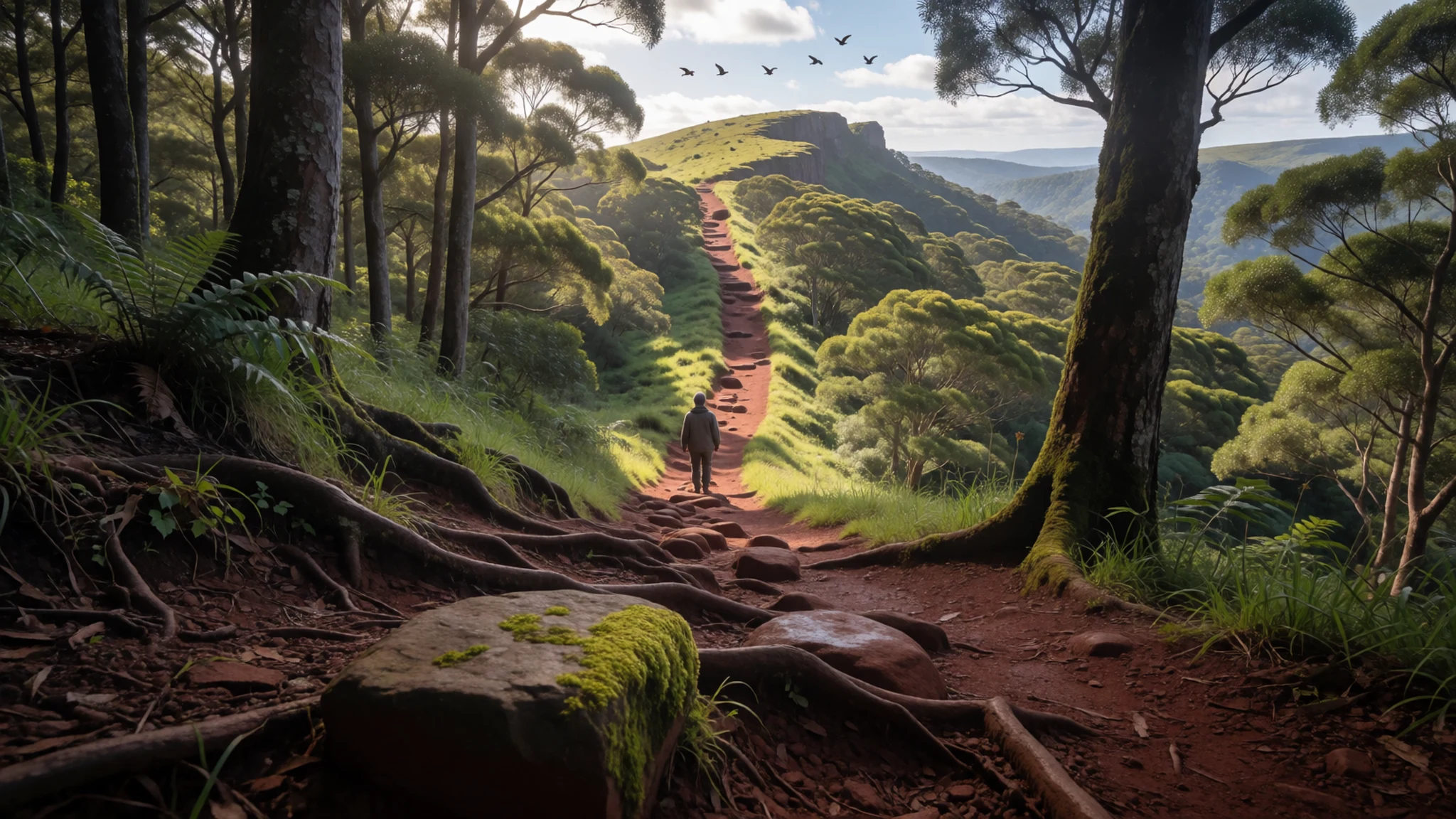
- Butterflies along forest edges — Trail edges and clearings
Hundreds of butterfly species are recorded in the park, including rare ones. The best looking is usually along sunlit tracks, clearings and stream edges rather than deep shade. Bring patience, a small notebook or camera with a macro setting, and a guide who knows which species to expect.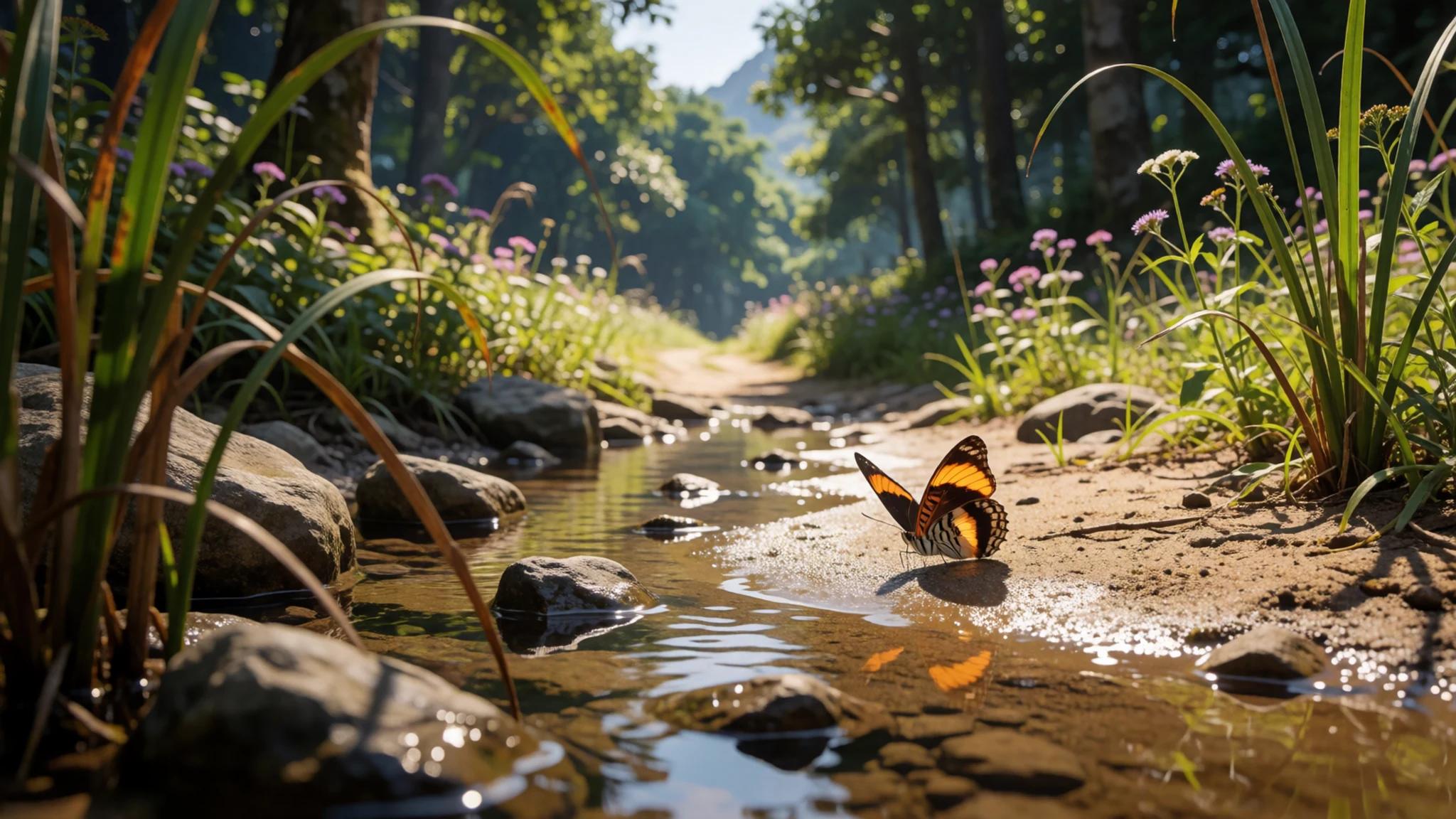
- Listening for elephants and monkeys — Interior forest trails
Large animals live in the park, but dense forest hides them. Many visitors learn to read sound first: crashing branches, calls overhead, a sudden hush. Walk quietly, keep groups small, and follow the guide's lead about distance, since forest elephants can be unpredictable at close range.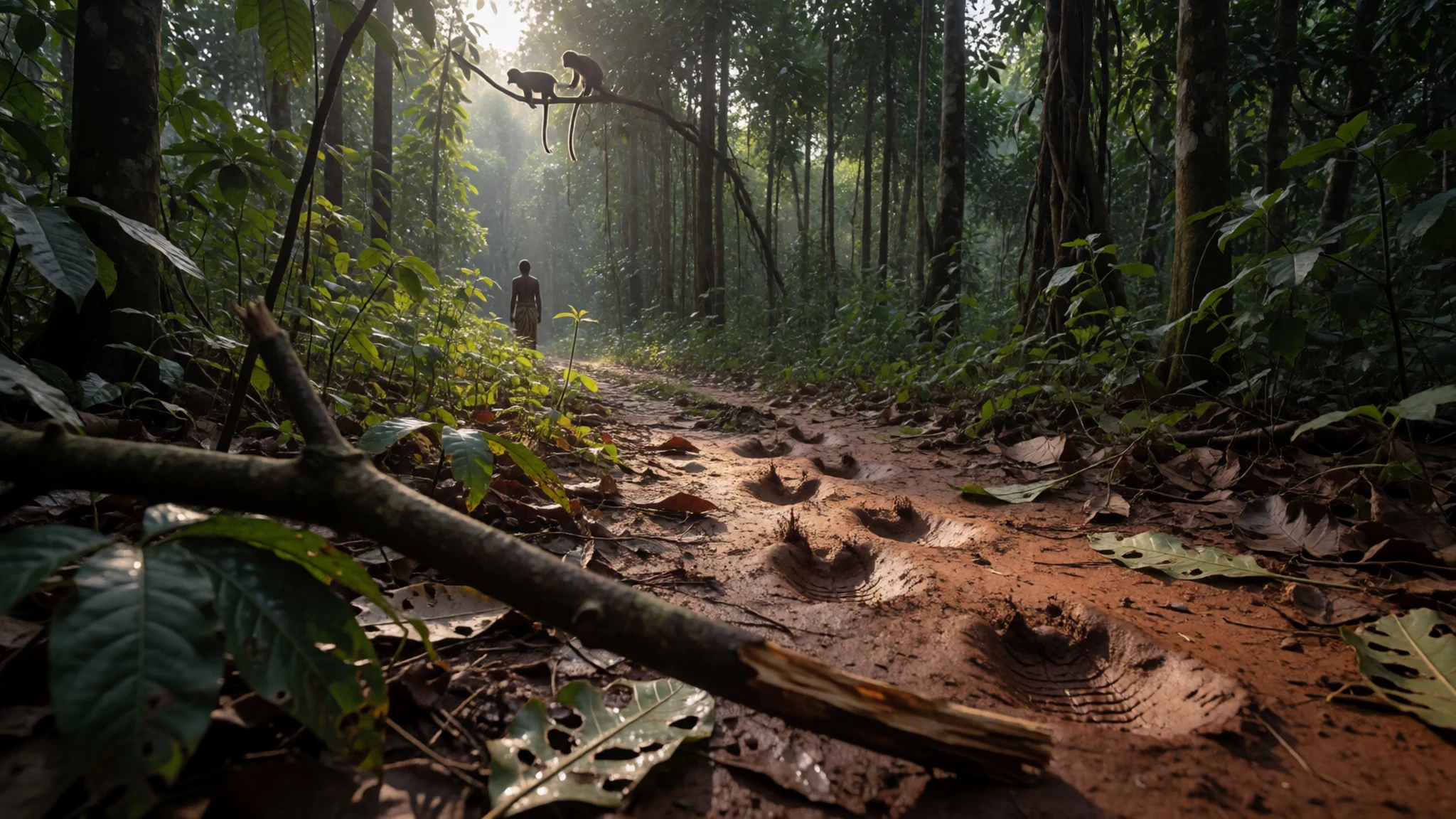
Culture
Crystal Mountains National Park lies in Gabon, where French is the official language and many other languages are spoken across the forest communities of the north-west. Visitors will often meet people whose families have lived in or beside these forests for generations, and who know its plants, animals and paths in detail. That knowledge is the real cultural resource of the area, and a local guide is usually the best way to reach it. Forest life here is tied to seasonal food, medicine plants and stories about particular trees and places, so a walk with someone from the area can sound very different from a walk with a visiting naturalist. Greetings matter. A friendly 'bonjour' and a handshake, offered before any question, open conversations much more easily than a direct request. Respect for elders is expected, and patience with slow, courteous exchanges is appreciated. Conservation has become part of local conversation too, with parks, protected areas and jobs linked to guiding and tourism sitting alongside older ways of using the forest. Visitors should expect that views on the park differ, and listen before forming opinions. Markets and village shops are good places to meet people, though prices and opening hours vary, so ask rather than assume. Before photographing anyone, including guides, villagers and market sellers, ask permission and respect a refusal.
What to wear
Gabon does not have a single national costume, and the Crystal Mountains area is home to several communities with their own traditions. Ceremonial dress across the region often uses raffia fibre, bark cloth, beads, feathers and carved masks or headpieces, mostly for initiations, dances and community events rather than daily life. Printed cotton wraps, often called pagnes, are widely worn by women and are also made up into dresses, skirts and headscarves, with patterns chosen for occasions and sometimes for the messages they carry. Today most people near the park wear everyday clothing: shirts, trousers, skirts, T-shirts and practical rubber boots on wet days, with brighter tailored outfits in towns and for church or celebrations. Visitors should dress for warm, humid forest and frequent rain. Light, long-sleeved shirts and long trousers in quick-drying fabric protect against insects, scratches and sun. Sturdy walking shoes or boots with good grip are the most important item, since trails are often slippery. Bring a light waterproof jacket, a hat, and spare socks, because wet feet are the usual complaint. Keep colours muted rather than bright if watching wildlife. In villages and towns, covering shoulders and knees is polite, and swimwear belongs at the beach, not in settlements.
What to eat
- Poulet nyembwe — Family-run eateries and home-style restaurants in towns
Often described as Gabon's signature dish, chicken is slow-cooked in a thick, rich sauce made from palm nut. It is usually served with rice, cassava or plantain, and the flavour is deep and savoury rather than hot.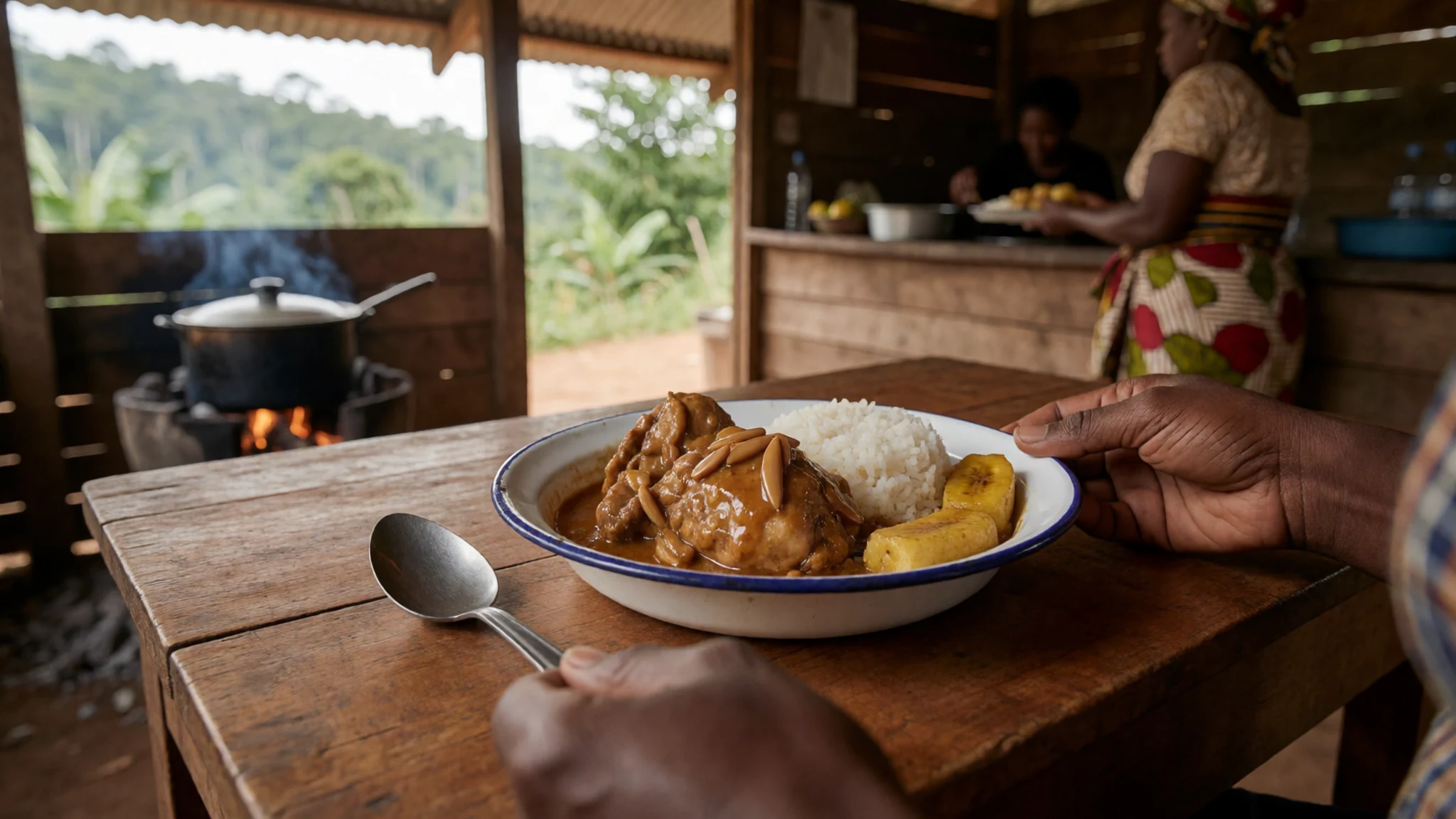
- Bâton de manioc — Markets and roadside stalls
Cassava is pounded, wrapped in leaves and steamed into a firm, slightly sour stick. It is eaten as a starchy side with sauces, stews or grilled fish, and travels well, so it turns up as a snack too.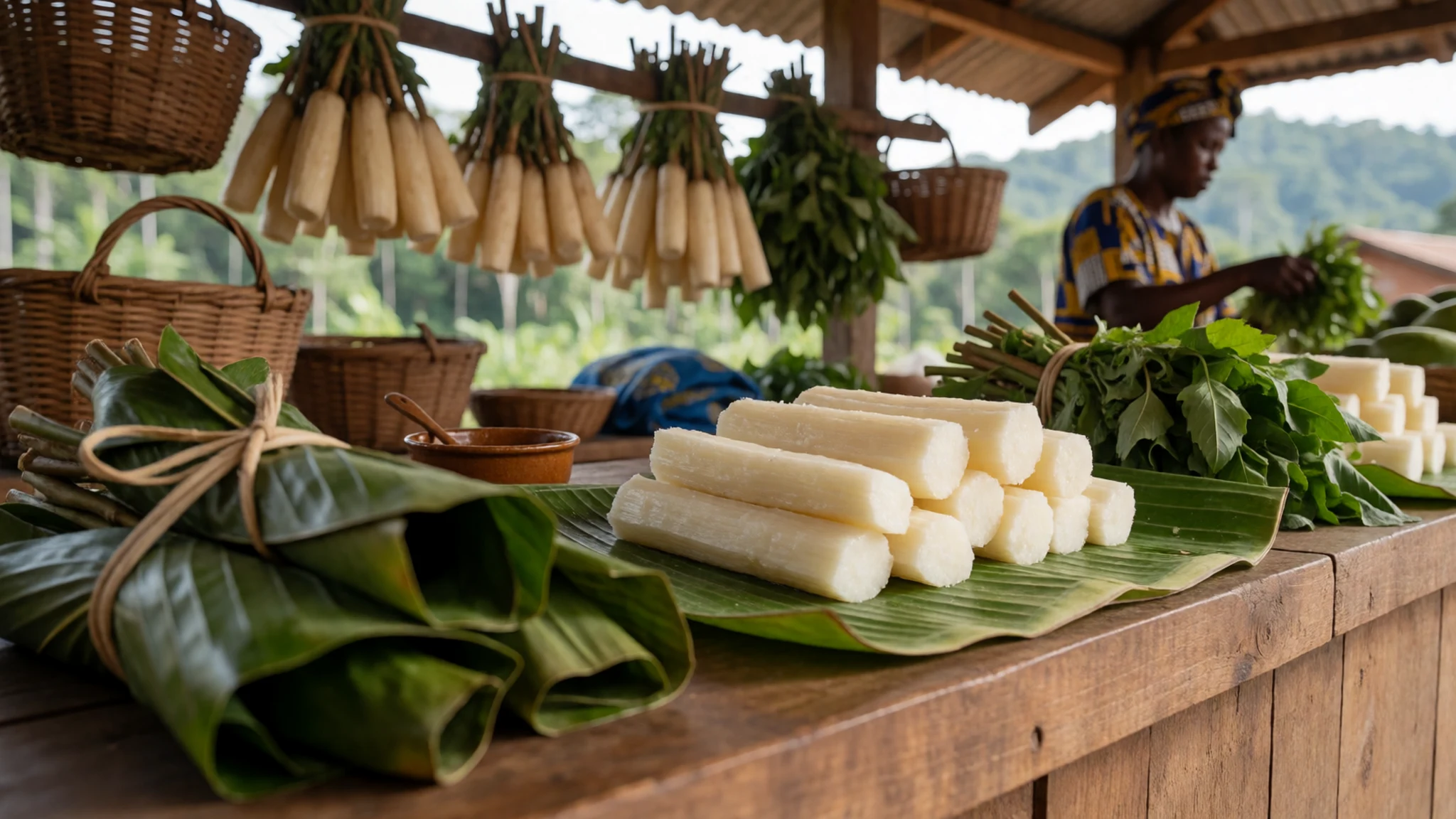
- Grilled fish with plantain — Roadside grills and town eateries
Fish from river or coast is grilled over charcoal with spices and served alongside fried or boiled plantain. Simple and filling, it is good value for walkers who want a straightforward meal after a day in the forest. - Cassava leaf stew — Home cooking and small local restaurants
Pounded cassava leaves are cooked down with onion, spices and often fish or meat into a dark green stew. It tastes earthy and rich, and is normally eaten with rice or a cassava side. - Sauce gombo — Local eateries and village kitchens
Okra gives this stew a silky texture. It is cooked with fish, meat or smoked ingredients, seasoned with local spices, and served over rice or with cassava. Ask whether the dish is made with fresh or smoked fish.
Plan it
Best time. June to August is usually the drier stretch in Gabon and the easiest for forest walking, though rain can fall in any month and trails stay damp. Check current forecasts before travelling.
How long. 2–3
Getting there. Fly to Libreville, the capital, then continue by road towards the Crystal Mountains. The last leg is best arranged through the park authority or a local operator, since access and road conditions change.
Budget. mid
Tips
- Contact the park authority or a local operator well ahead to arrange guides and entry; check the official site for current rules
- Start walks early, when the forest is cooler and animals and birds are more active
- Carry cash, as card payment may be unavailable outside Libreville
- Bring and treat enough drinking water, and pack insect repellent and a rain layer
- Download offline maps before leaving town, since mobile signal can be patchy
Etiquette
- Walk with a guide and follow their instructions around wildlife
- Ask before photographing people, and accept a refusal
- Take all rubbish out and keep to marked trails
Nearby
Sources
- Wikidata Q5191298 (CC0)
- Wikipedia: Crystal Mountains National Park (rev 1362718211) (CC BY-SA 4.0)
- Wikivoyage: Crystal Mountains National Park (CC BY-SA 4.0)
- Photo: Monts de Cristal twin national park (Mleal001) (CC BY 3.0)

Wildlife
- Forest elephant (animal)
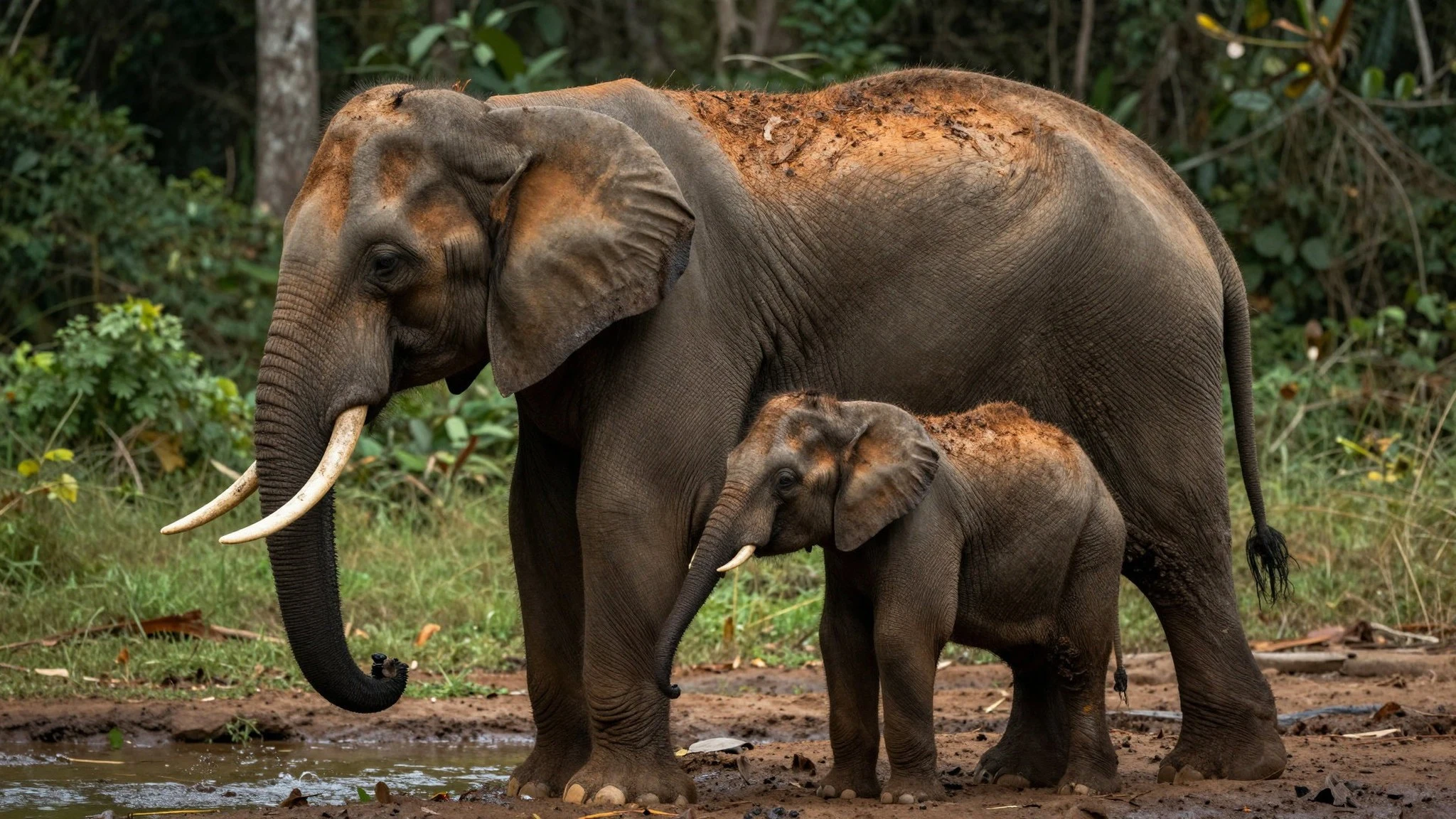
The forest elephant is the smallest living elephant, a woodland giant whose straight tusks point down, in females as well as males. It belongs to the humid tropical forests of West Africa and the Congo Basin. To watch it well, tread softly, keep your party small and let your guide decide how close is wise, since these elephants may behave unpredictably up close. Keep your distance, stay calm, and never feed them.