Libreville
Libreville, Gabon
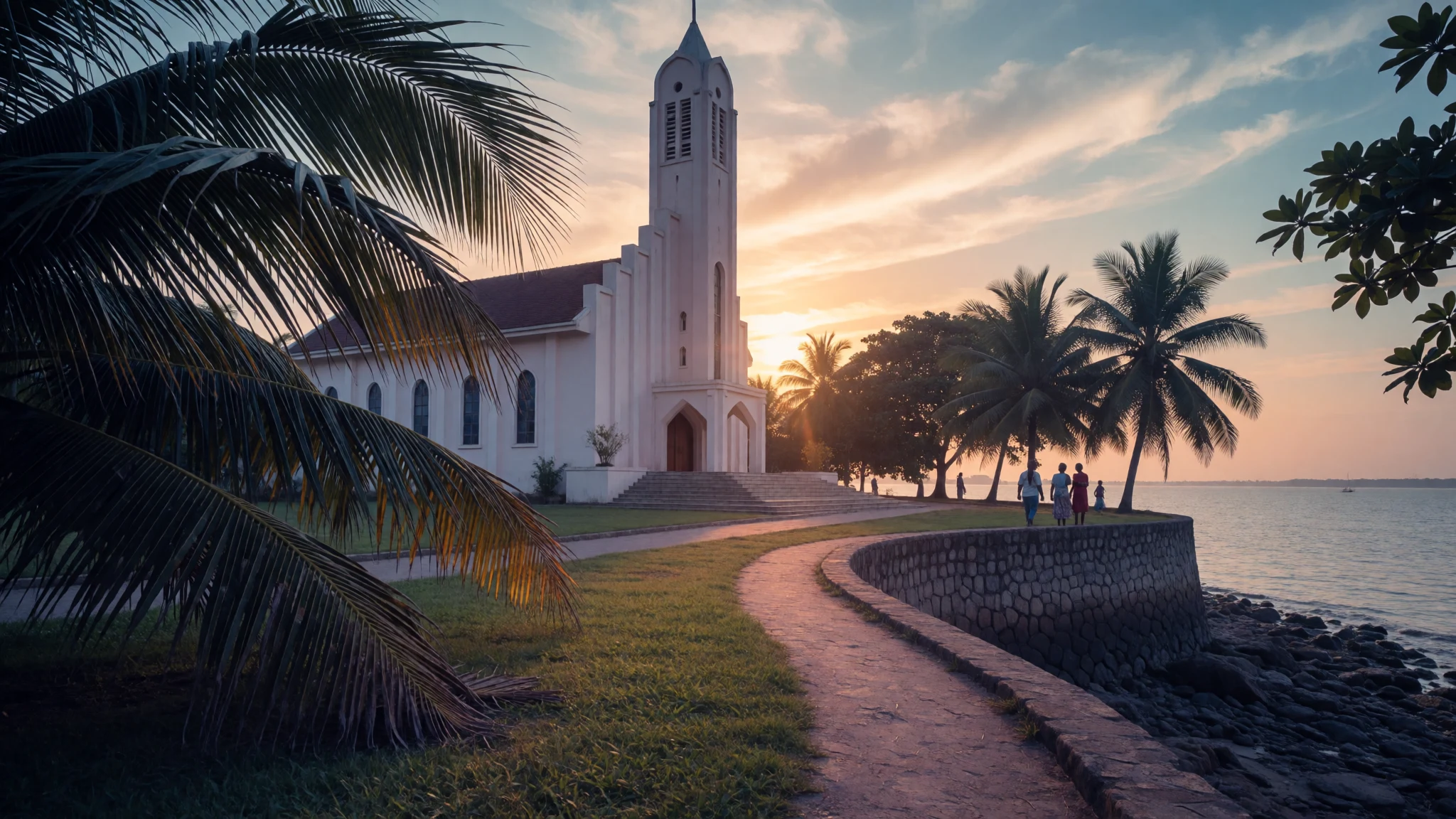
Libreville is a humid Atlantic capital where French habits, rainforest edges and a freed-captives founding story meet, and few visitors yet know it.
The place
Libreville is the capital of Gabon, strung along the northern shore of the Gabon Estuary where it widens towards the Gulf of Guinea. Roughly 899,000 people live here, about a third of the country, and the city sits only 13 metres above sea level, so the water and the humid air are never far away. The centre follows a seafront boulevard lined with ministries, banks and a few older churches, while the built-up area climbs and sprawls inland over low, forested hills. The districts have distinct characters. Batterie IV is leafy and residential. Quartier Louis, just back from the seafront, is where bars, clubs and restaurants gather after dark. Mont-Bouët and Nombakélé are the busy trading districts, full of market stalls, minibuses and bargaining. Glass is the quarter where Europeans first settled in Gabon. Oloumi holds industry, and Lalala is another residential area. South of the main urban area, Owendo has the working port and the station at the end of the Trans-Gabon Railway. Poorer neighbourhoods fill the inland slopes. The economy leans on government, finance and trade, even though most of Gabon's oil income comes from Port-Gentil. Libreville is not a city of famous monuments. Its appeal is that of a lived-in Central African capital with French manners, Atlantic weather and rainforest within reach. Beaches exist, but many sit in front of private homes, so a swim usually takes some planning.
Its story
Libreville begins with the Mpongwe, who lived and fished around the Gabon Estuary long before any European flag flew here. In 1839 a French naval officer, Édouard Bouët-Willaumez, struck an agreement on trade and French protection with their leader, Antchoué Komé Rapontcombo, whom the French called King Denis. Missionaries from New England followed a few years later and set up at Baraka, on ground now inside the city. The name and the founding myth come from 1849. The French navy, taking part in the campaign against the Atlantic slave trade, had stopped a Brazilian slave ship carrying captives from the Congo region. Several dozen of the freed people were settled on the estuary shore, and the village was called Libreville, French for Freetown. That same year the settlers held an election, and a former captive named Mountier became the first mayor. Later the town served as the colonial administrative seat of Congo-Gabon until the capital moved to Brazzaville. In 1910 Gabon was folded into French Equatorial Africa, whose companies pushed for a railway to link the Congo River with the Atlantic. When independence arrived in 1960, Libreville was still a modest trading and administrative town of only a few tens of thousands of people. Growth since then has been fast, and the city now holds a large share of the national population.
What to see
- Cathédrale Sainte Marie — Seafront, city centre
Cathédrale Sainte Marie stands close to the shoreline, on ground once occupied by the colonial Fort d'Aumale. It is a mid-twentieth-century church rather than an ancient one, and its setting by the water makes it a calm first stop. A papal visit in the early 1980s is still remembered locally.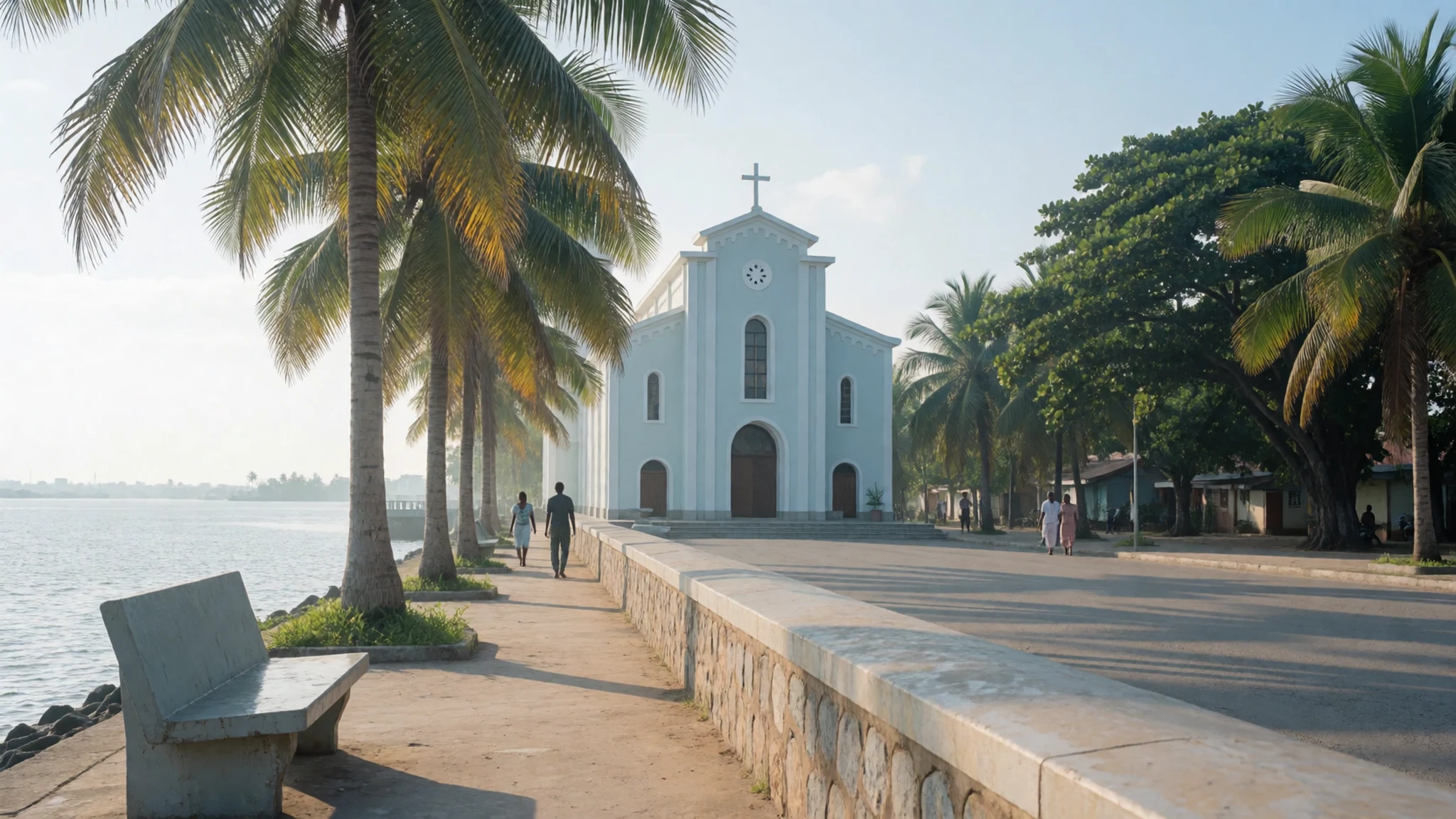
- Notre-Dame de Lourdes — Nkembo, east of the centre
Notre-Dame de Lourdes is a church in the Nkembo area, noted for a façade covered in imported Portuguese ceramic tiles. Inside, the front wall and the carved screen behind the altar carry hand-painted white and blue designs that give the nave a light, restful feel.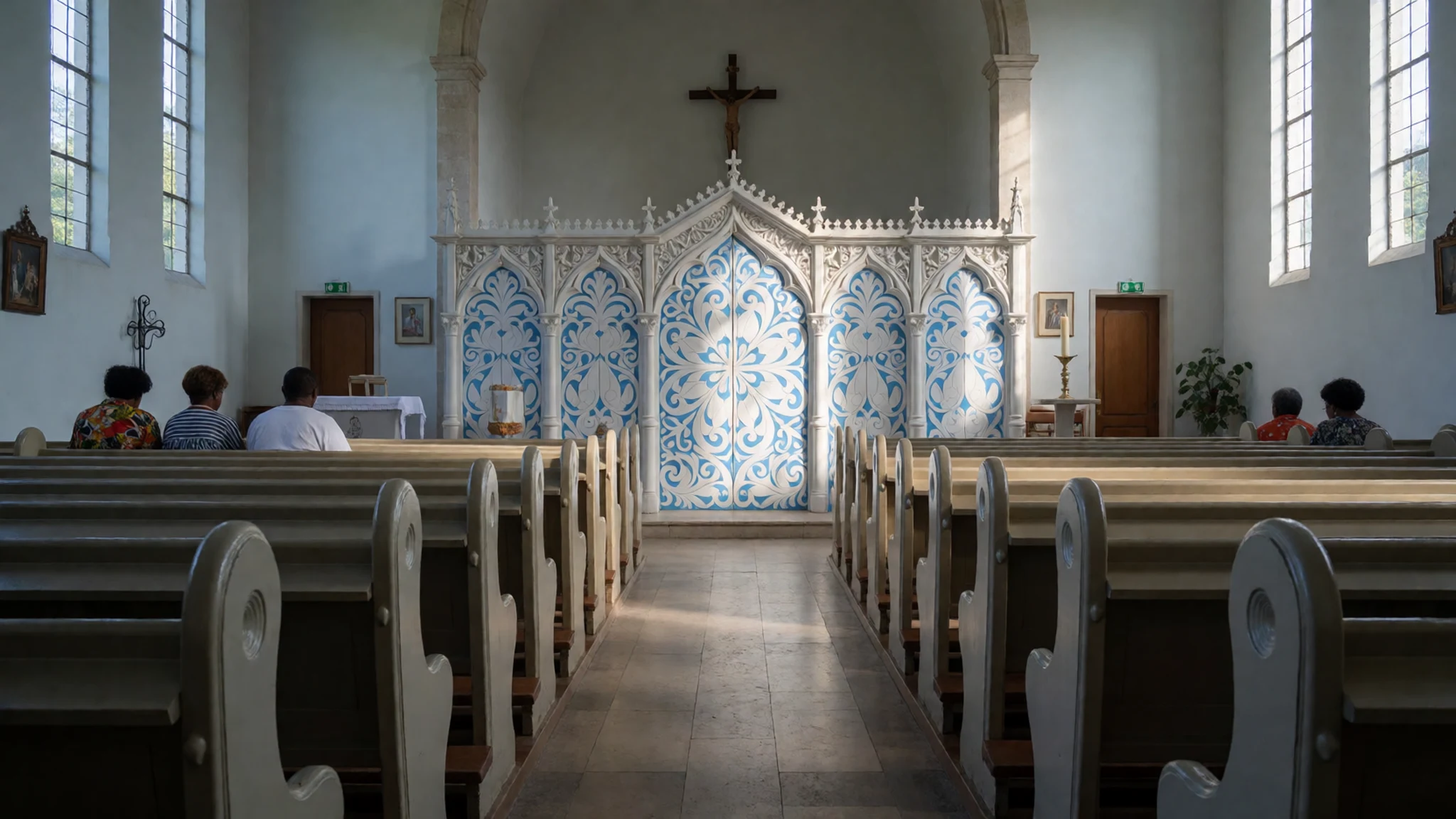
- Church of St Michael, Nkembo — Nkembo
St Michael's is worth a stop for its decoration. A Pan-African style mosaic fills the pediment, and wooden columns inside were carved by the Gabonese artist Zéphyrin Lendogno with scenes from the Old and New Testaments. It is a good place to see local craft turned to church use.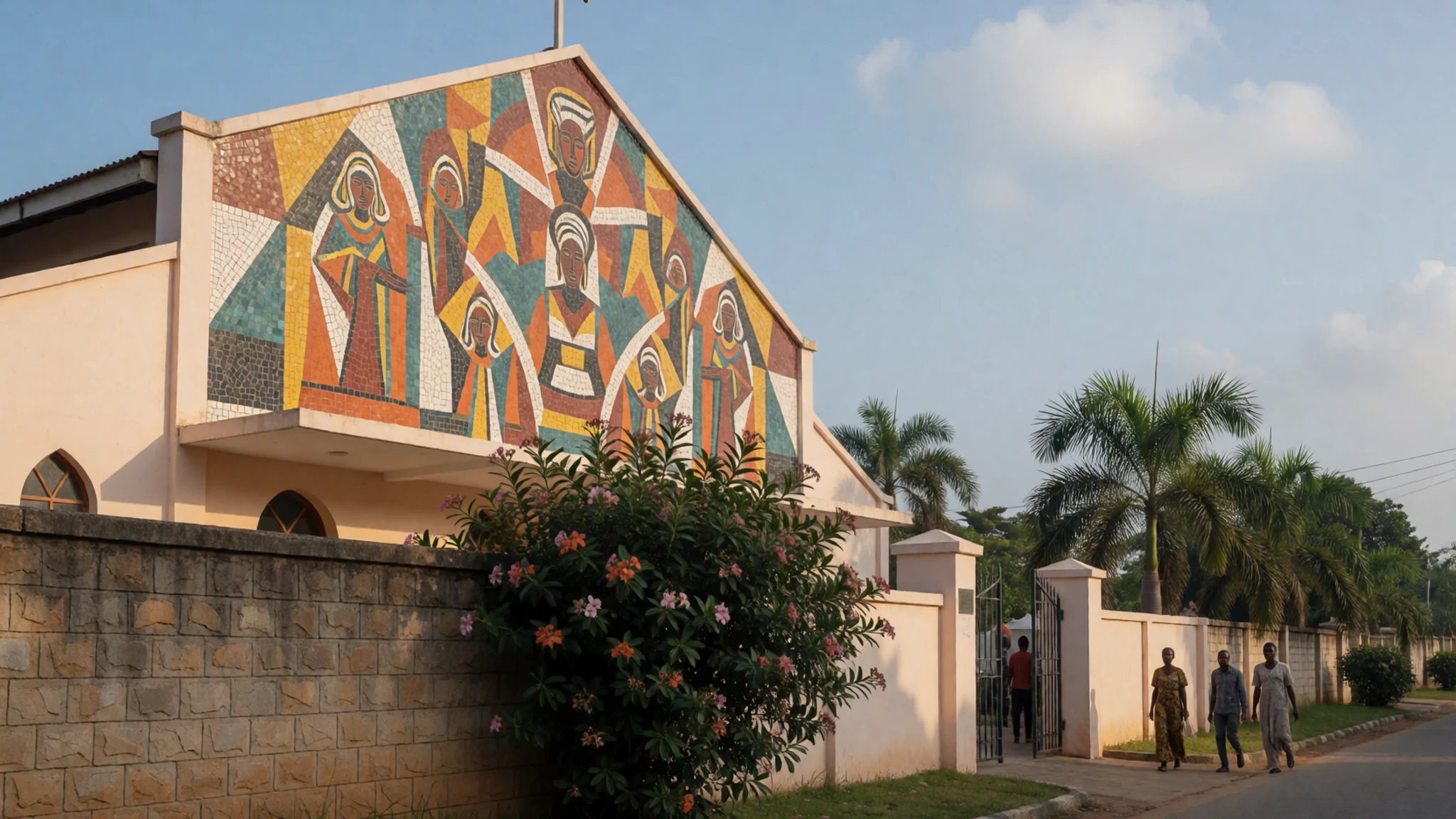
- National Museum of Arts and Traditions — South of the centre
This museum holds sculpture and other works that show the artistic range of Gabon's peoples. Its opening status has been unreliable, so it is best to ask the chamber of commerce nearby or a local contact before making the trip. A second national museum stands close by.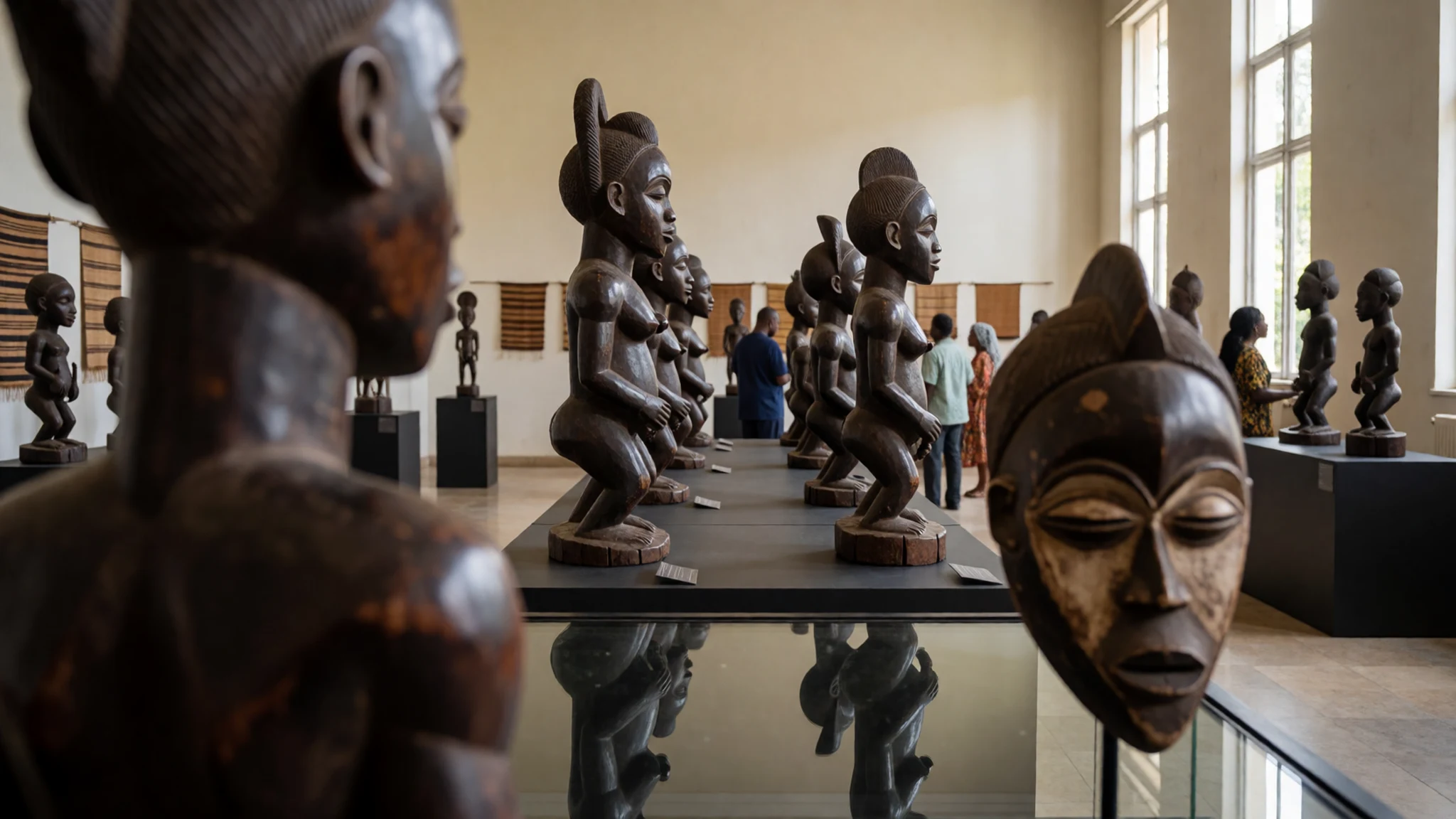
- The seafront and estuary — Bord de mer, city centre
The waterfront boulevard is where Libreville's business, government and weekend strolling meet. Early morning and late afternoon are the pleasant hours, with fishing boats on the estuary and the bay curving round towards the cape. Stay on public stretches, since many beach areas belong to private homes.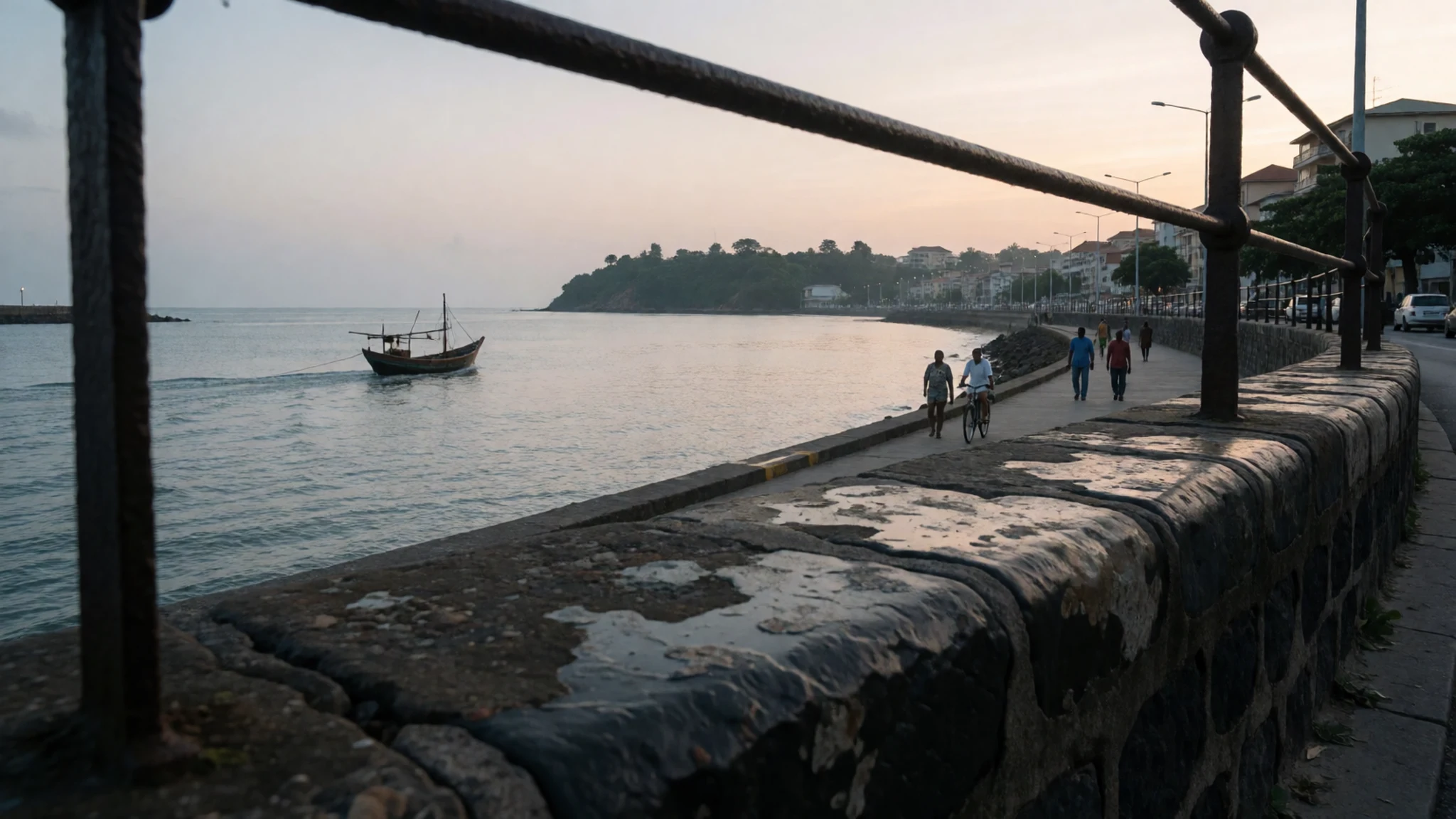
- Akanda National Park — Peninsula north of Libreville
Akanda covers the peninsula north of the city and is reached by boat tours, which can be arranged through local operators. Mangroves, birds and fish are the draw, and tours can stop at a beach such as Cap Esterias. Repellent matters, since mosquitoes are a real nuisance.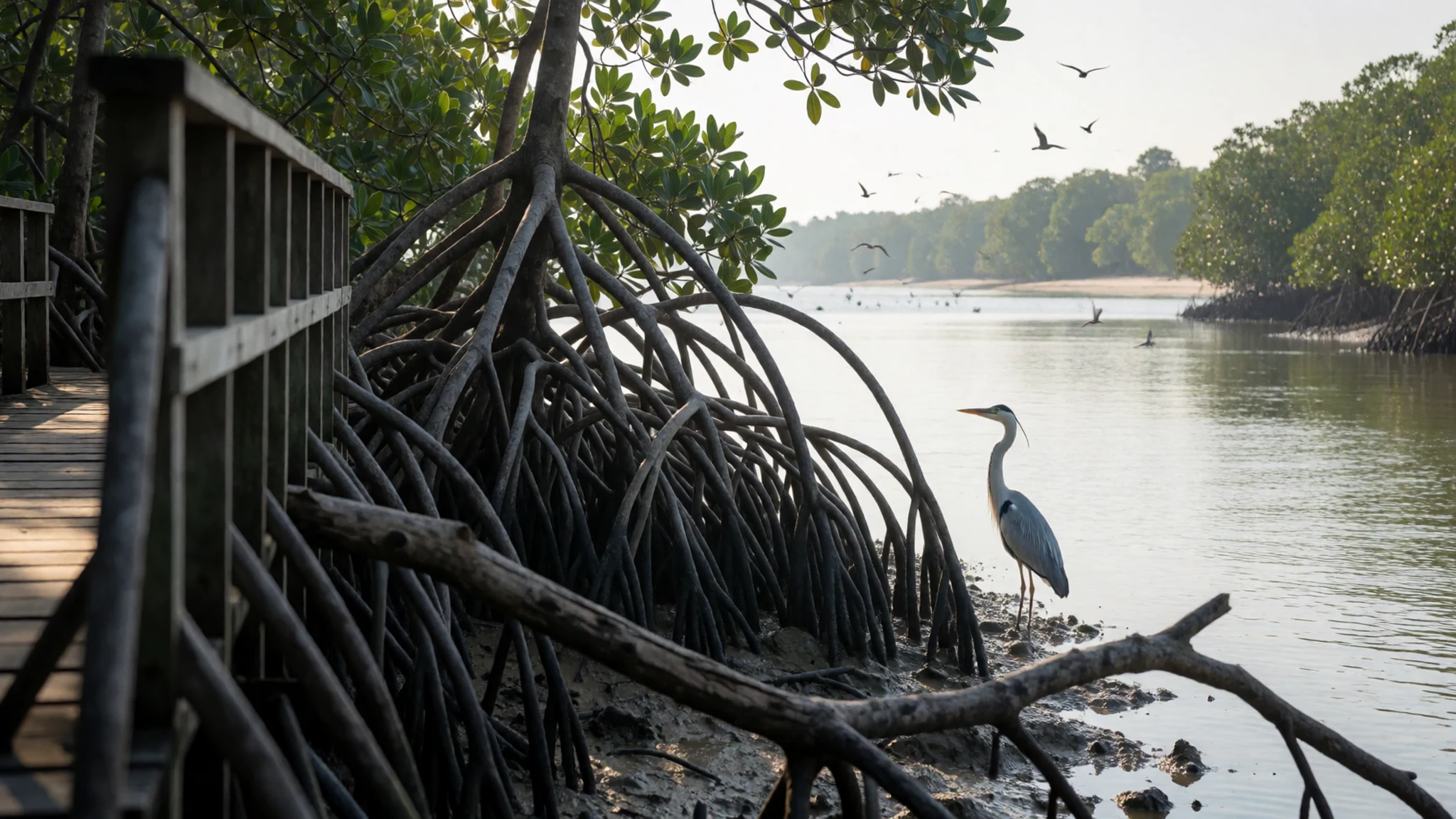
Culture
Libreville is a French-speaking city, and daily life runs on courtesy. People greet each other before any request, usually with bonjour and a handshake, and skipping this reads as brusque. The population includes many ethnic groups, among them the Mpongwe, on whose estuary the city stands, and the Fang, as well as people from elsewhere in Central and West Africa. Christianity, mainly Catholic, is strongly visible in the churches that dominate several districts, and there is a Muslim community with its own mosques, including a well-known one downtown. Sunday is a day for church, family meals and unhurried visits. The arts reach beyond the church walls. Wooden masks and figures from several Gabonese traditions appear in museum collections, and the carved columns of St Michael's in Nkembo show the same skills at work in a modern building. Music and nightlife are strongest in Quartier Louis, where piano bars, lounges and clubs run late. French cooking habits sit beside local ones, and the city's markets are where the two worlds meet. Official buildings, the presidential area and some military sites are sensitive, and police checkpoints are normal, so carry identification. Greet people with a bonjour and a handshake before asking anything, and always ask permission before photographing individuals, market stalls or government buildings.
What to wear
Traditional dress around Libreville draws on the many peoples of Gabon. Ceremonial wear has used woven raffia and bark cloth, often as skirts, wraps and decorated panels, and is now seen mostly at dances, initiations, weddings and cultural events rather than in the street. Printed cotton cloth, sold as pagne or wax print, has become the everyday fabric of tradition. Women wear it wrapped or sewn into dresses and head ties, and men wear shirts made from it on festive days. What people actually wear now is more mixed. Office workers in the centre favour pressed shirts, suits and neat dresses, while casual wear is jeans, T-shirts and football shirts. Local tailors turn patterned cloth into fitted outfits for church, family occasions and nights out, so Sundays and weekends are the most colourful. Visitors should dress for heat, humidity and sudden rain: light cotton or linen, quick-drying layers, a thin waterproof and sandals that cope with wet pavements. Cover shoulders and knees when entering a church or mosque, and keep beachwear for the beach. Closed shoes with grip help on boat landings and forest paths if a trip to Akanda is planned. Smart casual suits restaurants and lounges in Quartier Louis, where people tend to dress up for the evening. A hat and sunscreen are useful, and repellent belongs in the bag.
What to eat
- Poulet nyembwe — Family-run eateries across the city
Chicken slowly cooked in a thick sauce of palm nuts, often called the national dish of Gabon. It is rich and savoury, usually served with rice or cassava. Look for it in family-run eateries and at Sunday lunches.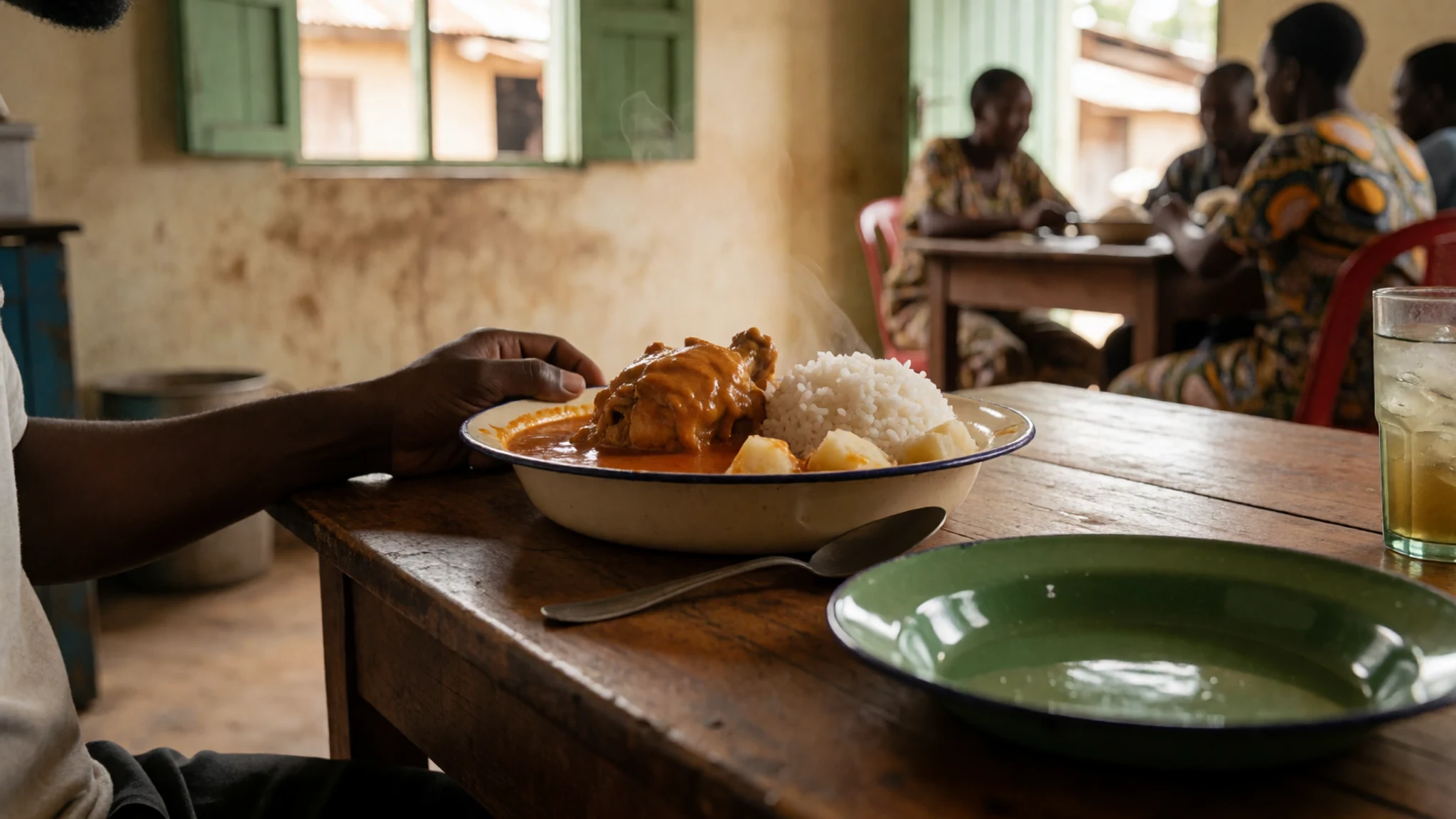
- Poisson braisé — Roadside grills and the Quartier Louis area
Whole fish grilled over charcoal, commonly with onions, chilli and lemon. The catch comes from the Atlantic and the estuary, and the dish is eaten with plantain or cassava. Smoky pavement grills at dusk are the most reliable place to find it.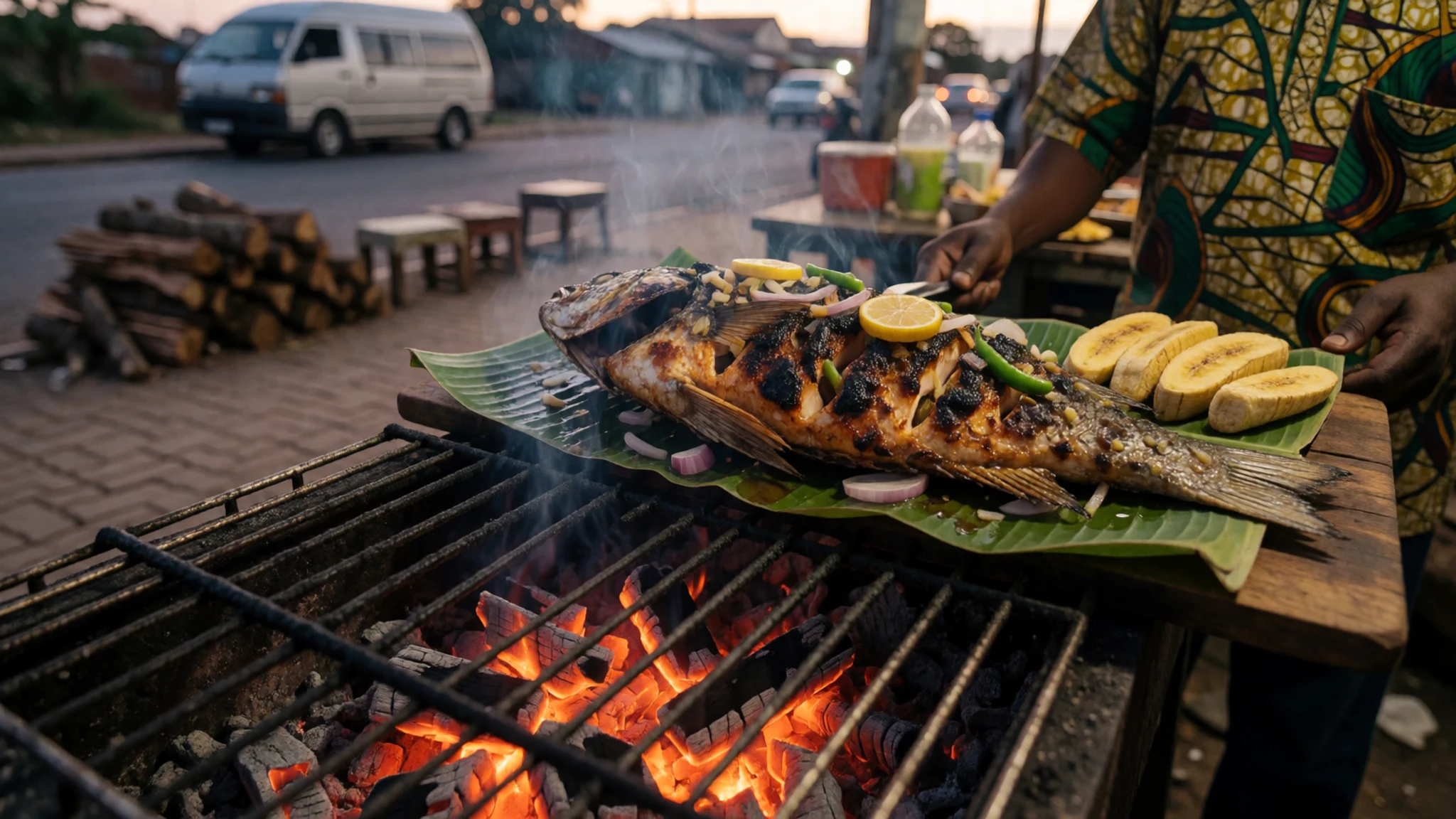
- Brochettes — Evening street stalls near busy junctions
Skewers of beef, chicken or goat, seasoned and cooked over hot coals, then sold hot with a spicy sauce. They are an easy evening snack and are typically eaten standing by the grill or taken away wrapped in paper. - Bâton de manioc — Mont-Bouët market and neighbourhood stalls
Cassava paste wrapped in leaves and steamed into firm sticks, with a mild, slightly sour taste. It is a staple side for sauces and grilled fish and sold at markets in large quantities. - Fried plantain — Street vendors and casual restaurants
Ripe plantain sliced and fried until caramelised outside and soft within. It goes with nearly every grilled dish and is also sold alone as a snack. Sweet and salty at once, it is among the easiest local foods to enjoy.
Plan it
Best time. June–August is the drier, somewhat cooler stretch, which makes walking and boat trips easier. The rest of the year is hot and humid with heavy rain, so carry a waterproof whenever you travel.
How long. 2–3
Getting there. Fly to Léon-Mba International Airport, which serves the capital, then take a taxi into the centre. The Trans-Gabon Railway ends at Owendo station, south of the centre near the port, and a taxi covers the last stretch.
Budget. high
Tips
- Eating out in Libreville is not cheap, so budget more for meals than the city's size suggests
- Quartier Louis is the area for restaurants and nightlife, but take a taxi after dark
- Check museum opening before travelling, as the national museums have been unreliable
- Bring insect repellent for Akanda National Park and for evenings by the water
- Carry identification and some cash, since card use can be patchy outside larger venues
Etiquette
- Say bonjour and shake hands before starting a conversation or asking for help
- Ask permission before photographing people, markets or official buildings
- Cover shoulders and knees when entering churches and mosques
Nearby
Sources
- Wikidata Q3825 (CC0)
- Wikipedia: Libreville (rev 1379940012) (CC BY-SA 4.0)
- Wikivoyage: Libreville (rev 5427406) (CC BY-SA 4.0)
- Photo: Libreville, Gabon — Global Photographer (CC BY 3.0)
- Photo: Bord de mer du centre administratif de Libreville — Shirmy25 (CC BY-SA 4.0)
- Photo: Immeuble Gabon Mining Logistics au Centre-ville de Libreville — Delrick Trevor (CC BY-SA 4.0)
- Photo: Church of Notre-Dame de Lourdes, Libreville — David Stanley (CC BY 2.5)
- Photo: Mosque, Libreville — David Stanley (CC BY 2.5)
- Photo: Baie du cap, l'estuaire de Libreville au Gabon — VIGNA christian (CC BY-SA 4.0)
- Photo: 082 Gabon. - L'entrée de Libreville (Public domain)
- Photo: Libreville, Gabon (ISS astronaut photo) — NASA Astronauts (Public domain)


