Pointe du Raz
Pointe du Raz, France
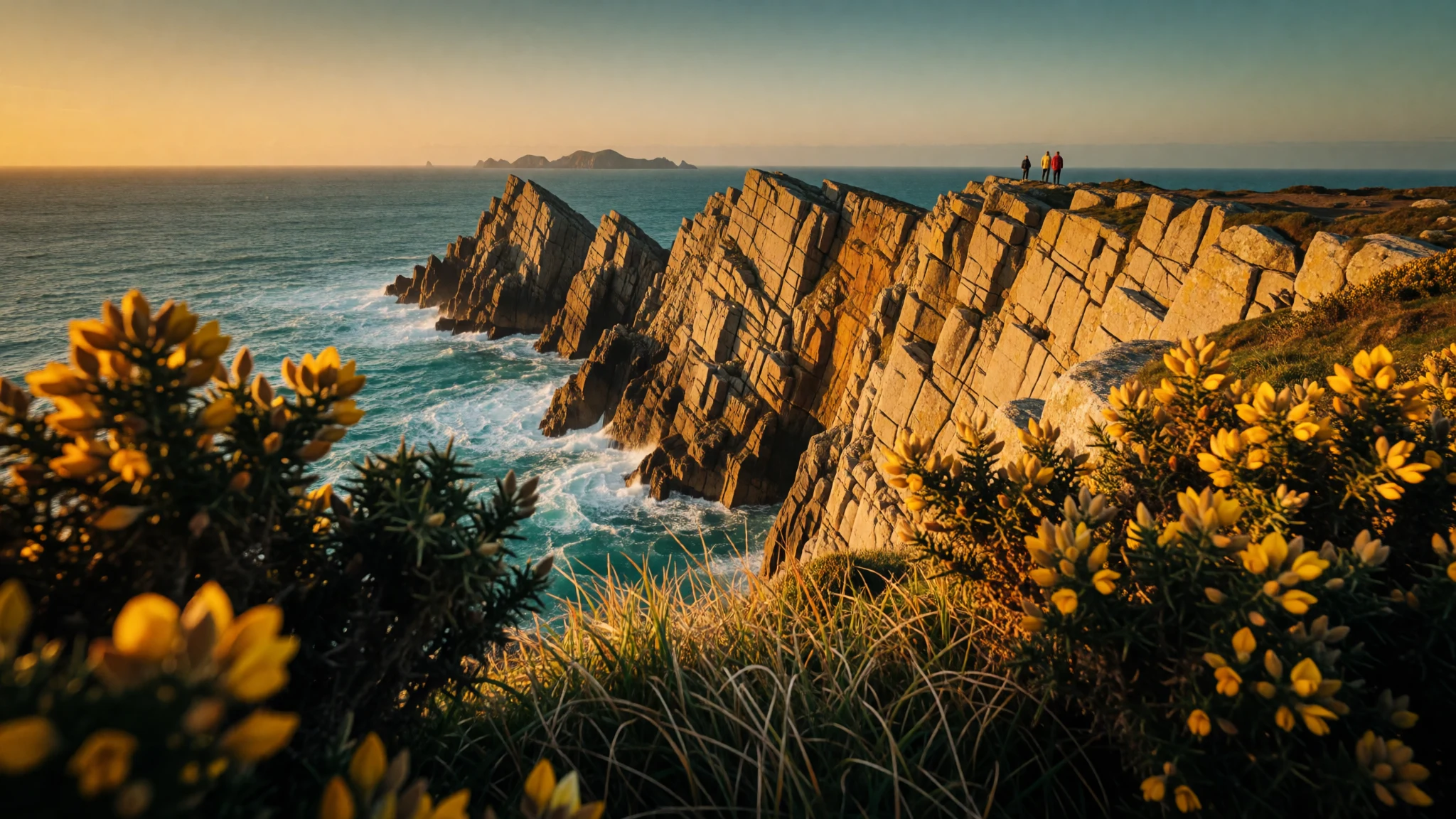
Experience the raw power of the Atlantic at this dramatic Breton headland where crashing waves meet ancient, weather-beaten granite cliffs.
The place
Pointe du Raz is a striking promontory that pushes deep into the Atlantic Ocean on the western edge of Brittany. Located in the commune of Plogoff within the Finistère department, it serves as a powerful symbol of the edge of the European continent. The landscape is defined by its rugged isolation, where the land ends in a series of steep, jagged cliffs that endure the constant assault of the sea. It is a place of extreme elements; the winds here are often fierce, and the salt spray hangs heavy in the air, creating an atmosphere of wild, untamed beauty.
While it is not technically the absolute westernmost point of mainland France, it feels like the end of the world. The area is most famous for the Raz de Sein, a treacherous stretch of water between the headland and the island of Sein. The currents here are legendary for their strength and danger, giving the site its name, as 'raz' refers to a strong current of water. Visitors will find the terrain challenging but rewarding, with walking paths that wind along the cliffs, offering views of the churning white water below and the distant, solitary silhouette of the La Vieille lighthouse standing guard against the tide.
Its story
The story of Pointe du Raz is woven into the very name of its region, Finistère, which in Breton means 'the end of the world'. This geography has fostered a spirit of resilience and a deep, sometimes mystical connection to the sea. For centuries, the headland has been a place of peril for sailors navigating the treacherous currents of the Raz de Sein, leading to a local history filled with tales of shipwrecks and the brave souls who attempted to rescue them from the foaming surf.
This sense of passionate turmoil and natural violence has captured the imagination of writers and artists alike. In Daphne du Maurier's novel 'Frenchman's Creek', the Pointe du Raz is used as a powerful metaphor for the intense and volatile relationship between a French pirate and a British aristocrat. The crashing waves and howling winds of the cape mirror the emotional instability and longing of the protagonists, cementing the location's reputation as a site of romantic and dramatic intensity. Beyond the literature, the area represents the intersection of Breton identity and the Atlantic frontier. It marks the final destination of the E5 European long distance path, serving as a physical and symbolic terminus for travellers who have trekked thousands of kilometres from Venice, ending their journey where the land finally gives way to the vast ocean.
What to see
- La Vieille Lighthouse
Standing as a lonely sentinel amidst the crashing waves, this lighthouse is a stark reminder of the dangers of the Raz de Sein. It is clearly visible from the headland, serving as a vital navigational aid for ships avoiding the treacherous rocks that surround the point.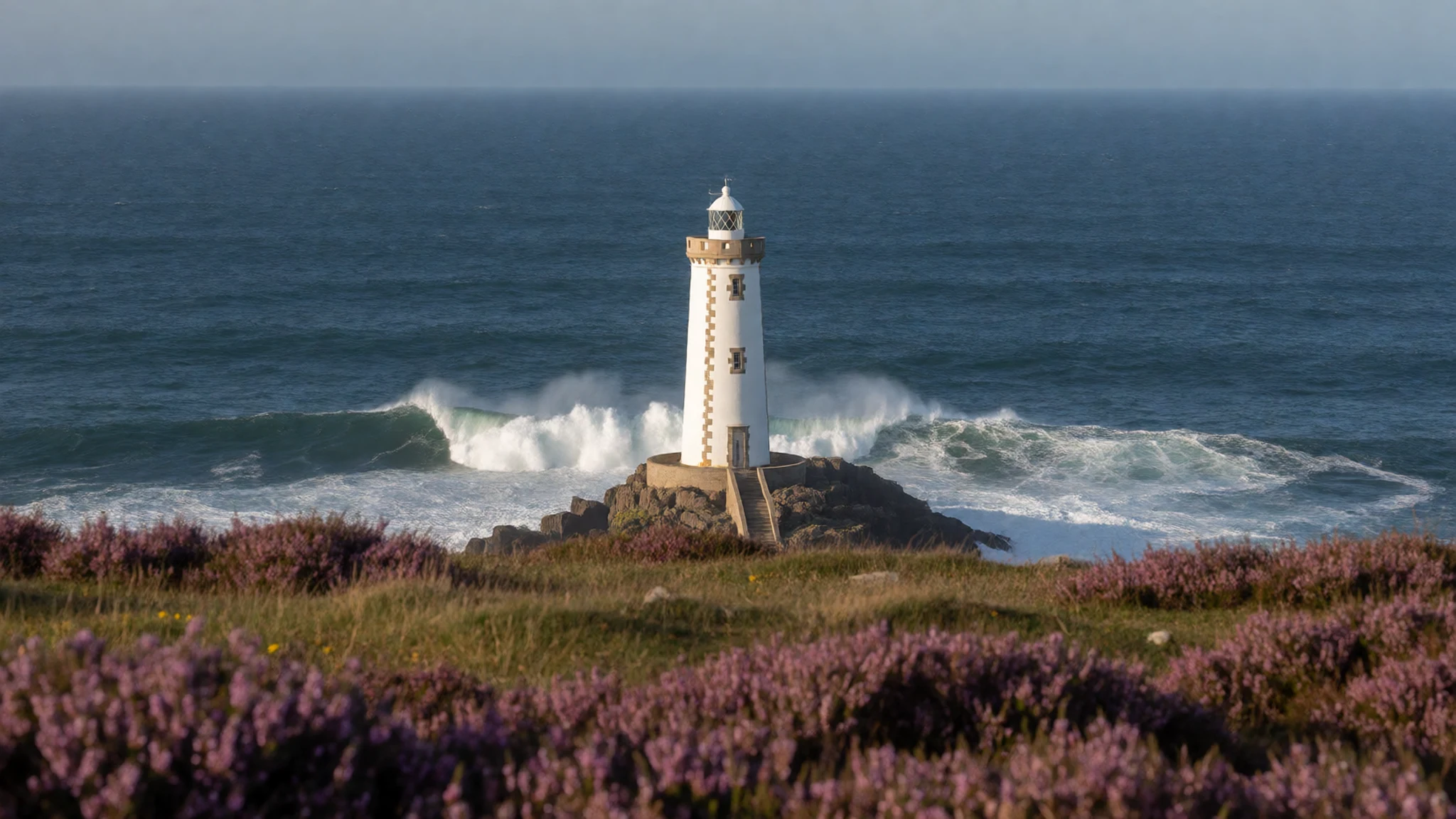
- Raz de Sein
This is the powerful current of water flowing between the cape and the island of Sein. Watching the tide rip through this channel is a spectacle of nature, where the ocean turns into a churning cauldron of white foam and deep turquoise swirls.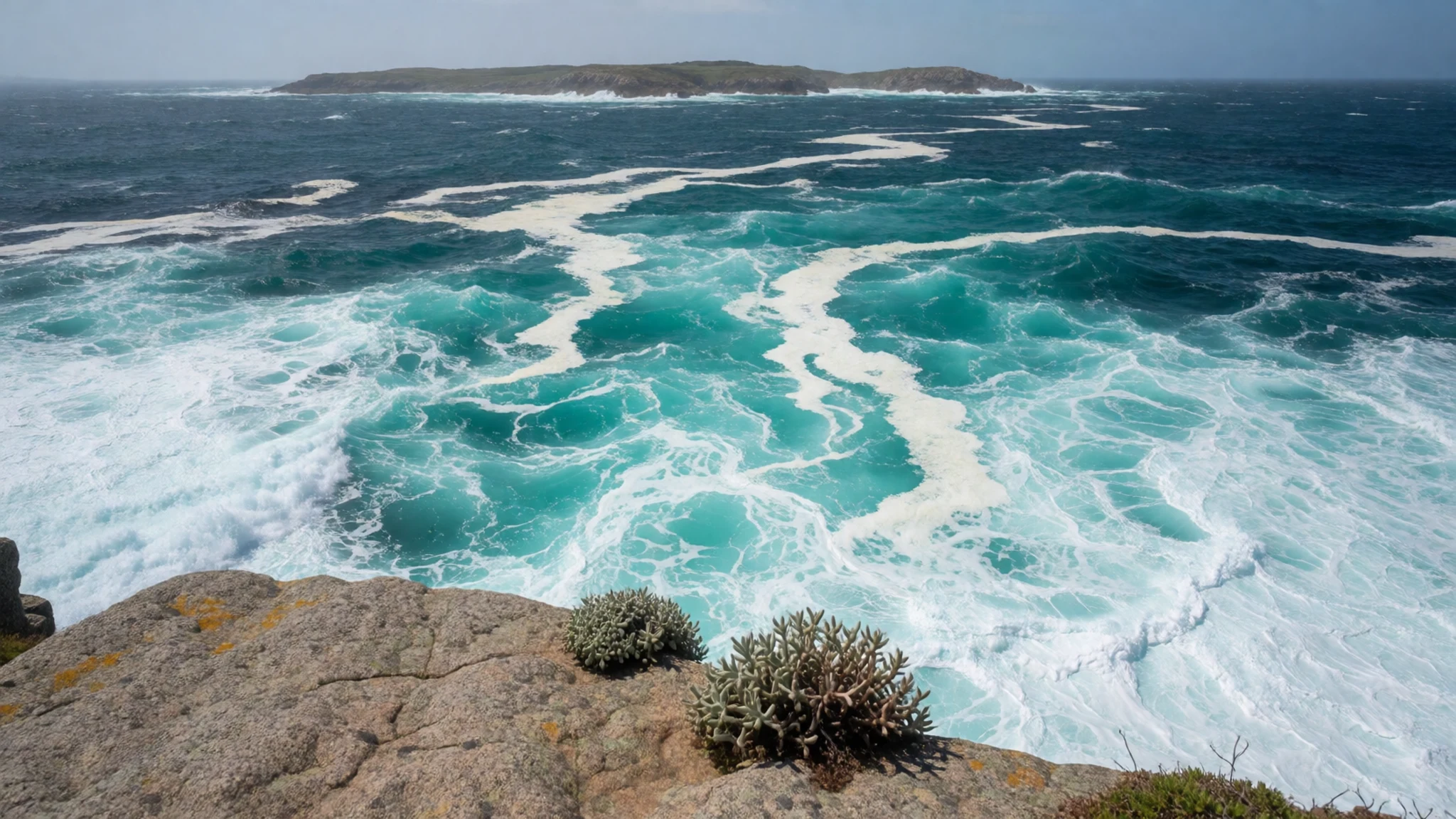
- The E5 Path Terminus
For hikers and dreamers, this spot marks the western end of the E5 European long distance path. It is a poignant place to reflect on the vast distance from Venice, representing the ultimate edge of the continental journey across Europe.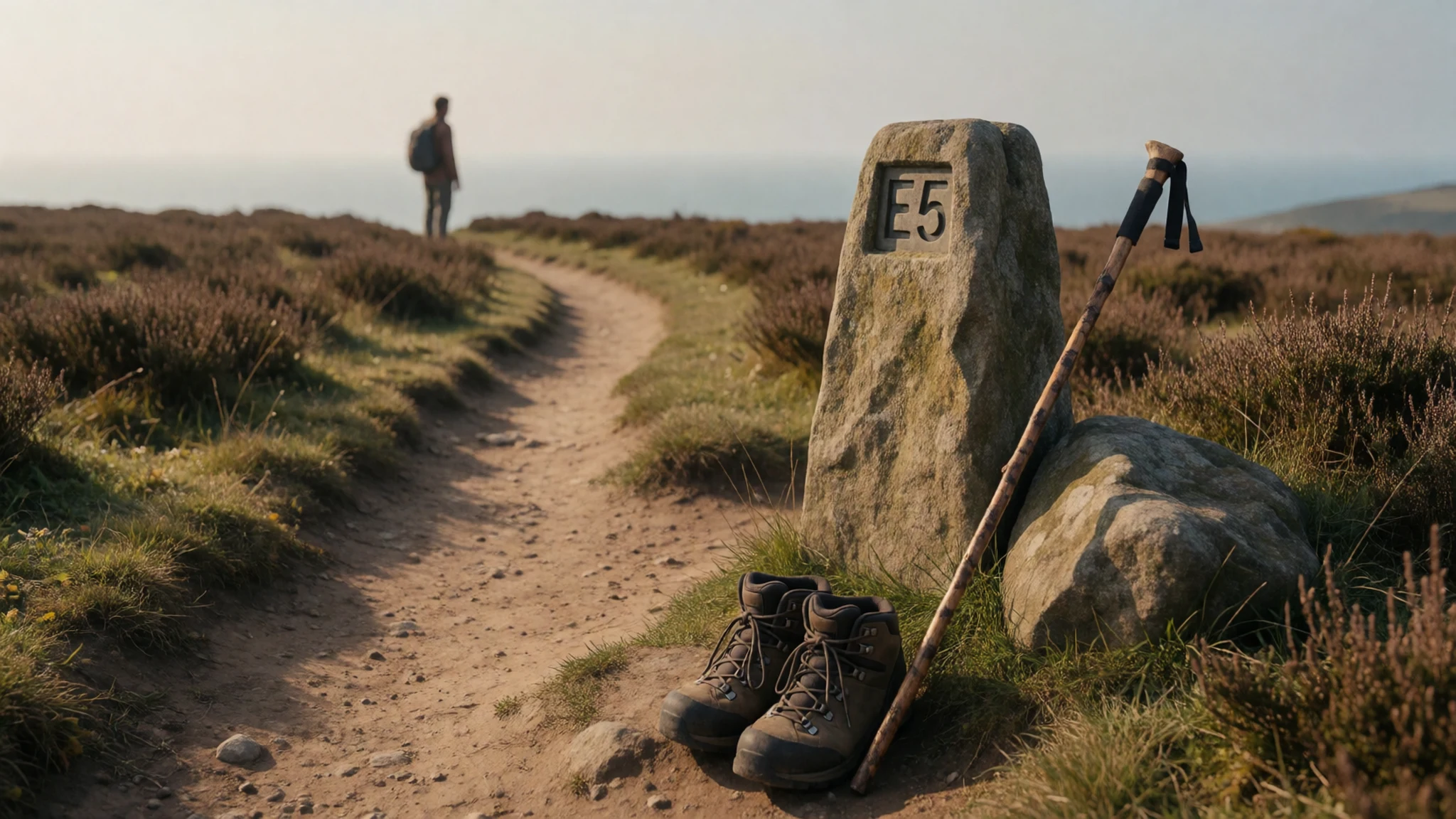
- Granite Cliffs
The geological formations here are stunning, with ancient granite carved into surreal shapes by millennia of wind and salt. Walking along these heights provides an honest look at the erosive power of the Atlantic and breathtaking vistas of the horizon.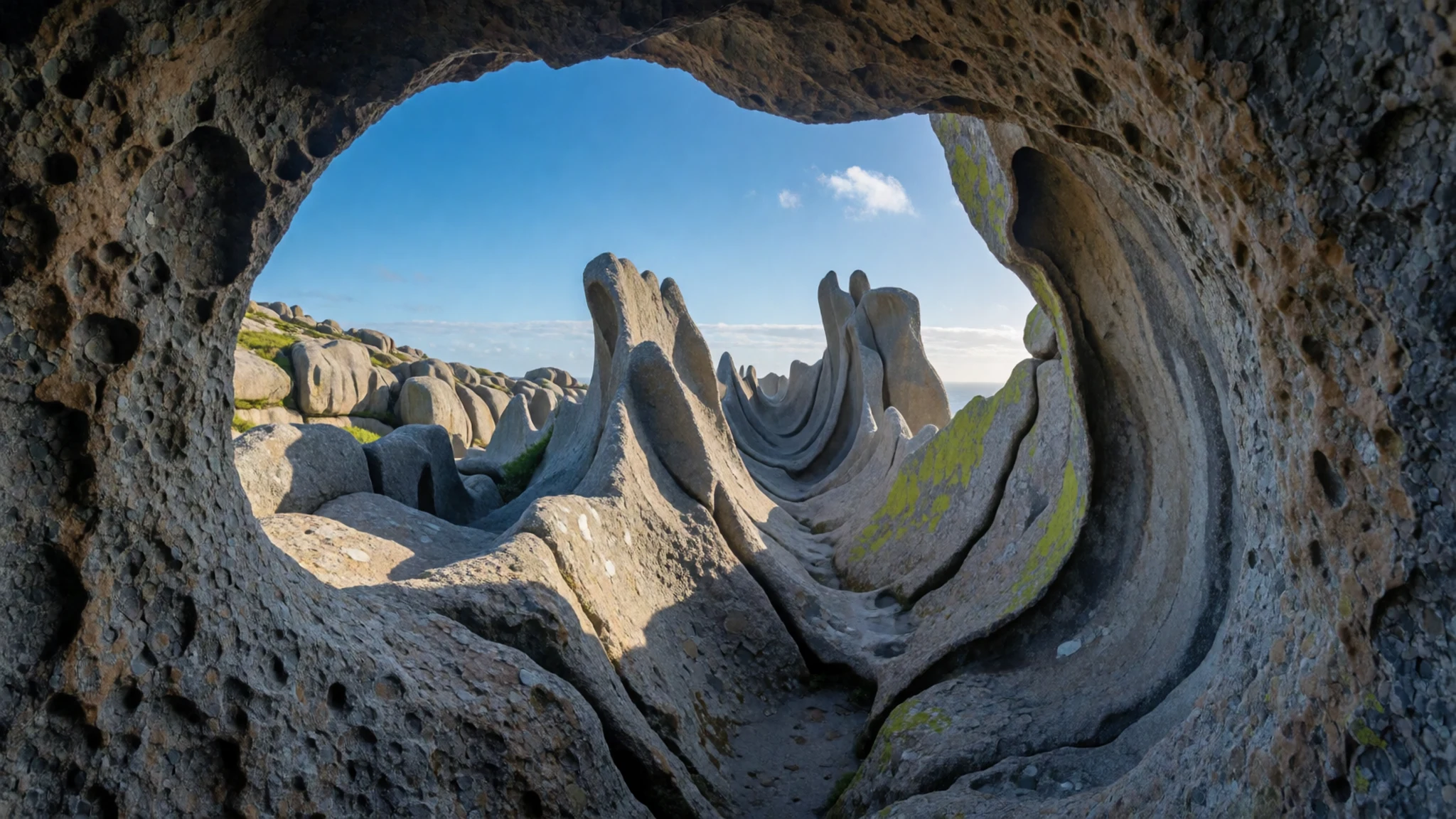
- Plogoff Coastal Trails
The walking paths around the commune of Plogoff offer a way to experience the headland's solitude. These trails lead you through windswept heathland and along cliff edges, providing multiple perspectives of the dramatic coastline away from the main tourist hubs.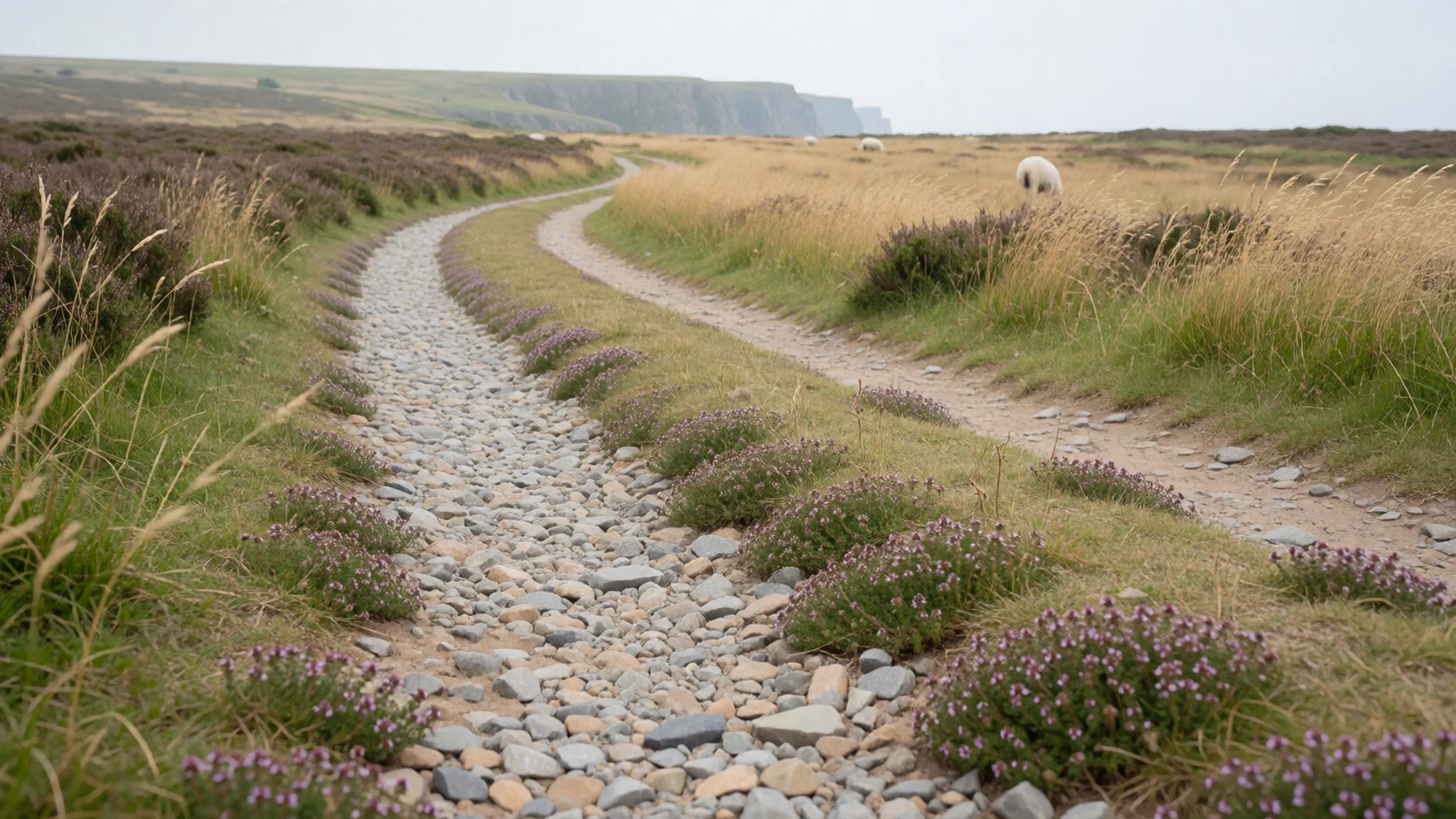
Culture
Culture at Pointe du Raz is deeply rooted in the Breton identity, a Celtic heritage that distinguishes this region from the rest of France. The local language, Breton, is still spoken and seen on signage, reflecting a proud insistence on preserving a unique linguistic and cultural history. There is a palpable sense of rivalry and regional pride in Finistère, particularly between the northern hub of Brest and the administrative centre of Quimper. This local tension is a window into the complex social fabric of the department, where people identify strongly with their specific corner of the 'end of the world'. The culture is one of hardiness and respect for the sea, where the rhythms of life are dictated by the tides and the unpredictable Atlantic weather. Visitors will find a community that is warm but understated, possessing a quiet strength mirrored by the landscape they inhabit. Please stay on the marked paths to protect the fragile coastal vegetation and avoid crumbling cliff edges.
What to wear
Traditionally, Breton fashion is defined by the 'Marinière', the iconic striped shirt originally worn by sailors to make them easier to spot if they fell overboard. Local textiles often involve heavy wools and linens designed to repel the damp Atlantic mist. Historically, elaborate lace caps (coiffes) were worn by women, with the specific style indicating the wearer's village or social status. Today, the striped shirt remains a timeless staple of the local wardrobe, often paired with sturdy trousers and knitwear. In the modern day, you will see locals in practical, weather-resistant gear, reflecting the climate's volatility. For visitors, the key is layering. Even in summer, the wind at Pointe du Raz can be biting. A high-quality windbreaker or waterproof jacket is essential, along with a warm fleece or wool sweater. Footwear must be sturdy; the terrain is rocky and often slippery, so hiking boots or крепкие walking shoes are far more appropriate than trainers or sandals. A warm hat and scarf are recommended regardless of the season.
What to eat
- Galettes Bretonnes — local crêperies
Savoury buckwheat pancakes that are a staple of the region. These are typically filled with ham, cheese, or eggs and are best enjoyed at a traditional crêperie in the village of Plogoff.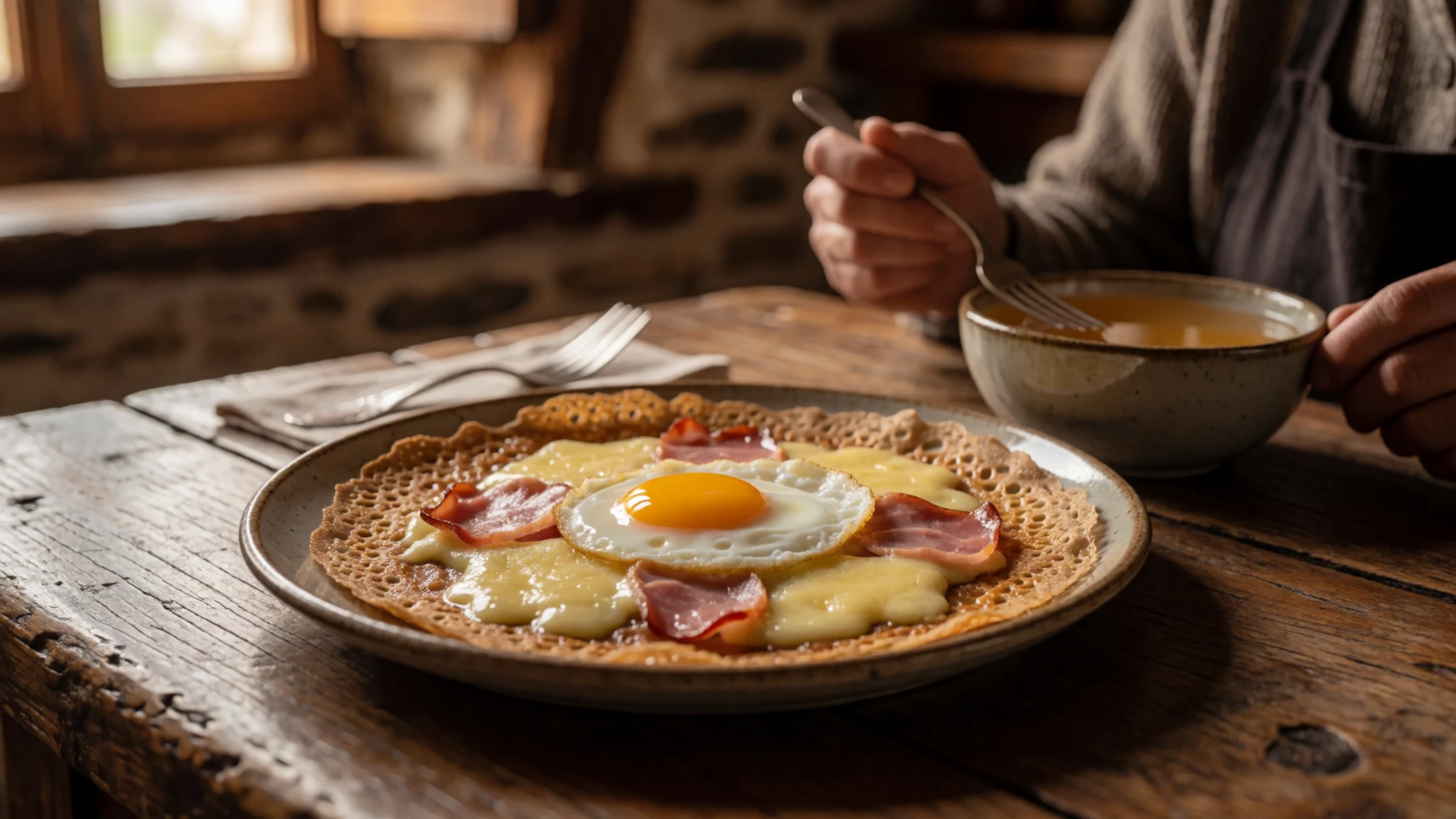
- Kouign-Amann — village bakeries
A buttery, sugary cake from the coast of Brittany. This decadent pastry is layered with salted butter and sugar, creating a caramelised crust that is a local speciality in village bakeries.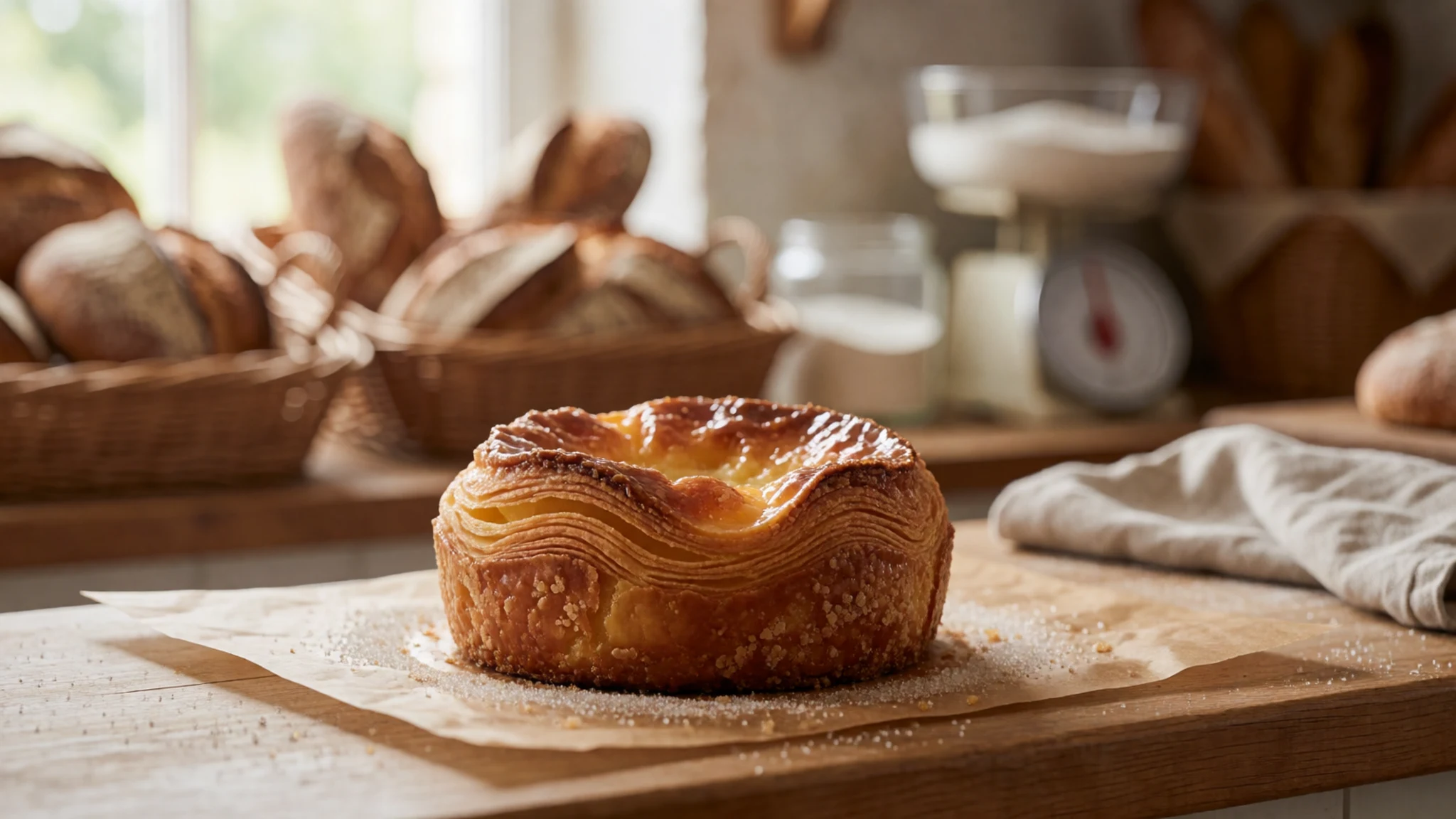
- Fresh Oysters — coastal seafood eateries
Brittany is famous for its aquaculture. Freshly shucked oysters with a squeeze of lemon provide a briny taste of the Atlantic and are commonly served at coastal eateries near the harbours. - Cidre Breton — traditional restaurants
The region's sparkling apple cider is the traditional accompaniment to galettes. It is a crisp, refreshing drink served in a ceramic bowl or glass in traditional countryside restaurants. - Kig Ha Farz — rural gîtes and eateries
A hearty traditional stew consisting of meat and a buckwheat flour dumpling. This warming dish is a specialty of the Finistère region, typically found in rural gîtes or family-run eateries.
Plan it
Best time. May–June or September–October to avoid the peak summer crowds while enjoying milder temperatures and clearer skies.
How long. 1–2
Getting there. Fly into Brest-Bretagne Airport or take the TGV from Paris to Quimper or Brest; the final leg to Plogoff is best completed by rental car.
Budget. mid
Tips
- Check the wind forecast before visiting, as extreme gusts can make the cliffs dangerous
- Arrive early in the morning to experience the headland in solitude
- Bring a high-quality windproof jacket even in July
- Carry a physical map as mobile signal can be spotty near the cliffs
- Allow extra time for the drive from Brest or Quimper
Etiquette
- Keep noise levels down to respect the natural silence of the site
- Dispose of all litter in bins to protect the marine environment
- Follow all safety signage regarding cliff edges strictly
Sources
- Wikidata Q1500472 (CC0)
- Wikipedia (CC BY-SA 4.0)
- Wikivoyage (CC BY-SA 4.0)