Placencia
Placencia, Belize
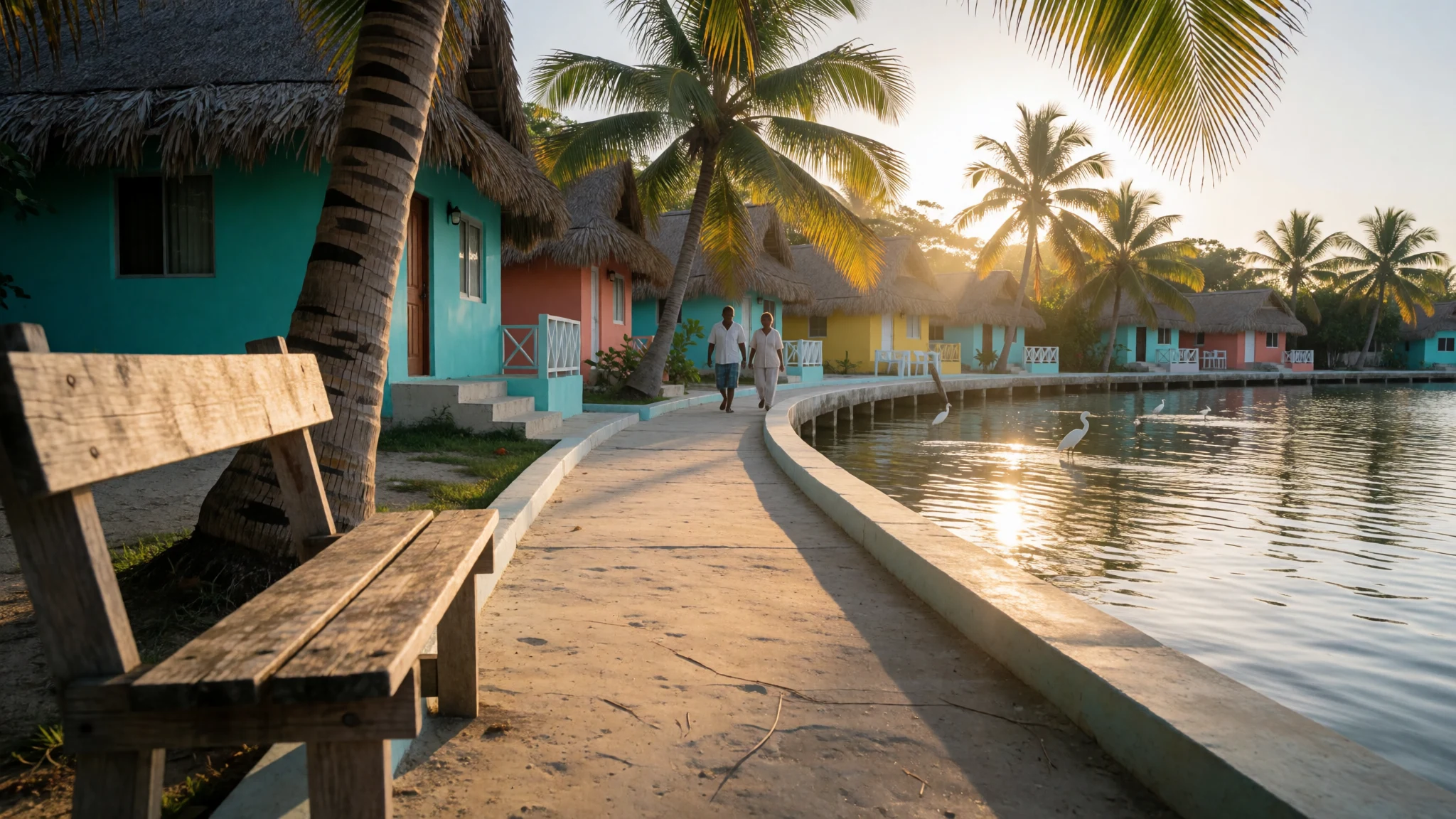
Placencia is a barefoot Caribbean village at the tip of a long peninsula, with beach, lagoon, reef trips and easy seafood.
The place
Placencia is a small village at the southern end of a narrow peninsula in Belize's Stann Creek District, with a population of about 1,586 and an elevation of just 11 metres. The land is thin. An open Caribbean beach of pale sand runs down the eastern side, backed in places by dense mangrove, while the western side faces a calm, sheltered lagoon. That double coastline explains most of what people do here. The sea side is for swimming, sailing and boat trips to the reef and nearby islands; the lagoon side is for paddling, birdwatching and, with luck, a glimpse of manatees. Several settlements string along the peninsula road, among them Riversdale, Maya Beach and the Garifuna village of Seine Bight, and Placencia is the last of them, where the road runs out. The larger resorts sit mostly to the north and feel separate from the village. The village itself is low-rise and unhurried: guesthouses, cafes, dive and fishing outfits, and a raised concrete footpath through the centre that doubles as the main street for walkers. Feet, bicycles and golf carts matter more than cars. A small airstrip takes flights from Belize City. Expect sun, a steady breeze, sandflies and mosquitoes at the wrong hour, and a pace that rewards doing one thing a day. This is a place for water and food rather than monuments, and it suits people who are happy to wander, swim and eat.
Its story
Placencia's story begins with the Maya, who lived on this peninsula long before Europeans arrived. Archaeological finds suggest that salt-making here fed a wider trade along the coast. In the seventeenth century English Puritans, arriving from Nova Scotia and Providence Island, settled the area, but that colony faded away around the time Spain's American colonies were winning their independence. Spanish sailors working the southern coast left the name behind. They called the headland Punta Placentia, roughly 'Pleasant Point', and the name still marks the tip of the peninsula. Families returned in the late nineteenth century and rebuilt a community that lived from the sea, mainly through fishing. For generations Placencia remained a modest coastal village, and visitors only began to arrive in numbers in the late twentieth century, when its beaches and lagoon became its main attraction. In October 2001 Hurricane Iris crossed southern Belize and damaged most of the buildings in the village. The aftermath brought cheaper land and a wave of developers, and building has continued since, so the peninsula today is busier than its size suggests. Old fishing families, Garifuna neighbours, expatriate owners and seasonal visitors now share a short stretch of coast, and not everyone agrees on how quickly it should change.
What to see
- The village footpath — Placencia Village centre
A raised concrete footpath runs through the middle of Placencia and works as the main street. Guesthouses, cafes, small shops and souvenir stalls line it, and it is easiest to see on foot in the early evening, when the heat drops and people start drifting towards dinner.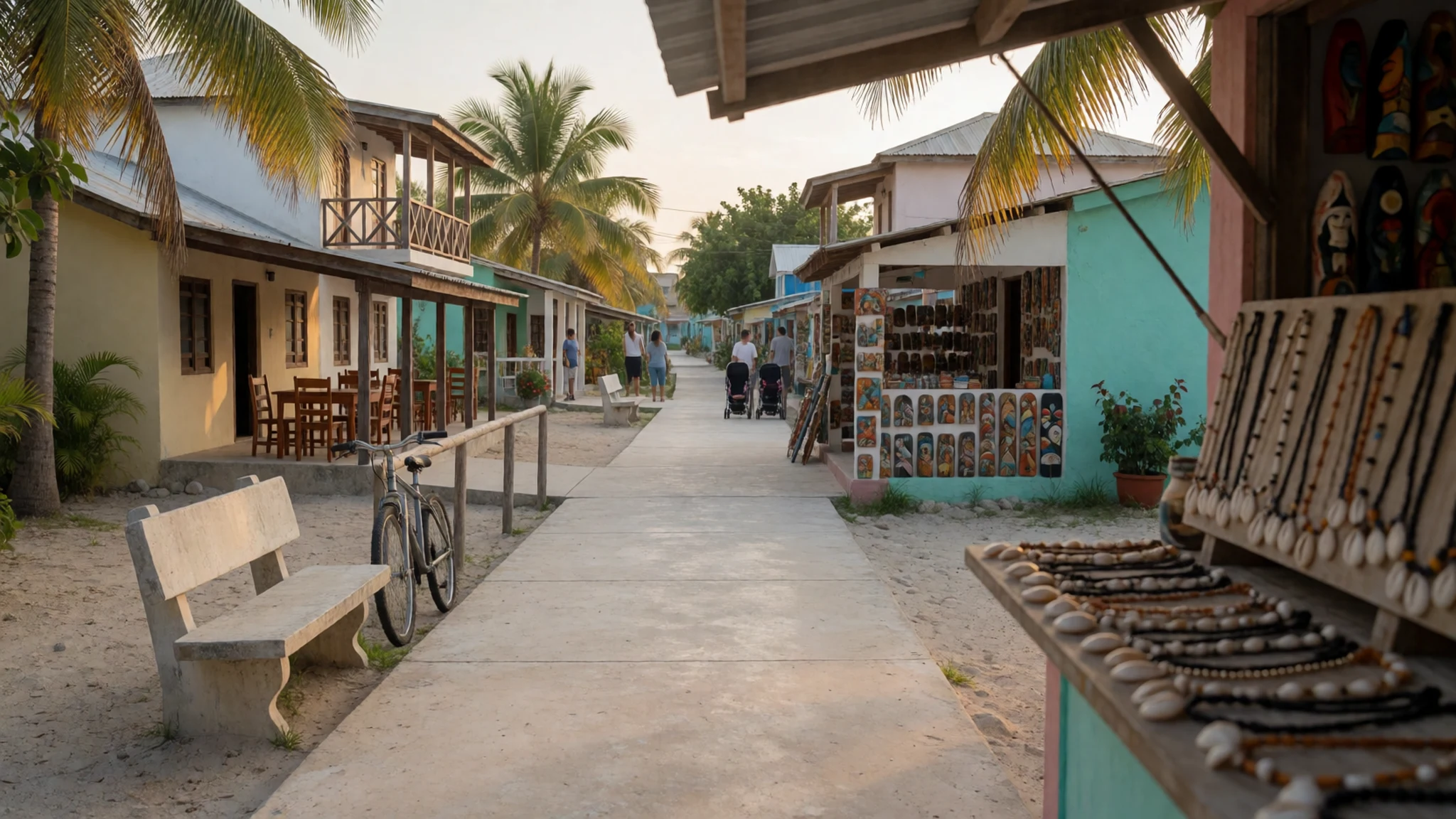
- The peninsula beach — East coast of the peninsula
Along the peninsula's eastern edge lies a lengthy stretch of pale sand, featuring occasional mangroves and a constant sea breeze. It is good for walking and swimming, and quieter away from the village. Shade is limited, so bring a hat and plenty of water.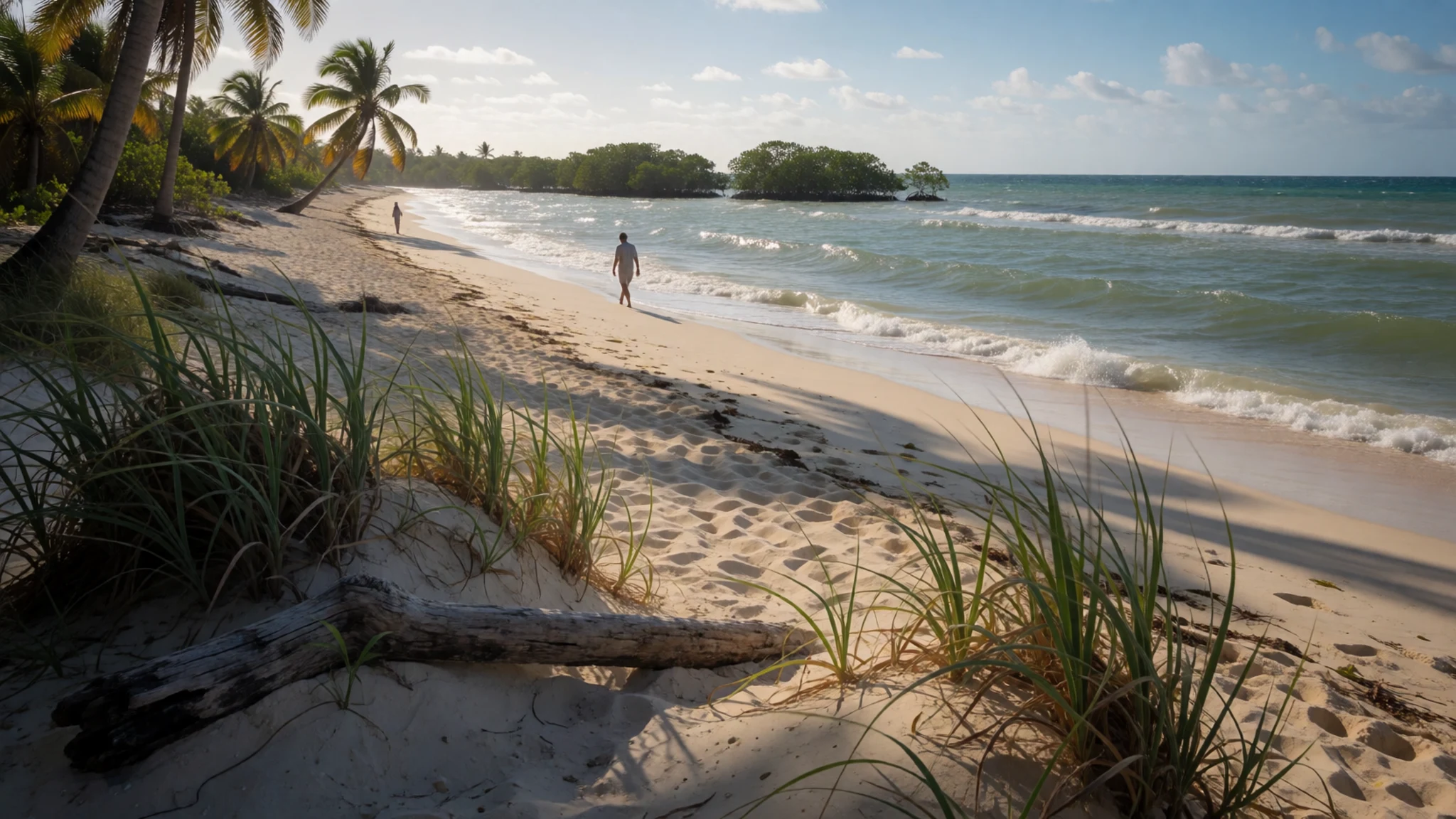
- Paddling the lagoon — Placencia Lagoon, west side
The sheltered lagoon on the western side suits kayaks, and early mornings are calmest. Birds are almost certain, and manatees, dolphins and crocodiles are possible sightings rather than promises. Rent a kayak in the village or join a guided paddle, and keep a respectful distance from wildlife.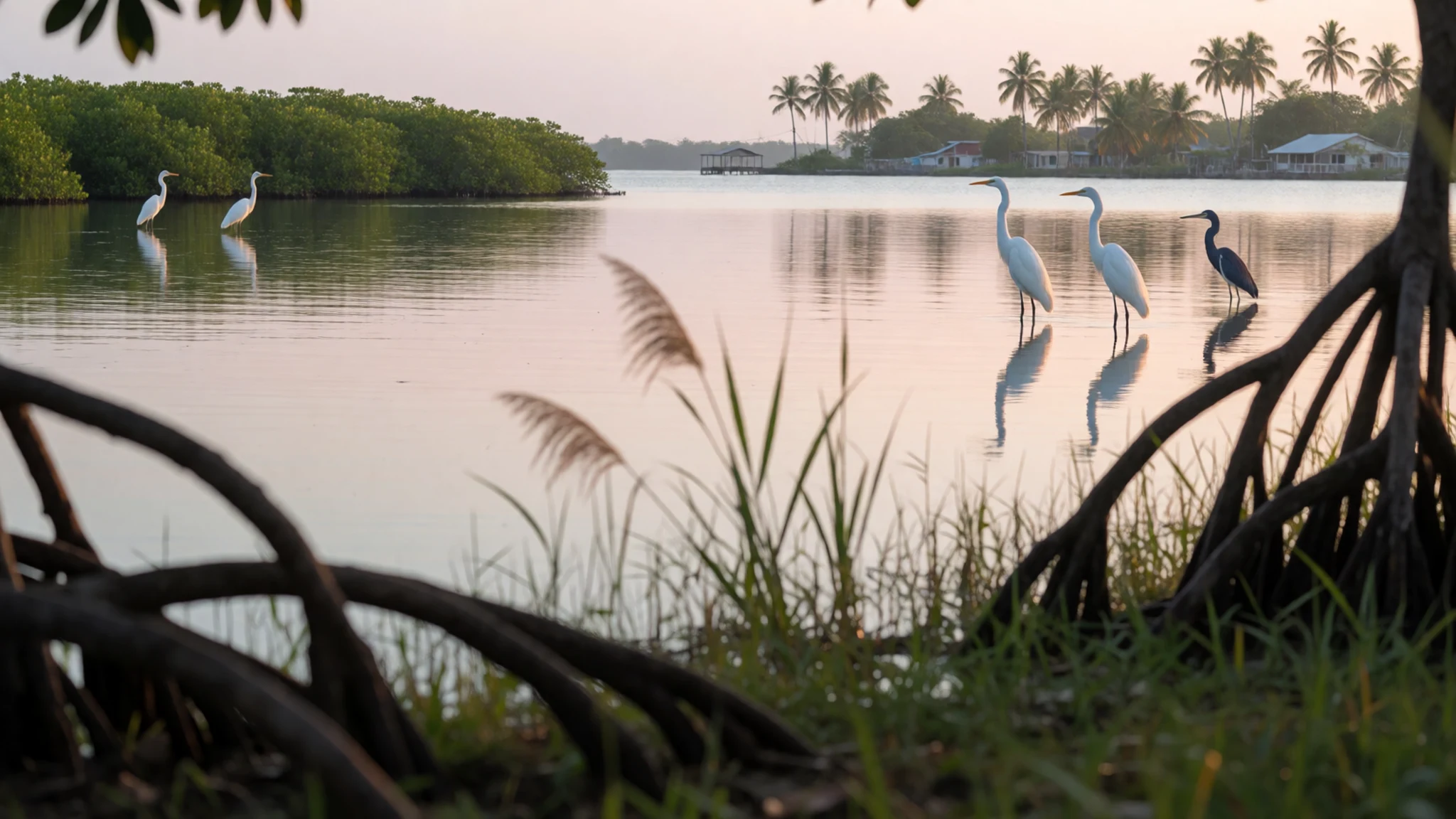
- Sailing, snorkelling and fishing trips — Marina and seafront
Charter fleets based here run day trips, overnight cruises and longer sailings, with or without a crew. Licensed guides also take anglers to the reef and nearby islands for snapper, grouper, permit, tarpon, snook and bonefish. Snorkelling outings go to the same waters. Compare operators and ask about reef-safe practices.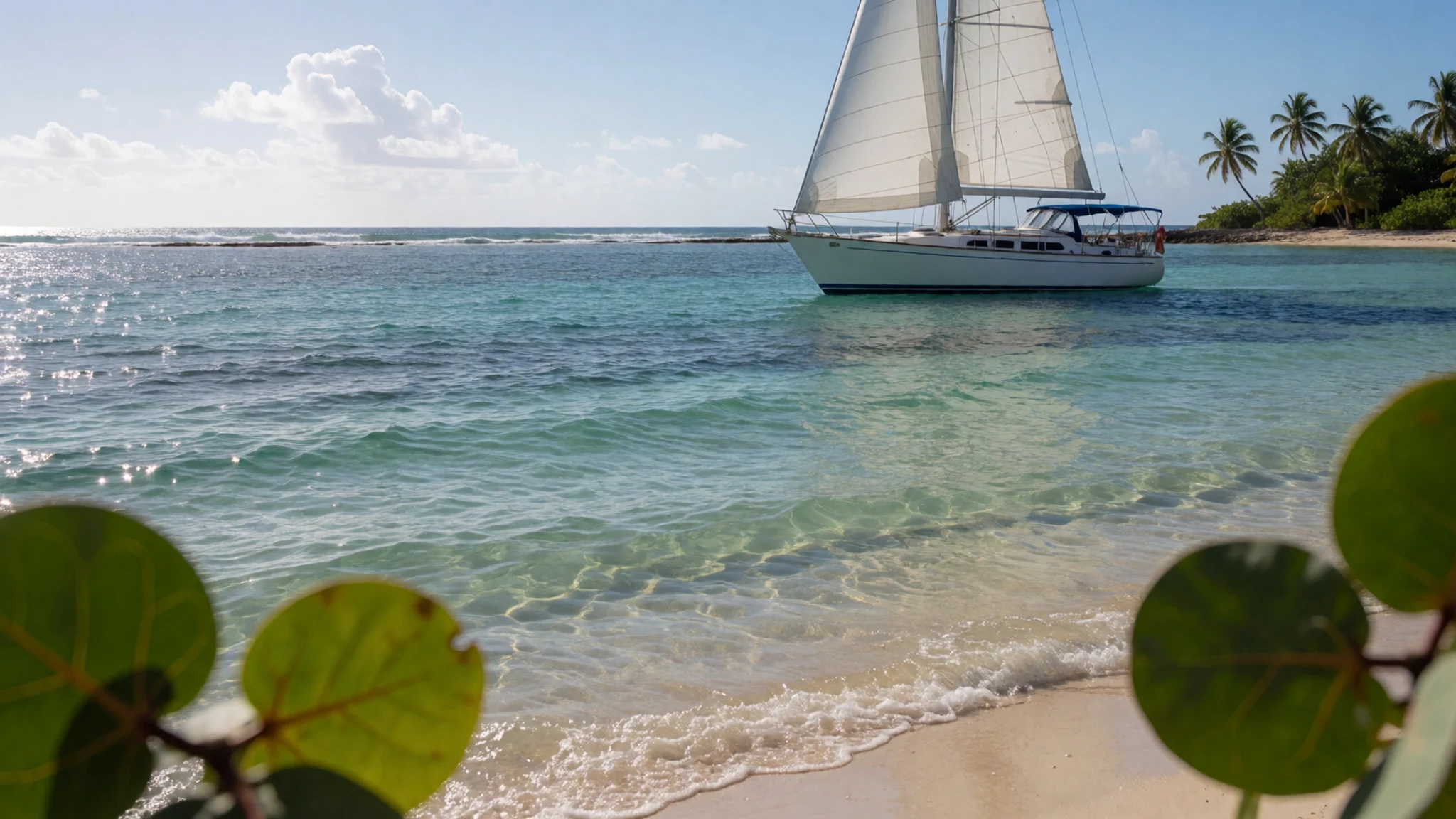
- Cockscomb Basin and Monkey River — Mainland, Stann Creek and Toledo districts
Two mainland excursions are worth a day each. Cockscomb Basin Wildlife Preserve offers forest walks inland in Stann Creek, while boat trips to Monkey River Town go south in search of howler monkeys and manatees. Book with a local outfit and start early, before the heat builds.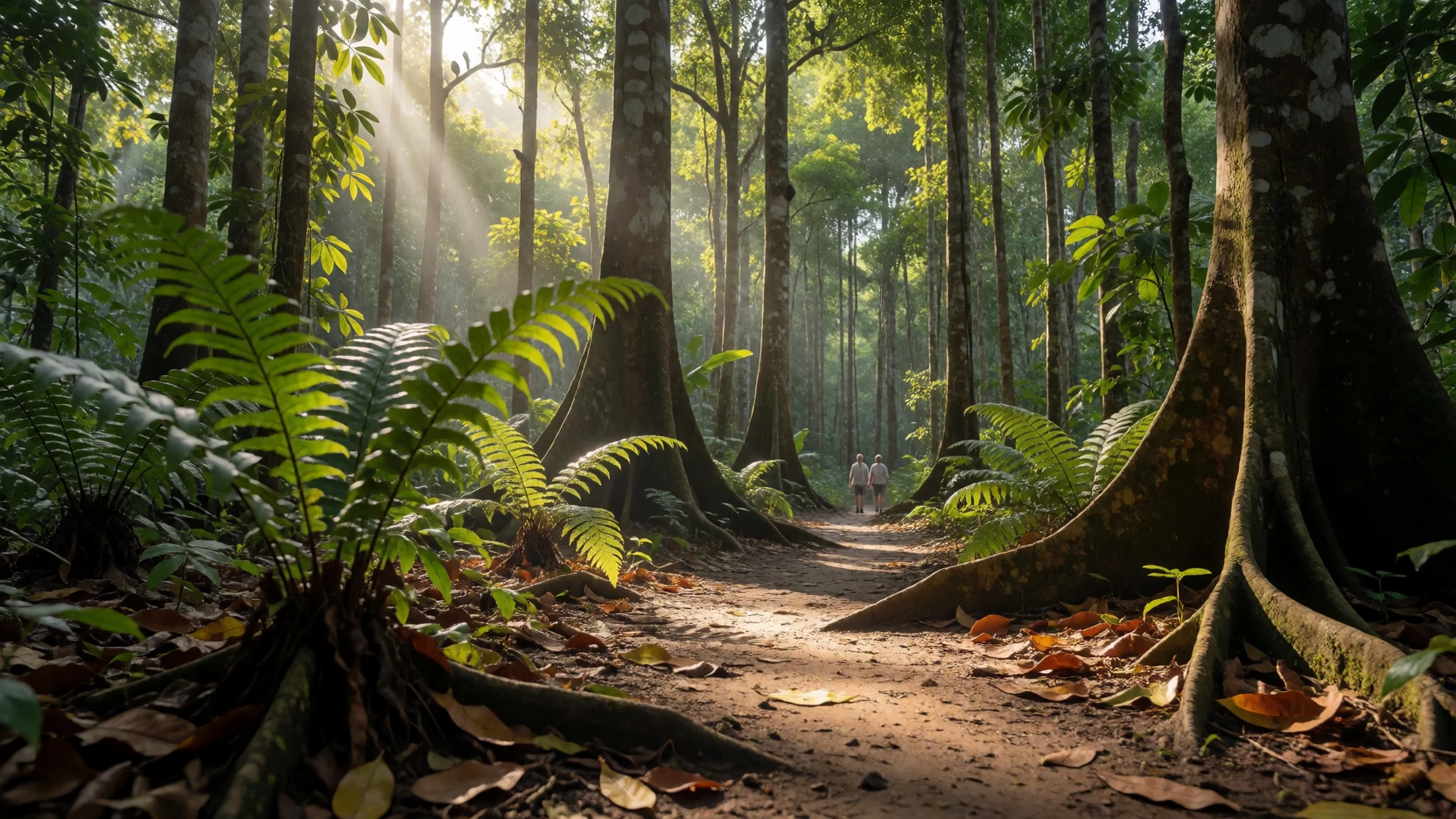
Culture
Placencia is a Caribbean fishing village that has grown into a beach destination, and its culture reflects the mix of Belize's southern coast. Fishing families have lived here since the late nineteenth century, and the sea still shapes the daily rhythm: boats leave early, catch is sold or cooked locally, and conversation tends to start with the weather and the water. Nearby Seine Bight is a Garifuna village, and Garifuna music, drumming and cooking are part of the wider peninsula's identity, alongside Kriol, Maya and Mestizo influences found across Belize. English is widely spoken, usually mixed with Kriol, and a friendly greeting goes a long way. Village life is relaxed rather than formal. Shops close for midday heat or for family reasons, music drifts from beach bars in the evenings, and Sunday has a quieter feel. Visitors will notice that tourism and local life overlap closely, with guides, boat captains and cafe owners often belonging to the same families. Tipping is appreciated for guides and boat crews. Cultural events are best asked about locally, since dates change from year to year. Greet people before asking for anything, and ask permission before photographing local people, especially in Seine Bight, rather than pointing a camera at them from a distance.
What to wear
Placencia's traditional dress belongs mainly to its Garifuna and Maya neighbours rather than to the village itself. Garifuna women, notably in nearby Seine Bight, wear bright patterned cotton dresses and head wraps for festivals and drumming events, while Maya communities inland are known for hand-woven and embroidered cotton blouses and skirts. These are worn mostly on celebration days rather than every day. Everyday dress in Placencia is beach-casual: shorts, linen shirts, sundresses, flip-flops and sandals, with fishing guides in long-sleeved sun shirts and caps. People generally dress a little more tidily for church, banks and shops. A visitor should pack light cotton and quick-dry layers, a wide-brimmed hat, sunglasses, and a long-sleeved top for sun and for insects at dusk. Swimwear is fine on the beach, but cover up with a shirt or sarong when walking through the village, eating out or visiting Garifuna communities. Bring water shoes for muddy or rocky lagoon landings and sturdy closed shoes for jungle trails at Cockscomb or Monkey River. A light rain jacket helps in the wetter months. Nights stay warm, so heavy layers are unnecessary.
What to eat
- Fish tacos and ceviche — Small stalls along the village footpath
Placencia's seafood is at its simplest in fish tacos, ceviche and shrimp cocktails, made with the day's catch. Small beachside stalls along the village footpath do them quickly and cheaply, and they suit a light lunch after a morning on the water.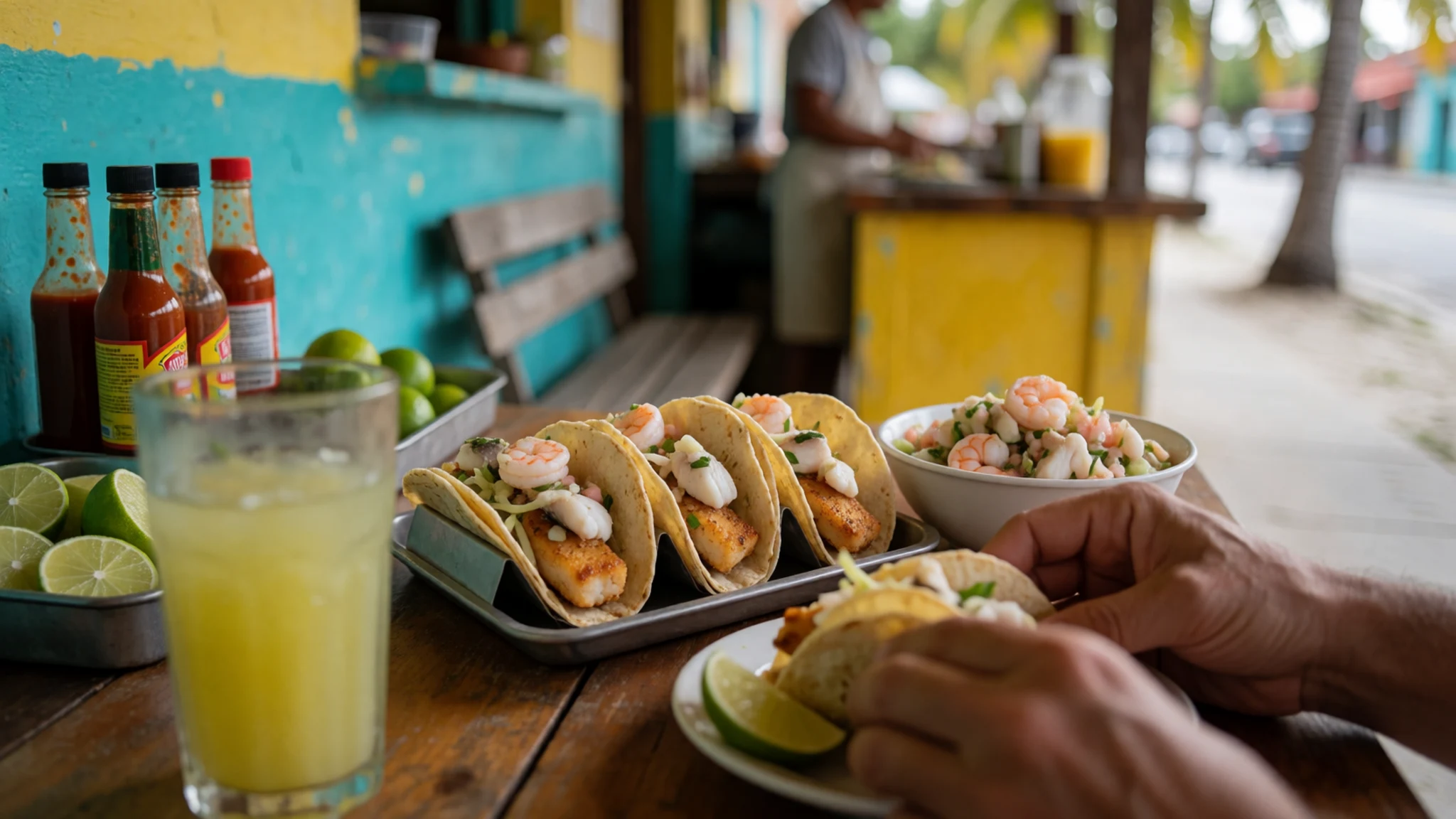
- Burritos, tacos, garnaches and salbutes — Informal fast-food counters in the village
Belizean street food leans on Mestizo flavours: fried tortillas topped with beans, cheese or chicken (garnaches), puffy fried salbutes, tacos and burritos. Order with a fresh fruit juice. Portions are generous and prices are modest at casual counters.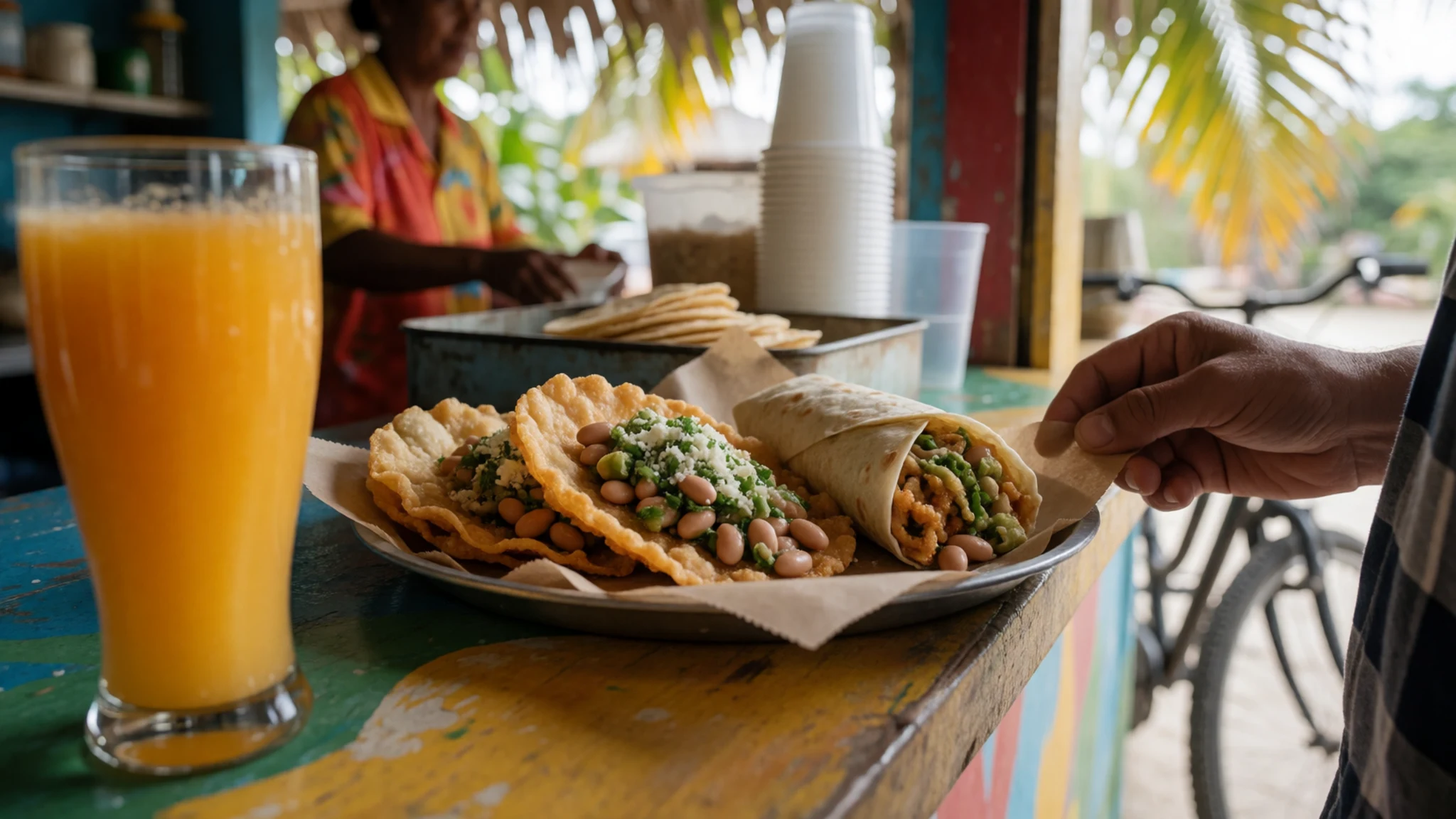
- Smoked fish and smoked chicken — Beach bars on the seafront
Smoking is a favourite way to cook here, giving fish and chicken a deep, savoury flavour. Beach bars serve them with cold beer, often with a band or music on weekend evenings. Arrive before sunset for the best seats facing the sea. - Traditional Belizean plates — Family-run eateries in the village
For home-style cooking, look for daily specials of stewed meat or fish served with rice and beans, plantain and salad. Local eateries rotate the menu, so ask what is on that day. It is usually the best value on the peninsula. - Gelato and sorbet — Ice cream shops near the footpath
Italian-style gelato has become a village habit, made fresh in small shops and sold both in the afternoon and after dinner. Tropical fruit flavours work well in the heat, and a cone makes an easy way to end an evening walk. - Belikin beer and One Barrel rum — Beach bars and village shops
Belikin is Belize's own beer, and the same brewer makes a stout. One Barrel is a local rum, and coconut rum is popular in cocktails. Beach bars often run a happy hour around sunset. Drink water alongside, as the heat dehydrates quickly.
Plan it
Best time. February to May is the drier, sunnier stretch, with a steady breeze off the sea and calmer water for boat trips. June to November is wetter, more humid and falls within the Atlantic hurricane season, so check forecasts and travel insurance before booking.
How long. 3–4
Getting there. The simplest route is a short domestic flight from Belize City to Placencia's airstrip with one of the small regional airlines. By road, buses run to the village from Belmopan. From the south, travel by bus to Independence on the mainland, then cross by water taxi, which tends to leave when full and stops running in the late afternoon, so check times locally.
Budget. mid
Tips
- Book flights and beach-side rooms early for the dry months and school holidays
- Carry some cash for small eateries, boat captains and tips, as card machines can be unreliable
- Bring insect repellent and sunscreen, ideally eco-friendly versions if you plan to snorkel or dive
- Tap water is safe to drink, since it comes from an artesian well on the mainland
- Start reef, lagoon and jungle trips early to avoid the midday heat
Etiquette
- Greet people before asking questions or ordering
- Ask permission before photographing local people, especially in Garifuna villages
- Keep a respectful distance from manatees and other wildlife, and do not touch coral
Nearby
Sources
- Wikidata Q2097877 (CC0)
- Wikipedia: Placencia (rev 1382543814) (CC BY-SA 4.0)
- Wikivoyage: Placencia (rev 5414493) (CC BY-SA 4.0)
- Photo: Placencia Village, Placencia, Belize (Nagyman) (CC BY-SA 2.0)
- Photo: Beach front at Placencia, Belize (Dave ten Broek) (CC BY 2.5)
- Photo: Belize 1997.53 Placencia (anoldent) (CC BY-SA 2.0)
- Photo: Boats in Belize Laslovarga02 (CC BY 3.0)
- Photo: Boats in Belize Laslovarga03 (CC BY 3.0)
- Photo: Boats in Belize Laslovarga13 (CC BY 3.0)
- Photo: Boats in Belize Laslovarga14 (CC BY 3.0)
- Photo: Boats in Belize Laslovarga16 (CC BY 3.0)


Wildlife
- Manatee (animal)
The manatee is a large, warm-water sea mammal that grazes on underwater plants and feels its way along with its whiskers. In Placencia, your best chance is the lagoon side, where people paddle and watch birds, though a sighting is a happy bonus rather than a promise. The Caribbean kind is endangered, troubled by lost habitat and pollution, so paddle softly, keep a respectful distance, go with a guide if you can, and never feed it.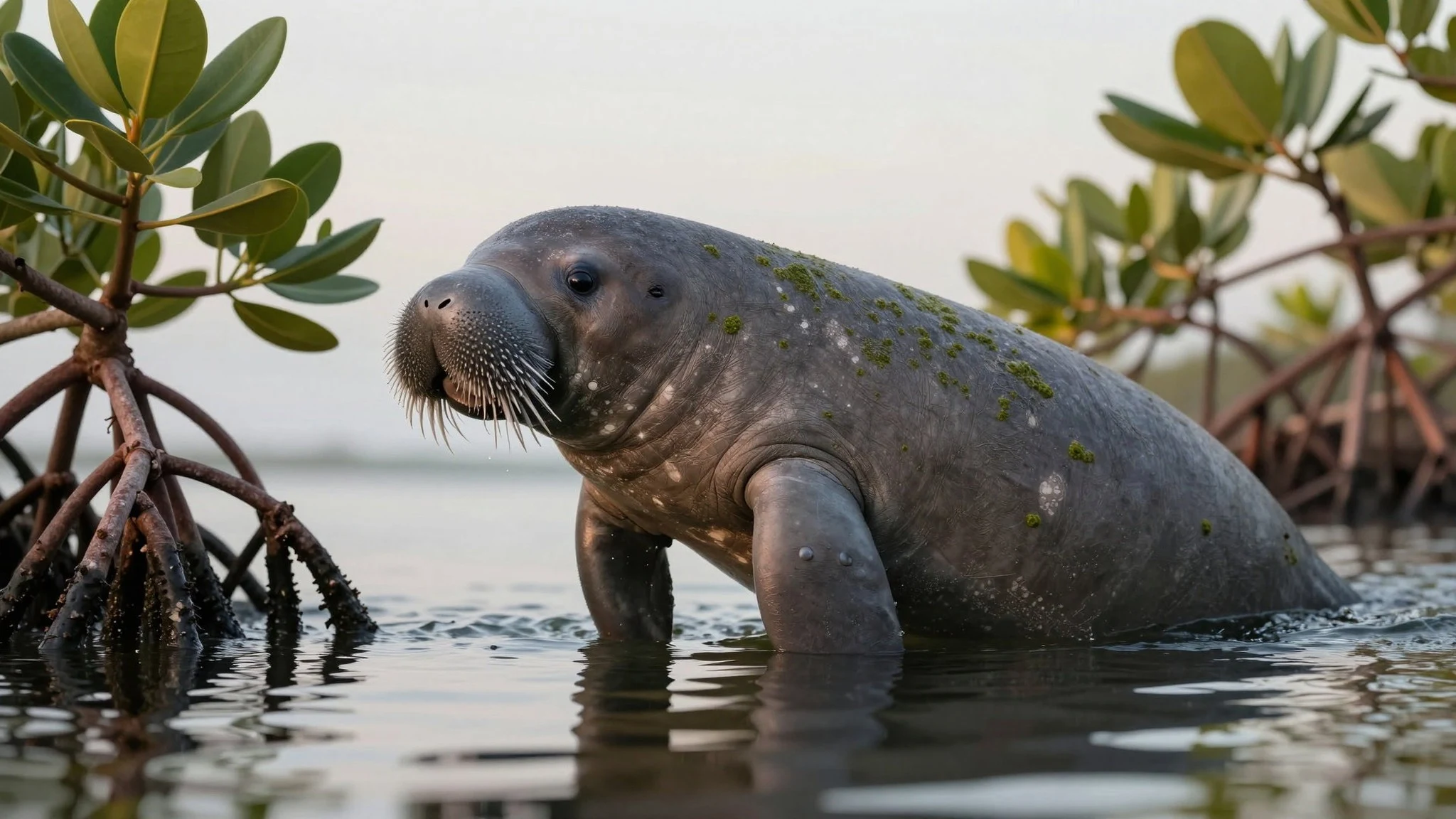
- Dolphin (animal)
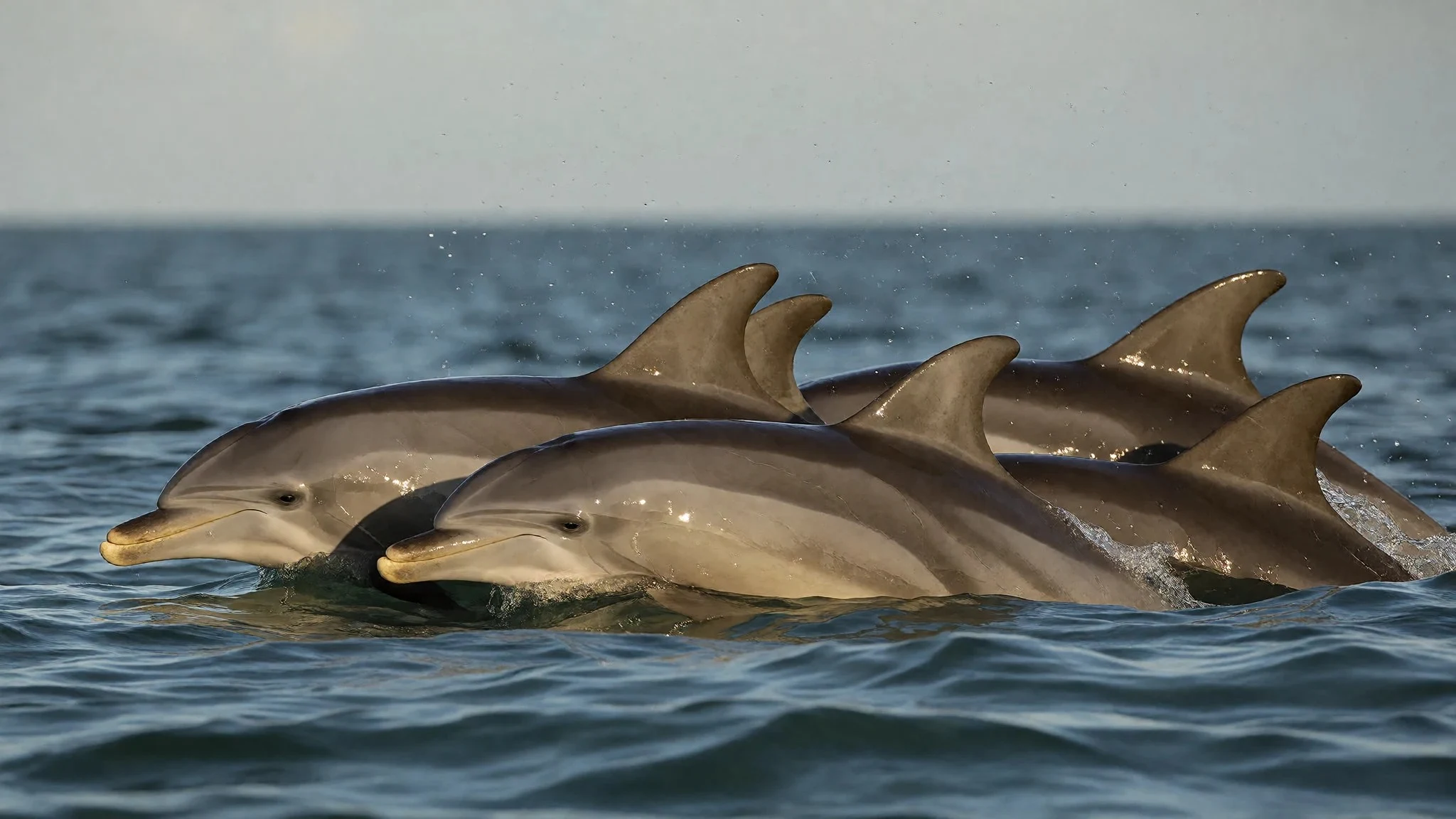
The common bottlenose dolphin, also called the Atlantic bottlenose, is the dolphin once known simply as the bottlenose. Around Placencia it is a possible sighting rather than a promise, so count any meeting as a lovely bonus. Scientists notice so much variety between neighbouring groups that they may one day name further species. Watch from a respectful distance, keep your voices low, let a guide lead the way, and never feed it.