Phang Nga Bay
Phang Nga Bay, Thailand
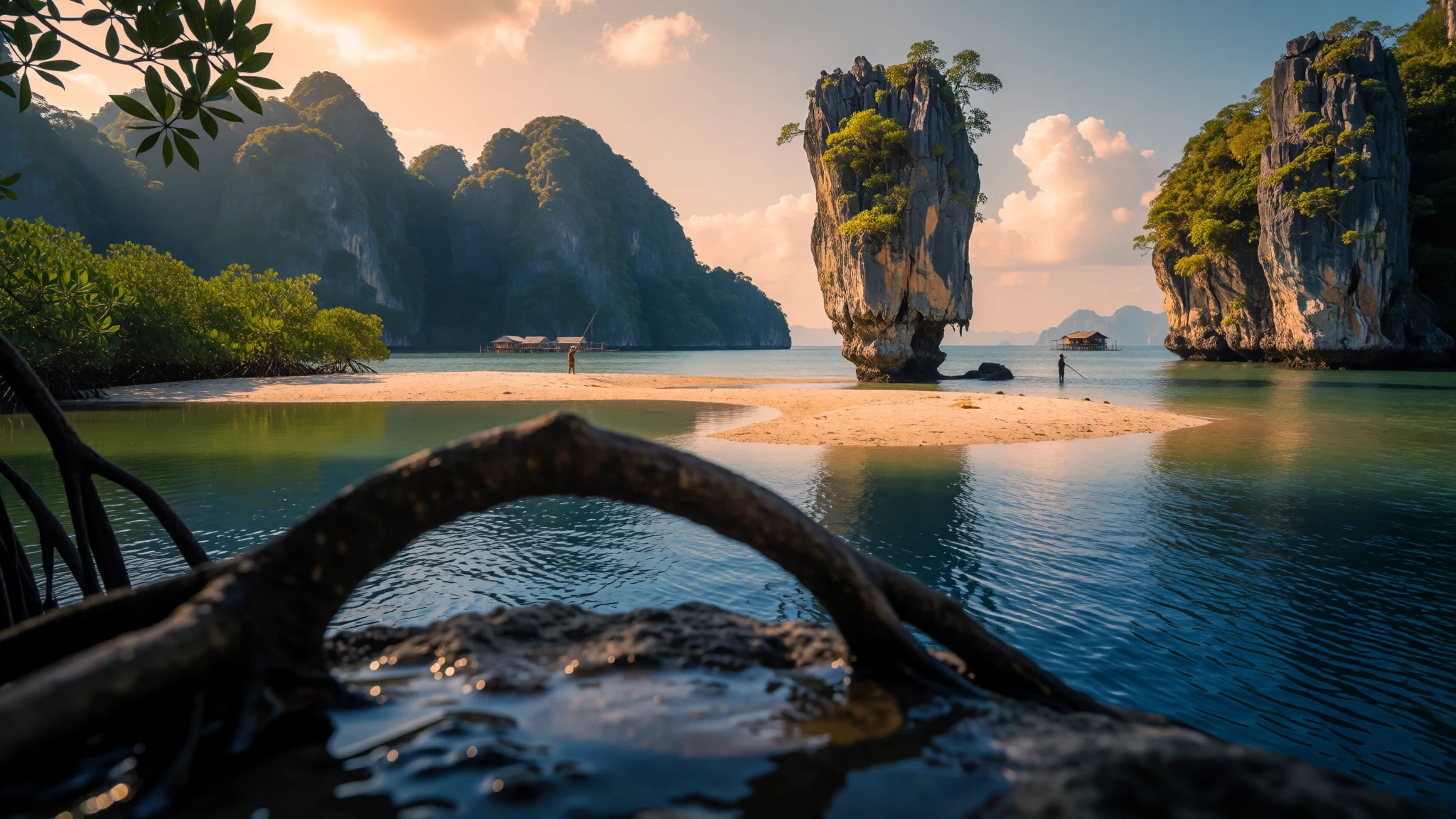
Phang Nga Bay is a maze of limestone towers, hidden lagoons and quiet fishing villages on Thailand's Andaman coast.
The place
Phang Nga Bay lies on the Andaman coast of southern Thailand, an inlet broken into channels by steep limestone islands. The stone stands in towers and ridges, grey and fluted, with caves at the waterline and shrubs clinging to ledges. Open water looks deep blue; over sandbanks it turns a light green. Mangroves line the sheltered shores, and their roots make a low green wall that boats follow when the tide is up. Much of the bay is a national park, so the usual way through it is by longtail or a larger tour boat rather than by road. A few islands hold villages raised on stilts, because the rock leaves almost no flat land for houses. Mainland Phang Nga and Krabi frame the eastern and northern edges, and many boats also come across from Phuket. Mornings are often still, with mist low on the water and the cliffs reflected cleanly. By midday the heat is heavy and the tour traffic is thick in the main channels. In the wet months, sudden rain and a short steep chop make the crossings harder and some cave mouths impassable. Rubber trees and palms cover the low ground behind the mangroves, and the limestone continues inland as cliffs above the rivers that drain into the bay. At low tide, sandbars and mudflats appear between islands and the navigable water shrinks to a thread. The bay is both a workplace for fishers and a day-trip landscape, and the two share the same narrow water.
Its story
Phang Nga Bay entered the wider travel imagination when the James Bond film The Man with the Golden Gun used one of its islets as a hideout, and the spike of rock offshore has been photographed ever since. The film did not create the place. Fishers were already working these channels, and Muslim families had built a village on stilts where an island offered no room to expand on land. Houses, a school and a football pitch sit above the water on posts, the mosque stands on solid ground, and the pitch is known well beyond the bay because the children play with the sea as a boundary. Caves in the limestone have long been shelters and, in some cases, places where people left paintings on the rock. What changed in recent decades is the volume of visitors. Speedboats and longtails now run set routes to the same beaches and lagoon mouths, and the quiet that the cliffs suggest is often gone by mid-morning. A national park wraps the islands and sets rules on where boats may land and which caves they may enter. That protection sits beside a local economy that now depends on guiding, cooking and ferrying visitors as well as on fishing. The story of Phang Nga Bay is this double life: an old seascape of rock, tide and villages, and a modern circuit of day trips that can crowd the very channels people came to see. The older pace still shows itself on the quieter islands and in the hour before the fleets leave Phuket.
What to see
- Khao Phing Kan and Ko Tapu — Khao Phing Kan, Phang Nga Bay
Khao Phing Kan and the thin stack of Ko Tapu form Phang Nga Bay's landing known as James Bond Island, after a film placed a hideout among these cliffs. The beach is a short crescent, and the stack stands in the shallows just offshore, too narrow to climb. Tour boats pack the cove from late morning, so the rock reads more clearly with the first arrivals.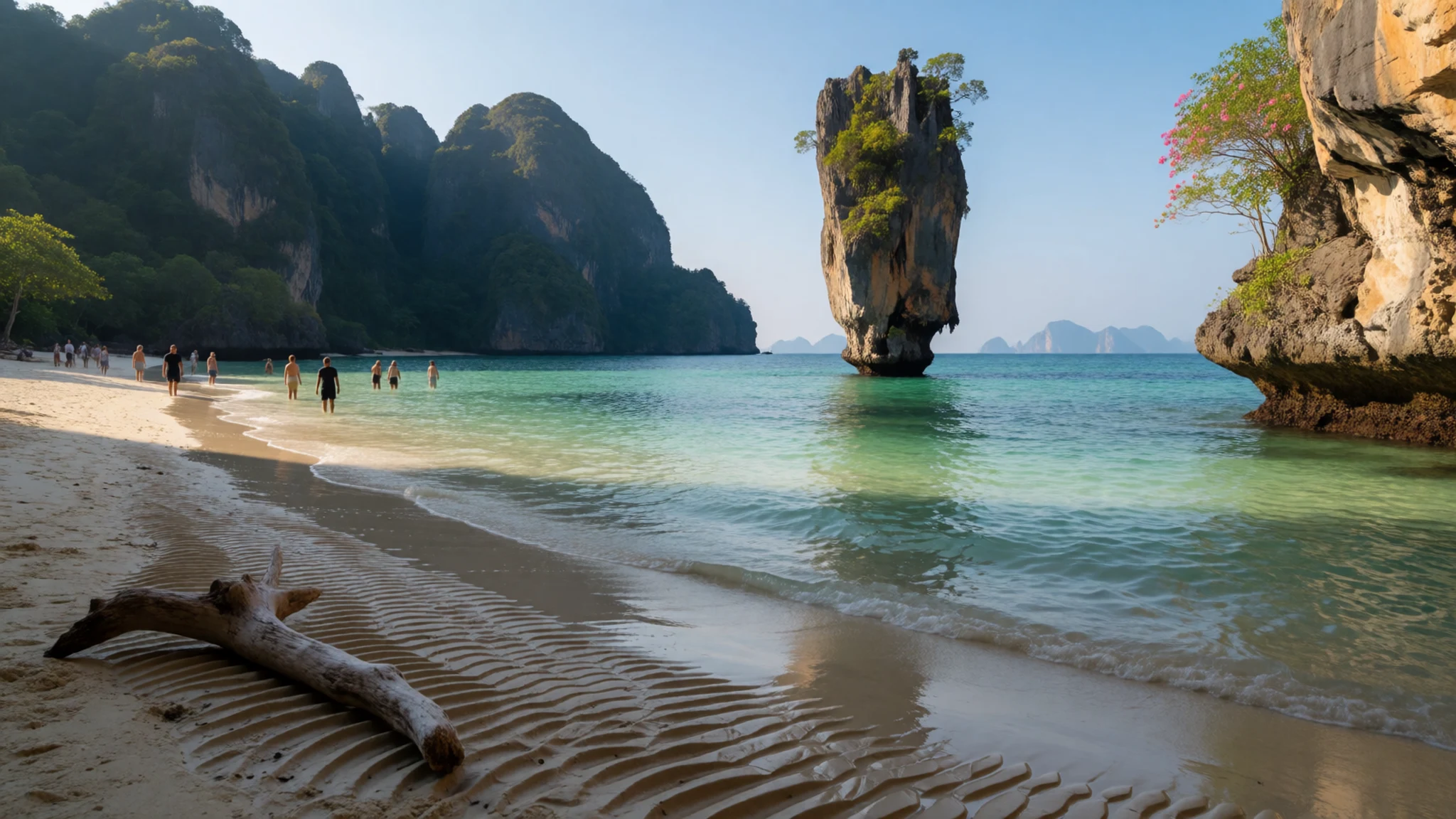
- Ko Panyi — Ko Panyi
Ko Panyi is a Muslim fishing village on stilts in Phang Nga Bay, set against a limestone island with almost no shore. Wooden lanes link the houses, a mosque stands on solid ground, and a football pitch rests on a platform above the sea. Walkways opened to outsiders are for looking; the homes along them are private, and the village fills when the tour boats arrive together.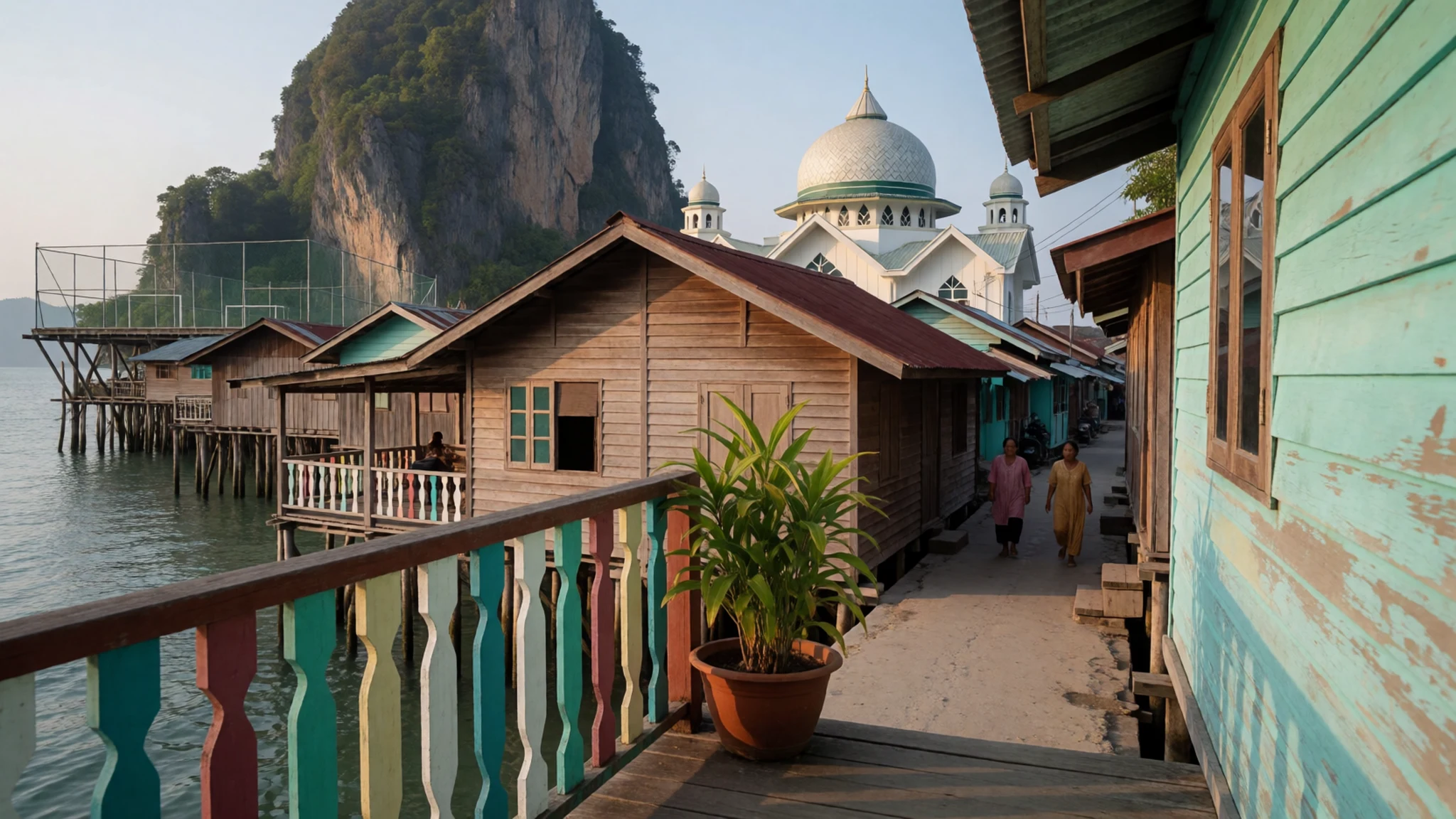
- Hongs — limestone islands of the bay
The hongs of Phang Nga Bay are lagoons hidden inside limestone islands, reached through low cave mouths that a kayak can pass at the right tide. Inside, rock walls rise to an opening of sky and the water lies still and green, sometimes with mangroves in the shallows. The entrances close when the tide is too low or the swell makes them unsafe.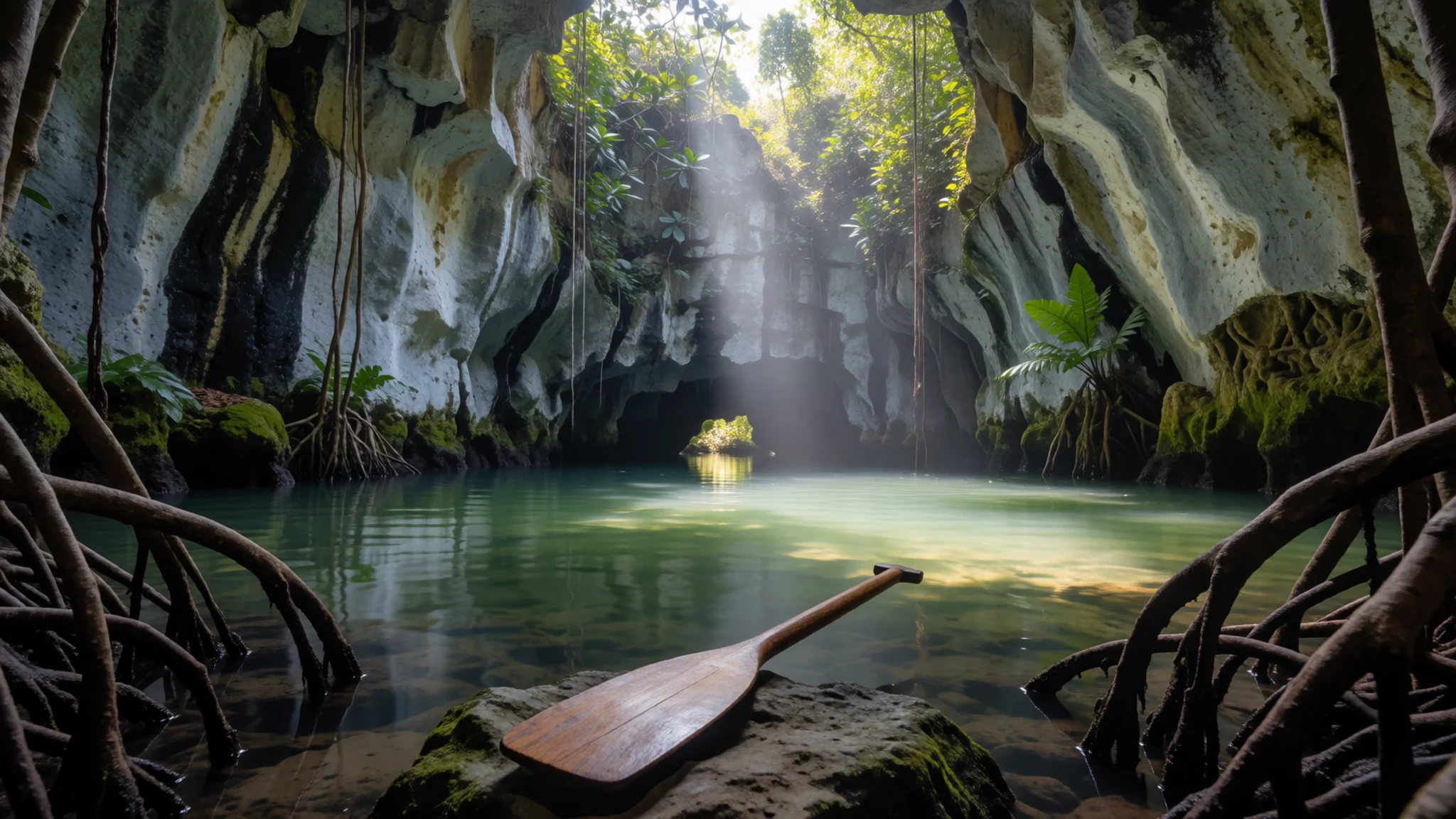
- Sea caves — karst shorelines of the bay
Sea caves in Phang Nga Bay cut into the base of the karsts, some as short tunnels and some as chambers where daylight fails. At low tide a boat may beach at a mouth; at high tide the same mouth can be a squeeze or fully closed. A few caves hold old paintings on the walls, and guides paddle the last stretch with the engine off.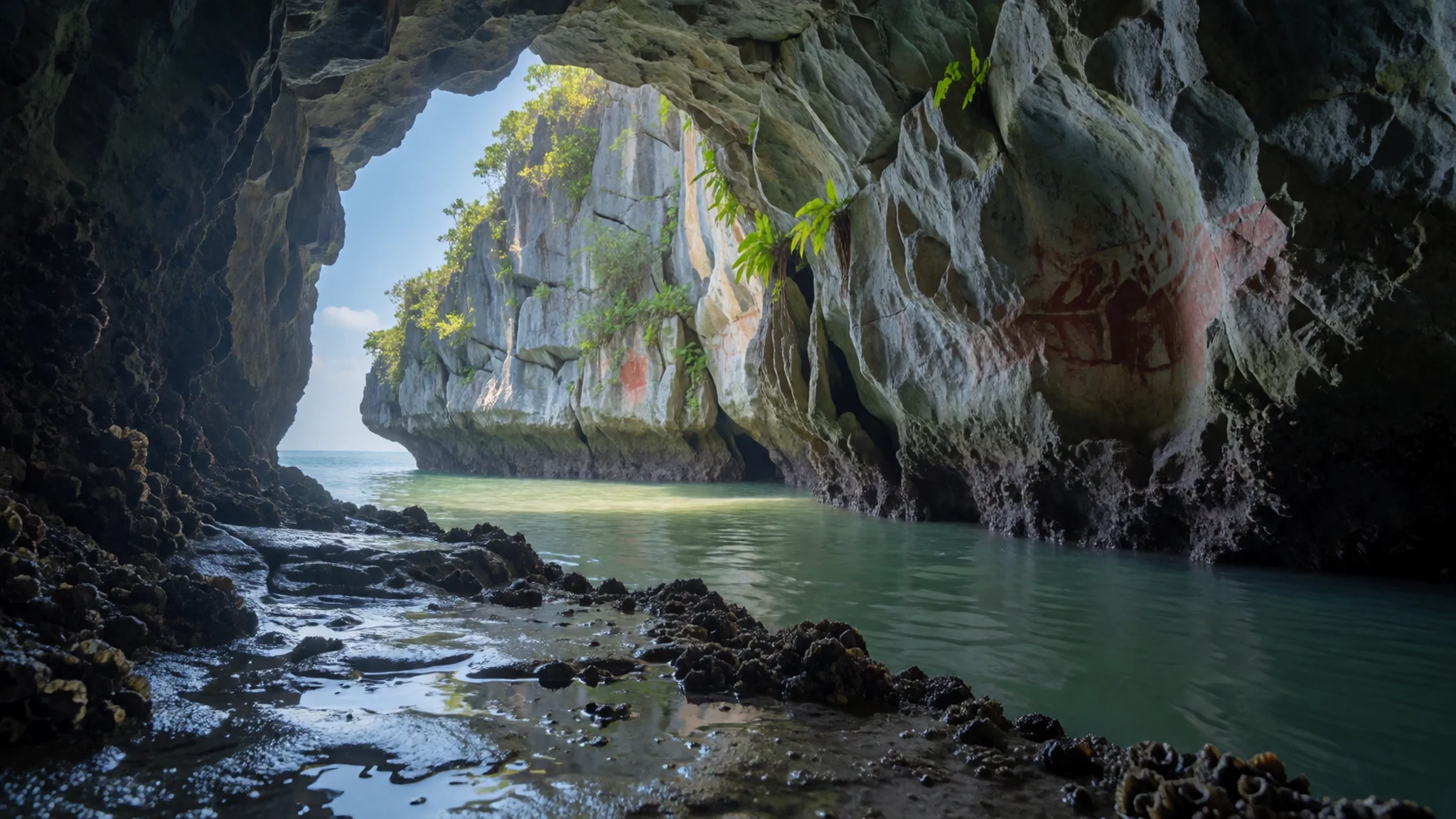
- Ko Yao Yai and Ko Yao Noi — Ko Yao Yai and Ko Yao Noi
Ko Yao Yai and Ko Yao Noi sit in Phang Nga Bay between Phuket and Krabi, larger and flatter than the pure karst stacks. Villages, rubber plots and long beaches share the islands with views back to the limestone towers. The pace is slower than on the day-trip circuit: people stay overnight, hire a bicycle, and watch the bay from the shore rather than from a moving boat.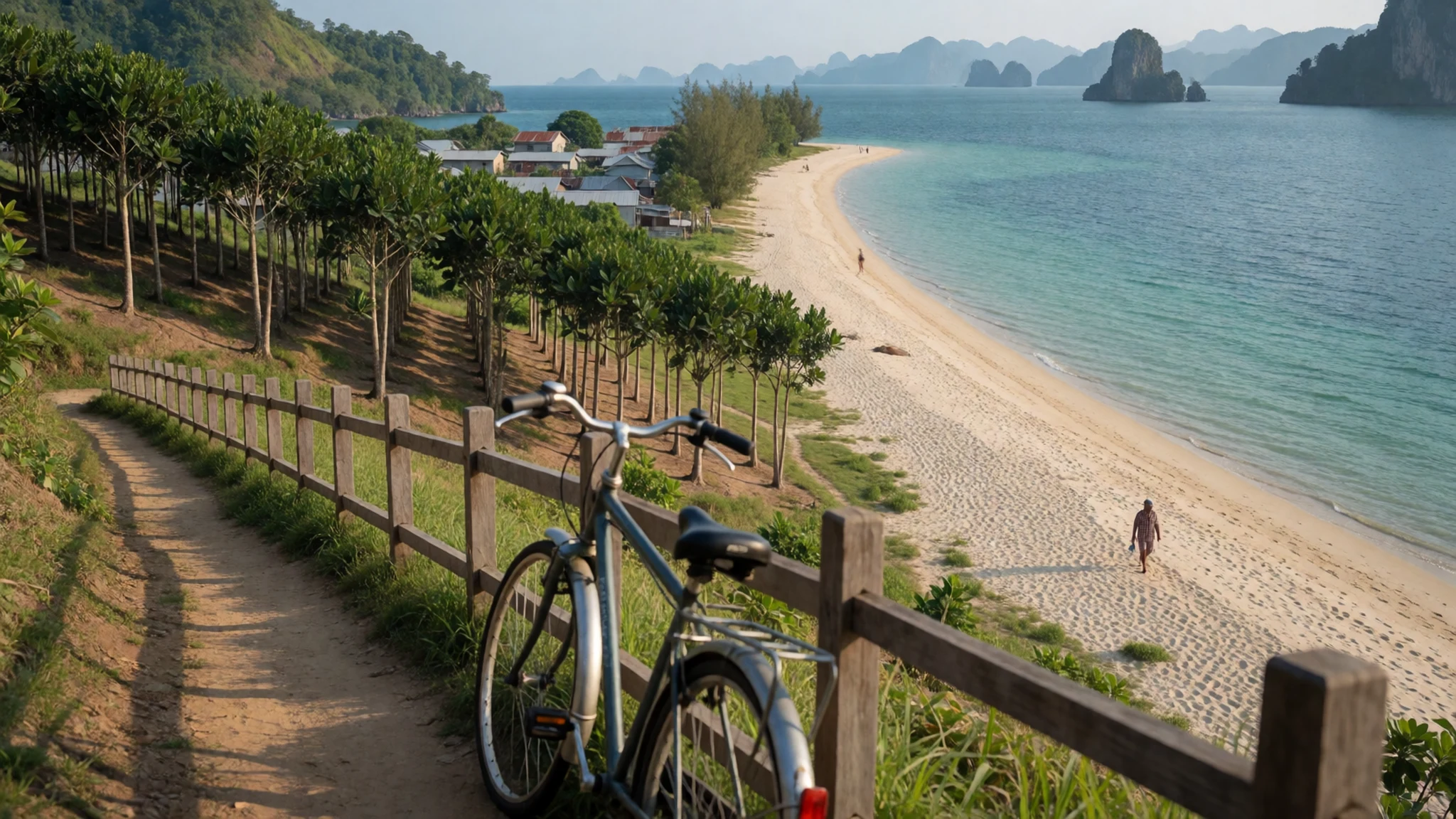
Culture
Phang Nga Bay's culture is coastal and mixed. Thai Buddhist communities on the mainland and on Ko Yao share the water with Muslim villages such as Ko Panyi, and with fishers whose year follows tide and catch rather than a tourist calendar. Village schools stand on the same stilts as the houses, and the mosque stands on solid ground. Southern Thai speech, food and festival life differ from Bangkok's, and the bay's Muslim families add their own calendar of prayers and holidays. Boat-building and the handling of longtails are ordinary skills, not a show, though many families now also guide, cook for day boats, or rent bicycles on the larger islands. The national park's presence means rangers, landing rules and a shared interest in keeping caves and mangroves intact. What a visitor meets is rarely a staged performance: it is a village at work, a pier at departure time, and a cave where someone asks for quiet. Dress modestly in the Muslim villages, ask before you photograph people, and step out of the way on narrow walkways.
What to wear
Dress in Phang Nga Bay follows heat, work and faith more than a city fashion calendar. In Muslim villages such as Ko Panyi, women often wear a hijab with a long tunic and trousers or a long skirt, and men wear a shirt and long trousers for prayers; the cloth is light cotton that survives salt and sweat. Elsewhere, the formal clothes of the Thai south — a pha sin or silk skirt, a neat shirt — come out for festivals and temple days, not for the pier. Batik and printed cotton appear as sarongs after a swim. Day to day, boat crews and shopkeepers wear T-shirts, shorts or long trousers, a cap, and sandals or bare feet on a wet deck. A visitor does well in the same practical range: breathable cloth, shoulders and knees covered in the villages and at the mosque, a hat for the open boat, and sandals that slip off at a doorway. Swimwear belongs at a beach landing and not in a village lane, so a shirt and a sarong should come along in the bag. Limestone and wet wood are slippery, and shoes that can survive a soaking are more use than stiff city footwear. Leave delicate fabrics in the lodging; salt spray and sudden rain ruin them.
What to eat
- Khanom jeen nam ya — morning markets in Phang Nga town and noodle stalls near the piers
Khanom jeen nam ya is rice noodles in a fish curry, a common breakfast around Phang Nga Bay. The noodles are soft, the sauce fragrant with fish and herbs, and the bowl comes with raw vegetables. Stalls serve it early, before the day boats leave.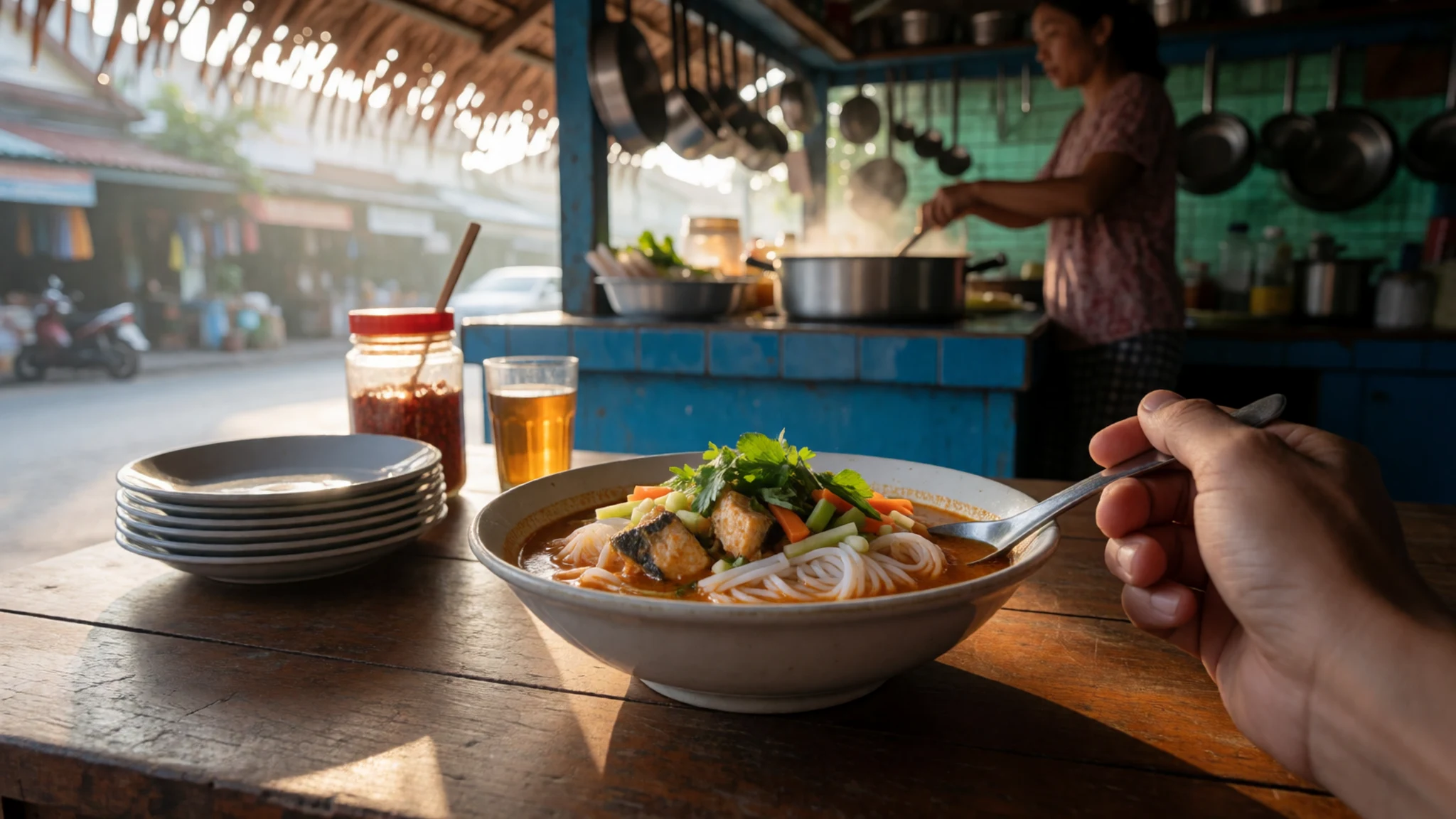
- Khao mok gai — Muslim eateries in Phang Nga town and shops on Ko Panyi
Khao mok gai is chicken and rice cooked with warm spices, a Muslim-style plate common around Phang Nga Bay. The rice is yellow and fragrant, the chicken is tender, and a sharp cucumber and chilli sauce comes on the side.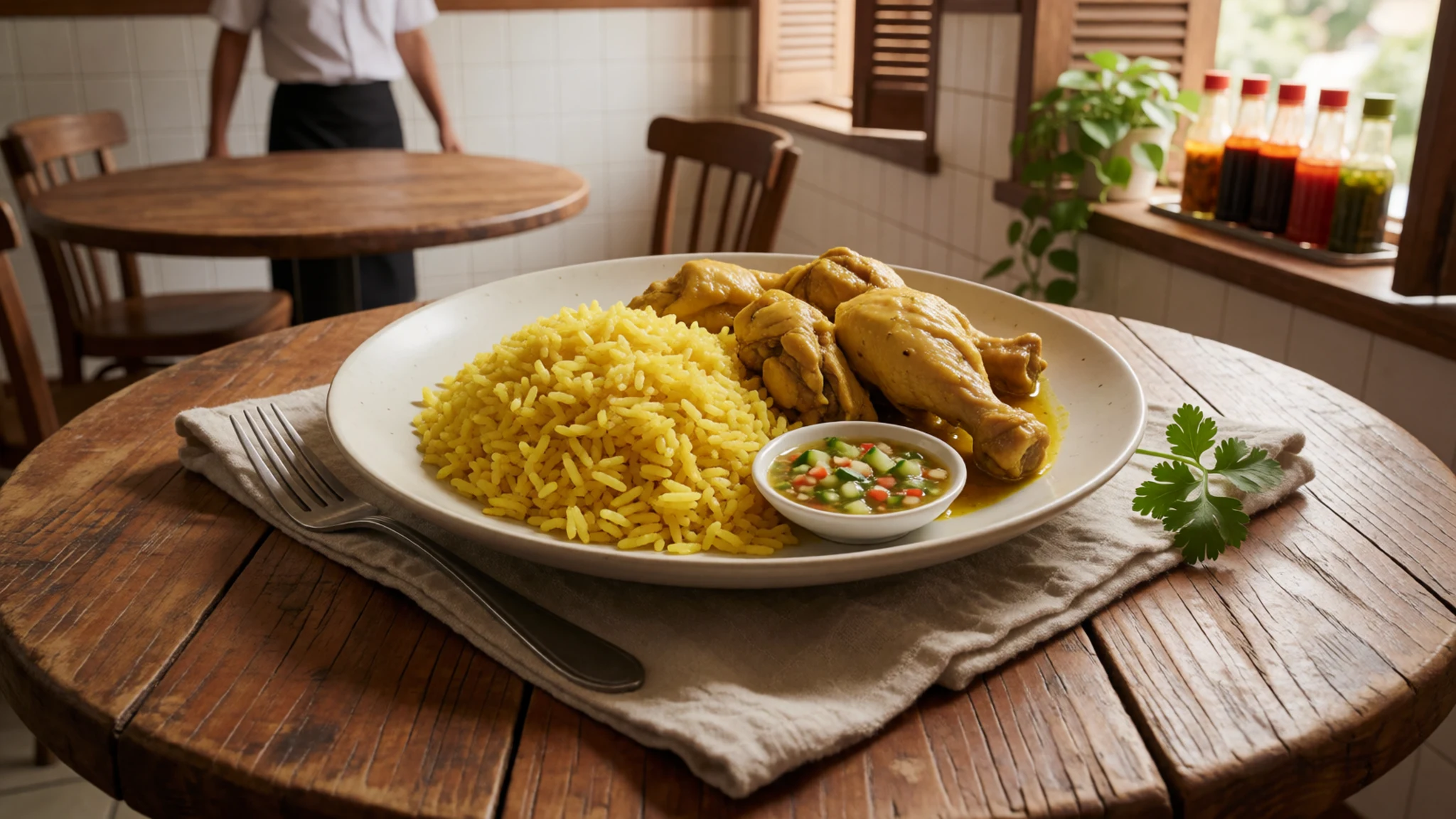
- Gaeng som — rice-and-curry shops in Phang Nga and Krabi towns
Gaeng som is a sour southern curry, and around Phang Nga Bay it is often made with fish and a sharp paste of turmeric and tamarind. The colour is orange, the heat is real, and it is eaten with plain rice and a plate of vegetables. - Grilled seafood — pier stalls and evening markets along the bay
Grilled prawns, squid and whole fish are the straightforward meal of Phang Nga Bay, cooked over charcoal and served with seafood sauce. The catch depends on the morning, so the display at a pier stall is a better guide than any fixed menu. - Roti — street carts in Phang Nga town and on Ko Panyi
Roti in Phang Nga Bay is the flaky flatbread of the Muslim south, flipped on a hot griddle and eaten with a thick curry or, in the morning, with banana and condensed milk. It is street food in the plain sense: a cart, a queue, and a paper plate.
Plan it
Best time. January to April is the drier season on Phang Nga Bay, February the driest, with calmer seas and more reliable boat days. May to November brings heavy showers, September the wettest and March to May the hottest: greener karsts, and days when cave mouths and open crossings are called off. January and February usually offer calm seas and clear boat days, and January is the most comfortable; March and April stay largely dry but turn very hot on the water.
How long. 2–3
Getting there. Phang Nga Bay is reached through Phuket or Krabi airports, then by road to a pier. From Phuket the usual last leg starts at the east-coast jetties; from Krabi and Phang Nga town, boats leave from piers along the mainland shore, including Ao Luek. The last stretch is always by longtail, speedboat or kayak. There is no road onto the karst islands.
Budget. mid
Tips
- Start from the pier at dawn, before the main wave of day boats fills the channels
- Carry cash in small notes; village shops and some boatmen do not take cards
- Check the national park's own notice on the day for closures and which caves are open
- The sun on the water is fierce; bring a hat, sun cover and more drinking water than a city day needs
- If the crossing is lumpy, take a motion-sickness tablet before boarding a speedboat
- Hongs and cave mouths depend on the tide; ask that morning whether the entrance is open
Etiquette
- Dress modestly in Ko Panyi and other Muslim villages, and remove shoes before entering a mosque or a home
- Ask before photographing residents, and do not point a camera into doorways
- Do not stand on coral, feed fish, or take shells and rocks
- Keep voices low in caves and hongs, where sound carries in a confined space
- Give way on village walkways; they are streets for the people who live there
Nearby
Sources
- Wikidata (CC0)
- Wikipedia: Phang Nga Bay (CC BY-SA 4.0)
- Wikivoyage: Phang Nga (CC BY-SA 4.0)