Petrified Forest
Petrified Forest, United States
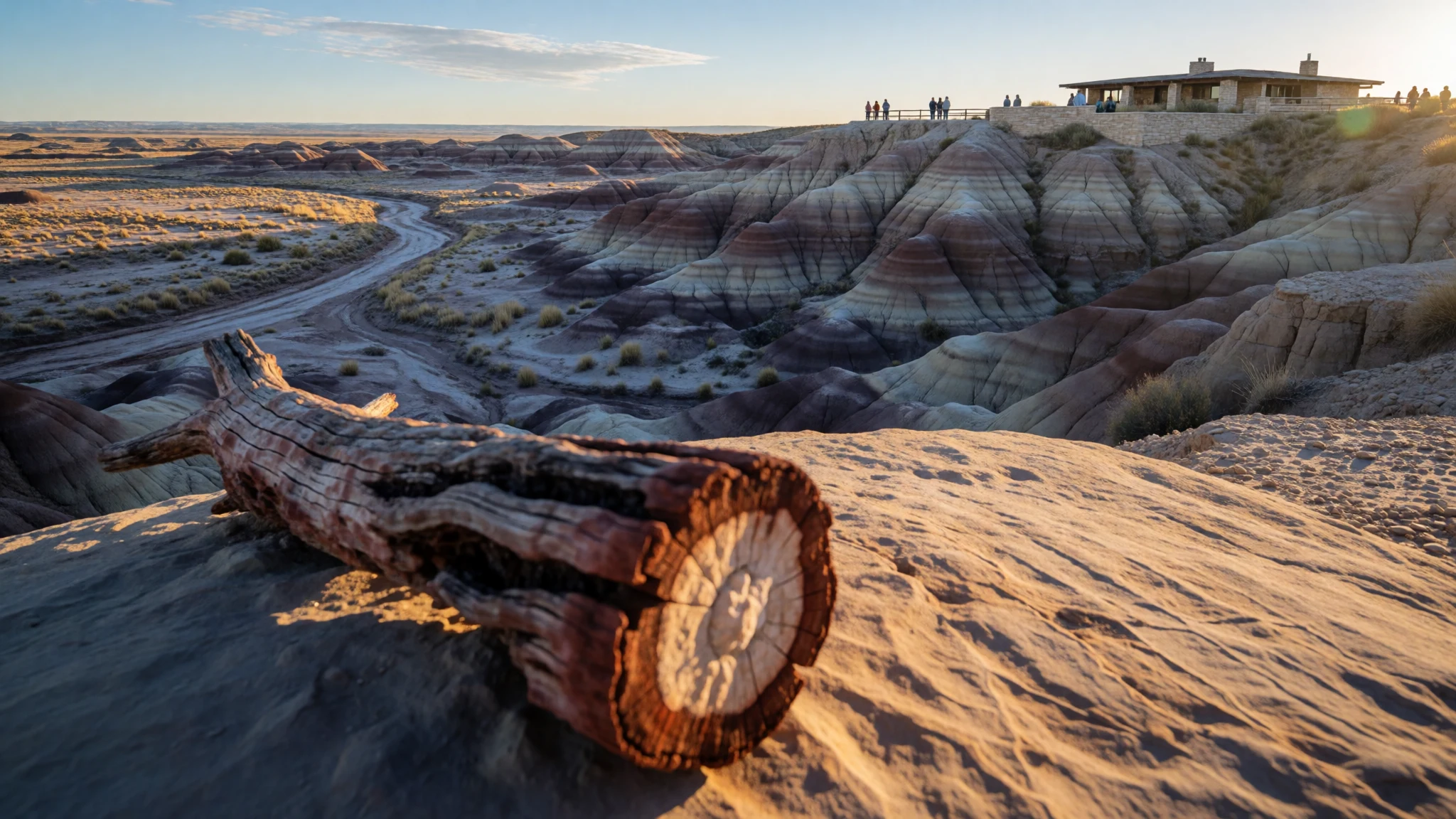
Petrified Forest National Park in Arizona scatters fallen Triassic trees, now turned to coloured stone, across a banded badland that suits a single day.
The place
Petrified Forest National Park sits in northeastern Arizona, across Navajo and Apache counties, on a high dry plateau about 1,623 m above sea level. It covers roughly 900 square km of open shrub grassland and eroded badlands striped in rust, lavender, grey and cream, and its northern end runs into the Painted Desert. The interstate, the main railway line and the old Mother Road highway all cross the area roughly east to west, which is why so many people pass through on the long haul between Flagstaff and Albuquerque.
The weather is the thing to plan around. Summer afternoons reach about 38 °C, winters fall well below freezing, and wind is a near-constant companion, sometimes lifting dust devils off the flats. Rain comes mostly from July to September in short, heavy storms, and light snow is possible between October and March, though it rarely lies for long. Humidity is low and shade is scarce.
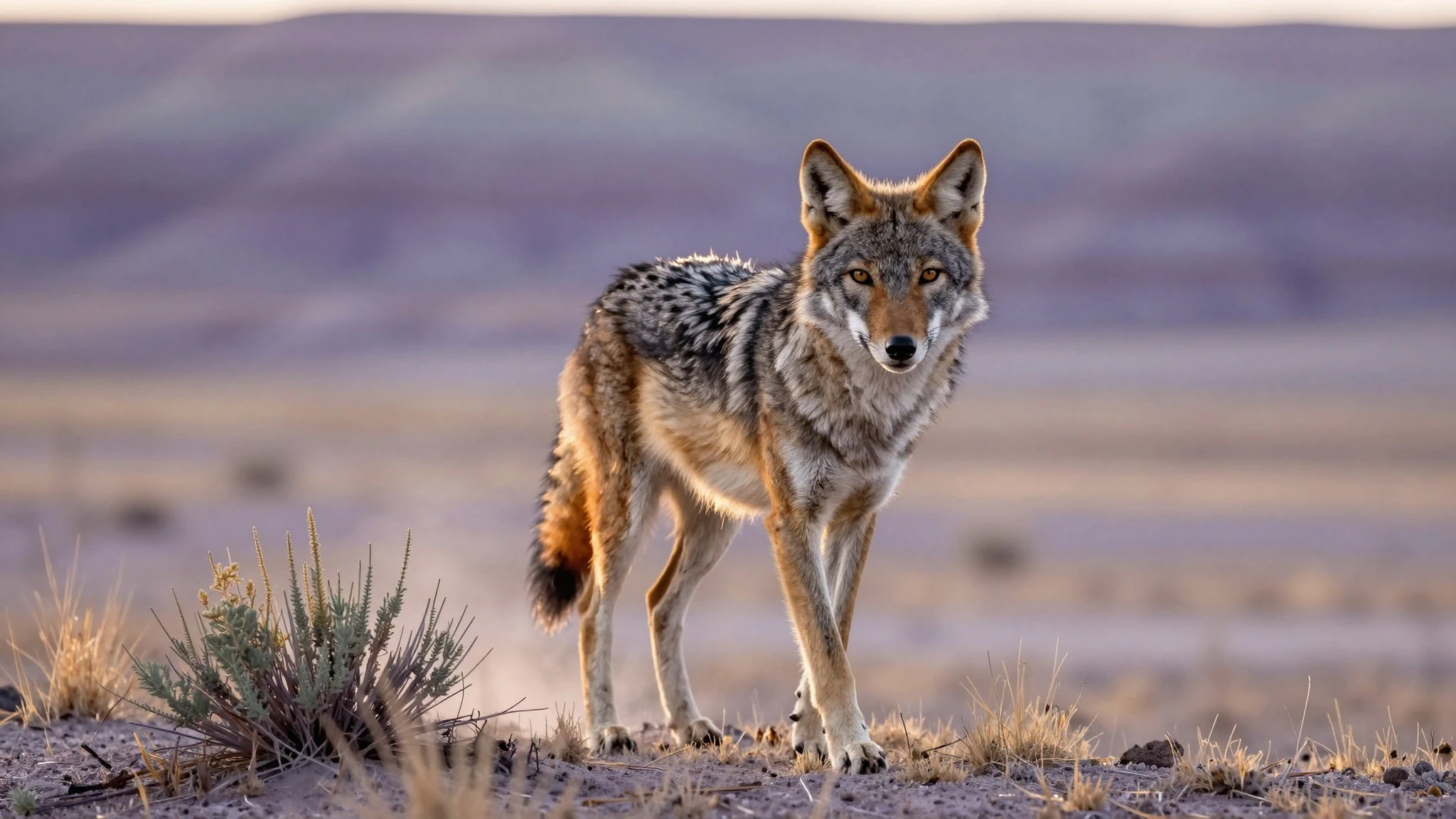
Grasses dominate the plant life. The wildlife is quiet rather than showy: pronghorn on the open ground, coyotes and bobcats at the edges, lizards, snakes, deer mice and a good number of migrating birds. About a third of the park is designated wilderness, so large stretches are reached only on foot. The park drew about 645,000 visitors in 2018, thinly spread over a big landscape, so even busy days leave room to stand alone at a viewpoint. First established as a national monument back in 1906, the site officially became a national park in 1962.
Its story
Petrified Forest National Park owes its name to trees that fell about 225 million years ago, in the Late Triassic, long before dinosaurs dominated and long before the badlands existed. Those trunks were swept into river systems and buried under sediment and volcanic ash. Groundwater rich in dissolved silica then seeped through the wood, slowly replacing the organic cells with quartz. Traces of iron and other minerals stained the stone red, yellow, purple and black. Erosion has since stripped away the soft layers above and left the logs lying on the surface, often broken into neat segments.
People arrived early. Evidence suggests humans were in the area more than 12,000 years ago, and some of the oldest artefacts are spear points shaped from the petrified wood itself. Seasonal hunters and gatherers followed, then Ancestral Puebloan farmers who grew corn and, from the first centuries CE, began living here year-round. By about the ninth century families were gathering into larger villages. Well over a thousand archaeological sites have been recorded inside the park boundary, including rock art.
The modern chapter is about travel and protection. The railway and then the Mother Road brought tourists, and with them souvenir hunters who carted off wood by the wagonload. That pressure helped lead to national monument status in 1906, and the area was upgraded to a national park in 1962. Taking even small fragments is still the main threat to the site.
What to see
- Painted Desert Inn — Northern end of the park, Kachina Point
Painted Desert Inn stands at Kachina Point near the park's northern entrance and is a national historic landmark. It once gave rest to travellers on the old Mother Road. Today it is worth a stop for the building itself and for the long views over the striped badlands below.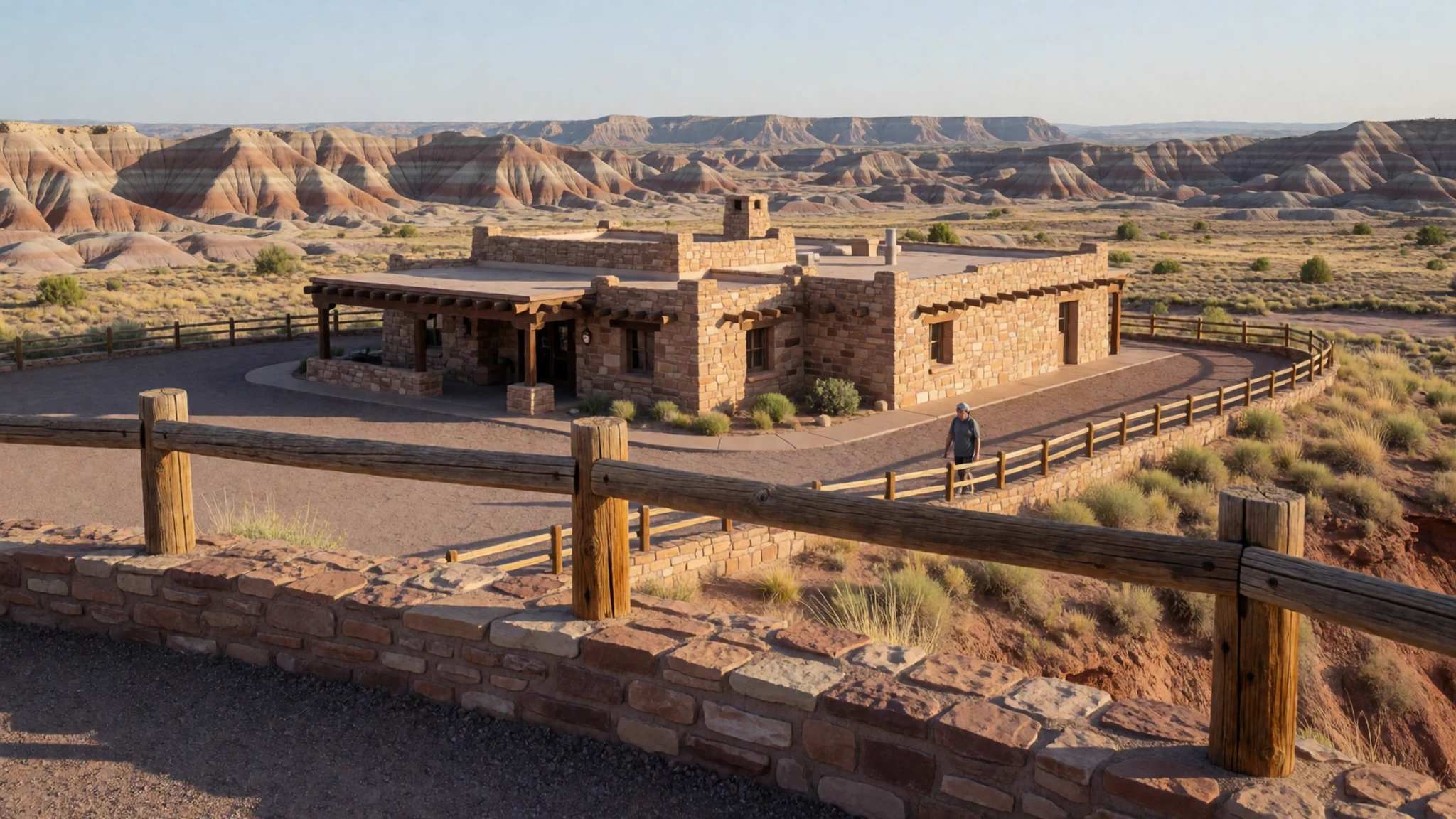
- Rainbow Forest Museum — Southern end of the park
Rainbow Forest Museum, near the southern entrance, is the best place to make sense of the park before walking out into it. Exhibits cover petrified wood, fossils and reconstructions of prehistoric animals, and there is an information desk, a bookshop and toilets. Water is available nearby.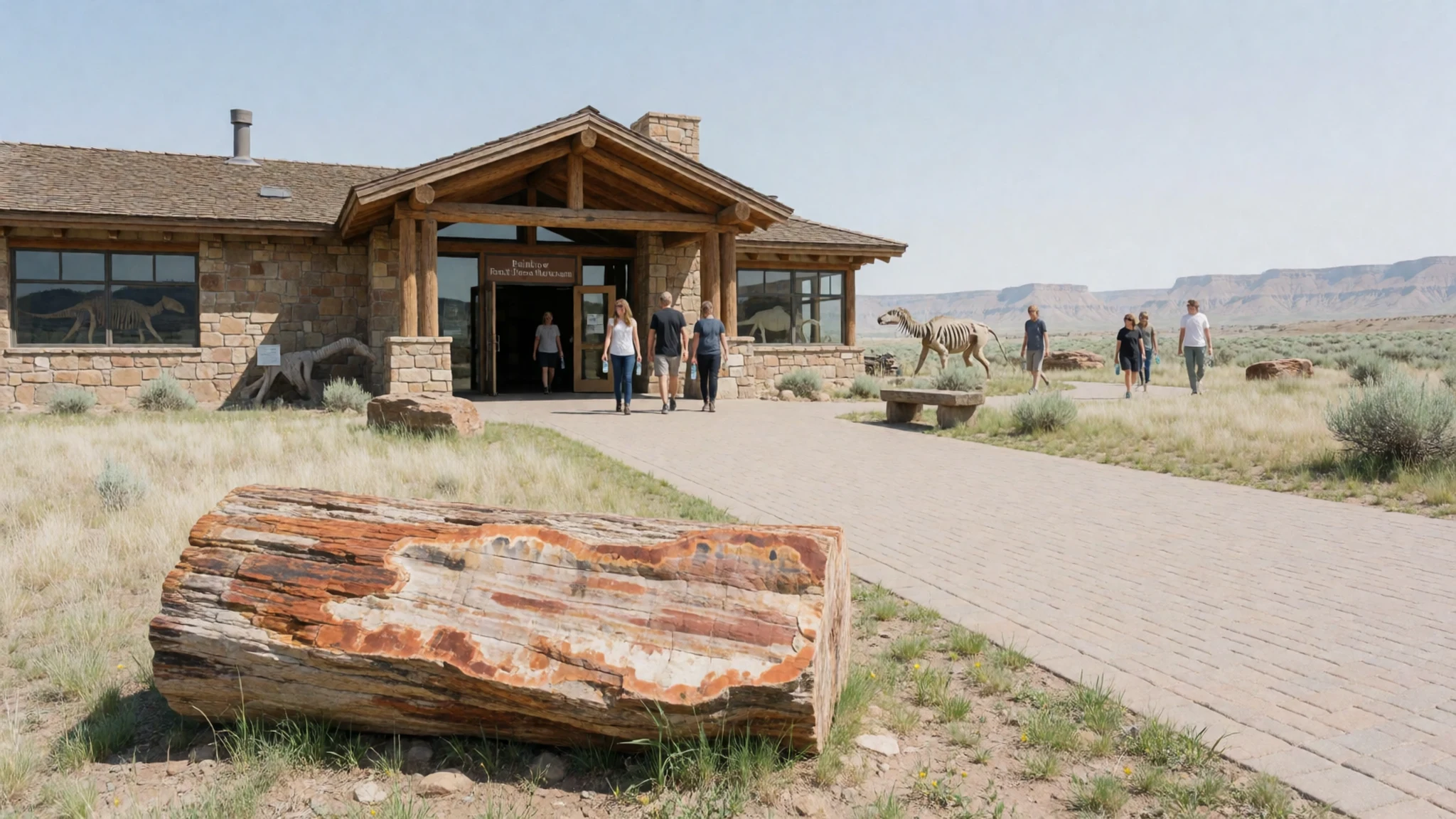
- Giant Logs Trail — Behind Rainbow Forest Museum
Giant Logs Trail is an easy paved path behind Rainbow Forest Museum, passing many petrified trunks at close range. The biggest log, nicknamed Old Faithful, is here. Look closely at the cut faces, where the quartz shows swirls of red, orange and cream.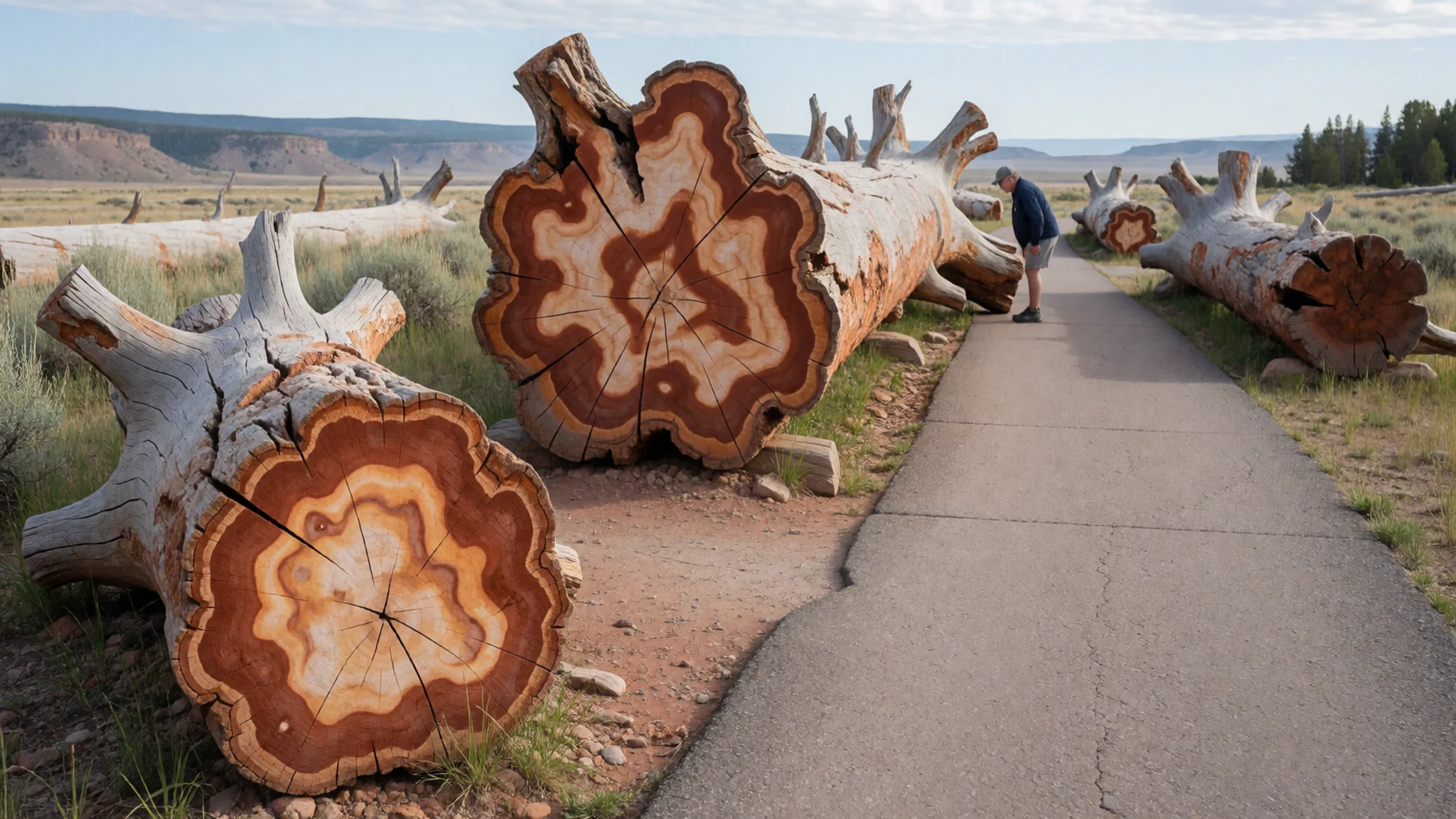
- Long Logs Trail — Near Rainbow Forest Museum
Long Logs Trail is a gentle loop that starts close to Rainbow Forest Museum and wanders through a wider scatter of fallen trunks. It is a little quieter than the paved path next door, and it suits families or anyone who wants a short, flat walk in the open.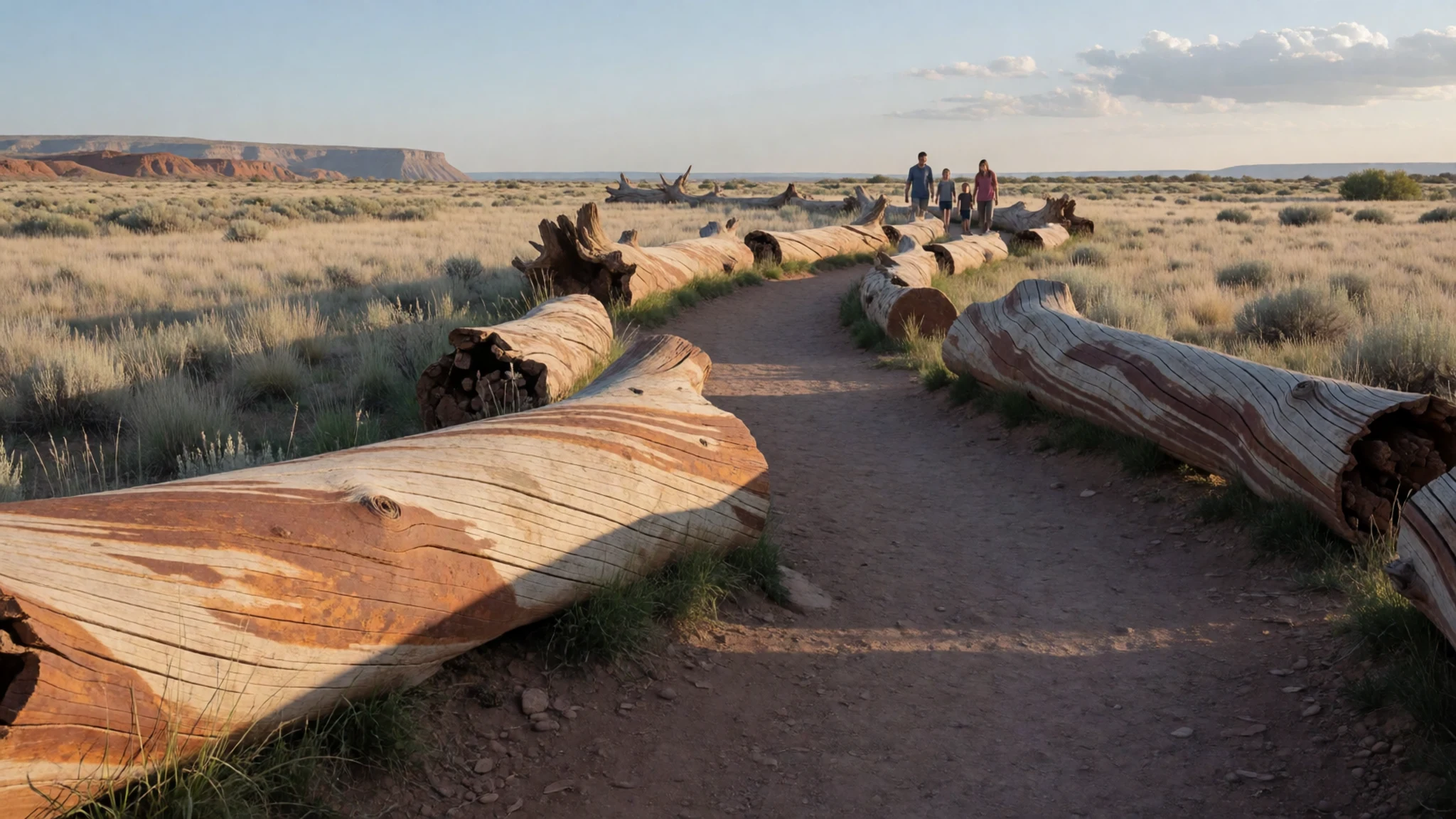
- Blue Mesa — Central part of the park
Blue Mesa is a viewpoint area where the badlands turn blue-grey and lavender, and the hills look like heaped, rounded mounds of clay. It is one of the best places in the park for photographs of the Painted Desert, especially in low morning or late afternoon light.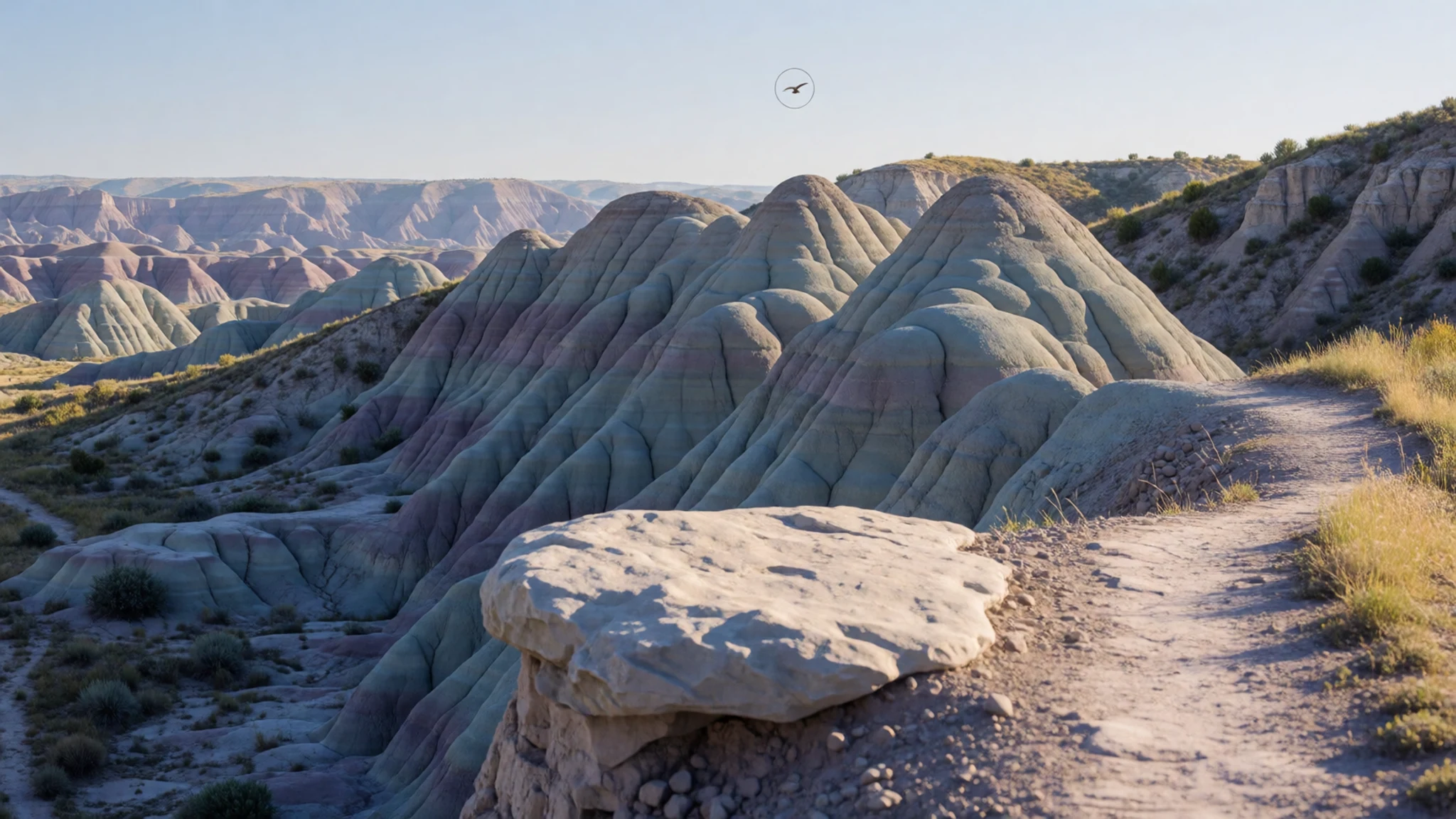
- Agate Bridge — Along the park road, central section
Agate Bridge is a petrified log that spans a small gully, held in place by the stone it has become. The colours glow most strongly in the afternoon sun, and the short walk from the road makes it an easy stop between longer ones.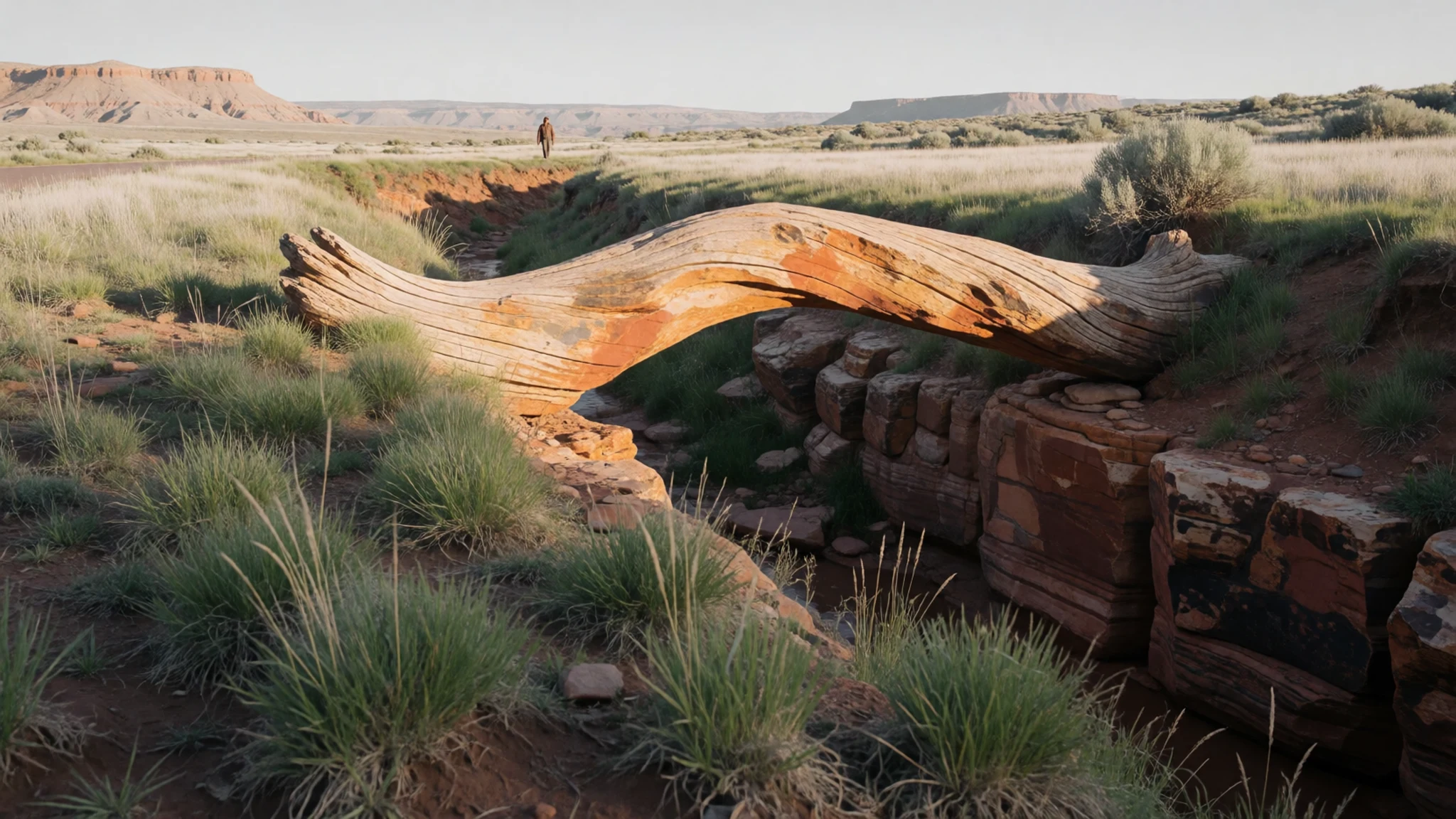
Culture
Petrified Forest National Park lies close to the Navajo Nation, and the wider region is the homeland of Diné, Hopi, Zuni and other Pueblo peoples. For them this is not an empty landscape but a living one, with a long record of farming, trade and travel. The pottery fragments, rock art and village remains scattered through the park belong to Ancestral Puebloan communities, and descendants still regard such places with respect.
A second layer of culture is the road itself. Travellers on the old Mother Road gave the region a roadside identity of motels, diners, neon signs and curio stands, and the Painted Desert Inn is a surviving piece of that history. Trading posts and craft stalls in nearby towns still sell silver and turquoise jewellery, woven rugs and pottery made by Native artists, and buying directly from the maker is the best way to support them.
The park's culture is also one of conservation. Rangers talk constantly about leaving the landscape as it is, because the main threat to the fossil wood has always been visitors carrying it away. Quiet matters too: the open land carries sound a long way, and many people come here for the silence.
Etiquette: leave every piece of petrified wood, pottery fragment and stone where it lies, and stay on marked trails so you do not damage fragile ground or archaeological remains.
What to wear
Petrified Forest National Park sits in a region where the clothing traditions of the Diné and the Pueblo peoples remain visible. Traditional Navajo women's dress includes the long, full tiered skirt and velvet or cotton blouse, worn with silver and turquoise jewellery and often a woven sash. Pueblo traditions include the woven manta dress, usually wool, fastened over one shoulder and belted. These are worn mainly for ceremonies, dances, festivals and family occasions, and they are made with real skill, so photographs of people in them should only be taken with permission.
Everyday dress in the area is practical and western. Denim, work shirts, cowboy boots and brimmed hats are common, with fleece or a canvas jacket in winter. Silver and turquoise jewellery is still worn daily by many people, not only for show.
For a visitor, the climate decides everything. Summer is hot and dry with strong sun and little shade, so wear light long sleeves, a wide-brimmed hat, sunglasses and sunscreen. Winter and the shoulder seasons bring cold and sharp wind, so bring layers, including a windproof top. Closed shoes with grip are best for loose sandstone and gravelly trails, and sandals can be painful on the hot ground. There are no dress codes in the park, but loose, modest clothing is sensible when visiting craft stalls or community events nearby.
What to eat
- Picnic lunch — The park's picnic areas
A packed lunch is the sensible choice here. The park has picnic areas with a view, and many visitors bring sandwiches, fruit and plenty of water from town. Eating outdoors among the logs is simple, cheap and avoids waiting at the busier counters.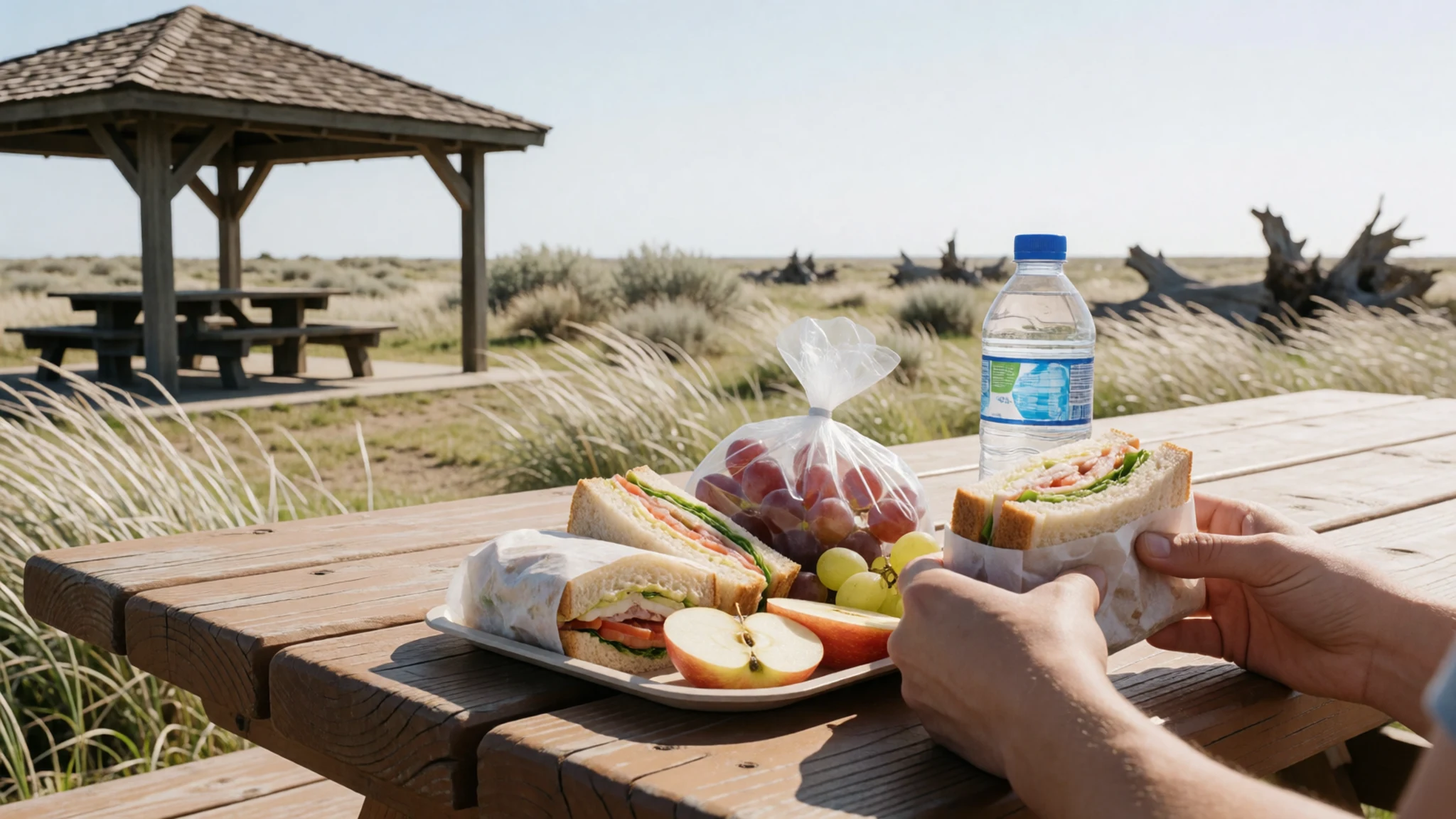
- Snack-shop fare — Snack shop near Rainbow Forest Museum
The snack shop near Rainbow Forest Museum sells drinks and light bites, which is enough for a quick break before the short trails. Expect simple American road-trip food rather than anything regional, and check the official site for what is open.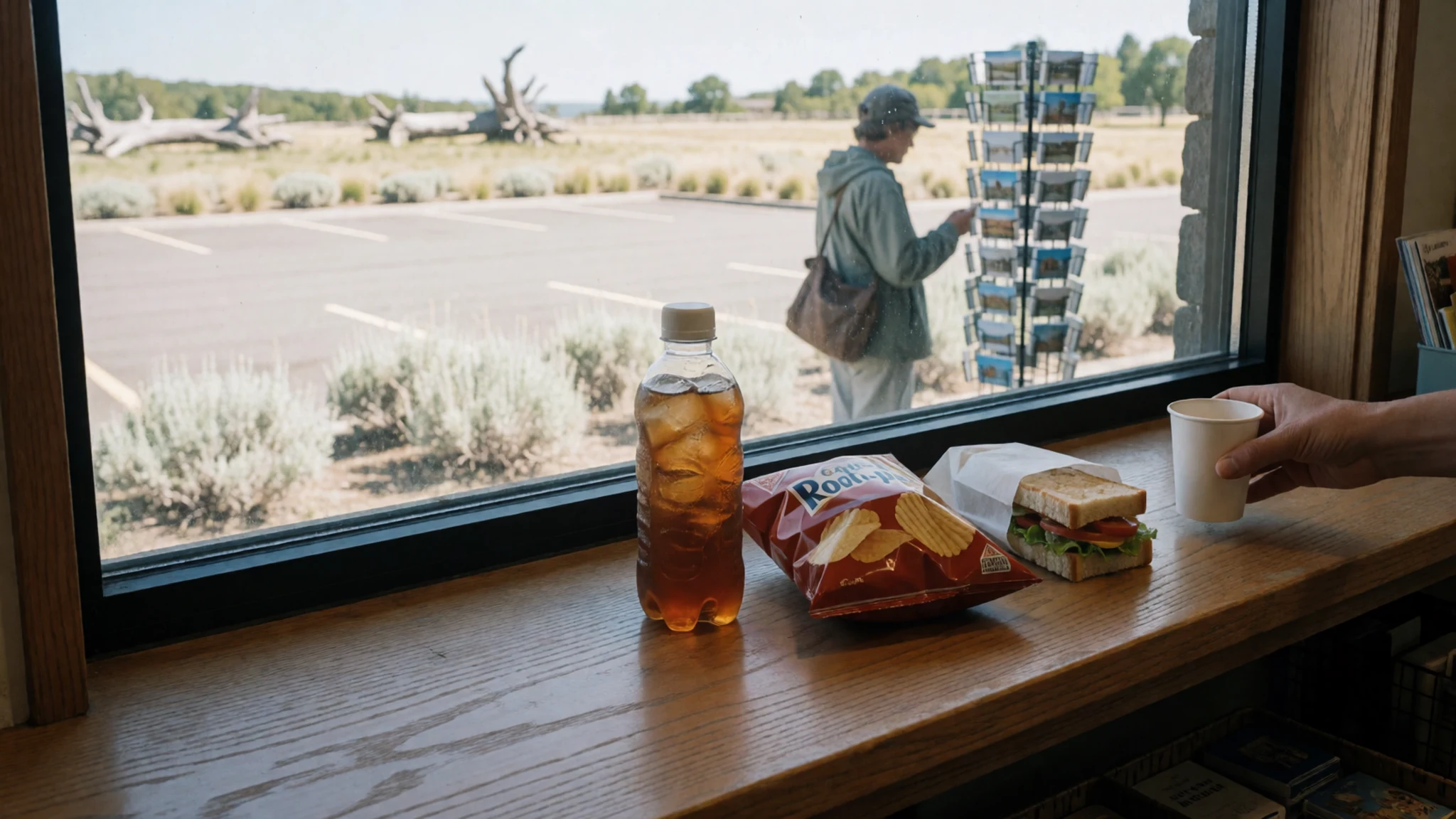
- Visitor-centre restaurant meal — Painted Desert Visitor Centre area, northern end
The Painted Desert Visitor Centre area has a restaurant and a travel store selling snacks. It is the main sit-down option inside the park, useful for a hot meal on a cold or windy day, with the northern badlands just outside the door. - Frybread and Navajo tacos — Roadside stands and local eateries in nearby towns
Frybread is a puffed, golden flatbread that appears across the Navajo Nation, often as a taco topped with beans, meat, lettuce and cheese. Look for it at roadside stands and community events in the region, rather than inside the park. - Green chile stew — Diners and eateries in Holbrook
Green chile stew is a southwestern staple: a warming, slightly spicy mix of roasted chile, potato and pork or beef. It is a good answer to a cold, windy day, and it turns up on many diner menus along the interstate corridor.
Plan it
Best time. April–May and September–October bring the mildest days. Summer is hot with strong sun, July to September brings heavy storms and the wettest month is August, and winter is cold and windy with a chance of light snow from October to March.
How long. 1
Getting there. A car is the only practical way in. Fly to Flagstaff Pulliam Airport or Albuquerque International Sunport and drive east or west along the interstate. Amtrak's nearest station is Gallup, New Mexico, about an hour east of the park by road. Holbrook, to the west, is the usual base.
Budget. low
Tips
- Fill the tank and buy food and water in town before entering; services inside the park are limited.
- Start early: light is best for the badlands, and summer afternoons are fierce.
- Carry layers and a windproof top, since the weather changes quickly at this altitude.
- Check the official site (https://www.nps.gov/pefo/index.htm) for fees, opening hours and road conditions before you set out.
- Plan to drive through the park from one end to the other rather than doubling back.
Etiquette
- Leave all petrified wood, fossils and artefacts exactly where you find them.
- Stay on marked trails and keep off fragile slopes and archaeological sites.
- Ask before photographing people, and respect any closures.
Nearby
Sources
- Wikidata Q305949 (CC0)
- Wikipedia: Petrified Forest National Park (rev 1384402532) (CC BY-SA 4.0)
- Wikivoyage: Petrified Forest National Park (rev 5237747) (CC BY-SA 4.0)
- Photo: The PEFO Tepees, Finetooth (CC BY 3.0)
- Photo: Jasper Forest, Jeffhollett (CC BY-SA 4.0)
- Photo: Painted Desert aerial, Dicklyon (CC BY-SA 4.0)
- Photo: Painted Desert & Petrified Forest, Doc Searls (CC BY-SA 2.0)
- Photo: Painted Desert badlands, Tawa Point, Finetooth (CC BY 3.0)
- Photo: Blue Mesa, Adbar (CC BY 3.0)
- Photo: Fossilized wood, Kumar Appaiah (CC BY-SA 2.0)
- Photo: Afternoon at Agate Bridge, Lucario298 (CC BY-SA 4.0)


Wildlife
- Pronghorn (animal)
The pronghorn looks like an antelope but is not one; it is a one-of-a-kind animal, the last surviving member of its own family. In Petrified Forest, look for it out on the open ground, where its shape stands clear against the landscape. Watch from a good distance, keep your voice low and your movements slow, and let it go about its day undisturbed. Never offer it food, however calm it seems, because wild animals are best left wholly wild.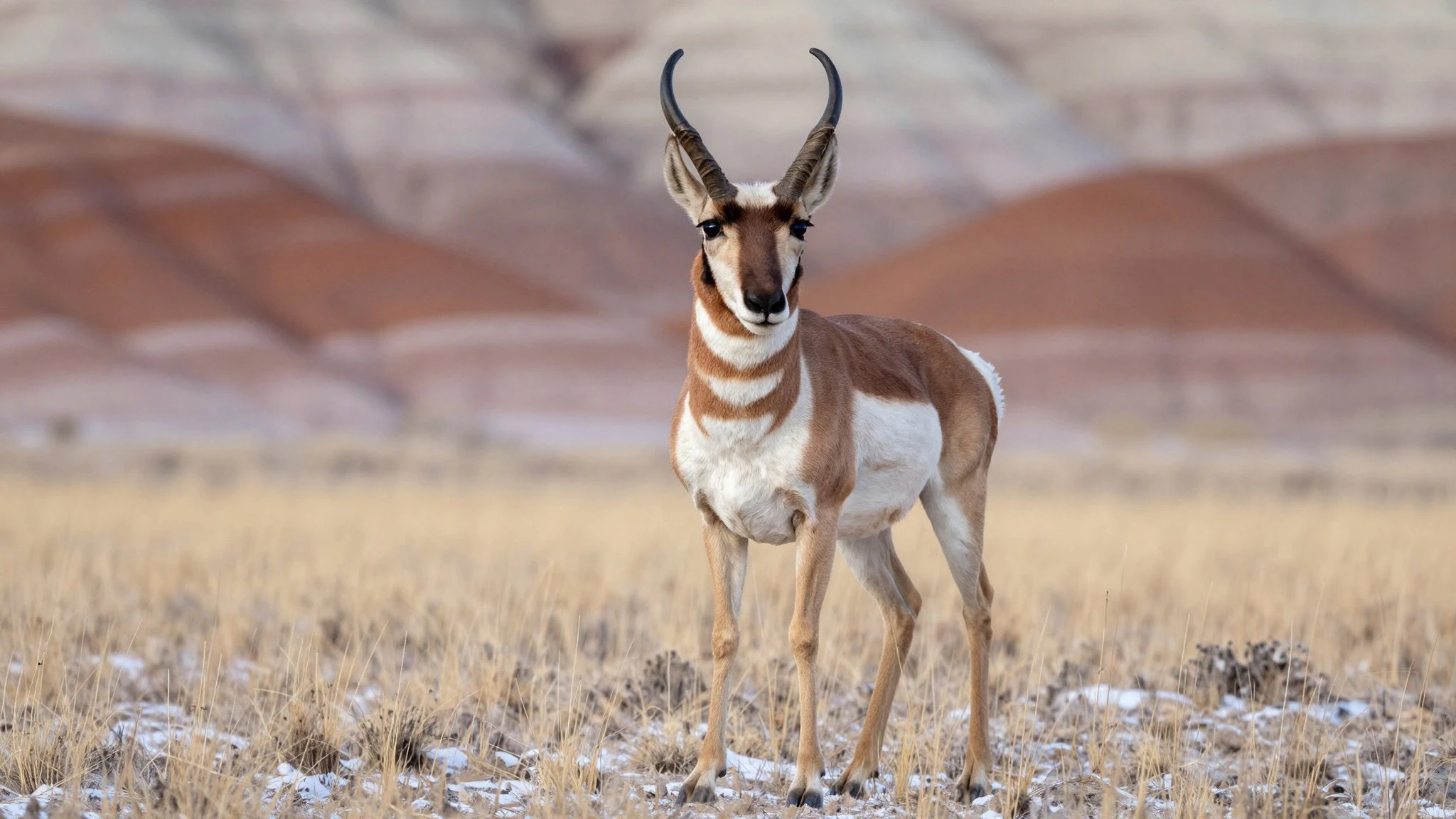
- Coyote (animal)
The coyote is a wild, dog-like animal of North America, a little smaller than its cousin the grey wolf. In Petrified Forest it keeps to the edges, so scan the margins of the open ground rather than the middle. Stay well back, speak softly and let it pass without following. A local guide can help you know where to look. Never feed a coyote, as it may lose its natural wariness of people.