Pedernales Falls
Pedernales Falls, United States
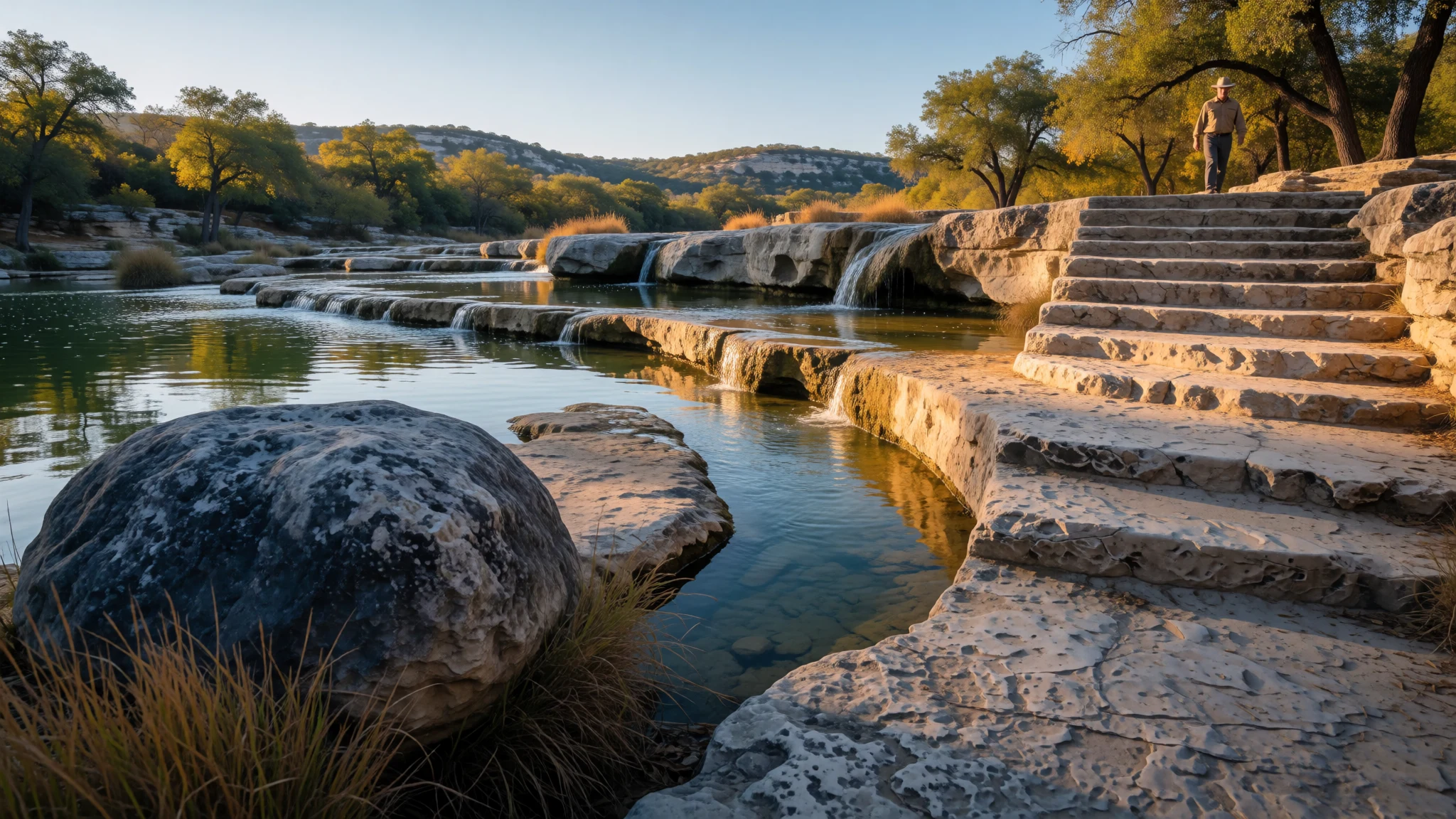
Pedernales Falls is where a Texas Hill Country river spills over tilted rock shelves, an easy escape from Austin.
The place
Pedernales Falls State Park sits on the Pedernales River in Blanco County, Texas, about 16 km east of Johnson City and roughly 40 km west of Austin. The park covers about 2,100 hectares of Hill Country and is run by the Texas Parks and Wildlife Department. Its terrain is typical of the scenic Hill Country, rising from the riverbanks into rolling, wooded ridges. The name is pronounced PUR-də-NAL-iss, which catches out first-timers who try something closer to Spanish.
The falls themselves are less a single drop than a long staircase. The river runs over broad shelves of pale rock that tilt and step downward, with channels, potholes and pools between them. In dry spells the water slows to a trickle and the riverbed becomes a place to scramble. After heavy rain it can turn brown and violent within hours, even when the sky overhead is clear, which is why the ranger warnings carry real weight here.
Away from the river the park is oak and juniper scrub, grassland and dry creek beds, crossed by footpaths that walkers share with cyclists and riders on some routes. Austin is close enough that weekends bring crowds, especially in the warm months, while weekday mornings are much quieter. Entry rules, reservations and closures change, so the official page at https://tpwd.texas.gov/state-parks/pedernales-falls is the place to check before setting off.
Its story
Pedernales Falls State Park has a short official history and a much longer one beneath it. The river's name comes from the Spanish word for flint, a reminder that Spain once claimed this region as a colony. Texas then passed to Mexico, broke away in 1836, stood as an independent republic for ten years and joined the United States in 1845. That layered past is why many Texans talk about their state as a country of its own kind.
The Hill Country in particular drew German settlers, and their food traditions, bratwurst above all, still shape the tables of the towns around the park. Before it became public land, this stretch of river belonged to a working ranch known as the Circle Bar Ranch. The state of Texas bought the ranch in 1970 and opened the park to visitors in 1971.
The more dramatic story belongs to the river. Floods, as much as slow erosion, have carved and polished the rock shelves, and every big rise rearranges the gravel, driftwood and sand. Visitors who return after a wet season often find the pools in different places and the channels re-cut. The old ranch has faded into the landscape, and the park is now managed for walking, camping and watching wildlife, with the river's moods setting the real rules for the day.
What to see
- The main falls and rock shelves — Main falls area
Pedernales Falls is a wide staircase of pale ledges, cut by channels and shallow pools, rather than one tall drop. Walking out over the dry sections is the best way to understand the river, but footing is uneven and slick near water. Rising water or dark cloud upstream means retreating to higher ground at once.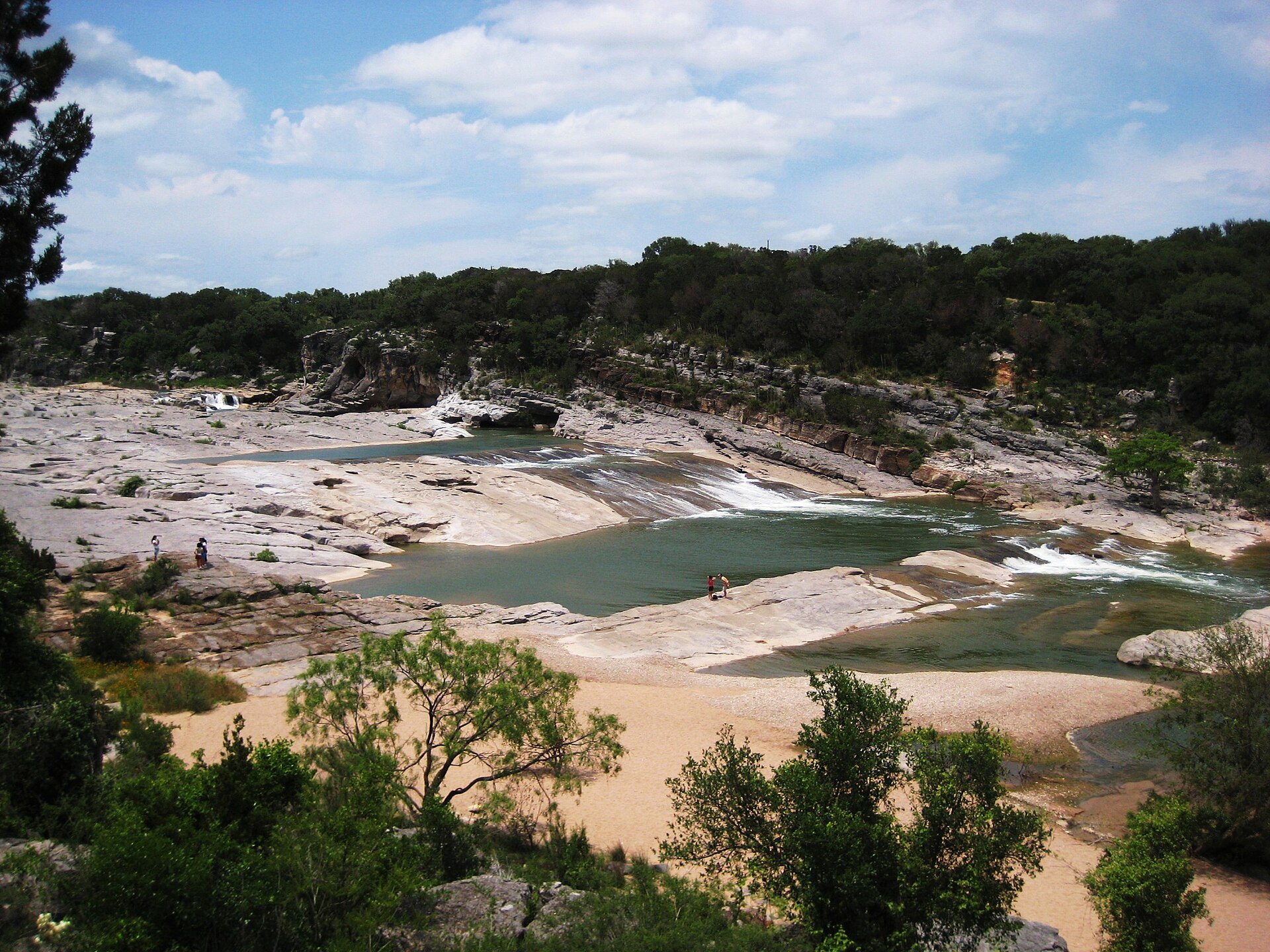
- Natural pools on the river — Along the river below the falls
Between the ledges the river leaves still green pools that fill and change shape with each flood. They look inviting on a hot afternoon, but swimming rules vary by stretch and water level, so read the ranger signs and the official site before getting in. Shoes with good grip matter even for paddling.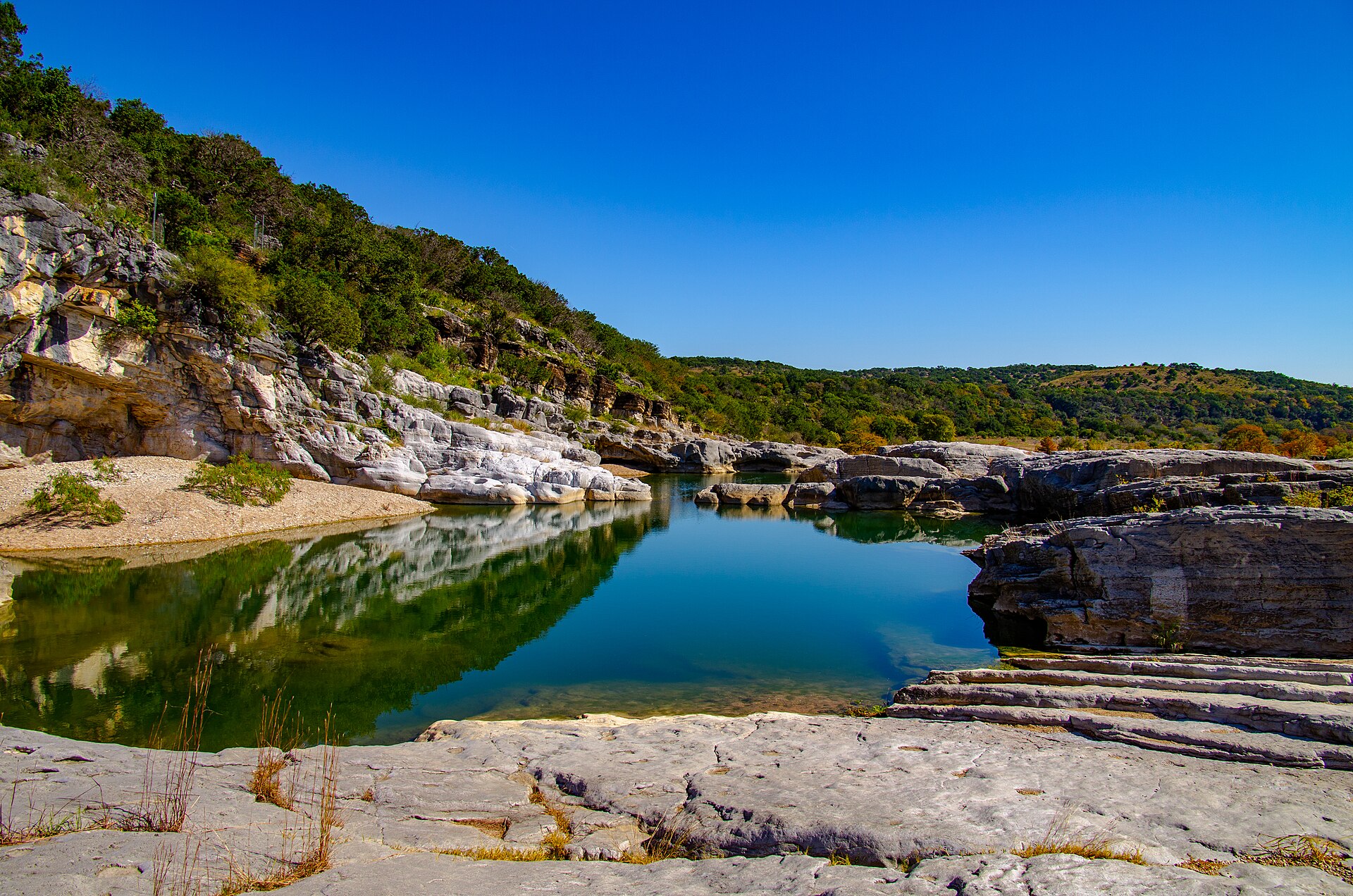
- The river bend — Downstream river bank
Downstream from the main ledges the Pedernales swings round a gravel bar between tree-lined banks, quieter and shadier than the falls. Photographers favour it in soft early light. It suits a slow walk, with stops to watch birds and dragonflies and to listen to the water moving over stone.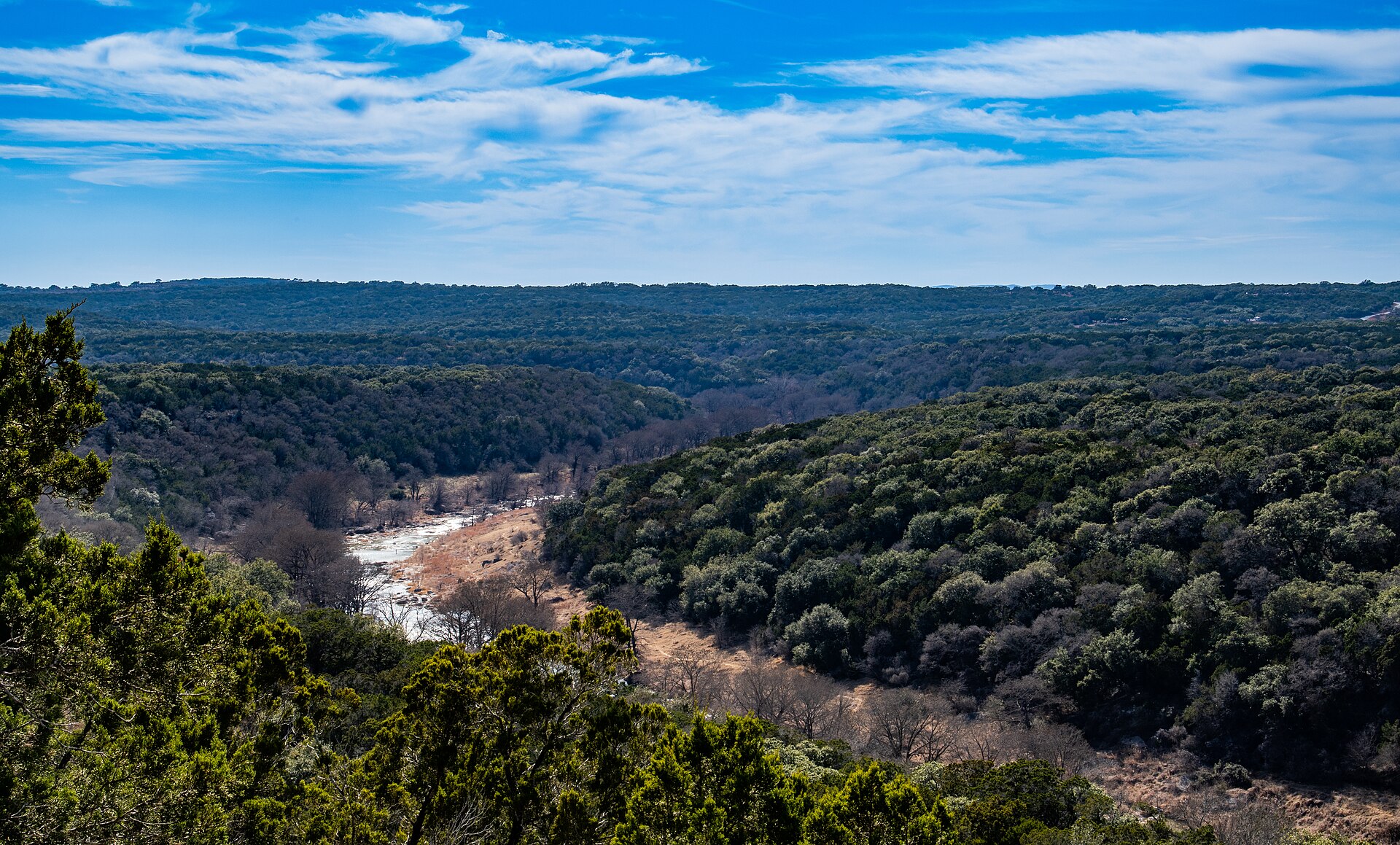
- The 'eye' rock — Rock faces by the falls
On the rock faces beside the falls, a small cave with a stone lodged in it looks like an eye gazing across the river. It is a modest curiosity, easy to miss without looking up, and a good excuse to slow down and read the layers in the cliff.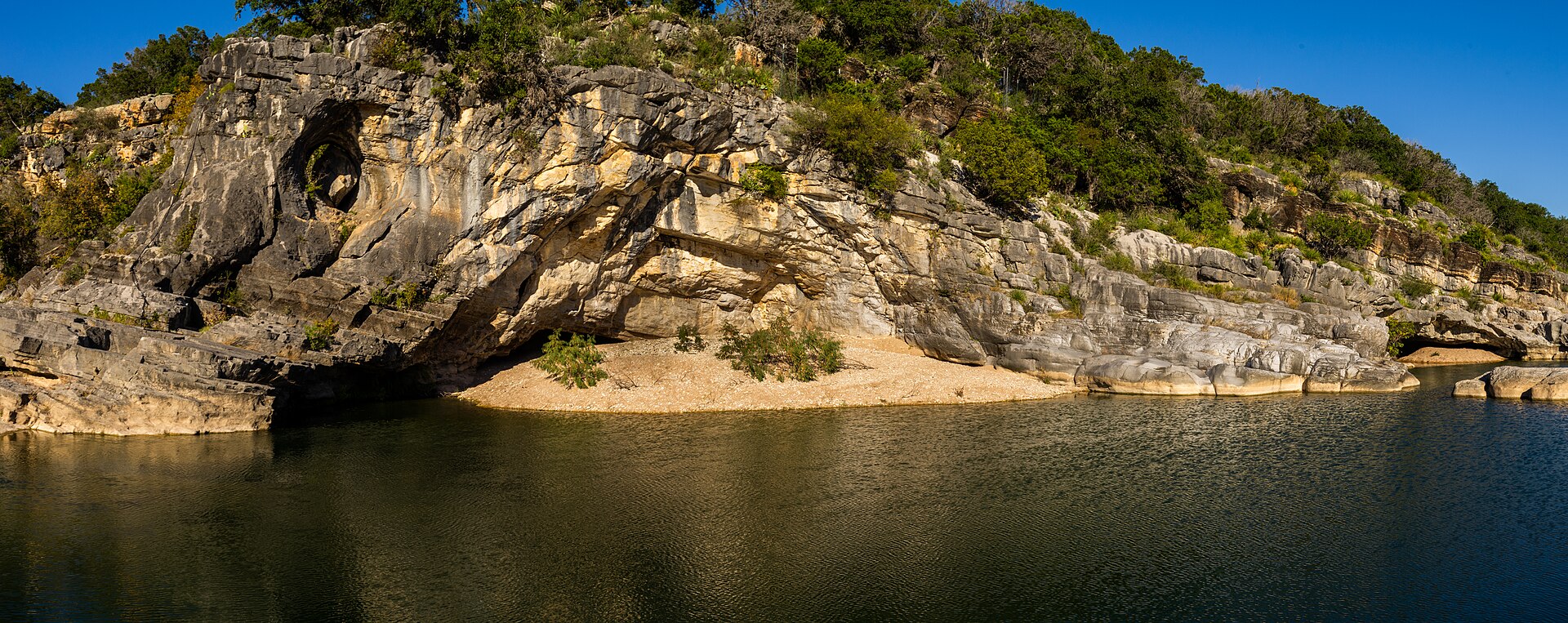
- Hill Country trails — Trail network inland from the river
Paths wind through oak and juniper scrub and across dry creek beds, and on some routes walkers share the way with cyclists and horse riders. Shade is patchy, so the heat builds fast in summer. Pick a route from the park map at the entrance and carry more water than seems necessary.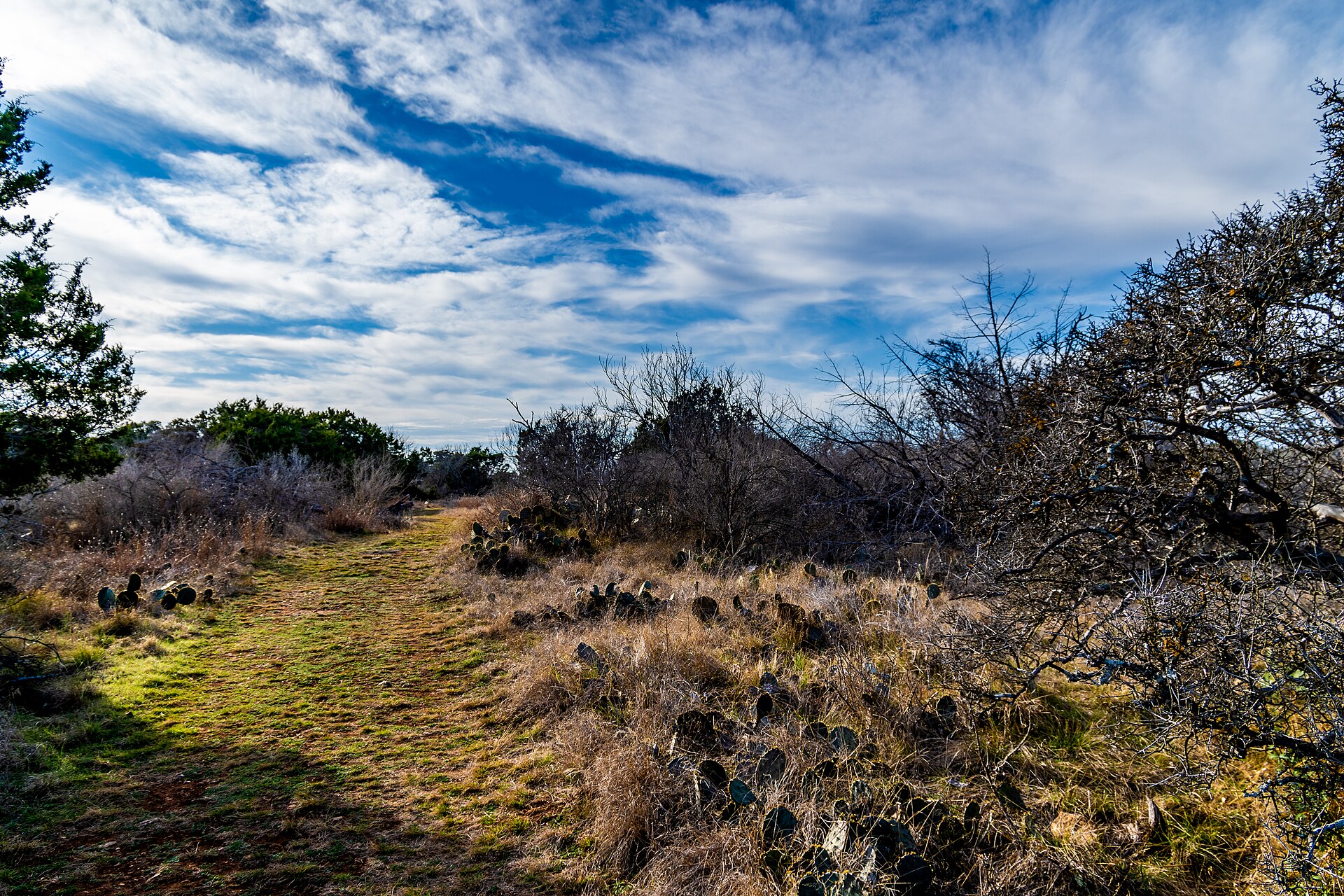
- Sunset over the hills — Open viewpoints across the park
Late in the day the ridges turn gold and the pale rock takes on a pink cast. Staying until dusk is most pleasant in the cooler months, and camping makes it easy. Allow time to walk back before dark, because the trails are unlit and the ground is rocky.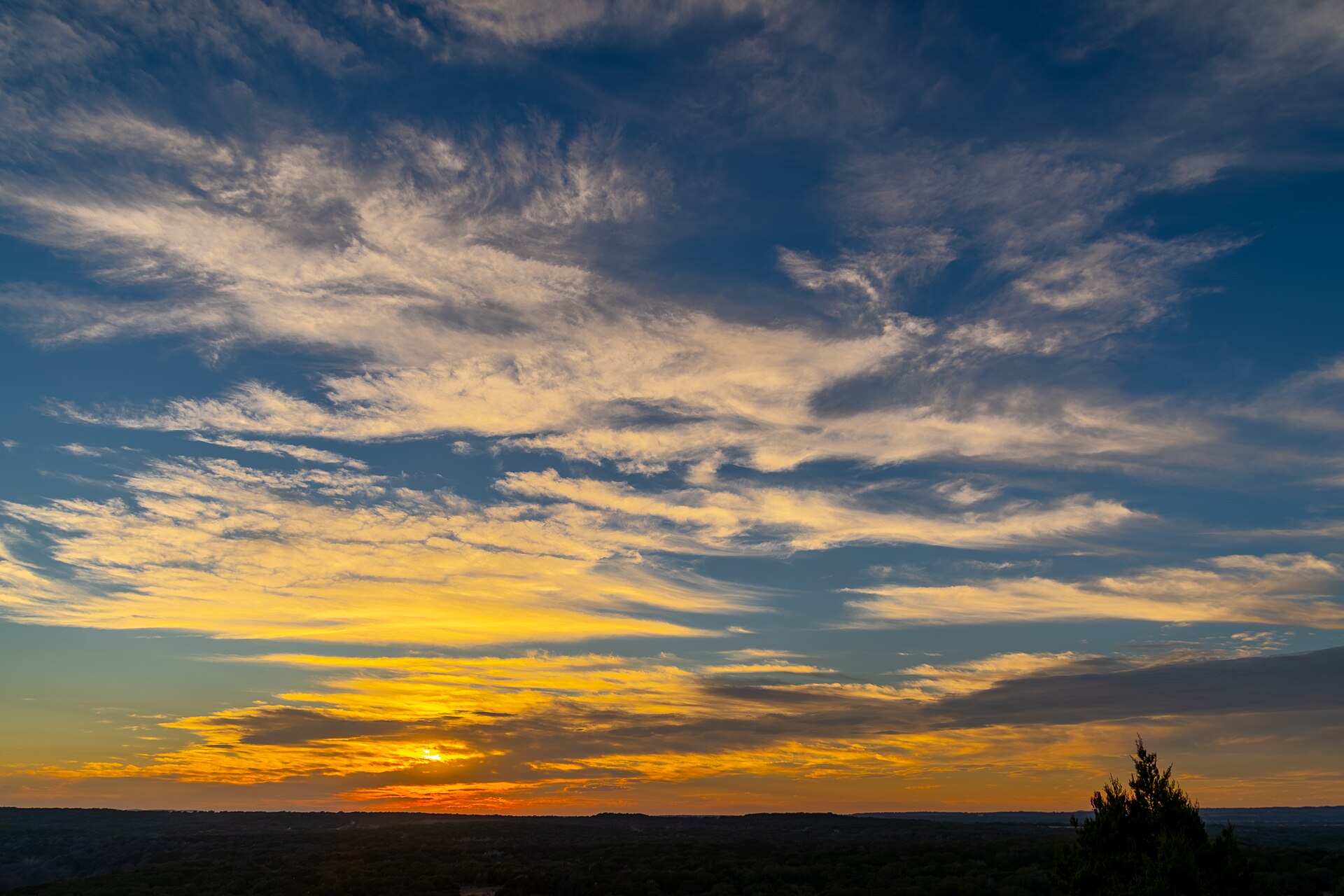
Culture
Pedernales Falls sits in a state where local identity runs strong, and that shapes how visitors are received. Texans generally take pride in being friendly, and a smile, a firm handshake and steady eye contact go down well in conversation. The Texas flag flies in public places at the same height as the national flag, a small sign of how seriously the state takes its own story, from Spanish and Mexican rule through independence.
That pride has practical consequences for guests. Calling Texas 'just another state' or poking fun at its history tends to land badly, and so does assuming every Texan thinks of themselves as Southern. The Hill Country has German settler roots, while other parts of the state lean Mexican or Western in character. Conversations with strangers often open with where a visitor is from and how they found the place, and people are usually happy to share local tips.
Outdoors, the Hill Country has a lively weekend culture of camping, hiking and barbecue, and the park draws Austin families, walkers and cyclists. Rangers are respected, and regulars take their instructions on water levels, fire restrictions and wildlife seriously. The mood is relaxed, but the rules around the river and campsites are real and exist for good reasons.
At Pedernales Falls, keep to marked paths and rock ledges, carry out all rubbish, follow ranger signs about water levels, and greet people you pass with a friendly hello, as locals do.
What to wear
Texas has no single national costume, so Pedernales Falls is best read through its working and festival clothes. The cowboy look is the most widely recognised: felt hats in cooler months and straw ones in summer, leather boots, denim jeans, snap-button Western shirts and bandanas, all born of ranch work like that on the Circle Bar Ranch that once occupied this land. In Hill Country towns settled by Germans, dirndls and lederhosen appear at festivals, and Tejano communities across the state wear embroidered blouses and full skirts for folk dance and celebrations.
Day to day, people near the park dress for heat and practicality: shorts, T-shirts, caps, sports sandals and running shoes. Weekend visitors from Austin arrive in hiking shirts, swimwear layers and sunglasses, and boots signal a ranch or a night out far more than a hike. Nothing about the park calls for formal dress or special modesty beyond ordinary good sense.
For a visit, wear light, breathable clothes in cotton or quick-dry fabric, a wide-brimmed hat and sunscreen. Closed shoes with grip are better than flip-flops on uneven, slippery rock, and water shoes help in the shallows where wading is permitted. Long trousers protect against thorns and ticks in brushy areas, and a thin waterproof layer is useful in spring showers. In winter, mornings can be cold, so layers matter.
What to eat
- Smoked brisket — Barbecue smokehouses in Johnson City, Austin and other Hill Country towns
Brisket is beef smoked slowly until it pulls apart, then cut to order at the counter and wrapped in butcher paper. Pickles and raw onion are the usual companions, with sauce optional. It is the centrepiece of Texas barbecue and worth planning a meal around. - Hill Country sausage — Barbecue counters and butcher shops in Hill Country towns
Peppery smoked sausage is a legacy of the German settlers and is often cooked alongside the brisket. It is eaten in thick slices or by the ring with mustard and crackers, or beside beans and coleslaw. - Texas chili — Diners, cafés and local cookoffs
A slow-cooked stew of beef and chilli, and the official dish of the state. The traditional Texas version leaves out beans, which some locals treat as a point of principle. It is served in a bowl, often with crackers. - Breakfast tacos — Corner taquerías and food trucks in Austin
Soft flour or corn tortillas folded around egg with potato, beans, bacon or chorizo make a cheap, filling start before a morning at the park. Salsa is added at the counter, and they are easy to carry on the drive. - Hill Country peaches — Roadside fruit stands in the Hill Country in season
In late spring and summer the orchards west of Austin sell sweet, juicy peaches fresh from the tree, along with jams and ice cream. They make a good picnic fruit and a reason to detour on the drive.
Plan it
Best time. March–May and October–November for mild days and comfortable walking; June–September is very hot with little shade on the rock, and winter mornings can be cold. Heavy rain can cause flash floods in any season.
How long. 1–2
Getting there. Austin-Bergstrom International Airport is the nearest major airport, with onward connections via the large Texas hubs at Dallas-Fort Worth and Houston. From Austin it is about 40 km west by road, and a hire car is the practical way to reach the park gate, as public transport does not serve it.
Budget. low
Tips
- Check the official site (https://tpwd.texas.gov/state-parks/pedernales-falls) for entry rules, reservations and closures before driving out
- Arrive early on weekends in warm months, when the park is busiest
- Carry plenty of water and sun protection, as shade is limited
- Check the weather and any warnings before going near the river, even if the sky overhead is clear
- Wear shoes with good grip for the wet rock
Etiquette
- Keep to marked paths and obey ranger signs about water levels and closed areas
- Carry out all rubbish and leave rocks, plants and wildlife undisturbed
- Greet other walkers with a friendly hello, as is the local habit
Nearby
Sources
- Wikidata Q2066231 (CC0)
- Wikipedia: Pedernales Falls State Park (rev 1369887944) (CC BY-SA 4.0)
- Wikivoyage: Texas (rev 5387421) (CC BY-SA 4.0)
- Photo: Pedernales Falls State Park (Liveon001, Travis Witt) (CC BY 3.0)
- Photo: Around the Bend, Pedernales Falls State Park (Corey Leopold) (CC BY 2.5)
- Photo: Eye at the Falls, Pedernales Falls State Park (Corey Leopold) (CC BY 2.5)
- Photo: Hill Country Sunset, Pedernales Falls State Park (Corey Leopold) (CC BY 2.5)
- Photo: Natural Pool on the Pedernales River (Corey Leopold) (CC BY 2.5)
- Photo: Path in Pedernales Falls State Park (Corey Leopold) (CC BY 2.5)
- Photo: Pedernales Falls State Park 24304925928 (Nicolas Henderson) (CC BY 2.5)
- Photo: Pedernales Falls State Park 24304932848 (Nicolas Henderson) (CC BY 2.5)


