Paros
Paros, Greece
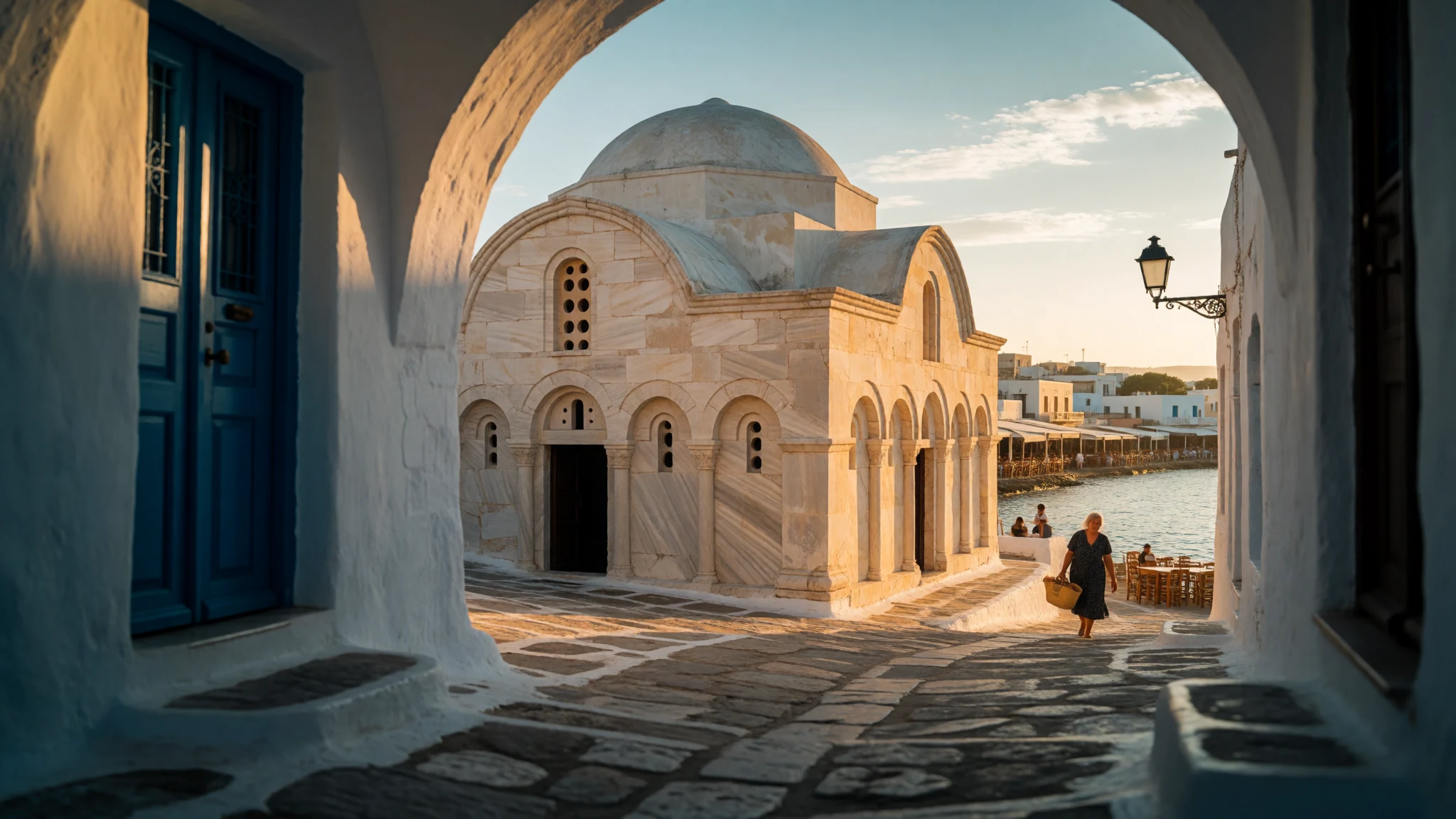
Paros offers whitewashed villages, marble history and easy beaches on one manageable Cycladic island, with ferries making onward island-hopping simple.
The place
Paros sits in the central Aegean, in the Cyclades, a short sea crossing west of Naxos and south-east of Piraeus, the port of Athens. The island has a population of 13,715, and its municipality includes a scatter of uninhabited islets. Its shape is a rounded pear, built around a single mountain that rises to 724 m and slopes gently to a coastal plain on every side. That plain is widest to the north-east and south-west, which is why most villages, beaches and farmland sit near the water rather than in the hills.
The rock underneath is mostly marble, and the island's white stone was prized in the ancient world and gave English the word Parian for fine marble and porcelain. Quarries still exist, some working and some abandoned. Today, though, Paros lives mainly from visitors.
Parikia is the main port and capital, with a seafront of tavernas and an old town of narrow lanes behind it. Naoussa, in the north-east, is a smaller fishing harbour turned lively evening town. Between them lie hill villages such as Lefkes, and on the east coast Dryos and the windy beaches favoured by surfers. Antiparos, the smaller sister island, lies just to the south-west across a narrow channel, reached by a short ferry from Pounda.
It is busy in high summer and the meltemi wind can be strong. Spring and autumn are calmer, and the island is easy to get around, though roads are narrow in the villages.
Its story
Paros has been settled for a very long time, and the ancient Greeks gave it several names, among them Plateia, Demetrias and Strongyle, the last meaning round and referring to the island's shape. Stories of an Arcadian founder are the kind of invented origin tale that Greek tradition produced in abundance. More reliably, Ionian settlers arrived from Athens, and under them Paros grew prosperous.
The island then sent out colonies of its own, to Thasos in the north Aegean and to Parium on the Hellespont. The poet Archilochus, born on Paros, is said to have joined the Thasos expedition. Much later, in 385 BC, Parians helped found a settlement on the Adriatic island of Pharos, today's Hvar.
The most dramatic episode came with the Persian wars. In 490 BC Paros sided with the Persians and sent a ship to Marathon. Athens retaliated: a fleet under Miltiades besieged the capital and demanded a fine of 100 talents. The townspeople resisted so fiercely that the Athenians gave up after 26 days, having ravaged the countryside. Miltiades was wounded at a sanctuary of Demeter on the island, and he later died of that injury.
In later centuries Paros passed through Venetian and Ottoman hands, which is why the Venetian name Paro survives and why Ottoman rule appears in the island's records. The marble, the harbour and the Venetian-era fortifications still tell that layered story.
What to see
- Panagia Ekatontapiliani, Parikia — Parikia
Known as the Church of 100 Doors, this is the island's best-known church and sits in Parikia, a short walk from the port. Go in the morning, when it is quieter, and spend time in the courtyard as well as the interior. Cover your shoulders and knees.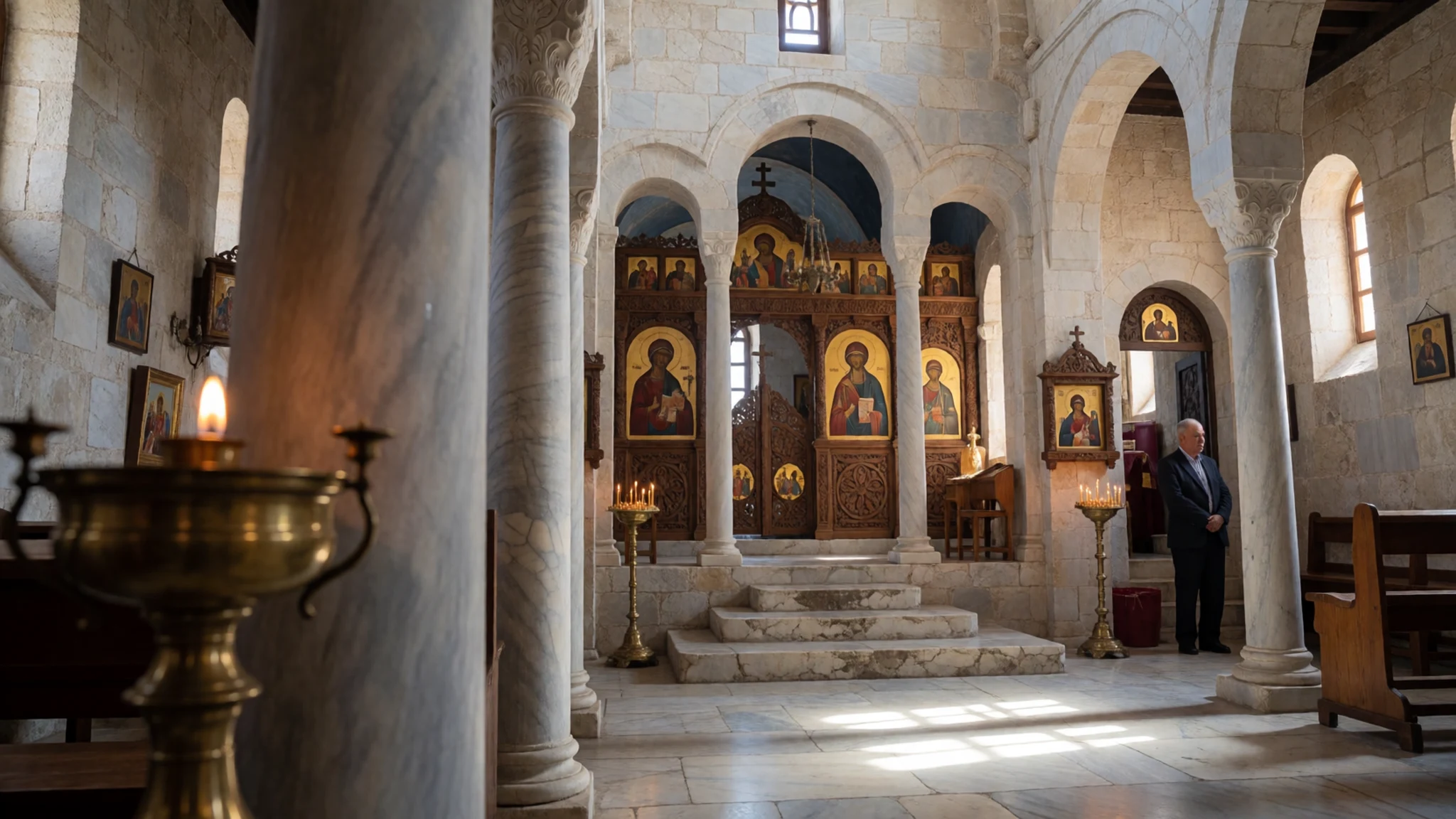
- Parikia old town and waterfront — Parikia
Behind the harbour front of tavernas lies a maze of narrow lanes lined with small shops, whitewashed houses and chapels. It is easy to get lost, which is half the pleasure. Come in the early evening, when the heat eases and the lanes fill with strollers.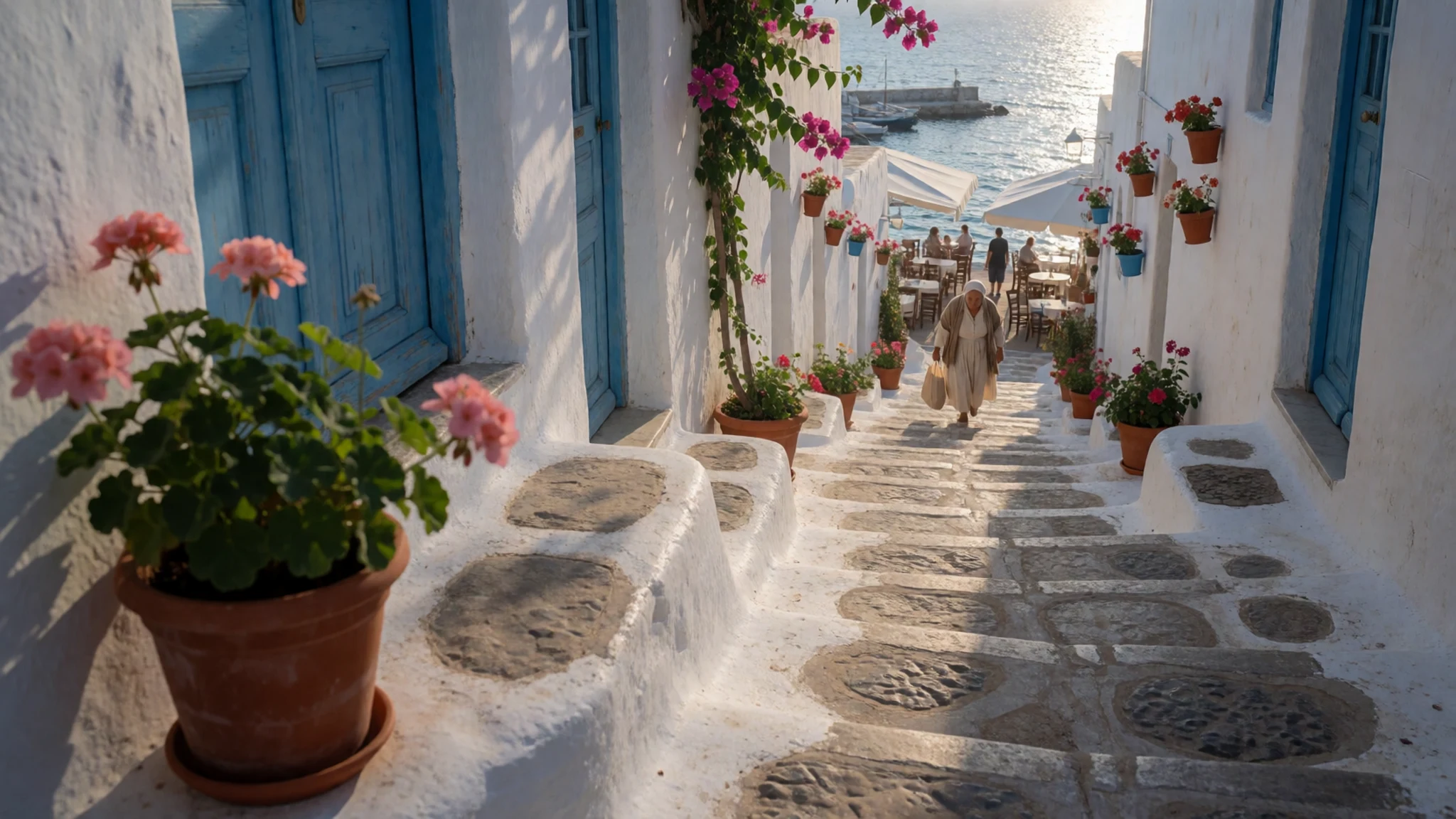
- Naoussa harbour and Venetian castle — Naoussa
Naoussa's small fishing harbour is overlooked by the remains of a fifteenth-century Venetian castle, built under the Sommaripa family. Part of it is half-sunk beneath the water, which makes it a striking sight. Sit at a harbourside ouzeri in the evening and watch the boats come in.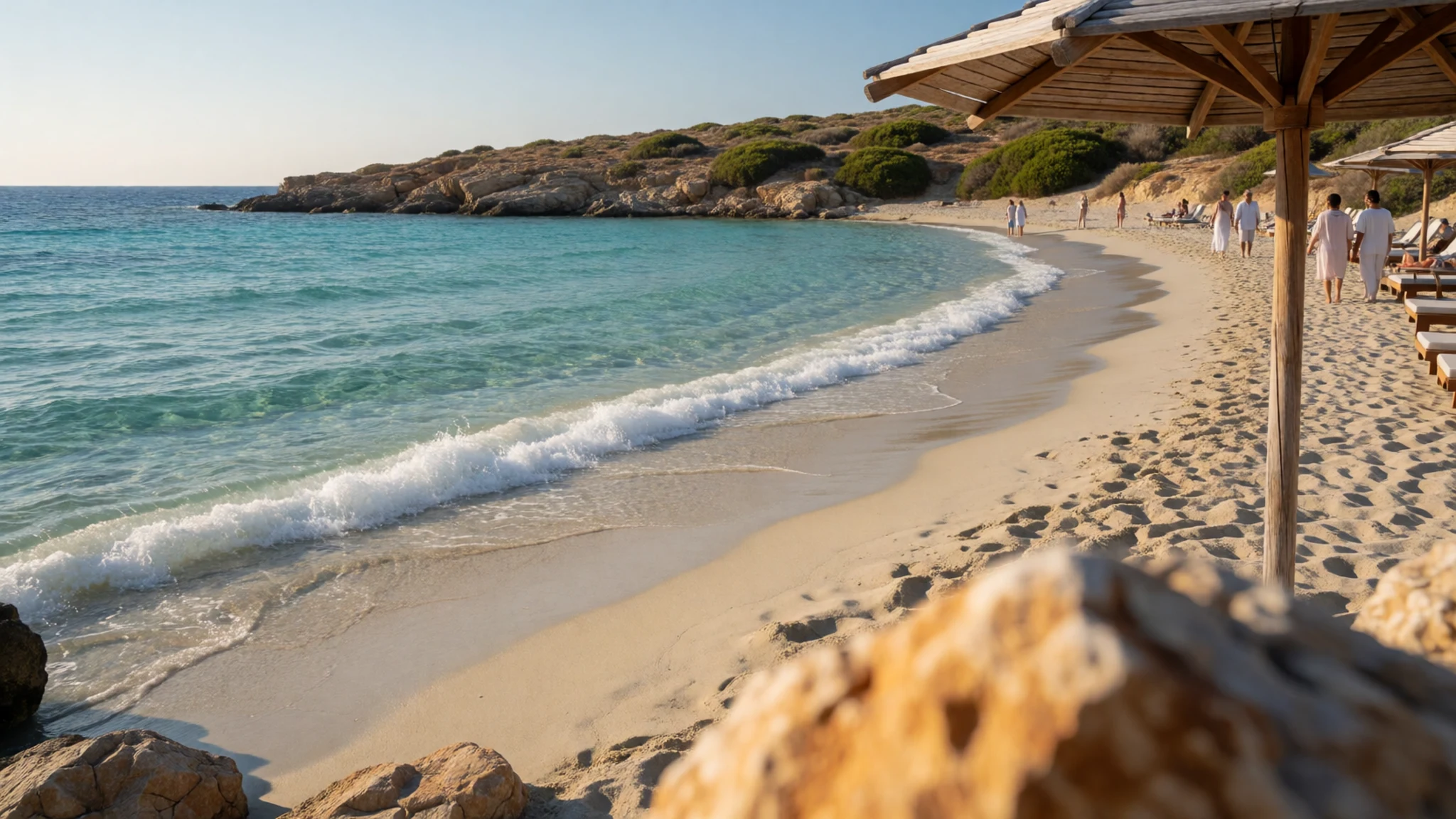
- Lefkes and the Byzantine Route — Lefkes
Lefkes is a hill village in the middle of the island, known for its pretty alleys and tavernas. From here a waymarked old stone path, the Byzantine Route, leads downhill to Prodromos. It is a gentle walk, best done in the morning or late afternoon, with water and a hat.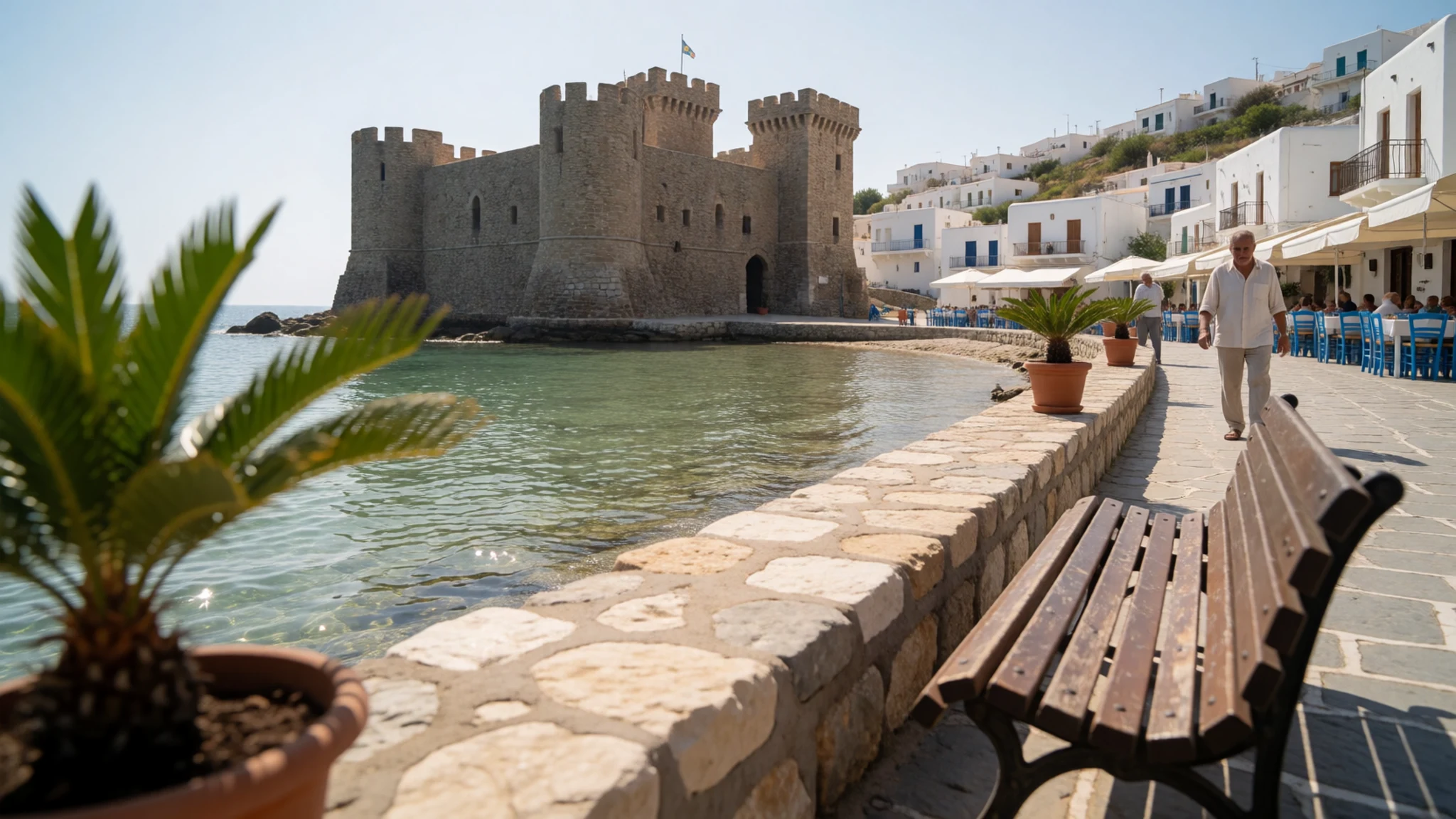
- Dryos and the east-coast beaches — East coast
The eastern coast around Dryos has the beaches called Golden Beach and New Golden Beach, popular with wind and kitesurfers. Windsurfing championships have been held here. Even if you do not surf, the wide sand is good for watching, and the wind makes midsummer heat easier to bear.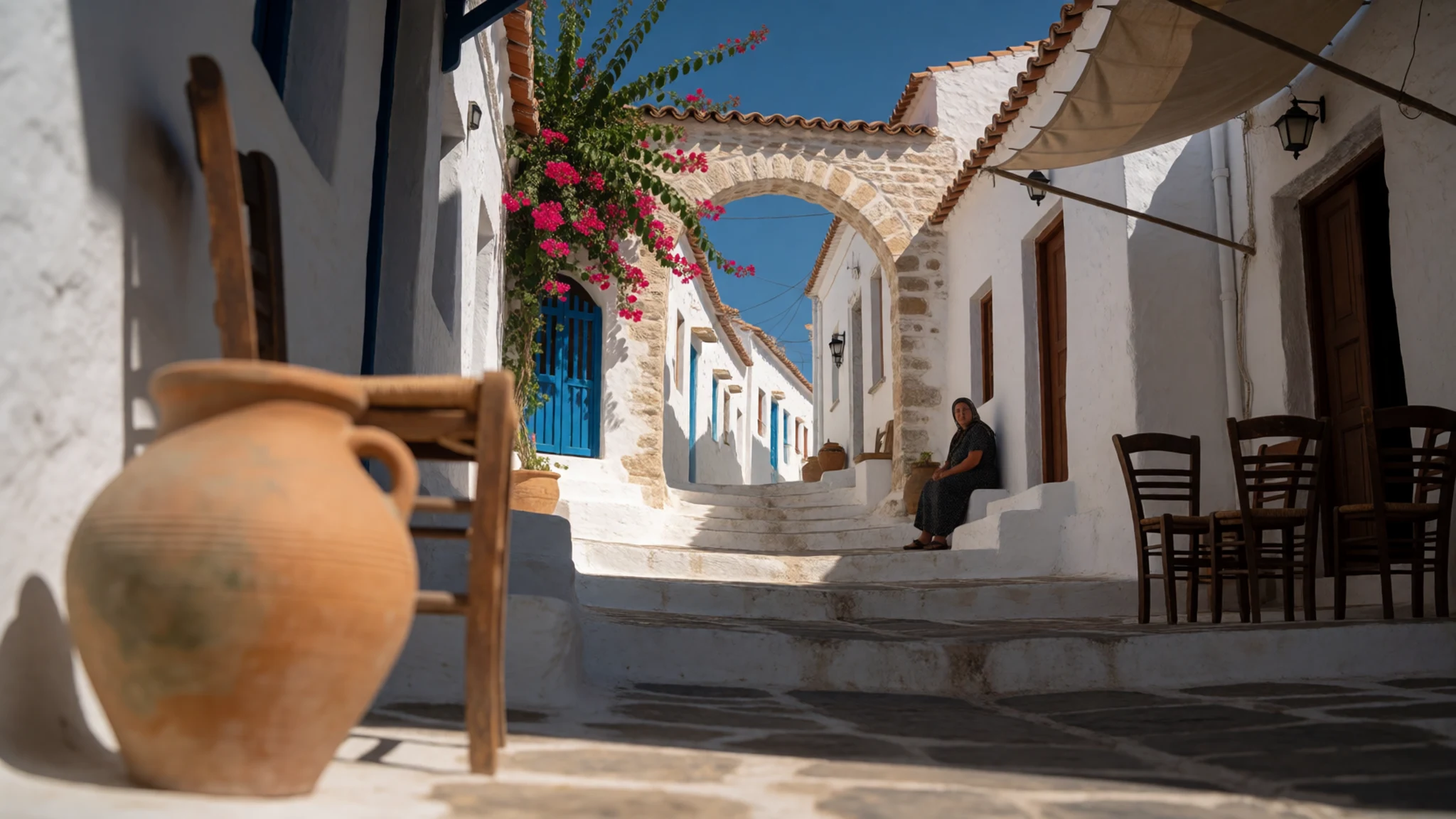
- Alyki — South-west coast
Alyki is a quiet spot on the south-west coast, reached by road from Parikia and the airport side of the island. It suits a slow afternoon of swimming and a seaside meal. Bring shade, since facilities are limited, and plan transport back before dark.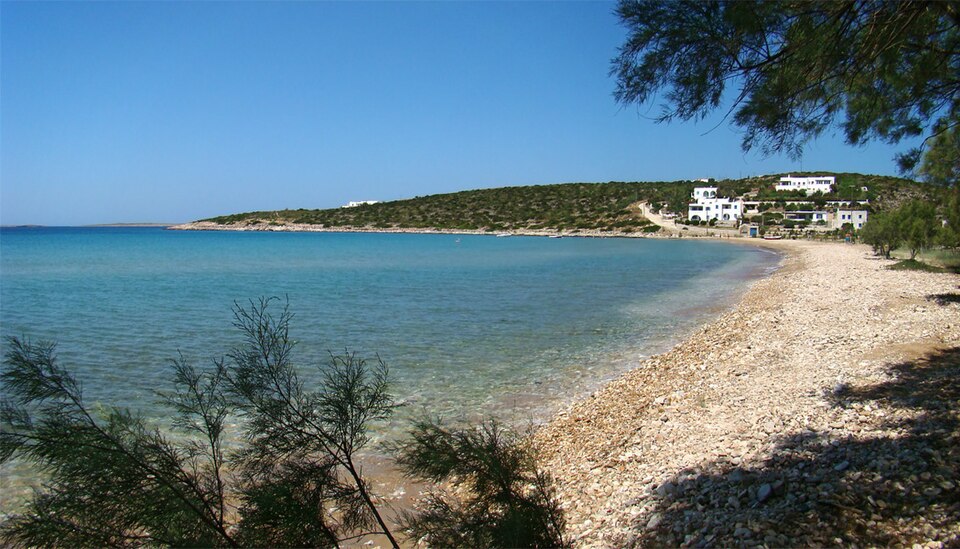
Culture
Paros is a Greek Orthodox island, and faith shapes the rhythm of the year more than the beach crowds suggest. Small whitewashed chapels stand on hilltops, beside roads and on the edges of villages, many belonging to a single family. Each village keeps a patron saint's day, when the church fills, there is music, and food is shared outdoors. The largest festivals fall around the Dormition of the Virgin in mid-August, when Parikia's great church becomes the focus of the island.
Life is outdoors and sociable. Evenings begin late, and a meal of shared plates in a taverna can run for hours. Coffee is taken slowly, often a frappé or a Greek coffee, and the afternoon rest is real in summer, when shops may close for part of the day.
The island's marble is part of its identity, and local craftspeople still work stone, while weaving, pottery and olive-based products appear in village shops. Surfing and sailing have added a younger, international layer, particularly on the east coast.
Greek is the main language, but English is widely spoken in the tourist areas. A few words of Greek, such as kalimera for good morning and efharisto for thank you, are always appreciated.
When you visit a church or chapel, cover your shoulders and knees, speak quietly, and ask before photographing anyone at prayer.
What to wear
Traditional dress on Paros belonged to the wider Cycladic pattern: women's skirts and embroidered bodices in wool, linen and cotton, with headscarves, and men's dark breeches with sashes and waistcoats. Hand-woven cloth was made at home on looms, and some weaving continues today as a craft. These costumes now appear mainly at festivals, in dance groups and at folklore events, especially on saint's days and in summer celebrations.
Day to day, people on Paros dress for the heat and the sea. Locals wear light cotton and linen, simple sandals and sun hats, and in the evening smarter casual clothes for dinner in the harbour towns. Fishermen and farmers still favour practical work clothes. Surf and beach wear is common on the east coast, while Naoussa has a more fashionable, dressed-up evening crowd.
Visitors should pack light, breathable fabrics, a wide-brimmed hat, sunglasses and high-factor sun cream, since summer sun is strong and shade is scarce on beaches. Bring a light layer for the wind, which can be cool in spring, autumn and on ferries. Comfortable flat sandals suit the marble-paved lanes, which become slippery, while trainers or walking shoes are better for the Byzantine Route. For churches and chapels, carry a scarf or shirt to cover shoulders, and wear something that covers the knees. Swimwear is fine on beaches but not in villages or churches.
What to eat
- Gouna — Ouzeri around Naoussa harbour
Gouna is sun-dried mackerel, a Paros speciality. It is grilled or served with olive oil, and has a strong, salty flavour. Order it as a starter to share with bread and a glass of ouzo.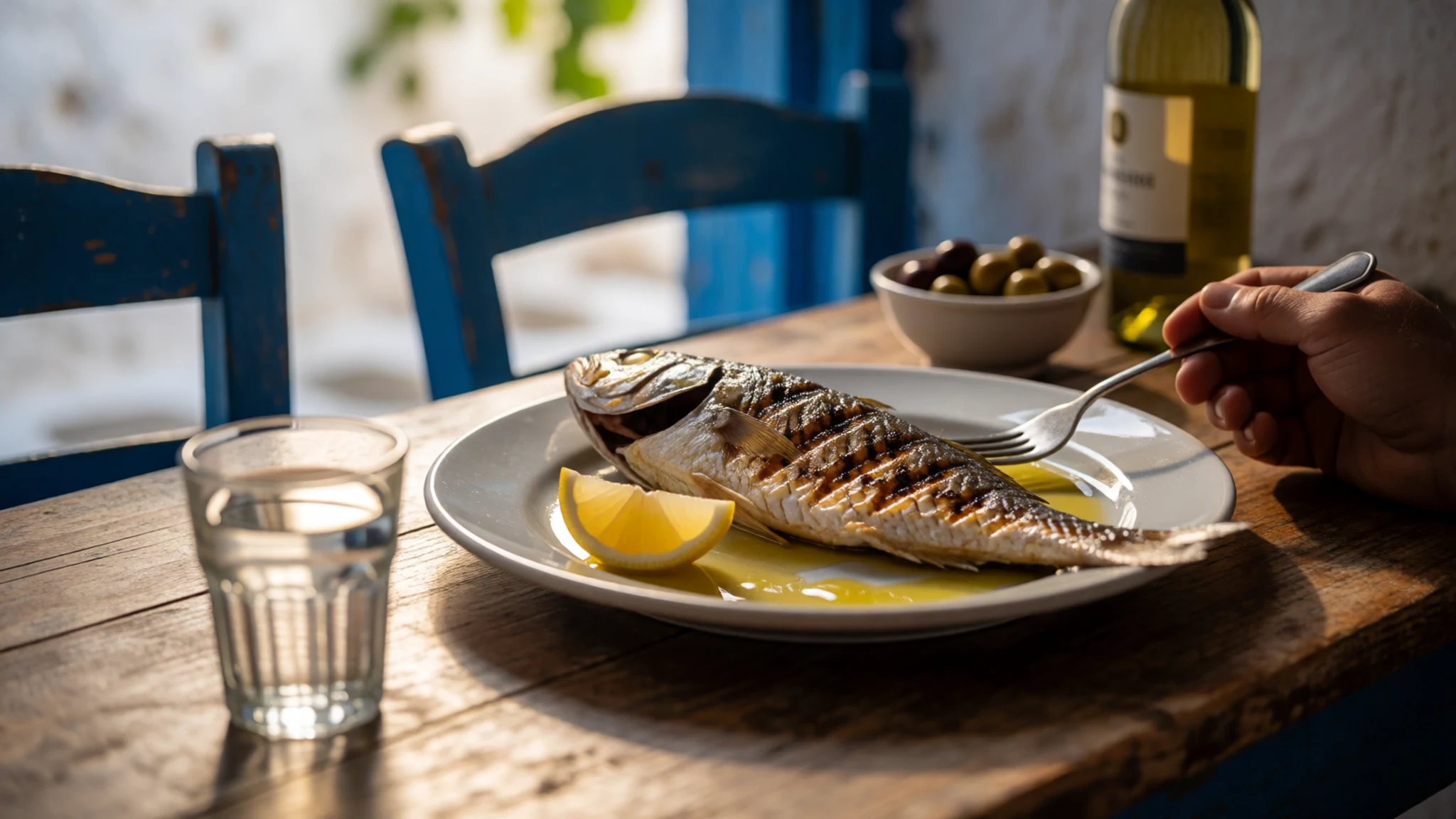
- Octopus in vinegar — Ouzeri in Naoussa
Octopus is cooked until tender, then dressed in vinegar and olive oil and served cold as a meze. It is typically eaten alongside ouzo. Look for it on the menu at harbourside ouzeria, where the octopus is often hung to dry in the sun.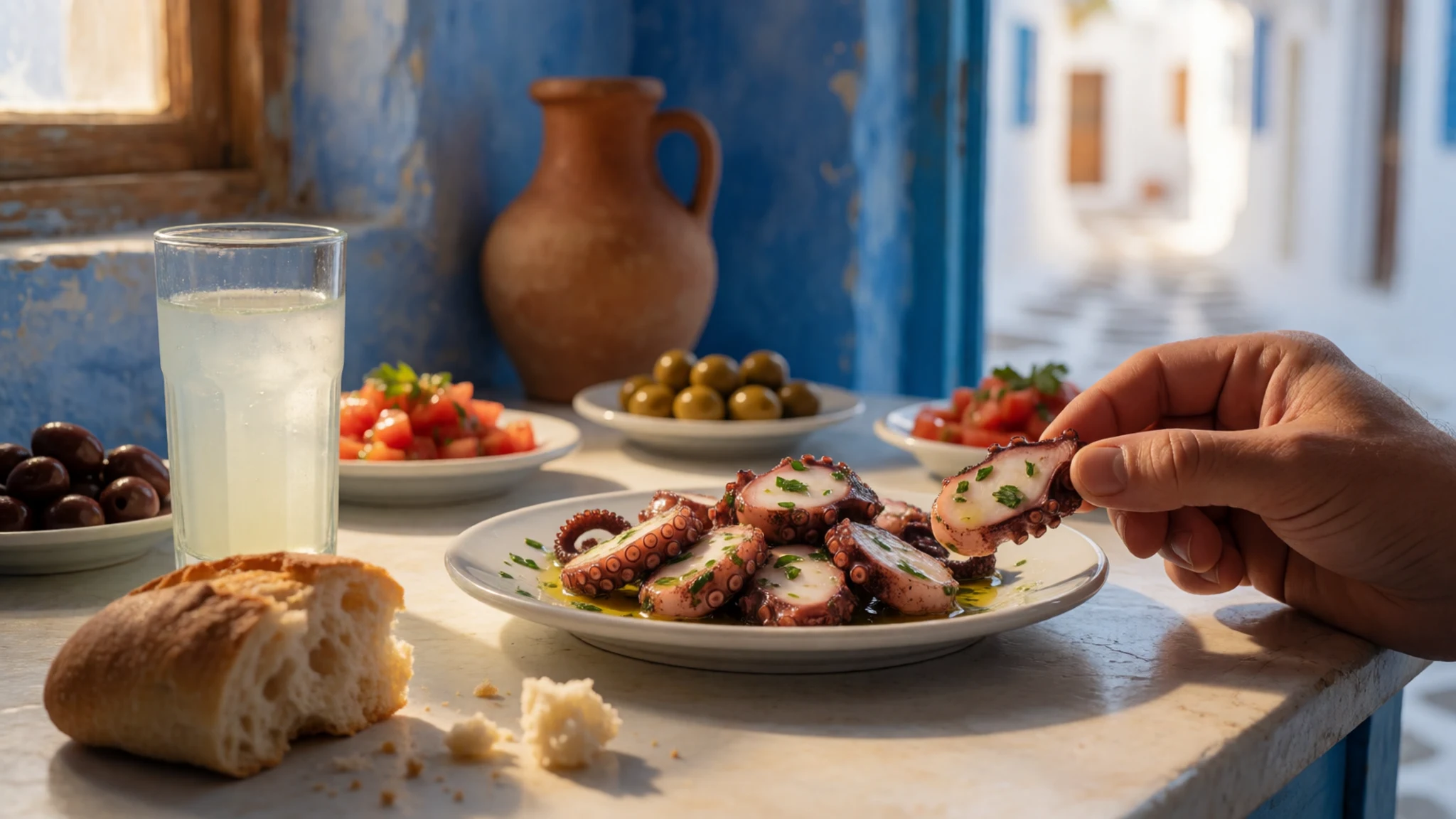
- Fresh grilled fish — Seafront tavernas in Parikia
Grilled whole fish, served with lemon and olive oil, is a staple of seaside tavernas. The catch changes daily, and prices are usually by weight, so ask before ordering. Pair it with a simple salad and local white wine. - Greek salad and local cheeses — Village tavernas in Lefkes
A village salad of tomato, cucumber, olives and feta is the default starter, often with local goat's cheese or soft cheeses from the islands. The tomatoes are best in summer. Eat it with warm bread to soak up the olive oil. - Meze plates — Tavernas in the old town of Parikia
Many island meals are built from small shared dishes: fried courgette, dips, stuffed vine leaves, grilled meats and seafood. Order several at once and let the table share. This is the easiest way to taste a range of local cooking.
Plan it
Best time. May–June and September–October: warm and sunny with the sea warm enough to swim, and fewer crowds than July–August, when it is hot, busy and the meltemi wind can be strong.
How long. 3–4
Getting there. Paros has an airport with a daily service from Athens, which takes under an hour, and in season there are flights from Thessaloniki. Most visitors come by ferry or high-speed catamaran from Piraeus, Rafina, other Cyclades or Heraklion; Parikia is the main port. Check current timetables with the operators.
Budget. mid
Tips
- Book ferries and accommodation ahead for July and August
- Know where you are staying before you arrive at the port, which can be chaotic at night or in high wind
- Be careful hiring motorbikes or quad bikes: check the insurance terms and photograph any damage before riding
- Carry some cash for small tavernas and village shops
- Take water and a hat for walks such as the Byzantine Route
Etiquette
- Cover shoulders and knees in churches and chapels
- Ask before photographing people, especially at religious events
- Keep beachwear to the beach and sea front
Sources
- Wikidata Q201272 (CC0)
- Wikipedia: Paros (rev 1378764262) (CC BY-SA 4.0)
- Wikivoyage: Paros (rev 5413971) (CC BY-SA 4.0)
- Alyki, Paros — Tango7174 (CC BY-SA 4.0)
- Locator map, Paros municipality — Pitichinaccio (CC BY 3.0)
- Church of Zoodohos Pigi, Parikia — Tango7174 (CC BY-SA 2.0)
- Buondelmonti, Liber Insularum Archipelagi (1420) (Public domain)
- Panoramic view over the bay of Parikia — Targaryen (CC BY 3.0)
- Panagia Ekatontapiliani — Geraki (CC BY-SA 3.0 gr)
- Hafen von Parikia — Olaf Tausch (CC BY 3.0)
- Gasse in Naoussa — Bgabel (CC BY-SA 2.5)


