Park City
Park City, United States
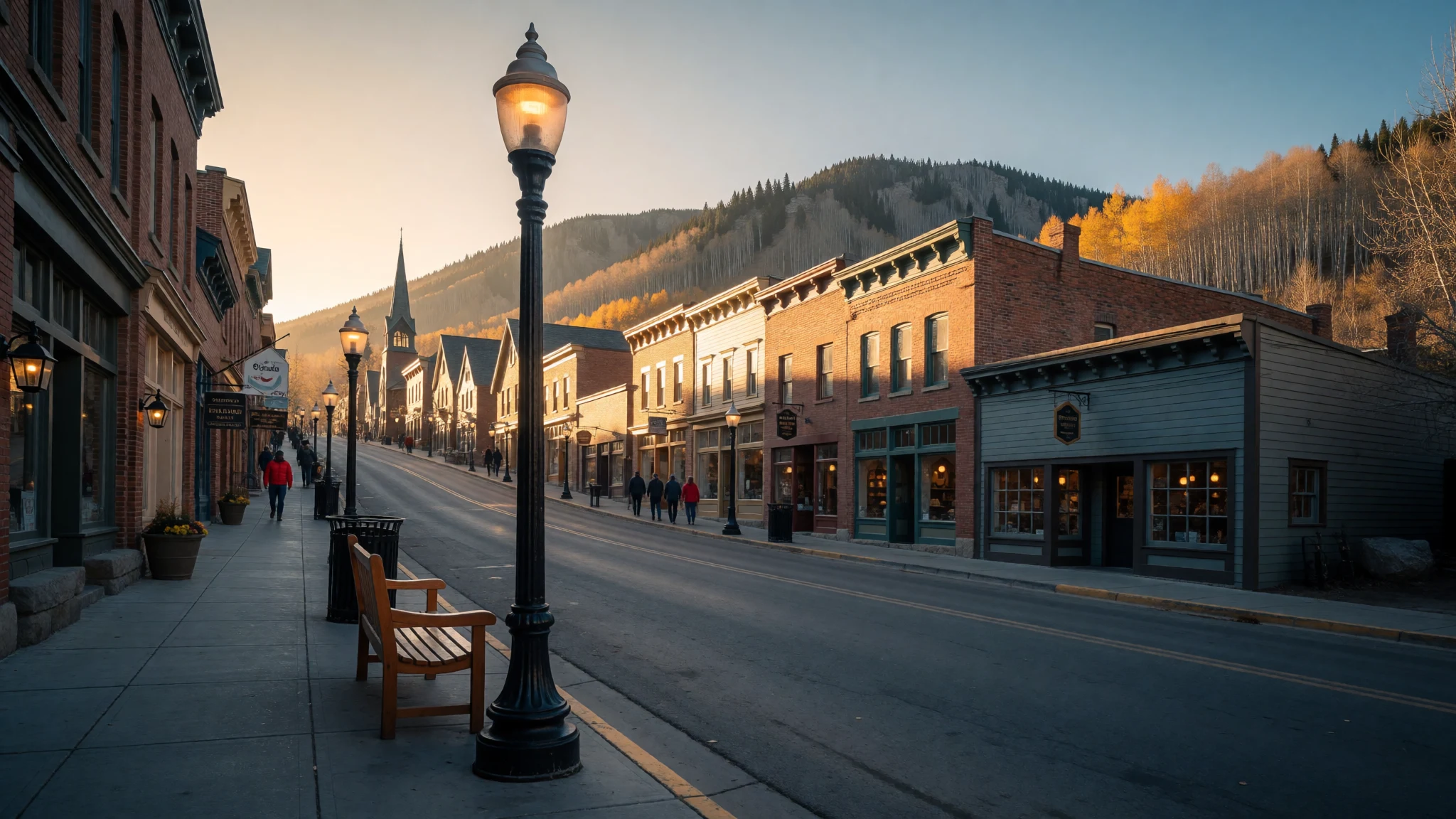
Park City is a small Utah mining town turned ski and festival resort, where old silver-era streets sit beneath Olympic slopes.
The place
Park City is a mountain town in Utah, sitting at 2,134 m in the Wasatch Back, the quieter eastern side of the range. Most of it lies in Summit County, and a few parts reach into Wasatch County. The 2020 census counted 8,396 residents, yet visitors regularly outnumber them, and the town's mood changes with the calendar: crowded and expensive in ski season, calmer in spring and autumn, busy again with walkers and cyclists in summer. Salt Lake City is about 51 km to the north-west, reached along Interstate 80 through Parley's Canyon, so the town works as a day trip from the city as well as a base of its own. The streets sit in a high basin, with the old Main Street at the bottom and lifts rising almost from its edge. Two large resorts share the slopes: Deer Valley, and Park City Mountain, which has absorbed Canyons Village. A smaller action-sports centre, Woodward Park City, adds to the mix. Both big resorts hosted skiing and snowboarding at the 2002 Winter Olympics and are expected to do so again in 2034. The altitude is real: visitors from sea level often feel breathless and thirsty for the first day, and the sun is strong even when the air is cold. Beyond the ski season, a wide network of hiking and biking trails starts almost at the doorstep, which is why the town no longer feels like a winter-only place.
Its story
Park City's story runs from grazing land to silver camp to ski town. Early Mormon pioneers crossed this country on their way to found Salt Lake City, and one of their leaders, Parley P. Pratt, explored the canyon in 1848. A charter for a toll road followed, and the route was open by 1849. The high basin at the head of the canyon offered good pasture, so a few families stayed. The settlement was called Parley's Park City, a name trimmed to Park City when the town was incorporated in 1884; Wikidata gives 1869 as its founding year. Silver changed everything. Soldiers under Colonel Patrick E. Connor, who had been moved here from California, were invited to prospect, and finds of silver, gold and lead in the 1860s drew crowds who set up camps across the slopes. The Ontario silver mine, found by Herman Buden in 1872 and soon passing to George Hearst's side, became the first major producer. The boom did not last for ever: when the mines shut, the population fell. The town recovered by turning to visitors, first skiers, then festival crowds after the Sundance Film Festival began here in 1978, then the world's attention during the 2002 Winter Olympics. Mining-era buildings still line Main Street, and traces of the old workings remain on the hillsides above.
What to see
- Main Street and the Egyptian Theatre — Historic downtown
Main Street is the historic spine of Park City, a sloping row of mining-era frontages now filled with galleries, shops, bars and restaurants. Partway along, the Egyptian Theatre opened in 1926 and still stages musicals, plays and concerts; it also served as a screening venue during Sundance. Walk it early for quiet, or on a winter evening when the lights are on.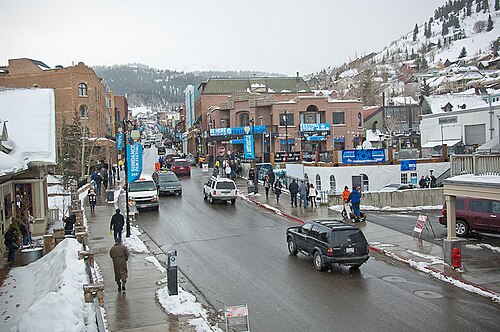
- Park City Mountain and the Town Lift — Lower Main Street and resort base
Park City Mountain, joined with Canyons Village, is one of the two big ski resorts here. The Town Lift rises from within the town itself, so skiers and snowboarders can reach the slopes without a car. In summer the same ground is used by walkers and mountain bikers. Passes and lift arrangements change each season, so check the resort's own website.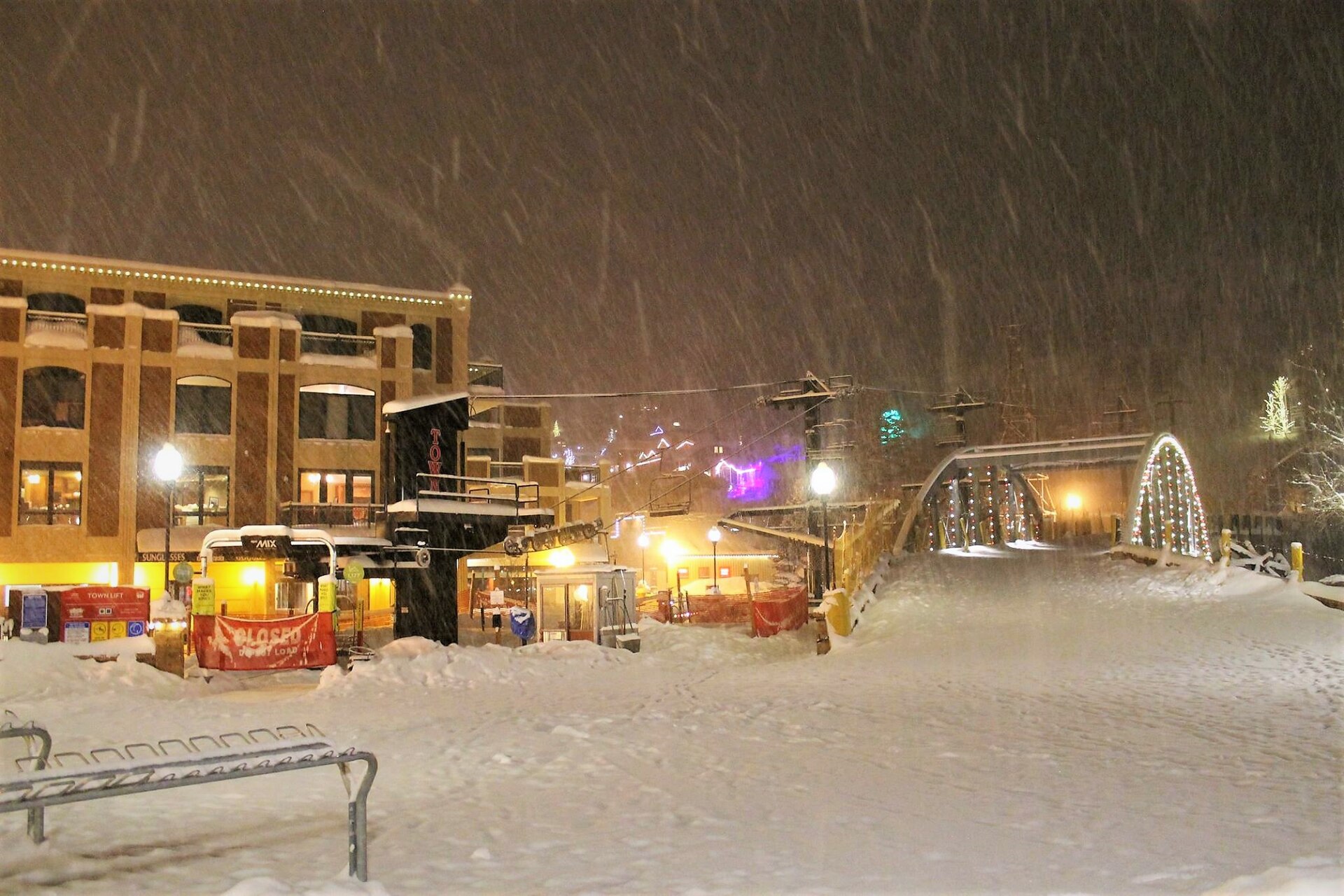
- Utah Olympic Park — A few kilometres north of the centre
Utah Olympic Park is a legacy of the 2002 Winter Olympics. It is home to the Alf Engen Ski Museum, which tells the story of skiing in the region, and a museum about the 2002 Games. Visitors can look over the jumping and sliding venues and see how a mining town became a winter-sports centre. Check opening arrangements before going. - McPolin Farm — North-west edge of town
McPolin Farm sits on open land just north-west of the centre, with a large historic barn that many visitors photograph from the adjoining trail. It is a reminder that alongside the mines, this basin was grazing country. Summer evenings give soft light, and a snowy morning is quieter and just as photogenic. - Kimball Art Centre — Near the top of Main Street
The Kimball Art Centre is a non-profit arts organisation that runs exhibitions, classes and events through the year. It is a good wet-weather or rest-day stop between slopes and trails. The same organisation is linked with the three-day Kimball Arts Festival, which brings art, music and food to town. Check the website for current shows.
Culture
Park City's culture blends mining heritage, outdoor sport and the arts. The old miners' town still shows in its timber cabins and historic Main Street buildings, while the newer layer comes from skiing, snowboarding and the Olympic years. The arts matter more here than the town's size suggests. From 1978 until 2026 Park City hosted the Sundance Film Festival, with Main Street as its social centre and screenings spread across several venues in and around town. After 2026 the festival moves to Boulder, Colorado, though the Sundance Institute keeps its Utah office in Park City, so the film connection has not vanished. The three-day Kimball Arts Festival brings exhibitions, music and food to the streets, and the Egyptian Theatre's company stages plays and musicals through the year. Locals tend to be active, proud of the place and used to guests; many work in the resorts, and visitors share the town with people who live and raise families here. Mornings often begin on trails or lifts, and evenings in pubs and restaurants. Because visitors can easily outnumber residents, patience with queues, traffic and parking goes a long way. On shared trails and ski runs, give way to people moving uphill or ahead of you, and ask before photographing anyone's face on Main Street.
What to wear
Park City has no formal regional costume; the nearest thing to a traditional wardrobe comes from its mining and ranching past. Working clothes then were hard-wearing: wool, canvas, denim and leather boots, with brimmed hats against sun and snow. That Western working look survives in jeans, flannel shirts and boots, and in the souvenir shops. Everyday dress today is shaped by weather and sport. In winter, locals wear insulated jackets, beanies, wool socks and snow boots, often straight from the slopes onto Main Street. Evenings are casual, and smart jeans with a good coat suit almost any restaurant. In summer, trail shoes, shorts, light layers and caps are normal. A visitor should plan in layers. In winter, bring thermal base layers, a waterproof shell, gloves, warm socks, sunglasses or goggles, and boots with real grip for icy pavements. In summer, pack a fleece or light jacket for cool mornings and evenings, a hat and sun cream, because the sun is strong at this altitude, and sturdy shoes for trails. There are no religious dress codes in town; smarter clothes are only needed for a private or ceremonial event. During festival weeks, dress for long spells standing outdoors in the cold.
What to eat
- Pizza — Casual pizza places around Main Street and Kimball Junction
Pizza is the dependable cheap meal in Park City, served by the slice or the pie at casual eateries that fill up after skiing. Order it with a salad. Families and groups favour it because portions are generous and nobody needs a reservation far ahead. - Pub burger with local beer — Brewpubs on and around Main Street
A pub burger or similar hearty plate with a locally brewed beer is a standard end to a day on the slopes or trails. Brewpubs here pair a bar with a full restaurant, and prices are reasonable by resort standards. Ask staff which beers were brewed nearby. - Mountain breakfast — Cafés on Main Street and at the resort bases
A big breakfast of eggs, potatoes, pancakes and coffee sets up a day at altitude. Cafés along Main Street and near the lifts open early for skiers and hikers, and queues build on weekends and holidays, so go before the rush. - Chilli, soup and hot chocolate — Lodges at the base of the lifts and on the mountain
Warm, filling bowls of chilli or soup, plus hot chocolate, are the practical winter lunch. Lodges at the base of the lifts and on the slopes serve them to cold skiers. Expect resort pricing and busy tables around midday. - Big salad with ranch dressing — Casual restaurants and pizza places across town
Ranch dressing, a creamy, herby sauce, is a very American habit that turns up with salads, pizza and fries. A large salad with ranch is a common side at casual restaurants here, and a lighter choice after a heavy day of exercise.
Plan it
Best time. January to March for reliable snow, though this is also the busiest and most expensive period; July to September for hiking and biking, with lodging that is much cheaper than in ski season. Spring and late autumn are quiet, and some lifts and kitchens close between seasons.
How long. 3–4
Getting there. Fly to Salt Lake City International Airport, then drive east on Interstate 80 and take exit 145 for Kimball Junction towards Park City. Without a car, High Valley Transit's bus 107 runs from Salt Lake Central to Kimball Junction, and local transport covers the last leg into town.
Budget. high
Tips
- Book lodging far ahead for winter and especially for festival periods, when rooms across the wider area can sell out
- In summer, some ski lodges and condominiums run with few staff and may use a lockbox for keys, so confirm arrival arrangements
- Take it easy on the first day at 2,134 m and drink plenty of water
- Check each resort's official website for passes and lift operations, and the city's site at https://www.parkcity.org/ for local information
- Use the Town Lift and local buses to avoid parking problems in the centre
Etiquette
- Give way to uphill walkers and cyclists on shared trails
- Keep noise down in residential streets at night
- Ask before photographing people on Main Street
Nearby
Sources
- Wikidata Q482993 (CC0)
- Wikipedia: Park City, Utah (rev 1386552223) (CC BY-SA 4.0)
- Wikivoyage: Park City (Utah) (rev 5413948) (CC BY-SA 4.0)
- Overlooking Park City, Utah — PeteysHead (CC BY-SA 4.0)
- Silver King Mining Company mine shaft — Historic American Engineering Record, Jack E. Boucher (Public domain)
- Park City Utah Historical Wood Cabin — Don Ramey Logan (CC BY 4.0)
- Miners Hospital Park City Utah — Don Ramey Logan (CC BY 4.0)
- Main Street in Park City (Sundance Film Festival 2011) — The Cosmopolitan of Las Vegas (CC BY-SA 2.0)
- City Hall, Park City, Utah — Don Ramey Logan (CC BY-SA 4.0)
- Town Lift, Park City 2017 — Richardmouser (CC BY-SA 4.0)
- Town Lift in the background, Park City, Utah — Farragutful (CC BY-SA 4.0)


