Pangandaran
Pangandaran, Indonesia
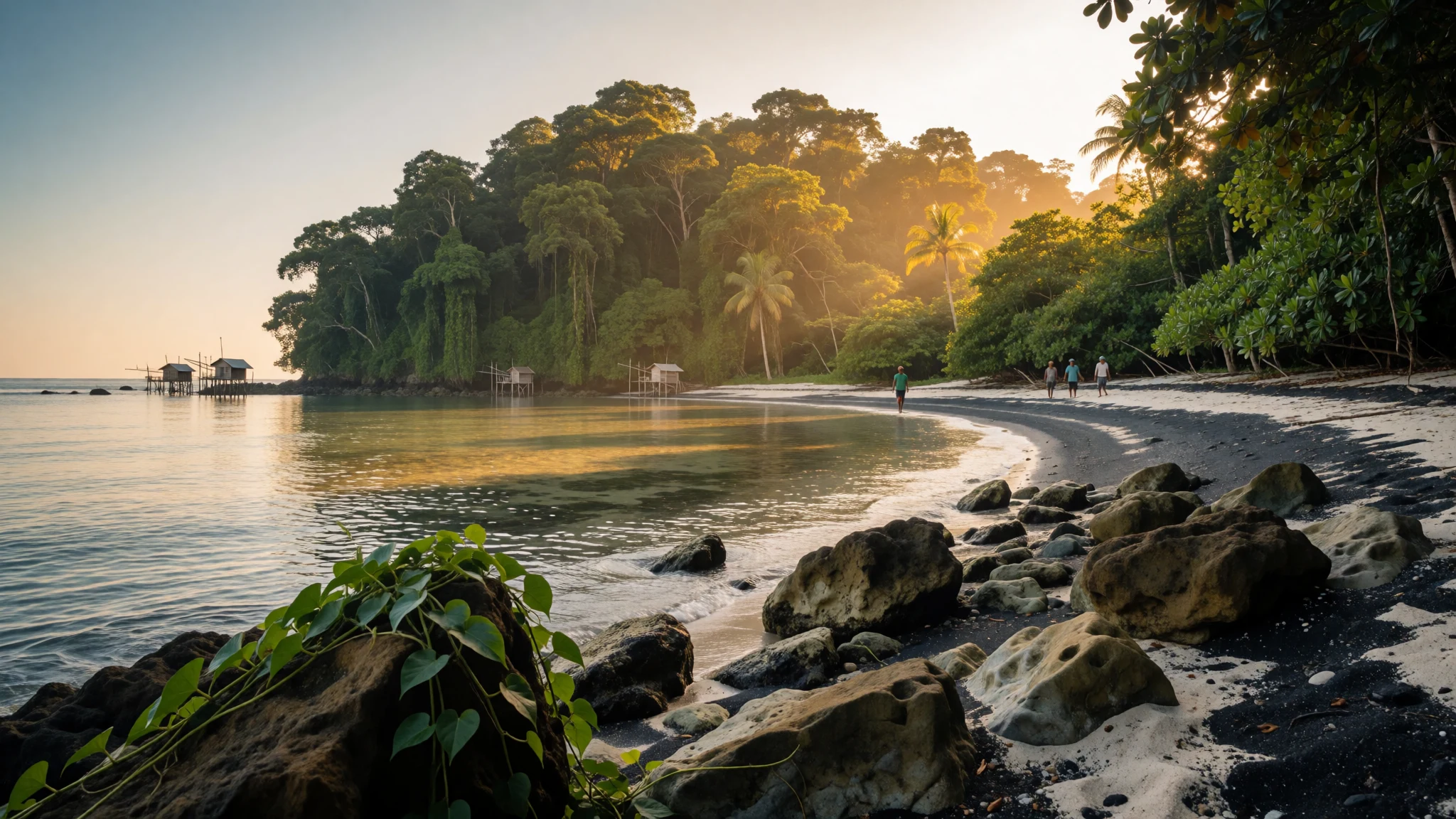
Pangandaran is a quiet black-sand town on Java's south coast, with surf, a forested reserve of macaques and river canyons nearby.
The place
Pangandaran sits on the southern coast of Java, in West Java province, only about 5 m above sea level. The town spreads across a narrow neck of land that joins the mainland to a forested peninsula, so it has a beach on two sides: a long stretch facing west, and another on the eastern side of the peninsula. The sand is dark rather than the white of postcard Indonesia, and the sea carries real surf, which is why surfers put the place on the map and why casual swimmers need to stay alert. Next to Bali, Pangandaran is calm. Most of its crowds are Indonesian families who arrive on national holidays and weekends, when the beach road fills with hawkers and rooms are scarce. On an ordinary weekday the pace drops: fishing boats rest on the sand, the market near the bus terminal does its morning trade, and homestays and small cafes stand in low buildings rather than towers. Beyond the town lie rice fields, villages and rivers cut through teak and palm, with smaller beaches best reached by moped. The climate is tropical rainforest, so heat and humidity are constant and rain can arrive in any month. Pangandaran suits people who want sea, simple food and a base for day trips. It suits less well anyone after polished resorts or a lively nightlife. The nearest airfield is small, so most visitors come by road.
Its story
Pangandaran's recent history turns on a single afternoon. On 17 July 2006 an undersea earthquake of magnitude 7.7 struck off the south coast of Java, and the tsunami that followed swept over the resort strip, reaching about half a kilometre inland. More than three hundred people from the town died. The shoreline is flat and low, with the sea a short walk from most guesthouses, so there was little high ground to climb and little time to reach it. The cause lies in the geology: south of Java, the floor of the Indian Ocean slides beneath the island, and that boundary can release enormous energy. The town rebuilt and visitors returned, though the disaster left marks. Near Karang Nini, one beach was reported to have been left uncleared in the years afterwards, with a lagoon sitting behind it. Much later, the local government moved the beach cafes and restaurants several kilometres west of their long-standing spot, a change noted in 2018. Today Pangandaran feels relaxed, but the memory is close beneath it. Anyone staying near the shore does well to ask the guesthouse where the nearest high ground is and how local warnings work, and to treat any strong, long shaking of the ground as a reason to move inland without waiting.
What to see
- Pananjung Pangandaran Nature Reserve — The peninsula south of the town
The reserve covers the forested peninsula, so a short walk from town leads under tall trees, past macaques and hornbills. A sandy beach inside the reserve allows snorkelling. Because the land is narrow, sunrise can be watched from the east side and sunset from the west.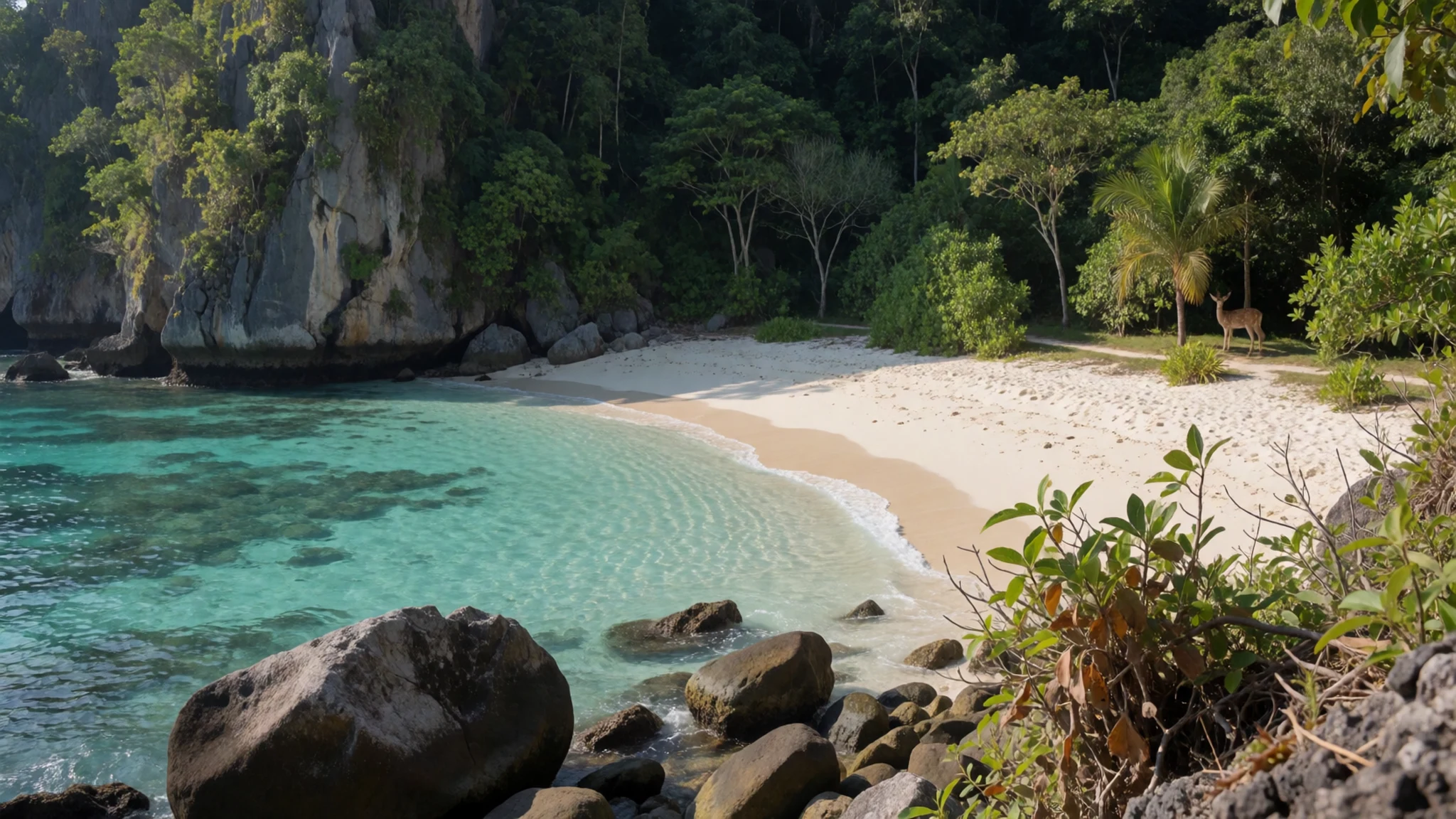
- Green Canyon — River valley west of town
Green Canyon is a river gorge walled by jungle, with big teak trees, palms, hanging vines and loud birdlife. Boats and guides run through it. It is popular with Indonesian visitors, so weekdays are calmer, and heavy rain can stop the trips altogether.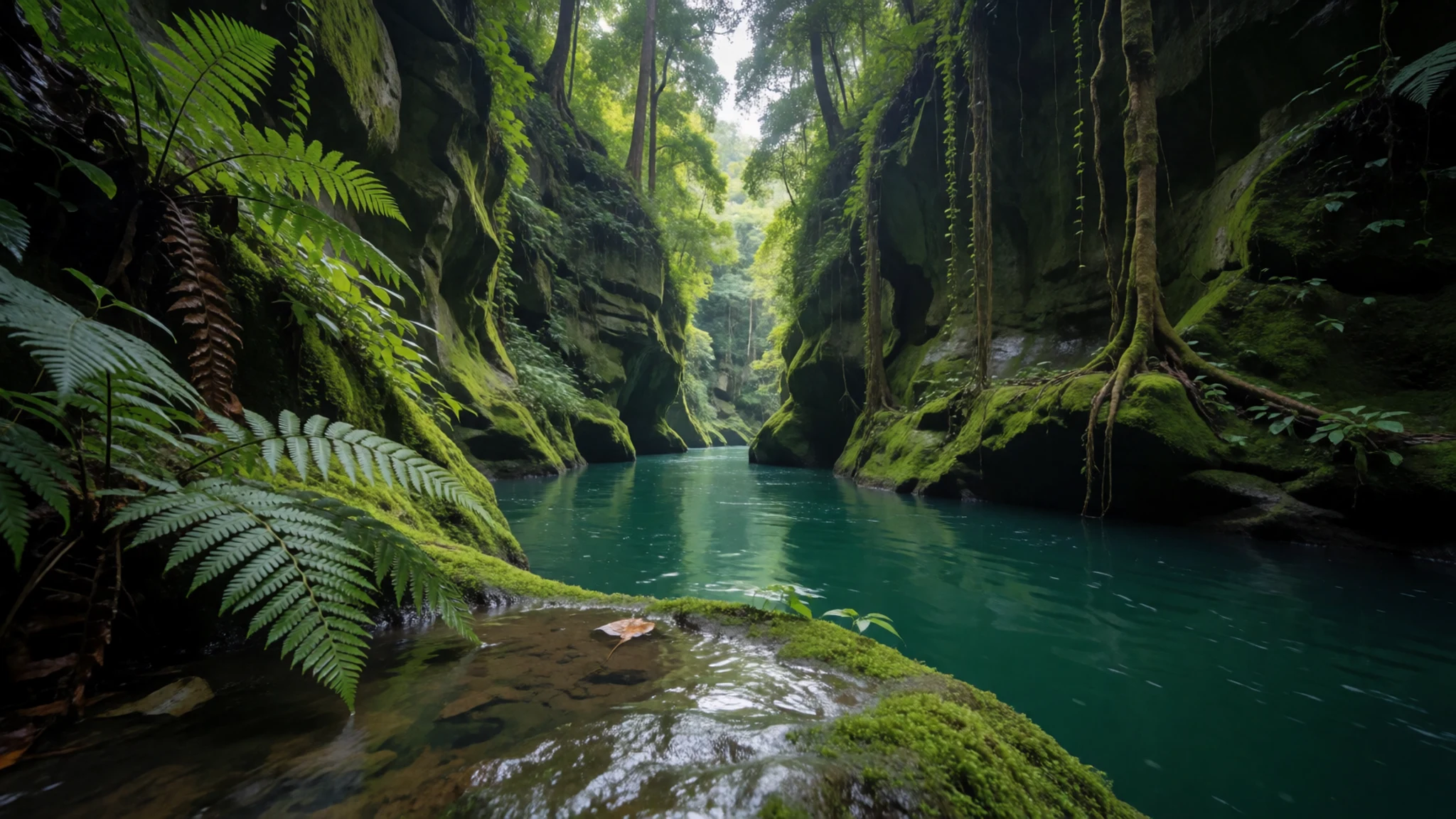
- Citumang and the second Green Canyon — Inland river valleys
Citumang, sometimes sold as Green Valley, offers body rafting down a clear, fairly gentle river, with waterfalls to jump from and a rope swing. A cave nearby is said to give lasting youth to anyone who drinks its drips. Weekends get busy; weekdays are quiet. Wear a life vest.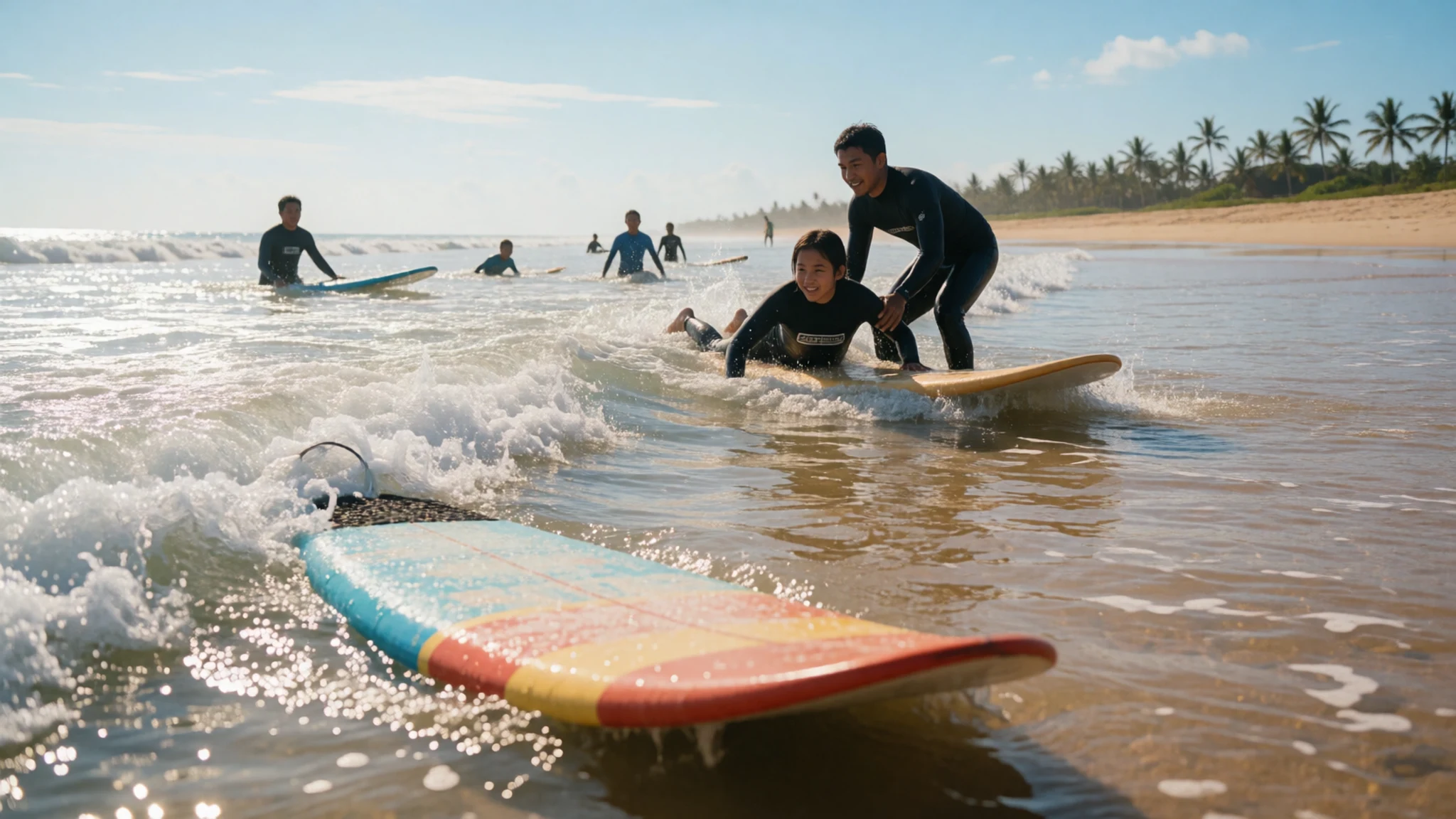
- Batu Karas — Fishing village and bay along the coast to the west
Batu Karas is a small village with a gentle surf break often recommended to beginners. The approach includes a bamboo bridge over a river, wide enough for traffic in both directions, which is a sight in itself. Hire a moped from Pangandaran and go early, before the afternoon heat.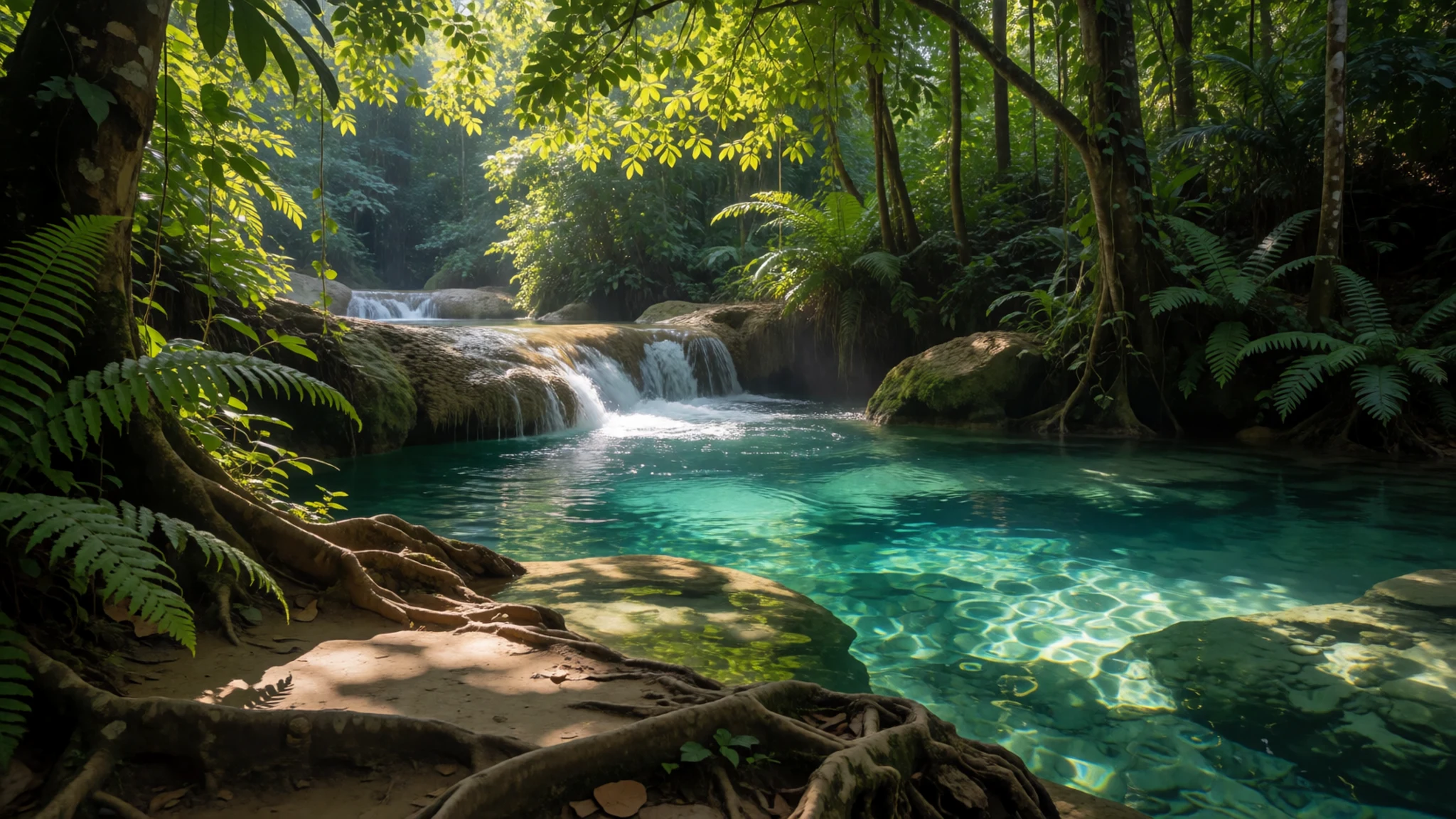
- Learning to surf on the main beach — Pangandaran beach, near the town centre
A surf school on the main beach teaches beginners, with an instructor staying close in the water. Waves here are lively and the current can pull, so lessons are a safer start than going out alone. Evenings suit a slow walk on the sand to watch the sun go down.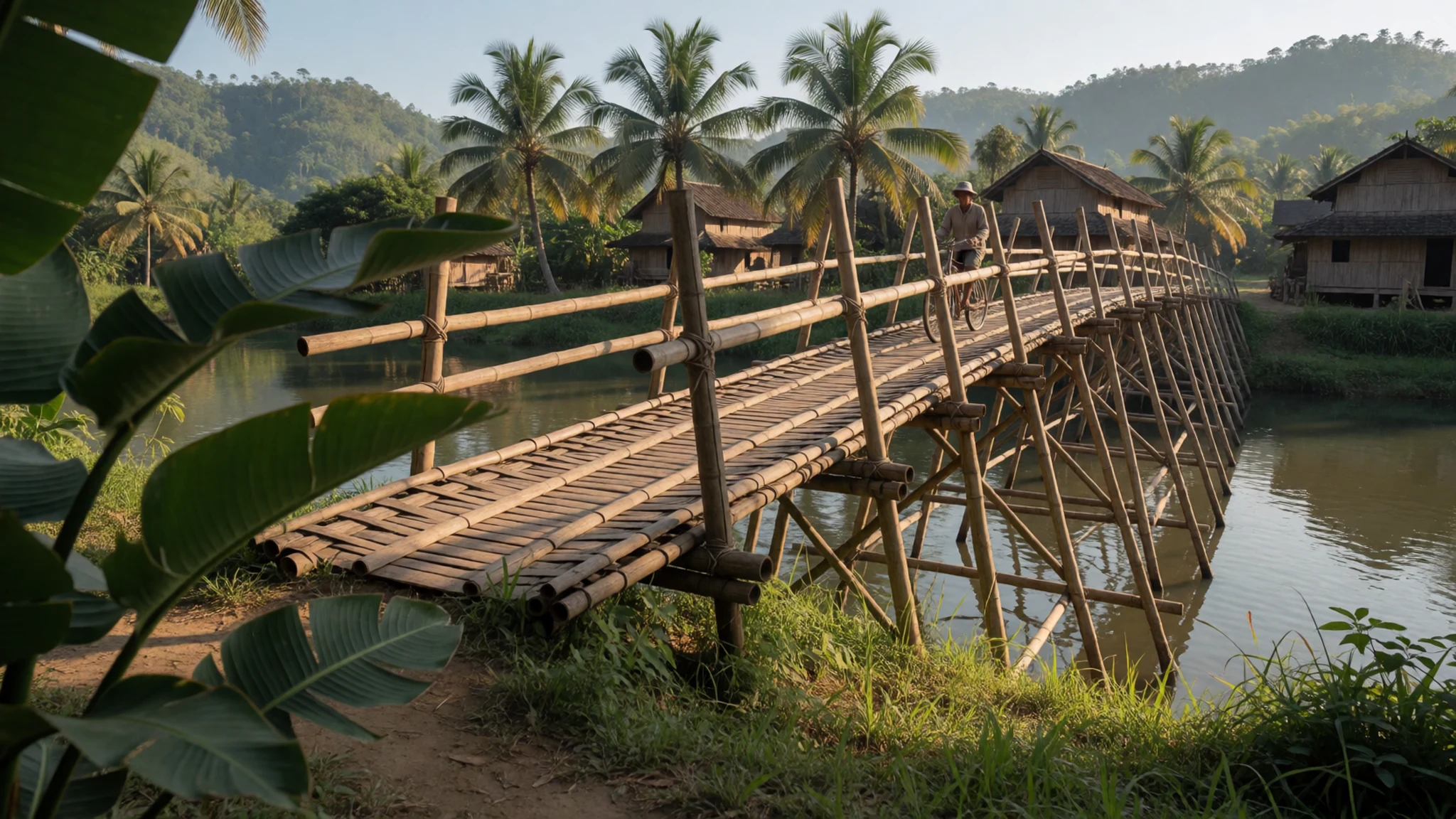
Culture
Pangandaran lies in the Sundanese part of Java, where the first language at home is usually Sundanese rather than Javanese, and Indonesian is used with visitors. Most people are Muslim, and daily life moves with the call to prayer, Friday midday prayers and the fasting month, when eating places may open later in the day. Fishing is the old economy of this coast, and fishing families have long marked the sea's importance with thanksgiving rituals, often called hajat laut, held in some years with offerings, processions and music. Like much of Java's south coast, the sea is also tied in local belief to Nyi Roro Kidul, the queen of the Southern Ocean, which is one reason some locals warn against wearing green into the surf. Sundanese music is easy to recognise: the bamboo angklung, soft flutes and the gamelan degung, an ensemble with a lighter sound than the heavier Central Javanese gamelan. Shadow-play with wooden rod puppets, called wayang golek, is a regional art form. On the beach, the mood is relaxed and tourists in swimwear are common, but villages, markets and mosques follow more conservative norms, and families visiting from Indonesian cities often swim in everyday clothes. Warm greetings, patience and a smile go a long way when buying or asking directions. Cover shoulders and knees when walking through villages or entering a mosque, take shoes off at any doorway where others have left theirs, and ask before photographing anyone.
What to wear
Traditional Sundanese dress centres on batik, cloth patterned by wax-resist dyeing on cotton, with workshops in nearby Ciamis and Tasikmalaya. Women wear the kebaya, a fitted lace or cotton blouse, over a wrapped batik skirt called a kain, with the hair often pinned in a bun. Men wear a loose black cotton shirt and trousers known as pangsi, sometimes with a batik headcloth, the iket. These outfits appear at weddings, school and cultural events, and on national days. Everyday dress is simpler. People wear T-shirts, long trousers or skirts, and sandals, with many women in a headscarf and men in a sarong and a black cap for prayers. Fishing families wear whatever protects from sun and salt, including wide hats. Batik shirts are still the standard smart-casual choice for formal occasions. Visitors should pack light cotton or linen for heat and humidity, with a rain jacket for sudden downpours. Swimwear suits the beach, but a shirt and shorts or a sarong over it is better in town, and shoulders and knees should be covered at mosques and in villages. Quick-dry clothes help for rafting and river trips. Sandals with a strap work for streets, while closed shoes with grip suit the reserve trails and wet rocks. A hat, sunglasses and a rash vest make sense for surfing in strong sun.
What to eat
- Ikan bakar, grilled fish — The fish market on the eastern side of town
Fresh fish arrives at the fish market each day. Diners pick their own from the counters, including fish, crab and prawns, and the stallholders grill it over coals with sweet soy and chilli sauce. It is usually served with rice and sambal.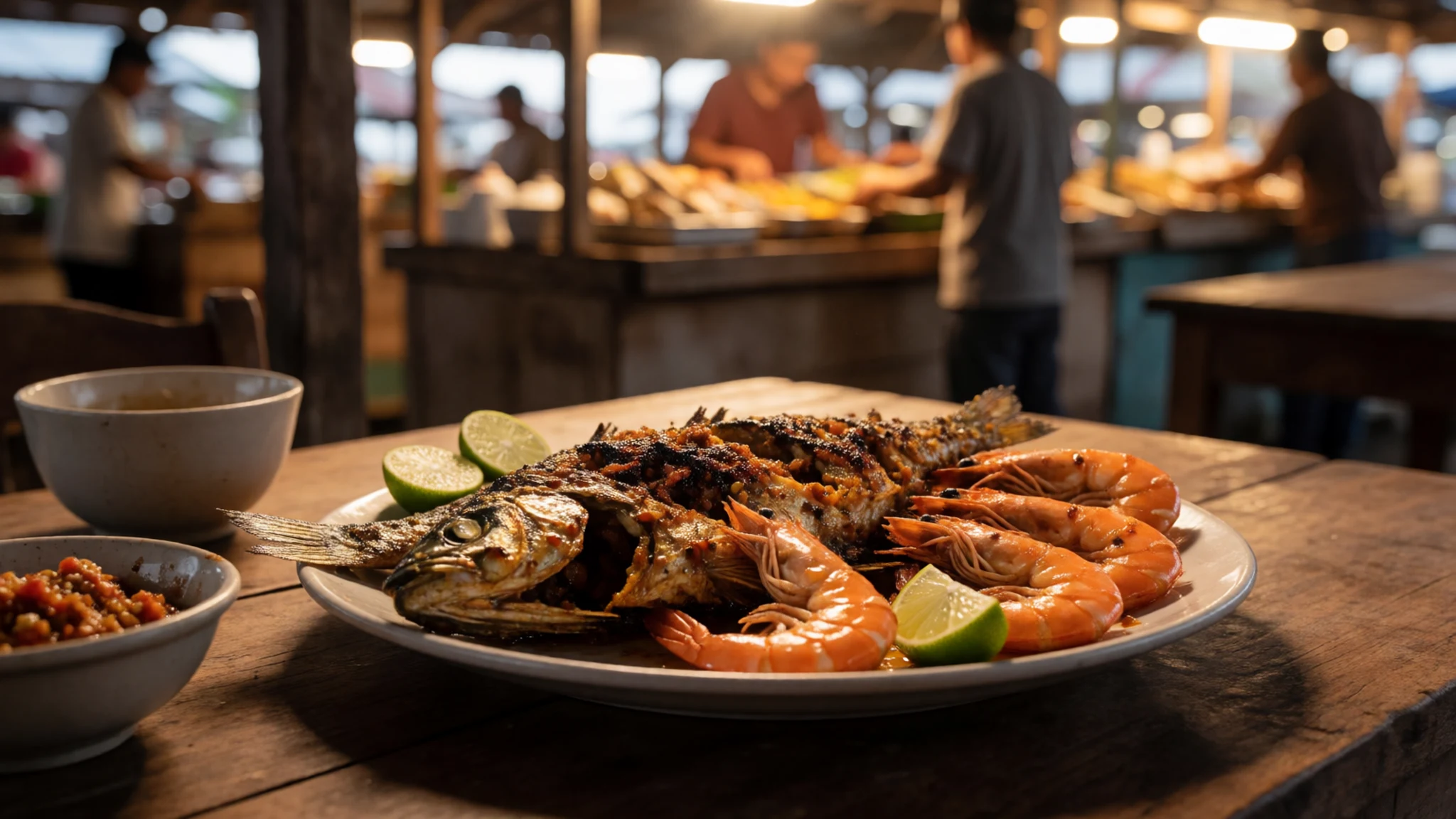
- Nasi timbel — Local warung and family eateries
A Sundanese way of serving rice, wrapped in banana leaf so it keeps a faint smoky scent. It arrives with fried chicken or fish, tempeh, tofu, raw leaves and a fierce chilli paste. Warungs along the main roads serve it at lunch.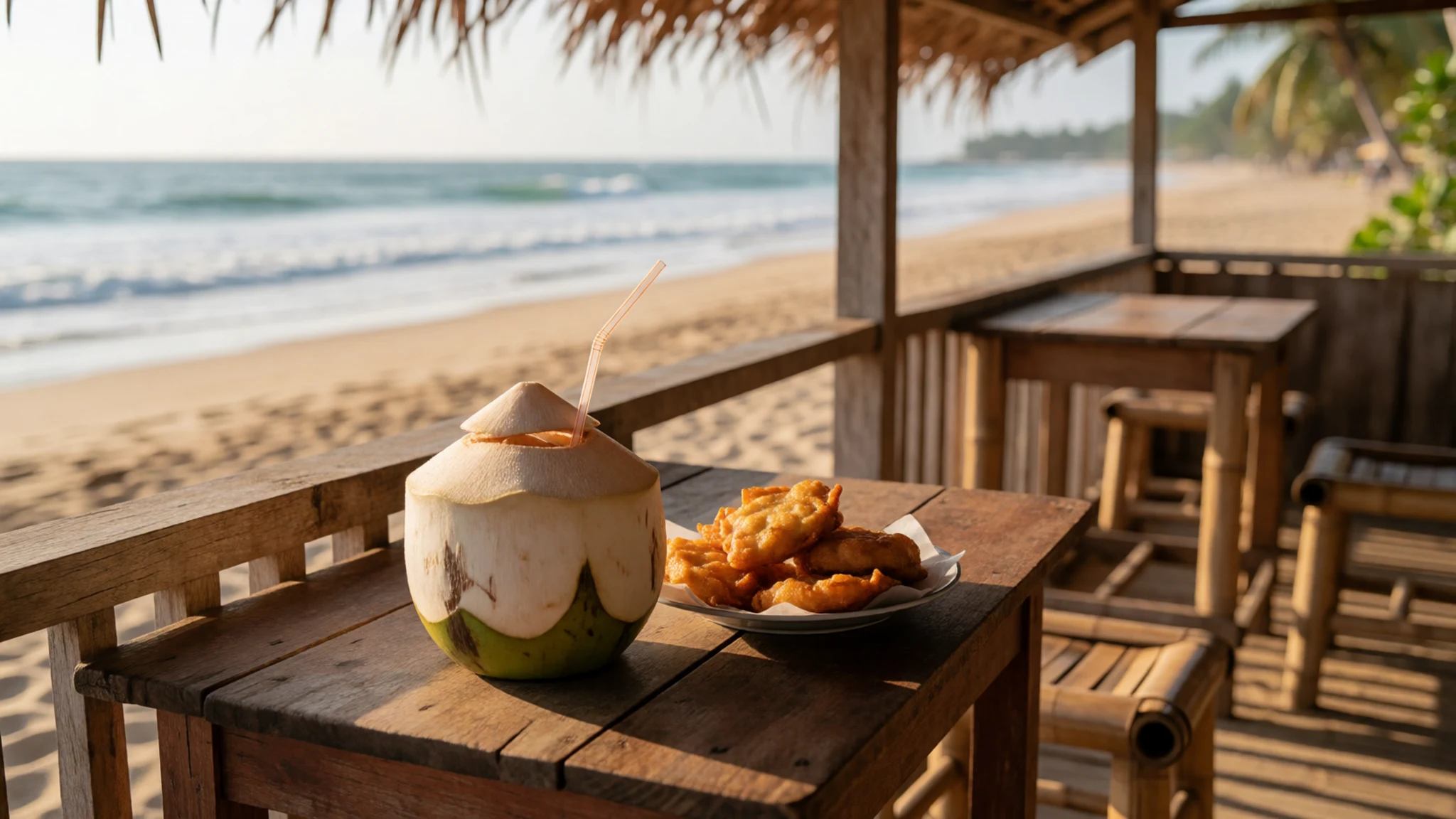
- Pepes ikan — Warung and market stalls
Fish marinated with spices, lemongrass and herbs, wrapped in banana leaf and steamed or grilled over embers. The leaf traps the juices and lends a sweet, grassy smell. It is a Sundanese speciality and tastes best with plain rice. - Karedok — Markets and simple Sundanese eateries
A raw vegetable salad of cucumber, beansprouts, long beans and cabbage, dressed in a ground peanut sauce with chilli and a hint of kencur, a local ginger relative. Cooling and crunchy, it is a welcome change after fried food on a hot day. - Es kelapa muda — Beach stalls and roadside carts
Young coconut served in its shell, with the soft flesh scraped out and the juice poured over ice. It is the simplest cure for heat on the sand. Evening bonfires on the beach, with snacks from the nearest warung, are the usual night out.
Plan it
Best time. June to September is usually the less wet stretch, which suits the nature reserve, river trips and the beach. The climate is tropical rainforest, so rain can come in any month, and heat and humidity stay high all year. National holidays and weekends bring the biggest crowds.
How long. 2–3
Getting there. The closest airfield is Nusawiru Airport (CJN), also called Pangandaran Airport, near Cijulang on the road towards Batu Karas, west of town. Flights from Jakarta via Bandung have been run on small planes by Susi Air, so check the current schedule. Most visitors take buses from Bandung, Tasikmalaya or Banjar to Pangandaran's bus terminal, which is near the market and a short walk from the beach, or take a cycle rickshaw.
Budget. low
Tips
- Visit on a weekday if possible, since weekends and public holidays are crowded and rooms fill fast
- Hire a moped for Batu Karas, Citumang and the quieter beaches, and carry a licence and a helmet
- Check river conditions before booking Green Canyon, as heavy rain can stop trips
- Carry cash for warungs, markets and fishing-village stalls, as card use is patchy
- Drink bottled or boiled water and use sun cream and a hat, because the sun is strong even on cloudy days
Etiquette
- Cover shoulders and knees in villages and mosques, and keep swimwear for the beach
- Ask before photographing people, especially fishermen, women and children
- Keep a distance from macaques in the reserve and do not feed them
Nearby
Sources
- Wikidata Q27715 (CC0)
- Wikipedia: Pangandaran (rev 1364778971) (CC BY-SA 4.0)
- Wikivoyage: Pangandaran (rev 5413829) (CC BY-SA 4.0)
- Photo: Beach at Pangandaran (Kondephy) (CC BY 3.0)
- Photo: The beach of Pangandaran with its peninsula (Hullie) (CC BY 3.0)
- Photo: Sunset at the beach of Pangandaran (Hullie) (CC BY 3.0)
- Photo: A fisherman's hut at sea in Pangandaran (Crisco 1492) (CC BY 3.0)
- Photo: The Beach (F. Wirmansyah) (CC BY-SA 4.0)
- Photo: Adams Homestay, Pangandaran (dhianp) (CC BY 3.0)
- Photo: Alfa-male macaque (Aswindaagna) (CC BY-SA 4.0)
- Photo: Anthracoceros sp. (Aswindaagna) (CC BY-SA 4.0)


Wildlife
- Macaque (animal)
The long-tailed macaque is a clever monkey with a very long tail, and it is quite happy living close to people. In Pangandaran, look for family groups along the forest paths, among shady trees, caves and old ruins, on the way to the quiet coves. Keep a respectful distance, speak softly, and consider walking with a local guide. Never feed them, and keep your snacks tucked well out of sight.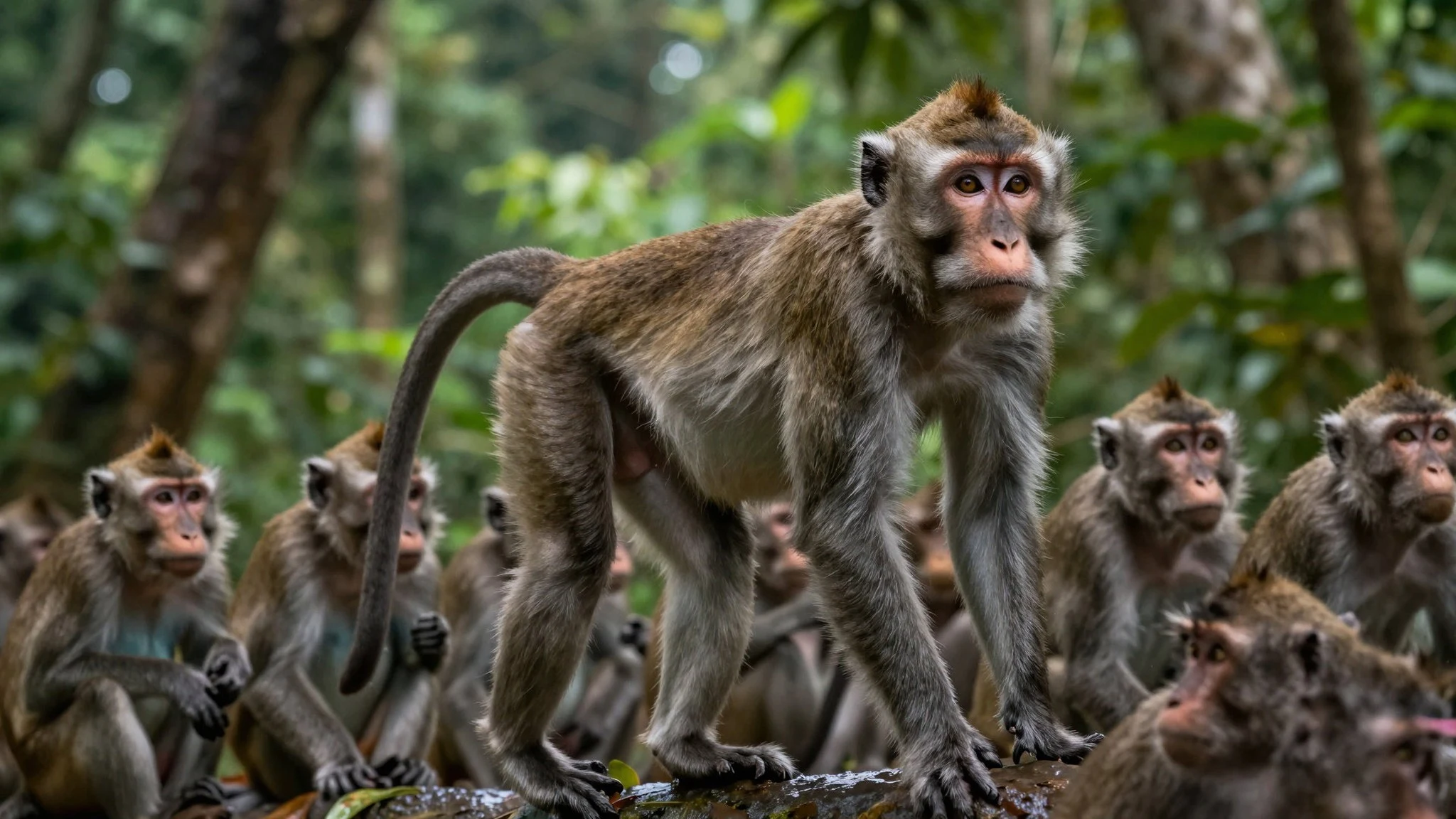
- Deer (animal)
The Javan rusa is a big deer from Indonesia, and rusa is simply the Malay word for deer. In Pangandaran you may spot them strolling at ease along the shoreline, close to where the trees begin, while fishermen tend their nets in little huts over the water. Walk gently, keep your distance and your voice low, and let the deer decide how near to come. Never offer food.