Padma River
Padma River, Bangladesh
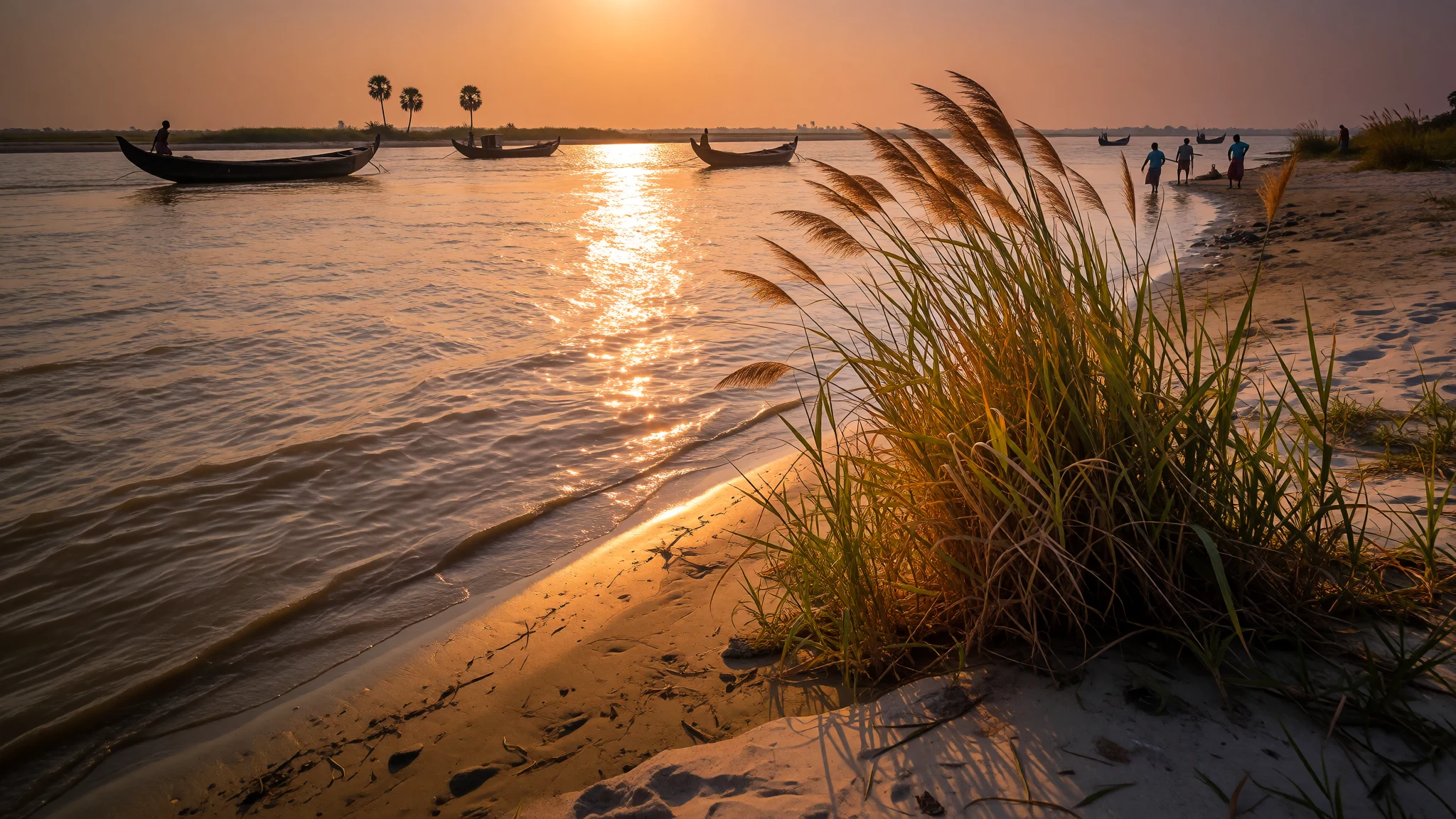
Padma River is the Ganges in its final, widest act in Bangladesh: boats, sandbars, fishing ghats and big skies at dusk.
The place
Padma River is the main channel of the Ganges once that river crosses into Bangladesh, and it carries the water southeast until it joins the Meghna, close to the Bay of Bengal. The journey is about 356 km. Rajshahi, a university city, sits on the northern bank, and for part of its length the Padma also serves as the boundary between Bangladesh and the Indian state of West Bengal.
This is not a clear, rocky river. It is broad, silty and braided, forever shifting its channels and building sandbars, which locals use for seasonal farming and grazing when the water drops. In the monsoon the same river swells, spreads and eats at its banks. Erosion is a lived reality here: more than 66,000 hectares have vanished into the river since 1966, taking fields, homes and sometimes whole villages with them.
The Padma is also a working river. Fishing families, ferry crews, boat builders and traders depend on it, and the best way to understand the place is to watch the daily traffic at a landing stage rather than to look for a single viewpoint. Bridges now cross it at a few points, but much of the shoreline remains quiet and rural. Mornings and late afternoons bring soft light and the most activity on the water. Midday in the hot months is flat, bright and tiring, and the river itself can feel as wide as a sea.
Expect a travel experience built around boats, villages and open horizons, with few formal attractions, little tourist infrastructure and plenty of conversation.
Its story
Padma River takes its name from the Sanskrit word for the lotus. In ancient Hindu texts the word is also used as an epithet of the goddess Lakshmi, and the Tripura Rahasya tells a story linking her to this river. The name therefore carries a sense of abundance as well as beauty, which suits a water body that has fed so many people.
The river's path has not always been where it is now. In the eighteenth century the geographer James Rennell studied the land of the delta and concluded that the Ganges once ran further north, through the lakes and marshes between Nattore and Jaffiergunge. He thought it left its present course near a place he called Bauleah and ran on to meet the Brahmaputra, or Meghna, near Fringybazar. In his view the combined force of two enormous rivers helped carve the huge bed of the Meghna.
The idea matters because it shows how restless this landscape is. Channels silt up, rivers change direction and land appears and disappears within a human lifetime.
That restlessness is also political and personal. Murshidabad District in West Bengal lies on the western bank, and the river forms a natural frontier between it and Rajshahi district in Bangladesh. The Jalangi area on the Indian side has suffered badly from bank erosion. Families on both banks have learned to rebuild, move inland or farm temporary sandbars. The history of the Padma is therefore not only old scripture and early geography but also a continuing story of adaptation.
What to see
- Rajshahi riverfront — Rajshahi city
Rajshahi stands on the northern bank of the Padma River, and its embankment walk is the easiest place to watch the river without arranging a boat. Families stroll here in the evening, tea sellers set up stalls, and the opposite shore is a pale line far across the water. Come near sunset.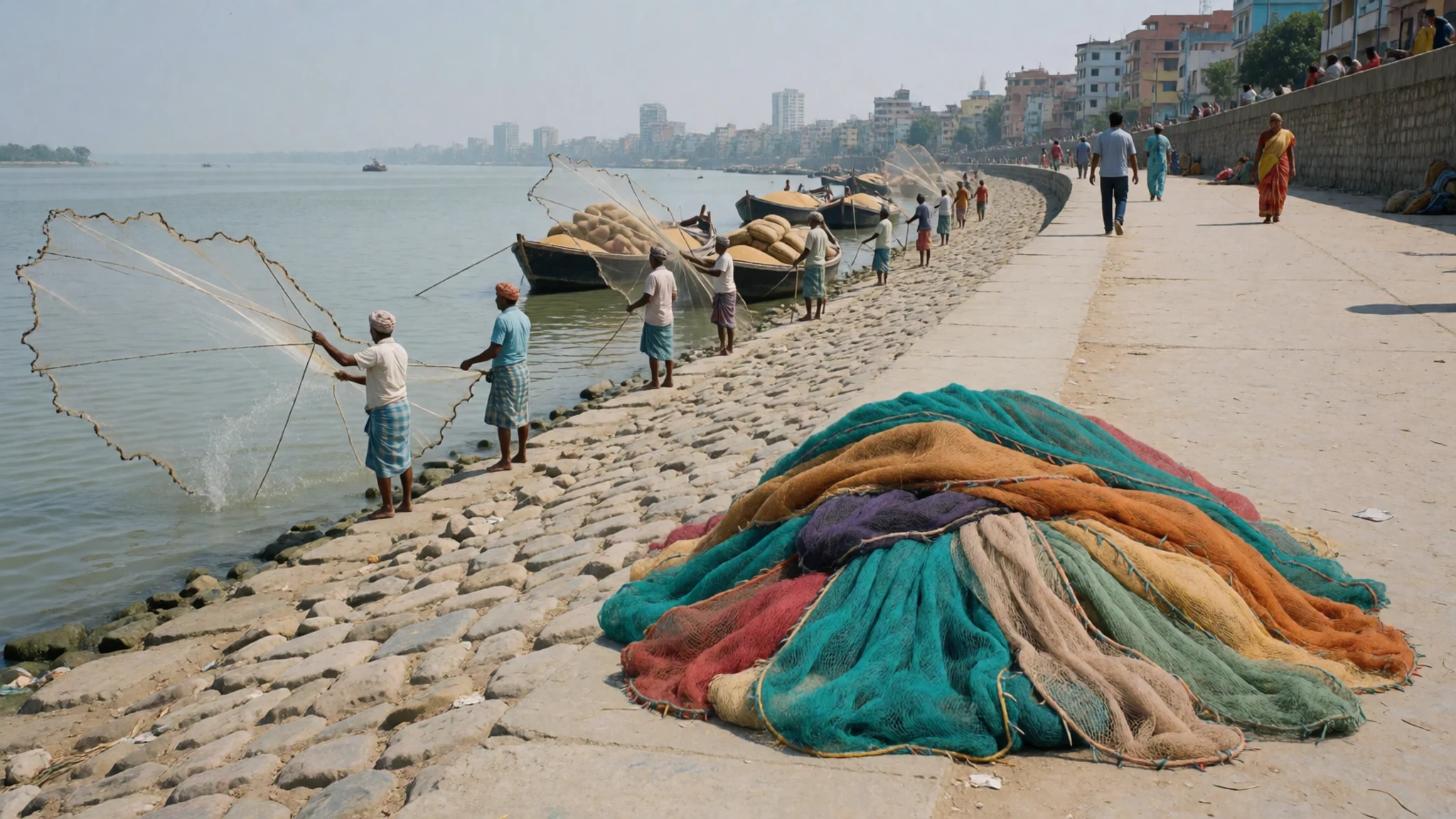
- Hardinge Bridge — Paksey, Pabna district
Hardinge Bridge is an old steel railway crossing over the Padma River near Paksey, a reminder of the colonial-era engineering that tied the delta to the rest of Bengal. It is best seen from the bank at a respectful distance, because it is a working rail structure and access can be restricted.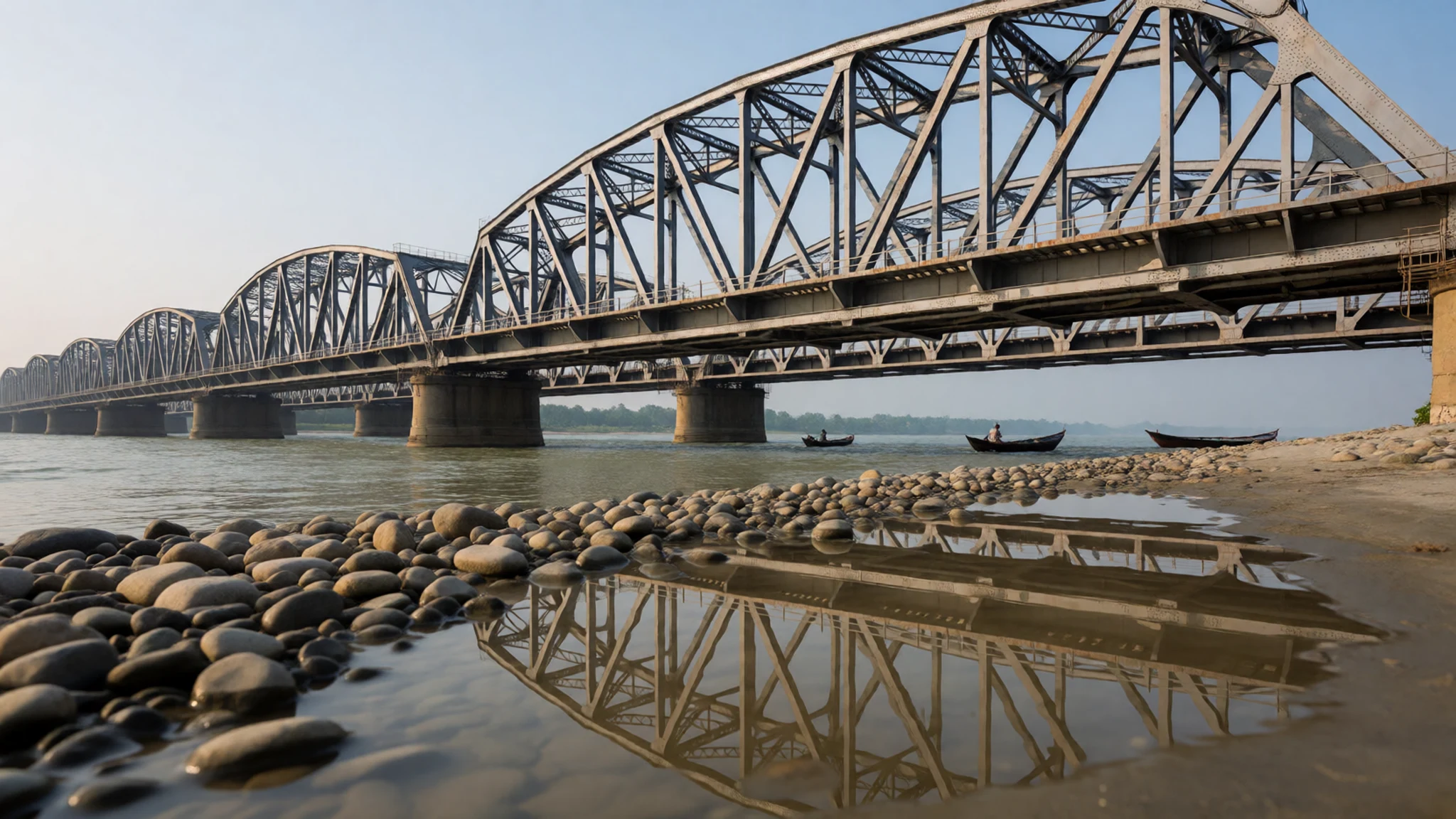
- Padma Bridge and the Mawa–Janjira crossing — Munshiganj and Shariatpur districts
Padma Bridge now links the south-west of Bangladesh with Dhaka across the lower river, replacing much of the ferry traffic that once defined this crossing. Small engine boats still work beneath it. Viewing from a boat gives a far better sense of the river's scale than looking from the road.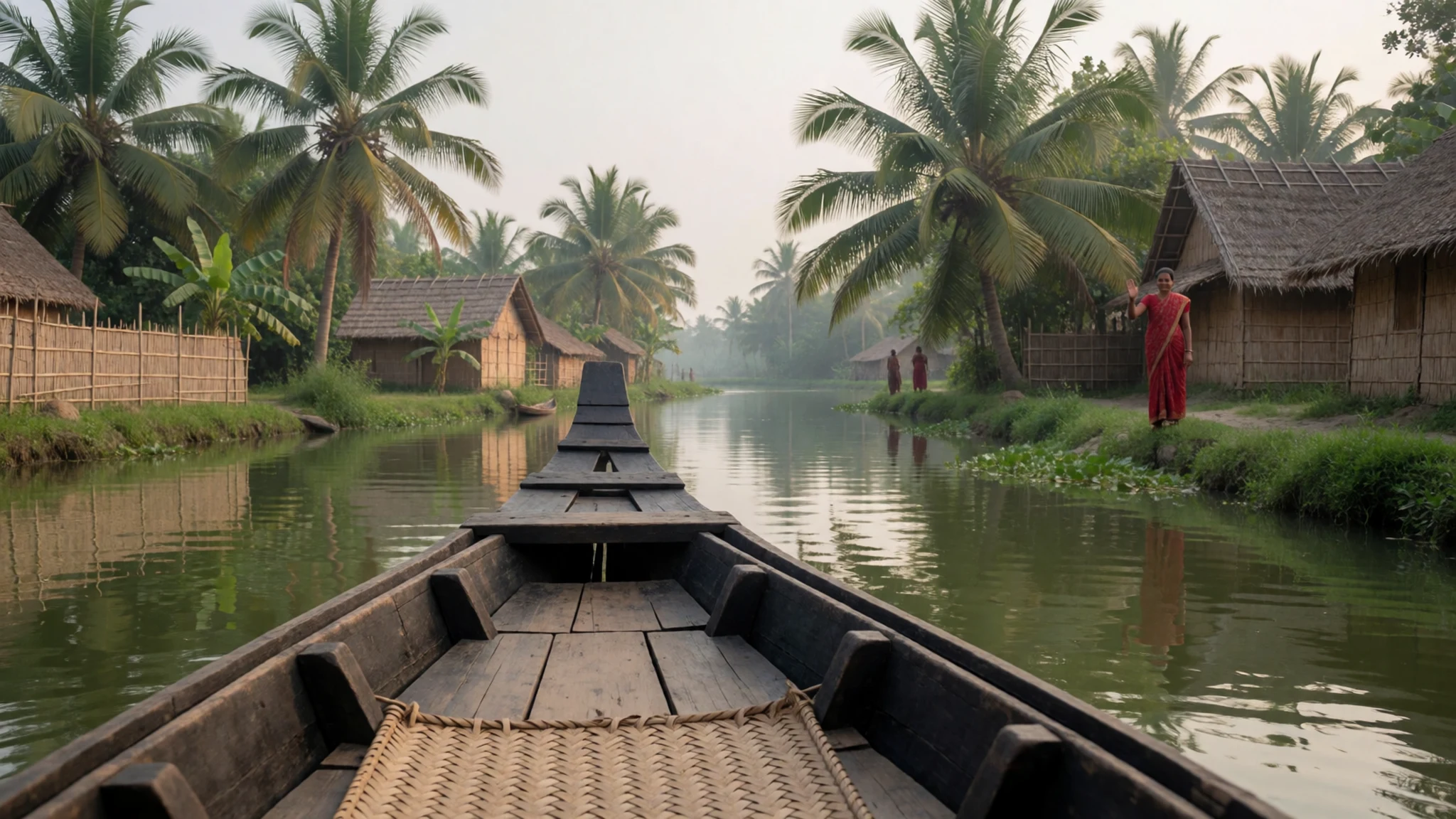
- Goalundo Ghat — Rajbari district
Goalundo Ghat is a busy river landing where the Padma meets the Jamuna, and one of the old gateways between north and south Bengal. Ferries, cargo boats and fishing craft crowd the water. It is a place for watching river life rather than sightseeing, so take time and let it unfold.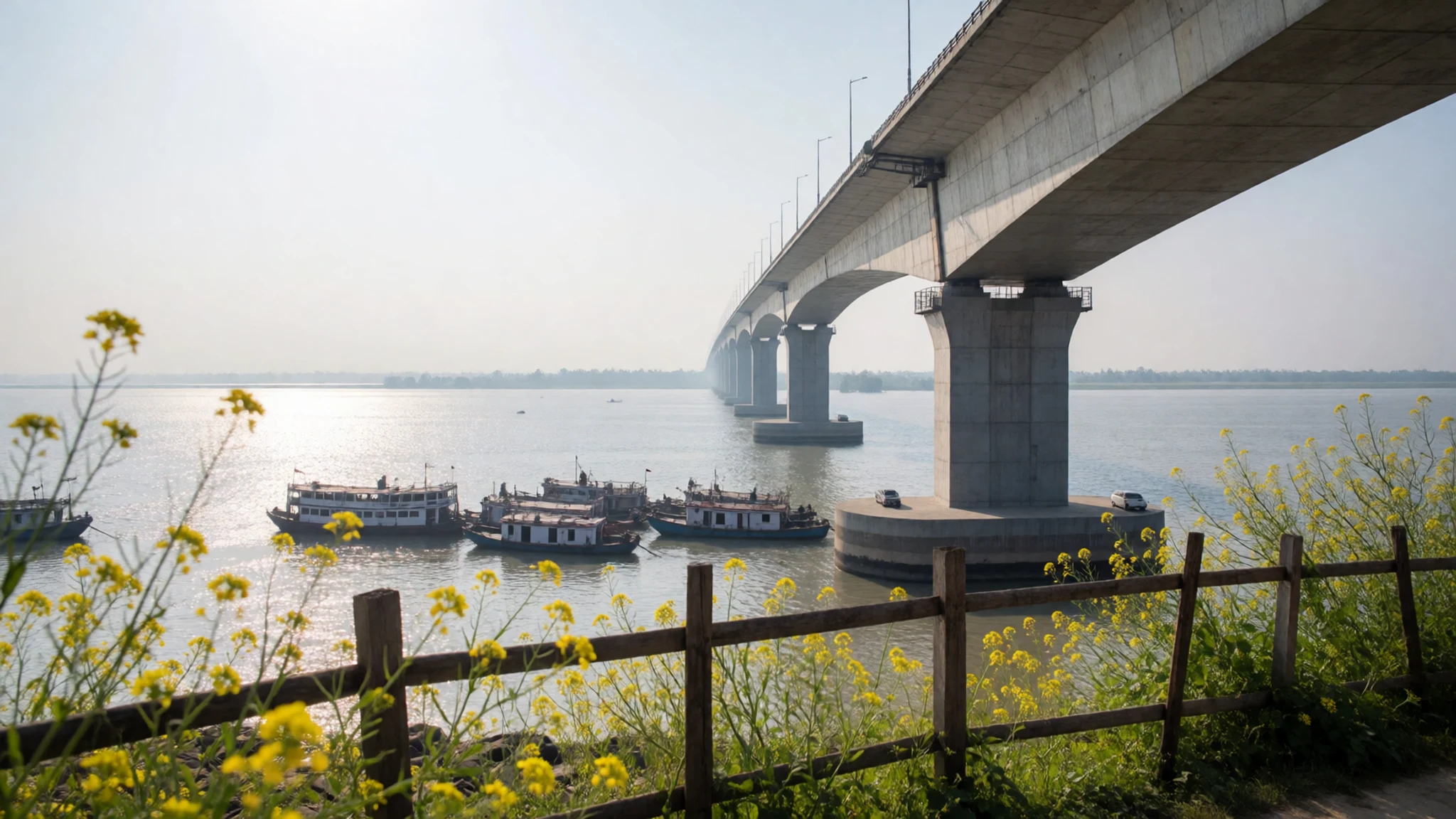
- Meghna confluence near Chandpur — Chandpur district
Near Chandpur, the Padma River joins the Meghna and the combined stream becomes an enormous expanse of brown water heading for the Bay of Bengal. Hire a local boat from the town's launch ghat for a morning trip, as the fishing activity is strongest early on.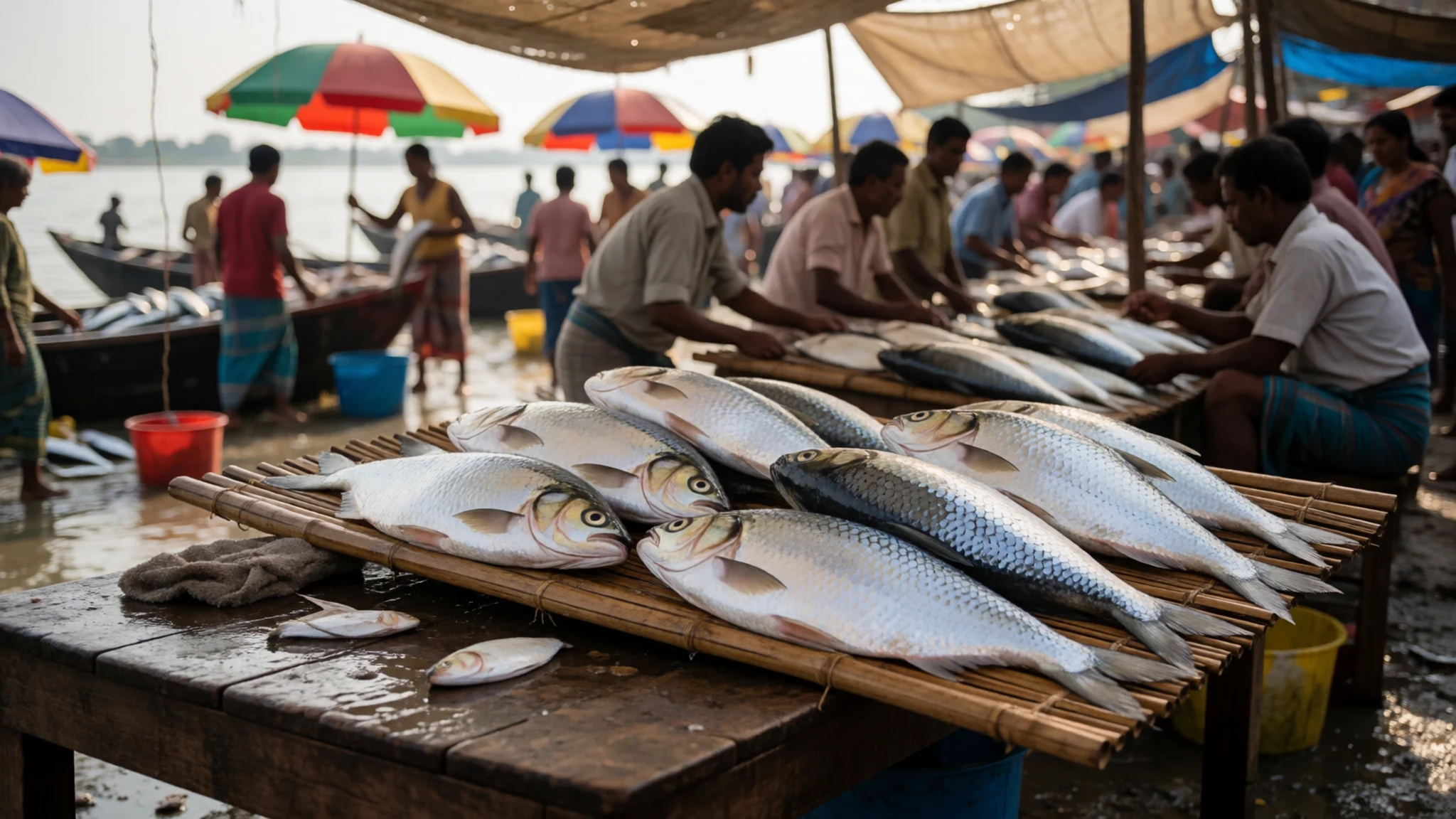
Culture
Padma River culture is shaped by Bengali river life, in which boats, fish and seasons organise the year. Songs of the boatmen, known as bhatiyali, grew out of rivers like this one, with long, melancholy lines sung by men working or drifting on the water. Poetry and film from the delta return again and again to the river as a source of livelihood, loss and longing.
Most communities along the banks are Muslim, with Hindu neighbourhoods and shrines as well, and festivals follow both calendars. The Bengali new year in mid-April brings fairs and music to riverside towns, and Hindu rites sometimes involve bathing or offerings at the water's edge. Monsoon floods can interrupt everything, so people speak about the river with respect, humour and a certain fatalism.
Fishing is both a trade and a social anchor. Landing stages double as meeting places where news is traded, tea is drunk and bargains are made. Boat building continues in small yards on the banks, and hand-made wooden craft of varied designs still carry people and goods.
Visitors are generally welcomed with curiosity. Expect questions about where you are from, offers of tea and requests for photographs together. Hospitality is a point of pride, and a little Bengali, even just a greeting, goes a long way.
When photographing people on the ghats, especially women and children, ask first with a smile and a gesture, and put the camera away if anyone declines.
What to wear
Padma River communities wear the everyday clothing of rural and small-town Bengal. Traditionally, women wear the sari, often cotton for daily use and silk for weddings and festivals. Rajshahi is well known for its silk weaving, while fine cotton jamdani, a patterned muslin-style weave associated with the Dhaka region, is kept for special occasions. Men have long worn the lungi, a wrapped cotton cloth, along with the panjabi, a loose knee-length shirt, for prayers, festivals and formal days. The gamchha, a thin checked cotton towel, serves as scarf, head cloth and sweat rag on the boats.
Today, people dress practically. Younger people in Rajshahi and other towns wear jeans, trousers and shirts, and many women wear the salwar kameez with a dupatta. On the river, fishermen and boat crews favour lungis or shorts with simple shirts, and often a gamchha tied around the head against the sun.
Visitors should dress modestly, as most of this region is conservative. Light, loose cotton with covered shoulders and knees suits both the heat and local norms, and women may find a scarf useful. Wear sandals or shoes that slip off easily, since muddy banks, boat decks and mosque entrances all call for easy footwear. Add a hat, sunglasses and a light rain jacket in the monsoon, and avoid anything too delicate near the waterline.
What to eat
- Ilish (hilsa) fish — riverside fish markets and eateries near ghats, especially around Chandpur
Ilish is the silver river fish that Bengal loves, cooked in mustard paste, steamed in banana leaf or fried crisp. It is seasonal and bony, so eat slowly. Look for it in riverside fish markets and simple eateries near the landing stages.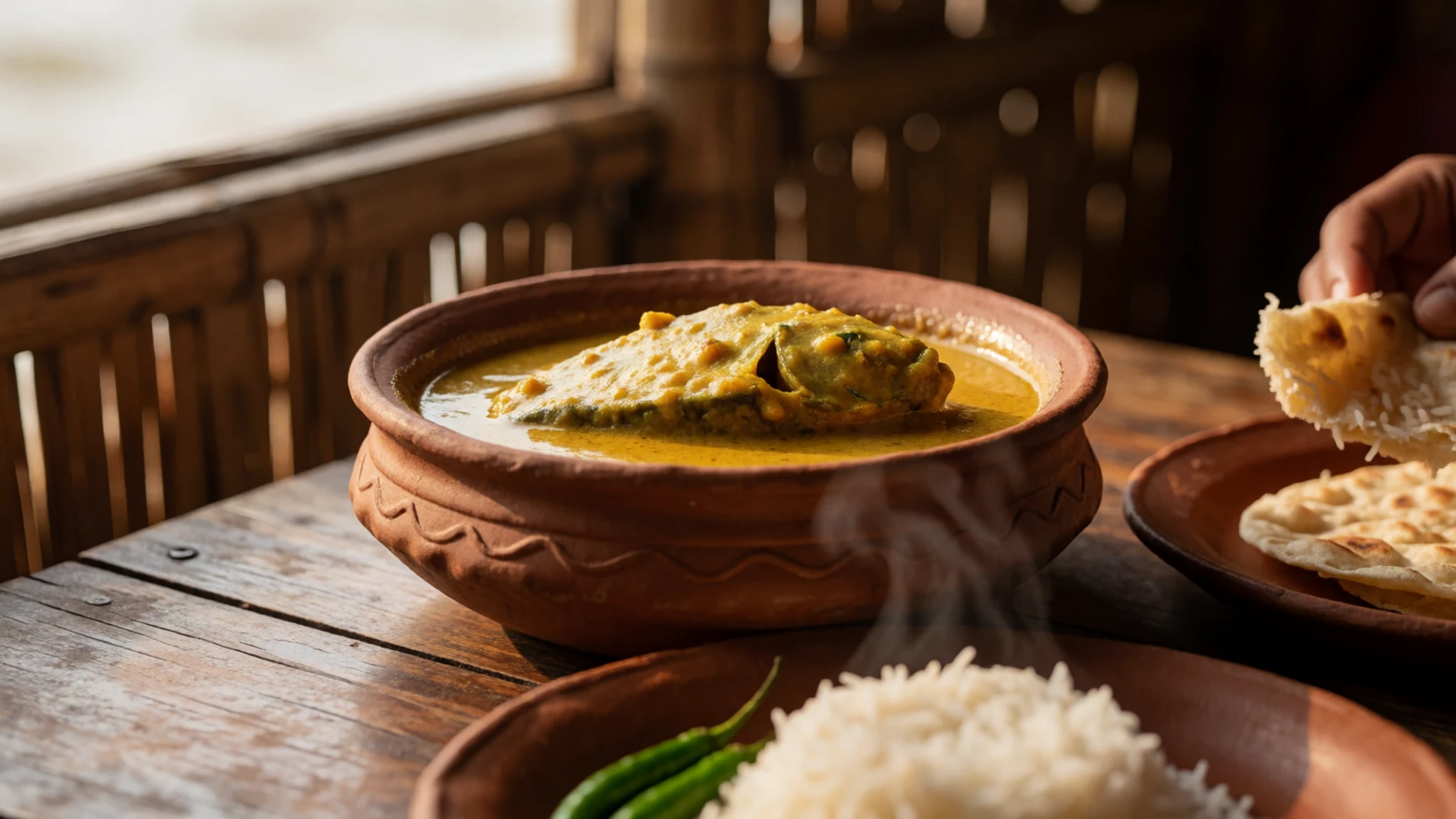
- Panta bhat with fried fish — village eateries and fairs along the river
Panta bhat is leftover rice soaked overnight in water and eaten cold with salt, green chilli, onion and fried fish. It is a humble, cooling meal in hot weather. Small village eateries and festival fairs usually serve it, especially around the Bengali new year.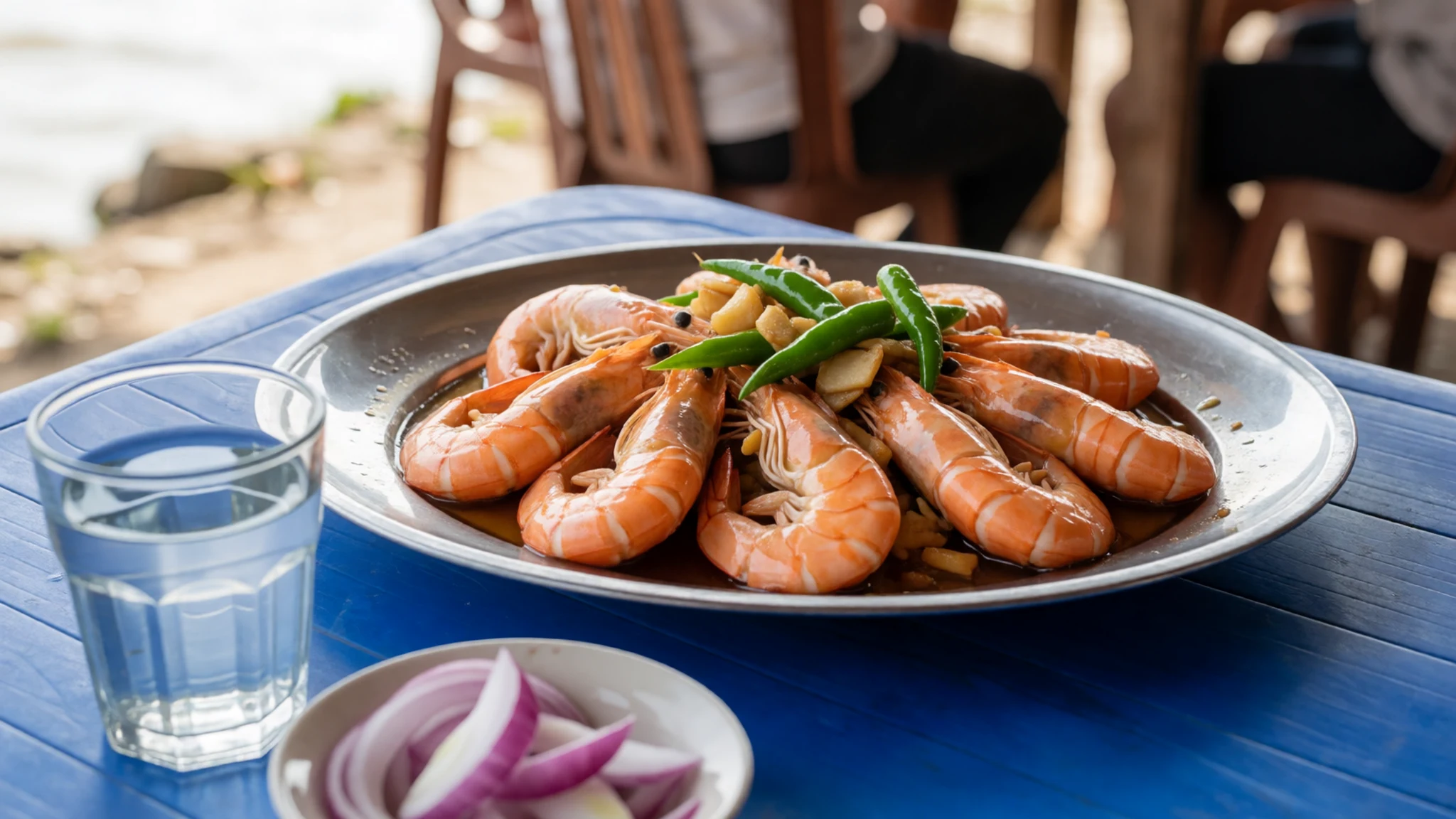
- Rajshahi mango — Rajshahi's fruit markets in early summer
Mangoes grown around Rajshahi are a source of regional pride, and in the early summer the markets are heaped with different varieties. Buy them ripe and eat them fresh, at their peak sweetness. The season is short, so timing matters. - Kacha golla — sweet shops in Natore and Rajshahi
Kacha golla is a soft, pale milk sweet from the Natore area near Rajshahi, made from fresh curd and sugar. It is delicate and not overly sweet. Try it from sweet shops in the towns near the river. - Bhapa pitha — roadside stalls and village homes in winter
Bhapa pitha is a winter rice-flour cake, steamed and filled with date-palm jaggery and coconut. It appears at roadside stalls and in homes when the air turns cool. Warm from the steamer, it is the best cold-season snack in these villages.
Plan it
Best time. November to February, when days are dry, skies are clearer and the heat is bearable. March to May is hot, and June to September is the monsoon, with high water, rain and erosion, though the river looks its biggest.
How long. 2–3
Getting there. Fly to Dhaka (Hazrat Shahjalal International Airport), then travel by road across Padma Bridge or by train or bus to Rajshahi. Rajshahi has its own airport and rail station. For the lower river, go by road to Chandpur and take a local boat for the last stretch.
Budget. low
Tips
- Hire a local boat with a guide through your guesthouse, as river conditions change with the season
- Carry cash in small notes, because ghats and village eateries rarely take cards
- Go early or at late afternoon for the best light and cooler air
- Bring drinking water and sun protection, as there is little shade on the water
- Check ferry and train times locally, as river transport can change with water levels
Etiquette
- Dress modestly and cover shoulders and knees, especially in villages
- Ask before photographing people, especially women and children
- Remove shoes before entering mosques or homes
Nearby
Sources
- Wikidata Q930773 (CC0)
- Wikipedia: Padma River (rev 1371193538) (CC BY-SA 4.0)
- Wikivoyage: Bangladesh (CC BY-SA 4.0)
- Sunset of Padma River — Rick Joseph (CC BY-SA 4.0)
- Padma River, Bangladesh — Ashikul Islam Anik (CC BY 4.0)
- Padma River map — NordNordWest (CC BY 3.0)
- Ganges-Brahmaputra-Meghna basins — Pfly (CC BY 3.0)
- Boat at Padma Bridge — Jubair Bin Iqbal (CC BY-SA 4.0)
- Padma River 1860 — Unknown author (Public domain)
- Speedboat at Padma River — Jubair Bin Iqbal (CC BY-SA 4.0)
- Hardinge Bridge, Bangladesh — Shahnoor Habib Munmun (CC BY 3.0)


