Otavalo
Otavalo, Ecuador
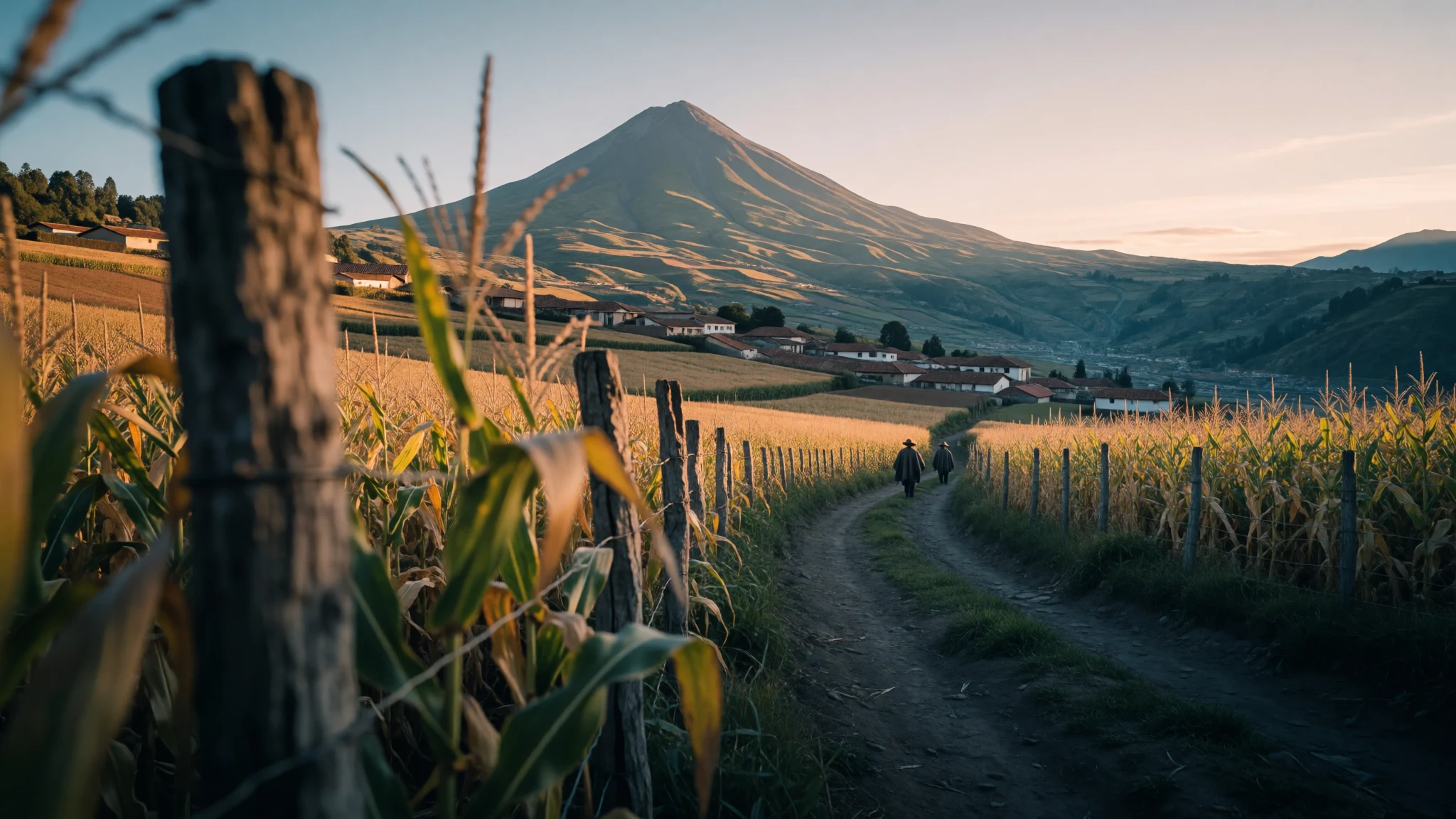
Otavalo is an Andean market town where indigenous weavers, volcano views and Saturday crowds meet, within easy reach of Quito.
The place
Otavalo lies on the floor of a high Andean valley in Imbabura Province, northern Ecuador, at an elevation of 2,550 metres. About 41,718 people live in the town, and a large share belong to the Otavalo indigenous people, whose weaving, music and trading have shaped the place as much as the landscape has. Three volcanic neighbours frame the valley: Imbabura, Cotacachi and the Mojanda massif. On a clear morning their slopes sit above the rooftops, with a patchwork of maize fields climbing towards them. Cloud tends to gather later in the day, so the early hours give the best views.
The centre is compact and flat enough to cover on foot. Streets run in a tidy grid around the Plaza de Ponchos, where the craft market is held, and most hostels, cafés and bus links sit within a short walk of it. The Pan-American Highway passes close by, which is why Otavalo works as an easy trip north from Quito, a couple of hours away by road.
Much of what makes the town interesting happens outside it. Small villages in the surrounding hills are known for particular crafts, and many market vendors travel in from them. The altitude is gentle by Andean standards, but mornings and evenings are cool and the sun is sharp. Saturday brings the full market, with crowds to match; other days are quieter and better for talking with the people who make things.
Its story
Otavalo's history as a town begins in 1534, in the early years of Spanish rule, but people had lived and traded in this valley long before that. Its position between highland and lowland routes made it a natural meeting place, and that role has never really ended.
Under colonial rule the valley's skilled spinners and weavers were put to work in large textile workshops known as obrajes, where conditions were harsh and the profit went to others. The knowledge survived regardless, passed down within families and communities, and it became the foundation of the town's later reputation. In recent generations Otavaleños have turned weaving, music and trade into a livelihood of their own, selling textiles at home and sending traders and musicians well beyond Ecuador. The market visitors see today is the public face of that long adaptation.
The landscape carries its own story. Local belief treats Imbabura as a father figure, the Taita, who protects the people and on whom crops and weather depend. In dry spells, communities hold rituals on the mountain and at other sacred places, and waterfalls and springs are seen as charged places for purification. Calendar festivals, above all the sun celebration around the June solstice and the Yamor festivities in early September, bring together harvest, community and church traditions, and give the town its busiest seasons.
What to see
- Plaza de Ponchos and the Saturday craft market — Town centre
Otavalo's craft market spreads across the Plaza de Ponchos and nearby streets, with weavings, jewellery, hats, carvings and paintings from local communities and from elsewhere in the Andes. Quality varies, so look closely at stitching and wool before believing a 'handmade at home' claim. Weekdays are calmer, with fewer stalls.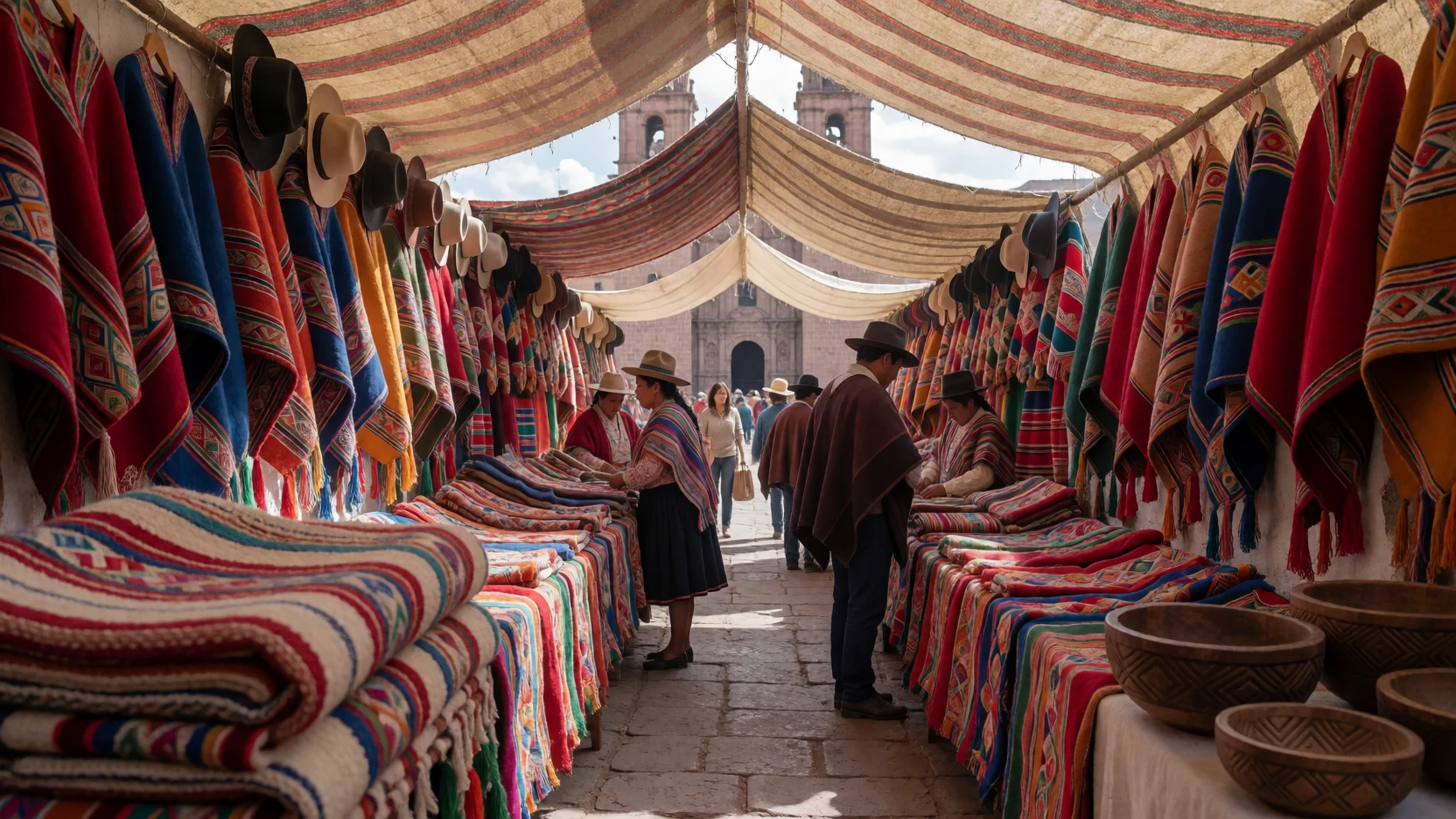
- The main food market — Town centre
Otavalo's main covered food market runs all week and is where local households shop for produce, grains and cooked meals. It is a better place to see everyday life than the craft stalls, and a fair spot for a cheap lunch. Pick busy stalls that look clean.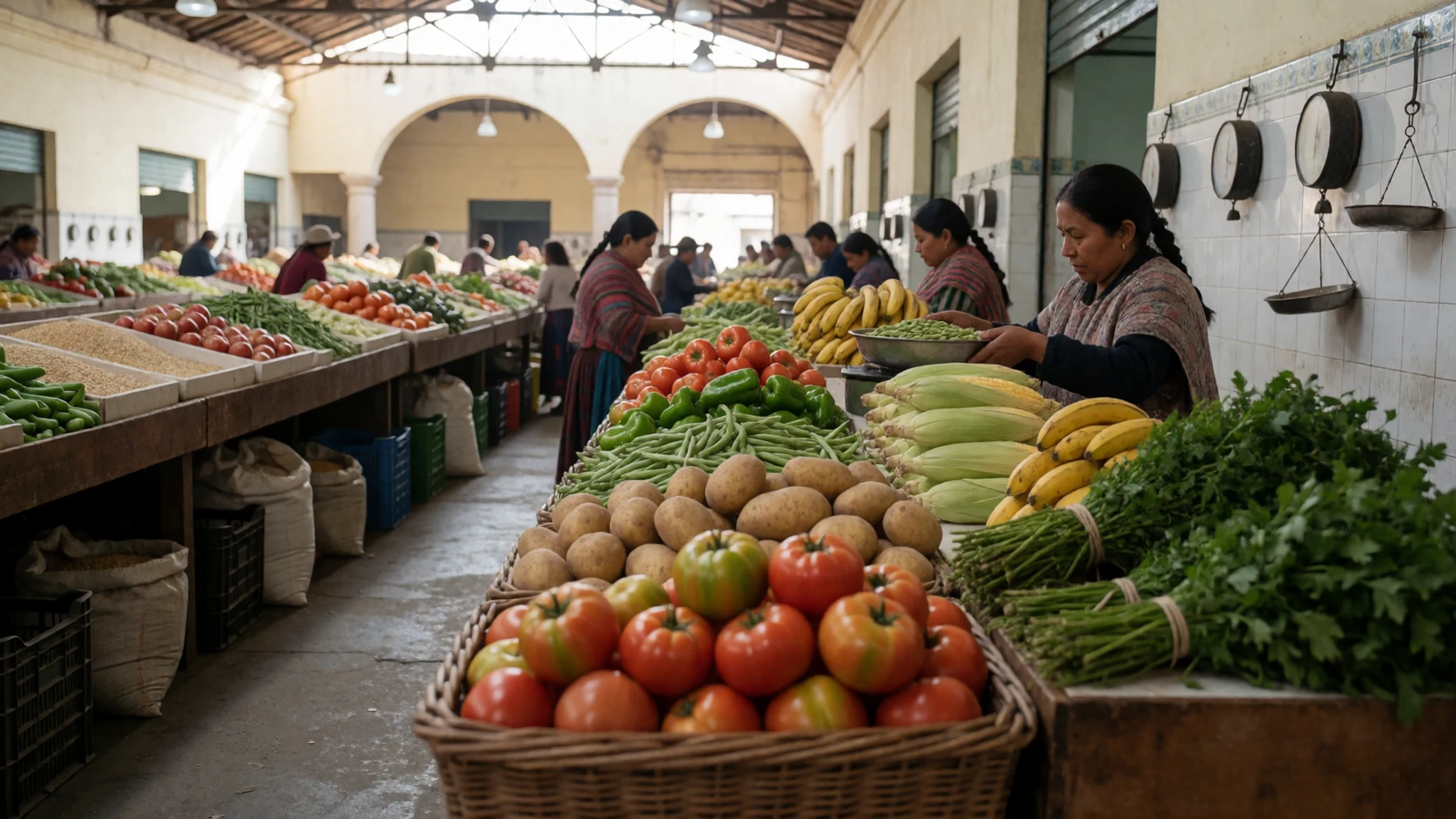
- Peguche waterfall — Peguche, just outside Otavalo
A short trip outside Otavalo, Peguche waterfall drops through woodland, and the river below carries a Kichwa name meaning big water. Local communities regard it as sacred and use it for purification rituals. A small entrance fee applied at last report, so check locally. Go early for quiet and be respectful.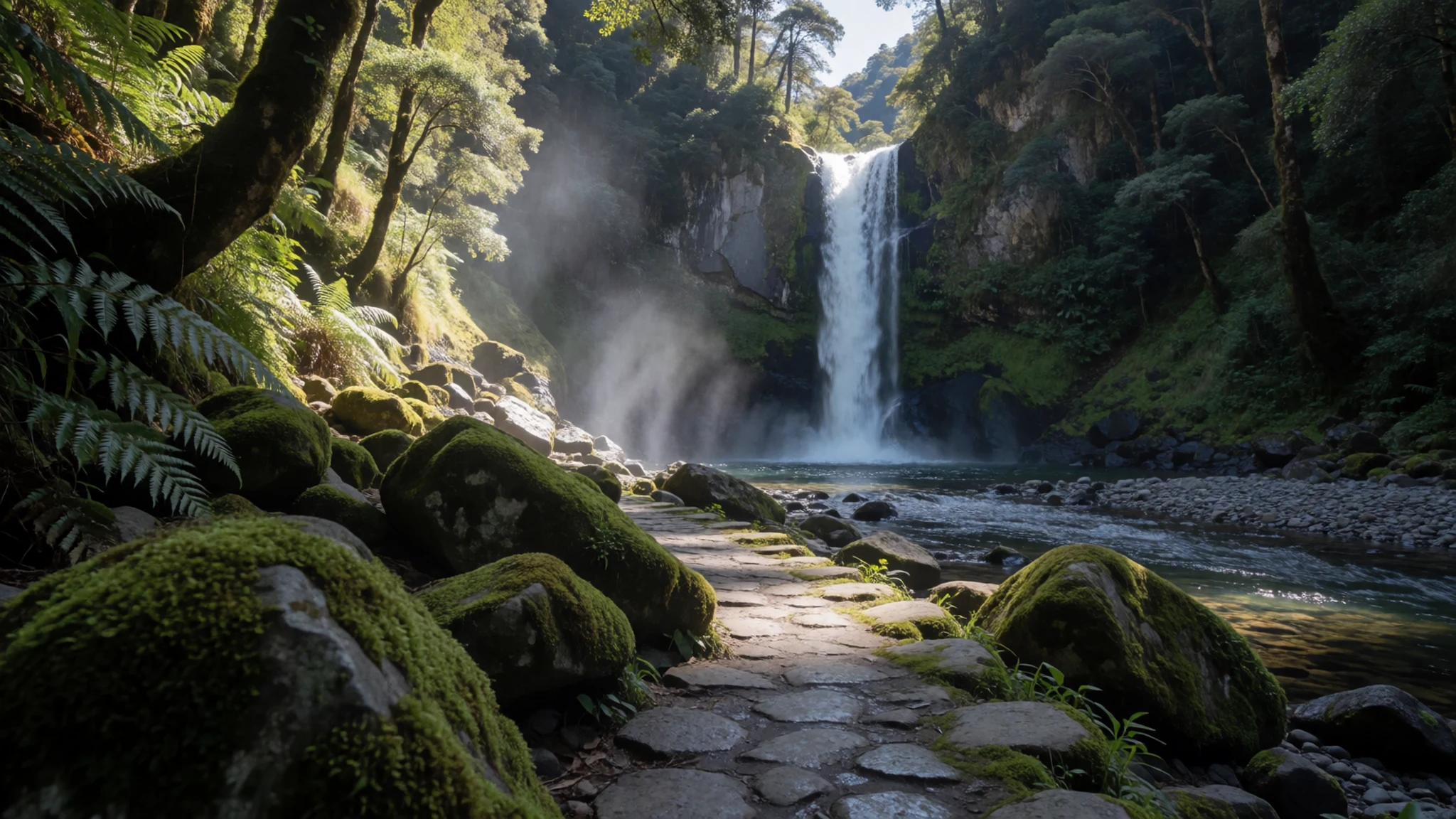
- Imbabura volcano — East of the town
Imbabura dominates the skyline near Otavalo and, in local belief, is the protective father of the indigenous people. Most visitors simply admire it from the valley or from lakeside paths nearby. Treat any ritual site on its slopes with care, and check conditions and routes locally before walking higher.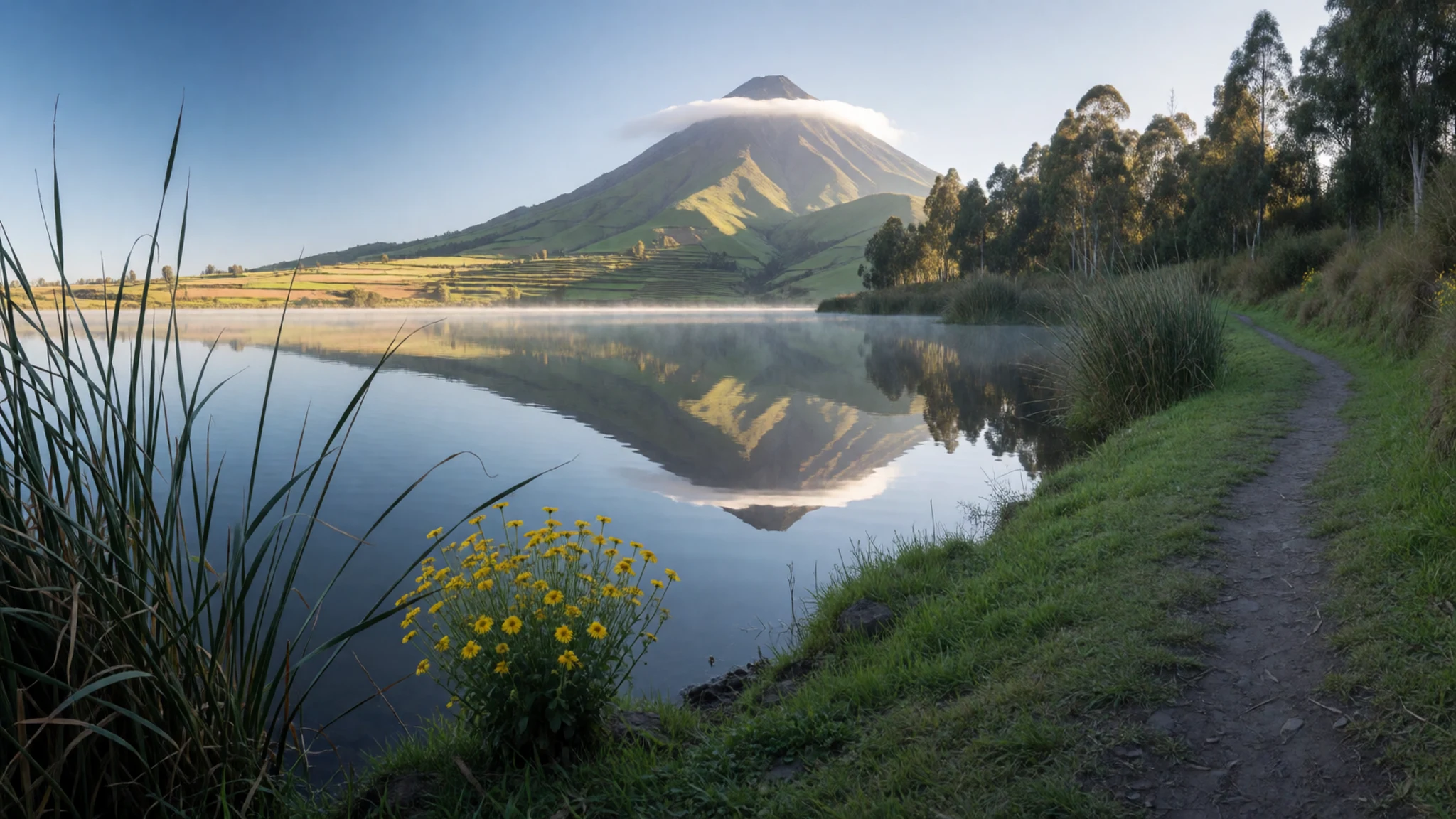
- Livestock market — North of the town
Local farmers buy and sell cattle, pigs and other animals at Otavalo's livestock market, held outside the town centre. It is a vivid slice of rural trade, though handling of animals can be rough, and some visitors will find it uncomfortable. Go early, since trading winds down by late morning.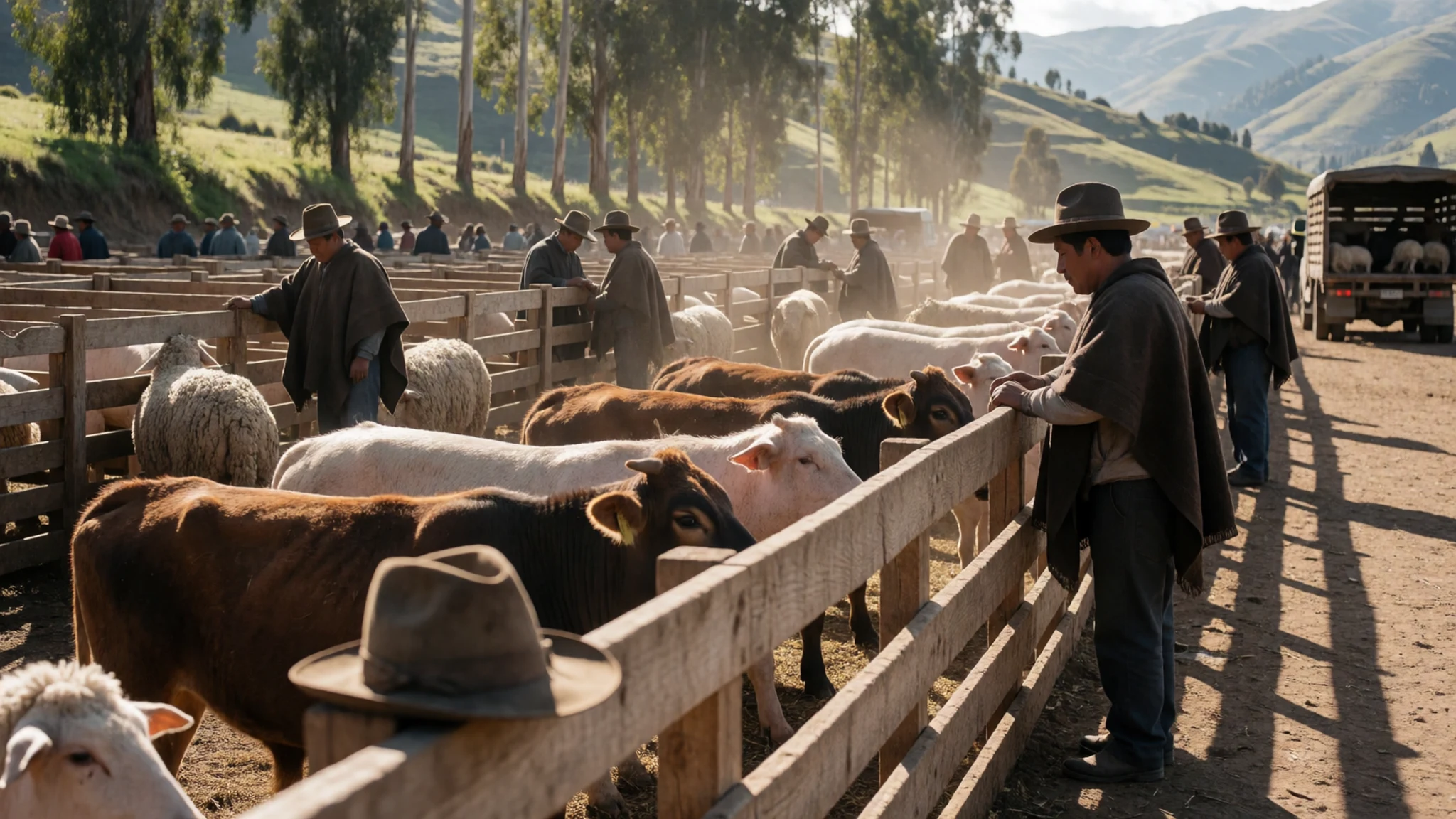
Culture
Otavalo is a place where indigenous and mestizo life sit side by side, and the Kichwa-speaking Otavalo community sets much of the tone. Identity here is tied to land, mountains and water. Imbabura is spoken of as a protective father, springs and waterfalls are treated as places of power, and communities carry out rituals at them, especially when rain is scarce.
Commerce is part of the culture rather than separate from it. Families have long woven, spun and traded, and the Saturday market is as much a social gathering as a shopping trip. Bargaining is expected on craft goods, but it works best when it stays good-humoured and when the price reflects the hours of work in a textile.
Festivals mark the year. The sun celebration around the June solstice and the Yamor festivities in early September fill the town and surrounding villages with music, dance, processions and food. Accommodation is easiest to find outside those dates, and visitors who come during them should book ahead and expect crowded streets.
Sunday and weekday visits show a quieter side, with farming, schooling and household routines continuing around the stalls. Catholic churches still draw regular congregations, and many families blend church observance with older customs.
Ask permission before photographing people or their stalls, and accept a refusal with a smile.
What to wear
Otavalo's traditional dress is among the most recognisable in the Andes, and many people still wear it daily. Women typically wear a white embroidered blouse, a dark wrapped skirt, a folded shawl and several strands of gold-coloured beads, with a headcloth and woven sandals. Men are known for white trousers, a dark wool poncho, a felt hat and long braided hair. The textiles are made from wool and cotton, woven on both backstrap and foot looms, and the clothes are worn for work, markets, festivals and church.
What people wear now is a mix. Many Otavaleños wear the traditional outfit throughout the day, while others, especially younger people, choose jeans, fleece jackets and trainers for ordinary days and keep the full dress for festivals and family occasions. Mestizo residents dress much as in other Ecuadorian towns.
For visitors, the main issue is the weather. At this altitude, mornings and evenings are cool, midday sun is strong, and rain can arrive quickly, so bring layers, a sun hat, sunscreen and a light waterproof. Wear sturdy shoes with grip for cobbled streets and the muddy paths near the waterfall. Shorts are fine in the market, but cover shoulders and knees if stepping into a church or attending a ceremony.
What to eat
- Cuy asado — Food stalls around the craft market and the main food market
Roast guinea pig is a traditional Andean dish, served whole or in halves, with potatoes. It is a festive meal in the highlands and has little meat on it, so it suits sharing. Look for it at busy market food stalls.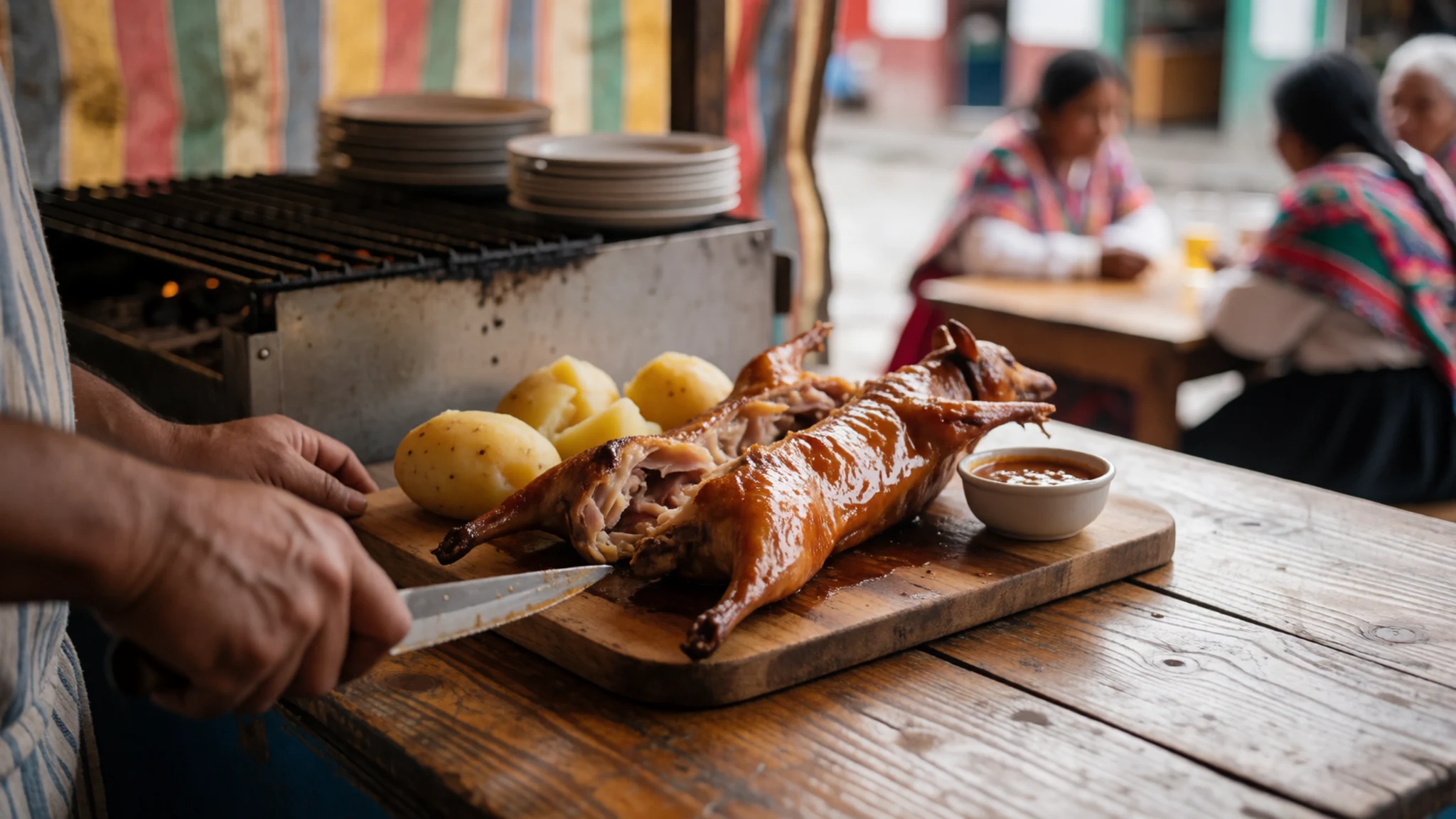
- Fried tilapia — Stalls at the main food market and the Feria Imbabio
Whole fried freshwater fish is a common market lunch here, usually served crisp with rice, salad and plantain. Pick a stall with a steady stream of local customers and clean serving areas, since turnover and hygiene vary.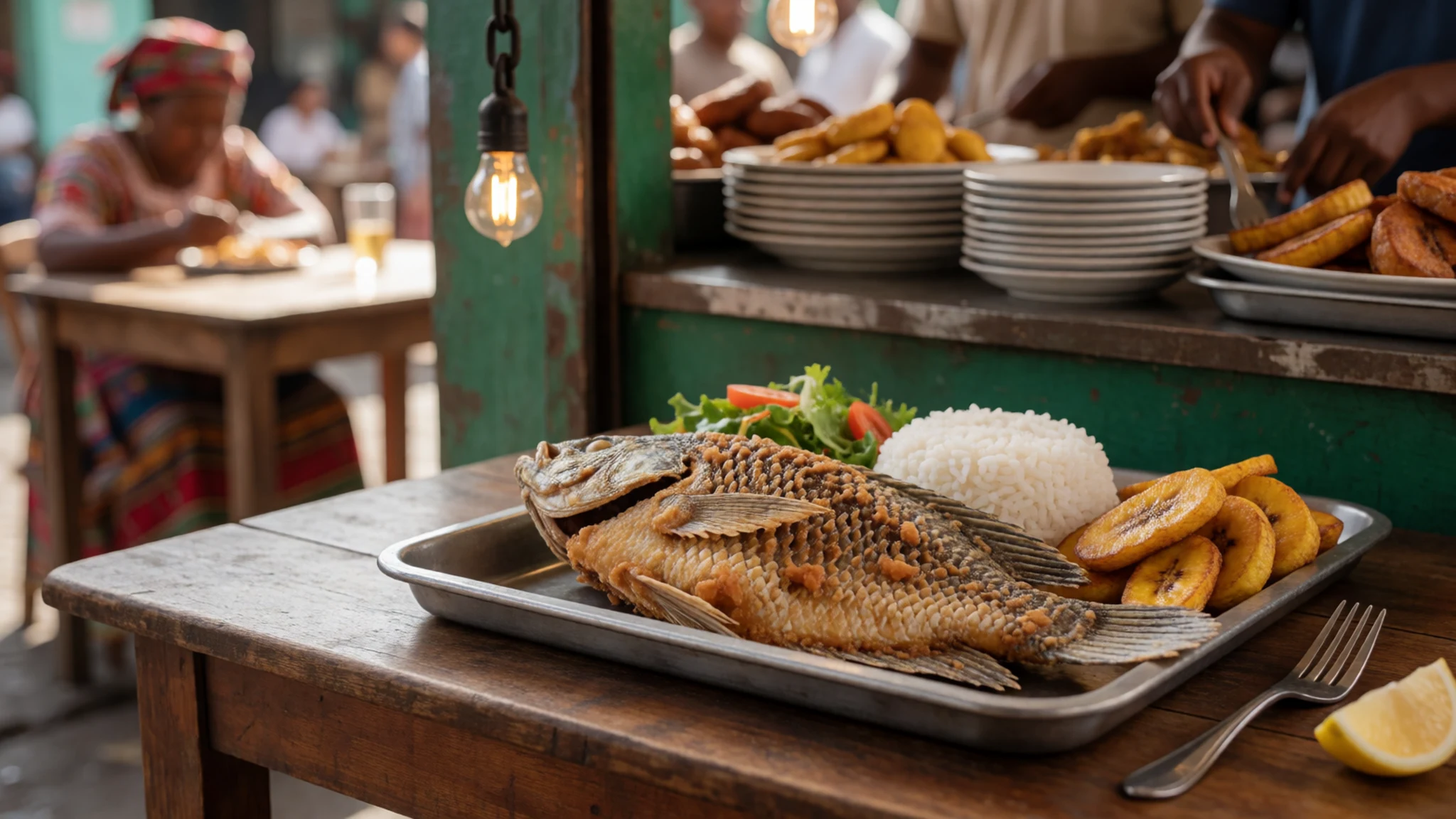
- Roast pork — Market food stalls, especially near the Feria Imbabio
Slow-roasted pork, carved in thick slices and served with potato, hominy or salad, is a regular market meal. It is rich and filling, so one portion can feed two light eaters. Look for stalls with a whole roast on display. - Caldo de gallina — Small local eateries and market stalls
This hen broth is a staple of everyday meals, served as a hearty soup with potato and herbs, often as the first course of a set lunch. Vegetarians should ask carefully, as meat is sometimes simply removed rather than left out. - Set lunch — Local eateries on the streets around the centre
Many small eateries serve a fixed midday menu of soup followed by a main of rice, meat or fish and a side. It is the cheapest and most local way to eat. Ask what is on that day, since the menu changes daily.
Plan it
Best time. June to September is the drier season in the northern Andes, with clearer volcano views, though June and early September bring festival crowds. Days are warm in the sun and cool in the shade at this altitude, and showers are possible in any month.
How long. 2–3
Getting there. Fly to Quito and continue north by road. Buses to Otavalo leave from Quito's Carcelén terminal and take a couple of hours, mostly along the Pan-American Highway; some stop at the town bus terminal and others on the outskirts. A taxi from the airport is possible but costs more than the bus. From the north, buses run from Ibarra and Tulcán.
Budget. low
Tips
- Go on Saturday for the full market, and midweek for a quieter look at the same stalls
- Book ahead if visiting around the June sun festival or the Yamor festivities in early September
- Carry small cash for stalls, buses and entrance fees, as cards are not widely accepted at markets
- Allow a day to adjust to the altitude, and drink water regularly
- Check the official website for local events and festival dates: http://www.otavalo.gob.ec/
Etiquette
- Ask before photographing people or their stalls
- Bargain politely on craft goods and do not haggle over very low prices
- Treat waterfalls and mountain sites as sacred places, not just viewpoints
Nearby
Sources
- Wikidata Q1020794 (CC0)
- Wikipedia: Otavalo (city) (CC BY-SA 4.0)
- Wikivoyage: Otavalo (CC BY-SA 4.0)
- Photo: Imbabura and Otavalo (Bcasterline) (Public domain)
- Photo: Otavalo market (Sputnikcccp) (CC BY 3.0)
- Photo: Traditional dress in Otavalo market (DickClarkMises) (CC0 1.0)
- Photo: Otavalo Artisan Market 041 (David Adam Kess) (CC BY 3.0)
- Photo: Otavalo Artisan Market 007 (David Adam Kess) (CC BY 3.0)
- Photo: City hall of Otavalo (Bernard Gagnon) (CC BY-SA 1.0)
- Photo: Livestock market, Otavalo (Bernard Gagnon) (CC BY-SA 1.0)
- Photo: San Luis Church, Otavalo (Bernard Gagnon) (CC BY-SA 4.0)


